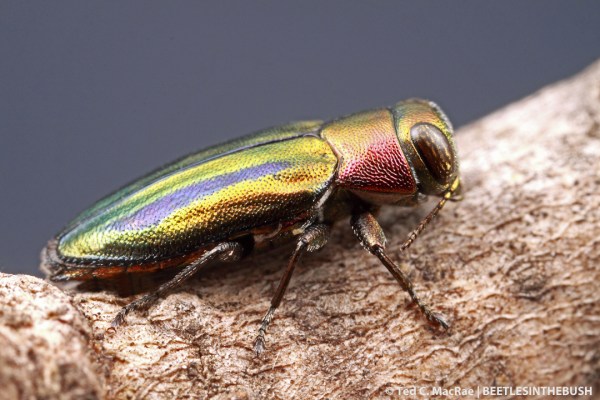
Arizona collectors: Have you seen this beetle?

Placoschema dimorpha (male) | lower Madera Canyon, Arizona

Placoschema dimorpha (male) | lower Madera Canyon, Arizona

If you are a collector of beetles in Arizona, you should be on the lookout for longhorned beetles (family Cerambycidae) resembling the specimen in the above photos. Determined as Placoschema dimorpha Chemsak & Hovore, in Eya 2010 by Jeff Huether, the specimen was collected by Jeff’s son Mark Huether on 15 July 2013 as they roadside collected longhorned beetles and scarabs in lower Madera Canyon (Pima Co.). They were searching mainly on Baccharis, although there were very few flowers open at the time. It is not known what plant the specimen was collected from, but Jeff notes that it was collected around 2 pm in the heat of the day.

Placoschema dimorpha was described from just a handful of specimens (3 males and 4 females), all in Mexico, and is the only member of the genus. As a result, the above collection represents the first record of both the genus and the species in the U.S. New U.S. records for popularly collected groups like longhorned beetles are always noteworthy, and in this case its occurrence in southeast Arizona—well scrutinized for decades by legions of beetle collectors—is all the more remarkable. Perhaps its tiny size (the above specimen measures only ~10 mm) and somber coloration—unusual for the tribe Trachyderini with its mostly large and colorful members—have somehow contributed to it being overlooked until now. Others might be quick to cite climate change and recent expansion of its range northward into the U.S. as a possible explanation; however, it should be noted that the type specimens, despite being few in number, were collected from a rather large area across central and northern Mexico in the states of Chihuahua, Durango, Hidalgo, and Mexico.

While this specimen agrees very well with the original description of P. dimorpha, it does differ from the male paratype figured in that work in that the lateral margins of the elytra are red only in the basal half rather than completely to the apex. As the species name implies, females are colored differently, with the elytra entirely reddish or at most a darker fascia (may be incomplete) across the apical three-fourths.

My sincere thanks to Jeffrey Huether for allowing me to photograph this specimen and present these notes in advance of more formal documentation in peer-reviewed literature.

REFERENCE:

Eya, B. K. 2010. New Mexican and Central American genera and species of Trachyderini (Coleoptera, Cerambycidae, Cerambycinae). Les cahiers Magellanes 108:1–21.

Copyright © Ted C. MacRae 2013

Sunset for another great collecting trip

All good things must come to an end, and so it is with my Great Basin collecting trip. From Nevada’s isolated ranges to California’s stunning Owens Valley; from Utah’s starkly beautiful canyons to Colorado’s majestic mountains, the experience not only quenched my thirst for natural history but also provided much needed spiritual renewal. Look for a “Trip iSummary” here at Beetles in the Bush in the coming days, and of course I have lots of photographs of the insects I encountered that I will share in the following weeks.

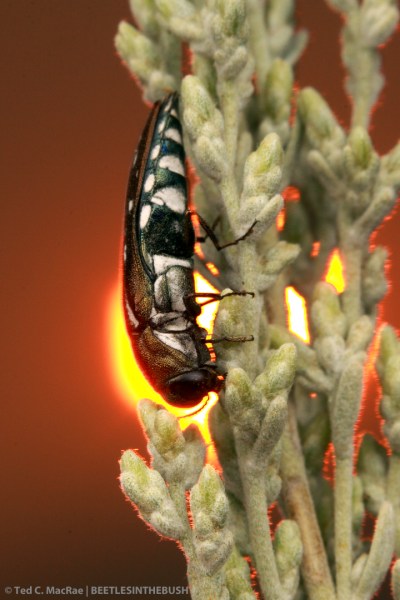
In the meantime, here’s a preview of one of the species that I encountered—a male Agrilus walsinghami preparing to bed down for the night.

Agrilus walsinghami | Davis Creek Regional Park, Washoe Co., Nevada

Agrilus walsinghami (male) | Davis Creek Park, Washoe Co., Nevada

© Ted C. MacRae 2013

An interesting flightless May beetle

I suppose you are an entomologist?

Not quite so ambitious as that, sir. I should like to put my eyes on the individual entitled to that name. No man can be truly called an entomologist, sir; the subject is too vast for any single human intelligence to grasp.

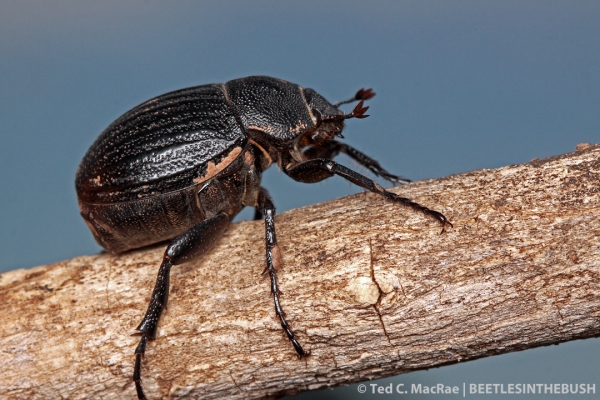
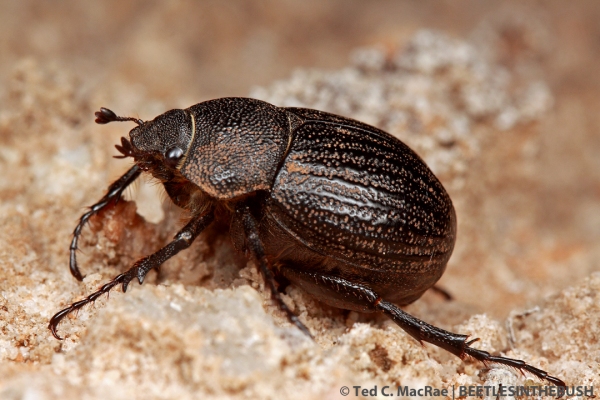
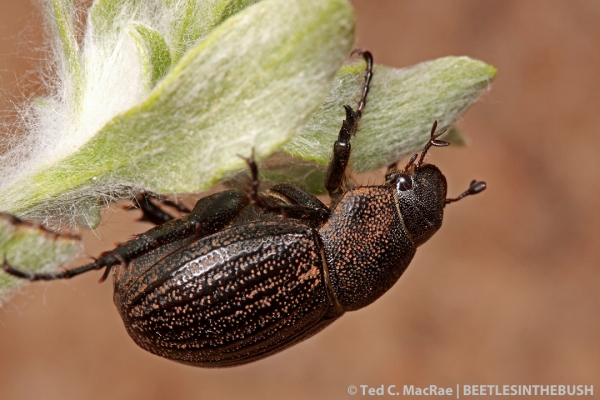
Phyllophaga cribrosa | Gloss Mountain State Park, Major Co., Oklahoma

Phyllophaga cribrosa | Alabaster Cavern State Park, Woodward Co., Oklahoma

I suppose the above quote from The Poet at the Breakfast Table, by Oliver Wendell Holmes, Sr., applies just as well to those who would call themselves coleopterists, for restricting oneself to the study of beetles diminishes by scarcely more than half the known diversity of all insects. I still dare to call myself a coleopterist, but I’m the first to admit that while there are a few groups of beetles that I know very well, there are many more that I know only superficially and some that befuddle me completely. An example of the latter is May beetles (family Scarabaeidae, genus Phyllophaga). With more than 400 species in North America (Ratcliffe & Jameson 2010), it is one of the most speciose genera in our fauna. Not surprisingly, species identifications can be very difficult, oftentimes relying on examination of male and female genitalia.

xxx

The flightless adults are most often found on the ground or low vegetation.

Not all species of Phyllophaga, however, are difficult to identify. The species shown here—P. cribrosa—is rather easily recognized within the genus by its oval, convex shape, shining black coloration, cribrose (perforated like a sieve) surface, 10-segmented antennae, and flightless nature. The resemblance to certain darkling beetles (family Tenebrionidae) is striking, although I suspect this may be a result of convergent adaptation to dry habitats rather than mimicry (Kaufman & Eaton 2007). While most species of Phyllophaga are nocturnal and capable of flight, adults of P. cribrosa are flightless and can be found crawling on the ground and clinging to low vegetation during the day. I found these beetles this past June at several locations in northwestern Oklahoma.

xxx

The distinct elytral furrows distinguish P. cribrosa from closely related species.

There are at least two other closely related species in the genus (i.e., P. epigaea and P. zavalana) that resemble P. cribrosa; however, both of these species are restricted to Texas, and they lack the distinct longitudinal elytral furrows exhibited by P. cribrosa. The species is said to be an occasionally serious pest of crops (Luginbill & Painter 1953), although I suspect that in most cases this results from new plantings of crops in former grasslands because of the limited dispersal abilities of the beetles.

REFERENCES:

Eaton, E. R. & K. Kaufman. 2007. Kaufman Field Guide to Insects of North America. Houghton Mifflin Harcourt, 391 pp.

Luginbill, P., Sr. & H. R. Painter. 1953. May beetles of the United States and Canada. U.S. Department of Agriculture Technical Bulletin 1060, 102 pp,

Ratcliffe, B. C. & M. L. Jameson (eds.). 2010. Generic Guide to New World Scarab Beetles (available at: http://www-museum.unl.edu/research/entomology /Guide/index4.htm).

Copyright © Ted C. MacRae 2013

The one that got away!

It was disappointing to reach Black Mesa, the furthest west destination for my June collecting trip through northwestern Oklahoma, only to discover that the whole region was dry as a bone. I spent an hour or so sweeping yellow roadside composites and got a few Typocerus confluens—a reasonably uncommon longhorned beetle, and another hour’s worth of beating oaks and junipers in the area produced a grand total of three Chrysobothris ignicollis, a very common jewel beetle associated with junipers in the southern Great Plains. This in glaring contrast to the veritable smörgåsbord of jewel and longhorned beetles I had encountered earlier in the week at Beaver Dunes, Alabaster Caverns, and Gloss Mountain State Parks. I had planned to spend at least a full day in the Black Mesa area—maybe two if the collecting was good, but as it was I couldn’t justify spending even another minute in the area. Unable to resist the siren call of more productive areas back to the east, I decided to cut my losses and return to those areas to close out the week. It was still early afternoon, and if I left immediately I would arrive back at Beaver Dunes (from where I had left just the previous evening) with at least a few hours to pad my series and perhaps even find something new.

Oberea oculaticollis Say 1824 | Beaver Dunes State Park, Beaver Co., Oklahoma

Oberea oculaticollis Say 1824 | Beaver Dunes State Park, Beaver Co., Oklahoma

One area I wanted to take another look at was the small lake near the campground. I had beaten a few willow-feeding Agrilus spp. from the black willow (Salix nigra) and Poecilonota cyanipes from the cottonwoods (Populus deltoides) surrounding the reservoir. I desired better series of what I had collected the previous day, so I retraced my steps and beat most of the same trees I had beaten before. While I did quite well with P. cyanipes on the cottonwoods, again only a few Agrilus were beaten from the willows. I had nearly completed the circuit around the lake when I walked up to a small willow sapling that I had not sampled the previous day, gave it a whack over my sheet, and onto the sheet fell a nice longhorned beetle that I didn’t immediately recognize. At first I thought it was a species of Mecas due to the dense covering of gray pubescense, but the long and narrow form seemed much more agreeable with the genus Oberea. At any rate, seeing that it was something new for me I placed it back on a willow branch and began taking photos of it.

The dark integument and dense, grayish pubescence distinguish this species.

The dark integument and dense, grayish pubescence distinguish this species.

It was late in the day, and the beetle was unusually calm and cooperative and allowed me to take a number of shots, from which I have selected a few to show here. Once I had my fill of photographs, I slipped it into a vial for safe-keeping while I disassembled and stowed my camera equipment, and after I was finished I pulled out the vial with one hand and reached for my bottle dropper of ethyl acetate with the other. I have a technique to unscrew both the vial and the bottle with the fingers of the hand that is holding them, lifting both caps simultaneously, dropping a few drops of ethyl acetate into the vial, and again simultaneously placing both caps back in place and screwing them shut. This minimizes the time the cap is off the vial while the insect is in it, thus minimizing the chance of the insect escaping during the process. In this case, however, as I was trying to do this a dog-pecker gnat flew right at my eye, and I instinctively swiped at it with my left hand—the one holding the vial with the beetle in it! Of course, the cap was off, and the beetle when sailing out of the vial and immediately took flight. All I could do is just stand there dumbfounded at my stupidity. I did go back and beat the same sapling (and every other willow tree) on my way back in a last ditch effort to recollect the species, but fortune was not with me at this time.

This adult on black willow (Salix nigra) is the first indication of its host plant.

This adult on black willow (Salix nigra) is the first indication of its host plant.

Once I returned home and had a chance to examine the photos more carefully, I learned that I had photographed Oberea oculaticollis Say 1824, a longhorned beetle distributed in central North America from Manitoba to Texas and distinguished, not surprisingly, by its dark integument and dense, grayish pubescence (Chemsak & Linsley 1995). Not only have I never before encountered this species, but it is also completely lacking in my collection. As far as I can tell, no host information has been recorded for this species, so my collection of an adult on willow might be the first clue as to its host plant. Without a voucher specimen, however, I am reluctant to publish the record and will have to keep this spot in mind for possible future collection of the species.

REFERENCE:

Linsley, E. G. & J. A. Chemsak.  1995. The Cerambycidae of North America. Part VII, No. 2: Taxonomy and classification of the subfamily Lamiinae, tribes Acanthocinini through Hemilophini. University of California Publications in Entomology 114:1–292.

Copyright © Ted C. MacRae 2013

Tips for photographing shiny beetles on yellow flowers

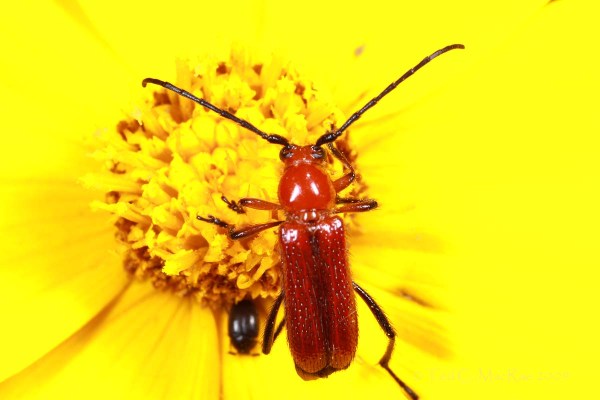
I really hate starting off this post with the following photo—typically it is the first photo in a post that readers see in syndicated feeds; however, I use it in this post to make a point. This photo was taken back in May 2009 and is among the very first photographs that I took after getting my current dSLR camera setup. I was certainly happy enough with it at the time; however, in the following years I have learned a lot about lighting and composition. Such is the curse of any photographer—the further back one goes in their portfolio, the less satisfied they are with the photos taken at a particular point in time. What was then a pretty photo of a shiny, red longhorned beetle on a bright, yellow flower is now teaching material for what not to do when taking photos of shiny beetles on yellow flowers.

One of my first photos of Batyle suturalis, taken in May 2009 | Franklin Co., Missouri

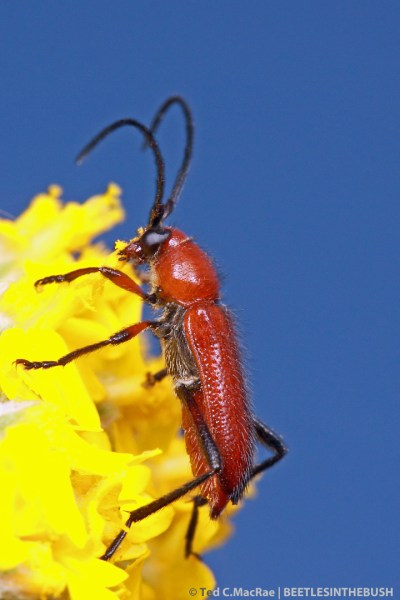
Batyle suturalis on Coreopsis lanceolata | Shaw Nature Preserve, Franklin Co., Missouri

Compare the above with the following much more recently taken photos of the same beetle species from this past June. The beetle is the same, and while the flowers are a different species they are the same intense shade of yellow, but in nearly all respects the photos are far superior to the first. What are the problems with the first photo? First, the smooth and shiny surface of the beetle combined with poor diffusion of the flash has resulted in intense specular highlights on the body of the beetle. This is especially evident in the “twin highlights” on the pronotum of the beetle that is the signature mark of the Canon MT-24EX twin flash unit when used without some type of diffuser. Secondly, the darker color of the beetle requires more flash for adequate illumination than does the much brighter yellow flower—setting the flash power high enough to fully expose the beetle resulted in overexposure of the yellow flower. One cannot even see where one petal ends and another begins. Thirdly, the top-down perspective is, well… boring, no doubt because this is far and away the most commonly used composition in photographs of insects on flowers. Lastly, in my zeal to get as close as possible to the subject, I’ve not only eliminated elements from the background that could add interest in texture to the composition but also clipped the hind tarsus of the beetle itself.

Batyle suturalis on paperflower (Psilostrophe villosa) | Alabaster Caverns State Park, Woodward Co., Oklahoma

Batyle suturalis on Psilostrophe villosa | Alabaster Caverns State Park, Woodward Co., Oklahoma

The first problem is easily addressed by using a good diffuser. It is remarkable that both Canon and Nikon have produced such incredibly effective lenses and flash units for macrophotography, yet completely ignored the demand for diffusers designed to work with them. As a result, most insect macrophotographers have resorted to various do-it-yourself (DIY) designs to fill the void. The diversity in DIY diffuser designs is as large as the diversity of insect macrophotographers, and each person has their own favorite. I have tried many different versions myself, and my current design (admittedly a fusion of ideas stolen from and Alex Wild and Piotr Naskrecki) has produced quite good results. This is evidenced in the more recent photos shown here by the very soft highlights that are spread out evenly over the body of the beetle and not concentrated into intense spots or bands.

Batyle suturalis

Portrait orientation is under-utilized in ”bug on a flower” shots.

The second problem—that of overexposure of the flower to properly expose the beetle—is handled in a simple yet somewhat counter-intuitive manner. I find yellow flowers to be especially prone to overexposure. However, it is much easier to “fix” underexposed than overexposed areas of a photo in post-processing. When a photo is underexposed, all of the data regarding color and hue is still there. It is a simple matter to increase the brightness in the image processing software to restore underexposed areas to their natural brightness. Overexposure, however, is much more difficult to correct, as once the exposure is “blown” there is no data remaining regarding the true color and hue. The only way to fix blown highlights is with the laborious process of cloning over them with nearby areas of the photo that are not blown. Perhaps some can do this quickly and with good results, but I am not one of those people. I like to selectively increase the brightness of underexposed areas using “Lighten Shadows” tool in Photoshop. Be careful, as a light hand is all it takes—overly heavy-handed adjustments look  unnatural.

Batyle suturalis

Side profiles are more interesting than ”top down” shots and allow high color-contrast backgrounds.

Finally, think about more interesting compositions for your “bug on a flower” photos than the far too commonly used top-down perspective. Getting low relative to the beetle and looking at it from the side or front not only provides a less common view of the subject but also allows for far more creativity in the overall composition. My personal preference for insects on flowers is a blue sky background, which can add a lot of value contrast to photos compared to those in which the entire background consists only of the flower on which the insect is sitting. Use of blue sky background can also further help avoid overexposure of the yellow flower, as the slightly higher ISO and slightly lower aperture settings and shutter speeds used in that technique serve to increase the amount of ambient light contributing to the photo, thereby reducing the amount of illumination needed by the flash. Side views of the insect also facilitate use of portrait orientation—an important consideration if you are interested in producing photos for potential use on journal or magazine covers (nearly always printed in portrait). Also, as you compose your photo, try backing off a bit rather than trying to focus in on the subject as tightly as possible. Backed off views not only avoid the more straightforward problem of clipping parts of the insect but can also result in much more aesthetically pleasing photographs by allowing the incorporation of other elements in the composition for balance, scale, and even a sense of motion or dynamics (as exemplified by the partially buried grass blades in this photo of the Eastern Big Sand Tiger Beetle). Photos can always be cropped in post-processing, and while excessive cropping as a way to artificially increase magnification is to be avoided, there is nothing wrong at all with slight cropping to improve composition.

Copyright © Ted C. MacRae 2013

Another new record for northwestern Oklahoma

You would think that finding two new state records on the first day of my June collecting trip to northwestern Oklahoma would be fortune enough—it is rare to get two new state records on an entire trip even! As a result, I spent all morning and the early part of the afternoon working the mesquite (Prosopis glandulosa) and red-cedar (Juniperus virginiana) that dotted the barren flats at Gloss Mountain State Park to ensure good voucher series of Plionoma suturalis and Chrysobothris quadrilineata. Around 2 pm I decided I’d worked the flats as well as I could and turned my attention to the park’s main attraction, a large, gypsum-capped, red clay mesa rising 150 to 200 feet above the flats below.

Paratyndaris prosopis on dead hackberry (Celtis sp.) | Gloss Mountain State Park, Oklahoma

Paratyndaris prosopis on dead hackberry (Celtis sp.) | Gloss Mountain State Park, Major Co., Oklahoma

Red-cedar occurs on top of the mesa as well as the flats¹, but otherwise the mesa top supports a different assemblage of woody vegetation. Gone is the mesquite, a relatively “thirsty” plant that uses extraordinarily long taproots to reach subterranean water tables. In its place are western soapberry (Sapindus saponaria), hackberry (Celtis sp., poss. C. laevigata var. texana), and American elm (Ulmus americana). The soapberry was what I was most interested in, as this plant is a known host for several very uncommonly encountered species of jewel beetles in the genus Agrilus that are more commonly encountered in Texas. Hackberry also is a good host for a variety of jewel beetles, with somewhat different species occurring in Texas versus more eastern areas in the country. Perhaps, I thought, some of these Texas species could be found here as well.

¹ While native to Oklahoma, eastern red-cedar was restricted in pre-settlement times to areas not subject to fire. It is now considered an invasive species in many areas as a result of long-term fire suppression and the effects of intense cattle grazing. In the morning while I was collecting in the flats (and before I had started working the red-cedars to see what beetle was causing the branch dieback), a park ranger stopped by and asked if I knew of any way to “get rid of the cedars.” He didn’t seem very satisfied with my standard answer of mechanical removal and prescribed burning at regular intervals. He then asked about the branch dieback that was so common in the trees, and I told him I thought it was a beetle. With almost desperate optimism he said, “maybe the beetle can finish them off.” I didn’t share his optimism but didn’t say anything either.

Paratyndaris prosopis

I focused most of my early efforts on the soapberry, but nothing was landing on the beating sheet, so I then turned my attention to the hackberry. Most branches were yielding a few Agrilus spp. with each whack, but they seemed to be only commonly occurring species such as A. paracelti and A. lecontei (in this area the population should be assignable to subspecies lecontei). One can almost get “lulled to sleep” in such situations, eventually not expecting to see something different, but after working a number of trees I whacked a particularly “punky” dead branch of a tree and saw the unmistakable outline of a chunky little jewel beetle that I immediately recognized as Paratyndaris prosopisParatyndaris is a largely southwestern and Mexican genus of beetles that are often not well represented in collections. Paratyndaris prosopis is the only species known to venture north and east beyond Texas, but this is based on only three records: one in Red Oak, Oklahoma by the late Karl Stefan (an indefatigable collector of beetles in Latimer Co.), another at Magazine Mountain, Arkansas (a single specimen given to me by my friend Doug LeDoux), and a third from Oktibbeha Co., Mississippi (Nelson & Bellamy 2004). While not a new state record, I knew its occurrence in Major Co., Oklahoma represented a northward extension to its known range (and also opening the possibility that it might even occur as far north as Kansas). They were not common—I worked every hackberry tree I could find on the mesa and got just three specimens on the first day and a few more when I went back the next morning. However, at the end of the trip I returned to Gloss Mountain and managed to get a nicer series of close to a dozen specimens. While hackberry trees can be found in several patches on the mesa, the beetles seemed to be limited to one small area.

Paratyndaris prosopis

The occurrence of this species on hackberry and not mesquite is interesting. The type specimen was cut from a dead branch of mesquite (Skinner 1903)—hence, the species epithet, but all subsequently recorded host associations have been on oak (Quercus spp.) (Nelson 1987, Nelson & Westcott 1976), including a single specimen that I reared from a dead Q. vaseyana branch collected in the Davis Mountains, Texas. No oak occurs in the Gloss Mountains, but mesquite is common in the flats, yet it is clear from the number of specimens collected on hackberry and nothing else that the species, at least in this area, is utilizing that plant as a host. Also of interest is the date of collection—June 2, which is a full week earlier than the previous early record of June 9 (especially interesting when one considers that these are the northernmost specimens known).

REFERENCE:

Nelson, G. H. 1987. Additional notes on the biology and distribution of Buprestidae (Coleoptera) in North America, II. The Coleopterists Bulletin 41(1):57–65.

Nelson, G. H. & C. L. Bellamy. 2004. A revision of the genus Paratyndaris Fisher, 1919 (Coleoptera: Buprestidae: Polycestinae). Zootaxa 683:1–80.

Nelson, G. H. & R. L. Westcott. 1976. Notes on the distribution, synonymy, and biology of Buprestidae (Coleoptera) of North America. The Coleopterists Bulletin 30(3):273–284.

Skinner, H. 1903. Notes on Buprestidae (Coleoptera) with descriptions of new species. Entomological News 14:236–239.

Copyright © Ted C. MacRae 2013

Mexico 1992—Gang of Ten

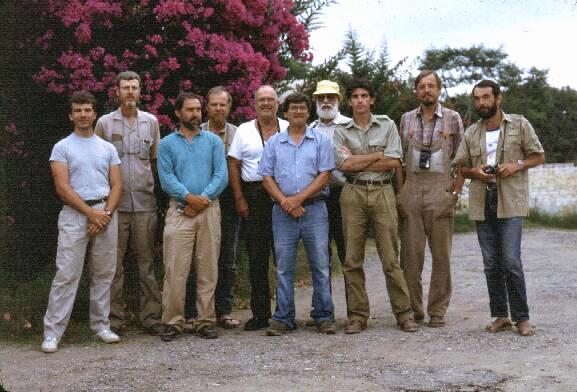
As a young collector attracted to woodboring beetles, my interests were split evenly between the families Buprestidae and Cerambycidae. In those early days, I actively sought the counsel of experts in both families, looking for help with identifications. Most were more than gracious with their help, and receiving their letters and return shipments of beetles I had sent for their examination was a highlight of each winter season. There was one man, however, whose letters and parcels I looked forward to receiving more than any other—the late, great Gayle Nelson. More than just a report of identifications, Gayle’s letters were also rich with advice, suggestions and encouragement—he became my first mentor. I coauthored my first published paper on Buprestidae with Gayle (Nelson & MacRae 1990), and when I moved to California in 1990 I had the chance to meet him in person and accompany him on a collecting trip to the great southern Californian deserts. Talk about learning from the master! In the meantime I had also struck up correspondence with long-time buprestophiles Rick Westcott and Chuck Bellamy. I guess between the three of them they saw some potential in me, as shortly after my move to California they invited me to join the upcoming World Buprestid Workers Gathering—a 2-week collecting trip in southern Mexico scheduled for July 1992. While not all of the world’s buprestid workers were able to make this trip, a majority of the heaviest hitters from the U.S. and Europe were there. The photo below is the only one I’m aware of in which all ten participants are present, and while I felt like a midget amongst giants at the time, I’ve enjoyed more or less regular correspondence with most of the participants of that trip over the many years that have since passed.

Huahuapan de Leon, Oaxaca, Mexico - July 1992 (L to R): Ted MacRae, Rick Westcott, Hans Mühle, Chuck Bellamy, Gayle Nelson, Byrd Dozier, Dave Verity, Kim Pullen, Svata Bílý, Mark Volkovitsh (photographer unknown).

Huahuapan de Leon, Oaxaca, Mexico—July 1992 (left to right): Ted MacRae, Rick Westcott, Hans Mühle, Chuck Bellamy, Gayle Nelson, Byrd Dozier, Dave Verity, Kim Pullen, Svata Bílý, Mark Volkovitsh.

That trip remains one of the best insect collecting trips I’ve ever experienced (although there are many others now that also bear that distinction). Gayle, Dave Verity and I started in the state of Guerrero and worked our way down into Oaxaca, where we met up with the others and collected together as one large group before Chuck, Rick and I split off and returned for more collecting in Guerrero. I don’t remember how many species I collected—somewhere in the neighborhood of 60 or so, but I’ll never forget finding the first specimens of what would eventually be described as Oaxacanthaxia nigroaenea Nelson & MacRae 1994. We found it at the type locality (near Tehuantepec) of what was then the only known species in the genus, O. viridis Bellamy 1990, that represented an apparently relictual line of buprestids with affinities to certain Old World genera. While that was the only new species that I described from the trip, several described by others are based at least in part on material that I collected. Another highlight of the trip was the “big, dead tree” in Cañón del Zopilote, Guerrero (literally, a big, dead tree), the high branches of which yielded several specimens of Polycesta cortezii Thomson 1878 and one Jelinekia barri (Nelson 1975). Sadly, I wasn’t much of a journal-keeper in those days, so most of the memories that remain from that trip are just snippets in time. Nevertheless, whenever I look at specimens collected on that trip I am usually able to recall the circumstances of its collection, and I recently had the chance to go through much of this material in detail again, as many of the specimens collected represented newly documented state occurrences and adult host plants. These records can now be found in a newly published paper by me and Chuck in which two new species of Actenodes collected during subsequent trips are described (MacRae & Bellamy 2013).

REFERENCES:

MacRae, T. C. & C. L. Bellamy. 2013. Two new species of Actenodes Dejean (Coleoptera: Buprestidae) from southern Mexico, with distributional and biological notes on Buprestidae from Mexico and Central America. The Pan-Pacific Entomologist 89(2):102–119.

Nelson, G. H. & T. C. MacRae. 1990. Additional notes on the biology and distribution of Buprestidae (Coleoptera) in North America, III. The Coleopterists Bulletin 44(3):349–354.

Nelson, G. H. & T. C. MacRae. 1994. Oaxacanthaxia nigroaenea Nelson and MacRae, a new species from Mexico (Coleoptera: Buprestidae). The Coleopterists Bulletin 48(2):149–152.

Copyright © Ted C. MacRae 2013

The perfectly polyphagous Chrysobothris purpureovittata

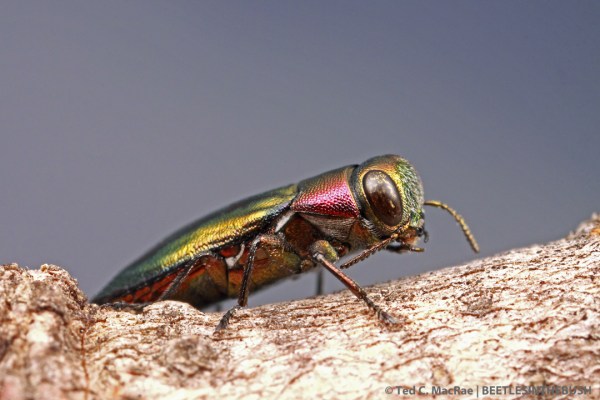
Chrysobothris purpureovittata on Celtis sp. | Gloss Mountains State Park, Woodward Co., Oklahoma

Chrysobothris purpureovittata Horn 1886 | Gloss Mountains State Park, Woodward Co., Oklahoma

Many species of jewels beetles in North America are known for having some degree of host specificity. This is especially true of species in the genus Chrysobothris, whose members are often restricted to a particular family, genus, or even species of host plant. There are some, however, that are not so fastidious in their choice of host plant, and perhaps the best example of such is the species Chrysobothris purpureovittata. This pretty and not uncommonly collected species has been associated with well over two dozen species of deciduous trees representing 21 genera in eleven plant families.

Chrysobothris purpureovittata

Interestingly, the extent of this species’ polyphagy has not been fully appreciated until recently. At the time of Fisher’s (1942) revision of North American species, the only recorded larval hosts were elm (Ulmus sp.) and plum (Prunus sp.). Numerous adult hosts—i.e., plants on which adults had been collected only—were recorded in subsequent years, first by Vogt (1949) in south Texas and later by Nelson et al. (1982) from other locations. However, it was not until my Missouri jewel beetle survey (MacRae 1991) and subsequent “notes papers” by me and colleagues (MacRae & Nelson 2003, MacRae 2006, Wellso & Jackman 2006) that the true diversity of larval hosts became known. A majority of the larval host records are from the Ulmaceae, including several species of hackberry (Celtis tenuifoliaC. laevigataC. ehrenbergia, C. reticulata) and cedar elm (Ulmus crassifolia), suggesting that despite its polyphagous nature there is some preference for members of this plant family. On my recent early June trip to northwestern Oklahoma, I encountered this species at several localities as abundantly as I can ever recall, with nearly all of them beaten from hackberry.

Chrysobothris purpureovittata

Chrysobothris purpureovittata is distributed primarily in the central and south-central U.S., with records from Indiana west to Kansas and south to Mississippi and northern Mexico. A population at the western edge of its distribution (Cloudcroft, Otero Co., New Mexico) associated with mountain mahogany (Cercocarpus montanus) was recently described as a separate subspecies (C. purpureovittata cercocarpi) by Westcott & Nelson (2000)—it is distinguished from nominotypical populations by the entirely red pronotum and uniformly dark elytra.

Chrysobothris purpureovittata

REFERENCES:

Fisher, W. S. 1942. A revision of North American species of buprestid beetles belonging to the tribe Chrysobothrini. U. S. Department of Agriculture, Miscellaneous Publication 470, 1–275.

MacRae, T. C. 1991. The Buprestidae (Coleoptera) of Missouri.  Insecta Mundi 5(2):101–126.

MacRae, T. C. 2006. Distributional and biological notes on North American Buprestidae (Coleoptera), with comments on variation in Anthaxia (Haplanthaxiaviridicornis (Say) and A. (H.) viridfrons Gory. The Pan-Pacific Entomologist 82(2):166–199.

MacRae, T. C. and G. H. Nelson. 2003. Distributional and biological notes on Buprestidae (Coleoptera) in North and Central America and the West Indies, with validation of one species. The Coleopterists Bulletin 57(1):57–70.

Nelson, G. H., D. S. Verity & R. L. Westcott. 1982. Additional notes on the biology and distribution of Buprestidae (Coleoptera) of North America. The Coleopterists Bulletin 35(2) [1981]:129–152.

Vogt, G. H. 1949. A biologically annotated list of the Buprestidae of the Lower Rio Grande Valley, Texas. Annals of the Entomological Society of America 42(2):192–202.

Wellso, S. G. & J. A. Jackman. 2006. A new species of Anthaxia (Haplanthaxia) Reitter (Coleoptera: Buprestidae) and new North American buprestid distributional and host records. The Pan-Pacific Entomologist 82(2):262–268.

Westcott, R. L. & G. H. Nelson. 2000. Descriptions of two new species of Acmaeodera Eschscholtz, and two new subspecies of Agrilus Curtis and Chrysobothris Eschscholtz (Coleoptera: Buprestidae) in North America, with detailed notes on others. The Coleopterists Bulletin 54(3):300–312.

Copyright © Ted C. MacRae 2013