Body Invaders

In keeping with the parasitic theme I established in my last two posts, I happened upon this brief video promotion for a National Geographic special called In the Womb: Extreme Animals which will air this Sunday (May 10). The video features the offspring of a parasitic wasp (Cotesia glomerata) that has injected her eggs into a caterpillar — and now they’re ready to emerge! It’s a fascinating study of parasitoid-host relationships, filmed incredibly from inside the caterpillar! Watch the whole video for the wicked, surprising ending.

Viewing tips: after beginning play, click on “HQ” in the lower right corner to view the video in high quality. Or, click on the video itself to be taken to YouTube, where you have the option to watch the video in HQ and in full screen mode (2nd button from the lower right corner). You will be amazed!

Vodpod videos no longer available.

more about “Body Invaders“, posted with vodpod

Tip of the hat to Adrian, who posted this yesterday (but I really did find it on my own).

Copyright © Ted C. MacRae 2009

Add to FacebookAdd to NewsvineAdd to DiggAdd to Del.icio.usAdd to StumbleuponAdd to RedditAdd to BlinklistAdd to Ma.gnoliaAdd to TechnoratiAdd to Furl

Bon appétit!

I collected this larva in northwest Nebraska during last year’s Fall Tiger Beetle Trip.  I collected an adult Cicindela lengi (blowout tiger beetle) at the spot – a species that greatly resembles but is much less common than the ubiquitous C. formosa (big sand tiger beetle – see my post Cicindela lengi vs. Cicindela formosa for a comparison of the two species).  Before finally finding that adult, however, I had fished out several larvae from the site in the hopes that they represented that uncommon species (see how I did this in my post Goin’ fishin’).  After collecting the larvae and placing them in a small terrarium with native sandy soil, they burrowed in but then closed up shop – I wasn’t sure whether they had survived or not.  In early December I put the terrarium in a 10°C incubator for the winter and brought it back out earlier this month.  Yesterday, happily, this larva and one other opened up their burrows again, so with any luck I’ll feed them well and they’ll complete their development.  While I do hope they represent C. lengi, other possibilities include C. scutellaris (festive tiger beetle), which would not be exciting, and C. nebraskana (prairie long-lipped tiger beetle), which would be VERY exciting.  One species I do not have to worry about it being is C. formosa, as the larvae of that species make very unique excavations in the sand with the burrow opening directed towards the excavation (I don’t believe I’ve posted photos of that here, yet – I’ll have to do so soon).

In the meantime, here is a closeup of the larva in the video prior to feeding. Those of you who have ever reared or photographed tiger beetle larvae will know just how easily “spooked” these larvae can be – any sudden movement will cause the larva to “drop” into its burrow and sit there for awhile. As a result, it was a real challenge to go through the whole process of taking first the photos and then the video while feeding it without causing it to drop.

cicindela_sp_larva_p1020936

Coming soon – lunchtime for adults!

Copyright © Ted C. MacRae 2009

Add to FacebookAdd to NewsvineAdd to DiggAdd to Del.icio.usAdd to StumbleuponAdd to RedditAdd to BlinklistAdd to Ma.gnoliaAdd to TechnoratiAdd to Furl

I Brake for Dung Beetles!

A few days ago I learned of a new campaign by The WILD Foundation called “Make a Big Impact with Small Change.” Founded in 1974, WILD seeks to protect intact wilderness areas and the wildlife and people who depend upon them. Their new campaign pays homage to dung beetles – usually overlooked by conservationists in favor of the so-called “charismatic megafauna,” but who nevertheless provide an important ecological service by tirelessly processing megafaunal dung. From the WILD website:

Here at The WILD Foundation, we realize that it is not just those large, charismatic animals that inspire conservation – it is often the small, typically unnoticed and vastly under-appreciated ones that inspire us the most….and that are an indispensible part of the ecosystem!

As a way of generating support for their work, WILD is giving away bumper stickers like the one pictured above. I have got to have one of these bumper stickers! It is the best entomology bumper sticker I’ve seen since “I fear no weevil!” The WILD website also features this amusing little video that shows some dung beetles in action:

Vodpod videos no longer available.

more about “I Brake for Dung Beetles!“, posted with vodpod

The website doesn’t provide any clues as to the species of dung beetle or where it was recorded, but judging by its large size I’m guessing that it might have been recorded in Africa, perhaps representing a species of the genus Scarabaeus.  My most memorable dung beetle experiences occurred in Africa, which is blessed with a dizzying diversity of “dungers.”  Following is an excerpt from an article I wrote that appeared in the December 2008 issue of the SCARABS Newsletter, in which I discussed some of these marvelous beetles:

Chafers were not the only scarabs I encountered in abundance at Borakalalo [National Park], and I’ll give you one guess as to what other scarab group I encountered in abundance at this mammal game reserve. That’s right, dung beetles. Never before have I seen such an abundance and diversity of dung beetles in one spot, but then again, never before have I seen such an abundance of dung!  The ground was littered with the stuff – antelope such as gemsbok  and impala, warthogs, giraffes, and a host of other mammals thrive in the protected confines of the park, and the seasonally dry climate allows their dung to dry quickly and accumulate rather than breaking down and disappearing. It did, however, take a few days before I became aware of the area’s dung beetle diversity. Prior to our arrival in the park, the weather had been dry for some time, and so it remained for the first few days we were there. I collected a smattering of different dung beetles during that time, but it seemed like they should be more abundant considering the abundance of available resource. Our third day in the park was interrupted by heavy thundershowers that moved through during the afternoon. The next morning, as we arose and begin wandering away from the camp, the air seemed literally abuzz with dung beetles. They were flying everywhere and crawling all over the ground, frantically rolling and fighting over the reconstituted pieces of dung. Big, black scarabaeines proper such as Kheper clericus (Boheman) and Scarabaeus galenus Westwood (Photo 4), the small metallic

scarabaeus-galenus_1

Photo 4: Scarabaeus galenus (Westwood).

Phalops ardea Klug, the attractive green iridescent species Garetta nitens (Olivier) and Gymnopleurus virens Erichson, their darkened relative Allogymnopleurus thalassinum (Klug) (Photo 5),
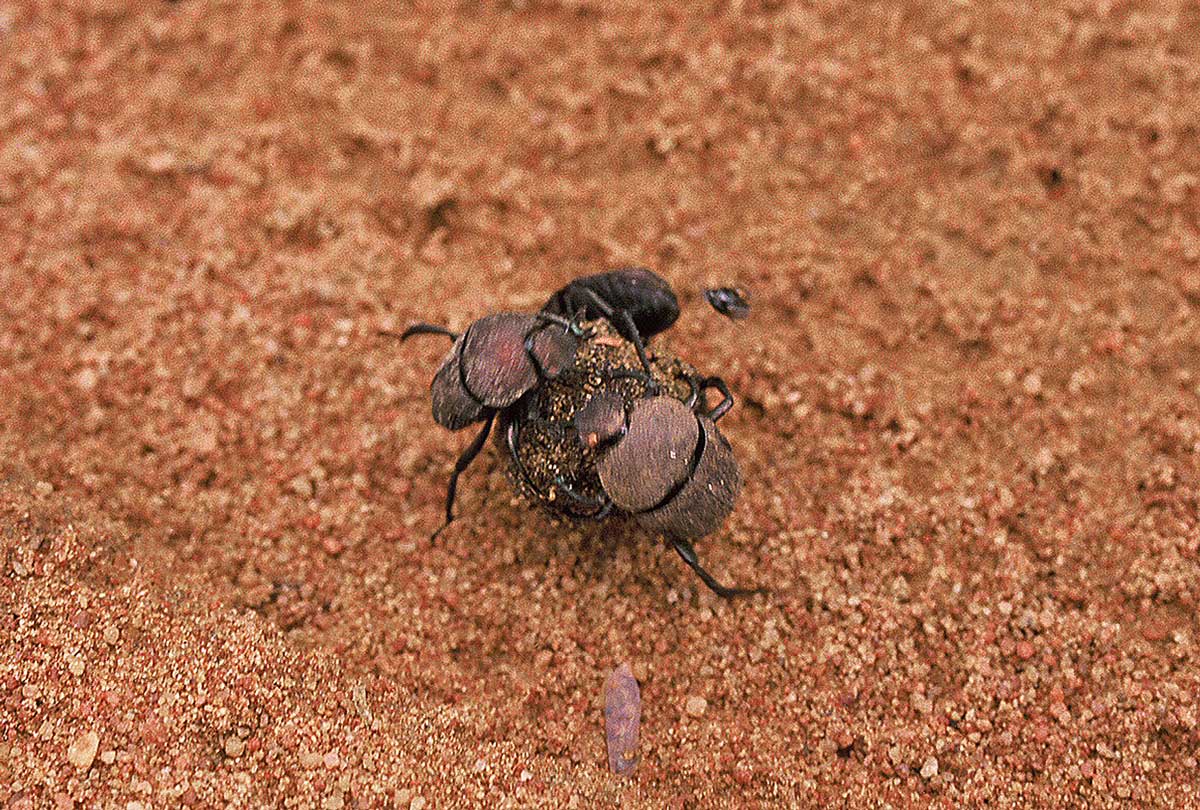
Photo 5: Allogymnopleurus thalassinum (Klug) individuals fighting over a mammal dung ball.

Photo 5: Allogymnopleurus thalassinum (Klug) individuals fighting over a mammal dung ball.

and the tiny little Sisyphus costatus (Thunberg),  standing tall on its elongated hind legs while pushing dung with its forward pairs of legs (opposite of what I’ve seen in any other dung beetle), all made their sudden appearance. I spent some time  watching one S. galenus individual excavating a burrow for the prized piece of poop it had snatched (Photo 6).
Photo 6: Scarabaeus galenus (Westwood) excavating a burrow.

Photo 6: Scarabaeus galenus (Westwood) excavating a burrow.

The most impressive dunger that I saw, however, was the enormous, flattened Pachylomera femoralis Kirby (Photo 7).
Photo 7: Pachylomera femorata Kirby.

Photo 7: Pachylomera femorata Kirby.

Looking like flying Tonka trucks and sounding like diesel engines from real trucks, their low-pitched, rumbling buzz filled the air as they searched among the freshly moistened turds. So loud was the noise caused by the beating of their wings that several times I ducked thinking one was about to collide with me. This sudden dunger super-diversity continued into the night, as Anachalcos convexus Boheman, Catharsius sp., Copris elphenor Klug, Metacatharsius sp., Pedaria sp., Scarabaeus goryi (Laporte), three species of Onitis, Caccobius ferrugineus (Fåhraeus), Digitonthophagus gazella (Fabricius), and nearly a dozen species of Onthophagus flew to our ultraviolet light-illuminated sheet.

REFERENCE:

MacRae, T. C. 2008. Dungers and chafers: A trip to South Africa. SCARABS 34:1-9.

Copyright © Ted C. MacRae 2009

Add to FacebookAdd to NewsvineAdd to DiggAdd to Del.icio.usAdd to StumbleuponAdd to RedditAdd to BlinklistAdd to Ma.gnoliaAdd to TechnoratiAdd to Furl

Coral Pink Sand Dunes tiger beetle on ARKive

I’ve been meaning to write about ARKive for awhile now. ARKive is a unique collection of videos, images and fact-files assembled from among the world’s very best wildlife videographers and photographers in an attempt to create a centralized digital library of life on Earth. Their short to mid-term priority is the completion of audio-visual profiles for the 16,300-plus species on The IUCN Red List of Threatened Species, before moving on to profiling all species that have ever been filmed or photographed. With backing from many of the world’s leading conservation organizations, ARKive hopes to “promote public understanding and appreciation of the world’s biodiversity and the need for its conservation, through the power of wildlife imagery.”

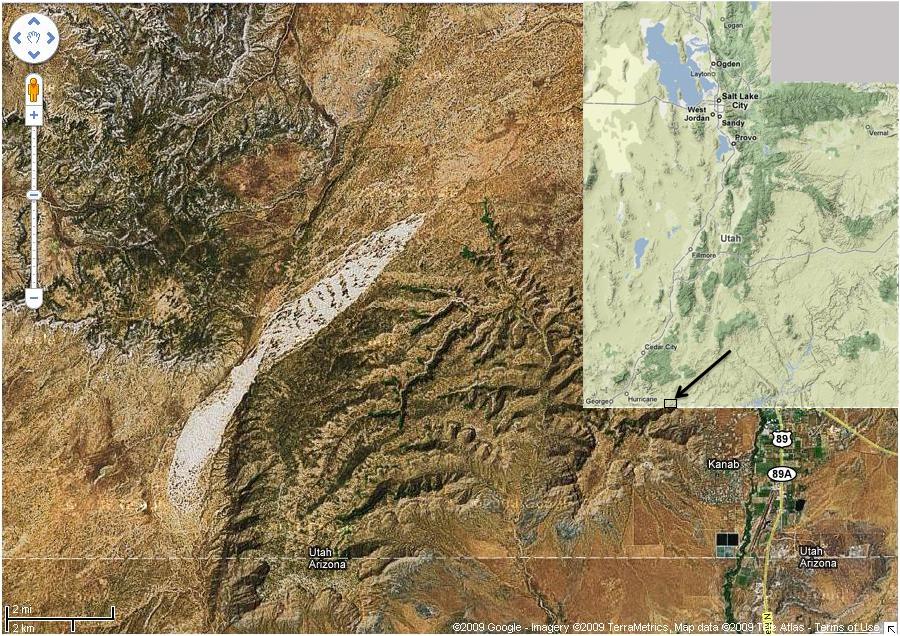
With tiger beetle season almost now upon us, it seems appropriate to highlight the media collection that ARKive has assembled for one of North America’s most spectacularly beautiful and critically imperiled tiger beetles, Cicindela albissima (Coral Pink Sand Dune tiger beetle). This amazing species is not only stunning in appearance, with its nearly pure white elytra, but has perhaps the most restricted habitat of any tiger beetle species in North America – the entire population being restricted to 400 hectares within coral-pink-sand-dunes_3Utah’s Coral Pink Sand Dunes State Park and the adjacent Bureau of Land Management (BLM) dune management area (Pearson et al. 2006). The Google screen shot at right shows the entire range of this species as a light pink swath (inset shown on larger map of the state of Utah).  Regarded initially as a subspecies of the widespread C. limbata (sandy tiger beetle), recent molecular studies showed this beetle to be only distantly related to that species and, thus, deserving of full species status (Morgan et al. 2000).

Unfortunately, the beetle’s highly restricted habitat continues to be adversely affected by ongoing, recreational off-road vehicle use, especially in the interdunal swales used by the larvae. Impacts occur not only by direct run-over mortality, but also through disruption of normal adult and larval activity, damage to vegetation, reduction of arthropod prey of C. albissima, and mixing of the upper soil layer which increases desiccation of the larval microhabitat (Knisley and Hill 2001). The species was nominated for federal protection under the Endangered Species Act in 1996 (when it was still considered a subspecies of C. limbata), and two years later a Conservation Agreement between BLM, U.S. Fish and Wildlife Service, Utah Department of Parks and Recreation and Kane County was established in an effort to protect the critically sensitive habitats in which this species lives. Despite these conservation measures, ongoing monitoring and research within the protected areas has documented a continuing decline in the population, suggesting that these areas may not be of sufficient size to enable the population to increase, and off-road vehicle use continues outside of the protected areas (U.S. Department of Interior, Fish and Wildlife Service (FWS) 2008). While still only a candidate for federal listing as an endangered or threatened species, the FWS now considers the magnitude of the threat from off-road vehicles, in view of these recent findings, to be high and imminent. As a result, the FWS has increased the priority of the species’ candidacy from 8 to 2 (1 being the highest priority a candidate species can receive).

While I would dearly have loved to embed one of ARKive’s extraordinary videos or photographs of C. albissima within this post, copyright considerations do not allow that.  What I can do is provide hyperlinks directly to the site, and I encourage everyone to visit ARKive and see their images of this gorgeous species.

Photos by Christine Breton: adult beetle, dorsal view, adult beetle, adults mating, habitat

Videos by Ganglion Films: overview, adults mating, adult burrowing in sand, OHVs threatening protected habit.

In addition to the ARKive images, Chris Wirth, author of the blog Cicindela, has taken photographs of this species and presents stunning examples of both the larva and the adult in his post Cicindela albissima (Re-post). I myself am making plans to visit Coral Pink Sand Dunes – perhaps this season – to find and photograph this species for myself. When I succeed, rest assured those photographs will appear on this site.

REFERENCES:

Knisley, C. B., and J. M. Hill. 2001. Biology and conservation of the Coral Pink Sand Dunes tiger beetle, Cicindela limbata albissima Rumpp. Unpublished report.

Morgan, M., C. B. Knisley and A. Vogler. 2000. New taxonomic status of the endangered tiger beetle Cicindela limbata albissima (Coleoptera: Cicindelidae): evidence from mtDNA. Annals of the Entomological Society of America 93(5):1108-1115.

Pearson, D. L., C. B. Knisley and C. J. Kazilek. 2006. A Field Guide to the Tiger Beetles of the United States and Canada. Oxford University Press, New York, 227 pp.

U.S. Department of Interior, Fish and Wildlife Service. 2008. 50 CFR Part 17. Endangered and threatened wildlife and plants; review of native species that are candidates for listing as endangered or threatened; annual notice of findings on resubmitted petitions; annual description of progress on listing actions; proposed rule. Federal Register 73(238) (December 10, 2008):75176-75244.

Copyright © Ted C. MacRae 2009

Add to FacebookAdd to NewsvineAdd to DiggAdd to Del.icio.usAdd to StumbleuponAdd to RedditAdd to BlinklistAdd to Ma.gnoliaAdd to TechnoratiAdd to Furl

Sand Hills Success

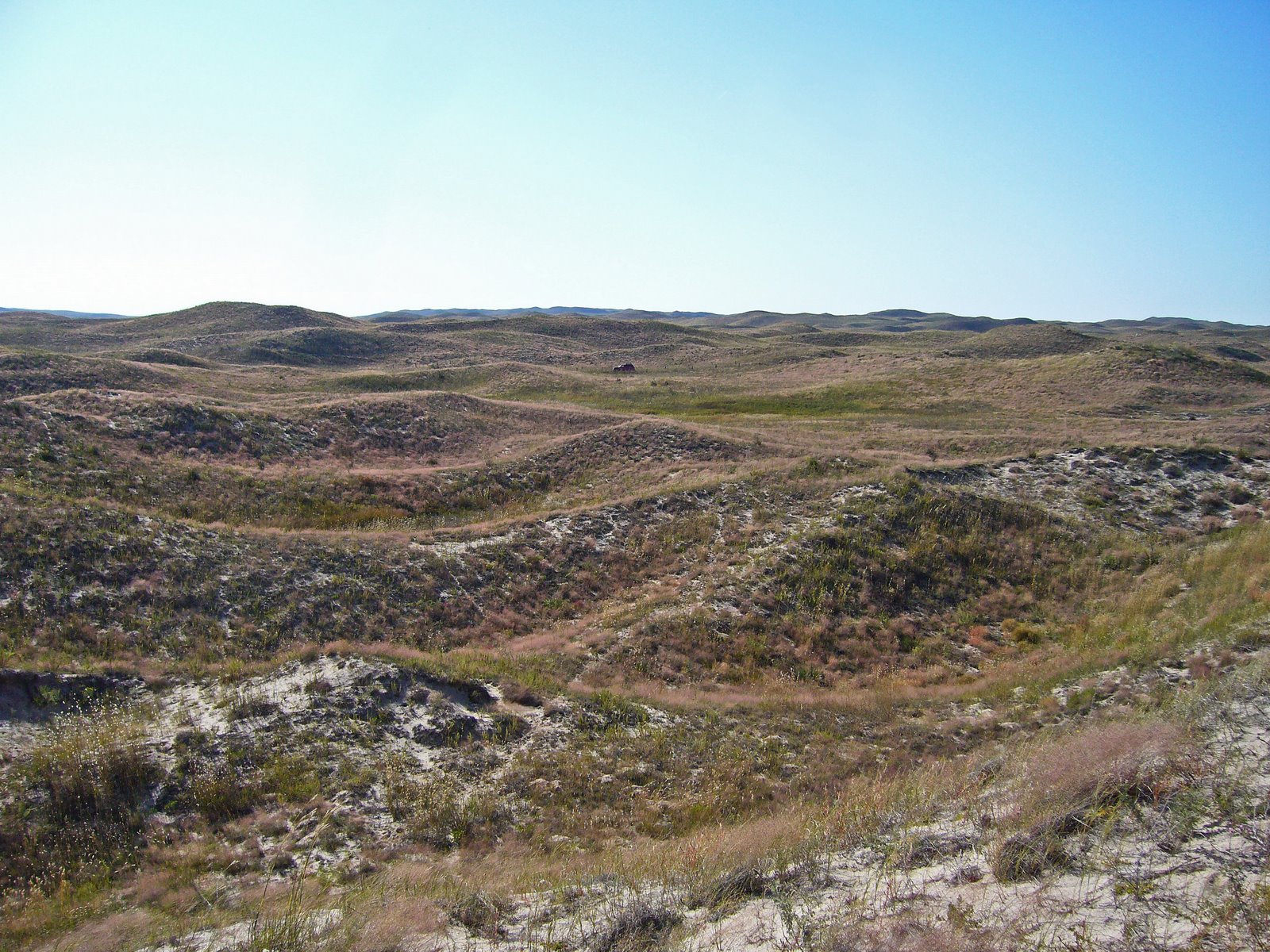
Having explored the Pine Ridge of northwestern Nebraska and the Black Hills of South Dakota, it was time to turn my attention to the vast central Nebraska Sand Hills. My original plan was to leave the Pine Ridge area early in the morning and arrive at the western edge of the Sand Hills during late morning. This would provide plenty of time during the rest of the day to explore several western Sand Hills localities before traveling east the following day to look at some eastern Sand Hills sites. It is, however, the nature of these trips that plans change – sometimes on a whim – and such was the case Thursday morning. As I approached the left turn onto Hwy 385 that would take me down to Alliance, I made a impulsive decision to take another shot at finding the elusive Cicindela lengi (blowout tiger beetle). Recall that I battled rain and cool temps in my first attempt, and although I came away with several larvae of what I hope turn out to be this species (assuming I am successful in rearing them to adulthood), they also could represent one of the more common species. I questioned the wisdom of this move during the entire 40 minutes it took to drive to the spot – completely in the opposite direction of where I had planned to go that morning, but something in my gut told me to do it anyway. If I succeeded, the lost time and resulting need to adjust my plans would be worth it. I won’t delay the suspense – it was one of the best decisions I’ve made on this trip. I found two adults, and had I not known to expect this species at the site, I might have easily mistaken them for the much more common C. formosa (big sand tiger beetle). The two species resemble each other greatly in color and markings, but the subtle differences are unmistakeable once you’ve seen them in the field. I didn’t dare risk attempting a field photo – they were just too active, but I do have one of the specimens alive and will take photos of it later in confinement. Success would not end there – shortly after finding the first C. lengi, I saw an individual of the very uncommon C. nebraskana – another new locality for the species! Matt Brust will be very pleased to add yet another data point for the distribution of this species in Nebraska. Finally, as if to add an exclamation point on the success of this diversion, I found another specimen of Megacyllene comanchei (provisional ID – see previous post) – another locality for this new state record. As with the other five specimens seen on this trip, it too was found crawling on the barren ground rather than on goldenrod flowers as is typical of most other species of Megacyllene. Quite a successful detour it turned out to be.

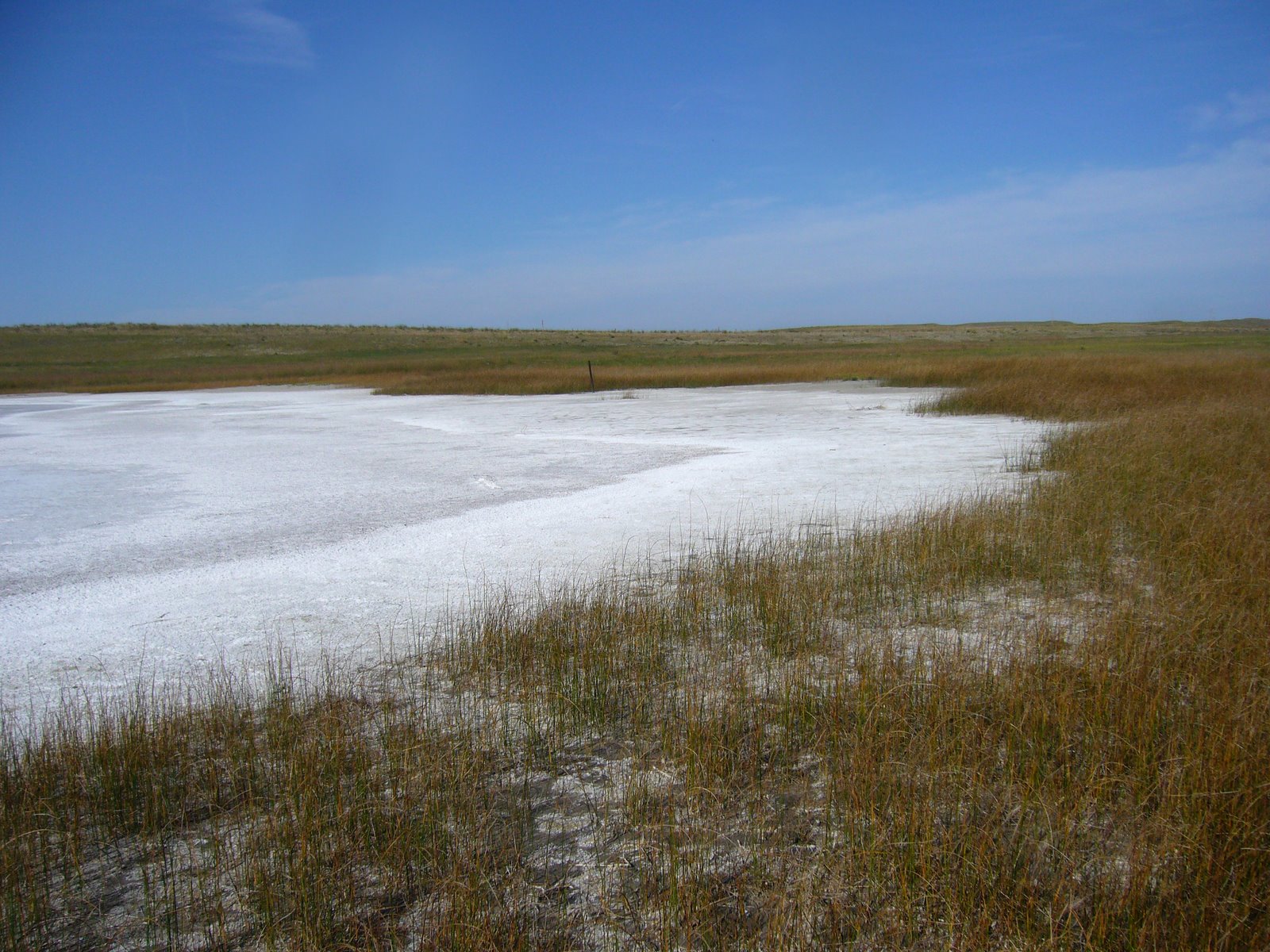
Success has its price, and the time spent on this diversion meant that something would have to give. By the time I got back to Chadron it was already past noon, which meant I would not make it to the Sand Hills until mid-afternoon. My primary target for the Sand Hills was the gorgeous C. limbata (sandy tiger beetle), which lives on barren sand dunes and blowouts. My delayed arrival left only a few hours to explore these habitats – with no sign of C. limbata, but I did find a few more C. fulgida along the margin of a small alkaline lake that Matt had told me about. Rather than move on to the eastern Sand Hills the following day as originally planned, I decided to stay on the western side for another day – my last full day of collecting. It was another good move – with a full day to explore, I found several sites in the morning with C. fulgida, and in the afternoon I finally found the coveted C. limbata. I only saw one adult out and about, but that was enough to convince me to spend some time there. As I’ve noted before, sand-inhabiting tigers start digging by midday, so I started looking for suspected burrows and digging after them. Most of what I dug up at first were the common C. formosa (big sand tiger beetle), but after a bit I was able to discriminate between the burrows of that species and those of C. limbata. After a couple hours of work, I had a grand total of seven vivid white/iridescent green individuals to show for my effort! Again, I didn’t even attempt a field photograph – they were very active once dug up, so one individual is being kept alive for photographs later in confinement. This day would also end with a nice exclamation point – another C. lengi! My lesson in field discrimination of this species versus C. formosa payed off, as I instantly recognized it for what it was.

I’ve now made it to the eastern edge of the Sand Hills, where tomorrow morning I’ll be looking for a red population of C. limbata before finishing off the trip with (hopefully) finding C. denverensis (green claybank tiger beetle) in the clay soils just to the south of where the Sand Hills end. If successful, I will have succeeded in finding a total of twelve tiger beetle species on the trip (38% of the known Nebraska/South Dakota combined fauna). The extra time spent in the Pine Ridge area means I will have to skip the last two localities in northwest Missouri, but the success I had in Nebraska does much to ease the disappointment. With a 10-hour drive confronting me after I finish my collecting tomorrow, I suspect this will be the last of my trip updates. I’ll provide a wrap up and some more photos after I return home, but in the meantime enjoy this video of C. formosa digging in for a midday siesta.