Fathers Day at the Missouri Botanical Garden

Yesterday my girls (wife Lynne and daughters Mollie and Madison) took me and my father to the Missouri Botanical Garden for Fathers Day. Although I’m an entomologist, I also have a strong botanical bent, and although my wife and father are not scientists like me, they nevertheless find a day at the Missouri Botanical Garden as enjoyable as I do. The girls, on the other hand, will never admit that they like it the way the rest of us do, but I think deep inside they enjoy it very much and, in later years, will look upon these visits as some of their fondest Mothers and Fathers Day memories.

Me and daughters Mollie and Madison.

My father and I have been back together for 20 years now. With my wife and daughters, he has become one of the most important persons in my life. I wrote an essay about my father four years ago that explains how he made me whole—it still rings true today.

Me and Pop.

I have been to the Missouri Botanical Garden many, many times over the years, but one sight have have still never seen is a corpse flower (Amorphophallus titanum). I learned earlier this week that one of their plants is about ready to bloom, so I eagerly looked for this plant as we wound our way through the Climatron. As we came near the end and I still hadn’t seen it, I wondered if somehow I had missed it along the path. Suddenly I caught a glimpse of the giant 3′ tall flower bud near the end of the footpath, and I knew instantly that I had found what I was looking for.

Corpse flower (Amorphophallus titanum) getting ready to bloom.

I will be keeping track of the progress of this flower over the next couple of weeks on the Missouri Botanical Garden Facebook page in hopes that I can see it again when the flower opens fully—a rare botanical treat that few people ever get the chance to experience!

Corpse flower explained.

In my younger years when I had a bit more free time on my hands I was a hobbyist orchid grower. I didn’t have a greenhouse but nevertheless managed to keep a steady supply of plants in bloom by growing them outdoors under shade cloth with heavy watering and fertilizing during the summer and moving them indoors under fluorescent lights and in bright windows during the winter. I don’t have nearly the time for such pursuits these days, but I still enjoy looking at their exquisite and infinitely diverse blooms whenever I have the chance, and the Climatron never fails to disappoint.
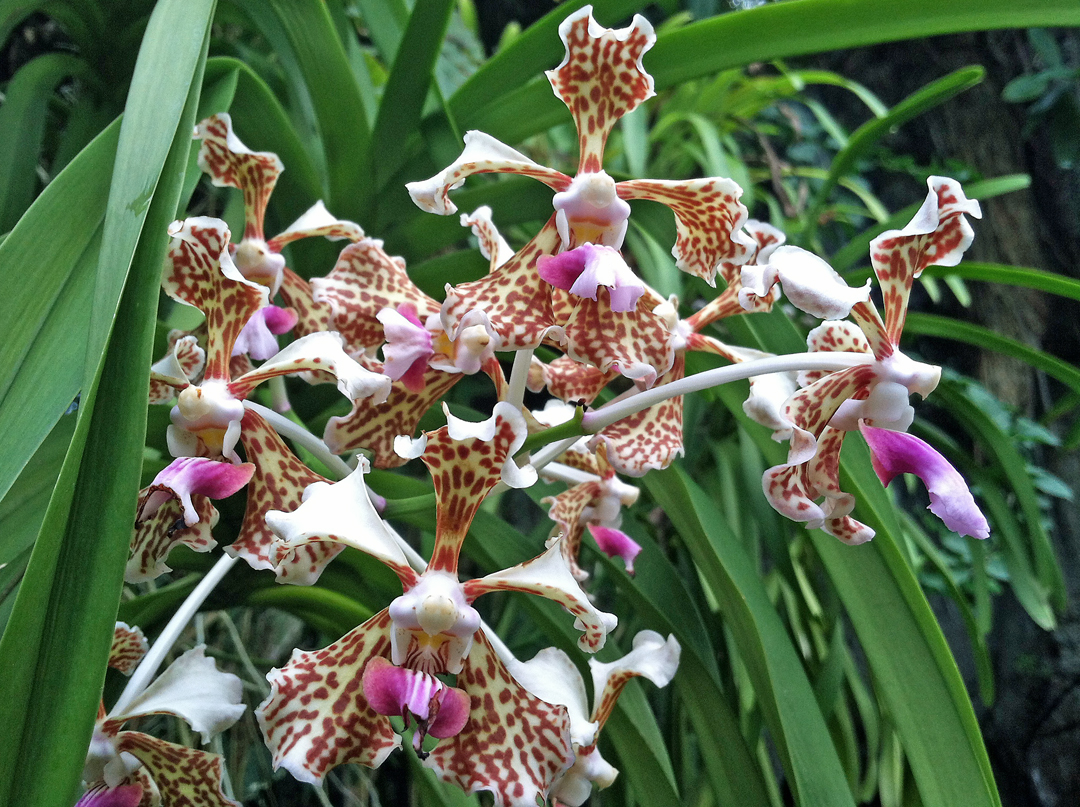
One of many epiphytic orchids blooming in the Climatron.

While walking through the Climatron, I noticed a very exotic looking lizard on the trunk of one of the trees. I watched it licking exudate from the trunk and thought such behavior seemed rather odd. I later learned that this was the Standing’s day gecko (Phelsuma standingi), and that it might have an important role in pollinating the double coconut palm (Loidiocea maldivica). Both are endemic to the Seychelles Islands north of Madagascar, with the latter bearing the largest seed of any plant in the world (up to 45 lbs. in weight). The photo below was taken of another individual through the glass of its terrarium and, thus, lacks some clarity, but it shows the vivid colors and markings that distinguish these diurnal geckos from the other more typically nocturnal members of the gecko infraorder.
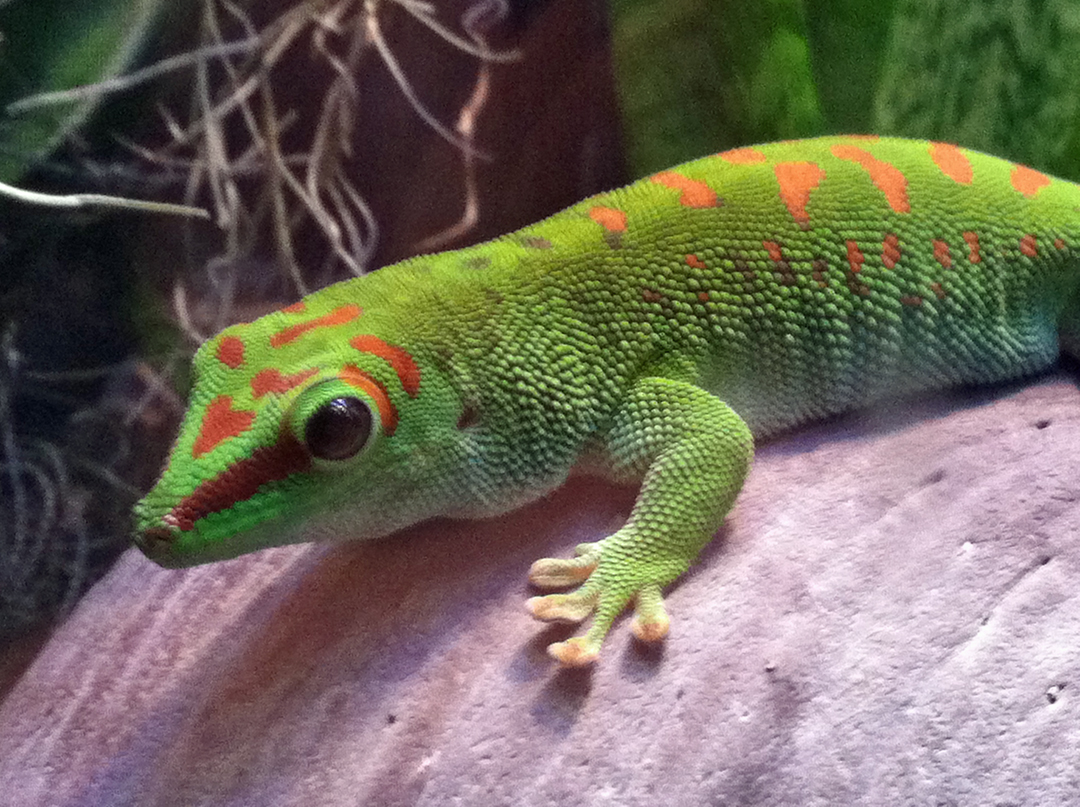
Standing’s day gecko (Phelsuma standingi).

While not gracing this post in a photo, many thanks to my loving wife, Lynne, who is the best mother my daughters could ask for and who helped make yesterday the special day for me and my father that it was!

Copyright © Ted C. MacRae 2012

Friday Flower: Phacelia purshii

Phacelia purshii (Miami mist) | Sam A. Baker State Park, Wayne Co., Missouri

It’s been rather a long time since I’ve featured a botanical subject here, so it seems a good time to resurrect my “Friday Flower” meme with this delightful little wildflower seen on my birthday field trip a few weeks ago. Phacelia purshii (family Hydrophyllaceae), also known as Miami mist, is one of only four species in this rather large genus (159 species in North America according to the USDA Plants Database) found in Missouri. Though the flowers are small, their deeply fringed petals are quite striking. The late Dan Tenaglia¹ notes at his Missouriplants.com website that the species is limited in Missouri to the extreme eastern portions of the state—the plant shown here was one of several I saw in rich, bottomland forest along Big Creek at Sam A. Baker State Park in Missouri’s southeastern Ozark Highlands.

¹ Dan Tenaglia was not only an expert botanist but a enthusiastic cyclist. He died in February 2007 after being struck by a car while riding his bicycle. Dan’s wife has kept Missouriplants.com up and running since then in honor of his passion for plants. You can help support its maintenance by making a donation to the “Dan Tenaglia Foundation”: 1416 Victoria Avenue, Opelika, Alabama 36801.

This particular woods is one of the richest I’ve seen in the state, and in the past two years I’ve featured a number of interesting plants (Phlox bifida and Tradescantia longipes), invertebrates (Drosphila sp., Magicicada sp.Calosoma scrutator, Pleuroloma flavipes, Graphisurus trianguliferG. fasciatus, Arrhenodes minutus, Neoclytus scutellaris, Corydalus cornutus and Panorpus helena) and even snakes (Crotalus horridus and Agkistrodon contortrix phaeogaster) from there. This year marks the third consecutive birthday that I’ve visited these woods, and since I’ve found something I’ve never seen before each time (hint: just wait till you see what I still have coming from there!), I have a feeling the trend will continue next year as well.

Copyright © Ted C. MacRae 2012

Friday Flower – Spring Coralroot Orchid

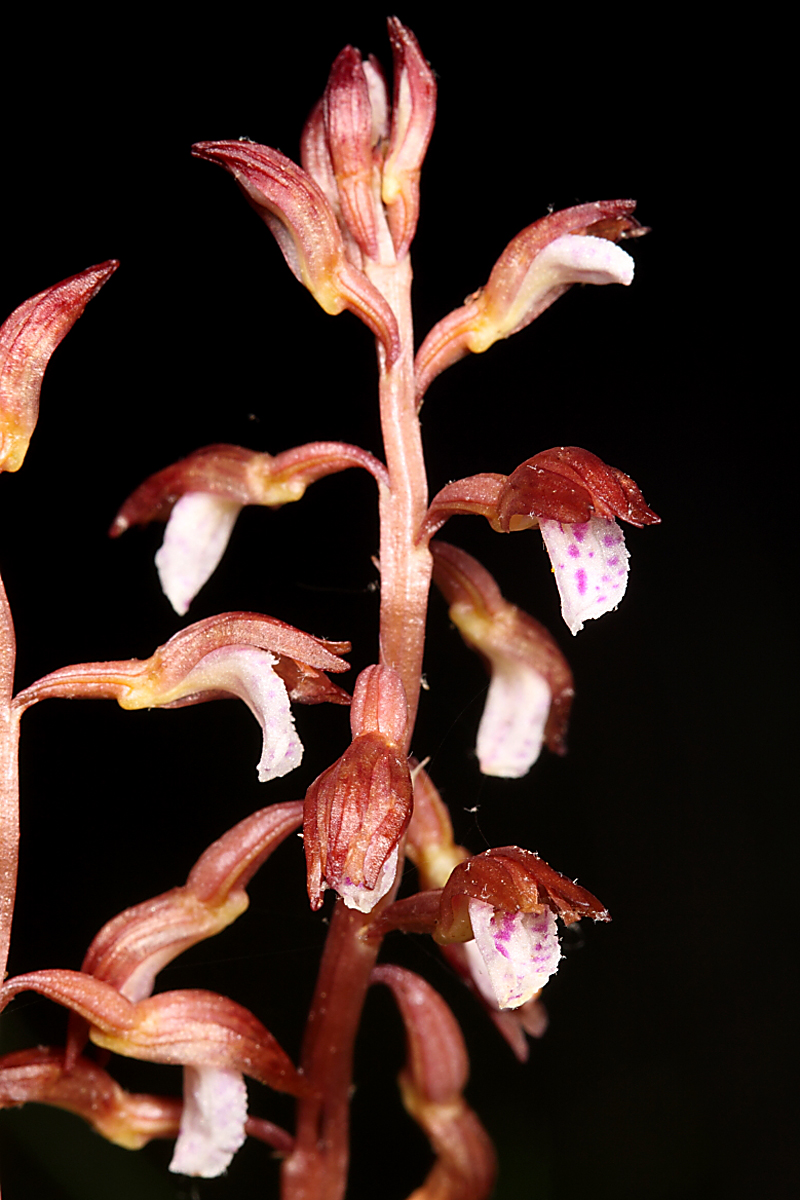
As flowers go, I have a passion for orchids.  Despite comprising perhaps the largest family of flowering plants on earth, most people think of orchids as rare, epiphytic plants restricted to the lush, hyper-diverse, tropical rain forests of South America and southeast Asia.  In reality, terrestrial orchids abound in the temperate regions of the Northern Hemisphere, with more than 200 species occurring in the United States and Canada.  Some, such as the lady slippers (genus Cypripedium),  have blossoms as magnificent as their tropical counterparts, while others are less conspicuous and easy to overlook; however, all share the hallmark that unites the family—a modified petal forming a conspicuous lower lip¹

¹ Interestingly, the lip is actually derived from the uppermost petal, but in most species the flower twists during development so that the lip is oriented at the bottom.

Missouri is home to 34 species of orchids (one introduced, and another discovered in Missouri for the first time just a couple years ago).  None of them are truly common like Rudbeckia or Coreopsis, although some are far more common than is realized.  I’ve featured a few of these previously, including Spiranthes magnicamporum (Great Plains Ladies’-tresses), Platanthera lacera (green fringed orchid), Aplectrum hymenale (Adam and Eve orchid), and Goodyera pubescens (rattlesnake plantain orchid).  I’ve traveled to the far corners of the state to see them, but for today’s featured species—Corallorhiza wisteriana (spring coralroot)—I had to travel no further than my front yard.


I’m sure my neighbors hate my front yard. I don’t use fertilizers or herbicides, and I’m unconcerned about the moss that grows amongst the thin stands of mixed grasses under the tall native oaks that shade much of the yard. My neighbor down the street especially probably shakes his head as he walks his dog past my yard every day, frustrated that I don’t share his passion for the lush, thick, über-green bluegrass monoculture that he has achieved (and must pay somebody to cut at least once a week). Spring must be especially frustrating for him, as I don’t even cut the grass until late May, giving the lawn an especially ragged, unkempt appearance. However, whatever my yard lacks in graminaceous greatness, it more than makes up for in its diversity of woodland natives—spring beauty, toothwort, trout lily, violets, coral bells… and spring coralroot. I have several colonies growing at different spots in the yard, all marked with surveyor’s flags to prevent accidental trampling until their bloom period ends and I can (begrudgingly) begin mowing the grass (no more than once a month, if I can get away with it). I’ve enjoyed these coralroot colonies every spring since I’ve lived here, but this spring was the first that I took the opportunity to photograph their blooms.

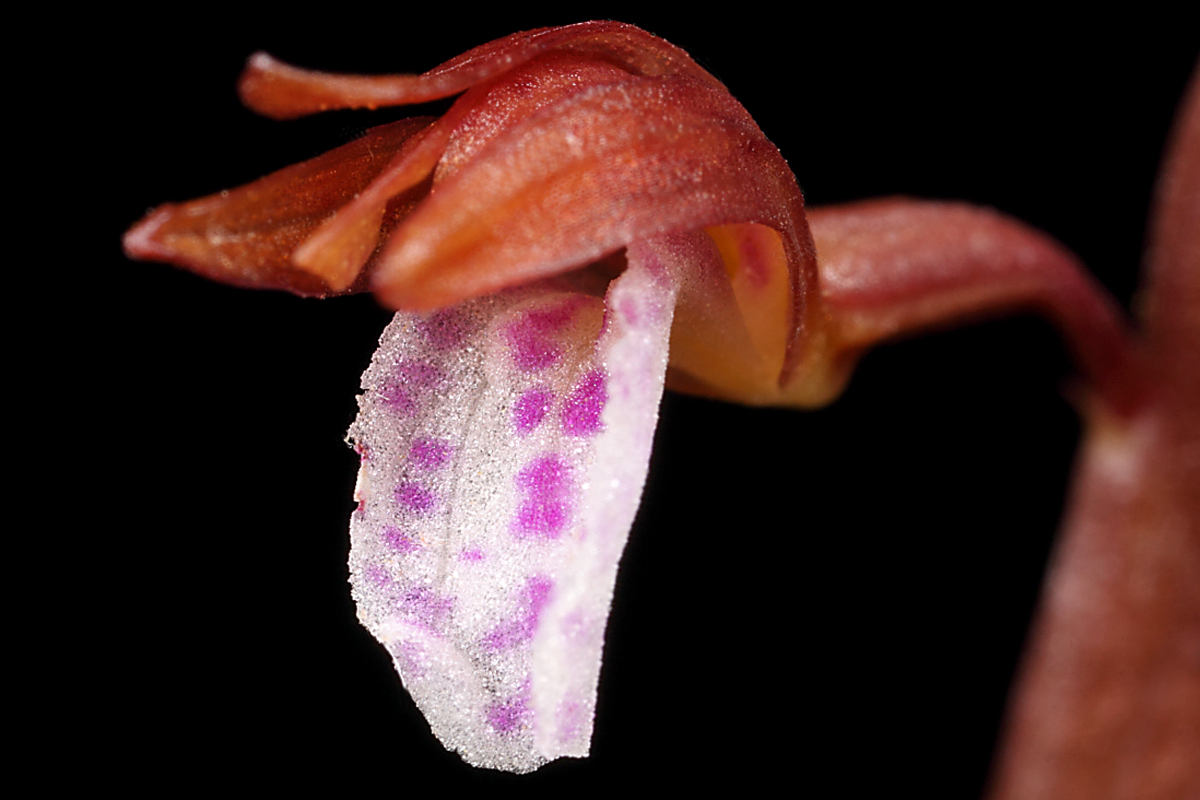
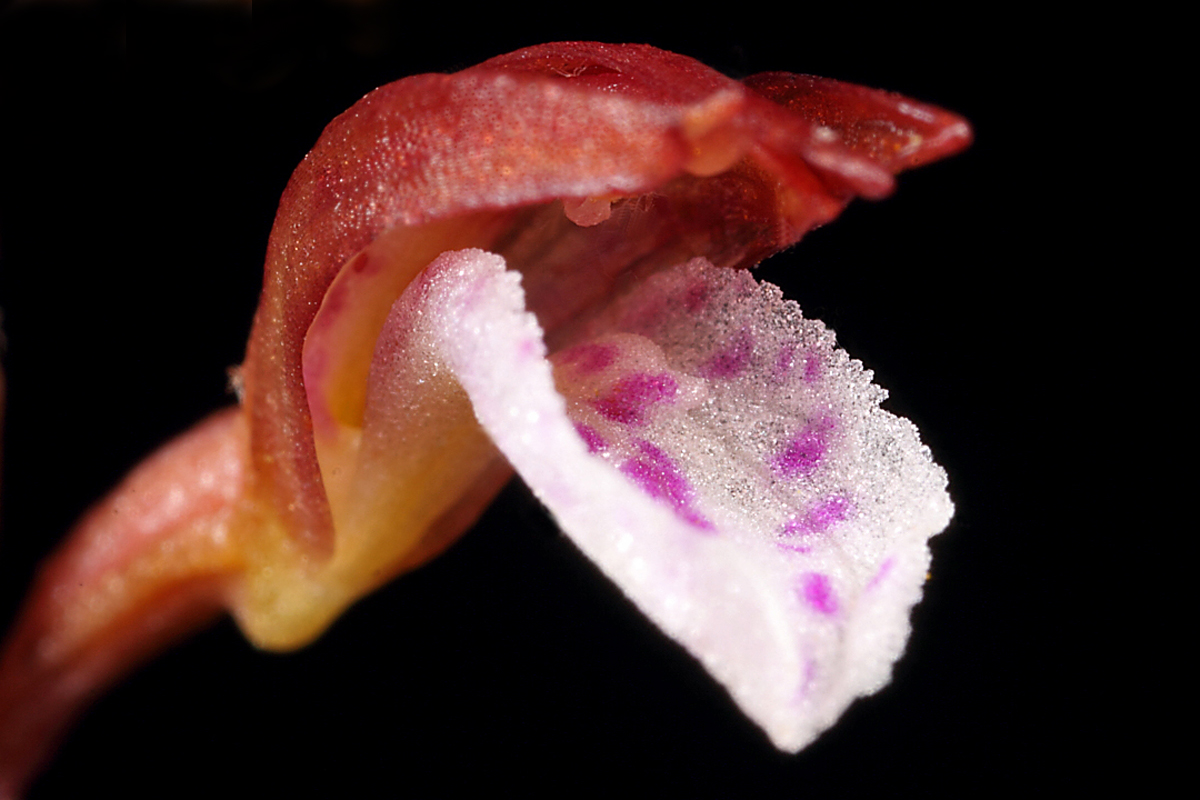
Of the three Corallorhiza species that can be found in Missouri, C. wisteriana is the most common, occurring in rich or rocky acidic soils of low wooded valleys, ravine bottoms, along streams and on ridges and slopes of open woods (Summers 1981).  My yard qualifies as the latter, occurring on a limestone ridge in mesic upland forest made only slightly more open by the late 1980s construction of the neighborhood and its minimal disturbance limited to the roads, driveways, home footprints and a small amount of associated lawn.  It is distinguished in Missouri from C. odontorhiza (Autumn coralroot) by its spring flowering period and larger flowers with notched or lobed lip, and from the rare C. trifida (known from only a few Missouri counties) by the purple or brownish stems and spotted lip.


As suggested by the unusual coloration, Corallorhiza species are largely (though not completely) lacking in chlorophyll, and as a result are mostly unable to photosynthesize their own food. Instead, the bulbous rhizomes remain hidden within the soil for much of the year, forming symbiotic relationships with soil fungi and flowering only when conditions are favorable (Luer 1975). The past several springs have been wet here, and accordingly I’ve been rewarded with the wonderful sight of these exquisite tiny blossoms.

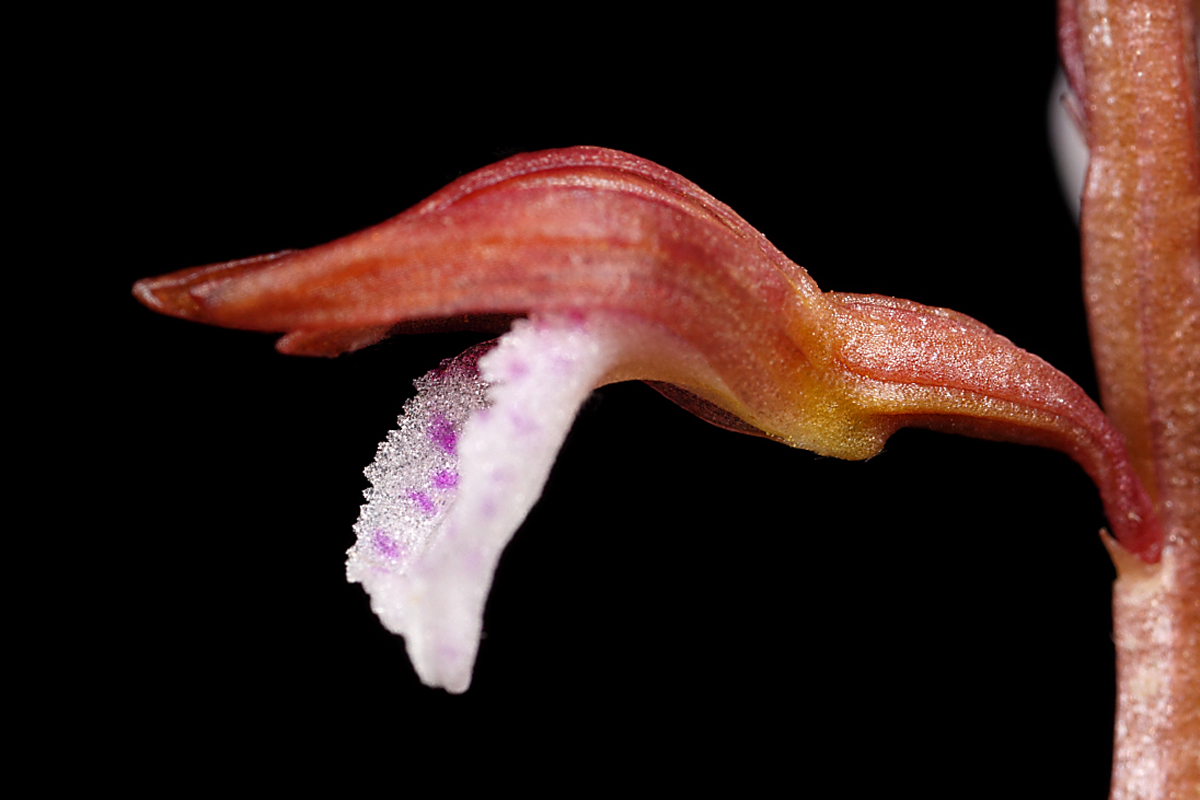
I can’t say that I’m entirely happy with these photographs, as I found it difficult to get the entire blossom in focus—when the petals were in focus the lip was not, and vice versa, even in straight lateral profile.  Nevertheless, they still show the delicate structure of the lip, with its scalloped edge and crystalline-appearing surface.  The blooms are fading now—soon there will be no above-ground evidence of their existence, and my neighbor and wife will likely gang up on me to finally power up the lawn mower.

REFERENCES:

Luer, C. A.  1975.The Native Orchids of the United States and Canada Excluding Florida.  The New York Botanical Garden, 361 pp. + 96 color plates.

Summers, B.  1981. Missouri Orchids.  Missouri Department of Conservation, Natural History Series No. 1, 92 pp.

Copyright © Ted C. MacRae 2011

Friday Flower – “Palo Borracho”

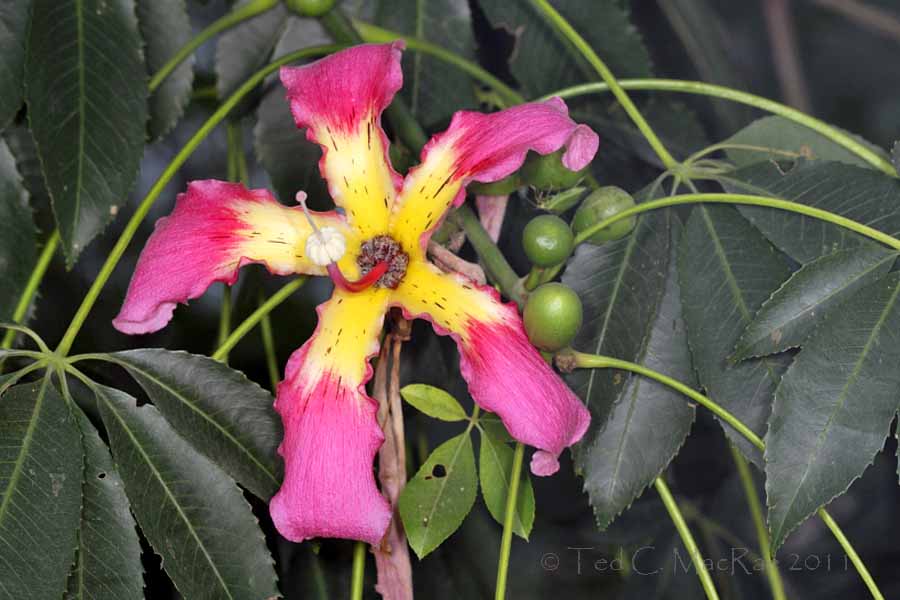
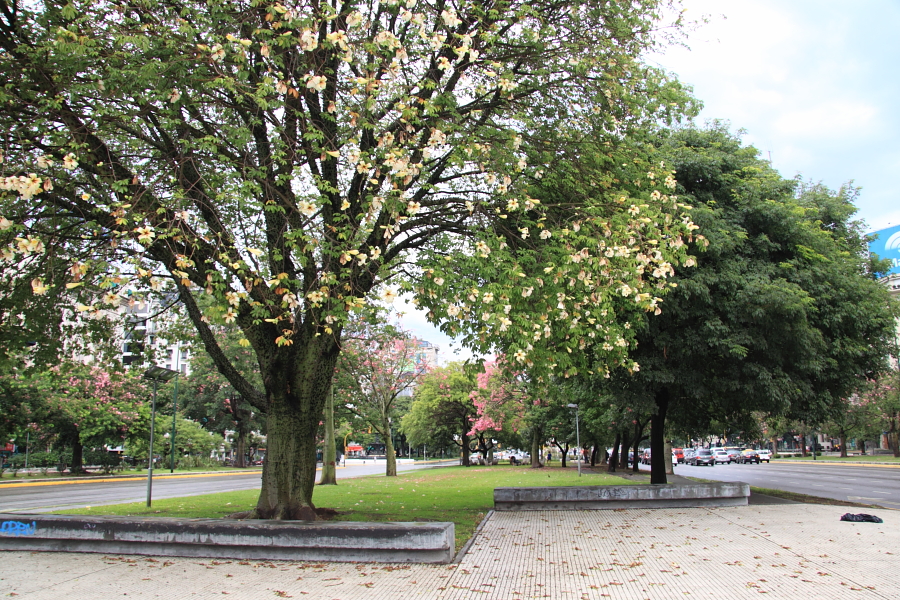
Ceibo may be Argentina’s national flower, but Ceiba is its most iconic flower.  That’s right—Ceibo and Ceiba are two, completely unrelated species!  Ceibo is the common name in Argentina for Erythrina crista-galli, a tree in the family Fabaceae, while Ceiba is a genus of flowering trees in the family Bombacaceae that includes the species pictured above—Ceiba speciosa (syn. Chorisia speciosa), known in Argentina as “Palo Borracho.”  This translates literally to “drunken stick”—a reference to the pot-bellied trunk with narrowed base that gives the tree the appearance of a wine bottle (Haene and Aparicio 2007).  Native to the dry forests of northeastern Argentina, C. speciosa has become an enormously popular street tree in the country due to their dazzling displays of hot pink blossoms, especially in Buenos Aires whose green spaces and wide boulevards are lined with grand old specimens.

Interspersed amongst the pink flowering trees are occasional specimens with the flowers mostly white but otherwise looking much the same as C. speciosa.  These are the closely related species C. chodattii (syn. Chorisia insignis), or Yuchán.  This species is native to more western, even drier areas of northern Argentina than C. speciosa and has also become popular as an ornamental tree in urban areas, though it has been planted with less frequency than its hot pink-flowered congener.

Bombacaceae also contains the famously odd baobab and kapok trees—also distingished by bulging trunks that serve as an adaptation for water storage in seasonally dry environments.  The trunks of Ceiba trees exhibit an additional water conservation adaptation with thick, conical-shaped thorns that are also capable of water storage.  The young tree picture here was photographed in Campinas, Brazil and exhibits the green coloration typical of younger trees that functions to augment their photosynthetic capabilities. In fact, the dry forests in which Ceiba spp. evolved often contain a number of unrelated plants that also are thorny and have green bark.

REFERENCE:

Haene, E. and G. Aparicio.  2007.  100 Trees of Argentina. Editorial Albatros, Buenos Aires, República Argentina, 128 pp.

Copyright © Ted C. MacRae 2011

Friday Flower – Hedychium coccineum

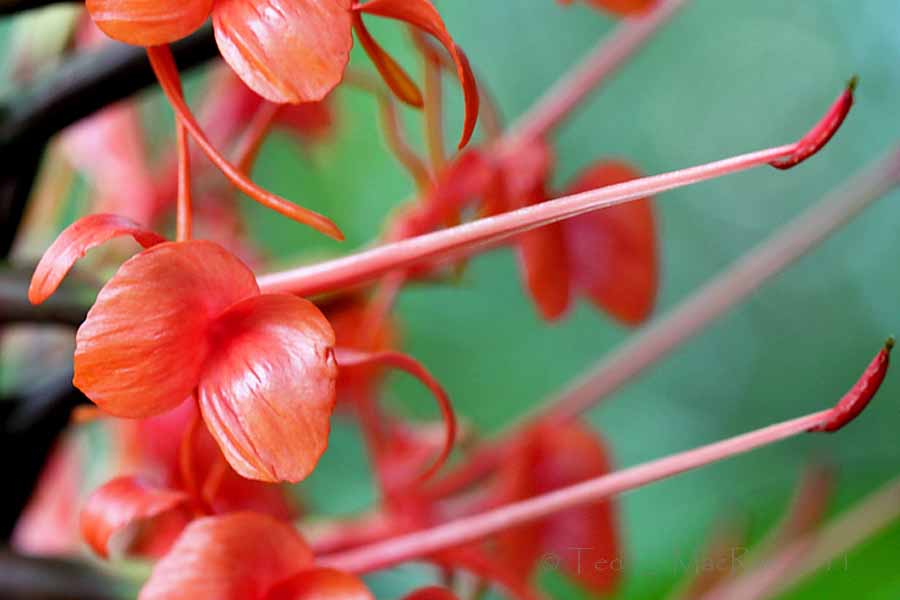
Distrito Joaquim Igidio is one of four “districts” surrounding Campinas, Brazil.  It is the most remote of the four, with farmsteads dating back more than a century interspersed amongst some of the most significant tracts of Atlantic forest still remaining in the area.  Many of the farmsteads have recently been converted to bars and restaurants featuring live music, making the area a popular weekend getaway for Campineros.  I joined my colleague and some of his friends on a visit to one of these—Bar do Cachoeira—over the weekend during my visit this past January.  After a sumputuous lunch of Brazilian cuisine (including tohesmo torresmo—my new favorite dish) and cerveja, I walked the grounds to look for insects to photograph.  Despite only having an hour or so to look around, the two species of treehoppers I found and photographed made it a successful little venture.  Coming back to rejoin my friends, I saw a few plants with these marvelously bizarre inflorescenses growing alongside a forested stream running through the grounds.  I could tell they were some type of monocot, but beyond that I had no idea.  Something inside me suspected, however, that this was likely not a native species—it just had that introduced, tropical ornamental look to it.  My suspicions were confirmed when I showed the photos to Dr. George Yatskievych, Curator at the Missouri Botanical Garden and Director of the Flora of Missouri Project.  George identified the plant as Hedychium in the Zingiberaceae (ginger family), likely one of the cultivars of Hedychium coccineum.  He added:

This species is native to tropical Asia, but is commonly cultivated in warm regions of the world. A number of cultivars and hybrids involving related species are sold, so it’s hard to be sure which one you photographed.  The most common cultivar seems to be cv. ‘Tara’ and that’s a possibility for your plant.

Known by a number of common names (red gingerlilly, orange gingerlily, scarlet gingerlily, orange bottlebrush ginger, etc.), H. coccineum hails from the eastern Himalyas, where it grows along forest edges and in mountain grasslands.  This herbaceous perennial can reach one to two metres in height and, in some places, has become somewhat invasive.  The existence of rhizomes and bulbs can make control particularly difficult.

An interesting feature of the plant is the long, exserted stamens and stigmas of the flowers.  This feature is suggestive of an interesting pollination mechanism that relies on pollen attachment to the wings rather than the main body of its moth and butterfly pollinators. Pollen transfer is effected as the lepidopterans move from flower to flower seeking nectar, brushing their wings against the floral parts in the process and thus pollinating the flowers (Zomlefer 1994).

REFERENCE:

Zomlefer, W. B. 1994. Guide to flowering plant families. University of North Carolina Press, Chapel Hill, 430 pp.

Copyright © Ted C. MacRae 2011

Friday Flower – Ceibo

Erythrina crista-galli (''ceibo'') | Buenos Aires, Argentina

One of the major flowering spectacles in Argentina is Erythrina crista-galli, or “ceibo” (also spelled “seíbo”).  So great is this spectacle that both Argentina and Uruguay have declared it their national flower.  I’ve seen only hints of it myself, as all of my trips to Argentina have been either before the peak bloom period from November to February or just after.  These blossoms were seen during my most recent trip last month in Buenos Aires at La Reserva Ecológica Costanera Sur, where for most of the day I saw only the occasional, single, straggling blossom before finally encountering the delightful trio near the end of the day.  The elegant simplicity of this photo contrasts starkly with the riotous quality that photographs of this tree in full bloom have (it may be one of the most photographed flowers on the web!).

Native also to Uruguay, Paraguay and Brazil, E. crista-galli has also been planted widely in warmer regions of the world (where it is generally known as cockspur coral tree or cry-baby tree).  Not everyone, however, is so enamored with this tree. In New South Wales, Australia, E. crista-galli has become abundant along several watercourses and is regarded locally as a significant invasive weed (Smith 1996). As in its native South America, its seeds are dispersed by floodwaters and germinate progressively over a period of three years, forming thickets (called “seibales” in Argentina) that can displace native vegetation.

The flaming red color of the flowers would suggest hummingbirds are the primary pollinators, and species in the genus Erythrina are generally characterized as hummingbird/passerine pollinated (Galetto 2000).  However, the broad, undulating “explanade” formed by the lower lip apparently serves as a landing platform for bee pollinators (Haene and Aparicio 2007).  Galetto et al. (2000) note that E. crista-galli is placed basally within the genus and suggest that it may represent an intermediate step in the shift from insect pollination to the bird pollination more typical within the genus. 

REFERENCE:

Galetto, L., G. Bernardello, I. C. Isele, J. Vesprini, G. Speroni and A. Berduc.  2000.  Reproductive biology of Erythrina crista-galli (Fabaceae).  Annals of the Missouri Botanical Garden 87(2):127–145.

Haene, E. and G. Aparicio.  2007.  100 Trees of Argentina. Editorial Albatros, Buenos Aires, República Argentina, 128 pp. [una foto de las floras de E. crista-galli aparece en la portada de este libro, un regalo que me dio mi colega y buen amigo, Guillermo Videla – muchas grácias!]

Smith, J. M. B.  1996.  Notes on Coral-Trees (Erythrina) in Australia with particular reference to E. crista-galli L. in New South Wales.  Australian Geographical Studies 34(2):225–236.

Copyright © Ted C. MacRae 2011

Friday Flower – Orquídea bambu


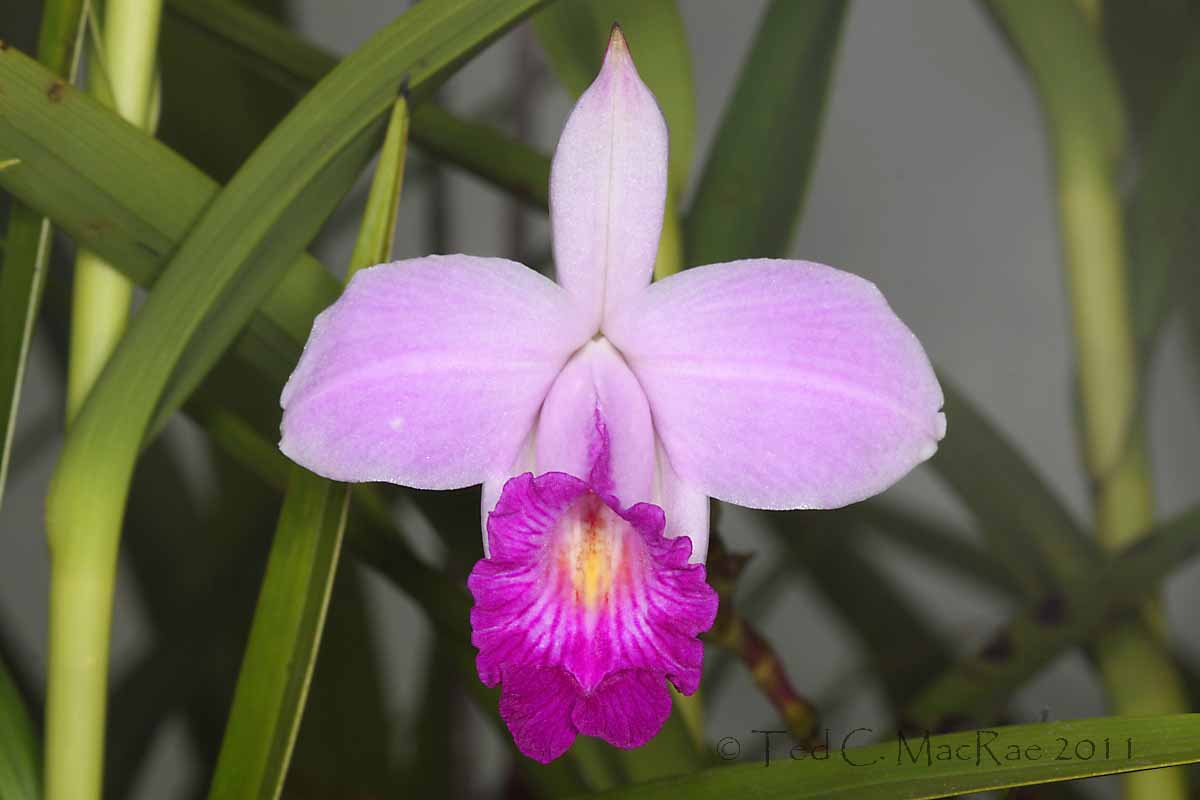
I arrived at our facility in Campinas, Brazil just before lunchtime.  I had spent the previous 20 hours on planes, trains, and automobiles (well, not trains), so when my colleague suggested that we take a short walk outside to the campus cafeteria I readily agreed.  Fresh air and at last a taste of that sumptuous Brazilian fare that I love so much sounded like a great idea.  As we walked to the cafeteria, I spotted these orchid blossoms on the tips of tall, reed-like stems growing in beds around the campus grounds… Orchids!  Growing in the ground, outside!  What a beautiful and appropriately tropical welcome to start things off.  I love orchids (and used to maintain a small collection back when I had time for such leisurely pursuits), so I asked my colleague if he knew which it was.  He didn’t, so I studied it carefully trying to remember its features so I could identify it later.  The terrestrial part struck me as a little odd for a Neotropical orchid, and I commented to my colleague that I’d bet it was something introduced from Asia.  That is precisely the case, although it took me a while to figure it out.  My initial Google and Flickr searches using terms such as “Brazil orchid” and the like produced pages and pages of Brazil’s famous diversity of native epiphytic species, but no obvious matches to this terrestrial species.  It later dawned on me that I should conduct my searches in Portuguese, and within the first page or two I found it – the appropriately named bamboo orchid (“orquidea bambusa”), Arundina graminifolia.


I would later see this orchid blooming not only in tended gardens, but from cracks in the pavement between buildings.  Originating from south and southeast Asia, this sole member of the genus is popularly cultivated in gardens across the tropics and has become naturalized in many areas.  Mary Farmer at A Neotropical Savanna has an excellent post on recognition and occurrence of this species in Panama, including detailed discussion and photographs of vegetational and floral morphology and its potential (or lack thereof) for becoming an invasive weed.

Copyright © Ted C. MacRae 2011

Friday Flower – green fringed orchid

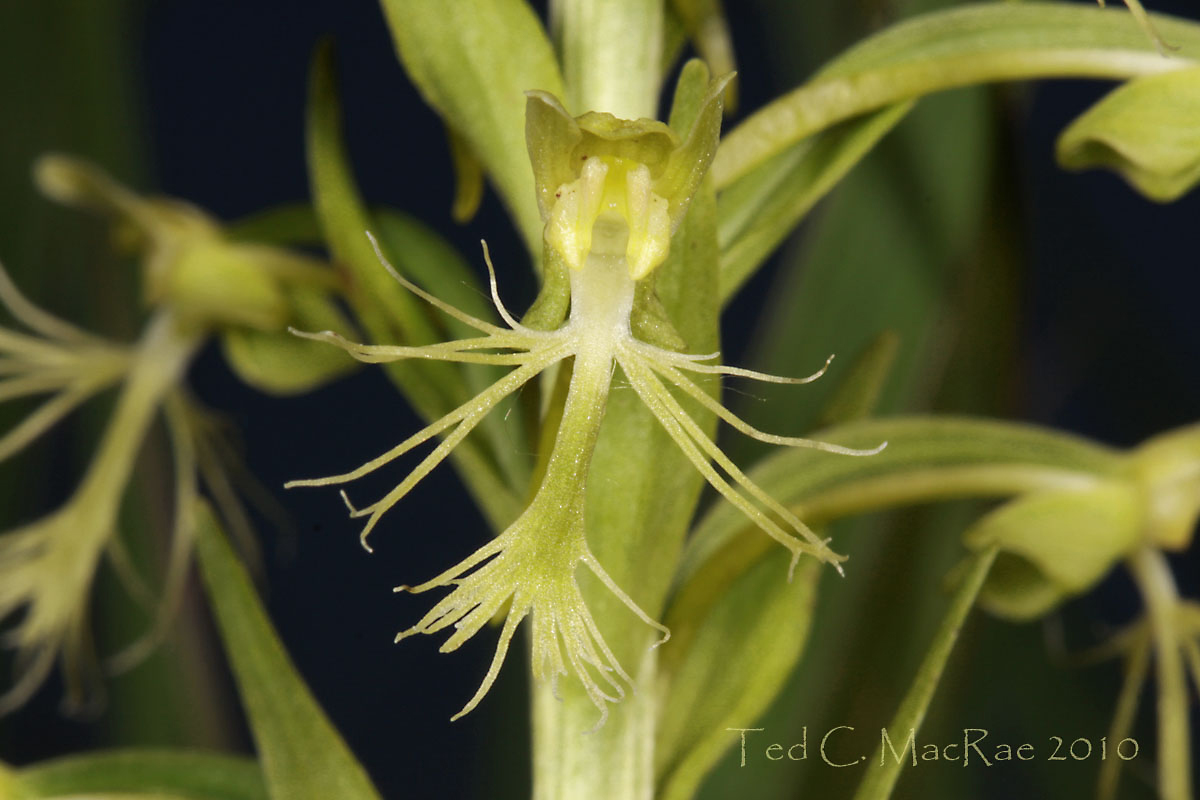
I may have been the “Beetle Group” leader for last May’s BioBlitz at Penn-Sylvania Prairie, a 160-acre tract of native tallgrass prairie in southwestern Missouri owned by the Missouri Prairie Foundation.  However, it was a plant – specifically the green fringed orchid  (Platanthera lacera) – that would prove be the highlight of my visit.  I’ve already lamented the paucity of beetles that I found at the prairie and the possible reasons for such.  It’s a shame, because to my knowledge the BioBlitz was the first real attempt to begin documenting the diversity of beetles and other insects that inhabit the prairie.  This is in great contrast to the vascular plants, of which about 300 mostly native prairie species have already been recorded from the site in active survey efforts that began even before its acquisition.   It’s no coincidence that prairie plant diversity would be so high in this frequently burned prairie remnant while beetles and other insects would be rather hard to find, since vascular plant diversity is the primary – and often the only – metric used to assess the success of and optimal timing for prescribed burning in native prairie remnants.  Unfortunately, the response of invertebrates to fire-centric management techniques such as those used here have not been so well considered, with the apparent declines in their populations now fueling an increasingly acrimonious debate on the subject.  But I digress…

Also called ragged fringed orchid, this species typifies the rather striking appearance of the genus as a whole.  I’ve always been quite enamored with orchids (even possessing a small collection during my young adult days that I grew outside under shadecloth during summer and indoors under artificial light during winter) but have encountered only a small fraction of Missouri’s 33 native orchid species – mostly in the genus Spiranthes (e.g., Great Plains Ladies’-tresses).  Despite not having seen this genus prior to this day, I knew immediately what I had stumbled upon (at least at the generic level) as we scoured the prairie in our search for its meager scraps of beetle life.  While not listed as threatened or endangered in Missouri, it is still quite uncommon, with populations scattered across the Ozark and Ozark Border counties and occurring with greater frequency in these Osage Plains in a variety of open, acidic-soiled habitats (Summers 1981).  As is typical for species with green-white colored flowers, the blossoms emit fragrance at night and thus attract sphinx moths (family Sphingidae) and owlet moths (family Noctuidae) for pollination, including the hummingbird clearwing hawkmoth (Hemaris thysbe) (Luer 1975).  While our Midwestern populations are considered “spindly and unattractive” compared to the more luxuriantly-blossomed plants of New England and maritime Canada (Luer 1975), I consider this to be the most strikingly handsome orchid I’ve encountered to date.

Photo Details: Canon 50D (ISO 100, 1/250 sec) w/ 100mm macro lens @ f/10 (whole plant) or f/18 (flower close-up), Canon MT-24EX flash (manual, 1/4 ratio) w/ Sto-Fen diffusers. Typical post-processing includes levels adjustment, minor cropping, and/or unsharp mask.

REFERENCES:

Luer, C. A.  1975. The Native Orchids of the United States and Canada Excluding Florida.  The New York Botanical Garden, 361 pp. + 96 color plates.

Summers, B.  1981. Missouri Orchids.  Missouri Department of Conservation, Natural History Series No. 1, 92 pp.

Copyright © Ted C. MacRae 2010