A little extra cash

Earlier this month the Webster Groves Nature Study Society (WGNSS) sponsored their second Nature Photo Contest. I’ve been a member of this group since I first moved to St. Louis after college in the early 1980s—primarily as a participant in the Entomology Natural History Group but for the past six years also as board member and editor of the Society’s newsletter, Nature Notes. The photo contest was run much like the first one in 2013, again with nice cash prizes for the winners, except two things: 1) the categories were a little different (see below), and 2) I was tapped to be one of the three judges in the two categories that I did not submit photos. The categories were:

  • Invertebrates
  • Vertebrates
  • Plants & Fungi
  • Natural Communities
  • Seasons

I submitted two photos each to the first three categories—the maximum allowed in both cases. One limitation for me was that the photographs had to be taken in Missouri or an adjacent state. Remarkably, during the past few years I’ve taken most of my photos in places further afield—primarily in the western U.S. in states such as California, Colorado, New Mexico, and Nevada. I have many photographs from earlier years, but frankly I don’t consider much of that body of work to be photo contest worthy. Still, I was able to come up with a few more recent photographs that I thought would be competitive.

How did it go for me? Pretty good, with two of my photos taking cash-winning prizes (see below). This may not be as good as I did last time, when I won one 1st place, one 2nd place, and one 3rd place—the last of these also voted by the audience as the Grand Prize winner. Nevertheless, the cash award is much welcomed and will be put to good use. Remarkably, it turns out that two winning photographs have never been posted at this site, so here they are:


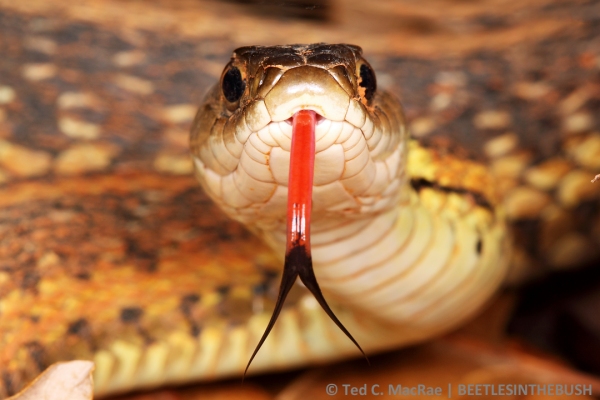
3rd Place—Vertebrates

Eastern garter snake (Thamnophis sirtalis)

Eastern garter snake, Thamnophis sirtalis | Ozark Trail, Wappapello Section, Wayne Co., Missouri

The judges regarded that it represents the true “essence” of a snake. Technically they liked the position of and focus on the tongue, the contrasting red color working well in the composition, with the blurred, winding body of the snake adding depth in a cleaner fashion than a cluttered jumble of leaves. I can’t tell you how many shots I took hoping to get one with the tongue in the perfect position—knowing all along that at any moment the snake could stop flicking it or decide to make a run for it


2nd Place—Plants & Fungi

Dicentra cucullaria

Dutchman’s breeches, Dicentra cucullaria | Battle of Athens State Park, Clark Co., Missouri

Unfortunately, I didn’t get a chance to hear the judges’ feedback regarded this photo, as I was busy judging the photos in the ‘Natural Communities’ and ‘Seasons’ categories. This photo also took many shots, even though I didn’t have to worry about the subject not cooperating. Flash on white is tricky—not enough and you don’t get the stark contrast with the black background; too much and you end up blowing the highlights and losing the delicate detail. Add to that trying to get the subject perfectly symmetrical within the frame (I wanted to achieve this ‘for real’ and not through subsequent cropping), and I probably took close to two dozen shots before I felt like I had it right.

Perhaps you noticed that neither of the photos were in the ‘Invertebrates’ category. This just goes to show that the amount of interest in and effort one puts into a certain type of photography does not guarantee success—or prevent success in photographing other, less-familiar subjects. For my part I am pleased that any of my photographs were deemed good enough to receive a cash prize and thank WGNSS for giving local nature photographers the opportunity to have their work recognized and rewarded.

© Ted C. MacRae 2015

Earth’s oldest living things!

Westgard Pass

A view down towards Westgaard Pass.

I’ve mentioned before that I am never happier than when I am in the field, especially when it’s an extended insect collecting trip. One problem I face on these trips, however, is the conflict between my desire to stay focused on the task at hand (collecting insects) versus indulging my broader natural history interests—landscapes, botany, geology, etc. The urge to explore increases the further west I go, as the landscape becomes more diverse and unfamiliar, and reaches its zenith in the king of landscapes that is California.

Ancient Bristlecone Pine Forest

Approaching Ancient Bristlecone Pine Forest from the south.

During our Great Basin collecting trip last August, field mate Jeff Huether and I visited the White Mountains near Bishop to look for Crossidius hirtipes nubilus, an isolated subspecies of longhorned beetle (family Cerambycidae) known only from the vicinity of Westgaard Pass. At 7,282′ elevation, the landscape around Westgaard Pass is beautiful enough, but we also knew that lying another 3,000′ above us was one of the most stunning landscapes that anyone even remotely interested in natural history could possibly imagine—Ancient Bristlecone Pine Forest (ABPF)!
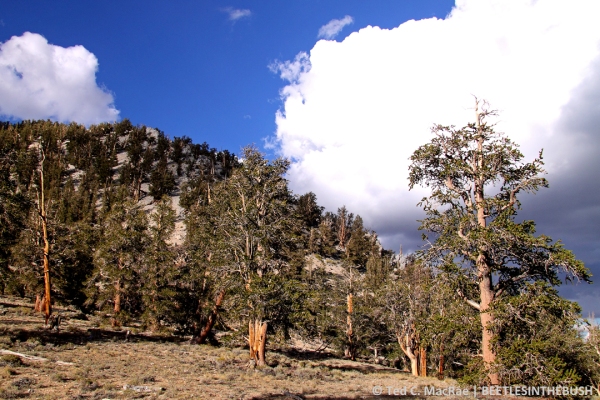
Ancient Bristlecone Pine Forest

Entering the Ancient Bristlecone Pine Forest.

While Jeff had previously visited this magical place, I’d not yet had the chance despite my five years in California back in the 1990s (too many places, not enough time!). I had mentioned this to Jeff earlier in the trip, so with small but adequate series of C. hirtipes nubilus in our bottles Jeff suggested we take a break from insect collecting and visit ABPF. I was excited enough about the prospect of seeing these ancient trees, but I could not have anticipated just how bizarre and otherworldly a landscape we were about to see!

Bristlecone Pine Ancient Forest

Bristlecones growing in the harshest sites tend to be the longest-lived.

ABPF is, of course, named for the Great Basin bristlecone pines (Pinus longaeva) that occur here, one of three closely related pine species found in scattered, high mountain localities across the western U.S. and widely regarded to be the longest-lived of any non-clonal organism. The oldest known individual tree in the world, measured in 2012 at 5,062 years of age, is a bristlecone that occurs at this very site (although its identity and precise location are kept secret—for sadly obvious reasons), and nearly two dozen additional trees exceeding 4,000 years of age are known to occur here as well. True—there are clonal plants such as creosote bush and quaking aspen that are believed to survive as distinct genotypes for longer periods of time. However, the individual plants themselves are short-lived and quickly replaced by new sprouts from the clonal root mat. A 6,000-year old clonal patch of aspen may be technically older than a 4,000-year old bristlecone, but in my mind only the latter is bona fide ancient!
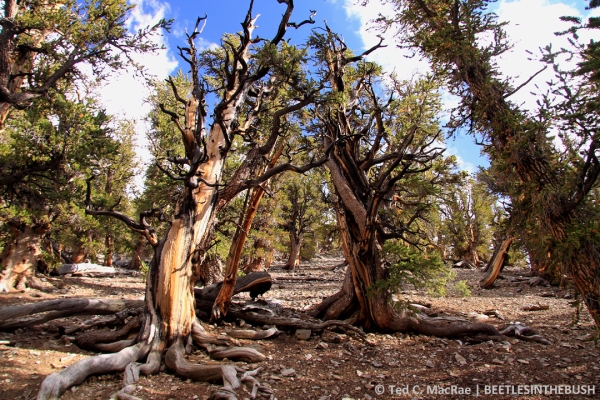
Ancient Bristlecone Pine Forest

Most older bristlecones have trunks with large sections of exposed dead wood.

In the White Mountains, bristlecone pines are restricted to exposures of white dolomite (giving the mountains their name), usually between 10,000′ and 11,500′ in elevation. We could see the sharp demarcation between the white dolomite—heavily colonized by bristlecones—and non-dolomitic bedrock colonized by shrubs but devoid of pines as we approached ABPF from the south.

Bristlecone Pine Ancient Forest

Dead bristlecones stand with main limbs intact for centuries.

Great Basin bristlecones occur also in the Inyo Mountains and other high mountains sites in Nevada and Utah. Most of these other sites have milder climates that offer more favorable growing conditions for the trees, and as a result the trees at these sites grow faster but—ironically—also die younger (Lanner 1999). Greater moisture availability and soils with more organic matter favor denser stands of trees as well as a richer shrub layer. This results in a greater fuel load that can carry fires, which are generally absent in the White Mountains groves with their widely spaced trees and sterile, rock substrate. Moreover, the harsh, dry conditions in the White Mountains inhibit the growth of fungi that can penetrate and colonize trunks at injury points, and there is a general lack of other threats that exist at milder sites such as bark beetles, sapsuckers, and even porcupines!

Bristlecone Pine Ancient Forest

Bristlecone Pine Ancient Forest

Unlike other pines growing at high elevations, such as whitebark pine (Pinus albicaulis), which develops an almost shrubby, beaten-down form in the face of constant battering by fierce winter winds, Great Basin bristlecones grow solidly upright and develop massive branches supporting a spreading crown. As the trees get older, their outer branches become long and pendulous, drooping under the cumulative weight of numerous, tightly packed needle clusters that can remain on the tree for up to 40 years! (The needles of most pines are shed after just a few years.)

Pinus longaeva male catkins

Bright, reddish-brown male catkins emerge near the tips of the densely needeled branches.

Most of the trees at ABPF grow on steep slopes of barren dolomite with virtually no soil layer, and the trunks of older trees usually bear large sections of exposed dead wood. Over the course of their very long lives, erosion of the rocks on the steep slopes around them gradually exposes roots, killing them and resulting in death of the trunk sections and branches that they feed. In many cases nearly the entire trunk is dead, but the tree lives on in a narrow ribbon of living bark snaking or spiraling up the trunk and connecting the last surviving roots to a single living branch.

Pinus longaeva sapling

A bristlecone sapling represents the promise of enduring life in the face of harsh conditions.

Eventually death does come, but it can take centuries for the dry, cold air to decompose the standing carcass and even millenia for the hard, resinous wood to break down completely once the tree finally does fall. The oldest existing wood at ABPF has been dated to more than 9,000 years old! It is almost incomprehensible to imagine stepping over a log that began life as a sapling shortly after the last glacial retreat and the arrival of the first humans to step foot in North America!
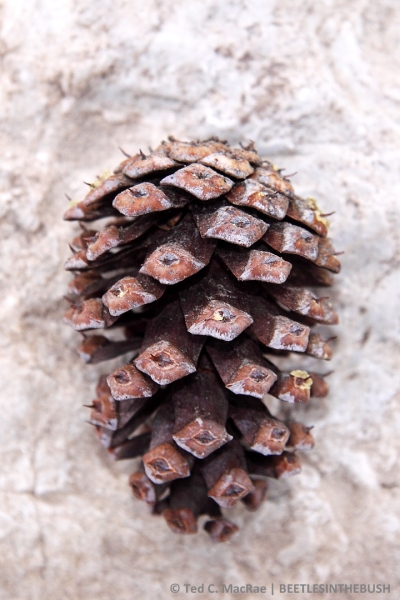
Pinus longaeva cone

Bristlecones are named for, well.. the bristles on their cones!

Why do Great Basin bristlecones live so long? It’s tempting to presume that the dry, high elevation environment, with its long, harsh winters and short, cool growing season enables an unusually slow metabolism that somehow translates to longevity. There is no evidence to support this, however. Perhaps characteristics such as its extremely decay-resistant wood play a part, but there are a few other species of pine that are also extraordinarily long-lived, yet still fall far short of the great ages that can be attained by Great Basin bristlecone pine. These include limber pine (Pinus flexilis), which co-occurs with Great Basin bristlecone pine in the White Mountains, but this species maxes out at about 2,000 years of age. Likewise, Rocky Mountain bristlecone pine (Pinus aristata) in Colorado can reach around 2,500 years of age. (Interestingly, limber pine occurs here as well, but in this area it reaches at best only about 1,500 years of age.) Even Great Basin bristlecones themselves growing at other sites, as noted above, are unable to match the longevity of the trees growing here in the White Mountains. Perhaps, as California conifer expert Ronald Lanner remarked, the question is not why these trees “live so long”, but why they “take so long to die”.
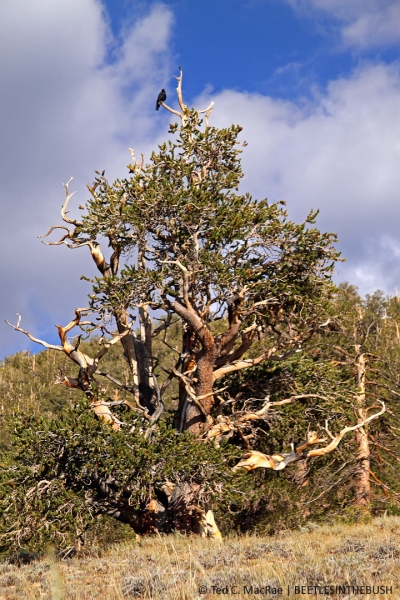
Bristlecone Pine Ancient Forest

A raven perches atop a fine, massively trunked specimen.

REFERENCE:

Lanner, R. M. 1999. Conifers of California. Cachuma Press, Los Olivos, California, 274 pp. [description].

Copyright © Ted C. MacRae 2014

I’m a fun guy!

The habit of looking at things microscopically as the lichens on the trees & rocks really prevents my seeing aught else in a walk.—Henry David Thoreau

I should have loved an opportunity to go for a walk in the woods with Thoreau—especially during the winter when my preoccupation with insects no longer restrains my fascination with all things natural. While many entomologists see winter as a break from field work—a time to indulge/suffer (depending on mood) the more mundane curatorial tasks associated with their studies, my time in the field continues uninterrupted with long walks in the woods. Hiking stick replaces insect net. Energy foods replace vials. I still pry bark and flip rocks—I cannot completely ignore the potential to find insects. But I also peer through miniature forests of moss, poke about the mushrooms on a fallen log, and squint at the lichens encrusting a rock. Yes, insect specimens collected during the previous summer still need to be pinned, but there is time for that. There will always be time for that—if not now then in my later years when my ability to scramble through the bush begins to wane. For now, the woods sing their siren song, and I must listen.

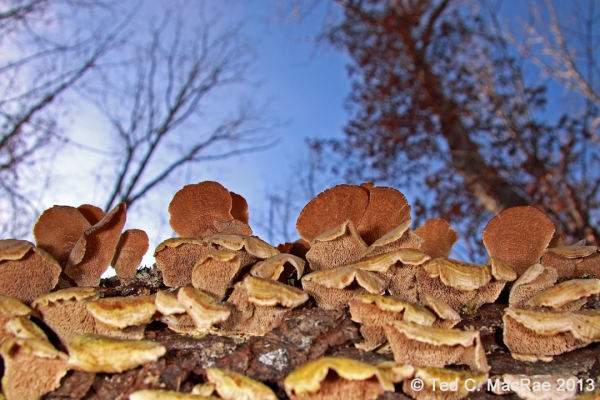
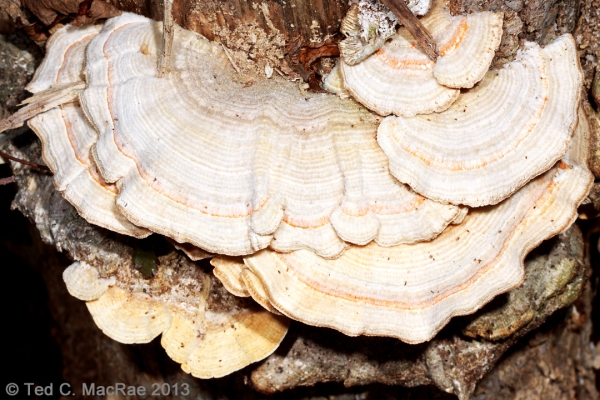
Trichaptum biforme (purple tooth) on fallen river birch (Betula nigra) | Reynolds Co., Missouri

Trichaptum biforme on fallen trunk of Betula nigra | Reynolds Co., Missouri

Purple tooth (Trichaptum biforme) on dead red maple (Acer rubrum) | Reynolds Co., Missouri

Trichaptum biforme on fallen branch of Acer rubrum | Reynolds Co., Missouri

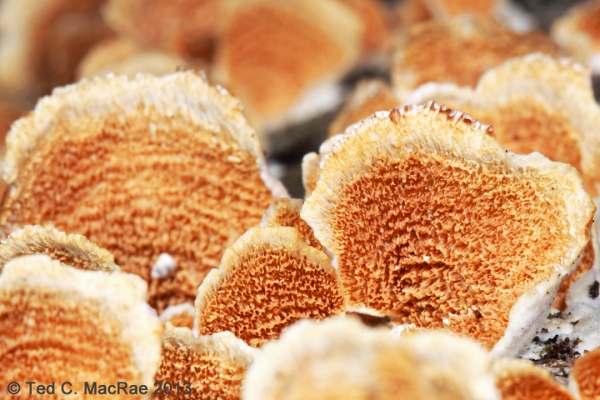
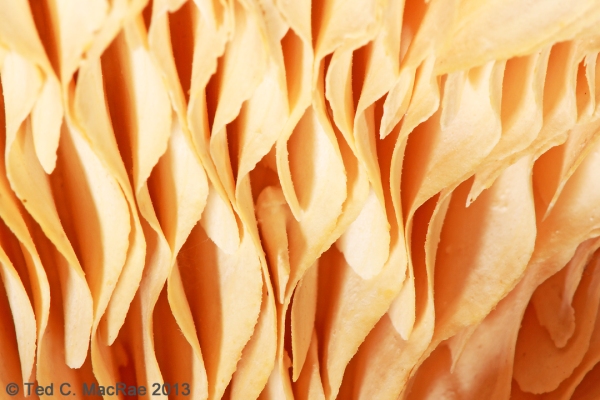
Multicolored gilled polypore (Lenzites betulina) on river birch (Betula nigra) stump | Reynolds Co., Missouri

Lensites betulina on dead stump of Betula nigra | Reynolds Co., Missouri

"Gills" distinguish this shelf fungus from turkey tails and other similar types.

“Gills” distinguish this shelf fungus from turkey tails and other similar types.

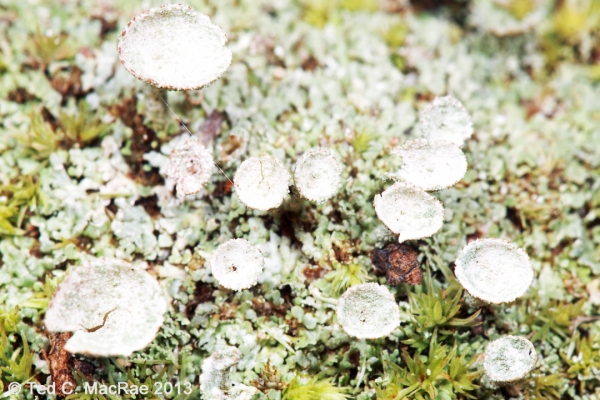
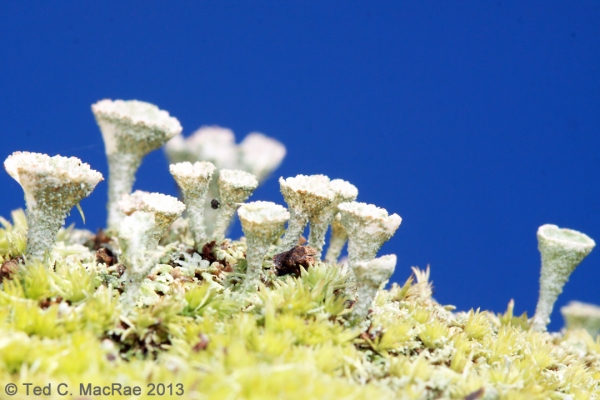
Cladonia chlorophaea or C. pyxidata on chert-trail | Reynolds Co., Missouri

Cladonia sp. (poss. C. chlorophaea or C. pyxidata) on chert-trail | Reynolds Co., Missouri

(Cladonia pyxidata)

A forest in miniature!

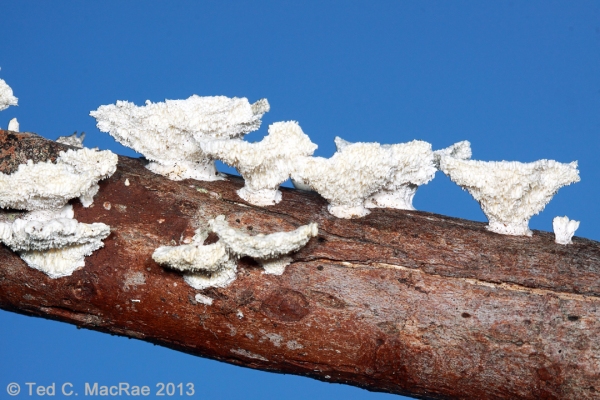
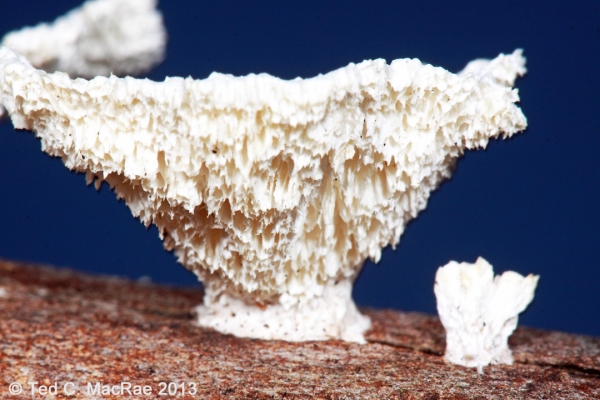
Irpex lacteus? on fallen branch of Acer rubrum | Iron Co., Missouri

Irpex lacteus (?) on fallen branch of Acer rubrum | Iron Co., Missouri

Spores are released from the toothy cap underside

Spores are released from the toothy cap underside

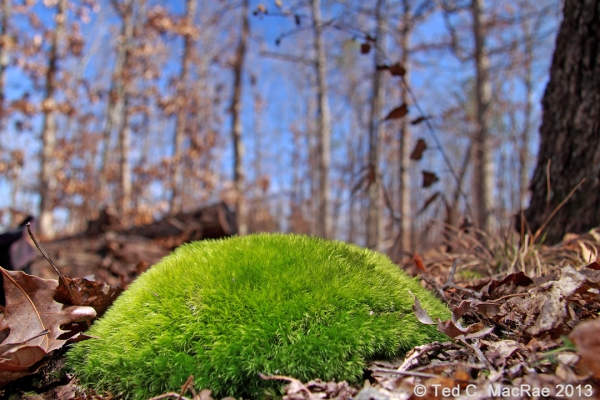
Leucobryum glaucum on forest floor | Reynolds Co., Missouri

Leucobryum glaucum on forest floor | Reynolds Co., Missouri

Postscipt: all photos shown taken on 30 November 2013 while hiking a 7-mile stretch of the Ozark Trail (Karkaghne Section in Reynolds Co. and Middle Fork Section in Iron Co.).

Copyright © Ted C. MacRae 2014
Spring Unfolding

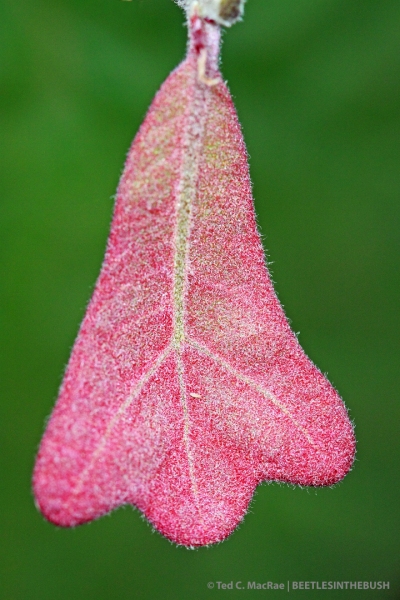
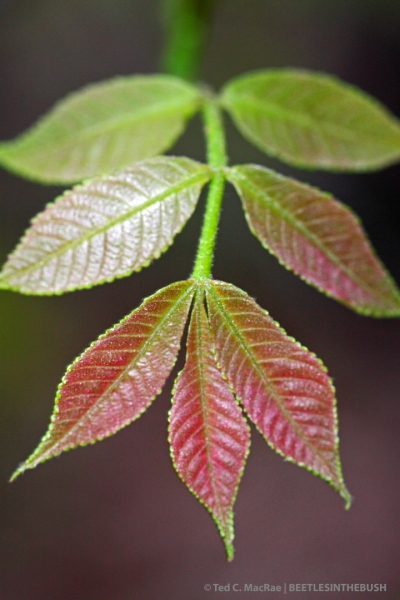
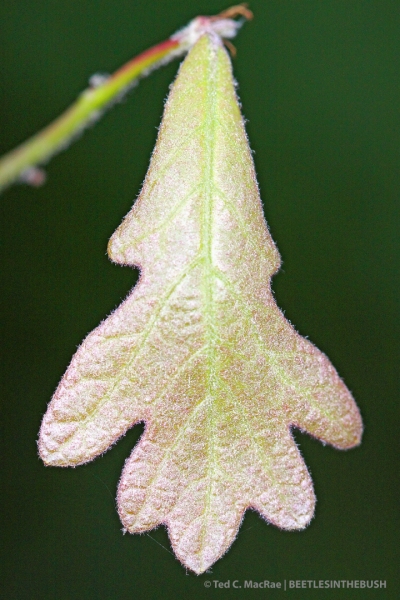
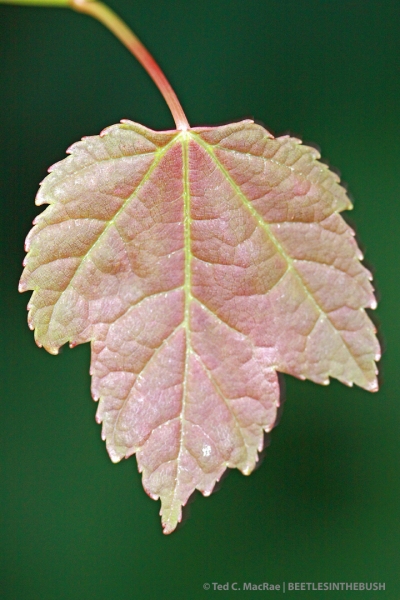
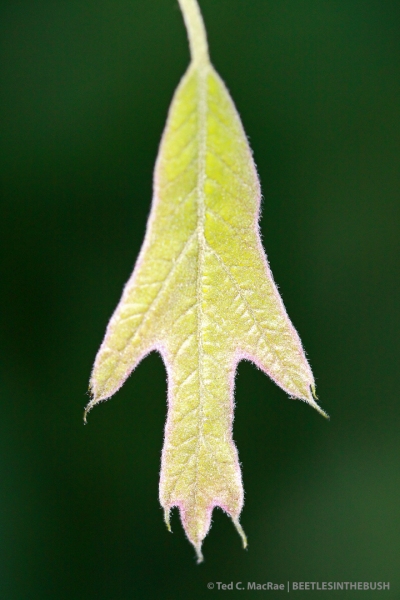
For many people, spring is their favorite time of year—the long, cold winter having given way to warmth, sunshine, and flowers. I love spring as well but find myself frustrated sometimes by its Jekyll and Hyde nature. This spring was particularly frustrating—the cold and rain seemed at times interminable, delaying the onset of the spring flora several weeks past normal. Once the sun finally did appear, the entire forest exploded in a cacophony of simultaneous leaf and bloom. Plant phenologies were so compressed that there was almost no time to appreciate the season before it was over. Nevertheless, as I waited patiently for those warmer days, I was still able to find beauty in the pre-bloom forest among its nascent leaves—their development put on hold for the time being but taking on an almost floral quality in the absence of the true flowers that they preceded. As a student of wood-boring beetles, I’ve had to become also a capable botanist, at least with regards to the woody flora, and pride myself on being able to identify trees not just by their mature leaves, but also their wood, bark, growth habit, and natural community—characters that are always available when leaves may not be (as is often the case with dead trees). Nascent leaves, on the other hand, are like flowers—ephemeral and often colorful. One must make an effort to see them, but it is effort well spent.

The photos below were taken on a cold, overcast day in late April at Holly Ridge Conservation Area in extreme southeastern Missouri. How many of them can you identify to species? This is an open challenge (i.e., no moderation of comments), and the first person to correctly identify all six will be declared the winner (remember, spelling counts!).


#1

IMG_2756_enh_720x1080


#2

IMG_2778_enh_720x1080


#3

IMG_2789_enh_720x1080


#4

IMG_2801_enh_720x1080


#5

IMG_2816_enh_720x1080


#6

IMG_2817_enh_720X1080
Copyright © Ted C. MacRae 2013

And the results are in…

I recently entered my first photo contest, a local competition sponsored by the Webster Groves Nature Study Society (of which I have been a member for ~30 years), and although the competition was limited to its few hundred members there were some serious cash prizes on offer. Being a noob at photo contests and a still relative newcomer to photography in general, I wasn’t sure what to expect. I thought my photos might be good enough to compete, but I also knew I would be going up against some long-time and very skilled nature photographers. The basic rules were a maximum of two submissions in no more than three of the following categories:

  • Botany
  • Entomology
  • Ornithology
  • Landscapes/habitats

Since I’ve only photographed two birds ever, I decided to submit entries to each of the other three categories. It was an interesting competition—the judges (each category had a panel of three consisting of a WNGSS board member, a natural history expert, and a photography expert) had a chance to see all of the photographs prior to the event (held last night) and select the top ten from each category, but the rest of the judging was done live at the event. Eventually, from each category a 1st place, 2nd place, and 3rd place photo was selected. The 12 winning photographs were then displayed in a continuous loop, and everybody attending the event was allowed to vote for one grand prize winner. The grand prize winner had to receive more than 50% of the vote, so a few runoff rounds were required to decide the final winner.

How did it go for me? I had a pretty good night, with three winning photographs:

Entomology—3rd place

Cicindela repanda (Bronze Tiger Beetle) | St. Louis Co., Missouri

Cicindela repanda (Bronze Tiger Beetle) | St. Louis Co., Missouri

Botany—2nd place

Hamammelis vernalis (Ozark witch hazel) | Iron Co., Missouri

Hamammelis vernalis (Ozark witch hazel) | Iron Co., Missouri

Entomology—1st place

Arctosa littoralis (beach wolf spider) | Lewis Co., Missouri

It was a thrill for me to learn that, out of the six photographs I submitted (and I really didn’t think my two landscape submissions were competitive to begin with), three were among the 12 final prize winners. That also made them eligible for the grand prize, but in this case I didn’t really expect the larger membership (which has a lot of birders) would really take to my closeup insect photographs. To my surprise, the first round of voting produced four finalists—two of which were my insect photos! The first runoff vote eliminated one photo—but not either of mine, and the second runoff eliminated one more photo—but again neither of mine. I had won the grand prize without yet knowing which photo would be the winner! In the end, the tiger beetle took the top prize. Personally, I was happy about that, because even though the photo took only 3rd place in the entomology competition, I thought it was the stronger of the two photos based on composition, the time and effort it took to work the beetle to finally “get the shot” (not that the wolf spider photo didn’t also take a lot of effort to get that close), and the natural history behavior that it captured (stilting and sun-facing for thermoregulation). I know blog commenting is becoming passé, but if you have any particular thoughts about these photos, good or bad, I would love to hear from you.

Overall I would have to say that, winner or not, participating in a photo competition was an extraordinary learning opportunity for me as I try to hone my craft. Listening to the comments of the judges in all of the categories, both on the natural history and the technical aspects of the photographs, gave me a lot of insight into how I might further improve my technique and take photographs that can be appreciated on both technical and artistic grounds. More importantly, the cash was nice, but the motivation to keep trying that I got out of the experience was priceless!

Copyright © Ted C. MacRae 2013

My favorite of Missouri’s milkweeds

Milkweeds of the genus Asclepias are among my favorite plants, although I’m not fully sure why that is the case. Sure, their blooms are conspicuous and colorful, but so are those of many other plants. Perhaps one reason is their status as hosts for milkweed beetles (genus Tetraopes, family Cerambycidae). Four species of these beetles occur in Missouri, including the rare T. texanus. Another reason might be their diversity—in Missouri alone there are 16 different species, ranging from the ubiquitous common milkweed (A. syriaca) to the federally endangered Mead’s milkweed (A. meadii). The latter is one of six milkweed species occurring in Missouri that I have not yet seen, so I suppose I should withhold judgement until I’ve succeeding in finding all 16 species. Nevertheless, I would have to say that clasping milkweed (A. amplexicaulis) has to be my favorite of Missouri’s milkweeds.

Clasping milkweed (Asclepias amplexicaulis) | Sand Prairie Conservation Area, Scott Co., Missouri

Clasping milkweed (Asclepias amplexicaulis) | Sand Prairie Conservation Area, Scott Co., Missouri

Clasping milkweed (also known as sand milkweed—not to be confused with A. arenaria occurring further west in the Great Plains) is said to occur sporadically throughout Missouri in prairies, glades, rocky open woods, roadsides, and railroads. However, I have seen this species only a few times—all in dry sand habitats in the southeastern Mississippi Alluvial Plain (or, the “bootheel” as we say here in Missouruh). Until a few  years ago the only time I had ever seen this plant was many years in an eroded sandy opening on Crowley’s Ridge (an elevated ridge of alluvium and loess deposited during the last glacial maximum). Those plants were not in flower, but their was no mistaking their identity due to their erect stems and broad, cordate-clasping, tomentulose leaves with wavy margins. I would see this plant again a few years ago during my first visit to Sand Prairie Conservation Area, and although I would see it again on many subsequent visits, at no time did I succeed in seeing the blooms.

This species is characterized by broad, clasping, tomentulose leaves with wavy margins.

Broad, clasping, tomentulose leaves with wavy margins.

Finally, last year, I returned to Sand Prairie during late April (a weather-delayed installment of my Annual-Birthday-First-Bug-Collecting-Trip-of-the-Year). I had actually gone there to photograph Missouri’s unique intergrade population of the Festive Tiger Beetle (Cicindela scutellaris), but the weather was cool and the beetles apparently had decided to remain in their burrows. A bad day of collecting, however, is still better than a good day of just about anything else—perhaps because there are almost always consolation prizes, and my consolation prize on this day was my first sight of clasping milkweed plants in full bloom.

A single inflorescence atops each stem.

A single inflorescence atops each stem.

I may not be exactly sure why I like milkweeds so much, but I think I now know why I like clasping milkweed above all others. The softly colored green and pink blossoms are exquisite, to be sure, but more importantly the species is firmly linked in my mind to one of my favorite Missouri habitats. I imagine that clasping milkweed might be an attractive, if somewhat gangly, addition to a native wildflower garden. However, I’m not sure I would enjoy cultivated plants in my garden as much as I do seeing wild plants in one of Missouri’s rarest and most endangered natural communities.

Sand Prairie Conservation Area, Scott Co., Missouri

Sand Prairie Conservation Area, Scott Co., Missouri

Copyright © Ted C. MacRae 2013

The 213-year old “Gran Gomero”

Here are two more views of the tree featured in ID Challenge #21. This is El “Gran Gomero,” a planted rubber tree (Ficus elastica) located in the upscale Recoleta district of Buenos Aires, Argentina. Whenever locals give a name to an individual tree, you know it has to be something special, and this tree certainly does not disappoint. Huge, buttress roots and massive branches supporting a majestic, 50-meter wide crown make it an impressive sight indeed. Its branches are so large that wooden supports have been placed beneath them to help support their great weight and prevent them from breaking.

El "Gran Gomero" rubber tree (Ficus elasticus) | Buenos Aires, Argentina

El “Gran Gomero” rubber tree (Ficus elasticus) | Buenos Aires, Argentina

There seems to be some question about how old this tree actually is. A Wikipedia entry on the Recoleta district mentions that the tree was planted in 1791 by Martín José Altolaguirre, a landowner in the area at the time, making it a cool 222 years old! Wikimapia claims that the tree was planted in 1826 by Martín de Altolaguirre in the adjacent Recoleta Cemetary (itself worth a blog post) and transplanted to its current location eight years later. Still other sources, such as Buenos Aires Delivery and numerous individual blog posts state that the tree was planted in 1870 by the monks of the Recoleta. Finally, there is a sign at the base of the tree that says the tree was planted in 1800, again by the monks of the Recoleta, and that the fence was donated to the city by the nearby cafe La Biela. Unfortnately, I did not photograph the sign, but I did find a photo of it on Flickr. Perhaps the 9-year difference in planting date between the sign and Wikipedia has to do with the transplanting from its original location in the cemetary as mentioned by Wikimapia. Regardless of its true age, El Gran Gomero must certainly be among the oldest of any residing in a city as large as Buenos Aires.


Huge buttress roots support a massive, 50-meter wide crown.

Huge buttress roots support a massive, 50-meter wide crown.

Just when I was beginning to think nobody read this blog anymore, a record 30 people participated in this ID Challenge. Even more impressive is that more than a few got it right! Timing is everything, however, and 3-time BitB Challenge Champion Ben Coulter takes the win due to his speedy response and early-bird bonuses that netted him a total of 23 points. Also making the podium were Chelydra and Brady Richards with 18 each. The overall leader is now Ben Coulter with 33 points. Bill Rockenbeck and Chelydra both follow with 21 points, but in the event of a tie-breaker Bill would get the nod by virtue of having participated in more challenges. Look for another installment of BitB Challenge Session #7 in the near future.

Copyright © Ted C. MacRae 2013

ID Challenge #21

Time for another installment of BitB Challenge Session #7. This one is going to be a bit different from previous versions—can you identify the tree in the photo? Not the scientific name, not the common name, but the actual name of this particular tree. Include its location and any cultural significance it may have (both historical and current) and you’ll be well on your way towards winning this challenge. Points structure will be decided after I see what kind of response I get (this is also a test to see if anyone still reads this blog).

Good luck!

IMG_2332_enh_1080x720

Copyright © Ted. C. MacRae 2013