Virtual Mantle 2013

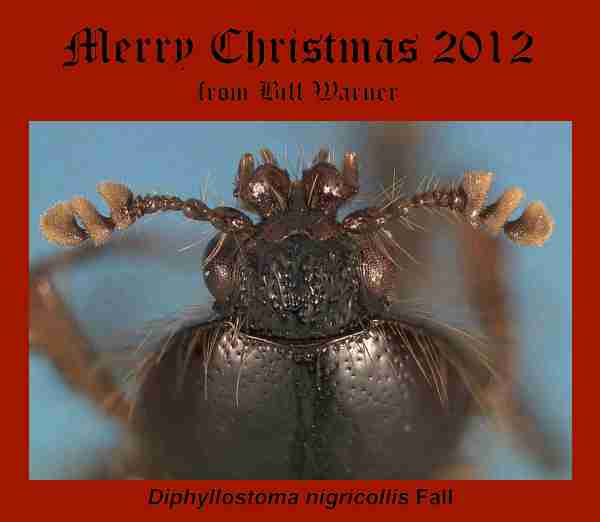
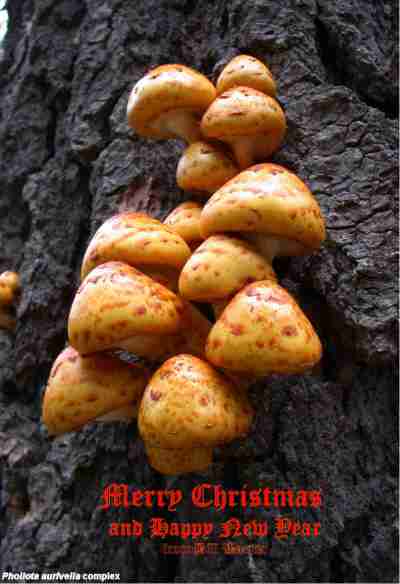
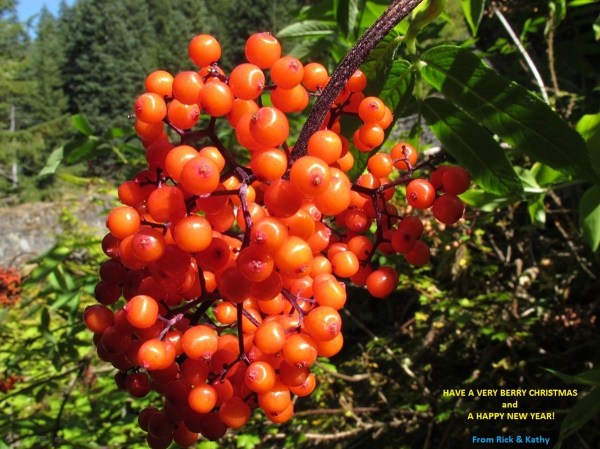
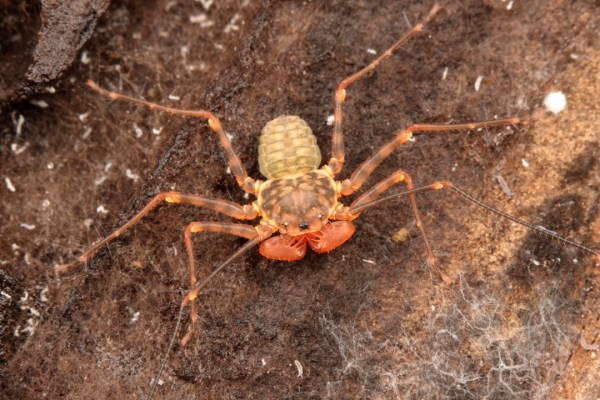
One of my favorite customs over the holidays is exchanging Christmas e-cards with my fellow entomologist/natural historian friends and colleagues. On the sending side, I’m especially fond of the “insect-with-Photoshopped-Santa-hat” variety (see 2011’s Santa Jaws and 2012’s Buprestis saintnicholasii), but I broke from the insect part of the theme this year and instead used a lizard to wish everybody a Felizard Navidad! On the receiving side, and in the spirit of my first Virtual Mantle post last year, here are the e-cards that I received for my virtual mantle this year from entomologists as near as neighboring Illinois and as far as Europe and Asia! If you didn’t send me an e-card this year, I hope you’ll consider sending one to me in 2014!

Sam Heads, Illinois Natural History Survey, Champaign

Sam Heads, Illinois Natural History Survey, Champaign

Mark Kalashian,  National Academy of Sciences of Armenia, Yerevan

Mark Kalashian, National Academy of Sciences of Armenia, Yerevan

Denis Keith, Muséum des Sciences Naturelles et de Préhistoire 5bis, Chartres, France

Denis Keith, Muséum des Sciences Naturelles et de Préhistoire 5bis, Chartres, France

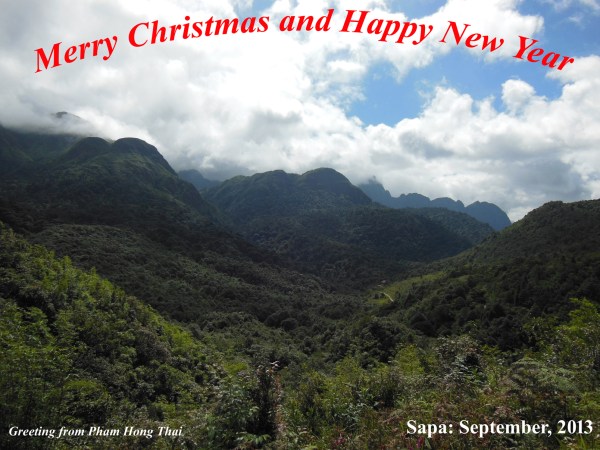
Hong Thai Pham, Institute of Ecology and Biological Resources, Hanoi, Vietnam

Hong Thai Pham, Institute of Ecology and Biological Resources, Hanoi, Vietnam

Erico Ruzzier, Mirano, Italy

Erico Ruzzier, Mirano, Italy

Ilja Trojan, South Moravia, Czech Republic

Ilja Trojan, South Moravia, Czech Republic

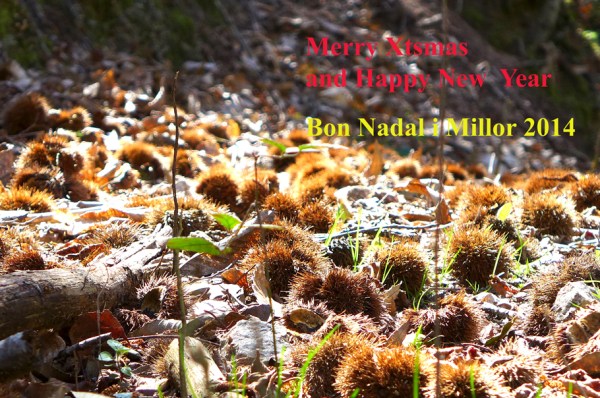
Eduard Vives, Museo Nacional de Ciencias Naturales, Barcelona,  Spain

Eduard Vives, Museo Nacional de Ciencias Naturales, Barcelona, Spain

Junsuke Yamasako, Ehime University, Tarumi, Matsuyama, Japan

Junsuke Yamasako, Ehime University, Tarumi, Matsuyama, Japan

Copyright © Ted C. MacRae 2013

Dr. Charles L. “Chuck” Bellamy—Tribute to a friend

Dr. Charles L. ''Chuck'' Bellamy

Dr. Charles L. ”Chuck” Bellamy

Early this week I lost a good friend. Actually, just about everybody who has ever studied jewel beetles in any serious way lost a good friend. Dr. Charles L. Bellamy, arguably the most ardent and prolific buprestophile of our time (possibly ever), died on August 19, 2013 at his home in Sacramento, California. In a career spanning 30 years that took him from California to South Africa and back (twice!), “Chuck” pumped out more than 200 research papers (including nine research volumes and five book chapters), 27 book reviews, and with Art Evans co-authored the popular An Inordinate Fondness For Beetles! Perhaps his most significant contribution, however, was the landmark 5-volume, 3,200+ page, World Catalogue of Buprestoidea—a true magnus opus that serves as a fitting exclamation point to his remarkable career.

I write, however, not about the loss of a respected colleague, but of a true friend. I still remember receiving a letter from Chuck in late 1991 introducing himself to me, congratulating me on the publication of my Buprestidae of Missouri, and suggesting we might have reason to meet due to our common interests. I was, of course, already familiar with Chuck, as he had by then become well established as a leading authority in jewel beetle taxonomy. It was just a few months later that I would have the chance to meet Chuck in person, when I traveled with the late Gayle Nelson to southern Mexico to join Chuck and seven other colleagues at the 1992 Buprestid Workers Gathering. It was on that trip that Chuck and I struck up what would prove to be an enduring friendship. In the following years he and I teamed up on several collecting trips, first to southern California where he “introduced” me to some of southern California’s classic collecting localities such as Jacumba, Ocotillo, and Glamis Dunes, then to southeast Arizona where he introduced me to his close friend Art Evans, and later to South Africa where we spent three weeks in the veldt (a trip that remains one of the best collecting trips I have ever taken). Eventually we began a series of collecting trips to southern Mexico spanning the years 2004–2006. Declining health eventually put an end to these trips, and while I always hoped we would be able to resume them in the future, I knew that realistically his collecting days were behind him. Still, my family and I visited him and his wife Rose in Sacramento whenever we could, and when we couldn’t I enjoyed his almost daily correspondence by email.

Over the years, Chuck became my most important mentor. I remember mentioning to him during one of our trips to Mexico my interest in being an editor of an entomology journal—along with my doubts about whether I could do it. At the time Chuck was the Managing Editor of The Pan-Pacific Entomologist, and he immediately invited me to become the journal’s Coleoptera Subject Editor. Without his encouragement I may not have had the courage to try, and when the role of Managing Editor became available in 2011 he again encouraged me to take on the role. Chuck may have been the ultimate jewel beetle scholar, but he was also an avid sports fan. I remember fondly our two October trips to Mexico; making sure the hotel we checked into each night had cable television so that we could watch post-season baseball. How we enjoyed watching the Yankees fall to defeat in 2004 (my apologies to any New Yorkers that may be reading) and the Cardinals winning it all in 2006! Perhaps my fondest memory of Chuck, however, was having the privilege to fly to Sacramento and watch my friend being honored as The Coleopterists Society’s .

As a remembrance, I have put together a slide show with photos of Chuck through the years. Although I have only a few photographs of my own (lesson learned: take photographs of friends and colleagues over the years!), mutual friends Rick Westcott and Art Evans have sent to me a number of photographs from their archives and graciously allowed me to use them in this slide show. Chuck was a colleague, my mentor, and my friend. I will miss his sage counsel and cerebral wit. I will miss his encouragement and support. But most of all, I will miss having him as my friend. My heartfelt condolences to his lovely wife Rose, whom I and my family have had the great privilege to know.

This slideshow requires JavaScript.

Copyright © Ted C. MacRae 2013

Mexico 1992—Gang of Ten

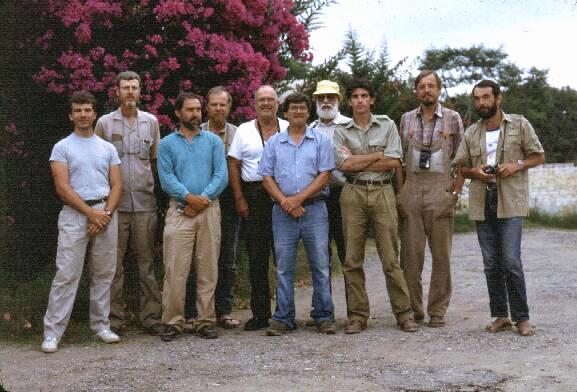
As a young collector attracted to woodboring beetles, my interests were split evenly between the families Buprestidae and Cerambycidae. In those early days, I actively sought the counsel of experts in both families, looking for help with identifications. Most were more than gracious with their help, and receiving their letters and return shipments of beetles I had sent for their examination was a highlight of each winter season. There was one man, however, whose letters and parcels I looked forward to receiving more than any other—the late, great Gayle Nelson. More than just a report of identifications, Gayle’s letters were also rich with advice, suggestions and encouragement—he became my first mentor. I coauthored my first published paper on Buprestidae with Gayle (Nelson & MacRae 1990), and when I moved to California in 1990 I had the chance to meet him in person and accompany him on a collecting trip to the great southern Californian deserts. Talk about learning from the master! In the meantime I had also struck up correspondence with long-time buprestophiles Rick Westcott and Chuck Bellamy. I guess between the three of them they saw some potential in me, as shortly after my move to California they invited me to join the upcoming World Buprestid Workers Gathering—a 2-week collecting trip in southern Mexico scheduled for July 1992. While not all of the world’s buprestid workers were able to make this trip, a majority of the heaviest hitters from the U.S. and Europe were there. The photo below is the only one I’m aware of in which all ten participants are present, and while I felt like a midget amongst giants at the time, I’ve enjoyed more or less regular correspondence with most of the participants of that trip over the many years that have since passed.

Huahuapan de Leon, Oaxaca, Mexico - July 1992 (L to R): Ted MacRae, Rick Westcott, Hans Mühle, Chuck Bellamy, Gayle Nelson, Byrd Dozier, Dave Verity, Kim Pullen, Svata Bílý, Mark Volkovitsh (photographer unknown).

Huahuapan de Leon, Oaxaca, Mexico—July 1992 (left to right): Ted MacRae, Rick Westcott, Hans Mühle, Chuck Bellamy, Gayle Nelson, Byrd Dozier, Dave Verity, Kim Pullen, Svata Bílý, Mark Volkovitsh.

That trip remains one of the best insect collecting trips I’ve ever experienced (although there are many others now that also bear that distinction). Gayle, Dave Verity and I started in the state of Guerrero and worked our way down into Oaxaca, where we met up with the others and collected together as one large group before Chuck, Rick and I split off and returned for more collecting in Guerrero. I don’t remember how many species I collected—somewhere in the neighborhood of 60 or so, but I’ll never forget finding the first specimens of what would eventually be described as Oaxacanthaxia nigroaenea Nelson & MacRae 1994. We found it at the type locality (near Tehuantepec) of what was then the only known species in the genus, O. viridis Bellamy 1990, that represented an apparently relictual line of buprestids with affinities to certain Old World genera. While that was the only new species that I described from the trip, several described by others are based at least in part on material that I collected. Another highlight of the trip was the “big, dead tree” in Cañón del Zopilote, Guerrero (literally, a big, dead tree), the high branches of which yielded several specimens of Polycesta cortezii Thomson 1878 and one Jelinekia barri (Nelson 1975). Sadly, I wasn’t much of a journal-keeper in those days, so most of the memories that remain from that trip are just snippets in time. Nevertheless, whenever I look at specimens collected on that trip I am usually able to recall the circumstances of its collection, and I recently had the chance to go through much of this material in detail again, as many of the specimens collected represented newly documented state occurrences and adult host plants. These records can now be found in a newly published paper by me and Chuck in which two new species of Actenodes collected during subsequent trips are described (MacRae & Bellamy 2013).

REFERENCES:

MacRae, T. C. & C. L. Bellamy. 2013. Two new species of Actenodes Dejean (Coleoptera: Buprestidae) from southern Mexico, with distributional and biological notes on Buprestidae from Mexico and Central America. The Pan-Pacific Entomologist 89(2):102–119.

Nelson, G. H. & T. C. MacRae. 1990. Additional notes on the biology and distribution of Buprestidae (Coleoptera) in North America, III. The Coleopterists Bulletin 44(3):349–354.

Nelson, G. H. & T. C. MacRae. 1994. Oaxacanthaxia nigroaenea Nelson and MacRae, a new species from Mexico (Coleoptera: Buprestidae). The Coleopterists Bulletin 48(2):149–152.

Copyright © Ted C. MacRae 2013

Virtual Mantle 2012

In recent years a truly delightful custom has developed among taxonomic entomologists—Photoshopped e-Christmas cards featuring their favorite insects! This should not be a surprising development—connectivity among scientists from around the world is at an all-time high, as is their access to digital cameras and imaging software. And, of course, what better subject for such cards could one ask for than insects (especially beetles, I might add)? It’s hard to resist anthropomorphizing them, with their buggy eyes and comical expressions, but their outright beauty makes them perfect also as pure ornaments. I did my first one last year (Santa Jaws), and for this year’s version I created Buprestis saintnicholasii. Following are the e-Christmas cards on my virtual mantle this year, received from beetle taxonomists as far and wide as Arizona, California, Oregon, Bulgaria, Germany and Romania!

I really enjoy getting these—if I’m not already on your e-Christmas card mailing list please consider adding me in 2013!

Xmas-2012_Bellamy

Chuck & Rose Bellamy – Sacramento, California

Xmas-2012_Kalashian

Mark Kalashian – Yerevan, Armenia

Xmas-2012_Mühle

Hans Mühle – Munich, Germany

Xmas-2012_Ruicanescu

Adrian Ruicanescu – Cluj-Napoca, Romania

Xmas-2012_Warner

Bill Warner – Phoenix, Arizona

Xmas-2012_Warner2

Bill Warner – Phoenix, Arizona

Xmas-2012_Westcott

Rick & Kathy Westcott – Salem, Oregon

Xmas-2012_Gashtarov

Victor Gashtarov – Sofia, Bulgaria

Copyright © Ted C. MacRae 2012

Mother and daughter (perhaps)

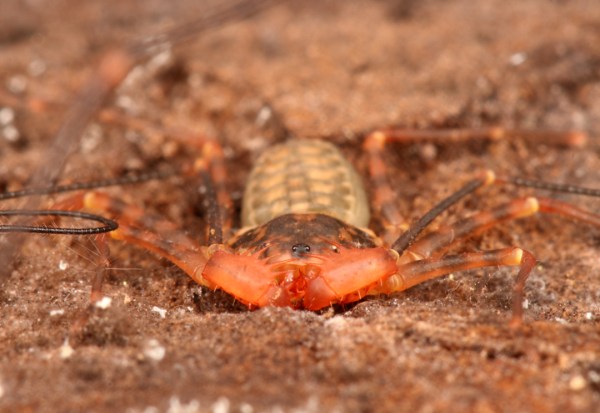
Phrynus marginenotata (Florida tailless whip scorpion)

Back in May I visited the California Department of Food and Agriculture’s Plant Pest Diagnostics Laboratory in Sacramento. While I was there to visit my friend and colleague Chuck Bellamy and see him receive Honorary Membership in The Coleopterists Society, I was also anxious for the opportunity to spend time with the lab’s other entomologists—most of whom I interact with as members of the Editorial Board of The Pan-Pacific Entomologist. Among the more ‘colorful’ of these is Martin Hauser, a dipterist (although I don’t hold that against him!) who also has a passion for maintaining live, captive arthropods. For me, there is nothing finer than visiting the lab/office of a taxonomic entomologist—one wall lined with steel cabinets full of insect specimens, another wall crammed-full of books and literature (the older the better), a workbench with microscope at the center of a jumble of specimen containers and open reprints, and shipping boxes piled everywhere. I take that back—there is nothing finer than visiting the lab/office of a taxonomic entomologist that also keeps livestock! Martin’s collection of live arthropods, however, goes well beyond the requisite 10-gallon aquarium with Madagascan hissing cockroaches. I already featured one of his more unusual tenants, Damon diadema (Tanzanian giant tailless whip scorpion), and here I feature its North American relative, Phrynus marginenotata (Florida tailless whip scorpion).

The genus is characterized by five spines on the pedipalp tibia—the 3rd shorter than the 2nd and 4th.

According to Weygoldt (2000), this is the northernmost and only U.S. representative of a mostly northern Neotropical genus of eleven species, recognized by the pedipalp tibia (the thickened segment of their “claws”) with five spines—the middle one shorter than the 2nd and 4th (refer to Photo 2). This species occurs in southern Florida and some Antillean islands, where it lives under coral stones and rocks close to the beach—a habitat that presumably subjects them to periodic flooding. While most tailless whip scorpions prefer humid/moist environments, they nevertheless studiously avoid standing water itself. This species, however, has been observed to voluntarily enter the water when placed on a stone surrounded by water and remain submerged for as many as eight hours. Remarkably, submerged individuals remain active and do not drown, apparently the result of a “plastron”—an area of the cuticle surrounding the lung openings that is packed with stiff, branched structures and, thus, capable of holding a volume of air against the body while the animal is submerged. The plastron seems to function much like a gill—oxygen continuously diffuses into the plastron from the surrounding water as it is used for respiration.

The bright orange pedipalps of 2nd-instar nymphs contrast with the somber coloration of the adults.

Like the D. diadema individuals that I also photographed, these P. marginenotata individuals had also produced viable eggs which had hatched a few weeks before my visit. Two nymphs can be seen with the adult in the top photo (although I can’t say for sure whether the adult is actually the mother), and Photos 3 and 4 show one of these nymphs up close and personal. I would have liked to have seen these nymphs when they first hatched, as the 1st-instars are a soft sea-green color and remain clustered on their mother’s abdomen until they are able to start fending for themselves (for a beautiful photo showing this, see Piotr Naskrecki’s The scariest animal that will never hurt you). The 2nd-instars that I photographed had already left their mother, and while they had lost their sea-green coloration, their pale yellow/gray bodies and bright orange pedipalps were no less striking compared to the more somber coloration of the full-sized adults.

…and, of course, the signature BitB face shot!

REFERENCE:

Weygoldt, P. 2000. Whip Spiders (Chelicerata: Amblypygi): Their Biology, Morphology and Systematics. Apollo Books, Stenstrup, Denmark, 163 pp.

Copyright © Ted C. MacRae 2012

The Pan-Pacific Entomologist 88(2)—Penrose Memorial issue

It is with great pleasure that I announce the publication of The Pan-Pacific Entomologist Penrose Memorial issue (volume 88, number 2), mailed 14 September 2012. Published by the Pacific Coast Entomological Society, this issue is dedicated to the memory of the late Richard L. Penrose (1943–2011); long time member of the guild of California coleopterists. As Managing Editor, I had the distinct honor and pleasure of overseeing the assembly and production of this issue; however, it is only from the selfless efforts of many individuals that this issue came to fruition. I would like to thank the PCES Executive and Editorial Boards, the contributing authors and the reviewers for their participation in making this issue possible. Three individuals deserve special mention for their particularly stellar efforts: Richard Westcott (Oregon Department of Agriculture) and Chuck Bellamy (California Department of Food and Agriculture) for their dogged persistence in promoting the idea and recruiting contributing authors, and Floyd W. Shockley (Smithsonian Institution), who as the journal’s Coleoptera Subject Editor oversaw the review, revision and acceptance of the bulk of the papers appearing in this coleopcentric issue.

If you are not a PCES member, now is a good time to join. Membership is only $25/year ($12.50 for students) and includes four quarterly issues of The Pan-Pacific Entomologist. Following are the contents of the Penrose Memorial issue with hyperlinks to online versions through BioOne. Abstracts & References are open access, while Full Text and PDF versions are available to BioOne subscribers.

The Pan-Pacific Entomologist 88(2)
Contents

Richard L. Penrose
Ted C. MacRae
The Pan-Pacific Entomologist 88(2):i–i
Citation | Full Text | PDF (83 KB)

BIOGRAPHICAL SKETCH

Richard Lynn Penrose (11 January, 1943–17 March 2011): Biographical sketch and memories
Richard L. Westcott and Richard E. Morel
The Pan-Pacific Entomologist 88(2):105–116
Citation | Full Text | PDF (1903 KB)

PAPERS

A new species of Cregya LeConte (Coleoptera: Cleridae: Peloniinae) from Florida, U.S.A. and Puebla, México
Jacques Rifkind
The Pan-Pacific Entomologist 88(2):117–121
Abstract & References | Full Text | PDF (107 KB)

Synetocephalus penrosei Gilbert & Clark (Chrysomelidae: Galerucinae: Luperini), a new species from California, U.S.A
Arthur J. Gilbert and Shawn M. Clark
The Pan-Pacific Entomologist 88(2):122–129
Abstract & References | Full Text | PDF (1970 KB)

Distribution and phenology of Rhagoletis fausta (Osten Sacken 1877) and Rhagoletis indifferens Curren 1932 (Diptera: Tephritidae) in California
Robert V. Dowell and Richard L. Penrose
The Pan-Pacific Entomologist 88(2):130–150
Abstract & References | Full Text | PDF (573 KB)

Acmaeodera penrosei Westcott (Coleoptera: Buprestidae), a new species from Chiapas, Mexico
Richard L. Westcott
The Pan-Pacific Entomologist 88(2):151—153
Abstract & References | Full Text | PDF (238 KB)

A new species of Trichoxys Chevrolat (Cerambycidae: Cerambycinae: Clytini) from Mexico, with a key to known species
Steven W. Lingafelter and James E. Wappes
The Pan-Pacific Entomologist 88(2):154—162
Abstract & References | Full Text | PDF (2333 KB)

Three new species of the genus Dysphenges Horn 1894 (Coleoptera: Chrysomelidae: Galerucinae: Alticini) from the United States
Arthur J. Gilbert and Edward G. Riley
The Pan-Pacific Entomologist 88(2):163–172
Abstract & References | Full Text | PDF (1826 KB)

Notes on distribution and host plants of Cerambycidae (Coleoptera) from southern México
Ted C. MacRae, Larry G. Bezark, and Ian Swift
The Pan-Pacific Entomologist 88(2):173–187
Abstract & References | Full Text | PDF (135 KB)

Hybopteroides, a new genus in the Cryptobatida group of subtribe Agrina, with three new species and notes on their way of life (Insecta: Coleoptera, Carabidae, Lebiini)
Terry L. Erwin and George E. Ball
The Pan-Pacific Entomologist 88(2):188–201
Abstract & References | Full Text | PDF (1702 KB)

A new species of sap beetle (Coleoptera: Nitidulidae) from Baja California Sur, Mexico, with a review of the genus Lobiopa Erichson
Andrew R. Cline and Scott A. Kinnee
The Pan-Pacific Entomologist 88(2):202–211
Abstract & References | Full Text | PDF (304 KB)

Addition of two new species and a previously unknown female to the ammoplanine complex, and a species of Pulverro Pate, 1937 is entered into synonymy (Hymenoptera: Crabronidae)
Norman J. Smith
The Pan-Pacific Entomologist 88(2):212–221
Abstract & References | Full Text | PDF (234 KB)

Dactylotrypes longicollis (Wollaston) (Coleoptera: Curculionidae: Scolytinae): an exotic bark beetle new to California and North America
James R. LaBonte and Curtis Y. Takahashi
The Pan-Pacific Entomologist 88(2):222–230
Abstract & References | Full Text | PDF (1390 KB)

Diurnal flight response of the walnut twig beetle, Pityophthorus juglandis Blackman (Coleoptera: Scolytidae), to pheromone-baited traps in two northern California walnut habitats
Steven J. Seybold, Jennifer A. King, Daren R. Harris, Lori J. Nelson, Shakeeb M. Hamud, and Yigen Chen
The Pan-Pacific Entomologist 88(2):231–247
Abstract & References | Full Text | PDF (1105 KB)

An analysis of the larval instars of the walnut twig beetle, Pityophthorus juglandis Blackman (Coleoptera: Scolytidae), in northern California black walnut, Juglans hindsii, and a new host record for Hylocurus hirtellus
Paul L. Dallara, Mary L. Flint, and Steven J. Seybold
The Pan-Pacific Entomologist 88(2):248–266
Abstract & References | Full Text | PDF (600 KB)

Penroseius lienosus, a new monotypic genus of Coraebini from Madagascar (Coleoptera: Buprestidae: Agrilinae)
C. L. Bellamy
The Pan-Pacific Entomologist 88(2):267–273
Abstract & References | Full Text | PDF (521 KB)

SCIENTIFIC NOTES

First occurrence of the goldspotted oak borer parasitoid, Calosota elongata (Hymenoptera: Eupelmidae), in California
Laurel J. Haavik, Tom W. Coleman, Yigen Chen, Michael I. Jones, Robert C. Venette, Mary L. Flint, and Steven J. Seybold
The Pan-Pacific Entomologist 88(2):i-i
Citation | Full Text | PDF (44 KB)

Recent collecting reveals new state records and geographic extremes in the distribution of the walnut twig beetle, Pityophthorus juglandis Blackman (Coleoptera: Scolytidae), in the United States
Steven J. Seybold, Tom W. Coleman, Paul L. Dallara, Norman L. Dart, Andrew D. Graves, Lee A. Pederson, and Sven-Erik Spichiger
The Pan-Pacific Entomologist 88(2):i-i
Citation | Full Text | PDF (325 KB)

Copyright © Ted C. MacRae 2012

Dr. Charles L. “Chuck” Bellamy – 12th Honorary Member of The Coleopterists Society

Dr. Charles L. ”Chuck” Bellamy

On Thursday of this past week, it was my distinct pleasure and honor to see my colleague and very good friend, Dr. Charles L. “Chuck” Bellamy named an Honorary Member of The Coleopterists Society. Honorary Membership is the highest level of distinction given by the Society in recognition of devotion to the Society and dedication to the discipline of coleopterology. Chuck was nominated for this honor by colleagues Andrew Cline and Robert Anderson, and the nomination was approved by President Michael Caterino and the rest of the Society Executive Board by unanimous vote. Chuck is only the 12th Honorary Member of the Society and joins such illustrious names as Ross Arnett, Jr., Patricia Vaurie, Henry and Anne Howden, Charles Triplehorn, Brett Ratcliffe, etc.

Selection criteria for Honorary Membership include sustained, active membership in and service to the Society, advancement of coleopterology nationally and/or internationally, and sustained history of publication in The Coleopterists Bulletin and/or other Society publications. Chuck’s qualifications in these regards are beyond reproach:

  • Nearly 40 years of continuous membership in the Society.
  • Served as President (2003–2004), Councillor (1993–1994), Investment Officer (2010–present), Website Coordinator (2006–2010), Book Review Editor (1993–2002) and Monograph Series Editor (2009–present).
  • Has advised six graduate students from USA, Mexico, South Africa, South Korea, Brazil and India (despite not holding an academic appointment) and also counselled and mentored numerous other coleopterists (including me) on the study of Buprestidae in particular and Coleoptera systematics in general.
  • Published more than 200 papers on Coleoptera—69 in Society publications (a record)—and numerous books, including the landmark 5-volume, 3,200+ page, World Catalogue of Buprestoidea.

Chuck’s contributions, of course, go well beyond this short list. He has had editorial roles with other entomology journals, including Zootaxa, The Pan-Pacific Entomologist (my favorite journal!), and Folia Heyrovskyana, served as a research associate with the National Museum of Natural History, the Florida State Collection of Arthropods, the Natural History Museum of Los Angeles County and the Department of Entomology at the University of California – Davis and ventured onto five continents in search of Buprestoidea—not only collecting the specimens, but describing the new taxa he found as well. Overall, Chuck has described more than 200 new species and over 50 new genera.  Andy Cline and Bob Anderson put it best: “Chuck’s contributions have led to a better understanding of one of the most diverse and speciose groups of beetles in the world.” More importantly, however, Chuck has been universally regarded as an excellent friend and colleague!

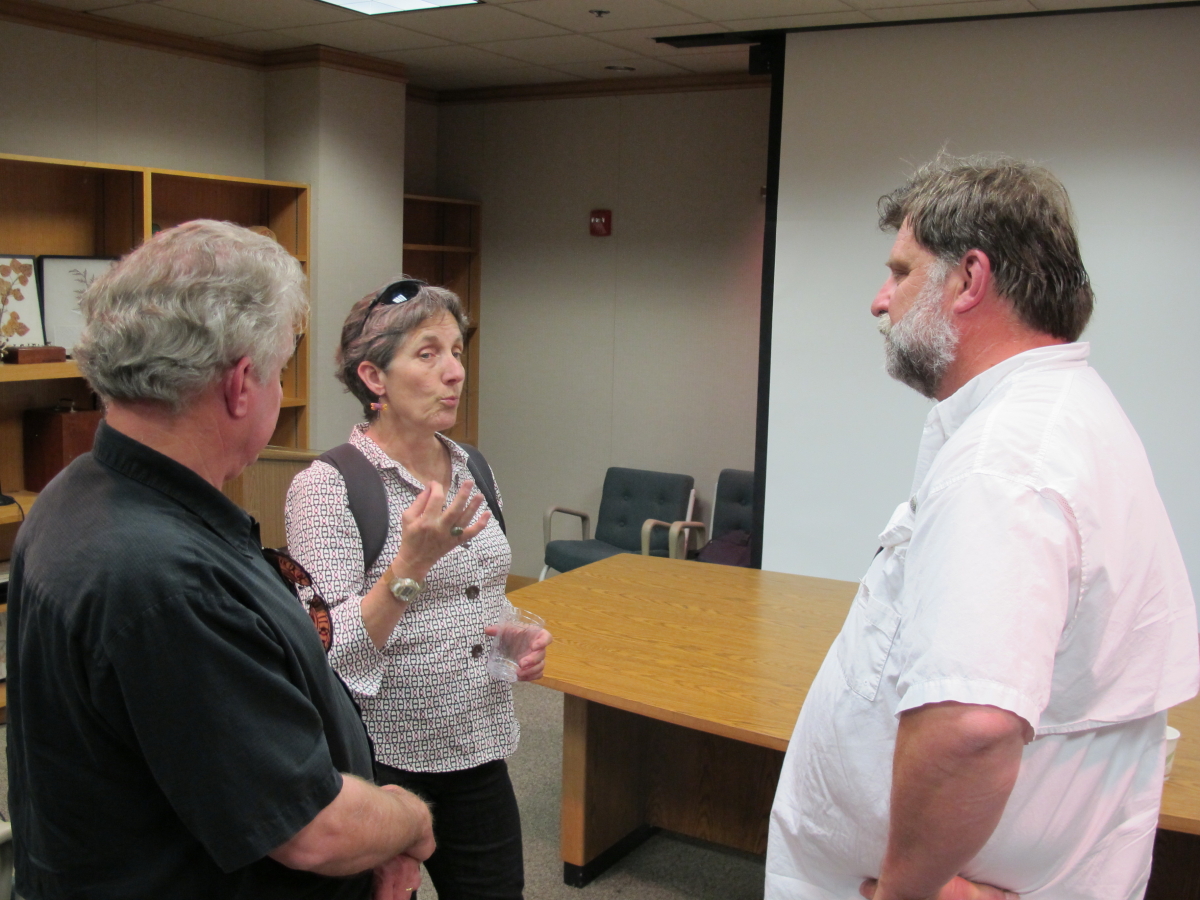
Chuck was presented his Honorary Membership at the California Department of Food & Agriculture’s Plant Pest Diagnostics Center in Sacramento prior to a seminar by Dr. Art Evans, entomologist. About 40 colleagues from California and beyond were on hand to see Chuck receive his award. For many people, the award presentation by Andy Cline would have been a tough act to follow, but Art Evans (author of multiple entomology books and field guides) had no problem entertaining the crowd with photos and reminiscences of his journey in the creation of another field guide, the highly anticipated Beetles of Eastern North America. For me it was a special week of meeting new colleagues, reconnecting with old friends, and seeing the most important mentor in my life as a coleopterist receive the highest award our society can bestow. Congratulations, Chuck!

For those of you who were not able to attend the event, I include here a link to a PDF version of Andy’s presentation (many thanks, Andy!):

Chuck Bellamy—Honorary Member of The Coleopterists Society

Special appreciation also to Martin Hauser, who graciously contributed these photos he took of the event:

Colleagues, friends and family gather for the presentation.

Chuck is announced as the 12th Honorary Member of The Coleopterists Society.

Chuck learns of his award with wife Rose and sister Gail at his side.

Andy Cline presents Chuck his Honorary Membership.

Chuck receives a standing ovation from the audience.

Dr. Art Evans reminisces about earlier days.

Art chats after the seminar with Lynn Kimsey and Rolf Aalbu.

Larry Bezark and Ted MacRae – we must be talking cerambycids!

Art Evans, Chris Borkent, Ted MacRae and Eric Fisher.

Copyright © Ted C. MacRae 2012

BitB’s Newest Contributor – Chris Brown

To regular readers of this blog, the name Chris Brown should be familiar. As a frequent companion on many of my field trips over the past decade, I’ve had numerous opportunities to mention his name in the posts that I’ve written about those trips. Chris, however, is not just a field companion—he is also an Entomologist (capital “E”) in his own right. Like me, he makes a living in the field of agricultural biotechnology, his particular focus being risk assessment of genetically modified crops. Also like me, he has a passionate avocational interest in insect biosystematics and conservation, and together we share our obsession with tiger beetles as co-investigators in the Missouri tiger beetle project. Unlike me, Chris also has fluent command of the avian fauna, giving him some additional ecological insights that I lack. In addition, whatever modest ability I’ve demonstrated as an insect macrophotographer over the past few years has been due in large part to the encouragement and advise of Chris, who was already an adept insect macrophotographer long before I became interested in adding a camera pack to my field outfit. Chris’ influence on me has already had an impact on BitB, and it is with great pleasure that I announce Chris will now have additional impact as its newest contributing author.

Photographing Cicindela pulchra in South Dakota.

I first met Chris when he came to my lab as a summer intern more than a decade ago (not long after I myself had taken my position here). It didn’t take long before Chris’ interest in joining me on my field exploits became apparent, and I was happy to have his company. During those early trips, I was immediately impressed not only by his skill as a photographer, but also his interest in understanding broader ecological context (too many young collectors want to know only the bug’s name and where they can find it). The Missouri tiger beetle project was in its earliest stages at that time—I thought his photographic capabilities would compliment my field experience in surveying for these insects and invited him to join me in the effort. In the years since, we have traveled together to all corners of Missouri, made two trips to the neighboring Great Plains, and explored the length of the Rio Grande River from Boca Chica to Big Bend. Chris’ travels, with me and separately, give him unique perspective and breadth of knowledge, and as much as he may claim to have learned from me during our joint travels, I have learned from him equally as much. Perhaps the most valuable lesson learned is to use photography as a means not to capture just images of insects, but moments in their natural history—features not easily appreciated when looking at preserved insect specimens in a cabinet. Please join me in welcoming Chris to BitB, and look for his first post to appear in the next day or so—I think you will find it a delightful read.

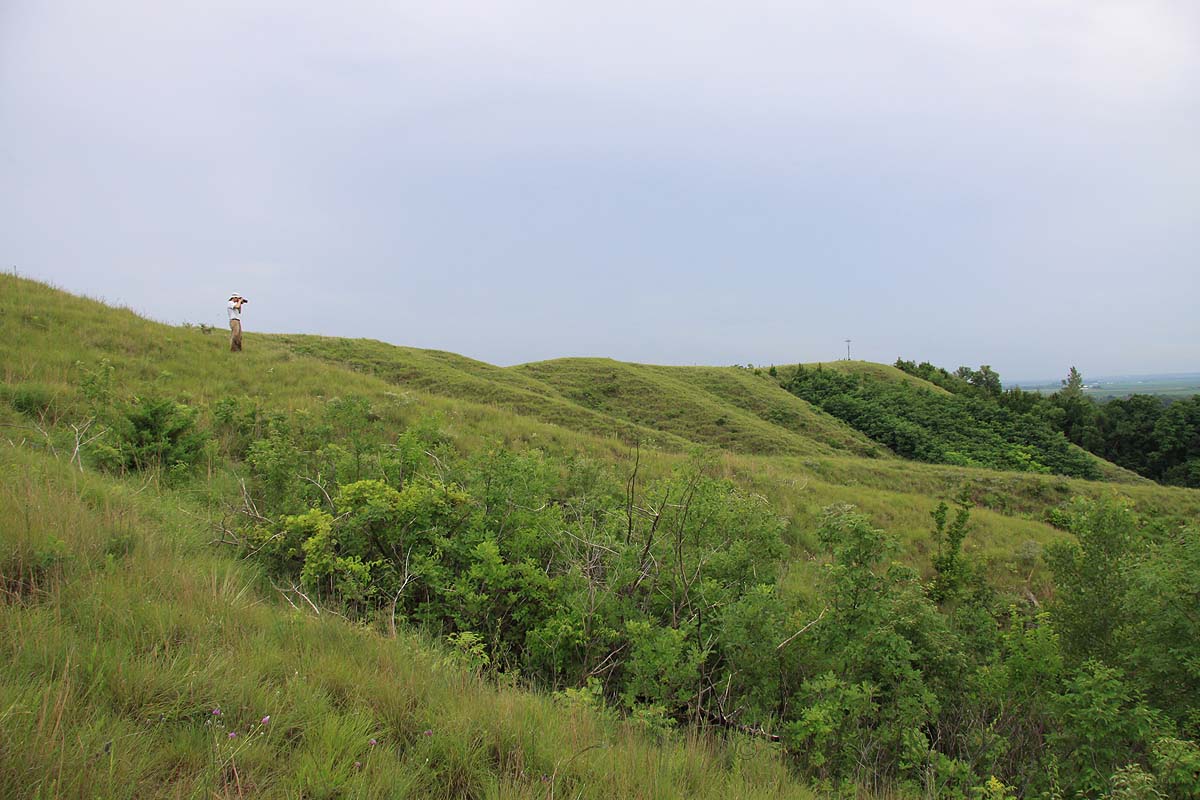
Chris surveys the loess hills landscape in northwestern Missouri

Copyright © Ted C. MacRae 2012