Lampetis drummondi larva?

Back in February, I learned that Mark Volkovitsh (Zoological Institute, Russian Academy of Science, St. Petersburg) would be visiting Chuck Bellamy (California Department of Food and Agriculture) in Sacramento the very week that I was planning to be in Lake Tahoe. Chuck and Mark are two of the worlds leading specialists in Buprestidae, or jewel beetles, and have worked together on a number of projects dealing with the taxonomy and systematics of buprestid beetles. Mark, in particular, has focused on describing the larval forms of buprestids (“white wormy things,” as my wife calls them) and using larval morphology to supplement adult morphology in phylogenetic analyses. I’m not anywhere near being in their league in terms of authority in the family – a comparative dabbler, really – but for some reason they’ve both seen fit to accept me into the fraternity. I’ve been fortunate to spend time in the field with each of them, as well as visit them at their respective institutions.  When I learned of Mark’s coincident visit, I couldn’t resist the chance to make the 2-hour drive from Lake Tahoe to Sacramento and spend the day with Mark and Chuck at the CDFA and discuss things buprestological.  The wife and kids were fine with that, since her brother also lives in Sacramento, and it would be a chance for them to do some sight-seeing before we all got together for dinner.  Upon arriving at CDFA, I also met Andy Cline, a nitidulid specialist at the CDFA (re-met actually, turns out we’d met some years back), and the four of us went out for an animated lunch at a nearby restaurant over some of the most delicious barbeque that I’ve ever tasted.

L-R: Mark Volkovitsh (Russia), Chuck Bellamy (CDFA), me, Andy Cline (CDFA)

After lunch, I was most interested in discussing with Mark some buprestid larvae that I had collected in Big Bend, Texas in 2004. My colleague Chris Brown and I were hiking a low desert trail west of Rio Grande Village when we encountered a large, uprooted Goodding willow (Salix gooddingii) tree laying on the river bank. Wilting leaves were present on some of its branches, suggesting that the half-dead had been washed to its current location by the river during a recent flood. At the base of the trunk where the main roots projected, I noticed what appeared to be frass (the sawdust that wood boring beetle larvae eject after eating it – that’s right, grub poop!) under the edge of the bark at the live/dead wood interface. I used my knife to cut away some of the bark and immediately encountered a huge buprestid larvae. Its enormous size is matched only by a few desert southwest species: Polycesta deserticola, which breeds commonly in oak and is known from willow, but breeds only in dead, dry branches; and Gyascutus planicosta, whose larvae are restricted to the living roots of Atriplex and a few other asteraceous shrubs.  Clearly, it could not be either of these species.  The only other desert southwest buprestids large enough to produce a larva this large (~50 mm) are Lampetis drummondii and L. webbii. However, the larvae of both of these species are unknown, as is basic information regarding what hosts they utilize for larval development. Lampetis webbii is quite rare, but L. drummondii is, in fact, one of the most conspicuous and commonly encountered buprestid species in the desert southwest – that fact that its larva has remained unknown suggests that it utilizes living wood, probably feeding below the soil line.  Thus, I immediately began to suspect that the larva might represent this species – a truly exciting development. 

As I continued digging into the wood, I encountered a second, somewhat smaller larva in a neaby gallery, and further digging revealed another clue about its identity in the form of fragments of a dead adult beetle – all brilliant blue/green in color (identical to the color of L. drummondi), and the largest (the base of an elytron, or wing cover) showing the same pattern of punctation exhibited by L. drummondi adults. I placed the two larvae individually in vials with pieces of the host wood; however, I knew there was little chance that either larva, requiring living tissue upon which to feed, would complete its development once removed from its host gallery.  They did survive for a time after my return to St. Louis, but when the largest larva became lethargic, I decided to go ahead and preserve them.  I sent the photograph below (taken by Chris) of the living larvae to Mark, who confirmed that it did indeed appear to be a species of Lampetis, based on its large size and the narrowly V-shaped furcus on the pronotal shield (typical for members of the tribe to which Lampetis belongs). 

Buprestid larva (prob. Lampetis drummondi) under bark of Salix gooddingii at trunk base - Big Bend National Park, Texas. Photo by Christopher R. Brown.

Considering the complete lack of published information on the larval biology of Lampetis drummondi and the several lines of evidence that these larvae, in fact, represent that species, it would be worthwhile to publish a description of the larva.  However, formal description requires dissection, and I did not know how to do this.  Mark, on the other hand, has dissected literally hundreds of buprestid larvae, including representatives of nearly every genus for which larvae are known.  He is the buprestid larva expert, and what a thrill it was for me to learn how to do this from the Master himself, using the larger of these two probable Lampetis larvae as the subject.  While we were dissecting the larva, we compared its features to those published for the European species Lampetis argentata (Danilevsky 1980) – the only member of the genus for which the larva is known – and confirmed their similarity and the larva’s likely close relationship to that species.  Coincidentally, the larva of L. argentata develops in living roots of saxaul (Haloxylon) – a genus of large shrubs/small trees (family Amaranthaceae) that grows in the deserts of Central Asia.  It thus appears that Lampetis species may, as a general rule, utilize living wood below the soil line for larval development, explaining why the larva of only one (now two) of the nearly 300 species in the genus worldwide has been found.

REFERENCES:

Danilevsky, M. L. 1980. Opisanie zlatki Lapmetis [sic] argentata (Coleoptera, Buprestidae) – vreditelya saksaula [Description of the larva of Lapmetis [sic] argentata (Coleoptera, Buprestidae) – the pest of HaloxylonZoologicheskii Zhurnal 59:791–793.

Copyright © Ted C. MacRae 2010

Add to FacebookAdd to DiggAdd to Del.icio.usAdd to StumbleuponAdd to RedditAdd to BlinklistAdd to TwitterAdd to TechnoratiAdd to Yahoo BuzzAdd to Newsvine

Email to a friend

“Cicindelophilically”


My good friends Kent Fothergill and Kelly Tindall passed through St. Louis last week on their way back home from a visit to Columbia.  I was happy for the chance to get together with them – if only for a short visit, as I hadn’t seen them since the summer before last when Kent joined forces with Chris Brown and I to conduct a survey for Cylindera cursitans (ant-like tiger beetle) in southeast Missouri.  (You may recall that I orginally met Kent when he emailed me out of-the-blue after moving to southeast Missouri in 2007 to let me know he liked tiger beetles.  I responded by suggesting that he look for this long sought-after species, which he found the very next day!)  Kent had told me in arranging the visit that they had something they wanted to give me, and since I had some specimens of theirs to return it seemed a convenient way to make the exchange.  I had no idea what it was they wanted to give me, but I knew they’d been to the recent Entomological Society of America meetings in Indianapolis and figured they must have purchased a cool beetle specimen or something for me.

After arriving at my office, they told me that they’d had the chance to meet John Acorn, a rare celebrity in the world of natural history study.  Most people known John as the host and creative force behind Acorn the Nature Nut, an award-winning television series in which John’s inspiring personality and infectious love of nature introduce viewers to various aspects of Alberta’s natural history.  John is also, however, an accomplished entomologist, with one of his special interests being… you guessed it – tiger beetles!  In 2001, John published The Tiger Beetles of Alberta: Killers on the Clay, Stalkers on the Sand, one of the most accessible and highly entertaining treatments of the family (er… supertribe) to date (if I can ever get my act together and write The Tiger Beetles of Missouri, I want to model it after this book).  John was at the ESA meetings selling original artwork of the different tiger beetle species occurring in Alberta, and Kent and Kelly mentioned to him that they had a friend back in Missouri who would love one of his prints – selecting “Cicindela purpurea auduboni black morph”.  Somehow, my name and association with this blog came up, to which John replied, “Oh, I know about Beetles in the Bush” and then signed the print for me as shown below.  Wow!

I hope Kent and Kelly understand my stunned silence upon first seeing the print they had so generously given to me and the inscription it bore.  I felt a little silly afterwards returning their kind gesture by just giving them back specimens that were already theirs.  I’m honored by their friendship and will be reminded of it now everytime I look at the print on my office wall.

REFERENCE:

Acorn, J.  2001.  Tiger Beetles of Alberta: Killers on the Clay, Stalkers on the Sand.  The University of Alberta Press, Edmonton, xix + 120 pp.

Copyright © Ted C. MacRae 2010

Add to FacebookAdd to DiggAdd to Del.icio.usAdd to StumbleuponAdd to RedditAdd to BlinklistAdd to TwitterAdd to TechnoratiAdd to Yahoo BuzzAdd to Newsvine

Email to a friend

BitB’s Newest Contributor

Those of you who have followed this blog for any length of time have likely noticed fairly regular participation in the comments sections by one James C. Trager.  Occasionally irreverent and always articulate, his informed quips are among those that I have enjoyed the most.  One can surmise from James’ comments that he knows a thing or two about entomology himself, but to say this would be an understatement!  Like me, James is a passionate entomologist whose scientific interests take him deep into many related fields of natural history study.  Unlike me, James is a formally trained insect taxonomist, specializing in ants (family Formicidae).  He has conducted numerous biogeographical and systematic studies on this group, much of it in the southeastern U.S. (list of publications), and is the current project leader for the Missouri Ants and Illinois Ants pages at AntWeb.org (whose ambitious goal is to provide information and high quality color images for each of the ~10,000 known ant species).  James’ deep knowledge of this single taxon, however, does not limit his interest in other insects — singing insects in particular are among his favorites. It is, thus, with great pleasure that I introduce James as the newest BitB contributor.

In fact, James and I have known each other for many years, as we are both based in the St. Louis area.  James is a restoration ecologist at Shaw Nature Reserve, a 2,500-acre ecological preserve located in the Ozark foothills (and just 15 miles from my house).  Originally established by the Missouri Botanical Garden for managed plant collections, its recent focus has shifted to environmental education and ecological research, and James has played a key role in their many ongoing wetland, woodland, prairie and glade (xeric limestone prairie) restoration efforts.  This experience combines with his entomological expertise and extensive travel within the U.S. and abroad (e.g., Ecuador) to give him a breadth of knowledge and perspective achieved by few, and I think you will find his writings most enjoyable.  Look for his first post to appear in the next day or so.

Ted & James in restored woodland at Shaw Nature Reserve. Photo by Madison MacRae.

Copyright © Ted C. MacRae 2010

Add to FacebookAdd to DiggAdd to Del.icio.usAdd to StumbleuponAdd to RedditAdd to BlinklistAdd to TwitterAdd to TechnoratiAdd to Yahoo BuzzAdd to Newsvine

Email to a friend

Me and my buds!

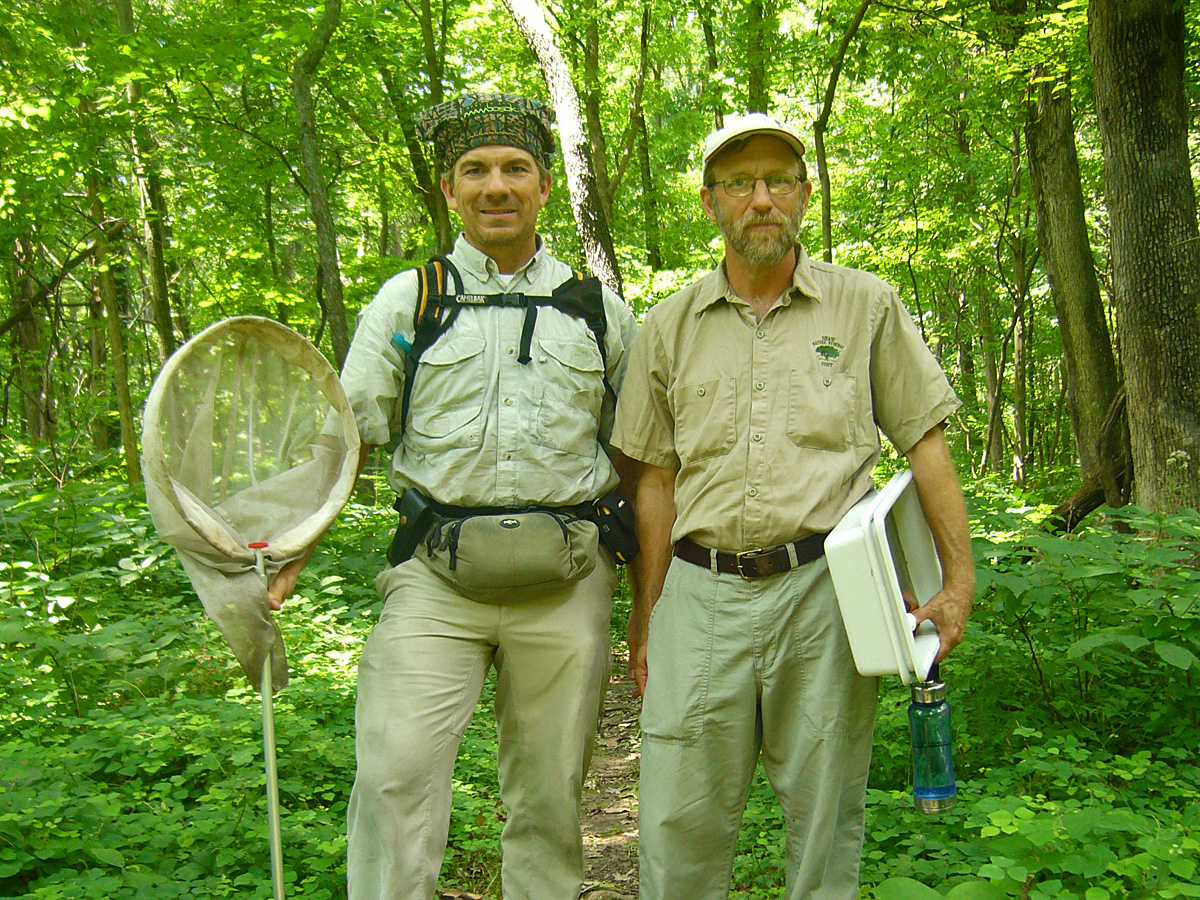
Those of you who have followed this blog for any length of time have seen repeated references to my friends and colleagues, Chris Brown and Rich Thoma. Rich and I have been collecting insects together for almost 25 years now (since shortly after we bothed first moved to the St. Louis area), and Chris has joined us in the fun for the past ten years as well. It is rare when all three of us can get out in the field together – meshing hectic professional and family lives with the sometimes coincident, sometimes divergent insect collecting goals of three fathers can be challenging. Nevertheless, at least once or twice a year we manage to converge on a date and enjoy each other’s company out in the field. I don’t think I’m ever happier than when I’m in the field (well, except when one of my daughter’s nestles into my lap to watch a movie!), and the chance to share that experience with close friends of like interest is especially gratifying.

Chris is quite an accomplished insect photographer himself, having been at it for much longer than I’ve known him and providing me great coaching as I’ve begun testing the waters myself. Recently, he sent me some photos from our 2009 field trips to the lowlands of southeastern Missouri and the Loess Hills of northwestern Missouri. Those were two exciting trips, revealing new localities for Cicindela scutellaris, the discovery of Cylindera celeripes in Missouri, the rediscovery of Ellipsoptera macra, and even a new state record robber fly.  The sharing kind of guy he is, he’s granted me permission to post them here (plus one taken by Rich Thoma).

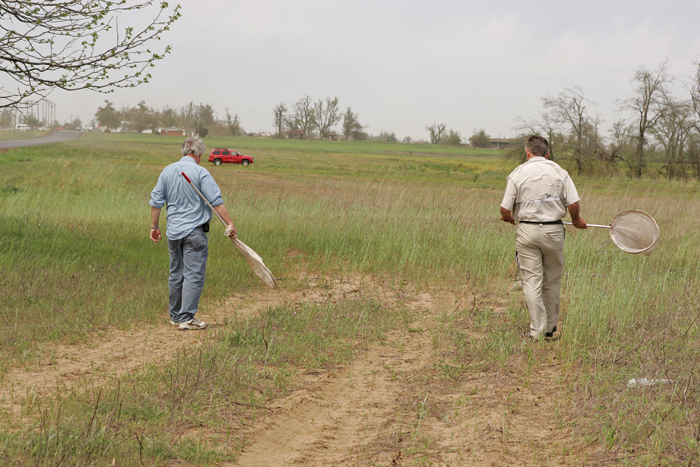
Rich (left) and Ted scan 2-track through sandy ground in the southeastern lowlands looking for tiger beetles.

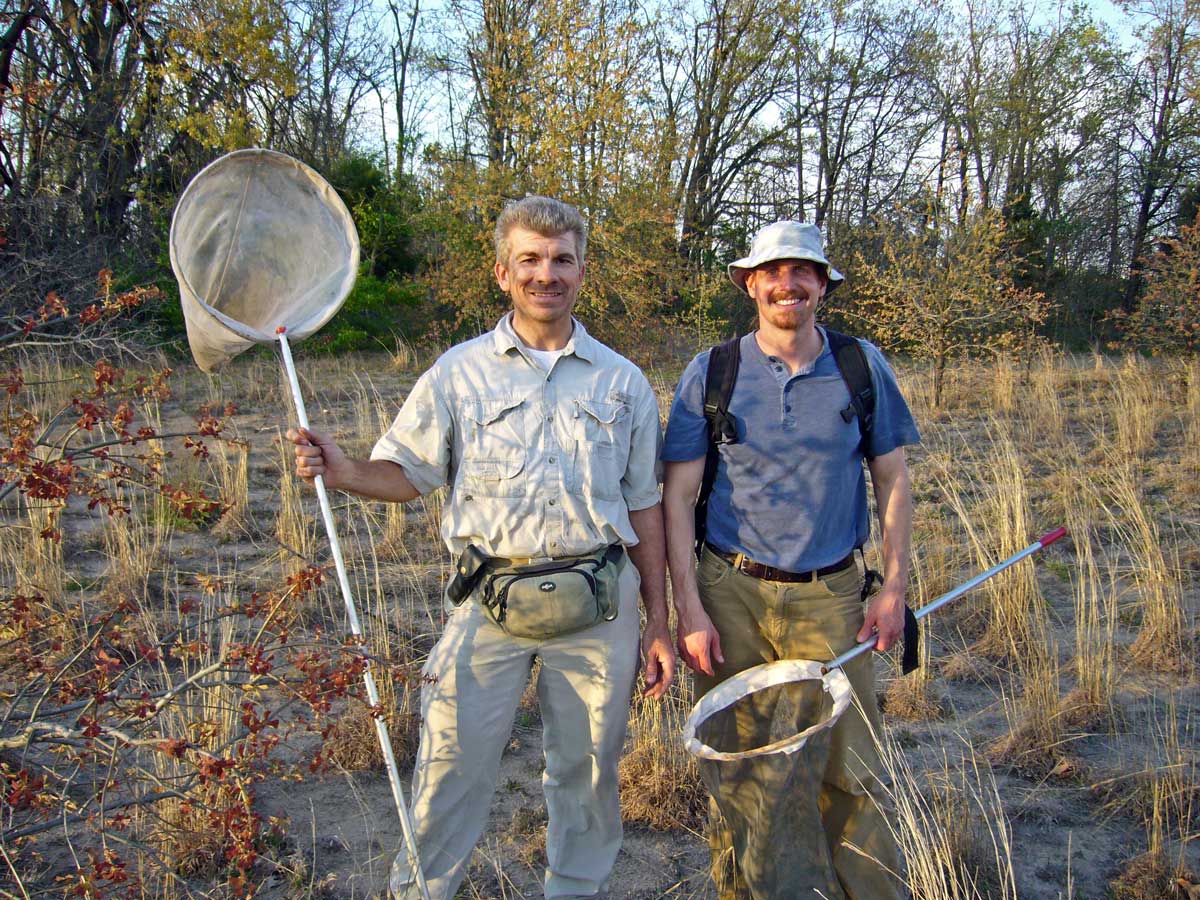
Ted and Chris take a break from looking for tiger beetles in a sand prairie relict. Photo by Rich Thoma.

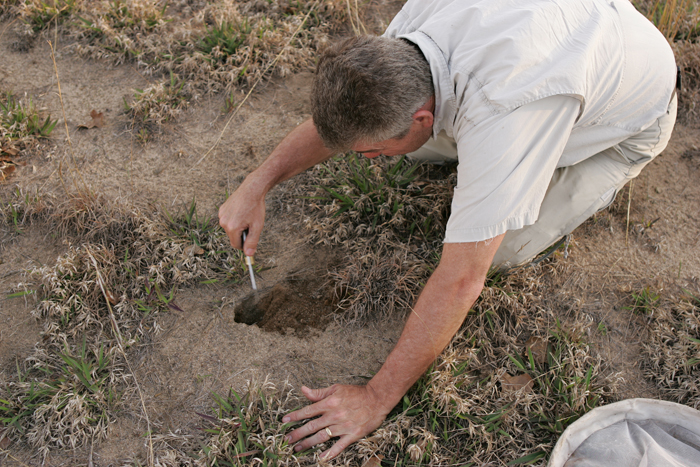
Ted attempts to extract an adult tiger beetle from its daytime burrow in a sand prairie relict.

Ted scans the open sand in a sand prairie relict for adult tiger beetles.

Ted fishes for a tiger beetle larva in a sand prairie relict.

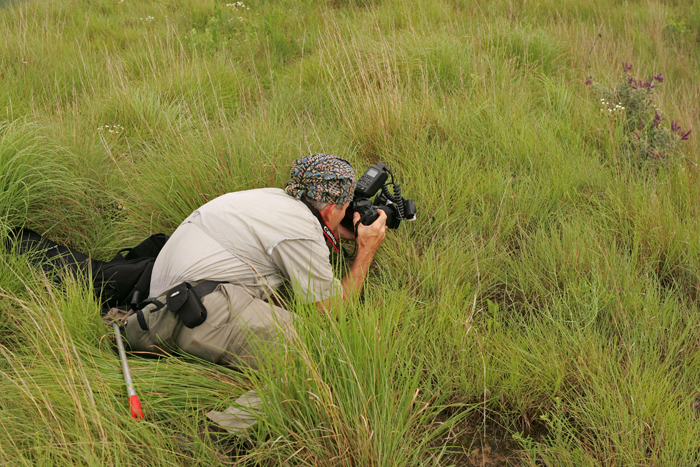
Ted photographing the robber fly, Ospriocerus abdominalis, at Star School Hill Prairie in the Loess Hills of northwest Missouri.

Distant view of Ted (small spot in center) photographing Ospriocerus abdominalis at Star School Hill Prairie.

Copyright © Ted C. MacRae 2009

Add to FacebookAdd to DiggAdd to Del.icio.usAdd to StumbleuponAdd to RedditAdd to BlinklistAdd to TwitterAdd to TechnoratiAdd to Yahoo BuzzAdd to Newsvine

Email to a friend

Ant-like Tiger Beetle

Fig. 1.  Adult female Cylindera cursitans

Fig. 1. Adult female Cylindera cursitans

One of the more recent of the 24 species of tiger beetles that we’ve collected in Missouri is Cylindera cursitans (Ant-like Tiger Beetle).  Although not yet formally recorded from the state, we’ve known about its occurrence here for some time now based on a single specimen deposited in the Enns Entomology Museum (University of Missouri).  With no more locality information to go on than the frustratingly vague “nr. Portageville,” my colleague Chris Brown and I made several attempts over the years to look for this species – eventually deciding that one particular spot where the highway stretched east of Portageville and dead-ended at the Mississippi River was the most likely collection site.  This locality, which we would come to call the “end of the hiway” spot (I suspect that every state with at least one tiger beetle aficionado has one or more so-named spots), proved to be a true tiger beetle “hot-spot,” with no less than 8 species of tiger beetles found along its sandy banks in our first few surveys.  However, C. cursitans was not among them, and success would only come with a little bit of serendipity when I received an email in 2007 from Kent Fothergill.  Kent explained that he had learned of me from my Missouri Tigers article (MacRae and Brown 2001), offered some comments about the tiger beetles that he had been finding since his recent move to southeast Missouri, and included full label data from the tiger beetles in the small collection of the Delta Research Center where his then-fianceé had secured a position as a research entomologist.  I wrote Kent back, thanked him for the data, and added this plea for assistance:

There is a single specimen of Cicindela cursitans in the UMC collection, it was collected in “nr. Portageville” on July 7, 1991.  We have tried several times without success to locate this species in Missouri – it’s the only species that we have not relocated.  If you have any interest in looking for it that would be great.  Attached is a pdf of recent paper describing its habits and biology in Nebraska.

Fig. 2.  Adult female Cylindera cursitans ovipositing into substrate.

Fig. 2. Adult female Cylindera cursitans ovipositing in moist sand/loam substrate.

Little did I know how catalytic that comment would be – the very next day I received an email from Kent not only stating that he found it, but that he found it at the “end of the hiway” spot where we thought it might be.  A digital photo confirmed its identity, and the that weekend I blasted down to meet Kent and see the beetle for myself.  I would see just two beetles that day, but both were at a new locality about one mile south of where Kent had originally spotted them.  Kent would later find them at yet another locality further north along the Mississippi River, and in 2008 the three of us (Kent, Chris, and myself) conducted an intensive survey of potential habitats in southeastern Missouri that identified additional populations both north and south of the original localities.  We concluded that populations of C. cursitans, were restricted in southeast Missouri to the ribbons of wet bottomland forest that occupy the narrow corridor between the Mississippi River and the levees that confine it. However, the populations appeared secure and likely did not require any immediate conservation measures to ensure their long-term survival within the state. 

Fig. 3.  Adult male Cylindera cursitans.

Fig. 3. Adult male Cylindera cursitans.

The bottomland forests that harbor C. cursitans in southeast Missouri (Fig. 3) contrast sharply with the wet meadow habitats reported for populations in Nebraska (Brust et al. 2005a). Within these habitats, the beetles themselves are very easily overlooked because of their small size and rapid running capabilities.  In addition, adult activity peaks in June and begin to wane in July.  The combination of these factors explains our initial difficulty in finding the beetle; however, with a proper search image and better understanding of its temporal occurrence and habitat preference, we have since found the beetles to be rather easily located.  A lingering question from last year’s survey is, how far north along the Mississippi River does C. cursitans occur? Furthermore, might the species also occur in northeast Missouri due to its proximity to the Nebraska populations?  Most of Missouri straddles a curious distributional gap that separates the bottomland forest dwelling populations in the southeast from the wet meadow dwelling populations in the upper Great Plains (Hoback and Riggins 2001). This has led some authors to suggest that the observed distribution represents two disjunct forms and potentially two species (Ron Huber, pers. comm.). Additional surveys of potential habitat further north along the Mississippi River and in northwest Missouri along the Missouri River could prove useful in confirming or refuting that suggestion. 

Fig. 3.  Habitat for Cylindera cursitans, along Mississippi River, vic. Donaldson Point Conservation Area, New Madrid Co., Missouri.

Fig. 4. Habitat for Cylindera cursitans, along Mississippi River, vic. Donaldson Point Conservation Area, New Madrid Co., Missouri.

While such surveys were not possible this year, long-time fieldmate Rich Thoma and I were able to visit the Southeastern Lowlands in June to examine a few habitats along the Mississippi River found a little further north of the northernmost extent of our 2008 survey area. We succeeded in finding another population at one of these sites near the northern limit of the Southeastern Lowlands.  The individuals shown here (Figs. 1-3) were collected from that location (extreme northeastern Mississippi Co.), confined on local sand/loam substrate, and photographed a few days later.  In one of the photos (Fig. 2), a female can be seen in the act of ovipositing into a hole dug into the substrate with her ovipositor.  The more observant readers might notice a strong resemblance between this species and another species to which I have devoted several posts, Cylindera celeripes (Swift Tiger Beetle).  These two species are, in fact, quite closely related and can be distinguished by characters of the elytra (posterior portion not or only slightly expanded and lateral white maculations complete in cursitans, distinctly expanded and maculations reduced in celeripes) (Pearson et al. 2006), habitat (cursitans in moist lowland sites, celeripes in dry upland sites), and distribution (southeast Nebraska/southwest Iowa is the only area where the distributions of these two species overlap, although C. celeripes has not been seen in Nebraska for nearly 100 years! (Brust et al. 2005b)).

Photo details:
Figs. 1-3: Canon 100mm macro lens with Kenco extension tubes (68mm) on Canon EOS 50D (manual mode), ISO-100, 1/250 sec, f/18, MT-24EX flash 1/2 power through diffuser caps.
Fig. 4: Panasonic DMC-FX3 (landscape mode), ISO-100, 1/25 sec, f/2.8, natural light.

REFERENCES:

Brust, M., W. Hoback and C. B. Knisley.  2005a.  Biology, habitat preference, and larval description of Cicindela cursitans LeConte (Coleoptera: Carabidae: Cicindelinae).  The Coleopterists Bulletin 59(3):379-390.

Brust, M. L., S. M. Spomer and W. W. Hoback.  2005b.  Tiger Beetles of Nebraska.  University of Nebraska at Kearney.  http://www.unk.edu (Version 5APR2005).


Hoback, W. W. and J. L. Riggins.  2001.  Tiger beetles of the United States.  Jamestown, ND: Northern Prairie Wildlife Research Center Online.  http://www.npwrc.usgs.gov/resource/distr/insects/tigb/index.htm (Version 12DEC2003).

MacRae, T. C., and C. R. Brown. 2001. Missouri Tigers. Missouri Conservationist 62(6):14–19.

Pearson, D. L., C. B. Knisley and C. J. Kazilek. 2006. A Field Guide to the Tiger Beetles of the United States and Canada. Oxford University Press, New York, 227 pp.

Copyright © Ted C. MacRae 2009

Add to FacebookAdd to NewsvineAdd to DiggAdd to Del.icio.usAdd to StumbleuponAdd to RedditAdd to BlinklistAdd to Ma.gnoliaAdd to TechnoratiAdd to Furl

A bit of housekeeping

I hope you’ll forgive the lack of pretty bug pictures and witty prose in today’s post – I have a few updates and adminstrative issues that I’d like to take care of.

Circus of the Spineless
This notice is a few days late, but Circus of the Spineless # 43 is up at Wanderin’ Weeta.  Susannah has done a great job of assembling blog posts on a diversity of invertebrates from anemones to annelids, bryozoans to barnacles, decapods to gastropods, and of course – insects.  In the latter group, all of the major orders are covered (including beetles by some guy that likes tiger beetles).

Expanded Blogroll
It has been quite a while since I last made mention of new additions to my ever-expanding blogroll.  I’m trying to maintain a fairly comprehensive list of blogs that either focus primarily on insects or feature compelling natural history discussions, and it seems that almost every week I find another one that either began recently or somehow escaped my earlier attention.  A few of these more recent additions deserve special mention for their interesting subjects, superior writing, quality photographic content, etc.

Rate My Posts
WordPress has a new widget that allows readers to rate the quality of posts.  I thought I would open myself up to this potential for praise or criticism and have activated this feature on this blog (and also my other blog, Bikes Bugs and Bones).  It’s a little jickery in that the “comments” link must be clicked in order to see the rating widget, which appears at the bottom of the post as 5 blank stars.  It’s a typical rating scale, with 1 star being the worst and 5 stars being the best.  I know a lot of readers don’t like to leave comments (although I heartily encourage them), but perhaps you would be willing to provide feedback in the form of a rating.  The ratings are completely anonymous – no IP addresses are recorded by the rating widget, so there is no way for me to know who voted or how.  Over time, as ratings accumulate for posts, I will be able to see what kinds of posts people really like (and which they really don’t).  This can be your way to contribute to the future direction of this blog!

  • 5 Stars = Excellent – use this for my very best pieces.
  • 4 Stars = Very Good – you really liked it, maybe just minor criticisms.
  • 3 Stars = Average – not bad, not great, it did the job.
  • 2 Stars = Fair – not one of my better pieces, a bad day perhaps.
  • 1 Star = Poor – well, let’s just hope I don’t get too many of these.

Editorial Duties
One of my long term goals is to be Managing Editor for an entomological journal.  Despite the volunteer nature of such a position, it’s not one that somebody can just walk into – dues must be paid.  I got a foot in the door a few years ago when I began serving as Coleoptera Subject Editor for The Pan-Pacific Entomologist, the journal of the Pacific Coast Entomological Society (we would welcome your manuscript dealing with western entomology in any aspect).  It has been an enjoyable experience, and I guess I’m doing a decent job since I was invited this summer to join the editorial team of the online journal Zootaxa.  This “mega-journal for zoological taxonomists in the world” has quickly become the leading journal for new taxa and taxonomic or nomenclatural acts, based on the coverage and indexing of Zoological Record since 2004.  This is possible only because of its team of 141 editors that cover the entire breadth of animal taxa – 17 of which (including me) handle the vast insect order Coleoptera.  Ever the glutton for punishment, I’ve also just accepted an invitation by the Webster Groves Nature Study Society to take over editorship of their monthly newsletter, Nature Notes.  I suppose the combination of these three editorial positions will let me know if I really want to pursue full editorship of a major journal at some point!

Okay, I can’t leave you without any kind of photograph – here are a couple of shots of Cicindela scutellaris, or festive tiger beetle. This male individual represents the stunningly beautiful nominotypical subspecies occupying the western part of the species’ range – it was photographed on sand exposures in shinnery oak shrubland habitat at Packsaddle Wildlife Management Area in extreme northwestern Oklahoma this past June.

IMG_0540_1200x800_enh

IMG_0547_1200x800

Photo details: Canon 100mm macro lens on Canon EOS 50D (manual mode), ISO-100, 1/250 sec, f/14-16, MT-24EX flash 1/4 power through diffuser caps.

Copyright © Ted C. MacRae

Add to FacebookAdd to NewsvineAdd to DiggAdd to Del.icio.usAdd to StumbleuponAdd to RedditAdd to BlinklistAdd to Ma.gnoliaAdd to TechnoratiAdd to Furl

Typocerus deceptus in Missouri

It has been fifteen years now since I published an annotated checklist of the longhorned beetles (families Cerambycidae and Disteniidae) of Missouri (MacRae 1994).  That publication (and a similar one on Buprestidae) was the product of eight years of collecting – of specimens in the field and of data in any other public or private collection I could find that contained Missouri specimens – during my stint as a field entomologist with the Missouri Department of Agriculture.  I collected during the week while on my rounds.  I collected on weekends as well.  I visited every college and university in the state that had an insect collection of any size, and a few in neighboring states as well.  I made the acquaintance of private collectors with significant Missouri material – most notably Richard Heitzman, Marlin Rice, and the late Gayle Nelson.  By the time I left Missouri for a new position in Sacramento, I had documented 219 species and subspecies of longhorned beetles from the state – 66 of which were new state records.
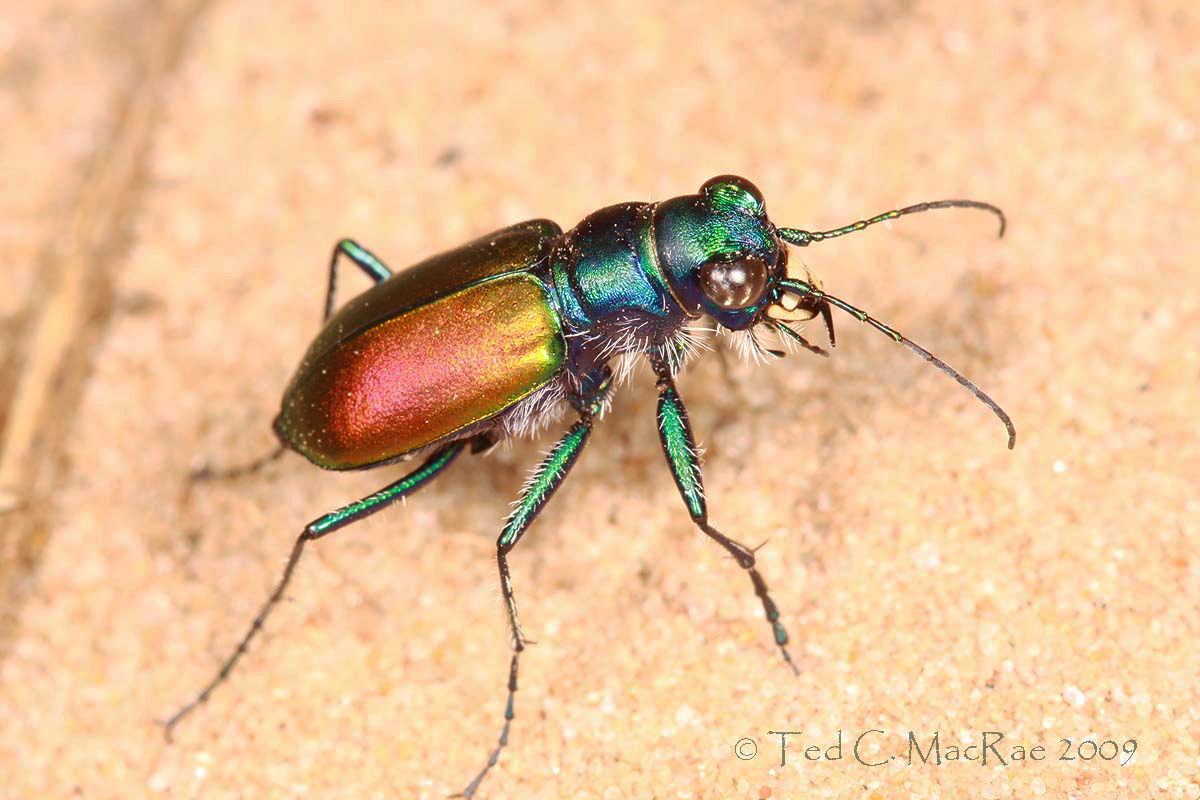
Typocerus deceptus on flower of Hydrangea arborescens

Typocerus deceptus on flower of Hydrangea arborescens

Despite my best efforts, however, I knew the list was not complete – they never are.  In the years since returning to Missouri, I’ve documented an additional 10 species and subspecies in the state (MacRae and Rice 2007), and in a newly published paper (McDowell and MacRae 2009) the rare species, Typocerus deceptus, is documented from Missouri for the first time.  I cannot take credit for this discovery – that honor goes to the paper’s lead author, Tom McDowell of Carbondale, Illinois.  Tom first encountered this species in 2005 at Trail of Tears State Park in southeastern Missouri near Cape Girardeau while conducting routine insect surveys.  After seeing additional individuals on a subsequent visit to the park the following year, Tom contacted me to tell me of his find and graciously invited me to join him on further studies of this rarely encountered species.  I readily agreed, and in July of last year I met up with Tom at Trail of Tears to see the beetle for myself.

Typocerus deceptus on flower of Hydrangea arborescens

Typocerus deceptus on flower of Hydrangea arborescens

Typocerus deceptus has been recorded sporadically from across the eastern U.S.  Nothing is known of its biology other than adult flower hosts and activity periods, and the larva and larval host(s) remain completely unknown.  The species is aptly named, as its appearance is deceptively similar to the common and widespread species, T. velutinus.  Both of these species belong to the so-called “flower longhorn” group (subfamily Lepturinae), characterized by adults that are largely diurnal (active during the day) and attracted to a great variety of flowers upon which they feed.  Tom had found T. deceptus feeding on flowers of wild hydrangea (Hydrangea arborescens) in the company of several other flower longhorns, including T. velutinus.  The similarity of T. deceptus to T. velutinus makes distinguishing individuals amongst the vastly more abundant T. velutinus quite difficult.  However, Tom was able to recognize the species during his surveys as a result of prior experience with it in Illinois.  As Tom and I searched the wild hydrangea plants growing along an intermittent drainage between the road and the park’s unique mesic forest, we succeeded in picking out a total of four individuals of this species amongst the dozens of T. velutinus and other lepturines also feeding on the flowers.

Typocerus velutinus on flower of Hydrangea arborescens

Typocerus velutinus on flower of Hydrangea arborescens

I gradually developed a sense of the subtle differences that distinguish this species from T. velutinus and that allow its recognition in the field.  Typocerus deceptus is slightly more robust than T. velutinus, and whereas the transverse yellow elytral bands of the latter are distinct and well delimited, they are weaker and often interrupted at the middle in T. deceptus, giving the beetle a slightly darker brownish appearance.  The lateral margins of the elytra are also more strongly emarginated near the apices, giving the beetle a more distinctly tapered appearance.  Finally, while both species possess a distinct band of dense, yellow pubescence along the basal margin of the pronotum, this band is interrupted at the middle in T. deceptus. My ability to recognize this species in the field was confirmed a few weeks ago when I returned to Trail of Tears (with longtime field companion Rich Thoma) to attempt what seemed to be an impossible task – photograph these active and flighty insects in the field on their host plants.  Conditions were brutally humid, and I only saw two individuals that day – the first I immediately captured and kept alive as a backup for studio photographs should I fail to achieve my goal in the field, but the second individual (not seen until almost two hours later!) posed just long enough for me to whip off a series of frames, two of which turned out well enough to share with you here.  The first photo clearly shows the interrupted basal pubescent band, and both photos show the distinctly emarginate lateral elytral margins and weak transverse yellow bands (compare to the uninterrupted pronotal pubescent band and well developed transverse elytral bands of T. velutinus in the third photo).

Me with the discoverer of Typocerus deceptus in Missouri Trail of Tears State Park, July 2008

TCM with the discoverer of Typocerus deceptus in Missouri at Trail of Tears State Park, July 2008

It is possible that T. deceptus is not as rare as it appears and is simply overlooked due to its great resemblance to another much more abundant species. However, I believe this is unlikely given its rarity in collections of eastern U.S. Cerambycidae by casual and expert collectors alike.  Moreover, T. deceptus is not the only “rare” longhorned beetle to have been documented at Trail of Tears State Park – a number of other species have also been found there but not or only rarely elsewhere in Missouri (e.g., Enaphalodes cortiphagus, Hesperandra polita, Metacmaeops vittata, and Trigonarthris minnesotana).  This may be due to the unique, mesic forest found at Trail of Tears, being one of only a few sites in southeastern Missouri that support more typically eastern tree species such as American beech (Fagus grandifolia), tulip poplar (Liriodendron tulipifera), and cucumbertree (Magnolia acuminata).  Whether one of these trees serves as a larval host for T. deceptus is unknown.  Nevertheless, I will be returning to Trail of Tears in the future to see what other treasures remain hidden within its unique forests.

Photo details (insects): Canon 100mm macro lens on Canon EOS 50D, ISO 100, 1/250 sec, f/18-20, MT-24EX flash 1/4 power through diffuser caps.

REFERENCES:

MacRae, T. C. 1994. Annotated checklist of the longhorned beetles (Coleoptera: Cerambycidae and Disteniidae) known to occur in Missouri. Insecta Mundi 7(4) (1993):223–252.

MacRae, T. C. and M. E. Rice. 2007. Distributional and biological observations on North American Cerambycidae (Coleoptera). The Coleopterists Bulletin 61(2):227–263.

McDowell, W. T. and T. C. MacRae. 2008. First record of Typocerus deceptus Knull, 1929 (Coleoptera: Cerambycidae) in Missouri, with notes on additional species from the state. The Pan-Pacific Entomologist 84(4):341-343 DOI: 10.3956/2008-23.1

Copyright © Ted C. MacRae 2009

Add to FacebookAdd to NewsvineAdd to DiggAdd to Del.icio.usAdd to StumbleuponAdd to RedditAdd to BlinklistAdd to Ma.gnoliaAdd to TechnoratiAdd to Furl

Library expansion

p1020873_3

If there is anything that I love as much as beetles, it’s books! Pulling a handsome, leatherbound volume from its location on the shelf and smelling the aging paper while leafing through its pages quickens my pulse the way no electonic reprint ever can. That is not to say I don’t appreciate the convenience and increasing accessability of digital literature – especially with regards to searchability and the growing body of older, previously unobtainable works that can be downloaded and printed at will. Still, whenever I have a choice between pulling a real entomology journal from my shelf or accessing its electronic version on CD or online, I will opt for the real thing.

p1020884_3Over the years, I’ve had the opportunity to obtain complete series of several journals key to my studies. The first, and most important of these, was The Coleopterists Bulletin. About 15 years ago I was able to purchase a nearly complete set of this journal previously owned by cicindelid icon Norman Rumpp. His set contained a few recent volumes overlapping with my own set, started in the early 1980’s, and dating back to all but the earliest of years. When I acquired the Rumpp set, I set about purchasing the missing volumes from the available stores of back issues still offered by The Coleopterists Society. However, a few of the earliest numbers were simply not available, so I borrowed copies of these from my good friend Gayle Nelson, carefully made 2-sided copies of each, and trimmed the papers to match the size of the originals. I then took the entire combined set of issues – Rumpp originals and Nelson photocopies – to the bindery and had them bound in antique burgundy, just as one would expect to see them in a university library. In the years since then, I have begun binding my other journal series as time and funds permit. Not only do these bound volumes look attractive, but they are eminently more functional – standing upright on their own and remaining nicely organized through heavy use.

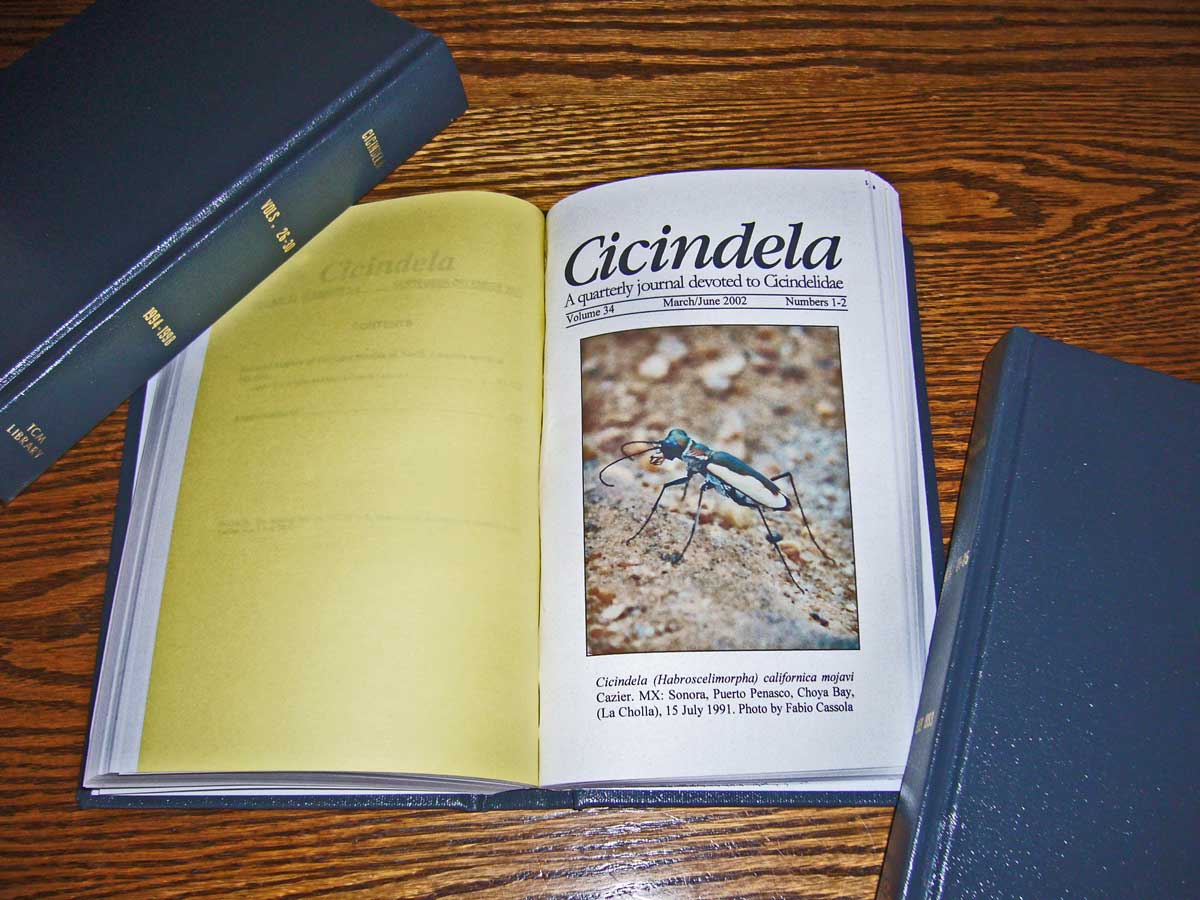
p1020870_3This week I placed my newest complete journal series on the bookshelf – the exclusively tiger beetle-focused journal, Cicindela. I’ve actually had the complete set for awhile now, purchased last year when editor Ron Huber had a limited number of complete sets reprinted. Being a more recent convert to tiger beetles, I hadn’t started my series of Cicindela until around 2000, although I did obtain some older volumes from the library of the late Prof. Wilbur R. Enns, kindly given to me upon his passing in 2003 by his close friend Prof. Ben Putler. Ron made all of the remaining volumes of this fine journal available to me to complete my set, and I’ve finally gotten the set bound – all 40 volumes dating back to 1969.

While I was taking journal volumes to the bindery, I took advantage of the opportunity to bind a complete set of the SCARABS Newsletter. In keeping with the times, SCARABS is a completely virtual publication – all issues are created, distributed, and archived electronically, with the end user free to print a copy for themselves or not. p1020880_3I chose to print, again carefully generating 2-sided printed of each issue on a color laser printer, and had them bound in “volumes” of appropriate thickness. The example shown here is the “Frank T. Hovore” issue, produced as a memorial to one of our time’s most enthusiastic collector of beetles. Frank, known among scarab circles as “Mr. Pleocoma” for his dedication to rain beetles, died of a heart attack in 2006 while on a collecting trip to a remote part of Ecuador. There is something ironically satisfying about having a complete, bound set of a modern, electronic periodical.

Other complete sets that I have bound in my library include Insecta Mundi (vols. 1-18, subsequent volumes electronic only), Jewel Beetles (vols. 1-11), Consortium Coleopterorum (vols. 1-4), and Michigan/Great Lakes Entomologist (vols. 1-40). Also, while not complete, I have the last 21 volumes of The Pan-Pacific Entomologist, nicely bound in forest green.  Oh, and look at the first photograph again – the book on the right side of the photo is an original copy of Catalogue of the described Coleoptera of the United States, published by Frederick Ernst Melsheimer in 1853. It is the oldest book in my library – received as a gift from the family of the late Marshall Magner, a long-time member of our local Webster Groves Nature Study Society, upon his passing in 2005.

Copyright © Ted C. MacRae 2009

Add to FacebookAdd to NewsvineAdd to DiggAdd to Del.icio.usAdd to StumbleuponAdd to RedditAdd to BlinklistAdd to TwitterAdd to TechnoratiAdd to Furl