Alkali Tiger Beetle

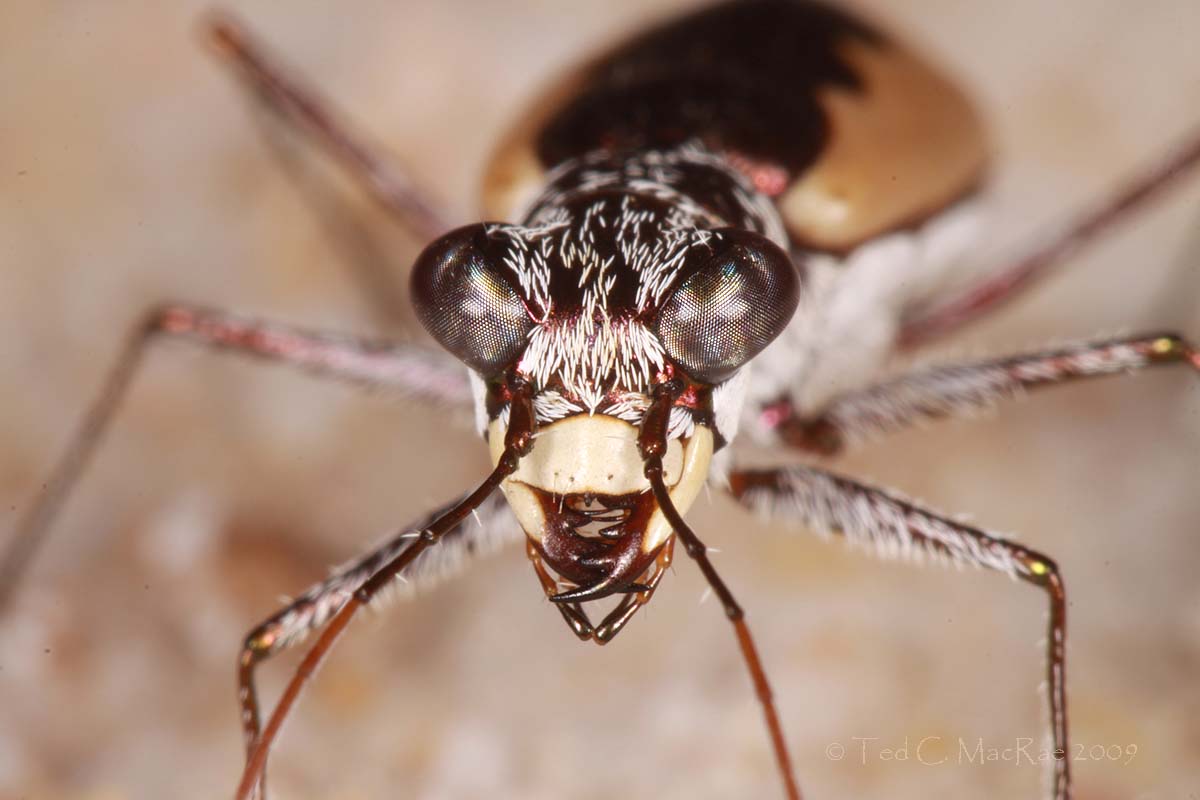
Eunota togata globicollis - Salt Plains NWR, Oklahoma

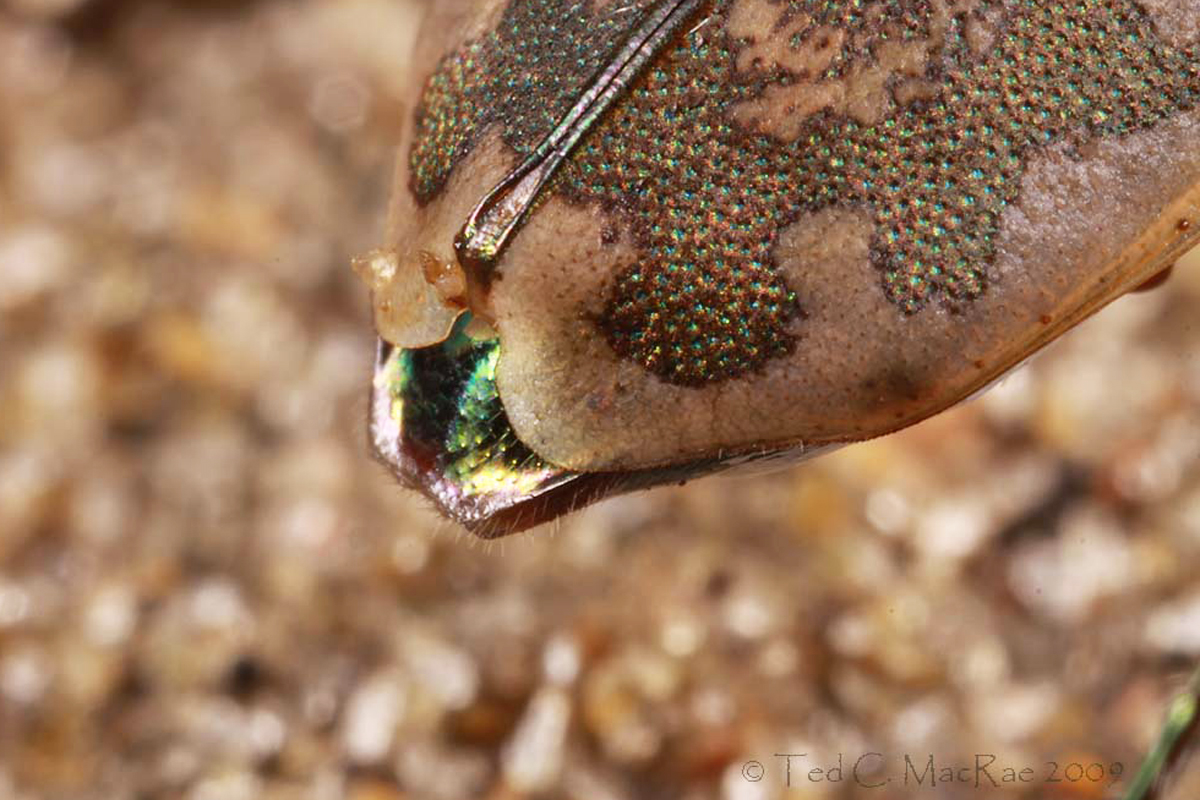
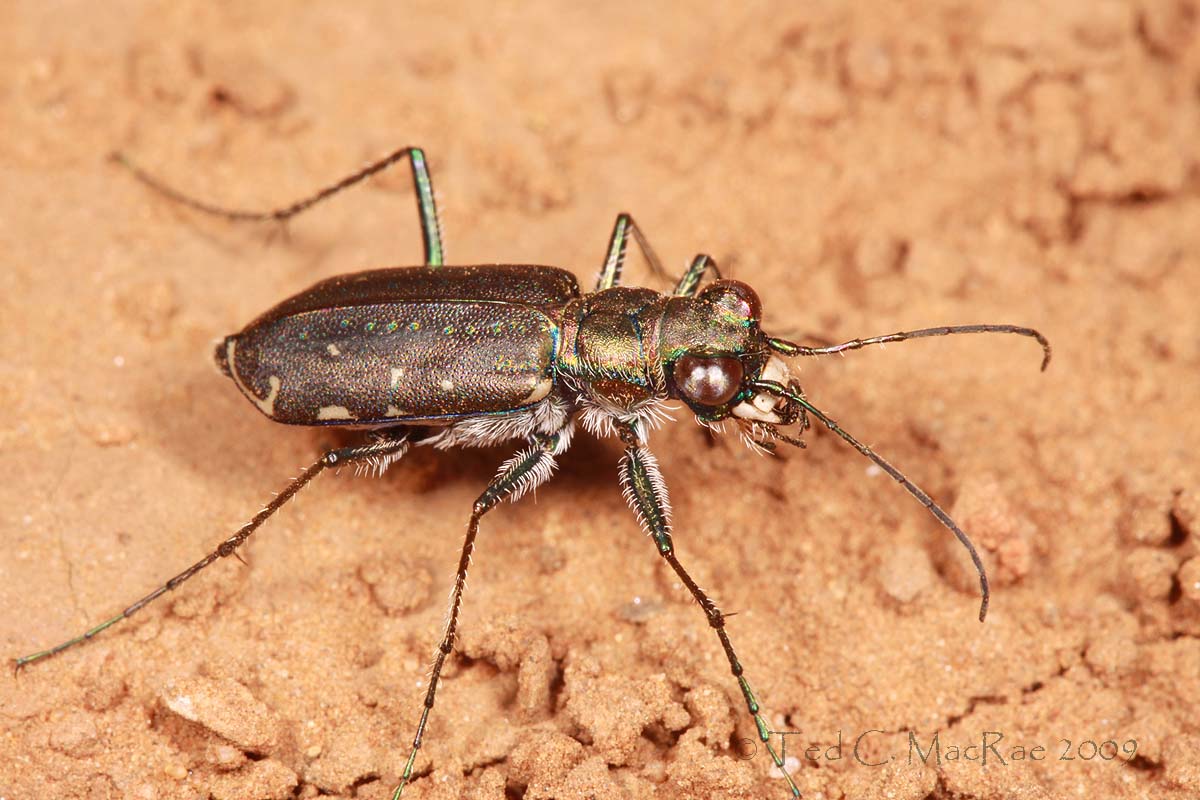
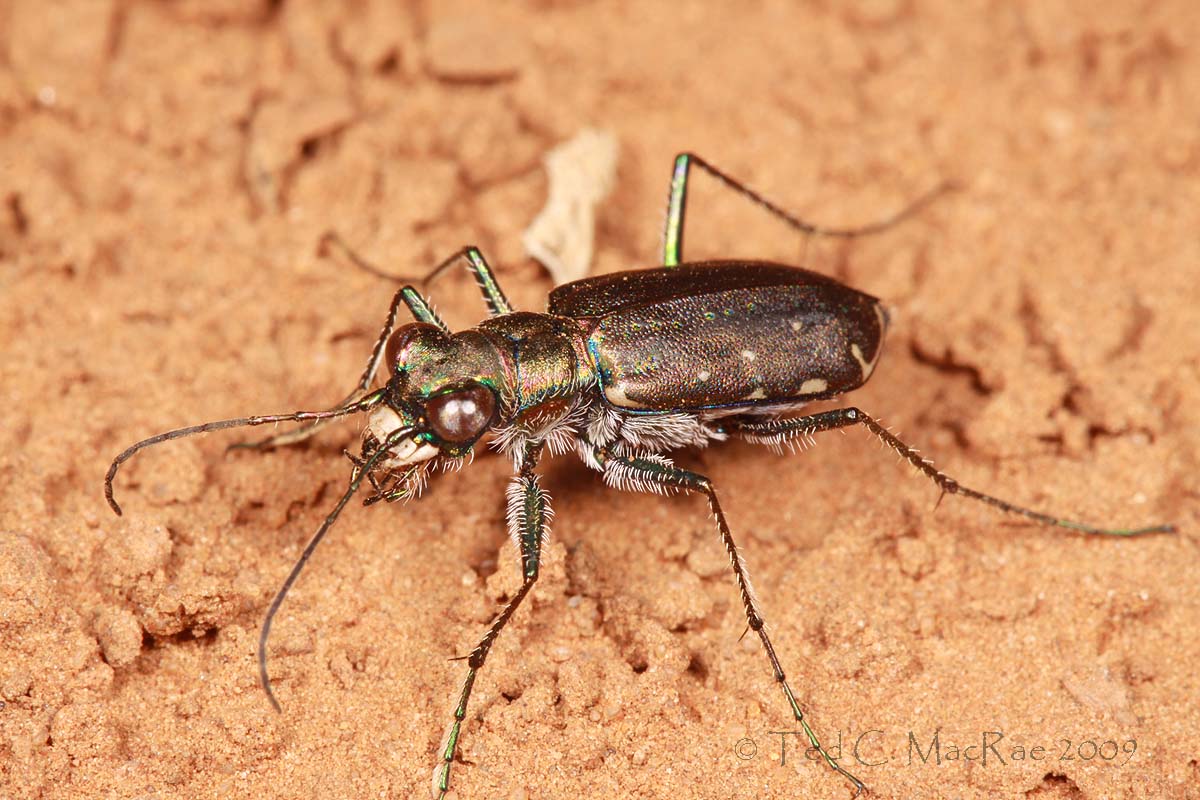
I haven’t written much about my early October trip to Oklahoma, where I had hoped to confirm a hunch that the gorgeous Cicindela pulchra (Beautiful Tiger Beetle) would be found in the red clay/gypsum hill habitats of Woodward and Major Counties (the same place where I had found the much rarer Cylindera celeripes the previous June).  Unfortunately, a sudden cold snap and overcast skies conspired against me for the duration of that short, 5-day trip, reducing tiger beetle activity to near zero and sending me back to Missouri with little to show for my efforts — save a scorpion, a torpid Cicindela splendida, and some very beautiful ladie’s-tresses orchids in peak bloom.  I did have one moderately successful day, however, when I returned to Salt Plains National Wildlife Refuge in north-central Oklahoma, a place where I observed seven species of tiger beetles during my June trip.  An eighth species that I did not see on that trip, but which I had observed in previous years, was my goal this time, and despite the cold temperatures and cloudy skies I was fortunate to find several individuals of Eunota togata globicollis.  Occurring primarily on saline flats in the central and southern Great Plain, this subspecies was called the Alkali Tiger Beetle¹ by Erwin and Pearson (2008), who reserved for the nominate form (found in salt marshes and tidal flats along the Gulf Coast) the more descriptive name White-cloaked Tiger Beetle².  A third subspecies, E. togata fascinans (Salt Flat Tiger Beetle) is restricted to salt flats in central New Mexico and west Texas (Pearson et al. 2006) (you may remember this subspecies from my habitat partitioning post last month).

¹ In reality, I have come to consider the term ‘alkali’ as a bit of a misnomer, as it is saline soils specifically — not just those with high pH (alkaline) — that the species is fond of. Moreover, there are many species of tiger beetles in addition to this one that are associated with saline soils.

² Okay, I might as well just get all this off my chest. Pearson et al. (2006) gave common names to each species of tiger beetle in the U.S., but not subspecies. I think most non-taxonomists probably consider this a good thing, although it is not without its problems (some species already had multiple common names applied to them, forcing choices that are sure not to please everyone). Erwin and Pearson (2008) took this further and came up with common names for all of the subspecies as well, and like any good taxonomist they steadfastly applied existing common names only to nominate forms. Eunota togata, however, is an example where the original common name would have been better applied to one of the non-nominate subspecies. The species epithet togata means “cloaked” (being derived from the Latin word toga — a reference to the broad white band running along the elytral margins). Each of the two non-nominate forms are distinguished by the white band being more broadly expanded (indeed, almost entirely covering the elytra in subspecies fascinans), yet it is the nominate subspecies — the least “cloaked” of the three — that retains the original common name. A silly argument I suppose, but if we start applying the “prinicple of priority” to common names in the same manner as scientific names, then what have we gained? Of course, I am of the opinion that most insect groups are too diverse and their taxonomy still too unstable to warrant a rigid system of “official” common names. Is it really any easier to learn White-cloaked Tiger Beetle than Eunota togata? How about Mount Ashland Night-stalking Tiger Beetle instead of Omus cazieri? And this is not even considering what happens when category-level shifts occur. For example, the genus Tetracha was formerly called the Big-headed Tiger Beetles; however, its former subgenera were recently elevated to genus level. Erwin and Pearson, accordingly, applied the common name to the entire subtribe containing Tetracha and its relatives and applied a new common name, Metallic Tiger Beetles, to the new, more limited concept of Tetracha. Thus, in an ironic case of common name instability despite no change in scientific name, the Virginia Big-headed Tiger beetle (Tetracha virginica) became the Virginia Metallic Tiger Beetle. Are your eyes bugging yet? Common names may be appropriate for higher vertebrates, but can they really be used effectively for beetles and other insect groups where the increasing use of molecular tools is sure to result in additional, perhaps radical, shifts in taxonomy? There — I said it, and I feel a lot better!
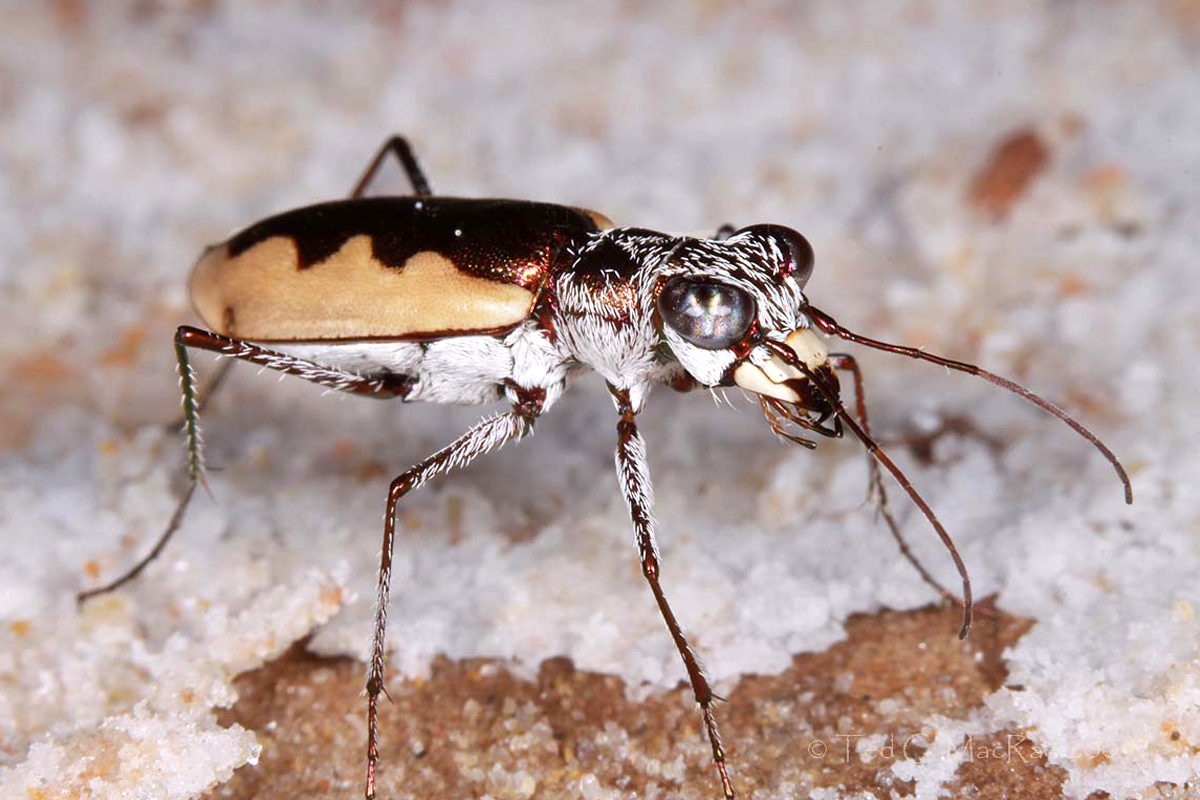
This species is restricted to saline flats in the central/southern Great Plains.

Of the eight tiger beetle species that I’ve now observed at Salt Plains NWR, half of them (Cicindela fulgida, C. nevadica knausii, E. togata globicollis, and Habroscelimorpha circumpicta johnsonii) are true saline habitat specialists.  One of the other four species (Cicindela tranquebarica kirbyi) is also fond of saline habitats but also occurs commonly on dry, sandy soils as well, and two show a high affiinity for nearly any moist (Cicindela repanda) or moist to dry (Cicindela punctulata) soils with little regard for salinity.  Only Cicindela formosa, a denizen of dry, deep sands seems a little out of its element on the moist, salty mud at Salt Plains NWR — perhaps the few individuals I’ve observed here are incidental visitors, mistaking the white, barren expanses of salt-encrusted soil for the dry sand the species prefers during disperal searches.  This again brings up the question of habitat partitioning for competition avoidance among tiger beetle species sharing the same habitat.  Eunota togata globicollis is active during the spring and fall and, thus, temporally isolated from C. nevadica knausii and H. circumpicta johnsonii (both summer-active species).  The other saline specialist at Salt Plains NWR (C. fulgida) is active during the same seasons as E. togata globicollis; however, in my observations that species prefers the sparsely-vegetated zone at the edge of the saline flats, while E. togata globicollis prefers to stay out in the more open areas.  These observations mirror those of Melius (2010) for E. togata fascinans and the other seven species he noted in the Laguna del Perro area of New Mexico, and of Willis (1967), who recorded as many as 11 sympatric tiger beetle species in saline habitats in the central U.S.
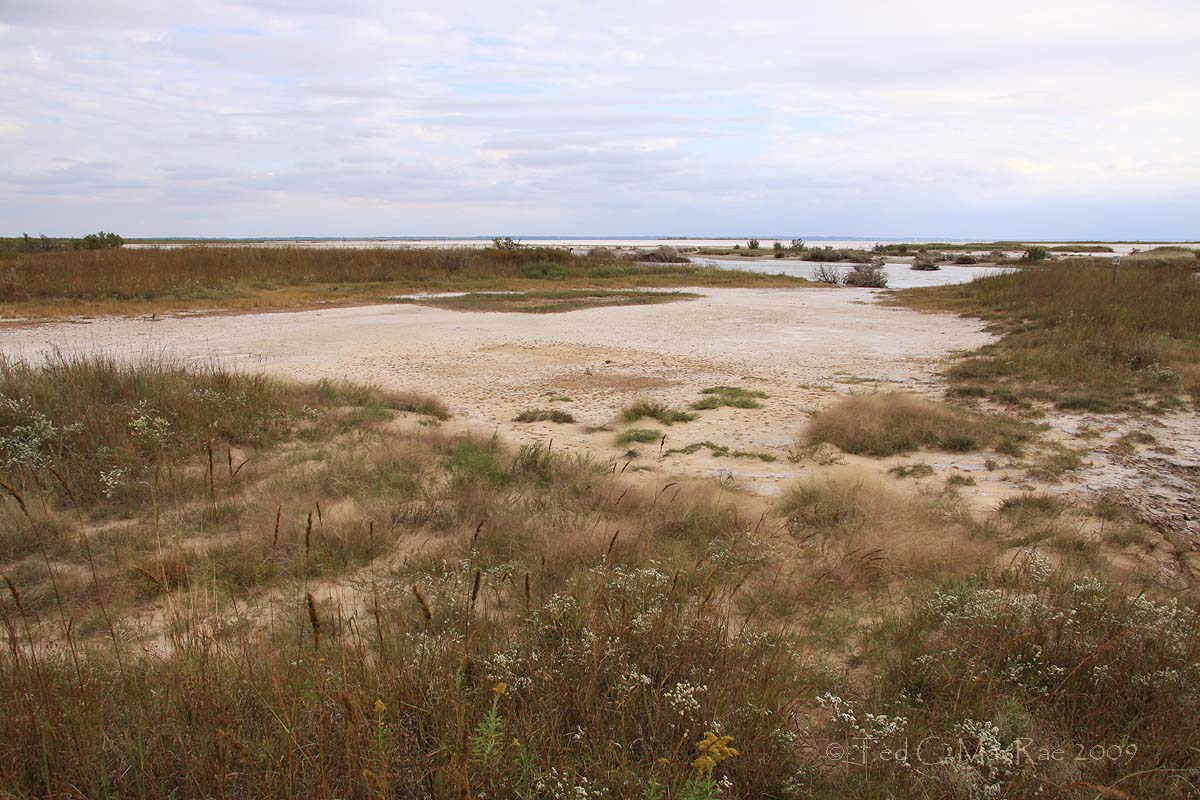
Saline flats at Salt Plains NWR are home to eight species of tiger beetles.

Microhabitat selection and seasonal occurrence are not the only isolating mechanisms that can minimize interspecific competition among the different tiger beetle species at Salt Plains NWR.  Cicindela tranquebarica kirbyi is also a spring/fall species and doesn’t appear to display a preference for open versus vegetated areas, potentially allowing it to compete directly with both E. togata globicollis and C. fulgida.  However, C. tranquebarica kirbyi is a decidely larger species, while the other two are smaller, and correlated with such differences in overall size is the size of their mandibles.  Mandibular size directly correlated to prey size in a number of tiger beetle species (Pearson and Mury 1979), thus providing another mechanism for avoiding competition between these three co-occurring species. 

Photo details:
Beetles: Canon 100mm macro lens w/ 68mm Kenco extension tubes on Canon EOS 50D (manual mode), ISO 100, 1/250 sec, f/18-20, MT-24EX flash 1/4 power w/ Sto-Fen diffusers.
Landscapes: Canon 17-85mm zoom lens (22mm) on Canon EOS 50D (landscape mode), ISO 100, 1/100 sec, f/10, natural light.

REFERENCES:

Erwin, T. L. and D. L. Pearson. 2008. A Treatise on the Western Hemisphere Caraboidea (Coleoptera). Their classification, distributions, and ways of life. Volume II (Carabidae-Nebriiformes 2-Cicindelitae). Pensoft Series Faunistica 84. Pensoft Publishers, Sofia, 400 pp.

Melius, D. A. 2009. Post-monsoonal Cicindela of the Laguna del Perro region of New Mexico. CICINDELA 41(4):81-89.

Pearson, D. L., C. B. Knisley and C. J. Kazilek. 2006. A Field Guide to the Tiger Beetles of the United States and Canada. Oxford University Press, New York, 227 pp.

Pearson, D. L. and E. J. Mury. 1979. Character divergence and convergence among tiger beetles (Coleoptera: Cicindelidae). Ecology 60:557–566.

Willis, H. L.  1967.  Bionomics and zoogeography of tiger beetles of saline habitats in the central United States (Coleoptera: Cicindelidae).  The University of Kansas Science Bulletin 47(5):145-313.

Copyright © Ted C. MacRae 2010

Add to FacebookAdd to DiggAdd to Del.icio.usAdd to StumbleuponAdd to RedditAdd to BlinklistAdd to TwitterAdd to TechnoratiAdd to Yahoo BuzzAdd to Newsvine

Email to a friend

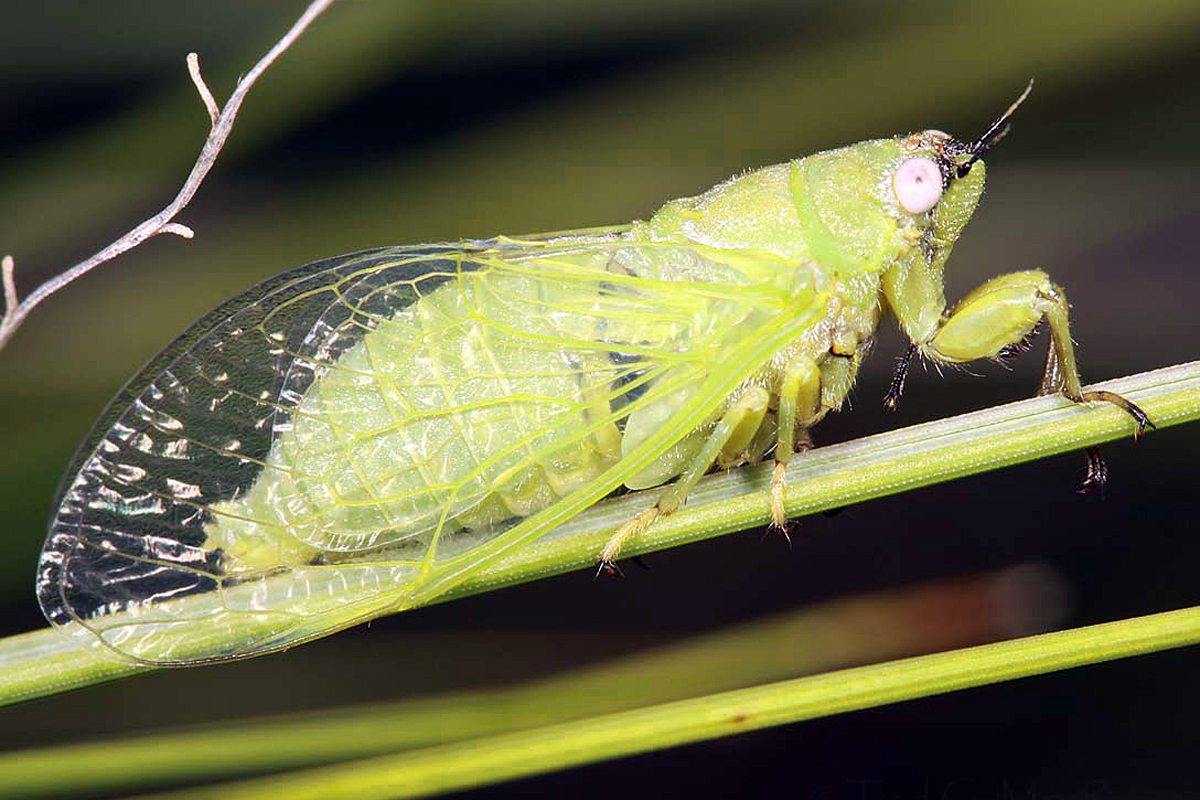
Cicadetta kansa in Oklahoma

Photo details: Canon 100mm macro lens on Canon EOS 50D, ISO 100, 1/250 sec, f/14, MT-24EX flash 1/4 power w/ Sto-Fen diffusers.

Another of the insects that I saw this past June at Four Canyon Preserve in northwestern Oklahoma was this small cicada, Cicadetta kansa. Though not as small as the diminutive Beameria venosa (see North America’s smallest cicada), their barely audible call – a soft buzz – makes them even more difficult to notice.  I only realized what they were after noticing something odd about the small, green “grasshoppers” that flitted in front of me as I walked through the mixed shortgrass prairie.  They didn’t quite fly “right” and landed delicately within the grass rather than crashing into it clumsily.  Even after realizing that they weren’t grasshoppers, it was difficult to say what they were at first due to their wariness and lime green coloration that helped them blend marvelously into their grassy surroundings.  A few sweeps of the net solved that problem, and I discovered what was at the time the smallest and most beautiful cicada I had seen to that point (Beameria venosa took both honors later that month in the Loess Hills of northwestern Missouri).

Despite being the only world-wide genus of cicadas, Cicadetta is represented in the U.S. by only two species—C. kansa and C. calliope.  In addition to its pale green coloration, C. kansa is distinguished from C. calliope by having only 4 or 5 apical cells in the hind wing (6 in C. calliope).  Cicadetta kansa occurs from Texas north to South Dakota, while C. calliope is found from Texas to Florida and northwards to Iowa, Ohio and New Jersey.  Little is known about the biology of Cicadetta kansa; however, presumably it is similar to that of C. calliope, which emerges and lays eggs in late spring.  Eggs hatch by late summer, at which time the nymphs burrow into the ground again begin feeding on the roots of grasses.  This feature of their biology protects them from the negative impacts of managed spring and fall burns, and indeed C. calliope is known to increase in prairies that are managed by such burns.  This is in contrast to other prairie cicadas (genus Tibicen), which overwinter as eggs in the above-ground portion of grasses and, thus, are negatively impacted by fall and spring burns.

A number of websites are dedicated to these charismatic insects; however, Cicada by Andy Hamilton at the Canadian National Collection of Insects, Arachnids and Nematodes is the most informative and comprehensive that I’ve found.

Copyright © Ted C. MacRae

Add to FacebookAdd to NewsvineAdd to DiggAdd to Del.icio.usAdd to StumbleuponAdd to RedditAdd to BlinklistAdd to TwitterAdd to TechnoratiAdd to Furl

Anatomy of a Tiger Beetle Larva

My first experience looking for tiger beetles in Florida had gone well.  Despite its small size and urban surroundings, the narrow strip of coastal scrub and saltwater marsh along the intracoastal waterway behind my sister-in-law’s condominium boasted a robust population of what I took to be a single tiger beetle species.  The specimens I collected and photographs I took would later reveal that two co-occurring and closely related species were present: Ellipsoptera marginata (Margined Tiger Beetle) and E. hamata lacerata (Gulf Beach Tiger Beetle).  I had spent close to two hours under the August sun observing and photographing the beetles before I decided that I had given the preserve a thorough enough look.

IMG_1077_1200x800_crp

As I was heading back, I noticed a little bit of high ground alongside a red mangrove thicket and went over to give it a look.  As I approached I saw something I hadn’t yet seen that day – tiger beetle larval burrows.  Larval burrows, especially larger ones such as these were, are unmistakeable – almost perfectly circular (slightly cut out on one edge) and smoothly beveled around the perimeter.  There were a number of burrows clustered on the small bit of high, dry ground, and my first thought was that their inhabitants represented the same (what I thought was a single) species that I had encountered so commonly that day as adults.  I then reasoned, however, that more likely they represented another species whose adults are active later in the season – perhaps one of the so-called “spring/fall” species whose larvae typically reach maturity during the heat of summer.  The size of the burrows (~5mm dia) suggested they were inhabited by 3rd instar larvae (the final instar before pupation), in which case it may be possible to rear a few to adulthood – if I could get at them. I tried fishing (Pearson and Vogler 2001) a few holes with a grass blade but didn’t get any bites, so I decided to watch for awhile and see if any of the larvae, believing the danger of my approach had passed, would reappear at the tops of their burrows.  Waiting for tiger beetle larvae to appear is a crap shoot – maybe they’re active, and maybe they’re not, and crouching in the stifling summer air of a coastal marsh in Florida is not an easy thing to do for very long.  Fortunately my wait was short, as within a few minutes I saw one re-appear at the top its burrow.  I slowly got out my knife and moved to place the tip on the soil about 1″ from the burrow at a 45° angle for an attempted tunnel block (Pearson and Vogler 2001), but it spooked and dropped back down into its burrow before I could get then knife in place.  No matter, I knew it was in there now and that it would likely reappear if I could muster the patience.  I positioned the knife and waited – crouched under the baking Florida sun, until when it did re-appear I plunged the knife into the soil with authority.  It was a good jab – I had blocked its retreat without injuring it, and a quick flip of the knife popped out the soil plug and exposed the startled larva, flipping vigorously in a vain attempt to escape before settling down amidst its unfamiliar, exposed surroundings.

IMG_1083_1200x800_enh

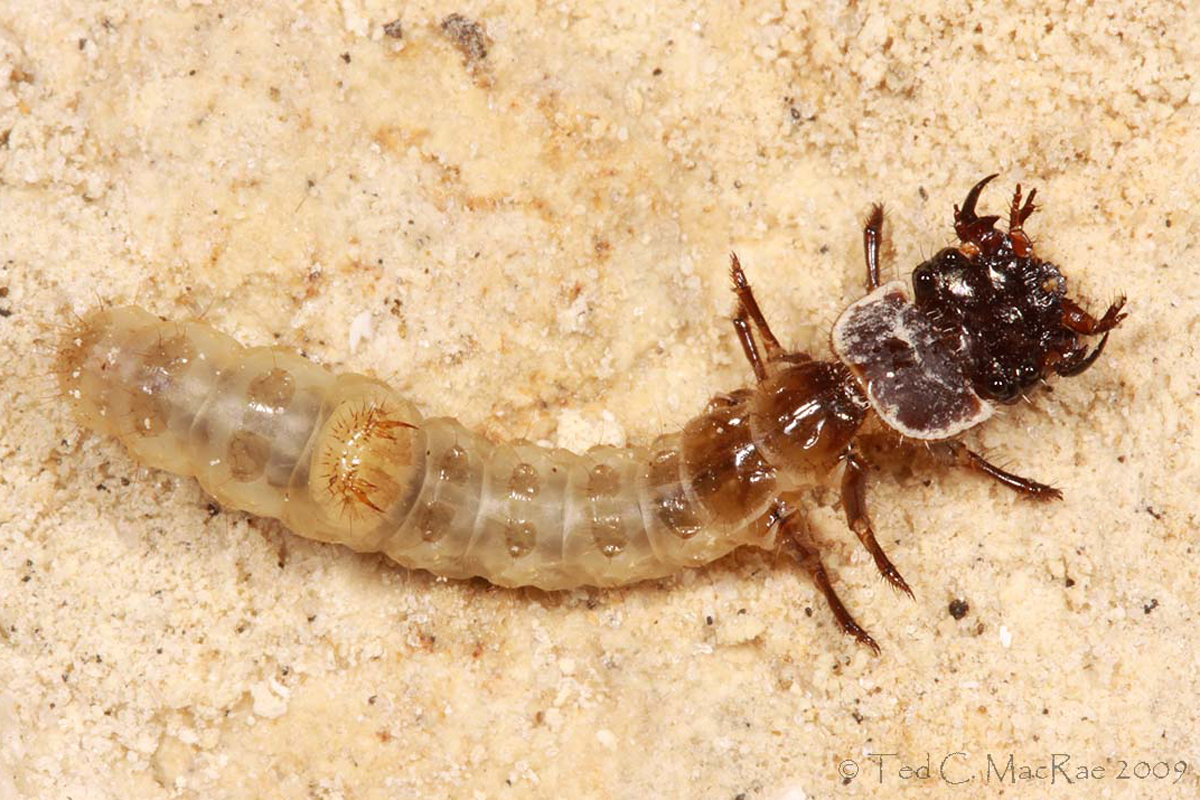
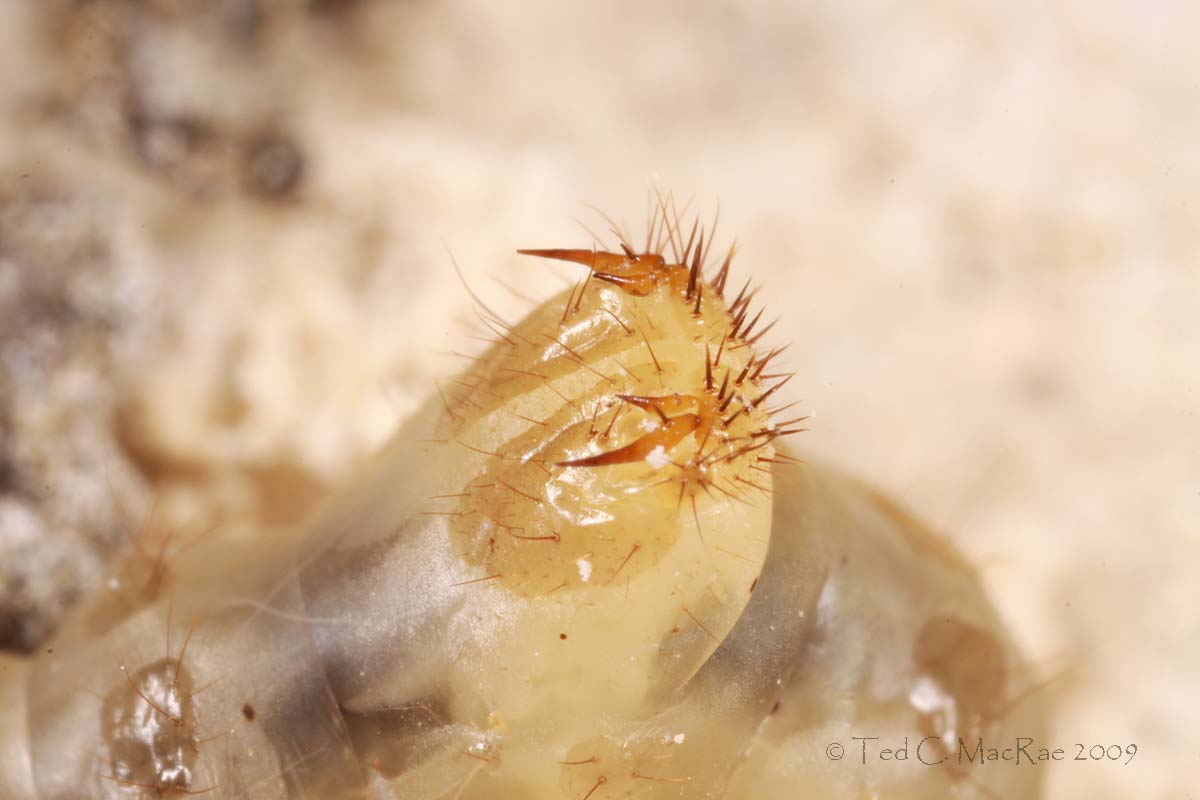
For those of you who have never seen a tiger beetle larva, they are among the most other-wordly creatures one can imagine.  The large, heavily sclerotized head bears two long, sickle-shaped, upward-pointing mandibles and up to three pair of highly-acute eyes whose arrangement on each side conveys the image of a “face” with congenital birth defects.  The top of the head is flattened to lie flush with the surrounding soil as the larva sits at the top of its burrow, and huge, powerful mandibular muscles fill the cranial cavity.  The remainder of the body – long, narrow, and cylindrical – hangs from the head at a 90° angle down into the burrow and is unremarkably grub-like, save for a curious hump on the dorsal side of the 5th abdominal segment.  Close examination of the hump reveals an intricate pattern of forward-facing hooks and spines that function in anchoring the larva against the side of its burrow to prevent struggling prey from dislodging it.  The life of a tiger beetle larva is a life of waiting – unlike the adults who run down their prey, the larvae sit in their burrows and wait for prey to come to within lunge’s reach.  While the eyes of most grub-like insects detect little more than light and dark, those of tiger beetle larvae are densely packed with photoreceptors that permit detailed focusing and depth perception for detecting whether potential prey has ventured close enough to their burrow (Pearson et al. 2006).  When that happens, they strike with lightning speed, plunge their mandibles into their prey, and drag it down into the depths of their burrow where it is summarily dispatched with a few bites of their powerful mandibles.  Larvae consume they prey in a manner similar to that of adults in that they chew but don’t swallow their prey. Rather, they secrete digestive secretions containing proteolytic enzymes that begin digesting the prey extra-orally as they chew.  The resulting bolus is masticated and its liquid components sucked out until nothing but a dry wad of indigestable chitin remains, which is spat out of the burrow (Pearson and Vogler 2001).

IMG_1081_1200x800

Looking at this strange insect, it occurred to me that I had not yet attempted macrophotographs of a tiger beetle larva out of its burrow, and this would be a good opportunity to get more practice with my Canon MP-E 65 mm macro lens – a lens with incredible magnification capabilities, but one that is also a bit of a temperamental beast to use hand-held in the field.  The subject was unusually cooperative, perhaps too stunned by its sudden predicament to know what to do, and as I took the photographs I focused in particular on characters of the head and dorsal hump (often useful in identifying tiger beetle larvae, at least to genus).  Time was growing short once I finished taking photographs, so I placed the larva in a vial and returned the following day to extract a chunk of native soil to place in a rearing container, managing to collect two more larvae as well (unfortunately, one became instant “prey” for the other.  Note to self: when placing multiple tiger beetle larvae in a container of soil, seal the artificial burrows into which you place each one!).  I paid little further attention to the photographs, other than to transfer them onto my computer and add metadata upon my return to St. Louis.  I didn’t know what species the larvae represented, but I assumed they were something in the genus Cicindela or one of its several former subgenera.  However, had I studied the photos and considered the locality and habitat, I would have realized that my assumption was incorrect¹.  That realization would come in surprise fashion two months later when the two adults emerged within a few days of each other…

¹ Ten points to whoever can use this information to arrive at an identification before my next post 🙂

IMG_1072_1200x800_enh

Photo details:
All photos: Canon EOS 50D, manual mode, ISO-100, 1/250 sec, MT-24EX flash w/ diffuser caps.
Photo 1: Canon 100mm macro lens, f/22, 1/4 power flash (photo slightly cropped).
Photos 2-4: Canon MP-E 65mm 1-5X macro lens f/16, 1/8 power flash.

REFERENCES:

Pearson, D. L., C. B. Knisley and C. J. Kazilek. 2006. A Field Guide to the Tiger Beetles of the United States and Canada. Oxford University Press, New York, 227 pp.

Pearson, D. L. and A. P. Vogler.  2001. Tiger Beetles: The Evolution, Ecology, and Diversity of the Cicindelids.  Cornell University Press, Ithaca, New York, 333 pp.

Copyright © Ted C. MacRae 2009.

Add to FacebookAdd to NewsvineAdd to DiggAdd to Del.icio.usAdd to StumbleuponAdd to RedditAdd to BlinklistAdd to TwitterAdd to TechnoratiAdd to Furl

(My) Introduction to Florida Tiger Beetles

On the last day of July, I hopped into my stuffed-to-the-brim SUV and began the +1000-mile drive to St. Petersburg, Florida.  I had with me my camera and my collecting gear, but also my bike, some beach wear… and my family!  No, this was not a collecting trip, but a family vacation.  We would be staying at my sister-in-law’s condo with my niece and enjoying typical Florida vacation fare – beaches, Disney World, sightseeing.  I even brought my road bike along to enjoy some pancake-flat terrain (a rarity around St. Louis) for a nice change of pace.  Still, I can be rather single-minded when it comes to opportunities for bug collecting, and summer in Florida presents opportunities galore!  Virtually everything there is different, and while I have been to Florida a number of times, my visits have all been during spring and prior to my more recent interest in tiger beetles.  It would be a family vacation, but still I would find a way to sneak off a couple times and satisfy my compulsions, and while the girls talked about Disney World and the beach, visions of Cicindela abdominalis, C. highlandensis, C. scabrosa, Ellipsoptera gratiosa, E. hamata lacerata, E. hirtilabris, E. marginata, Habroscelimorpha dorsalis, H. severa, and H. striga danced through my head!

I wouldn’t have to go far to find my first Florida tiger beetles.  My sister-in-law’s condo is in Seminole (west side of St. Petersburg peninsula), and as my niece and her husband showed us around after our arrival, they pointed out the “wild area” off their back patio next to the intertidal waterway and suggested, innocently, that I could go bug collecting back there.  In such a developed urban/tourist area, I figured it must be highly disturbed, dominated by exotics, and offering little in the way of quality habitat for the serious bug collector.  However, that night, as a cacophony of nasal queenks from the area made it clear that a healthy population of what I presume to be green treefrogs were thriving in the area, I reconsidered my skepticism and decided to take a quick look a day later.  What I found was a small but high-quality strip of coastal scrub and saltwater marsh bordering the intracoastal waterway, with thickets of red mangrove (Rhizophora mangle) along the water’s edge, black mangrove (Avicennia germinans) “woodlands” in the high scrub areas, and moist, briney, barren ground in between (Photo 1).  The whole area couldn’t have been more than a hundred yards wide but extended along the length of the waterway, and a wooden sign as I entered the area indicated it was a bona fide, albeit private, nature preserve established as part of the condominium development.

Intertidal salt marsh, Tara Cay Sound Nature Preserve, Seminole, Florida

Intertidal salt marsh, Tara Cay Sound Nature Preserve, Seminole, Florida

Within minutes after entering the preserve I saw the first tiger beetle.  I didn’t know what it was, and my first stalking efforts were woefully inadequate.  I saw another one a few minutes later and got within net handle distance but muffed the swing.  A few feet further along the path and onto an exposure by the water revealed several individuals, one of which I was finally able to capture after several clumsy misses.  I hadn’t yet memorized key characters for all of the species I had the potential to encounter, but I could see in the hand that this individual almost certainly belonged to the genus Ellipsoptera (Ellipsed-winged Tiger Beetles) because of its resemblance to E. macra (Sandy Stream Tiger Beetle) and E. nevadica knausii (Knaus’ Tiger Beetle), which I had photographed earlier this year in Missouri and Oklahoma, respectively.  With one now in the hand as a studio backup, I began my efforts to obtain field photographs.  The beetles were extremely wary, with fast running and strong flight capabilities that made them very difficult to approach.  It was only their abundance and my dogged persistance that allowed me to finally get close enough to one (Photo 2) to fire off a sequence of frames.  I then spent some time collecting a voucher series – finally getting a beat on their behavior and able to capture them with a little more efficiency despite their ultra-wariness before concentrating on getting more photographs of different individuals (including those shown in Photos 3 and 4).

Ellipsoptera marginata - Margined Tiger Beetle

Ellipsoptera marginata - note "tooth" under right mandible of this male

Ellipsoptera marginata - Margined Tiger Beetle

Ellipsoptera marginata - another male, with a distinctly bronzed pronotum

IMG_1061_1200x800

Ellipsoptera hamata lacerata - Gulf Beach Tiger Beetle (mate guarding)

I returned to the condo after a couple of hours – completely drenched (remember, it was August in Florida!). When I had the chance to consult my “bible” (Pearson et al. 2006), I learned there there were two possibilities: Ellipsoptera marginata (Margined Tiger Beetle), occurring along the Atlantic seaboard from Maine to the Gulf coast of Florida; and Ellipsoptera hamata lacerata (Gulf Beach Tiger Beetle), resembling and closely related to E. marginata and occurring along the Gulf Coast from Florida to Texas.  Both species inhabit coastal beaches, mud flats and salt marshes, and their distributions overlap along Florida’s Gulf Coast. While they are easily distinguished from other species in the genus by the distinctively diffuse middle band of the elytra, distinguishing between the two requires examination of the male right mandible (marginata bears a distinct tooth on the underside, hamata does not) or female elytral apices (marginata curiously bent down at a 90º angle, hamata not).  At this point, I didn’t know if I had one species or two – and if I did have two, did I have photographs of both (and would I be able to identify them)?

Fortunately, closer examination of the voucher series I collected revealed both species present, and even more fortunately I had managed to get photographs of both.  The individual in Photo 2 is a male, and the angle of the photograph clearly reveals a distinct tooth on the underside of the right mandible, identifying it as E. marginata.  Photo 3 is another male, and although the angle doesn’t afford a view of the mandibles, what can be seen is a bronze cast to the pronotum – in my voucher series, all of the E. marginata specimens have a bronze cast to the pronotum, while the E. hamata lacerata specimens exhibit an olive cast. This suggests that this individual also represents E. marginata. In Photo 4, no tooth can be seen on the male mandible, but the angle of the photo doesn’t necessarily make it visible were it to exist.  The male does, however, exhibit an olive cast on the pronotum, and the female elytral apices show no indication of being bent down as would be expected for E. marginata (see Photo 5 below of E. marginata photographed a few days later at another locality).  As a result, the individuals in Photo 4 can be identified as E. hamata lacerata.

Ellipsoptera marginata - female elytral apices showing curiously "bent tips"

Ellipsoptera marginata - female elytral apices showing curiously "bent tips"

Of the 19 vouchers that I collected, 15 represent E. marginata and 4 represent E. hamata lacerata.  This exemplifies the challenges of field identification and photography of insect species in unfamiliar places.  Had I been satisfied with photographing only one or two individuals of what I thought were all the same species, I would have missed one of the species.  The experience further exemplifies the importance of adequate voucher series, as it was only a result of close examination of that series that I realized two species were present.  Based on the numbers of individuals that I collected, as well as the photographs that I took, it appears that E. hamata lacerata was much less common at that location than E. marginata. This difference in population density between two similar, co-occurring species emphasizes the importance of sampling an adequate number of individuals at a given location before concluding what species are – and are not – present.

REFERENCES:

Pearson, D. L., C. B. Knisley and C. J. Kazilek. 2006. A Field Guide to the Tiger Beetles of the United States and Canada. Oxford University Press, New York, 227 pp.

Copyright © Ted C. MacRae 2009

Add to FacebookAdd to NewsvineAdd to DiggAdd to Del.icio.usAdd to StumbleuponAdd to RedditAdd to BlinklistAdd to TwitterAdd to TechnoratiAdd to Furl

The ubiquitous tiger beetle

Cicindela ubiquita

Cicindela ubiquita - ubiquitous tiger beetle

Back in early June as I began my exploration of The Nature Conservancy’s Four Canyon Preserve in northwestern Oklahoma, one of the very first insect species that I encountered was Cicindela ubiquita¹ (the ubiquitous tiger beetle).  This ubiquitous species is restricted to nearly the entire North American continent and is found only in just about any habitat you can imagine.  It seems to especially favor wet or dry areas in lowland or upland habitats with little or lots of vegetation.  At Four Canyon Preserve, it showed a distinct preference for dry upland sand and clay sites and wet bottomland sand sites.  I did not find it in wet bottomland clay sites – probably because no such habitat exists within the preserve.

¹ Originally described as Cicindela punctulata (punctured tiger beetle) by Olivier (1790).  This name has been accepted by virtually all subsequent authors and is still used in such recent works as Freitag (1999), Pearson et al. (2006), and Erwin and Pearson (2008).

IMG_0371_1200x800I had seen this species previously in Missouri on just about every collecting trip I’ve ever taken within that state.  Populations in Missouri seem to look exactly like the population here at Four Canyon Preserve but favor other habitats, including lawns, soybean fields, any dirt road, gravel parking lots, and cement sidewalks (although I have so far failed to find larval burrows in the latter, suggesting a greater level of habitat selectivity during the larval stage).  Based on examination of specimens in both my collection and that of the Enns Entomology Museum at the University of Missouri-Columbia, I can’t seem to find any county in Missouri where this beetle does not occur.

IMG_0372_1200x800An interesting feature of this species is that its adult activity period seems to exclude the winter months.  Thus far, I have only succeeded in finding active adults during those months when temperatures routinely surpass the freezing point (April through November).  It also apparently has been unable to colonize the Pacific Coast of North America – the reasons for this extreme selectivity will remain unclear until further research can be done.

Despite the common usage of the name Cicindela punctulata for this species, the following quotes are offered to support my contention that the valid name of this species should be Cicindela ubiquita:

The ubiquitous Cicindela (Cicindelidia) punctulata battling ants. — somatochlora.

This species and C. repanda are the most common and ubiquitous in the state. — Graves (1963).

C. punctulata punculata is almost ubiquitous in Colorado. — J. P. Schmidt

Notes: Abundant statewide; ubiquitous… — Mike Reese

this same pond were the ubiquitous C. repanda Dejean and C. punctulata Olivier. — Charlton and Kopper (2000).

Photo details: Canon 100mm macro lens on Canon EOS 50D, ISO 100, 1/250 sec, f/16, MT-24EX flash 1/4 power through diffuser caps.

REFERENCES:

Charlton, R. E. and B. J. Kopper.  2000.  An unexpected range extension for Cicindela trifasciata F. (Coleoptera: Carabidae: Cicindelinae).  The Coleopterists Bulletin 54(2):266-268.

Erwin, T. L. and D. L. Pearson. 2008. A Treatise on the Western Hemisphere Caraboidea (Coleoptera). Their classification, distributions, and ways of life. Volume II (Carabidae-Nebriiformes 2-Cicindelitae). Pensoft Series Faunistica 84. Pensoft Publishers, Sofia, 400 pp.

Freitag, R.  1999.  Catalogue of the tiger beetles of Canada and the United States.  National Research Council Canada, Ottawa, Ontario, 195 pp.

Graves, R. C.  1963.  The Cicindelidae of Michigan (Coleoptera).  American Midland Naturalist 69(2):492-507.

Olivier, G. A.  1790.  Entomologie ou histoire naturelle des insectos.  Paris, 2, 1-32.

Pearson, D. L., C. B. Knisley and C. J. Kazilek. 2006. A Field Guide to the Tiger Beetles of the United States and Canada. Oxford University Press, New York, 227 pp.

Copyright © Ted C. MacRae 2009

Add to FacebookAdd to NewsvineAdd to DiggAdd to Del.icio.usAdd to StumbleuponAdd to RedditAdd to BlinklistAdd to Ma.gnoliaAdd to TechnoratiAdd to Furl

Friday flower – Krameria lanceolata

Photo details: Canon 100mm macro lens on Canon EOS 50D, ISO 100, 1/250 sec, f/9, MT-24EX flash 1/4 power w/ diffuser caps.

Photo details: Canon 100mm macro lens on Canon EOS 50D, ISO 100, 1/250 sec, f/9, MT-24EX flash 1/4 power w/ diffuser caps.

I encountered few insects this past June on the dry slopes of sand shinnery oak shrubland that just makes it into the northwestern corner of Oklahoma’s Four Canyon Preserve – insect population levels were still depressed from the wildfire that swept through the area in April of last year.  Plant life, however, was diverse and abundant, including this most unusual plant – Krameria lanceolata (many common names, including trailing krameria, trailing ratany [sometimes spelled “rhatany”], Texan ratany, prairie sandbur, sandspur, etc.).  A dicot in the monogeneric family Krameraceae, plants in this genus share several unusual traits, the most obvious being their distinctly orchid-like, zygomorphic flowers (i.e., capable of division into symmetrical halves by only one longitudinal plane passing through the axis).  The resemblance to orchids is strictly superficial – they are most closely related to plants in the family Zygophyllaceae.

Orchids, of course, are monocots with trimerous flowers that only appear to be five-petaled because of the three petal-like sepals and the third true petal being modified into a “lip” onto which pollinating bees land.  Krameria flowers also appear five-petaled with a lip, but in this case it is the five sepals that form the “petals,” while the five true petals are modified into a lip (three fused petals) and two lateral upright “flags” called elaiphores.  These eliaphores play a central role in Krameria‘s unusual pollination biology, whose flowers produce not nectar, but fatty oils as rewards for their visitors – female bees of the genus Centris (Anthophoridae) (Simpson and Neff 1977).  The bees collect the oils from the modified external surfaces of the eliaphores, pollinating the flower in the process, and mix the oils with pollen to feed their larvae.  Although the Krameria plants are wholly dependent upon Centris bees to effect their pollination, the relationship is not mutually exclusive – Centris bees utilize other oil-producing plants as well.

All species of Krameria examined to date are obligate semiparasites, forming haustoria on the roots of a broad range of host plants.  Of the 18 species currently known in the genus, five occur in the U.S., with K. lanceolata the most widespread (Kansas and Colorado south to Arizona, New Mexico, and Texas and east to Georgia and Florida) (Austin and Honeychurch 2004). It is distinguished from the other U.S. species by its herbaceous, prostrate form.

Update 8/10/09: Mike Arduser, my hymenopterist friend who visited Four Canyon Preserve with me, wrote the following in response to my query about collecting bees from these flowers:

Yes, collected several off Krameria at Four Canyons and at Packsaddle – all were the same species, and I’m trying to remember the name as I’m writing this (all notes and material are at home) –  it was Centris lanosa. They are best found by listening, as they have a distinctive buzz as they move from flower to flower at ground level (difficult to see there).

REFERENCES:

Austin, D. F. and P. N. Honychurch.  2004.  Florida ethnobotany. CRC Press, Boca Raton, Florida. 909 pp.

Simpson, B. B. and J. L. Neff. 1977. Krameria, free-fatty acids and oil-collecting bees. Nature 267: 150-151.

Copyright © Ted C. MacRae

Add to FacebookAdd to NewsvineAdd to DiggAdd to Del.icio.usAdd to StumbleuponAdd to RedditAdd to BlinklistAdd to Ma.gnoliaAdd to TechnoratiAdd to Furl

Western hognose snake

Another herp interlude…

IMG_0655_1200x800
Photo details: Canon 100mm macro lens on Canon EOS 50D, ISO 100, 1/250 sec, f/14, MT-24EX flash 1/4 power w/ diffuser caps.

During my visit to Salt Plains National Wildlife Refuge in northwestern Oklahoma this past June, tiger beetles were not the only wildlife subjects I encountered.  Near the edge of one of the alkaline flats along Sandpiper Trail was this hognose snake.  This is the second hognose snake that I’ve encountered in as many years, the first being a member of a rare, disjunct population of the dusty hognose snake (Heterodon nasicus gloydi) in one of southeastern Missouri’s critically imperiled sand prairie habitats.  There are two species of hognose snake in Oklahoma – eastern (H. platirhinos) and western (H. nasicus).  I presume this individual to be the western due to its strongly upturned rostral (snout), which is only moderately upturned in the eastern species, and black-checkered ventral coloration.  Surprisingly, in checking the Salt Plains reptile species list for confirmation on its identity, I noted that no confirmed sightings of either the eastern or western hognose snake have been recorded at the refuge.  I have since done my good deed to reptile science by submitting this and another photograph I took of the individual to the refuge biologist.  Ted MacRae – entomologist and discoverer of new reptile records!  Western hognose snakes are further classified into three subspecies, two of which – dusty and nominotypical – occur in Oklahoma (the third occurs in Mexico). However, the distinctions between the two U.S. subspecies are subtle¹ and not apparent in this photograph, preventing further classification.

¹ Some authors consider the dusty and western hognose snakes to be separate species, while others have regarded their differences too subtle to warrant even subspecific distinction.

Hognose snakes are famous for their well-choreographed sequence of defensive displays. Their first act is to rear up cobra-like and strike out with their mouth open while hissing (unfortunately, neither of the hognoses I’ve encountered entertained me in this manner).  If the threat continues, they then turn over and writh violently in mock agony before finally rolling over on their backs and playing dead (thanatosis).  Last year’s hognose snake didn’t do this either, insisting instead on continually trying to burrow into the loose sand.  As can be seen from the photograph above, however, playing dead is exactly what this individual did.  With the mouth agape and the tongue protruding, it’s a convincing display of lifelessness.  Amusingly though, whenever the snake was righted it immediately turned over on its back again – not such a good imitation of being dead!  Presumably the snakes predators are as bad at noticing that detail as are the snakes themselves.  As I continued to pester this individual, trying to get him to stick out his tongue further for a better photograph, he eventually started ejecting blood from the lacrymal glands and emitting musk from the cloaca – what better to emphasize a death display than blood and an offensive smell!

Western hognose snakes are classified as a species of ”least concern” on the IUCN Red List of Threatened Species and aren’t listed as a species of concern on the Oklahoma Natural Heritage Inventory database.  Nevertheless, as with many other reptiles and amphibians, populations are declining throughout much of their former range.  This is likely due to the combined effects of urbanization, reduction of habitat, predation by feral dogs and cats, and overcollection for sale to the pet trade.

Copyright © Ted C. MacRae 2009

Add to FacebookAdd to NewsvineAdd to DiggAdd to Del.icio.usAdd to StumbleuponAdd to RedditAdd to BlinklistAdd to Ma.gnoliaAdd to TechnoratiAdd to Furl