ID Correction: Megaloxantha bicolor palawanica

In a few previous posts (here and here), I used a particularly large jewel beetle specimen as a subject to test several different flash diffusers I was working on. I chose that particular specimen because of its large size (necessitating long subject-to-lens distance), bright colors, and brilliantly shiny surface—all features that complicate illumination with flash, thus revealing any weaknesses in the diffuser design. In those posts, I had used the name Megaloxantha pupurascens peninsulae, based on the identification label that was on the specimen when I received it; however, I recently received the following e-mail from Raymond “Ted” Frey:

Sir, This can not be Megaloxantha  purpurascens. The beautiful beetle shown  has  yellow/orange bulbous pronotal  areas. Purpurascens does not have these  yellow  ones.

A quick perusal of my limited literature on southeast Asian Buprestidae confirmed this to be the case—interesting, since I received the specimen (many years ago) from Yoshihiko Kurosawa of Japan. Kurosawa was a long-time buprestid worker who had described the subspecies indicated on the label in his revision of the genus Megaloxantha (Kurosawa 1978) (a paper which I did not know about before—but do now thanks to the internetz). Ted (not me, the other one) suspected that the beetle actually represented Megaloxantha bicolor palawanica, which he confirmed after I sent to him the dorsal habitus photograph shown below.

Megaloxantha bicolor palawanica (Kurosawa 1978b:215)

Megaloxantha bicolor palawanica Kurosawa 1978

This, too, is interesting, as M. b. palawanica was also described by Kurosawa in that very same work! Kurosawa was already at an advanced age when I had my exchange with him (early 1993) and is now deceased. I seriously doubt that Kurosawa actually misidentified the specimen, but rather committed a lapsus calami (“slip of the pen”) when preparing labels for the material he had assembled to send to me. We all do it—from a slip of the pen to an outright misidentification (and I wonder what future blog post will detail some error of mine!).

My thanks to Ted Frey for noticing the error and helping to correct it.

REFERENCE:

Kurosawa, Y. 1978. A revision of the buprestid beetles of the genus Megaloxantha Kerremans. Bulletin of the National Science Museum (Tokyo) series A, Zoology 4(3):207–232 [pdf].

Copyright © Ted C. MacRae 2013

How to pack and ship pinned insect specimens

Even though I don’t work in a museum, sending and receiving pinned insects is a routine activity for me. As a collector of beetles with some expertise in their identification, I’ve had opportunity to exchange with or provide IDs to other collectors from around the world. Of course, the extreme fragility of dried, pinned insect specimens makes them vulnerable to damage during shipment, especially when shipped overseas. While properly labeled, pinned insect specimens have no monetary value, the scientific information they represent is priceless, and every attempt should be made to protect them from damage during shipment. Sadly, despite our best efforts damage is sometimes unavoidable, as even packages marked “Fragile” can be subject to rough or careless handling. More often than not, however, I have received shipments in which the contents suffered damage that could have been avoided had the sender paid more attention to packing the shipment in a manner that gave it the best possible chance of arriving safely. Here I offer some general tips on the best way to pack and ship pinned insect specimens for shipment. While these remarks are broadly applicable to pinned insects in general, they are given from the perspective of a someone who collects beetles—specimens of which are relatively small to moderate in size, hard-bodied, and compact in form. Insects from other groups, especially those with large, fragile species such as Lepidoptera and Orthoptera, may require additional precautions to minimize the risk of damage.

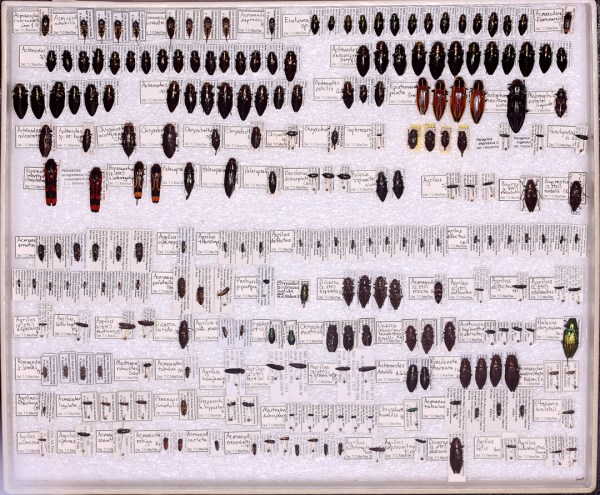
  1. Select a sturdy specimen box with a firm pinning bottom. The size of the box should be selected appropriate for the number of specimens—i.e., do not select a large box for only a few specimens or tightly pack too many specimens in too small a box,  Modern polyethylene foams used in pinning trays seem sufficiently firm to hold pinned specimens during shipment as long as they are at least ¼” thick—thicker foams, of course, will hold even more firmly but often “push” the labels on the pinned specimens up against each other, necessitating additional labor to reset them. The box should have a tight-fitting lid that can be set firmly in place. Pin the specimens into the box, making sure the pins are set completely through the foam and taking care not to overpack the specimens within the box too tightly (body parts, especially antennae and tarsi, should never overlap) that could result in damage to them or adjacent specimens during removal. Ideally the specimens should fill the box completely, but if they do not then fill the empty space with blank pins to avoid large, blank areas of foam bottom without pins. Here is an example of a filled specimen box:

    Pinned insects in specimen box ready for packing.

    Pinned insects in specimen box ready for packing.

  2. Use brace pins for large or heavy specimens. This is one of the most common mistakes I see! In the example above, several of the larger species are surrounded by brace pins to keep them from rotating on their pins and damaging neighboring specimens. At least two pins should be used—I place them against the elytra on each side behind the hind legs, and very long or heavy specimens should be further braced by additional pins on each side of the thorax to further ensure they are fully immobilized. Although not shown in this example, specimens with very heavy heads (large mandibles, etc.) should be even further immobilized with additional pins at the head. Here is a closeup view of some of the specimens in the above box that have been further secured with brace pins:

    Large specimens are further immobilized with brace pins.

    Large specimens are further immobilized with brace pins.

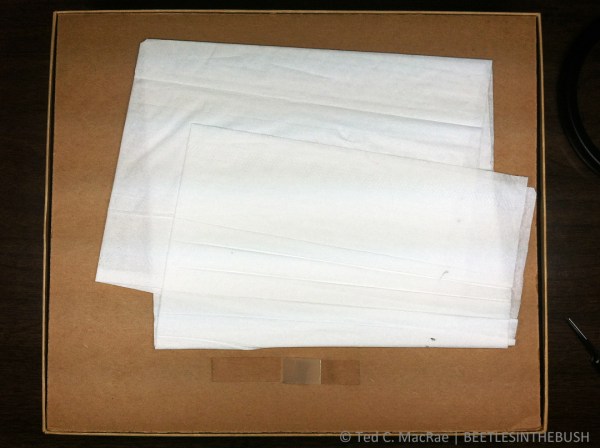
  3. Use an inner lid with padding to hold it firmly against the specimens. An inner lid lies on top of the specimens underneath the specimen box lid to keep the specimens securely seated in the foam and prevent them from “working” their way out. Some specimen boxes designed for shipping, such as the examples shown in these photos, come with an inner lid that is hinged on a long side. If the specimen box lacks an inner lid, one should be fashioned from cardboard or heavy card stock. The advantage of an attached inner lid is that it will not move inside the box, so if an inner lid must be fashioned it is essential to trim it so that it fits precisely within the box to minimize the potential for movement. I like to draw an outline on the cardboard with the specimen box and cut on the lines, then shave off extra material from each side to shape it to the inside perimeter of the box. Either way, make a “pull tab” out of adhesive tape and attach it to the inner lid to allow easy removal during unpacking. If the inner lid when set in place does not seat firmly against the outer lid, extra padding material such as paper towels should be placed on top of the inner lid to ensure that it sits firmly against the specimens when the outer lid is set in place. The specimen box with inner lid in place, pull tab attached, and extra padding placed on top is shown below:

    Cover the inner lid with padding to secure it firmly against the specimens.

    Cover the inner lid with padding to secure it firmly against the specimens.

  4. Seal closed specimen box with tape or rubber bands. The outer lid of the specimen box should be secured in place so that it does not “work” its way loose. Some people use tape, which is effective but must be cut if the box is opened for inspection, leaving the lid unsecured afterwards. I prefer to use sturdy rubber bands, which can be removed for inspection and then easily replaced afterwards. Some specimen boxes come equipped with metal tabs or hoops that fit through slots on the outer lid and that can be bent over to secure the lid in place. In my experience, these often break off after repeated use, so rubber bands or tape are a good insurance policy for such boxes. Another common practice is to wrap specimen boxes in packing paper or place them inside plastic, Zip-Lock bags. This was necessary in the days when excelsior shavings were often used as a packing material around the specimen box, which contained shavings that could work their way into the specimen box and cause damage. With the ready availability of modern packing materials such as foam peanuts there should no longer be any reason to use excelsior shavings. Still, wrapping or sealing inside a plastic bag can’t hurt if it is desired. A closed specimen box with rubber bands securely in place is shown in the photo below:

    Specimen box sealed with rubber bands

    Specimen box sealed with rubber bands

  5. Place an address label on the specimen box. This will ensure that the shipment does not get tossed into the “dead mail” pile if the outer address label is lost or destroyed (I’ve left the label off in these examples to ensure privacy of the recipient).
  6. Secure multiple specimen boxes tightly together. If multiple specimen boxes are shipped together, they should be secured tightly together so that they cannot “bump” into each other during shipment. As mentioned before, tape works but might end up being cut for inspection, so I prefer to use large rubber bands. String can also be used to tie the boxes together, but unless the inspection agent is handy with knots the boxes may not get tied back together. The two specimen boxes included in the shipment I used for this example, secured tightly together, are shown below:

    Multiple boxes should be bound tightly together.

    Multiple boxes should be bound tightly together.

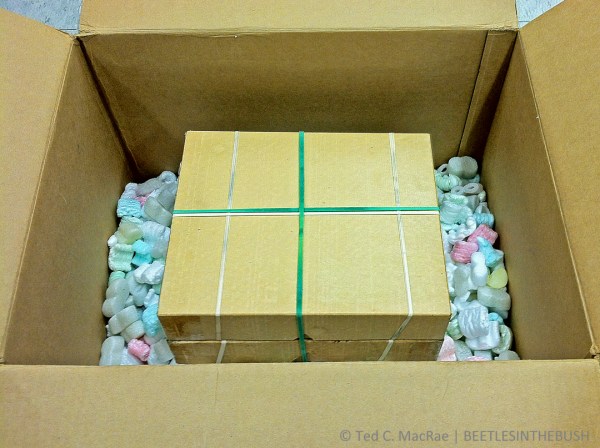
  7. Pack specimen box inside an oversized shipping boxShipping box size selection is critical! The shipping box should not only be sturdy but also big enough to accommodate specimen boxes with at least 3–4 inches below and 2–3 inches on top and each side of the specimen box. This space is necessary to allow the packing material to function not only as cushioning but also in “shock absorption.” My preferred packing material is foam peanuts, since it doesn’t settle during shipment and the amount used can be tailored precisely to the needs of an individual box. The photo below shows the pinning boxes resting on a 4-inch layer of foam peanuts with at least 2–3 inches of space on the sides and above:

    Place specimen boxes inside a sturdy shipping box with plenty of room on all sides.

    Place specimen boxes inside a sturdy shipping box with plenty of room on all sides.

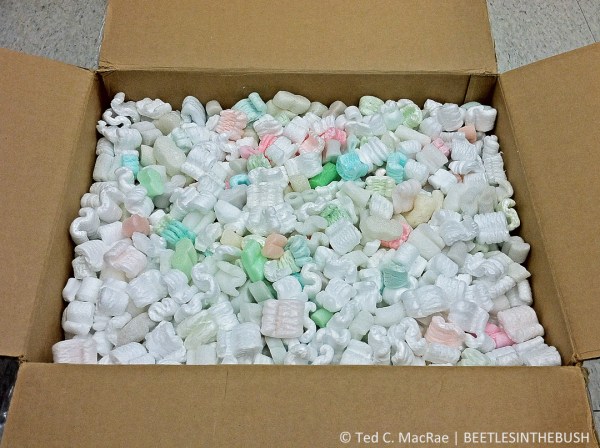
  8. DO NOT OVERPACK! This is the most common mistake people make! The packing material needs to serve two purposes: 1) provide a crush zone to protect from direct damage, and 2) provide shock absorption to protect from damage by impact jarring. The specimen box actually needs to be able to move slightly within the closed shipping box. If it cannot, energy from impacts is transmitted in full to the specimens inside, greatly increasing the risk that heavier body parts (especially the head/pronotum) will be jarred off the specimens. This not only results in damage to the broken specimen, but the dislodged body parts then act as “wrecking balls” that bounce and tumble inside the specimen box, destroying all of the specimens within their reach. After placing a 3–4-inch layer of packing in the bottom of the shipping box, I like to set the specimen box(es) on top of the foam in the center of the shipping box and fill the shipping box with additional foam peanuts to within about 1″ of the top. Avoid the temptation to fill the box to the brim, or to “settle” the foam peanuts and add a few more, as this will result in a tightly packed box that does not protect the specimens as well as a more loosely packed box. To test, close the flaps on top of the box and give the box a light up-and-down “shake”—you should feel the specimen box bounce slightly inside. If it does not, remove a small amount of packing peanuts and repeat the test. If you cannot remove enough packing peanuts without exposing the top of the specimen box inside, your shipping box is too small and you should select a larger size. The photo below shows the shipping box filled with packing peanuts to the proper level:

    Shipping box ''almost'' filled with packing material.

    Shipping box ”almost” filled with packing material.

  9. Label the package “FRAGILE”. Whether this is actually helpful or invites abuse by some passive aggressive handler is a matter of debate, but I am of the opinion that a majority of shipping personnel will actually treat the package with a little more respect if they see this label, especially with the disclosure that the contents are preserved insects with no commercial but extreme scientific value. Additionally, disclosure of such information may actually be required by some destination countries, so it’s a good idea to label packages as a matter of routine practice. I like to place one label on top of the shipping box and additional labels on all four sides. BioQuip Products sells moisture-activated adhesive labels as shown below, or similar labels can be designed in a word processing program and printed on blank adhesive labels; however, the latter should be covered with clear tape to prevent them from peeling off of the shipping box during transit.

    Place a fragile sticker on top and all four sides.

    Place a fragile sticker on top and all four sides.

Much of what I have written here I learned as a graduate student, based on a much more detailed article by Sabrosky (1971) that provides additional suggestions for extremely rare and valuable specimens, advice regarding the different postal classes available for international shipments, and a list of “Don’ts” under any circumstances.

Disclaimer: I am an amateur—albeit a highly practiced one, and there may be additional suggestions or advice from professional collection managers and museum curators that would be highly welcomed in the comments below  should it be offered.

REFERENCE:

Sabrosky, C. W. 1971. Packing and shipping pinned insects. Bulletin of the Entomological Society of America 17(1):6–8 [preview].

Copyright © Ted C. MacRae 2013

Let’s make a deal!

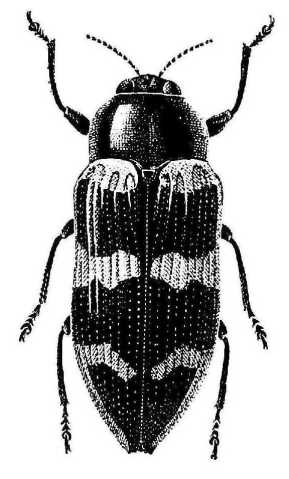
buprestid

Image source unknown

I recently conducted a complete reorganization of the jewel beetles (superfamily Buprestoidea) in my collection (TCMC). The primary purpose of this was to bring the nomenclature and arrangement of the collection into agreement with the recently published World Catalogue of Buprestoidea (Bellamy 2008) and accurately document the taxa represented in the collection and their numbers. In the short term this will be helpful not only in visualizing what is represented but also what is missing (particularly in North America), while longer term it lays the groundwork for the eventual donation of my collection to a public institution.

In an active, working collection, no inventory is ever fully up-to-date. In my case, the inventory includes only completely curated material that has been incorporated into the main cabinets. I still have several years worth of material in various states of curation—i.e., unmounted, mounted but unlabeled, or labeled but unidentified. That said, the main collection now contains more than 23,000 specimens of Buprestoidea representing 1,500+ species worldwide. Of the species represented, 37% are Nearctic (U.S./Canada), 22% Palearctic (Europe, North Africa, temperate Asia), 19% Neotropical (Latin America), 10% Afrotropical (Subsaharan Africa), 7% Indomalayan (tropical Asia) and 6% Australian (Australia/New Zealand). The collection also contains 492 paratype specimens representing 77 species. The inventory has been converted to  PDF and uploaded for access by the link below. It lists all of the species represented, with nomenclature updated and taxa arranged according to Bellamy (2008) and number of specimens  indicated for each. Also indicated are higher taxa not yet represented in the collection (shown in gray rather than black text) so that the collection holdings can be placed in context of a complete higher classification for the superfamily.

 Click to see full inventory of TCMC Buprestoidea

Of course, as a North American, the Nearctic fauna is the primary focus of my taxonomic and biological studies. As a result, I am keen to have the Nearctic fauna represented as completely as possible in my collection. Currently I have 75% (595) of the 790 species and non-nominate subspecies currently recognized in North America. Obviously, by now I’ve picked most of the low-hanging fruit, and the last 25% will be much more difficult to get. Many of these are truly rare species that I may never find (some are known only by the holotype), while others are more common but occur in areas that I have limited opportunity to visit. These species are also indicated in the above inventory (again, in gray text) but are also listed below for easy reference. If you have any of the species on this list, please let me know and also what you might like to receive in exchange for them. I have not only many species of Buprestidae from around the world to offer, but also beetles in other families such as longhorned beetles (Cerambycidae), tiger beetles (Cicindelinae), scarabs (Scarabaeoidea), and even non-beetles such as treehoppers (Membracidae) and cicadas (Cicadoidea). Let’s make a deal!

REFERENCE:

Bellamy, C. L. 2008. World Catalogue and Bibliography of the Jewel Beetles (Coleoptera: Buprestoidea),  Volumes 1–5. Pensoft Series Faunistica, 3125 pp.

Copyright © Ted C. MacRae 2013


T.C.MacRae Collection Desiderata

Family SCHIZOPODIDAE LeConte 1859
Subfamily SCHIZOPODINAE LeConte 1859
Tribe SCHIZOPODINI LeConte 1859

Genus Schizopus LeConte 1858
sallei ssp. sallei Horn 1885
sallei ssp. nigricans Nelson 1991
Genus Dystaxia LeConte 1866
elegans Fall 1905

Family BUPRESTIDAE Leach 1815
Subfamily POLYCESTINAE Lacordaire 1857
Acmaeoderioid lineage sensu Volkovitsh 2001
Tribe HAPLOSTETHINI LeConte 1861

Genus Mastogenius Solier 1849
arizonicus Bellamy 2002
puncticollis Schaeffer 1919

Tribe ACMAEODERINI Kerremans 1893
Subtribe ACMAEODEROIDINA Cobos 1955

Genus Acmaeoderoides Van Dyke 1942
cazieri Nelson 1968
depressus Nelson 1968

Subtribe ACMAEODERINA Kerremans 1893

Genus Acmaeodera Eschscholtz 1829
— Subgenus Acmaeodera (s. str.)
audreyae Westcott & Barr 2007
bryanti Van Dyke 1953
comata LeConte 1858
consors Horn 1878
cubaecola Jaquelin du Val 1857
discalis Cazier 1940
dolorosa ssp. liberta Fall 1922
fattigi Knull 1953
flavosticta Horn 1878
horni Fall 1899
inyoensis Cazier 1940
laticollis Kerremans 1902
morbosa Fall 1899
pubiventris ssp. panocheae Westcott 2001
recticolloides Westcott 1971
starrae Knull 1966
subbalteata LeConte 1863
thoracata Knull 1974
tildenorum Nelson & Westcott 1995
wheeleri Van Dyke 1919

Genus Acmaeoderopsis Barr 1974
prosopis Davidson 2006
rockefelleri (Cazier 1951)
varipilis (Van Dyke 1934)

Genus Anambodera Barr 1974
nebulosa (Horn 1894)
santarosae (Knull 1960)

Polyctesioid lineage sensu Volkovitsh 2001
Chrysophana generic group [tribal level] sensu Volkovitsh 2001

Genus Beerellus Nelson 1982
taxodii Nelson 1982

Polycestioid lineage sensu Volkovitsh 2001
Tribe POLYCESTINI Lacordaire 1857

Genus Polycesta Dejean 1833
— Subgenus Polycesta (s. str.)
angulosa Jacquelin du Val 1857
— Subgenus Polycesta (Arizonica) Cobos 1981
arizonica ssp. acidota Cazier 1951
— Subgenus Polycesta (Tularensia) Nelson 1997
crypta Barr 1949

Tribe TYNDARINI Cobos 1955
Subtribe TYNDARINA Cobos 1955

Genus Paratyndaris Fisher 1919
— Subgenus Paratyndaris (s. str.)
anomalis Knull 1937
crandalli Knull 1941
grassmani Parker 1947
quadrinotata Knull 1938

Subfamily CHRYSOCHROINAE Laporte 1835
Chrysochroid lineage sensu Bellamy 2003
Nanularia generic group [tribal level] sensu Volkovitsh 2001

Genus Nanularia Casey 1909
cupreofusca Casey 1909
pygmaea (Knull 1941)

Tribe CHRYSOCHROINI Laporte 1835
Subtribe CHALCOPHORINA Lacordaire 1857
Texania generic group sensu Volkovitsh 2001

Genus Texania Casey 1909
langeri (Chevrolat 1853)

Tribe POECILONOTINI Jakobson 1913
Subtribe POECILONOTINA Jakobson 1913

Genus Poecilonota Eschscholtz 1829
ferrea (Melsheimer 1845)
montana Chamberlin 1922
viridicyanea Nelson1997

Dicercioid lineage sensu Bellamy 2003
Tribe DICERCINI Gistel 1848
Subtribe HIPPOMELANINA Holynski 1993

Genus Hippomelas Laporte & Gory 1837
martini Nelson 1996
parkeri Nelson 1996

Genus Gyascutus LeConte 1858
— Subgenus Gyascutus (s. str.)
jeanae (Nelson 1988)
pacificus (Chamberlin 1938)

Genus Barrellus Nelson & Bellamy 1996
femoratus (Knull 1941)

Subtribe DICERCINA Gistel 1848
Dicerca generic group sensu Volkovitsh 2001

Genus Dicerca Eschscholtz 1829
dumolini (Laporte & Gory 1837)
hornii nelsoni Beer 1974
lugubris LeConte 1860
mutica LeConte 1860
sexualis Crotch 1873
spreta (Gory 1841)
tuberculata (Laporte & Gory 1837)

Subfamily BUPRESTINAE Leach 1815
Buprestioid lineage sensu Volkovitsh 2001
Buprestinioid branch sensu Volkovitsh 2001
Tribe BUPRESTINI Leach 1815
Subtribe TRACHYKELINA Holynski 1988

Genus Trachykele Marseul 1865
fattigi Knull 1954
opulenta Fall 1906

Subtribe BUPRESTINA Leach 1815

Genus Buprestis Linnaeus 1758
— Subgenus Buprestis (Cypriacis) Casey 1909
intricata Casey 1909
prospera Casey 1909
— Subgenus Buprestis (Knulliobuprestis) Kurosawa 1988
fremontiae Burke 1924
— Subgenus Buprestis (Stereosa) Casey 1909
apricans Herbst 1801
decora Fabricius 1775

Anthaxioid lineage sensu Volkovitsh 2001
Anthaxiinioid branch sensu Volkovitsh 2001
Tribe ANTHAXIINI Gory et Laporte 1839

Genus Anthaxia Eschscholtz 1829
— Subgenus Anthaxia (Haplanthaxia) Reitter 1911
carya Wellso & Jackman 2006
caseyi ssp. sublaevis Van Dyke 1916
— Subgenus Anthaxia (Melanthaxia) Rikhter 1944
barri Bílý 1995
californica Obenberger 1914
cupriola Barr 1971
emarginata Barr 1971
embrikstrandella Obenberger 1936
exasperans Cobos 1958
furnissi Barr 1971
helferiana Bílý 1995
hurdi Cobos 1958
nanula Casey 1884
neofunerula Obenberger 1942
nevadensis Obenberger 1928
oregonensis Obenberger 1942
porella Barr 1971
sculpturata Barr 1971
serripennis Obenberger 1936
strigata LeConte 1859
subprasina Cobos 1959
tarsalis Barr 1971
wallowae Obenberger 1942

Tribe XENORHIPIDINI Cobos 1986
Subtribe XENORHIPIDINA Cobos 1986

Genus Hesperorhipis Fall 1930
hyperbola ssp. californica Knull 1947
jacumbae Knull 1954
mirabilis ssp. mirabilis Knull 1947

Chrysobothrioid lineage sensu Volkovitsh 2001
Melanophilinioid branch sensu Volkovitsh 2001
Tribe MELANOPHILINI Bedel 1921
Subtribe MELANOPHILINA Bedel 1921

Genus Phaenops Dejean 1833
carolina (Manee 1913)
caseyi (Obenberger 1944)
obenbergeri (Knull 1952)
vandykei Obenberger 1944

Chrysobothrinioid branch sensu Volkovitsh 2001
Tribe ACTENODINI Gistel 1848

Genus Actenodes Dejean 1833
arizonicus Knull 1927
mimicus Knull 1964

Tribe CHRYSOBOTHRINI Gory et Laporte 1838

Genus Chrysobothris Eschscholtz 1829
— Subgenus Chrysobothris (s. str.)
aeneola LeConte 1860
bacchari Van Dyke 1923
bicolor Horn 1894
bisinuata Chamberlin 1938
bispinosa Schaeffer 1909
boharti Van Dyke 1934
breviloboides Barr 1969
caurina Horn 1886
chamberliniana Fisher 1948
costifrons ssp. costifrons Waterhouse 1887
culbersoniana Knull 1943
cupressicona Barr & Westcott 1976
deserta Horn 1886
dolata Horn 1886
fragariae Fisher 1930
grindeliae Van Dyke 1937
helferi Fisher 1942
hidalgoensis Knull 1951
horningi Barr 1969
hubbardi Fisher 1942
idahoensis Barr 1969
kelloggi Knull 1937
knulli Nelson 1975
nelsoni Westcott & Alten 2006
oregona Chamberlin 1934
orono Frost 1920
paragrindeliae Knull 1943
potentillae Barr 1969
pseudacutipennis Obenberger 1940
pubilineata Vogt 1949
purpurata Bland 1864
roguensis Beer 1967
schaefferi Obenberger 1934
schistomorion Westcott & Davidson 2001
scitula Gory 1841
sexfasciata ssp. sexfasciata Schaeffer 1919
sloicola Manley & Wellso 1976
smaragdula Fall 1976
socialis ssp. apache Westcott & Barr 2007
speculifer Horn 1886
subopaca Schaeffer 1904
vivida Knull 1952
westcotti Barr 1969
wickhami Fisher 1942

Genus Knowltonia Fisher 1935
alleni (Cazier 1938)
atrifasciata (LeConte 1878)

Subfamily AGRILINAE Laporte 1835
Tribe AGRILINI Laporte 1835
Subtribe AGRILINA Laporte 1835

Genus Agrilus Curtis 1825
— Subgenus Agrilus (s. str.)
hazardi Knull 1966
— Subgenus Agrilus (Engyaulus) Waterhouse 1889
inhabilis ssp. cuprinus Nelson 1996
utahensis Westcott 1996
— Subgenus Agrilus (Quercagrilus) Alexeev 1998
derasofasciatus Boisduval & Lacordaire 1835
— Subgenus Agrilus (Uragrilus) Semenov-Tian-Shanskij 1935
granulatus ssp. mojavei Knull 1952
sayi Saunders 1871
— Subgenus undefined
amelanchieri Knull 1944
arizonus Knull 1934
audax Horn 1891
aurilaterus Waterhouse 1889
bespencus Barr 2008
burkei Fisher 1917
catalinae Knull 1940
cercidii Knull 1937
cochisei Knull 1948
criddlei Frost 1920
davisi Knull 1941
delicatulus Waterhouse 1889
dozieri Fisher 1918
exiguellus Fisher 1928
floridanus Crotch 1873
funestus Gory 1841
geronimoi Knull 1950
gillespiensis Knull 1947
hazardi Knull 1966
horni Kerremans 1900
jacobinus Horn 1891
langei Obenberger 1935
latifrons Waterhouse 1889
montosae Barr 2008
neabditus Knull 1935
nevadensis Horn 1891
nigricans Gory 1841
obscurilineatus Vogt 1949
olivaceoniger Fisher 1928
ometauhtli Fisher 1938
palmerleei Knull 1944
parabductus Knull 1954
pilosicollis Fisher 1928
pseudocoryli Fisher 1928
pubifrons Fisher 1928
restrictus Waterhouse 1889
shoemakeri Knull 1938
sierrae Van Dyke 1923
snowi Fall 1905
torquatus LeConte 1860
waltersi Nelson 1985
wenzeli Knull 1934

Tribe TRACHYINI Laporte 1835
Subtribe BRACHYINA Cobos 1979

Genus Taphrocerus Solier 1833
floridanus Obenberger 1934

Subtribe PACHYSCHELINA Böving et Craighead 1931

Genus Pachyschelus Solier 1833
fisheri Vogt 1949
schwartzi Kerremans 1892
vogti Hespenheide 2003
Beautiful box of Buprestidae

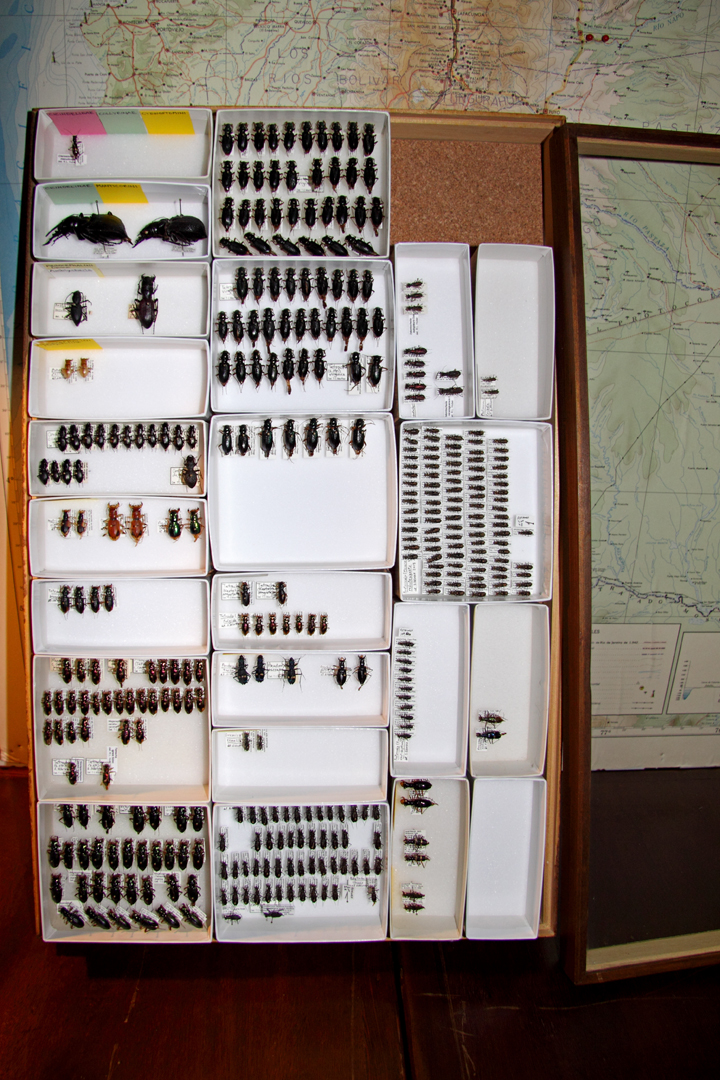
I’ve been working on identifying Buprestidae accumulated from a variety of sources over the past year—mostly exchanges and gifts, before beginning the processing specimens collected during this past season. Once identified, and combined with specimens gleaned from material submitted by other collectors for identification (I generally only retain examples of species that are poorly represented in my collection or specimens that represent and will serve as vouchers for significant new distributional records), they make for a very pretty box of Buprestidae! It’s kind of nice to keep them collected together like this for a little while, but I’ll soon incorporate them into the main collection where they will more securely protected and to free up the temporary box now containing them for new material as it moves through the process of labeling and identification. (Incidentally, I think I might like to do a series a posts over this winter covering my version of the specimen curation process).

There are some very cool Buprestidae in this box—88 species in all, that originated from a remarkable variety of locations across the U.S., Mexico/Central America, and South America. Do you see any species of particular interest?

236 specimens representing 88 species of Buprestidae

236 specimens representing 88 species of Buprestidae

Copyright © Ted C. MacRae 2012

The Ups and Downs of Bug Collecting

Recently The Geek In Question  posted an awesome graph to help visualize the stages of euphoria and despair she experiences while going through the manuscript process. Fellow grad students David Winter (The Atavism) and Morgan Jackson (Biodiversity in Focus) each took the bait and ran with their own version of the process. It has been far too many years since I was a grad student (moment of whimsy overtakes me), and I’ve gone through the manuscript process so many times now that I actually find the whole thing rather enjoyable. Presumably this results from my love of writing, combined with the sageness of having experienced most of the potential pitfalls and feeling confident in how to prevent or deal with them.

For my version of the Geek-Graph™, I thought I would take a broader look at the whole process of what it is to be a publishing Bug Collector. Here is my version:

I’ve been at this long enough to know what I like and what I don’t like, and it strikes me that I love the up front and the final product, but there are elements in between that I simply detest. I love time in the field—a bad day in the field is better than a good day of just about anything else. Some of my best field memories involved getting skunked on the collecting, just because the field experience itself was so weird, new, eventful, etc. I’ve spent days in the desert, it’s dry environs parched by drought, with nary a beetle to be had despite beating hundreds of tree branches. I hated it at the time, but I get euphoric recall of those days when I see something that reminds me of those trips. Even driving between localities, while not time “in the field,” is enjoyable for me as it’s a chance to see the landscapes. It’s only when I have to take time out to buy supplies mid-trip and, especially, hunt for hotels late in the day, that I stop enjoying my time completely.

After I’ve collected the specimens is where I hit the snag—pinning and labeling, ugh!!! It wasn’t always that way; in my younger days I rather enjoyed it. But in those days I was practicing my art and gaining skills. Now I’m as good at pinning/labeling as it gets, and my perfectionist tendencies don’t allow me to do anything less than perfect when I do do it. But it takes time—lots of time to do it perfectly, and especially when you collect the large numbers of specimens that I do. This is the point where I consistently question my decision not to pursue taxonomy as a career. I could have been enjoying the assistance of professional specimen preparators to take care of this for me, but nooo… I had to do it avocationally so I could “do my own thing”! Okay, a quick slap to the face and I’m back.

Once those specimens are pinned and labeled, it’s all fun from here on out.¹ Identifying specimens and adding my “Det. label” is enormously satisfying, even for routine, common species. Excitement mounts if the specimen turns out to be something rare, more so if it represents something I’ve not collected before. This is normal for all collectors, but for me there are additional chances for excitement if the specimens represent new information—e.g., a new state or host plant record, or (gulp!) a new species! Identified specimens also form the basis for manuscripts, and once I’m at that stage it’s pure happiness. I love writing the manuscripts. I even love revising them based on reviewers feedback (even when not very positive—hey, it makes for an improved paper). About the only negative is a little bit of post-publication depression when you realize that your paper is actually read by only a small number of specialists, and you haven’t really offered anything ground-breaking, but rather just an incremental increase in the vast, collective knowledge. But I usually don’t have time to let that get me down—by then I’m already out in the field collecting more bugs!

¹ I probably should make a confession here—sometimes I go ahead and include data in manuscripts from specimens that I haven’t even pinned and labeled yet. The siren call of the unwritten manuscript is far more irresistible than the grating nagging of the unprepared specimen!

Copyright Ted C. MacRae 2012

MacRae Entomology Museum Expansion

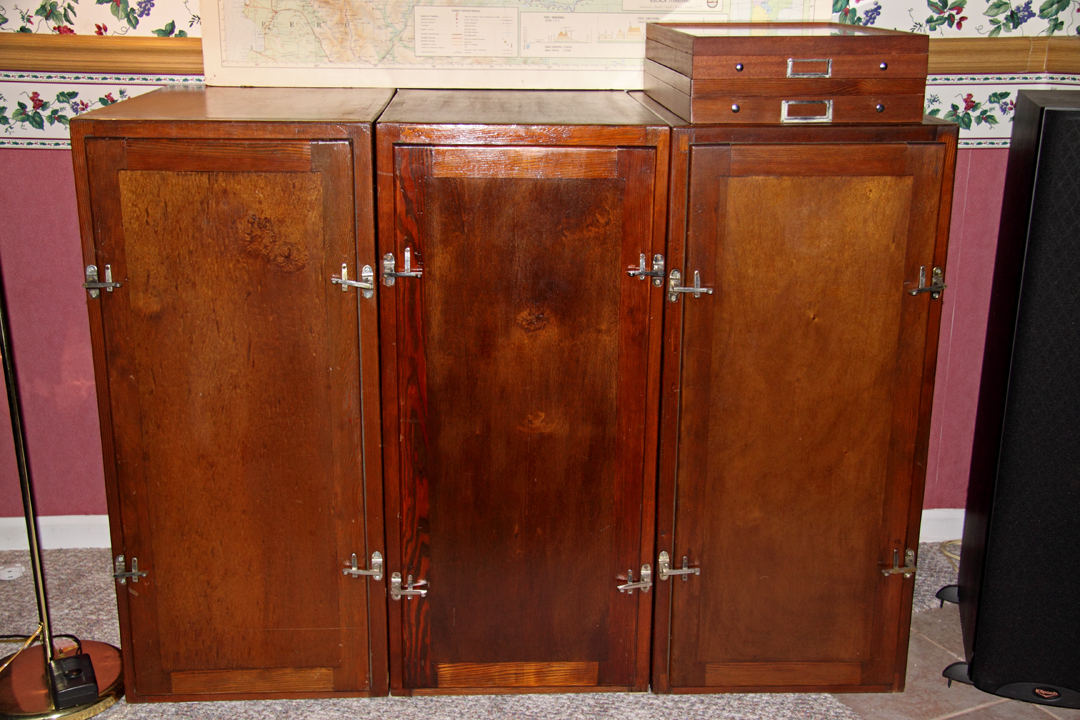
Badly needed drawer space is provided by these gorgeous, antique, hand-made, wooden insect cabinets.

Every five years or so I find myself facing the same dilemma—too many bugs and not enough space to keep them. Each time this occurs, I go through the same thought process trying to decide the best way to solve the problem. Do I create new space by buying new cabinets, or clear existing space by donating “excess” material? If money was no object it would be the former. However, money is an object—a new, premium 25-drawer cabinet costs more than $1,000, not to mention another $400 for the drawers to fill it (if I build them myself—3 times that amount if I buy them already made). In my younger, more care-free days I got away with plunking down this kind of money several times, eventually assembling my current battery of three half-size and three full-size cabinets holding a total of 111 Cornell drawers fully stocked with unit trays. These days, however, there are kids to feed and college costs looming on the horizon. I just can’t swing that kind of dough.

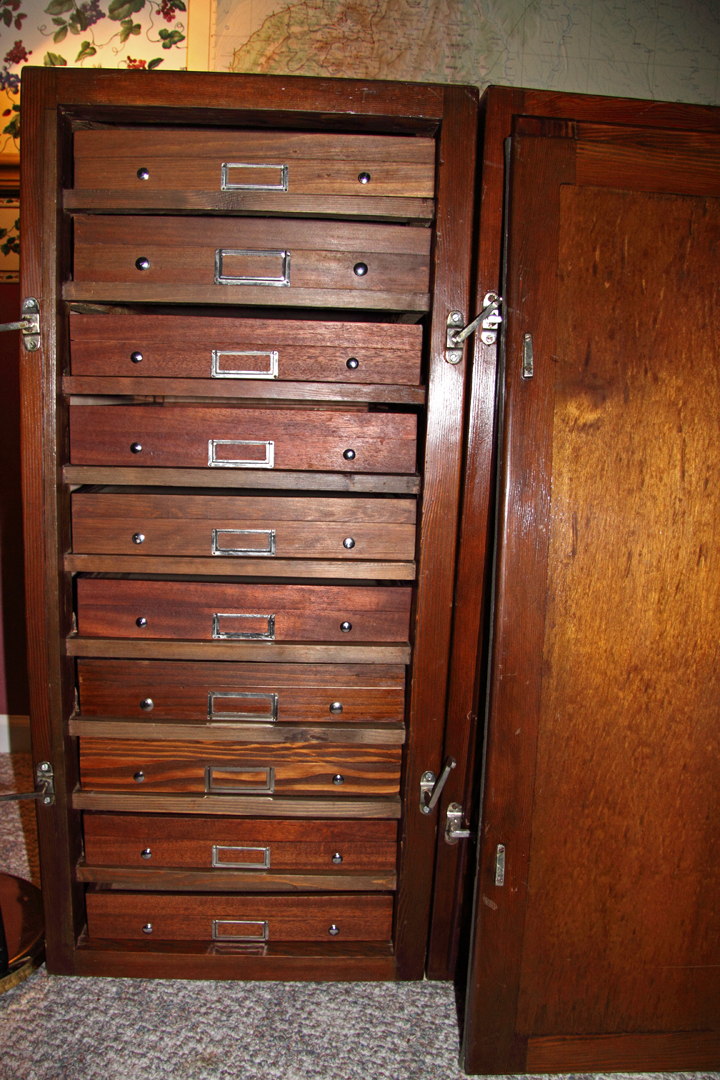
Each cabinet came complete with 10 hand-made, wooden, glass-topped drawers.

The alternative, however—donating away part of my collection, is equally unattractive. I’ve been collecting insects for most of my life, so it’s more than just a hobby—it’s a part of me. Nevertheless, I am able to draw a distinction between a working collection and a hobby collection, and for the most part mine is the former. I have a few “hobby” taxa like treehoppers and leaf beetles and such, and I’ve already made a number of donations from these groups over the years. However, the bulk of my collection—and hence drawer space—is taken up by just three taxa; jewel beetles, longhorned beetles, and tiger beetles. Not only are my research activities in these three groups ongoing, but a considerable amount of the material in these groups consists of voucher specimens for my publications. I just can’t think about divesting myself of material in these groups, at least not at this point in my life. Besides, pulling material for donation is, in itself, a long and very time-consuming process that I would not look forward to.

I’ve actually been debating my options for the past couple of years now, watching nervously as my inventory of specimens housed in temporary cardboard boxes started to balloon from the successes of the past several years of collecting. Temporary boxes are bad—not only is it impossible to integrate the specimens into the organization of the main collection, but they remain vulnerable to that dreaded pest of insect collectors around the world; DERMESTID BEETLES! (The one beetle I don’t like!) The likelihood of having specimens damaged by dermestids is directly proportional to the number of temporary boxes that must be checked periodically looking for any evidence of their presence. I’ve been hit by dermestids more than once, and with the number of temporary boxes that I currently have (more than 50) it has become almost impossible to monitor them frequently enough.

Unit trays designed for Cornell drawers fortuitously fit nicely inside the custom-sized drawers.

Of course, patience is a virtue, and my reward this time for not acting too rashly came in the form of an email sent to the members of our local entomology group by Mark Deering, Director of the Sophia M. Sachs Butterfly House just a few blocks from my office. Mark was an avid butterfly collector in the past but has divested much of his collection in recent years and, as a result, no longer needed the cabinets and drawers he was using to store his collection. The list of items he had for sale included a few Cornell cabinets with drawers, ostensibly perfect for my needs, but it was the last item in the list that caught my eye—several antique, hand-made, wooden, 10-drawer cabinets with drawers. Now, I love my Cornell cabinets—they provide state-of-the-art (albeit industrial-looking) protection for my collection. However, there is something appealing about hand-made, wooden insect cabinets. I can almost see John L. LeConte and George W. Horn themselves standing next to one and pulling a drawer to have a look at its contents. I quickly contacted Mark and made arrangements to look at the cabinets. Mark explained that they were part of a 40-cabinet set housing a collection of pierid butterflies that eventually found its way to the Smithsonian Institution… yes, the Smithsonian (such history!). He had gotten ahold of seven cabinets and was now selling them for a very reasonable price. The cabinets were gorgeous, and it didn’t take long for me to do the math; I could afford to buy three cabinets with drawers for a fraction of what a 25-drawer Cornell cabinet with drawers would cost. That’s 30 drawers total, each with almost as much space as a Cornell drawer.

Drawer 1 of my tiger beetle collection.

I picked up the cabinets a few days later and spent the next two days rearranging furniture in my ‘museum’ to create the perfect showcase spot, cleaning the glass on each drawer (both sides), and transferring my tiger beetle collection into the first cabinet (drawer 1 of which is shown at right). Despite their age several transfers of ownership, the finish is still in very good shape with only minor nicks and scratches that add a sense of history yet don’t detract from their attractiveness. Especially pleasing was the discovery that the Cornell unit trays I use for my collection fit almost perfectly in the drawers (just an annoying empty spot in the upper right corner—this can probably be fitted with a California Academy-sized unit tray, perhaps for holding insect repellent blocks since the drawers and cabinets are not as air-tight as my modern Cornell cabinets). I’ll probably move the rest of my “hobby” taxa into the remaining drawers to free up the Cornell cabinets completely for exclusive use in housing my Buprestidae and Cerambycidae. That will take some time, but it’s a good problem to have. My only fear is that after I move things around and incorporate all of my backlogged material, I will have once again used up all of the newly available drawer space and find myself facing that same dilemma that I face every five years or so!

Perhaps a little teaser is in order—one of the species in the drawer shown at right will be the subject of an upcoming post—can you guess which one? Also, 2 BitB Challenge points to anyone who can correctly identify the country shown in the map behind the drawer.

Copyright © Ted C. MacRae 2012

Something for Adrian

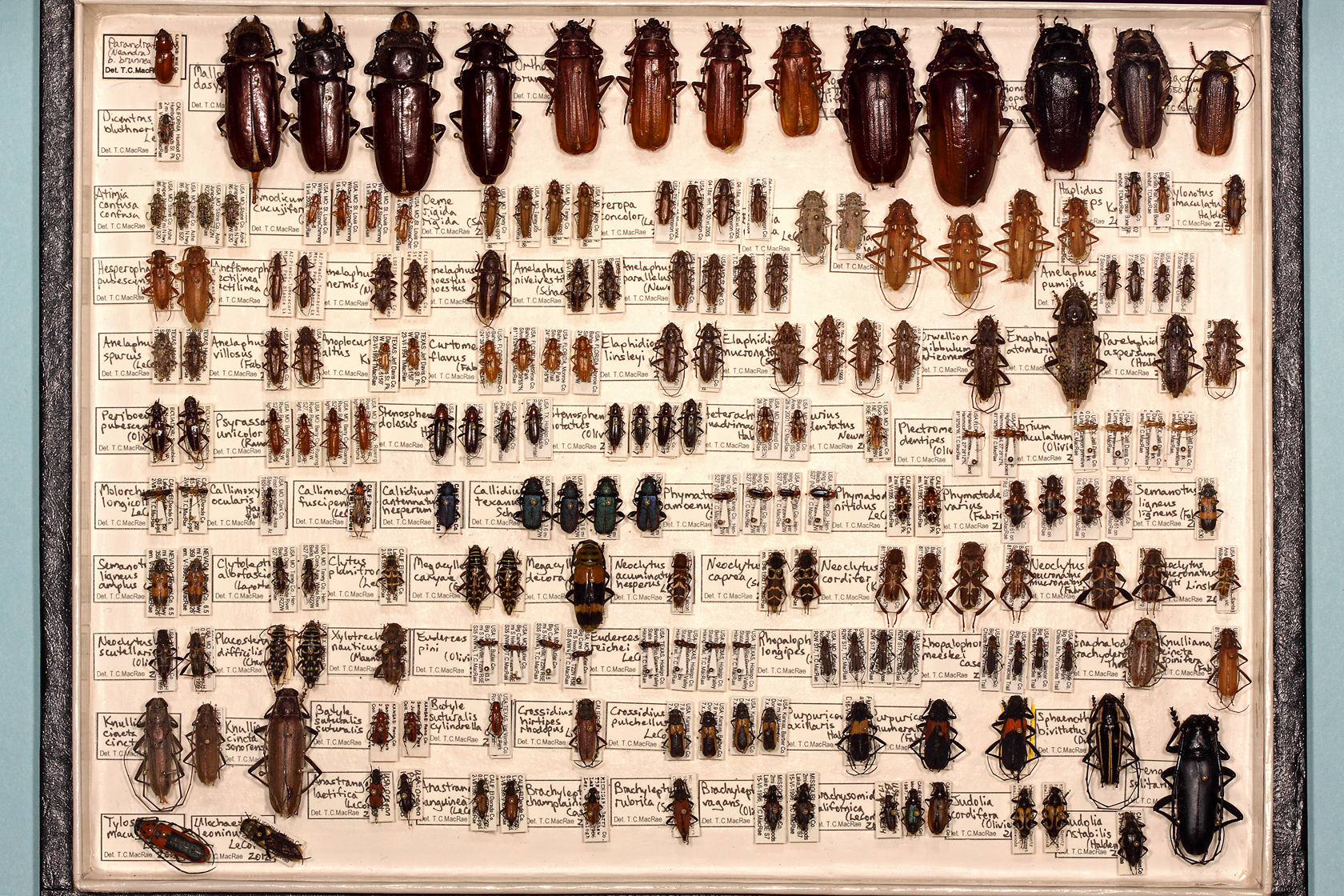
Miscellaneous North American Cerambycidae - click for larger version (1680 x 1120).

In a comment on my  post, Adrian Thysse asked to see hi-res images of specimen drawers from my own collection. Like any good North American entomologist, Adrian was a little bothered by the card-mounting technique used by the sender of the specimen box featured in that post and wanted to see what a nice collection of properly pinned specimens might look like. It’s actually not the first time he’s made this request—back when I first moved this blog to WordPress (more than three years ago) he did so when I put up my Collection page featuring a photo of my “Oh wow!” insect drawer. I’ve thought about doing this ever since he first made this request, but the problem, or at least my problem, with photographing specimen drawers from my main collection is a combination of large drawer size (reducing the size of the specimens in an image of the drawer) and long series of a relatively small number of species in the same genus or closely related genera (making the drawer contents look rather uniform in appearance). I suppose some might still be interested in seeing drawers from a “working collection” such as mine, but I just never had enough motivation to start pulling out drawers and taking photos.

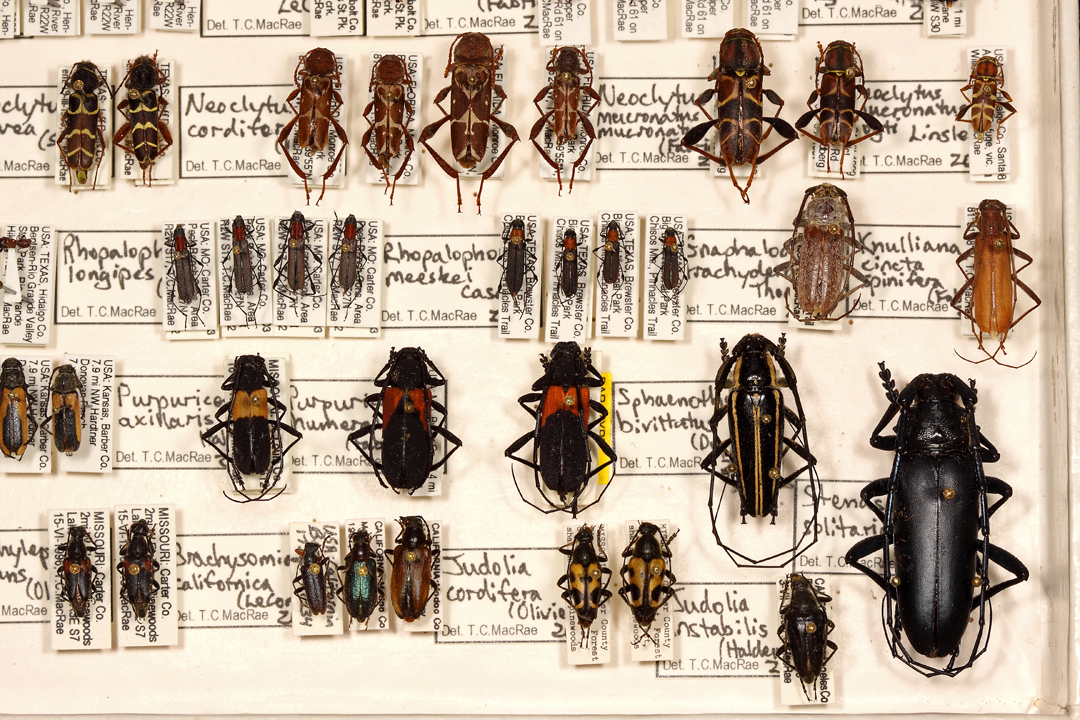
Adrian is in luck, however, as I just happened to be putting together a shipment of miscellaneous North American Cerambycidae for a collector in Europe (to whom I’ve owed insects for longer than I like to admit). The box I’m using for the shipment is smaller than a normal collection drawer and is packed with close to 100 species of this diverse beetle family. There might be a specimen here and there that was collected by someone else, but the vast majority were collected, mounted, labeled, and identified by me. I show this as an example of my curatorial technique, and as a bonus the above image is linked to a fairly large version (1680 x 1120) for those who might be interested in getting a really close look at the specimens and their labels. Here also are closer looks at the specimens in the bottom left and bottom right corners, respectively:

Hmm, is that a wasp at the bottom?

What species is that without the ''normal'' ID label?

Copyright © Ted C. MacRae 2012