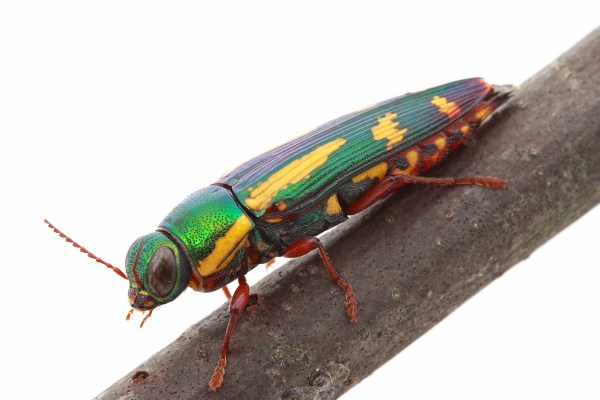
Very cozy tigers!

In my post Very wary tigers!, I spoke of the frustrations of trying to photograph tiger beetles when conditions of temperature and terrain conspire to make them too wary to approach. This is a common feature of tiger beetle photography in general, but the problem seems to reach its zenith with the “wet sand beach” species—most species inhabiting these habitats tend to be “summer species” active during the hottest part of the season, and their habitats tend to be virtually devoid of any vegetative cover that can be used to the photographer’s advantage. A blazing sun on hot, open sand is not conducive to photographing anything! Still I try, and on that particular day I did manage a few relatively distant photographs of two species, Cicindela repanda (Bronzed Tiger Beetle) and C. hirticollis shelfordi (Shelford’s Hairy-necked Tiger Beetle) but none at all of a third species that was present on the beach, Ellipsoptera cuprascens (Coppery Tiger Beetle).

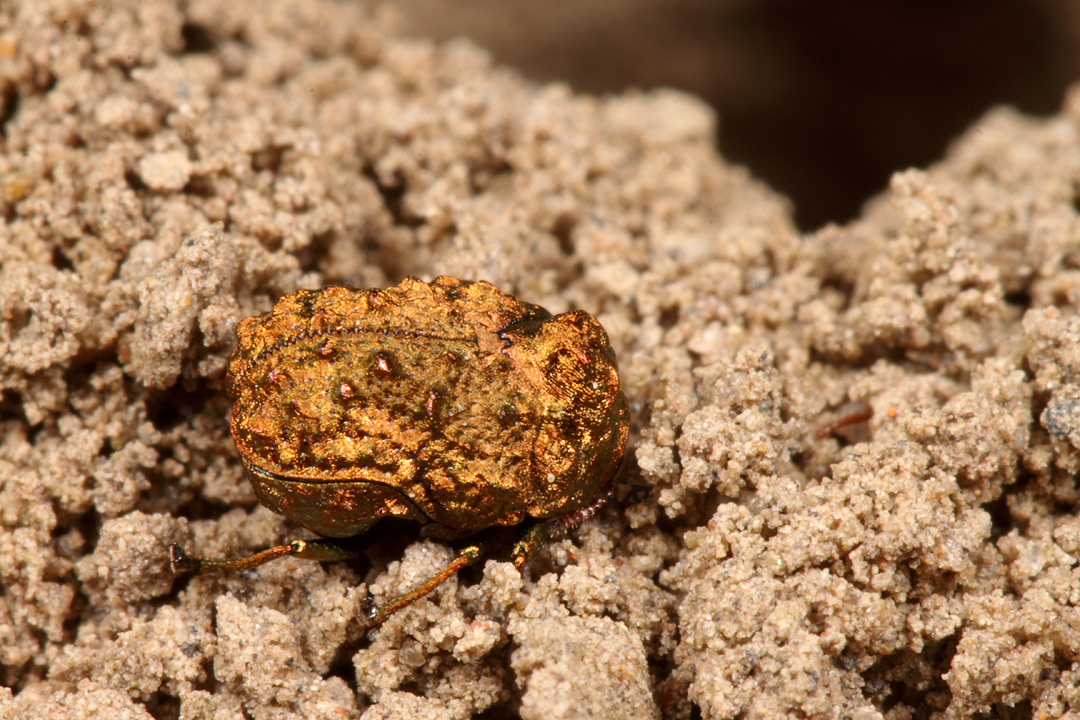
Ellipsoptera cuprascens (Coppery Tiger Beetle) | New Madrid Co., Missouri

Well, there is always more than one way to skin a cat (or a tiger), and as can be seen in these photographs I took a different approach to that latter species that allowed me to obtain several quite decent photographs of both males and females. Not long after that frustrating day at Cape Rock Park, I found myself again in southeastern Missouri with an opportunity to do some night collecting. It may not be widely known, but certain species of tiger beetles are also active at night and can actually be attracted to ultraviolet (UV) lights. This is particularly true of species in the genus Ellipsoptera, which as a group seem to depend almost exclusively on coastal and fluviatile sand habitats. I have used UV lights in the past to attract nocturnally active species of tiger beetles for photography (see Return to Nowhere), and since I had seen E. cuprascens a few years ago at Steward Towhead in New Madrid County I thought this might be a good spot to try again for photographs of that species.
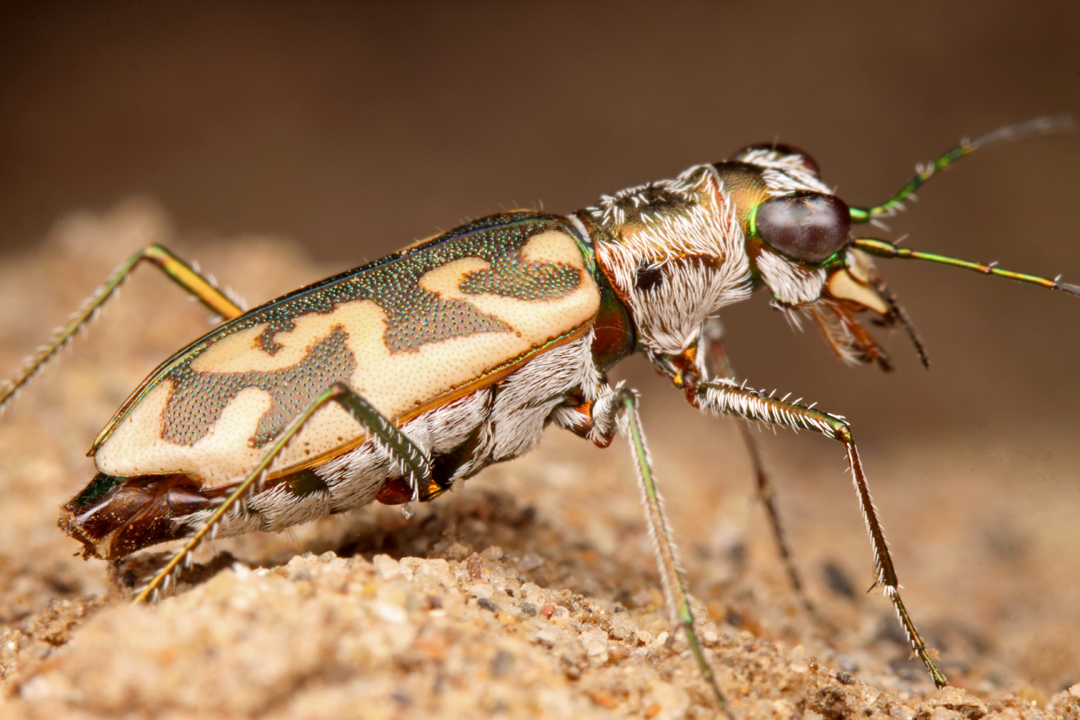
The relatively coarsely and densely punctate elytra distinguish E. cuprascens from E. macra.

“Might be a good spot” turns out to be quite the understatement, as I have never seen E. cuprascens in such numbers as I did that night! Seeing the species common at the sheet guarantees that individuals will also be found milling around on the ground in the immediate vicinity of the sheet, and unlike during the heat of the day when their bodies shift to thermal overdrive, adults at night are much easier to approach due to the cooler temperatures and the distraction of abundant, easily captured prey sitting transfixed in their UV light-induced stupor. Of course, night photography brings its own set of challenges, primarily (for me) the need to use the camera flash head lamps for focusing—I often find myself repeatedly aborting a shot because the lamps turned off automatically before I had a chance to find the subject and compose the shot to my satisfaction. Still, this is a minor inconvenience compared to the exasperation of subjects blasting across the hot sand when your approach comes within 12 feet!
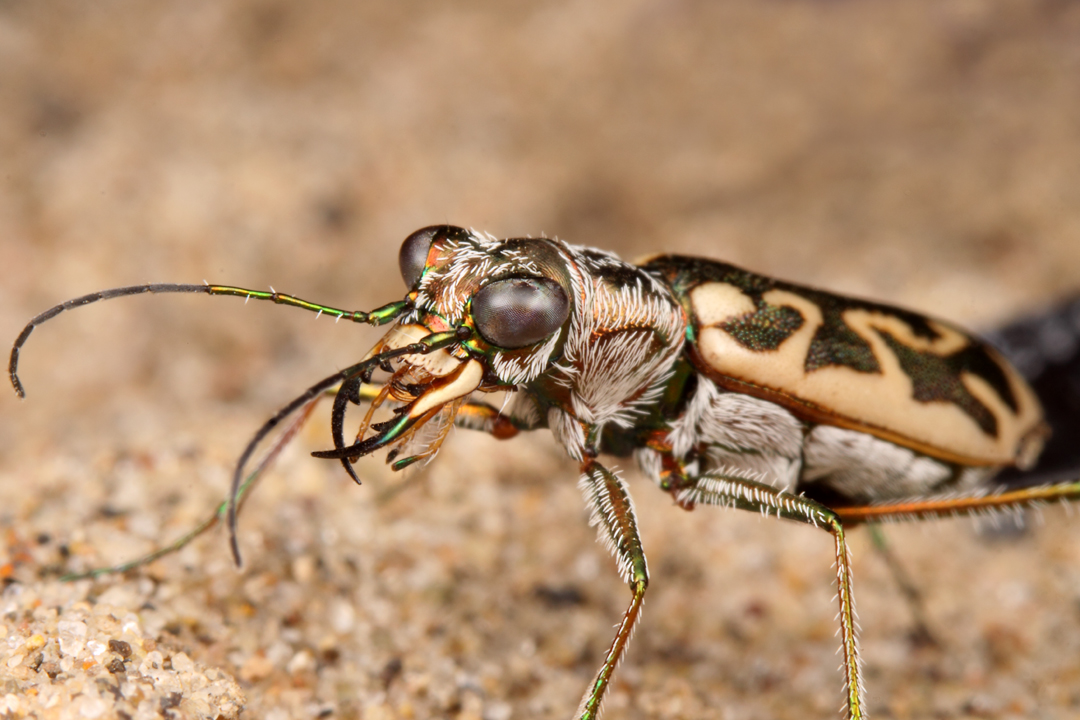
Males mandibles are modified for grasping the female pronotum during mating.

Ellipsoptera cuprascens is very closely related to E. macra (Sandy Stream Tiger Beetle—see The last tiger beetle), which it resembles greatly and whose ranges overlap here in Missouri (although the latter is far less commonly encountered than the former). The photos in this post show the relatively coarser and denser punctures on the elytra that distinguish E. cuprascens from E. macra, as well as their somewhat shinier surface and distinctly more coppery color. The rounded elytral apices of the female (middle photo) also serve to distinguish the species from E. macra, in which species the elytra of the females come to a point at the suture (Pearson et al. 2006). Note also the sexual dimorphism in the labrum and mandibles of the female (first photo) and male (last photo), with the mandibles relatively longer and slightly curved and the labrum shorter in the latter. Presumably this is related to the use of the mandibles by the males in grasping the female pronotum during mating—the longer, curved mandibles are shaped to precisely fit the contour of the female’s pronotum, while the shorter labrum allows the mandibles to gain better purchase farther down on the side of the female’s pronotum (Pearson and Vogler 2001).

REFERENCE:

Pearson, D. L., C. B. Knisley and C. J. Kazilek. 2006. A Field Guide to the Tiger Beetles of the United States and Canada. Oxford University Press, New York, 227 pp.

Pearson, D. L. and A. P. Vogler.  2001. Tiger Beetles: The Evolution, Ecology, and Diversity of the Cicindelids.  Cornell University Press, Ithaca, New York, 333 pp.

Copyright © Ted C. MacRae 2012

A Day Maker!

I’ve been blogging for going on five years now, and I can honestly say it has been one of the most enriching experiences of my adult life. It has expanded the breadth of my natural history interests, fostered connections with a broad range of entomologists, biologists, naturalists, etc. that I would not have had the pleasure to know otherwise, and indirectly led to my now full-blown interest in insect macrophotography. That is not to say, however, that it has always been easy. Through the years, I’ve persistently committed myself to a consistent new post frequency of once every 2–4 days—not only for the benefit of readers who want to know what to expect, but also for myself to ensure that I reap the long-term benefits of regular engagement. While my cup of ideas always runneth over, there are times when motivation wanes and I question whether anybody is reading or if I’m really making an impact. I draw on discipline (some call it stubbornness) to carry me through these dry periods until—inevitably—my motivation returns and I get on a roll again.

One thing that rekindles my motivation more than anything are the occasional emails that I get from readers who have something nice to say about my blog, or my photography, or how I’ve helped them become fascinated with, or at least more appreciative of, the world of insects. A couple of days ago I received one such email from a reader named Sue that just made my day. Sue has graciously allowed me to share her message here:

Just a note to tell you how much I enjoy reading your blog. The photos are incredible! You helped me identify the white spotted pine sawyer a while back, and now I have a whole new appreciation of the insect kingdom. Yesterday I noticed a praying mantis on the side of the library. I was able to get really close to it, and when I moved, it tipped its head (and compound eyes) and watched me. Most of your beetles are truly fantastically beautiful. It amazes me that all my life, I never looked closely at them. Thank you.

No, Sue—thank you!

Copyright © Ted C. MacRae 2012

Very wary tigers!

In late July I found a new tiger beetle site in southeastern Missouri—a small sandbar along the Mississippi River near Cape Rock Park on the north side of Cape Girardeau. I originally went to the park to look for Cylindera cursitans (Antlike Tiger Beetle), two specimens of which my friend and colleague Kent Fothergill had found in the collection of a local lepidopterist (MacRae et al. 2012). I thoroughly searched the areas that looked suitable for that species, but to no avail. I did, however, spot the sandbar down by the river and knew immediately that it had good potential for several species typically found in such habitats. Even before hiking down the rocky embankment I figured I would see Cicindela repanda (Bronze Tiger Beetle)—dreadfully common along almost every waterway in the state. What I was really hoping to see, however, were some of the more specialty species found only in wet sand habitats along the big rivers of the state—the Missouri and mighty Mississippi.

”Stilting” and ”sun-facing” by Cicindela hirticollis shelfordi | Cape Girardeau Co., Missouri

Predictably, C. repanda was present and abundant, but it wasn’t long before I spotted some individuals that looked just a little bit different—stockier and with the white markings a little more distinct. A closer look confirmed that these were C. hirticollis shelfordi (Shelford’s Hairy-necked Tiger Beetle). It had been a while since I’d seen this species, and it occurred to me that the only photos I had of it were taken with my point-and-shoot prior to getting my dSLR setup. I then realized also that I didn’t even have good photographs of C. repanda—I’ve been so focused on photographing rare and unusual species over the past few years that I’ve completely neglected photographing our state’s most common resident.

Sand bar habitat along the Mississippi River | Cape Girardeau Co., Missouri.

Over the years, I’ve learned a number of tricks that have allowed me to be fairly successful at approaching tiger beetles closely for photography—working a population to find that one slightly more cooperative individual, and then working that one individual until it becomes accustomed to my presence, perhaps allowing it to “hide” under debris before carefully removing its cover or even “trapping” it in a relatively confined area until it settles down enough to allow photographs. But nothing, not a single thing I tried, worked on this day. As it was through much of July and early August, temperatures were extreme—already well into the 90s despite my mid-morning arrival. Combined with the wide open spaces and a blazing hot sun, the beetles were already extremely active and very wary. The sandbar itself offered little help in corralling the beetles—stark, barren, devoid of any debris or other potential shelters that could be used to my advantage. Stubbornness prevented me from accepting this fact, so I spent the good part of two hours slowly stalking each beetle that looked like it might cooperate, only to have it fly before I could even get down on all fours or, once I did, run incessantly to the point that it was almost impossible to settle it in the frame—much less compose a decent closeup shot. Eventually I decided that the only way I was going to get a beetle standing still in the frame with any degree of closeness was to approach it from the front and try to catch it in one of its intermittent “stilting/sun facing” poses—a thermoregulatory behavior that tiger beetles employ when the sun heats the soil surface to temperatures that would be lethal for many other insects. The first shot in this post is the best of that type that I could manage (although I like its composition very much—I just wish I’d been able to get some closer shots as well).

The ”C”-shaped humeral lunule identifies this individual as Cicindela repanda.

As suggested above, C. repanda and C. hirticollis are quite similar in appearance, and at least in Missouri the latter is always found in association with the former, though only in wet sand habitats along the big rivers and not nearly in the same numbers as C. repanda. Until one develops a feeling based on “gestalt” it can be difficult to pick out individuals of C. hirticollis amongst the commoner C. repanda. I’ve already mentioned their slightly huskier build and somewhat bolder white markings, and C. hirticollis also tends to exhibit a slightly more coppery cast to the body. The surest character to use, however, is the “G”-shaped humeral lunule, which is the white marking on the “shoulders” of the elytra just behind the pronotum. The posterior portion of this marking is nearly transverse and usually angles sharply anteriorly on its inner edge. By contrast, in C. repanda this marking is always “C”-shaped and never curls forward on its inner edge. These characters can be compared in the lateral profile photos of the two species above and below (though not as closely as I would like).

The ”G”-shaped humeral lunule identifies this individual as Cicindela hirticollis.

I should mention that there was one other big river specialty species present on the sandbar—Ellipsoptera cuprascens (Coppery Tiger Beetle). I saw only a few individuals of this species and couldn’t get close enough to one of them to even fire off a single shot. For this species, however, I still had one more trick up my sleeve that allowed me to photograph it to my heart’s content (no, not capturing one and confining it in a terrarium!)…

REFERENCE:

MacRae, T. C., C. R. Brown and K. Fothergill. 2011. Distribution, seasonal occurrence and conservation status of Cylindera (s. str.) cursitans (LeConte) (Coleoptera: Cicindelidae) in Missouri.  CICINDELA 43(3):59–74.

Copyright © Ted C. MacRae 2012
And the winner is…

Okay, time to fess up on which of my photos was selected for the 2013 ESA World of Insects Calendar, but before I do let me say that getting readers’ comments on which one they thought was selected proved to be a very interesting exercise. The final tally is as follows (I gave ½ a vote for mentions of a photo as a second choice):

1. Trimerotropis saxatilis nymph – 4½ votes
2. Crossidius coralinus fulgidus – 3½ votes
3. Tetracha floridana – 3 votes
4. Buprestis rufipes – 2 votes
4. Edessa meditabunda eggs – 2 votes
6. Megaphasma denticrus – 1 vote

My personal favorites were Buprestis rufipes, Crossidius coralinus fulgidus and Tetracha floridana, with the second having what I thought was the best “calendar appeal.” I also thought the Trimerotropis saxatilis was strong for its natural history back story. It thus comes as no surprise that these were the top four vote-getters among those who commented.

The two photos that did not receive any votes are interesting—Spissistilus festinus, because the post containing that photo is one of the Top 5 posts on this blog (based on page views); and Cicindela formosa generosa, because that was the photo selected by ESA for their 2013 Calendar! I went back and forth on whether to include the photo in the final selections, but it won out over some others I was considering because of its composition—not many tiger beetle closeups contain as much scale and depth. I guess that’s what ESA like about it as well, but whatever the reason it seems I need to develop a better sense of what photo judges are looking for.

Since nobody guessed the correct photo, I’m going to give all who commented 5 “participation” points, and those of you who used italics with scientific names will get an additional 2 bonus points. Brady Richards maintains his spot atop the overalls in BitB Challenge Session #6 with 66 points, but Mr. Phidippus‘ 58 points moves him into second place over Sam Heads with 54 points.

For those who did not vote for this photo (or, everybody!), maybe access to this 1680×1120 version of the photo (click to enlarge) will help change your minds.

Cicindela formosa generosa (Coleoptera: Carabidae: Cicindelinae) – eastern big sand tiger beetle

Copyright © Ted C. MacRae 2012

2013 ESA World of Insects Calendar Selection

Today I received word from Richard Levine at the Entomological Society of America that one of my photos had been selected for the 2013 version of their famed World of Insects Calendar!

Excuse me for a moment please… (pumps fist, stirs the pot, does a very bad moon walk…)

Okay, I’m back. Honestly, this is an honor that I did not expect—at least not yet. Historically dominated by such giants in the world of insect macrophotography as Piotr Naskrecki,  Thomas Myers, and others, competition for ESA’s World of Insects Calendar is fierce. Last year more than 500 photographs were submitted for 13 slots (12 months and an introductory page) by 98 photographers from around the world. I was one of those photographers, though not selected (no surprise as I was a first-time submitter). However, I took great pleasure in seeing fellow bug blogger Adrian Thysse nab two of the 2012 slots, and I increased my resolve to try again for next year with a selection of eight mostly newer photographs.

At the suggestion of Dave Stone, I present each of those photos below along with a short description of why I submitted it. However, I’m not going to tell you which photo ultimately was selected—I thought it might be fun to see which photo you think was selected and why. As added incentive for guessing, I’m going to award 10 BitB Challenge points to each person who correctly picks the selected photograph. BitB Challenge Session #6 is coming down to the wire, so this could have a big impact on the overall standings.

The 2013 Calendar will become available for sale later this year (probably October) at the ESA website—last year’s version cost only $12 (discounted to $8 for ESA members, and free for those attending the annual meeting [which I will be attending this year]).


Megaphasma denticrus (Phasmida: Diapheromeridae) – giant walkingstick

From North America’s longest insect (21 Aug 2009).  This is one of my earlier super-closeup attempts. I liked the combination of blue and brown colors on the black background.


Buprestis rufipes (Coleoptera: Buprestidae) – redbellied Buprestis

From Special Delivery (13 July 2010).  The use of a white box shows off the brilliant (and difficult-to-photograph) metallic colors well, and I like the animated look of the slightly cocked head.


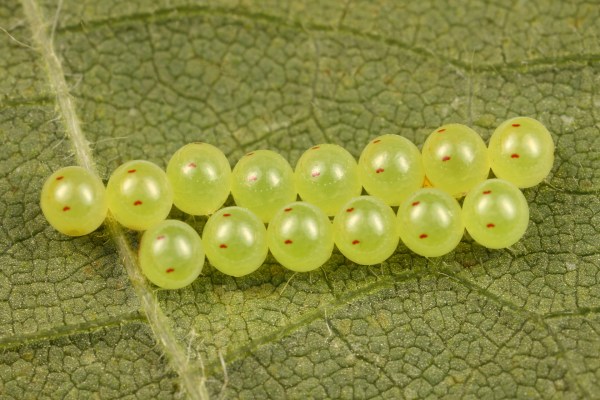
Edessa meditabunda (Hemiptera: Pentatomidae) – alquiche chico

From  (18 May 2011). I found these Edessa meditabunda stink bug eggs on the underside of a soybean leaf in Argentina almost ready to hatch. The developing eye spots in each egg gives the photo a “cute” factor rarely seen in such super close-ups.


Cicindela formosa generosa (Coleoptera: Carabidae: Cicindelinae) – eastern big sand tiger beetle

From  (10 May 2011). I like this slightly panned out view because of the sense of scale and landscape created by the inclusion of the plantlets and the view over the small rise.


Trimerotropis saxatilis (Orthoptera: Acrididae) – lichen grasshopper

From  (15 July 2011). Some of my favorite insect photos are not only those that show the bug in all its glory, but also tell a story about its natural history. This nymph is almost invisible when sitting on the lichens that cover the sandstone exposures in its preferred glade habitat. 


Tetracha floridana (Coleoptera: Carabidae: Cicindelinae) – Florida metallic tiger beetle

From  (23 August 2011). I used extension tubes to improve the quality of flash lighting (decreased lens to subject distance results in greater apparent light size), and I like the symmetry of the composition.


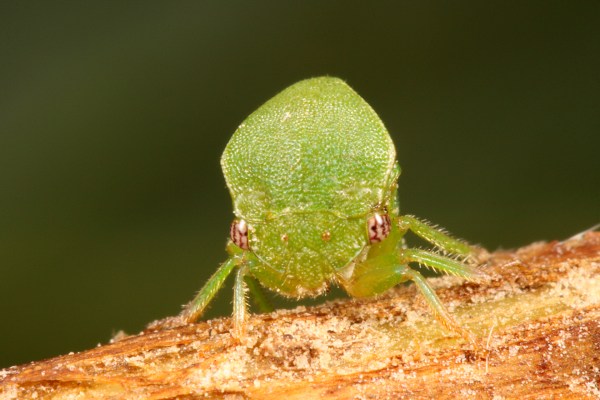
Spissistilus festinus (Hemiptera: Membracidae) – threecornered alfalfa hopper

From  (17 September 2011). Even though both the insect and the background are green, there is sufficient value contrast to create a pleasing composition, punctuated by the bizarre zig-zag pattern of the eyes.


Crossidius coralinus fulgidus (Coleoptera: Cerambycidae) – a rabbitbrush longhorned beetle

From  (4 October 2011). The blue sky background provides a pleasing contrast with the colors of this particular beetle and flowers.

Copyright © Ted C. MacRae 2012

Even a 12-year old can discover the larva of a rare, endemic species!

Since discovering the larva of the rare, endemic Florida metallic tiger beetle (Tetracha floridana) in the small, intertidal mangrove marsh behind my sister-in-law’s condominium in Seminole, Florida three years ago, I’ve looked forward to subsequent visits to see the adults (they’re nocturnal) and gather additional material needed to write the larval description. I had to wait a few days on this year’s trip due to rain (it is Florida, after all), but eventually a dry evening came along and I began “suiting up” for my nighttime foray. Much to my delight, my 12-year old nephew Jack wanted to come with me. Jack had never been in the field with me before, but according to his mom he has become quite interested of late in science and biology. My daughter Maddie, also 12 years old (and a veteran of many trips to the field with me), also wanted to go, so together the three of us slathered on the insect repellent and headed into the dark towards the marsh.

Larva of Micronaspis floridana (Florida intertidal firefly) | Pinellas Co., Florida

We had only my headlamp as a light source, so the kids trailed behind me as I picked a line through the brush, across a small creek, and onto a ridge that snakes through the marsh that marked one of the areas where I had seen good numbers of the beetles last year. We collected a small number to keep alive and place in a terrarium of native soil, the hope being that they would lay eggs so I could obtain some 1st-instar larvae for the formal description, but what I was really looking for were larval burrows. As we (well, I) searched the ground in front of me with the lamp and the kids trailed behind me in the dark, Jack suddenly stopped and said, “What’s that?” I shone my light to where he was pointing but didn’t see anything and so resumed my search. Right away he said, “There it is again.” I asked if it was a rabbit (we’d seen them at the edge of the marsh during the day), and he said, “No, it’s like a light or something.” I turned off the lamp, and gradually the faint, green glow reappeared. I recognized the source of the light instantly as that of a larval firefly, although truthfully I have never actually seen an actual firefly larva. Seeing a great teaching moment for the kids, we walked to the light, knelt down, and shone the lamp directly on the ground from where the light was coming to find the small (~10 mm long) larva moving slowly through the moist, algae-covered rocks. It had the classic, retractable firefly head and curiously quadruply-spined tergites. I congratulated Jack on finding the larva, emphasizing that I would have never seen it myself had he not been there and been so observant despite not having a lamp.

Larvae of this species exhibit the retractable head characteristic of firefly larvae.

I went back a few nights later by myself so I could concentrate on photographing some of the things we saw in the marsh the previous night, including the firefly larva. I had no problem relocating one in the same place we found it before (I just turned off my headlamp and waited for the green glow). I’m generally not keen on posting photographs of unidentified insects (just me, but I find photos much more interesting when accompanied by the natural history back story), and I was sure this larva would remain unidentified (I have little knowledge of adult fireflies, much less their larvae). This seemed even more likely after perusing the few identified and many unidentified firefly larvae photographs on BugGuide and finding nothing even remotely similar. I was about to give up when I decided to try the search term “Lampyridae Florida Pinellas” (“Pinellas” being the county where we found the larvae—my thinking being that maybe there was a Florida firefly checklist that could narrow down to the county level the possible species), and high in the results was a page titled Florida intertidal firefly (fiddler crab firefly). On that page was a photo of the larva, although not nearly large and detailed enough to be sure it was the same, but still in my mind almost surely this species because of the stated restricted habitat—intertidal zone of Florida coastal salt marshes! I sent these photographs to lampyroid aficionado Joe Cicero, who kindly confirmed my identification. 

Restricted to intertidal marshes in coastal Florida.

Because it occurs only at the edges of salt water marshes around the peninsular coast of Florida, M. floridana is a classic example of shoestring geographic isolation and, thus, serves as a good model for studies of genetic isolation and its impact on speciation (Lloyd 2001). Along with T. floridana, it now makes at least two rare, Florida-endemics occurring in the small private, preserve behind my sister-in-law’s condominium (both of which were first found as larvae rather than adults). Although the larva of M. floridana is already known—albeit by a rough black and white photograph (McDermott 1954)—it’s rarity and restricted habitat nonetheless make it an exciting find well deserving of the more detailed color photographs shown here. However, as I told Jack after receiving confirmation of its identity, he gets full credit for the discovery. I took him into the field with me with the intention of showing him some new things, and he turned the tables on me! Yes, even a 12-year old can discover the larva of a rare, endemic species!

REFERENCES:

Lloyd, J. E. 2001. On research and entomological education V: a species concept for fireflyers, at the bench and in old fields, and back to the Wisconsian Glacier. Florida Entomologist 84(4):587–601.

McDermott, F. A. 1954. The larva of Micronaspis floridana Green. The Coleopterists Bulletin 8(3/4):59–62.

Copyright © Ted C. MacRae 2012

Planet’s Coolest Critters – Tiger Beetles

Cicindela scutellaris rugifrons – photo by Harry Zirlin.

Readers of this blog know well (and hopefully share) my affection for tiger beetles (family Cicindelidae). That should come as no surprise, as tiger beetles rank among the most popular of all beetle groups. The reasons for this are many—for me it is their extreme polytopism (geographically based variation in coloration and markings), affinity for extreme habitats, and charismatic behavior (both adults and larvae), while for others it may be from a more basic research perspective (e.g., thermoregulatory behaviors, molecular phylogeny, and visual physiology) or as models for conservation research. I think most, however, will simply declare that tiger beetles are just… well, cool! That is the perspective of Harry Zirlin, who wrote this charming little article entitled, Planet’s Coolest Critters – Tiger Beetles at PetsLady. After introducing the group and its diversity, lifestyles, and behaviors, Harry notes the increasing popularity of tiger beetles with birders, butterfly watchers and nature photography buffs and the recent proliferation of field guides that have enabled their elevation to the ranks of “watchable wildlife.” Maintaining tiger beetles in terraria allows an even closer look at their beauty and behaviors, and Harry gives some useful tips on how best to accomplish this. It’s a pleasant little read, and I recommend you check it out!

Copyright © Ted C. MacRae 2012
Working with Cerceris fumipennis—Epilogue

Cerceris fumipennis nest littered with Neochlamisus sp. beetles

In Working with Cerceris fumipennis Part 1 and Part 2, I talked about the use of this species as a biosurveillance tool for Buprestidae. These wasps are specialist predators of jewel beetles, which they capture almost exclusively and paralyze with their sting to use as food provisions for their offspring in underground nests. I also mentioned that there are other species of Cerceris, each specializing in its own distinct prey group, and at my site in east-central Missouri I found C. bicornis, a weevil specialist, almost as common as C. fumipennis. Thus, when I came upon this particular Cerceris wasp nest, I wondered it I had encountered yet another species in the genus, for littered around it were case-bearing leaf beetles in the genus Neochlamisus.

The bright coppery coloration suggests Neochlamisus platani

I counted 11 beetles lying on the diggings surrounding this nest, and as is typical with buprestids around C. fumipennis nests these beetles all appeared to represent the same species (I’ve done a little collecting of Neochlamisus beetles in Missouri—the especially bright coppery coloration suggests to me N. platani, a species found on eastern sycamore, Platanus occidentalis). I’ve also noted that C. fumipennis nests littered with beetles on the surface also have beetles—usually of the same species—freshly cached underground, so I decided to dig up the nest to see what might be in it. As I inserted the grass stem and started digging, I heard the distinctive buzzing indicating the wasp was still inside the nest, and when it appeared I noted the distinctive three yellow facial markings that identify it as a female C. fumipennis. As suspected, the nest contained another seven beetles of the same species, and I would later learn that C. fumipennis, while specializing on jewel beetles, does occasionally take other prey. Philip Careless and colleagues recorded two leaf beetles, including Neochlamisus bebbiana, and one weevil as hosts for this wasp at their Working with Cerceris fumipennis website. If my species ID of these beetles is confirmed, this should represent yet another non-buprestid host record for C. fumipennis, although I should also mention that out of several hundred observations this was the only non-buprestid prey I observed around or in a C. fumipennis nest.

Copyright © Ted C. MacRae 2012