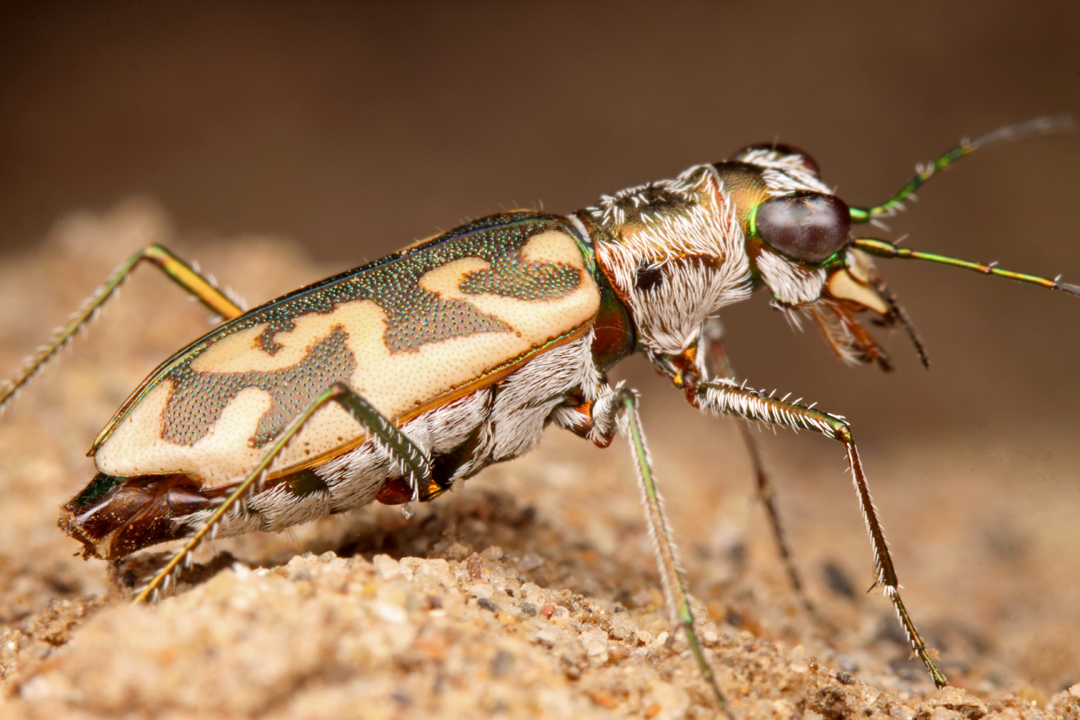
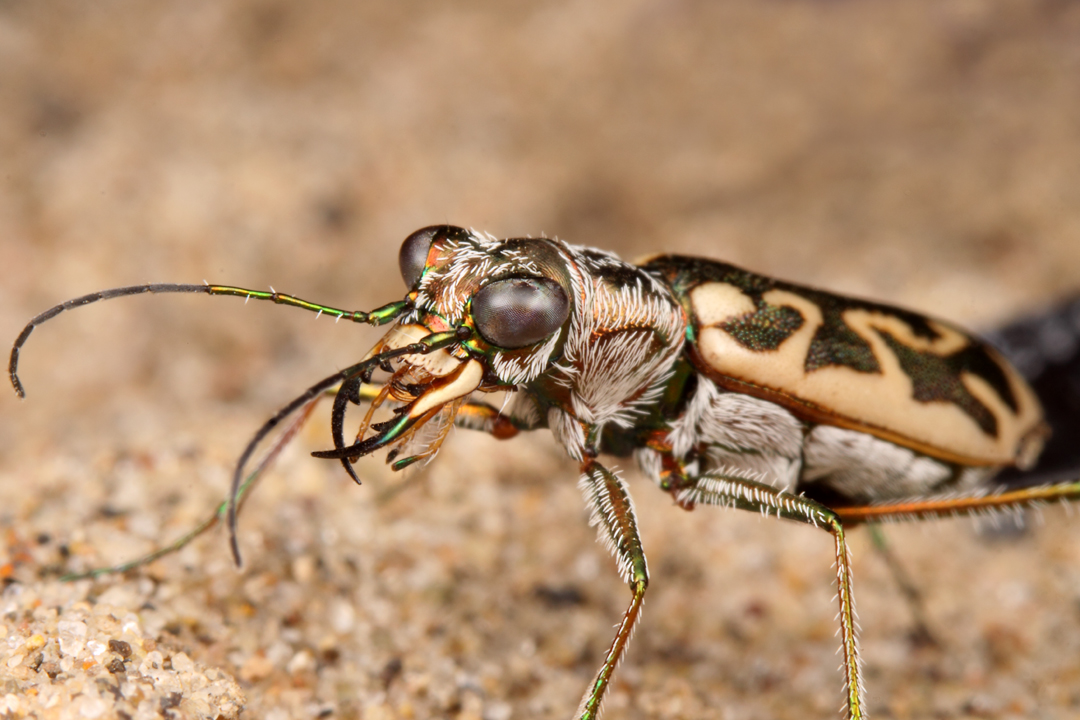
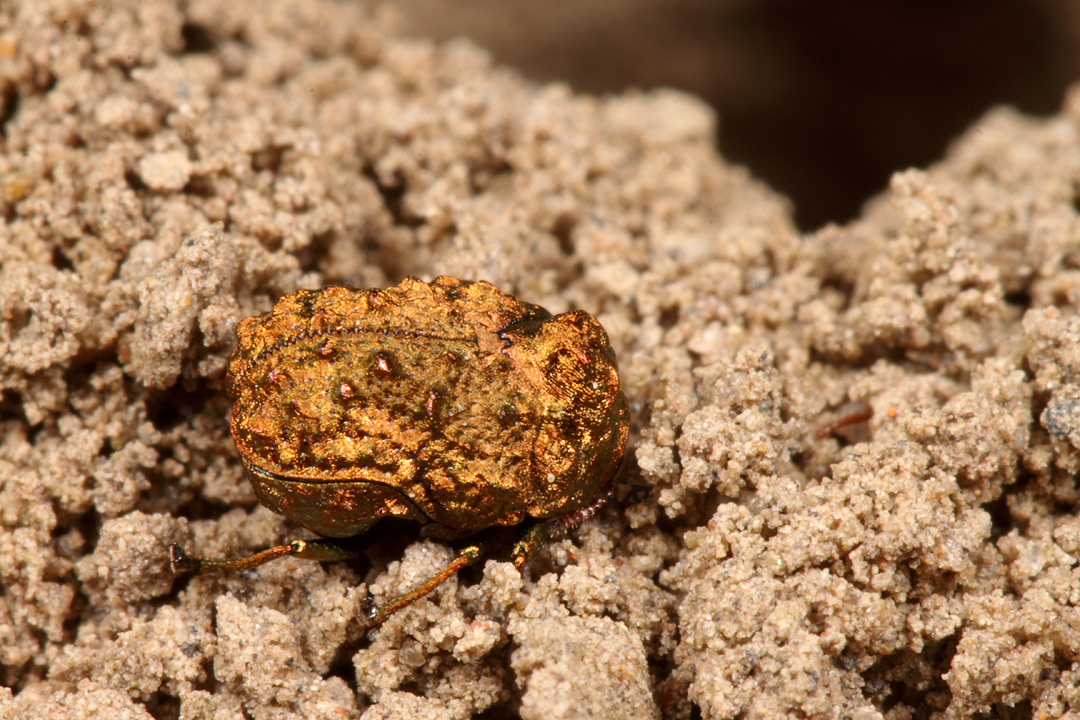
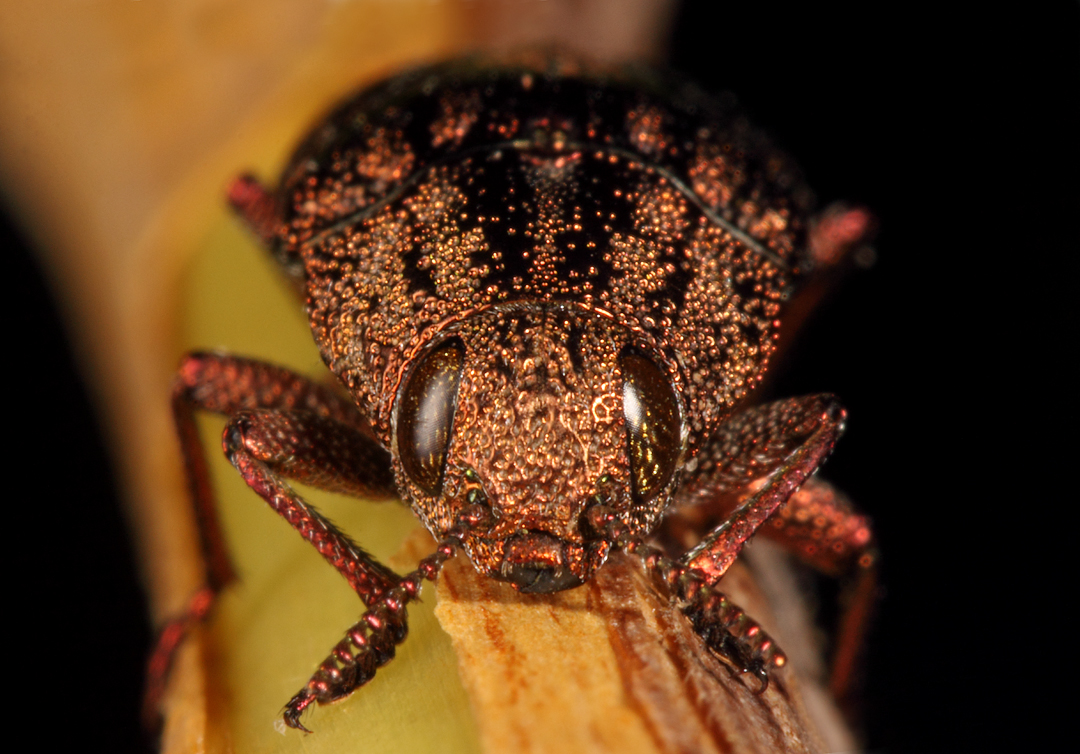
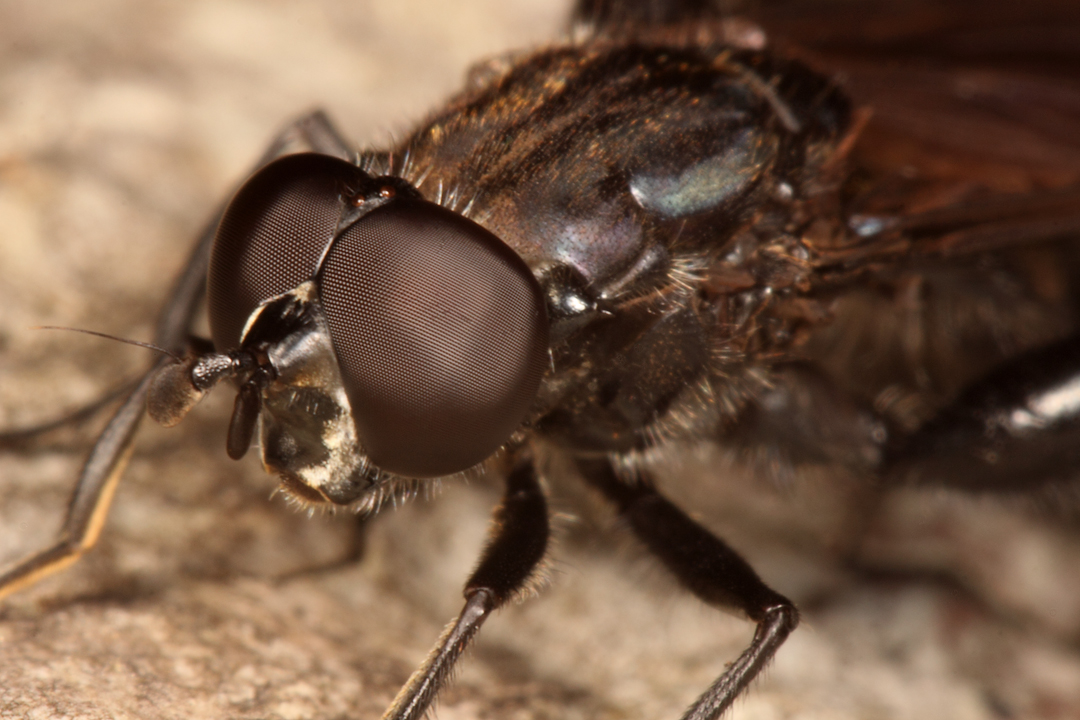
For nearly 30 years, jewel beetles (family Buprestidae) have been my primary research interest. While some species in this family have long been regarded as forest and landscape pests, my interest in the group has a more biosystematic focus. A faunal survey of Missouri was the result of my initial efforts (MacRae 1991), while later research has focused on distributions and larval host associations of North American species (Nelson & MacRae 1990; Nelson et al. 1996; MacRae & Nelson 2003; MacRae 2004, 2006) and descriptions of new species from both North America (Nelson & MacRae 1994, MacRae 2003b) and South America (MacRae 2003a). Research interest in other groups—especially longhorned beetles and tiger beetles, has come and gone over the past three decades; however, I always return to jewel beetles as my first and favorite group.
In recent years, one species in particular—the emerald ash borer (EAB, Agrilus planipennis) has garnered a huge amount of research, regulatory, and public interest after reaching North America from Asia and spreading alarmingly through the hardwood forests of Michigan and surrounding states. The attention is justifiable, given the waves of dead native ash trees that have been left in its wake. With huge areas in eastern North America still potentially vulnerable to invasion by this species, the bulk of the attention has focused on preventing its spread from infested areas and monitoring areas outside of its known current distribution to detect invasion as early as possible. One incredibly useful tool that has been adopted by survey entomologists is the crabronid wasp, Cerceris fumipennis. Like other members of the family, these solitary wasps dig nests in the ground, which they then provision with captured insect prey. The wasp uses its sting to paralyzed the prey but not kill it, and once inside the burrow the wasp lays an egg on the prey and seals the cell with a plug of soil. The eggs hatch and larvae develop by consuming the paralyzed prey (unable to scream!). After pupation the adult digs its way out of the burrow (usually the next season), and the cycle begins anew. However, unlike other members of the family (at least in North America), C. fumipennis specializes almost exclusively on jewel beetles for prey. So efficient are these wasps at locating and capturing the beetles that entomologists have begun using them to sample areas around known wasp populations as a means of detecting the presence of EAB. Philip Careless and Stephen Marshall (University of Guelph, Ontario) and colleagues have been leading this charge and have even developed methods for transporting wasp colonies as a mobile survey tool and developed a sizeable network of citizen scientists throughout eastern North America to expand the scope of their survey efforts. Information about this can be found at the excellent website, Working with Cerceris fumipennis (please pardon my shameless lifting of the title for this post).
I first became aware of the potential of working with C. fumipennis a few years ago when Philip sent me a PDF of his recently published brochure on use of this wasp for EAB biosurveillance (Careless et al. 2009). My correspondence with him and other eastern entomologists involved in the work suggested that ball fields with lightly vegetated, sandy soil would be the best places to look for C. fumipennis nests, but my cursory attempts to find the wasp at that time were unsuccessful. I reasoned that the clay-soaked soils of Missouri didn’t offer enough sand for the wasps’ liking and didn’t think much more about it until last winter when I agreed to receive for ID a batch of 500+ buprestid specimens taken from C. fumipennis wasps in Louisiana. What a batch of material! In addition to nice series of several species that I had rarely or never seen (e.g. Poecilonota thureura), three new state records were represented amongst the material. A paper is now in progress based on these collections, and that experience catalyzed a more concerted effort on my part to locate a population of the wasp in Missouri. Museum specimens were no help—the only records from Missouri were from old specimens bearing generic locality labels such as “St. Louis” and “Columbia.” Throughout the month of May, I visited as many ball fields as I could, but the results were always the same—regularly groomed, heavy clay, barren soil with no evidence of wasp burrows (or any burrows for that matter).
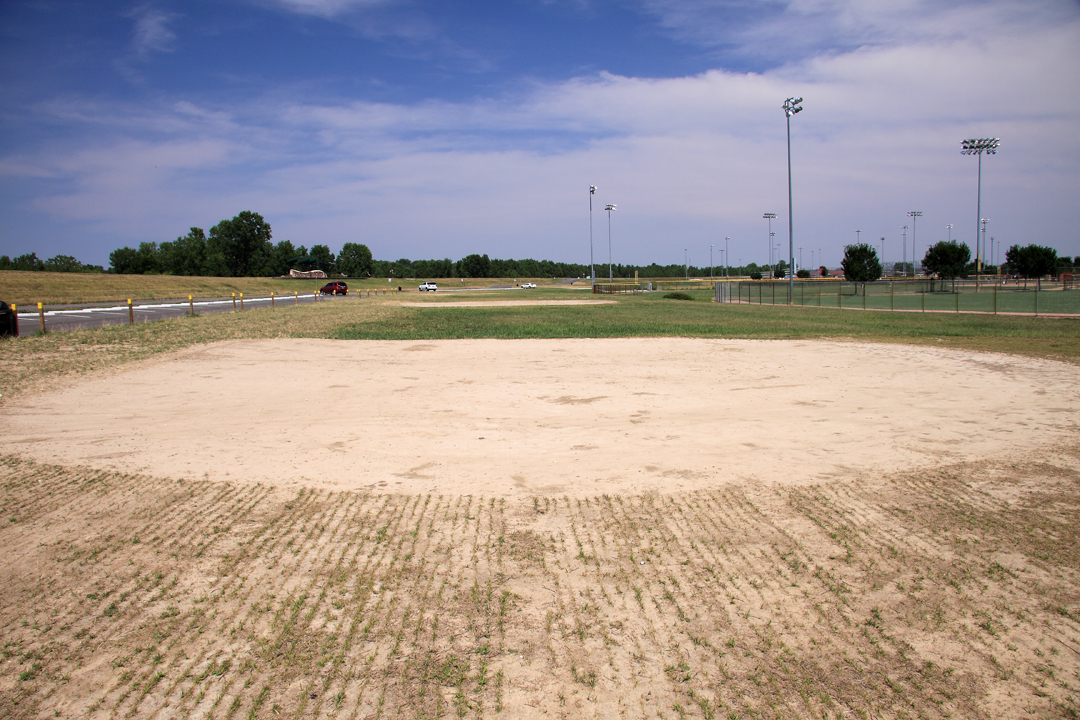
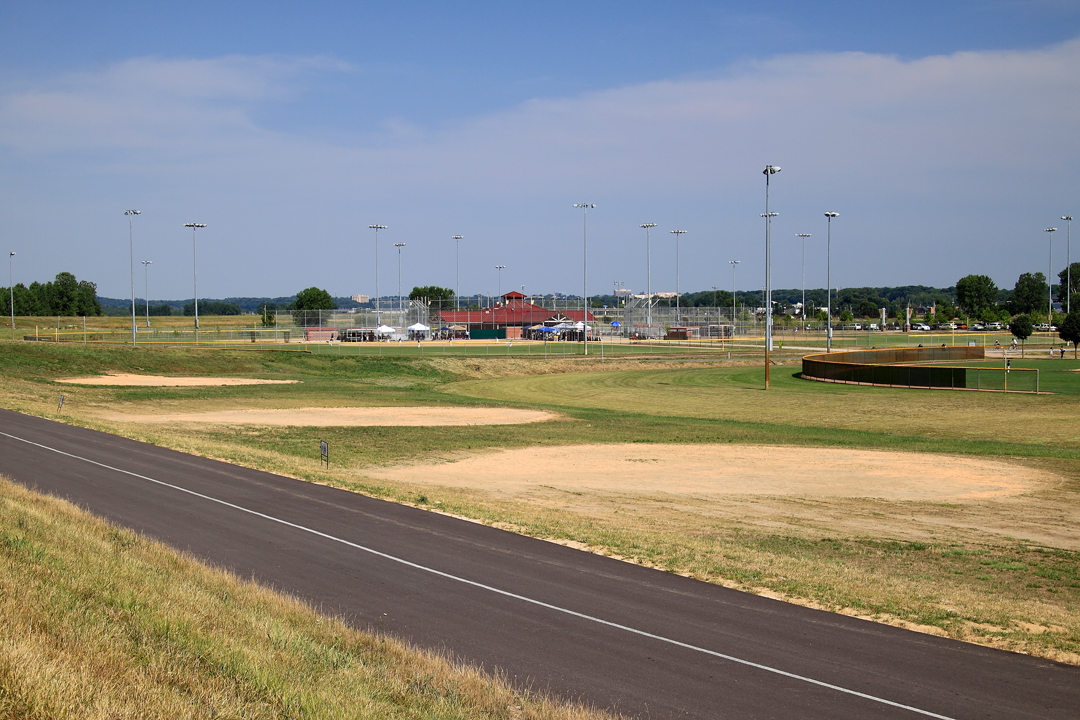
Near the end of May, however, I had a stroke of luck. I had switched to a flatter route through the Missouri River Valley to ride my bike to work because of knee pain (now thankfully gone) when I saw this:
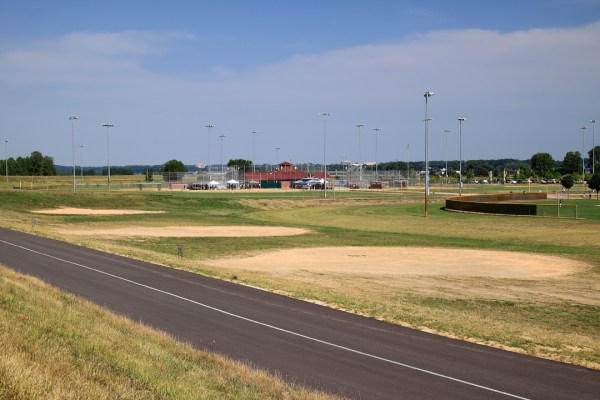
Practice fields at Chesterfield Valley Athletic Complex | St. Louis Co., Missouri
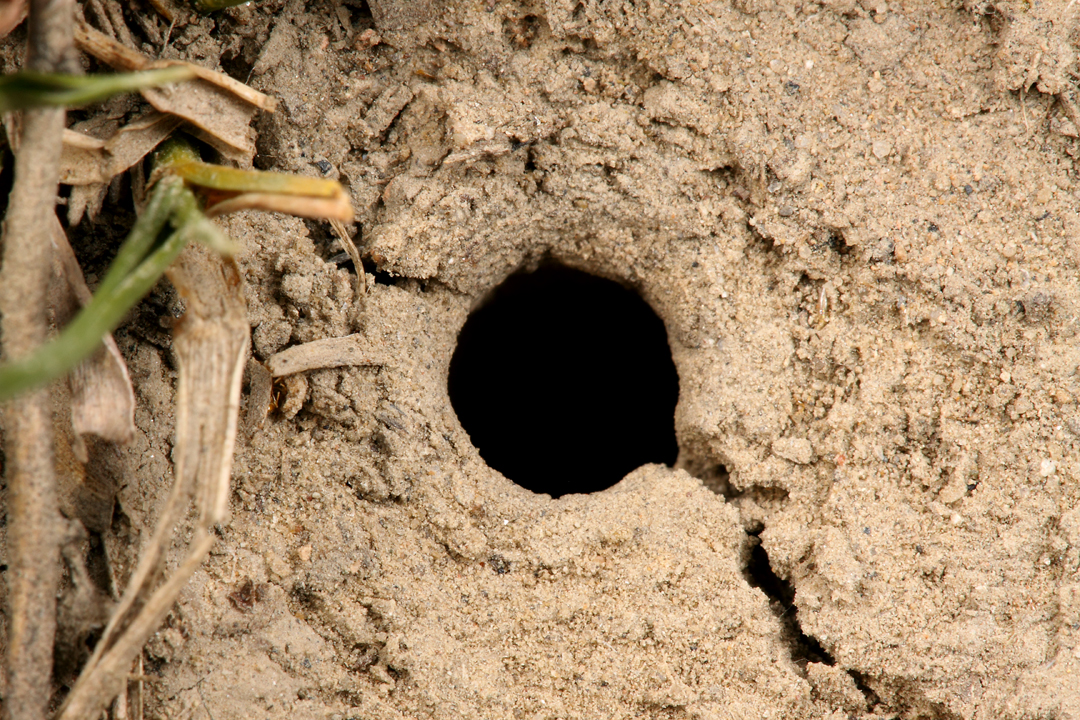
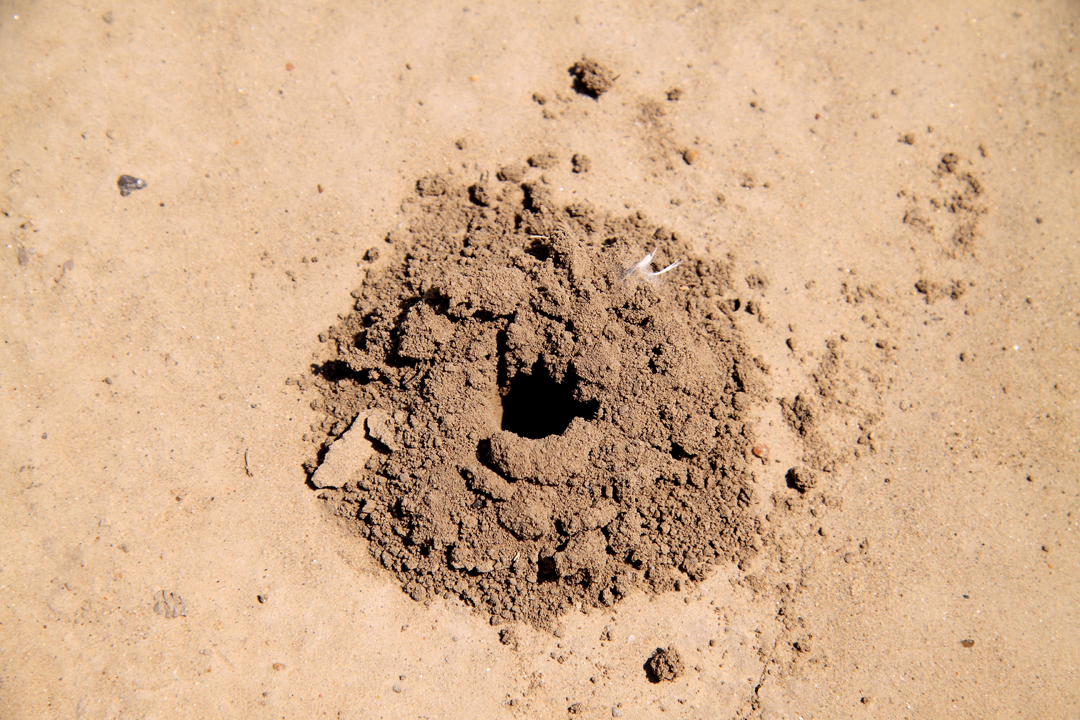
Those are “practice” fields in front of regular fields in the background, and unlike the latter, this row of nine fields (lined up against the levee adjacent to the Big Muddy National Wildlife Refuge) showed no evidence of regular grooming or heavy human use. Only ten miles from my home, I made immediate plans to inspect the site at the first opportunity that weekend. Within minutes after walking onto the lightly vegetated, sandy-clay soil of the first field, I found numerous burrows such as this:
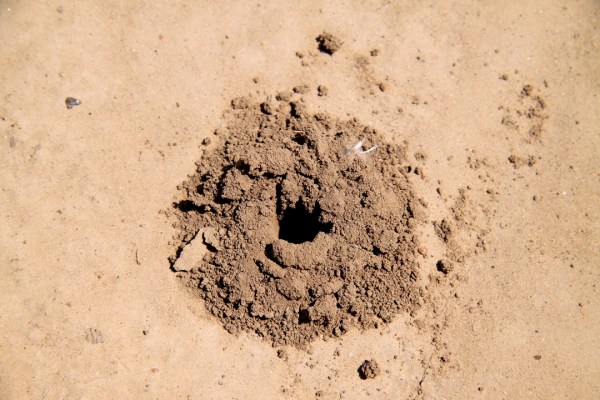
Cerceris fumipennis with circular, pencil-wide burrow entrance and symmetrical mound of diggings.
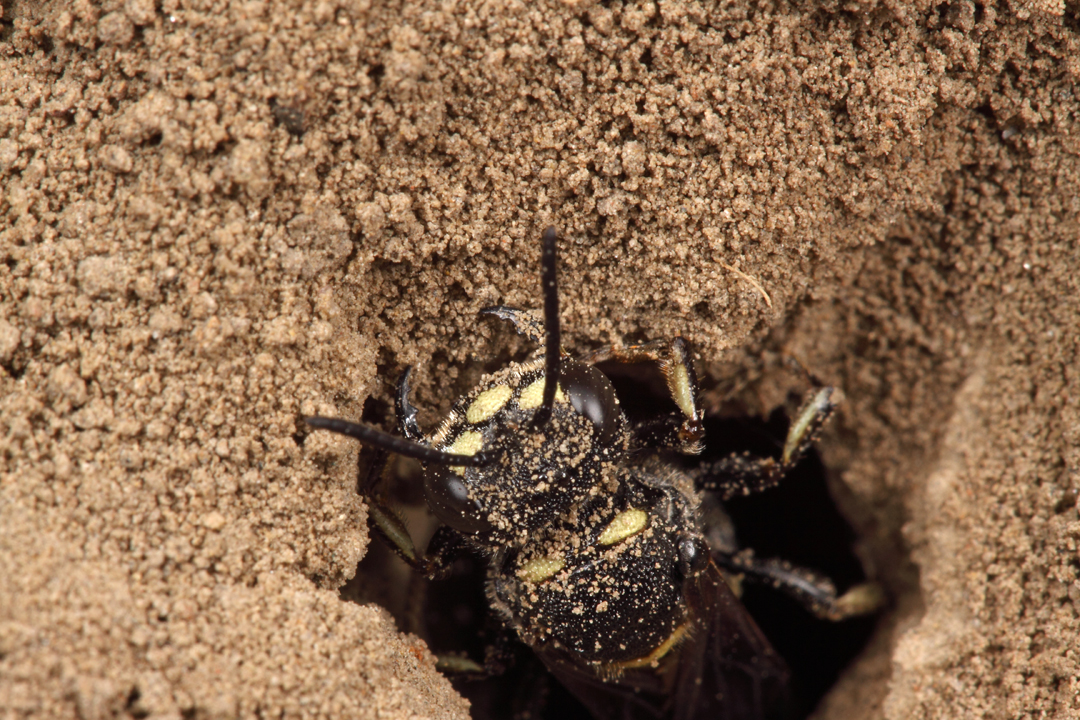
Only a few more minutes passed before I found an occupied nest, the wasp sitting just about an inch below the entrance to its pencil-wide burrow. The three yellow markings on the face indicated it was a female (males have only two facial markings), and in short order I found numerous other burrows also occupied by female wasps. Some were just sitting below the burrow entrance, while others were actively digging and pushing soil out of the burrow with their abdomen. I flicked a little bit of soil into one of the burrows with a female sitting below the surface, which prompted an immediate “cleaning out” of the burrow—this explains the dirty face of the female in the following photo, but the three yellow facial markings are clearly visible:
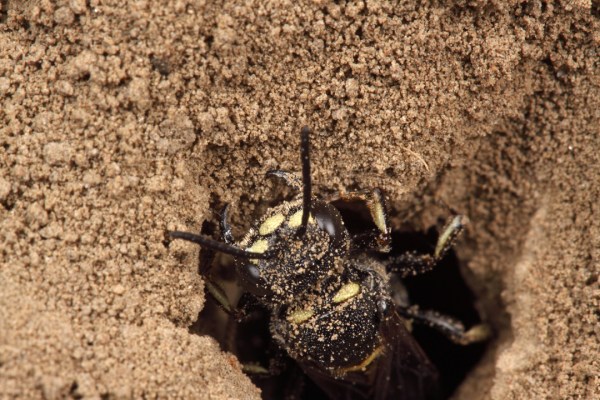
Cerceris fumipennis female removing soil from burrow entrance.
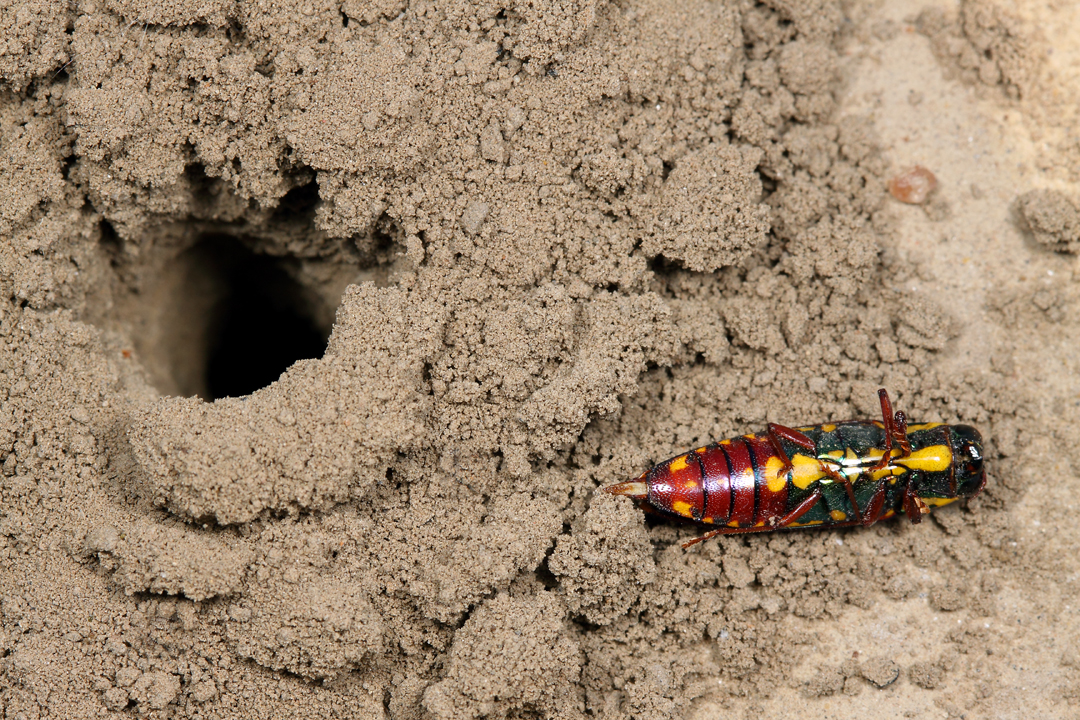
After finding the burrows and their occupants, I began to notice a fair number of wasps in flight—leaving nests, returning to nests, and flying about as if searching for a ‘misplaced’ nest. A few of these were males, but most were females, and I also caught a couple pairs flying in copula (or at least hitched, if not actually copulating). Despite the number of wasps observed during this first visit, I didn’t see a single wasp carrying a buprestid beetle. This puzzled me, because all of the Louisiana beetles I had determined last winter were taken by standing in the midst of nests and netting those observed carrying beetles. Finally, I had confirmation that I was truly dealing with this species when I found a couple of beetles lying on the ground near the entrance to a burrow. These would be the only beetles that I would find on this visit, but subsequent visits during the following few weeks would show “ground picking” to be the most productive method of collecting beetles. Across the nine fields, I found a total of nearly 300 nests, and the wasps showed a clear preference for some fields over others—one field (P-6) had about 150 nests, while a few others had less than a dozen. The photo shown in ID Challenge #19 shows a sampling of ground-picked buprestids from P-6 in a single day, and occasionally I would find a real prize like Buprestis rufipes:
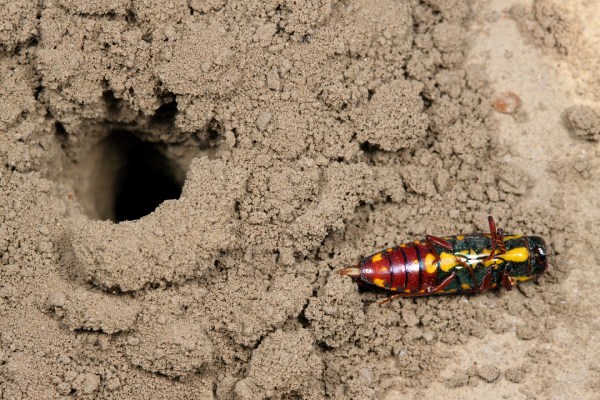
Buprestis rufipes laying near Cerceris fumipennis nest entrance.
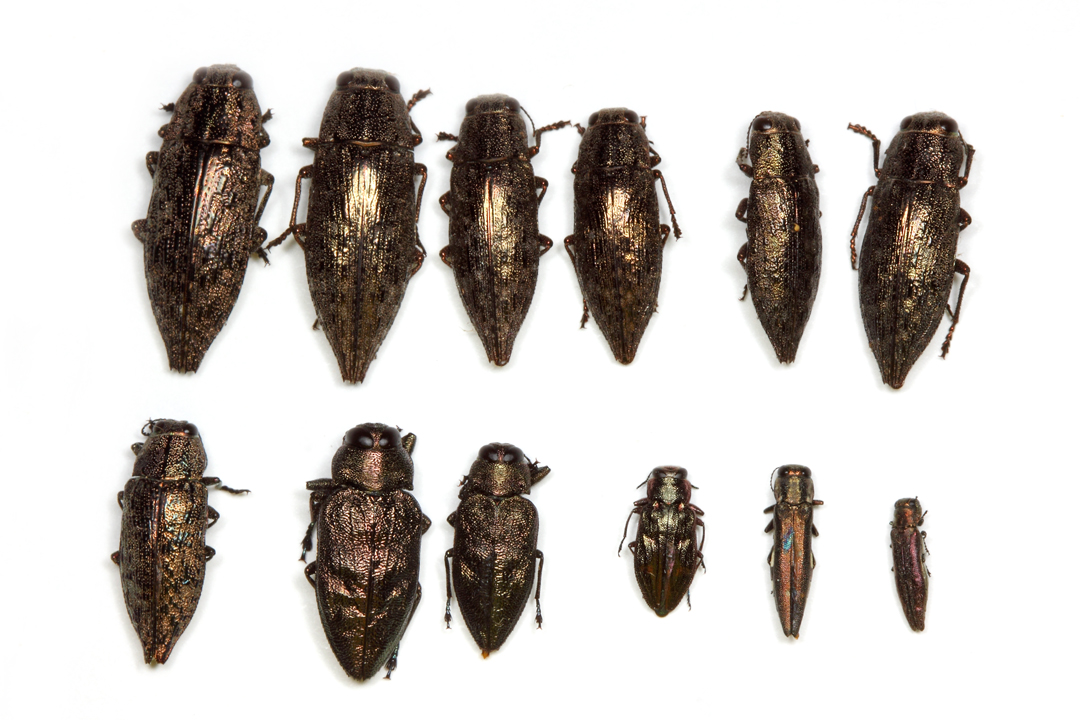
Coincident with the appearance of large numbers of beetles laying on the ground near nest entrances, I also began to see wasps carrying their prey. Wasps carrying large beetles are easily recognized by their profile, but even those carrying small beetles look a little more “thick-thoraxed” (they hold their prey upside down and head forward under their thorax) and exhibit a slower, more straight-line flight path compared to the faster, more erratic and repetitively dipping flight of wasps not carrying prey. Learning how to discern wasps carrying prey in flight from the more numerous empty-handed wasps prevents a lot of wasted time and effort netting the latter. Nevertheless, there does appear to be some bias towards larger beetles when netting prey-carrying wasps in flight, as evidenced in the photo below of beetles taken by this method, also in field P-6, on the same date as the ground-picked beetles shown in ID Challenge #19. This could be a result of visual bias towards wasps carrying larger beetles, as in later visits (and presumably with a more refined search image) I did succeed in catching larger numbers wasps carrying smaller beetles (primarily in the genus Agrilus).
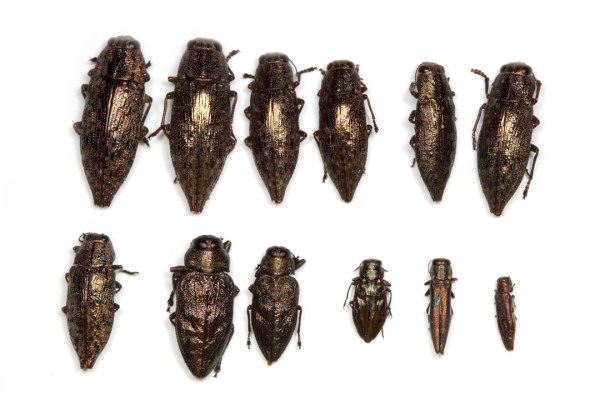
Buprestid prey of Cerceris fumipennis: L–R and top to bottom 2 Dicerca obscura, 2 D. lurida, 3 Poecilonota cyanipes, 2 Acetenodes acornis, 1 Chrysobothris sexsignata, 1 Agrilus quadriguttatus, and 1 A. obsoletoguttatus
All told, I collected several hundred beetles during my twice weekly visits to the site from late May to the end of June. Beetle abundance and wasp activity began to drop off precipitously in late June, which coincides precisely with the end of the adult activity period for a majority of buprestid beetles in Missouri, based on my observations over the years. This did not, however, spell the end of my activities in using C. fumipennis to collect buprestid beetles, which will be the subject of Part 2 in this series.
Congratulations to Joshua Basham, whose efforts in ID Challenge #19 earned him 12 points and the win. Morgan Jackson and Paul Kaufman were the only others to correctly identify the Cerceris fumipennis connection and take 2nd and 3rd, respectively. In an unexpected turn of events, BitB Challenge Session #6 overall leader Sam Heads did not participate and was leapfrogged by Brady Richards, whose becomes the new overall leader with 59 points. Sam now trails Brady by 5 points, while Mr. Phidippus lies another 3 points back. With margins this tight, the overall standing can still change in a single challenge, and there will be at least one more in this current session before an overall winner is named.
REFERENCES:
Careless, P. D., S. A. Marshal, B. D. Gill, E. Appleton, R, Favrin & T. Kimoto. 2009. Cerceris fumipennis—a biosurveillance tool for emerald ash borer. Canadian Food Inspection Agency, 16 pp.
MacRae, T. C. 1991. The Buprestidae (Coleoptera) of Missouri. Insecta Mundi 5(2):101–126.
MacRae, T. C. 2003a. Mastogenius guayllabambensis MacRae, a new species from Ecuador (Coleoptera: Buprestidae: Haplostethini). The Coleopterists Bulletin 57(2):149–153.
MacRae, T. C. 2003b. Agrilus (s. str.) betulanigrae MacRae (Coleoptera: Buprestidae: Agrilini), a new species from North America, with comments on subgeneric placement and a key to the otiosus species-group in North America. Zootaxa 380:1–9.
MacRae, T. C. 2004. Notes on host associations of Taphrocerus gracilis (Say) (Coleoptera: Buprestidae) and its life history in Missouri. The Coleopterists Bulletin 58(3):388–390.
MacRae, T. C. 2006. Distributional and biological notes on North American Buprestidae (Coleoptera), with comments on variation in Anthaxia (Haplanthaxia) viridicornis (Say) and A. (H.) viridfrons Gory. The Pan-Pacific Entomologist 82(2):166–199.
MacRae, T. C., & G. H. Nelson. 2003. Distributional and biological notes on Buprestidae (Coleoptera) in North and Central America and the West Indies, with validation of one species. The Coleopterists Bulletin 57(1):57–70.
Nelson, G. H., & T. C. MacRae. 1990. Additional notes on the biology and distribution of Buprestidae (Coleoptera) in North America, III. The Coleopterists Bulletin 44(3):349–354.
Nelson, G. H., & T. C. MacRae. 1994. Oaxacanthaxia nigroaenea Nelson and MacRae, a new species from Mexico (Coleoptera: Buprestidae). The Coleopterists Bulletin 48(2):149–152.
Nelson, G. H., R. L. Westcott & T. C. MacRae. 1996. Miscellaneous notes on Buprestidae and Schizopodidae occurring in the United States and Canada, including descriptions of previously unknown sexes of six Agrilus Curtis (Coleoptera). The Coleopterists Bulletin 50(2):183–191.
Copyright © Ted C. MacRae 2012