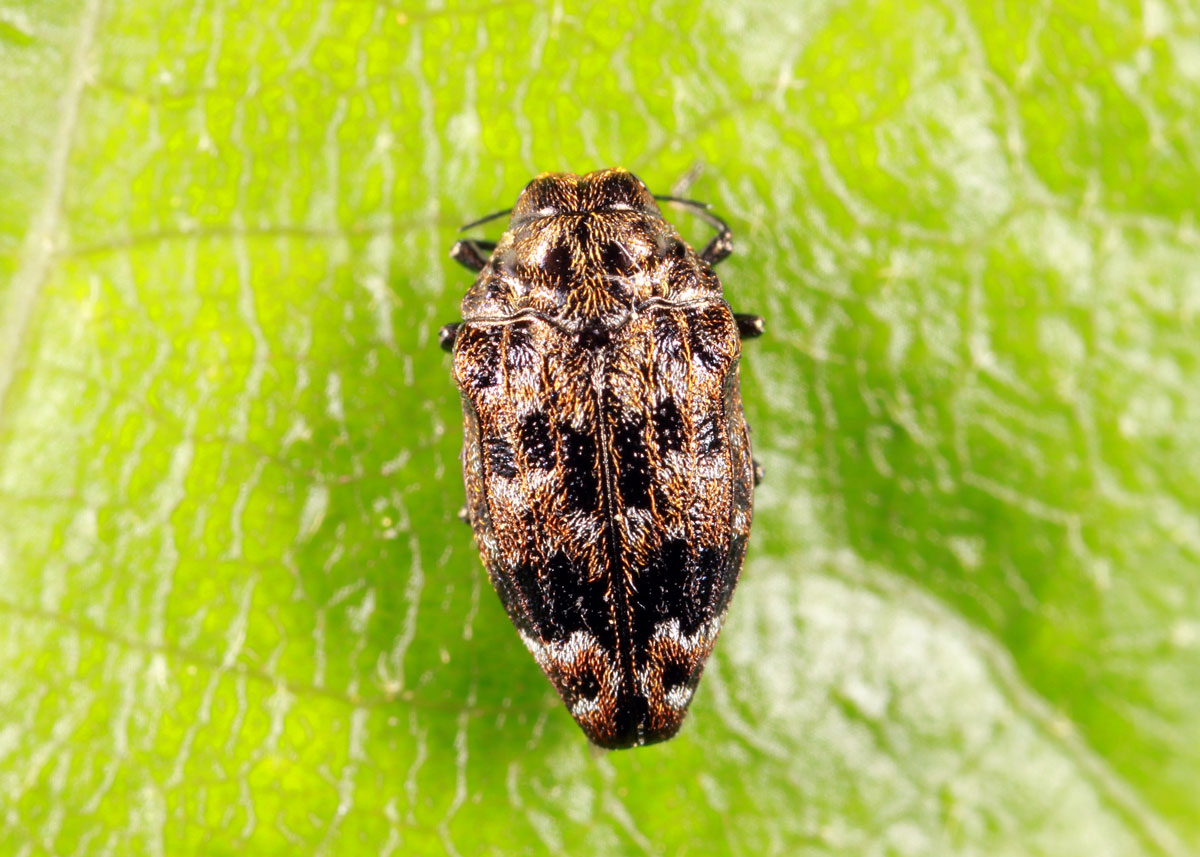
Four Canyon Preserve, Oklahoma

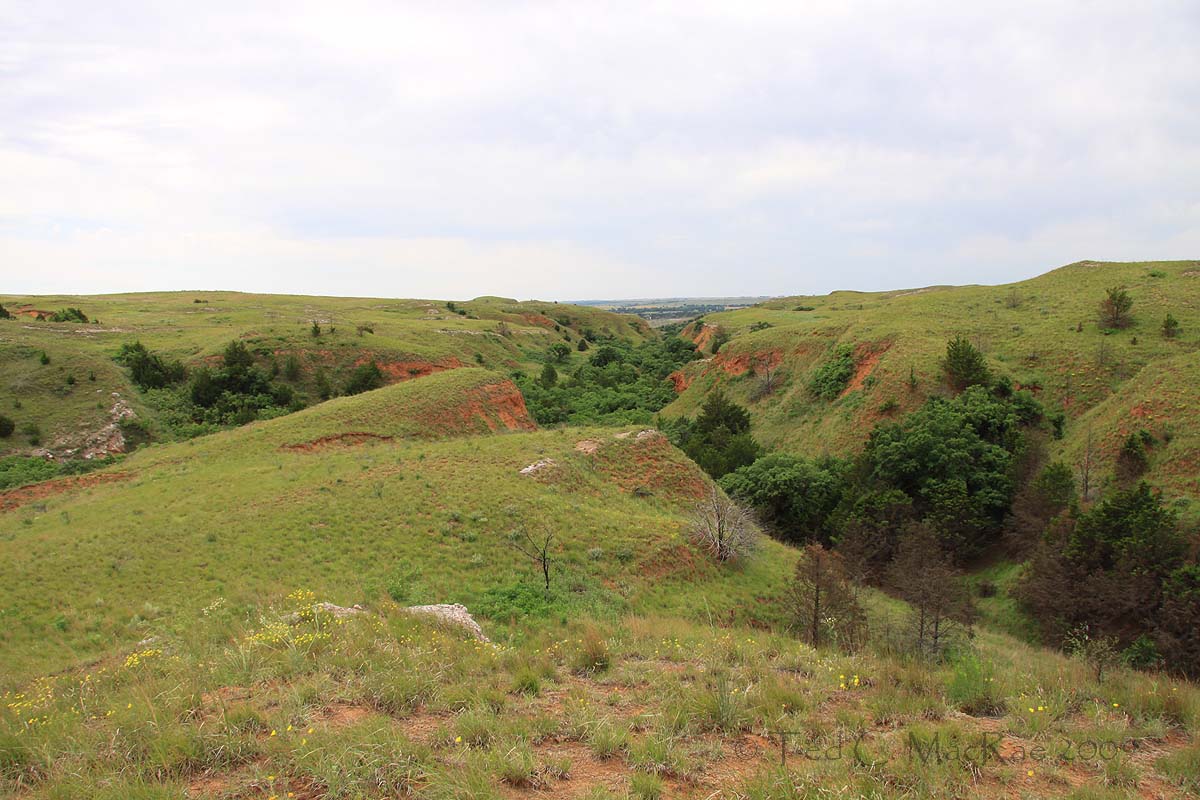
IMG_0295_1200x800

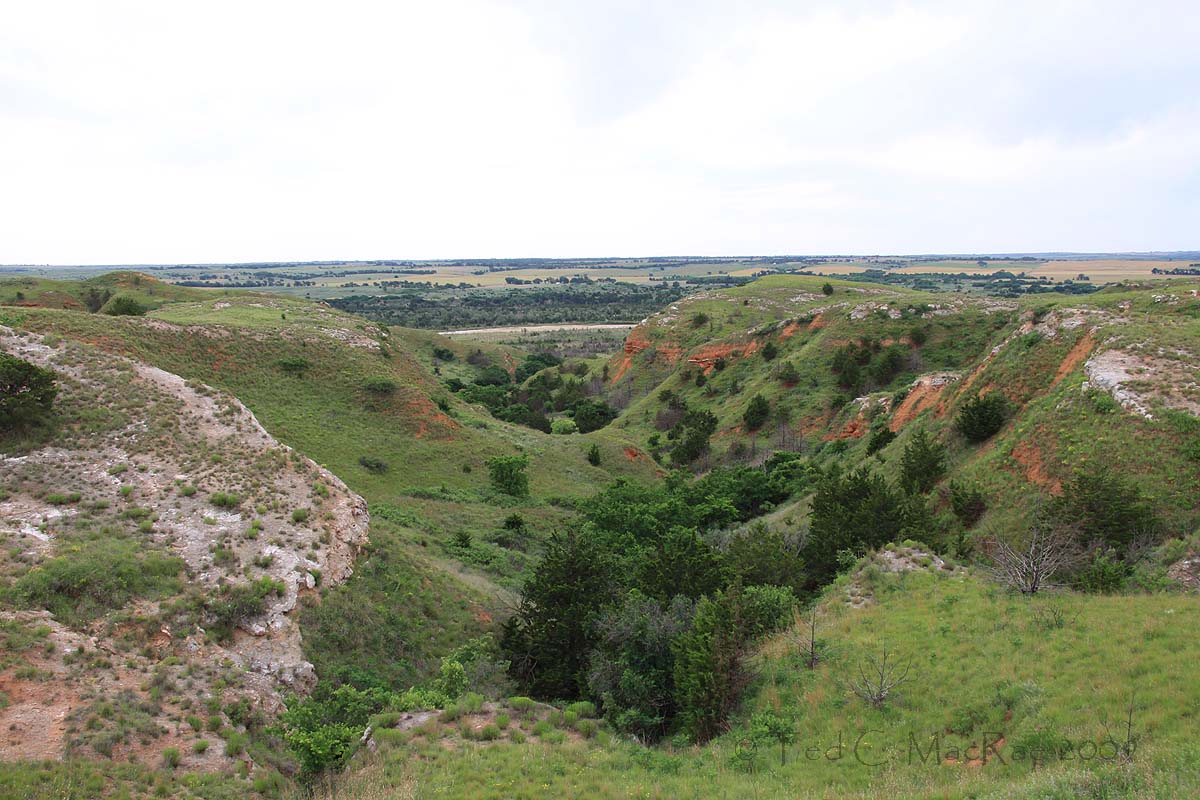
Looking SE into lower Horse Canyon towards Canadian River

On my recent week-long collecting trip, the first three days were spent at Four Canyon Preserve in far northwestern Oklahoma.  This nearly 4,000-acre preserve features a stunning landscape of rugged, wooded canyons dissecting ridges of mixed-grass prairie which provide critical habitat for several rare plants and animals.  Despite years of overgrazing, fire suppression, and invasion by exotic plants, The Nature Conservancy (TNC) recognized the restoration potential of this landscape and began management practices to restore its ecological function and integrity after acquiring it in 2004.  The land was rested until April 2008, at which time a wildfire swept through the area and burned approximately 90% of the property.  This event was actually welcomed by TNC, who was already in the process of initiating a prescribed burn – they simply pulled back and let it rip!  The burn, combined with mechanical removal of eastern redcedar (Juniperus virginiana) that had invaded many areas of the preserve, did much to confine woody growth to the canyons proper, and good rains during the past two springs following that burn have resulted in a lush, green, diverse landscape brimming with prairie wildflowers.  The vivid contrast between the green vegetation and the red clay canyons with their white gypsum exposures has created spectacular vistas of a rugged landscape.  This year, cattle have been reintroduced at low levels to simulate the irregular, patchy disturbance experienced in pre-settlement times when native grazers (bison and elk) dotted the landscape.

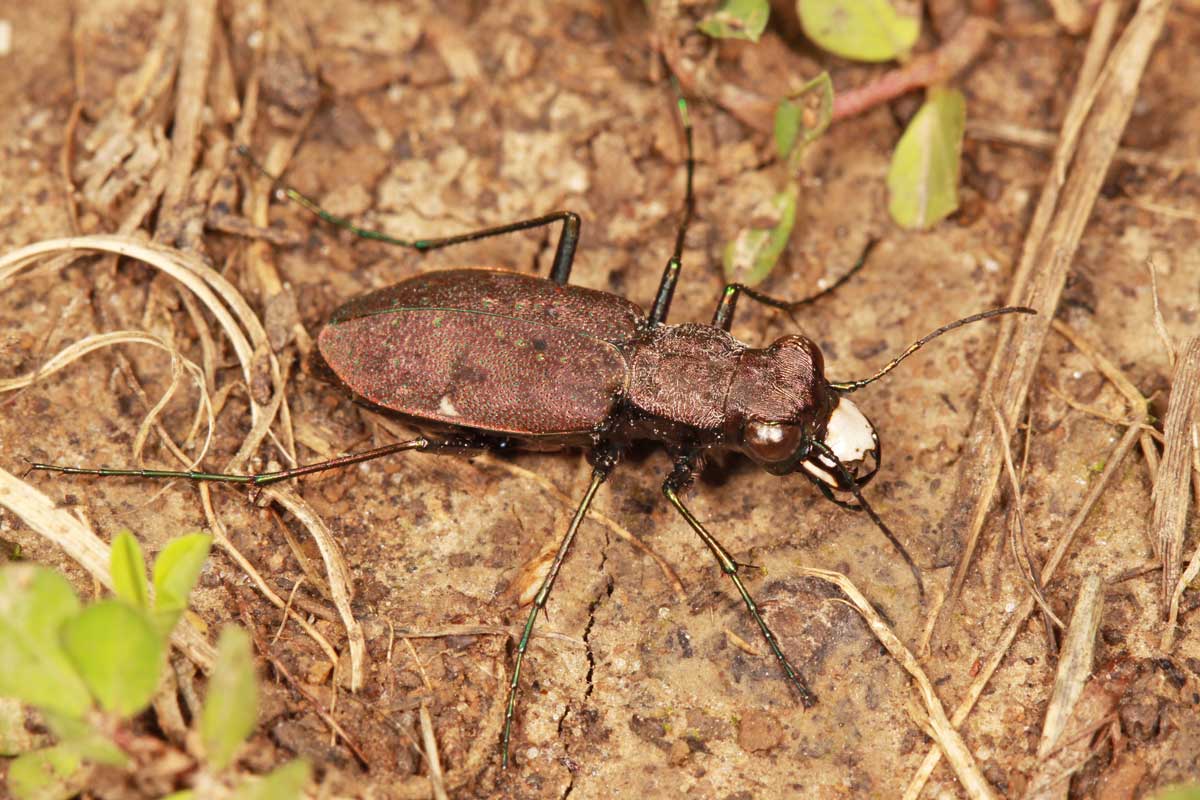
The flora (Hoagland and Buthod 2007) and avifauna (Patten et al. 2006) of the preserve are well characterized, but (as nearly always seems the case) arthropod and other micro faunas need much additional study.  My hymenopterist colleagues and I were welcomed enthusiastically by TNC staff, who are anxious to incorporate the results of our insect surveys into an overall fauna.  Apoid hymenopterans appear to have benefited greatly from the recent rejuvenation of the preserve’s floral character.  Results for the beetle populations that I encountered, however, were more mixed. Certain groups, such as scarabaeine dung beetles, were quite abundant and diverse (due to the reintroduction of cattle), but others, including the tiger beetles, jewel beetles, and longhorned beetles that I was most interested in finding, existed at rather low and not very diverse levels.  I had hoped to find the very rare Cylindera celeripes (swift tiger beetle) running amongst the clumps of vegetation on the preserve’s red clay exposures but instead saw only the ubiquitous Cicindela punctulata (punctured tiger beetle), and the few jewel beetles that I managed to beat off the lower branches of hackberry (Celtis laevigata) and soapberry (Sapindus saponaria var. drummondii) trees were found only in the small parts of the preserve that escaped last year’s burn.  This seems fairly typical – I generally don’t find many insects in these groups whenever I survey areas that have experienced a significant amount of recent burning.  Some ecologists might take exception to this statement, and they would have little difficulty citing studies that show rapid recolonization of prairies by a majority of prairie insect specialists within two years after a prescribed burn.   Nevertheless, the impact of prescribed burning on invertebrate populations and its potential for causing local extirpations has become a contentious issue among ecologists and entomologists in recent years.  While my experience hardly passes for rigorous investigation, I am becoming increasingly convinced that a certain amount of caution is warranted when designing burn management plans for prairie relicts.

I’ll discuss more about the beetles and other insects (and even some vertebrates) that I saw during my three-day visit to Four Canyon Preserve in future posts.  In the meantime, I share with you some of my photos of this spectacularly beautiful landscape (note the abundance of woody cadavers from last year’s burn in some of the photos).
IMG_0382_1200x800

Looking S into upper reaches of Mulberry Canyon

IMG_0384_1200x800

Looking S into upper reaches of Mulberry Canyon

IMG_0399_1200x800

Looking E across upper Harsha Canyon

IMG_0402_1200x800

Looking SE into Harsha Canyon towards Canadian River

IMG_0403_1200x800

Looking E across lower Harsha Canyon

View of Mulberry Canyon bluffs from Canadian River valley

Looking NE towards Mulberry Canyon bluffs from Canadian River valley

REFERENCES:

Hoagland, B. W., and A. K. Buthod.  2007.  Vascular flora of the Four Canyons Preserve, Ellis County, Oklahoma.  Journal of the Botanical Research Institute of Texas 1(1):655–664.

Patten, M. A., D. L. Reinking, and D. H. Wolfe.  2006.  Avifauna of the Four Canyon Preserve, Ellis County, Oklahoma.  Publications of the Oklahoma Biological Survey (2nd Series) 7:11-20.

Copyright © Ted C. MacRae 2009

Add to FacebookAdd to NewsvineAdd to DiggAdd to Del.icio.usAdd to StumbleuponAdd to RedditAdd to BlinklistAdd to Ma.gnoliaAdd to TechnoratiAdd to Furl

The “obscure” Dicerca

IMG_0533_1200x800

Photo details (first 2 photos): Canon 100mm macro lens on a Canon EOS 50D, ISO 100, 1/250 sec, f/13, MT-24EX flash 1/4 power through diffuser caps

During my recent trip to northwestern Oklahoma, we visited Packsaddle Wildlife Management Area, a 17,000-acre chunk of land containing mixed-grass prairie, shinnery oak (Quercus havardii) shrublands, and mesic woodlands along the South Canadian River.  In one of these woodlands, I encountered a small grove of persimmon (Diospyros virginiana) trees – some of which had recently died.  Whenever I see dead persimmons, I immediately think of the jewel beetle species, Dicerca obscura (family Buprestidae).  This attractive species is one of the larger jewel beetles occurring in our country, and although it is fairly commonly encountered in collections, seeing the living beetles in the field is always a treat.  Dicerca obscura is most commonly associated with persimmon, from which I have reared it on several occasions, but Knull (1920) also recorded rearing it from staghorn sumac (Rhus typhina).

IMG_0534_1200x800I began inspecting the dead trees for the presence of the beetles but didn’t see any at first.  Then, I saw something moving right where I had been looking.  I had, in fact, looked right over this beetle without seeing it – even though I knew what could be there and what it looked like.  I don’t know if the species name (from the Latin obscurus, meaning indistinct) was actually given because of its marvelous cryptic abilities, but it certainly could have been.  As I continued to inspect the trees more closely, I found several additional adults – all sitting on trunks that I had just inspected a few minutes prior.  I couldn’t help but think of the irony – in collections, Dicerca beetles are quite gaudy and conspicuous appearing, with their shiny, brassy colors and exquisite surface sculpturing (as exemplified by Dicerca asperatathis photo of a pinned specimen in my collection of a similar species, D. asperata).  However, in the context of their environment, their coloration and sculpturing helps them blend in and become almost invisible.

Dicerca obscura occurs across the eastern U.S. but is absent from much of New England, the Appalachian Mountains, the Allegheny Plateau, and the upper Midwest – apparently due to the absence of persimmon in those regions.  It has been been recorded in Oklahoma as far west as Oklahoma City (Nelson 1975), so my record from Ellis Co. in far northwestern Oklahoma represents a bit of a range extension.  This is not surprising – the species will probably be found wherever persimmon grows.  You’ll just have to look carefully if you want to find it!

REFERENCES:

Knull, J. N.  1920.  Notes on Buprestidae with descriptions of new species.  Entomological News 31:4-12.

Nelson, G. H.  1975.  A revision of the genus Dicerca in North America (Coleoptera: Buprestidae).  Entomologische Arbeiten aus dem Museum G. Frey tutzing bei München 26: 87-180.

Copyright © Ted C. MacRae 2009

Add to FacebookAdd to NewsvineAdd to DiggAdd to Del.icio.usAdd to StumbleuponAdd to RedditAdd to BlinklistAdd to Ma.gnoliaAdd to TechnoratiAdd to Furl

Treatise of Western Hemisphere “Cicindelitae”

Sumlinia hirsutifrons

Sumlinia hirsutifrons (Sumlin). Copyright © T. L. Erwin and D. L. Pearson 2008

ResearchBlogging.orgTiger beetles have long enjoyed a popularity that is disproportionate to their diversity, abundance, and economic importance relative to other groups of beetles. This seems as much due to their charismatic behavior – toothy jawed predators in extreme habitats – as it is to their brilliant colors, dazzling designs, and penchant for polytopism. Never before has this popularity been more evident than in the past decade, during which time there has been a veritable explosion of popular and semi-popular tiger beetle books. Barry Knisley and Tom Schulz (1997) got things going with their regional guide to species occurring in the southeastern U.S., followed closely by a similar guide to the northeastern U.S. (Leonard and Bell 1998).  Both of these books featured color photographs of all species treated and supplemented species treatments with sections on biology, natural history, rearing, and conservation.  No longer were avocational or professional entomologists forced to consult dry, technical treatments in primary journals for information on these anything-but-dry, boring beetles.  These two books were, in turn, followed by several smaller regional treatments, including John Acorn’s (2001) eccentric and highly entertaining Tiger Beetles of Alberta and Paul Choate’s (2003) alternative treatment of Florida species (a silly little article about Missouri’s two dozen or so species also appeared in 2001), as well as a comprehensive summary of the group’s ecology and evolution by Dave Pearson and Alfreid Vogler (2001).  The granddaddy of all tiger beetle books – at least for U.S. cicindelophiles – appeared a few years later in the form of A Field Guide to the Tiger Beetles of the United States and Canada, by Dave Pearson and colleagues (2006).  At long last, keys, photographs, and discussions of habitats, biology, and variation of every species and subspecies known from the U.S. and Canada could be found in a single source.

The latest contribution to this growing body of literature is the most comprehensive yet.  In it, Dave Pearson has teamed up with ground beetle expert and lead author Terry Erwin to provide a synthesis of every species of tiger beetle known to occur in the Western Hemisphere.  Erwin and Pearson (2008) is a beautifully printed and handsomely bound treatise that elaborates the current classification, taxonomy, distribution at the country and/or state/provincial level, and way of life of each species and subspecies, including comments on habitats, flight and dispersal capabilities, seasonal occurrence, and behavior.  References for each species and an extensive bibliography are also provided, as are notes on threatened and endangered species and subspecies.

There is much to like about this book.  The scope of coverage to include the entire Western Hemisphere is unprecedented – few insect taxa, even popular ones, have been treated so expansively.  Those without access to comprehensive libraries of primary tiger beetle literature will appreciate having all of the available information in one book, while those with access to the literature will appreciate the references for individual species.  Even those whose interest is restricted to the North American fauna will find the historical nomenclature handy – something lacking in Pearson et al. (2006).  As a bonus, a full color plate is offered for each genus that offers a spectacular extended focus image of a representative species, along with additional photographs provided by a number of contributors (I myself provided some of the photographs used in the Cylindera and Dromochorus plates) of live beetles and their habitats.  Collectively, these images provide a comprehensive look at the diversity and habitats of New World tiger beetles that has until now not been available.

The book, however, is not without its criticisms.  There has long been controversy within the Tiger Beetle Guild regarding the relationship of tiger beetles to ground beetles and whether/which of the many described subgenera of the genus Cicindela should be accorded generic status.  Erwin and Pearson fall solidly in the camp that consider tiger beetles a subgroup of ground beetles, a position that is becoming increasingly easy to defend on the basis of molecular phylogenetic analyses (e.g., Beutel et al. 2008).  Nontheless, I suspect many will be bothered by the decision to rank tiger beetles as a supertribe – “Cicindelitae” – in the subfamily Carabinae, rather than according the group subfamilial status.  Unfortunately, no justification for such placement is offered (unless this appears in Volume 1).  Likewise with subgenera, Erwin and Pearson break ranks with the preponderance of recent North American literature (including Pearson’s own 2006 book) and accord full genus status to most of the former subgenera of the genus Cicindela, including such familiar North American taxa as Cylindera, Dromochorus, Ellipsoptera, Eunota, and HabroscelimorphaTribonia, on the other hand, is synonymized under Cicindela, leaving Cicindelidia as the only non-nominate subgenus of Cicindela.  Certain of these taxonomic acts will likely confront little opposition (e.g., Dromochorus as a full genus); however, again no justifications are provided, leaving the reader with the impression – rightly or wrongly – that the new rankings are the result of personal preference rather than new anaylsis.  I was also a bit puzzled by the inclusion of some subspecies as valid that Pearson himself had previously synonymized (e.g., Cicindela tranquebarica roguensis and C. tranquebarica lassenica).

The publisher, Pensoft, has established a reputation for quality with their previous offerings, and this book appears to continue that tradition. However, at a price of EURO 95, this book will probably not be highly sought after by the casual North American tiger beetle collector.  Nevertheless, I think any serious student of the group will want this in their library, regardless of how complete their literature collection on the group is.

I thank Terry Erwin for allowing me to use his gorgeous extended focus image of Sumlinia hirsutifrons (Sumlin), which graces the cover of this beautifully produced book.

REFERENCES:

Acorn, J.  2001.  Tiger Beetles of Alberta: Killers on the Clay, Stalkers on the Sand.  The University of Alberta Press, Edmonton, xix + 120 pp.

Beutela, R. G., I. Riberab and O. R. P. Bininda-Emonds. 2008. A genus-level supertree of Adephaga (Coleoptera). Organisms, Diversity & Evolution, 7:255–269.

Choate, P. M., Jr. 2003. A Field Guide and Identification Manual for Florida and Eastern U.S. Tiger Beetles.  University Press of Florida, Gainesville, 224 pp.

Erwin, T. L. and D. L. Pearson. 2008. A Treatise on the Western Hemisphere Caraboidea (Coleoptera). Their classification, distributions, and ways of life. Volume II (Carabidae-Nebriiformes 2-Cicindelitae). Pensoft Series Faunistica 84. Pensoft Publishers, Sofia, 400 pp.

Knisley, C. B. and T. D. Schultz.  1997.  The Biology of Tiger Beetles and a Guide to the Species of the South Atlantic States. Virginia Museum of Natural History, Martinsville, 210 pp.

Leonard, J. G. and R. T. Bell.  1998.  Northeastern Tiger Beetles: A Field Guide to Tiger Beetles of New England and Eastern Canada.  CRC Press, Boca Raton, 176 pp.

MacRae, T. C., and C. R. Brown. 2001. Missouri Tigers. The Missouri Conservationist 62(6):14–19.

Pearson, D. L., C. B. Knisley and C. J. Kazilek. 2006. A Field Guide to the Tiger Beetles of the United States and Canada. Oxford University Press, New York, 227 pp.

Pearson, D. L. and A. P. Vogler.  2001.  Tiger Beetles: The Evolution, Ecology, and Diversity of the Cicindelids.  Cornell University Press, Ithaca, New York, 333 pp.

Copyright © Ted C. MacRae 2009

Add to FacebookAdd to NewsvineAdd to DiggAdd to Del.icio.usAdd to StumbleuponAdd to RedditAdd to BlinklistAdd to Ma.gnoliaAdd to TechnoratiAdd to Furl

Beetle News: a new, online publication

Issue 1 of Beetle News featured a beginners guide to the Silphidae such as this burying beetle Nicrophorus vespilloides. © Richard Wright

Issue 1 of Beetle News featured a beginner's guide to the Silphidae such as this burying beetle Nicrophorus vespilloides. © Richard Wright

One of my favorite of entomology publications has always been the newsletter. Regardless of the specialty group to which they cater, newsletters usually share one, common feature – fun, easy-to-read articles about insects, techniques, collecting trips, etc., written in a casual flavor that makes them unsuitable for stuffy, scientific journals. Unfortunately, they have also shared several difficulties – continually rising costs for production and mailing of hard copies to a small (though dedicated) readership. The internet has changed all that – gone (or drastically reduced) are the costs, and with the growing ease of electronic publication all it takes now to sustain a newsletter are contributions by a few dedicated individuals and an internet-connected readership. Perhaps the finest example of one of these now electronic newsletters is the highly entertaining and informative SCARABS Newsletter, resurrected from the mimeographed ashes of its previous incarnation SCARABAEUS.

Recently, insect macrophotographer extraordinaire Kolby Kirk alerted me to the newest online beetle publication called Beetle News. Created by Richard Wright and hosted by the U.K. based Amateur Entomologists’ Society, this new, online newsletter deals exclusively with British beetles. Richard Wright explains the mission of the newsletter in his inaugural issue editorial:

Welcome to the very first edition of “Beetle News”. This is an internet publication devoted to British Beetles. It is a public domain publication which can be freely copied and distributed provided no charge is made. However, copyright to all text and photographs remains with the original authors and photographers. If you find Beetle News of interest, please pass it to others.

Beetle News will include any relevant material which is not suitable for publication elsewhere. It is not intended for articles which are more suited to formal journals such as The Coleopterist.

The intention is to publish on a quarterly basis, approximately in March, June, September and December. Beetle News can only continue if sufficient material is submitted to make it worthwhile. Please submit material for the June issue by 21st May.
Richard Wright

Articles in the first issue include:

  • Review: British Scraptiidae by Brian Levey – Richard Wright
  • Warwickshire Coleoptera – an update – Steve Lane
  • Somerset beetle records wanted – Andrew Duff
  • Some observations on the Orange Ladybird – Ralph Atherton
  • Vivarium heat mats : a few suggested uses for the coleopterist – Andrew Chick
  • Cassida nebulosa Linnaeus (Chrysomelidae) in flight – Andrew Duff
  • News from recording schemes (Tenebrionoidea, Scirtidae, Stenini, Silphidae) – Scotty Dodd, Jonty Denton, Richard Wright
  • Beetle publications for free download – Richard Wright
  • Beginner’s Guide Silphidae 1: Nicrophorus – Richard Wright

Although restricted to British beetles, I thoroughly enjoyed this newsletter (especially the very well produced and illustrated article on Nicrophorus) and look forward to the next issue, due to appear later this month (June 2009).

Copyright © Ted C. MacRae 2009

Add to FacebookAdd to NewsvineAdd to DiggAdd to Del.icio.usAdd to StumbleuponAdd to RedditAdd to BlinklistAdd to Ma.gnoliaAdd to TechnoratiAdd to Furl

Pyromorpha dimidiata

Photo details: Canon MP-E 65mm 1-5X macro lens on a Canon EOS 50D, ISO 100, 1/200 sec, f/16, MT-24EX flash 1/8 power through diffuser caps

Photo details: Canon MP-E 65mm 1-5X macro lens on a Canon EOS 50D, ISO 100, 1/200 sec, f/16, MT-24EX flash 1/8 power through diffuser caps

Despite being a coleopterist, I was somewhat surprised when I realized that I have not yet posted a Lepidoptera photo on this site – especially considering their abundance, diversity (2nd largest order of insects), and overall photogenicity.  Time to change that.  I encountered this pretty little moth at Reifsnider State Forest in Warren Co., Missouri. 

Pyromorpha dimidiata (orange-patched smoky moth) is one of the so-called “leaf-skeletonizer moths” in the family Zygaenidae.  This particular species is distinguished from a similar, though unrelated species in our area, Lycomorpha pholus (black-and-yellow lichen moth, one of the subfamilies of the tiger moths, or family Arctiidae), by the black hind margin of the forewing and its phenology – L. pholus adults don’t appear until late summer.

Larvae of P. dimidiata are reported to feed on leaf litter, especially oak leaves.  Oaks are present in great quantity and diversity here in Missouri, and in fact this species was photographed in one of Missouri’s finest examples of a mature white oak (Quercus alba) forest – uncommon in Missouri due to the generally less mesic conditions of our upland habitats.

Perhaps I like this moth because it apparently belongs to a mimicry complex involving net-winged beetles (family Lycidae), in particular the species Calopteron terminale (end band net-wing).  Lycomorpha pholus also participates in this mimicry complex; however, unlike that species, P. dimidiata is itself toxic as well – all life stages of this moth contain hydrogen cyanide, which they manufacture rather than obtaining from host plants (Scoble 1992).  Thus, the Calopteron-Pyromorpha mimicry complex appears to be an example of Müllerian mimicry, where both the model and the mimic are toxic.

REFERENCE:

Scoble, M. J. 1992. The Lepidoptera. Form, Function and Diversity. Oxford University Press, Oxford, 404 pp.

Add to FacebookAdd to NewsvineAdd to DiggAdd to Del.icio.usAdd to StumbleuponAdd to RedditAdd to BlinklistAdd to Ma.gnoliaAdd to TechnoratiAdd to Furl

Third time’s a charm!

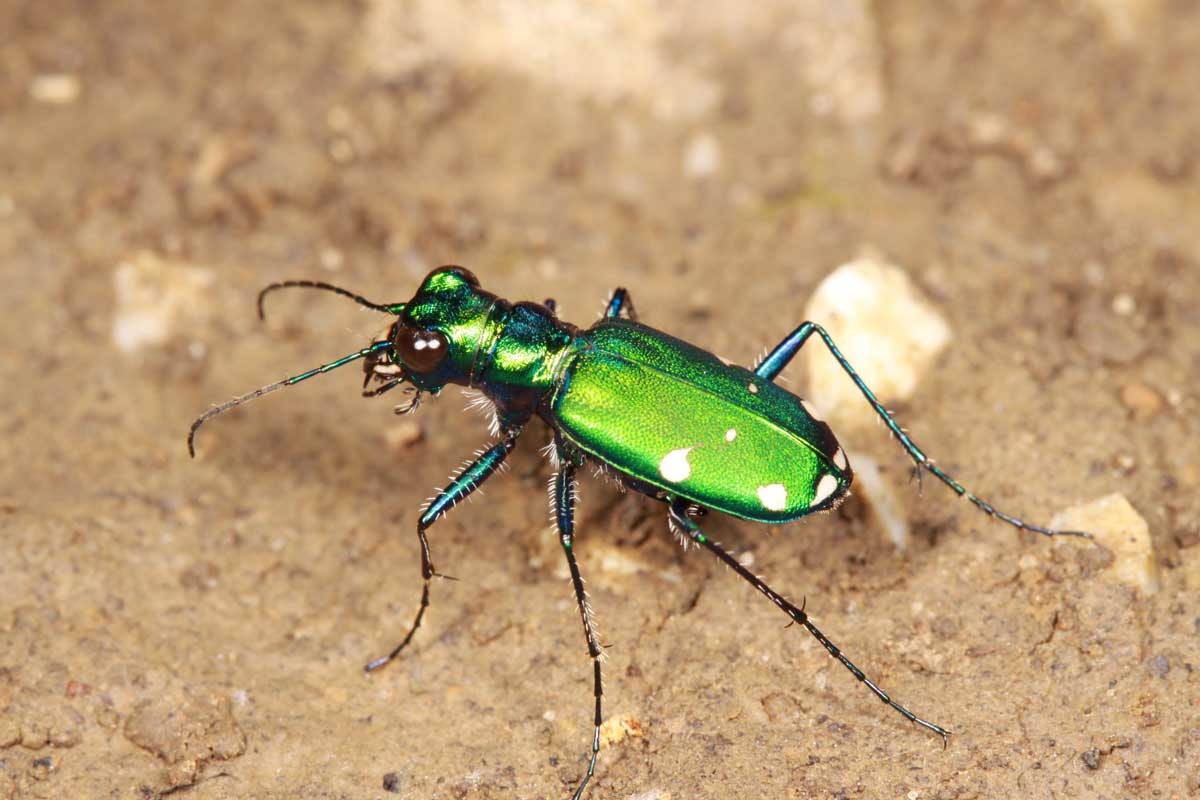
This post may seem like déjà vu to some of you, as it is my third featuring our common woodland tiger beetle species, Cicindela sexguttata (six-spotted tiger beetle). However, this post is as much a photography lesson as it is insect post, and when I say photography lesson I mean for myself – I’m not yet anywhere near the point where I feel qualified to dole out photography advice to others.

The last weekend of May, I returned to nearby Shaw Nature Reserve in hopes of photographing Cicindela unipunctata (one-spotted tiger beetle). This large, nearly flightless species has been recorded broadly across the eastern U.S. but is not encountered all that commonly. It is among the few species that seem to prefer more shaded woodland habitats (Pearson et al. 2006); however, its ecology is still not well understood. I had hoped to find it during my first outing with the new camera setup, but it was not to be and I had to settle for C. sexguttata as the first tiger beetle subject for my camera’s maiden voyage.   On this return visit, I arrived at the preserve shortly before noon and proceeded to walk back and forth along the trails where my colleague, Chris Brown, had noted healthy populations last year and one individual just three weeks ago.  For four hours, I gazed intently at the path in front of me in hopes of seeing the beetle – usually blending well with the ground because of its dull brown upper surface and noticed only because of its clumsy manner of running when disturbed.  All to no avail.  Of course, our old friend C. sexguttata was still present in good numbers, and since I wasn’t completely happy with the results of my first photo shoot of this species with the new camera I decided to try it again.

My main criticism of the initial photographs of this species was the harshness of the lighting.  I suspected that diffusers of some type would give a better result, so for this outing I covered the flash heads with small plastic diffuser caps that I had purchased with the flash unit.  The following series of photographs compare the results with and without the diffuser caps.  The photos have been left unenhanced but are reduced from their original size to 1200×800 pixels.  All of the photographs were taken using a Canon EF 100mm macro lens on a Canon EOS 50D, ISO 100, exposure 1/250 sec, and MT-24EX twin flash unit.  Click on the photos to see the enlarged version after reading the discussion of each.

Flash 1/4 power without diffuser caps, f/20

Flash 1/4 power without diffuser caps, f/20

This first photo is from the first session, during which I ran the flash unit at 1/4 power without diffuser caps.  The conditions were rather bright, and it required a relatively high f-stop (f/20) to get the exposure right.  This resulted in very good depth of field, but as you can see the lighting is rather harsh with bright highlights due to the brilliant, metallic coloration of the beetle.

1/8 power flash w/ diffuser caps

Flash 1/8 power flash with diffuser caps, f/10

In this photograph, I reduced the flash power to 1/8 and used the diffuser caps.  This softened the light considerably and removed much of the harsh highlighting.  However, I had to open up the aperature to f/10 in order to get good exposure, and as a result the depth of field really suffered.  Apparently the diffuser caps also reduce the amount of light from the flash, which combined with reducing the power to 1/8 substantially lowered the light levels.

Flash 1/4 power, w/ diffuser caps, f/13

Flash 1/4 power with diffuser caps, f/13

I then increased the flash back up to 1/4 power but kept the diffuser caps in place.  This allowed me to increase the f-stop to f/13, which resulted in much better depth of field.  Since this photograph was taken in fairly bright conditions, this suggests that I might want to go up to 1/2 power flash in lower light situations if I want to maintain a higher f-stop.  I am very happy with this photograph – the lighting is even with no harshness, and virtually the entire beetle from foreground to background is in focus.  A little post-processing might still be helpful for reducing the shadows a bit, but otherwise I think this is a pretty good standard to shoot for with my future tiger beetle photographs.

Photo details: Canon EF 100mm macro lens on a Canon EOS 50D, ISO 100, 1/250 sec, f/13, MT-24EX flash 1/8 power with diffuser caps

Cicindela unipunctata - flash 1/8 power with diffuser caps, f/13

As the saying goes, patience rewards those who wait, and a short time before I needed to leave, I finally saw the first C. unipunctata.  I was lucky enough to see it on the path without first disturbing it and was able to slowly crouch down into position and roll off a series of photos from this angle.  The photo I share here seemed to be the best of the series, but as I tried to shift to get a different view the little bugger began to bolt.  I blocked his escape with my hands until he seemed to settle down and then looked for him in the viewfinder, but I couldn’t find him – he had bolted as soon as I took my eye off of him, never to be seen again.  It amazes me how a relatively large beetle such as this – flightless even – can disappear completely amongst the vegetation.  Nevertheless, I accomplished my goal of getting at least one good photograph of this species, and you can be sure that I’ll be back to try for more.

I know there are several quite capable insect macrophotographers out there that occasionally read this blog – I encourage any comments or feedback that you might have on the techniques I have discussed here.

Copyright © Ted C. MacRae 2009

REFERENCE:

Pearson, D. L., C. B. Knisley and C. J. Kazilek. 2006. A Field Guide to the Tiger Beetles of the United States and Canada. Oxford University Press, New York, 227 pp.

Add to FacebookAdd to NewsvineAdd to DiggAdd to Del.icio.usAdd to StumbleuponAdd to RedditAdd to BlinklistAdd to Ma.gnoliaAdd to TechnoratiAdd to Furl

Brachys on oak

Although the beetles I photographed for my springtime Acmaeodera post are among the smaller buprestids occurring in Missouri, they are by no means the smallest. That honor belongs to the curious little genus Mastogenius, measuring only around 2 mm in length and, thus, looking for all intents and purposes like little black dots.  Slightly larger, but still smaller than our smallest Acmaeodera, are members of the tribe Trachyini.  Adults in this group exhibit a highly derived morphology compared to other groups of jewel beetles – flat, compact, and wedge-shaped rather than the elongate, cylindrical form more commonly associated with the family.  This seems in part due to their unique larval habits – mining within the leaves of their host plants rather than boring through the wood.  Three genera in this tribe occur in the U.S.¹, all of which are found in Missouri.  These include: 1) Taphrocerus, which mine the leaves of sedges (family Cyperaceae); 2) Pachyschelus, which mine the leaves of herbaceous plants in several families – primarily Fabaceae; and 3) Brachys, which mine the leaves of hardwoods, chiefly oaks (Quercus).  It was two species in this latter genus (out of three that occur in Missouri) that I encountered a couple weekends ago at Reifsnider State Forest in Warren County (noted for its high quality example of a mature white oak forest).

¹ A species in the Old World genus Trachys was introduced to North America from Europe and is established in New Jersey.

Brachys_ovatus_IMG_0193_enh2

Photo details: Canon MP-E 65mm 1-5X macro lens on a Canon EOS 50D, ISO 100, 1/200 sec, f/10, MT-24EX flash 1/8 power through diffuser caps

Brachys ovatus is the largest of the three species, usually measuring a little more than 5 mm in length. In addition to size, it can also be distinguished from Missouri’s two other species of Brachys by the dense row of long hairs occurring along the apex of the last abdominal sternum. For those of you who prefer not to have to look at the underside of its butt, the white-margined band of bronze pubescence before the apex of the elytra and longitudinal rows of bronze setae in the basal half of the elytra are usually sufficient for distinguishing this species.  Brachys ovatus is a common associate of oaks throughout Missouri during spring – I have collected it on ten of Missouri’s 21 oak species, including both ‘white oaks’ and ‘red oaks’. Despite its common occurrence on oak and the frequent reference to it in the literature as a leaf-miner of oaks, few reliable rearing records exist to document the range of hosts it actually utilizes.  There are older reports of this species mining the leaves of other hardwoods such as beech (Fagus), elm (Ulmus), hickory (Carya), and hornbeam (Carpinus); however, the veracity of these reports is questionable, and they may refer only to incidental adult associations.

Brachys_aerosus_IMG_0165_enh2

Photo details: Canon EF 100mm f/2.4 Macro Lens with Kenco extensions on a Canon EOS 50D, ISO 100, 1/200 sec, f/11, MT-24EX flash 1/8 power through diffuser caps

Brachys aerosus is another commonly encountered species.  This is a highly variable and hard-to-define species, but in general it can be recognized by the basal region of the elytra largely lacking pubesence and with a purple, blue, or green luster, and by the predominantly gold to bronze pubescence covering the apical area of the elytra.  Adult length is generally from 3 to 5 mm – somewhat smaller than B. ovatus, and differing also in that it is commonly associated with a variety of hardwoods besides oak.  In Missouri, I have primarily collected it on oaks and elms.  Literature reports – mostly old and unreliable – record as larval hosts many other hardwood genera such as chesnut (Castanea), beech, hazel (Corylus), hickory, hornbeam, linden (Tilia), poplar (Populus), and even such unlikely genera as huckleberry (Vaccinium) and grape (Vitis).  Because of its variability and the broad diversity of hosts with which it has been associated, this species is suspected of acutally being a species complex.  The late George Vogt spent many years making careful observations with reared material in an effort to determine species boundaries and their host associations. Unfortunately, Vogt passed away before publishing his observations, and his eccentric record keeping with cryptic notes (Anderson et al. 1991) makes it unlikely that they ever will be published. It will take some enthusiastic sole to repeat his work and publish it before we can ever know the true identity of the species hiding under this name.

A third species in the genus, Brachys aeruginosus, is smaller than either of the two above species – generally measuring only 3 to 4 mm in length.  This rather uncommonly encountered species is most similar to B. aerosus in appearance but can be distinguished, in addition to its generally smaller size, by the predominantly light gold to silver setae that cover the apical area of the elytra.  As with the two above species, it is most often associated with oaks but is occasionally collected on other hardwoods as well.  Whether it utilizes species beside oak for larval development is unknown.  I hope to find and photograph this species in the near future.

REFERENCE:

Anderson, D., C. L. Bellamy, H. A. Howden, and C. Quimby. 1991. George Britton Vogt (1920–1990). The Coleopterists Bulletin 45(1):93–95.

Copyright © Ted C. MacRae 2009

Add to FacebookAdd to NewsvineAdd to DiggAdd to Del.icio.usAdd to StumbleuponAdd to RedditAdd to BlinklistAdd to Ma.gnoliaAdd to TechnoratiAdd to Furl


On the road again!


IMG_3397_0006_006_enh

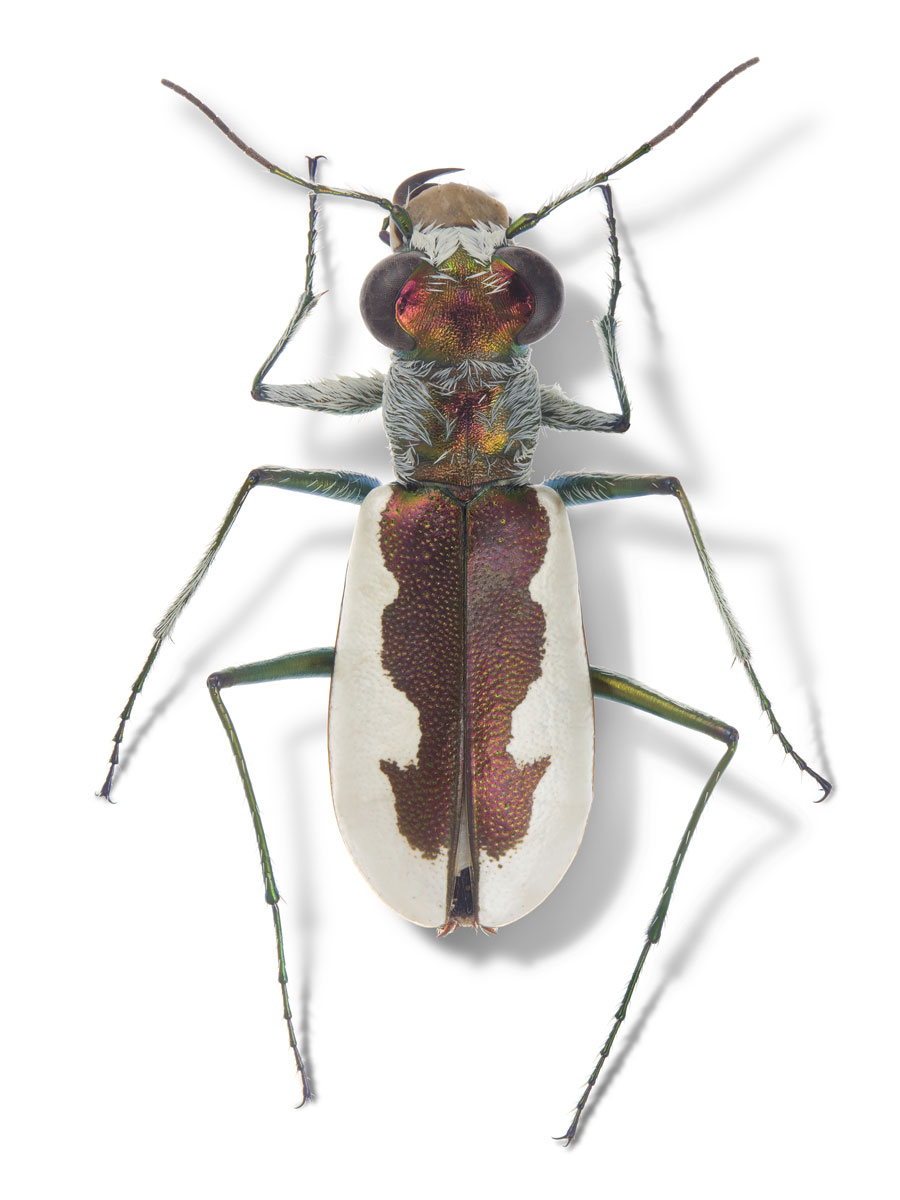
By the time you read this, I’ll be on the road again for yet another extended bug collecting trip.  I don’t think I am ever happier than when I am on one of these trips – whether it be a once-in-a-lifetime visit to Africa or a one-week jaunt to the nearby plains.  With so many places to see – each with their own unique story – I don’t understand how anyone ever ends up getting bored.  The main destination for this trip is the Nature Conservancy’s recently established Four Canyon Preserve in northwestern Oklahoma.  This nearly 4,000-acre preserve contains a stunning assemblage of rugged, mixedgrass prairie ridges dissected by deep, chinquapin oak-lined canyons that drain into the Canadian River in southern Ellis County.  Although past grazing and fire suppression have reduced shrub cover, lowered vegetation complexity and promoted expansion of eastern redcedar (Juniperus virginiana) throughout the area, the preserve nevertheless supports a number of species of conservation concern such as Cassin’s sparrow, Swainson’s hawk, least tern, and Arkansas River shiner.

IMG_3285_0024_024_enh

As is typical with many protected areas, studies of the biotic diversity of this preserve have dealt primarily with its flora (Hoagland and Buthod 2007) and avifauna (Patten et al. 2006). Arthropods and other microfauna, on the other hand, remain essentially unknown.  I’ll be joining a group of entomologists – primarily hymenopterists – who began conducting surveys of the preserve’s insect fauna last fall.  While my colleagues gaze at the hyperdiversity of asteraceous flowers looking for things with stings, I’ll be staring at the red Permian sandstone and shale exposures – watching for any darting movement between clumps of grama and little bluestem that might indicate the presence of the enigmatic Cicindela celeripes (swift tiger beetle).  I’ve written previously about the occurrence of this rare, flightless tiger beetle in the Loess Hills of Iowa and our ongoing search for this species in northwestern Missouri in my post The Hunt for Cicindela celeripes.  Although this beetle has not yet been recorded at the preserve, it was seen very recently in nearby Alabaster Caverns – some 60 miles to the north, and a historical record is known from just south of the preserve.  My optimism is bolstered by the fact that the Alabaster Caverns individual was observed in late May – much earlier than the typical late June and early July records for this species further north in its stronghold in the Flint Hills of Kansas.  Of course, I will be looking for other things as well – other species of tiger beetles are likely to occur on the reddish loamy upland soils and quaternary alluvial deposits along the Canadian River, and any number of woodboring beetle species are likely to be found on herbaceous flowers and dead branches of the 51 species of woody plants recorded in the preserve.

After getting our fill of Four Canyon Preserve, we’ll visit the world’s largest remaining tract of tallgrass prairie, Tallgrass Prairie Preserve in northeastern Oklahoma.  Encompassing nearly 40,000 acres, we can do nothing more than only scratch its surface.  However, the tallgrass prairie habitat should provide a nice contrast to the mixedgrass prairie of Four Canyon Preserve, and it will be interesting to compare and contrast these two distinctive plant communities and their associated insect faunas.  After a week on the road¹, I’ll return to St. Louis for a brief respite before beginning a hectic four-week survey in northwestern Missouri for – you guessed it – Cicindela celeripes!

¹ I’ll be without internet access, so please forgive my nonresponsiveness to comments. I do have a couple of posts scheduled to appear during my absence.

My thanks to Mike Arduser, an expert hymenopterist and also a good friend, for bringing Four Canyon Preserve to my attention.  His spectacular photographs that I share here were all I needed to convince me to join him on his return trip this season.

REFERENCES:

Hoagland, B. W., and A. K. Buthod.  2007.  Vascular flora of the Four Canyons Preserve, Ellis County, Oklahoma.  Journal of the Botanical Research Institute of Texas 1(1):655–664.

Patten, M. A., D. L. Reinking, and D. H. Wolfe.  2006.  Avifauna of the Four Canyon Preserve, Ellis County, Oklahoma.  Publications of the Oklahoma Biological Survey (2nd Series) 7:11-20.

Copyright © Ted C. MacRae 2009

Add to FacebookAdd to NewsvineAdd to DiggAdd to Del.icio.usAdd to StumbleuponAdd to RedditAdd to BlinklistAdd to Ma.gnoliaAdd to TechnoratiAdd to Furl