Bon appétit!

I collected this larva in northwest Nebraska during last year’s Fall Tiger Beetle Trip.  I collected an adult Cicindela lengi (blowout tiger beetle) at the spot – a species that greatly resembles but is much less common than the ubiquitous C. formosa (big sand tiger beetle – see my post Cicindela lengi vs. Cicindela formosa for a comparison of the two species).  Before finally finding that adult, however, I had fished out several larvae from the site in the hopes that they represented that uncommon species (see how I did this in my post Goin’ fishin’).  After collecting the larvae and placing them in a small terrarium with native sandy soil, they burrowed in but then closed up shop – I wasn’t sure whether they had survived or not.  In early December I put the terrarium in a 10°C incubator for the winter and brought it back out earlier this month.  Yesterday, happily, this larva and one other opened up their burrows again, so with any luck I’ll feed them well and they’ll complete their development.  While I do hope they represent C. lengi, other possibilities include C. scutellaris (festive tiger beetle), which would not be exciting, and C. nebraskana (prairie long-lipped tiger beetle), which would be VERY exciting.  One species I do not have to worry about it being is C. formosa, as the larvae of that species make very unique excavations in the sand with the burrow opening directed towards the excavation (I don’t believe I’ve posted photos of that here, yet – I’ll have to do so soon).

In the meantime, here is a closeup of the larva in the video prior to feeding. Those of you who have ever reared or photographed tiger beetle larvae will know just how easily “spooked” these larvae can be – any sudden movement will cause the larva to “drop” into its burrow and sit there for awhile. As a result, it was a real challenge to go through the whole process of taking first the photos and then the video while feeding it without causing it to drop.

cicindela_sp_larva_p1020936

Coming soon – lunchtime for adults!

Copyright © Ted C. MacRae 2009

Add to FacebookAdd to NewsvineAdd to DiggAdd to Del.icio.usAdd to StumbleuponAdd to RedditAdd to BlinklistAdd to Ma.gnoliaAdd to TechnoratiAdd to Furl

A journey through time

hole_in_the_mountain

East Humbolt Range, northeastern Nevada

During the past two days, my family and I made the long drive from St. Louis, Missouri to Lake Tahoe, California to enjoy a week of skiing (both alpine and cross-country), snow-shoeing, hiking (at lower elevations), and decompression.  At 1,990 miles, it’s not a drive for the pampered or easily bored (and for those with children, thank goodness for in-car DVD players). Yet, for those willing to explore the little seen wonders of a landscape that most people see only from 30,000 feet, driving cross-country can be a richly rewarding experience.  I have traveled through many parts of the U.S., but this was my first time experiencing the “northern route” between Missouri and California along I-80.  Along the way, I saw:

  • Massive flocks of snow geese roosting in wetlands along the Platte River Valley, rising up at morning’s light in swirling clouds and stringing across the sky in vast, intersecting “V”s as they begin another day on their journey northward.
  • Sandhill cranes in the Nebraska Sand Hills, dropping down from the sky like miniature parachutes as they congregated in fallow corn fields to feed amongst the stubble.
  • The vast, high, arid, lonely expanses of the Wyoming Basin, transitioning from mixed-grass prairie in the east to sagebrush steppe in the west.
  • The stunningly spectacular descent down the western escarpment of the Wasatch Range, where the eastern edge of the Great Basin laps against the western edge of the Rocky Mountains.  (Nightfall unfortunately deprived me of my chance to see the vast Great Salt Lake and the even more expansive stretches of its associated salt flats.)
  • The magnificent Great Basin landscape and its alternating basin and range theme – its broad basins of salt lakes, marshes and mud flats interrupted at regular intervals by craggy, north to south mountain ranges formed as a result of strike-slip faulting during the past 30-50 million years as the thin Basin crust continues to crack and stretch even thinner.
  • The dramatic eastern face of the Sierra Nevada Range, its snow-capped peaks rising massively as a single granite block at the western edge of the Great Basin, and the equally dramatic, tortuous climb up to Spooner Pass at 7,200′ elevation before the 1,000′ drop down into the majestic Lake Tahoe Basin.

Driving across such a vast expanse of North America, especially in the west with its endless vistas and majestic landscapes, invites contemplation about earth and time.  Starting out in the foothills of my beloved Ozark Highlands – born before life itself and weathered for a billion and a half years, driving through the upstart Rocky Mountains – mere babies at only 50-100 million years of age, and finally arriving at the truly young Lake Tahoe – whose mere few million years of age make it a mere infant in geological time, I realized that the vastness of these landscapes, and of the countless tectonic, erosional and sedimentary episodes that shaped them, is surpassed only by the vastness of the time it took to create them.  For those willing to make the investment, driving through these landscapes is more than a trip across the country – it is a journey through time.

Copyright © Ted C. MacRae 2009

Add to FacebookAdd to NewsvineAdd to DiggAdd to Del.icio.usAdd to StumbleuponAdd to RedditAdd to BlinklistAdd to Ma.gnoliaAdd to TechnoratiAdd to Furl

Cicindela lengi vs. Cicindela formosa

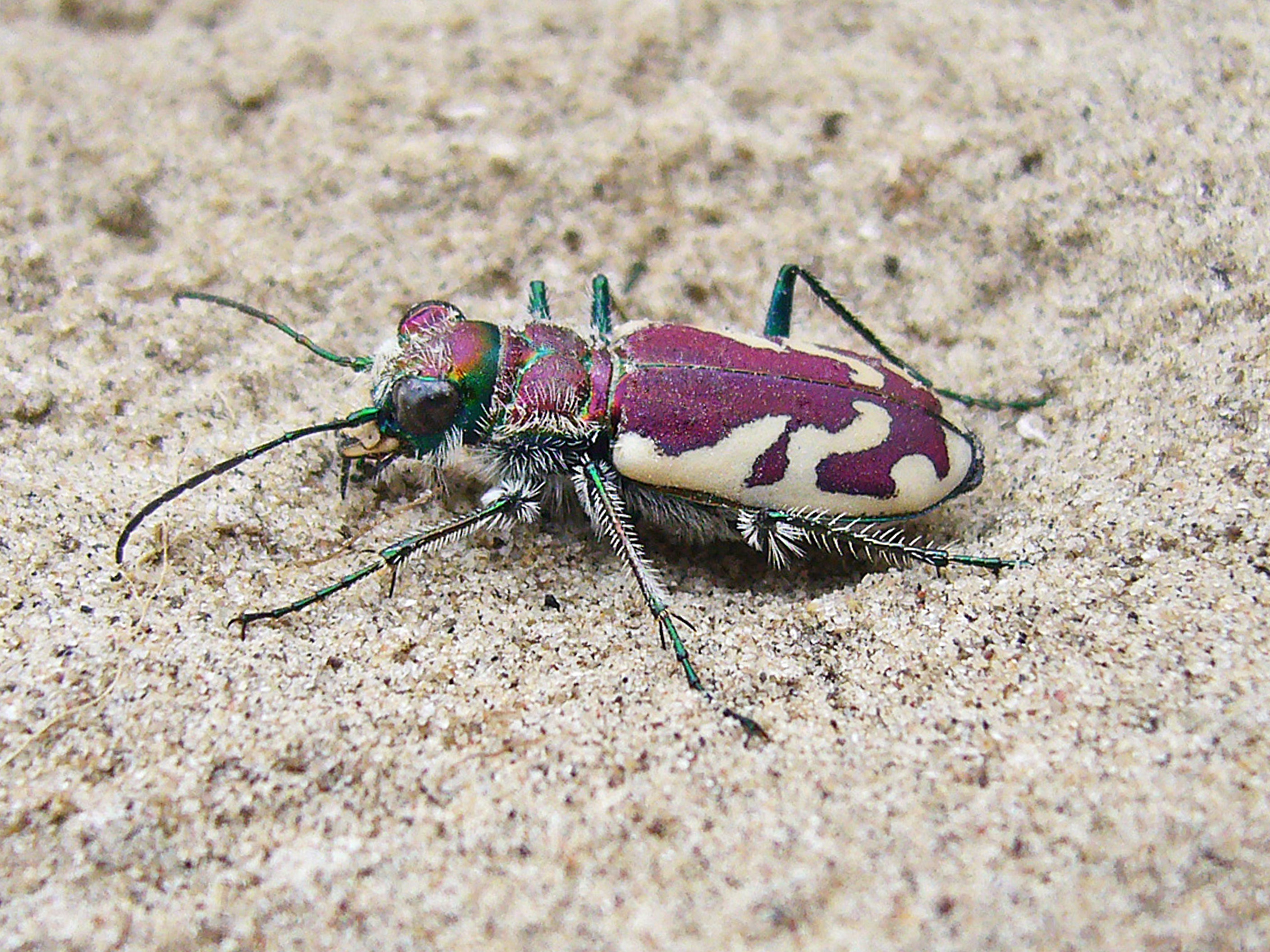
Back to beetle blogging – I hope everyone enjoyed their holiday break as much as I. One of the tiger beetles that I most hoped to see on my trip to Nebraska and South Dakota last September was Cicindela lengi (blowout tiger beetle). This is another one of the several tiger beetle species confined to dry sand habitats in the central/northern Great Plains (Pearson et al. 2006). Its common name would suggest it prefers sand blowouts, the most barren of dry sand habitats and where the co-occurring C. limbata (sandy tiger beetle) can be found. In reality, it also can be found in slightly more vegetated habitats such as dune margins, sand flats, and sandy roadsides along with the much more common C. formosa (big sand tiger beetle) and C. scutellaris (festive tiger beetle). It can also be found occasionally on sand bars along rivers, where the aptly-named C. lepida (ghost tiger beetle) is likely to occur, and in the northern part of its range it even inhabits boreal coniferous forest along sandy roadsides.

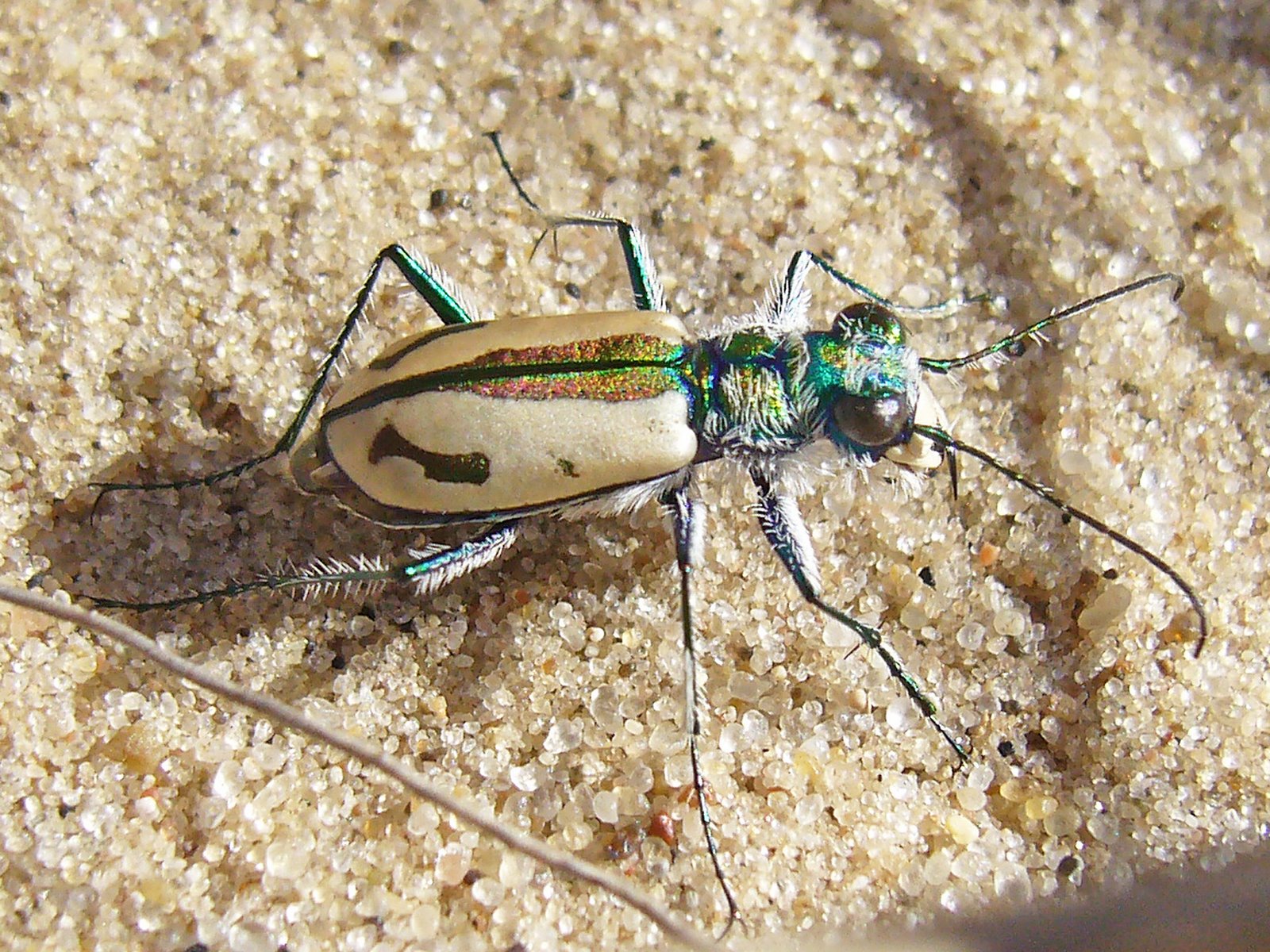
Cicindela lengi lengiDespite its relatively loose habitat requirements, C. lengi is not a common species. In Nebraska it may be locally abundant (Spomer et al. 2008), and while planning my trip I was fortunate to get a specific locality from Steve Spomer and Matt Brust for one of these localized populations in far northwestern Nebraska. [Happily, that locality was very close to the locality where I would be looking for another priority species for the trip, C. nebraskana (prairie long-lipped tiger beetle)]. The site – a sandy roadside embankment – was characterized by a very fine-grained sand, which Matt Brust tells me the species appears to favor over the coarser-grained sands more typical of the Sandhills to the east. Success did not come easily – when no adults were seen at the site after two consecutive days of searching, I hedged my bets and extracted larvae that I hoped would represent this species for an attempt at rearing them out to adulthood in the laboratory. Persistence paid off, however – a hunch told me to make one more visit to the site after a couple days in the Black Hills, with two adults (and another C. nebraskana!) being my reward.

The individual shown in the above photo was an unexpected surprise. It was captured a day later in the Sandhills proper at a locality where I expected to see not this species, but C. limbata (which I did succeed in finding at a nearby locality – see “Cicindela limbata – epilogue“). When I first saw this individual, I thought it was the ever present C. formosa (pictured below), which it greatly resembles and which, along with C. scutellaris, occurs commonly in suitable sand habitats throughout the Sandhills. Cicindela formosa formosaSomething about the way it flew gave me pause, however, and after capturing and looking closely at it in my hand I realized what it was. Cicindela lengi is distinguished from C. formosa morphologically by its slightly narrower form and longer, narrower labrum, but the quickest field identifier is the obliquely straight humeral marking (“C”-shaped in C. formosa). There are subtle behavioral differences also – both species are alert and quick to fly, but C. lengi lands quickly after a short flight, whereas C. formosa flies further and tends to land with a comical bounce and tumble or two across the sand. Cicindela lengi and C. formosa are not closely related despite their similar appearance – the former is assigned to subgenus Cicindela (Tribonia), while the latter is assigned to the nominate subgenus. The individual pictured above represents the nominate C. lengi lengi – populations north of Nebraska and Colorado exhibit a distinct coppery underside to the thorax and are assigned to subspecies C. lengi versuta, while populations in the southwestern part of its range show broadly coalesced elytral maculations and are assigned to subspecies C. lengi jordai.

REFERENCES:

Pearson, D. L., C. B. Knisley and C. J. Kazilek. 2006. A Field Guide to the Tiger Beetles of the United States and Canada. Oxford University Press, New York, 227 pp.

Spomer, S. M., M. L. Brust, D. C. Backlund and S. Weins. 2008. Tiger beetles of South Dakota & Nebraska. University of Nebraska-Lincoln Special Publication, 60 pp.

You messin’ with me?

Cicindela formosa formosa

This is another one of the tiger beetles I brought back alive from the Sandhills of western Nebraska since I was unable to get any good photographs of this species in the field.  If this photo looks familiar, you may recall this headshot of another individual, representing the eastern subspecies (Cicindela formosa generosa), that I took back in September in southeast Missouri.  Compare the two photos to see the distinctly reddish dorsal coloration of nominotypical C. formosa versus the darkened coloration of C. formosa generosa.  Nominotypical C. formosa also has a much more violaceous ventral coloration.

If this guy looks a little angry, it’s because he is! I had prodded and poked him for some time by the time this photo was taken, trying to coax/force him away from the edge of terrarium in which I had him confined.  Every time I thought I had him sitting still in a good position, he would run suddenly and make a beeline to the edge – a most unphotogenic place.  He even reached up a few times, seemingly out of shear frustration, and bit at my finger while I tried to push him back away from the terrarium wall (talk about biting the hand that feeds you!).  Finally I got him sitting still in the middle of the terrarium – his half-cocked mandibles suggesting exhaustion or rage, or maybe both.

Like the Cicindela limbata individual from the same locality that I brought back alive for photographs, this little beast lived for 10 weeks in his terrarium before, ahem… donating his body to science.   Also like C. limbata, he amusingly reached up and grabbed caterpillars directly from the forceps almost every time one was offered.  I think my colleagues in the lab enjoyed feeding time as much as the tiger beetle!

Cicindela limbata – epilogue

In my Lucky 13 post, I featured Cicindela limbata (sandy tiger beetle) from north of Grand Island, near the easternmost edge of the Nebraska Sandhills. This species is restricted to dry sand blow out and dune habitats away from water, thus its distribution in Nebraska largely coincides with that of the Sandhills themselves. Nebraska populations are assigned to the nominate subspecies, which is characterized by extensively developed white maculations on the elytra, Nebraska, Grant Co., nr. Hyannis, 3.4 mi S Hwy 2 on Hwy 61, 26.ix.2008, coll. T.C.MacRaewith the sutural area and small discal markings metallic green or blue. The whitish areas on the elytra and dense pilosity on the undersurface, along with their habit of digging into the sand during the midday hours, are obvious adaptations for reflecting heat and avoiding the high temperatures that occur in their white sand habitats. In the more eastern areas of the Sandhills, the green sutural areas of the elytra are suffused with a reddish cast (see this photo in Lucky 13), while in populations further to the west no such reddish suffusion is seen. The individual featured in these two photos was found in the western Sandhills (near Hyannis) and is one of the individuals that I dug from their midday burrows (see Sand Hills Success). Had I not been clued into this behavior when I visited this site, I would have left with only the single individual that was seen at the surface. That individual was captured immediately, and further searching for active adults to take photographs of were unsuccessful – until I started digging, that is. Unfortunately, adults that have just been caught or dug out of their burrows aren’t the most cooperative photography subjects, so one of them was kept alive and placed in a terrarium upon my return to St. Louis. (These photos were taken about a week after I returned, and the individual lived for another seven weeks on a diet of 3rd instar fall armyworm and black cutworm larvae. I eventually trained it to grab larvae directly from the forceps – very entertaining indeed! Also, while these photos from the terrarium confines are adequate for illustrating the species, I think they still lack that undefinable spark that is caputured in true field photographs with unmanipulated individuals – compare to this photo).

Cicindela limbata, with its five recognized subspecies1, has one of the more interesting distributions of North American species (see Pearson et al. 2006). In the main area of distribution, the southernmost populations, distributed through most of Nebraska and adjacent areas of Wyoming and South Dakota, are considered nominotypical. A distributional gap to the north separates these populations from Nebraska, Grant Co., nr. Hyannis, 3.4 mi S Hwy 2 on Hwy 61, 26.ix.2008, coll. T.C.MacRaesubspecies nympha, which occurs in sand habitats of northern Montana and North Dakota and further northward into the Canadian Prairie Provinces. Individuals from these populations exhibit even greater development of the white maculations but darker intervening areas. Another distributional gap separates nympha from subspecies hyperborea, which (as its name suggests) occurs even further north in open sand habitats in the pine and poplar forests of northern Alberta and Saskatchewan and adjacent areas of the Northwest Territories. Subspecies hyperborea is characterized by its greatly reduced white maculations (thus, exhibiting expanded dark areas) and overall smaller size, both of which may be regarded as heat conservation adaptations for the far boreal climate in which it lives.

1 Excluding the federally endangered Cicindela albissima (Coral Pink Sand Dunes tiger beetle), which was recently elevated to species status based on mitochondrial DNA evidence (Morgan et al. 2000).

The fragmented nature of the main limbata population in the upper Great Plains and into the boreal forests is, in itself, interesting enough. Even more interesting, however, are the existence of two small and highly disjunct populations far removed from the main limbata population. One of these is known from Labrador – almost 3,000 miles to the east! Originally referred to subspecies hyperborea, this population was theorized to possibly represent an accidental introduction since individuals appeared to be restricted to open sand habitats within 70 km of the Goose Bay airport (Larson 1986, Pearson et al. 2006). However, careful examination of individuals from this population revealed subspecific differences in maculation (intermediate between hyperborea and nominotypical limbata), lending support to the hypothesis that it is a naturally occurring population and resulting in its description as a distinct subspecies, labradorensis (Johnson 1990). Recent analysis of mitochondrial DNA sequences provided additional support for this subspecies as a distinct entity (Knisley et al. 2008), and newly published field observations by tiger beetle afficionados Dave Brzoska and John Stamatov (2008) conducted 19 years after the initial discovery of the population suggest it is well established in suitable habitats much more distant from Goose Bay than originally reported. This accumulation of evidence seems to increasingly support a historical isolation rather than accidental introduction hypothesis. The fifth and final subspecies is an even more recently discovered and equally disjunct population in the Nogahabara Dunes of northwestern Alaska (Pearson et al. 2006). Although individuals from this population resemble subspecies nympha, morphological and mitochondrial DNA sequence analyses support its status as a distinct subspecies, designated nogahabarensis (Knisley et al. 2008). Such an unusual and fragmented distribution for Cicindela limbata and its subspecies is likely the result of historical changes in climate that have caused expansions and contractions of open sand habitats due to fluctuations in available moisture. The current geographical subspecies may have originated at the end of the mid-Holocene hypsithermal (or Holocene Climatic Optimum) some 5,000 years ago, when previously expansive open sand habitats would have begun shrinking and fragmenting as a result of declining temperatures and increasing moisture regimes.

REFERENCES

Brzoska, D. W. and J. Stamatov. 2008. A trip to Goose Bay, Labrador, Canada. Cicindela 40(3):47-52.

Johnson, W. 1990. A new subspecies of Cicindela limbata Say from Labrador (Coleoptera: Cicindelidae). Le Naturaliste Canadien 116(4) [dated 1989]:261-266.

Larson, D. J. 1986. The tiger beetle, Cicindela limbata hyperborea LeConte, in Goose Bay, Labrador (Coleoptera: Cicindelidae). The Coleopterists Bulletin 40(3):249-250.

Knisley, C. B., M. R. Woodcock and A. Vogler. 2008. A new subspecies of Cicindela limbata (Coleoptera: Cicindelidae) from Alaska and further review of the maritima group by using mitochondrial DNA analysis. Annals of the Entomological Society of America 101(2):277-288.

Morgan, M., C. B. Knisley and A. Vogler. 2000. New taxonomic status of the endangered tiger beetle Cicindela limbata albissima (Coleoptera: Cicindelidae): evidence from mtDNA. Annals of the Entomological Society of America 93(5):1108-1115.

Pearson, D. L., C. B. Knisley and C. J. Kazilek. 2006. A Field Guide to the Tiger Beetles of the United States and Canada. Oxford University Press, New York, 227 pp.

Magnificently Monstrous Muscomorphs

I suppose tiger beetles have gotten more than their fair share of attention here lately, so for this post I thought I’d highlight insects of a completely different group – flies! Admittedly, as a coleopterist, I tend to view flies with much the same disdain as your average insect non-enthusiast – as pesky, pestiferous vermin worthy of little more attention than a decisive swat. I don’t begrudge them their amazing diversity – at ~100,000 described species worldwide, they are strong contenders with the Lepidoptera and Hymenoptera as the second largest order of insects (of course, you need all three of these orders combined to match the diversity of the Coleoptera). I am also prepared to accept that they may well represent, at least morphologically, the pinnacle of insect evolution (a position that a few hymenopterists I know might argue with) due to their amazing flight capabilities and the morphological adaptations they have developed for such. These include the development of aristate antennae for detecting wind speed, the conversion of the second pair of wings into stabilizing organs (halteres), and the ability to beat the remaining pair of wings at incomprehensible rates – up to 1,000 times per second in some very small midges (even more baffling when one considers that the wing “beat” is actually just a passive result of rhythmic distortions of the thoracic box). I even acknowledge that the vast majority of fly species are not even pests, living their lives innocuously as herbivores, scavenging organic matter that nothing else wants, and preying upon or parasitizing other insects, including important agricultural pests. Still, flies bug me – mosquitoes prevent me from sleeping under the stars without a tent, deer flies drone around my head incessantly while I’m trying to stalk an elusive tiger beetle, stable flies trick me into assuming they are just another house fly (until they bite me!), house flies (the real ones) rudely land on my sandwich with their filthy feet, and eye gnats insist on committing hary kary in my eyes as I walk the trails (I won’t mention their other common name, derived from their habit of clustering around exposed canid genitalia).

There is, however, one group of flies that possess “cool factor” rivaling that of even the most popular insect groups – robber flies and their kin. I’ve always picked them up as an aside, even sending them off for authoritative ID and constructing an inventory of the species in my collection. The brute of a fly pictured here is not a true robber fly, but in the related family Mydidae. Mydus clavatus can be recognized easily in the field by its large size and distinctive black coloration with red/orange on top of the 2nd abdominal segment. Presumably this is an example of Batesian mimicry modeled upon spider wasps (family Pompilidae) in the genus Anoplius. This mimicry allows them to fly rather boldly in the open and is so persuasive that it can not only fool the casual observer, but even the most knowledgable of entomologists might be loathe to handle it despite knowing better. Although common across the eastern U.S., aspects of its life history are poorly understood. Adults have been reported to be predators of other insects, but apparently there are some doubts about the veracity of such reports. Patrick Coin of BugGuide has observed adults (males?) taking nectar from flowers and has suggested that reports of predation by adults might have been an erroneous assumption due to their relation and resemblance to robber flies. Larvae are reported to be predaceous on woodboring beetle larvae, and I have reared adults of this species from a dead sycamore (Platanus occidentalis) stump in southern Missouri that was infested with mature larvae of the large buprestid species, Texania campestris. This habit is similar to robber flies of the genus Laphria, which mimic bumble bees and carpenter bees.

In Greek mythology, Promachos (Προμαχοε) was “the champion” or one “who leads in battle” – an appropriate generic name for the so-called “giant robber flies” of the genus Promachus. These large flies are dominant and fearless predators that will capture just about any flying insect – even adult dragonflies. There are three species of Promachus in the eastern U.S. that exhibit the yellow and black tiger striping of the abdomen seen in this individual, identified as a female Promachus hinei by Herschel Raney at BugGuide due to its reddish femora and occurrence in the central U.S. Promachus rufipes is similar but has black femora with distinctly orangish tibiae and is more common in the southeastern U.S., whereas P. vertebratus has more muted two-toned legs with smaller dark areas dorsally on the abdominal segments and is more common in the northern states. Additional species occur in the region but lack the tiger striping of the abdomen, and even more species occur in the western U.S. Members of this genus generally lay their eggs on the ground near grass roots, and the larvae burrow into soil after hatching and feed on soil insects, roots, and decaying matter before pupating within the soil in an unlined cell.

During my recent trip to Nebraska I encountered this related robber fly genus Proctacanthus, also determined by Herschel provisionally as P. milbertii. These large robber flies with a prominent beard are similar in habit to Promachus species, laying their eggs in crevices in soil and the larvae feeding on soil insects, roots, and decaying plant matter. Proctacanthus milbertii is a late season species that occurs across much of the U.S. and reportedly loves butterflies. However, Joern & Rudd (1982), in studying predation by this species in western Nebraska (where the individual pictured here was photographed) found that grasshoppers made up 94% of the prey captured by this species. Interestingly, nearly all of the remaining prey captures were other P. milbertii, which was carefully verified as such since mating postures can be easily mistaken for prey handling positions. Grasshopper prey species taken by this species were most strongly influenced by availability rather than size, suggesting that even the largest grasshopper species could be captured as easily as smaller species – a testament to the ferocity of this robber fly.

Another family of flies modestly related to robber flies and also ranking high in “cool factor” are the bee flies (family Bombyliidae). The scaly bee fly, Lepidophora lepidocera (ID confirmed by Joel Kits at BugGuide), is a particularly attractive member of the family. The distinctive, hunch-backed shape of this southern U.S. species is shared with the more northern L. lutea, from which it is distinguished by having pale scales only on the 5th abdominal segment and not on the 4th also. Most bee flies are presumbably mimics of – yes – bees; however, the species in this genus might actually be mimics of robber flies instead. Adults are most often seen taking nectar from flowers – this individual was taken on flowers of tall boneset (Eupatorium altissimum). Larvae are characterized by Sivinski et al. (1999) as kleptoparasites on the provisions of solitary wasps in the families Vespidae and Sphecidae – meaning that the larva does not parasitize wasp larvae directly, but instead usurpes the nest provisions on which the wasp larvae were supposed to feed. The little thieves!

Tigers in the Nebraska Badlands

In going back through the photos I accumulated during my recent “fall tiger beetle trip” and reading the periodic updates that I provided along the way, I fear that I gave unfairly short shrift to one of the most scenic areas that I visited. Part of this was due to my preoccupation with and excitement at having found Cicindela nebraskana (prairie longlipped tiger beetle), whose distribution just barely sneaks into the extreme northwestern corner of Nebraska. The beetle makes its home in the mixed-shortgrass prairies lying above the Pine Ridge, a north-facing escarpment where exposures of deep sandy clay sediments intercalated with volcanic ash have been carved into dramatic buttes, ridges and canyons. Cloaked in ponderosa pine (Pinus ponderosa), with riparian ribbons of green ash (Fraxinus pennsylvanica) and cottonwood (Populus deltoides) – during my visit showing the earliest hints of their vivid autumnal yellow dress, the Pine Ridge is not only one of Nebraska’s most dramatic landforms but also bears significant historical importance. It is here where the the final chapter of the Sioux and Cheyenne resistance to white settlement of the northern Plains took place, with the 1877 murder/assassination of Crazy Horse at nearby Fort Robinson, after he had surrendered to U.S. troops, all but sealing their fate.

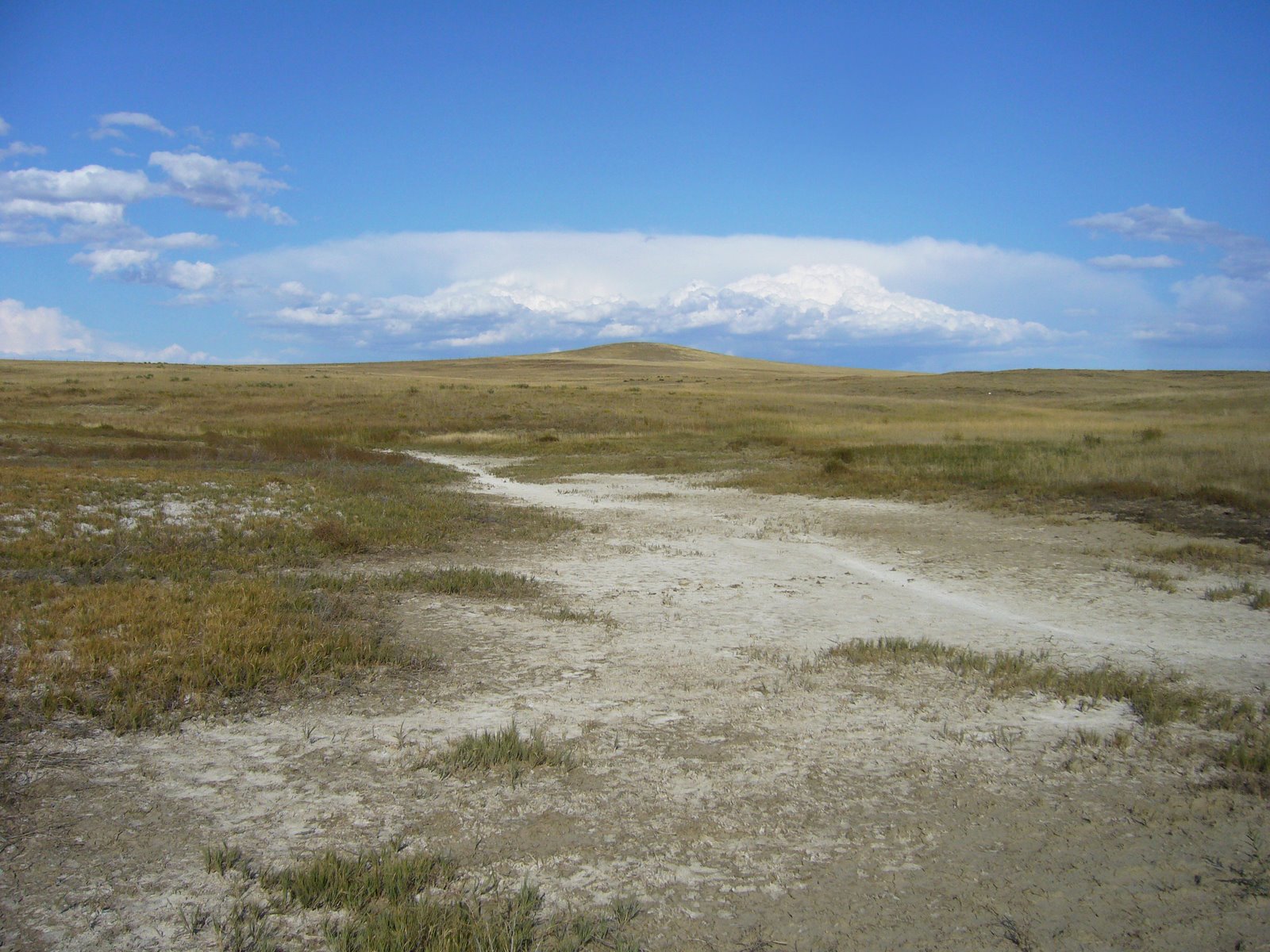
In dramatic contrast to the forested escarpment and gentle prairie that lies atop it, a stark, otherworldly landscape spreads out below the nearly 1,500-foot drop down the escarpment from the High Plains above. I refer, of course, to the Nebraska Badlands, a southern sliver of the same landscape whose heart – Badlands National Park – draws almost a million visitors a year. For the past several hundred thousand years, water and wind have carved the deep Oligocene sediments into an eerie maze of ravines, pinnacles, gullies, and sharp-crested hills. Desolate and arid, it would seem that nothing could live in this hot, naked landscape that early French-Canadian fur trappers called les mauvaises terres à traverser – “the bad lands to cross.” In fact, life abounds in the Badlands – pronghorns, deer, jackrabbits, and of course – tigers!

Our search for Cicindela nebraskana in the high prairie, though already successful, was brought most inconveniently to an end when a line of showers moved over us. It was probably a good thing, as we were forced to move on and give ourselves a chance to see different things. I could have easily ended up frittering away the remainder of the afternoon endlessly scanning the narrow cow paths that crisscrossed the prairie in hopes of finding “just one more” of the little beetles that just a few hours earlier had been only a hope. Matt asked me if I wanted to see C. lengi or C. fulgida first. I looked at the sky – cloudy over the prairie and sunny to the north over the Badlands – and voted for the latter. I had been marveling at the Pine Ridge on every approach during the day, and dropping down the face of the escarpment through Monroe Canyon provided yet another spectacular vantage. As soon as we arrived on the plain below, the road turned to gravel and the landscape morphed into a patchwork of sparse, dry grass amongst barren exposures of multicolored earth. I looked out at the barren exposures – seemingly ideal habitat for tiger beetles – and asked Matt what species were out there. He shook his head and said, “Nothing lives there.”

Our destination was a dry, alkaline creek several miles north in the Oglala National Grassland (administered, somewhat ironically, by the U.S. Forest Service). Matt had seen Cicindela fulgida (crimson saltflat tiger beetle) darting over the salt-encrusted ground amongst bunches of saltgrass on a previous visit, and after some back and forth searching we finally located what we hoped was the correct spot. Only small strips of alkaline soil were seen at first, but as we moved further away from the road the alkaline patches became much more expansive. Although dry, the habitat looked perfect for C. fulgida, and it didn’t take long for Matt to flush one from the bunches of saltgrass. Unfortunately, that would be the last individual we would see for the day. Another hour of searching yielded no more, and eventually the showers that chased us from the mixed-shortgrass prairie above would put an end to our fulgida-search, also. I would have to be content with having had seen one as I admired the fantastical displays of rainbows and virga brought over us by the unsettled skies.

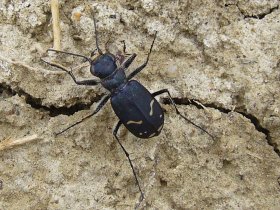
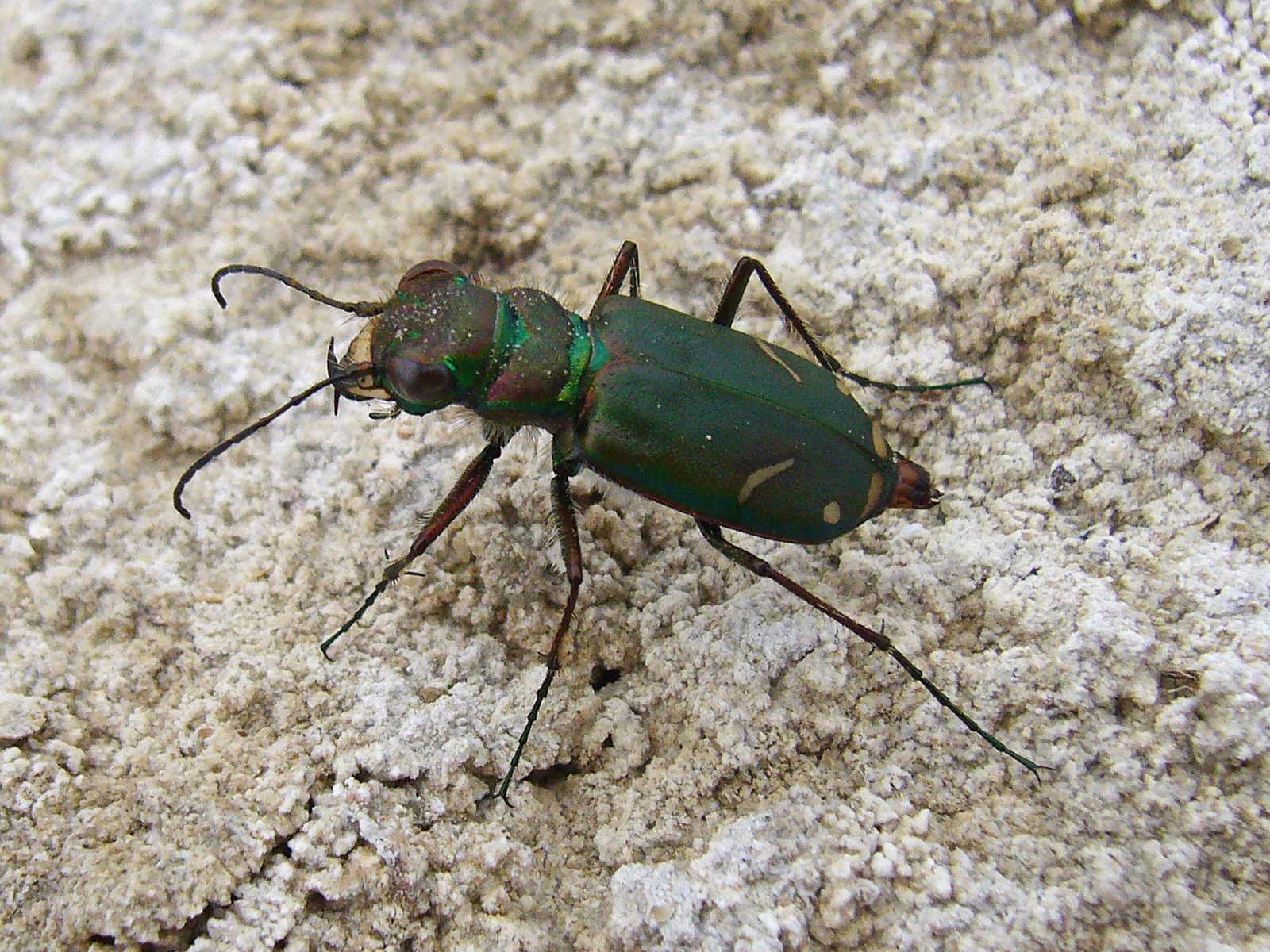
Cicindela fulgida was not, however, the only tiger beetle species we found living in this harsh environment. Cicindela purpurea (cow path tiger beetle) is not nearly so choosy as its common name implies, occurring in virtually any open, clay habitat without regard to its alkalinity. Western Nebraska populations are assignable to subspecies audubonii, which occurs broadly across all but the most southerly Great Plains and Rocky Mountains, although I am loathe to accept the validity of this subspecies due to the existence of a broad zone of intergradation in the eastern half of the prairie states with eastern nominotypical populations. Regardless of its taxonomy, C. purpurea is quite abundant in western Nebraska and appears in two distinct color forms – green and black, the latter of which I was quite excited to see. It took quite some effort to finally obtain the acceptable photos that I show here – especially with the black individuals since they were not so commonly encountered. It was hard to get close, and when I managed to get close they would more often than not run just as I was about to snap the shutter. As evidence of the frustration I experienced trying to get a photo of the black form, I include here an example of an early attempt that, for some reason, I spared from a quick punch of the ‘Delete’ key (click on it to experience the full extent of my frustration). I also lucked into spotting this female that had captured a blister beetle (family Meloidae), apparently unphased by the toxic cantharidins (and active ingredient in ‘Spanish fly’) present in the hemolymph of its prey. Lucky is the fellow who encounters this female once she finishes her meal!

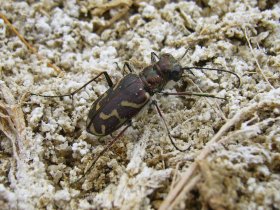
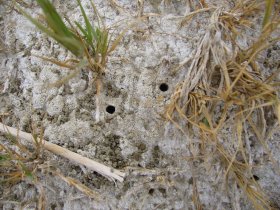
Almost as abundant as C. purpurea was C. tranquebarica (oblique lined tiger beetle). This is another species that is not too fastidious about its habitat – sand, clay, alkaline or not, as long as there is some amount of water nearby this species will be satisfied. Like C. purpurea (and many species of tiger beetles, in fact), western populations in the Great Plains and Rocky Mountains are considered subspecifically distinct from eastern populations, but with that annoyingly broad intergrade zone running down through the eastern half of the prairie states. In the case of this species, western populations are called subspecies kirbyi, differing in a most insignificant manner by their widened elytral maculations. I’ll let the reader infer how I feel about the validity of such subspecific distinction. Larval burrows of this species are often found in very high densities, and considering its abundance at this site I suspect these might be the larval burrows of that species. I spent quite a bit of time trying to fish out larvae from these burrows but ended up with only one. There are, however, other species of tiger beetles that live in these alkaline habitats, including the highly desirable Cicindela terricola (variable tiger beetle) which just sneaks into western Nebraska, so I’m not making a call on its identity yet. It’s now enjoying its new burrow in a container of alkaline soil sitting on my lab bench, and just yesterday it ate a nice, fat fall armyworm larva for lunch.
Megacyllene comanchei revisited

On my recent trip, I reported finding the rarely collected Megacyllene comanchei at several localities in northwestern Nebraska and southwestern South Dakota. These are significant findings, since they not only represent new records for both states, but also an impressive 700-mile northern extension to the known range of the species (on top of a previously reported northern range extension from Texas into Kansas). The intriguing part of the situation is that these new records fall within the southern portion of the known distribution of M. angulifera, its closest relative, which has been recorded from several northern Great Plains states and provinces (although it has not yet been recorded specifically from Nebraska).

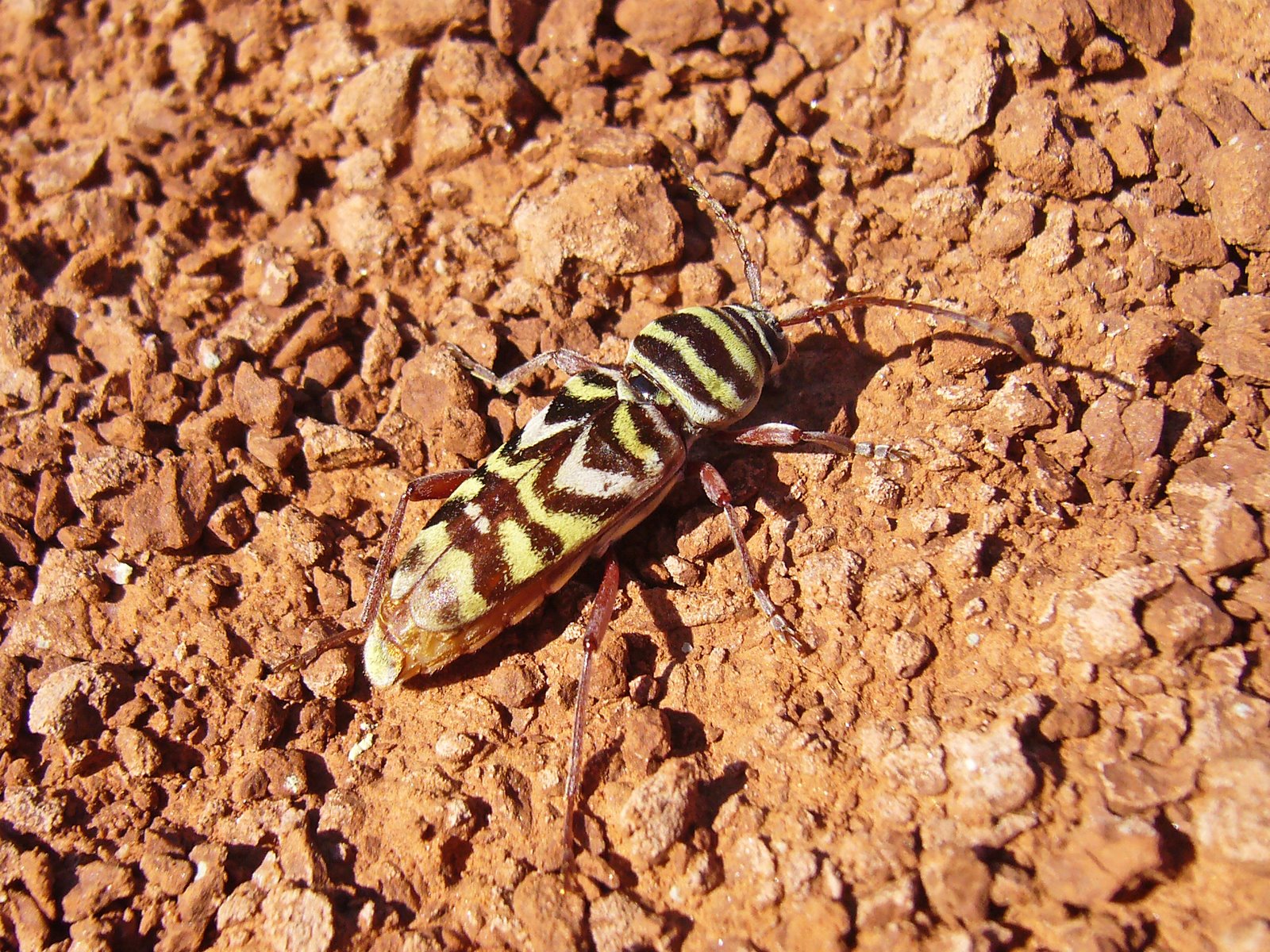
Upon reading about these findings, a friend and fellow student of Cerambycidae has expressed doubts to me about the distinctiveness of M. comanchei versus M. angulifera, regarding the slight color differences upon which it was based as insufficiently distinctive. In its original description (Rice & Morris, 1992, J. Kans. Entomol. Soc. 65:200-202), M. comanchei was distinguished from M. angulifera by a specific combination of characters, i.e., the premedian and sutural segment of the postmedian elytral bands are white, while the remaining pubescent bands are yellow. They also noted the subapical and apical bands often coalesce along the elytral suture and lateral margins. I do not have material of M. angulifera for direct comparison, but my specimens (two of which are pictured in this post) seem distinct enough from this specimen of M. angulifera pictured on Larry Bezark’s impressive website, A Photographic Catalogue of the CERAMBYCIDAE of the New World. In contrast, the pattern of coloration seen in this photo of the holotype of M. comanchei (also from that fine site) seems to agree well with my material.

Whether these color differences are significant remains to be seen. Neither species has been commonly collected, therefore large series of material have not been available for good comparative studies. However, there do seem to be significant differences in reported host plants and adult biology. Adults of M. angulifera are usually found in the fall on flowers of Solidago (goldenrod), and it was recently discovered that the larvae utilize root crowns of Dalea candida (family Fabaceae) for development (Blodgett et al. 2005). All but one of the remaining Nearctic species of Megacyllene for whom larval hosts are known also utilize fabaceous plants. These include M. robiniae and M. snowi (Robinia), M. decora (Amorpha), and M. antennata (Prosopis). A notable exception is M. caryae, which breeds in a variety of deciduous plant genera but most often Carya and is also unique in that adults occur during early spring instead of fall. Megacyllene comanchei, on the other hand, was discovered by examining the dead root crowns of Heterotheca sp. (family Asteraceae), with a few crawling on the ground in areas where such plants were growing. This is not proof that it serves as a larval host, but the repeated association of adults at the base of dead stems of this plant is highly suggestive. Additionally, no adults were encountered on goldenrod or other flowers, as is common among other members of this genus. The apparent utilization of a non-fabaceous larval host and behavioral difference exhibited by the adults seem to support its status as separate species. Again, the specimens that I collected agree not only morphologically with M. comanchei, but also behaviorally in that all of them (six specimens at three localities) were found crawling on the ground in shortgrass prairie rather than on flowers. I did note Heterotheca growing at one of the locations but did not find adults on the crowns of the few plants I inspected. I do not recall seeing any Dalea, but I wasn’t looking specifically for that plant either. Nor did I not see any goldenrod, which I would have certainly noticed had it been present.

So, for now, I’m inclined to continue calling these M. comanchei, and I’m also inclined to consider it distinct from M. angulifera. I do agree, however, that a critical examination of the distinctiveness of these two species might be warranted, and it may be worthwhile to pull together as much of the existing material of these two species as possible. I am interested in hearing other opinions about this situation.