Overlooked, needle-tailed, thick-headed fly

Photo details: Canon 100mm macro lens on Canon EOS 50D, ISO 100, 1/250 sec, f/16, MT-24EX flash 1/4 power w/ diffuser caps.

Photo details: Canon 100mm macro lens on Canon EOS 50D, ISO 100, 1/250 sec, f/16, MT-24EX flash 1/4 power w/ diffuser caps.

While photographing the rare Typocerus deceptus on flowers of wild hydrangea (Hydrangea arborescens) at Trail of Tears State Park in southeast Missouri last June, I encountered this strange fly also visiting the hydrangea blossoms.  At first I thought it was some weird type of syrphid fly, but it turns out to be a member of an even more unusual group of flies in the appropriately-named genus Stylogaster¹.  Although classified in the family Conopidae (thick-headed flies), members of this genus are placed in their own subfamily (Stylogastrinae) due to their unusual morphology and biology (obligate parasites of crickets, cockroaches and calyptrate flies).  Ninty-two described species are currently placed in the genus, only two of which occur in North America (the remainder are found chiefly in the Neotropics and in sub-Saharan Africa and southeast Asia).  This individual appears to be a female S. neglecta because of its short 2nd antennomere (antennal segment) and highly elongate 3rd antennomere (in S. biannulata, the 2nd antennomere is almost as long as the 3rd). Thus, the “overlooked, needle-tailed, thick-headed fly” – and who said common names are easier?

¹ Derived from the Latin stilus (needle) and the Greek γαστηρ (belly, stomach), a reference to the highly elongated female abdomen, or “tail.”

Morphologically, stylogastrines are distinguished from other conopids by their eggs, which feature a rigid barbed tip.  This, along with some behavioral observations, seems to imply a shooting oviposition technique; however, morphological evidence suggests that the eggs are forcibly jabbed into their hosts (Kotrba 1997).  The larvae hatch and develop inside their host as internal parasites, but other than the egg very little is known about the life histories of species in this genus (Couri and Pont 2006).  Adults are further distinguished by their long proboscis, which exceeds the length of the body when fully extended and is used to access nectar within a variety of flowers.  Adult females aggressively intercept hosts in-flight for oviposition, and speculation has been made that they are obligate associates of army ants (New World subfamily Ecitoninae and Old World subfamily Dorylinae), relying upon the ants’ raiding columns to flush out their prey.  However, since the genus also occurs in Madagascar and parts of Africa where army ants are completely absent, it is clear that at least some species of Stylogaster have no obligatory association with these ants (Stuckenberg 1963, Couri and Pont 2006).

REFERENCES:

Couri, M. S. and A. C. Pont. 2006. Eggs of Stylogaster Macquart (Diptera: Conopidae) on Madagascan Muscids (Diptera: Muscidae). Proceedings of the California Academy of Science 57(16):473-478.

Kotrba, M. 1997. Shoot or stab? Morphological evidence on the unresolved oviposition techique in Stylogaster Macquart (Diptera: Conopidae), including discussion of behavioral observations. Proceedings of the Entomological Society of Washington 99:613-621.

Stuckenberg, B. R.  1963.  A study on the biology of the genus Stylogaster, with the description of a new species from Madagascar.  Revue de Zoologie et Botaniques Africaines 68:251-275.

Copyright © Ted C. MacRae 2009

Add to FacebookAdd to NewsvineAdd to DiggAdd to Del.icio.usAdd to StumbleuponAdd to RedditAdd to BlinklistAdd to TwitterAdd to TechnoratiAdd to Furl

Revisiting the Swift Tiger Beetle – Part 1

Photo details: Canon 100mm macro lens with 68mm extension on a Canon EOS 50D, ISO 100, 1/250 sec, f/13, MT-24EX flash 1/4 power through diffuser caps

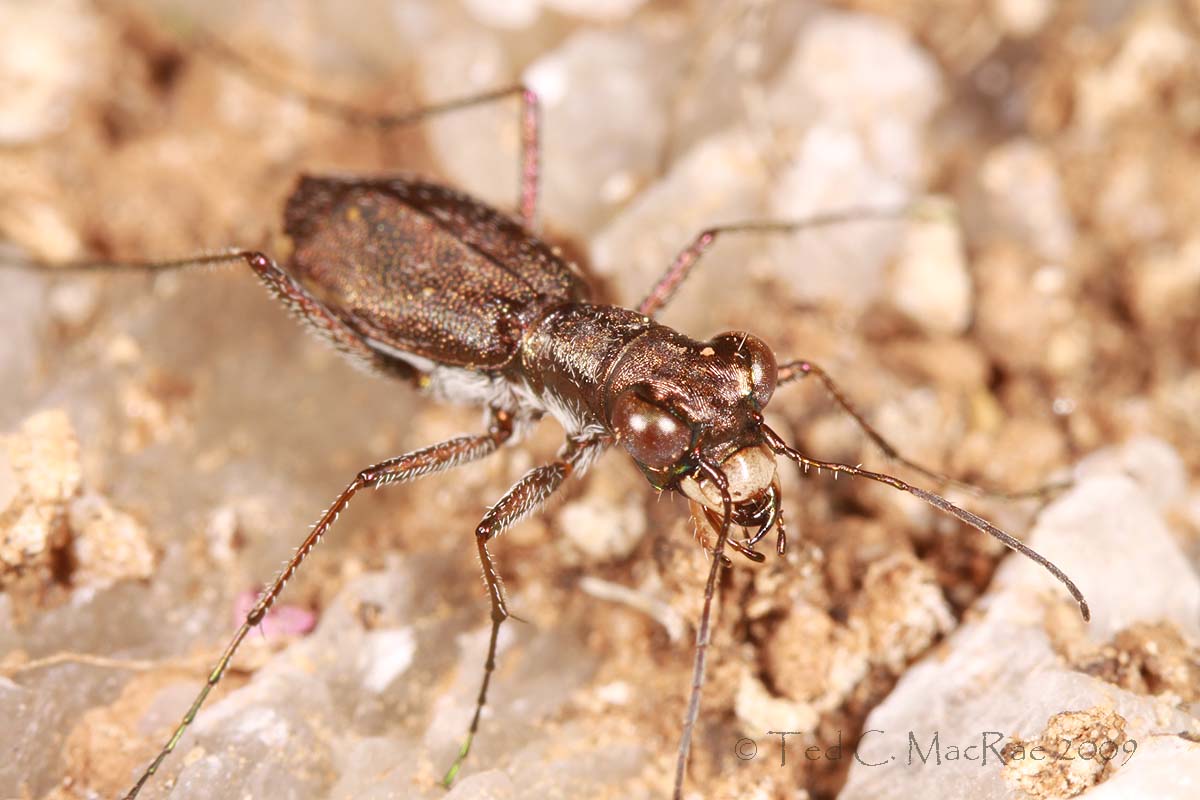
Photo 1 - Cylindera celeripes at Alabaster Caverns State Park in northwestern Oklahoma.

When my hymenopterist friend, Mike Arduser, came back from his first trip to Oklahoma’s Four Canyon Preserve last September, my first thought upon seeing his photos of the area was, “Ooh, that looks like a good place for tiger beetles!” Its rugged red clay and gypsum exposures reminded me of similar country I had seen in the not-too-distant Gypsum Hills of south-central Kansas, where I was fortunate enough to observe a nice population of the fantastically beautiful Cicindela pulchra (beautiful tiger beetle) back in 2005. When I later realized that the area was only 30 miles southwest of a confirmed recent sighting of Cicindela celeripes (swift tiger beetle, now Cylindera celeripes), I thought, “Ooh, I wonder if celeripes might occur there also.”
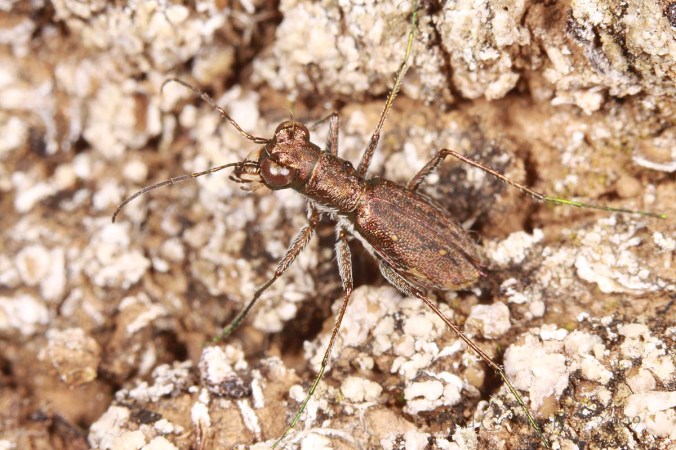
Photo details: Canon 100mm macro lens with 68mm extension tube on a Canon EOS 50D, ISO 100, 1/250 sec, f/13, MT-24EX flash 1/4 power through diffuser caps

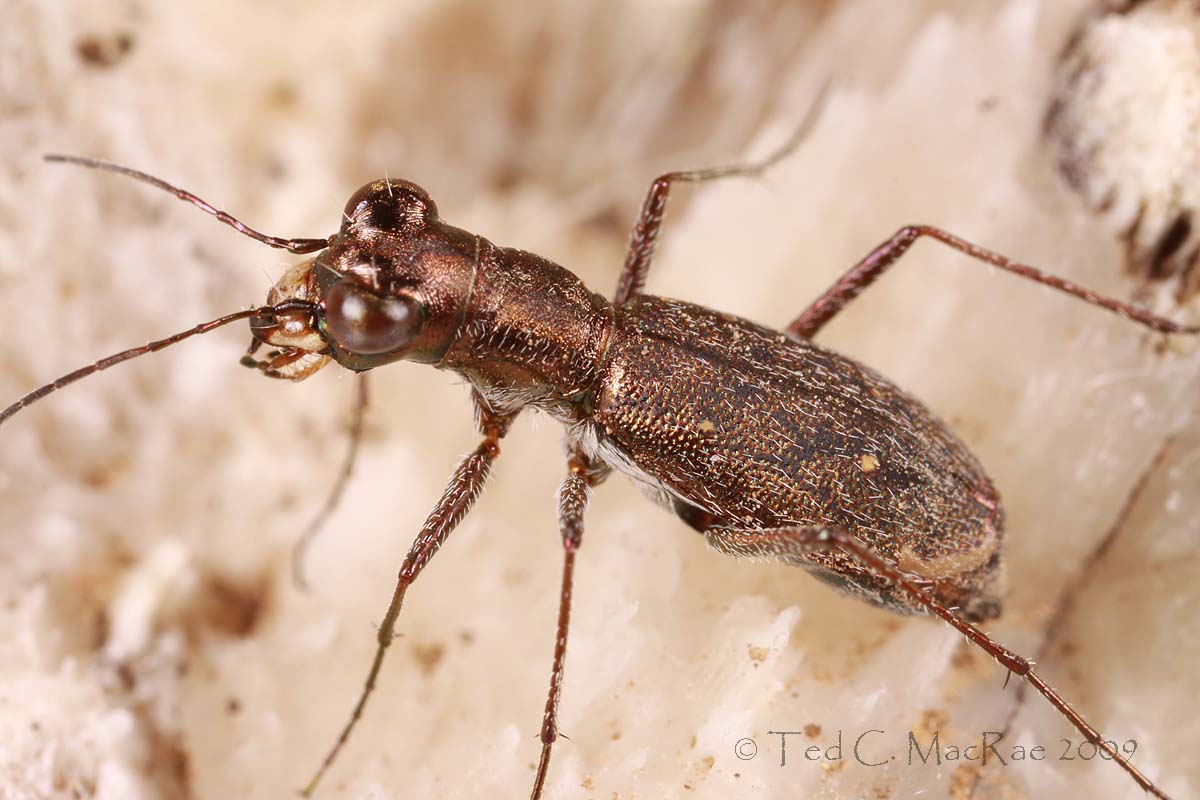
Photo 2 - Cylindera celeripes on lichen-encrusted clay soil at Alabaster Caverns State Park.

Recall that C. celeripes is one of North America’s rarest and least understood tiger beetles. This tiny, flightless, ant-like species has been recorded historically from eastern Nebraska south to north-central Texas, but its range appears to have become highly restricted over the past century. It hasn’t been seen in Nebraska for nearly 100 years now, and most recent records have come from its last known stronghold in the Flint Hills of Kansas. In 2003, however, a photographer by the name of Charles Schurch Lewallen posted on BugGuide a photograph of this species taken at Alabaster Caverns State Park in northwestern Oklahoma, and last year small numbers of adults were seen in the Loess Hills of western Iowa. This last sighting triggered an immediate trip to the site by myself and Chris Brown, who has been co-investigating the tiger beetle fauna of Missouri with me for several years now. The occurrence of this species in Iowa’s Loess Hills had reignited our hopes – faint as they were – that the beetle might yet occur in extreme northwestern Missouri, where the Loess Hills reach their southern terminus. We wanted to see the beetle in the wild to better understand its habitat requirements before resuming our search for this species in northwestern Missouri. We succeeded in finding the beetle – an amazing experience in itself – and brought three adults of this never-before-reared species back to the lab for photographs and an attempt at rearing. We did manage to obtain viable eggs, but we were not successful in rearing the larvae beyond first instar. I wrote about that experience last August in a post entitled, “The hunt for Cicindela celeripes” (that post is now currently in press as an article in the journal CICINDELA).
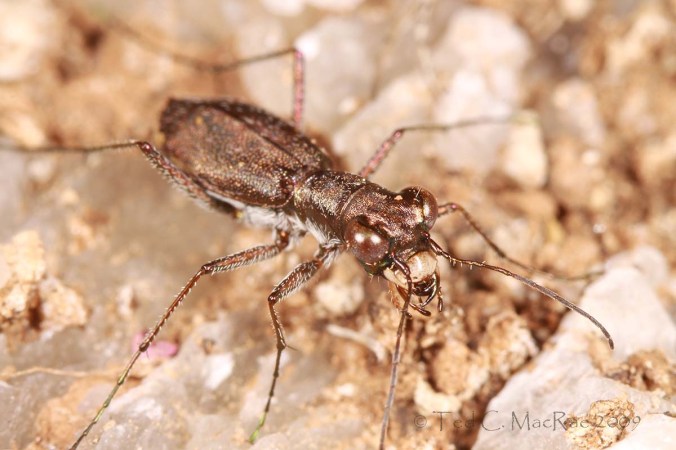
Photo details: Canon 100mm macro lens with 68mm extension tube on a Canon EOS 50D, ISO 100, 1/250 sec, f/11, MT-24EX flash 1/4 power through diffuser caps

Photo 3 - Cylindera celeripes on gypsum exposure at Alabaster Caverns State Park.

Thus, when my friend Mike asked me earlier this year if I might be interested in joining him on his return trip to Four Canyon Preserve in June, I jumped at the chance. I figured I could look for celeripes at the preserve, and if I failed to find it there then I would go to Alabaster Caverns and see if I could relocate the beetle where it had been photographed in 2003. My goals were modest – I simply wanted to find the beetle and voucher its current presence in northwestern Oklahoma (and if possible photograph it in the field with my new camera!). Before leaving, I wrote to Charles Lewallen, who graciously responded with details regarding the precise location and time of day that he had seen the beetle at Alabaster Caverns, and on the first Friday of June I followed behind Mike and his lovely wife Jane during our ten-hour drive out to Four Canyon Preserve. For three days, I roamed the mixed-grass prairie atop the narrow ridges and dry woodland on the steep, rugged canyon slopes of the preserve – always on the lookout for that telltale “flash” between the clumps of bluestem and grama, ever hopeful that one would prove not to be the ant or spider that it appeared to be (and, indeed, always was). Many tiger beetles would be seen – chiefly the annoyingly ubiquitous Cicindela punctulata (punctured tiger beetle), but celeripes would not be among them. Whether this is due to historical absence from the site or a more recent consequence of the wildfires that swept the area a year earlier is hard to say, but its absence at Four Canyon meant that I would need to make a quick, 1-day detour to Alabaster Caverns before rejoining Mike and Jane at Tallgrass Prairie Preserve in northeastern Oklahoma, where we planned to spend the second half of the week.
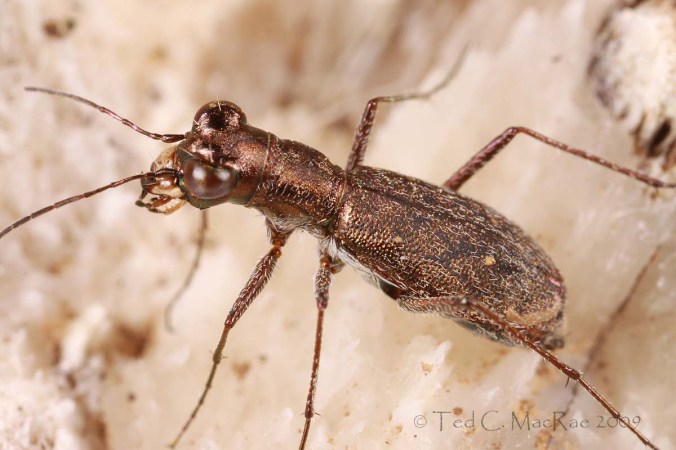
Photo details: Canon 65mm 1-5X macro lens on a Canon EOS 50D, ISO 100, 1/250 sec, f/13, MT-24EX flash 1/4 power through diffuser caps

Photo 4 - Cylindera celeripes on gypsum exposure at Alabaster Caverns State Park.

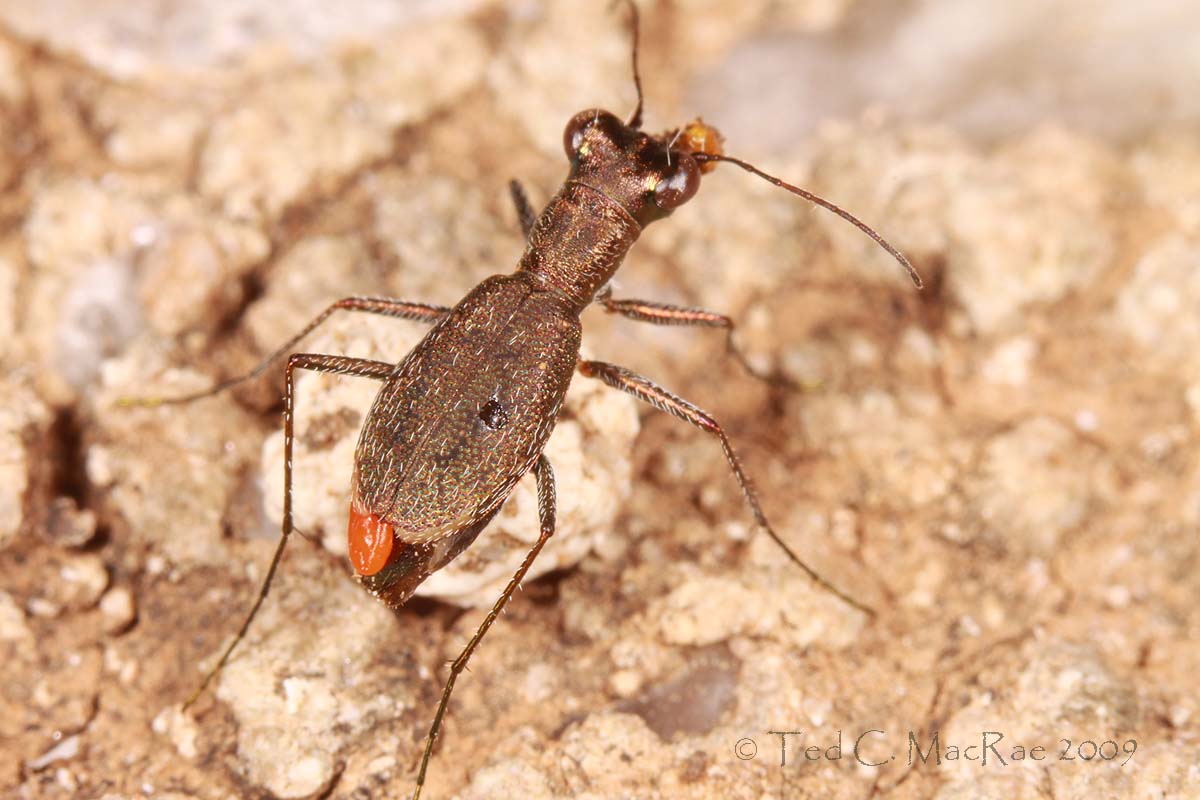
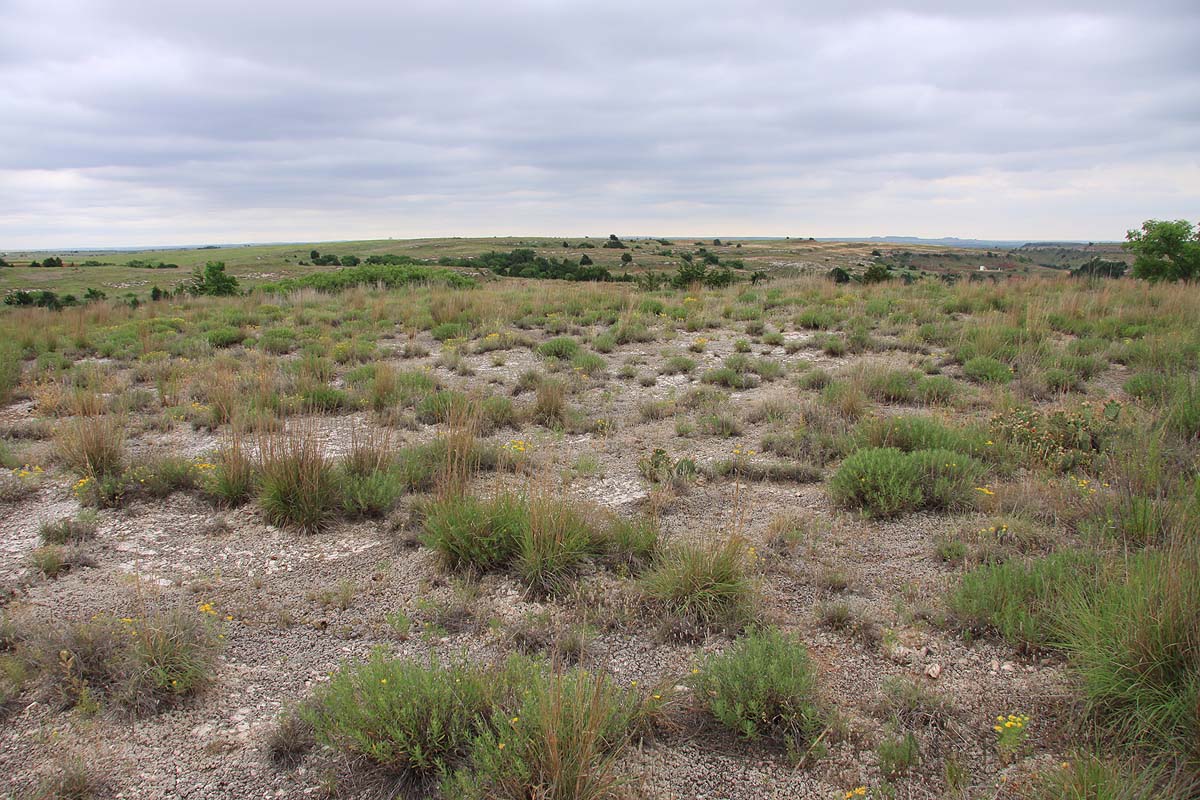
Arriving at Alabaster Caverns I was filled with nervous, excited anticipation. Would I find the species, as Charles Lewallen had, or would I get skunked? I kitted up and started walking towards the area where Charles wrote that he had seen the beetle, noting the annoying “Removal of plants and animals prohibited” sign along the way. I hadn’t taken ten steps off the parking lot when I saw it! I froze at first, hardly believing that I had found it that quickly, then started watching the tiny beetle as it bolted urgently from one grass clump to the next. Recalling my experience with this beetle in Iowa (and fearing I would lose it amongst the vegetation), I captured the specimen and placed it live in a vial – I would talk to the park staff later about taking the beetle, but for now I needed to guarantee I had a backup for the lab in case I was unable to get field photographs of the beetle. I started walking again, and within a few minutes I saw another one – okay, they’re here in numbers. I carefully took off my camera bag and assembled the components, all the while keeping my eye on the beetle, and then I began trying to do what last year had seemed impossible – getting field photographs. It was easier this time – the vegetation was not so dense, so I could keep an eye on the beetle as he darted from one clump to another. I tried to wait until he settled in an open spot, but it soon became apparent that just wasn’t gonna happen without a “helping” hand. I started blocking the path of the beetle as he tried to dart away and then removing my hand to see if he would stay put. There were a few false starts, where the beetle looked like he would sit still and then dart just as I was set to take the shot, but eventually it wore down and started sitting still long enough for me to shoot a few frames. Torn between the need to get as many photographs as possible and the desire to look for more beetles, I decided to look around more to see how common the beetle was. As I walked out into the shortgrass prairie above the canyons, I began to see adults quite commonly. Most often they were seen as they bolted out into the open from a clump of vegetation when disturbed by my approach. The substrate was red clay and gypsum – just as I had seen in Four Canyon Preserve, but unlike that area the clay exposures were heavily colonized by a mottling of green, blue, and gray lichens. It made the beetles almost impossible to see when they were not moving – even at close range! I spent about an hour taking photographs of several individuals, even managing to photograph one that appeared to be parasitized by what I take to be a dryinid hymenopteran.

Photo 5 - Cylindera celeripes with parasite (dryinid hymenopteran?).  Note also the ant head attached to right antenna.

Photo 5: Cylindera celeripes with parasite (dryinid hymenopteran?). Note also the ant head attached to right antenna.

After getting a sufficient series of photographs (is there really such thing?), I went to the park office hoping to convey the significance of this find to the Park Naturalist and to convince him/her to let me take some live individuals with me for another attempt at rearing. The Park Naturalist was out of the office, but the Park Historian was there. I could hardly contain my excitement as I explained to her what I had found, why it was so important, and my hope to try to rear the species with adults collected in the field. She not only responded as positively as I had hoped, but accompanied back out into the field so that I could show her the beetles. She told me it would be no problem to take some live individuals for rearing and to please let them know if there was anything else they could do to help me.  She then provided me with the day’s natural history “dessert” by pointing out a Mexican free-tailed bat (Tadarida brasiliensis) – Oklahoma’s state flying mammal – roosting up in the top of a nearby picnic shelter. Standing atop the picnic table put me within arm’s length of the little chiropteran – close enough to see his tiny little eyes looking quizzically back at me.

Photo 6 - Cylindera celeripes macrohabitat, Alabaster Caverns State Park, Oklahoma.  Note rather widely spaced clumps of vegetation (photo details: Canon 17-85mm zoom lens (17mm) on a Canon EOS 50D, ISO 100, 1/64 sec, f/8).

Photo 6 - Cylindera celeripes macrohabitat at Alabaster Caverns State Park. Note rather widely spaced clumps of vegetation.

It had begun sprinkling rain by then, so with some urgency I got my tools, extracted a couple of chunks of native soil and transferred them to the small “Critter Totes” that I had brought for the purpose, and began searching for live individuals to place within them. The beetles had become scarce as the drizzle turned to light rain, and by the time I had split about a dozen individuals between the two containers the rain was coming down hard enough to start puddling. I continued a last ditch effort to find “just one more,” but a lightning strike within a mile of the park put an end to that – the air now felt electric as I hurriedly walked back to the car (gloating unabashedly inside) and began the three-hour drive towards Tallgrass Prairie Preserve… (to be continued).

IMG_0580_1200x800

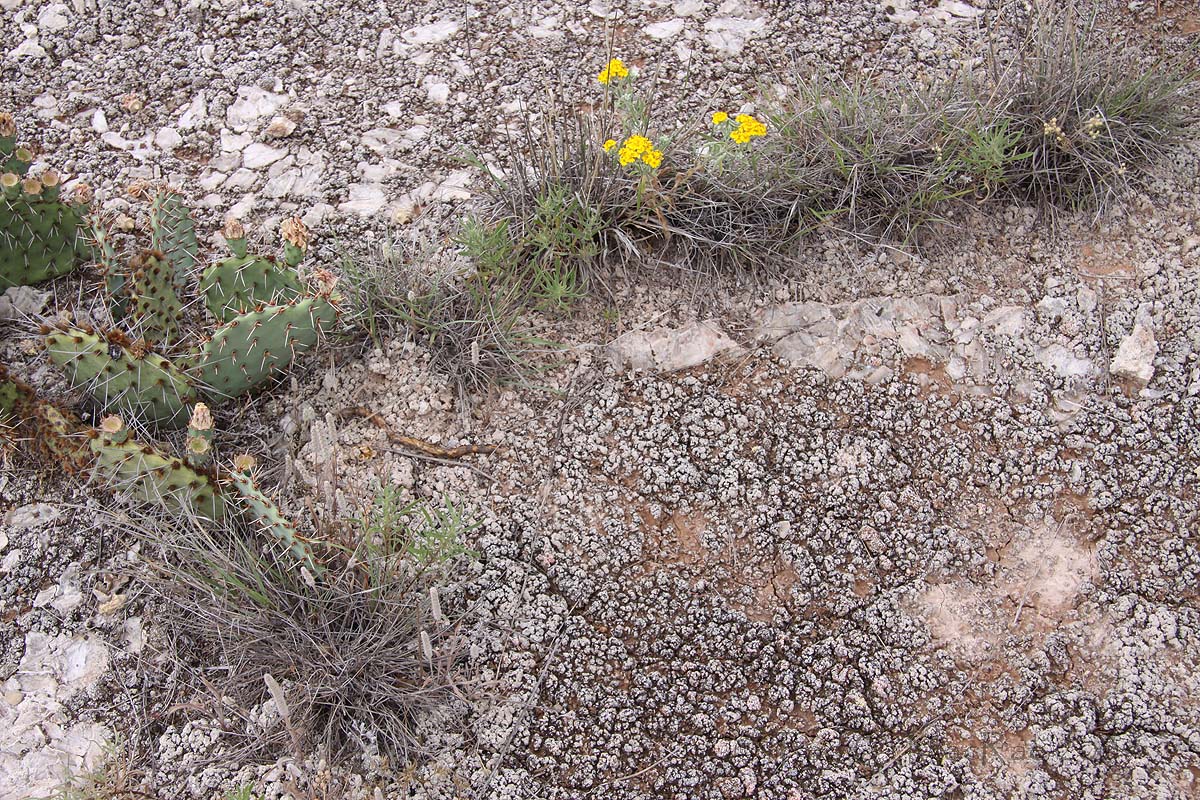
Photo 7 - Cylindera celeripes microhabitat at Alabaster Caverns State Park. Note thick encrustation of lichens on clay substrate amidst white gypsum exposures.

Photo details:
-3, 5: Canon 100mm macro lens w/ 68mm extension on Canon EOS 50D, ISO 100, 1/250 sec, f/13 (photo 3, f/11), MT-24EX flash 1/4 power through diffuser caps.
#4: Same except Canon 65mm 1-5X macro lens, flash 1/8 power.
#6: Same except Canon 17-85mm zoom lens (17mm), 1/64 sec, f/8, natural light.
#7: Same except Canon 17-85mm zoom lens (35mm), 1/100 sec, f/7, natural light.

Copyright © Ted C. MacRae 2009

Add to FacebookAdd to NewsvineAdd to DiggAdd to Del.icio.usAdd to StumbleuponAdd to RedditAdd to BlinklistAdd to Ma.gnoliaAdd to TechnoratiAdd to Furl

Body Invaders

In keeping with the parasitic theme I established in my last two posts, I happened upon this brief video promotion for a National Geographic special called In the Womb: Extreme Animals which will air this Sunday (May 10). The video features the offspring of a parasitic wasp (Cotesia glomerata) that has injected her eggs into a caterpillar — and now they’re ready to emerge! It’s a fascinating study of parasitoid-host relationships, filmed incredibly from inside the caterpillar! Watch the whole video for the wicked, surprising ending.

Viewing tips: after beginning play, click on “HQ” in the lower right corner to view the video in high quality. Or, click on the video itself to be taken to YouTube, where you have the option to watch the video in HQ and in full screen mode (2nd button from the lower right corner). You will be amazed!

Vodpod videos no longer available.

more about “Body Invaders“, posted with vodpod

Tip of the hat to Adrian, who posted this yesterday (but I really did find it on my own).

Copyright © Ted C. MacRae 2009

Add to FacebookAdd to NewsvineAdd to DiggAdd to Del.icio.usAdd to StumbleuponAdd to RedditAdd to BlinklistAdd to Ma.gnoliaAdd to TechnoratiAdd to Furl

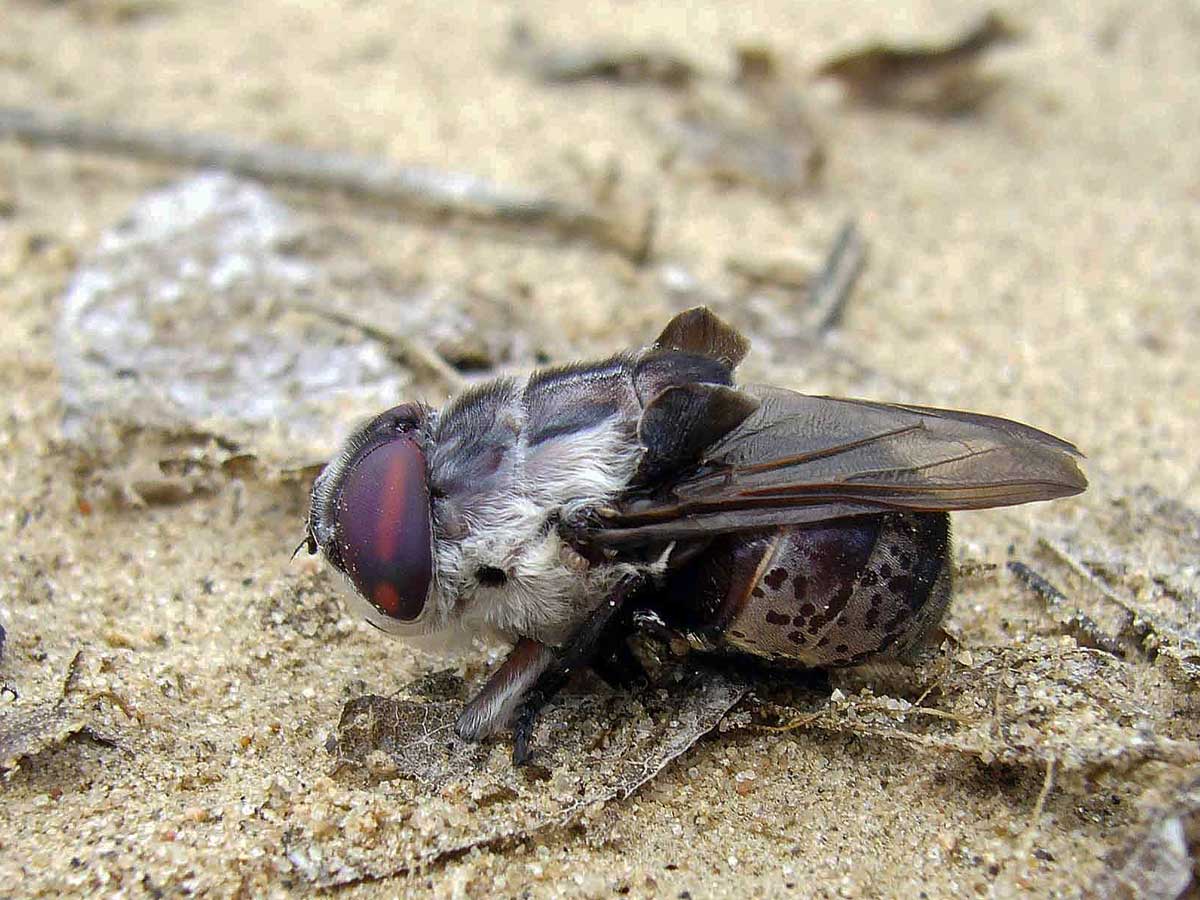
Newly emerged rabbit bot fly

Cuterebra buccata_P1020896_2

First things first – congratulations to Mark Deering (Sophia Sachs Butterfly House, right here in St. Louis) and Rod Rood (Washington State University) for correctly identifying yesterday’s “What the heck?” as the cast puparium of an oestrid bot fly.  Mark eventually staked his claim on the genus Cuterebra, and Rod as well included this genus in his short list.  They are more astute naturalists than I – had I not found the newly emerged adult right next to it, I doubt that I would have known or figured out what it was.  Thanks also to the many other people who played the game – most were united in thinking it was some kind of insect, with many noting its distinctly abdominal appearance.  It seems, at least among my readers, that shed insect cuticle is a more popular quiz subject than plants.

Cuterebra buccata_P1020891_2I encountered this individual on open sandy ground while searching for my beloved  southeastern Missouri festive tiger beetles.  When I first saw the adult, it was on its back on the ground, feebly waving a couple of legs in the air.  I at first thought it was some kind of clumsy beetle but realized what it was as I approached it.  Clearly the fly was in distress, and I thought it odd that the puparium was laying on the ground next to it.  Bot flies in the genus Cuterebra have among the most deliciously gruesome of all insect life histories.  The ultra short-lived adults (lacking even functional mouthparts) lay their eggs near rodent and lagomorph burrow entrances, with the different species showing a fair degree of host specificity (Catts 1982).  When the fly larva hatches, it migrates to the host and enters the animal’s body through a natural orifice or break in the skin.  It then finds a subcutaneous location to feed, creating a cyst-like structure within a swelling of subcutaneous tissue and with a hole at the skin surface to allow respiration.  Once mature, the larva exits and drops from the host and burrows into the ground for pupation. We could find no emergence hole nearby, so perhaps the puparium was exposed by rain prior to emerging and suffered some desiccation, or perhaps the adult had gotten stuck in the tough puparium and pulled it to the surface as it emerged – burning its limited energy reserves in the process. At any rate, it is rather unusual to find these things emerging with the pupal case.

Cuterebra buccata_P1020894_2Cuterebra spp. are known collectively as New World skin bot flies (formerly family Cuterebridae, but now classified as a subfamily of Oestridae).  I suspected this was the rabbit bot fly (C. buccata) due to its general appearance – notably the red bands in the eyes, which is a characteristic of rabbit-infesting species.  However, the genus is diverse, with 34 recognized North American species – seven of which belong to the rabbit-infesting group (Sabrosky 1986).  I don’t have a copy of Sabrosky’s revision, and my efforts to locate it electronically turned up only retail listings for $70 or more.  That’s serious coin for someone who really needs to stay focused on his beetles, so I sent these photographs to bot fly specialist Jeff Boettner at the University of Massachusetts.  Jeff confirmed that it is indeed a Cuterebra rabbit bot and will confirm a species identity after checking his collection.

Jeff also sent the following note and interesting link:

Speaking of red eyed bots…there is one on Bugguide that a woman from NM posted. It is Cuterebra mirabilis and it may be the rarest photo on BugGuide. It’s only known from 2 previous specimens (also from NM). Its the largest of the rabbit bots. Much darker than yours.

Jeff notes that “mirabilis” in Latin means “extraordinary” – a truly appropriate name for this beautiful insect. Even though I am a devout coleopterist, I must confess – cuterebrids rock!

REFERENCES:

Catts, E. P.  1982.  Biology of New World bot flies: Cuterebridae.  Annual Review of Entomology 27:313-338.

Sabrosky, C. W. 1986. North American species of Cuterebra, the rabbit and rodent bot flies (Diptera: Cuterebridae). Entomological Society of America Thomas Say Foundation Monograph, College Park, Maryland, 240 pp.

Copyright © Ted C. MacRae 2009

Add to FacebookAdd to NewsvineAdd to DiggAdd to Del.icio.usAdd to StumbleuponAdd to RedditAdd to BlinklistAdd to Ma.gnoliaAdd to TechnoratiAdd to Furl

Wednesday “What the heck?”

p1020893_2

This might be the hardest nature quiz ever – I don’t think I would’ve ever figured out what this was had I not found what I did next to it.  I found it on my recent trip to look for Cicindela scutellaris (festive tiger beetle) in southeastern Missouri. Of course, now knowing what it is, the image does seem to provide enough clues about its identity – perhaps some crack naturalist will figure it out.

I’ll provide the answer with additional photos tomorrow.

Copyright © Ted C. MacRae 2009

Add to FacebookAdd to NewsvineAdd to DiggAdd to Del.icio.usAdd to StumbleuponAdd to RedditAdd to BlinklistAdd to Ma.gnoliaAdd to TechnoratiAdd to Furl