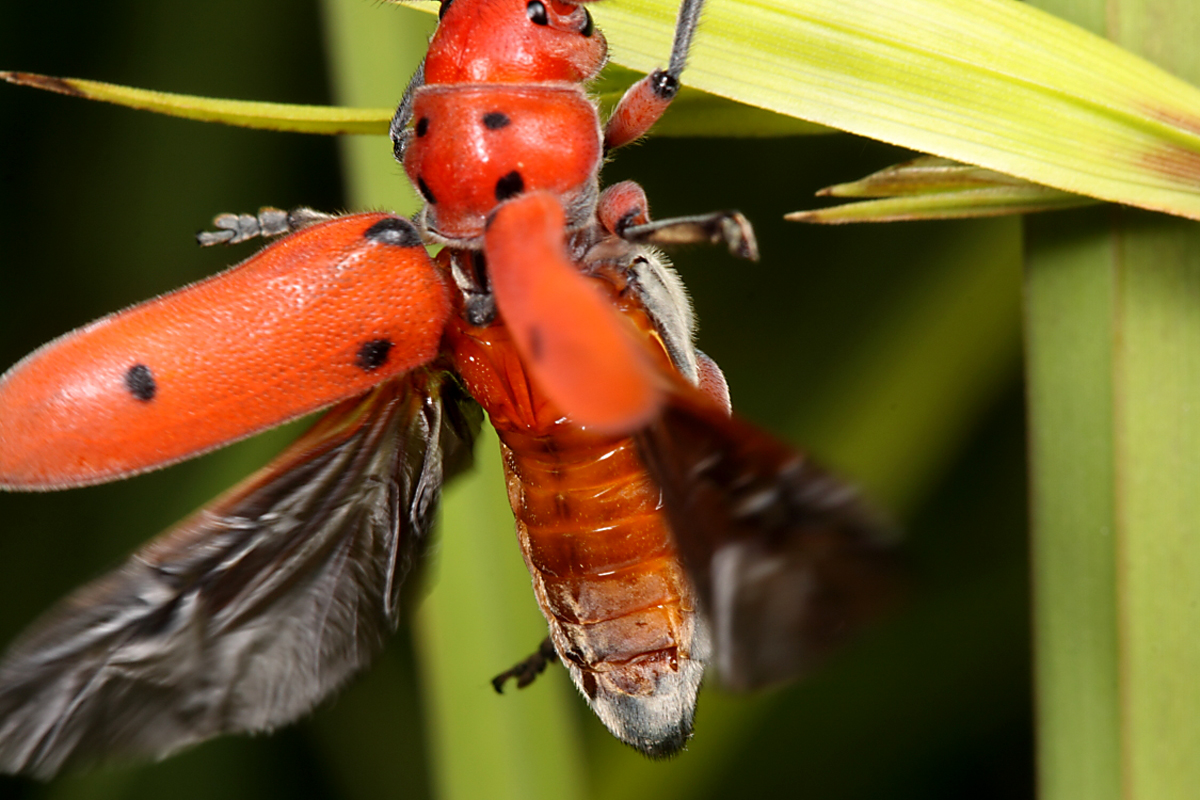
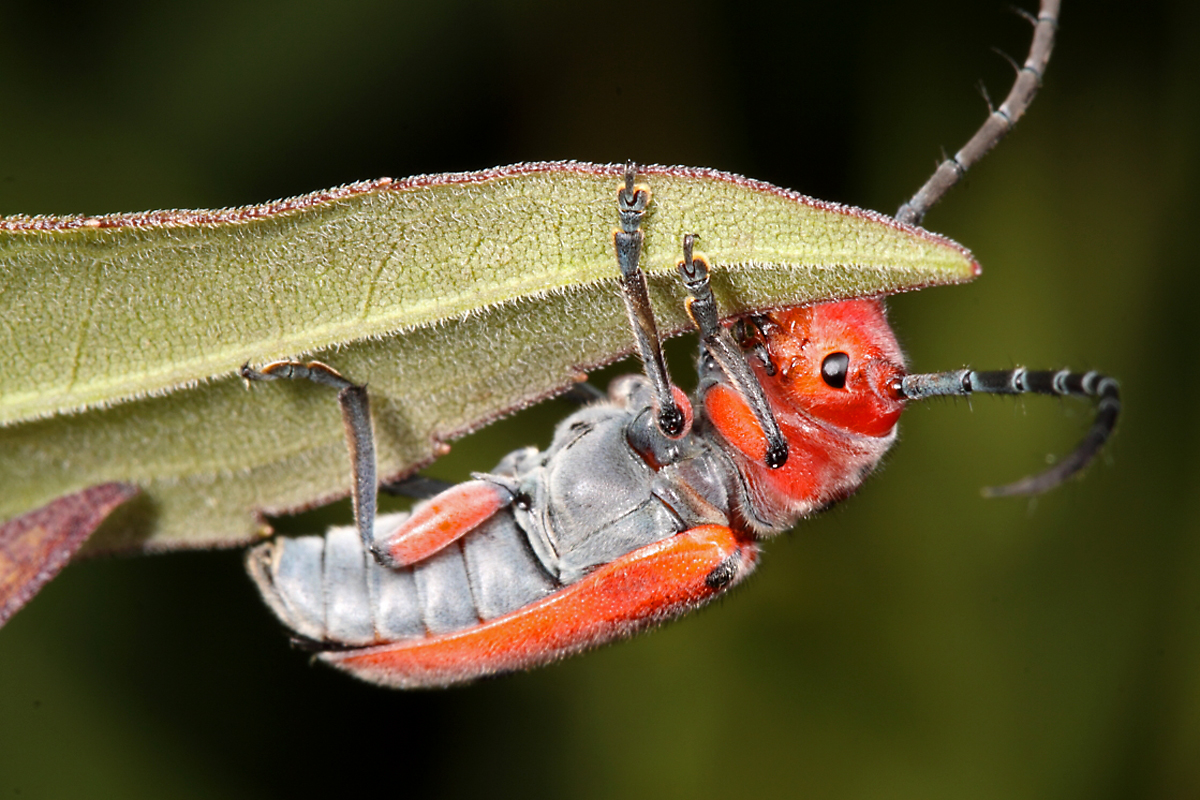
Tiger Beetle Nocturnal Perching

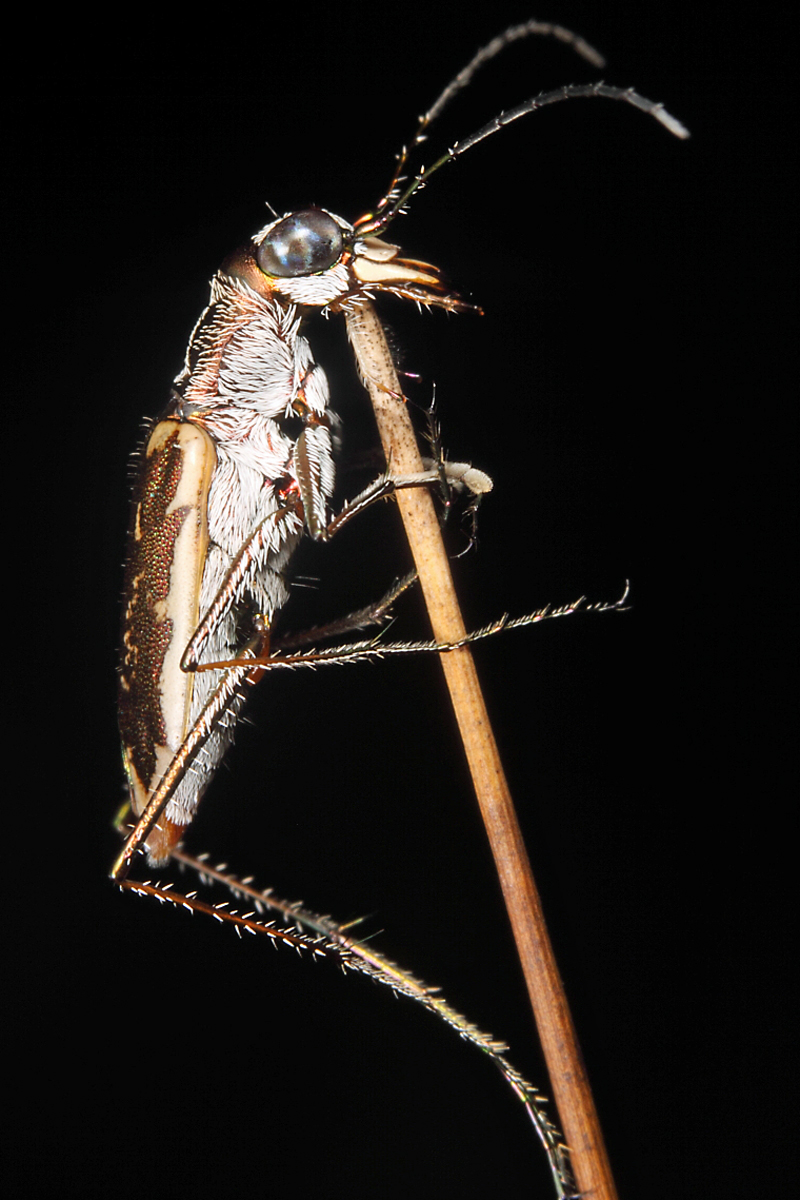
Ellipsoptera hamata lacerata | "Road to Nowhere" Dixie Co., Florida

During last week’s 48-hour blitz through Florida, I spent one evening blacklighting at the famed “Road to Nowhere” tiger beetle hot spot and encountered this male individual of Ellipsoptera hamata lacerata¹ clinging to the grass near my light.  A quick search of the surrounding area revealed a number of similarly perched individuals, including a mating pair and all representing the same species.

¹ Males (identified by the brushy pads under the foretarsi) of this species are distinguished from the closely related E. marginata, which co-occurs with E. hamata lacerata along the Gulf coast of Florida, by the lack of a distinct tooth on the underside of the right mandible.

Like many species in this and related tiger beetle genera, E. hamata is diurnal but also highly attracted to lights at night. This is thought to be related to nocturnal dispersion behaviors (Pearson and Vogler 2001) intended to avoid higher daytime predation risks. Nocturnal perching on foliage is also common among diurnally-active species in riparian habitats and seems also to be an adaptation for reducing predation. Pearson and Anderson (1985) noted that perched beetles removed from the grass and placed on the ground were often quickly preyed upon by larger nocturnally-active tiger beetles. At “Road to Nowhere” this might include the slightly larger Habroscelimorpha severa which occurred in enormous numbers alongside this species on the mud flats, or the much larger Tetracha virginica which occurred in fair numbers on the adjacent road.

REFERENCES:

Pearson, D. L. and J. J. Anderson.  1985. Perching heights and nocturnal communal roosts of some tiger beetles (Coleoptera: Cicindelidae) in southeastern Peru.  Biotropica 17(2):126–129.

Pearson, D. L. and A. P. Vogler. 2001. Tiger Beetles: The Evolution, Ecology, and Diversity of the Cicindelids.  Cornell University Press, Ithaca, N.Y., xiii + 333 pp.

Copyright © Ted C. MacRae 2011

More on ‘Conspicuous Crypsis’

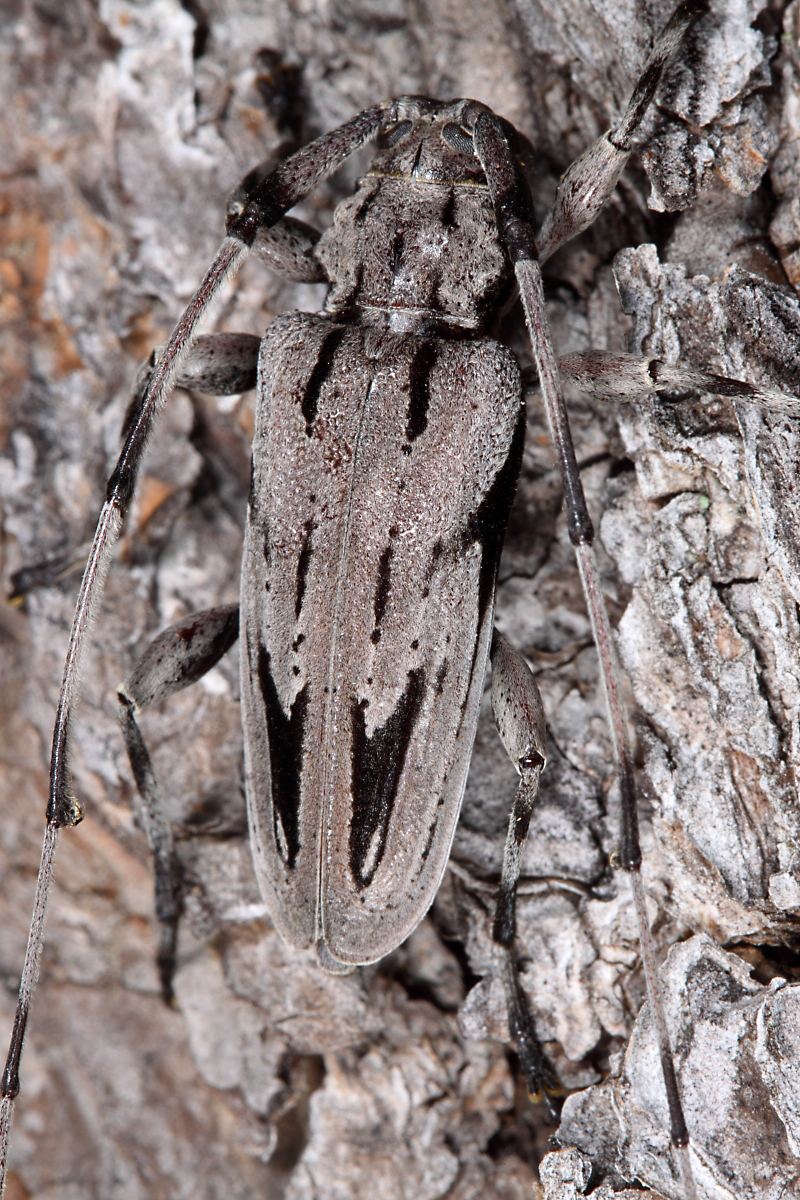
Acanthocinus nodosus on trunk of Pinus echinata | vic. Calico Rock, Arkansas

In my previous post (), I used the term ‘conspicuous crypsis’ to describe the sumptuously beautiful lichen grasshopper, Trimerotropis saxatilis, as an example of an insect that, despite strikingly conspicuous colors/patterns, blends in perfectly with its native surroundings. I don’t think this is a formally recognized ecological concept (and a quick search of the web and my limited ecology literature didn’t turn up anything about it) with any real biological/ecological relevance, but rather just a little irony that personally I find interesting.

The same individual in the above photograph in its original resting spot.

The photographs in this post were also taken during one of my June trips to the sandstone glade complex around Calico Rock, Arkansas and show another insect that I would describe as conspicuously cryptic. This is Acanthocinus nodosus, in my opinion one of eastern North America’s most attractive longhorned beetles (family Cerambycidae). This species occurs across the eastern U.S. (just sneaking up into southern Missouri), where the larvae mine the phloem beneath the bark of dead and dying pines (Linsley and Chemsak 1995). BugGuide describes it as “subtle, yet beautiful” with an antennal span in males reaching a spectacular 120 mm (that’s 5 inches, folks!). Perhaps others have encountered this beetle more commonly further south, but I have previously seen only single individuals on just three occasions—twice in the Ozark Highlands of southern Missouri (one at lights and another searching the trunk of a standing, decadent pine tree at night) and another at lights in Alabama. As a result, I was quite excited to find this individual clinging during the day to the trunk of a large shortleaf pine (Pinus echinata). The tree appeared healthy, but I found adults of several other wood boring beetles crawling on its trunk as well, suggesting that maybe the tree was stressed or in the initial stages of decline.

Subtle, yet beautiful!

I must confess that the first photograph above was staged—I had moved the beetle from its original resting spot and placed it on a part of the trunk where the bark color contrasted more strongly with the beetle to increase its visibility.  The second and third photos above and left show the beetle in its original resting spot and illustrate just how cryptic the beetle is when resting on older, more weathered pine bark.  Admittedly, the somber coloration of this species is not as extraordinary as the lichen-green of the lichen grasshopper, but I nevertheless find the slate gray with velvet black markings quite beautiful.  When mounted on pins and lined up neatly in a cabinet, individuals of this species are as attractive as any dead insect can be.  It was not until I saw this individual in Arkansas—and tried to photograph it during the day—that the cryptic function of its coloration and patterning became truly apparent to me.  Most species in the tribe Acanthocini (to which this species belongs) also exhibit somber coloration with variable black markings or mottling, although only a handful can be considered as ‘conspicuously cryptic’ as this one.

REFERENCE:

Linsley, E. G. and J. A. Chemsak.  1995. The Cerambycidae of North America. Part VII, No. 2: Taxonomy and classification of the subfamily Lamiinae, tribes Acanthocinini through Hemilophini. University of California Publications in Entomology 114:1–292.

Copyright © Ted C. MacRae 2011

Oedipodine Rex

Sandstone glade habitat for Trimerotropis saxatilis | vic. Calico Rock, Arkansas

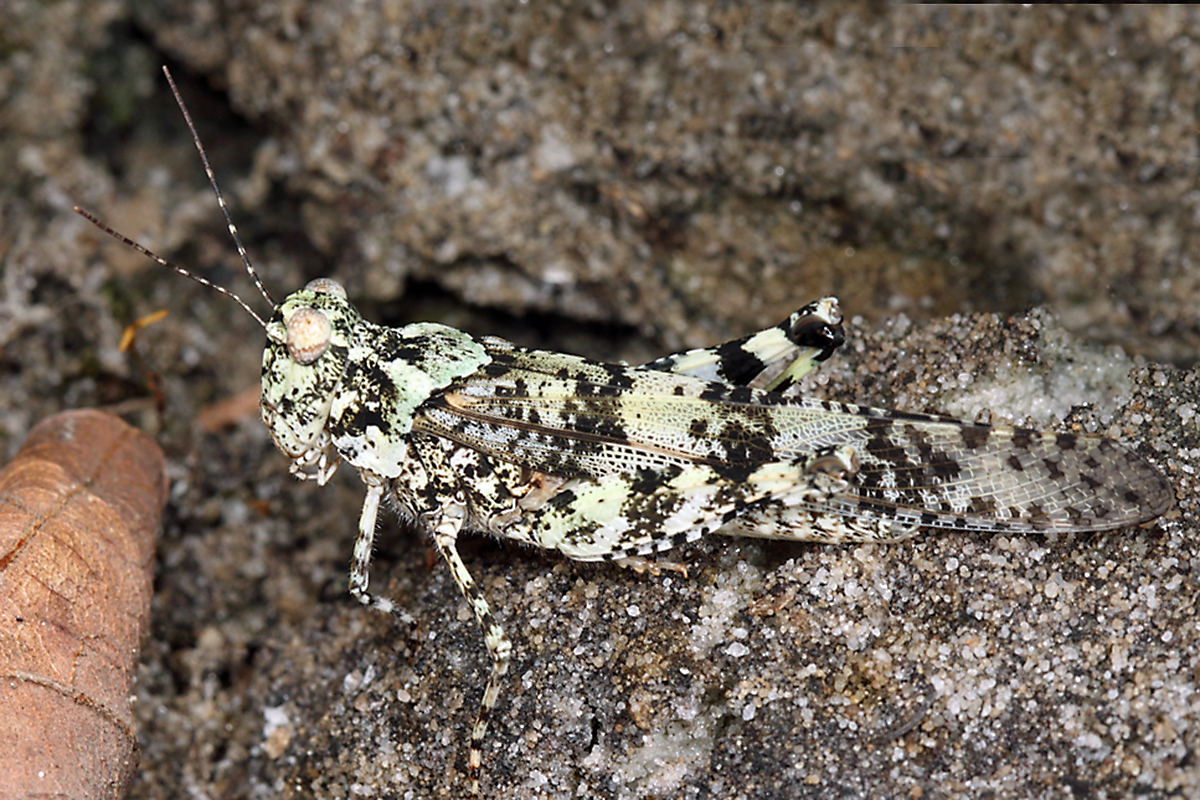
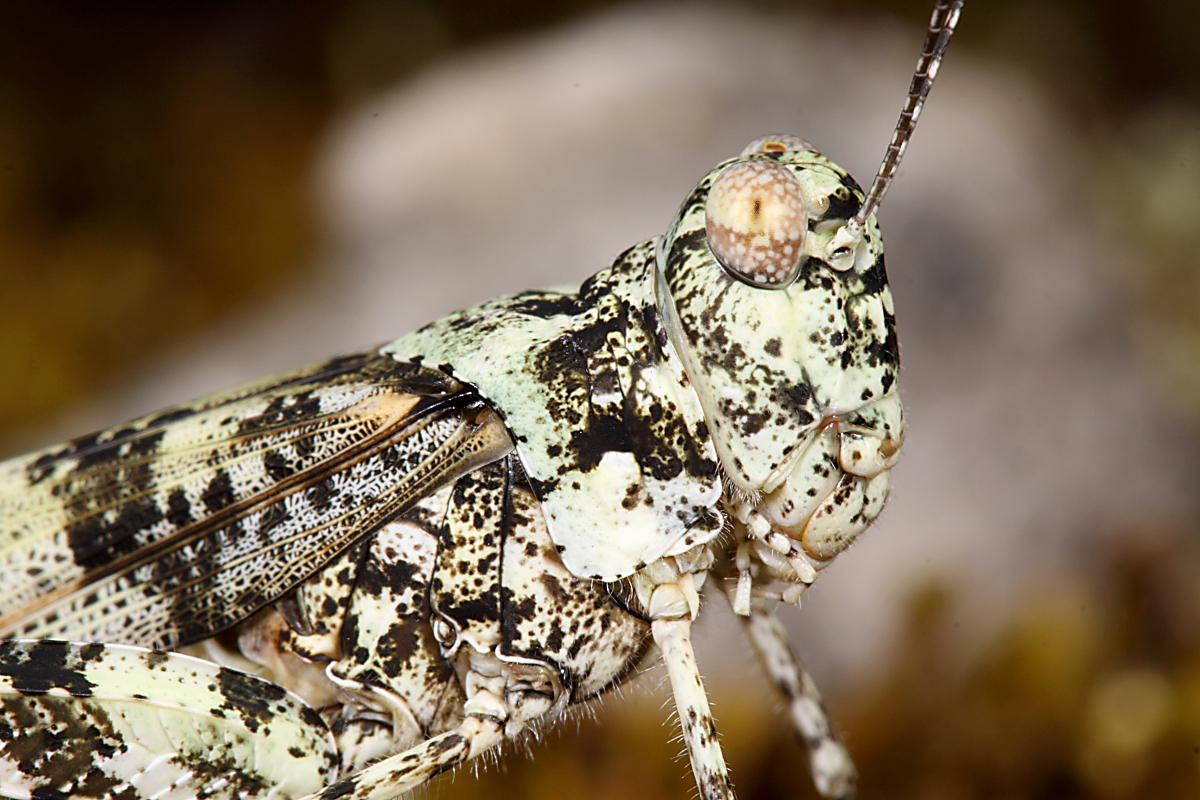
Ever since my current fascination with band-winged grasshoppers (family Acrididae, subfamily Oedipodinae) began, I have been obsessed with photographing one species above all others—Trimerotropis saxatilis, the lichen grasshopper. Like most species in the group, lichen grasshoppers utilize an interesting survival strategy that I call “conspicuous crypsis”—the use of stunning colors and contrasting markings to help them blend into the mottled and variably-colored environments that they inhabit.  Lichen grasshoppers take this strategy to the extreme, culminating in some individuals with the most gorgeous shade of blue-green in perfect match to the crustose lichens that cover the rock outcroppings of their preferred glade habitats.  In my opinion, they are the kings of the oedipodines!  I have seen them before in past years in the igneous and sandstone glades that dot the Ozark Highlands of southern Missouri.  Crustose lichens abound in these acid environments, providing the perfect backdrop to make invisible these otherwise conspicuous grasshoppers. This past June during a couple of visits to a marvelous sandstone glade complex near Calico Rock in north-central Arkansas I got my wish, and shown here are some of my favorites from the many, many photographs I took during those sessions.

Trimerotropis saxatilis with classic lichen-green coloration.

Lichen grasshoppers are actually quite variably colored—not all individuals exhibit the green coloration for which they are so famous.  Despite this, they are the only member of the genus occurring in the eastern U.S. and, thus, are immediately recognizable.  While they are beautiful in all of their color variations, I cannot lie—it is the green individuals that I constantly find myself admiring the most.  While many other grasshoppers are green, only a handful (themselves members of the same subfamily) exhibit the same stunning shade of blue-green that this one does.  Add to that an abundance of black speckling and contrasting bands, and you’ve got one gorgeous grasshopper.  Yet, for all their overt beauty, they are absolutely impossible to see in their native habitat until they take flight when approached.  Fortunately, their escape flights are short and not terribly erratic—with a little practice it becomes rather easy to track them in flight (aided by their interrupted buzzing crepitation) and watch where they land.  They may not be immediately visible after landing, but with careful study of the landing area they are usually quickly relocated.  Once detected, slow deliberate movements are all that are needed to allow a close approach and a good look (and photographs if desired).

The stunning green contrasts starkly against a dark moss backdrop.

Of course, the problem with ‘conspicuous crypsis’ (or any form of crypsis, for that matter) is that it only works when in the right environment.  I chased the above lichen-colored individual onto this patch of dark moss while trying to photograph it, at which point it became overtly visible.

The mottling of the colors is almost as fascinating as the colors themselves.

As previously mentioned, lichen grasshoppers come in a variety of colors and shades.  While the green individuals may be the most stunning, I was captivated also by the below individual, darker brown and black, with the most beautiful, contrastingly colored orange eyes.  This individual may not blend in as well as the green individuals when sitting on lichen-encrusted rocks; however, its coloration and patterning seem perfectly adapted to the more barren, darkly colored rock exposures.  This helps explain why not all lichen grasshoppers are green—the rock exposures in the glades that they inhabit are not uniformly lichen-encrusted, but rather consist of both encrusted and barren expanses of rock, with diverse coloration being a result of multiple and sometimes conflicting selective pressures.

A darker brownish individual with spectacular orange eyes.

A third individual, shown in the photograph below, resembles the second in that it is more brown than green.  However, the base coloration is lighter with greater contrast to the dark bands.  Like the second individual the eyes are spectacular orange, but it also exhibits a green shading on the back of the head behind the eyes not seen in the second individual.

Another brownish individual, this one more contrastingly marked.

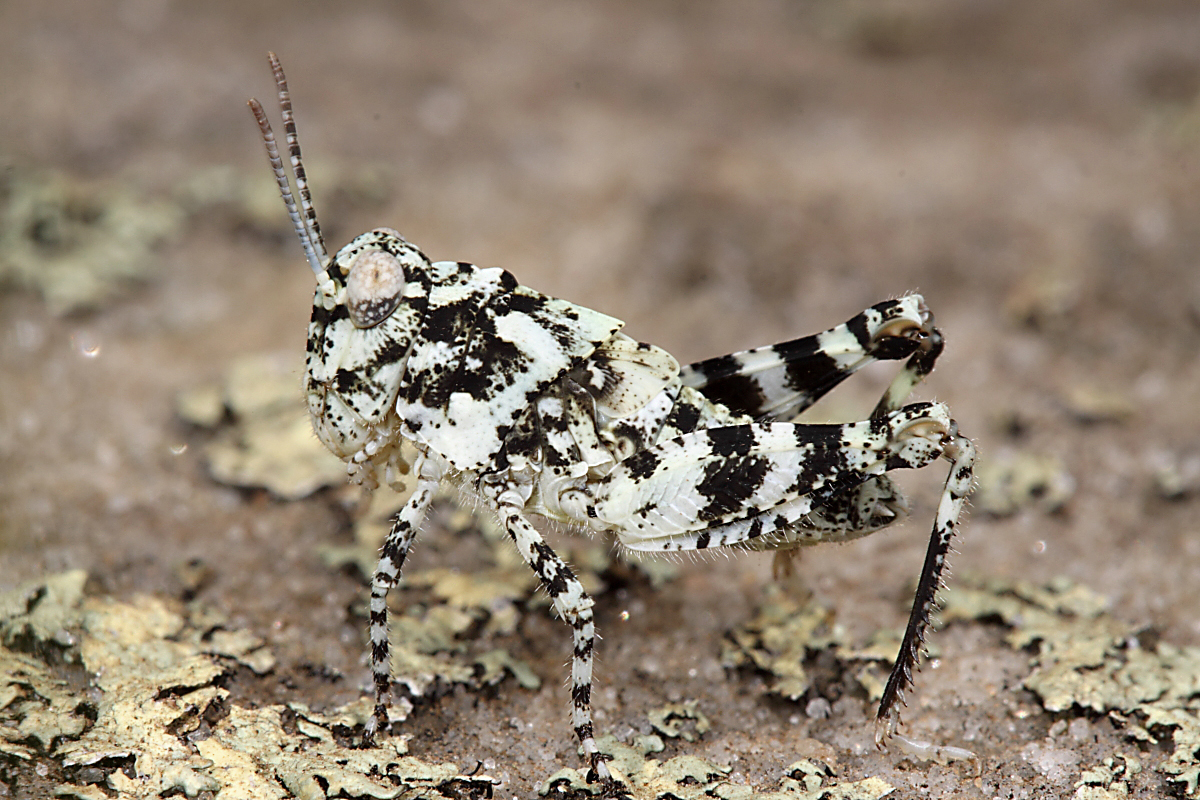
Not only did I find the adults, but I also found a rather young nymph that certainly represents this species (I’m guessing maybe 3rd instar based on the degree of wing pad development).  This nymph exhibits the same stunning green coloration that the first individual above shows, and its fortuitous occurrence on both lichen-encrusted and (relatively) barren rocks provide an excellent demonstration of the effectiveness of its coloration in achieving crypsis—now you see me…

The lichen-colored nymph is easily seen against barren rock...

…now you don’t!

...but blends in marvelously amongst the lichens.

Copyright © Ted C. MacRae 2011

Tracking Tetraopes texanus with Terry

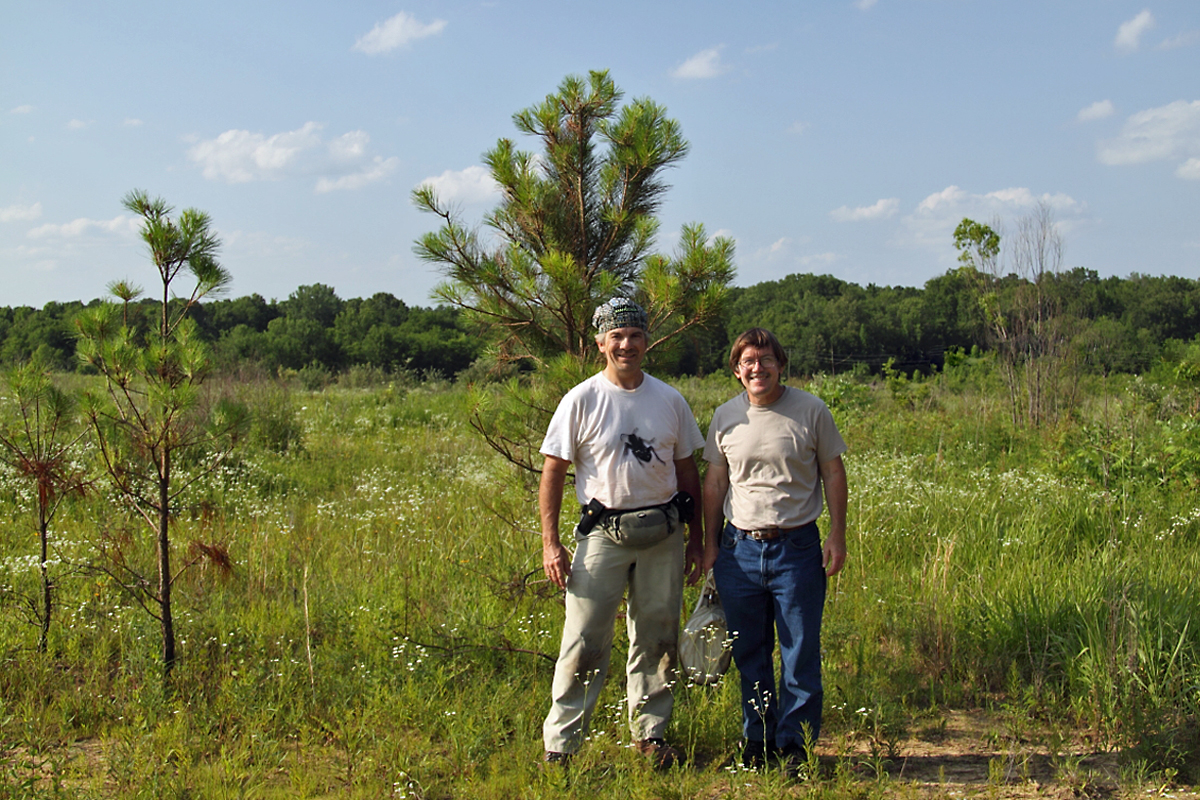
Last month I traveled to Starkville, Mississippi to meet with an academic cooperator at Mississippi State University.  While arranging the trip, I contacted Terry Schiefer (no, not the fashion jewelry designer, but curator at the Mississippi Entomological Museum) to let him know I would be visiting.  Considering that late May should be pretty good insect collecting in that area, I wanted to see if he might be interested in doing a little beetle collecting after I finished up with my meetings.  Terry also specializes in Coleoptera and shares with me an interest in the taxonomy and faunistics of Cerambycidae and Cicindelinae.  I first met Terry some 13 years ago during my previous visit to MSU; I remember ogling at an impressive series of Aegomorphus morrisii, a spectacular species of longhorn beetle that was known at that time by precious few specimens and that he had recently found in Mississippi.  We hadn’t seen each other since but managed to keep in contact with occasional correspondence during the course of our longhorn studies.
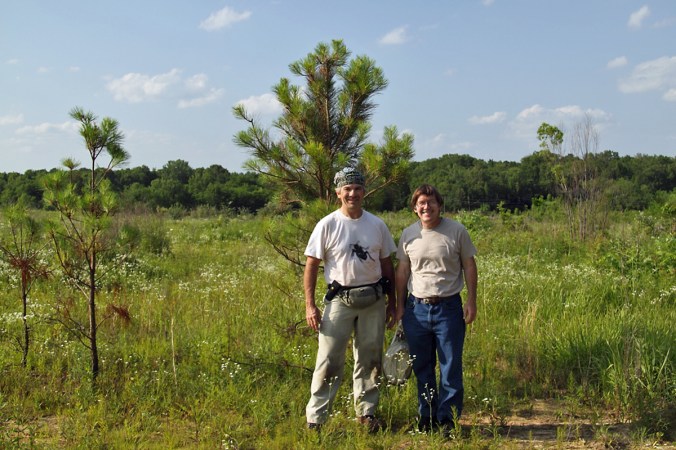
Me & Terry Schiefer | Noxubee National Wildlife Refuge, May 2011.

Terry was more than happy to go beetle collecting with me, and among the possibilities that he mentioned when I arrived at the museum was nearby Noxubee National Wildlife Refuge.  I had done a little collecting there on my last visit, but I was especially intrigued when he mentioned the local population of an uncommon milkweed beetle species, Tetraopes texanus, that he had reported in one of the refuge’s prairie remnants (Schiefer 1998).  I have only seen this species once, up here in in east-central Missouri and which I reported as the species’ northernmost known population (MacRae 1994).  My more recent attempts to find this species have not been successful, so I was excited at the chance to see this longhorned species once again.

We arrived at the prairie with plenty of daylight to spare and began walking through the area where Asclepias viridis (its presumed host in Mississippi; in Missouri I found it on Asclepias viridiflora) was growing.  Typically milkweed beetles are quite approachable, having nothing to fear from predators by virtue of the cardiac glycosides that they sequester in their bodies from their milkweed foodplants and advertise so conspicuously with their bright red and black coloration.  Thus, we were looking for beetles sitting brazenly on the plants, but none were seen.  Eventually, Terry saw one in flight, and then I saw one in flight as well.  For some time, this was the only way we were seeing the beetles, and only by slowing down and scanning the prairie vegetation more carefully and deliberately did we begin to see the adults sitting on vegetation.  Interestingly, very few of them were seen actually sitting on milkweed plants.  Rather, they were on all manner of other plants, and they were very quick to take flight on our approach.  This was playing havoc with my desire to get field photographs of the beetles, especially field photographs on the host.  I decided that any photograph—host plant or not—was better than none, so I began attempting some shots.  My first one didn’t work out so well:
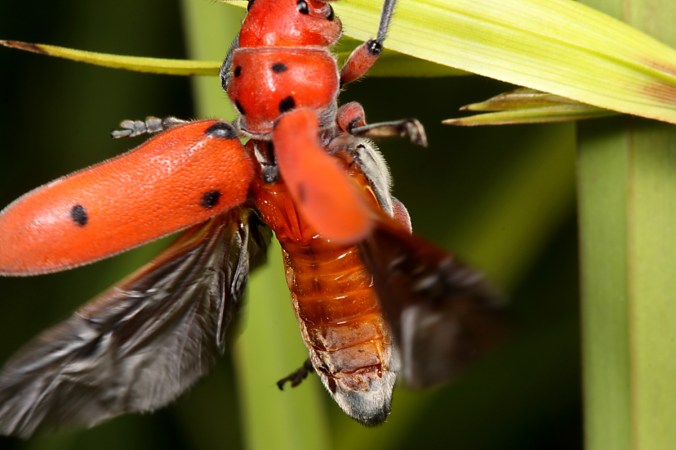

Finally I was able to get one of the beetle sitting on a plant, but the dorsal characters can’t be seen, nor is there anything about the photo that allows the species to be distinguished as T. texanus (the abruptly attenuate last antennomere distinguishes it from similar-appearing species):
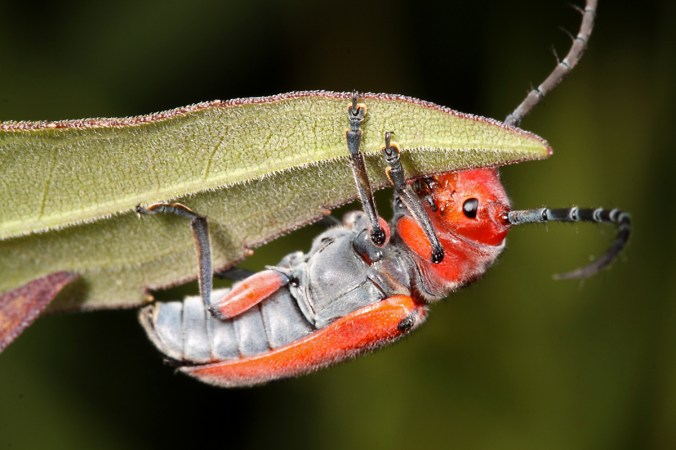

Progress—more of the dorsal surface can be seen in the photo below, and the beetle is actually sitting on a milkweed plant.  However, the antennal tips are still frustratingly out of focus.  Note the completely divided upper and lower lobes of the eye—Tetraopes beetles give new meaning to the term “four-eyes”:
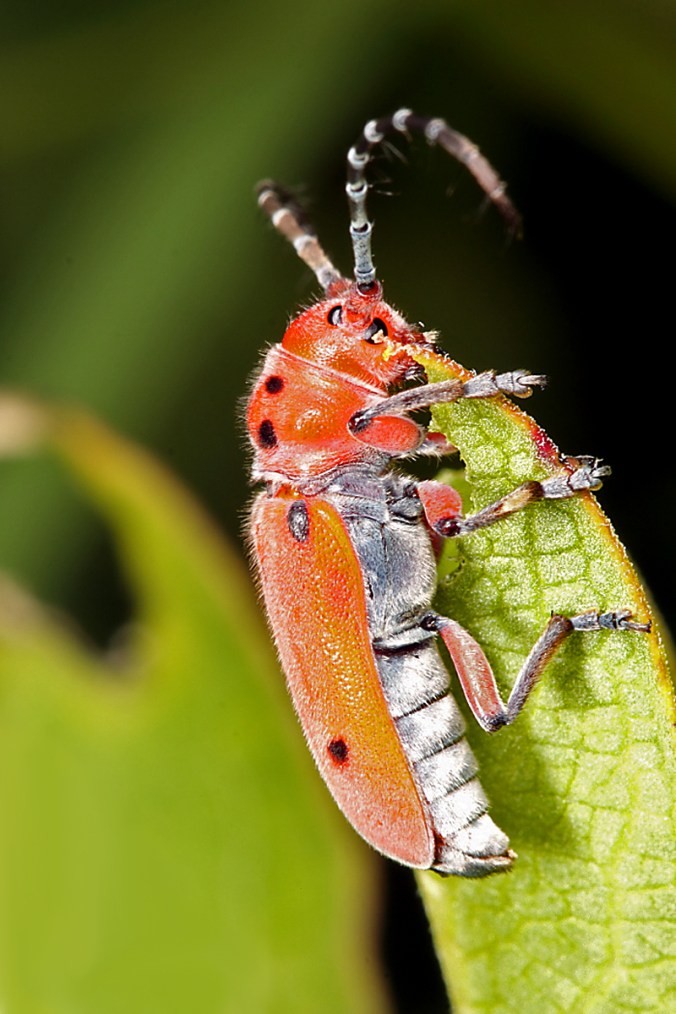

I chased beetle after beetle in flight, endlessly zigzagging across the prairie in what had to be a spectacle to any unknown observer.  Eventually, we found a beetle sitting on its host plant, and it remained calm during my deliberate approach.  I circled around for a good view of the dorsal surface and snapped off an apparent winner—everything in focus, good composition… but arghh, the antennal tips were clipped!


I kept at it and was about to back off a bit on the magnification and switch to landscape mode so I could get the full antennae in the frame when the beetle turned in a most fortuitous manner—nicely positioning its distinctive antennal tip right in front of a bright green leaf for contrast.  My friends, I present Tetraopes texanus on its presumed host plant, Asclepias viridis!
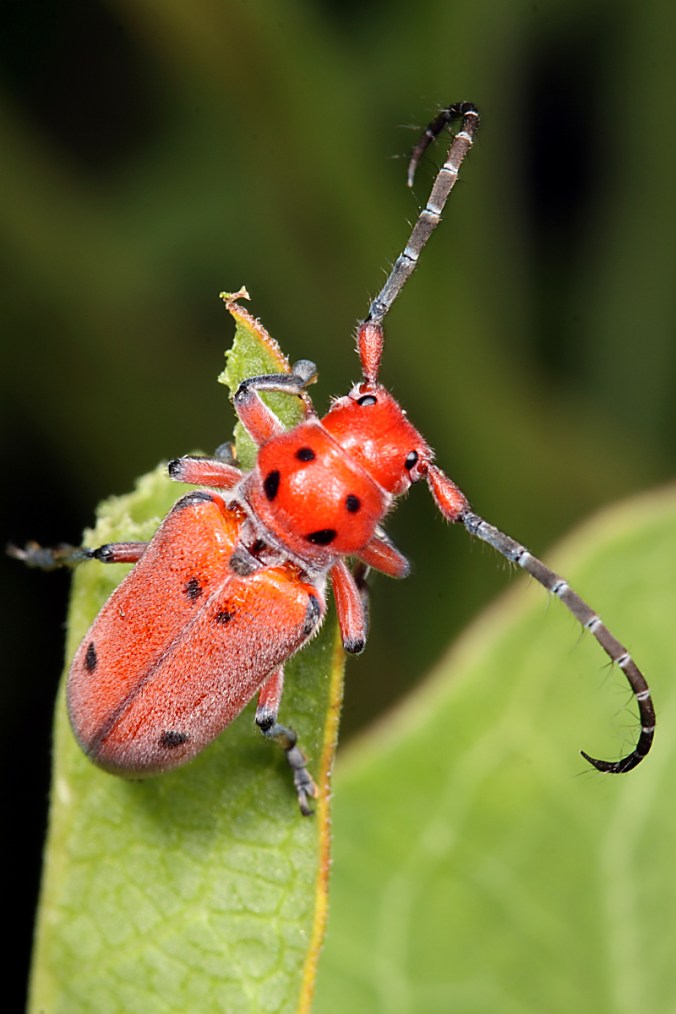

Terry and I were both puzzled by the flighty, nervous behavior that the beetles were exhibiting.  Neither of us had seen such behavior with milkweed beetles before, and I’m not sure I can offer any explanation for such.  I’d be interested in hearing any ideas you might have.

My thanks to Terry for showing me a few of his favorite spots (allowing me to collect a few choice species of longhorns), and to my co-worker/colleague Jeff Haines for indulging my desire mix a little beetle collecting into the business trip.  I hope they enjoyed it as much as I did.

REFERENCES:

MacRae, T.C. 1994. Annotated checklist of the longhorned beetles (Coleoptera: Cerambycidae and Disteniidae) occurring in Missouri. Insecta Mundi 7(4) (1993):223–252.

Schiefer, T.L. 1998. Disjunct distribution of Cerambycidae (Coleoptera) in the black belt prairie and Jackson prairie in Mississippi and Alabama. The Coleopterists Bulletin 52(3):278–284.

Copyright © Ted C. MacRae 2011
Predator Satiation

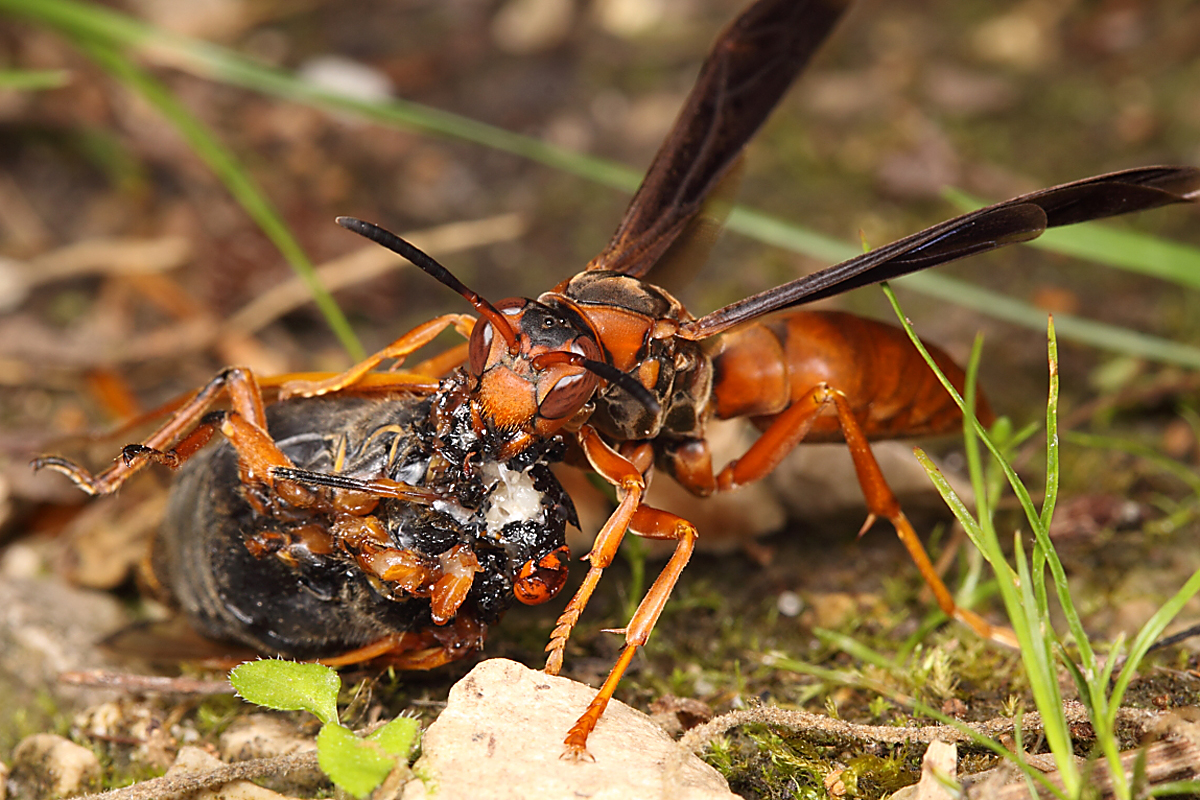
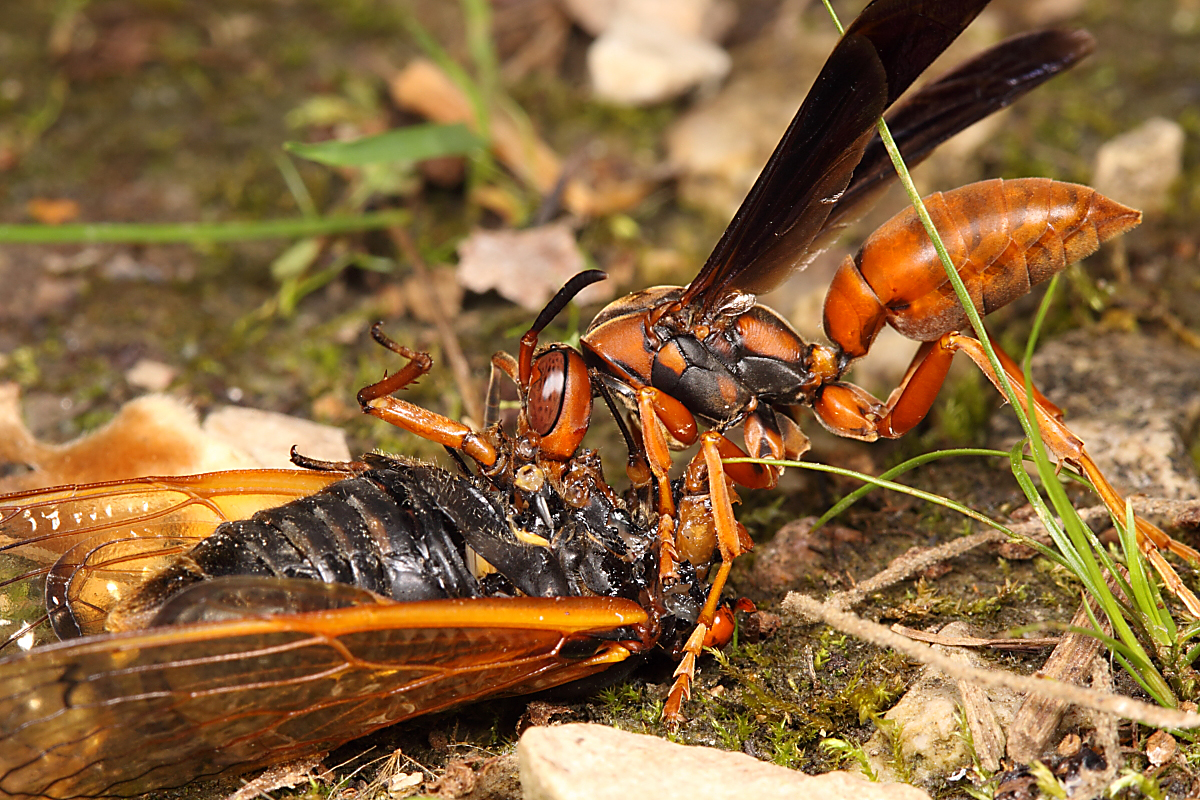
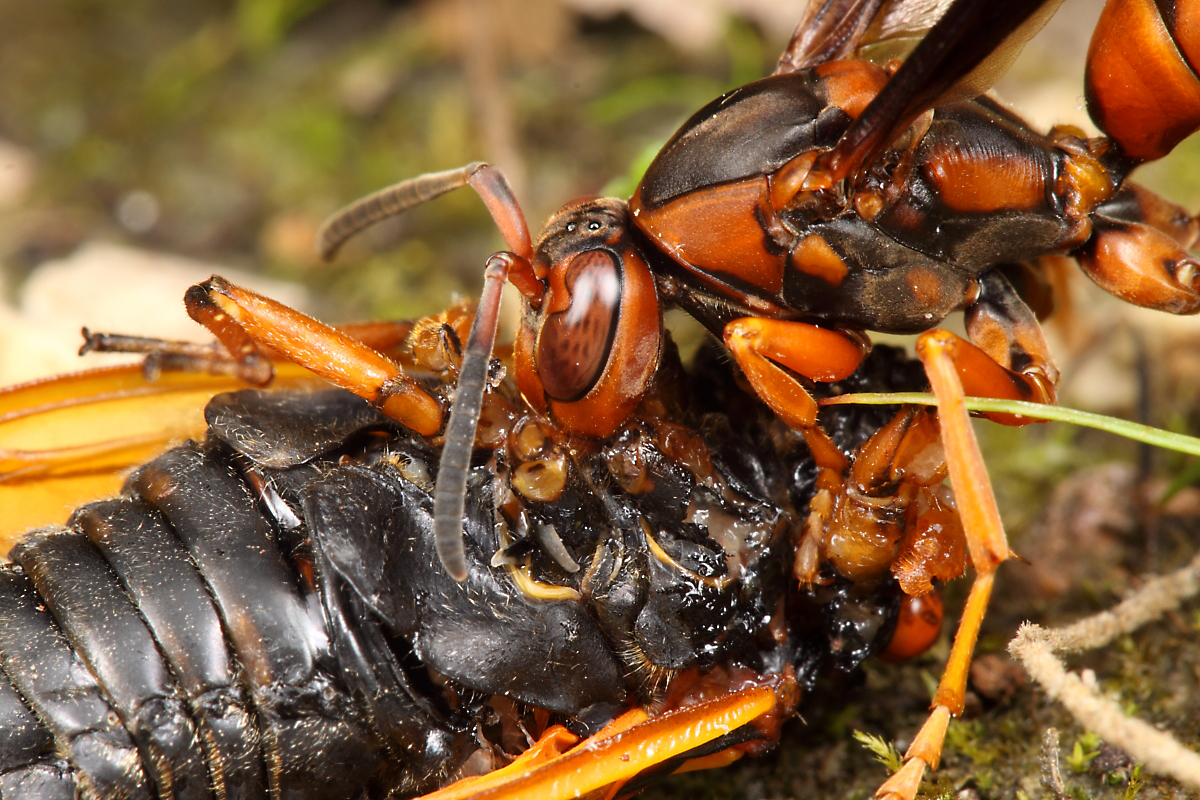
Polistes carolina/perplexus with Magicicada prey | Shaw Nature Reserve, Missouri

I’ve probably used the term predator satiation more often during the past couple of weeks than I have during the entire rest of my life.  Students of ecology know this as an antipredator adaptation in which prey occur at such high population densities that they overwhelm predator populations.¹  This ‘safety in numbers’ strategy reduces the probability that any given individual will be consumed, thereby ensuring that enough individuals survive to reproduce.  With St. Louis currently experiencing the appearance of Brood XIX of periodical cicadas, I’ve gotten lots of questions recently from many coworkers and friends wanting to know more about these cicadas.   Often the first question is “What is their purpose?”  My standard reply begins with a statement that they, like all living organisms, are the products of natural selection, which then presents an opportunity to explain how natural selection might result in such massive, temporally synchronized, multiple-species populations.  A few eyes have glazed over, but I think most have found my answer interesting, often even leading to further questions about where they lay their eggs, what is their life cycle, why are they so loud, how do they “do it” and select mates, etc.  Of course, as an entomologist with a strong natural history orientation, I’m always anxious to introduce people to ecological concepts, and right now the periodical cicada is providing a conspicuous, real-life example of such.

¹ Also called “predator saturation,” although this term might be misconstrued to mean that it is the predators that are over-abundant.

First the eyes...

A few weeks ago, right at the beginning of their emergence in the St. Louis area, my friend Rich Thoma and I observed predator satiation in action.  While hiking one of the trails at Shaw Nature Reserve, we heard the unmistakable shriek and cellophane-sounding wing flapping of a just-captured male cicada.  Tussling on the ground ahead of us was the cicada in the grasp of a Polistes carolina/perplexus wasp, which was repeatedly stinging the hapless cicada on the underside of the abdomen.  The shrieking and wing-flapping grew less frequent as the stinging continued, until at last the cicada lay quiet.  As we approached, the wasp spooked and flew off, but we knew it would be back—we parked ourselves in place while I setup the camera, and before long the wasp returned.  It took several minutes of searching from the air and on the ground before the wasp finally relocated her prey, but once she did she began voraciously devouring it.  As the wasp was searching, we hypothesized that our presence had altered the visual cues she had memorized when flying off, resulting in some confusion when she returned, and thus the long period of time required to relocate her prey.

...then the legs!

We watched for awhile—first the eyes were consumed, then the legs.  As it consumed its prey, Rich remarked that he bet he could pick up the wasp and not get stung—likely the entirety of its venom load had been pumped into the cicada.  Both of us declined to test his hypothesis.  We also wondered if the wasp would butcher the cicada after consuming part of it and bring the remaining pieces back to the nest.  We had seen a European hornet do this once with a band-winged grasshopper, consuming the head, then cutting off the legs from the thorax and flying away with it before returning to collect the abdomen as well.  No butchering took place this time, however, the wasp seemed content to continue eating as much of the cicada as possible—a satiated predator if there ever was one!

Leg after leg is consumed.

One eye and all six legs down, time to start on the abdomen.

Copyright © Ted C. MacRae 2011
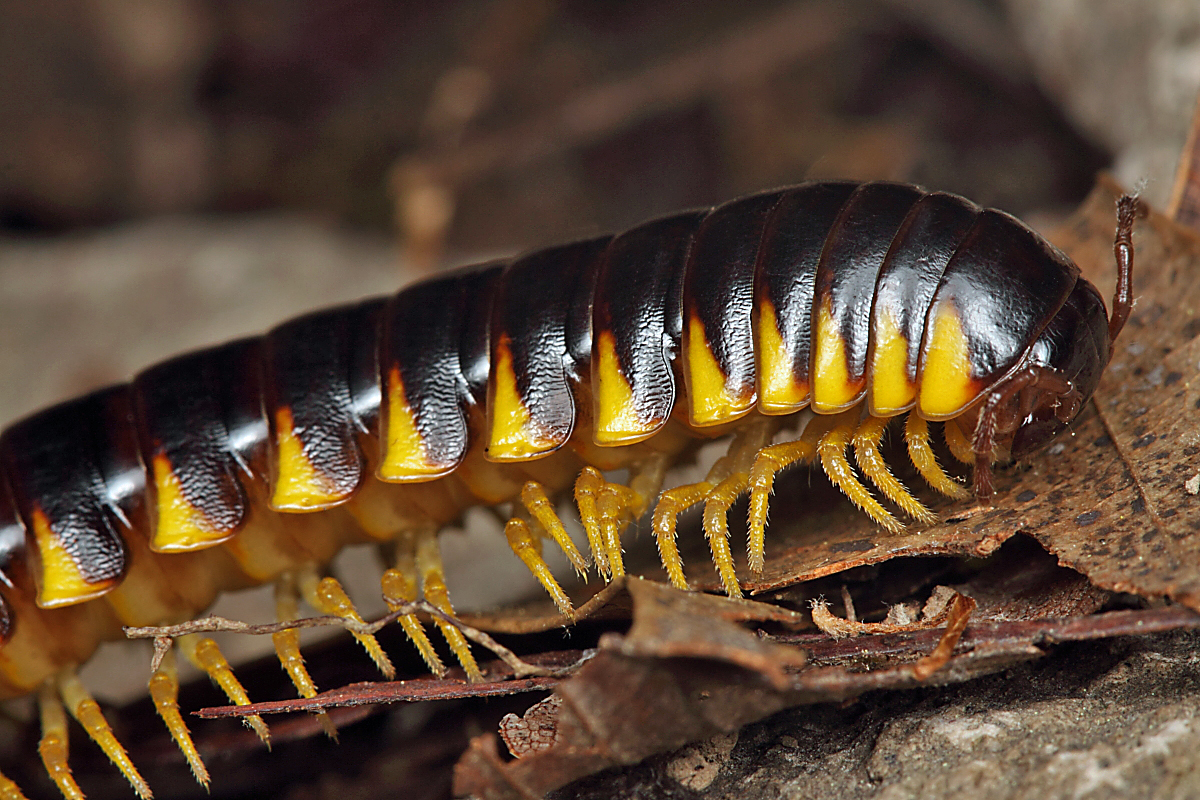
Do you think I’m tasty?

As I hiked the upper stretch of the Shut-Ins Trail at Sam A. Baker State Park in southeastern Missouri, I encountered this 2-inch long millipede slowly making its way across the rocks.  Many millipedes, of course, produce hydrogen cyanide (HCN) as their primary method of defense against predation, and the bright yellow markings of this individual were an obvious sign that this particular species is no exception.  The wrinkled dorsal surface and black coloration with yellow wedge-shaped posterolateral markings identify it as a species of Pleuroloma (BugGuide), and of the four species known from North America (Shelley 1980) only the widespread Pleuroloma flavipes (literally meaning “yellow legs”) occurs as far west as Missouri (Shelley et al. 2004).  A similar pattern of coloration is seen in a number of related genera, e.g. Apheloria, Boraria, and Cherokia—all belonging to the order Polydesmida, presumably functioning across the group as an aposematic (warning) signal to predators that they should be left alone.  Another feature shared by the members of this group is the lateral expansion of the dorsal segments into “paranota,” giving the species a much more flattened appearance than other millipedes with the more typical cylindrical shape.  While all millipedes exhibit diplosegmentation (embryonic fusion of paired body somites and associated legs, spiracles, and ventral nerve cord ganglia), members of the Polydesmida have taken this condition to its culmination with no evidence of external sutures (Myriapoda.org).

The bright coloration of this species was an interesting contrast to the cryptic invisibility of the copperhead snake I had seen just a few moments earlier during the hike—opposite strategies with identical goals.  Defense compounds are, of course, widely employed by many plants and animals; however, only millipedes and a few insects have developed the ability to utilize HCN, a highly toxic compound that halts cellular respiration in most animals through inhibition of the mitochondrial enzyme cytochrome c oxidase.  Evidence suggests that Pleuronota flavipes and other millipedes can tolerate HCN because they possess a resistant terminal oxidase that makes their mitochondria insensitive to the effects of HCN (Hall et al. 1971).

Perhaps some of you will be interested in this recent checklist of the millipedes of North and Central America (Hoffman 1999).

Update 6/13/11: My ID as Pleuroloma flavipes must be considered tentative, as Rowland Shelley has sent me an email with the following comment:

It could be Pleuroloma flavipes Rafinesque, 1820, or it could be Apheloria virginiensis reducta, I can’t really tell from the photos.


REFERENCES:

Hall, F. R., R. M. Hollingworth and D. L. Shankland. 1971. Cyanide tolerance in millipedes: The biochemical basis. Comparative Biochemistry 34:723–737.

Hoffman, R. L.  1999.  Checklist of the millipedes of North and Middle America. Virginia Museum of Natural History Special Publication No. 8, 584 pp.

Shelley, R. M. 1980. Revision of the milliped genus Pleuroloma (Polydesmida: Xystodesmidae). Canadian Journal of Zoology 58:129–168.

Shelley, R. M., C. T. McAllister, and S. B. Smith. 2004. Discovery of the milliped Pleuroloma flavipes in Texas, and other records from west of the Mississippi River (Polydesmida: Xystodesmidae). Entomological News 114 (2003):2–6.

Copyright © Ted C. MacRae 2011

Eye to eye with a copperhead

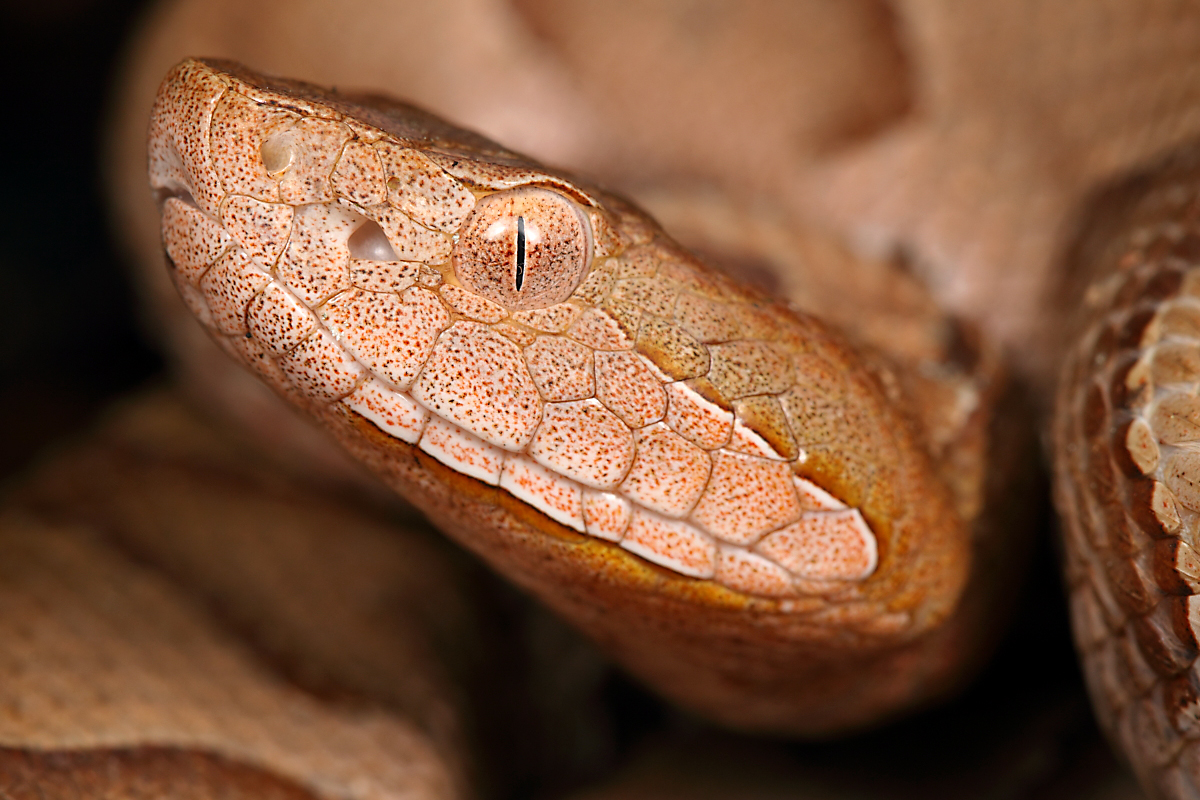
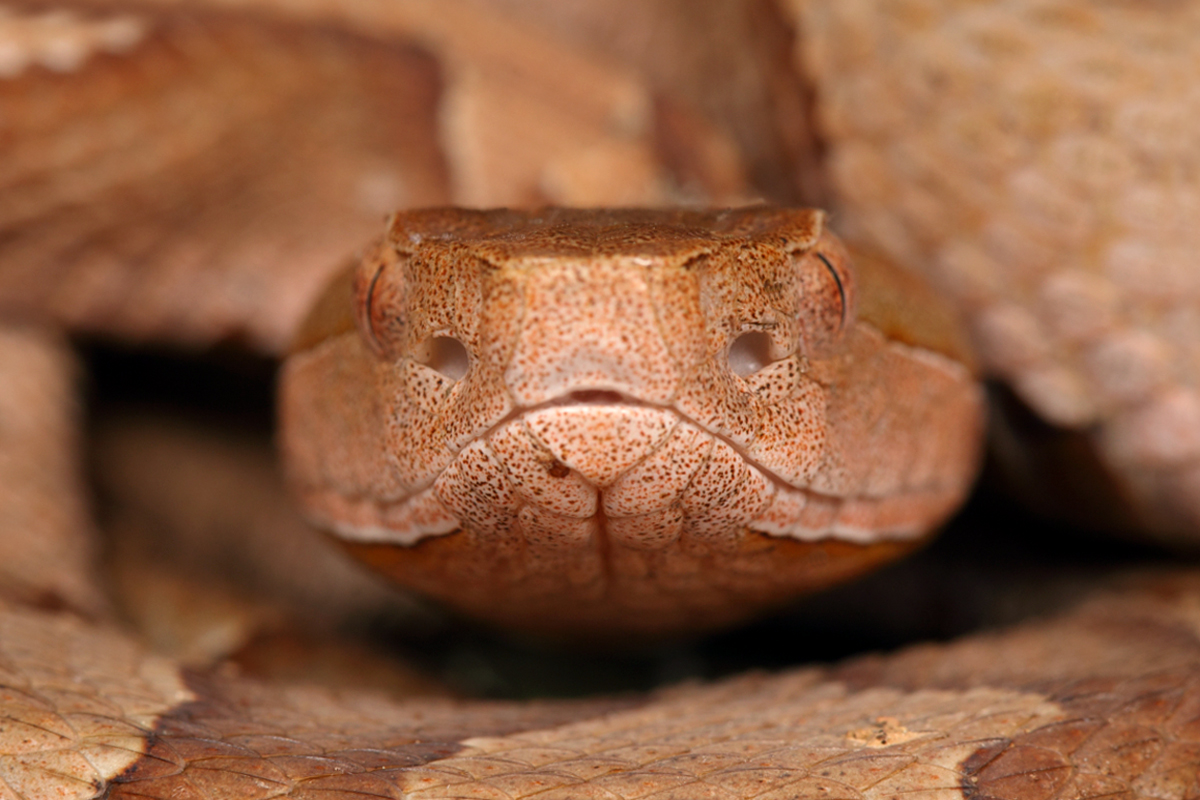
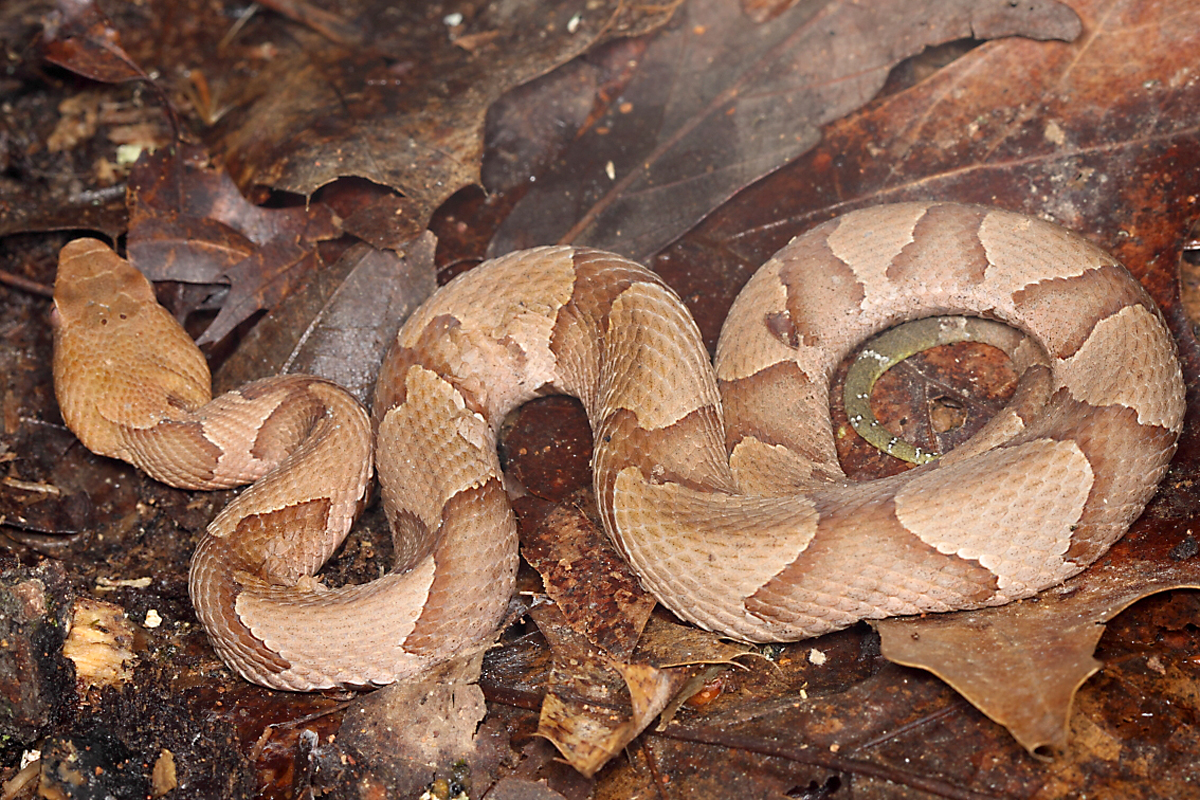
I don’t know what it is about Osage copperheads (Agkistrodon contortrix phaeogaster) that makes every encounter with one so special. They are perhaps the most common of Missouri’s five venomous snake species, and I’ve seen them more often than I can count. Still, every time I see one I simply must stop and marvel. This particular individual was seen a few weeks ago at Sam A. Baker State Park in Missouri’s southeastern Ozark Highlands. You might say it was “sloppy seconds”—I had actually gone to the park to look for timber rattlesnakes (Crotalus horridus), a juvenile of which I had seen during last year’s Annual-Birthday-First-Bug-Collecting-Trip-of-the-Season™ trip. I did not see any rattlesnakes this time, as access to the rockpilish cliffs along Big Creek where I saw the juvenile last year was blocked by high water, but I was quite pleased to find this copperhead underneath a log while we were there.

Copperheads are marvelous photographic subjects. Beautiful, rarely seen by those who don’t know how to look for them, and with an air of “danger” about them. Yet they are among the most docile of all snakes, venomous or otherwise. They don’t use aggression or warning sounds when threatened like cottonmouths (Agkistrodon piscivorus) or rattlesnakes, nor do they dash for cover like most non-venomous species. Instead, they rely on their cryptic, dead-leaf coloration to make them invisible. It works—even I, my eyes tuned to see just about anything after a half-century of clambering through the brush, didn’t immediately notice this individual when I first rolled over the log under which it had taken cover (although I did immediately notice the little red-backed salamander, Plethodon cinereus, at the other end of the area covered by the log). I suspect I’ve walked right by many more copperheads than I have seen, completely unaware of their presence.

Their docile nature also invites extreme close-ups that I wouldn’t dare attempt with a rattlesnake or cottonmouth—at least not without a much longer lens than my 100mm. These photos make it seem that I was right on top of the snake, although at a maximum magnification of around 1:2 there was still a reasonable amount of working distance (I did, however, keep my hands well back of the front of the lens—just for good measure). Still, in all my copperhead experiences, I have never seen a copperhead actually try to strike unless I touched it (not what you think!).

Eventually it’d had enough of our gawking and began to look for new cover.  As it uncoiled, I could see it’s still greenish but not too yellowish tail, indicating that it was still a youngster, though perhaps a little older than the first copperhead I tried to photograph.  We watched it as it crawled into the loose, dry leaves… and disappeared.


Copyright © Ted C. MacRae 2011

Bichos Argentinos #13 – Spotted Maize Beetle

Astylus atromaculatus (spotted maize beetle) | Inés Indart, Argentina.

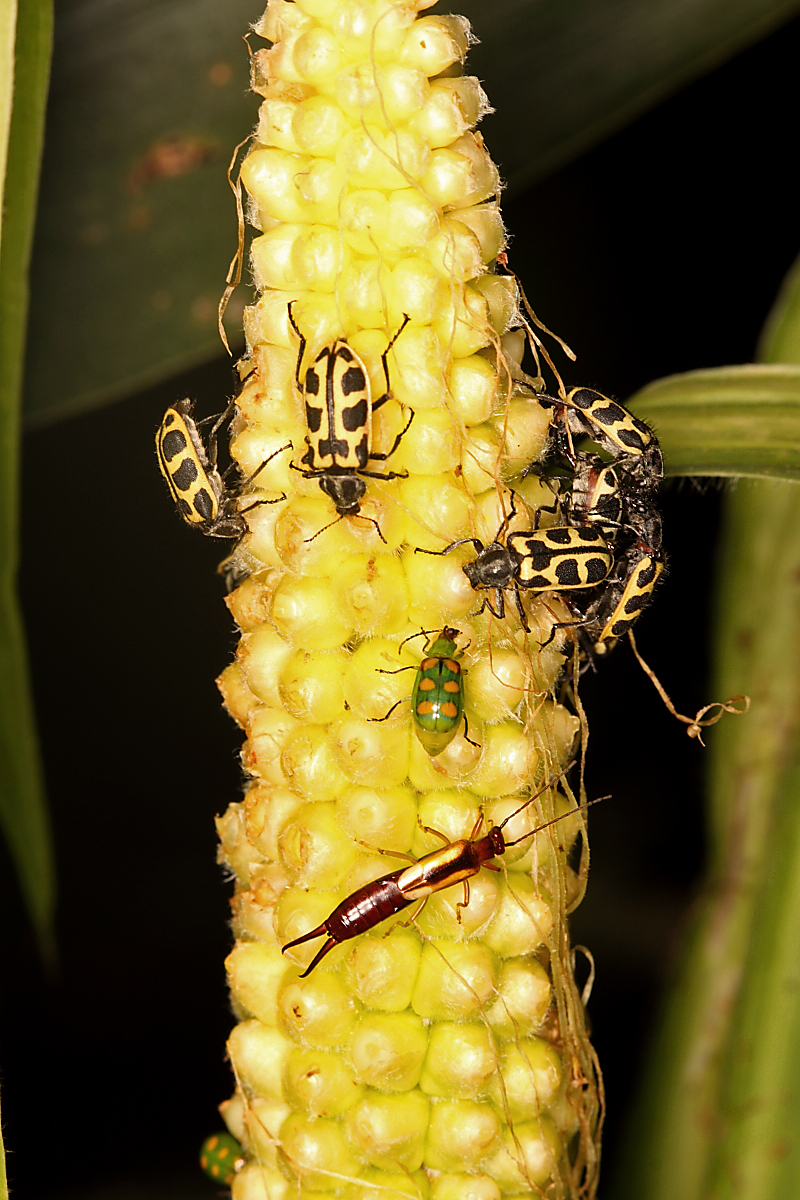
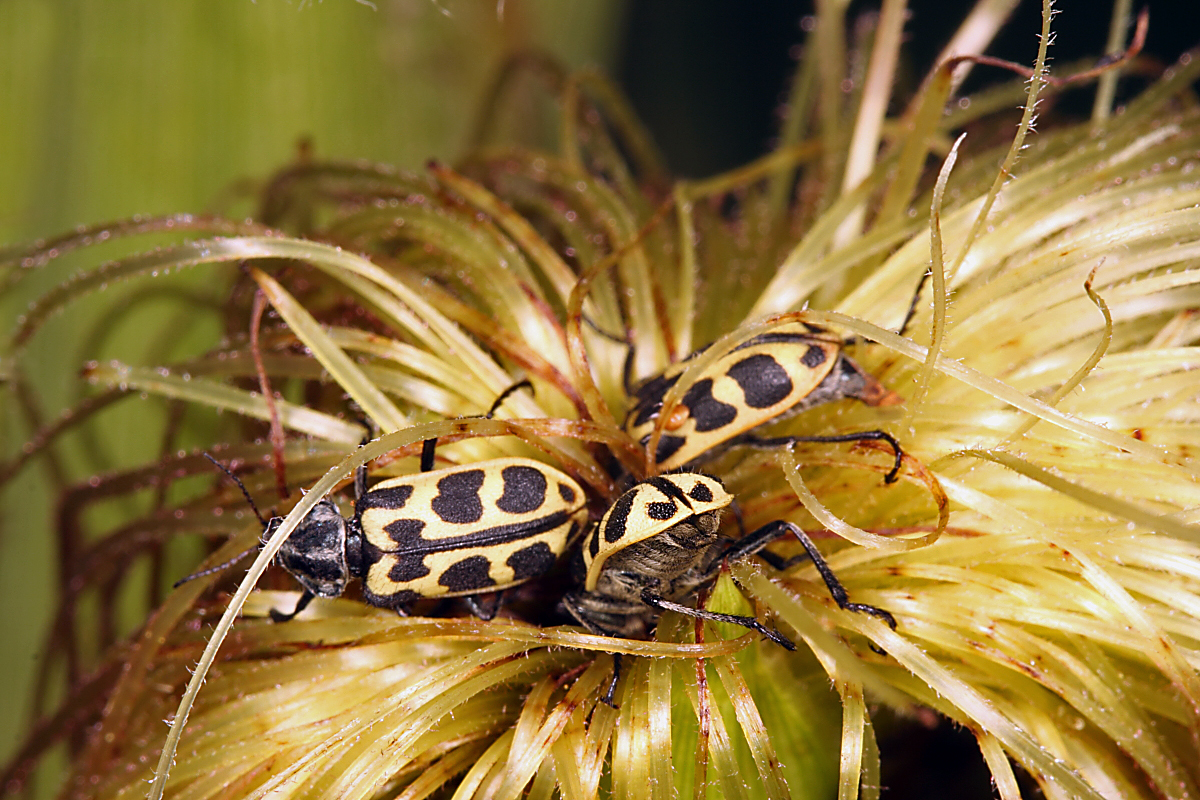
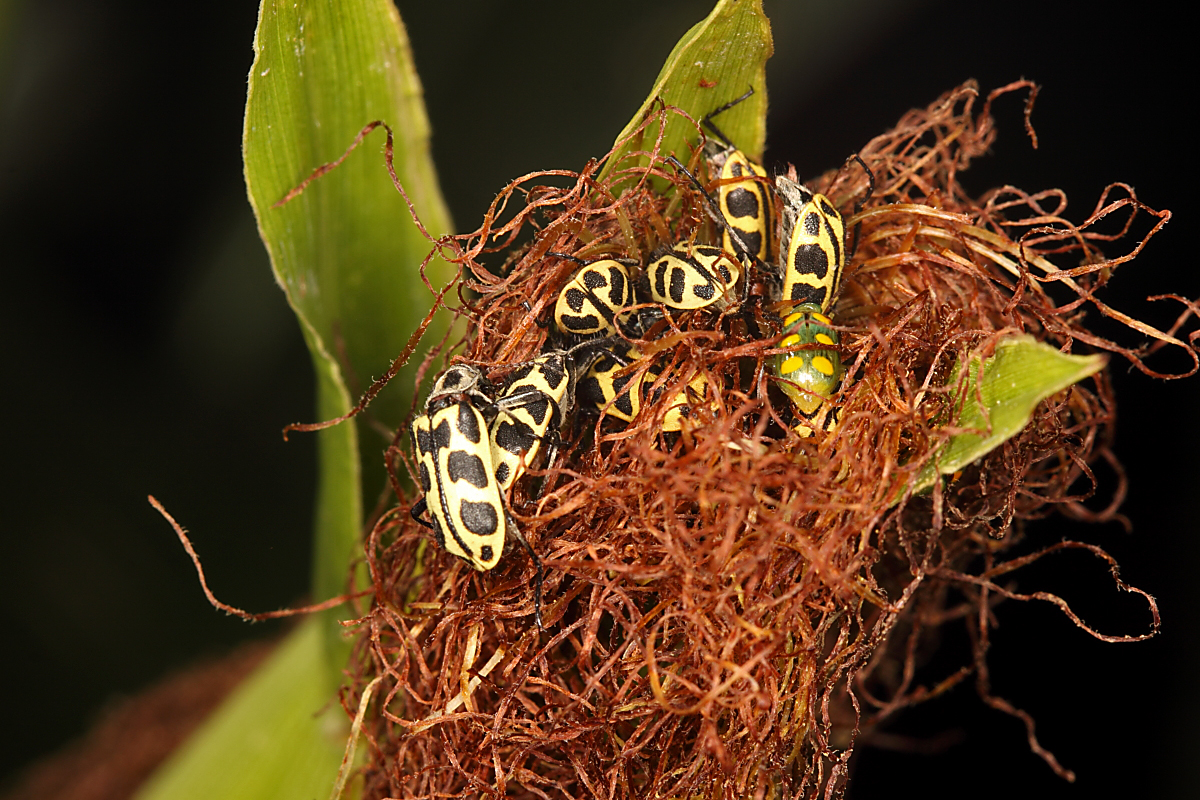
One of the most common insects encountered in agricultural fields in Argentina is Asylus atromaculatus (spotted maize beetle).  This native species can also be found further north in Bolivia and Brazil, and as implied by its common name it is frequently encountered in maize fields.  The species, however, is also common on soybean, on which the individual in the above photo (and mating pair in the previous post) were found.  Looking like some strange cross between a checkered beetle (family Cleridae) and a blister beetle (family Meloidae), it is actually a member of the Melyridae (soft-wing flower beetles)—placed with the Cleridae in the superfamily Clerioidea.

Despite its abundance (and the resultant attention it gets from growers), the pollen feeding adults are of little economic importance.  It’s easy to see, however, why this species gets so much attention from growers—during January through March the adults occur in tremendous numbers, congregating on a wide variety of flowering plants, but especially corn. Their large numbers are an impressive sight, with literally dozens to even hundreds of adults occurring on a single plant. Tassles—the source of corn pollen—are highly preferred, but when populations are heavy the silks and any exposed ears are also popular congregation sites. Despite their numbers, the impact of the beetles on yield is rarely sufficient to warrant the cost of control measures.


Whatever economic impact the species might have is actually due more the larvae—hidden within soil—than to the super-abundant and highly conspicuous adults. Feeding primarily on decaying plant matter within the soil, larvae do occasionally attack newly planted corn, either before or just after germination. Their attacks are more common in dry years and in severe cases can lead to the need to replant a field. This seems to be more common in South Africa, where the species was introduced in the early 1900s, than in its native distribution in South America.


Whenever I see a ubiquitous, diurnal, brightly and contrastingly colored insect, the first suspicion that comes to my mind is aposematic (warning) coloration and chemical defense against predation. There seems to have been some investigation into the toxicity of this species (Kellerman et al. 1972), and in South Africa they have been implicated in poisoning of livestock when accidentally ingested with forage (Bellamy 1985).  Few other reports of toxicity by beetles in this family are known, but four species of the genus Choresine have been shown to produce high levels of batrachotoxin alkaloids—these are the same toxins found in the skin of poison-dart frogs of the genus Phyllobates (Dumbacher 2004).  The frogs are unable to synthesize these toxins themselves, thus, it is presumed that they sequester these compounds from their diet—whether it is from some species of Melyridae remains to be determined.

Congratulations to Alex Wild and Max Barclay, who both answered the call to ID Challenge #8 and correctly determined all taxa from order to species.  Alex, by way of submitting his ID first, gets a bonus point and leads the current BitB Challenge session with 9 points.  Thanks to the rest who played along as well—see my response to your comments for your points earnings.

REFERENCES:

Bellamy, C. L. 1985.  Cleroidea, pp. 237–241.  In: Scholtz, C. H. and E. Holm (Eds.), Insects of Southern Africa, Butterworths, Durban.

Dumbacher, W. A., S. R. Derrickson, A. Samuelson, T. F. Spande and J. W. Daly. 2004.  Melyrid beetles (Choresine): a putative source for the batrachotoxin alkaloids found in poison-dart frogs and toxic passerine birds.  Proceedings of the National Academy of Sciences, USA 101(45):15857–15860.

Kellerman, T. S., T. F. Adelaar and J. A. Minne. 1972. The toxicity of the pollen beetle Astylus atromaculatus Blanch. Journal of the South African Veterinary Medical Association 43(4):377–381.

Copyright © Ted C. MacRae 2011