I see that Delbert La Rue at Crooked Beak Workshop has received my package and is happy with its contents!

Copyright © Ted C. MacRae 2013
I see that Delbert La Rue at Crooked Beak Workshop has received my package and is happy with its contents!
Copyright © Ted C. MacRae 2013
On occasion I receive photos from readers that are so remarkable I simply must share them (with the owner’s permission, of course). Recently I received a note from Len de Beer in Maputo, Mozambique, who was looking for help identifying a tiger beetle he had photographed on the beaches of the Maputo elephant reserve. My knowledge of Afrotropical tiger beetles is rudimentary, so I had to tap the expertise of fellow cicindelophile Dave Brzoska for the ID (many thanks, Dave), but in the ensuing correspondence Len sent me the following photograph that he took of another tiger beetle species while living in Madagascar:
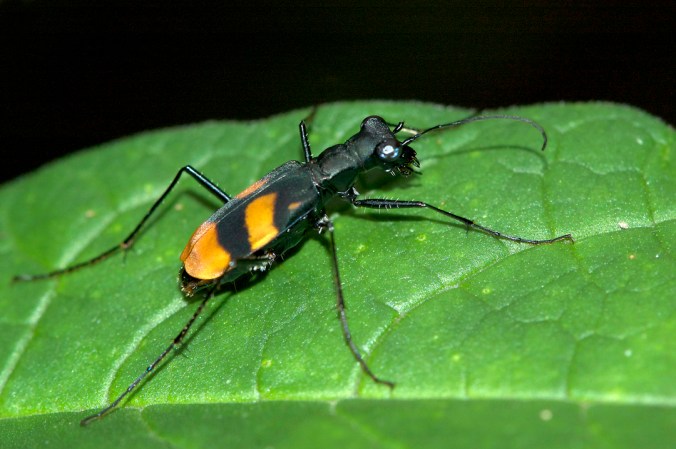
The mimic: Peridexia hilaris | Anzojorobe, Madagascar (photo © Len de Beer)
A spectacular species to be sure, but the story behind its appearance is even more remarkable. This tiger beetle is one of two species in the Madagascan-endemic genus Peridexia, both of which exhibit color patterns that are a near-perfect match for that of the local pompilid wasp, Pogonius venustipennis (see photo below). According to Pearson & Vogler (2001), not only do these tiger beetles share the wasp’s bright yellow and black color pattern, but they also run in constant small circles (rather than the distinct, straight-line sprints that are more typical of tiger beetles) and fly readily when frightened, only to land again on the forest floor. These running and flying behaviors more closely resemble the foraging movements of the wasp than the movements of a typical tiger beetle, resulting in mimicry so effective that even tiger beetle collectors have been fooled and stung on the fingers when they attempted to collect their first Peridexia!

The model: Pogonius venustipennis (photo © Len de Beer)
Camouflage is the most widely observed predator avoidance mechanism in tiger beetles, with numerous species known whose color patterns closely resemble or otherwise allow them to blend in with the color and texture of the soils found in their preferred habitats. Nevertheless, mimicry is common enough (although anecdotal evidence still far outweighs true experimental evidence). Pearson & Volgler (2001) list examples of tiger beetles resembling mutillid wasps (commonly called “velvet ants”) from North and South America, as well as India, and also mention a South American tiger beetle species, Ctenostoma regium, that is the same size and shape as Paraponera clavata (or “bullet ant”), a large solitary species that is purported to pack the most painful of all insect stings (that this is true, I am inclined to agree). Tiger beetles can also serve as models—there is a katydid in Borneo whose immatures bear a remarkable resemblance to arboreal species of tiger beetles in the genus Tricondyla (Pearson & Vogler 2001, Plates 26 and 27). It has also been suggested that mimicry in tiger beetles might not be restricted to Batesian associations (unprotected mimic and harmful model) but may also include Müllerian associations (both model and mimic are distasteful or harmful).
My sincere thanks to Len de Beer for allowing me to post his photographs of this remarkable tiger beetle and the wasp it mimics.
REFERENCE:
Pearson, D. L. & A. P. Vogler. 2001. Tiger Beetles: The Evolution, Ecology, and Diversity of the Cicindelids. Cornell University Press, Ithaca, New York, xiii + 333 pp.
Copyright © Ted C. MacRae 2013 (text)
I really wish I had a photomicrography setup like the one that Sam Heads has at the University of Illinois for imaging preserved specimens. Alas, insect taxonomy is “just a hobby” for me, and any specimen photography I wish to do must be done with my field camera equipment. Of course, poverty prompts creativity (not that I consider a Canon 50D with an MP-E 65mm macro lens and MT-24EX twin flash unit a sign of poverty), and after a bit of tinkering and fiddling I’ve figured out a way to setup the specimen and flash units to create images of pinned specimens that I think are more than adequate for publication in taxonomic papers.
Here is one I did recently of the jewel beetle Actenodes calcaratus (family Buprestidae). This species is broadly distributed from the southwestern U.S. through Mexico and into Central America, where it breeds in dead branches of a variety of mostly fabaceous trees such as Acacia and Prosopis. During several trips to southern Mexico in recent years, Chuck Bellamy and I collected two new species of Actenodes that look very similar to A. calcaratus but differ in several important characters, primarily surface sculpture, the form and male coloration of the face, and male genitalia. A manuscript describing these two species and containing this and similar images of the new species was recently submitted for publication. Though not quite as razor-sharp as images created through focus-stacking processes, it still shows good detail and even lighting. What do you think?¹
¹ For those who find the pin head distracting, I am not a proponent of cloning out pin heads, debris, or other imperfections on images of preserved specimens in taxonomic papers. Other enhancements such as levels, sharpness, contrast, etc. are fine since these are all influenced greatly by lighting, but otherwise I believe the specimen needs to be presented exactly as it appears. A possible alternative is to remove the pin for imaging, but this presents a risk of damage to the specimen that is of questionable benefit in the case of non-type specimens—and downright irresponsible for primary types. Another alternative is to thoroughly clean and image the specimen prior to mounting, but this is rarely feasible as in most cases it is only after the specimen is mounted and studied further that its status as a new species is realized.
![Actenodes calcaratus | MEXICO: Guerrero, Hwy 95, 5 km S Milpillas, 7.vii.1992, "big dead tree", G. H. Nelson [FSCA]. Male plesiotype.](https://beetlesinthebush.com/wp-content/uploads/2013/02/img_2176_enh_720x1080.jpg?w=676)
Actenodes calcaratus | MEXICO: Guerrero, Hwy 95, 5 km S Milpillas, 7.vii.1992, “big dead tree”, G. H. Nelson [FSCA]. Male plesiotype.
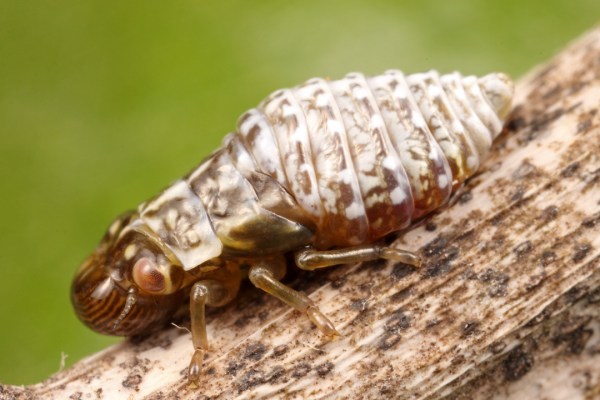
Cephisus siccifolia 3rd instar nymph | Buenos Aires, Argentina
Even though it was November (and thus spring in Argentina), conditions were already unusually dry—a portent of the worst drought that would hit Argentina in 70 years. Because of this, I found the occasional wet spot on the pavement as I walked the trails in La Reserva Ecológica Costanera Sur rather odd. At first I thought they were spit—the trails were popular on this day for runners and bike riders, but I quickly realized that those would have to be some truly ginormous spit wads based on the size of the splatter. It wasn’t long before I thought to look up, and this is what I saw on the branch directly above me:
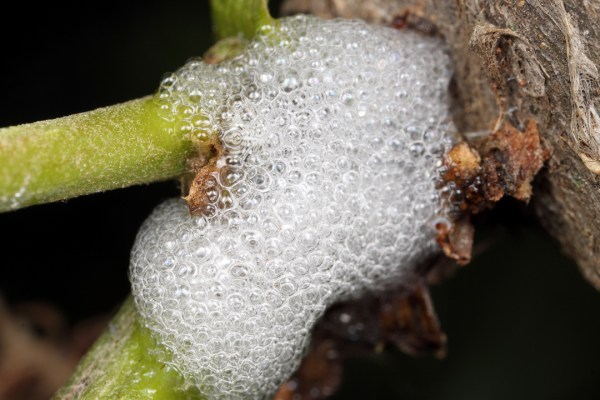
Cephisus siccifolia spittle mass on unknown species of tree.
I knew right away this was the work of a froghopper, or “spittlebug,” a true bug (order Hemiptera) in the family Cercopidae. Spittlebugs are common in the eastern U.S. where I live and are famous for the spit-like wads of froth (“cuckoo spit” to some) within which the nymphs conceal themselves until they reach adulthood. Our eastern U.S. species, however, are most commonly seen on herbaceous plants rather than in trees, and the frothy masses they produce are fairly small—about the size of a real wad of spit (at least, according to my direct comparison when I was 12 years old). The spittle masses I was seeing today were enormous, frothy, liquid masses that literally dripped from the trees by their own weight—raining spit!

Nymphs produce bubbles by siphoning air into a channel under the abdomen.
I was about to move on when I noticed some movement in the spittle mass. A closer look through the macro lens revealed the tip of the abdomen of a nymph slowly circling around near the surface of the spittle and creating new bubbles as it did this. As one can imagine, living inside a mass of bubbly liquid presents a challenge to breathing, and the nymphs get around this problem by protruding the tip of the abdomen outside the spittle mass and taking in air through a tubelike canal below the abdomen (Hamilton & Morales 1992). Strong contractions of the abdomen inside the spittle mass eject air from the canal, resulting in bubble formation.

Nymphs partially exposed by removal of spittle mass.
I sent these photos to Andy Hamilton (Canadian National Collection of Insects, Arachnids and Nematodes), specialist in world Cercopidae, to see if there was any chance he might recognize the genus or species based on these photos. I noted that these were the biggest spittlebug nymphs I had ever seen (the individual in the first photo measuring ~10mm in length). Not only did he recognize them as belonging to the genus Cephisus, but he was actually in the process of finishing up a revision of the New World members of the tribe Ptyelini—Cephisus being the sole New World genus to represent the tribe. Based on its white coloration and occurrence as far south as Buenos Aires, Argentina, he suggested this must be C. siccifolia—a species that can sometimes achieve economic pest status (Ribeiro et al. 2005) but which still apparently needs to be properly recorded from Argentina (Hamilton 2012). Based on degree of wing pad development, Andy surmises the individual in Photo #1 represents a 3rd instar (if the 3rd instar measures 10 mm, can you imagine the size of the 5th instars?!). Andy asked me if I would grant him use of the photos in his soon-to-be-published revision (of course I agreed), and here is the plate with the photos (as well as an adult photographed by someone else) as it appears in his paper:

As Andy notes in his paper, it seems rather unusual that Cephisus is the only tribal representative in the New World despite having successfully colonized all of its tropical and subtropical mainland areas. There are several other genera in the tribe in Africa, which would suggest that the Ptyelini arose prior to the late Cretaceous rifting that separated South America and Africa into two continents. It is thus puzzling why the tribe went on to further diversify in Africa but not in the New World.
A tight crop of Photo #3 above was featured in Super Crop Challenge #15, for which Ben Coulter was the hands-down winner. Honestly I thought this might end up being a slam dunk challenge—people have gotten very good at designing Google search strings to come up with answers that in pre-internet days might have been impossible to find. Nobody stumbled upon the magic search string for this challenge—”MacRae Cercopidae” which pulls up the Hamilton paper and above plate as the very first result. Still, Ben used good old fashioned intuition based on the locality tag to correctly surmise the species and take the early lead in BitB Challenge Session #7. Congratulations, Ben!
REFERENCES:
Hamilton, K. G. A. 2012. Revision of Neotropical aphrophorine spittlebugs, part 1: Ptyelini (Hemiptera, Cercopoidea). Zootaxa 3497:41–59.
Hamilton, K. G. A. & C. F. Morales. 1992. Cercopidae (Insecta: Homoptera). Fauna of New Zealand 25, 40 pages.
Ribeiro, G. T., M. da Costa Mendonça, J. Basílio de Mesquita, J. C. Zanuncio G. S. & Carvalho. 2005. Spittlebug Cephisus siccifolius damaging eucalypt plants in the State of Bahia, Brazil. Pesquisa Agropecuária Brasileira 40(7):unpaginated.
Copyright © Ted C. MacRae 2013
I’ve been fortunate to have the chance to travel far and wide in my searches for insects—from the Gypsum Hills of the Great Plains and Sky Islands of the desert southwest to the subtropical riparian woodlands of the Lower Rio Grande Valley, tropical thorn forests of southern Mexico and veld of southern Africa. No matter how far I travel, however, I’m always happy to return to the Missouri Ozarks. It is here where I cut my entomological teeth so many years ago, and though I’ve now scrabbled around these ancient hills for more than three decades it continues to satisfy my thirst for natural history. Though not nearly as expansive as the Great Plains, there are nevertheless innumerable nooks and crannies nestled in the Ozarks, and I find myself constantly torn between looking for new spots (it would take several lifetimes to find them all) and going back to old favorites. Living in the northeastern “foothills” in the outskirts of St. Louis provides an ideal vantage for exploration; however, sometimes I am truly amazed at the natural history gems that can be found within a stone’s throw from my house. Some examples I’ve featured previously include Shaw Nature Reserve, home to a hotspot of the one-spotted tiger beetle, Castlewood State Park, where I found a gorgeously reddish population of the eastern big sand tiger beetle, and Victoria Glades Natural Area, site of the very first new species (and perhaps also the most beautiful) that I ever collected.

Englemann Woods Natural Area | Franklin Co., Missouri
Today I found another such area—Englemann Woods Natural Area, and at only 5 miles from my doorstep it is the closest natural gem that I have yet encountered. One of the last old-growth forests in the state, its deep loess deposits on dolomite bedrock overlooking the Missouri River valley support rich, mesic forests on the moister north and east facing slopes and dry-mesic forests on the drier west-facing slopes dissected by rich, wet-mesic forests with their hundreds-of-years-old trees. A remarkable forest of white oak, ash, basswood and maple in an area dominated by monotonous second-growth oak/hickory forests.
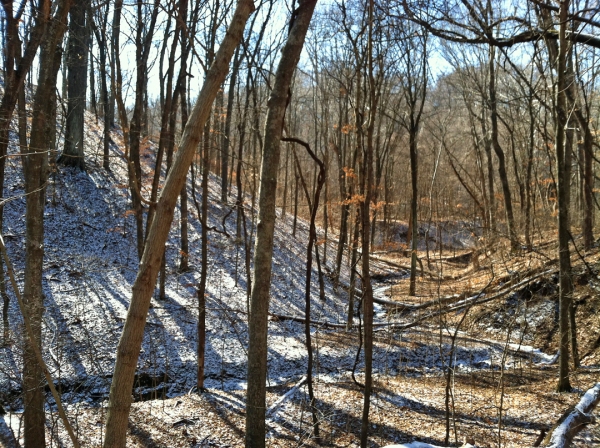
Steep north-facing slopes border the Missouri River valley.
It is not, however, the 200-year-old trees that will bring me back to this spot, but rather the understory on the north and east-facing slopes. Here occur some of the richest stands of eastern hornbean (Ostrya virginiana) that I have ever seen. This diminutive forest understory inhabitant is not particularly rare in Missouri, but as it prefers rather moist upland situations it is not commonly encountered in the dry-mesic forests that dominate much of the Ozarks. Stands of this tree, a member of the birch family (Betulaceae) are easy to spot in winter due to their habit of holding onto their dried canopy of tawny-brown leaves (see photo below).
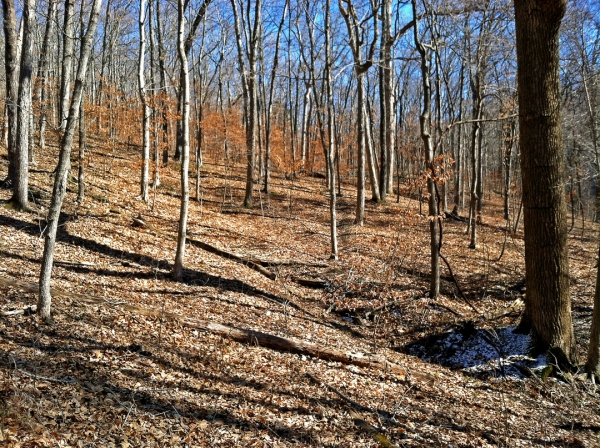
Rich stands of eastern hornbeam (Ostrya virginiana) dominate the north- and east-slope understory.
Why am I so interested in this plant? It is the primary host of the jewel beetle species Agrilus champlaini. Unlike most other members of the genus, this species breeds in living trees rather than dead wood, their larvae creating characteristic swellings (galls, if you will) on the twigs and stems as they spiral around under the bark feeding on the cambium tissues before entering the wood to pupate and emerge as adults in spring. This species is known in Missouri from just two specimens, both collected by me way back in the 1980s as they emerged from galls that I had collected during the winter at two locations much further away from St. Louis. The presence of this rich stand of hornbeam just 5 miles from my home gives me the opportunity to not only search the area more thoroughly to look for the presence of galls from which I might rear additional specimens, but also to look for adults on their hosts during spring and (possibly, hopefully) succeed in photographing them alive.
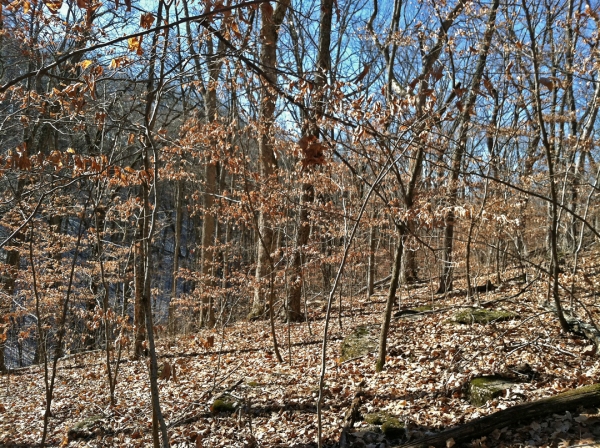
Inside the “hornbeam forest.”
Another “draw” for me is the restoration work that has begun on some of the west-facing slopes in the areas. Pre-settlement Missouri was a far less wooded place than it is today, as evidenced by the richly descriptive writings penned by Henry Schoolcraft during his horseback journey through the Ozarks in the early 1800’s. At the interface between the great deciduous forests to the east and the expansive grasslands to the west, the forests of Missouri were historically a shifting mosaic of savanna and woodland mediated by fire. Relatively drier west-facing slopes were more prone to the occurrence of these fires, resulting in open woodlands with more diverse herbaceous and shrub layers. At the far extreme these habitats are most properly called “xeric dolomite/limestone prairie” but nearly universally referred to by Missourians as “glades”—islands of prairie in a sea of forest! I have sampled glades extensively in Missouri over the years, and they are perhaps my favorite of all Missouri habitats. However, it is not future glades or savannas that have me excited about Englemann Woods but rather the availability of freshly dead wood for jewel beetles and longhorned beetles resulting from the selective logging that has taken place as a first step towards restoration of such habitats on these west-slopes. The downed trees on these slopes and subsequent mortality of some still standing trees that is likely to result from the sudden exposure of their shade adapted trunks to full sun are likely to serve as a sink for these beetles for several years to come. I will want to use all the tools at my disposal for sampling them while I have this opportunity—beating, attraction to ultraviolet lights, and fermenting bait traps being the primary ones. It looks like I’d better stock up on molasses and cheap beer!
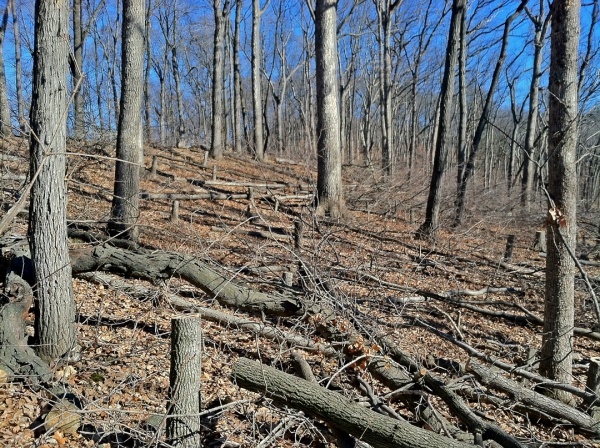
Restoration efforts on the west-facing slopes begins with selective logging.
Eastern red-cedar (Juniperus virginiana) is native to Missouri, but in our time it has become a major, invasive pest tree. The suppression of fire that came with settlement also freed this tree from a major constraining influence on its establishment in various habitats around the state, primarily dolomite/limestone glades. Nowadays most former glade habitats, unless actively managed to prevent it, have become choked with stands of this tree, resulting in shading out of the sun-loving plants that historically occurred much more commonly in the state. Untold dollars are spent each year by landscape managers on mechanical removal and controlled burns to remove red-cedar and prevent its reestablishment in these habitats. There is one habitat in Missouri, however, in which eastern red-cedar has reigned supreme for centuries or possibly millenia—dolomite/limestone bluff faces.
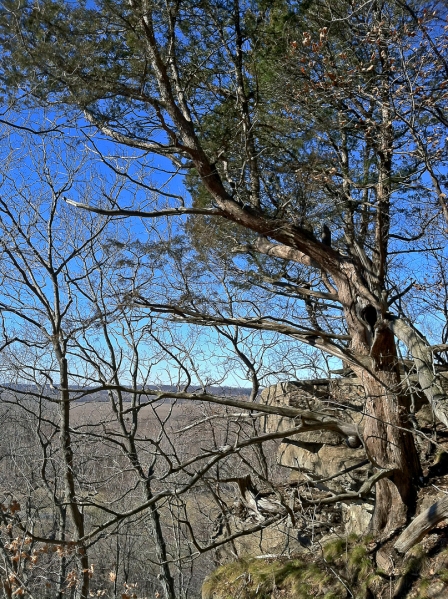
Craggly, old Eastern red-cedars (Juniperus virginiana) cling tenaciously to the towering dolomite bluffs.
With little more than a crack in the rock to serve as a toehold, red-cedars thrive where no other tree can, growing slowly, their gnarled trunks contorted and branches twisted by exposure to sun and wind and chronic lack of moisture. Some of the oldest trees in Missouri are red-cedars living on bluffs, with the oldest example reported coming from Missouri at an incredible 750–800 years old. There is something awe-inspiring about seeing a living organism that existed in my home state before there were roads and cars and guns. These ancient trees are now an easy drive from my house (though a rather strenuous 300-ft bushwhacking ascent to reach the bluff tops)—they seem ironically vulnerable now after having endured for so long against the forces of nature. For me, they will serve as a spiritual draw—a reason to return to this place again regardless of what success I might have at finding insects in the coming months.
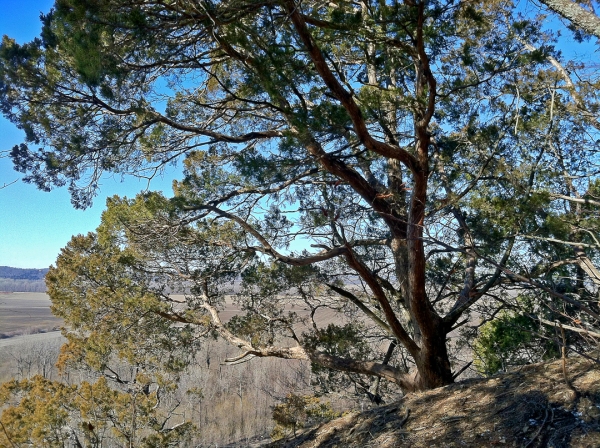
This tree may pre-date Eurpoean settlement.

Adam-and-Eve orchid (Aplectrum hyemale).
Copyright © Ted C. MacRae 2013
Can you identify the structure in the photo below (2 pts), what it is doing (2 pts), and the organism to which it belongs (order, family, genus, and species—2 pts each)? Comments will be held in moderation so everybody has a chance to participate, although there are early-bird bonus points on offer. Read the full rules for details on how (and how not) to earn points. Good luck!

Copyright © Ted C. MacRae 2013
One of the comments on my post Diffuser comparisons for 100mm macro lens was by Stephen Barlow, one of the original “concave diffuser” advocates, who claimed that the “dead” appearance of Photo #4 was an artifact of post-processing and not really a problem with the diffusion method itself. Heeding this comment, I reprocessed Photo #4 to see if this was really all that was needed to give it a “livelier” look by rather aggressively bumping up the brightness and contrast by 30% each (to correct for underexposure), then reducing the saturation by 10% (to correct for the effect on color caused by increased brightness and contrast), adjusted levels to a set point of 240 to add some more “high end,” and reduced highlights and shadows just a bit (10% each). Following is the original and then the reprocessed version of Photo #4:

Original post-processing

Additional post-processing.
There is no question that this additional reprocessing has greatly improved the photo. However, after I did this I got to thinking—why not try combining the two diffusers that gave the best results? Recall that the diffusion method in Photo #5 (SoftBoxes on flexible arm extenders) easily “won the vote” over Photo #4 (open concave diffuser) by a 2:1 margin (35 to 17). This may have been at least partly a result of the less than flattering post-processing of the original version of #4, but still the overall lighting effect on Photo #5 caused by the diffusion method used was quite dramatic. The only downside of the #5 method was the persistence of hot spots (albeit muted) from the flash heads and a dark background with lots of shadowing caused by light drop off (since the flash heads were mounted on the lens rather than extenders). Double diffusers are nothing new, the idea being that the first diffuser spreads the light out more before it hits the second diffuser than does a bare flash head, allowing even further diffusion of the light the reaches the subject (and background) for truly even lighting. I reasoned that using SoftBoxes on flexible arm extenders plus the concave diffuser would not only accomplish double diffusion but also allow controlled placement of the flash heads close to the specimen to maximize apparent light size and minimize light drop off. To test this I re-shot the same beetle with the same camera settings, and here is the result:

Flash heads mounted on flexible arms, diffused by SoftBoxes + open concave diffuser
My personal opinion is that this photo combines the best of both methods. While loss of light can be a problem with double diffusion, my use of extenders to place the flash heads close to the subject minimizes, or perhaps even completely negates this problem. Additionally, while subtle hot spots are still apparent, they are not nearly as apparent as in Photo #5 (SoftBox diffusers on extenders w/o concave diffuser—refresh your memory here) due to the additional diffusion, which also dramatically reduces shadowing as a result of better light throw. The hot spots are also more subtle than in #4 because of the larger apparent light size (a combination of closer flash head placement and the SoftBoxes), and is it just me or are the colors more vibrant and life-like in this photo compared to #4 (even reprocessed)? The flat colors were my biggest criticism of Photo #4, and even heavy-handed reprocessing, while helpful, didn’t completely bring it “back to life.” In contrast, the double-diffused photo required only typical post-processing to achieve a more than acceptable result—I have to believe that, all other things being equal, a photo that requires less post-processing is better than one that requires more.
Of course, using a setup like this in the studio is one thing—using it in the field is another. Both the extenders and the oversized concave diffuser are likely to make things a little clumsier in the field, and the two combined may be more clumsiness than I care to deal with. Nevertheless, the results from my test shots are certainly promising enough to give it an honest effort. Have I finally found a viable solution to diffusion in long-lens, full-flash macrophotography? We’ll find out this summer!
Copyright © Ted C. MacRae 2013
Recently my friend Kent Fothergill launched a series of posts ranting about discussing the difficulties associated with common names. The inaugural post featured the insect I show here, Dectes texanus, a member of the family Cerambycidae (longhorned beetles) that has gained attention in recent years as an occasional pest of soybeans, especially in the upper Mississippi Delta (Tindall et al. 2010). As is usual, when an otherwise obscure little insect suddenly begins costing somebody money people feel compelled to give it a common name. Rather than the uninspired “soybean stem borer” or ironically Latin-ish “Dectes stem borer” monikers that seem to have taken hold for this species, Kent jokingly suggested that if people were serious about common names, this insect should actually be called the “Texas prick” as a direct translation of the scientific name.¹
¹ Actually, I couldn’t find any reference to the word “Dectes” as a Latin word or “prick” as its English translation. Rather, my copy of Brown (1956) lists dectes as a Greek word meaning “biter.” I think this must be what LeConte (1852) had in mind when he first coined the genus name, since he mentions among the characters that define the genus several features of the mandibles. If that is the case, then to be accurate the alternate common name for this beetle should be the “Texas biter.” However, that name causes nothing like the snicker that “Texas prick” elicits, and since common names are bound by no rules whatsoever, I choose levity over accuracy and stick with Kent’s proposed name.

Dectes texanus | Washington Co., Mississippi
Being the pedantic, anal retentive, taxonomist-type that I am, it may surprise you to learn that I actually don’t have a problem with common names. To be honest, however, I will admit that this is a fairly recent change-of-mind for me—for many years I was a die-hard “scientific-names-only” type of guy. I not only thought common names were useless (for all the reasons listed by everybody who opposes them), but I even refused to learn them—my geek passive aggression, I guess. In the years since I started this blog, however, I’ve not only grown less oppositional in my stance, but have actually learned to embrace common names for what they are—comfortable names that don’t intimidate the taxonomically disinclined. Labels is all they are, and if one common name can refer to several species or several common names refer to one species, it’s not the end of the world. Common names aren’t meant to replace scientific names—how could they? Scientific names fulfill a special set of needs for a select group of people (i.e., to reflect phylogeny), and despite its flaws the Linnaean system of nomenclature that has been in use for the past several hundred years has served this purpose better than any other system devised. The reason for this is because genus and species names also provide a convenient and relatively easily memorizable system of labels that allow scientists to actually talk about organisms in a way that makes sense. This is an advantage that the Linnaean system has over any numerical phylogenetic system, no matter how much more precisely the latter can indicate phylogeny. For scientists, scientific names, in effect, serve a dual purpose. Non-taxonomists, however, don’t need dual purpose names—they just want easy-to-say and easy-to-remember labels, and if common names engage more people in a discussion about nature and its inhabitants then I’m all for it.

Accepted common name: Dectes stem borer; BitB common name: ”Texas Prick”
This is not to say that I will ever give up scientific names. I love scientific names, and it is my goal in life to know as many of them as possible—even synonyms (I know, sick!). I also think that scientific names are not as scary as some people believe. Boa constrictor, for example (yes, that is both its common and scientific name), or gorilla (Gorilla gorilla)… or Dectes stem borer! To help bridge the gap, I have taken to mentioning, as a matter of practice, both the scientific name and—when one exists—the common name for the insects and other organisms featured on this blog. This applies not only at the species level, but families and other higher taxa also (e.g., “jewel beetles, family Buprestidae”). It is my way of talking science in a way that welcomes the interested lay person. Considering the increasingly anti-science din in our country by creationists, climate change denialists, knee-jerk GM critics, etc., I think the more we can get scientists and non-scientists comfortable talking to each other the better off we will be.
The insect featured in this post was found and photographed in a field of cultivated soybeans in northeastern Mississippi. It’s identification as Dectes texanus (other than its association with soybean) is based on the face being only slightly protruding and the relatively large lower lobe of the eye. There is one other species in the genus, D. sayi, also broadly distributed in the U.S. but distinguished from D. texanus by its distinctly more protruding face and small lower eye lobe (giving the impression of “tall cheeks”). This species, too, is known to bore in the stems of soybean but is much happier doing so in common ragweed (Ambrosia artemisiifolia) (Piper 1978). The species name—sayi—was given to honor the 19th century entomologist Thomas Say, regarded by many as the ‘Father of American entomology.’ This species also has been called “soybean stem borer” by some, which doesn’t do much to alleviate concerns about common names referring to multiple species. I am reluctant, however, for reasons of respect, to use the common name for D. sayi that results if one uses the same rationale used by Kent in coining his common name for D. texanus…
REFERENCES:
Brown, R. W. 1956. Composition of Scientific Words. Smithsonian Institution Press, Washington, D.C., 882 pp.
LeConte, J. L. 1852. An attempt to classify the longicorn Coleoptera of the part of America north of Mexico. Journal of the Academy of Natural Sciences Philadelphia (series 2) 2(1):99–112.
Piper, G. L. 1978. Biology and immature stages of Dectes sayi Dillon and Dillon (Coleoptera: Cerambycidae). The Coleopterists Bulletin 32(4):299–306.
Tindall K. V., S. Stewart, F. Musser, G. Lorenz, W. Bailey, J. House, R. Henry, D. Hastings, M. Wallace & K. Fothergill. 2010. Distribution of the long-horned beetle, Dectes texanus, in soybeans of Missouri, Western Tennessee, Mississippi, and Arkansas. Journal of Insect Science 10:178 available online: insectscience.org/10.178.
Copyright © Ted C. MacRae 2013
 Beetles In The Bush