Alder, Maple, and Nuttall’s Flowering Dogwood make beautiful bowers over swift, cool streams at an elevation of from 3000 to 5000 feet, mixed more or less with willows and cottonwood; and above these in lake basins the aspen forms fine ornamental groves, and lets its light shine gloriously in the autumn months.–John Muir, The Mountains of California (1894).

This is the third installment of a “Trees of Lake Tahoe” series summarizing the trees of Tahoe Basin. The basin forests are, of course, dominated by a diverse assemblage of conifers – eleven species in all. These were covered in parts 1 (Trees of Lake Tahoe – The Pines) and 2 (Trees of Lake Tahoe – The “Other” Conifers ) of this series. Yet, despite this coniferous domination, the 14 species of deciduous trees¹ that occur in the Tahoe Basin is three more than the number of coniferous tree species. These deciduous tree species will be covered in this third and final part, including the nine species I was able to locate on my recent visit to the area back in mid-March. Because of the timing of that trip, the trees will be discussed from a decidedly wintertime perspective that makes species identifications a little more challenging compared to the coniferous species.
¹ Admittedly, I use the term “tree” in the broadest sense, since many of these species might better be described as “tree-like shrubs” or “shrubby trees,” often representing only the largest examples of genera whose members include a number of true shrubs. Only a handful of these species routinely form large, unmistakably tree-like forms, the largest of which still pale in comparison to the coniferous giants that dominate the basin.
Family SALICACEAE
This family of dioecious plants (male and female flowers on separate plants) is represented in the Tahoe Basin by two genera. Two species of Populus occur here, and both decidedly trees in form. Most of the nine species of Salix that grow in the basin grow only as shrubs, while two of them sometimes form distinct trees.
Quaking aspen (Populus tremuloides)
…in winter, after every leaf has fallen, the white bark of the boles and branches seen in mass seems like a cloud of mist that has settled close down on the mountain, conforming to all its hollows and ridges like a mantle, yet roughened on the surface with innumerable ascending spires.–John Muir, Steep Trails (1918).
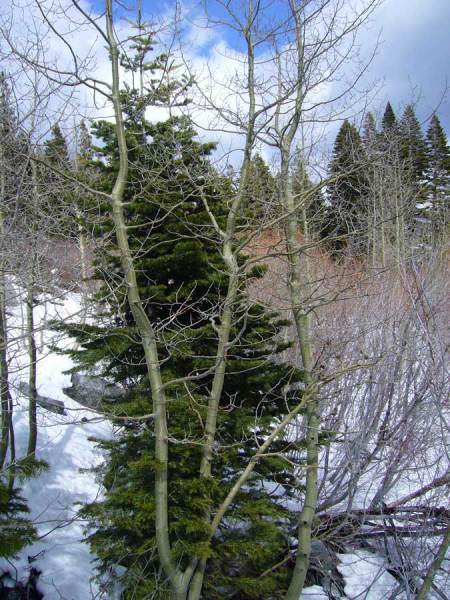

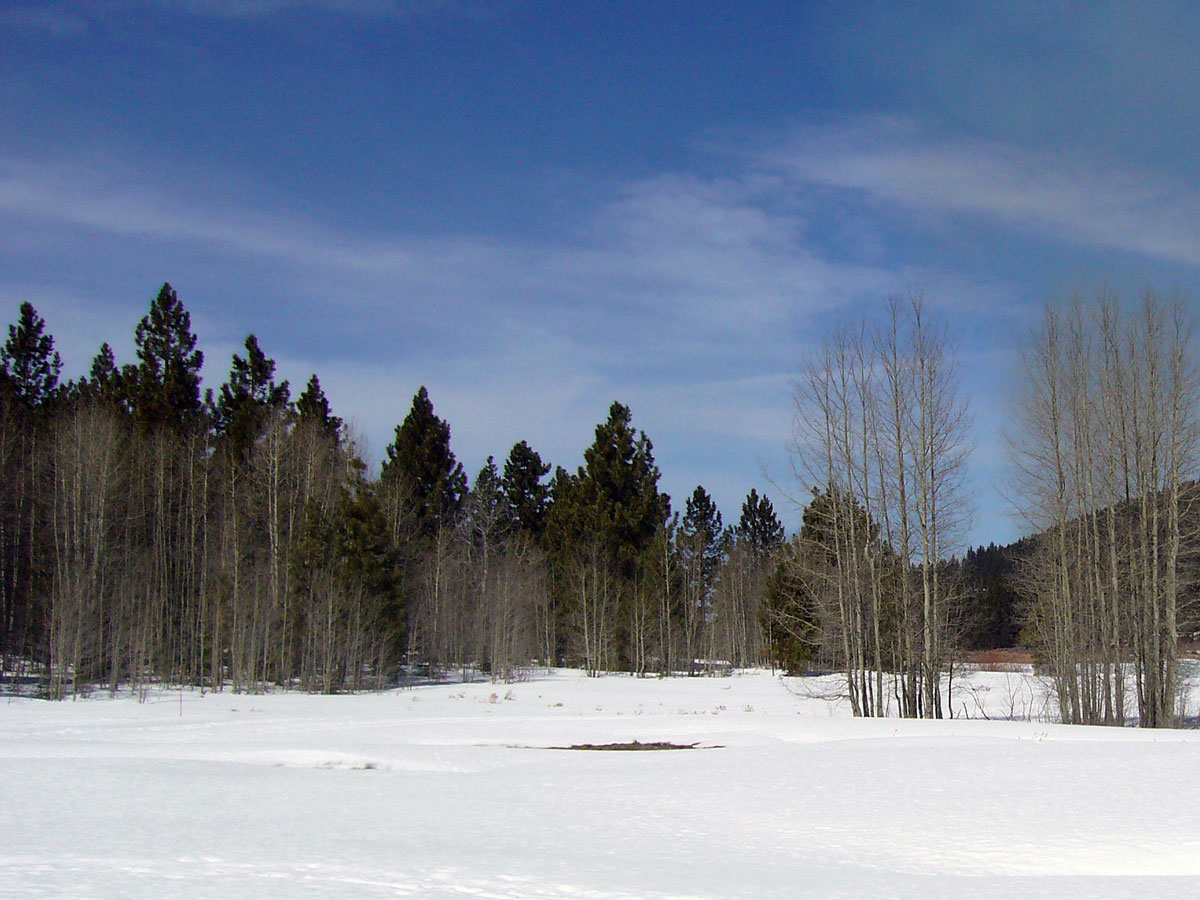
Quaking aspen is one of the most unmistakable trees of the Tahoe Basin – regardless of the season. Famous for its shimmering foliage during summer and blazing fall colors, it is equally distinctive during winter when its smooth, creamy, greenish-white trunks stand in stark, leafless contrast to the dark green coniferous foliage that cloaks the landscape. Thick stands of this species are common in moist meadows and stream margins, with stands typically representing clonal colonies of genetically identical trees sprouting from a common root mat. Although another species of Populus does occur in the basin (black cottonwood – see below), that species is not nearly as abundant as quaking aspen and lacks its distinctive smooth bark.
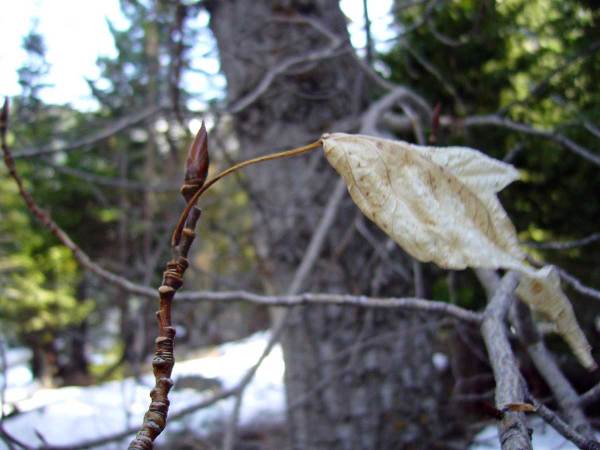
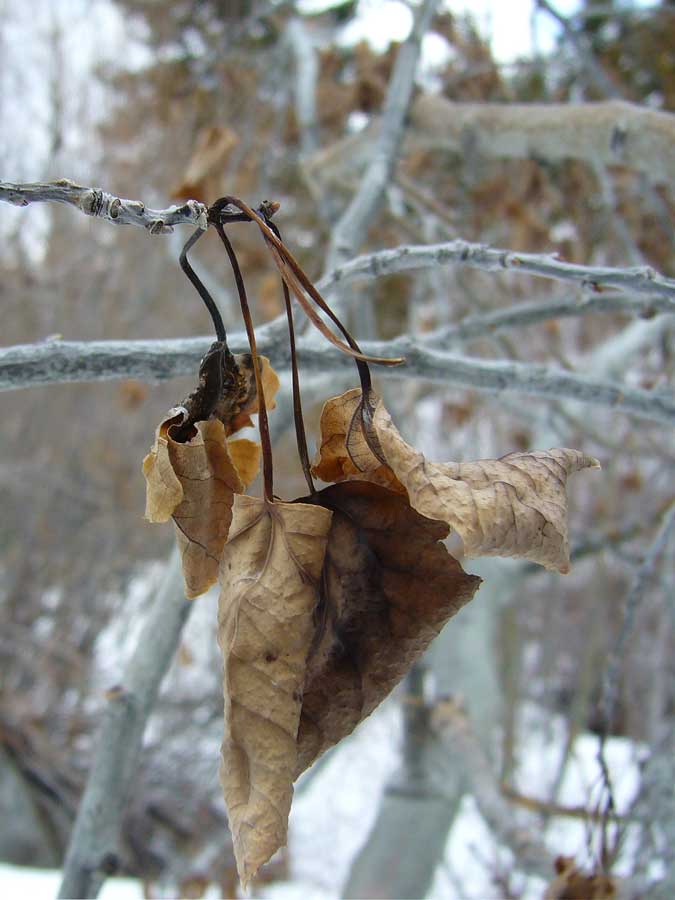
The second photo above shows some of the few, still-clinging leaves that I found, unremarkable in senescence but showing the flattened petioles that cause to summertime leaves to flutter and quiver incessantly with the summer breezes, alternately flashing their bright green upper surface and silvery underside.
Black cottonwood (Populus balsamifera ssp. trichocarpa)

Black cottonwood is the largest American Populus and the tallest non-conifer in western North America. Growing throughout the cool, moist Pacific Northwest, it is at its elevational limit in the Sierra Nevada along moist streams and lakeside habitats in the lower Tahoe Basin. The wonderfully knowledgeable Forest Service worker, who helped me greatly in my quest to locate all of the basin’s conifers, was skeptical about my chances of finding this species; however, while hiking the Rubicon Trail at Emerald Bay State Park I spotted the unmistakable, deeply furrowed, gray bark of this close relative of our own eastern cottonwood (Populus deltoides). Examining the twigs revealed the large, pointed buds, sticky with resin, and a few clinging leaves whose wide, ovate shape confirmed the species’ identity. It was the only black cottonwood I saw in the basin, although surely others exist throughout the basin at lakeside elevations.
Willows (Salix spp.)
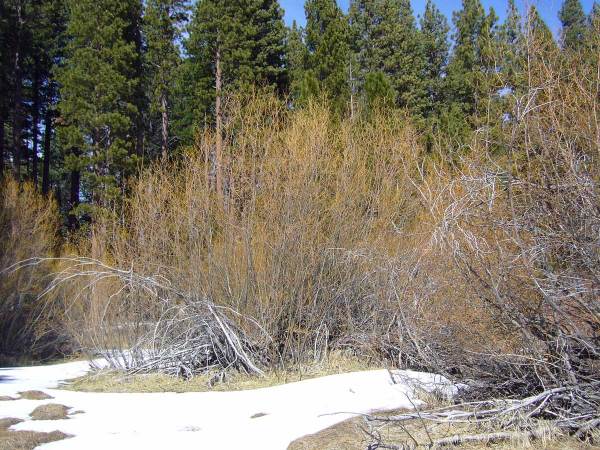
As a group, willows are easily distinguished from the other deciduous trees and shrubs that occur in the Tahoe Basin. However, discriminating among the several species can be quite difficult, even for trained botanists. Winter is not the best time to try to identify willows, as many species are distinguished by characters of the foliage and flowers. In some cases, examination of both male and female flowers is required – frustrating since they are borne on separate plants! Wintertime characters normally useful for other plants such as bark and twig color are rarely informative for different species of willow, and even growth habit as trees or shrubs can vary greatly within species depending on elevation and available moisture. All of this is a long-winded way of saying I don’t know which or how many species of willow I observed in the Tahoe Basin.
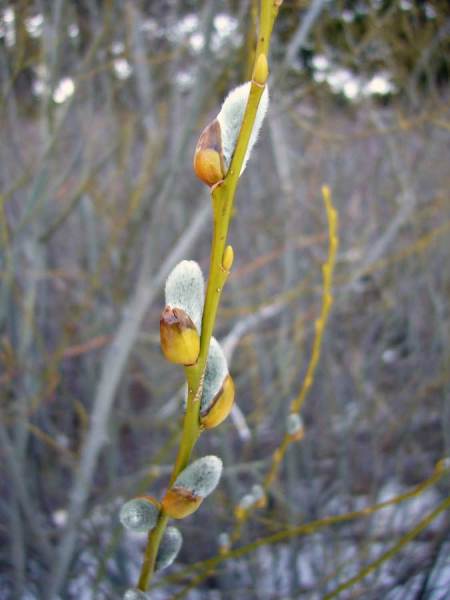
 According to Graf (1999), there are nine species of willow in the Tahoe Basin; however, only two of them are trees – the abundant shining willow (S. lucida spp. lasiandra), and the more drought-tolerant Scouler’s willow (S. scouleriana). The remaining seven species are shrubs that rarely exceed 10-12 feet in height. Indeed, one of them – arctic willow (Salix arctica) – grows no more than 4 inches tall, occurring in seepy slopes and along lake and stream margins in the subalpine zone at Carson Pass. Most of the willows I observed were at lower elevation along the shore of Emerald Bay and in the wet meadows around South Lake Tahoe and Spooner Lake and were growing as large shrubs or small trees and exhibited either bright yellow or red bark on the year-old branches, turning to smooth gray on older branches. I don’t know whether these represent one or more species, or if they even represent one of the two arborescent species, but I suspect the yellow-twigged species may represent Lemmon’s willow (S. lemmonii), one of the shub species and Tahoe’s most common willow. Perhaps a stretch goal for next year’s trip could be to find and distinguish all nine Tahoe Basin willow species, but realistically I would settle for knowing for sure what species the plants in these photographs represent (although I definitely would like to find the diminutive arctic willow).
Family BETULACEAE
Like the Salicaceae, plants in this family have male and female flowers on separate structures called catkins, but the plants themselves are monoecious (both sexes on the same plant). Two genera – Alnus and Betula – occur in the basin, each represented by one species.
Mountain alder (Alnus incana ssp. tenuifolia)
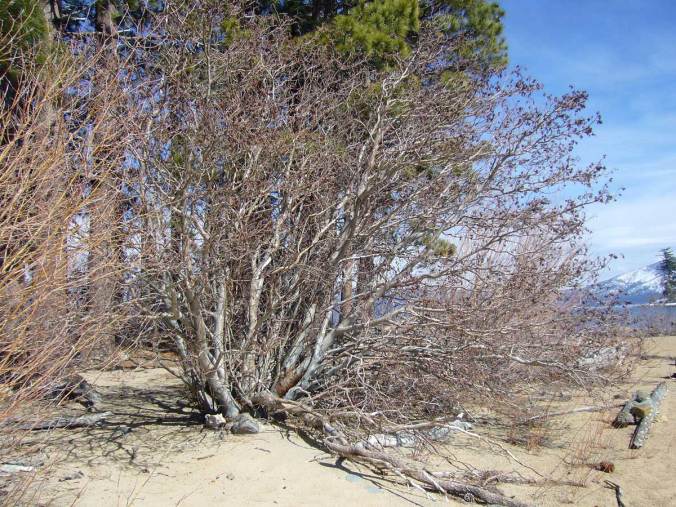

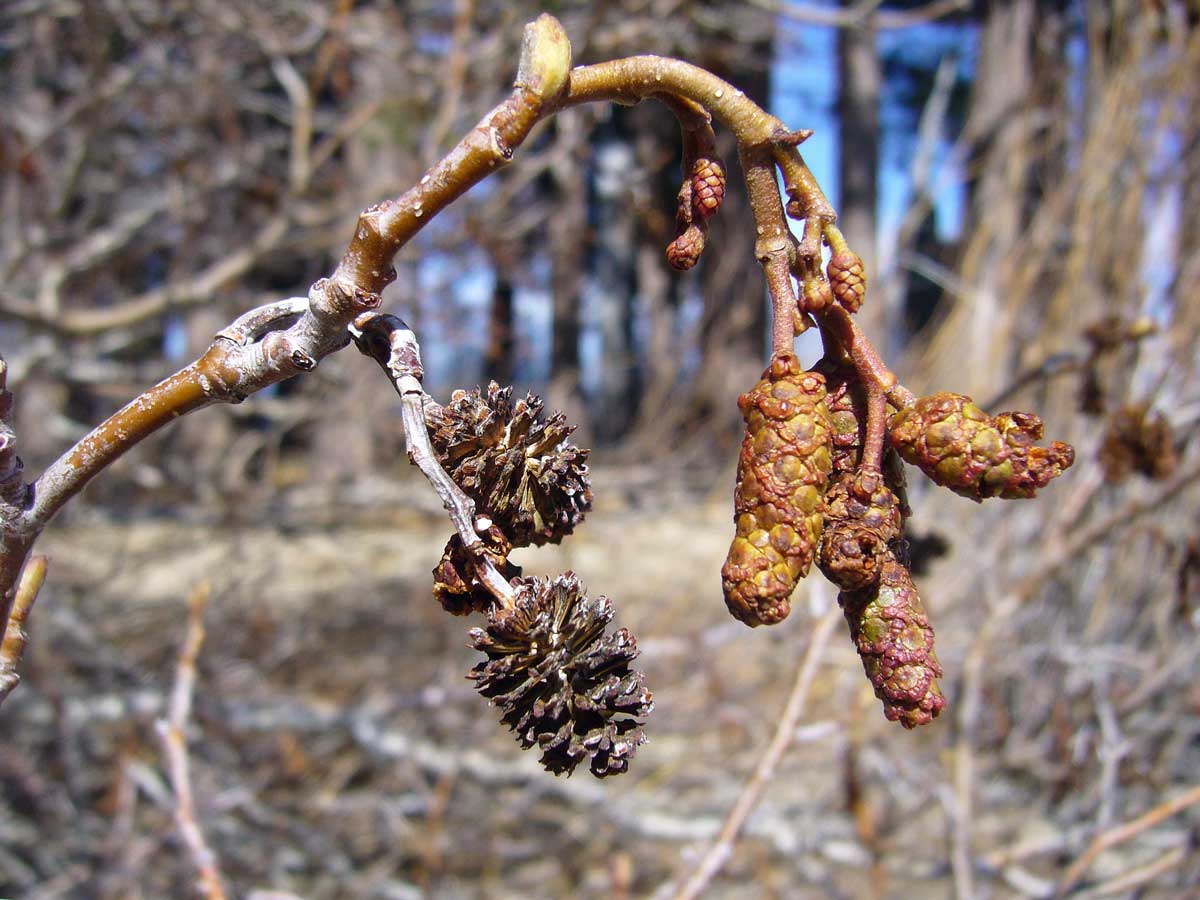
Like the willows, mountain alder is another deciduous plant that straddles the line between tree and shrub, and as is typical of most species in these two plant families (Salicaceae and Betulaceae) the species shows a high affinity for moist sites along stream and lake margins and on seepy north- and east-facing slopes. The largest specimens I saw, as pictured above left, were found growing on the granite sand beaches along the Rubicon Trail on the western shore of Emerald Bay in Emerald Bay State Park. Like alders anywhere, this species is immediately recognizeable in winter due to the persistent woody cones that represent the previous year’s female catkins. Another larger species of alder, white alder (A. rhombifolia), occurs in the Sierra Nevada, but it is not clear to me whether this species actually occurs in the Tahoe Basin proper. Graf (1999) does not include it in his rather comprehensive treatment of Tahoe Basin plants, but Peterson & Peterson (1975) and Quinn (2006) both list it from the basin (although rare).
Water birch (Betula occidentalis)
I did not observe this species, which Graf (1999) records from Carson Pass. The only birch occurring in the Sierra Nevada, it is more common outside the basin proper on the eastern slopes above the burning sagebrush plains. Like alder, separate male and female catkins are borne on the same tree; however, the female catkins of birch are solitary rather than clustered and disintegrate when ripe rather than persisting as woody cones.
Family FAGACEAE
This family contains the über diverse genus Quercus – represented in California by 20 species. However, of the five arborescent oaks that occur in the Sierra Nevada, only one has successfully penetrated the high elevations of the Tahoe Basin. A second species of Quercus also inhabits this montane region but grows exclusively as a low shrub, and another shrub in the related genus Chrysolepis also grows here – these two latter species will be treated more fully in a future post.
Canyon live oak (Quercus chrysolepis)
The trunk was all knots and buttresses, gray like granite, and about as angular and irregular as the boulders on which it was growing—a type of steadfast, unwedgeable strength.–John Muir, The Mountains of California (1894).


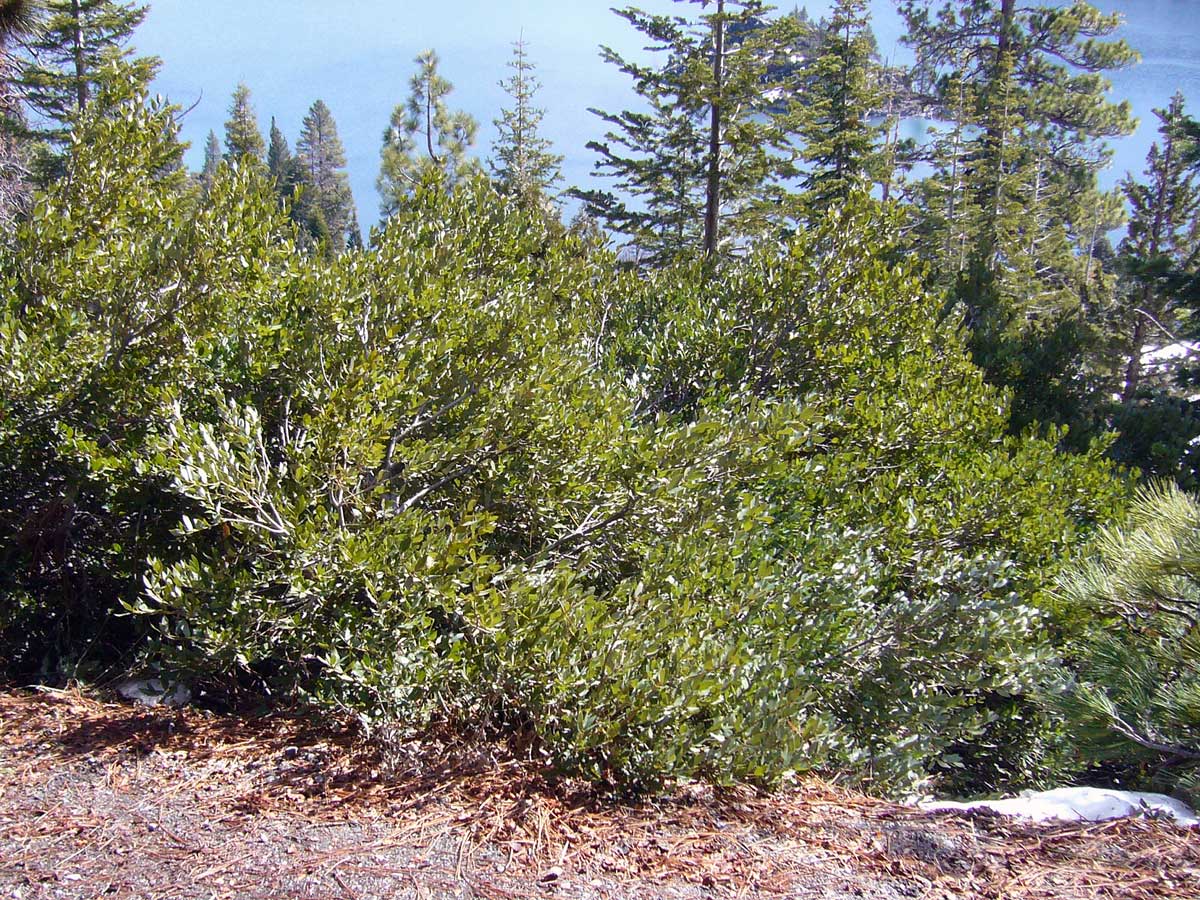
This is one of North America’s most variable oaks, exhibiting extreme variability in leaves and fruit and developing as either a tree or a shrub, depending upon the site where it grows. Slow growing and solid, it does best in sheltered locations, where it can develop an impressive, spreading crown and live a hundred years or more. On exposed slopes, it takes on a shorter, shrubbier aspect (above left) or forms dense thickets (above right). I saw most of this species at lower elevations within the basin – along the Vikingsholm Trail in Emerald Bay State park leading down to the west shore of Emerald Bay.
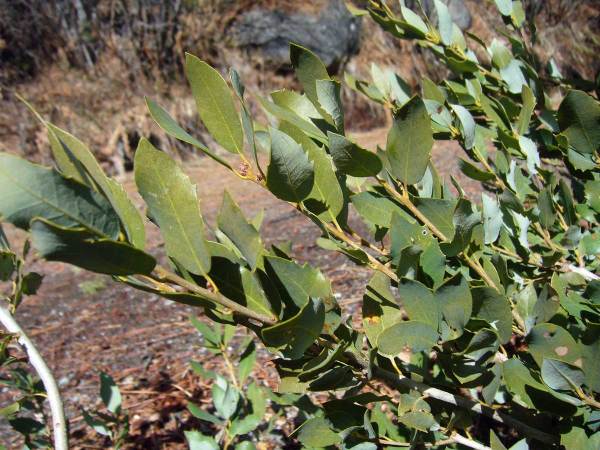
The leaves of this evergreen species are bluish green with numerous golden glandular hairs when young and becoming dull gray and smooth with age. Although there are no other arborescent oaks at this elevation with which it can be confused, I did find growing alongside it the strictly montane and shrubby huckleberry oak (Q. vaccinifolia). The somewhat smaller, mostly entire leaves were the only indication it was not merely a shrub form of canyon live oak, and further study revealed that the two species can be distinguished by the presence of multiradiate glandular hairs on both leaf surfaces of canyon live oak. These two species are closely related (both are in the Protobalanus – or “golden oak” – section of the genus), and widespread hybridization has apparently been documented in this part of the Sierra Nevada where the two species’ distributions overlap (Nixon 2002).
Family ROSACEAE
This large family of dioecious plants with usually pentamerous radial flowers is represented in the Tahoe Basin by nearly three dozen mostly perennial shrubs. Six of these species, representing the genera Amelanchier, Cercocarpus, Prunus and Sorbus, sometimes develop a tree form.
Cherry (Prunus sp.)
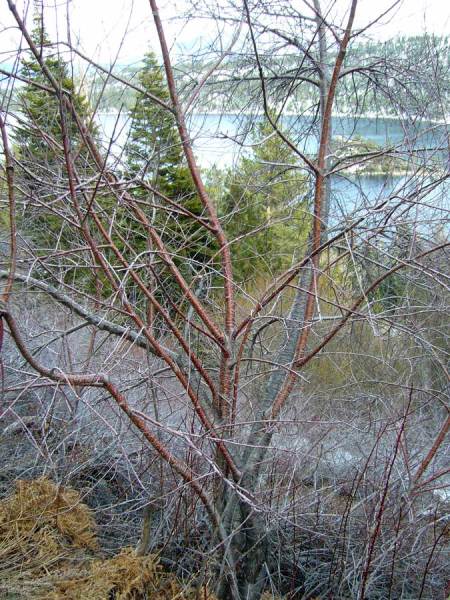

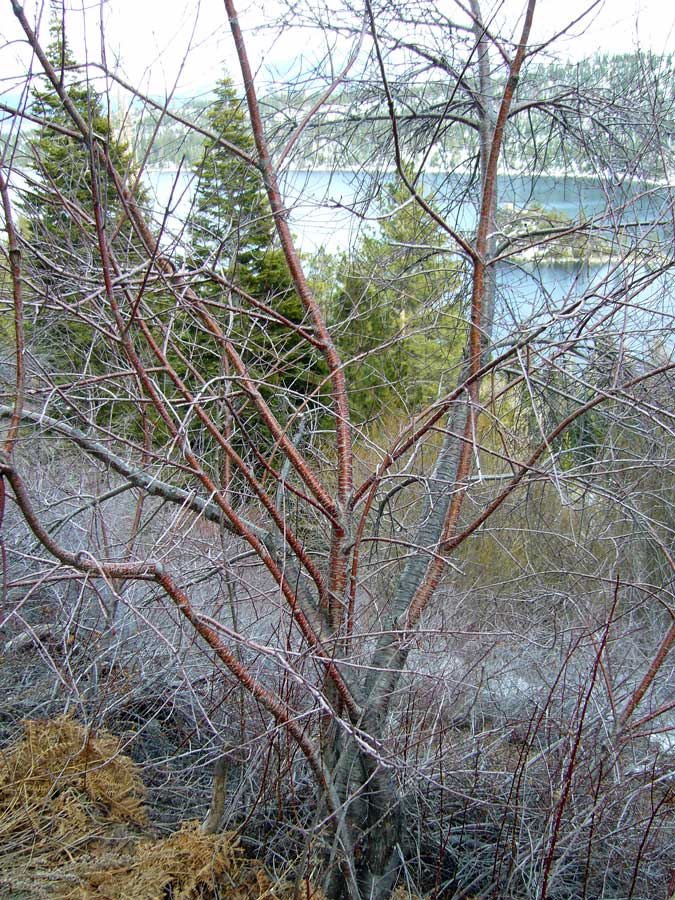
Two species of Prunus – bitter cherry (P. emarginata) and western chokecherry (P. virginiana var. demissa) – occur in the Tahoe Basin, both growing as either shrubs or small trees. I cannot say for sure which species is represented in these photographs (taken on the slopes above Emerald Bay at Emerald Bay State Park), as the two species are best distinguished by subtle differences in their flowers and foliage. Bitter cherry is apparently common in the Tahoe Basin and has bark that is smooth and dark brown, while chokecherry is more of a foothill species that is uncommon on the western shore (where these photos were taken) and has more grayish brown and somewhat scaly bark. I can go either way with bark color based on these photos, so I’ll forgo an ID for the time being and seek to follow up during my next visit. A third species of Prunus, the strictly shrubby desert peach (P. andersonii), formerly occurred at low elevations around the south shore, but it is now considered to be extirpated from the basin.
Mountain ash (Sorbus californica)
While hiking the Rubicon Trail in Emerald Bay State Park, I spotted a single, small tree with distinctive, large winter buds that reminded me immediately of the ornamental species mountain ash (Sorbus aucuparia) from my former days as a nursery inspector. This thought seemed to be confirmed when I found a senesced but still attached leaf, pinnately compound with nine ovate, toothed leaflets. However, my pocket copy of Native Trees of the Sierra Nevada (Peterson & Peterson 1975) included no species of Sorbus, and I concluded it must be something else. This lone tree was located in deep shade within the white fir forest near the western shore of Emerald Bay, so I opted to find another tree in better lit conditions for taking photos – unfortunately, no other trees of this species were found. Once I got back home, I was happy to find Sorbus californica listed in my just purchased copy of Graf (1999). This species has attractive white flowers in small panicles during the summer that give rise to bright red berries during fall and is apparently common in mid- to higher-elevation riparian communities around the lake.
Serviceberry (Amelanchier spp.)
Curl-leaf mountain mahogany (Cercocarpus ledifolius)
I did not locate either of the two species of serviceberry that occur in the Tahoe Basin, the common serviceberry (Amelanchier utahensis) and the more localized glabrous serviceberry (A. alnifolia var. pumila). Being highly familiar with our eastern species, A. arborea (just recently finished flowering), I suspect either of these species would be readily recognized, even in winter, by their smooth, silvery-gray bark and shrubby, small-tree form. I also did not see curl-leaf mountain mahogany (Cercocarpus ledifolius), another species that barely qualifies as a small tree. It is apparently more at home on the dry eastern flank of the Sierra Nevada but can be found within the basin proper sporadically in the southwest and along the southeastern lake shore and more commonly on dry slopes in the far north and south of the basin. I have collected a number of woodboring beetles from mountain mahogany across the southwestern U.S. from the mountains of southern California to the Chisos Mountains of Texas.
Family ACERACEAE
The single North American genus, Acer, is represented in California by four species, three of which occur in the Sierra Nevada but only one occurring in the Tahoe Basin. Plants in this family are closely related to the Hippocastanaceae, represented in the Sierra Nevada foothills by California buckeye (Aesculus californica).
Mountain maple (Acer glabrum var. torreyi)
As with mountain ash, I found a single small tree representing this species near the west shore of Emerald Bay while hiking the Rubicon Trail. Despite lacking foliage, I recognized it immediately as a maple by its opposite, scaly buds. Also like mountain ash, I assumed I would see more after finding the first one and thus didn’t photograph this particular tree growing in deep shade. That’ll teach me. This species sometimes grows as a multi-stemmed shrub in moist situations, and even when assuming tree form, as did the one I saw, it is at best a small tree with a maximum height of only around 15′. With fall foliage in varying shades of pink to red, it must rather nicely compliment the blazing yellow cloak of the quaking aspen during September and October. Tahoe Basin individuals are placed in var. torreyi due to their bright reddish twigs, while those on the eastern slope of the Sierra Nevada exhibit gray twigs and are placed in var. diffusum.
This concludes my “Trees of Lake Tahoe” series – at least until next year when I hope to locate some of the remaining species I did not find during this year’s visit. However, I do have one more “flora of Lake Tahoe” post in preparation covering some of the many woody shrubs that occur within the basin.
REFERENCES:
Arno, S. F. 1973. Discovering Sierra Trees. Yosemite Association, Yosemite National Park, California, 89 pp.
Graf, M. 1999. Plants of the Tahoe Basin. Flowering Plants, Trees, and Ferns. A Photographic Guide. California Native Plant Society Press, Berkeley, 308 pp.
Muir, J. 1894. The Mountains of California. The Century Co., New York, xiii+381 pp.
Muir, J. 1918. Steep Trails. Houghton, Mifflin, Boston, ix+390 pp.
Nixon, K. C. 2002. The oak (Quercus) biodiversity of California and adjacent regions. USDA Forest Service General Technical Report PSW-GTR-184, 20 pp.
Peterson, P. V., and P. V. Peterson, Jr. 1975. Native Trees of the Sierra Nevada. University of California Press, Berkeley, 147 pp.
Quinn, C. 2006. A Nature Guide to the Southwest Tahoe Basin: Including Desolation Wilderness and Fallen Leaf Lake: Trees, Shrubs, Ferns, Flowers, Birds, Amphibians, Reptiles, Mammals, and Fishes Inhabiting the Sierra Nevada Watershed Southwest of Lake Tahoe, California. CraneDance Publications, Eugene, Oregon, 232 pp.
Copyright © Ted C. MacRae 2009


 I encountered this individual on open sandy ground while searching for my beloved southeastern Missouri festive tiger beetles. When I first saw the adult, it was on its back on the ground, feebly waving a couple of legs in the air. I at first thought it was some kind of clumsy beetle but realized what it was as I approached it. Clearly the fly was in distress, and I thought it odd that the puparium was laying on the ground next to it. Bot flies in the genus Cuterebra have among the most deliciously gruesome of all insect life histories. The ultra short-lived adults (lacking even functional mouthparts) lay their eggs near rodent and lagomorph burrow entrances, with the different species showing a fair degree of host specificity (Catts 1982). When the fly larva hatches, it migrates to the host and enters the animal’s body through a natural orifice or break in the skin. It then finds a subcutaneous location to feed, creating a cyst-like structure within a swelling of subcutaneous tissue and with a hole at the skin surface to allow respiration. Once mature, the larva exits and drops from the host and burrows into the ground for pupation. We could find no emergence hole nearby, so perhaps the puparium was exposed by rain prior to emerging and suffered some desiccation, or perhaps the adult had gotten stuck in the tough puparium and pulled it to the surface as it emerged – burning its limited energy reserves in the process. At any rate, it is rather unusual to find these things emerging with the pupal case.
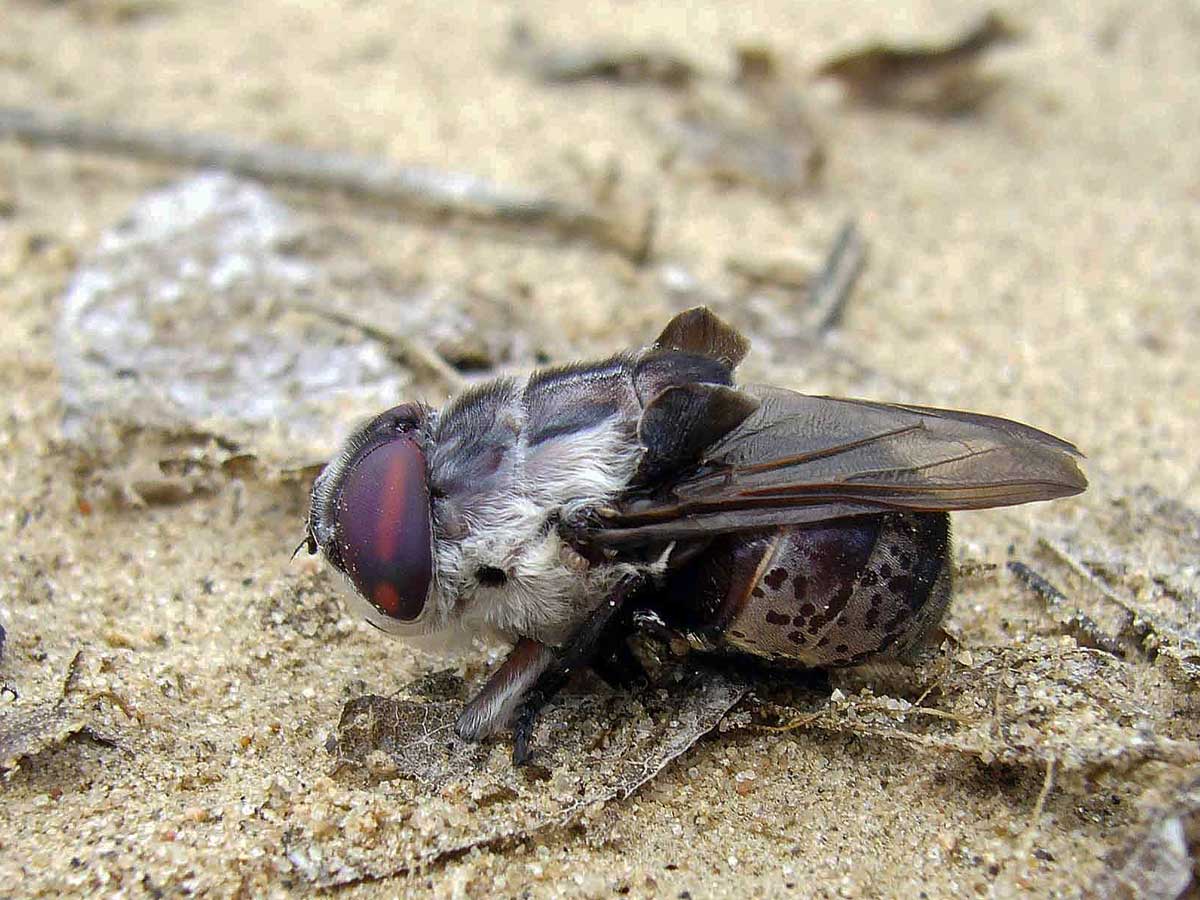 Cuterebra spp. are known collectively as New World skin bot flies (formerly family Cuterebridae, but now classified as a subfamily of Oestridae). I suspected this was the rabbit bot fly (C. buccata) due to its general appearance – notably the red bands in the eyes, which is a characteristic of rabbit-infesting species. However, the genus is diverse, with 34 recognized North American species – seven of which belong to the rabbit-infesting group (Sabrosky 1986). I don’t have a copy of Sabrosky’s revision, and my efforts to locate it electronically turned up only retail listings for $70 or more. That’s serious coin for someone who really needs to stay focused on his beetles, so I sent these photographs to bot fly specialist Jeff Boettner at the University of Massachusetts. Jeff confirmed that it is indeed a Cuterebra rabbit bot and will confirm a species identity after checking his collection.

















 Beetles In The Bush