Rough Green Snake

My string of good herp luck looks like it might continue in 2010.  You may recall the super-aggressive prairie rattlesnake and uncooperative dusty hognosed snake that I featured in 2008 (or not – my readership was rather minuscule back then), followed by the juvenile Osage copperhead, gorgeous male eastern collard lizard, bizarre Texas horned lizards, death-feigning western hognosed snake, super rare Florida scrub lizard, and – finally – cute little western pygmy rattlesnake in 2009. All but the copperhead and collared lizard were first-time sightings for me, and now in 2010 I have yet another first-time sighting to present – the rough green snake (Opheodrys aestivus aestivus).

Rough green snake (Opheodrys aestivus aestivus)

My friend Rich and I spotted this long and slender snake during our early April hike of the lower Wappapello Section of the Ozark Trail (soon after photographing the jumping spider). We would never have seen it, so effective was its green camouflage, had it not been disturbed by our close approach along the trail and tried to flee.  The moist bottomland habitat where we found it was thick with greenbrier (Smilax sp.), making tracking the snake a thorny affair, but I managed to head it off and start taking a few photos of it.  It was surprisingly calm during the early part of the photo session, but I just wasn’t getting the lighting and exposure that I wanted.  Eventually, it started fleeing again, and my efforts to rip through the greenbriers to stay close became too much for my arms to bear.  When it started climbing a tree, I said “enough is enough” and captured him, brought him back out to the comfort and openness of the trail, and had Rich hold him while I worked on getting some better photographs.  The one above is my favorite of the bunch.

Rough green snakes are found in Missouri primarily south of the Missouri River in the Ozark Highlands, where they feed on insects such as grasshoppers, crickets, and especially smooth caterpillars.  A second green snake occurs in Missouri as well, the smooth green snake (Opheodrys vernalis), which differs from the rough green snake by having smooth scales and a more northern distribution within the state. Sadly, the smooth green snake has not been seen in the state for a number of years now, probably because of loss of habitat resulting from the near complete agricultural conversion of that part of the state.

Photo Details: Canon 100 mm macro lens on Canon 50D, ISO 400, 1/60 sec, f/4.5, Canon MT-24EX flash w/ Sto-Fen diffusers. Minimal post-processing.

Copyright © Ted C. MacRae 2010

House of Herps #2

House of HerpsWelcome to the 2nd issue of House of Herps, the monthly blog carnival devoted exclusively to reptiles and amphibians.  The brainchild of Amber Coakley, (Birder’s Lounge), and Jason Hogle (xenogere), this new blog carnival had an auspicious start with the inaugural issue and its 21 contributions – an impressive level of participation for a new carnival.  This month the carnival moves off-site, and I am honored to serve as the first off-site host.  The enthusiasm continues with issue , for which I received 22 submissions from 18 contributors.  Ever the taxonomist, I present them to you below grouped by traditional classification¹.

¹ It should be noted that modern classification has “evolved” substantially from this traditional classification due to the advent of DNA molecular analyses. For example, lizards are a paraphyletic grouping, and even the class Reptilia has been subsumed within a broader class containing dinosaurs and birds. I stick with the traditional classification here for reasons of familiarity and convenience.

Class AMPHIBIA (Amphibians)
-Order CAUDATA (Salamanders)

California Giant Salamander (Dicamptodon ensatus).  At the nature of a man, Ken talks about not one, but two close encounters last fall with this otherwordly-looking creature.  The first one he saw was a monster of a salamander, measururing a whopping 12 inches (30 cm) in length as it brazenly lounged on a mountain bike trail.  Remaining docile for photographs, imagine Ken’s surprise when the salamander started barking at him when he picked it up to move it to safer ground!  In his second encounter, he got to watch one chomp down on a banana slug – mmm tasty! 

-Order ANURA (Frogs)

Upland Chorus Frog (Pseudacris feriarum).  At Anybody Seen My Focus?, Joan normally only gets to hear the breeding season calls of the chorus frog and his friends who have taken up residence in the water-filled bathtub that serves as a planter in her greenhouse, usually bobbing under the water upon any approach.  But on this occasion, he agreed to photographs, even allowing a final closeup.

Gulf coast toad (Bufo nebulifer).  At Dolittle’s Domain, Dr. Doolittle marvels at one of the many toads that she has found parked under the outside light all night (along with the bats and armadillos) during the cold darkness of December.  Rather than fleeing the camera flash in the face, he simply hunkered down trying to make himself flatter, apparently thinking that would make him invisible and not realizing that he just looked fatter!

Northern Cricket Frog (Acris crepitans).  HoH‘s own Jason weaves artful writing with stunning photographs to distinguish one of the smallest land vertebrates in North America at xenogere.  Despite their ubiquity, these little frogs often go unnoticed due to the smallness of their size, their impressive leap, and their extreme variability.  Get a good look at one, however, and you might notice a key feature or two.
American Bullfrog (Rana catesbeiana).  At Willow House Chronicles, barefootheart looks at frogs on the opposite end of the size spectrum, in fact North America’s largest frog living in an increasingly naturalized man-made pond in eastern Ontario.  These behemoths are more frequently heard than seen by their distinctive “yelp” and splash in response to being approached.  If you are lucky enough to get as good a look as barefootheart did, you might be able to distinguish male from female by looking at its eyes, ears, and throat.

Class REPTILIA (Reptiles)
-Order TESTUDINES (Turtles)

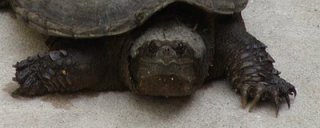
Common Snapping Turtle (Chelydra serpentina).  We have three contributions dealing with these grizzled, ancient, grotesquely beautiful reptiles.  The first one comes from Michelle at Rambling Woods, who shows us how it is possible to tame your pet common snapper (but only to a certain degree).  If her story isn’t enough, she also presents a short video clip on the common snapping turtle (Baby snapping turtleREMEMBER – don’t ever try to catch or hold a snapping turtle with your bare hands!).  In another post, HoH‘s own Amber talks about her attempts to rescue a snapping turtle at Birder’s Lounge.  Fortunately for Amber, the little guy was just a tot – not nearly big enough to prune a digit and thwart Amber’s display of compassion.  It’s amazing how a creature so dinosaurian at maturity can still be so cute as a youngster.  In the third contribution about these fascinating creatures, Marge at Space Coast Beach Buzz talks about her snap (get it?) decision to adopt one of these animals, only to change her mind after discovering its true identity (and before losing any fingers).

Green Sea Turtle (Chelonia mydas).  David at Living Alongside Wildlife notes that while green iguanas falling from trees were a popular news report from the unusual cold snap experienced in the southeatern U.S. last month, they were not the only reptiles so adversely affected.  Sea turtles, populations of which have already been compromised by loss of nesting sites, fishing practices, and trash pollution, also found the coastal waters too cold for normal function.  While natural hardships may be nature’s way, he argues (quite effectively) that it is our responsibility to help mitigate their effects considering the perilous position in which we’ve placed these majestic animals to begin with.

Eastern Box Turtle (Terrapene carolina).  Two contributors submitted posts about these lovable oafs.  At A DC Birding Blog, John posted a photo of a box turtle seen at Brigantine Beach.  He wonders if their always disgruntled look is a result of him disturbing from their activities.  These turtles are easily identified by their bright markings – usually dark brown or olive-colored with bright orange or yellow patterns, dome-shaped carapace, and hinged plastron (bottom part).  Individual turtles have unique designs on their shells, making them identifiable in the field.  Turtles can get worms, believe it or not, and Celeste at Celestial Ramblings adds them to the growing list of animals that she has had to de-worm (including herself, ick!).  Step-by-step instructions and explicit photos combine to show that this is not an easy job, requiring no less than three people – “just another day at the office.”  Hmm – cats look easier!
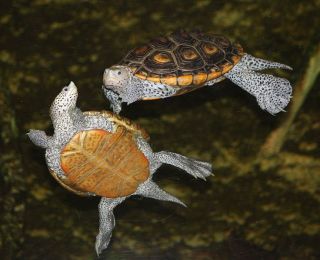
Diamondback terrapin (Malaclemys terrapin).  The diamondback terrapin is the only species of turtle in North America that spends its life in brackish water (salty but less so than sea water).  At Kind of Curious, John describes efforts by The Wetlands Institute to prevent vehicle mortality caused by terrapins crossing roads in their attempt to reach higher ground for laying eggs.

-Order SQUAMATA
–Suborder LACERTILIA (Lizards)

Common collared lizardCommon Collared Lizard (Crotaphytus collaris).  From Jill at Count Your Chicken!  We’re Taking Over! comes this delightful encounter with one of North America’s most charismatic lizards.  I’ve had my own experiences with these guys, but I’ve never gotten one to crawl on my hat or – even better – gotten one to pose with me for a photograph!

Prairie Lizard (Sceloporus consobrinus).  Near my backyard, Marvin at Nature in the Ozarks presents a nice compendium of this species complimented with beautiful photographs.  Marvin not only discusses identification, distribution, life cycle, habitat, and food, but also comments on the recent DNA molecular analyses that have resulted in a reclassification of the former polytopic “fence lizard” and split up the many subspecies into full-fledged species – a man after my taxonomic heart!

“Culebrilla ciega” (Iberian Worm Lizard) (Blanus cinereus).  Javier at macroinstantes writes an artful blog focusing on natural history of the Iberian Peninsula (it is written in Spanish, but Google can easily translate to English for those who need it).  In this post, he presents extraordinary photographs of this subterranean reptile that is endemic to the Iberian Peninsula.  Traditionally classified in the family Amphisbaenidae, it is now considered to belong to its own family the Blanidae.

“Lagartija de Valverde” (The Spanish Algyroides) (Algyroides marchi).  Javier (macroinstantes) also writes about this small lizard that was only discovered in 1958.  With a global range limited to a few mountain streams in a mountainous area of southern Spain covering less than 2,000 km², it is clasified as endangered on the IUCN Red List.  Like so many of the world’s reptiles, its severely fragmented population is suffering declines due to continuing habitat degradation.

–Suborder SERPENTES (Snakes)

Western Rattlesnake (Crotalus viridis).  On the Colorado front range, Sally at Foothills Fancies had three encounters with this aggressive species on her property.  Fortunately, Sally has a “nonagression treaty” with rattlesnakes and allows them to go about their business as much as possible.  Those that get too close for comfort are humanely relocated rather than simply dispatched.  Sadly, many of Sally’s neighbors are not quite so understanding.

Texas Indigo Snake (Drymarchon corais erebennus).  These snakes do not have any such nonaggression treaty, and David at Living Alongside Wildlife contributes another piece illustrating the rattlenake-eating capabilities for which Indigo snakes are famous.  The photographs in the post show a large individual consuming a Western Diamondback Rattlesnake. David explains how these snakes are often identified as blacksnakes and reveals the characters visible on predator and prey that allow their correct identification.

Black Rat Snake (Elaphe obsoleta).  Right here in my home state, Shelly at Natural Missouri characterizes black rat snakes as one of the most commonly encountered snakes in Missouri.  Large snakes reaching up to 6 feet in length, they often end up in basements and cellars in the fall in search of a place to spend the winter – just in time for Halloween!  These snakes are often needlessly killed because of their resemblance to the venomous cottonmouth or water moccasin that they superficially resemble.  However, Shelly has the same nonaggression treaty with these snakes that Sally has with rattlesnakes (although her husband is not quite so sympathetic). 

-Order CROCODILIA (Crocodilians)

American Alligator (Alligator mississippiensis).  David at Living Alongside Wildlife also contributed two pieces on North America’s largest reptile.  In his post Gatorzilla, he examines commonly e-mailed pictures and text about so-called “giant” alligators, debunking myths about 25 foot long monsters, clarifying the identity of misidentified Nile crocodiles, and exposing cases of camera trickery.  In his post Mommy Dearest, he recounts his nervewracking experience when he stumbled upon an alligator nest while knee deep in a south Georgia swamp at night.  Worse, the babies had hatched!  Read the post to see if David got out of there with both of his legs.

GENERAL HERPETOLOGY

Sometimes simply the act of looking for herps is as enjoyable as the herps that are found.  However, it has been a tough January for Bernard at Philly Herping.  A particularly cold snap in the first half of what is already the coldest month of the year made herping at his favorite cemetary a lesson in futility.   I hope you notice the irony – cemetary?, no sign of life?, cold-bloodedness (okay, okay – ectothermic)?

I hope you’ve enjoyed this issue of House of Herps.  The February issue moves over to xenogere, where Jason’s considerable carnival hosting talents are sure to be on full display.  Submit your slimy, scaley, cold-blooded contributions by Febrary 15, and look for the issue to appear by February 18.

Copyright © Ted C. MacRae 2010

Add to FacebookAdd to DiggAdd to Del.icio.usAdd to StumbleuponAdd to RedditAdd to BlinklistAdd to TwitterAdd to TechnoratiAdd to Yahoo BuzzAdd to Newsvine

Email to a friend

North America’s smallest rattlesnake

Despite tramping through the brush with great frequency during most of my life, I haven’t really seen that many noteworthy reptiles.  I don’t know whether its because I’ve failed to actually encounter them or whether my singleminded obsession with insects above all other things natural has instead prevented me from seeing what was right in front of me.  Regardless of the reason, all that has seemed to change during the past two seasons (strangely coincident with my decision to start carrying a camera), and I now seem to be enjoying a bit of a reptile bonanza.  Last summer I featured a super-aggressive prairie rattlesnake from a trip to the Black Hills of South Dakota and an uncooperative dusty hognosed snake from Missouri’s critically imperiled sand prairies (both first-time sightings for me).  The reptilian treats continued this year – I saw my first juvenile Osage copperhead in May to go along with the several adults that I’ve encountered, and shortly afterwards during a June trip to northwestern Oklahoma I was treated to a gorgeous male eastern collard lizard, two Texas horned lizards, and a much more cooperative western hognosed snake (the last two being first-time sightings for me).  There was another herp that I saw during that Oklahoma trip, but I did not feature it here because I had stupidly declined to strap the camera bag to my back during a quick look at a roadside habitat.  That sighting was another first-timer for me – a western pygmy rattlesnake (Sistrurus miliaris streckeri).  I’m no herp expert, so wasn’t sure what it was at the time, but I later learned that its small size and distinctive markings were quite diagnostic.

IMG_1014_1200x800
Western pygmy rattlesnake – Sistrurus miliarius streckeri

Amazingly, I encountered this same species again just a few weeks later during a visit to the White River Hills of extreme southwestern Missouri.  It was during the second of two trips to the region to search for the stunningly beautiful bumelia longhorned beetle, Plinthocoelium suaveolens plicatum (family Cerambycidae), and the weather during that day – continuous drizzle and low, threatening clouds – had not been at all conducive for finding such a sun loving beetle.  After searching an area where I knew the beetles occurred, without success, daughter Madison and I resigned that the drizzle was here to stay and decided to pass the rest of the day with some hiking at one of Missouri’s most spectacularly wild and beautiful places, Hercules Glades Wilderness.  A splendid mix of post oak savannahs and limestone glades intersperses through the oak/hickory forests in these rugged hills, creating some of Missouri’s most scenic vistas.  Near the end of the hike at the edge of one of these glades on the high point of Coy Bald, I saw this little individual coiled up underneath an eastern red-cedar (Juniperus virginiana) tree.  Unlike the terrifyingly aggressive prairie rattlesnakes I encountered in South Dakota last fall, this snake seem to be relying upon its cryptic coloration to avoid detection, rattling only after I had approached quite closely… or maybe it was only then I could actually hear the rattle, which was barely audible and sounded much like the buzz of a small katydid.
Pygmy rattlesnakes are the smallest rattlesnakes in North America, growing to around 15-25 inches long – this individual looked to be about 18-20 inches in length.  They are one of only two U.S. species in the primitive rattlesnake genus Sistrurus – the other being the larger wet prairie inhabiting massasauga (S. catenatus).  All other rattlesnakes (28 species, 13 in the U.S.) belong to the genus Crotalus (Smith et al. 2001).  Western pygmy rattlesnakes are not really a western U.S. species, but rather the westernmost subspecies of this southeastern U.S. species (with subspecies miliarius and streckeri occupying the northeastern and southeastern portions, respectively, of its range).  In Missouri, it is not nearly as common as the timber rattlesnake (Crotalus horridus), occurring only in the extreme southern Ozarks along the border with Arkansas and up into the St. Francois Mountains of the eastern Ozarks (Johnson 1997).  Although no known human deaths have ever been caused by this species, known locally as the “ground rattler,” it is nevertheless poisonous and worthy of respect.  I must admit to having been lulled a little bit by its calmness – much like the juvenile copperhead I photographed in May – and found myself tempted to approach ever closer for photographs.  The photograph below represents the closest that I was able to get before it began “striking” at me – whether these were bluff strikes intended to frighten or actual attempts to bite I do not know.  Suffice it to say that I “got the message” and ended my attempts to get even closer.  Daughter Madison watched in nervous amazement as all this was going on, and afterwards I tried to impress upon her young, virgin mind what a rare and wonderful experience we’d just had.  Perhaps I succeeded, as this was the first story she told to her head-shaking mother upon our return home the following evening!

IMG_1016_1200x800

Photo details: Canon 100mm macro lens on Canon EOS 50D, ISO 100, 1/250 sec, f/9-10, MT-24EX flash 1/2 power through diffuser caps.

REFERENCES:

Johnson, T. R. 1997. The Amphibians and Reptiles of Missouri. Missouri Department of Conservation, Jefferson City, 368 pp.

Smith, H. M., E. D. Brodie, D. M. Dennis and S. Barlowe. 2001. Reptiles of North America: A Guide to Field Identification. Golden Field Guide from St. Martin’s Press, New York, 240 pp.

Copyright © Ted C. MacRae 2009

Add to FacebookAdd to NewsvineAdd to DiggAdd to Del.icio.usAdd to StumbleuponAdd to RedditAdd to BlinklistAdd to Ma.gnoliaAdd to TechnoratiAdd to Furl

Western hognose snake

Another herp interlude…

IMG_0655_1200x800
Photo details: Canon 100mm macro lens on Canon EOS 50D, ISO 100, 1/250 sec, f/14, MT-24EX flash 1/4 power w/ diffuser caps.

During my visit to Salt Plains National Wildlife Refuge in northwestern Oklahoma this past June, tiger beetles were not the only wildlife subjects I encountered.  Near the edge of one of the alkaline flats along Sandpiper Trail was this hognose snake.  This is the second hognose snake that I’ve encountered in as many years, the first being a member of a rare, disjunct population of the dusty hognose snake (Heterodon nasicus gloydi) in one of southeastern Missouri’s critically imperiled sand prairie habitats.  There are two species of hognose snake in Oklahoma – eastern (H. platirhinos) and western (H. nasicus).  I presume this individual to be the western due to its strongly upturned rostral (snout), which is only moderately upturned in the eastern species, and black-checkered ventral coloration.  Surprisingly, in checking the Salt Plains reptile species list for confirmation on its identity, I noted that no confirmed sightings of either the eastern or western hognose snake have been recorded at the refuge.  I have since done my good deed to reptile science by submitting this and another photograph I took of the individual to the refuge biologist.  Ted MacRae – entomologist and discoverer of new reptile records!  Western hognose snakes are further classified into three subspecies, two of which – dusty and nominotypical – occur in Oklahoma (the third occurs in Mexico). However, the distinctions between the two U.S. subspecies are subtle¹ and not apparent in this photograph, preventing further classification.

¹ Some authors consider the dusty and western hognose snakes to be separate species, while others have regarded their differences too subtle to warrant even subspecific distinction.

Hognose snakes are famous for their well-choreographed sequence of defensive displays. Their first act is to rear up cobra-like and strike out with their mouth open while hissing (unfortunately, neither of the hognoses I’ve encountered entertained me in this manner).  If the threat continues, they then turn over and writh violently in mock agony before finally rolling over on their backs and playing dead (thanatosis).  Last year’s hognose snake didn’t do this either, insisting instead on continually trying to burrow into the loose sand.  As can be seen from the photograph above, however, playing dead is exactly what this individual did.  With the mouth agape and the tongue protruding, it’s a convincing display of lifelessness.  Amusingly though, whenever the snake was righted it immediately turned over on its back again – not such a good imitation of being dead!  Presumably the snakes predators are as bad at noticing that detail as are the snakes themselves.  As I continued to pester this individual, trying to get him to stick out his tongue further for a better photograph, he eventually started ejecting blood from the lacrymal glands and emitting musk from the cloaca – what better to emphasize a death display than blood and an offensive smell!

Western hognose snakes are classified as a species of ”least concern” on the IUCN Red List of Threatened Species and aren’t listed as a species of concern on the Oklahoma Natural Heritage Inventory database.  Nevertheless, as with many other reptiles and amphibians, populations are declining throughout much of their former range.  This is likely due to the combined effects of urbanization, reduction of habitat, predation by feral dogs and cats, and overcollection for sale to the pet trade.

Copyright © Ted C. MacRae 2009

Add to FacebookAdd to NewsvineAdd to DiggAdd to Del.icio.usAdd to StumbleuponAdd to RedditAdd to BlinklistAdd to Ma.gnoliaAdd to TechnoratiAdd to Furl

Osage copperhead

Copperhead

While photographing Cicindela sexguttata last weekend, Chris and I encountered this young copperhead snake (Agkistrodon contortrix).  It was the second copperhead I had seen in as many days – unusual, since I can count on my two hands the number of copperheads I’ve encountered in my many years of tramping through Missouri’s woodlands.  I did not even see my first copperhead (other than in the zoo) until early adulthood, one of many unfortunate consequences of my strictly urban childhood (more on that first encounter later).

Copperhead

Missouri copperheads don’t really have “copper heads” – the common name is derived from the northern subspecies that lives in the northeastern U.S. and down into Appalachia.  Instead, most of Missouri’s copperheads have a pinkish tan head that matches the color of the body.  Three of North America’s five copperhead subspecies live in Missouri, but it is the Osage copperhead (A. contortrix phaeogaster) that is most commonly encountered – the northern and southern subspecies being confined, respectively, to the extreme northern and southern portions of the state.  Osage copperheads are distinguished by the light bordering around each of their dark markings.

Copperhead

This individual can be recognized as a juvenile not only by its small size (it was just over 1 foot long), but also by the greenish yellow tail with small, white markings edged in black.  Juvenile copperheads need help capturing prey because of their small size and use their colorful tails for “caudal-luring” – that is, they use their tails to lure prey to within striking distance.  When prey approaches, the coiled juvenile snake moves its tail near the center of the coil and wiggles the colored portion – perhaps it looks like a caterpillar to the lizard or frog.  Copperheads lose their juvenile tail coloration at about 18 months to two years of age when they are large enough to capture prey without assistance.

Copperheads are famously non-aggressive – even though the majority of snake bites that occur in Missouri each year are from this snake (due to its abundance), nearly all are a result of human attempts to handle, capture, or (tragically) kill the snake.  I suppose someone might accuse me of doing likewise, since I used a stick to pick this individual up from the leaf litter in which it was lying, brilliantly camoflauged, and lay it down on the trail for photographs.  The snake did strike several times at the stick, but with my hand safely out of reach, and after it was in place it cooperated fully for these ever closer photographs.  My first encounter with a copperhead, however, was not so uneventful.  I was a budding entomologist fresh out of school and had just discovered the wonderful little herbaceous islands in the forest known as glades.  On my way back to St. Louis from a meeting in Jefferson City, I stopped by Graham Cave State Park in Montgomery Co. – a park I had not yet explored.  Of course, there’s a cave that one must see – in this case an unusual sandstone overhang cave (significant for its Native American artifacts dating back 10,000 years).  On top of the broad, sandstone arch above the cave I noticed a little glade habitat and clambered up to take a peek.  As I was standing atop the cave looking at the glade, I felt something hit my ankle.  I looked down and saw a full-grown copperhead coiled right next to my foot and instinctively jumped up and away from the snake (and fortunately not over the edge of the cave top).  Almost immediately, my leg started feeling tingly, and as I pulled up my pant leg, pushed down my sock, and began searching frantically for the wounds on my ankle my leg started going completely numb.  I was 40 miles from the nearest hospital, alone, and had not the wisdom to know that no fatalities from the bite of any of Missouri’s venomous snakes have been recorded for many decades.   Convinced I was going to die, I continued my frantic search for the wounds, but no amount of careful examination around the ankle revealed any broken skin (what I would have done had I actually found wounds I do not know).  I got up and tried to walk, almost collapsing at first on the completely numb leg.  Eventually I was able to walk some feeling back into the leg, and once the leg was feeling close to normal again I concluded that the numbness must have been a purely psychosomatic response to the perceived bite.  I went back to the snake, still coiled up where I first encountered it, and admired it for awhile – with due respect!

An excellent article on Missouri copperheads, by Missouri Department of Conservation herpetologist Tom R. Johnson, appeared in the May 1999 issue of The Missouri Conservationist.

Copyright © Ted C. MacRae 2009

Add to FacebookAdd to NewsvineAdd to DiggAdd to Del.icio.usAdd to StumbleuponAdd to RedditAdd to BlinklistAdd to Ma.gnoliaAdd to TechnoratiAdd to Furl

Top Ten of 2008

For the first post of 2009, I begin with a look back at some of my favorite photos from 2008 (idea stolen from Alex Wild and others).  I initially hesitated to do a “best photos” post since I’m not really a photographer – just an entomologist with a camera.  Nevertheless, and with that caveat in mind, I offer ten photos that represent some of my favorites from this past year. To force some diversity in my picks, I’ve created “winning” categories (otherwise you might just see ten tiger beetles!). Click on the photos to see larger versions, and feel free to vote for your favorite. If so, what did you like about it? Was there a photo I didn’t pick that you liked better?  Enjoy!

Best tiger beetle

Cicindela formosa generosa

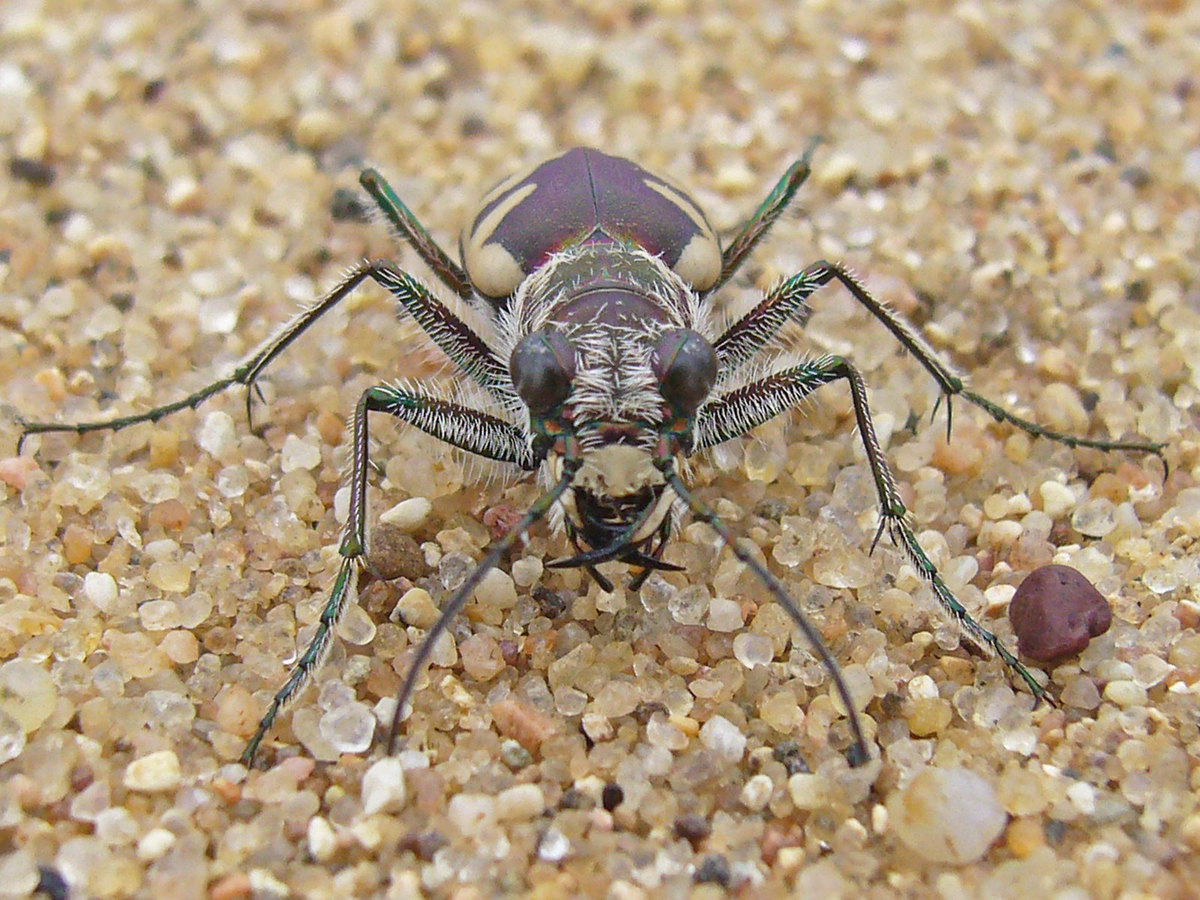
From “All the better to see you with, my dear!” (September 2008).  Picking a top tiger beetle photo was tough with so many to choose from.  Ultimately, I decided I really like these face-on shots, and of the several I’ve posted this one of Cicindela formosa generosa has the overall best composition, balance and symmetry.  I considered this one of Cicindela formosa formosa – with its half-cocked jaws, it probably has better personality.  However, the one above got the final nod because it is a true field shot of an unconfined, unmanipulated individual.

Best jewel beetle

Aegelia petelii

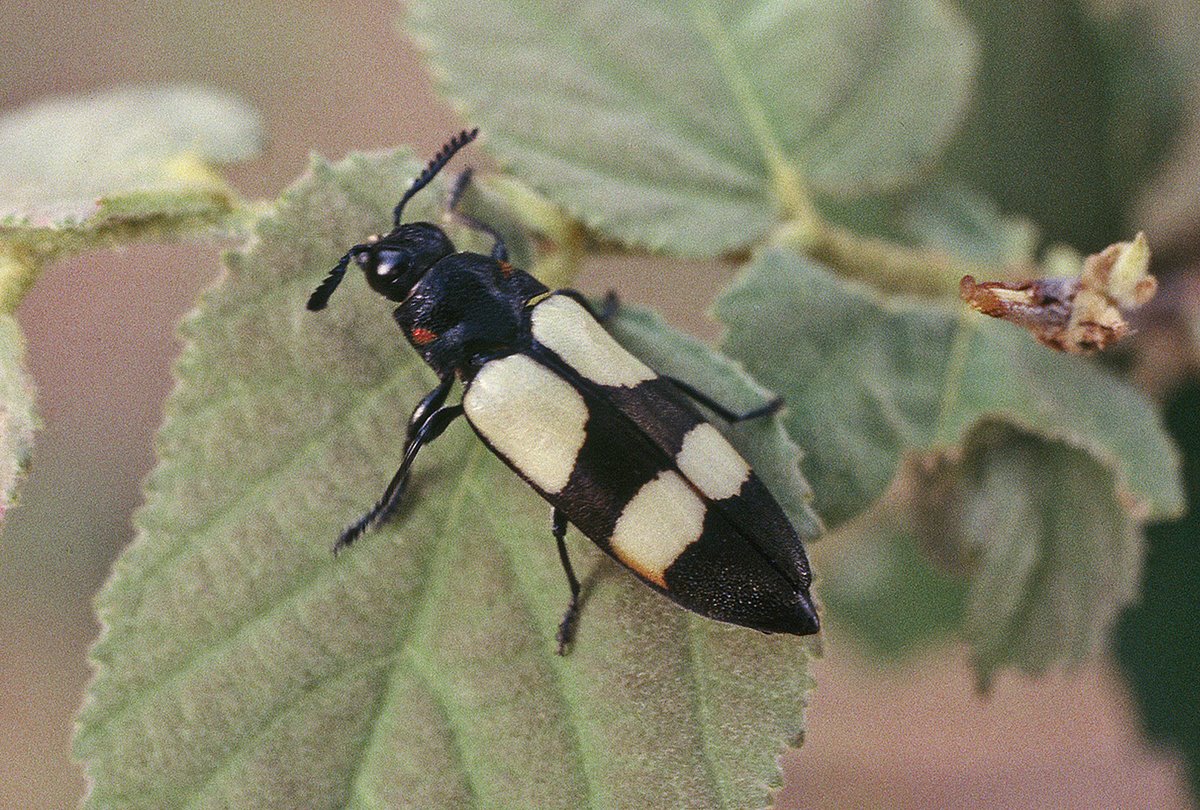
From Buppies in the bush(veld) (December 2008).  Although taken back in 1999, I just recently scanned and posted this photo of Agelia petelii from South Africa.  I like the bold, contrasting colors of the beetle combined with the soft colors of the host foliage.  Runners up included these photos of Evides pubiventris with its sumptuous iridescent green blending beautifully with the green background (but suffering slightly from shallow depth of field) and Chrysobothris femorata with its intricate surface sculpturing.

Best longhorned beetle

Tetraopes femoratus

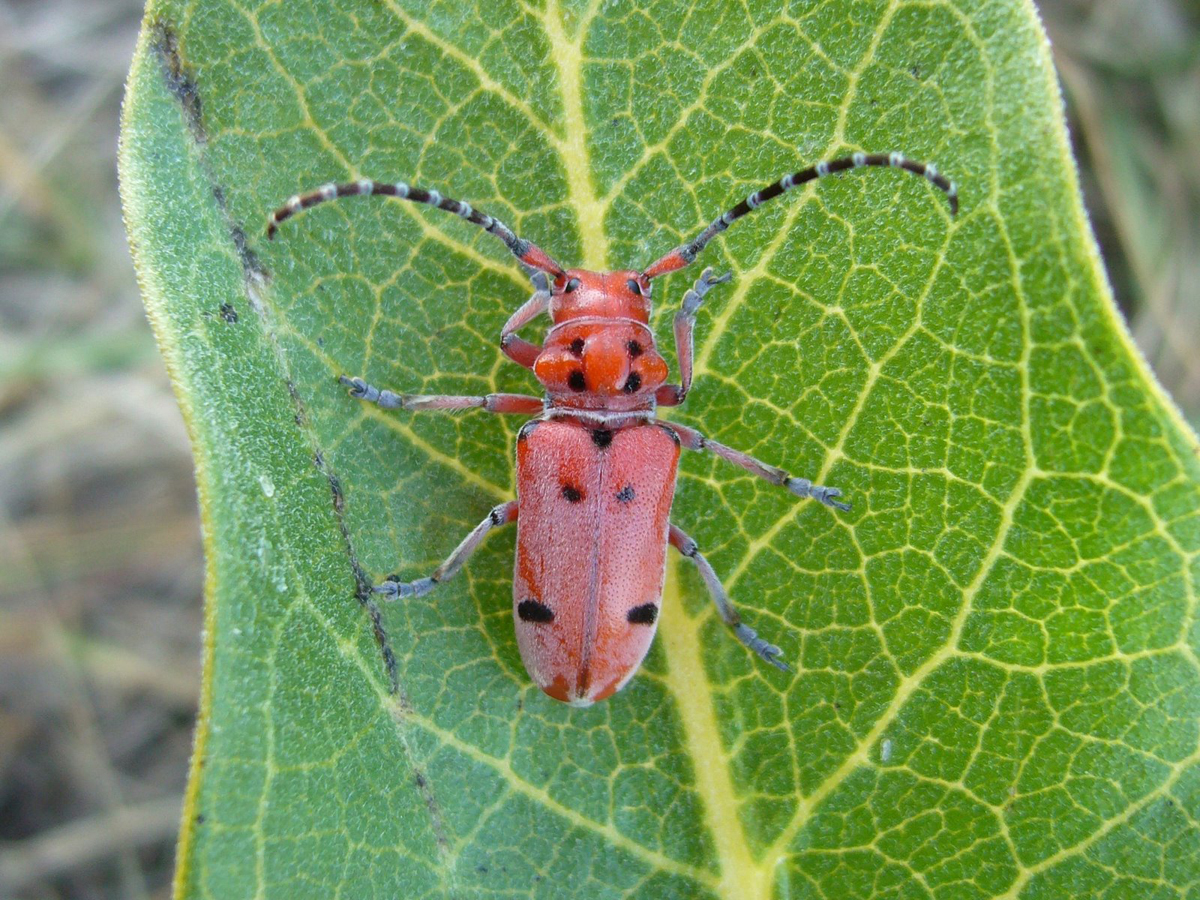
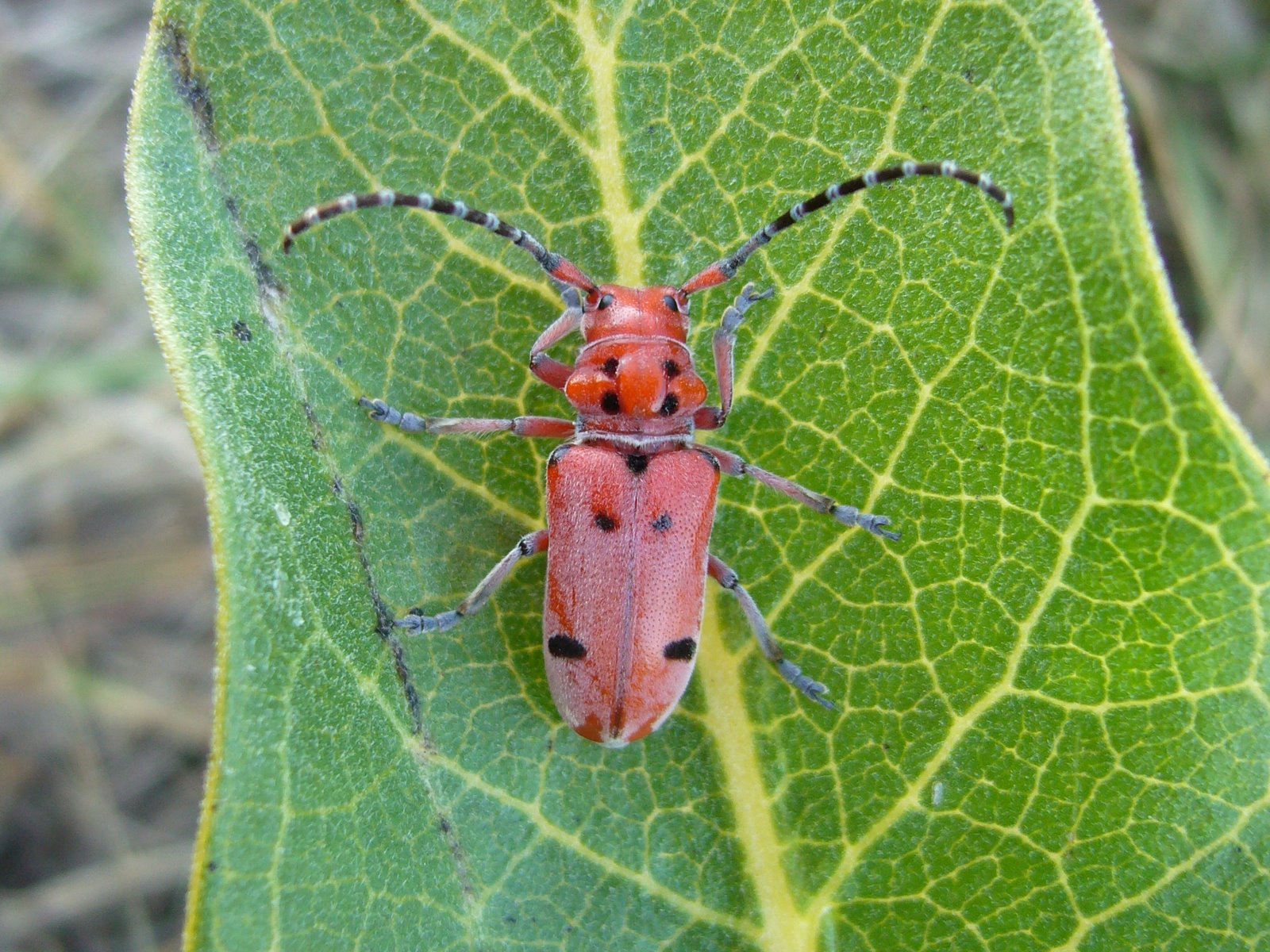
From Rattled in the Black Hills (September 2008).  This was an easy choice – none of the other longhorned beetle photos that I posted during 2008 matched this photo of Tetraopes femoratus for clarity, composition, and the striking contrast between the red color of the beetle and the green color of the host plant.  I especially like the detailing of the body pubescence.

Best non-beetle insect

Proctacanthus milbertii

From Magnificently Monstrous Muscomorphs (November 2008).  I do like other insect besides beetles, and robber flies are hard to beat for their charisma.  This photo of Proctacanthus milbertii (which, as Chris Taylor pointed out, literally translates to “Milbert’s spiny butt”), has great composition and nice, complimentary colors.  I like contrast between the fine detail of the fly and the soft background.

Best non-insect arthropod

Argiope aurantia

From Happy Halloween! (October 2008). I didn’t have many non-insect arthropod photos to choose from, but this photo of a female Argiope aurantia (yellow garden spider) would be deserving of recognition no matter how many I had to choose from. I like the bold, contrasting colors and symmetry of the spider in front of the dappled background of this photo.

Best non-arthropod animal

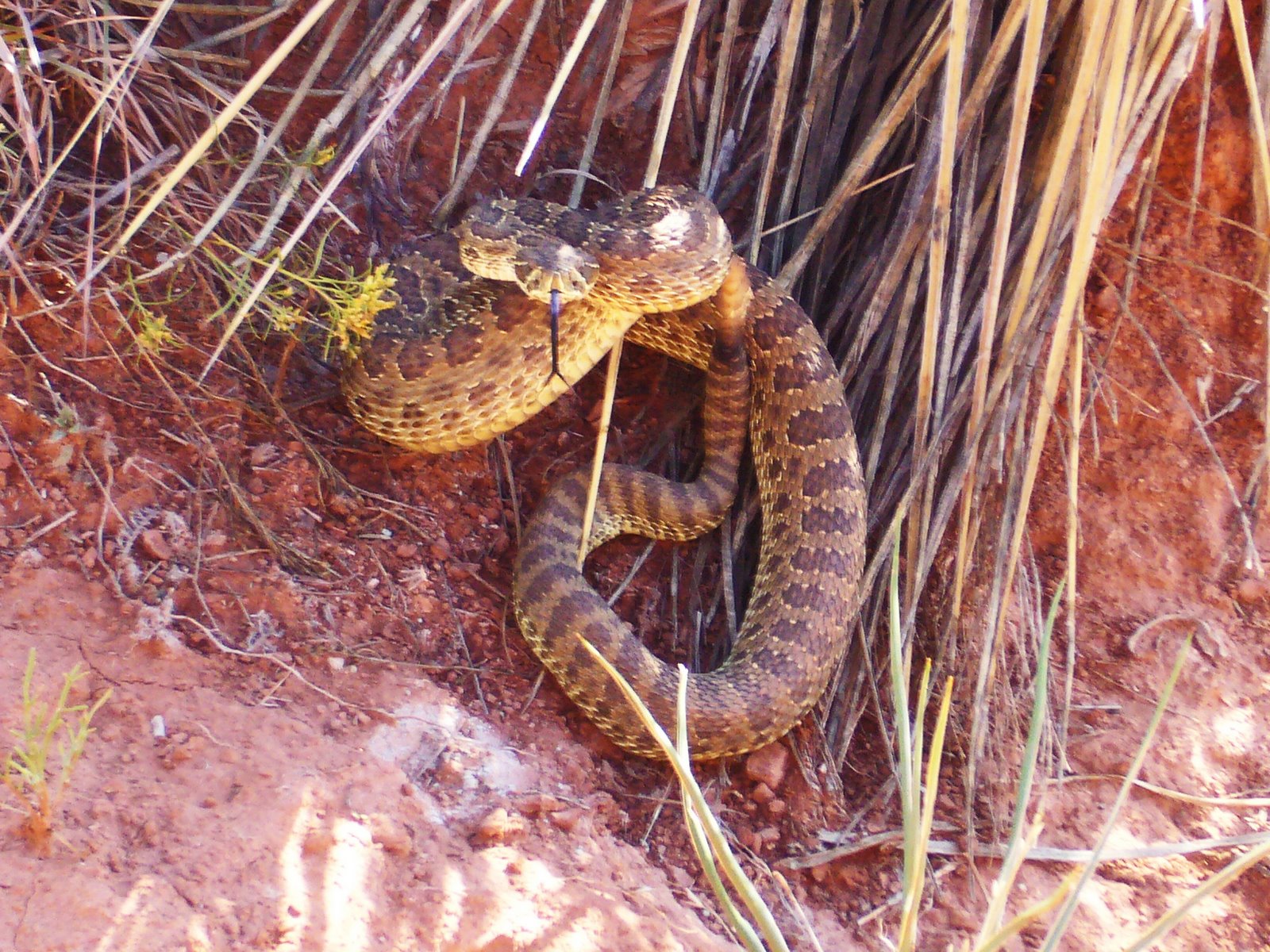
Prairie rattlesnake (Crotolus viridis)

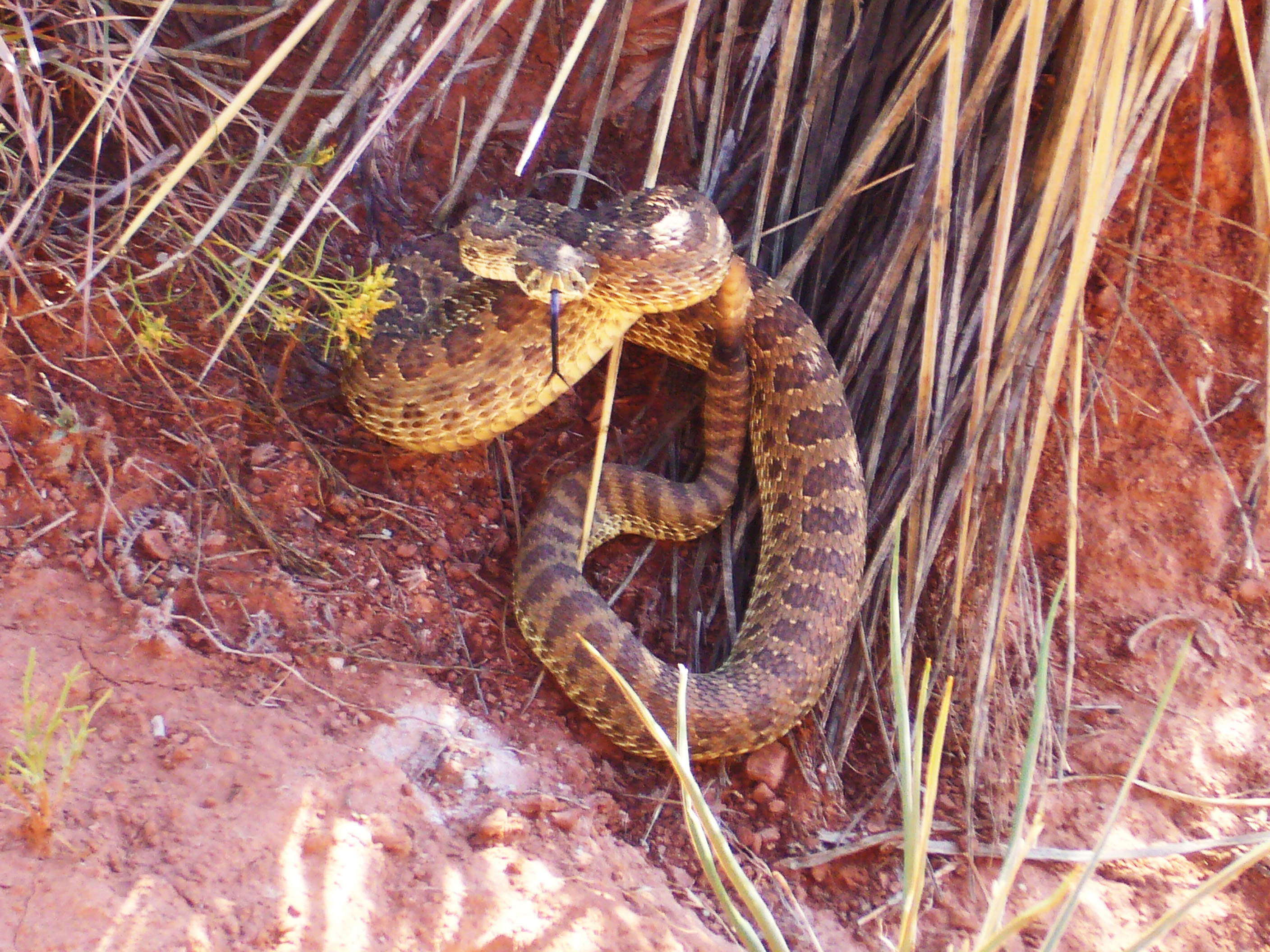
Another one from Rattled in the Black Hills (September 2008).  This is admittedly not the best photo from a purely technical perspective – it’s a little out of focus, and the color is a bit off.  However, no photo could better convey the moment – confronted with a live, angry prairie rattlesnake (Crotalus viridis) (among the more aggressive species in the genus).  The forked tongue and rattle – blurred in motion – were icing on the cake.

Best wildflower

Victoria Glades

From Glades of Jefferson County (July 2008).  I had several wildflower closeups to choose from, but I kept coming back to this field shot of pale purple coneflower (Echincea simulata) and Missouri evening primrose (Oenethera macrocarpa).  The eastern redcedars (Juniperus virginiana) in the background are at once indicative of their preferred habitat (limestone/dolomite glades) and also testament to their threatening encroachment.

Best tree

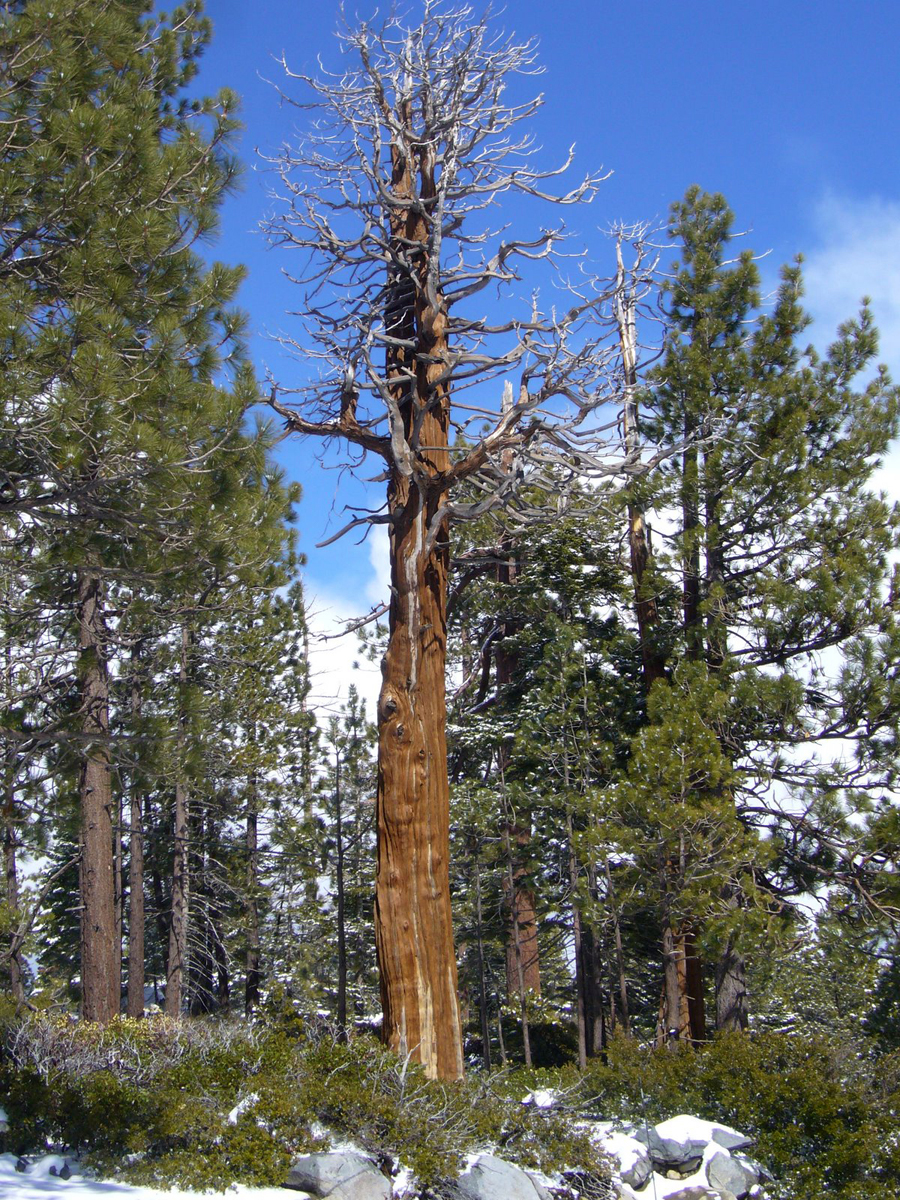
Calocedrus decurrens

From the very simply and aptly named Lake Tahoe, California (March 2008).  Incense cedar (Calocedrus decurrens), with its reddish, deeply furrowed bark and great height, is one of the most majestic of western conifers.  I was captivated by this tree – beautiful even in death and contrasting nicely with the surrounding green foliage.

Best rockscape

Pipestone National Monument, Old Stone Face

From Pipestone National Monument (April 2008).  “Old Stone Face” is one of Pipestone’s most recognizable geologic features, and the short angle of the sun on this early spring day provided nice detail to the cracks and fissures of the rock – almost appropriately adding a weathered “age” to this old man.

Best landscape

Emerald Isle, Lake Tahoe

Another one from Lake Tahoe, California (March 2008).  Few places on earth are more photogenic than Lake Tahoe, and this perspective overlooking Emerald Bay is among the finest views I’ve seen.  Brilliant blue skies and majestic snow covered mountains reflected perfectly from the still surface, with Fannette Island providing a perfect focal point for the photo.

Best miscellaneous

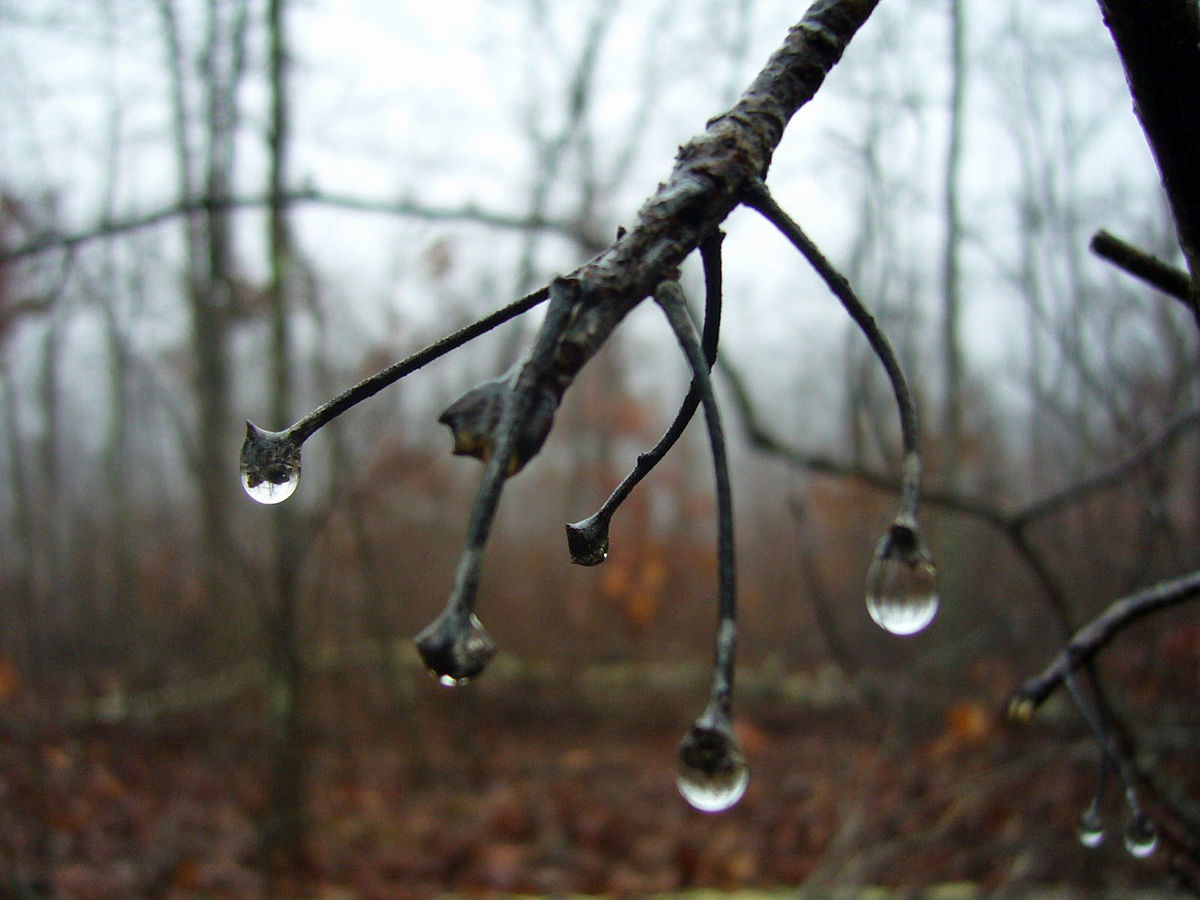
Water drops, Ozark Trail, Trace Creek SectionFrom Ozark Trail, lower Trace Creek Section (December 2007).  While technically not a 2008 photo, it’s close enough.  This was one of the first macro photographs I took with my camera, and it remains one of my favorites.  A chance occurence of an unlikely subject, created by cold temperatures and heavy moisture-laden air. I like the contrast between the water drops – sharp, round, and clear – with the vertical shapes of the leaf petioles and background trees.  Viewing the image full-sized reveals the reflection of the photographer in the leftmost water drop.

Subsequent edit: Okay, so after I put this post together, I realized I actually featured eleven photos – too much difficulty choosing, I guess. Let’s call it a baker’s ten.

A sand prairie autumn

Splitbeard bluestem seed headsAsk any astronomer when autumn begins, and they will likely tell you it begins at the autumnal equinox – when shortening days and lengthening nights become equal as the sun crosses over the celestial equator. According to them, fall began this year on September 22 – at 11:44:18 A.M. EDT, to be precise. I agree that autumn begins at a precise moment, but it is not at the equinox. Rather, it is that unpredictable moment when a sudden crispness in the air is felt, when the sky somehow seems bluer and shadows seem sharper, and hints of yellow – ever so subtle – start to appear in the landscape. Butterfly pea blossomIn Missouri, with its middle latitudes, this usually happens a few weeks before the equinox, as August is waning into September. It is a moment that goes unnoticed by many, especially those whose lives and livelihoods have lost all connection with the natural world. To plants and animals, however, it is a clear signal – a signal to begin making preparations for the long cold months of winter that lie ahead. Plants that have not yet flowered begin to do so in earnest, while those that have shift energy reserves into developing seeds. Animals take advantage of their final opportunities to feed before enduring the scarcities of winter, digging in to sleep through them, or abandoning altogether and migrating to warmer climes. Insects begin hastily provisioning nests for their broods or laying eggs – tiny capsules of life that survive the harsh winter before hatching in spring and beginning the cycle anew.

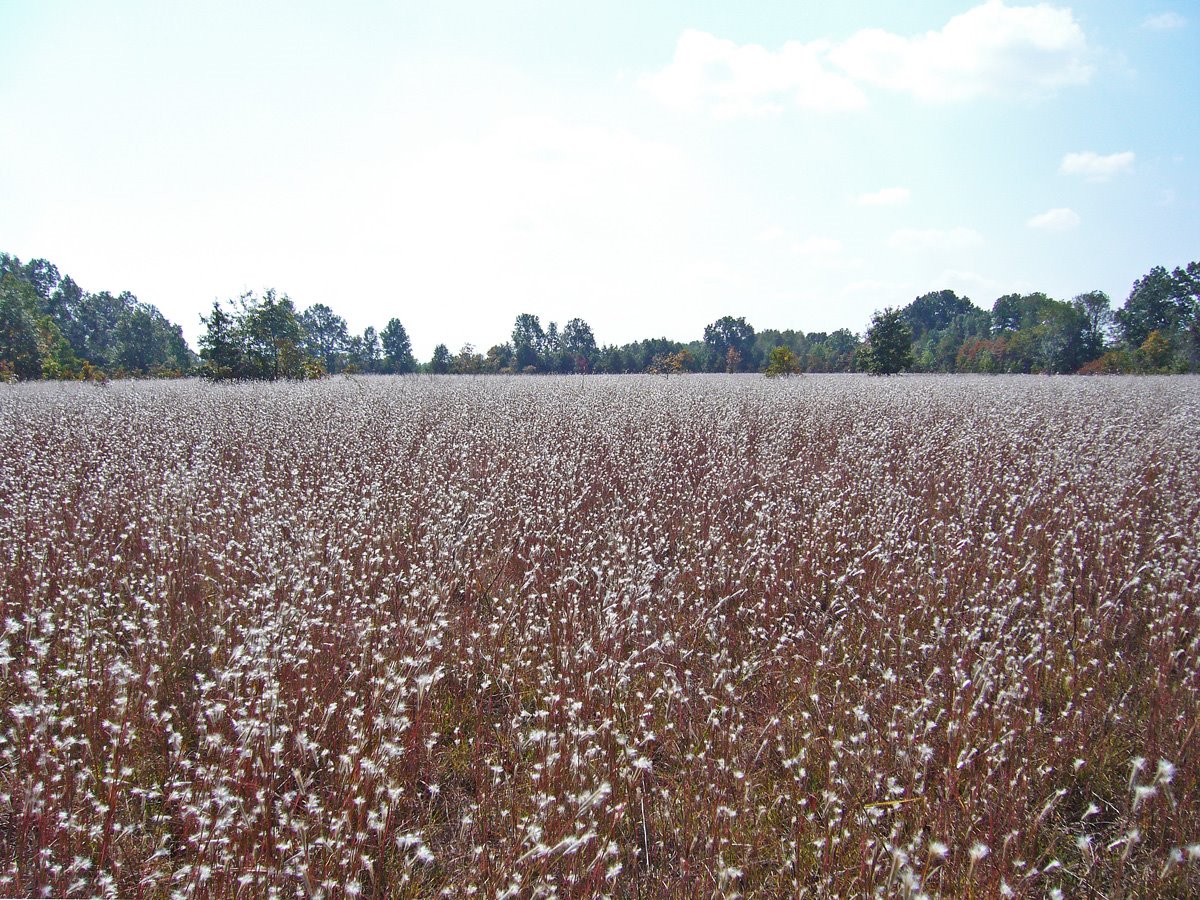
Sand prairie in early September.Sand prairie in early October.  Note abundance of splitbeard bluestem seed heads.Across much of Missouri, in the Ozark Highlands and in riparian ribbons dissecting the northern Plains, autumn brings an increasingly intense display of reds, purples, oranges, and yellows, as the leaves of deciduous hardwoods begin breaking down their chlorophyll to unmask underlying anthocyanins and other pigments. Small southern jointweedIn Missouri’s remnant prairies, seas of verdant green morph to muted shades of amber, tawny, and beige. This subtle transformation is even more spectacular in the critically imperiled sand prairies of the Southeast Lowlands, where stands of splitbeard bluestem (Andropogon ternaries – above) turn a rich russet color while fluffy, white seed heads (1st paragraph, 1st photo) appear along the length of each stem, evoking images of shooting fireworks. Small southern jointweed (Polygonella americana – right) finds a home at the northern extent of its distribution in these prairie remnants and in similar habitats in nearby Crowley’s Ridge, blooming in profusion once the cooler nights arrive. Butterfly pea (Clitoria mariana – 1st paragraph, 2nd photo) blooms add a gorgeous splash of soft purple in contrast to the muted colors of the plants around them.

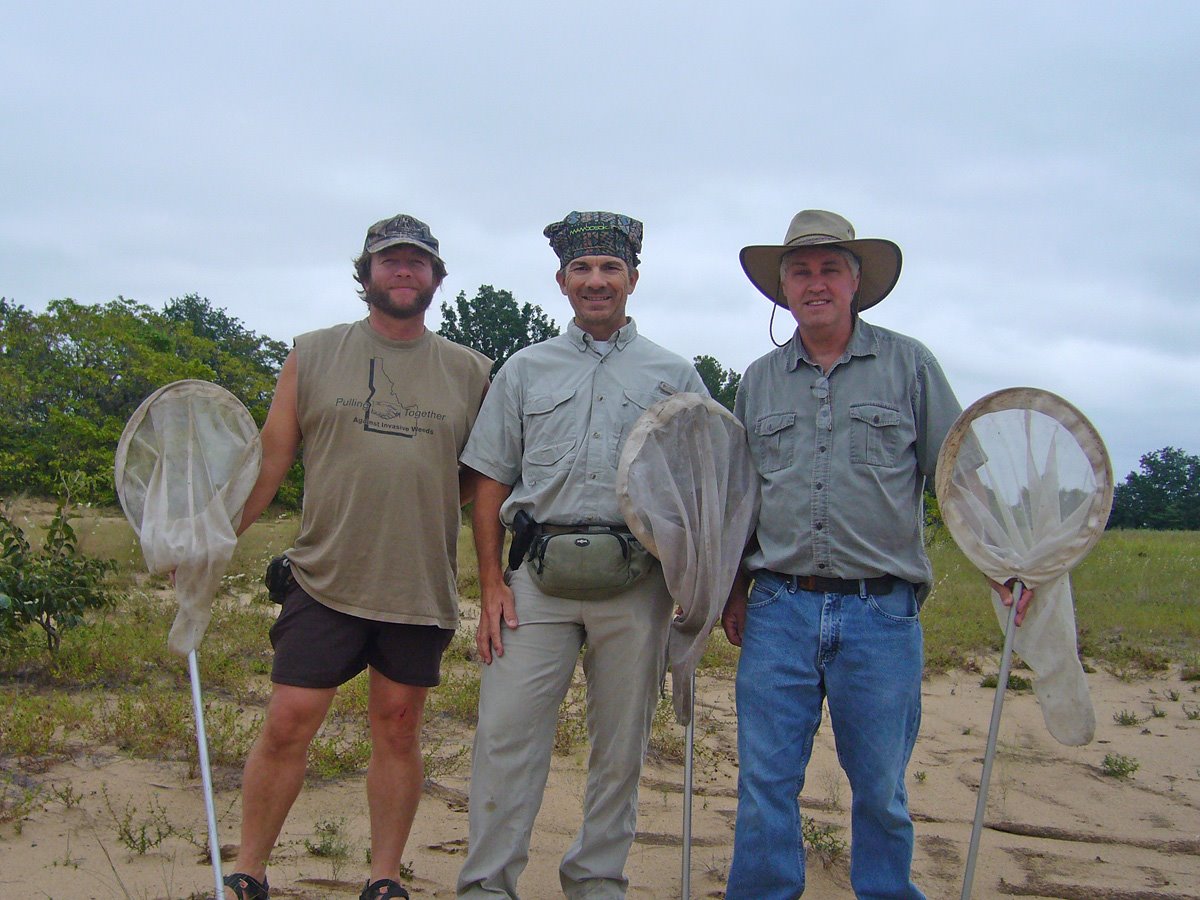
Kent Fothergill, Ted MacRae, and Rich ThomaAfter first becoming acquainted with Missouri’s sand prairies this past summer, I knew a fall trip (or two) would be in order. The extensive deep, dry sand barrens were ideal habitat for sand-loving insects, including certain spring/fall species of tiger beetles that would not be active during the summer months. The cooler nights and crisp air of early fall make insect collecting extraordinarily pleasurable, so it took little effort to convince friends and colleagues Kent and Rich to join me on another excursion to these extraordinary remnant habitats, along with my (then 8 yr-old) daughter Madison (who would likely characterize this as “tallgrass” prairie). Madison MacRae, age 9 (almost)I was, as ever, on the lookout for tiger beetles; however, temperatures were cool, skies were overcast, and the fall season was just beginning, greatly limiting tiger beetle activity during this first fall visit. We did see one Cicindela formosa (big sand tiger beetle), which cooperated fully for a nice series of photographs. We also found single specimens of the annoyingly ubiquitous C. punctulata (punctured tiger beetle) and a curiously out-of-place C. duodecimguttata (12-spotted tiger beetle), which must have flown some distance from the nearest dark, muddy streambank that it surely prefers. Of greatest interest, we found two specimens of C. scutellaris (festive tiger beetle), which in this part of Missouri is represented by a population presenting a curious mix of influences from two different subspecies (more on this in a later post…). Despite the scarcity of tiger beetles, other insects were present in great diversity, some of which I share with you here.

Ululodes macleayanusThis bizarre creature, sitting on the stem of plains snakecotton (Froelichia floridana), is actually a neuropteran insect called an owlfly (family Ascalaphidae). Looking like a cross between a dragonfly and a butterfly due to its overly large eyes and many-veined wings but with long, clubbed antennae, this individual is demonstrating the cryptic resting posture they often assume with the abdomen projecting from the perch and resembling a twig. The divided eyes identify this individual as belonging to the genus Ululodes, and Dr. John D. Oswald (Texas A&M University) has kindly identified the species as U. macleayanus. As is true of many groups of insects, their taxonomy is far from completely understood. Larvae of these basal holometabolans are predaceous, lying on the ground with their large trap-jaws held wide open and often camouflaging themselves with sand and debris while waiting for prey. The slightest contact with the jaws springs them shut, and within a few minutes the prey is paralyzed and can be sucked dry at the larva’s leisure.

Ant lion, possibly in the genus Myrmeleon.Another family of neuropteran insects closely related to owlflies are antlions (family Myrmeleontidae, sometimes misspelled “Myrmeleonidae”). This individual (resting lower down on the very same F. floridana stem) may be in the genus Myrmeleon, but my wanting expertise doesn’t allow a more conclusive identification [edit 4/12/09 – John D. Oswald has identified the species as Myrmeleon immaculatus]. Strictly speaking, the term “antlion” applies to the larval form of the members of this family, all of whom create pits in sandy soils to trap ants and other small insects, thus, it’s occurrence in the sand prairie is not surprising. Larvae lie in wait beneath the sand at the bottom of the pit, flipping sand on the hapless prey to prevent it from escaping until they can impale it with their large, sickle-shaped jaws, inject digestive enzymes that ‘pre-digest’ the prey’s tissues, and suck out the liquifying contents. Finding larvae is not easy – even when pits are located and dug up, the larvae lie motionless and are often covered with a layer of sand that makes them almost impossible to detect. I’ve tried digging up pits several times and have failed as yet to find one. Larvae are also sometimes referred to as “doodlebugs” in reference to the winding, spiralling trails that the larvae leave in the sand while searching for a good trap location – these trails look like someone has doodled in the sand.

Bembix americanaThis digger wasp, Bembix americana (ID confirmed by Matthias Buck), was common on the barren sand exposures, where they dig burrows into the loose sand. Formerly included in the family Sphecidae (containing the better-known “cicada killer”), members of this group are now placed in their own family (Crabronidae). Adult females provision their nest with flies, which they catch and sting to paralyze before dragging it down into the burrow. As is common with the social hymenoptera such as bees and paper wasps, these solitary wasps engage in active parental care by providing greater number of prey as the larva grows. As many as twenty flies might be needed for a single larva. I found the burrows of these wasps at first difficult to distinguish from those created by adults of the tiger beetles I so desired, but eventually learned to distinguish them by their rounder shape and coarser, “pile” rather than “fanned” diggings (see this post for more on this subject).

Stichopogon trifasciatusRobber flies (family Asilidae) are a favorite group of mine (or, at least, as favorite as a non-coleopteran group can be). This small species, Stichopogon trifasciatus (ID confirmed by Herschel Raney), was also common on the barren sandy surface. The specific epithet refers to the three bands of alternating light and dark bands on the abdomen. Many species in this family are broadly distributed but have fairly restrictive ecological requirements, resulting in rather localized occurrences within their distribution. Stichopogon trifasciatus occurs throughout North America and south into the Neotropics wherever barren, sandy or gravely areas near water can be found. Adults are deadly predators, swooping down on spiders, flies and other small insects and “stabbing” them with their stout beak.

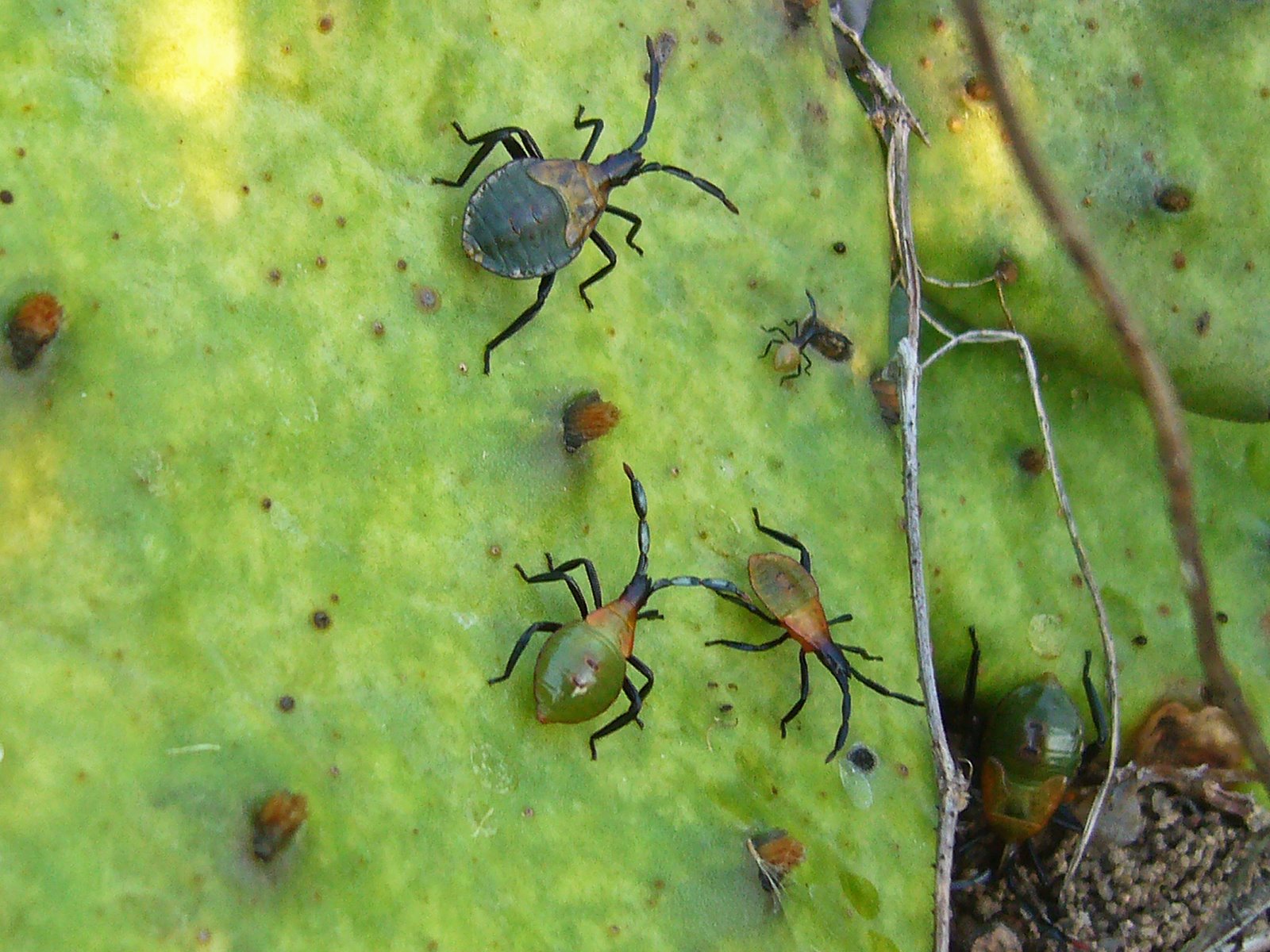
Chelinidea vittigerPrickly pear cactus (Opuntia humifusa) grows abundantly in the sandy soil amongst the clumps of bluestem, and on the pads were these nymphs of Chelinidea vittiger (cactus bug, family Coreidae). This wide-ranging species occurs across the U.S. and southward to northern Mexico wherever prickly pear hosts can be found. This species can either be considered a beneficial or a pest, depending upon perspective. On the one hand, it serves as a minor component in a pest complex that prevents prickly pear from aggressively overtaking rangelands in North America; however, prickly pear is used by ranchers as emergency forage, and fruits and spineless pads are also sometimes harvested for produce. In Missouri, O. humifusa is a non-aggressive component of glades, prairies, and sand and gravel washes, making C. vittiger an interesting member of the states natural diversity.

Ammophila sp., possibly A. proceraThis wasp in the genus Ammophila (perhaps A. procera as suggested by Herschel Raney) was found clinging by its jaws to a bluestem stem in the cool morning, where it presumably spent the night. One of the true sphecid (or “thread-waist”) wasps, A. procera is a widespread and common species in eastern North America. One of the largest members of the genus, its distinctive, bold silver dashes on the thorax distinguish it from most other sympatric congeners. Similar to the habits of most other aculeate wasp groups, this species captures and paralyzes sawfly or lepidopteran caterpillars to serve as food for its developing brood. Females dig burrows and lay eggs on the paralyzed hosts with which the nests have been provisioned. Adults are also found commonly on flowers, presumably to feed on nectar and/or pollen.

Dusty hog-nosed snakeRich is a bit of herpatologist, so when he brought this hog-nosed snake to our attention we all had a good time pestering it to try to get it to turn upside down and play dead. I had never seen a hog-nosed snake before but knew of its habit of rolling over and opening its mouth with its tongue hanging out when disturbed, even flopping right back over when turned rightside up or staying limp when picked up. We succeeded in getting it to emit its foul musky smell, but much to our disappointment it never did play dead, instead using its shovel-shaped snout to dig into the sand. Dusty hog-nosed snake - head closeupWe had assumed this was the common and widespread eastern hog-nosed snake (Heterodon platirhinos); however, in our attempts to turn it over I noticed its black and orange checker patterned belly. I later learned this to be characteristic of the dusky hog-nosed snake (H. nasicus gloydi), only recently discovered in the sand prairies of southeast Missouri and regarded as critically imperiled in the state due to the near complete destruction of such habitats. Disjunct from the main population further west, its continued survival in Missouri depends upon the survival of these small sand prairie remnants in the Southeast Lowlands.

Rattled in the Black Hills

My first day in the Black Hills of South Dakota was spent at McNenny State Fish Hatchery near Spearfish – on the north side of the Black Hills. I went to this place on the advice of my esteemed colleagues in Nebraska, who suggested that I might be able to find several interesting tiger beetle species there: the closely related trio of beauties C. denverensis (green claybank tiger beetle), C. limbalis (common claybank tiger beetle), and C. splendida (splendid tiger beetle) in the red clay eroded banks; C. fulgida (crimson saltflat tiger beetle) and C. tranquebarica kirbyi (oblique-lined tiger beetle) around the lakes; and – again, if I’m lucky – intergrades between the prairie and boreal long-lipped tiger beetles (C. longilabris x nebraskana) along a trail through the shortgrass prairie east of the hatchery. For the first time since Saturday, I awoke to baby blue skies which filled me with an optimism and anticipation that made the 3-hour drive from Chadron, Nebraska to Spearfish, South Dakota seem interminable.

What my esteemed colleagues failed to include on that list of species I might encounter was Crotalus viridis – the prairie rattlesnake! Now folks, I’ve seen a number of rattlesnakes before – mostly in Texas – but I’ve never heard this sound in real life, much less heard it coming from a rattlesnake poised to strike. I encountered this fellow in the eroded red clay slopes above the lake, and even though I wasn’t too terribly close it gave me quite a start (my bravery in taking this photo is vastly exaggerated by the twin miracles of telephoto and cropping!). I walked a little more cautiously afterwards but gradually let my guard down over time. About an hour later, I was startled again by another rattler – I had come within 2 feet of it before it started rattling. I nearly jumped out of my skin, and once I got my heart stuffed back down my throat I noticed several dark juveniles coiled up with her. They slunk away, and I tiptoed back to the car having had my fill of the red clay slopes for the time being.

I did manage some success on the slopes before the rattlers drove me away – not with the claybank and splendid tigers that I had hoped to find, which were largely missing in action save for two individuals of C. limbalis that I spotted amongst the annoyingly similar appearing and ridiculously numerous C. purpurea audubonii (clay path tiger beetle). Success instead came in the form of this cerambycid beetle – Megacyllene comanchei. Recently described from Texas, nothing more was published about this species until I recorded a northern range extension into south-central Kansas (MacRae & Rice 2007). Its occurrence in the Black Hills is not only a new state record for South Dakota but also represents an incredible 700-mile northern range extension – on top of the previous one! Actually, Matt and I each found one individual a few days ago in Sioux County, Nebraska (also a new state record) – I had thought of this species at the time but decided I must be wrong and that I should wait until I got back before making an identification. But the capture of these three additional individuals even further north renewed my suspicions, and consultion of my databases shows good agreement with this species – note the white rather than yellow antemedian elytral band and medial portion of the postmedian elytral band, along with the medial and lateral coelescence of the apical and subapical bands, which distinguish this species from the closely related M. angulifera. The records from this trip show that M. comanchei is much more widely distributed than previously thought. Curiously, all five of the individuals I’ve seen (so far!) were crawling on the ground – an unusual habit for Megacyllene, which are normally found on flowers of goldenrod. The type series was associated with plants in the genus Heterotheca, which I did note growing in the area.

After escaping the snake slopes, I began surveying the lake margins to look for potential tiger beetle habitat. I was especially interested in C. fulgida – Matt and I had seen a single individual along a dry salt creek in Sioux County. The lakeshore around the upper lake was completely surrounded by thick vegetation – no tiger beetles there, but when I arrived at the lower lake I found some small areas of open ground along one side. They didn’t look very extensive, and my initial search of the area showed no activity. Closer inspection, however, showed the presence of larval burrows, and when I grabbed my fishing gear (the nearest grass stem) I promptly managed to extract a couple of larvae. Okay, so there are tiger beetles here, but which one I don’t know – probably C. tranquebarica kirbyi, which we had seen rather commonly at the same dry salt creek in Sioux County. Although the sun would not set for another two hours, it was quite cool already. I wondered if maybe the adults had already started digging in for the night and began looking for evidence of adult burrows. I looked carefully along the edge of the grassline when I saw movement – it was the back end of an adult C. fulgida kicking dirt out as it excavated its burrow. Success! I dug it out, took a few photos (one shown here) and started looking for similar appearing burrows. I not only found several more C. fulgida in their burrows, but also several C. tranquebarica kirbyi. The larvae I collected may or may not represent one of these species – there are other species associated with alkaline habitats that active at other times during the season. I collected a few more larvae, filled a container with soil from the spot – cutting out a section of salt-encrusted surface to place on top, placed all of the collected larvae in it, and watched them immediately start digging new burrows with their shovel-like heads. More babies to take care of!

With tiger beetle success under my belt and the sun setting fast, I decided the day was done and packed up the car. As I was closing the hatch, I happened to look over and saw something of great interest – milkweed! I had, in fact, been looking for milkweed all day long in the hopes – faint, I thought – of encountering the newly described Tetraopes heutheri (Skillman 2007). Mirror Lakes, at the McNenny Fish Hatchery, is the type locality of this species, and although the type series was collected in August I held out hope that the adults might persist until September. These hopes faded quickly, however, as I located milkweed plant after milkweed plant on the shortgrass prairie above the eroded clay slopes – all completely senesced, with nary a sign of any milkweed beetles. The plant I’d just spotted – only a small sprout – was green, and on it were two milkweed beetles! I excitedly took some pictures, then started looking carefully about and found several more on additional small sprouts in the area. Apparently, the sprouts represented regrowth from late-season mowing of the roadside, as several full-sized, completely senescent plants were found in the adjacent unmowed area. My excitement at having “found” T. heutheri (because of their small size and occurrence at the type locality) was short lived – closer examination of the specimens after returning home showed them to be very small individuals of the more common Great Plains species T. femoratus. I did have some doubts when I found the beetles, since the milkweed species on which I found them is not the same species with which T. heutheri was associated (Asclepias verticillata, a small species with narrow, linear leaves).

Day 2 in the Black Hills was spent at nearby Boundary Gulch, just across the border in the northeast corner of Wyoming. This was another attempt to find the C. longilabris x nebraskana intergrades that eluded me at McNenney, and although I failed to find them at this location also, I did find five other species of tiger beetles, including several beautifully marked C. limbalis to go along with the two I found the previous day. After that it was some spurious collecting here and there – including larvae from two spots in the southern Black Hills – as I traveled back to Chadron, Nebraska for the night. On tap for tomorrow – Nebraska’s famed Sand Hills! The beautiful sandy tiger beetle (C. limbata) – vivid white and iridescent green to red – hopefully will be found among the super abundant festive (C. scutellaris) and big sand (C. formosa) tigers, and I’ll get another shot at seeing the C. lengi (blowout tiger beetle) that I missed a few days ago.