Bichos Argentinos #9 – Membracido

Enchenopa? sp. | Buenos Aires, Argentina

This treehopper that I photographed at La Reserva Ecológica Costanera Sur strongly resembles our North American species of Campylenchia due to the brown elytra and lack of any yellow markings on the pronotal crest.  However, the rounded lower margin of the frons (more apparent in the full-sized version of this photo) eliminates this genus as a possibility and suggests instead the closely related Enchenopa

I sent this and another photo to Andy Hamilton (Canadian National Collection of Insects, Arachnids and Nematodes) for his opinion.  Andy claims to be a hack when it comes to Neotropical Membracidae (focusing more on world Cercopidae and Holarctic Cicadellidae), but he is a much better hack than I!  In his reply, he mentions that a lot of work is still needed on tropical species and genera, and in fact none of our North American species of Enchenopa actually resemble the type-species from Brazil (Membracis monoceros).  Most of what we now consider Enchenopa will likely be referable back to the genus Membracis (type genus of the family), but where the species in the above photo will eventually fall remains anyone’s guess.

Copyright © Ted C. MacRae 2011

Agelia lordi (Walker)

Aegilia lordi (Walker) | Kenya

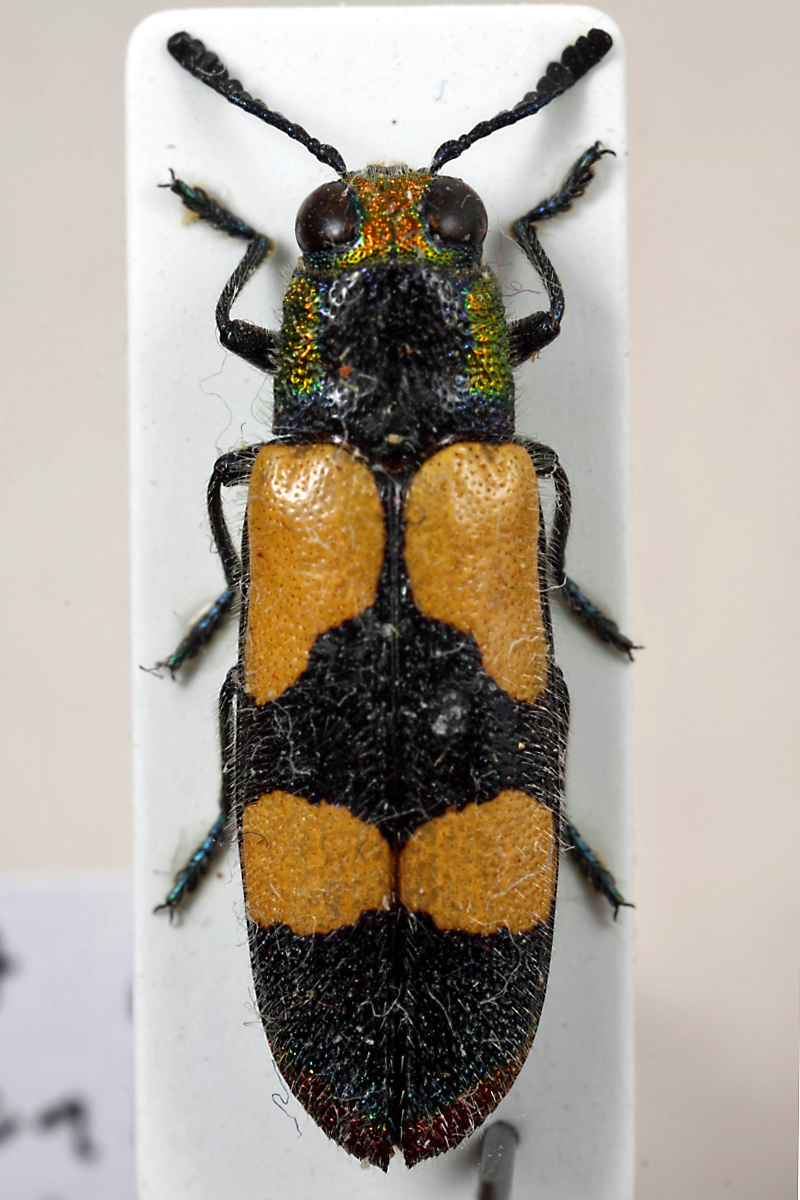
This pretty little beetle is Agelia lordi (Walker), a member of the jewel beetle family Buprestidae. I received this meticulously curated specimen – collected in Kenya – in a recent exchange with Stanislav Prepsl (Czech Republic). The species is found in Sub-Saharan east Africa and is the smallest of the nine recognized Agelia species. Two other species occur in eastern and southern Africa, including Agelia petalii (Gory) which I collected in South Africa (see Buppies in the bush(veld)), while the remaining six are found on the Indian subcontinent. The presence of two distinct and geographically isolated population centers, along with some seemingly common differences in the included species, begs the question of whether they may perhaps be subgenerically distinct. Gussmann (2002), however, regarded most of these differences to be simply a matter of degree and insufficient to warrant subgeneric separation.

Males of A. lordi are easily recognized by the orange-brown color of the last 2-3 sterna, in sharp contrast to the mostly strongly metallic integument of the rest of the ventral surface (females and both sexes of all other species have all sterna concolorous). The metallic reflections on the head, pronotal sides, and elytral apices – along with size – further distinguish A. lordi from other African species.

As is typical with so many tropical insects, little is known about the biology and lifestyle of species of Agelia. The bold, contrasting coloration of especially the African species would seem to make them conspicuous to predation, but this seems to be the result of a mimetic association with noxious species of blister beetles (family Meloidae) in the genus Mylabris. I saw one of these (see Mylabris oculatus in South Africa) in association with A. petalii during my 1999 visit to South Africa, and the resemblance was so strong that I had do a double-take every time I saw one to determine whether it was Agelia or Mylabris.

REFERENCE:

Gussmann, S. M. V. 2002. Revision of the genus Agelia Laporte and Gory (Coleoptera: Buprestidae). Annals of the Transvaal Museum 39:23–55.

Copyright © Ted C. MacRae 2011

BitB Does CoO

STS 5 ('Mrs. Ples') | Australopithecus africanus - Sterkfontein, South Africa

Although my fondness for beetles is well known, I also have an inordinate fondness for systematics.  For this reason, Catalogue of Organisms by Christopher Taylor has long been high on my ‘must read’ list.  While there are no limits to the taxa – extant or extinct – that he writes about, one can be sure that whatever subject he picks, it will be comprehensively covered and richly referenced.  One of his more popular features is ‘Name the Bug’ (“bug” being any group of organisms, not just insects), where readers are invited to identify a featured organism and provide evidence to support their answer.  Points may be earned (and even usurped) in this free-for-all competition, with series winners eligible to request a post on the taxon of their choosing or write a guest post of their own.  As the most recent winner of this competition, I have chosen the latter and written a post called Origins – A Day in the Broom Room.  It’s about paleoanthropology, human evolution, and a personal experience with some of the field’s most iconic fossils.  I know these are subjects far outside my normal fare, but I hope you’ll take a look anyway and I thank Chris for letting me elbow my way onto his site for a while.  While you’re there, be sure check out the rest of the fine content on CoO – it might end up on your ‘must read’ list as well.


Copyright © Ted C. MacRae 2011

A thrips is a thrips…

Caliothrips phaseoli (bean thrips) - adults | Fontezuela, Pcia. Buenos Aires, Argentina

The critter in ID Challenge #6 is, as most surmised, a thrips¹, and although the black-and-white banding of the elytra make the predaceous “banded thrips” (Aeolothrips sp. of the family Aeolothripidae) a logical ID choice, the species in the photograph is actually the phytophagous “bean thrips” (Caliothrips phaseoli of the family Thripidae).  The individuals in that photo and the additional photos shown here were encountered in several soybean fields during my visit to Argentina last week.  The species seems to be having a bit of a population surge on soybeans in the Humid Pampas – Argentina’s main soybean growing region – due to the dry conditions they’ve had as of late.  Their short life cycle (egg to egg in 2 weeks) and preference for generally protected lower leaf surfaces, along with the lack of any registered chemical insecticides labeled for their use on soybean, makes control of this insects especially problematic.

¹ Yes, that’s “a thrips” – not “a thrip” (similar to deer, species, sheep, etc.).  Personally, I’ve always had trouble with singular use of this definitely plural-looking word – it must be the “s” at the end and the completely natural sound of the word “thrip” in singular use.  Then again, one “specie” doesn’t sound right, so who knows?  At any rate, I’ve managed to force myself to say “a thrips” (although I still wince a little bit inside whenever I do).

Caliothrips phaseoli (bean thrips) - nymphs | Oliveros, Pcia. Santa Fe, Argentina

Thrips are tiny – the adults in the above photo (only slightly cropped) measure no more than ~1 mm in length, testing the limits even of my MP-E 65mm 1-5X macro lens at full magnification.  There are some interesting features about the morphology and life history of thrips – namely their “rasping-sucking” mouthparts and life history that seems somewhat intermediate between the incomplete metamorphosis exhibited by other exopterygote insects (egg, nymph, adult) and the complete metamorphosis of the endopterygotes (egg, larva, pupa, adult).  Thrips actually have only a single mandible (the other aborting development during embryogenesis), which they use to “rasp” a hole into the plant tissues upon which they feed.  The remaining mouthparts then form a sort of siphon, that is used to imbibe the liquids that accumulate within the hole.  This seems to represent – at least functionally – an intermediate step in the evolution of the true piercing/sucking mouthparts exhibited by other hemipteroid insects.  Life history-wise, only the first- and second-instar nymphs (2nd photo above) feed, the third- and fourth-instars becoming quiescent stages termed the propupa and the pupa, respectively.

Reader question: I presume the shiny, black globs on the hairs of the plant are fecal deposits, but why are they placed as such? Does it help avoid spoilage of the leaf feeding surface – I’m not aware of any other insects that are so fastidious (except perhaps ants). Maybe there is a defensive function? I’ve searched and found nothing about this, so please let me know if you have any insight.

There seems to be some difference of opinion regarding the actual species name for these insects.  Most applied economic literature dealing with thrips in soybeans calls these Caliothrips phaseoli – a widespread species occurring in North, Central, and South America.  However, a number of references (both economic and taxonomic) recognize South American populations as a distinct species, C. brasiliensis (or C. braziliensis, depending on the source), based on the solid dark rather than medially lightened elytral band.  I also found some references that seem to regard C. phaseoli as s a synonym of C. fasciatus (although this comparison at Pests and Diseases Image Library seems to show distinct differences in abdominal sculpturing between the two species).  I’m going with C. phaseoli over C. brasiliensis based on a checklist of Brazil Thysanoptera (Monteiro 2001) and the Argentina checklist at the World Thysanoptera website, and the general lack of mention of C. fasciatus as a pest of soybean in Argentina in the literature also makes me go with C. phaseoli.  Congratulations to Ben Coulter, who wins this challenge with a clean sweep of the ID and host plant, and to HBG Dave, whose 4 pts moves him into the lead in the current BitB Challenge session.
 
REFERENCE:

Monteiro RC. 2001. The Thysanoptera fauna of Brazil. Pp. 325–340 in Marullo, R. & Mound, L.A. (eds) Thrips and Tospoviruses: Proceedings of the 7th International Symposium on Thysanoptera. Australian National Insect Collection, Canberra.

Copyright © Ted C. MacRae 2011

Monday Moth – Polka-dot Wasp Moth

Syntomeida epilais - polka-dot wasp moth

It’s been a while since I’ve done a Monday Moth post, so I thought I’d feature one of the prettier specimens in my very limited Lepidoptera collection.  This is Syntomeida epilais (polka-dot wasp moth), one of four species in the genus that occurs in the United States.  This particular specimen was collected by me way back in the mid-1980s (I was not quite yet the discriminating beetle collector that I am now) in Everglades National Park (yes, I had a permit).  The bright, contrasting coloration obviously screams aposematism (warning coloration), and in fact the tissues of the adult moths of this species are chock-full of several cardiac glycosides sequestered by the larva from its now preferred food plant, oleander (Nerium oleander).  Add to it their somewhat wasp-like appearance, and there should be no question to any would-be predator that these moths are a bad idea.  Wasp moths are related at the tribal level to another group of wasp-like moths called maidens which are restricted to the Old World.  I featured one of these from South Africa last year in the post, Monday Moth – Simple Maiden (Amata simplex).

If the cardiac gycosides stored in the tissues of this moth aren’t enough to cause gastric distress, trying to digest the higher taxonomic history of this group surely will.  Back in my school days, this moth belonged to the family “Ctenuchidae.”  As best I understand it, this group was later subsumed into the tiger moth family “Arctiidae” – itself later subsumed within the borg of all moth families, the Noctuidae.  In the most recent classification I’ve found, the arctiine moths have been pulled back out of the Noctuidae and combined with the former “Lymantriidae” (propelled to infamy by the gypsy moth) to form the family Erebidae (Lafontaine and Schmidt 2010).  Are you ready to purge yet? It’s still not clear to me whether this latest incarnation represents a consensus monophyletic unit, but it really doesn’t matter – whenever I see wasp moths, maidens, and especially the ctenucha moths that are so common in my area on goldenrod flowers during the fall, “ctenuchid” will still be the first name that comes to my mind.

REFERENCE:

Lafontaine, J. D. and B. C. Schmidt.  2010.  Annotated check list of the Noctuoidea (Insecta, Lepidoptera) of North America north of Mexico.  ZooKeys 40:1–239.  doi: 10.3897/zookeys.40.414

Copyright © Ted C. MacRae 2011


Featured Guest Photo – Dromica kolbei

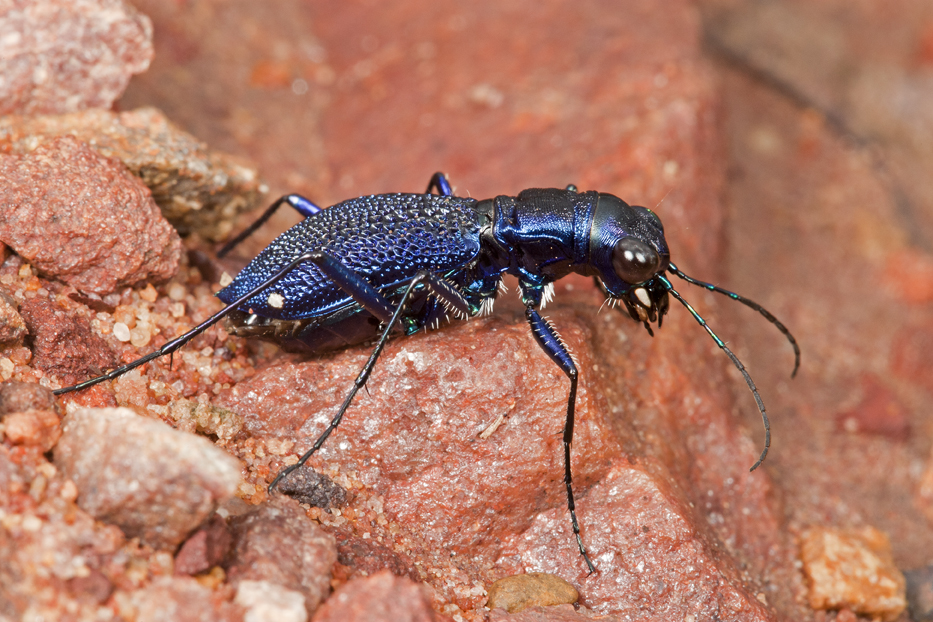
Dromica kolbei? - Kruger National Park, South Africa. Copyright © Joe Warfel 2011.

Shortly after I returned from Brazil, this stunning photo was sent to me by Joe Warfel, who himself had just returned from a trip to South Africa.  Joe had seen the beetle at Punda Maria camp in the northern part of Kruger National Park, had deduced that it represented a species in the genus Dromica, and included the following notes about its behavior:

It did not fly, only ran, ran, ran, ran…. you get the picture.  But stopped briefly now and then to deposit eggs in the  soil.  My best guess from my limited tiger beetle references is Dromica sp.  Any help for identification you may give would be appreciated.

Although I have not collected this genus myself, I recognized it instantly as a member of such based on specimens and images I have seen.  Carabidae of the World contains fine images of a number of species in this genus, of which Dromica kolbei (W. Horn, 1897) seems to be a pretty good match.  However, more than 170 species are currently included in the genus, and while a modern revision is in progress (Schüle and Werner 2001; Schüle 2004, 2007), the bulk of the genus still remains to be treated.  As a result, this really should be considered as just a provisional ID.

Dromica is a strictly sub-Saharan African genus of tiger beetles whose included species are denizens of dry lands – savannahs, grasslands, open woodlands, and semideserts, and are generally absent in the moister, more heavily forested areas of western Africa.  Like a number of other tiger beetle genera, they have given up the power of flight to capitalize on their fast running capabilities.  This flightlessness and the strict association of adults with often short rainy seasons has led to both spatial and temporal isolation of numerous, localized populations of restricted geographical range.  This has no doubt contributed to the diversification of the genus across the mosaic of suitable habitats covering central, eastern, and southern Africa.  Schüle and Werner (2001) suggest that a good number of new species may still await discovery in the more remote or yet inaccessible areas of the countries of occurrence.  I had hoped to encounter these beetles (and also Manticora, or the giant African tiger beetles) during my visit to South Africa in 1999, but luck was not with me in this regard (although I did collect several fine specimens of the handsome Ophryodera rufomarginata (Boheman) and also a few species in the genera Cicindina and Lophyra).

My sincere thanks to Joe Warfel for allowing me to post his excellent photograph.  I featured photographs by Joe in an earlier post (A Tiger Beetle Aggregation), and his other photos can be seen at EighthEyePhotography (you must see this striking harvestman from Trinidad!).

REFERENCES:

Schüle, P. 2004. Revision of the genus Dromica. Part II.  The “elegantula-group” (Coleoptera: Cicindelidae). Folia Heyrovskana 12(1):1–60.

Schüle, P. 2007. Revision of the genus Dromica. Part IV.  Species closely related to Dromica albivittis (Coleoptera: Cicindelidae). African Invertebrates 48(2):233–244.

Schüle, P. and K. Werner. 2001. Revision of the genus Dromica Dejean, 1826. Part I: the stutzeri-group (Coleoptera: Cicindelidae). Entomologia Africana 6(2):21–45.

Copyright © Ted C. MacRae 2011 (text)

Cicindela denverensis – green claybank tiger beetle

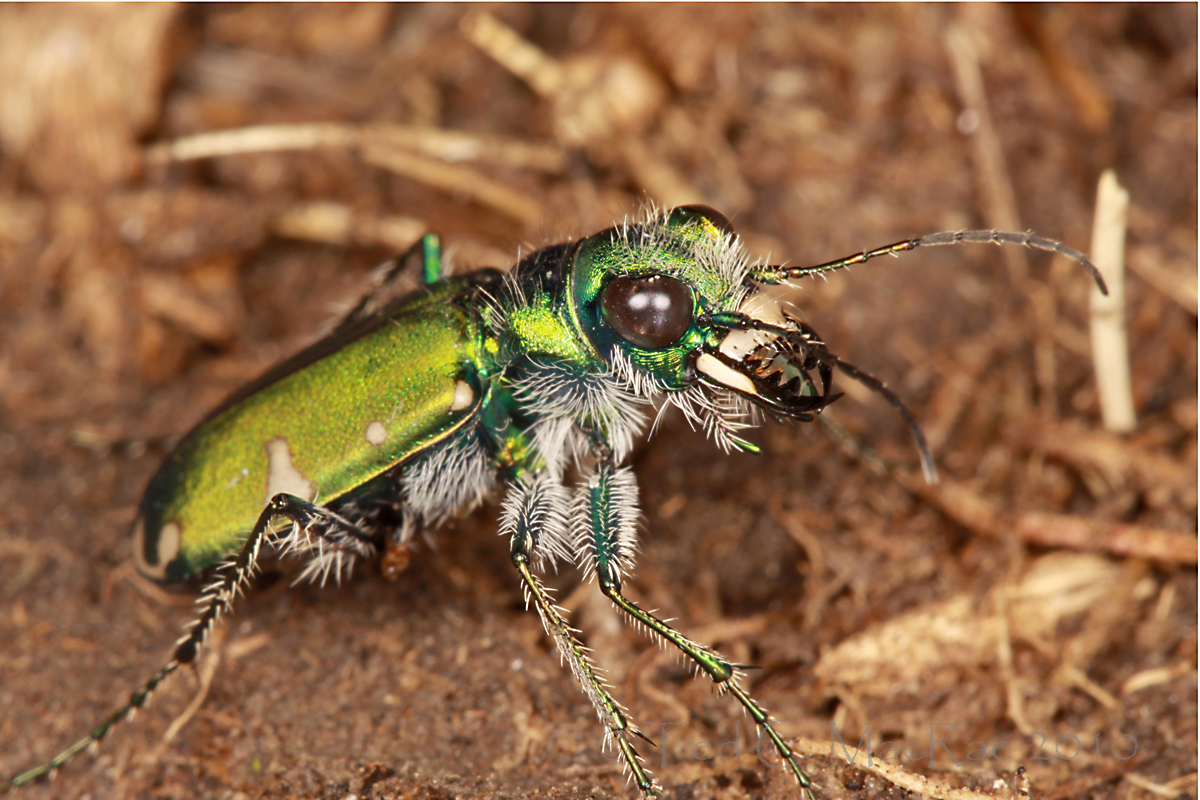
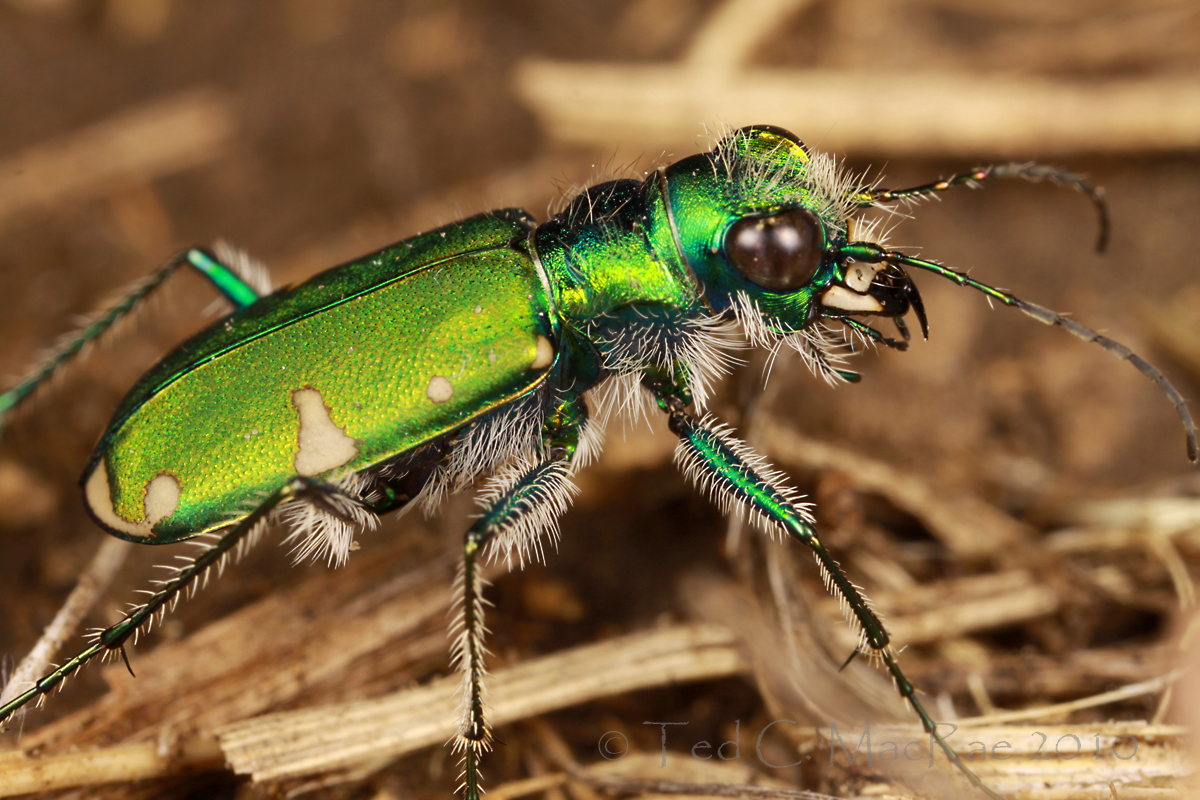
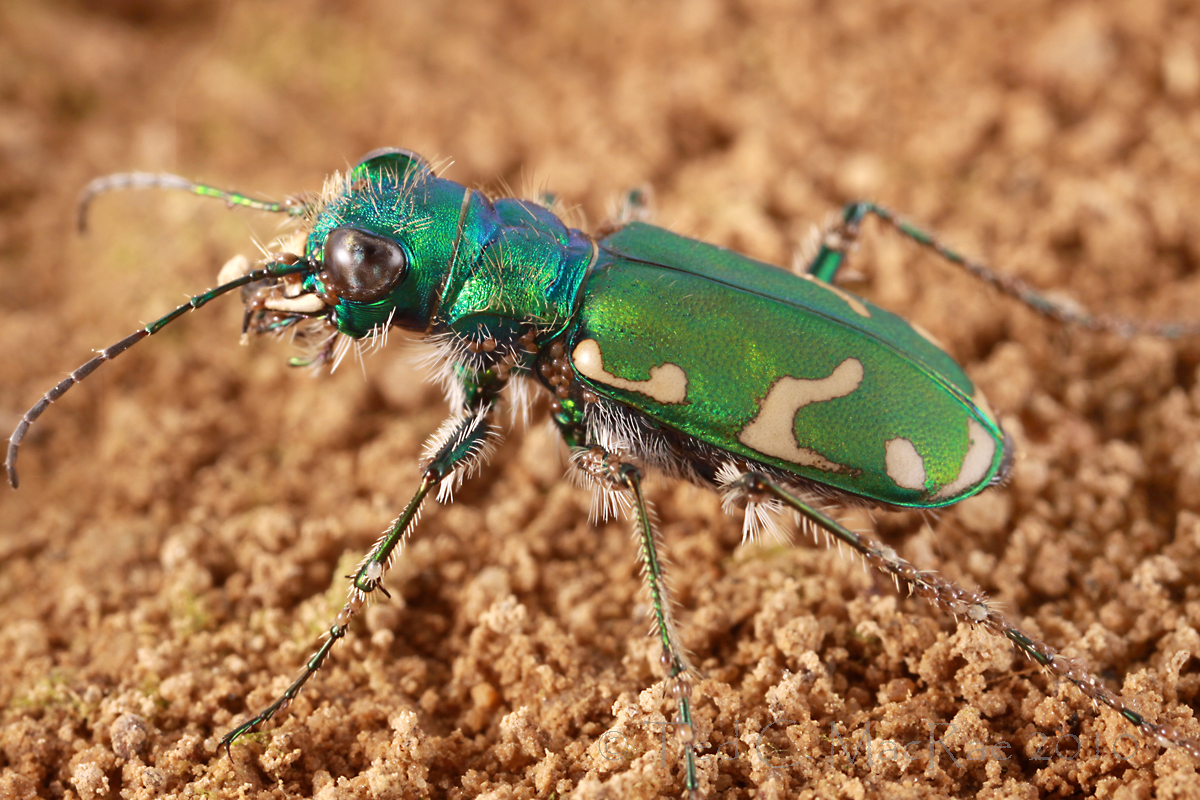
Cicindela denverensis (green claybank tiger beetle) | Sioux Co., Nebraska.

Here are a few more photographs of the insect featured in ID Challenge #1, which is, in fact, Cicindela denverensis (green claybank tiger beetle).  Nearly every commentor got the first 6 points easy enough (2 pts each for order, family, and genus), but only Ben Coulter correctly identified the species.  A bonus point for proper italicization of the binomen (and a favorable ruling on a technicality) gave him 9 points and the win.  Second place goes to TGIQ, who smartly picked up bonuses to earn 8 points and edge the pack.  Charley Eiseman, Christopher Taylor, Delbert La Rue, jason, and Techuser crowd the final podium spot with 7 points each.

Distinguished by its green color, hairy frons, reduced maculations, and grassland occurrence.

Cicindela denverensis occurs in short- and mixed-grass prairie habitats in the central and western Great Plains, especially sites with clay soils.  It can be distinguished from a number of similar-looking species by its uniformly green color, hairy frons, often reduced maculations, and occurrence in grassland habitats.  Cicindela sexguttata is also uniformly green, but the frons in that species is glabrous, and it occurs further east in woodland habitats.  Cicindela decemnotata is also similar, but it usually has broad maculations and a shinier, oily appearance – often with some degree of red tinting.  Some subspecies of C. scutellaris are also green, but only rugifrons bears maculations and can be distinguished by it’s stockier form and Atlantic Coastal Plain distribution. Cicindela denverensis is actually most closely related to C. purpurea (cowpath tiger beetle), C. limbalis (common claybank tiger beetle), and C. splendida (splendid tiger beetle) – especially the latter two.  All three of these species exhibit some degree of purple or red on the pronotum, elytra, and/or legs that distinguish them from C. denverensis in most parts of their range.   There is, in fact, some disagreement about whether C. denverensis, C. limbalis, and C. splendida even represent distinct species, all of which demonstrate a similar preference for clay substrates but segregate into three partially allopatric populations – northern C. limbalis, southern C. splendida, and western C. denverensis.  Hybrid individuals can be encountered in areas where their distributions overlap, and this is especially so in central Nebraska – one of just a few spots where all three species occur together.  Schincariol & Freytag (1991) conceded a close relationship between the three based on morphometric analysis but still considered them distinct based on differences in elytral color, pattern, and percentage maculation and the number of non-sensory setae.  However, a recent phylogenetic analysis based on mitochrondrial DNA sequences strongly supports a single species hypothesis (Woodcock & Knisley 2009).  From an academic perspective, more thorough systematic analyses of the claybank group of tiger beetles would be of great interest (although I suspect many cicindelophiles with strictly philatelic interests will not be happy to see three species sunk into one).

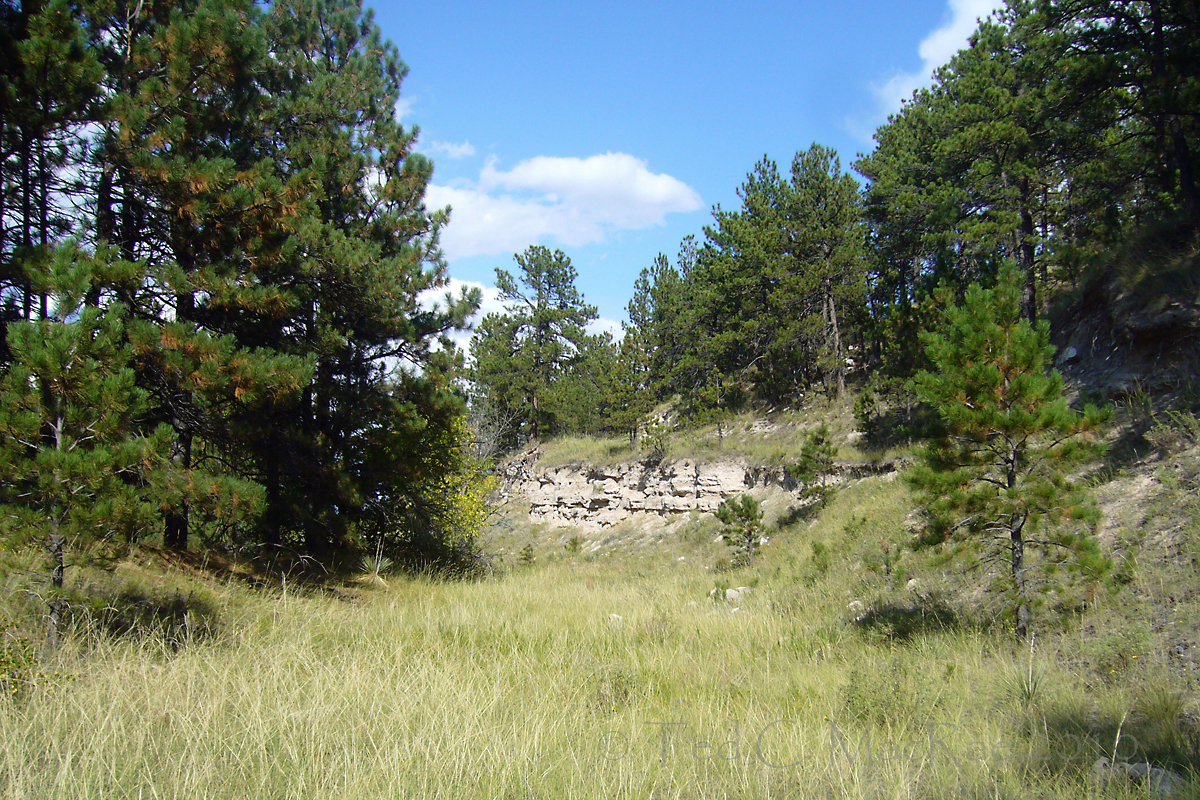
Ponderosa pine mingles with prairie grasses on the Nebraska Pine Ridge escarpment.

The individual in the above photos was found at Monroe Canyon in the Pine Ridge escarpment of western Nebraska (Sioux Co.).  It was the only individual of this species that we saw there and was a bit of a surprise finding because of the generally sandy soils that characterize the spot – perhaps it was a vagrant individual that had found its way into the canyon from the more clay-based shortgrass prairie above.  We’ve seen greater numbers of this species further east in central Nebraska (Sherman Co.) along vertical roadside clay banks. The photograph below is one of those individuals and exhibits somewhat more complete maculations.  Note the sharp bend, or “knee,” on the median maculation that allows the species to be differentiated from C. limbalis (all-green forms of this species can be found at the northern limit of distribution for C. denverensis in North Dakota).  This individual also displays something else of interest – anybody?

Individual with more complete maculations | Sherman Co., Nebraska.

REFERENCES:

Schincariol, L. A. and R. Freitag. 1991. Biological character analysis, classification, and history of the North American Cicindela splendida Hentz group taxa (Coleoptera: Cicindelidae). The Canadian Entomologist 123(6):1327-1353.

Woodcock, R. M. and C. B. Knisley. 2009. Genetic analysis of an unusual population of the problematic tiger beetle group, Cicindela spendida/C. limbalis, from Virginia, USA (Coleoptera: Cicindelidae) using mtDNA. Entomological News 120(4):341-348.

Copyright © Ted C. MacRae 2010

A First Class Box of Beetles

Warning: post contains lots of hardcore, beetle-collector geekery!
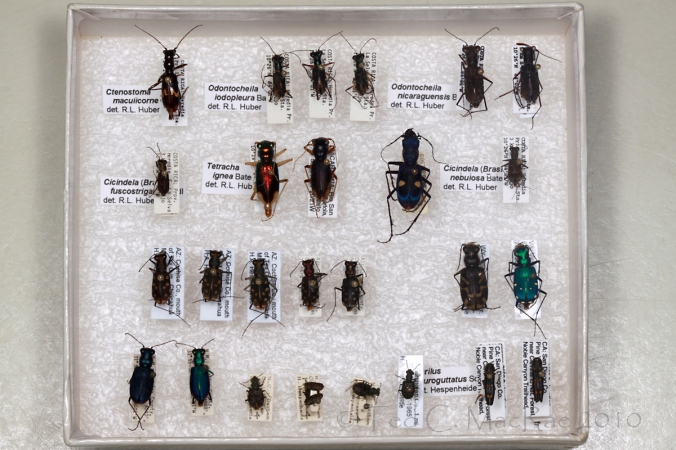
A nice selection of tiger beetles and buprestid beetles.

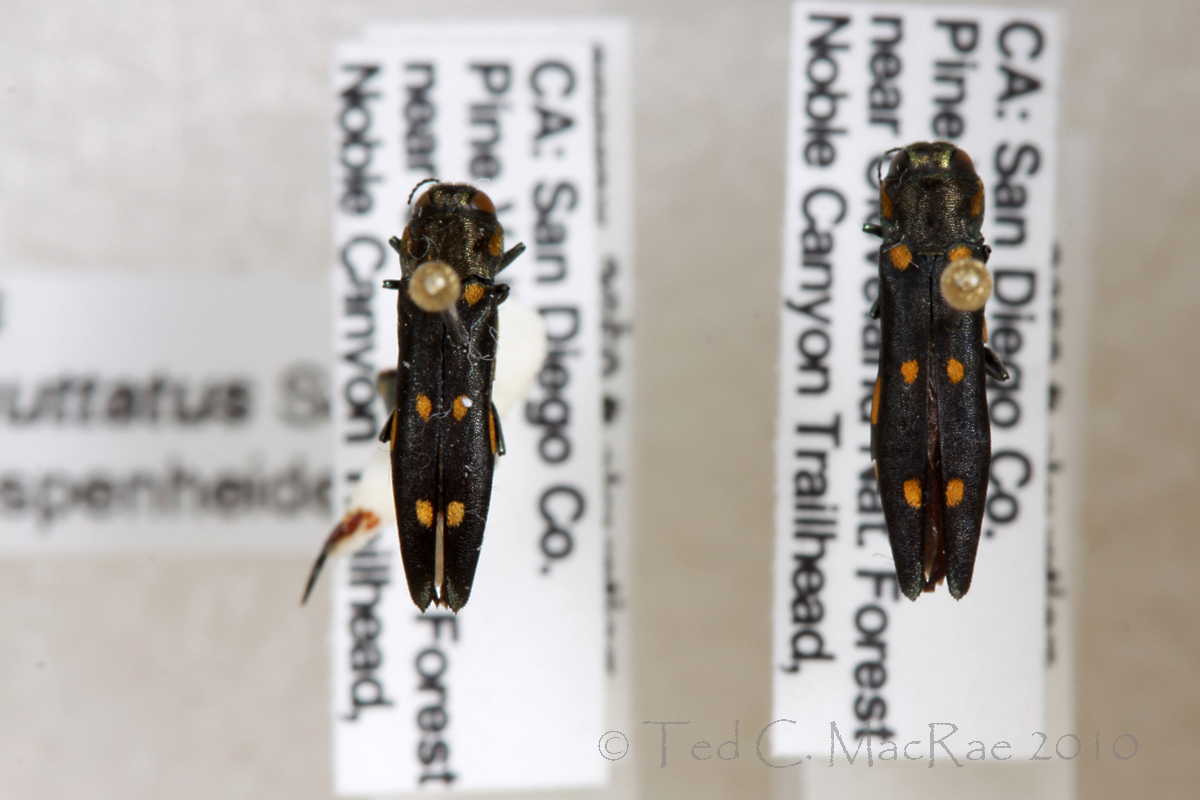
A few weeks ago I got an email from fellow buprestophile Henry Hespenheide (Professor Emeritus, UCLA) asking if I needed any specimens of Agrilus coxalis auroguttatus – recently dubbed the “goldspotted oak borer” after it was discovered damaging oaks in southern California (Coleman & Seybold 2008).  I replied that I did not have this species in my collection and that I would be grateful for any examples he could provide.  Shortly afterwards, I received another message from him saying that he had just placed in the mail a small box with a male/female pair of that species – along with about two dozen tiger beetles for my enjoyment!  Later that week I received the shipment at my office – I couldn’t wait to open it up and see what goodies were inside!

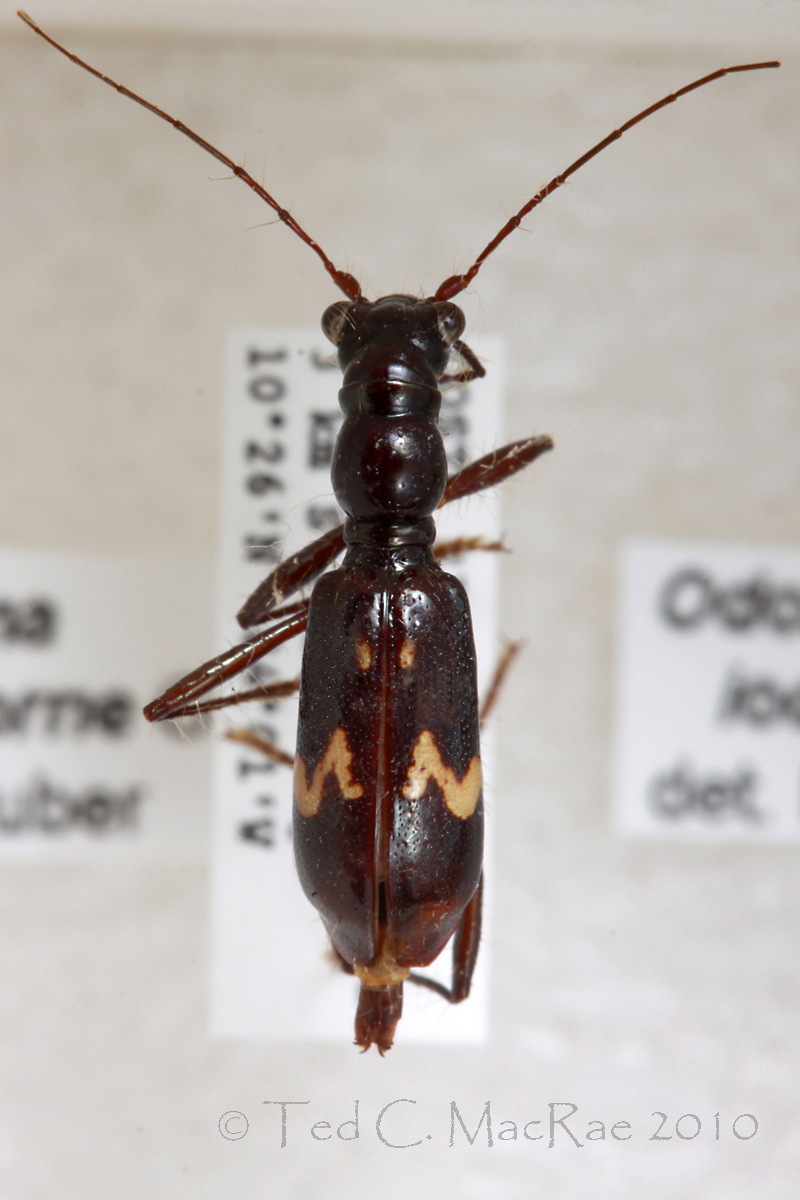
Ctenostoma maculicorne (Chevrolat, 1856)

Opening a box of just received specimens is a little like opening presents on Christmas – you don’t know for sure what’s inside, but you know you’re gonna like it!  This time was no exception, and I delighted as I realized the sending contained a dozen or so tiger beetles from Costa Rica and Nicaragua (a region in which Henry has spent many of his years studying the leaf-mining and twig boring buprestid beetles).  My eyes were immediately drawn to two tiger beetles in particular – specimen #1 in the first row, and specimen #4 in the second row.  Why these particular tiger beetles?  Obviously they are among the more showy specimens in the sending, but more significantly both of them belong to genera not represented in my collection.  The first of these is Ctenostoma maculicorne, representing also a new tribe for my collection (Collyridini, subtribe Ctenostomina).  I’m glad Ron Huber had already identified this specimen, as I probably would’ve only been able to determine the genus.  Beetles in this group are ant mimics, but in a much different manner than our U.S. ant-mimics (Cylindera cursitans and Cylindera celeripes).  Those latter species are found strictly on the ground (as are all U.S. tiger beetle species), while species of Ctenostoma are largely arboreal.  Troy Bartlett at Nature Closeups has some great photographs of another species in this genus seen last January in Brazil (Caraça Natural Park, Minas Gerais) that show just how ant-like these beetles can appear as they crawl about on twigs and branches.
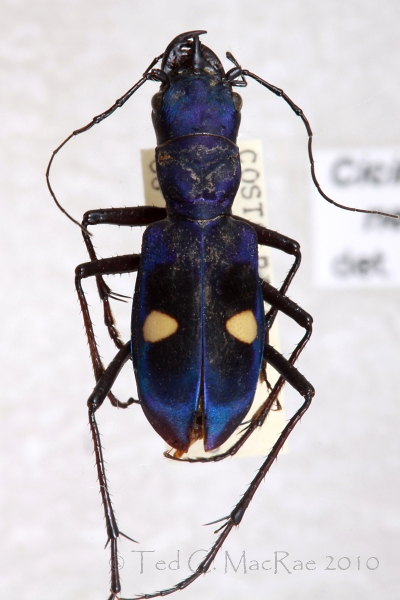
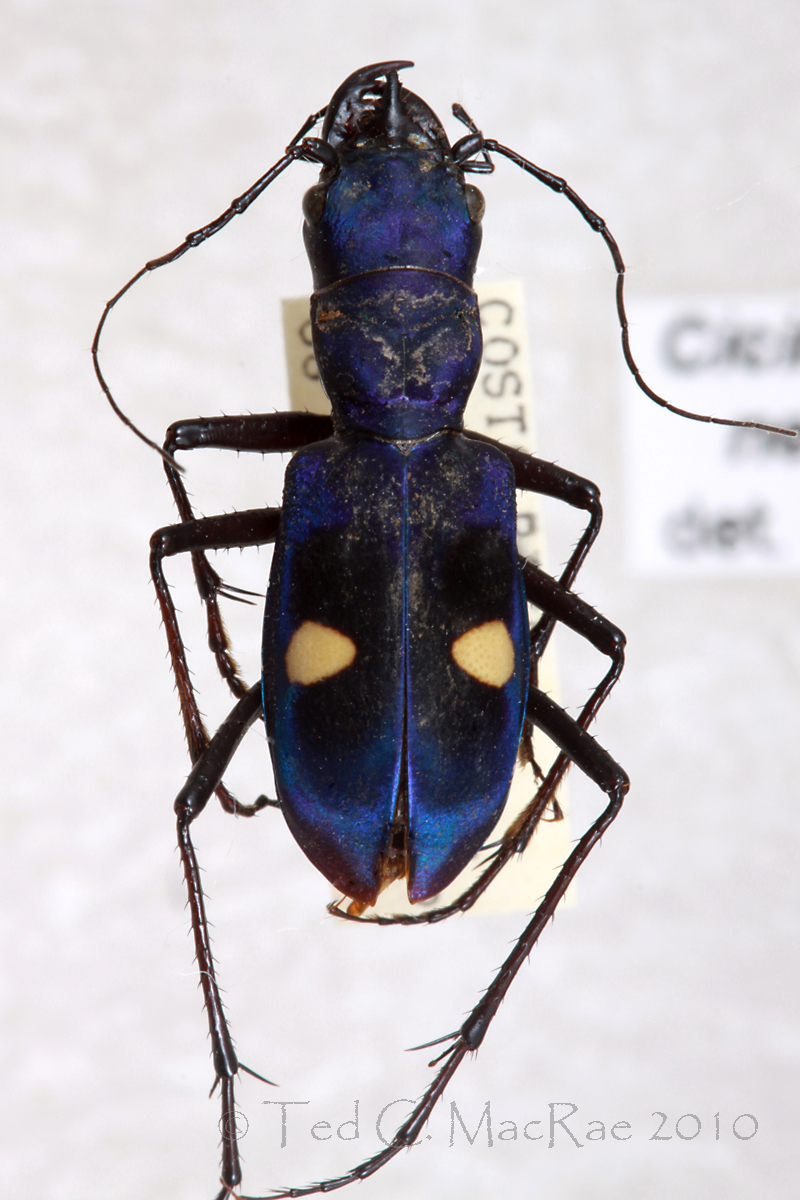
Pseudoxycheila tarsalis Bates, 1869

Despite lacking an identification label, I recognized the second specimen instantly as Pseudoxycheila tarsalis, dubbed by Erwin & Pearson (2008) as the “Central American montane tiger beetle.”  Pseudoxycheila is a rather large Neotropical genus (21 known species), but only P. tarsalis occurs north of South America.  Morgan Jackson at Biodiversity in Focus photographed an individual of this species during his visit to Costa Rica this past summer.  Its brilliant coloration is not only delightful to look at but also apparently aposematic in nature – Schultz and Puchalski (2001) found that benzene-like compounds isolated from the beetle’s pygidial glands are distasteful to humans, adding support to the potential of a Müllerian mimicry association with stinging mutillid wasps in the genus Hoplomutilla, which they resemble.  Note also the curious spine on the frons extending out over the mandibles – maybe it not only grabs its prey with its toothy jaws but also “stabs” it for extra measure (just kidding – though I do wonder about the function of that spine.  I’m not aware of its presence in any other genus of tiger beetles).

I also noted an interesting pair of tiger beetles that looked very different from each other, yet were both identified by Ron Huber as Tetracha ignea.  This species was recently synonymized under the nominotypical form of T. sobrina (Naviaux 2007) – the “ascendent metallic tiger beetle” (Erwin & Pearson 2008), a highly variable species with numerous described subspecies occurring in southern Mexico, Central America, northern South America, and the West Indies.  The specimen on the left has the normal appearance of T. sobrina sobrina, but the specimen on the right looks like it might have suffered some chemical discoloration (a common occurrence among collected tiger beetle specimens).

Update 16 Dec 2010, 12:00pm – I just learned from Henry that the Tetracha specimen on the right (from Nicaragua) was not seen by Ron Huber and, thus, is likely not conspecific with the specimen on the left (T. sobrina from Costa Rica).  That’ll teach me to blindly accept what I see but does not seem right.  Now, time to pull out my copy of Naviaux (2007) and test my abilities to work through a key written in French!
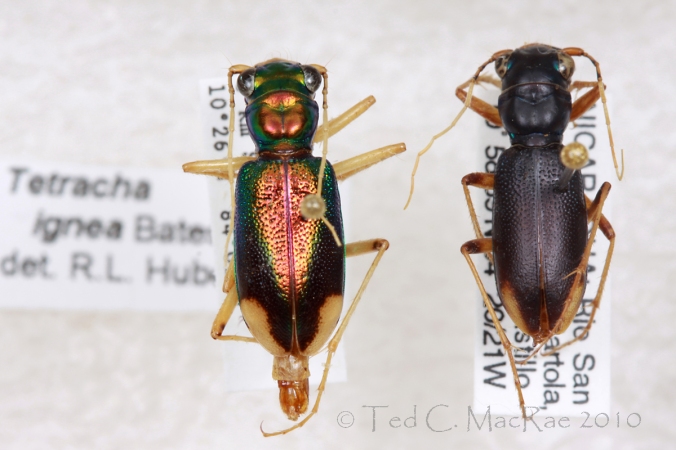
Tetracha sobrina sobrina Dejean, 1831 (L); Tetrach sp. undet. from Guatemala (R).

There are several other interesting species in the sending – some determined (two species each of Oxycheila and Brasiella) and others that I need to look at more closely.  You may note on the bottom row a few specimens of a species of Elaphrus – a genus of true ground beetles that often fool collectors by their strong resemblance to tiger beetles (looks like they fooled Henry, too).  As for the beetles that were the reason for this shipment in the first place, these are shown in the image below.  Agrilus coxalis auroguttatus was recently discovered as the cause of significant mortality in several species of oak trees in San Diego County (Coleman & Seybold 2008), thus joining the introduced Agrilus planipennis (emerald ash borer) and several native Agrilus spp. on the ever-growing list of buprestid beetles achieving economic pest status in North America.  This subspecies, known for many years from southern Arizona (where it is not a pest), is curiously widely disjunct from nominotypical populations in southern Mexico.  Its sudden appearance in southern California has all the hallmarks of being a human-aided introduction, although natural range expansion remains a possibility.
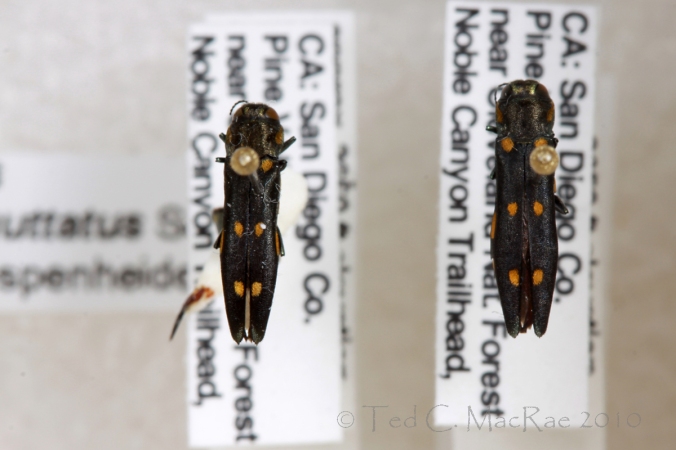
Agrilus coxalis auroguttatus Schaeffer, 1905

My deep appreciation to Henry Hespenheide for gifting me these specimens and for his always enlightening and often entertaining correspondence over the years.

REFERENCES:

Coleman, T. W. and S. J. Seybold.  2008.  Previously unrecorded damage to oak, Quercus spp., in southern California by the goldspotted oak borer, Agrilus coxalis Waterhouse (Coleoptera: Buprestidae).  The Pan-Pacific Entomologist 84:288–300.

Erwin, T. L. and D. L. Pearson. 2008. A Treatise on the Western Hemisphere Caraboidea (Coleoptera). Their classification, distributions, and ways of life. Volume II (Carabidae-Nebriiformes 2-Cicindelitae). Pensoft Series Faunistica 84. Pensoft Publishers, Sofia, 400 pp.

Naviaux R. 2007. Tetracha (Coleoptera, Cicindelidae, Megacephalina): Revision du genre et descriptions de nouveaus taxons. Mémoires de la Société entomologique de France 7:1–197.

Schultz, T. D. and J. Puchalski.  2001.  Chemical defenses in the tiger beetle Pseudoxycheila tarsalis Bates (Carabidae: Cicindelinae).  The Coleopterists Bulletin 55(2):164–166.

Copyright © Ted C. MacRae 2010