One Bad Beetle

Almost every tiger beetle trip that I take has a mix of gimmes and stretch goals. That’s alright—it’s impossible to find everything every time out, and if I eschewed the common and was happy only when I found something truly rare, then I would probably find myself rather unsatisfied most of the time. For the stretch goals, however, “success” can mean many things—obviously the best case scenario is to find it in good enough numbers to allow responsible collection of an adequate series and photograph enough individuals in situ to ensure that at least a few shots will have the focus, lighting, and composition that I want. Success can also be something less than that—maybe I find only a few and don’t get a very good series, or I have trouble getting field shots and am not happy with the shots I got…or worse I don’t even get field shots! The least successful version of “success” is when I end up with just one single beetle, and the only photographs I get are very ordinary-looking shots of that one beetle in confinement. Like what happened with Cicindela decemnotata (Badlands Tiger Beetle).

IMG_3717_1080x720

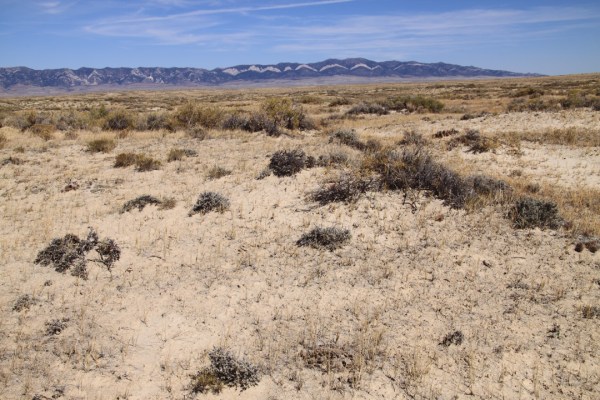
Soda Lake, Wyoming—we searched theses areas of alkaline exposures but never found beetles…

Chris Brown and I knew this species would be a stretch goal when we added “Soda Lake, Wyoming” to the itinerary of our 7th Annual Fall Tiger Beetle Trip™ (location “H” on this map). Cicindela decemnotata is the westernmost representative (Rocky Mountains from the northwestern Great Plains and northern Great Basin north to Yukon) of a group of species that seem to be closely related and resemble each other in their green coloration varying degrees of red on the head, pronotum and elytra and their variably developed white elytral markings (Pearson et al. 2006). Cicindela limbalis, C. splendida and C. denverensis occur as a partially allopatric species complex further east in the Great Plains, while C. sexguttata, C. patruela and C. denikei occupy more forested regions even further to the east. On this trip we were focusing on Great Plains tiger beetles and the dune specialists of the Yampa River Valley of northwestern Colorado. Our drive from northwestern Nebraska to the Yampa Valley would skirt the eastern edge of C. decemnotata‘s distribution, so we decided to stop by Soda Lake where Matt Brust had seen the species in previous years.
IMG_3721_1080x720

…until we started searching these small ridges of exposed sandy soil.

It took most of the morning to reach the spot, so by the time we arrived we were anxious to get out and start searching the sage brush habitat. For me it was an unfamiliar landscape—at that time my northwesternmost push for tiger beetles yet, and like many western habitats it seemed vast and unending. We were optimistic, however, because it just “looked” like good tiger beetle habitat, with ribbons of alkaline flats weaving through open brush. Of course, as time passes and one starts to recognize that they are again searching ground already covered with no sign of beetles, optimism begins to wane and searches become more deliberate. We were there for almost an hour before I heard Chris call out. He had abandoned the alkaline flats—obvious habitat it would seem—and started looking upon some slightly sandier low ridges a little further to the south. I hustled to where he was standing, and we both looked at the beetle, calmly sitting on the sand, as we deliberated our next move. Should we try to photograph it? It seemed not at all skittish—but what if we failed, it got away, and then we never saw another one? We played it safe, netted it (easily), and placed it in a vial for transfer to a container of native soil should further efforts at finding and photographing the species fail. It was perhaps another 45 minutes before we saw another beetle—I don’t know if it was just a less cooperative individual or the heat of the day had kicked in, but as soon as I started my approach it was gone. We saw another not long after, but same story. Finally we saw one last beetle that seemed to tolerate my approach to the point that I even began looking for it in the view finder—at which point it promptly zipped away. This small prospect of success only served to prolong our vain searching before we eventually we accepted defeat and tried to be happy with the single individual that we had caught and the photographs that we would take of it in its artificial home.

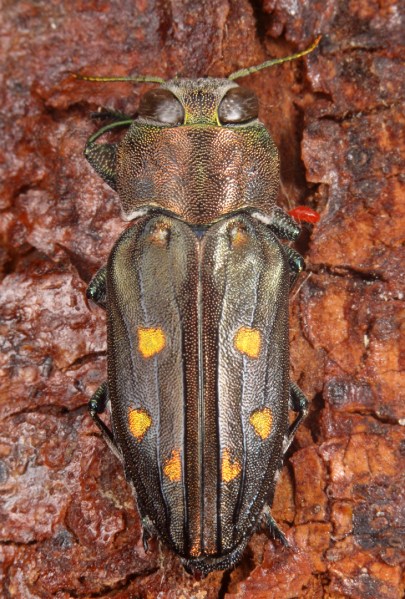
Cicindela decemnotata

Cicindela decemnotata (Badlands Tiger Beetle) | Soda Lake, Wyoming

Part of me really doesn’t like showing photographs of confined tiger beetles—not for any philosophical reasons, but because I just don’t like the way they look. Rarely do they exhibit the elegant stilting and other thermoregulatory behaviors that place them in much more pleasing postures when photographed in situ. Rather, they often have a “hunkered down” look that says “I’m not happy and I don’t want to be here, so I’m not going to smile for the camera!” Since these photos were taken, I have learned a few tricks to deal with confined beetles and achieve more aesthetically pleasing photographs—these include the use of much larger arenas, allowing the beetles more time to accommodate to their environs, and elevating the substrate relative to the camera (maybe a subject for a future post). In the end, however, they are still confined and can’t be passed off as anything but that.

The bold white markings, media band sharply angled and not reaching the edge of the elytra, and ''greasy'' appearance distinguish this species.

The bold white markings, media band sharply angled and not reaching the edge of the elytra, and ”greasy” appearance distinguish this species.

As an aside, tiger beetle pros Barry Knisley, Ryan Woodcock and Mike Kippenhan have recently published the results of an impressive study of this species in which a combination of morphological and molecular evidence support the recognition of four subspecific entities—three described as new (Knisley et al. 2012). The molecular analyses not only support the subspecific distinctions postulated from morphology but also suggest that populations have undergone rapid phylogenetic radiation in the recent geological past. Much of the area occupied by C. decemnotata was covered by an ice shield during the most recent glaciations and, thus, has opened up for colonization only during the past 10,000 years (Pearson and Vogler 2001). The molecular analyses showed a relatively low amount of genetic divergence within C. decemnotata populations, which combined with marked morphological differences suggests recent and rapid radiation—most likely in the wake of glacial recession. A similar situation has been observed with members of the Cicindela maritima species-group, which occupy much the same range as C. decemnotata and, presumably, have experienced similar selection pressures in the recent geological past.

REFERENCES:

Knisley, C. B., M. R. Woodcock & M. G. Kippenhan. 2012. A morphological and mtDNA analysis of the badlands tiger beetle, Cicindela (s. str.) decemnotata Say, 1817 (Coleoptera: Carabidae: Cicindelinae) with the description of three new subspecies. Insecta Mundi 0214:1–49.

Pearson, D. L., C. B. Knisley & C. J. Kazilek. 2006. A Field Guide to the Tiger Beetles of the United States and Canada. Oxford University Press, New York, 227 pp.

Pearson, D. L. and A. P. Vogler.  2001. Tiger Beetles: The Evolution, Ecology, and Diversity of the Cicindelids.  Cornell University Press, Ithaca, New York, 333 pp.

Copyright © Ted C. MacRae  2012

Where siblings mingle: Ellipsoptera marginata vs. E. hamata

When Erwin & Pearson (2008) formally broke up the great genus Cicindela by elevating most of its former subgenera to full genus rank, it caused a bit of consternation amongst some North American cicindelophiles. The argument went something like, “Now we have all these new genus names to learn, and we’ll have to relabel and reorganize everything in our collections, and how do we know the names won’t change again, and we can’t even tell them apart in the field anyway, and blah blah…” Pardon me, but since when did taxonomy become more about slotting species into fixed, easy-to-learn categories and less about best reflecting dynamic knowledge of complex evolutionary relationships? In the case of Cicindela and its former subgenera, however, even these arguments don’t hold up to close scrutiny—tiger beetle enthusiasts in North America should have already been quite familiar with the former subgenera due to their inclusion in the widely accepted Pearson et al. (2006) field guide, many of which actually do present a unique suite of morphological/ecological characters that facilitate their recognition in the field, and I personally find that nomenclatural recognition of individual lineages helps my attempts to learn and understand them much more than dumping them into a large, all-encompassing genus based on superficial resemblance. As for insisting that names don’t change, well that has never been a tenet of taxonomy. Stable, yes, but fixed and immutable, no.

Ellipsoptera marginata male | Pinellas Co., Florida

Enough waxing philosophic. One of the more distinctive of the former subgenera is Ellipsoptera. Morphologically the genus is defined by details of male genitalia, but the 11 North American species are generally recognizable in the field by their relatively “bug-eyed” look and long legs (Pearson et al. 2006) and, as a group, seem ecologically tied to extreme habitats with sandy and/or saline substrates that are nearly or completely devoid of vegetation. Coastal marshes and mudflats, saline flats, sandy river banks, and deep sand ridges representing ancient coastlines are some of the habitats where species in this genus are most commonly encountered. Most of the species exhibit a fairly uniform facies but differ in the details of maculation and dorsal coloration, but two species that stand apart from the rest are E. marginata (Margined Tiger Beetle) and E. hamata (Coastal Tiger Beetle) due to the highly diffuse middle band of their elytra. These are both eastern coastal species and presumably represent sibling species that have diverged based on geographical range partitioning—E. marginata along the Atlantic Coast and E. hamata along the Gulf Coast. In the field, the two species are almost identical in appearance but nonetheless easily identifiable based on geographical occurrence. There is, however, a small stretch of coastline—the lower Gulf Coast of Florida—where the ranges of the two species overlap and geography alone isn’t sufficient for species determination.

Ellipsoptera hamata lacerata male | Dixie Co., Florida

Fortunately, despite their strong resemblance to each other, field identifications in areas where these species co-occur are still possible due to the presence of small but distinct sexual characters present in one species but absent in the other. Close examination is necessary to see the characters (or their absence), so it is best to net a few individuals and examine them in the hand or, as I have done here, look at them through the viewfinder of a camera. The photos in this post include the male and the female of both species, each showing the presence or absence of the distinguishing character.

Ellipsoptera marginata female | Dixie Co., Florida

In most tiger beetles, male individuals are distinguished by a number of secondary sex characters, but easiest to see in the field are the brush-like pads on the underside of the front tarsi (“feet”). Males of E. marginata and E. hamata are further distinguished from each other by the presence (E. marginata) or absence (E. hamata) of a distinct tooth on the underside of the right mandible. Photo 1 above shows a male E. marginata from Pinellas Co., Florida, and the tooth is easily seen in that relatively distant view. Photo 2 above shows a male E. hamata lacerata (Gulf Coast Tiger Beetle)—the Floridian subspecies, and while a small bump can be seen on the underside of the right mandible, it is not nearly as well developed into a distinct tooth as in E. marginata.

Ellipsoptera hamata lacerata female | Dixie Co., Florida

Female tiger beetles, on the other hand, lack the brush-like tarsal pads present in the males and are further distinguished by the “mesopleural coupling sulcus”—an area just behind the side of the pronotum that receives the male mandible during mating and is thus devoid of setae (compare the females in Photos 3 and 4 with the males in Photos 1 and 2). Neither E. marginata nor E. hamata females possess the mandibular tooth found in E. marginata males, but they can be distinguished from each other by their elytral apices. In E. marginata females (Photo 3), the elytra are curiously “bent” at the tips, forming a distinct indentation at the apex of the elytra where they meet, while female E. hamata (Photo 4) lack this indentation.

Are there other tiger beetle sibling species groups for which you would like to see comparative posts such as this one?

p.s. I completely neglected to mark yesterday’s 5th anniversary of Beetles in the Bush! I don’t know how I missed a milestone as big as five years—hopefully my ability to provide interesting content is faring better than my middle-aged memory!

REFERENCES:

Erwin, T. L. and D. L. Pearson. 2008. A Treatise on the Western Hemisphere Caraboidea (Coleoptera). Their classification, distributions, and ways of life. Volume II (Carabidae-Nebriiformes 2-Cicindelitae). Pensoft Series Faunistica 84. Pensoft Publishers, Sofia, 400 pp.

Pearson, D. L., C. B. Knisley and C. J. Kazilek. 2006. A Field Guide to the Tiger Beetles of the United States and Canada. Oxford University Press, New York, 227 pp.

Copyright © Ted C. MacRae 2012
The hardest EASIEST ID Challenge in like ever!

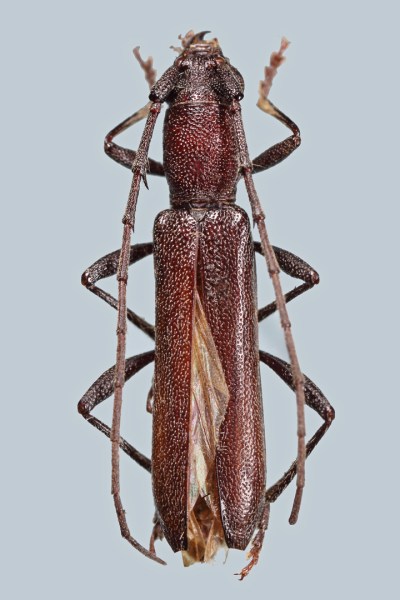
This is not only the hardest ID Challenge I have ever posted, it is probably the hardest one anyone has EVER posted. I’m not going to ask for order or family because they’re so easy. I will ask for the genus, because maybe only a few of you will get that right, but the genus alone won’t be enough. I want the species! Don’t even think about searching the internet for a matching photo—it doesn’t exist! You’re going to have to utilize other resources to figure this one out.

Because of the difficulty of this challenge, all the normal rules are out the window—no points, no sessions, no moderated comments, no nothing. This is winner take all—first person to correctly guess the species gets loot! I’ll even provide all the collection data in the caption. Good luck!

Update 10/29/12 10:12 pm: Well, I goofed and didn’t think about somebody Googling the label data, which Ben Coulter did to quickly arrive at the correct answer. Stupid Google!

At any rate, and with great anticlimactic fanfare, say hello to Aneflomorpha cribellata, described by Bates more than a century ago (1892) and known only from that single type specimen until the collection of this one in southern Mexico in 2005 (MacRae et al. 2012). This is the first photograph of the species and will be added to Larry Bezark’s A Photographic Catalogue of the CERAMBYCIDAE of the World.

Reference:
MacRae, T. C., L. G. Bezark & I. Swift. 2012. Notes on distribution and host plants of Cerambycidae (Coleoptera) from southern México.  The Pan-Pacific Entomologist 88(2):173–184.


MEXICO: Oaxaca, 4.8 km E La Ventosa, Hwy 190, 16°33’27″N, 94°54’27″W, elev. 76′, 28.vii.2005, beaten from unidentified dead branches, coll. T. C. MacRae.

Copyright © Ted C. MacRae 2012

PPE Call For Submissions

Over the past two years, we have made great progress in working through a backlog of manuscripts as we bring the journal closer to our eventual goal of on-schedule publishing. I thank the authors who contributed manuscripts, the Editorial Board for their efforts to work through this backlog, and especially the many reviewers who contributed their time and expertise to ensure that the manuscripts met our high standards of quality research.

With the backlog of manuscripts cleared and existing manuscripts moving quickly through the review process, we are in need of new submissions to maintain the momentum we have established as we finish out volume 88 and look forward to the publication of volume 89. The Pan-Pacific Entomologist is an international journal publishing manuscripts on taxonomy and biosystematics of insects and other closely related arthropods. Manuscripts from all world areas are welcome, with those from regions around the Pacific Rim especially desired.

For those of you conducting taxonomic or biosystematic research on insects and their relatives, I hope you’ll consider The Pan-Pacific Entomologist as an outlet for the publication of your research. Among the many journal choices that are available to you, we offer 60% reduced page charges for all members of The Pacific Coast Entomological Society, an additional 50% reduction of the first 5 pages for members that meet other qualifications, and a complete waiver of normal page charges for authors who follow our “pre-reviewed” process (up to 20 pages per volume). The Pan-Pacific Entomologist has long been and continues to be one of the lowest cost print journals for entomology with an international scope.

If you have a manuscript that you would like to consider publishing in The Pan-Pacific Entomologist, please don’t hesitate to contact me (Ted C. MacRae, Managing Editor) on this page or by direct message. I look forward to hearing from you!

Copyright © Ted C. MacRae 2012

Some recent publications

I’ve had a few papers published in recent months that may be of interest to some. After a string of papers in 2011 focused exclusively on tiger beetles (five in all), these latest three represent sort a return to my “roots”: taxonomy and biosystematics of woodboring beetles (Buprestidae and Cerambycidae). Summaries are provided below, and hyperlinks in the citations lead to downloadable PDFs for those wishing to see the gory details.

  • MacRae, T. C. & R. L. Westcott. 2012. Nomenclatural history of Melanophila drummondi ab. nicolayi Obenberger, 1944 (Coleoptera: Buprestidae), a change of authorship and synonymy under Phaenops drummondi (Kirby 1837), and a new distribution record and summary of larval hosts for the species. The Pan-Pacific Entomologist 88(1):87–91.
     
    This paper can be considered of the “taxonomic housekeeping” sort. It concerns an “aberration” of the common, widespread jewel beetle species Phaenops drummondi. The current version of the International Code of Zoological Nomenclature (ICZN 1999) considers aberrations and other infrasubspecific (rank lower than subspecies) taxa as unavailable names with no taxonomic standing. However, they may be considered valid depending on date of publication and how they were treated by subsequent authors. In the majority of cases the guidance is clear on whether a given aberration, variety, form, etc. is considered unavailable or valid. However, there are times when multiple, conflicting interpretations are possible. The case described in this paper is one example, and even though the taxon clearly falls within the range of variability exhibited by the parent species, careful study of multiple provisions of The Code were required to determine its proper status. In the end, a change of authorship followed by formal synonymy were deemed the best course of action. Updated information on the distribution of P. drummondi and a summary of known larval hosts are also provided.
     
  • MacRae, T. C., L. G. Bezark & I. Swift. 2012. Notes on distribution and host plants of Cerambycidae (Coleoptera) from southern México. The Pan-Pacific Entomologist 88(2):173–184.
     
    From 2004–2006 I made three collecting trips to México with my friend and colleague, Chuck Bellamy. Our main focus was the rich diversity of jewel beetles that occur in the relatively intact, dry, tropical thorn forests that stretch across the southern states of Guerrero, Michoacan, Oaxaca, and Puebla, and in this respect we were quite successful. I also have an interest in longhorned beetles, but I try to limit my scope in this family to the Nearctic fauna and didn’t specifically target these beetles during those trips. Still, many species were encountered during the course of beating potential jewel beetle host plants. As with jewel beetles, the longhorned beetle fauna of México is rich but very incompletely known, with distributional data below the country level and knowledge of host plants lacking or inadequate for most species. This paper presents specific distributional and host plant information for 78 species in 50 genera of longhorned beetles collected during those trips. Included within the data presented are 47 new state records, 47 new adult host records, and 60 new flower records.
     
  • Steury, B. W., T. C. MacRae & E. T. Oberg. 2012. Annotated list of the metallic wood-boring beetles (Insecta: Coleoptera: Buprestidae) of the George Washington Memorial Parkway, Fairfax County, Virginia.  Banisteria 39:71–75.
     
    Lead author Brent Steury of the U.S. National Park Service contacted me last year about identifying jewel beetles that had been collected at a number of units in the George Washington Memorial Parkway during recent BioBlitz surveys and as by-catch from studies targeting other arthropods. The surveys were worthy of reporting on, as 23 species in nine jewel beetle genera were represented in the material collected—including two species reported for the first time from Virginia: Paragrilus tenuis (LeConte) and Pachyschelus purpureus purpureus (Say). Information is also provided on the collecting methods used during the surveys, with Malaise traps, hand netting, and pan traps being the only ones successful in capturing jewel beetles (Lindgren funnel and pitfall traps did not capture any).

REFERENCE: 

International Commission on Zoological Nomenclature [ICZN]. 1999. International Code of Zoological Nomenclature, 4th Edition. The International Trust for Zoological Nomenclature, c/o Natural History Museum, London. xxix + 306 pp.

Copyright © Ted C. MacRae 2012

The Pan-Pacific Entomologist 88(2)—Penrose Memorial issue

It is with great pleasure that I announce the publication of The Pan-Pacific Entomologist Penrose Memorial issue (volume 88, number 2), mailed 14 September 2012. Published by the Pacific Coast Entomological Society, this issue is dedicated to the memory of the late Richard L. Penrose (1943–2011); long time member of the guild of California coleopterists. As Managing Editor, I had the distinct honor and pleasure of overseeing the assembly and production of this issue; however, it is only from the selfless efforts of many individuals that this issue came to fruition. I would like to thank the PCES Executive and Editorial Boards, the contributing authors and the reviewers for their participation in making this issue possible. Three individuals deserve special mention for their particularly stellar efforts: Richard Westcott (Oregon Department of Agriculture) and Chuck Bellamy (California Department of Food and Agriculture) for their dogged persistence in promoting the idea and recruiting contributing authors, and Floyd W. Shockley (Smithsonian Institution), who as the journal’s Coleoptera Subject Editor oversaw the review, revision and acceptance of the bulk of the papers appearing in this coleopcentric issue.

If you are not a PCES member, now is a good time to join. Membership is only $25/year ($12.50 for students) and includes four quarterly issues of The Pan-Pacific Entomologist. Following are the contents of the Penrose Memorial issue with hyperlinks to online versions through BioOne. Abstracts & References are open access, while Full Text and PDF versions are available to BioOne subscribers.

The Pan-Pacific Entomologist 88(2)
Contents

Richard L. Penrose
Ted C. MacRae
The Pan-Pacific Entomologist 88(2):i–i
Citation | Full Text | PDF (83 KB)

BIOGRAPHICAL SKETCH

Richard Lynn Penrose (11 January, 1943–17 March 2011): Biographical sketch and memories
Richard L. Westcott and Richard E. Morel
The Pan-Pacific Entomologist 88(2):105–116
Citation | Full Text | PDF (1903 KB)

PAPERS

A new species of Cregya LeConte (Coleoptera: Cleridae: Peloniinae) from Florida, U.S.A. and Puebla, México
Jacques Rifkind
The Pan-Pacific Entomologist 88(2):117–121
Abstract & References | Full Text | PDF (107 KB)

Synetocephalus penrosei Gilbert & Clark (Chrysomelidae: Galerucinae: Luperini), a new species from California, U.S.A
Arthur J. Gilbert and Shawn M. Clark
The Pan-Pacific Entomologist 88(2):122–129
Abstract & References | Full Text | PDF (1970 KB)

Distribution and phenology of Rhagoletis fausta (Osten Sacken 1877) and Rhagoletis indifferens Curren 1932 (Diptera: Tephritidae) in California
Robert V. Dowell and Richard L. Penrose
The Pan-Pacific Entomologist 88(2):130–150
Abstract & References | Full Text | PDF (573 KB)

Acmaeodera penrosei Westcott (Coleoptera: Buprestidae), a new species from Chiapas, Mexico
Richard L. Westcott
The Pan-Pacific Entomologist 88(2):151—153
Abstract & References | Full Text | PDF (238 KB)

A new species of Trichoxys Chevrolat (Cerambycidae: Cerambycinae: Clytini) from Mexico, with a key to known species
Steven W. Lingafelter and James E. Wappes
The Pan-Pacific Entomologist 88(2):154—162
Abstract & References | Full Text | PDF (2333 KB)

Three new species of the genus Dysphenges Horn 1894 (Coleoptera: Chrysomelidae: Galerucinae: Alticini) from the United States
Arthur J. Gilbert and Edward G. Riley
The Pan-Pacific Entomologist 88(2):163–172
Abstract & References | Full Text | PDF (1826 KB)

Notes on distribution and host plants of Cerambycidae (Coleoptera) from southern México
Ted C. MacRae, Larry G. Bezark, and Ian Swift
The Pan-Pacific Entomologist 88(2):173–187
Abstract & References | Full Text | PDF (135 KB)

Hybopteroides, a new genus in the Cryptobatida group of subtribe Agrina, with three new species and notes on their way of life (Insecta: Coleoptera, Carabidae, Lebiini)
Terry L. Erwin and George E. Ball
The Pan-Pacific Entomologist 88(2):188–201
Abstract & References | Full Text | PDF (1702 KB)

A new species of sap beetle (Coleoptera: Nitidulidae) from Baja California Sur, Mexico, with a review of the genus Lobiopa Erichson
Andrew R. Cline and Scott A. Kinnee
The Pan-Pacific Entomologist 88(2):202–211
Abstract & References | Full Text | PDF (304 KB)

Addition of two new species and a previously unknown female to the ammoplanine complex, and a species of Pulverro Pate, 1937 is entered into synonymy (Hymenoptera: Crabronidae)
Norman J. Smith
The Pan-Pacific Entomologist 88(2):212–221
Abstract & References | Full Text | PDF (234 KB)

Dactylotrypes longicollis (Wollaston) (Coleoptera: Curculionidae: Scolytinae): an exotic bark beetle new to California and North America
James R. LaBonte and Curtis Y. Takahashi
The Pan-Pacific Entomologist 88(2):222–230
Abstract & References | Full Text | PDF (1390 KB)

Diurnal flight response of the walnut twig beetle, Pityophthorus juglandis Blackman (Coleoptera: Scolytidae), to pheromone-baited traps in two northern California walnut habitats
Steven J. Seybold, Jennifer A. King, Daren R. Harris, Lori J. Nelson, Shakeeb M. Hamud, and Yigen Chen
The Pan-Pacific Entomologist 88(2):231–247
Abstract & References | Full Text | PDF (1105 KB)

An analysis of the larval instars of the walnut twig beetle, Pityophthorus juglandis Blackman (Coleoptera: Scolytidae), in northern California black walnut, Juglans hindsii, and a new host record for Hylocurus hirtellus
Paul L. Dallara, Mary L. Flint, and Steven J. Seybold
The Pan-Pacific Entomologist 88(2):248–266
Abstract & References | Full Text | PDF (600 KB)

Penroseius lienosus, a new monotypic genus of Coraebini from Madagascar (Coleoptera: Buprestidae: Agrilinae)
C. L. Bellamy
The Pan-Pacific Entomologist 88(2):267–273
Abstract & References | Full Text | PDF (521 KB)

SCIENTIFIC NOTES

First occurrence of the goldspotted oak borer parasitoid, Calosota elongata (Hymenoptera: Eupelmidae), in California
Laurel J. Haavik, Tom W. Coleman, Yigen Chen, Michael I. Jones, Robert C. Venette, Mary L. Flint, and Steven J. Seybold
The Pan-Pacific Entomologist 88(2):i-i
Citation | Full Text | PDF (44 KB)

Recent collecting reveals new state records and geographic extremes in the distribution of the walnut twig beetle, Pityophthorus juglandis Blackman (Coleoptera: Scolytidae), in the United States
Steven J. Seybold, Tom W. Coleman, Paul L. Dallara, Norman L. Dart, Andrew D. Graves, Lee A. Pederson, and Sven-Erik Spichiger
The Pan-Pacific Entomologist 88(2):i-i
Citation | Full Text | PDF (325 KB)

Copyright © Ted C. MacRae 2012

9th Annual Fall Tiger Beetle Trip: Day 3.1

I’d had a very enjoyable 2nd day on this year’s fall tiger beetle trip, but I couldn’t say it had been particularly successful. My primary reason for coming to the Glass Mountains in northwestern Oklahoma was to confirm a hunch that the stunningly beautiful Cicindela pulchra (Beautiful Tiger Beetle) might occur in the flats below the area’s red mesas. My hunch was based on the similarity of habitat to the nearby Red Hills in south-central Kansas, where the species does famously occur (MacRae 2006b). I’ve been here several times now and never found the species, and that did not change this time either. I did end up finding larval burrows and collecting the larvae of several other tiger beetle species (including the wonderfully ginormous Amblycheila cylindriformis), but again I could only consider this a moderate success. During the day, however, I had noted that eastern red-cedar (Juniperus virginiana) in the area was suffering branch and leader die back. Nearly every tree had at least one or more affected branches, and when I cut into a few of them I found evidence of fresh larval galleries of what I presumed were jewel beetles in the genus Chrysobothris. There are several species in this genus that breed in dead Juniperus, but I’m not familiar with any that attack living plants so pervasively as I was seeing here. Moreover, only a few of these species have been recorded from Oklahoma, so I made a mental note to return to the area in the morning and collect examples of dead/dying branches before driving to my Day 3 destination. I’ll put these up in rearing containers when I return home in an attempt to rear our the adult beetles.

Infested red-cedars atop main mesa.

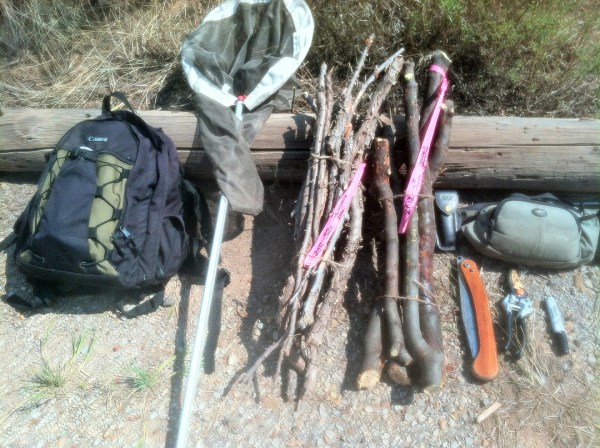
If you’ve never collected wood for rearing beetles before, all I can say is that it is hard and strenuous work. You have to get pretty good at discriminating infested wood in the field, because you don’t want to expend the effort to cut, de-twig, section, bundle, and carry back to the car batches of wood that don’t end up producing beetles. It was a little more effort than I anticipated to get a good sampling of Juniperus branches due to the hardness of the wood and dullness of my hand saw, along with not considering that I would have to hike up to the top of the mesa and then carry the wood all the way back down. Still, there is something enjoyable about this activity for me—perhaps because I’ve done so much in the past and reared so many great species as a result, and I’ll be anxious to see what species I am able to rear from this batch of wood and if they represent any significant new records.

Returning to the car with the wood, I passed by a mesquite tree (Prosopis glandulosa)—a common denizen of the desert southwest but probably near its northeastern limit of distribution here—and noticed bleeding on the main branches. A little bit of slicing with my knife confirmed my suspicion that this was also the work of jewel beetles in the genus Chrysobothris. In the desert southwest, these trees are attacked commonly by one species in particular, C. octocola, and I wondered if this might be the work of that beetle. I also had my suspicions that this species had not yet been recorded from Oklahoma (I later confirmed that it has not), and since I was already hot and sweaty from collecting the Juniperus wood I figured I might as well use my remaining strength to hack out a few limb sections with bleeding and bring them back as well. As I did this, what did I see on one of the branches but the critter itself! I had a decision to make—stop what I was doing and get out the camera to try to take photos (and risk the beetle flying away), or secure the beetle for now, continue with my hack job, and take photos later. I opted for the latter.

Chrysobothris octocola on stressed Prosopis glandulosa | Major Co., Oklahoma

I have to be honest—the beetle found the day’s travels too much to handle, and by the time I was able to take some photographs it was close to dead. As a result, these photos show the beetle in that dreadful flat-on-its-belly pose that I so detest. Still, only the most observant would know the beetle is not alive and well, and a reasonable photo of a dying beetle is better than no photo at all, no matter how live the beetle may be.

This individual represents a new state record for Oklahoma

As I mentioned, this species has not been previously recorded as occurring in Oklahoma, so this individual represents a new state record and an expansion of its known distributional range. That’s publishable data, so I’ll be adding the record to a manuscript currently in progress that details new distributional and biological observations for nearly 100 North American species. It’s the latest in a string of such papers that I begun under the tutelage of the late Gayle Nelson (Nelson and MacRae 1990, Nelson et al. 1996) and am now carrying on the tradition (MacRae and Nelson 2003, MacRae 2006b). 

A successful morning of wood collecting.

By the time I had finished cutting up and bundling the wood and hauling everything back to the truck, it was already well past noon. My quick little morning stop had consumed nearly half the day. However, with one new state record already under my belt and the possibility of others still hiding within the cedar and mesquite branches that I’d collected, I’d have to say this was already the most successful days of the trip. I couldn’t help notice the irony that, as with Day 1, the most significant find of the day was a jewel beetle on a trip that was supposed to be focused on tiger beetles. Hey, I’ll take success in any taxon on any trip.

REFERENCES:

Nelson, G. H., and T. C. MacRae. 1990. Additional notes on the biology and distribution of Buprestidae (Coleoptera) in North America, III. The Coleopterists Bulletin 44(3):349–354.

Nelson, G. H., R. L. Westcott and T. C. MacRae. 1996. Miscellaneous notes on Buprestidae and Schizopodidae occurring in the United States and Canada, including descriptions of previously unknown sexes of six Agrilus Curtis (Coleoptera). The Coleopterists Bulletin 50(2):183–191.

MacRae, T. C., and G. H. Nelson. 2003. Distributional and biological notes on Buprestidae (Coleoptera) in North and Central America and the West Indies, with validation of one species. The Coleopterists Bulletin 57(1):57–70.

MacRae, T. C. 2006a. Distributional and biological notes on North American Buprestidae (Coleoptera), with comments on variation in Anthaxia (Haplanthaxia) viridicornis (Say) and A. (H.) viridfrons Gory. The Pan-Pacific Entomologist 82(2):166–199.

MacRae, T. C. 2006b. Beetle bits: The “beautiful tiger beetle”. Nature Notes, Journal of the Webster Groves Nature Study Society 78(4):9–12.

Copyright © Ted C. MacRae 2012

Damon diadema—Tanzanian giant tailless whip scorpion

Damon diadema, Tanzanian giant tailless whip scorpion (adult female)

I’ve reared more than my share of arthropods over the years—from easy ones like Madagascan hissing cockroaches to hard ones like certain tiger beetles (in fact, I’m the only person to have ever seen the larva of Cylindera celeripes, much less reared them from egg to adult) to the innumerable tarantulas, scorpions, millipedes, hickory horned devils, darkling beetles, etc. that fall somewhere in between. And that’s just as a hobby entomologist—nevermind that it has often been my job over the years to rear dozens of species of insects and other “critters” as part of my professional duties. One group of arthropods, however, that I have not yet tried to rear are tailless whip scorpions or whip spiders. Members of the arachnid order Amblypygi, they are not scorpions, not whip scorpions, not even spiders, but rather something else. Like other arachnids they have eight legs and the combined head and thorax (cephalothorax); however, more than any other arachnid, tailless whip scorpions have stumbled upon a most insect-like body plan—the first pair of true legs are modified to long, thin, sensory appendages that mimic in form and function insect antennae, leaving—again, like insects—only three pairs of walking legs, and as predators they have the anteriormost pair of appendages (pedipalps) modified into grasping,  jaw-like structures analogous to the toothy mandibles of predaceous insects.

Adult males have the pedipalps extending past the ”knee” of the first pair of walking legs…

Of course, any resemblance to insects ends right there—tailless whip scorpions look like they belong not only to another class, but another world! Flattened, scuttling sideways at blinding speeds, and with legs all asplay at odd angles, they are as frightful and menacing in appearance as the hairiest, jaws-dripping-with-venom spider imaginable. However, nothing could be further from the truth. Lacking the sting of a scorpion, the venom of a spider, the powerful bite of other “jawed” creatures, or even defensive chemicals of any kind, tailless whip scorpions have only their speed and ability to hide in the slimmest of crevices to prevent them from becoming easy meals for the vertebrate predators with which they share their world.

…while in females the pedipalps are distinctly shorter.

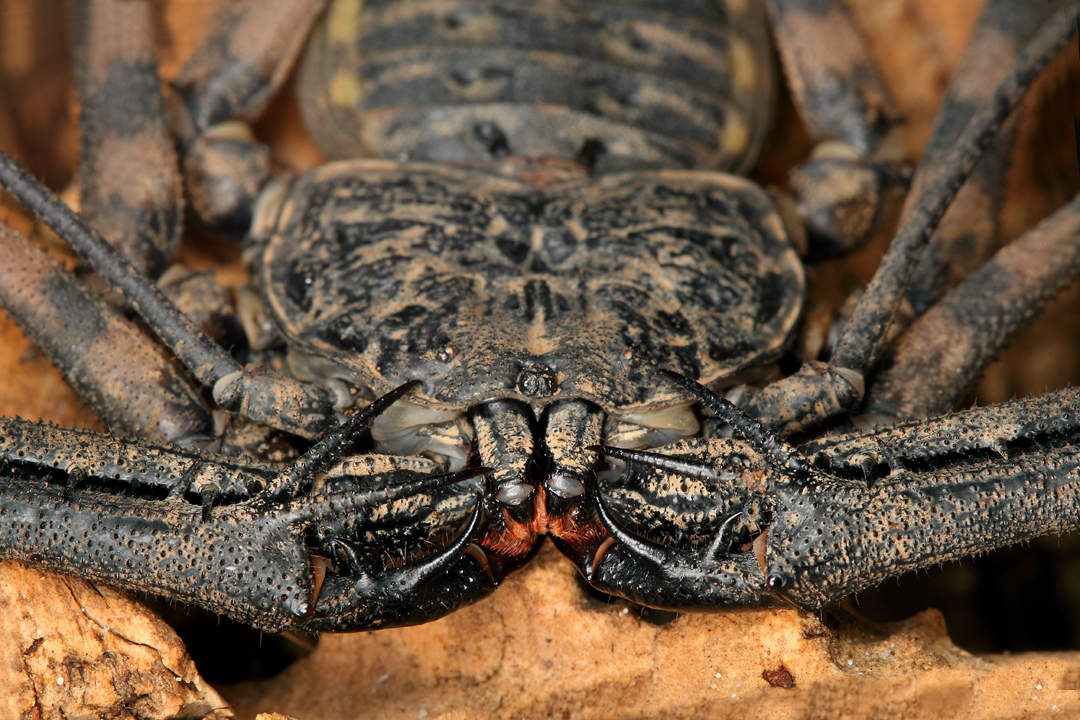
The male and female Damon diadema, or Tanzanian giant tailless whip scorpion, featured in these photos belong to Martin Hauser, a dipterist with the California Department of Food and Agriculture in Sacramento who I had the pleasure to spend some time with last month. Like me, Martin is a fan of invertebrates as pets, but unlike me he has strayed into unusual taxa that I haven’t yet tried—these tailless whip scorpions being perhaps the most impressive of these odd groups. Hailing from east Africa (eastern Tanzania and Kenya north to Ethiopia and Somalia), this species has gained some popularity in recent years among hobbyists due to their adaptability to culture, relatively docile nature, and—of course—their terrifyingly impressive size (body length up to 30 mm according to Prendini et al. 2005, although some hobbyist forums state as much as 2 inches, and with “whip” spans many times that). In this species males and females are immediately distinguishable by the relative length of the pedipalps—highly elongate in males and with the “elbow” extending past the “knee” of the first pair of walking legs, while shorter in females and not reaching the knee. Damon diadema is the largest of the East African Damon variegatus species-group, and while there are other amblypygids in the world that are larger (e.g., Acanthophrynus from Central and South America, with up to 10″ leg-span and nearly 20″ whip-span), none are so tolerant of captive rearing as this species. There seems to be some confusion about identification of Damon spp. among hobbyists, and even Martin wasn’t sure which species his represented; however, according to Prendini et al. (2005) all of the species are easily distinguished morphologically. Damon diadema is one of only two species in the genus with two spines rather than one on the ventral surface of the pedipalp trochanter, the other being D. brachialis from southern African and unknown in captivity. In the closeup face shot of the adult male below, two spines can be seen on the right pedipalp trochanter, just visible between two of the pedipalp apical spines.

Pedipalps modified as raptorial ”claws” make these arachnids formidable predators.

I visited Martin at a good time, for not only did he have these marvelous monsters available for me to photograph, but one of the females had just recently produced a brood of young. All of them had reached 2nd instar by the time of my visit, with one or two already at 3rd instar. It was interesting to note the tendency of the juveniles to aggregate under the adult female, as if they needed/wanted her for protection. While seemingly obvious, this is actually quite interesting because most amblypygids are considered to be solitary and intolerant of conspecifics (Walsh & Rayor 2008). Damon diadema, however, is known to live in prolonged subsocial groups, apparently aided by kin discrimination abilities. I find this fascinating, considering the extraordinarily limited neural capacity of these creatures—there are only so many brain cells available for conducting the business of life without diverting any of them to the ability to recognize unrelated conspecifics, much less their own kin. It is the reason so many spiders and other predaceous invertebrates tend to live solitary lives and have evolved elaborate courtship dances to convince a potential partner that they are, in fact, a mate and not a meal.

Two ventral spines on the pedipalp trochanter distinguish Damon diadema in east Africa.

I was so impressed by these creatures that after returning home from California I set about finding a source from which I could purchase one of them—or better yet a male/female pair. Sadly, I could not find any sources—my dream of seeing these fantastically fearsome-looking fellows in an aquarium in my office would have to wait. I happened to mention this in passing during correspondence with Martin about other matters, and although it was not intended as a suggestion (or even anticipated that it could be interpreted as such), Martin immediately offered to send me a couple of his juveniles. How could I refuse?! We corresponded a little more about preparations for and timing of the shipment, and on Friday last week the package arrived. Neither of us were completely sure how well the little guys would handle a 3-day transcontinental journey, so it was with a blend of anticipation and trepidation that I opened the package. Imagine my surprise when I found them not only alive and well, but all six of them were alive and well! Well, for now they are all going under the name “Baby Damon,” but I suppose as they grow and (hopefully) develop some distinctiveness I can start giving each of them their own, unique name. It may take awhile—individuals of this species don’t mature sexually until around 12-15 months. Martin was also kind enough to include some small, temporary containers that will provide better confines until they are large enough to move into the large terrarium that I readied for them, and just as Dave has been  doing with his tarantulas, it will be fun to monitor the progress of each individual through their molts. This will continue to provide entertainment even after they reach adulthood, as amblypygids continue to molt and increase in size all of their life. Their lives could also be long ones—I’ve read of people maintaining this species for 10 years or more as adults, so it looks like I am in this for the long haul. A formidable challenge it might seem, but in addition to the invertebrates I mentioned above, I’ve also spent the past several decades being responsible for cats, dogs, rats, salamanders, and—most recently—two hominine juveniles (and females at that). Now that’s a challenge!

This 2nd instar youngster can already handle crickets its own size.

REFERENCES:

Prendini, L., P. Weygoldt & W. C. Wheeler. 2005. Systematics of the Damon variegatus group of African whip spiders (Chelicerata: Amblypygi): Evidence from behaviour, morphology and DNA. Organisms, Diversity & Evolution 5:203–236.

Walsh, R. E. & L. S. Rayor. 2008. Kin discrimination in the amblypygid, Damon diademaThe Journal of Arachnology 36:336–343.

Copyright © Ted C. MacRae 2012