“A good photographer is invisible…”

Yesterday I shot down to the southeastern lowlands of Missouri to spend some quality time in the field with friend and fellow cicindelophile Kent Fothergill. We were primarily looking for migrants of the Ascendent Tiger Beetle (Cicindela trifasciata ascendens), a Gulf Coast species that doesn’t normally occur in Missouri but is well known for its vagility and late-season northward migrations and which has been seen in the state once before (Brown and MacRae 2005).  No such individuals were found, but no matter – the day was really about just getting out and enjoying the camaraderie.  Nevertheless, there were some successes.  We located burrows of 1st- and  2nd-instar larvae of the Ant-like Tiger Beetle (Cylindera cursitans) at a site along the Mississippi River where Rich Thoma and I found adults last year.  Previous attempts to rear this species from larva to adult have not succeeded (Brust et al. 2005), but I collected a number of larvae and transferred them to a rearing container anyway in hopes that the techniques I’ve developed for rearing the closely-related Swift Tiger Beetle (Cylindera celeripes) might work also with this species.  We also found the beast that I am photographing above – I’ll leave it to your imagination for now to figure out what it is.

In between stops there was plenty of time for discussion on subjects entomological and non.  One thing Kent knows a thing or two about is insect photography, and during a discussion about such he made an interesting comment. Beyond focus, exposure, and composition, he noted that good insect photographers have the ability to become invisible – i.e., they combine patience and persistence with knowledge of the subject’s behavior to make it forget about the big glass eye staring at them from 6 inches away and return to going about their business.  It brought some clarity to my mind about the things I’ve tried in my own attempts to photograph insects that really did not want to be photographed (and there have been many).  The point was emphasized when I came into the office this morning and found the above photograph in my email inbox – Kent had taken it yesterday while I was photographing the bug-to-be-named-later, and I was completely unaware that I was being photographed!  Yes, a good photographer is invisible…

REFERENCES:

Brown, C. R. and T. C. MacRae. 2005. Occurrence of Cicindela (Cicindelidia) trifasciata ascendens (Coleoptera: Cicindelidae) in Missouri. Cicindela 37(1–2):17–19.

Brust, M. L., W. W. Hoback, and C. B. Knisley. 2005. Biology, habitat preference, and larval description of Cicindela cursitans LeConte (Coleoptera: Carabidae: Cicindelinae). The Coleopterists Bulletin 59(3):379–390.

Copyright © Ted C. MacRae 2010

Add to FacebookAdd to DiggAdd to Del.icio.usAdd to StumbleuponAdd to RedditAdd to BlinklistAdd to TwitterAdd to TechnoratiAdd to Yahoo BuzzAdd to Newsvine

Email to a friend

Cicindela – A quarterly journal devoted to Cicindelidae

Being a cicindelophile (i.e., a tiger beetle enthusiast), I have on occasion highlighted articles published in the journal Cicindela (“A quarterly journal devoted to Cicindelidae”) (see previous post – also here, here and here).  This delightful little journal is the now 42-year old brainchild of Ronald L. Huber, among North America’s foremost experts of the group (and still serving as Managing Editor for the journal).  With Robert C. Graves and Richard Freitag also serving as Editors, the journal publishes four issues per year – each containing a variety of articles dealing with the taxonomy, biology, faunistics, and conservation of this captivating group.  More recent years have also seen the inclusion of color photographs.  For serious students of the group, the journal is an indispensable resource – its issues containing a significant portion of the recent tiger beetle taxonomic literature (indeed, I am fortunate to possess in my own library a complete and nicely bound set of this journal).  However, even those with only casual interest in the group can appreciate the journal’s informal, enthusiast-centric tone.  A remarkably longstanding labor-of-love, Ron himself lays out and delivers each issue to the printer, then mails copies to the journal’s few hundred subscribers.

One thing that the journal has lacked is a web presence.  This has becomes all too clear with each article that I’ve featured, each prompting requests for subscription information by readers whose interest in the journal was piqued but were then unable to find such information on the web.  All of that is about to change – with Ron’s permission, the journal’s editorial policy and subscription information are being reproduced here to make them more widely available to those who might wish to contribute or subscribe.  The cost of the journal is nominal (only $10 in the U.S.), so even the most casually interested person should be able to justify a subscription.

Editorial Policy

Manuscripts dealing with any aspect of the study of Cicindelidae will be considered from any author.  All manuscripts should be submitted to the Managing Editor via email or on diskette [see inside back cover for conventions and format].  Papers dealing with areas other than the Nearctic are especially solicited but should be in English.  Translations are also very welcome.  All manuscripts will be acknowledged upon receipt.  Proofs-for-correction will be emailed to authors for quality control.  Illustrations, charts, graphs, etc., are encouraged.  Authors that have institutional support or other funds available for publication purposes are importuned to arrange for at least partial payment of publication costs.  Current page charges are shown inside the back cover.

Subscriptions

The subscription price for each annual volume of four numbers is currently $10.00 (domestic) and $13.00 outside the U.S.  All subscriptions begin with the first issue of the year.  Back issues of prior volumes, if still available, are priced according to age.  Inquire for prices.  All requests for subscriptions and back issue availability should be addressed to the Managing Editor: Ronald L. Huber, 2521 Jones Place West, Bloomington, Minnesota 55431-2837, U.S.A.

My appreciation to Ron for allowing me to post this information, and also to Ken Allen, for permitting me to reproduce the cover of the latest issue of Cicindela, graced with a gorgeous variant of Cicindela longilabris that he photographed in Glacer National Park.

Copyright © Ted C. MacRae 2010

Add to FacebookAdd to DiggAdd to Del.icio.usAdd to StumbleuponAdd to RedditAdd to BlinklistAdd to TwitterAdd to TechnoratiAdd to Yahoo BuzzAdd to Newsvine

Email to a friend

Bruneau Sand Dune tiger beetles caught in the act!

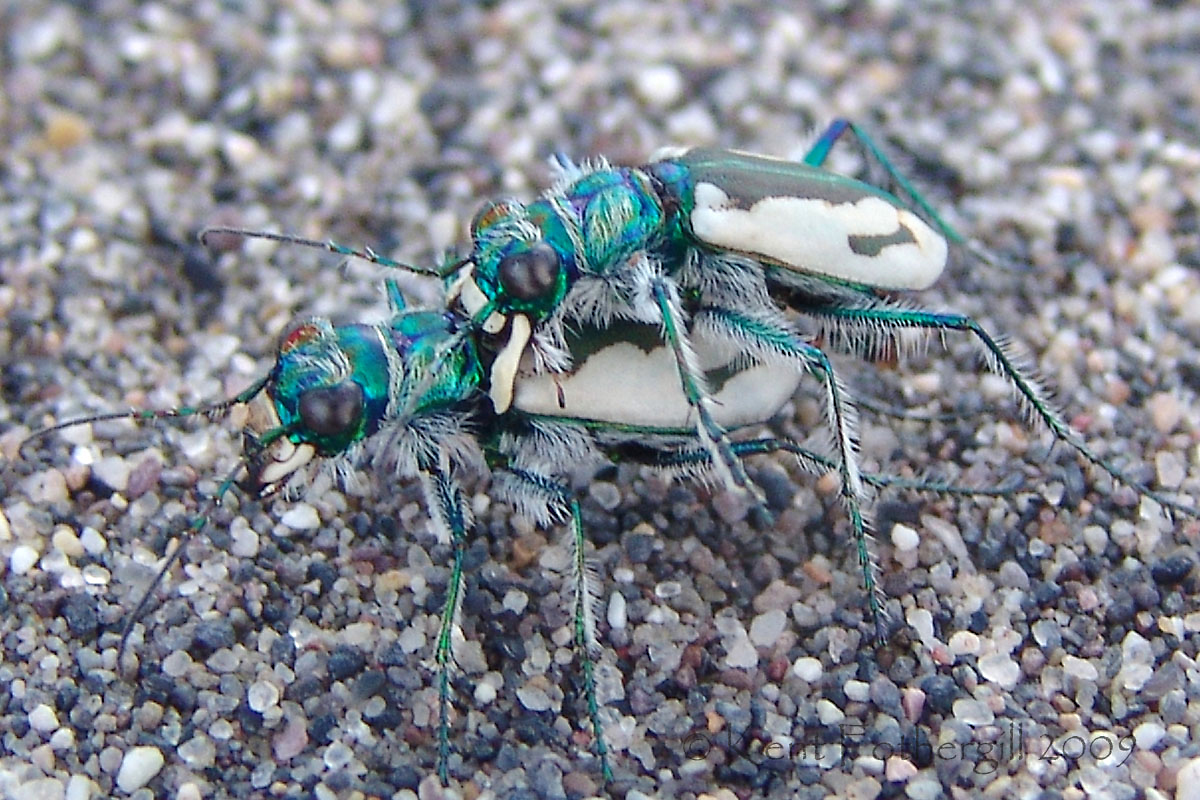
ResearchBlogging.orgThe newest issue of CICINDELA (“A quarterly journal devoted to Cicindelidae”) contains an interesting article by my good friend and fellow tiger beetle enthusiast Kent Fothergill, who presents a fascinating sequence of photos documenting a field encounter with a mating pair of the endangered Bruneau Sand Dune tiger beetle (Cicindela waynei) (Fothergill 2010).  This is one of several tiger beetle species in the C. maritima species group that inhabit sand dunes in central and western North America – others include the Coral Pink Sand Dune tiger beetle (C. albissima), the St. Anthony Sand Dune tiger beetle (C. arenicola), the Colorado dune tiger beetle (C. theatina), and the sandy tiger beetle (C. limbata).  With the exception of the latter, these species show highly restricted distributions in their preferred sand dune habitats, and because their populations are so small they are especially vulnerable to drought and ever-increasing anthropogenic pressures (i.e., invasive plants, motorized vehicular traffic, overzealous collectors).  While the Bruneau Sand Dune tiger beetle has not been accorded status on the Endangered Species List, the Idaho Department of Fish and Game and the Bureau of Land Management have classified it as globally imperiled.

Bruneau Sand Dune tiger beetle, Bruneau Sand Dune State Park, Idaho. Photo © Kent Fothergill 2009.

Kent was observing these beetles in Bruneau Dune State Park in southwestern Idaho – the main habitat for this species – when he encountered several pairs of C. waynei in the process of mating.  Photographs were taken of one mating pair, revealing a fascinating sequence of behaviors that included vigorous but unsuccessful attempts by the female to dislodge the male, eversion and penetration of the female by the male aedeagus, and subsequent mate guarding (see photo above).  It is, in fact, this latter behavior that is most often observed among tiger beetle mating pairs and not actual mating itself, which is only rarely observed.  Kent noted the uniquely modified male mandibles (see photo below) and their possible role in preventing the male from being dislodged during the female’s initial protestations.

Male Bruneau Sand Dune tiger beetles sport impressive choppers! Photo © Kent Fothergill 2009.

This apparently is the first documented report of mating in this species, and its occurrence in May is considerably later in the season than Baker et al. (1997) speculated – significant because protection of 1st instar larvae is a management priority for conservation of this species.  The potential occurrence of 1st instars during a longer period of time is an important consideration for continued management of this species, as the Bruneau Sand Dune population continues to show evidence of decline despite the prohibition of insect collecting, cattle grazing, and off-road vehicles within the park (Bosworth et al. 2010).  Human trampling and pesticide applications to adjacent rangelands are continuing threats that have proven more difficult to manage.

My sincerest thanks to Kent Fothergill for presenting me the opportunity to review his manuscript prior to publication and allowing me to reproduce here two of his spectacular photographs of this gorgeous and rare species.

REFERENCES:

Baker, C. W., J. C. Munger, K. C. Cornwall and S. Staufer.  1997. Bruneau Dunes tiger beetle study 1994 and 1995.  Idaho Bureau of Land Management, Technical Bulletin 97-7, 52 pp.

Bosworth, W. R., S. J. Romin and T. Weekley.  2010. Bruneau Dunes tiger beetle assessment.  Idaho Department of Fish and Game, Boise, Idaho, 36 pp.

Fothergill, K.  2010. Observations on mating behavior of the Bruneau Dune tiger beetle, Cicindela waynei Leffler (Coleoptera: Carabidae: Cicindelinae).  CICINDELA 42(2):33–45, 7 color plates.

Copyright © Ted C. MacRae 2010

Add to FacebookAdd to DiggAdd to Del.icio.usAdd to StumbleuponAdd to RedditAdd to BlinklistAdd to TwitterAdd to TechnoratiAdd to Yahoo BuzzAdd to Newsvine

Email to a friend

What’s so special about this beetle?

Regular readers of this blog might recognize this as the swift tiger beetle, Cylindera celeripes. This tiny, flightless beetle was once common in the central Great Plains; however, the species has experienced dramatic declines over the past century due to near complete destruction of its preferred prairie habitats.  By the time I first became interested in this species a few years ago, the Flint Hills of Kansas were its last known stronghold.

But that’s not what’s so special about this beetle.

My colleague Chris Brown and I began looking for this species as part of a survey of Missouri tiger beetles.  Although not previously known from the state, historical records from loess hilltop prairie habitats in southwestern Iowa suggested that it might be found in extreme northwestern Missouri at the southern terminus of the Loess Hills landform.  Earlier searches in this part of the state by us and others had turned up empty; however, it was easy to imagine that the beetles had eluded detection due to their small size, cryptic resemblance to ants, and limited temporal occurrence.  In an effort to understand more specifically its habitat preferences and gain a better search image for the species, we visited one of the historical Iowa localities in 2008 and succeeded in finding the species ourselves for the first time.

But that’s not what’s so special about this beetle.

Armed with this experience, Chris and I conducted another dedicated search for this species in Missouri during 2009, targeting the largest and highest quality loess hilltop prairie remnants remaining in the state.  At last, our efforts were rewarded when we found beetles in several loess hilltop prairie remnants in Atchison and Holt Counties.  Their numbers were not high at any of the sites, but the finds nevertheless represented a new state distribution for a species that has only seen contractions to its known range for many years now.

But that’s not what’s so special about this beetle.

A few weeks before finding the beetle in Missouri, I had an opportunity to visit Alabaster Caverns State Park in northwestern Oklahoma, where BugGuide contributor Charles Lewallen had photographed the species in 2003.  I not only succeeded in finding the species at the original locality but determined also that its population there was quite robust.  Indeed, on the same trip I discovered robust populations at several nearby localities, suggesting that the species occurrs commonly throughout the red clay/gypsum hills of northwestern Oklahoma.  Further observations of the species in northwestern Oklahoma last month seem to confirm this.  The beetle in these photographs comes from Alabaster Caverns, but that’s not what’s so special about it.

What is so special about it is that it’s the first ever reared individual of this species!  For those of you wondering why this is significant, until now the immature stages of this species have remained completely unknown.  A few contemporary students of the group have tried to rear the species, but the adults are delicate and do not travel well – indeed, my own first attempt to rear the species when I found it in Iowa was not successful.  However, when I found the Alabaster Caverns population, I placed ~12 adults in a small terrarium into which I had placed a chunk of native soil and moistened with water.  The adults survived well in this terrarium over several days of travel, and once back in the lab I kept them alive for several weeks by feeding them small caterpillars and fruit flies.  When larval burrows began to appear I fed them periodically with very small caterpillars and rootworm larvae, inserting them into individual burrows and sealing the burrow entrance to prevent their escape.  Additional prey larvae were inserted into burrow entrances as they were reopened, and the soil in the terrarium was moistened whenever its surface became quite dry.  By late October, all of the burrows had become inactive, and I wasn’t sure if the larvae had died or were just overwintering.  Nevertheless, I placed the terrarium in a cool (10°C) incubator, where it remained until this past March when I pulled it out of the incubator and returned it to warmer temperatures.  Within days, larval burrows reappeared, and I knew then that I had a decent chance of rearing the species to adulthood.  In early July, the beetle in these photographs emerged from its burrow – the first ever reared swift tiger beetle!  Several more adults emerged during the following 2-3 weeks.

While this rearing was in progress, I managed to find larvae of this species on a return trip to Alabaster Caverns last October.  Both 2nd- and 3rd-instar larvae were collected and preserved to go along with the preserved 1st-instar larva that I had extracted from the rearing container when larvae first began to appear.  While these preserved specimens are all that I need to complete a manuscript describing the larval instars, having reared the species completely from egg to adult as well will provide a most gratifying conclusion for that manuscript.

Copyright © Ted C. MacRae 2010

Add to FacebookAdd to DiggAdd to Del.icio.usAdd to StumbleuponAdd to RedditAdd to BlinklistAdd to TwitterAdd to TechnoratiAdd to Yahoo BuzzAdd to Newsvine

Email to a friend

Eastern Red-Bellied Tiger Beetle

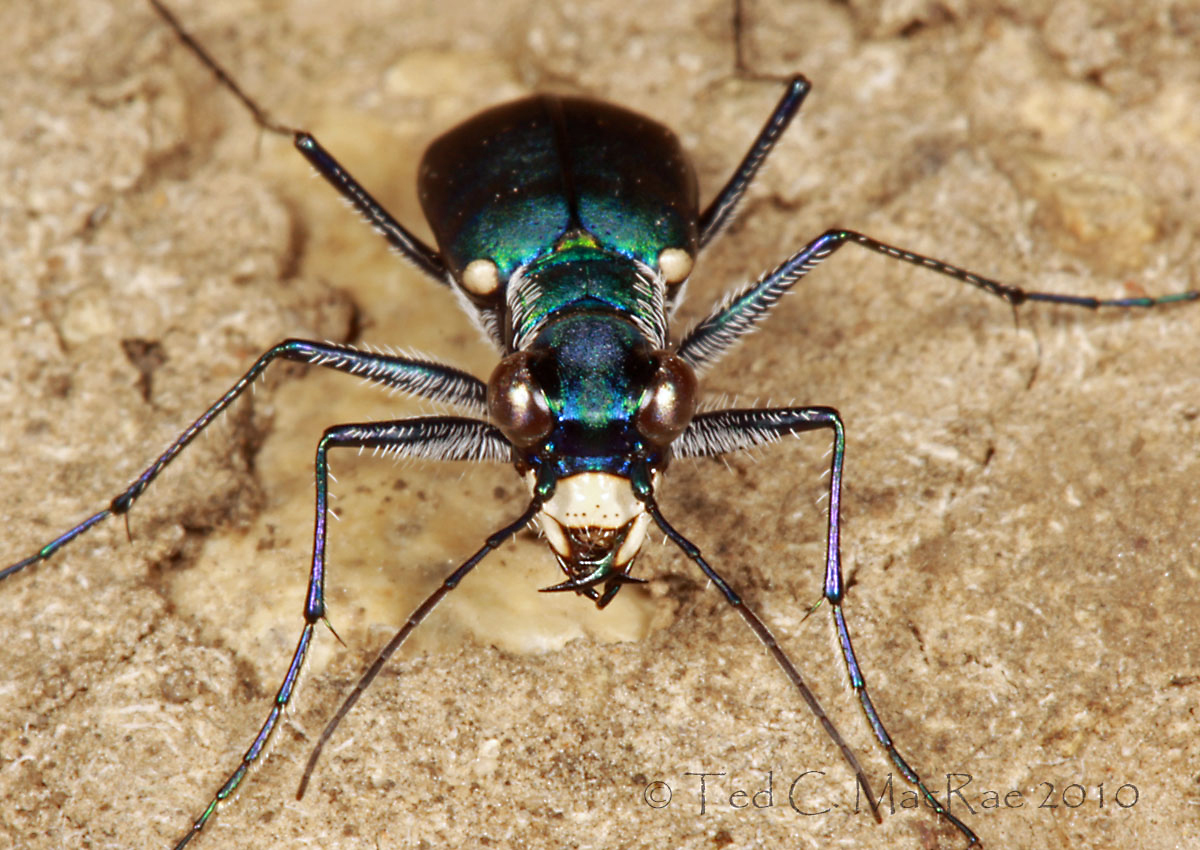
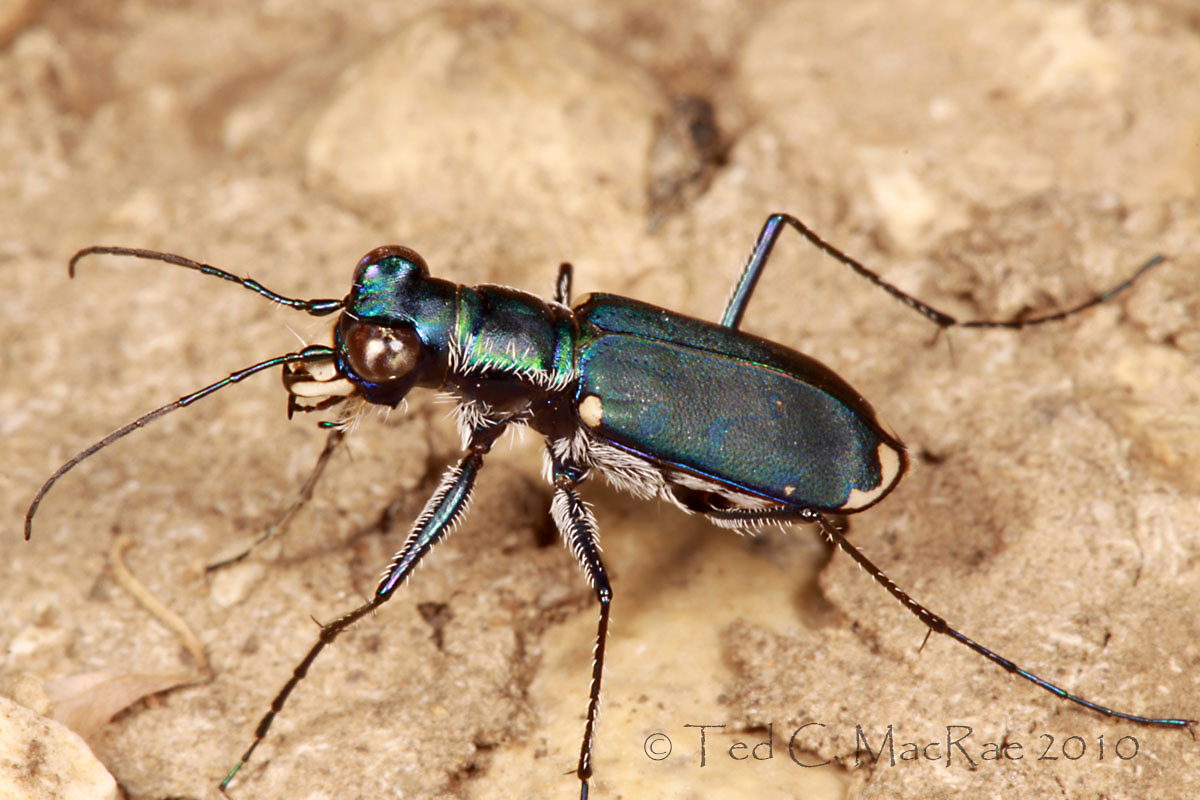
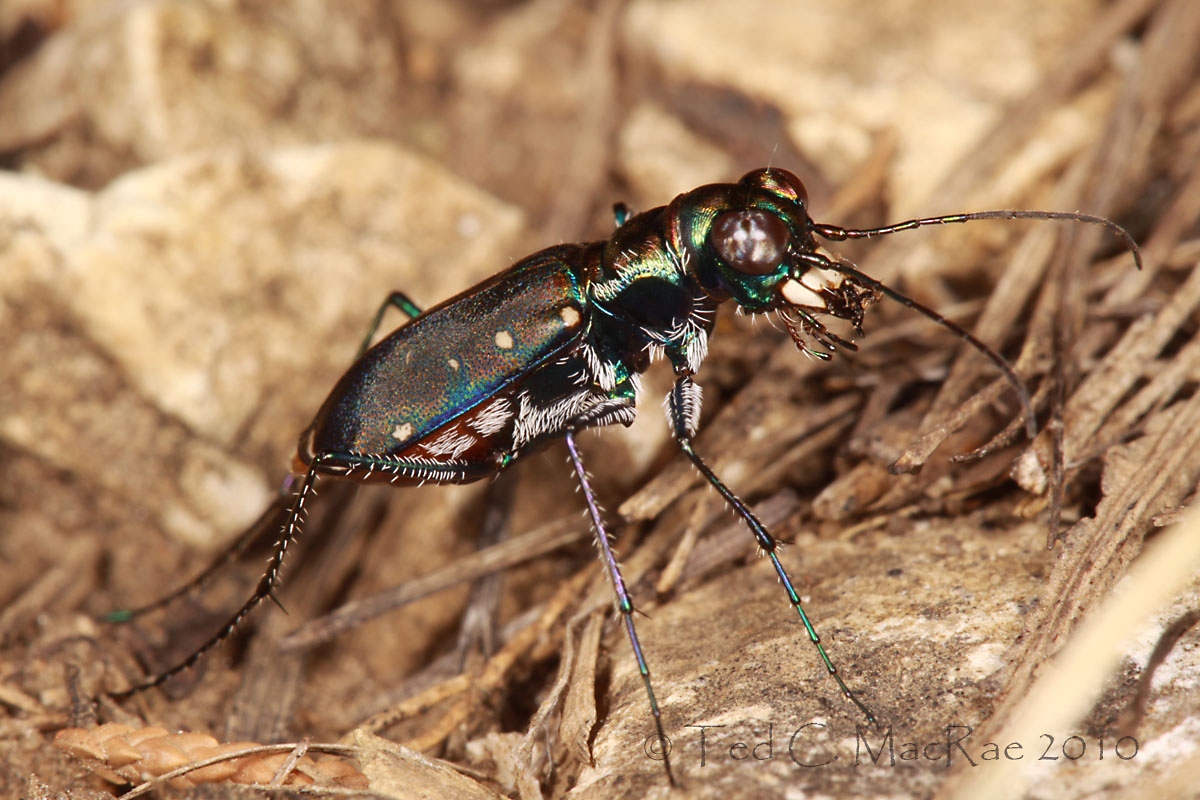
Last summer, while looking for North America’s most beautiful longhorned beetle in the dolomite glades of southwest Missouri’s White River Hills, I also came across good numbers of a tiger beetle species that I had previously considered rather uncommon in the state – Cicindela rufiventris (eastern red-bellied tiger beetle).  While I have seen this species at numerous localities throughout the Ozark Highlands, I had not seen them in such numbers as were present along a rocky 2-track leading through one of the glades and into the adjacent dry upland forest.  I had intended to post about them much sooner than now, but they took a backseat to the photos I obtained of the stunning Plinthocoelium suaveolens and the fantastic diversity of Floridian tiger beetles that I encountered in the following weeks.  I had, in fact, completely forgotten that I had these photos until Steve Willson, author of Blue Jay Barrens, presented two posts with some excellent behavioral observations of this species in Ohio (see his posts Eastern Red-Bellied Tiger Beetle and Tiger Beetle Behavior).

In Missouri, I have found this species exclusively in the Ozark Highlands region, primarily along rocky clay exposures along roadsides and on trails and 2-tracks through open pine forests on sandstone substrates.  As I mentioned, however, I never saw large numbers of individuals – just a few here and there.  On this rocky, dolomite 2-track though, the species was quite abundant, to the point that I was able to pick and choose the more “cooperative” subjects for photography instead of stalking interminably behind a precious skittish few.  In my second trip to the region two weeks later, I would find the species again abundant along trails winding through the region’s finest and most extensive dolomite glade systems at Hercules Glades Wilderness.  In previous years I haven’t spent much time in the extreme southern Ozarks during July and August, since by then most woodboring beetle activity has largely ceased – this probably explains why I’ve not seen this summer active species more abundantly before now.

Cicindela rufiventris is quite closely related to C. ubiquita¹, both of which are included in the subgenus Cicindela (Cicindelidia), dubbed the “American Tiger Beetles” by Pearson et al. (2006).  It is immediately recognizable, however, by its red-orange abdomen – hints of which can be seen in these photos and which is fully exposed during flight.  It also lacks the distinct sutural row of green punctures on the elytra exhibited by the latter, and the upper body coloration tends to be a little more variable in Missouri, ranging from dull dark brown or black to dark blue.  According to Pearson et al. (2006), populations in southern Missouri represent the northern fringe of an intergrade between the nominate subspecies to the east and subspecies cumatilis ranging from southwestern Louisiana into eastern Texas.  The distinction between these two subspecies is a matter of degree, with the latter exhibiting reduced maculations and a blue rather than brown or black upper body.  The influence of cumatilis can be clearly seen in the individual shown in the first three photographs, while the individual in the photo below is much more “nominate” in appearance. For taxonomic purposes, individuals from these populations are probably best classified as “Cicindela (Cicindelidia) rufiventris rufiventris x rufiventris cumatilis intergrades.” Such nomenclature implies that these individuals represent hybrids between two geographically distinct populations, since subspecies in the strictest sense represent genetically divergent populations made allopatric or near-allopatric as a result of isolating geographical barriers. However, tiger beetle taxonomy is replete with “subspecies” that more likely represent extremes of clinal variation, of which cumatilis appears to be one example. The opposite expression of this cline can be found in a few isolated populations near Boston, in which the elytral maculation is at its most developed – these populations have been designated as subspecies hentzi.

¹ Referred to by most authors as Cicindela punctulata.

Photo Details: Canon 50D w/ 100mm macro lens, ISO 100, 1/250 sec, f/25 (photos 1-2), f/29 (photo 3), f/18 (photo 4),  Canon MT-24EX flash (1/4 ratio) w/ Sto-Fen diffusers. Typical post-processing (contrast and unsharp mask).

REFERENCES:

Pearson, D. L., C. B. Knisley and C. J. Kazilek. 2006. A Field Guide to the Tiger Beetles of the United States and Canada. Oxford University Press, New York, 227 pp.

Copyright © Ted C. MacRae 2010

Add to FacebookAdd to DiggAdd to Del.icio.usAdd to StumbleuponAdd to RedditAdd to BlinklistAdd to TwitterAdd to TechnoratiAdd to Yahoo BuzzAdd to Newsvine

Email to a friend

Vicarious Friday Beetle Blogging

Despite the fact that I have a beetle blog and Alex has an ant blog, it is the latter where the regular series Friday Beetle Blogging resides (hmm, I wonder if I should start a Myrmecine Monday series?).  Alex has perhaps the best science-based entomoblog out there, so I’m thrilled to contribute today’s edition – check it out: Friday Beetle Blogging – the Swift Tiger Beetle.

Copyright © Ted C. MacRae 2010

Add to FacebookAdd to DiggAdd to Del.icio.usAdd to StumbleuponAdd to RedditAdd to BlinklistAdd to TwitterAdd to TechnoratiAdd to Yahoo BuzzAdd to Newsvine

Email to a friend

Hunting the Great Plains giant tiger beetle

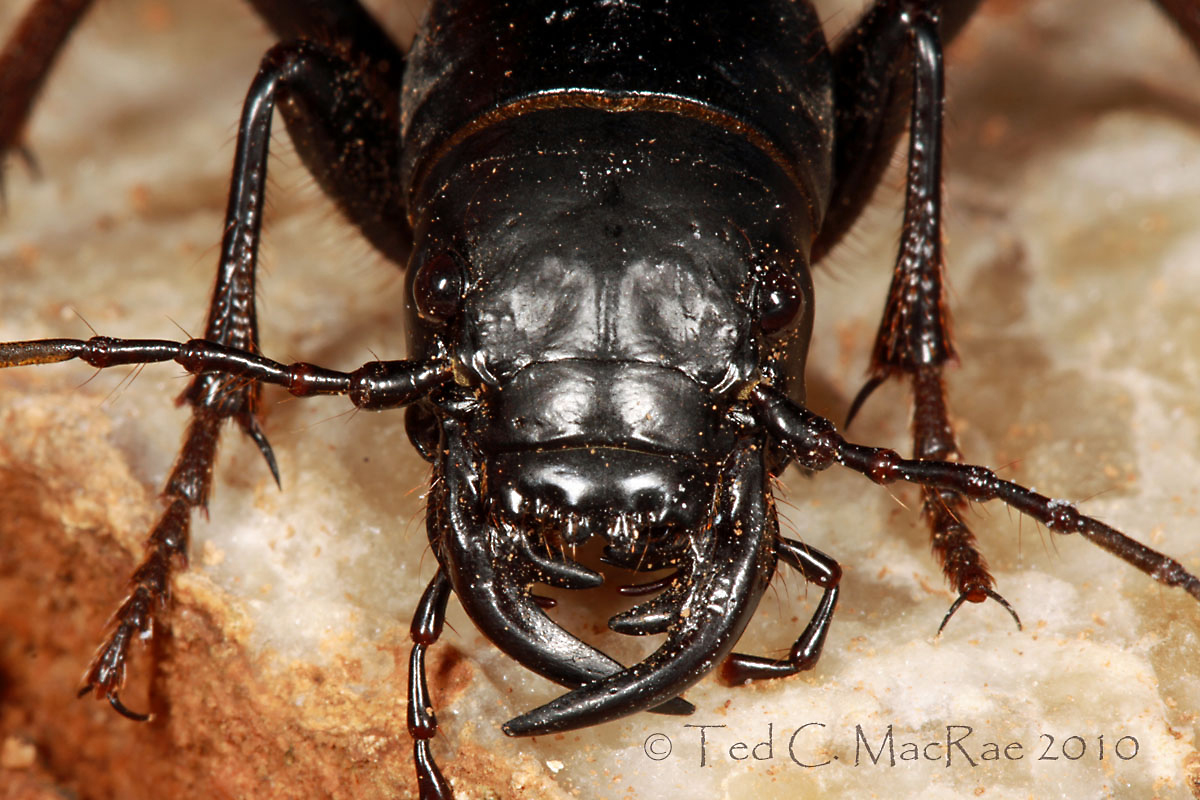
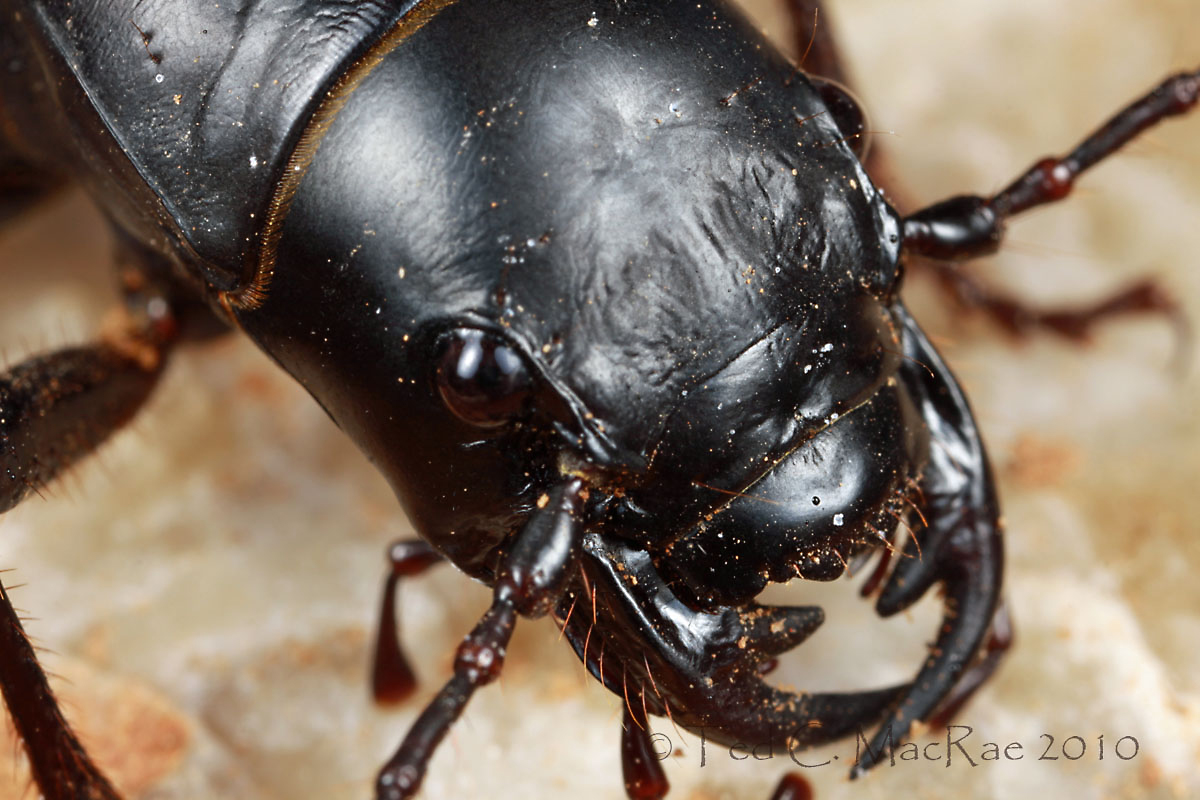
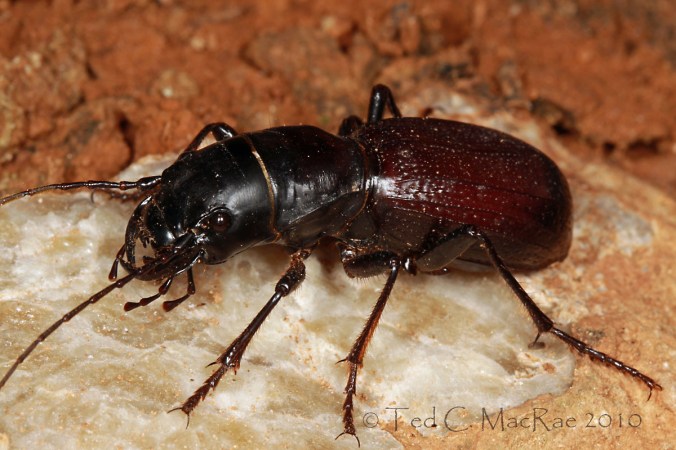
In the early 1980s, I was a young, green entomologist, fresh out of school with a budding interest in beetle taxonomy, a zeal for collecting, and a desire to meet other like-minded individuals. Among the first collectors I had the good fortune to meet was Ron Huber, one of the country’s leading tiger beetle experts and co-founder of the journal CICINDELA (now 42 years as co-editor). Although my interests had by then already begun narrowing to woodboring beetles, I liked tiger beetles well enough and managed to secure from him a single specimen of what Erwin and Pearson (2008) would later dub the “Great Plains giant tiger beetle,” Amblycheila cylindriformis – the largest tiger beetle in North America. I don’t remember what prompted Ron to part with this spectacular specimen – perhaps it was the lone Proserpinus gaurae (Lepidoptera: Sphingidae) adult that I possessed, which I had reared from a field-collected larva around that time, or maybe Ron had such a nice series of the species that making the day of a young collector was in itself reward enough. While clearly a tiger beetle, it was still so different by virtue of its enormous size (the species ranges from 25-38 mm in length), somber coloration, small eyes, and strictly nocturnal habit. For much of the past 25 years, that specimen has sat in my cabinet amongst a small assortment of other, mostly mundane tiger beetles that I had opportunistically taken on my woodboring beetle-focused collecting trips. While I longed to someday see the species for myself, to do that would mean making a special trip out to the Great Plains – woodboring beetle desert that it is – during the middle of summer and stumbling through the prairie in the dark with a flashlight. Such an effort always seemed too great for the sole purpose of finding a single species, and not even a woodboring beetle at that.
Interests evolve, however, and while I still consider woodboring beetles to be my primary interest, tiger beetles have increasingly occupied my attention over the past several years. Contrary to woodboring beetles, the Great Plains are a mecca for tiger beetle diversity, and in recent years I’ve made a number of trips to Nebraska, Kansas, South Dakota, and Oklahoma specifically to look for them. Such was the case in June of last year when I went to the Glass Mountains in northwestern Oklahoma on a hunch and found Cylindera celeripes, Dromochorus pruinina, and a large tiger beetle larva that I just recently concluded must represent A. cylindriformis. I had been rearing the larva for a year by the time I figured out its identity, and when I did I sudden found myself facing a “perfect storm” – an upcoming holiday weekend, adults presumably in peak adult activity, and I knew exactly where to look for them. Impulsively, I decided to use my July 4th weekend to make the 525-mile drive from St. Louis to the Glass Mountains – this would give me 2 nights to look for them and still allow me to make it back to work on Tuesday morning. Anything else I could find during the day would be icing on the cake, but even if I found nothing, the chance to see A. cylindriformis in the wild seemed worth the gamble.
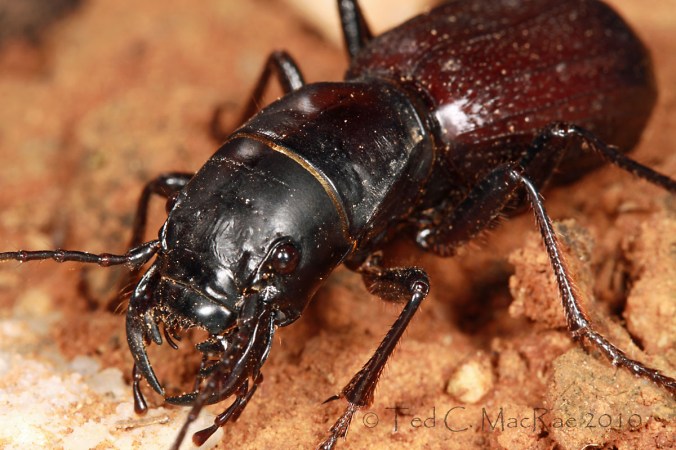
I made it to Joplin, Missouri near the Oklahoma border by midnight on Friday but awoke to threatening skies the next morning. The threat of rain became a promise as I drove further west, and by the time I arrived in Enid, Oklahoma – just 30 miles from the Glass Mountains – it was raining heavily. I stopped at a coffee shop to access Wi-Fi, and checking the radar showed a line of storms moving up through Texas and western Oklahoma into Kansas – sitting right over the Glass Mountains! The forecast gave no reason for optimism, with a 50% chance of thunderstorms through the weekend. Smartly, I had recorded the locality of the Huber-specimen – collected in northwestern Kansas – and checked the forecast for that area, but it was even worse (50% chance of thunderstorms through Sunday and 80% Sunday night). Clearly this was not good, but I had made the drive and was determined to make something happen. I decided the best thing to do would be to just continue driving west – however far that was – until I got past the storm system and see what was around – wherever that might be. I gassed up amidst a gusty, torrential downpour and headed west out of town. As I drove, the rain lightened up and eventually ceased. The roads were wet, but at least it wasn’t raining, and when I arrived at the Glass Mountains even the roads seemed to be drying. Winds were still strong, but the clouds had broken somewhat, allowing brief periods of sun to further dry things out, and what followed was a most fascinating day on top of one of the Glass Mountain mesas (highlights include C. celeripes, D. pruinina, Microstylus morosus, Trichodes sp. – look for these in future posts). As dusk approached I searched the grasslands below hoping to see a rattlesnake or two – I had seen a western pygmy rattlesnake here last year, and western diamondbacks are also in the area, but I saw none.

Of course, all this was really just passing time – waiting for nightfall and hoping the rain continued to hold off so I could begin searching the prairie down below for A. cylindriformis. It had sprinkled once or twice during the day, and I couldn’t tell if the darkening western sky was truly rain or the just the coming dusk. At 9pm, with darkness fast approaching, I set out with my headlamp and made a beeline for the native prairie habitat on the lower talus slopes where I had last year collected the larva and observed additional larval burrows that I took to be the same species. I must admit that the thought of walking alone through the prairie at night in western diamondback rattlesnake habitat made me more than a little nervous, and I kept just as much an eye out for them as I did the tiger beetles that I was looking for. As the night wore on, my hopes began to dim – I had searched for almost an hour and had covered most of the area where I had seen larval burrows last year. With no sign of the beetle, the negative thoughts started to enter my head – did I make this drive for nothing? How sure was I that the larva really represented Amblycheila? Did I have the right search image? I mean, they’re huge black beetles – they should be easy to spot, right? Oh great, I made all this fuss on my blog about looking for the species – how embarrassing to have to say, “Uhm, well, I didn’t find it.” Just as I began wrapping back around the bottom of the talus slope, there it was – no doubt about it! I just watched it for a while and noted that it moved with some urgency, but it was not the speedy, jerking walk of ‘regular’ tiger beetles – rather, it was more lumbering, seeming to pick each foot up rather high, like a cat with rubber bands on its feet (how would I know about that?). There seemed little risk of it escaping me, so I got out the camera and began following it to take photographs – no way! While it may have lacked the speed of other tiger beetles, it also lacked their propensity to occasionally pause long enough to allow a shot or two. Add the darkness, fear of rattlesnakes, and constant bumping of the flash unit on my headlamp, and it was soon apparent that getting good field photographs was going to be a low percentage proposition. I resigned myself to taking photographs later in a terrarium (several shown here) and spend my time in the field more productively looking for additional individuals.
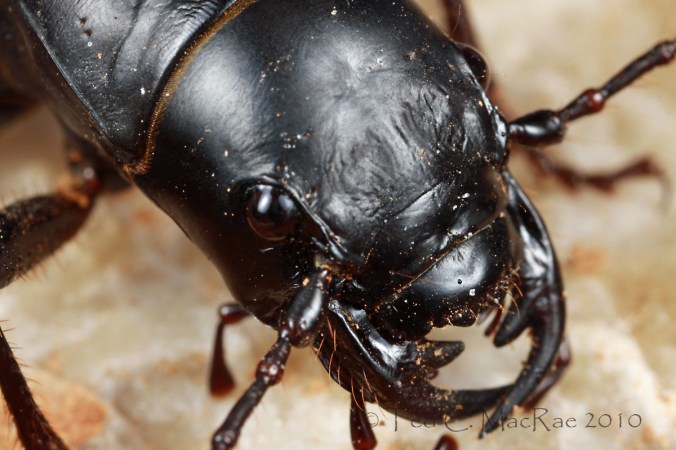
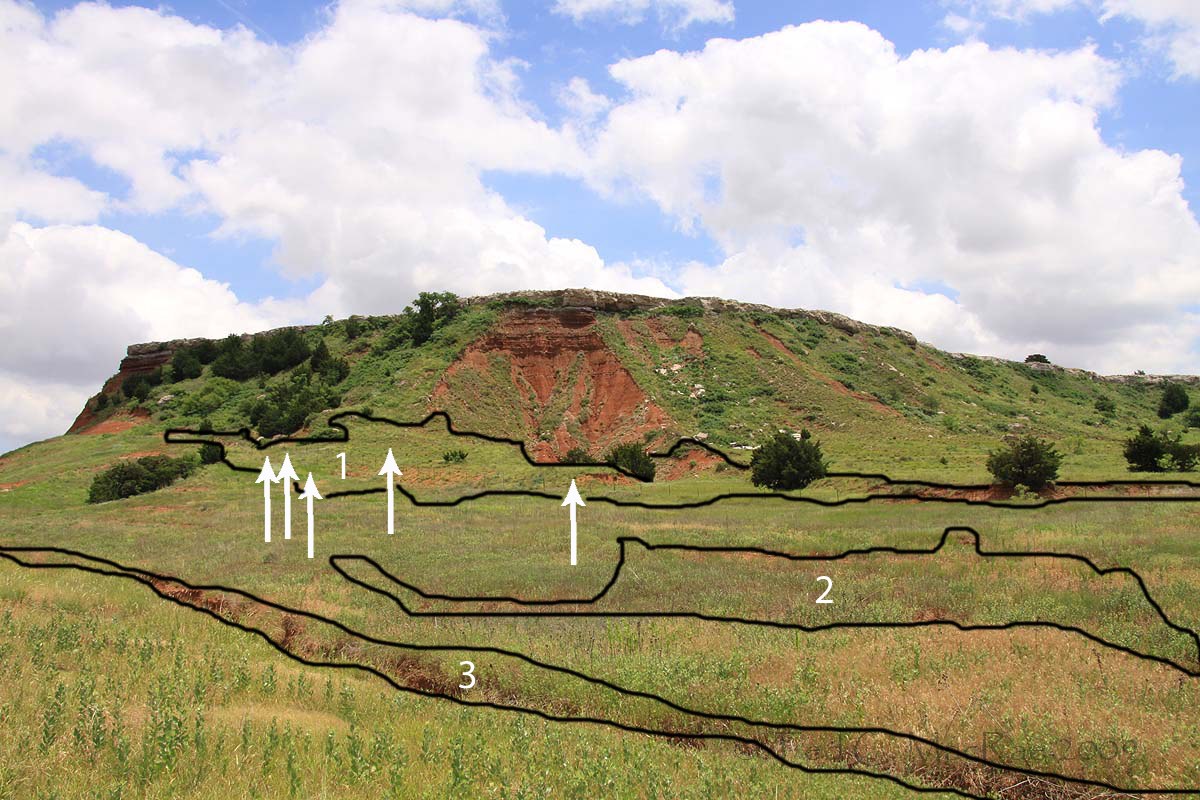
Finding the first individual did wonders for my motivation, and though still nervous about the potential for rattlesnakes I continued searching an ever-widening swath of the talus slope and adjacent areas. Another hour passed, and I had searched not only the native prairie below the talus slopes, but clay exposures on adjacent somewhat altered habitat. Again, the negative thoughts started creeping back into my mind – am I really gonna walk away from here with a single individual? I can say I found it, but that was a long drive for one beetle! I continued searching along an adjacent drainage ditch, and by 11:30pm I conceded that my victory was small and walked back to the truck to get a container to fill with native soil for a terrarium. Though it was a bit of a walk back up to the talus slope where I had seen the larval burrows, I wanted to take soil from that area specifically to give myself the best shot at obtaining eggs from my single (hopefully female) individual for an attempt at rearing more specimens from larvae. As I approached the exact spot where I had collected last year’s larva, I saw another, even larger adult! I don’t know which was greater – my excitement at finding such a large individual, or my relief in knowing that I would not go home with only one. Of course, with the second individual came a new shot of motivation, so once again I scanned across the talus slopes, and during the next half hour I found two more very near to where I had found the second one. By then it was past midnight, so I set about the business of digging soil for the terrarium. I finished the job (getting stung something terrible by three red, big-headed ants that had crawled up my pant leg while I was digging), took one last sweep across the immediate area, and turned to walk back to the truck when I saw the biggest one of all – I later determined it to be a male measuring 35 mm in length (that’s just about an inch and a half, folks!). With five individuals now, the urgency to find more was gone, and I decided I’d done what I needed to do and should get into town and find a hotel room. As I walked back to the truck, rain began to fall – lightly at first but ever increasing. Once back at the truck it was raining persistently enough that I could only hurriedly take some quick photographs of the beetles in their terrarium as in situ documentation of the momentous occasion!
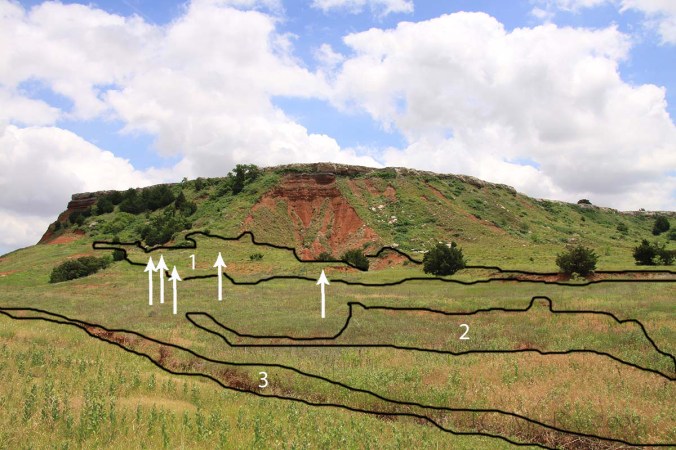
Occurrence of Amblycheila cylindriformis. White arrows indicate where adults were found, all of which were on red clay/gypsum exposures on lower talus slopes in native prairie habitat. No adults were seen in clay/gypsum exposures further below the slopes in either native (zone 1) or altered prairie (zone 2) or further down in roadside drainages (zone 3).

Although I had accomplished my main goal, I looked forward to the opportunity the next day to search for C. celeripes at other nearby sites to better understand the extent of the area’s population.  Sadly, the rain that had held off for nine hours before returning just after midnight was back for good, with radar the next morning showing a broad swath of rain extending across the entire western part of Oklahoma and north into Kansas.  There wasn’t much for me to do but savor the previous day’s experience while I made the 525-mile drive back east.  This may represent a significant record for the species – Vaurie (1955) in her review of the genus did not see any specimens from Oklahoma (although she did examine a few specimens from adjacent areas of Kansas), and Drew and Van Cleave (1962) reported only a single specimen from the state in nearby Woodward County.  Significant record or not, it was an experience that I’ll not soon forget.

Photo Details: Canon 50D (ISO 100, 1/250 sec), Canon MT-24EX flash.
Photos 1-3: Canon 100mm macro lens (f/14-20), flash 1/4 power w/ Sto-Fen diffusers.
Photo 4: Canon MP-E 65mm 1-5X macro lens (f/14), flash 1/8 power w/ Sto-Fen + Gary Fong Puffer diffusers.
Post-processing: levels, unsharp mask, slight cropping on photo 1.
Note to self: clean specimens with moist brush to remove dirt before photographing them!

REFERENCES:

Drew, W. A. and H. W. Van Cleave.  1962. The tiger beetles of Oklahoma (Cicindelidae). Proceedings of the Oklahoma Academy of Science 42:101–122.

Erwin, T. L. and D. L. Pearson. 2008. A Treatise on the Western Hemisphere Caraboidea (Coleoptera). Their classification, distributions, and ways of life. Volume II (Carabidae-Nebriiformes 2-Cicindelitae). Pensoft Series Faunistica 84. Pensoft Publishers, Sofia, 400 pp.

Vaurie, P. 1955. A review of the North American genus Amblycheila (Coleoptera, Cicindelidae). American Museum Novitates 1724:1–26.

Copyright © Ted C. MacRae 2010

Add to FacebookAdd to DiggAdd to Del.icio.usAdd to StumbleuponAdd to RedditAdd to BlinklistAdd to TwitterAdd to TechnoratiAdd to Yahoo BuzzAdd to Newsvine

Email to a friend