An elegant living fossil…

In the insect world, hyperdiversity is the norm. More than a million species are known, and perhaps several million more await discovery. Beetles alone represent nearly a quarter of the earth’s described biota, with one genus (Agrilus in the family Buprestidae) bursting at the seams with more than 3,000 described species (Bellamy 2008). Biodiversity gone wild! While birders routinely field identify (and list) a majority of the birds they see to species, most insect enthusiasts are happy if they can simply identify their subjects to family—in most cases still leaving several hundred to several thousand possibilities for species identification. Even trained entomologists usually can identify only a tiny fraction of the insects they see and remain just as clueless about the vast majority of insects they encounter that don’t represent one of their limited number of study groups.

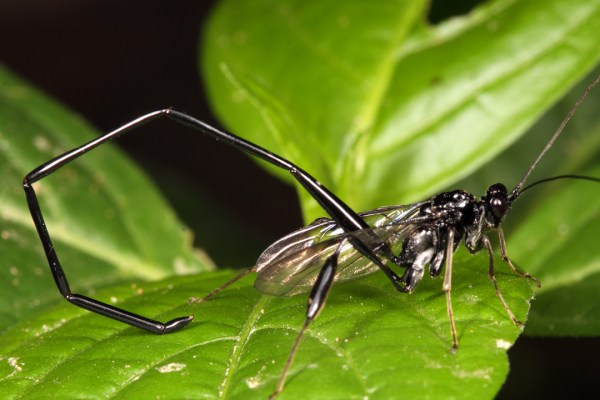
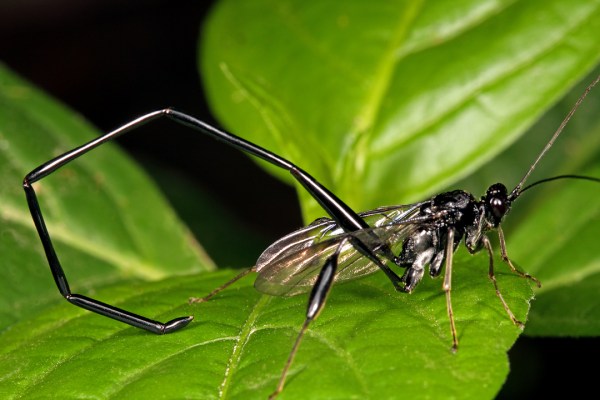
Pelecinus polyturator female | Wayne Co., Missouri

Pelecinus polyturator female | Wayne Co., Missouri

 Of course, that doesn’t mean field identification is impossible for all insects—certain groups such as butterflies, dragonflies, and tiger beetles lend themselves to field identification due to their relatively large size, bright colors, and distinctive markings. Many would also include the aculeate hymenopterans (i.e., “stinging” wasps and bees) among those groups for these same reasons. However, the vast majority of hymenopterans belong to a multitude of families characterized by tiny, parasitic species that seem (to this coleopterist’s eyes) to differ only in bafflingly minute details of wing venation and tibial spurs. (Honestly, I couldn’t tell you the difference between Tanaostigmatidae and Tetracampidae if my life depended on it!) Nevertheless, there are a small handful of parasitic hymenopterans in North America that are instantly recognizable due to their giant size (2 or more inches in length)—namely, Megarhyssa spp. (giant ichneumons) and the species shown in this post, Pelecinus polyturator (American pelecinid). Pelecinus polyturator is the only North American member of the family Pelecinidae, which itself contains only two additional species that are restricted to Mexico and Central/South America. It wasn’t always this way—fossils assignable to the family and representing 43 species in a dozen genera have been found as far back as the early Cretaceous (121–124 mya) across North America, Europe, and Asia (Grimaldi & Engel 2005). Surely this represents just the tip of the iceberg of Mesozoic and early Cenozoic pelecinid diversity, making today’s three species the last representatives of a once great lineage—”living fossils”¹ some might say.

¹ To ward off any scolding I might get from evolutionary purists, I get it; there is no such thing as a living fossil (except the T. rex skeleton in the movie “Night at the Museum”). I know that all species alive today have the same amount of evolutionary history behind them and are, if not from more immediate ancestors, highly derived compared to earlier life forms. I will admit that the term has become a bit overused as pseudoscientific shorthand for branding an organism as ‘primitive’ (another term which tends to raise hackles); however, I don’t see the problem with its use as informal reference to relatively ancient groups, usually more diverse in the past and now represented by only a few species. Innocuous shorthand is all it is.

This elegant female, recognizable by her extraordinarily narrowly elongate abdomen (males have a somewhat shorter abdomen that is widened at the end), was seen back in July 2011 as she flew to a blacklight and landed on nearby foliage in a mesic bottomland forest in southeastern Missouri’s Ozark Highlands. I have seen females on occasion over the years but have not yet seen a male, which are increasingly rare in more northern latitudes of the species distribution. I missed the focus a bit on this photo (and also the other half-dozen or so shots that I took)—photographing an active subject at night on elevated foliage without a tripod is difficult to say the least! Nevertheless, after post-processing it’s a decent photograph. If you are wondering why it took me so long to post it, that’s because only recently have I gained the confidence to “clean up” poorly exposed photos where the subject and/or substrate on which they are resting is so distractingly littered with debris as this:

Yuk!!!

Yuk!!!

Compare the original photo here to the final photo above it—how many post-processing tools can you detect the use of? 🙂

REFERENCES:

Bellamy, C. L. 2008. World catalogue and bibliography of the jewel beetles (Coleoptera: Buprestoidea), Volume 4: Agrilinae: Agrilina through Trachyini. Pensoft Series Faunistica 79:1–722.

Grimaldi, D. and M. S. Engel. 2005. Evolution of the Insects.Cambridge University Press, New York, xv + 755 pp.

Copyright © Ted C. MacRae 2013

Ovipositing Pigeon Horntail

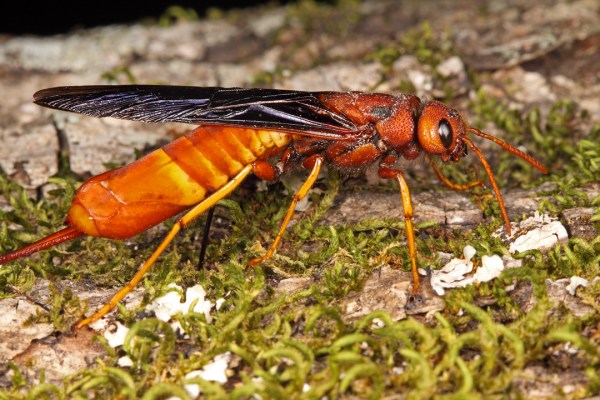
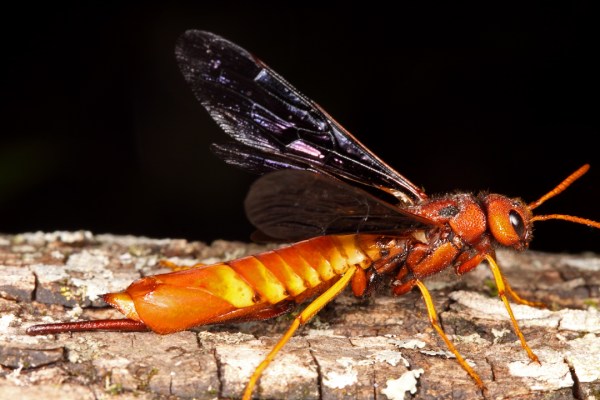
Tremex columba (pigeon horntail) | Wayne Co., Missouri

Tremex columba (pigeon horntail) | Wayne Co., Missouri

By early July, woodboring beetle activity is at its peak in southern Missouri. Even though many of the smaller species of jewel beetles (family Buprestidae) and longhorned beetles (family Cerambycidae) have already come and gone, bigger species in genera such as Buprestis, Acanthocinus, Enaphalodes, etc. are ripe for the picking. All one has to do is travel for hours to high-quality forest (upland or lowland—either is fine depending on what you wish to find), hike for additional hours through stifling mid summer heat and humidity, and carefully search the trunks and branches of any declining or recently downed tree (don’t forget to look along the undersides) while dodging deer flies (if ever a creature sprang from the pit of hell!) and slapping mosquitos! Sure, you can cheat and just drive along National Forest roads looking for recent logging operations—it’s a good way to get large series of common, widespread species; however, if you want to get the good stuff you’ve got to seek out the high-quality forests—those not managed for timber—and look for declining trees and natural wind-throws.

Of course, not all wood borers are beetles. Among the more spectacular non-beetle wood borers are the horntails (order Hymenoptera, family Siricidae), represented in this post by one of its more commonly encountered species, Tremex columba (pigeon horntail). That is not to say that they are frequently encountered, at least in my experience, but I do remember the first time I saw one of these as a boy. I knew in my heart that they were harmless—my already tattered copy of The Golden Guide to Insects said so; yet I could not bring myself to actually grab what would become the latest prize specimen in my insect collection with my bare fingers, instead sneaking a jar over it and sliding the lid underneath.  I’ve seen them a few times since, but until recently I had never seen what must be considered their most remarkable feature—the ability to thrust a needle-thin ovipositor several cm into solid wood! While hiking the Shut-Ins Trail at Sam A. Baker State Park last year, I spotted a large, recently wind-thrown tree off the trail and picked my way over to see what woodboring beetles I might find. As I approached the horntail in these photos took flight, but I stood still and watched her settle back onto the trunk and resume searching activities. Using all the stealth I could muster, I made my approach—hoping to get at least one good shot of this spectacular insect. I would have been happy if I had walked away with nothing more than the first photo in the sequence below. What happened next, however, was icing on the cake. As the remaining photo sequence shows, she suddenly arched her abdomen high and began probing the wood with the tip of her ovipositor, then bracing it at a precise 90° angle relative to the lower abdomen, slowly thrust it deep into the wood until her abdomen was completely level above the trunk.

I never cease to be amazed by insects, but sometimes their capabilities just seem incomprehensible. If you disagree, just imagine trying to insert an insect pin deep into solid wood with nothing but your bare hands (or, more precisely, pushing only with your butt) and see if you don’t change your mind!

T
T
T
T
T
T
Copyright © Ted C. MacRae 2013

The gloriously dichromatic Dasymutilla gloriosa

I have a small collection of velvet ants (family Mutillidae) that I’ve accumulated over the years—not through active collection but more as bycatch from my beetle hunting operations. Velvet ants are, of course, not ants at all, but wasps, and as such the females are—like their winged relatives—quite capable of delivering a painful sting if mishandled. They also tend to be seen running rather frenetically across the ground, making them difficult to guide into a collection vial or grab with forceps. You’ve gotta really want ’em if you want to collect them. Still, even though I don’t study them I find them interesting enough to pick up on occasion, and with most groups outside of my area of focus the hope is that eventually they will end up in the hands of somebody who actively studies the group. Such is now the case with my mutillid collection, which will be shipped this week to another collector specializing in the group. In return I will be filling some holes in European representation of my collection of Cerambycidae.

Dasymutilla gloriosa, female | Brewster Co., Texas

Dasymutilla gloriosa, female | Brewster Co., Texas

Without question, the most interesting mutillid species that I’ve encountered is Dasymutilla gloriosa. All mutillids are sexually dimorphic, as only the males are winged, but most also tend to be sexually dichromatic to a greater or lesser degree. No species I am aware of takes this to the same level as D. gloriosa! The males (photo below) are rather typically colored compared to other species in the genus, but the females (photo above) are densely covered with long, strikingly white hairs. While this would seem to make them quite conspicuous, the true effect is the exact opposite as they easily confused with fuzzy plant seed. For this reason they are commonly called thistledown velvet ants. I encountered the female in west Texas in 2003 while walking a mountain trail and at first thought it was the fuzzy seed of a creosote bush (Larrea tridentata) being blown by the wind—except there was no wind! It took me a little while looking closely at it before I could figure out what it actually was. This is the only female of this species that I’ve seen in the wild, and I’ll be a little sad to see it sent to another location.

Dasymutilla gloriosa, male | Riverside Co., California

Dasymutilla gloriosa, male | Riverside Co., California

The male also is the only one I’ve encountered—or at least taken the trouble to collect. I would have never suspected this male, which I collected in southern California in 1991, was the same species as the female that I collected many years later. My thanks to Kevin Williams, who provided the identifications for both of these specimens.

Also called the ''thistledown velvet ant''

Also called the ”thistledown velvet ant”

Copyright © Ted C. MacRae 2012

Working with Cerceris fumipennis—Epilogue

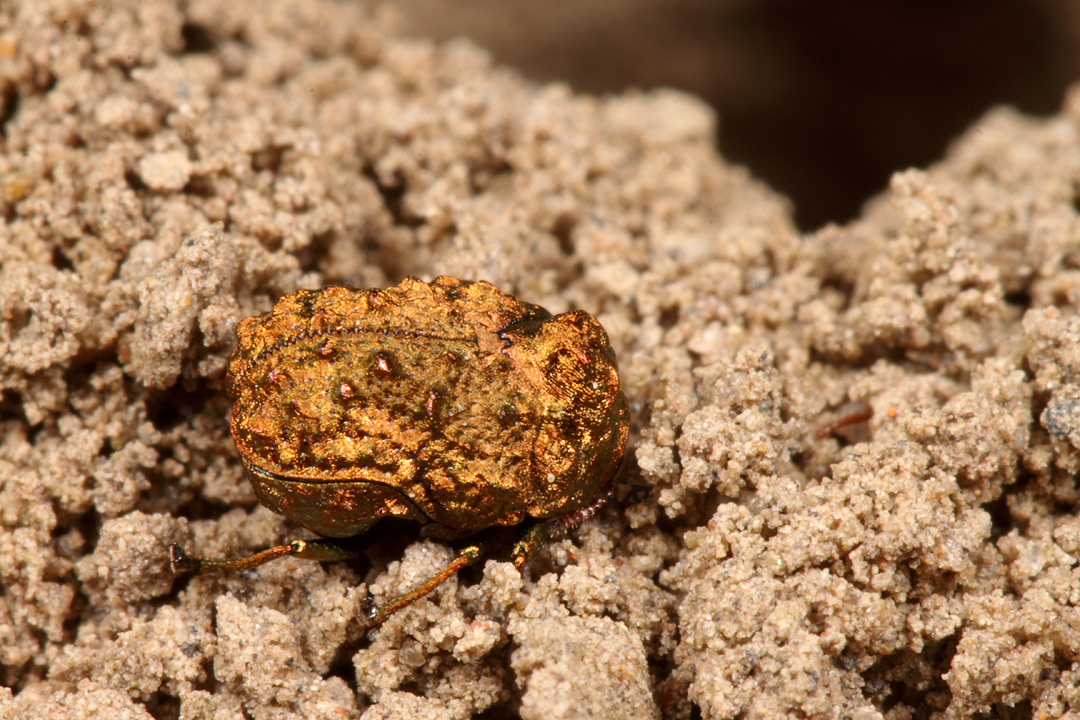
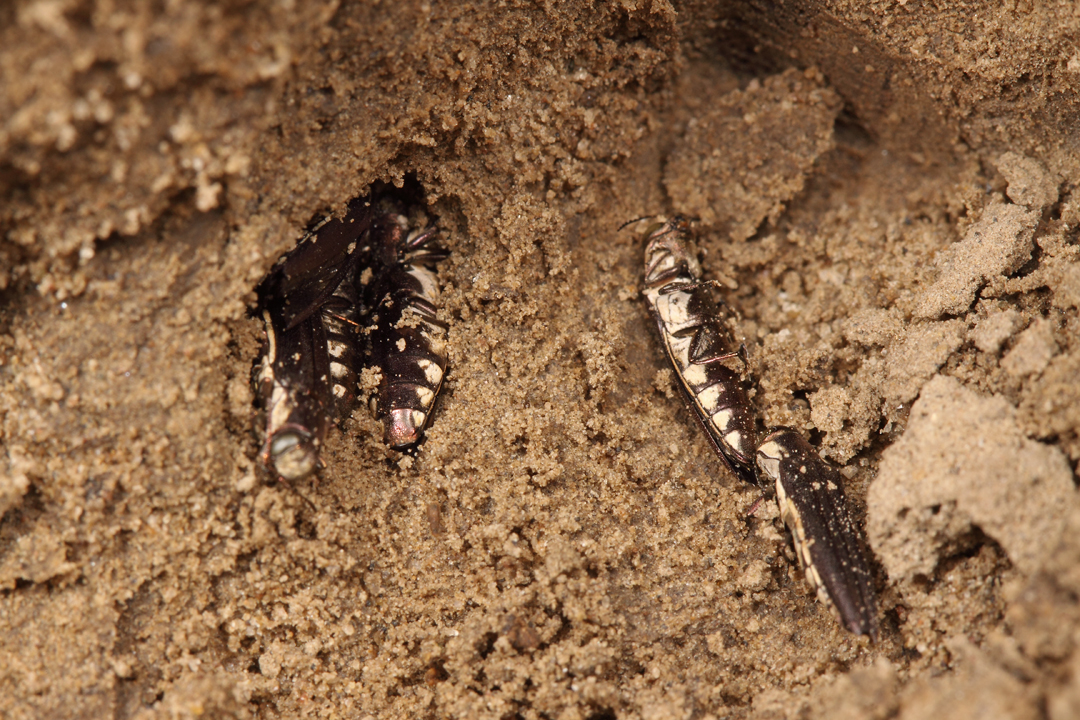
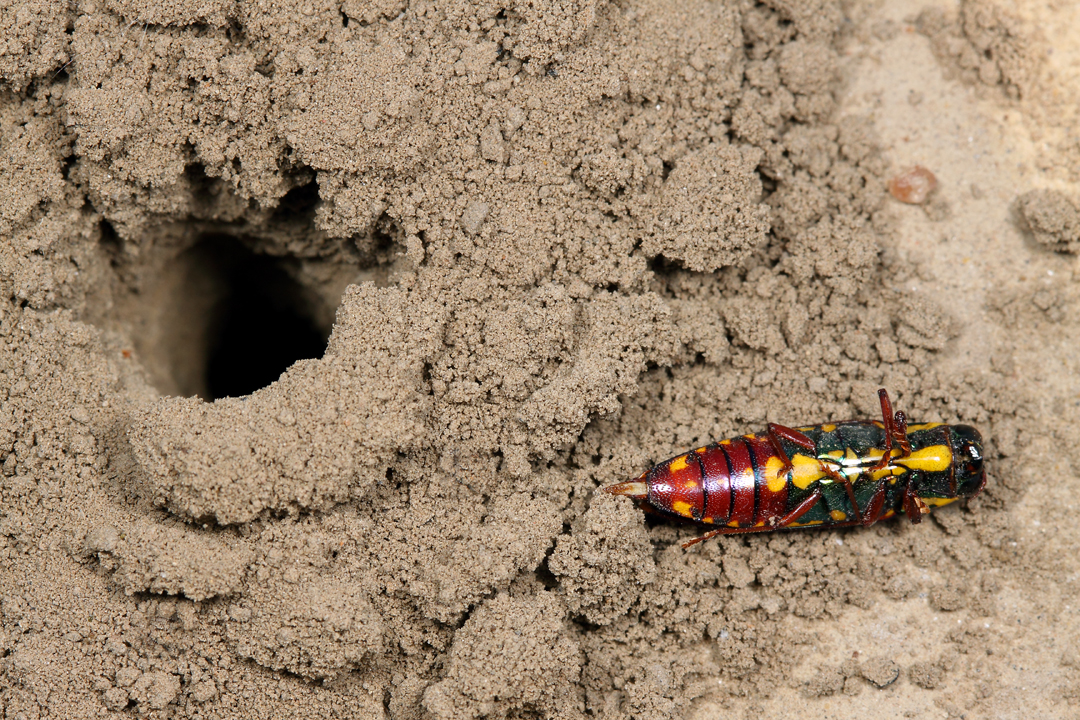
Cerceris fumipennis nest littered with Neochlamisus sp. beetles

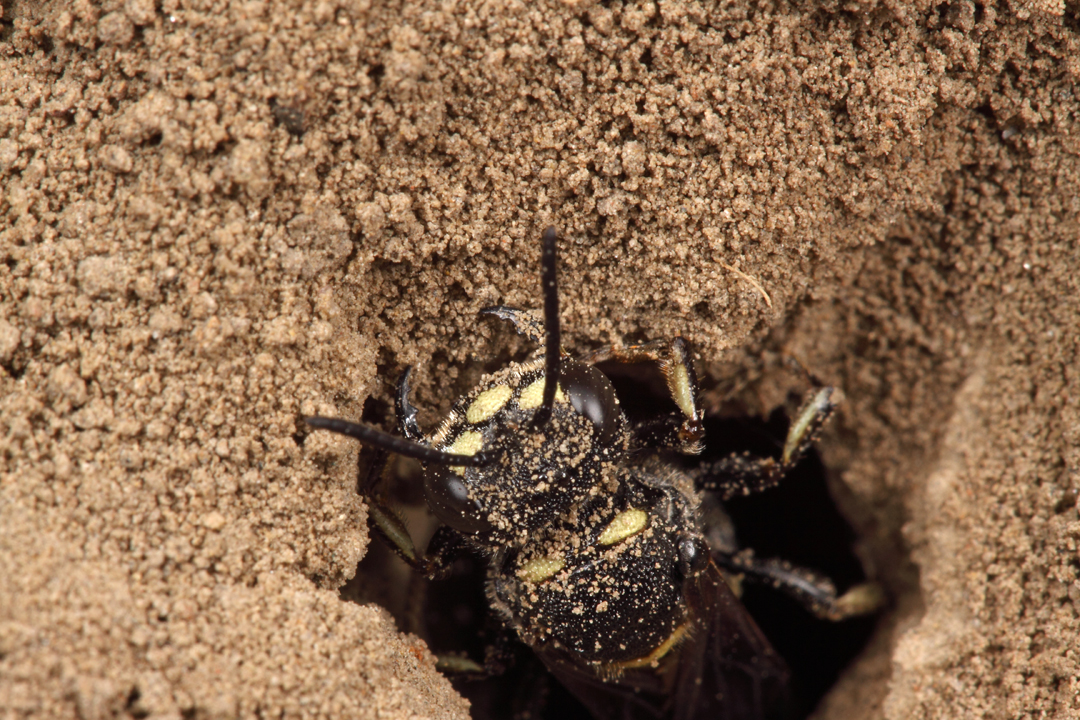
In Working with Cerceris fumipennis Part 1 and Part 2, I talked about the use of this species as a biosurveillance tool for Buprestidae. These wasps are specialist predators of jewel beetles, which they capture almost exclusively and paralyze with their sting to use as food provisions for their offspring in underground nests. I also mentioned that there are other species of Cerceris, each specializing in its own distinct prey group, and at my site in east-central Missouri I found C. bicornis, a weevil specialist, almost as common as C. fumipennis. Thus, when I came upon this particular Cerceris wasp nest, I wondered it I had encountered yet another species in the genus, for littered around it were case-bearing leaf beetles in the genus Neochlamisus.

The bright coppery coloration suggests Neochlamisus platani

I counted 11 beetles lying on the diggings surrounding this nest, and as is typical with buprestids around C. fumipennis nests these beetles all appeared to represent the same species (I’ve done a little collecting of Neochlamisus beetles in Missouri—the especially bright coppery coloration suggests to me N. platani, a species found on eastern sycamore, Platanus occidentalis). I’ve also noted that C. fumipennis nests littered with beetles on the surface also have beetles—usually of the same species—freshly cached underground, so I decided to dig up the nest to see what might be in it. As I inserted the grass stem and started digging, I heard the distinctive buzzing indicating the wasp was still inside the nest, and when it appeared I noted the distinctive three yellow facial markings that identify it as a female C. fumipennis. As suspected, the nest contained another seven beetles of the same species, and I would later learn that C. fumipennis, while specializing on jewel beetles, does occasionally take other prey. Philip Careless and colleagues recorded two leaf beetles, including Neochlamisus bebbiana, and one weevil as hosts for this wasp at their Working with Cerceris fumipennis website. If my species ID of these beetles is confirmed, this should represent yet another non-buprestid host record for C. fumipennis, although I should also mention that out of several hundred observations this was the only non-buprestid prey I observed around or in a C. fumipennis nest.

Copyright © Ted C. MacRae 2012

Working with Cerceris fumipennis—Part 2

During the 6-week period from late May to early July this year, I collected ~400 jewel beetle specimens representing at least 20 species (see Working with Cerceris fumipennis—Part 1). A final accounting of the species represented won’t be done until this winter, but the genera represented include Acmaeodera, Actenodes, Agrilus, Anthaxia (Haplanthaxia), Buprestis (Knulliobuprestis), Chrysobothris, Dicerca, Poecilonota, and Spectralia. Perhaps two-thirds of the specimens were “ground-picked”¹, while most of the remaining third were “stolen” directly from wasps by netting wasps in flight as they returned to their nest carrying prey.

¹ It’s not clear to me why I found so many abandoned buprestids at nest entrances. The wasps are known to drop prey when threatened and, rather than search for and relocate the prey, fly off to look for a new beetle(Careless et al. 2009). I observed this myself in several cases when I missed netting the wasp but swiped the net close enough to scare it, at which time it dropped the beetle and flew off (and I popped the beetle in a vial). However, the bulk of the beetles I found on the ground were not only at the nest entrance, but even mixed within the diggings surrounding the nest. My first act when checking each field was to check each nest, pick up any adults lying on top of the burrow diggings, and then carefully spread out the diggings with a knife or trowel to collect the beetles hidden within them. One nest contained as many as 13 Agrlus obsoletoguttatus inside the diggings. I wondered at one point if the wasps were leaving the beetles at the burrow entrance and then digging out the burrow before coming back to retrieve them, but I never actually witnessed this. On the other hand, I observed numerous wasps approaching their burrows while carrying prey, and every time the wasp dropped directly into the burrow. In fact, I could even predict what beetle species I was likely to find inside the nest based on the species I found around the entrance (more on that below).

This ball field with contains several dozen Cerceris fumipennis nests.

There is a third method that I used to collect beetles that I haven’t yet discussed, and that is digging them out of nests. In the latter part of the survey period (late June and early July), beetle numbers dropped rapidly, as did apparent wasp activity. As mentioned in the previous post, this drop off in activity came precisely at the time of season when I have observed buprestid beetle activity to decline in Missouri. As the drop off in activity was taking place, I began wondering what I would find if I tried digging up some of the burrows. Of course, digging up a nest takes much more effort than netting wasps or picking beetles up off of the ground, so it becomes important not only to identify whether a nest actually belongs to C. fumipennis and if it is active and likely to contain freshly captured beetles.  In addition, I observed the burrows of a variety of other insects in these fields as well, some of which are shown here and which might be confused with burrow entrances of C. fumipennis.

Cerceris fumipennis nest with Chrysobothris sp. adult left on diggings.

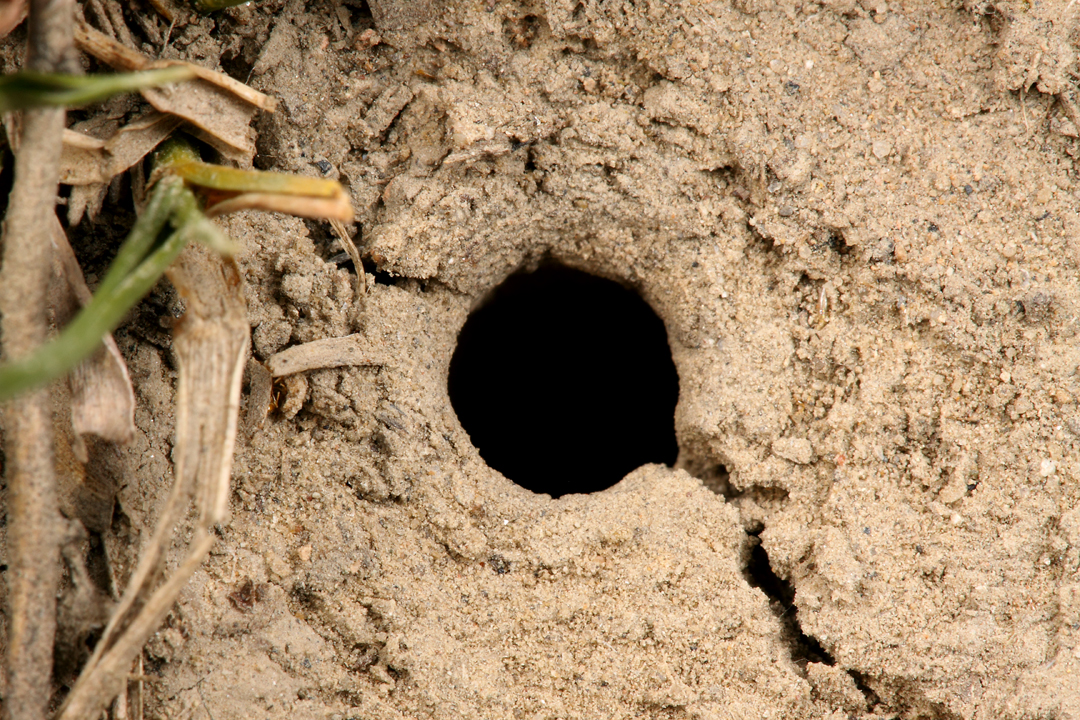
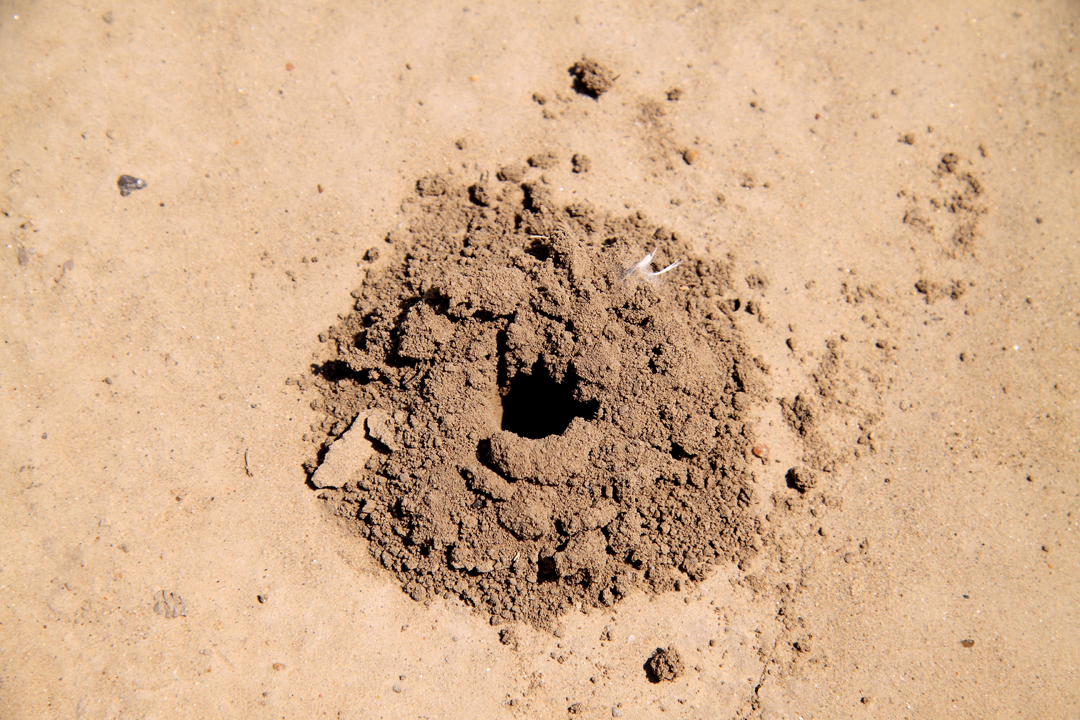
Cerceris fumipennis burrows exhibit perfectly circular, pencil-sized entrances surrounded by a symmetrical mound of diggings with a fine rather than granular texture. There are other Cerceris species that make nearly identical burrows, but they prey on other insects rather than buprestid beetles. At my site I found C. bicornis, a weevil specialist, almost as common as C. fumipennis. Their burrow entrances on the whole seemed slightly larger, but I could not use this as consistent distinguishing character. What I could use, however, was the presence of weevils rather than buprestids lying on the ground near the nest entrance. (I also observed this species returning to its nest and noted a rather faster, more powerful flight that made them even more difficult to capture than C. fumipennis). In contrast, there can be no doubt that the burrow above, with a buprestid beetle lying on the ground near the entrance, belongs to C. fumipennis

² The white plastic tag marks the burrow to facilitate locating nests on subsequent visits. It is secured with a golf tee and also can be rotated so that the hole covers the entrance. The hole is large enough to allow the wasp to leave but too small for a returning wasp to enter while carrying a beetle. The idea was to rotate the tags when I first entered a field to cover all the burrow entrances, watch for wasps returning with prey, and then net the wasps as they tried (in vain) to enter the burrow. However, I never actually observed a wasp trying to enter a covered burrow, even after leaving a field and returning 20–30 minutes later.

I presume this nest to be that of Bembix americana (sand wasp).

For the first few weeks, I thought the burrows such as that shown in the above photo also belonged to C. fumipennis. However, I never found beetles lying on the ground near the entrance, nor did I ever observe a wasp to enter or leave the burrow. I eventually noticed several distinct differences in burrow architecture—the burrow entered the ground at an angle rather than straight down, the diggings were distributed asymmetrically to one side of the entrance, and the latter seemed consistently a little larger than those of C. fumipennis. In addition, these burrows always seemed to be in the sandier portions of the fields. While I never associated any insect directly with these burrows, I did observe sand wasps (perhaps Bembix americana) in the vicinity and have seen similar-looking burrows dug by these wasps at Sand Prairie Conservation Area.

Larval burrows of Cicindelidia punctulata and other tiger beetles lack diggings around the entrance.

Tiger beetle larval burrows might also be confused with C. fumipennis burrows, especially after rain or high winds which can wash/blow away the diggings from around the entrance. I found adults of the punctured tiger beetle, Cicindelidia punctulata, fairly commonly at the site and presume the numerous tiger beetle larval burrows that were also present belong to that species. Larval tiger beetles burrows also enter the ground straight down and are, at first appearance, also perfectly round, but they are usually a little too small for C. fumipennis (those of Tetracha spp. being an exception)—the presumed C. punctulata burrow in the above photo measures about 5 mm in diameter. In addition, closer examination reveals a slight “D” shape to the burrow entrance (upper right in the above photo—the tiger beetle larva rests its jaws against the flat side) and, more distinctively, beveling of the ground around the rim of the burrow entrance. Cerceris fumipennis nests lack the slight D-shape and distinctive beveling.

Use a grass stem as a guide while carefully digging away the surrounding soil.

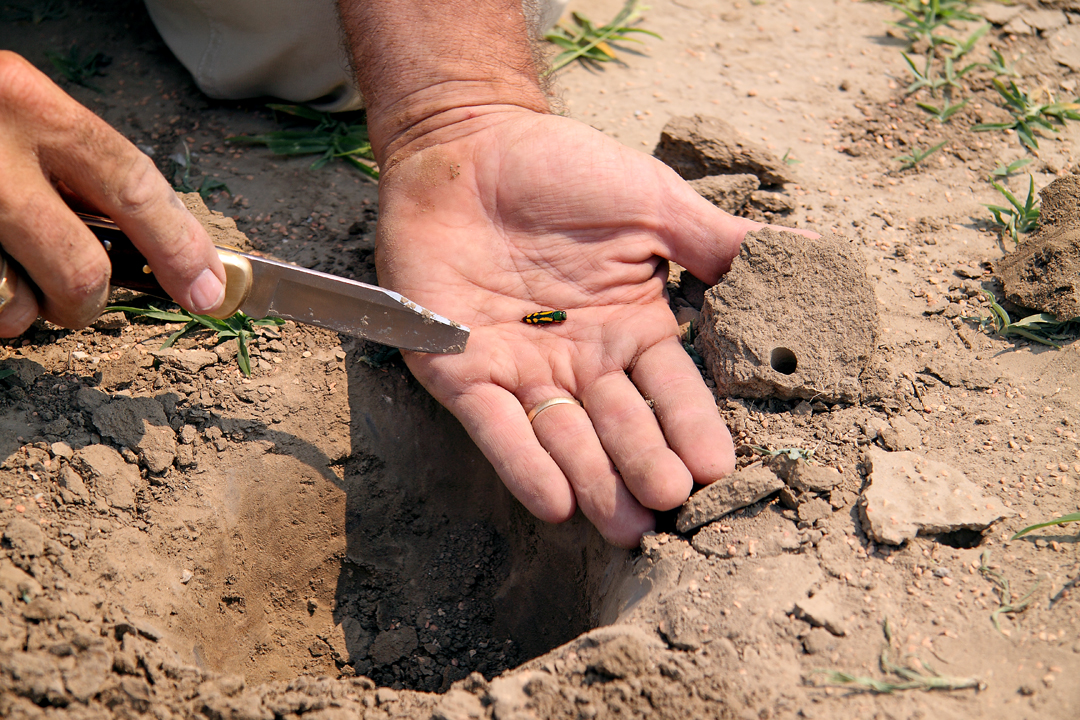
Years of practice digging up tiger beetle burrows prepared me well for my first attempts at digging up C. fumipennis burrows. While it might seem an easy task to follow a hole into the ground while digging soil away from it, in practice the burrow can be quickly lost after even a few inches due to falling soil covering the hole and making it impossible to relocate. I use a thin, flexible but sturdy grass stem to preserve the burrow path, inserting the stem into the burrow and down as far as it will go and then removing the soil carefully from around the hole with a knife or trowel. I try to avoid letting soil fall over the hole by prying the soil away from the hole, but if the hole does get covered the grass stem allows it to be easily relocated.

This nest contained a single Buprestis rufipes

Cerceris fumipennis burrows are not very deep—only 10–15 cm, and angle to one side a few cm below the surface before leveling out near the bottom. I noticed the nest in the above photo because I saw a wasp fly into it. When I went over to look at it I found a Buprestis rufipes lying on the ground near the entrance and so decided to dig it up. As I expected, I found another B. rufipes at the bottom of the burrow (two above photos courtesy of Madison MacRae).

…while this one contained a cache of seven Agrilus quadriguttatus.

The above photo shows a cache of seven Agrilus quadriguttatus that I found at the bottom of another burrow. In this case, the prey is rather small compared to large prey such as Buprestis and Dicerca. While nests provisioned with species in these latter genera often contained only a single beetle in them, I nearly always found multiple beetles in nests provisioned with the smaller Agrilus species. One nest contained as many as 13 Agrilus obsoletoguttatus, among the smallest of the species I found utilized by C. fumipennis at this site.

Buprestidae taken from five different Cerceris fumipennis nests.

Some of the nests I dug up contained multiple species of beetles, but far more commonly I found only a single species in a given nest. The photo above shows the diversity and number of beetles found on one date after digging up five different nests. From top left the beetles are: 1) 1 Buprestis rufipes; 2) 2 Agrilus quadriguttatus and 1 A. obsoletoguttatus; 3) 2 A. quadriguttatus and 1 A. obsoletoguttatus; 4) 8 A. obsoletoguttatus; and 5) 2 Poecilonota cyanipes, 2 A. quadriguttatus, and 1 A. pseudofallax. It would make sense for wasps to provision nests with greater numbers of smaller beetles to ensure adequate food for their larvae to complete development. How the wasps actually locate their prey, and why this species has specialized almost exclusively on buprestid beetles, is a mystery (at least to me); however (and here comes the speculation du jour), I suspect the wasps may have keyed in on volatiles used by the beetles—either those released by suitable hosts or by each other to facilitate mate location. Use of buprestid pheromones or freshly dead host volatiles would allow wasps to more efficiently locate buprestid prey and, once locating a source (a tree harboring a particular beetle species), could return repeatedly to provision their nest fully. It seems less likely that wasps rely exclusively on visual location of prey, as this would involve a large amount of random searching through trees and passing up numerous, seemingly equally suitable prey.

REFERENCE:

Careless, P. D., S. A. Marshal, B. D. Gill, E. Appleton, R, Favrin & T. Kimoto. 2009. Cerceris fumipennis—a biosurveillance tool for emerald ash borer. Canadian Food Inspection Agency, 16 pp.

Copyright © Ted C. MacRae 2012

Working with Cerceris fumipennis—Part 1

For nearly 30 years, jewel beetles (family Buprestidae) have been my primary research interest. While some species in this family have long been regarded as forest and landscape pests, my interest in the group has a more biosystematic focus. A faunal survey of Missouri was the result of my initial efforts (MacRae 1991), while later research has focused on distributions and larval host associations of North American species (Nelson & MacRae 1990; Nelson et al. 1996; MacRae & Nelson 2003; MacRae 2004, 2006) and descriptions of new species from both North America (Nelson & MacRae 1994, MacRae 2003b) and South America (MacRae 2003a). Research interest in other groups—especially longhorned beetles and tiger beetles, has come and gone over the past three decades; however, I always return to jewel beetles as  my first and favorite group.

In recent years, one species in particular—the emerald ash borer (EAB, Agrilus planipennis) has garnered a huge amount of research, regulatory, and public interest after reaching North America from Asia and spreading alarmingly through the hardwood forests of Michigan and surrounding states. The attention is justifiable, given the waves of dead native ash trees that have been left in its wake. With huge areas in eastern North America still potentially vulnerable to invasion by this species, the bulk of the attention has focused on preventing its spread from infested areas and monitoring areas outside of its known current distribution to detect invasion as early as possible. One incredibly useful tool that has been adopted by survey entomologists is the crabronid wasp, Cerceris fumipennis. Like other members of the family, these solitary wasps dig nests in the ground, which they then provision with captured insect prey. The wasp uses its sting to paralyzed the prey but not kill it, and once inside the burrow the wasp lays an egg on the prey and seals the cell with a plug of soil. The eggs hatch and larvae develop by consuming the paralyzed prey (unable to scream!). After pupation the adult digs its way out of the burrow (usually the next season), and the cycle begins anew. However, unlike other members of the family (at least in North America), C. fumipennis specializes almost exclusively on jewel beetles for prey. So efficient are these wasps at locating and capturing the beetles that entomologists have begun using them to sample areas around known wasp populations as a means of detecting the presence of EAB. Philip Careless and Stephen Marshall (University of Guelph, Ontario) and colleagues have been leading this charge and have even developed methods for transporting wasp colonies as a mobile survey tool and developed a sizeable network of citizen scientists throughout eastern North America to expand the scope of their survey efforts. Information about this can be found at the excellent website, Working with Cerceris fumipennis (please pardon my shameless lifting of the title for this post).

I first became aware of the potential of working with C. fumipennis a few years ago when Philip sent me a PDF of his recently published brochure on use of this wasp for EAB biosurveillance (Careless et al. 2009). My correspondence with him and other eastern entomologists involved in the work suggested that ball fields with lightly vegetated, sandy soil would be the best places to look for C. fumipennis nests, but my cursory attempts to find the wasp at that time were unsuccessful. I reasoned that the clay-soaked soils of Missouri didn’t offer enough sand for the wasps’ liking and didn’t think much more about it until last winter when I agreed to receive for ID a batch of 500+ buprestid specimens taken from C. fumipennis wasps in Louisiana. What a batch of material! In addition to nice series of several species that I had rarely or never seen (e.g. Poecilonota thureura), three new state records were represented amongst the material. A paper is now in progress based on these collections, and that experience catalyzed a more concerted effort on my part to locate a population of the wasp in Missouri. Museum specimens were no help—the only records from Missouri were from old specimens bearing generic locality labels such as “St. Louis” and “Columbia.” Throughout the month of May, I visited as many ball fields as I could, but the results were always the same—regularly groomed, heavy clay, barren soil with no evidence of wasp burrows (or any burrows for that matter).

Near the end of May, however, I had a stroke of luck. I had switched to a flatter route through the Missouri River Valley to ride my bike to work because of knee pain (now thankfully gone) when I saw this:

Practice fields at Chesterfield Valley Athletic Complex | St. Louis Co., Missouri

Those are “practice” fields in front of regular fields in the background, and unlike the latter, this row of nine fields (lined up against the levee adjacent to the Big Muddy National Wildlife Refuge) showed no evidence of regular grooming or heavy human use. Only ten miles from my home, I made immediate plans to inspect the site at the first opportunity that weekend. Within minutes after walking onto the lightly vegetated, sandy-clay soil of the first field, I found numerous burrows such as this:
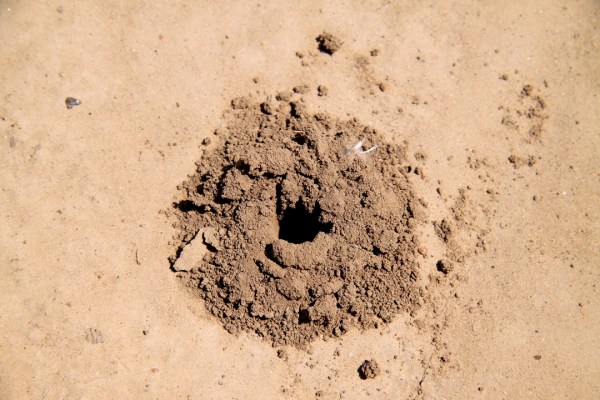
Cerceris fumipennis with circular, pencil-wide burrow entrance and symmetrical mound of diggings.

Only a few more minutes passed before I found an occupied nest, the wasp sitting just about an inch below the entrance to its pencil-wide burrow. The three yellow markings on the face indicated it was a female (males have only two facial markings), and in short order I found numerous other burrows also occupied by female wasps. Some were just sitting below the burrow entrance, while others were actively digging and pushing soil out of the burrow with their abdomen. I flicked a little bit of soil into one of the burrows with a female sitting below the surface, which prompted an immediate “cleaning out” of the burrow—this explains the dirty face of the female in the following photo, but the three yellow facial markings are clearly visible:
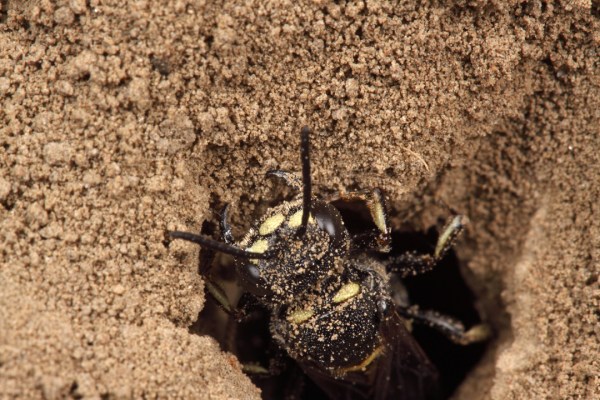
Cerceris fumipennis female removing soil from burrow entrance.

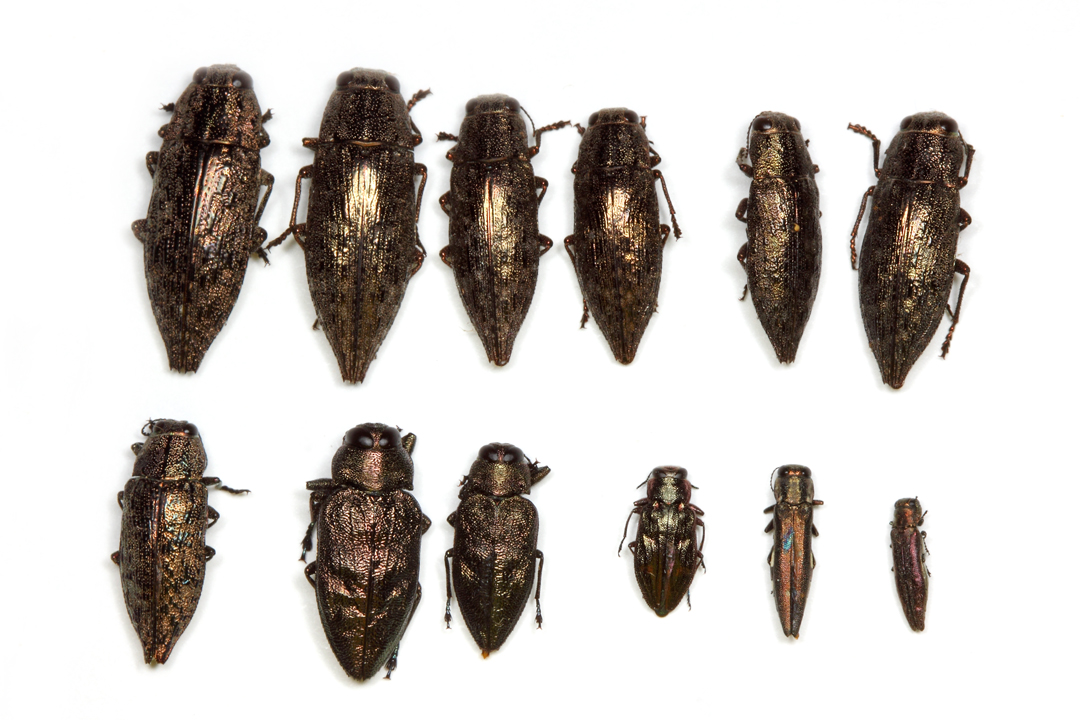
After finding the burrows and their occupants, I began to notice a fair number of wasps in flight—leaving nests, returning to nests, and flying about as if searching for a ‘misplaced’ nest. A few of these were males, but most were females, and I also caught a couple pairs flying in copula (or at least hitched, if not actually copulating). Despite the number of wasps observed during this first visit, I didn’t see a single wasp carrying a buprestid beetle. This puzzled me, because all of the Louisiana beetles I had determined last winter were taken by standing in the midst of nests and netting those observed carrying beetles. Finally, I had confirmation that I was truly dealing with this species when I found a couple of beetles lying on the ground near the entrance to a burrow. These would be the only beetles that I would find on this visit, but subsequent visits during the following few weeks would show “ground picking” to be the most productive method of collecting beetles. Across the nine fields, I found a total of nearly 300 nests, and the wasps showed a clear preference for some fields over others—one field (P-6) had about 150 nests, while a few others had less than a dozen. The photo shown in ID Challenge #19 shows a sampling of ground-picked buprestids from P-6 in a single day, and occasionally I would find a real prize like Buprestis rufipes:
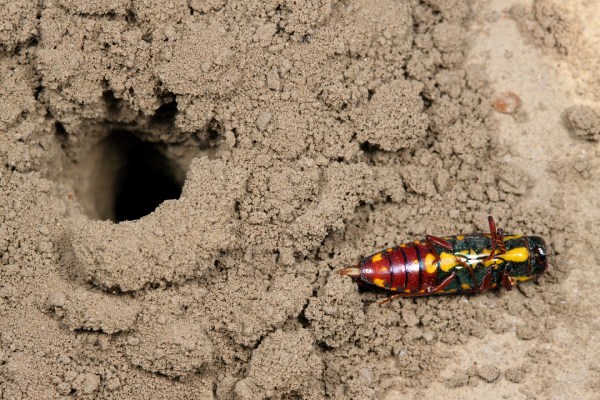
Buprestis rufipes laying near Cerceris fumipennis nest entrance.

Coincident with the appearance of large numbers of beetles laying on the ground near nest entrances, I also began to see wasps carrying their prey. Wasps carrying large beetles are easily recognized by their profile, but even those carrying small beetles look a little more “thick-thoraxed” (they hold their prey upside down and head forward under their thorax) and exhibit a slower, more straight-line flight path compared to the faster, more erratic and repetitively dipping flight of wasps not carrying prey. Learning how to discern wasps carrying prey in flight from the more numerous empty-handed wasps prevents a lot of wasted time and effort netting the latter. Nevertheless, there does appear to be some bias towards larger beetles when netting prey-carrying wasps in flight, as evidenced in the photo below of beetles taken by this method, also in field P-6, on the same date as the ground-picked beetles shown in ID Challenge #19. This could be a result of visual bias towards wasps carrying larger beetles, as in later visits (and presumably with a more refined search image) I did succeed in catching larger numbers wasps carrying smaller beetles (primarily in the genus Agrilus).
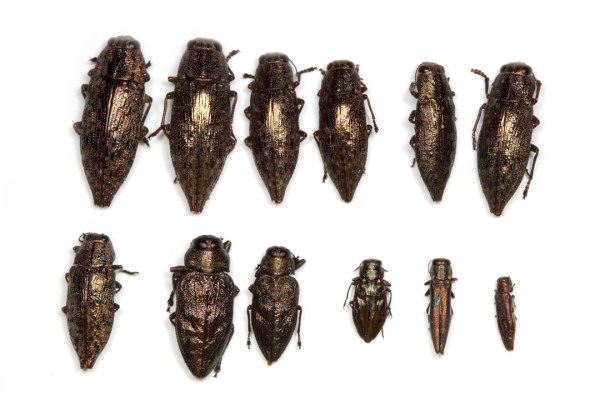
Buprestid prey of Cerceris fumipennis: L–R and top to bottom 2 Dicerca obscura, 2 D. lurida, 3 Poecilonota cyanipes, 2 Acetenodes acornis, 1 Chrysobothris sexsignata, 1 Agrilus quadriguttatus, and 1 A. obsoletoguttatus

All told, I collected several hundred beetles during my twice weekly visits to the site from late May to the end of June. Beetle abundance and wasp activity began to drop off precipitously in late June, which coincides precisely with the end of the adult activity period for a majority of buprestid beetles in Missouri, based on my observations over the years. This did not, however, spell the end of my activities in using C. fumipennis to collect buprestid beetles, which will be the subject of Part 2 in this series.

Congratulations to Joshua Basham, whose efforts in ID Challenge #19 earned him 12 points and the win. Morgan Jackson and Paul Kaufman were the only others to correctly identify the Cerceris fumipennis connection and take 2nd and 3rd, respectively. In an unexpected turn of events, BitB Challenge Session #6 overall leader Sam Heads did not participate and was leapfrogged by Brady Richards, whose becomes the new overall leader with 59 points. Sam now trails Brady by 5 points, while Mr. Phidippus lies another 3 points back. With margins this tight, the overall standing can still change in a single challenge, and there will be at least one more in this current session before an overall winner is named.

REFERENCES:

Careless, P. D., S. A. Marshal, B. D. Gill, E. Appleton, R, Favrin & T. Kimoto. 2009. Cerceris fumipennis—a biosurveillance tool for emerald ash borer. Canadian Food Inspection Agency, 16 pp.

MacRae, T. C. 1991. The Buprestidae (Coleoptera) of Missouri. Insecta Mundi 5(2):101–126.

MacRae, T. C. 2003a. Mastogenius guayllabambensis MacRae, a new species from Ecuador (Coleoptera: Buprestidae: Haplostethini). The Coleopterists Bulletin 57(2):149–153.

MacRae, T. C. 2003b. Agrilus (s. str.) betulanigrae MacRae (Coleoptera: Buprestidae: Agrilini), a new species from North America, with comments on subgeneric placement and a key to the otiosus species-group in North America. Zootaxa 380:1–9.

MacRae, T. C. 2004. Notes on host associations of Taphrocerus gracilis (Say) (Coleoptera: Buprestidae) and its life history in Missouri. The Coleopterists Bulletin 58(3):388–390.

MacRae, T. C. 2006. Distributional and biological notes on North American Buprestidae (Coleoptera), with comments on variation in Anthaxia (Haplanthaxia) viridicornis (Say) and A. (H.) viridfrons Gory. The Pan-Pacific Entomologist 82(2):166–199.

MacRae, T. C., & G. H. Nelson. 2003. Distributional and biological notes on Buprestidae (Coleoptera) in North and Central America and the West Indies, with validation of one species. The Coleopterists Bulletin 57(1):57–70.

Nelson, G. H., & T. C. MacRae. 1990. Additional notes on the biology and distribution of Buprestidae (Coleoptera) in North America, III. The Coleopterists Bulletin 44(3):349–354.

Nelson, G. H., & T. C. MacRae. 1994. Oaxacanthaxia nigroaenea Nelson and MacRae, a new species from Mexico (Coleoptera: Buprestidae). The Coleopterists Bulletin 48(2):149–152.

Nelson, G. H., R. L. Westcott & T. C. MacRae. 1996. Miscellaneous notes on Buprestidae and Schizopodidae occurring in the United States and Canada, including descriptions of previously unknown sexes of six Agrilus Curtis (Coleoptera). The Coleopterists Bulletin 50(2):183–191.

Copyright © Ted C. MacRae 2012
Cicada killer on the fly

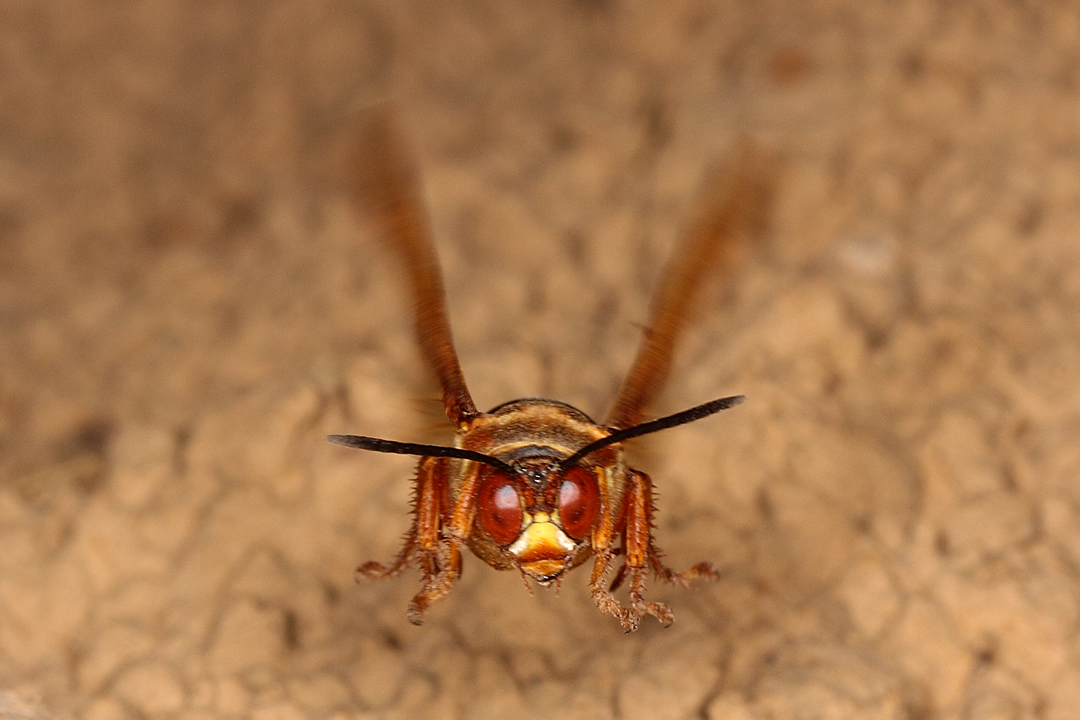
An eastern cicada killer (Sphecius speciosus) searches for her burrow | Jacksonville, Illinois.

I don’t normally spend much time trying to photograph insects in flight. To really do it right requires some rather specialized equipment, including very high-speed flash, and a bucketload of patience and skill. John Abbott exemplifies those whose great talent has produced stunning photographs of insects in mid-flight. That’s not to say that it can’t be done “on the fly,” so to speak, and even a hack like me can get lucky every now and then.

Earlier today I found a rather large number of eastern cicada killers (Sphecius speciosus) in a ball field in Jacksonville, Illinois. These impressive wasps are the largest wasp in eastern North America and have the rather gruesome habit of paralyzing cicadas with their sting, and then dragging them down into their burrows to be eaten alive by their grubs. I’ve recently become interested in solitary wasps (for reasons to be discussed later) and decided to see if I could get some decent photographs. I got a few I like (more on this later), but my favorite is this total luck-out shot of a wasp face-on in mid-flight. As I watched them, I noticed that each wasp spent a fair amount of time trying to identify its burrow amongst the dozen or more that were clustered along one side of the field. Occasionally they would land and search about a bit on foot, then take wing again to continue their search. I decided the best way to get a shot of one on the wing would be to watch for a wasp to arrive and begin its search. When I spotted one I would slowly close distance so I could be ready to get down on my elbows as soon as it landed (closing distance without spooking the wasp was not easy). I had just my center focal point set and autofocus turned on (normally I don’t use autofocus) and had already worked out a good flash exposure compensation setting. As soon as I got on my elbows, I would quickly frame the wasp and repeatedly trigger the autofocus as I got even closer, and when the wasp took flight I took the shot. This was still a crap shoot—I ended up with lots of out-of-focus and out-of-frame photos. Nevertheless, a few turned out fairly decent, one of which was this single, perfectly head-on and well-focused photo (though admittedly somewhat cropped).

Too bad I didn’t collect any of the wasps—at $49 each I could’ve made enough cash to buy that flash bracket I’ve been eyeing!

Copyright © Ted C. MacRae 2012

Predator Satiation

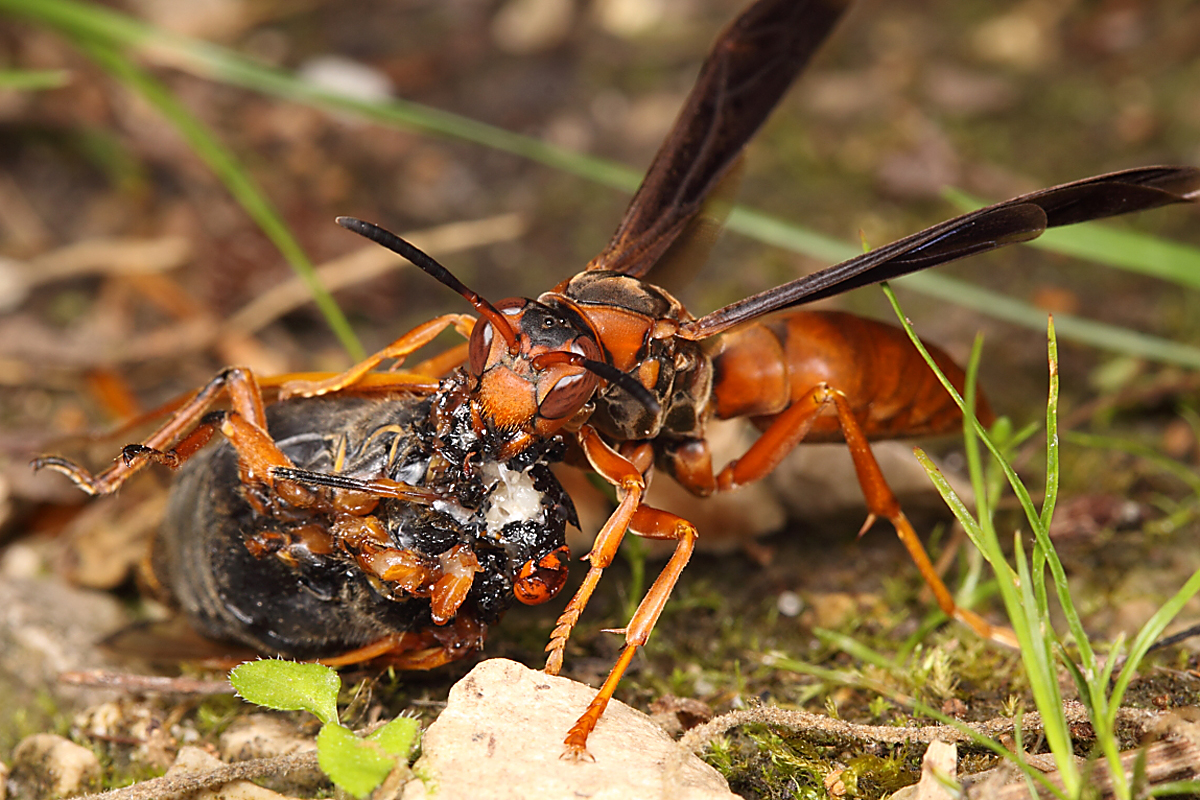
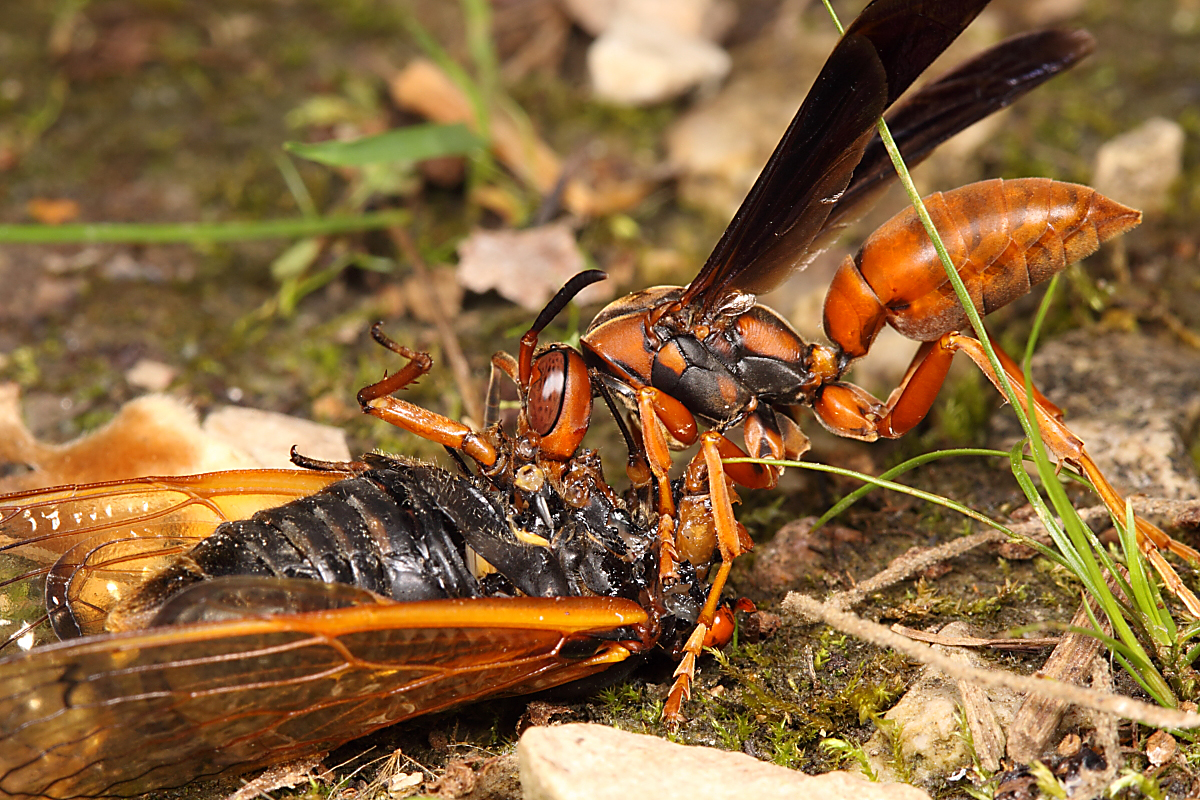
Polistes carolina/perplexus with Magicicada prey | Shaw Nature Reserve, Missouri

I’ve probably used the term predator satiation more often during the past couple of weeks than I have during the entire rest of my life.  Students of ecology know this as an antipredator adaptation in which prey occur at such high population densities that they overwhelm predator populations.¹  This ‘safety in numbers’ strategy reduces the probability that any given individual will be consumed, thereby ensuring that enough individuals survive to reproduce.  With St. Louis currently experiencing the appearance of Brood XIX of periodical cicadas, I’ve gotten lots of questions recently from many coworkers and friends wanting to know more about these cicadas.   Often the first question is “What is their purpose?”  My standard reply begins with a statement that they, like all living organisms, are the products of natural selection, which then presents an opportunity to explain how natural selection might result in such massive, temporally synchronized, multiple-species populations.  A few eyes have glazed over, but I think most have found my answer interesting, often even leading to further questions about where they lay their eggs, what is their life cycle, why are they so loud, how do they “do it” and select mates, etc.  Of course, as an entomologist with a strong natural history orientation, I’m always anxious to introduce people to ecological concepts, and right now the periodical cicada is providing a conspicuous, real-life example of such.

¹ Also called “predator saturation,” although this term might be misconstrued to mean that it is the predators that are over-abundant.

First the eyes...

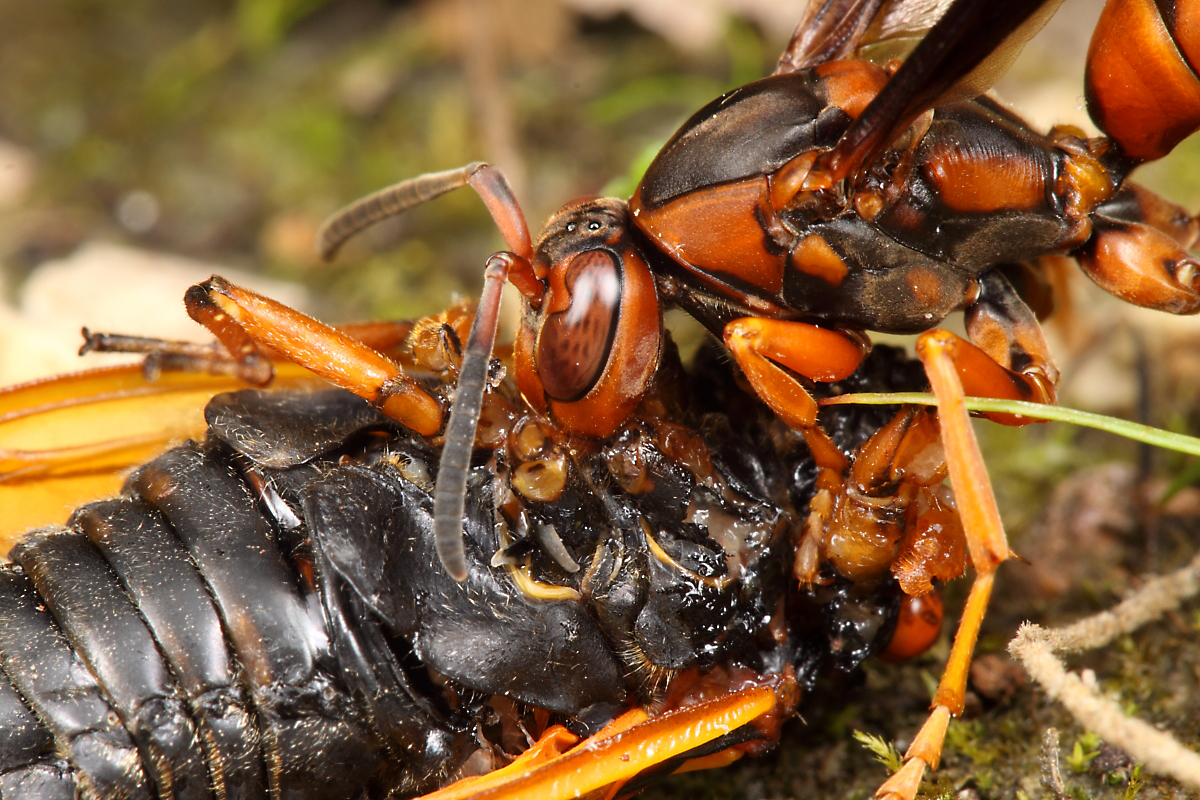
A few weeks ago, right at the beginning of their emergence in the St. Louis area, my friend Rich Thoma and I observed predator satiation in action.  While hiking one of the trails at Shaw Nature Reserve, we heard the unmistakable shriek and cellophane-sounding wing flapping of a just-captured male cicada.  Tussling on the ground ahead of us was the cicada in the grasp of a Polistes carolina/perplexus wasp, which was repeatedly stinging the hapless cicada on the underside of the abdomen.  The shrieking and wing-flapping grew less frequent as the stinging continued, until at last the cicada lay quiet.  As we approached, the wasp spooked and flew off, but we knew it would be back—we parked ourselves in place while I setup the camera, and before long the wasp returned.  It took several minutes of searching from the air and on the ground before the wasp finally relocated her prey, but once she did she began voraciously devouring it.  As the wasp was searching, we hypothesized that our presence had altered the visual cues she had memorized when flying off, resulting in some confusion when she returned, and thus the long period of time required to relocate her prey.

...then the legs!

We watched for awhile—first the eyes were consumed, then the legs.  As it consumed its prey, Rich remarked that he bet he could pick up the wasp and not get stung—likely the entirety of its venom load had been pumped into the cicada.  Both of us declined to test his hypothesis.  We also wondered if the wasp would butcher the cicada after consuming part of it and bring the remaining pieces back to the nest.  We had seen a European hornet do this once with a band-winged grasshopper, consuming the head, then cutting off the legs from the thorax and flying away with it before returning to collect the abdomen as well.  No butchering took place this time, however, the wasp seemed content to continue eating as much of the cicada as possible—a satiated predator if there ever was one!

Leg after leg is consumed.

One eye and all six legs down, time to start on the abdomen.

Copyright © Ted C. MacRae 2011