The real Eleodes suturalis

I recently posted a photograph of a clown beetle (Eleodes hispilabris) (family Tenebrionidae) that I found last July in the Glass Mountains of northwestern Oklahoma.  I had encountered that individual while stumbling through the mixed-grass prairie in the middle of the night in search of the Great Plains giant tiger beetle (Amblycheila cylindriformis).  Although I eventually found the latter species, it took a few hours, during which time I was forced to examine numerous individuals of another clown beetle, Eleodes suturalis – perhaps the most conspicuously common clown beetle in the Great Plains.  I didn’t bother to take photographs of them, focused as I was on my tiger beetle search and owing to the fact that this was not the first time I’d encountered that species in abundance (the first time being many, many years ago as they crossed the highway en masse just a few miles north of the Glass Mountains in Barber Co. Kansas).  In fact, I was becoming rather annoyed with them due to their great similarity in size and coloration to the object of my desire¹, and only when I found the previously photographed individual doing the defensive “head stand” so characteristic of the group did I relent and break out the camera for a series of shots (not easy in the dark of night).

¹ Wrigley (2008) even suggested a mimetic association for Amblycheila cylindriformis and Eleodes suturalis due to their similarity in size, shape and coloration (black with a reddish-brown sutural stripe).

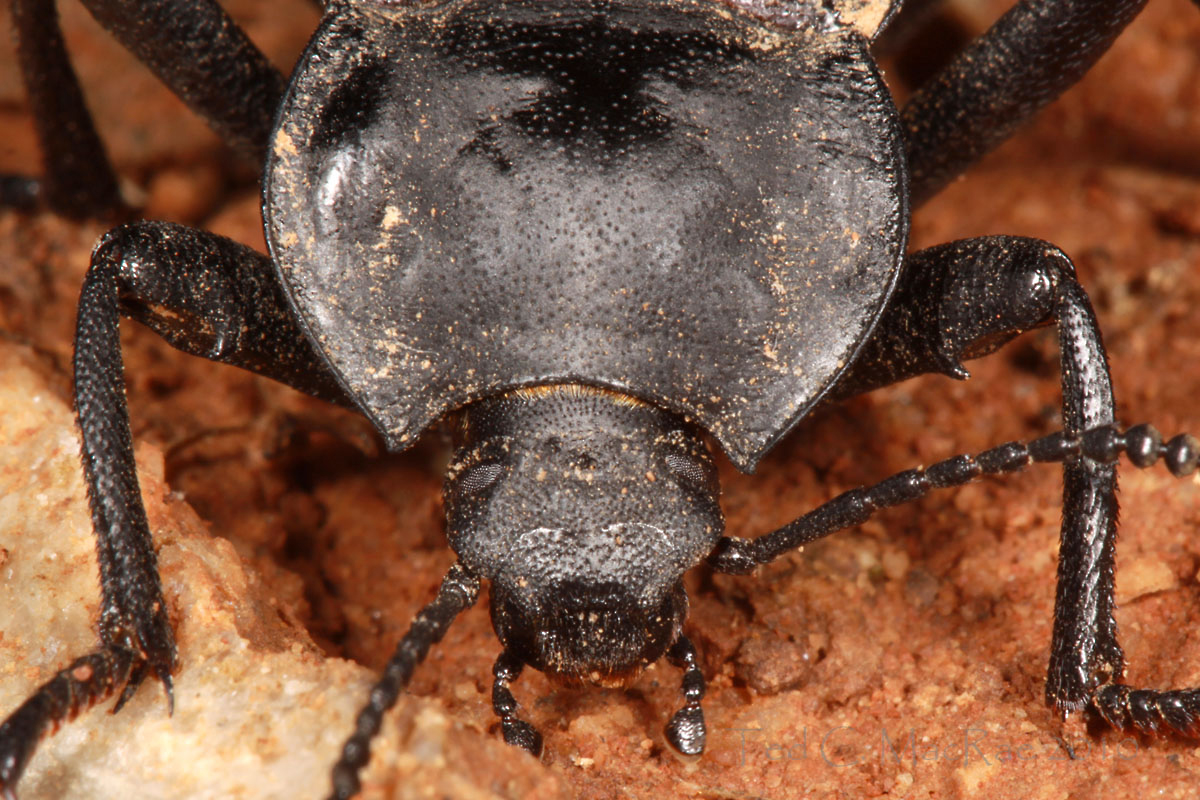
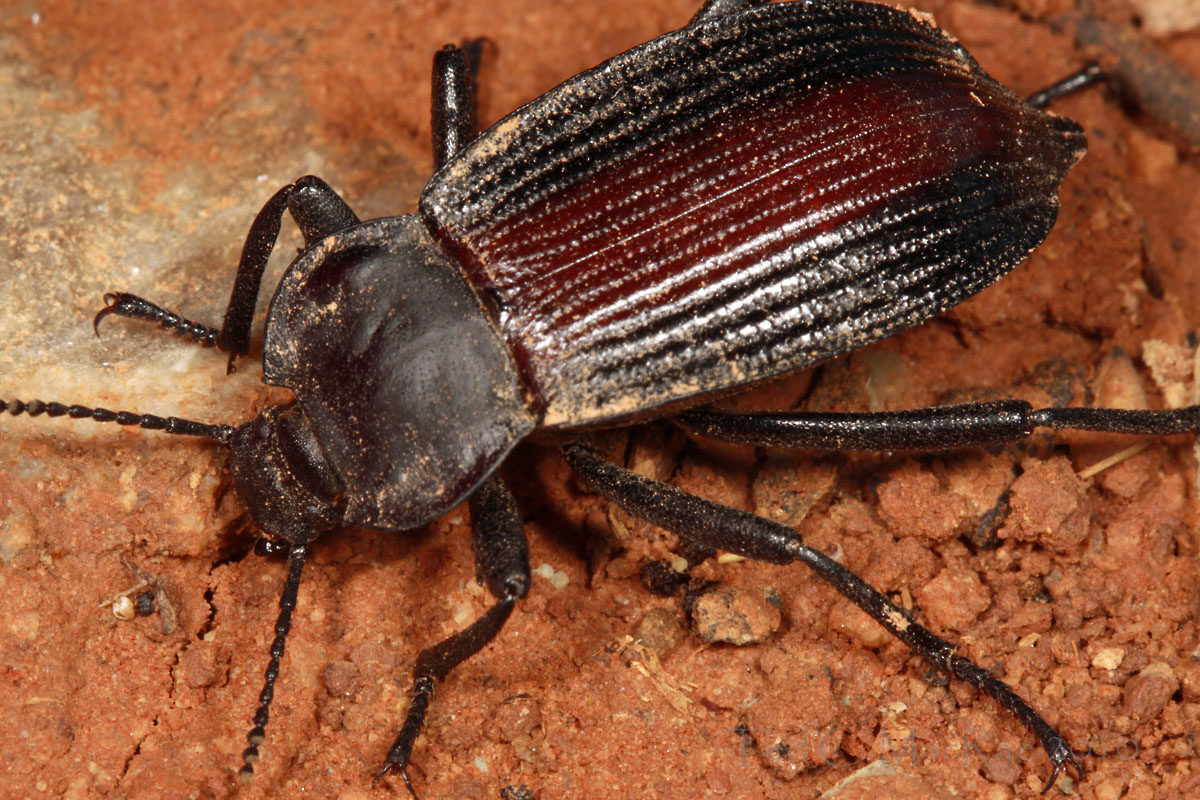
Of course, that individual turned out not to be E. suturalis, but the closely related species E. hispilabris, a fact that I did not realize until several days later as I was examining the photographs more closely. Fortunately, I happened to bring home with me a live individual of what truly represents E. suturalis, which I show in these photographs.  I’m not sure exactly why I brought a live one home with me – I’ve done more and more of this in recent years, mostly just to observe them and see what they do.²  I think in this case, I was intrigued by the possible mimetic association between this species and A. cylindriformis and wanted an individual for comparison with the several live A. cylindriformis individuals that I also brought back with me.

² The singular focus on collecting “specimens” that I had during my younger years seems to be giving way to a desire to know more about species as living entities and not just their external morphology.

Unlike E. hispilabris (my identification of which I only consider tentative), there can be little doubt that the individual in these photographs represents E. suturalis.  No other clown beetle in the Great Plains exhibits the sharply laterally carinate elytra and broadly explanate (spread outward flatly) pronotum (Bernett 2008).  The reddish-brown sutural stripe of the distinctly flattened elytra is also commonly seen in this species, although occasional individuals of a few other clown beetle species exhibit the stripe as well (including E. hispilabris, which likely was the reason I assumed it represented E. suturalis).  All of the characters mentioned above can be seen in the photographs shown here.  However, I nevertheless find the photos rather unsatisfying.  If you think you know why, feel free to comment, otherwise you can wait for the “better” photos…

Photo Details: Canon 50D w/ 100mm macro lens (ISO 100, 1/250 sec, f/18), Canon MT-24EX flash w/ Sto-Fen diffusers. Typical post-processing (levels, minor cropping, unsharp mask).

REFERENCES:

Bernett, A. 2008. The genus Eleodes Eschscholtz (Coleoptera: Tenebrionidae) of eastern Colorado. Journal of the Kansas Entomological Society 81(4):377–391.

Wrigley, R. A.  2008. Insect collecting in Mid-western USA, July 2007.  The Entomological Society of Manitoba Newsletter 35(2):5–9.

Copyright © Ted C. MacRae 2010

Lens and lighting comparisons

I’ve had my macrophotography rig for one year and a summer now, and while I still hesitate to regard myself a bona fide insect macrophotographer, I’ve learned a lot, feel I’m on the right track, and have had immeasurable fun in the process. I’m a tactile learner – i.e., I do best just trying different things for myself and seeing the results. The photos I show here are some “comparison” shots that I did during my recent giant desert centipede white box photo shoot.

For my photography, I use two macro lenses, both Canon, with almost equal frequency: the 100mm lens (up to 1X), and the MP-E 65mm lens (1X to 5X).  Although the choice is clear if I am much above or below 1X, I find that a large part of my shooting is right around the 1X level.  I’ve often debated which lens I should use in such situations – the longer working distance of the 100mm lens makes it easier to use in the field and less likely to spook the insects I am photographing, but lighting is also more problematic since the flash units are farther away from the subject.  One thing I hadn’t thought about, however, is the possibility of differences in image quality between the two lens (all other things being equal).  The white box session gave me an opportunity to look at this, since the use of indirect flash largely eliminates subject-to-flash distance as a variable.  The two shots below show 1X shots of the centipede – one taken with the 100mm lens and the other with the 65mm lens.  The photos have not been post-processed at all (except size reduction for web posting) to give the truest comparison possible – normally I would do some levels adjustment and unsharp mask (and for these, clone out that annoying blue fiber that ended up on its head!).

Canon 100mm macro lens @ 1X

Canon 65mm macro lens @ 1X

I think one can easily see how much more detail is captured by the 65mm lens (click on each for a larger version, as always), even despite its more limited depth of field (f/14 for the 65mm versus f/22 for the 100mm). This makes me re-think my strategy of using the 100mm when I can and switching to the 65mm only when I have to. In fact, I’ve occasionally opted to add extension tubes to the 100mm when I needed just a bit more magnification, but these photos make me think I should use the 65mm when I can and reserve the 100mm just for sub-1X shooting.

Both photos in the second comparison were shot using the 65mm at f/13, the only difference being the use of indirect flash in one photo and direct flash in the other. I’m not quite sure what to make of this – the direct flash photo is better lit and shows more detail, but this could be an artifact of insufficient flash unit power in the indirect photo. I probably should have done this comparison (or both, for that matter) using E-TTL rather than manual mode on the flash unit (and I may have to do that).

Canon 65mm macro lens, indirect flash

Canon 65mm macro lens, direct flash

Anyway, nothing earth-shattering here, and I may just be figuring out what others have learned long ago. Although I prefer the field for photography, I’m finding the white box – or at least a controlled, indoor environment – valuable for this type of experimentation.

Copyright © Ted C. MacRae 2010

New blogs of note

Every now and then, I like to feature some of the more interesting blogs that I’ve encountered recently. This update features six blogs – five dealing with entomology and one dealing with herpetology.


Aphonopelma: Tarantulas of the United States

© Kory Roberts

Aphonopelma: Tarantulas of the United States is a relatively new blog by Michael D. Warriner. With only a single U.S. genus (Aphonoplema), this may seem a rather narrow scope for a blog.  However, as Michael points out, research on ecology, conservation, and taxonomy of U.S. tarantulas has been surprisingly limited.  Their taxonomy, in particular, has been quite problematic, making accurate species identifications almost impossible.  Michael has begun summarizing known distributional information for states from which tarantulas are known (Missouri south to Louisiana and west to California) and providing detailed discussions for selected species with an eye towards enabling better conservation efforts for this neglected group of spiders.

Nature Closeups

© Troy Bartlett

Nature Closeups is the new blog by insect photographer extarordinaire and BugGuide (“a community for fellow naturalists devoted specifically to arthropods”) founder Troy Bartlett.  Featuring stunning photographs of mostly insects from his home near Atlanta, Georgia and his frequent trips to Brazil, Troy often adds interesting details about the natural history behind the photo.  As Troy explains, photography is “more a means than an end. Looking over the photographs afterwards and researching the things I’ve found is even more rewarding.”  Those with a lot of confidence in their insect identification skills may wish to try their hand at Troy’s occasional identification challenges (prepare to be humbled!).

Up Close With Nature

© Kurt (a.k.a. orionmystery)

Up Close with Nature by Kurt (a.k.a. orionmystery) is one of my favorite insect macrophotography blogs.  Kurt lives in Kuala Lumpur, Malaysia, giving him access to an insect fauna that is extraordinary in both its diversity and beauty.  Kurt uses the stunning insects of this rich fauna to share with readers his excellent tips and techniques for insect macrophotography.  His latest post features one of the best explanations I have seen on the use of Flash Exposure Compensation in Macro Photography, and previous posts have given me some great ideas on diffusers and the use of backgrounds to optimize flash lighting.  If you’re interested in the science of insect macrophotography, you will enjoy this blog.

Living With Insects

© Jonathan Neal

Living With Insects is the new blog by Jonathan Neal, Associate Professor of Entomology at Purdue University and author of the textbook, Living With Insects (2010).  Jonathan is interested in exploring the intersections of people and insects, and though he just began blogging a month ago he has already covered such topics as the evolution of insect flight, the consequences of virus infection in domestic cricket colonies, insects and burial practices, raising monarchs, insect cuticle, and the importance of insect museums.  It’s a daily dose of erudition!

6legs2many

© Alison Bockoven

6legs2many is written by Alison Bockoven, an entomology graduate student at Texas A&M University.  While her research focuses on genetic variation in the foraging behavior of the red imported fire ant, Alison is also having fun discovering the broader field of entomology.  Her enthusiasm is palpable as she features some of the insects that she has encountered and the techniques used for their collection and curation.  Her latest post covers the Embioptera, or webspinners – a group that I, after nearly three decades as a practicing entomologist, still have not encountered.  By the way, the title of the blog is derived from this humorous quip by Joseph W. Krutch:

Two-legged creatures we are supposed to love as we love ourselves.  The four-legged, also, can come to seem pretty important.  But six legs are too many from the human standpoint.

Field Notes

© Bryan D. Hughes

Although I am a devout entomologist, I do enjoy a good herp blog, and Field Notes by Bryan D. Hughes is one of the best herp blogs that I’ve seen.  Focusing on Arizona’s venomous snakes, Bryan provides stunning photographs of these striking animals (heh heh… get it?) and other assorted reptiles and amphibians from that unique fauna.  As Bryan explains, “I like spending my Saturday nights in hot cars on dirt roads in the middle of nowhere, being attacked from all sides by mosquitoes while searching for deadly snakes.”  His dedication to these oft-misunderstood animals is clear by his role as a volunteer for snake relocation calls and his hope that his website will help local homeowners to become interested in native wildlife rather than killing it.

Copyright © Ted C. MacRae 2010

Rearing the Prairie Tiger Beetle (Cicindela obsoleta vulturina)

A Prairie Tiger Beetle larva peers up from its burrow in rocky soil of a dolomite glade in the White River Hills of southwestern Missouri. The head of this 3rd-instar larvae is about the size of a pencil eraser.

I had so looked forward to the long Memorial Day weekend collecting trip – time of season and the weather were perfect, and it had been several years since I’d made a late spring swing through the woodlands, glades, and prairies of western Missouri. But after two fruitless days of searching for nearly non-existent beetles at Ha Ha Tonka State Park, Lichen Glade Natural Area, and Penn-Sylvania Prairie, I was faced with a choice: return home disappointed or try something completely different in an attempt to salvage the weekend.  I chose the latter.
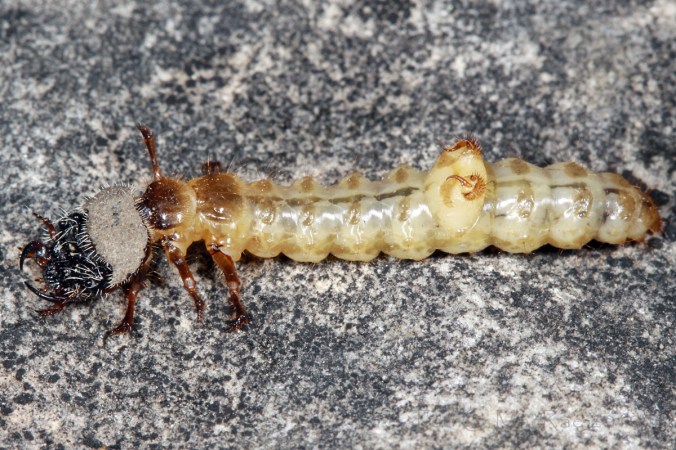
A 3rd-instar Prairie Tiger Beetle larva extracted from its burrow. Total length is ~30mm.

What could be more different than the White River Hills of southwestern Missouri?  The deeply dissected dolomite bedrocks supporting xeric, calcareous glades, dry woodlands and riparian watercourses couldn’t be more different than the gentle, acidic sandstone terrain of those more northerly locations.  Its hilltop glades (“balds”) are the most extensive such system in Missouri, and I’ve already featured several charismatic insects from my travels last summer to this part of Missouri, including Megaphasma denticrus (North America’s longest insect), Microstylus morosum (North America’s largest robber fly), and Plinthocoelium suaveolens (North America’s most beautiful longhorned beetle).  One insect that I also wanted to feature from that area but that eluded me during last fall’s cold and wet collecting trip is the Prairie Tiger Beetle – Cicindela obsoleta vulturina.  This impressive species is highly localized in Missouri, occurring no further north and east than the White River Hills.  Moreover, the populations in this part of the state and across the border in Arkansas are highly disjunct from the species’ main population in the southern Great Plains.  Like a number of other plants and animals, the Missouri/Arkansas disjunct may represent a relict from the hypsithermal maximum of several thousand years ago, finding refuge in these rocky hills after cooling temperatures and increasing moisture caused the grasslands of today’s west to retreat from their former eastern extent.
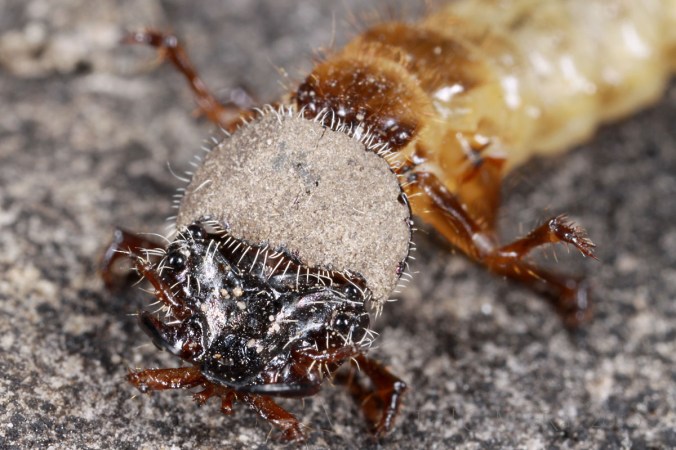
The ''business end'' - four eyes and two enormous mandibles. The metallic purple pronotum is covered with soil.

Despite its restricted occurrence in Missouri, the species is apparently secure and occurs commonly on the many dolomite glades that are found in the area. I have records from a number of localities in the White River Hills, but the best populations I’ve seen occur at Blackjack Knob in Taney County.  Of course, I would have absolutely no chance of seeing the adults during this Memorial Day weekend – adults don’t come out until late summer rains trigger emergence in late August and early September.  It was not, however, the adults that I was after, for I had seen larvae of what I believed must be this species in their burrows during one of my visits to this location last summer.  Although I have collected several other species of tiger beetles in the area, I reasoned these larvae must represent C. obsoleta vulturina due to their rather large size (this species is one of the largest in the genus in North America) and because they lacked the white bordering of the pronotum typical of species in the genus Tetracha – the only other genus occurring in Missouri with species as large as this.  I had tried to extract some of the larvae for an attempt at rearing, but neither of the two techniques I tried (“fishing” and “jabbing”) had worked.  Fishing involves inserting a thin grass stem into the burrow and yanking out the larva when it bites the stem; however, I found the burrows of this species to angle and turn due to the rocky soil rather than go straight down for a clear shot.  Jabbing involves placing the tip of a knife at a 45° angle about 1″ from the edge of an active burrow, waiting for the larva to return to the top of the burrow, and jabbing the knife into the soil to block the larva’s retreat – a quick flip of the knife exposes the larvae, but in this case jabbing did not work because I always ended up hitting a rock and missing the larva before it ducked back down in the burrow.

Hooks on the abdominal hump of a 3rd-instar Prairie Tiger Beetle larva prevent it from being pulled out of its burrow by struggling prey.

I returned to the site where I had seen larval burrows last year and once again found them.  I tried fishing a few, though I knew this would be futile, then jabbing – again with no success, and then had an idea.  I went to the truck and retrieved a small trowel that I use to dig soil for filling rearing containers, then found an active burrow (larva sitting at the top, though dropping upon my approach) and got in position using the trowel as I would the knife.  I held the trowel firmly with both hands and placed my body behind it so I could use all my weight to force the trowel into the soil and past the rocks when the larva returned to the top of the burrow – worked like a charm!  After taking photographs of the first larva that I successfully extracted, I set to the business of collecting nearly a dozen more over the next couple of hours.  I then filled several containers with soil (using rocks in the larger one to create “compartments” to keep the larvae separated), poked “starter burrows” in the soil, and one at a time placed the extracted larvae in the burrows and sealed them in by pushing/sliding my finger over the hole.  I’ve found this is necessary to prevent the larvae from crawling right back out and digging a new burrow somewhere else – not a problem if there is only one larva in the container (although I prefer they use the starter burrows that I place at the edge of the container so that I can see them in their burrows to help keep track of what they are doing); however, in containers with more than one larva they will often encounter each other and fight, resulting in some mortality.  Larvae sealed in starter burrows eventually dig it open again but generally continue excavating it for their new burrow.  One larva was not placed in a rearing container – it was kept in a vial for the trip home, where it was dispatched and preserved in alcohol as a larval voucher specimen.

This male adult Prairie Tiger Beetle (emerged 10 weeks after collecting the larva) shows the dark olive-green coloration and semi-complete markings typical of the MO/AR disjunct population.

After returning to St. Louis, I placed the rearing containers in a growth chamber and monitored larval activity 2-3 times per week.  Whenever a burrow was opened, I would place a fall armyworm, corn earworm, or tobacco hornworm larva in the burrow and seal it shut.  Some burrows would be re-opened almost immediately and, thus, fed again, while others stayed sealed for longer periods of time.  Tap water was added to the container whenever the soil surface became quite dry – generally once per week, and by late July nearly all of the burrows were sealed and inactive. If these larvae did, indeed, represent C. obsoleta vulturina, then this would be the time they would be pupating.  On August 15 I had my answer, when I checked the containers to find the above male had emerged, and the next day two more adults emerged as well (including the female shown below).
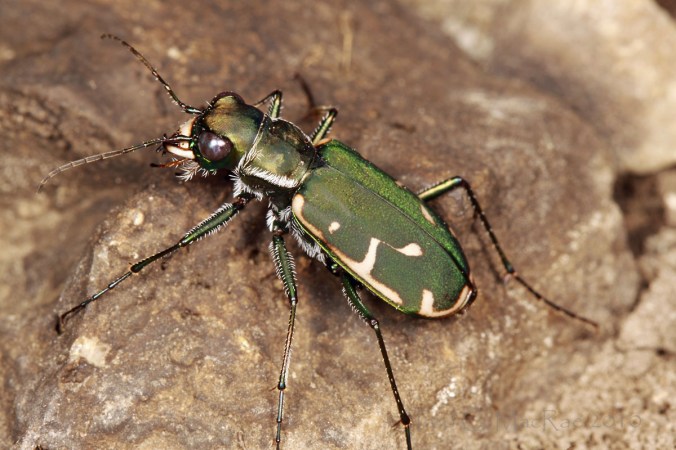
This female adult Prairie Tiger Beetle emerged the same day as the male and shows slightly brighter green coloration.

I put the emerged adults together in the largest rearing container, and within minutes the male and one of the females were coupled. I’ve kept them fed with small caterpillars and rootworm larvae, and numerous oviposition holes were eventually observed on the surface of the soil in the container. In a few weeks, I’ll place this container in a cold incubator for the winter and then watch next spring to see if larvae hatch and begin forming burrows. If so, it will be a chance to see if I can rear the species completely from egg to adult and preserve examples of the younger larval instars.

Photo Details: Canon 50D (ISO 100, 1/250 sec) w/ Canon MT-24EX flash w/ Sto-Fen + GFPuffer diffusers. Typical post-processing (levels, minor cropping, unsharp mask).
Photos 1-2, 5-6: 100mm macro lens (f/14-f/16).
Photos 3-4: 65mm MP-E 1-5X macro lens (f/14).

Edit 9/10/10, 6:30 pm: I checked the terrarium today and discovered 24 brand new 1st-instar larval burrows dotting the soil surface.  They are quite large already, almost as big as 3rd-instar burrows of the diminutive Cylindera celeripes.  I guess I’m surprised to see larvae hatching already, as I expected they would overwinter as eggs and hatch in the spring.  Now that I think about it, however, hatching in the fall makes sense, as this gives them an opportunity to feed some before winter sets in and also allows them to burrow for more protection from freezing temperatures.  I’ve dumped a bunch of 2nd-3rd instar Lygus nymphs into the terrarium for their first meal.

Copyright © Ted C. MacRae 2010
North America’s largest centipede

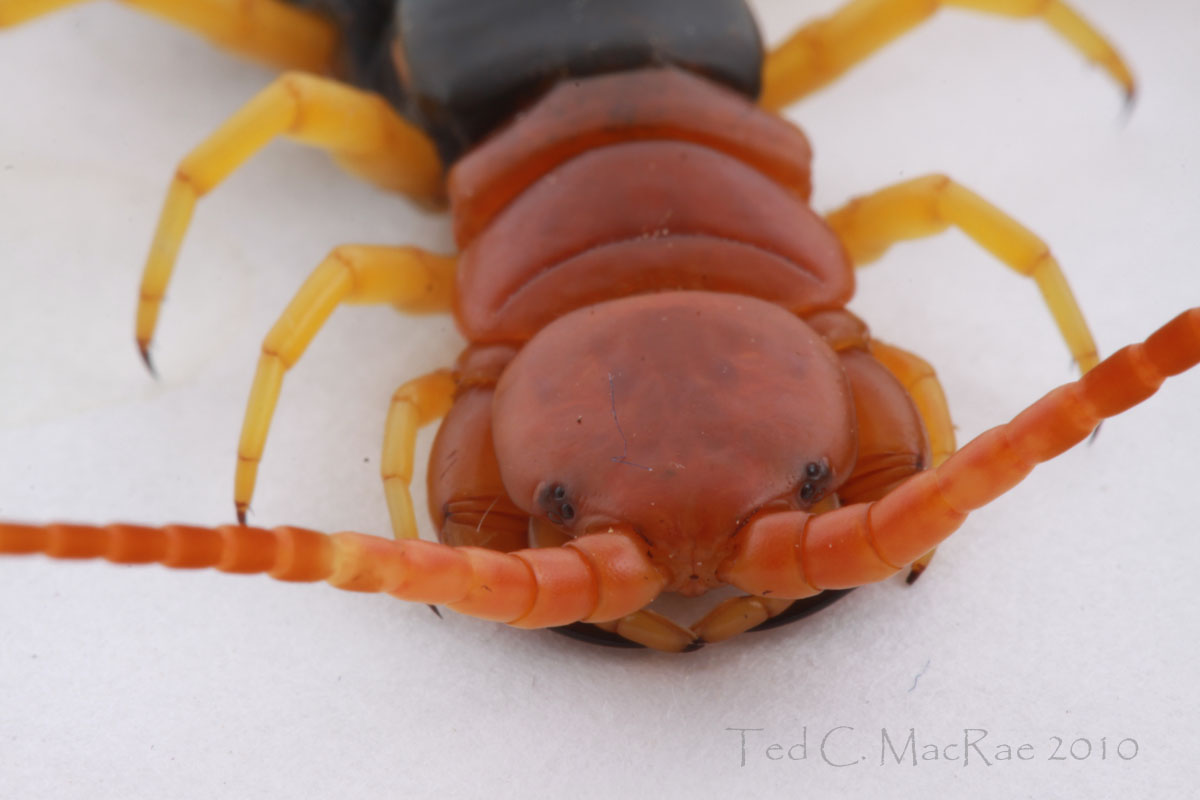
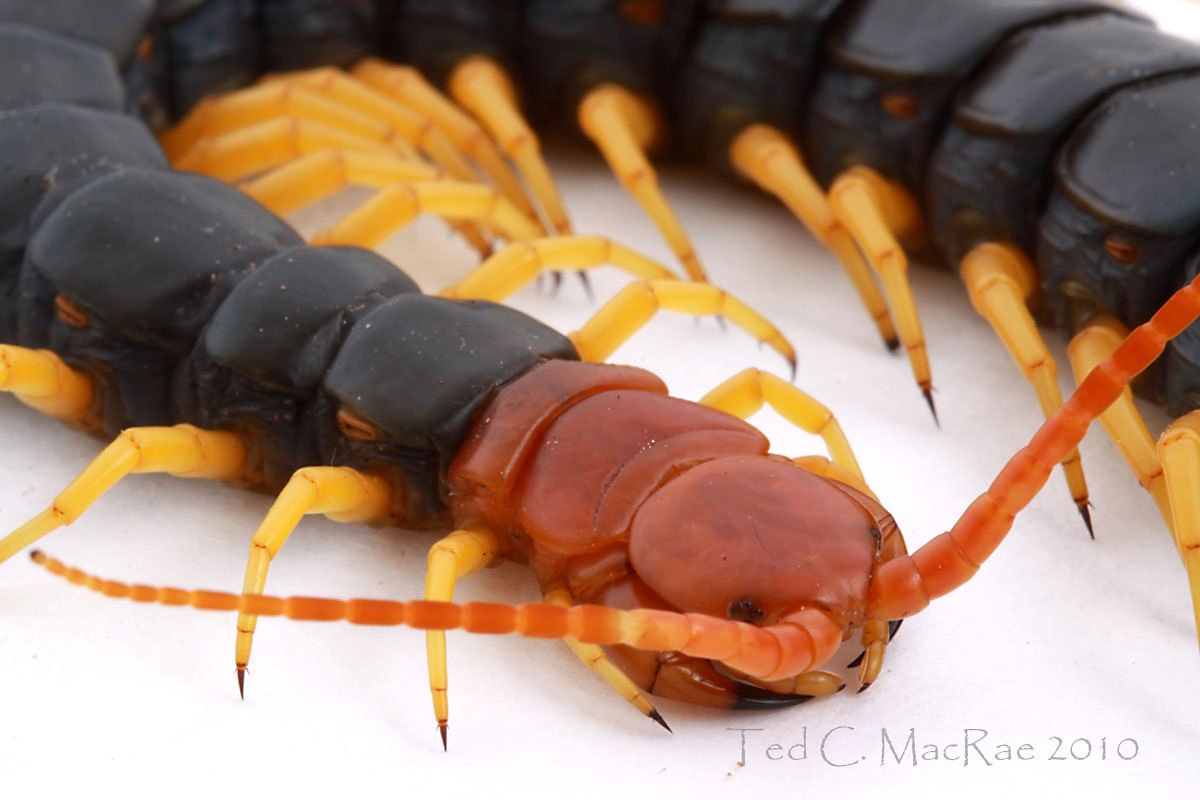
As I prowled the remote mixed-grass prairie of northwestern Oklahoma in the middle of the night, an enormous, serpentine figure emerged frenetically from a clump of grass and clambered up the banks of the draw I was exploring.  Although I was still hoping for my first glimpse of the Great Plains giant tiger beetle, I was keeping a watchful eye out for anything that moved within the illuminated tunnel of my headlamp due to the potential for encountering prairie rattlesnakes (perhaps the most aggressive of North America’s species).  This was clearly no snake, but at up to 8″, Scolopendra heros (giant desert centipede) easily matches some smaller snakes in length.  Also called the giant Sonoran centipede and the giant North American centipede, it is North America’s largest representative of this class of arthropods (although consider its South American relative, S. gigantea – the Peruvian or Amazonian giant centipede, whose lengths of up to 12″ make it the largest centipede in the world).

Although I had never before seen this species alive, I recognized it instantly for what it was.  Many years ago I was scouting the extreme southwest corner of Missouri for stands of soapberry (Sapindus saponaria), a small tree that just sneaks inside Missouri at the northeasternmost limit of its distribution, in hopes of finding dead branches that might be infested with jewel beetles normally found in Texas.  I had heard that these centipedes also reach their northeastern extent in southwestern Missouri, and just a few miles from the Arkansas and Oklahoma borders I found a road-killed specimen.  I stood there dejected looking at it – too flattened to even try to salvage for the record.

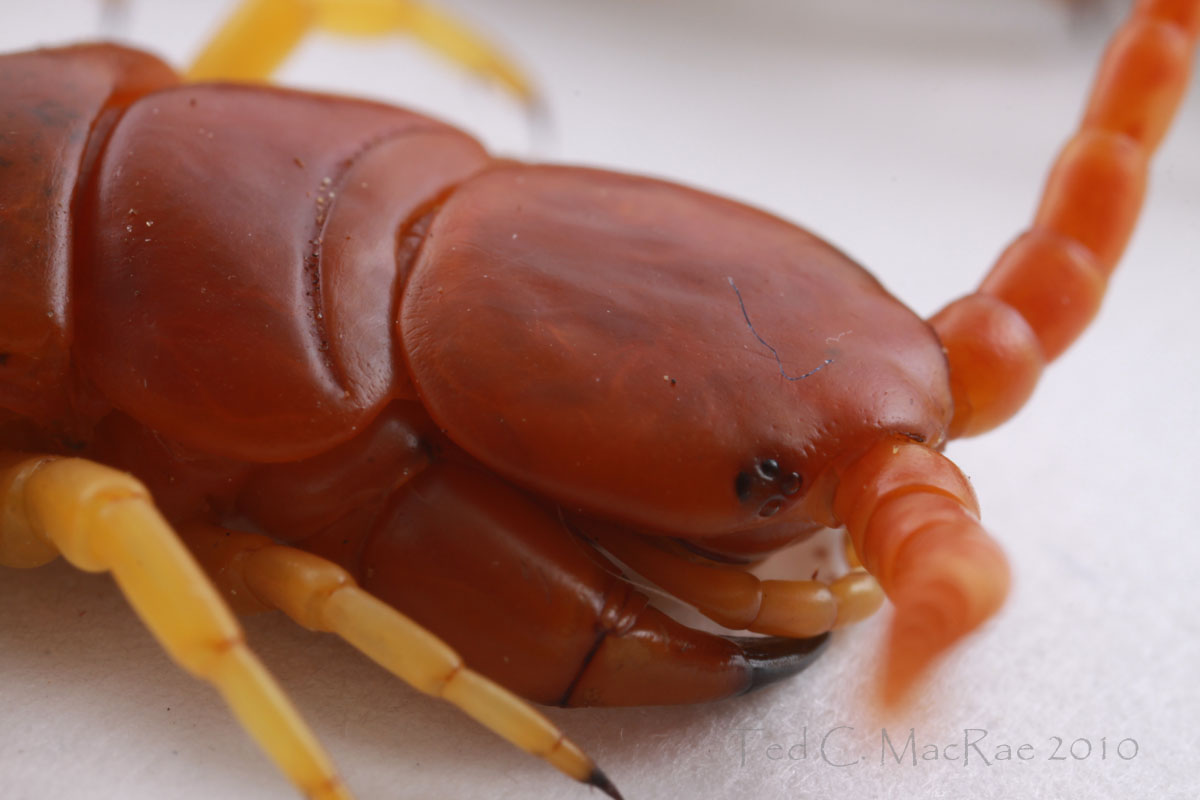
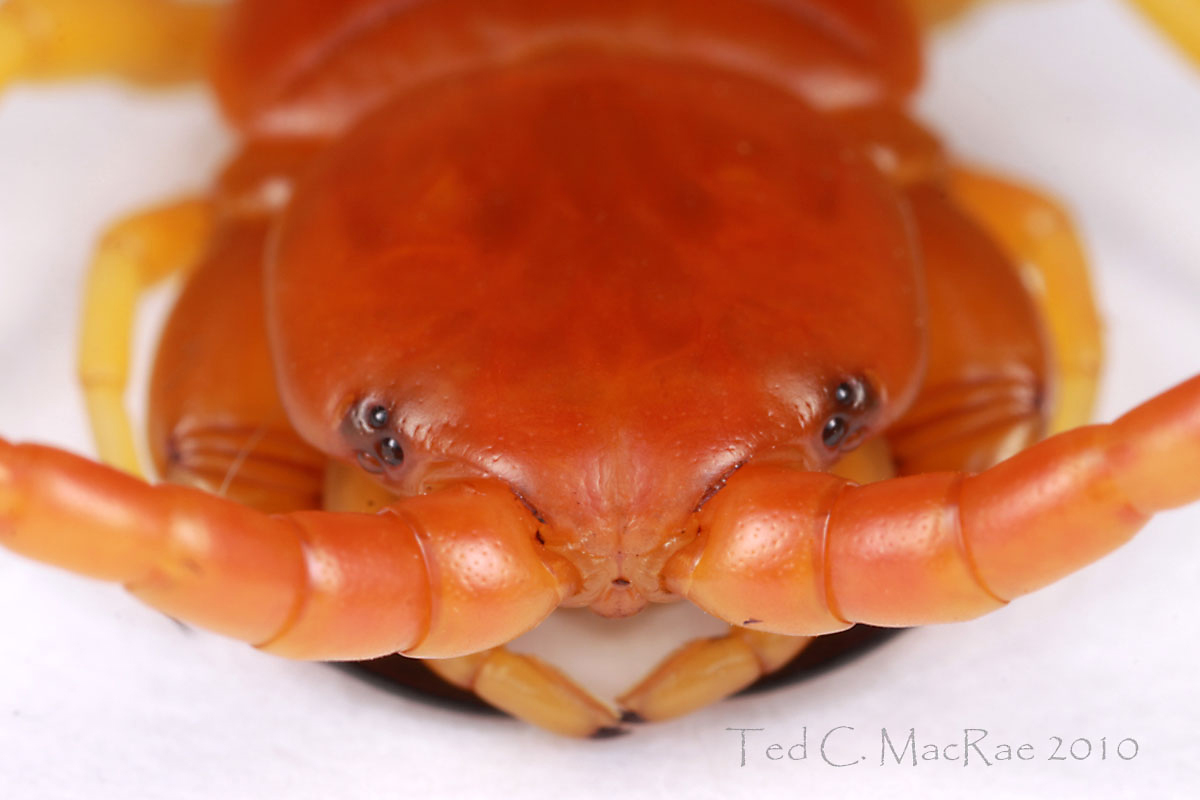
Centipedes, of course, comprise the class Chilopoda, which is divided into four orders.  The giant centipedes (21 species native to North America) are placed in the order Scolopendromorpha, distinguished by having 21 or 23 pairs of legs and (usually) four small, individual ocelli on each side of the head (best seen in bottom photo).  The three other orders of centipedes either lack eyes (Geophilomorpha) or possess compound eyes (Scutigeromorpha and Lithobiomorpha).  These latter two orders also have only 15 pairs of legs (shouldn’t they thus be called “quindecipedes”?).  Among the scolopendromorphs, S. heros is easily distinguished by its very large size and distinctive coloration.  This coloration varies greatly across its range, resulting in the designation of three (likely taxonomically meaningless) subspecies.  This individual would be considered S. h. castaneiceps (red-headed centipede) due to its black trunk with the head and first few trunk segments red and the legs yellow.  As we have noted before, such striking coloration of black and yellow or red nearly always indicates an aposematic or warning function for a species possessing effective antipredatory capabilities – in this case a toxic and very painful bite.

The individual in these photographs is not the first one I saw that night, but the second.  I had no container on hand to hold the first one and not even any forceps with which to handle it – I had to watch in frustration as it clambered up the side of the draw and disappear into the darkness of the night.  Only after I returned to the truck to retrieve a small, plastic terrarium (to fill with dirt for the giant tiger beetles that I now possessed) did I luck into seeing a second individual, which I coaxed carefully into the container.  It almost escaped me yet again – I left the container on the kitchen table when I returned home, only to find the container knocked onto the floor the next morning and the lid askew.  I figured the centipede was long gone and hoped that whichever of our three cats that knocked the container off the table didn’t experience its painful bite.  That evening, I noticed all three cats sitting in a semi-circle, staring at a paper shredder kept up against the wall in the kitchen.  I knew immediately what had so captured their interest and peeked behind the shredder to see the centipede pressed up against the wall. The centipede had lost one of its terminal legs but seemed otherwise none the worse for wear – its terrarium now sits safely in my cat-free office, and every few days it enjoys a nice, fat Manduca larva for lunch.

There are a number of online “fact sheets” on this species, mostly regarding care in captivity for this uncommon but desirable species.  I highly recommend this one by Jeffrey K. Barnes of the University of Arkansas for its comprehensiveness and science-focus.

Photo Details: Canon 50D (ISO 100, 1/250 sec) w/ Canon MT-24EX flash in white box.
Photos 1-2: Canon 100mm macro lens (f22), indirect flash.
Photo 3: Canon MP-E 65mm 1-5X macro lens (f/13), direct flash w/ Sto-Fen + GFPuffer diffusers.
Post-processing: levels, minor cropping, unsharp mask.

Copyright © Ted C. MacRae 2010

Flaming the debate

Eastern redcedar encroaching loess hilltop prairie, a critically imperiled natural community in Missouri.

ResearchBlogging.orgAs my interest in prairie insects has increased over the past few years, so has my interest in their conservation. Many insects are restricted to prairies through dependence upon prairie plants or their unique physical and trophic characteristics. Thus, preservation of not only prairie plants but their insect associates as well is a major goal of conservationists.  The task is daunting – for example only ~1% of tallgrass prairie remains in the central U.S., the rest long ago converted to agriculture or otherwise irreparably altered.  Prairies are dynamic natural communities that rely upon disturbance – this need to “disturb to preserve” creates an oxymoronic conundrum for restoration ecologists that is made even more difficult by the fragmented nature of today’s prairie landscape.  The situation here in Missouri is even more difficult, as nearly all of our grassland preserves (tallgrass prairie, sand prairie, loess hilltop prairie and glades) are exceedingly small and highly disjunct relicts not connected as parts of larger systems.

In recent years, prescribed burning has become the management tactic of choice for restoring and maintaining grassland preserves.  There are good reasons for this – not only are increased floral diversity and reversal of woody encroachment well-documented responses to fire, but burning is also highly cost-effective (a critical consideration in today’s climate of shrinking public budgets).  As the use of prescribed burning on grassland preserves has become widely adopted, however, concerns about the impacts of fire on invertebrate populations have been raised.  The subject is now an area of intense research, but studies are hampered by the limited availability of large, long-unburned tracts of native prairie, and no scientific consensus has yet emerged.  Regrettably, the debate has polarized into “pro-” and “anti-fire” camps that seem unable to communicate with each other constructively.  This is unfortunate, since both ends of the spectrum offer ideas that could be used to achieve the goal of preserving prairie remnants while mitigating concerns about invertebrate impacts.  I have previously expressed my own views on the subject, a position that I suspect some might mistakenly characterize as “anti-fire.”  While I do support the use of prescribed burning, I do not support its use with no consideration of other prairie management strategies such as haying and light grazing (not to be confused with the heavy, abusive, unmanaged kind of grazing that has degraded so much of our landscape).  All of these tools (as well as parcels that receive no management at all) have potential value in prairie management and should be considered.

Those interested in potential fire impacts on prairie invertebrates will be interested in this latest salvo by Scott Swengel and colleagues, who used metadata analysis to correlate declines of prairie butterflies in the Midwest with the widespread adoption of prescribed burning as a management tactic.  The authors present convincing evidence that tallgrass prairie butterfly populations are not co-evolved with fire regimes currently used for prairie management, although their conclusions will no doubt be challenged.  Nevertheless, until a firmer scientific consensus can be achieved, prudence should dictate some measure of caution in the use of fire as an exclusive prairie management tactic.

Dear Colleagues:

We are pleased to announce a new article by Scott Swengel, Dennis Schlicht, Frank Olsen, and Ann Swengel, based on long-term data that has just been published online,  Declines of prairie butterflies in the midwestern USA.  This paper is available free from Springer Open Choice at http://www.springerlink.com/content/l732444592662434/fulltext.pdf or by going to the Journal of  Insect Conservation Online First section and scanning through the articles in ascending number order until getting to articles posted 13 August 2010.

The trends of tallgrass prairie skippers shown here, although disastrous, underestimate the decline in Iowa and Minnesota for several reasons:

  1. In statistical testing we only include sites with adequate data for testing, which eliminates many sites from inclusion that had 100% declines of a specialist we know about.
  2. Nearly all sites with long time series were the top sites to begin with, which are likely to take a longer time to show large declines than medium or low-quality sites.
  3. Recent government sponsored surveys not included here show another round of huge declines for Poweshiek Skipperling in Iowa and Minnesota.
  4. Some species went undetectable by the late 1980s and early 1990s, so didn’t register as a presence when the study began.  Hence, they cannot show a decline since then.

Some good news is that conservation based on existing knowledge of specialists’ management responses gets far better results (as shown by Regal Fritillaries and Karner Blues in Wisconsin than typical management.  So declines like this are not inevitable.

The Ecological Interpretations and Conservation Conclusion section of Discussion contain some of our new insights explaining the observed about land-use effects on prairies and butterflies.

Scott Swengel

My thanks to Scott Swengel for giving me permission to reprint his introduction.

REFERENCE:

Swengel, S. R., D. Schlicht, F. Olsen & A. B. Swengel. 2010. Declines of prairie butterflies in the midwestern USA Journal of Insect Conservation: DOI 10.1007/s10841-010-9323-1.

Copyright © Ted C. MacRae 2010

Friday Flower – green fringed orchid

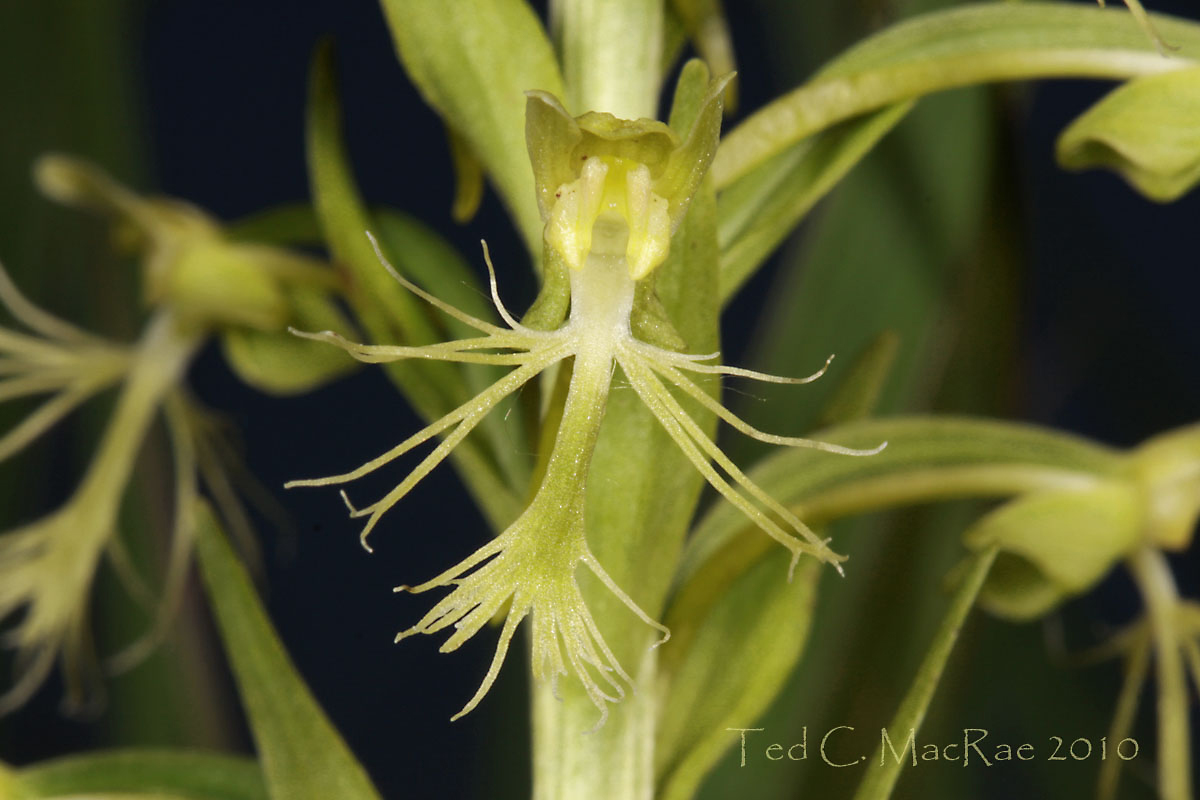
I may have been the “Beetle Group” leader for last May’s BioBlitz at Penn-Sylvania Prairie, a 160-acre tract of native tallgrass prairie in southwestern Missouri owned by the Missouri Prairie Foundation.  However, it was a plant – specifically the green fringed orchid  (Platanthera lacera) – that would prove be the highlight of my visit.  I’ve already lamented the paucity of beetles that I found at the prairie and the possible reasons for such.  It’s a shame, because to my knowledge the BioBlitz was the first real attempt to begin documenting the diversity of beetles and other insects that inhabit the prairie.  This is in great contrast to the vascular plants, of which about 300 mostly native prairie species have already been recorded from the site in active survey efforts that began even before its acquisition.   It’s no coincidence that prairie plant diversity would be so high in this frequently burned prairie remnant while beetles and other insects would be rather hard to find, since vascular plant diversity is the primary – and often the only – metric used to assess the success of and optimal timing for prescribed burning in native prairie remnants.  Unfortunately, the response of invertebrates to fire-centric management techniques such as those used here have not been so well considered, with the apparent declines in their populations now fueling an increasingly acrimonious debate on the subject.  But I digress…

Also called ragged fringed orchid, this species typifies the rather striking appearance of the genus as a whole.  I’ve always been quite enamored with orchids (even possessing a small collection during my young adult days that I grew outside under shadecloth during summer and indoors under artificial light during winter) but have encountered only a small fraction of Missouri’s 33 native orchid species – mostly in the genus Spiranthes (e.g., Great Plains Ladies’-tresses).  Despite not having seen this genus prior to this day, I knew immediately what I had stumbled upon (at least at the generic level) as we scoured the prairie in our search for its meager scraps of beetle life.  While not listed as threatened or endangered in Missouri, it is still quite uncommon, with populations scattered across the Ozark and Ozark Border counties and occurring with greater frequency in these Osage Plains in a variety of open, acidic-soiled habitats (Summers 1981).  As is typical for species with green-white colored flowers, the blossoms emit fragrance at night and thus attract sphinx moths (family Sphingidae) and owlet moths (family Noctuidae) for pollination, including the hummingbird clearwing hawkmoth (Hemaris thysbe) (Luer 1975).  While our Midwestern populations are considered “spindly and unattractive” compared to the more luxuriantly-blossomed plants of New England and maritime Canada (Luer 1975), I consider this to be the most strikingly handsome orchid I’ve encountered to date.

Photo Details: Canon 50D (ISO 100, 1/250 sec) w/ 100mm macro lens @ f/10 (whole plant) or f/18 (flower close-up), Canon MT-24EX flash (manual, 1/4 ratio) w/ Sto-Fen diffusers. Typical post-processing includes levels adjustment, minor cropping, and/or unsharp mask.

REFERENCES:

Luer, C. A.  1975. The Native Orchids of the United States and Canada Excluding Florida.  The New York Botanical Garden, 361 pp. + 96 color plates.

Summers, B.  1981. Missouri Orchids.  Missouri Department of Conservation, Natural History Series No. 1, 92 pp.

Copyright © Ted C. MacRae 2010