Back to some hard-core, field natural history. Two years ago, on my virgin experience at collecting tiger beetles in Florida, I visited a spot called “Road to Nowhere”¹ at the suggestion of North American Tiger Beetle Master Dave Brzoska. He said as many as 6–10 species can be seen there if the season is right, although my early August timing might be a tad late. Despite having only a few hours from late afternoon to dusk to explore the area, I came close with the following five species: Cicindela trifasciata ascendens (Ascendent Tiger Beetle), Habroscelimorpha severa (Saltmarsh Tiger Beetle), Eunota togata togata (White-cloaked Tiger Beetle), Ellipsoptera marginata (Margined Tiger Beetle) and E. hamata lacerata (Gulf Beach Tiger Beetle) (see Tiger Beetles at Florida’s “Road to Nowhere”).
¹ For those of you who haven’t heard of the “Road to Nowhere,” it ranks as one of the top tiger beetle “hot spots” in the country (perhaps second only to Arizona’s famous Wilcox Playa). According to Doug Taron at Gossamer Tapestry, the site—an expansive coastal salt marsh and mud flat along the isolated central Gulf Coast of Florida—was built some decades ago at the behest of corrupt state officials as a landing strip for small airplanes running drugs into this country.
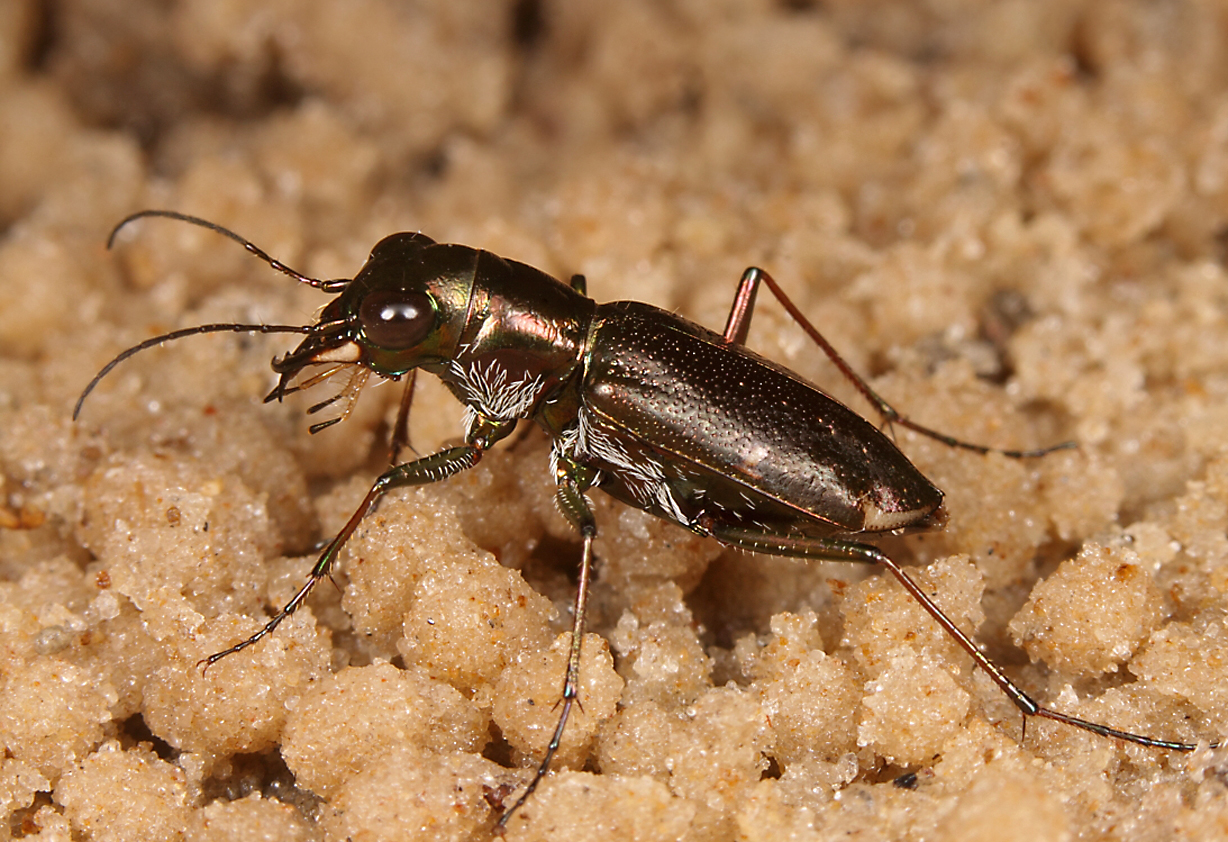
One species I did not see on that trip is Habroscelimorpha striga (Elusive Tiger Beetle). The common name is well deserved—the species is restricted to salt marshes, mud flats, and openings in coastal pine forest along the west and northeast coasts of Florida and South Carolina, and apparently nobody has ever seen it during the day (Pearson et al. 2006)! Despite this, the Road to Nowhere is one place where the species can be seen somewhat reliably through its attraction to ultraviolet “blacklights.” With this in mind, I began my 48-hour tiger beetle blitz during last August’s family vacation to Florida by timing my departure from St. Petersburg so that I arrived at the Road to Nowhere as dusk was falling—just in time to setup the lights, sit back with a beer, and wait for H. striga to cover the sheet! The plan had a few kinks—I got a little bit of a late start, so by the time I got to Steinhatchee it was already getting dark. Because of this, I missed one of the turns (my memory isn’t as good as it used to be) and got lost. By the time I finally got my bearings, it was pitch black as I drove the 11-mile length of that lonely road through sand scrub and coastal marsh to a point where the road just simply stops. Although the area is no longer used much for drug running, I still felt somewhat vulnerable as I setup the blacklight at the edge of the expansive salt mud flat. There was one additional kink—I had forgotten to bring my copy of Pearson et al. (2006), any North American tiger beetle aficionado’s “Bible.” Having only my memory of reading about the species to draw on, I hoped that I would recognize it if I saw it, or least recognize it as something different from the other species I expected to see there.

I’ve heard stories about the area being filled with tiger beetle collectors from all over the country with their blacklights and bucket traps, with someone yelling “striga!” every hour or so. However, I was the only person there that night. I hoped I wasn’t too late, as August is at the back end of the known adult activity period. Very quickly three other species, E. hamata lacerata, E. marginata and H. severa (the latter similar to H. striga, but much more abundant) began literally swarming all over the sheet and ground beneath. It was exciting at first, as I’d never encountered these (or any other tiger beetles) so abundantly at blacklights. In time, however, I satisfied my appetite for specimens and actually started becoming rather annoyed at their abundance—as if they might be “chasing away” the rare H. striga that was attracted to the light before I had a chance to see it.

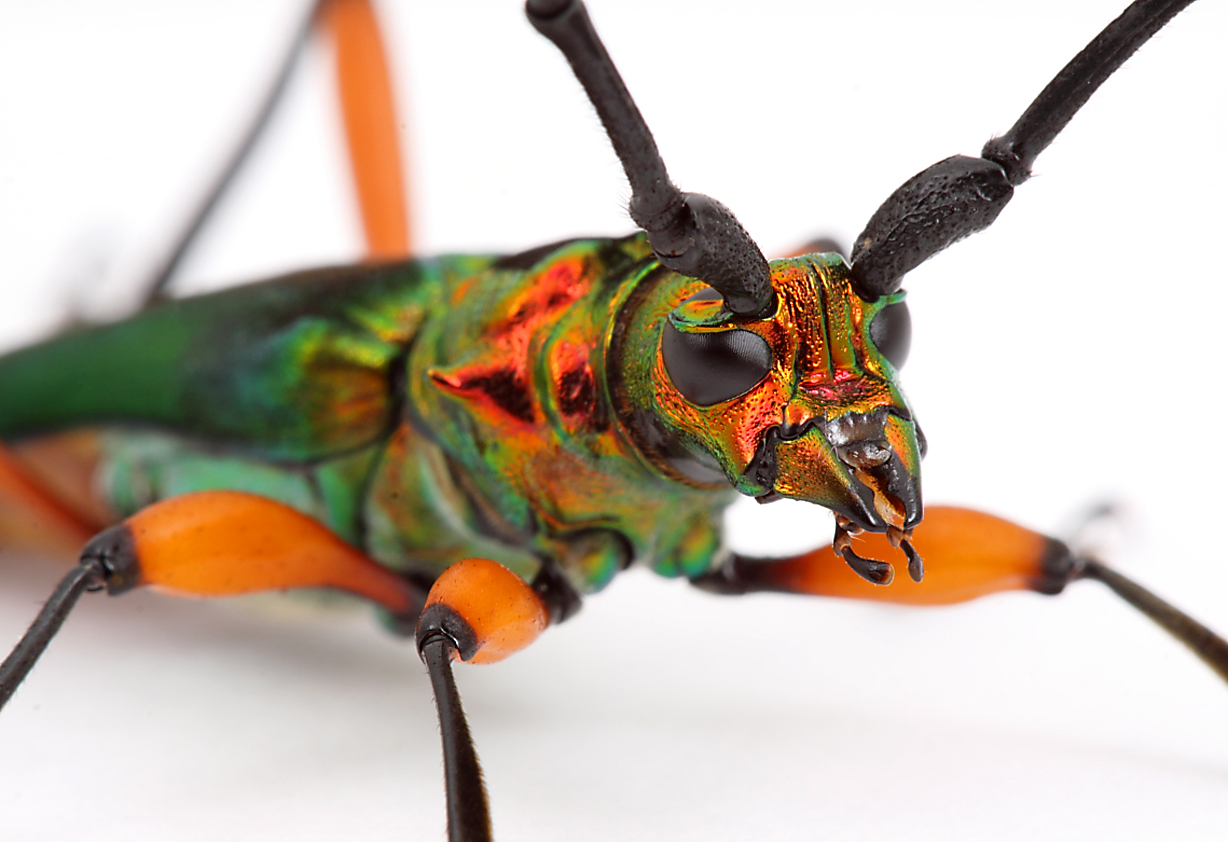
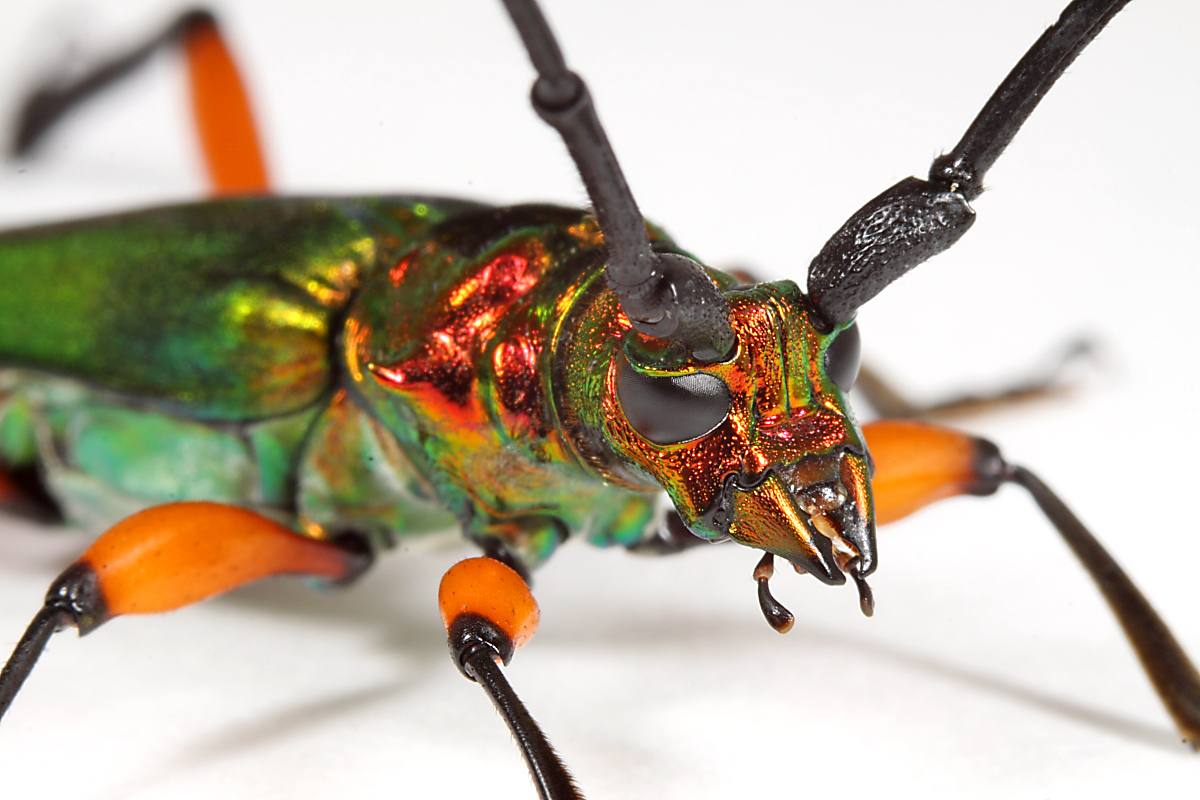
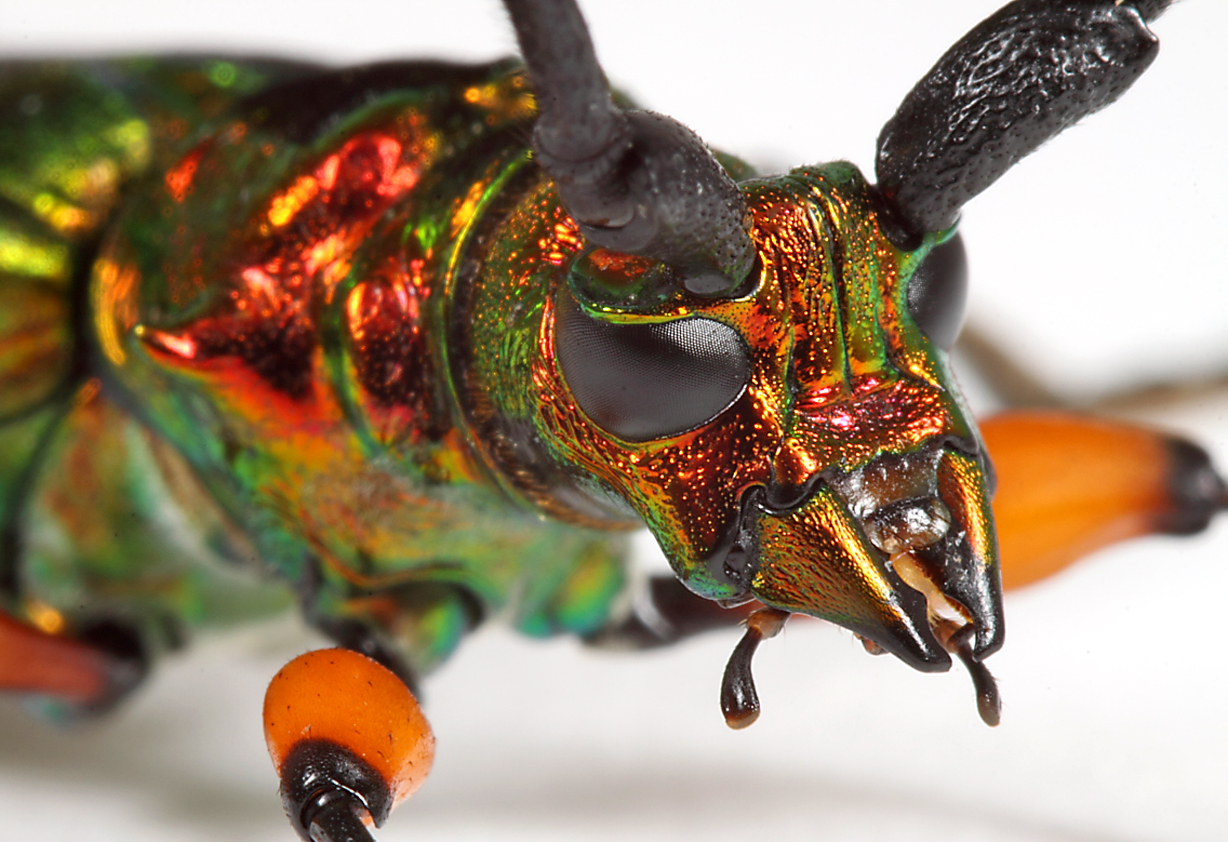
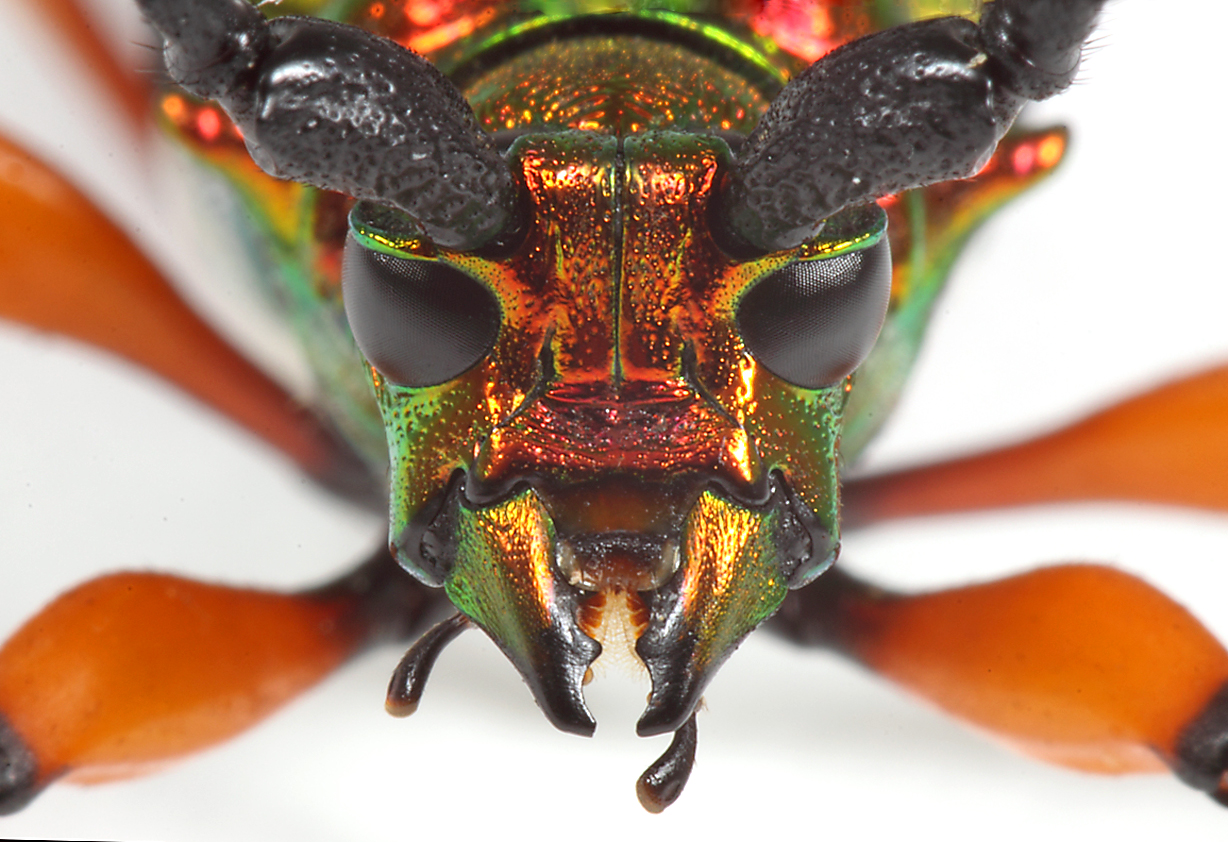
Eventually, however, it happened. I spotted a somewhat different looking tiger beetle, but instead of yelling “striga!” my reaction was “What is that?” It was dark(ish), and I noted a subsutural row of green punctures on each elytron—”Is that punctulata?” I picked it up and looked at it closely, still thinking maybe punctulata but not sure. It was shinier, and a little bigger, and I noted the presence of marginal white spots at the middle and rear of the elytra. “No, that’s not punctulata… Is it striga? It must be striga! Yeah, it’s striga!” I dug down into the deep recesses of my memory and recalled that H. striga, indeed, was a darkish species, although I could not recall anything about the row of punctures. I finally decided that it really couldn’t be anything else but H. striga, an ID arrived at by process of elimination rather than recognition. Looking back, I feel a little cheated—I never got my “striga!” moment, that instant of sudden jubilation. Instead, it was just a slow, creeping realization of what I had (listen to me—complaining about finding H. striga!).
I would actually find about a half dozen individuals of H. striga that night. The first one, per standard procedure, went live into a vial as a backup for studio photos if I didn’t manage to get any in the field. That proved unnecessary, however, as I was able to photograph the two subsequent individuals shown in this post. It was not just H. striga that kept me busy with the camera, but feeding, perching, and trophy-bearing individuals of E. hamata lacerata and some other species that I have still to discuss as well. It was non-stop action from the time I setup the lights, interrupted only briefly at one point as I nervously watched a set of car headlights approach from the distance, stop a few hundred yards up the road, and then slowly turn around and disappear. By the time I finally took a moment to look at my watch it was already 1 a.m.! Soaking wet from the nighttime humidity, dirty from laying on the salty, muddy ground, and exhausted from the 4 hour drive and non-stop action after my arrival, I finally packed up the lights and began the drive back to civilization—praying that I would be able to find a motel without too much delay!
REFERENCE:
Pearson, D. L., C. B. Knisley and C. J. Kazilek. 2006. A Field Guide to the Tiger Beetles of the United States and Canada. Oxford University Press, New York, 227 pp.
Copyright © Ted C. MacRae 2011











 Beetles In The Bush