Top Ten of 2008

For the first post of 2009, I begin with a look back at some of my favorite photos from 2008 (idea stolen from Alex Wild and others).  I initially hesitated to do a “best photos” post since I’m not really a photographer – just an entomologist with a camera.  Nevertheless, and with that caveat in mind, I offer ten photos that represent some of my favorites from this past year. To force some diversity in my picks, I’ve created “winning” categories (otherwise you might just see ten tiger beetles!). Click on the photos to see larger versions, and feel free to vote for your favorite. If so, what did you like about it? Was there a photo I didn’t pick that you liked better?  Enjoy!

Best tiger beetle

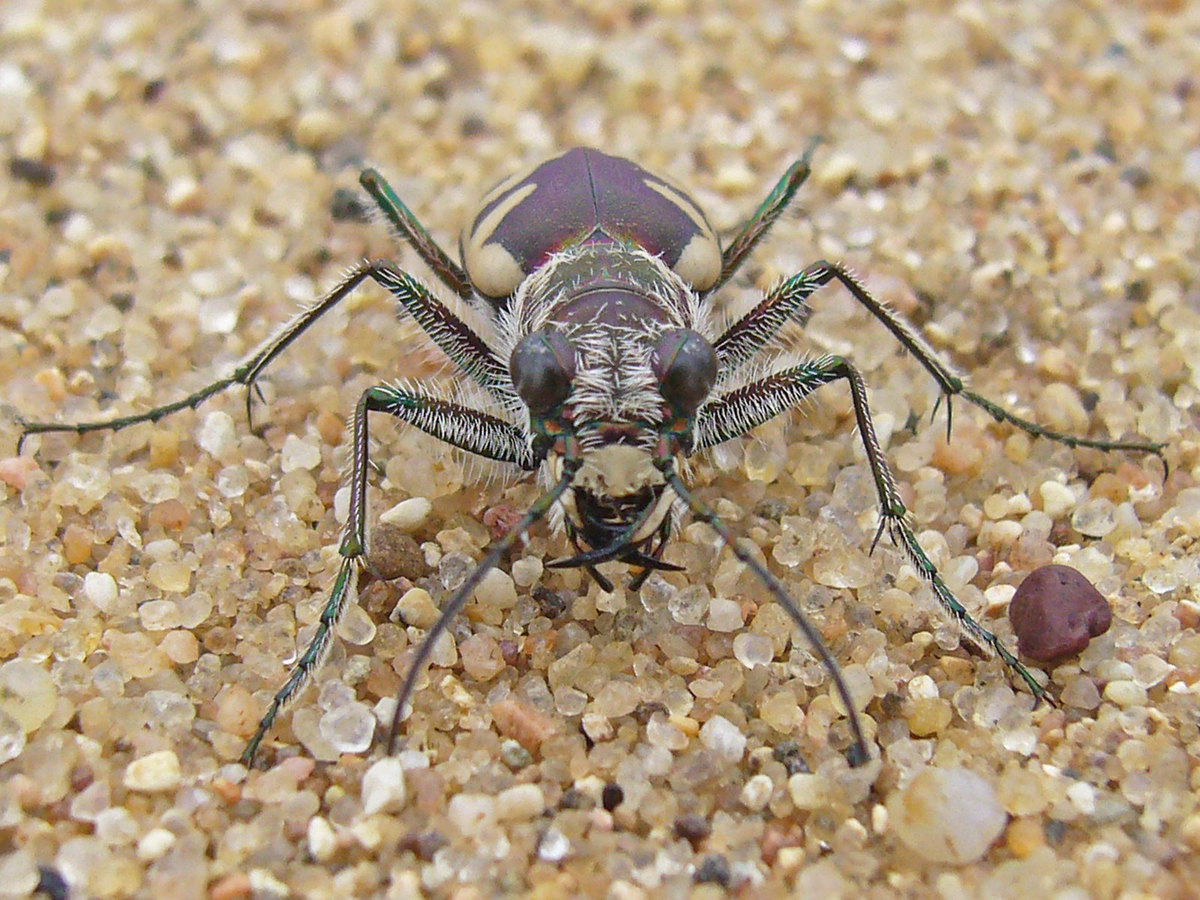
Cicindela formosa generosa

From “All the better to see you with, my dear!” (September 2008).  Picking a top tiger beetle photo was tough with so many to choose from.  Ultimately, I decided I really like these face-on shots, and of the several I’ve posted this one of Cicindela formosa generosa has the overall best composition, balance and symmetry.  I considered this one of Cicindela formosa formosa – with its half-cocked jaws, it probably has better personality.  However, the one above got the final nod because it is a true field shot of an unconfined, unmanipulated individual.

Best jewel beetle

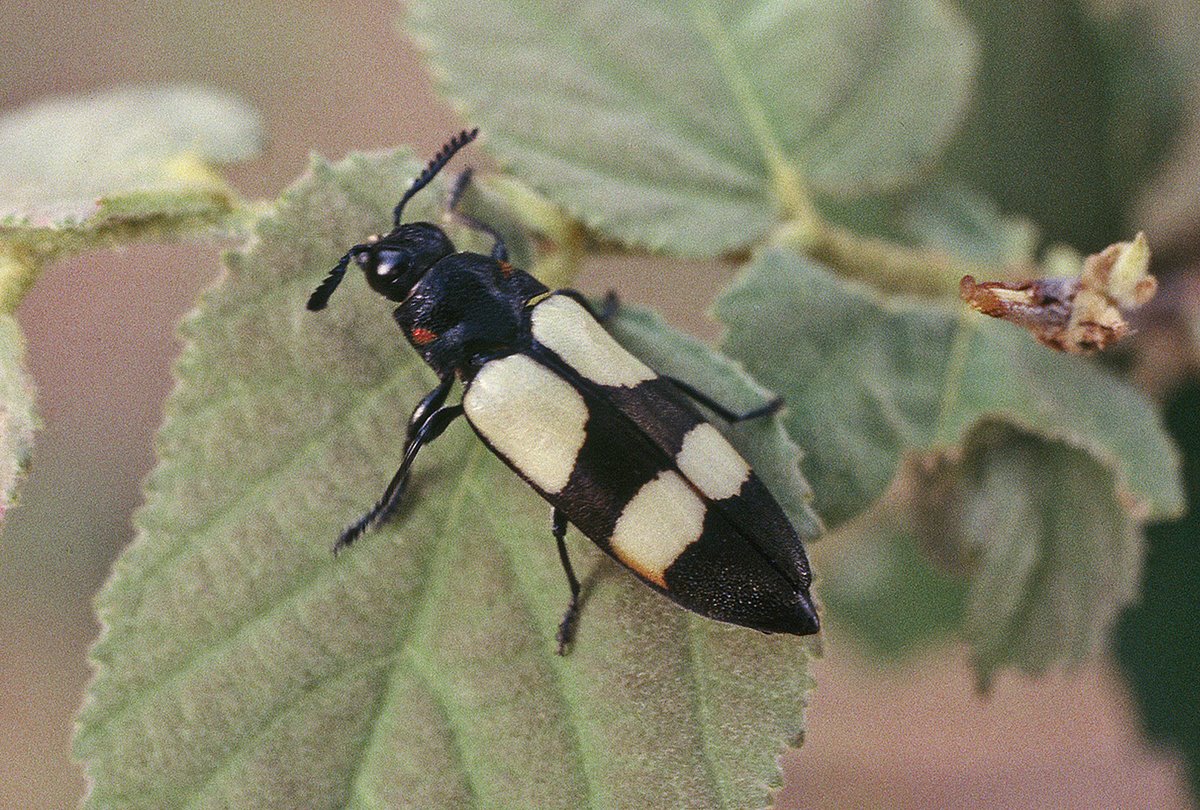
Aegelia petelii

From Buppies in the bush(veld) (December 2008).  Although taken back in 1999, I just recently scanned and posted this photo of Agelia petelii from South Africa.  I like the bold, contrasting colors of the beetle combined with the soft colors of the host foliage.  Runners up included these photos of Evides pubiventris with its sumptuous iridescent green blending beautifully with the green background (but suffering slightly from shallow depth of field) and Chrysobothris femorata with its intricate surface sculpturing.

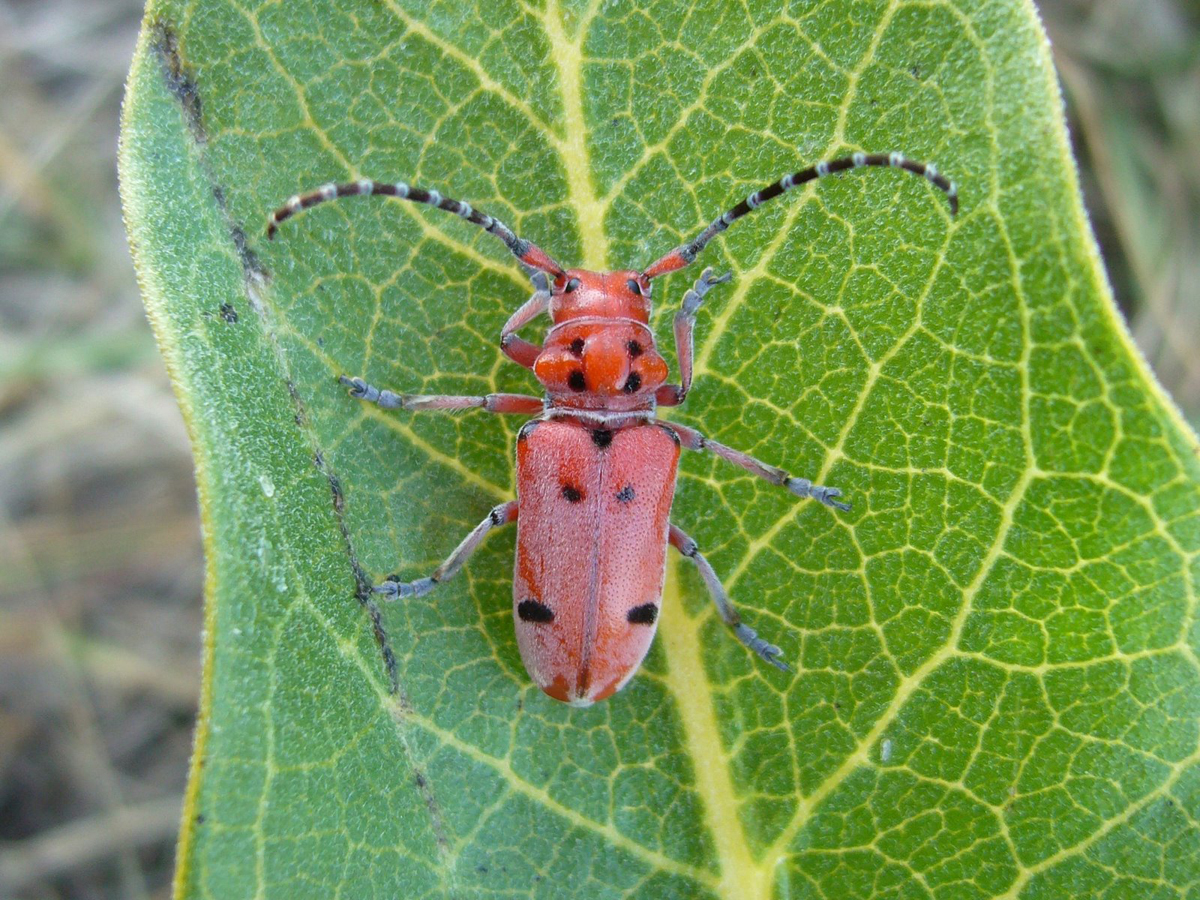
Best longhorned beetle

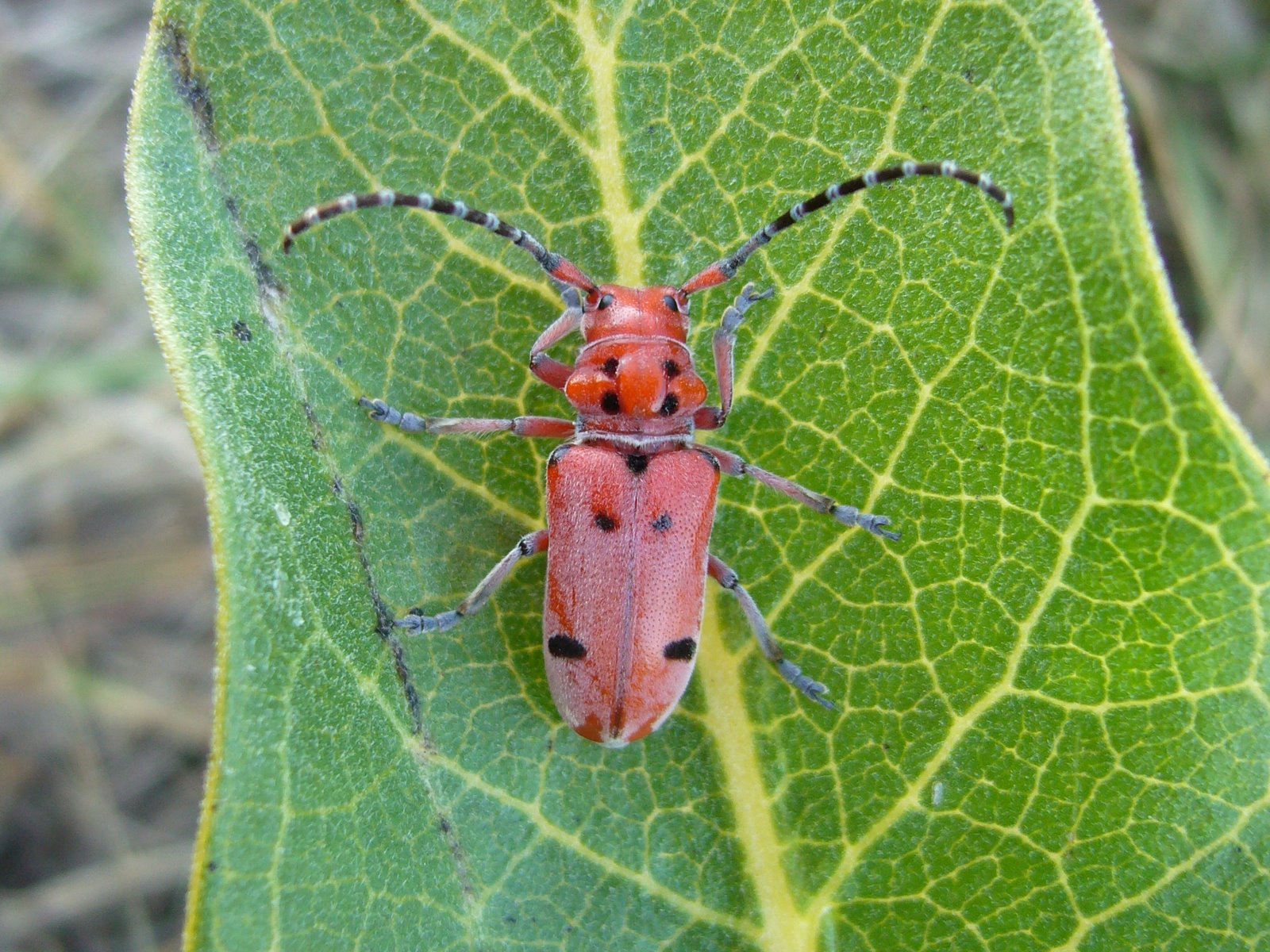
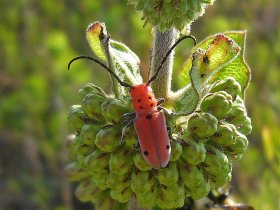
Tetraopes femoratus

From Rattled in the Black Hills (September 2008).  This was an easy choice – none of the other longhorned beetle photos that I posted during 2008 matched this photo of Tetraopes femoratus for clarity, composition, and the striking contrast between the red color of the beetle and the green color of the host plant.  I especially like the detailing of the body pubescence.

Best non-beetle insect

Proctacanthus milbertii

From Magnificently Monstrous Muscomorphs (November 2008).  I do like other insect besides beetles, and robber flies are hard to beat for their charisma.  This photo of Proctacanthus milbertii (which, as Chris Taylor pointed out, literally translates to “Milbert’s spiny butt”), has great composition and nice, complimentary colors.  I like contrast between the fine detail of the fly and the soft background.

Best non-insect arthropod

Argiope aurantia

From Happy Halloween! (October 2008). I didn’t have many non-insect arthropod photos to choose from, but this photo of a female Argiope aurantia (yellow garden spider) would be deserving of recognition no matter how many I had to choose from. I like the bold, contrasting colors and symmetry of the spider in front of the dappled background of this photo.

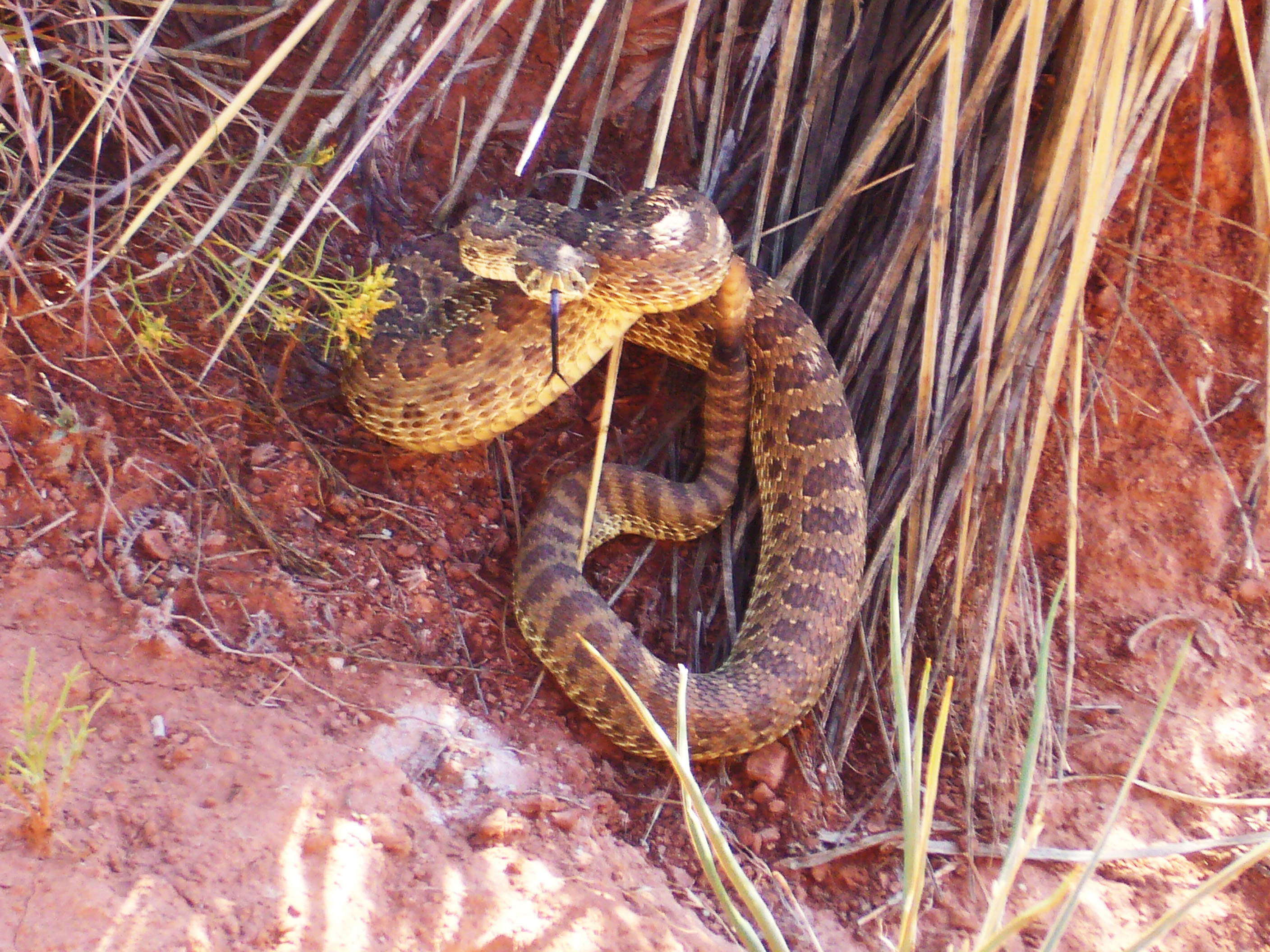
Best non-arthropod animal

Prairie rattlesnake (Crotolus viridis)

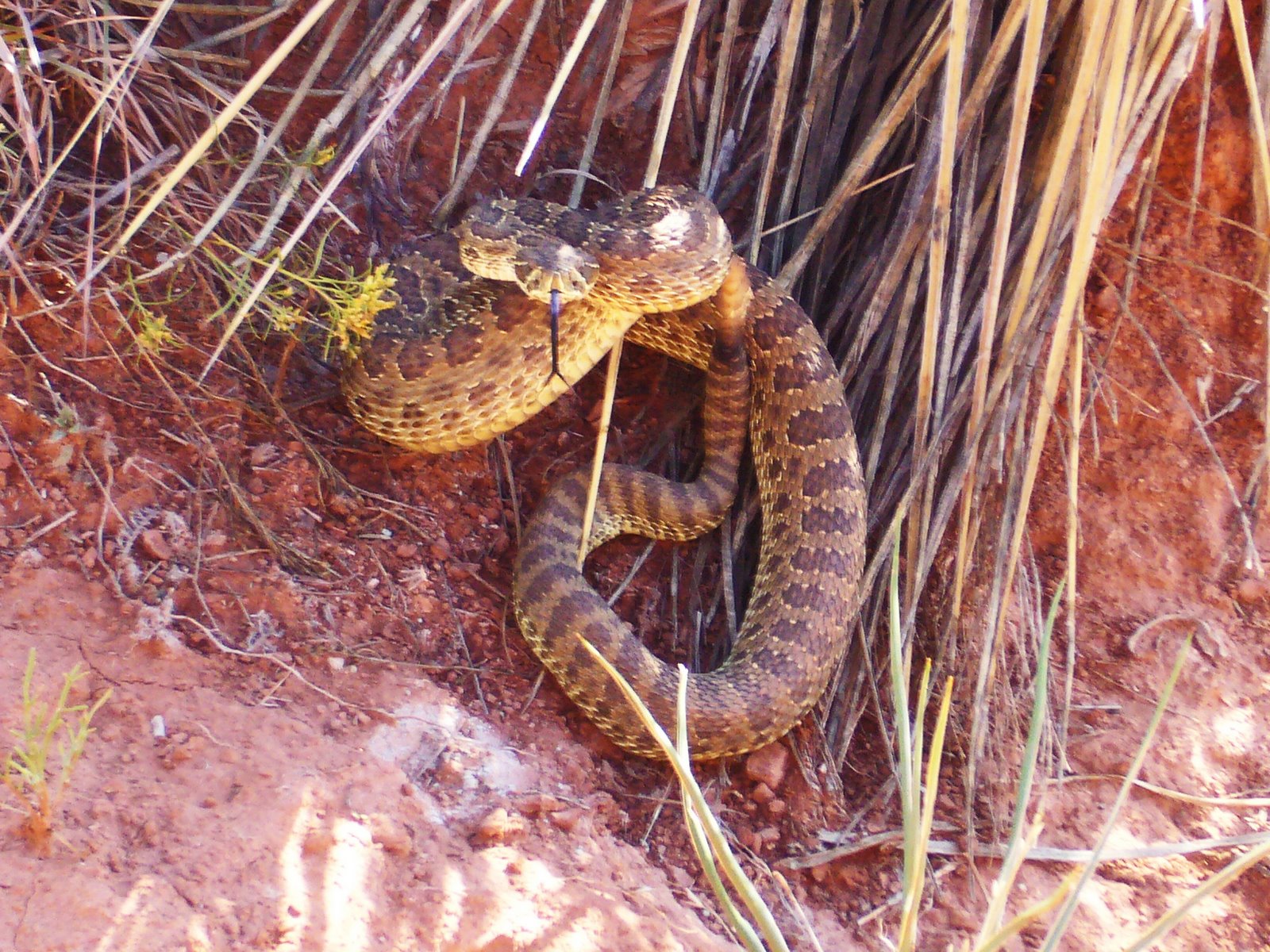
Another one from Rattled in the Black Hills (September 2008).  This is admittedly not the best photo from a purely technical perspective – it’s a little out of focus, and the color is a bit off.  However, no photo could better convey the moment – confronted with a live, angry prairie rattlesnake (Crotalus viridis) (among the more aggressive species in the genus).  The forked tongue and rattle – blurred in motion – were icing on the cake.

Best wildflower

Victoria Glades

From Glades of Jefferson County (July 2008).  I had several wildflower closeups to choose from, but I kept coming back to this field shot of pale purple coneflower (Echincea simulata) and Missouri evening primrose (Oenethera macrocarpa).  The eastern redcedars (Juniperus virginiana) in the background are at once indicative of their preferred habitat (limestone/dolomite glades) and also testament to their threatening encroachment.

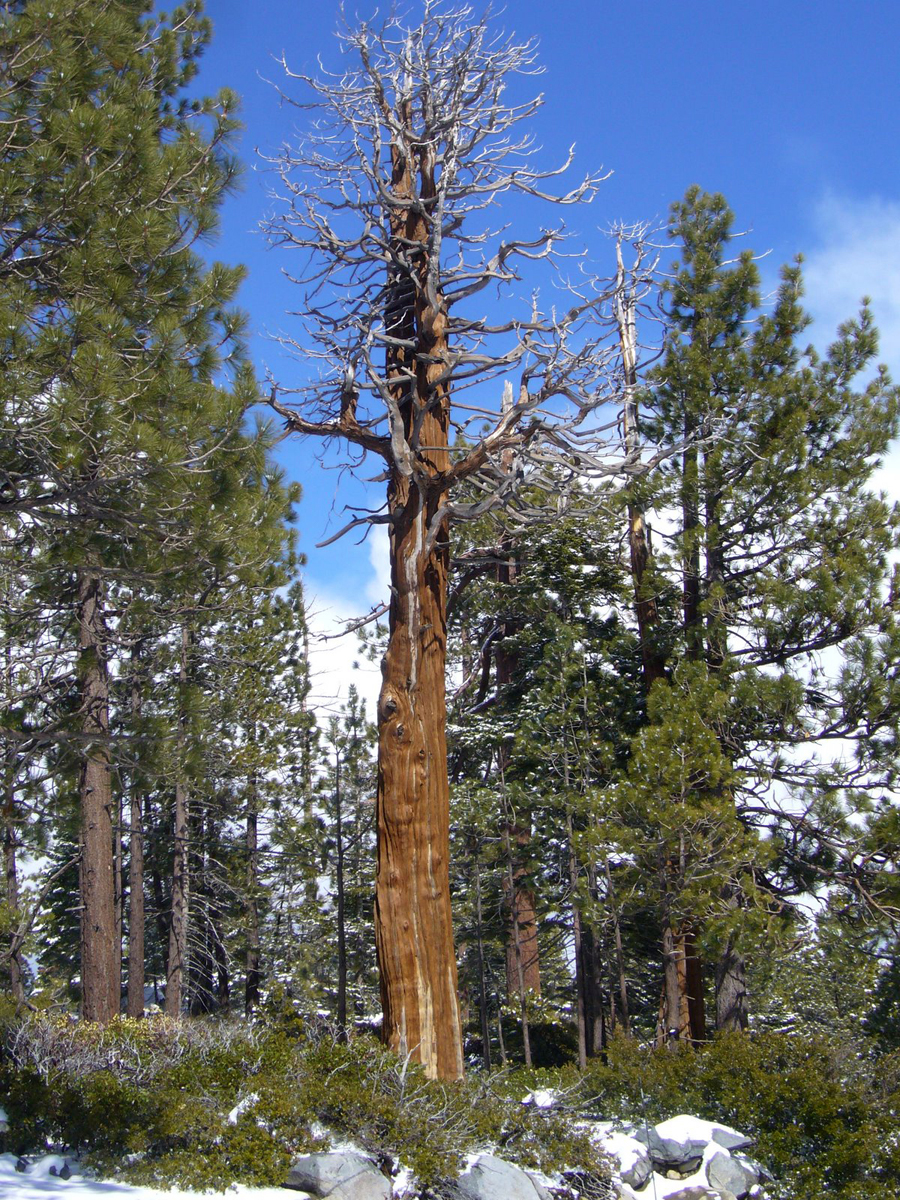
Best tree

Calocedrus decurrens

From the very simply and aptly named Lake Tahoe, California (March 2008).  Incense cedar (Calocedrus decurrens), with its reddish, deeply furrowed bark and great height, is one of the most majestic of western conifers.  I was captivated by this tree – beautiful even in death and contrasting nicely with the surrounding green foliage.

Best rockscape

Pipestone National Monument, Old Stone Face

From Pipestone National Monument (April 2008).  “Old Stone Face” is one of Pipestone’s most recognizable geologic features, and the short angle of the sun on this early spring day provided nice detail to the cracks and fissures of the rock – almost appropriately adding a weathered “age” to this old man.

Best landscape

Emerald Isle, Lake Tahoe

Another one from Lake Tahoe, California (March 2008).  Few places on earth are more photogenic than Lake Tahoe, and this perspective overlooking Emerald Bay is among the finest views I’ve seen.  Brilliant blue skies and majestic snow covered mountains reflected perfectly from the still surface, with Fannette Island providing a perfect focal point for the photo.

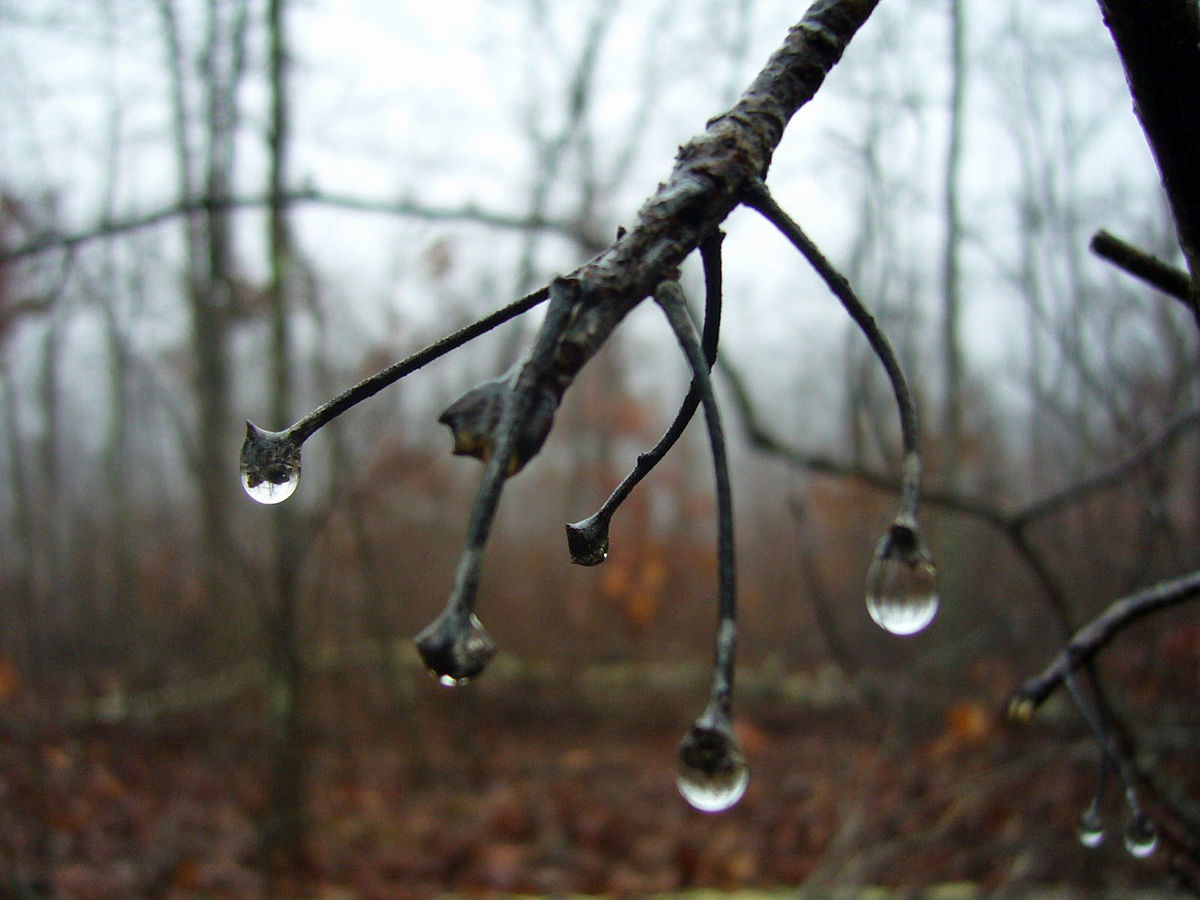
Best miscellaneous

Water drops, Ozark Trail, Trace Creek SectionFrom Ozark Trail, lower Trace Creek Section (December 2007).  While technically not a 2008 photo, it’s close enough.  This was one of the first macro photographs I took with my camera, and it remains one of my favorites.  A chance occurence of an unlikely subject, created by cold temperatures and heavy moisture-laden air. I like the contrast between the water drops – sharp, round, and clear – with the vertical shapes of the leaf petioles and background trees.  Viewing the image full-sized reveals the reflection of the photographer in the leftmost water drop.

Subsequent edit: Okay, so after I put this post together, I realized I actually featured eleven photos – too much difficulty choosing, I guess. Let’s call it a baker’s ten.

New species and a review of the genus Tragidion

ResearchBlogging.orgSpecies of Tragidion are among the larger and more attractive cerambycids in North America, making them popular among collectors. Their bright orange and black coloration clearly functions in mimicking spider wasps (family Pompilidae) in the genera Pepsis and Hemipepsis – the so-called “tarantula hawks.” Unfortunately, species of Tragidion have been difficult to identify due to a high degree of morphological similarity between species, wide range of variation across geographic areas within species, unusually high sexual dimorphism and dichromatism, and apparent potential for hybridization in areas of geographic overlap. This has confounded efforts to delimit species boundaries, resulting in a confusing assortment of names whose proper application has eluded even the most esteemed of North America’s cerambycid taxonomists. Recently, some much needed clarity was provided by Ian Swift and Ann M. Ray in the journal Zootaxa. Their taxonomic review of Tragidion – the first systematic treatment of the entire genus – recognizes seven species in North America and another four restricted to Mexico. Two species – T. agave from California and Baja California and T. deceptum from montane areas of the southwestern U.S. and northern Mexico (both pictured) – are described as new, and a third – T. densiventre from desert areas of the southwestern U.S. and northern Mexico – is raised from synonymy under T. auripenne. Four new synonymies are also proposed, and dorsal habitus photographs and a key to all species are provided. Life history information is limited for most species of Tragidion. One species – T. coquus – occurs broadly across the eastern and central U.S., where it breeds in a variety of dead hardwoods, especially oak. Several species occur in the southwestern U.S. and northern Mexico – some are found in xeric lowland desert habitats, where they breed in dead branches of Prosopis glandulosa and Acacia greggii (T. densiventre) or dead flower stalks of Yucca and Agave (T. agave and T. armatum), while a fourth (T. deceptum) is found in more montane habitats mining the heartwood of recently dead branches of Quercus. Adults of another species in California and Baja California, T. annulatum, are strongly attracted to brushfires and burning vegetation, and individuals have been observed landing on still-burning and smoldering shrubs, causing their legs and abdomens to melt to the surface of the branches. At several post-burn sites, the melted bodies of this species were common on the charred branches of their hosts, and females have been observed ovipositing on woody shrubs that have been burned. This species likely plays an important role in the decomposition of burned woody material in coastal areas of California. The remaining U.S. species – T. auripenne – is known from only a handful of specimens collected in xeric habitats in the Four Corners region of the southwestern U.S. It’s life history, as well as those of the four strictly Mexican species, remains essentially unknown.

Tragidion agaveTragidion agave Swift & Ray 2008, ♂ & ♀ – California & Baja California. Tragidion deceptumTragidion deceptum Swift & Ray 2008, ♂ & ♀ – southwestern U.S. and northern Mexico.

REFERENCE: Swift, I., Ray, A. M. (2008). A review of the genus Tragidion Audinet-Serville, 1834 (Coleoptera: Cerambycidae: Cerambycinae: Trachyderini) Zootaxa, 1892, 1-25

Megacyllene comanchei revisited

On my recent trip, I reported finding the rarely collected Megacyllene comanchei at several localities in northwestern Nebraska and southwestern South Dakota. These are significant findings, since they not only represent new records for both states, but also an impressive 700-mile northern extension to the known range of the species (on top of a previously reported northern range extension from Texas into Kansas). The intriguing part of the situation is that these new records fall within the southern portion of the known distribution of M. angulifera, its closest relative, which has been recorded from several northern Great Plains states and provinces (although it has not yet been recorded specifically from Nebraska).

Upon reading about these findings, a friend and fellow student of Cerambycidae has expressed doubts to me about the distinctiveness of M. comanchei versus M. angulifera, regarding the slight color differences upon which it was based as insufficiently distinctive. In its original description (Rice & Morris, 1992, J. Kans. Entomol. Soc. 65:200-202), M. comanchei was distinguished from M. angulifera by a specific combination of characters, i.e., the premedian and sutural segment of the postmedian elytral bands are white, while the remaining pubescent bands are yellow. They also noted the subapical and apical bands often coalesce along the elytral suture and lateral margins. I do not have material of M. angulifera for direct comparison, but my specimens (two of which are pictured in this post) seem distinct enough from this specimen of M. angulifera pictured on Larry Bezark’s impressive website, A Photographic Catalogue of the CERAMBYCIDAE of the New World. In contrast, the pattern of coloration seen in this photo of the holotype of M. comanchei (also from that fine site) seems to agree well with my material.

Whether these color differences are significant remains to be seen. Neither species has been commonly collected, therefore large series of material have not been available for good comparative studies. However, there do seem to be significant differences in reported host plants and adult biology. Adults of M. angulifera are usually found in the fall on flowers of Solidago (goldenrod), and it was recently discovered that the larvae utilize root crowns of Dalea candida (family Fabaceae) for development (Blodgett et al. 2005). All but one of the remaining Nearctic species of Megacyllene for whom larval hosts are known also utilize fabaceous plants. These include M. robiniae and M. snowi (Robinia), M. decora (Amorpha), and M. antennata (Prosopis). A notable exception is M. caryae, which breeds in a variety of deciduous plant genera but most often Carya and is also unique in that adults occur during early spring instead of fall. Megacyllene comanchei, on the other hand, was discovered by examining the dead root crowns of Heterotheca sp. (family Asteraceae), with a few crawling on the ground in areas where such plants were growing. This is not proof that it serves as a larval host, but the repeated association of adults at the base of dead stems of this plant is highly suggestive. Additionally, no adults were encountered on goldenrod or other flowers, as is common among other members of this genus. The apparent utilization of a non-fabaceous larval host and behavioral difference exhibited by the adults seem to support its status as separate species. Again, the specimens that I collected agree not only morphologically with M. comanchei, but also behaviorally in that all of them (six specimens at three localities) were found crawling on the ground in shortgrass prairie rather than on flowers. I did note Heterotheca growing at one of the locations but did not find adults on the crowns of the few plants I inspected. I do not recall seeing any Dalea, but I wasn’t looking specifically for that plant either. Nor did I not see any goldenrod, which I would have certainly noticed had it been present.

So, for now, I’m inclined to continue calling these M. comanchei, and I’m also inclined to consider it distinct from M. angulifera. I do agree, however, that a critical examination of the distinctiveness of these two species might be warranted, and it may be worthwhile to pull together as much of the existing material of these two species as possible. I am interested in hearing other opinions about this situation.

Sand Hills Success

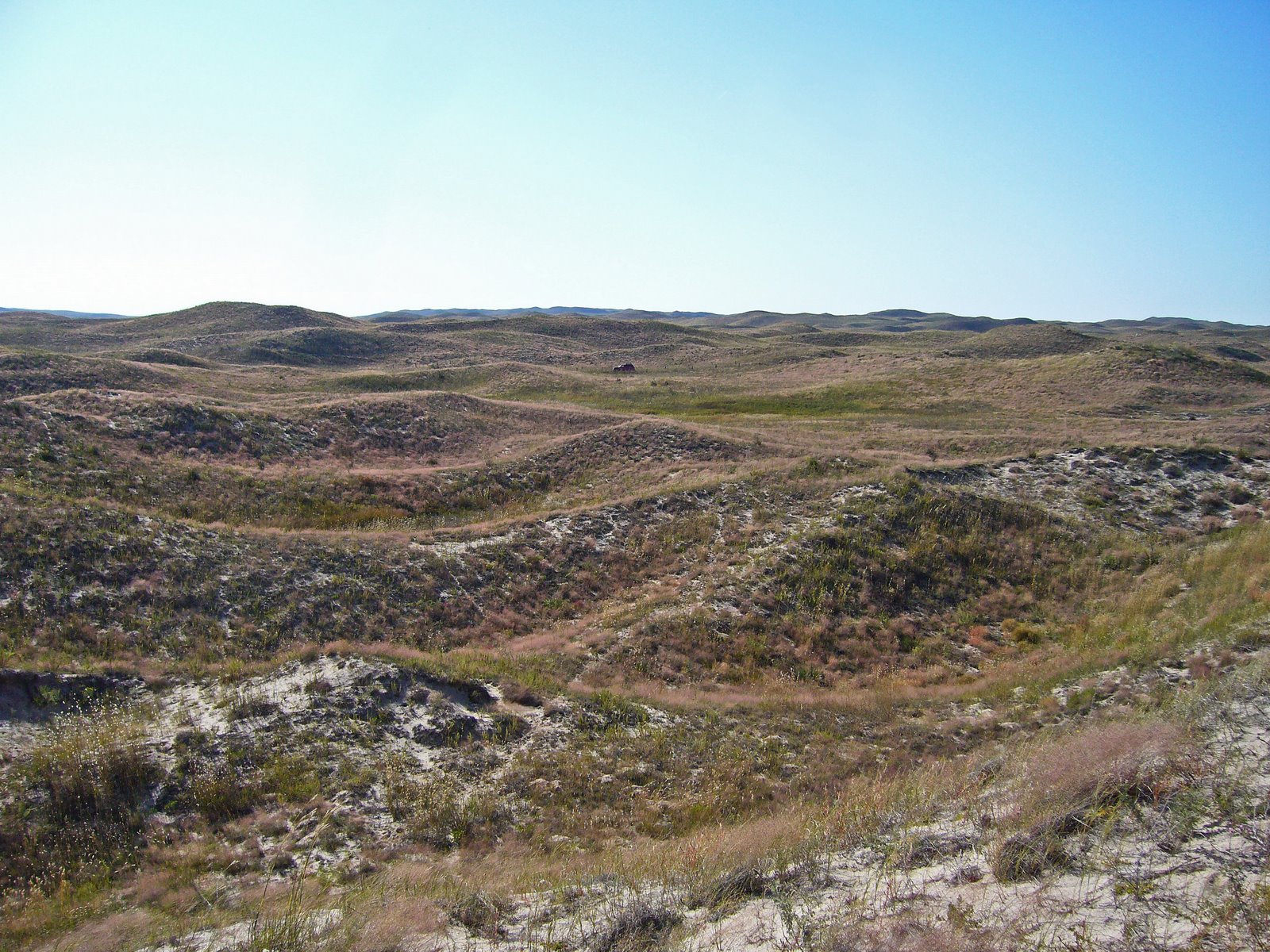
Having explored the Pine Ridge of northwestern Nebraska and the Black Hills of South Dakota, it was time to turn my attention to the vast central Nebraska Sand Hills. My original plan was to leave the Pine Ridge area early in the morning and arrive at the western edge of the Sand Hills during late morning. This would provide plenty of time during the rest of the day to explore several western Sand Hills localities before traveling east the following day to look at some eastern Sand Hills sites. It is, however, the nature of these trips that plans change – sometimes on a whim – and such was the case Thursday morning. As I approached the left turn onto Hwy 385 that would take me down to Alliance, I made a impulsive decision to take another shot at finding the elusive Cicindela lengi (blowout tiger beetle). Recall that I battled rain and cool temps in my first attempt, and although I came away with several larvae of what I hope turn out to be this species (assuming I am successful in rearing them to adulthood), they also could represent one of the more common species. I questioned the wisdom of this move during the entire 40 minutes it took to drive to the spot – completely in the opposite direction of where I had planned to go that morning, but something in my gut told me to do it anyway. If I succeeded, the lost time and resulting need to adjust my plans would be worth it. I won’t delay the suspense – it was one of the best decisions I’ve made on this trip. I found two adults, and had I not known to expect this species at the site, I might have easily mistaken them for the much more common C. formosa (big sand tiger beetle). The two species resemble each other greatly in color and markings, but the subtle differences are unmistakeable once you’ve seen them in the field. I didn’t dare risk attempting a field photo – they were just too active, but I do have one of the specimens alive and will take photos of it later in confinement. Success would not end there – shortly after finding the first C. lengi, I saw an individual of the very uncommon C. nebraskana – another new locality for the species! Matt Brust will be very pleased to add yet another data point for the distribution of this species in Nebraska. Finally, as if to add an exclamation point on the success of this diversion, I found another specimen of Megacyllene comanchei (provisional ID – see previous post) – another locality for this new state record. As with the other five specimens seen on this trip, it too was found crawling on the barren ground rather than on goldenrod flowers as is typical of most other species of Megacyllene. Quite a successful detour it turned out to be.

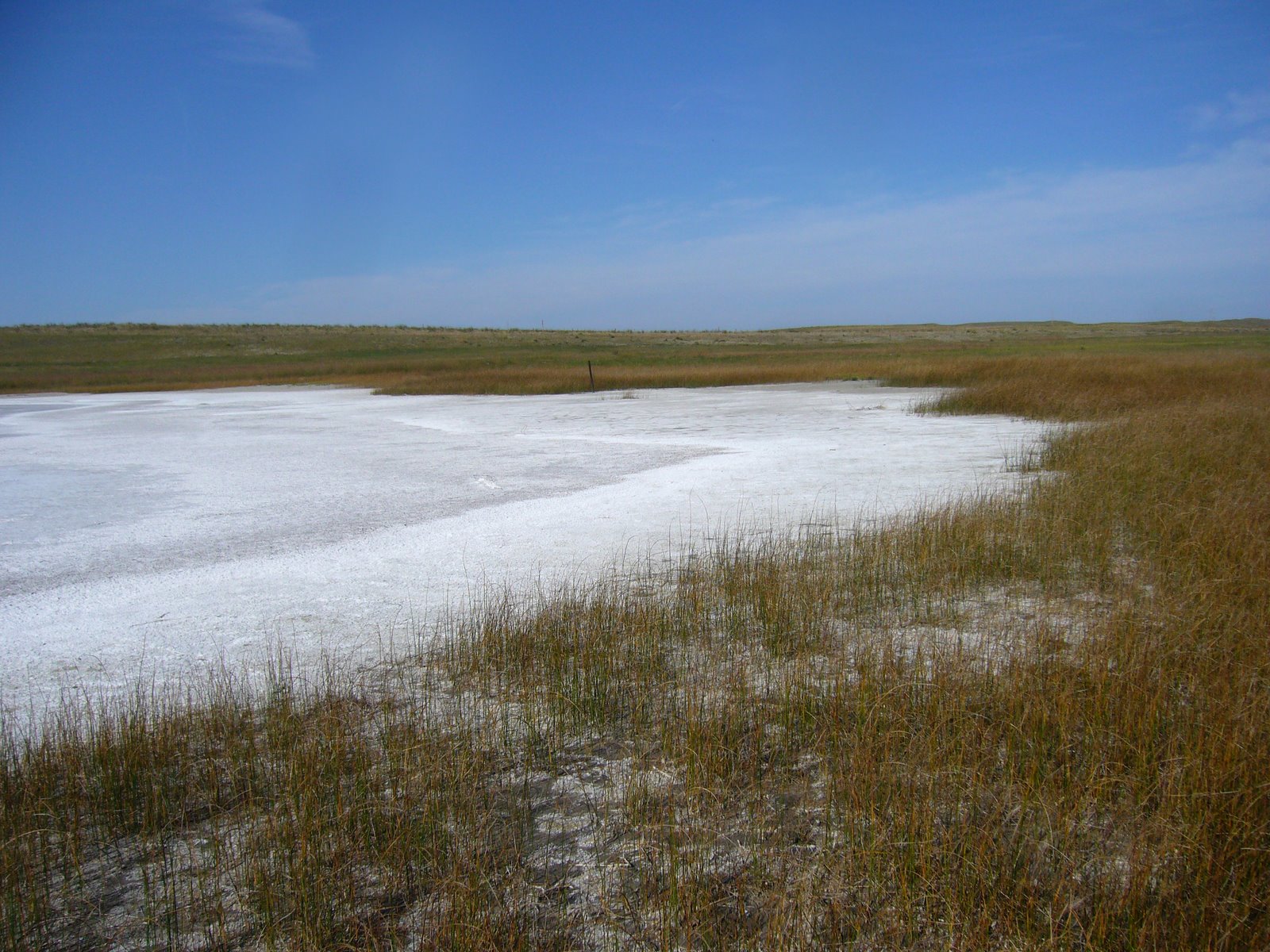
Success has its price, and the time spent on this diversion meant that something would have to give. By the time I got back to Chadron it was already past noon, which meant I would not make it to the Sand Hills until mid-afternoon. My primary target for the Sand Hills was the gorgeous C. limbata (sandy tiger beetle), which lives on barren sand dunes and blowouts. My delayed arrival left only a few hours to explore these habitats – with no sign of C. limbata, but I did find a few more C. fulgida along the margin of a small alkaline lake that Matt had told me about. Rather than move on to the eastern Sand Hills the following day as originally planned, I decided to stay on the western side for another day – my last full day of collecting. It was another good move – with a full day to explore, I found several sites in the morning with C. fulgida, and in the afternoon I finally found the coveted C. limbata. I only saw one adult out and about, but that was enough to convince me to spend some time there. As I’ve noted before, sand-inhabiting tigers start digging by midday, so I started looking for suspected burrows and digging after them. Most of what I dug up at first were the common C. formosa (big sand tiger beetle), but after a bit I was able to discriminate between the burrows of that species and those of C. limbata. After a couple hours of work, I had a grand total of seven vivid white/iridescent green individuals to show for my effort! Again, I didn’t even attempt a field photograph – they were very active once dug up, so one individual is being kept alive for photographs later in confinement. This day would also end with a nice exclamation point – another C. lengi! My lesson in field discrimination of this species versus C. formosa payed off, as I instantly recognized it for what it was.

I’ve now made it to the eastern edge of the Sand Hills, where tomorrow morning I’ll be looking for a red population of C. limbata before finishing off the trip with (hopefully) finding C. denverensis (green claybank tiger beetle) in the clay soils just to the south of where the Sand Hills end. If successful, I will have succeeded in finding a total of twelve tiger beetle species on the trip (38% of the known Nebraska/South Dakota combined fauna). The extra time spent in the Pine Ridge area means I will have to skip the last two localities in northwest Missouri, but the success I had in Nebraska does much to ease the disappointment. With a 10-hour drive confronting me after I finish my collecting tomorrow, I suspect this will be the last of my trip updates. I’ll provide a wrap up and some more photos after I return home, but in the meantime enjoy this video of C. formosa digging in for a midday siesta.

Rattled in the Black Hills

My first day in the Black Hills of South Dakota was spent at McNenny State Fish Hatchery near Spearfish – on the north side of the Black Hills. I went to this place on the advice of my esteemed colleagues in Nebraska, who suggested that I might be able to find several interesting tiger beetle species there: the closely related trio of beauties C. denverensis (green claybank tiger beetle), C. limbalis (common claybank tiger beetle), and C. splendida (splendid tiger beetle) in the red clay eroded banks; C. fulgida (crimson saltflat tiger beetle) and C. tranquebarica kirbyi (oblique-lined tiger beetle) around the lakes; and – again, if I’m lucky – intergrades between the prairie and boreal long-lipped tiger beetles (C. longilabris x nebraskana) along a trail through the shortgrass prairie east of the hatchery. For the first time since Saturday, I awoke to baby blue skies which filled me with an optimism and anticipation that made the 3-hour drive from Chadron, Nebraska to Spearfish, South Dakota seem interminable.

What my esteemed colleagues failed to include on that list of species I might encounter was Crotalus viridis – the prairie rattlesnake! Now folks, I’ve seen a number of rattlesnakes before – mostly in Texas – but I’ve never heard this sound in real life, much less heard it coming from a rattlesnake poised to strike. I encountered this fellow in the eroded red clay slopes above the lake, and even though I wasn’t too terribly close it gave me quite a start (my bravery in taking this photo is vastly exaggerated by the twin miracles of telephoto and cropping!). I walked a little more cautiously afterwards but gradually let my guard down over time. About an hour later, I was startled again by another rattler – I had come within 2 feet of it before it started rattling. I nearly jumped out of my skin, and once I got my heart stuffed back down my throat I noticed several dark juveniles coiled up with her. They slunk away, and I tiptoed back to the car having had my fill of the red clay slopes for the time being.

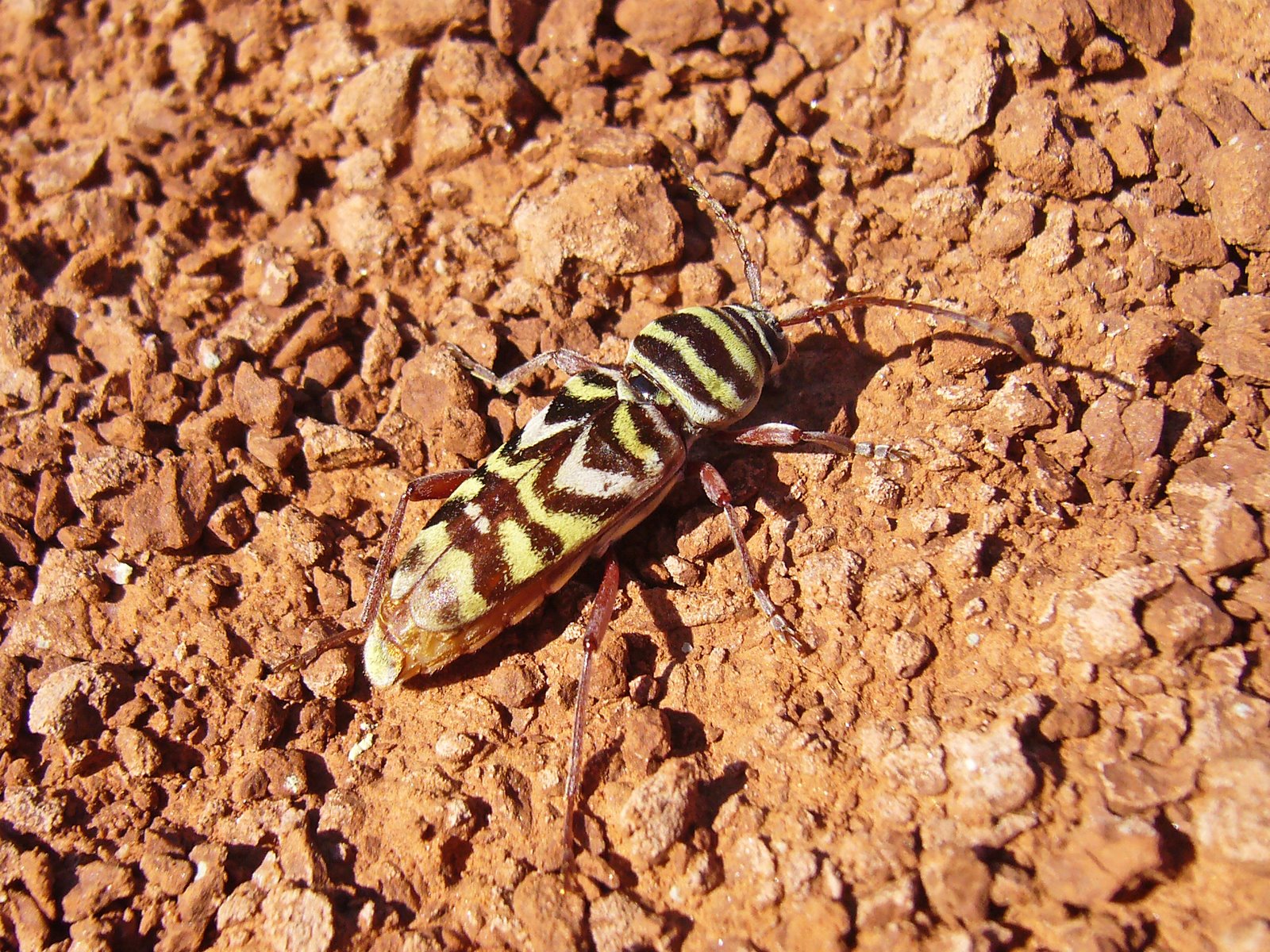
I did manage some success on the slopes before the rattlers drove me away – not with the claybank and splendid tigers that I had hoped to find, which were largely missing in action save for two individuals of C. limbalis that I spotted amongst the annoyingly similar appearing and ridiculously numerous C. purpurea audubonii (clay path tiger beetle). Success instead came in the form of this cerambycid beetle – Megacyllene comanchei. Recently described from Texas, nothing more was published about this species until I recorded a northern range extension into south-central Kansas (MacRae & Rice 2007). Its occurrence in the Black Hills is not only a new state record for South Dakota but also represents an incredible 700-mile northern range extension – on top of the previous one! Actually, Matt and I each found one individual a few days ago in Sioux County, Nebraska (also a new state record) – I had thought of this species at the time but decided I must be wrong and that I should wait until I got back before making an identification. But the capture of these three additional individuals even further north renewed my suspicions, and consultion of my databases shows good agreement with this species – note the white rather than yellow antemedian elytral band and medial portion of the postmedian elytral band, along with the medial and lateral coelescence of the apical and subapical bands, which distinguish this species from the closely related M. angulifera. The records from this trip show that M. comanchei is much more widely distributed than previously thought. Curiously, all five of the individuals I’ve seen (so far!) were crawling on the ground – an unusual habit for Megacyllene, which are normally found on flowers of goldenrod. The type series was associated with plants in the genus Heterotheca, which I did note growing in the area.

After escaping the snake slopes, I began surveying the lake margins to look for potential tiger beetle habitat. I was especially interested in C. fulgida – Matt and I had seen a single individual along a dry salt creek in Sioux County. The lakeshore around the upper lake was completely surrounded by thick vegetation – no tiger beetles there, but when I arrived at the lower lake I found some small areas of open ground along one side. They didn’t look very extensive, and my initial search of the area showed no activity. Closer inspection, however, showed the presence of larval burrows, and when I grabbed my fishing gear (the nearest grass stem) I promptly managed to extract a couple of larvae. Okay, so there are tiger beetles here, but which one I don’t know – probably C. tranquebarica kirbyi, which we had seen rather commonly at the same dry salt creek in Sioux County. Although the sun would not set for another two hours, it was quite cool already. I wondered if maybe the adults had already started digging in for the night and began looking for evidence of adult burrows. I looked carefully along the edge of the grassline when I saw movement – it was the back end of an adult C. fulgida kicking dirt out as it excavated its burrow. Success! I dug it out, took a few photos (one shown here) and started looking for similar appearing burrows. I not only found several more C. fulgida in their burrows, but also several C. tranquebarica kirbyi. The larvae I collected may or may not represent one of these species – there are other species associated with alkaline habitats that active at other times during the season. I collected a few more larvae, filled a container with soil from the spot – cutting out a section of salt-encrusted surface to place on top, placed all of the collected larvae in it, and watched them immediately start digging new burrows with their shovel-like heads. More babies to take care of!

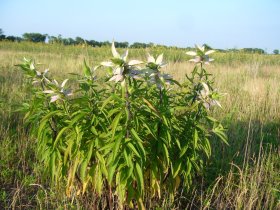
With tiger beetle success under my belt and the sun setting fast, I decided the day was done and packed up the car. As I was closing the hatch, I happened to look over and saw something of great interest – milkweed! I had, in fact, been looking for milkweed all day long in the hopes – faint, I thought – of encountering the newly described Tetraopes heutheri (Skillman 2007). Mirror Lakes, at the McNenny Fish Hatchery, is the type locality of this species, and although the type series was collected in August I held out hope that the adults might persist until September. These hopes faded quickly, however, as I located milkweed plant after milkweed plant on the shortgrass prairie above the eroded clay slopes – all completely senesced, with nary a sign of any milkweed beetles. The plant I’d just spotted – only a small sprout – was green, and on it were two milkweed beetles! I excitedly took some pictures, then started looking carefully about and found several more on additional small sprouts in the area. Apparently, the sprouts represented regrowth from late-season mowing of the roadside, as several full-sized, completely senescent plants were found in the adjacent unmowed area. My excitement at having “found” T. heutheri (because of their small size and occurrence at the type locality) was short lived – closer examination of the specimens after returning home showed them to be very small individuals of the more common Great Plains species T. femoratus. I did have some doubts when I found the beetles, since the milkweed species on which I found them is not the same species with which T. heutheri was associated (Asclepias verticillata, a small species with narrow, linear leaves).

Day 2 in the Black Hills was spent at nearby Boundary Gulch, just across the border in the northeast corner of Wyoming. This was another attempt to find the C. longilabris x nebraskana intergrades that eluded me at McNenney, and although I failed to find them at this location also, I did find five other species of tiger beetles, including several beautifully marked C. limbalis to go along with the two I found the previous day. After that it was some spurious collecting here and there – including larvae from two spots in the southern Black Hills – as I traveled back to Chadron, Nebraska for the night. On tap for tomorrow – Nebraska’s famed Sand Hills! The beautiful sandy tiger beetle (C. limbata) – vivid white and iridescent green to red – hopefully will be found among the super abundant festive (C. scutellaris) and big sand (C. formosa) tigers, and I’ll get another shot at seeing the C. lengi (blowout tiger beetle) that I missed a few days ago.

The Loess Hills in Missouri

The term Mountains in Miniature is the most expressive one to describe these bluffs. They have all the irregularity in shape, and in valleys that mountains have, they have no rocks and rarely timber. – Thaddeus Culbertson, missionary, 1852


One of the things I enjoy most about the natural history of Missouri is its diversity. Lying in the middle of the North American continent, it is here where the eastern deciduous forest yields to the western grasslands. Coinciding with this transition between two great biomes is a complex intersection of landforms – the northern plains, recently scoured by glaciers; the southeastern lowlands, where the great Mississippi River embayment reaches its northern extent; the Ozark Highlands, whose craggy old rocks comprise the only major landform elevation between the Appalachian and Rocky Mountains; and the eastern realm of the vast Great Plains. This nexus of east and west, of north and south, of lowlands and highlands, has given rise to a rich diversity of natural communities – 85 in all according to Paul Nelson (2005, Terrestrial Natural Communities of Missouri). Despite the overwhelming changes wrought upon Missouri’s landscape during the past 200 years, passable examples of most of these communities still exist in many parts of the state and provide a glimpse of Missouri’s rich natural heritage.

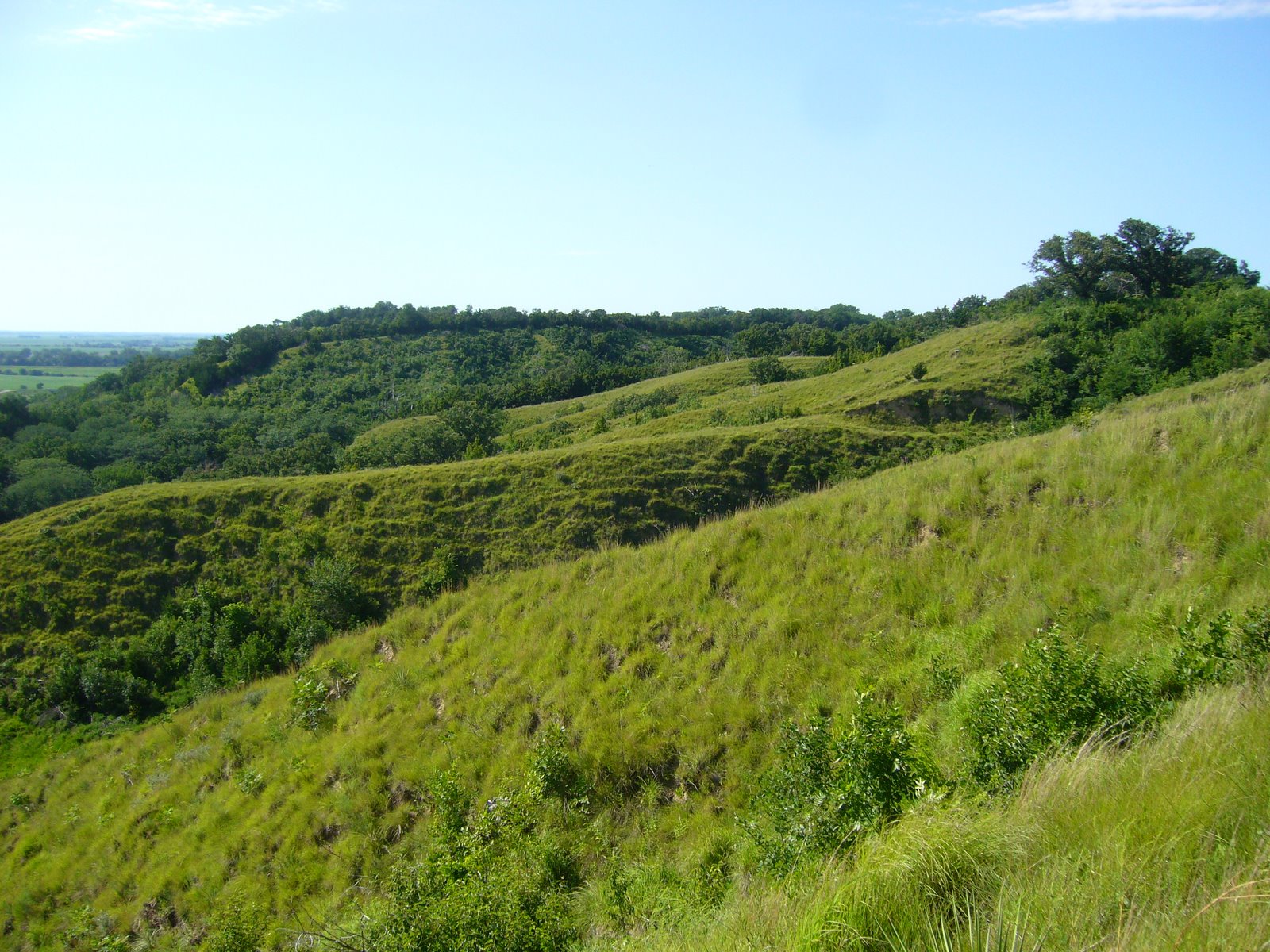
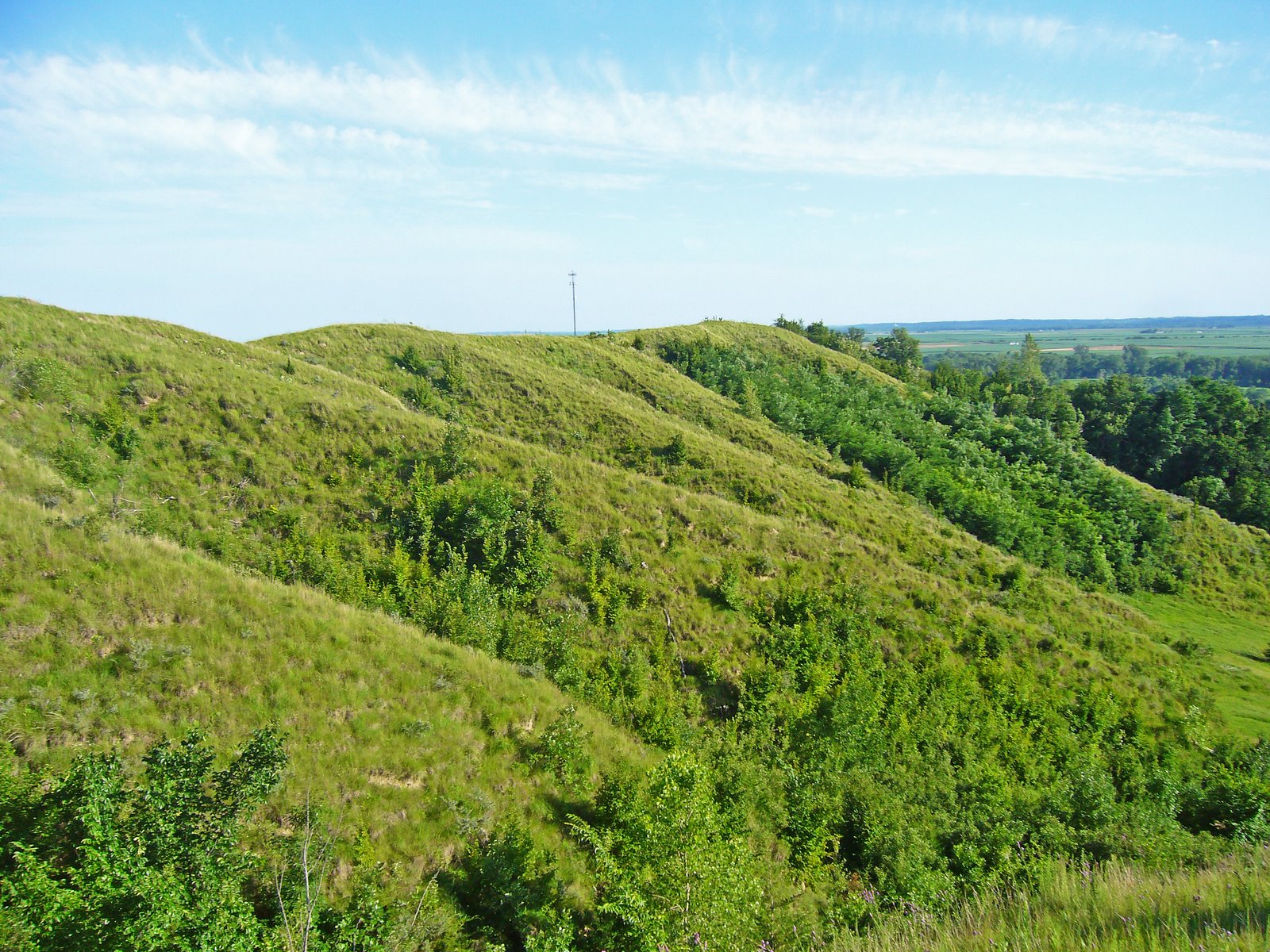
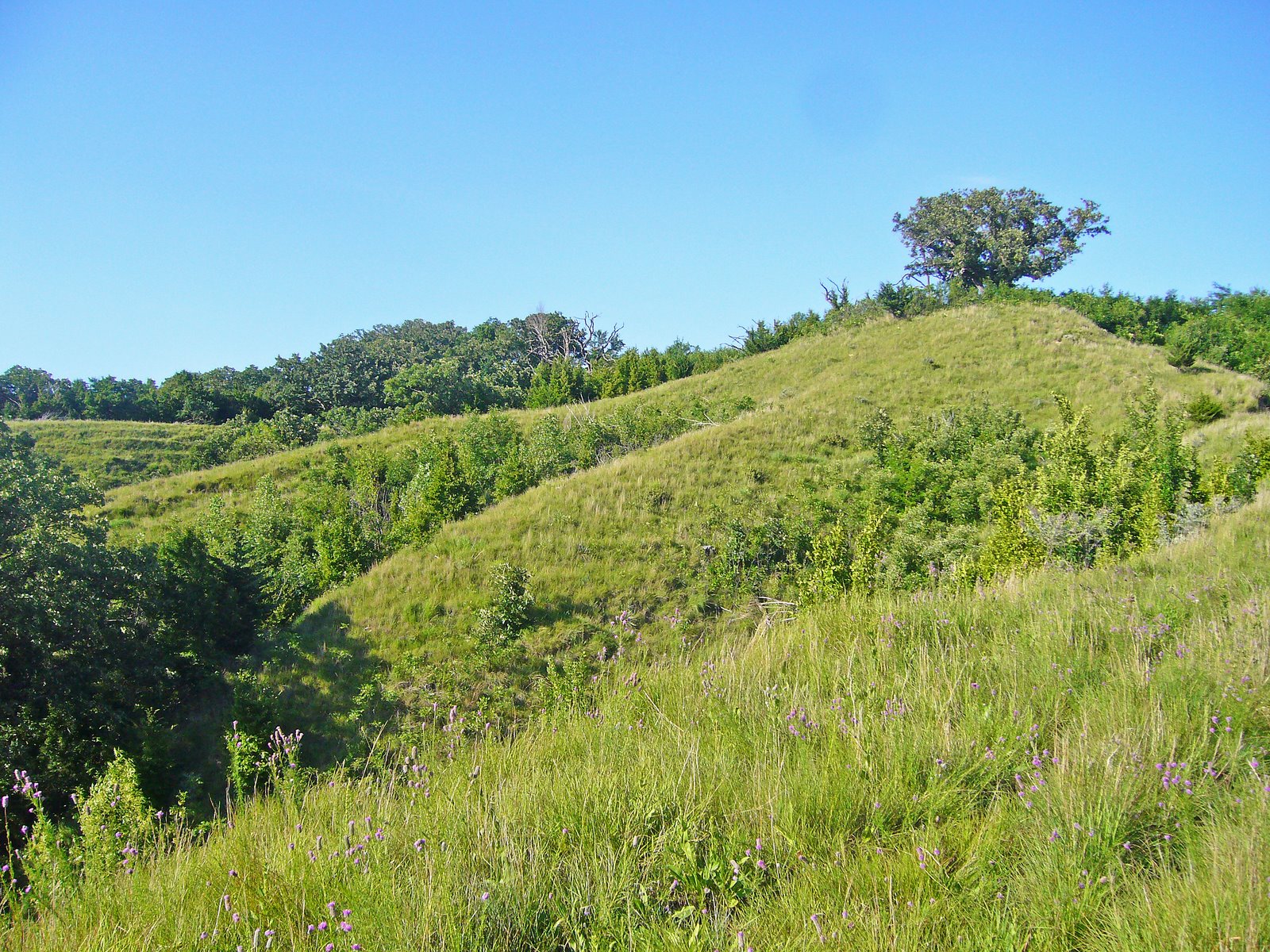
Last month I talked about the critically imperiled sand prairie community in extreme southeast Missouri. This month, we travel 500 miles to the distant northwestern corner of the state to visit another critically imperiled community – the dry loess prairie. These communities are confined to thin slivers of bluff top along the Missouri River in Atchison and Holt Counties. The bluffs on which they lie are themselves part of a unique landform called the Loess Hills. Like the sand prairies of the southeastern lowlands, this angular landscape owes its birth to the glacial advances of the Pleistocene epoch (2.5 million to 10,000 years ago), when streams of meltwater – swollen and heavily laden with finely ground sediments (i.e., glacial “flour”) – filled river valleys throughout the Midwest during Pleistocene summers. Brutal cold during winter reduced these flows to a trickle, allowing the prevailing westerly winds to pick up the sediments, left high and dry, and drop them on leeward upland surfaces across Iowa and northern Missouri. The thickest deposits occurred along the abrupt eastern border of the Missouri River valley – at least 60 feet deep, and in places up to 200 feet. Loess (pronounced “luss”) is a homogeneous, fine-grained, quartz silt – undisturbed it is highly cohesive and able to stand in near vertical bluffs. It is also extremely prone to erosion, and as a result for 10,000 years now the forces of water have reshaped the Loess Hills into the landform we see today. Loess itself is not rare – thick deposits can be found in many parts of the world and over thousands of square miles across the Midwest. It is here, however, along the western edge of Iowa and northern Missouri – and nowhere else in North America – where loess deposits are deep enough and extensive enough to obliterate any influence by the underlying bedrock and dictate the form of the landscape.

It is this form that makes the Loess Hills so unique. The depth of the soil, its cohesiveness, its natural tendency to slump on steep slopes and sheer in vertical planes, and the action of water over the past several millenia have created a landscape of narrow undulating ridges flanked by steep slopes and numerous side spurs, intricate drainages with sharply cut gullies, and long, narrow terraces called “catsteps” cutting across the steep upper hillsides. It’s a sharp, angular, corrugated landscape, stretching 200 miles north and south in a narrow band of varying width from north of Souix City, Iowa, to its southern terminus in northwestern Missouri. Its western boundary is sharply delimited by the Missouri River valley, where lateral erosion (now halted by channelization of the river) and vertical sheering have created precipitous bluff faces. The eastern boundary is harder to delimit and is dependent upon the thickness of the loess. Deposits that fall below 60 feet in depth are unable to mask and reshape the rolling terrain of the eroded glacial till lying beneath. In general, this happens at distances of only 3 to 10 miles from the western edge of the landform.

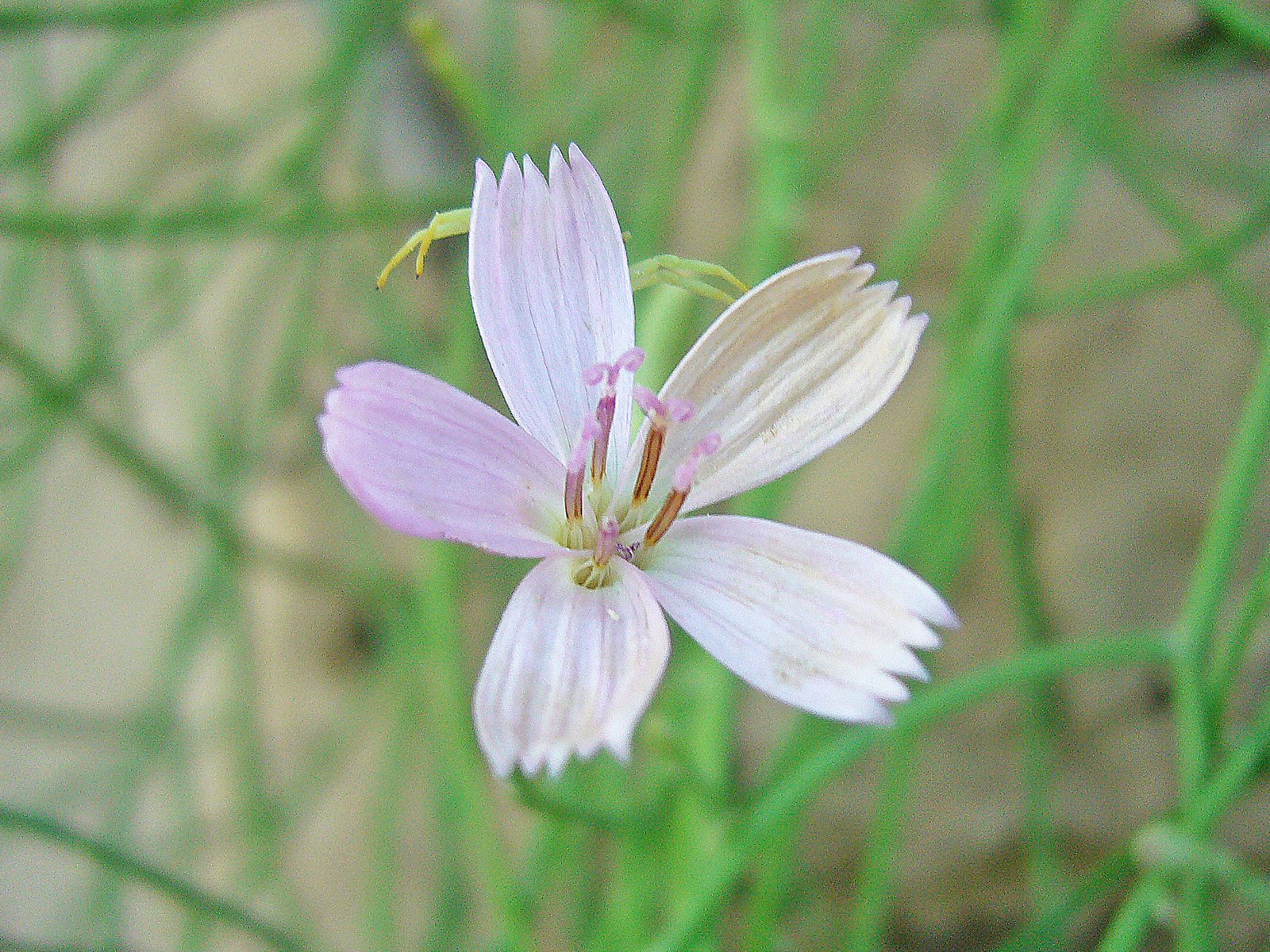
Its southern terminus in Missouri, however, is the most arbitrary boundary. Discontinuous patches of deep loess terrain do occur as far south as Kansas City, but the dry hilltop prairies, common in the north, are gradually replaced by woodland in the south and disappear completely just north of St. Joseph. It is this interdigitation of two great biomes – the great deciduous forest to the east, and the expansive grasslands stretching far to the west – that give the Loess Hills such a fascinating natural history. This is due as much to the physical character of the Loess Hills themselves as to their ecotonal position at the center of the continent. Rapid drainage of rainwater off the steep slopes combines with direct sun and prevailing southwesterly summer winds to create very dry conditions on hilltops and south and west facing slopes, especially on the steeper slopes along the landform’s western edge. Such xeric conditions favor the growth of more drought-tolerant species derived from the western grasslands. North and east facing slopes and valley floors, protected from direct sun and drying winds, are able to retain more moisture, favoring the growth of woody plant species more common in the eastern forests. Seasonal moisture also shows a north-south gradient, with southern latitudes receiving higher annual rainfall totals that also favors the growth of woody plants, while the lower rainfall totals further north result in larger, more expansive grassland habitats. The steep slopes and rapid drainage create much more xeric conditions than those found further south in the flat to rolling terrain of the unglaciated Osage Plain, resulting in a more drought-tolerant mixed-grass prairie rather than the tallgrass prairie of western and southwestern Missouri. The distribution patterns of prairie versus woodland are dynamic and ever-changing, influenced by both natural and anthropogenic processes. Climatic conditions over much of the Loess Hills are capable of supporting either community type, both of which repeatedly expand and shrink as the balance tips in favor of one versus the other. In the past, the major influence was shifting periods of greater or lesser rainfall. During drier periods, grasslands expanded and woodlands shrank, finding refuge in only the moistest streamside habitats. Wetter periods allowed woody plants to migrate out of the valleys and up the slopes, especially those facing north and east. One particular very dry “hypsithermal” began about 9,000 years ago and lasted for several thousand years. Tallgrass prairies expanded as far east as present day Ohio, and todays tallgrass praires in the eastern Great Plains were invaded by even more drought-tolerant species from the shortgrass prairies further west. Eventually the hypsithermal abated, moisture levels increased, and the grasslands retreated in the face of the advanding forest. Not all of the drought-tolerant species were driven back, however, and scattered populations of these “hypsithermal relicts” still remain on locally dry sites far to the east of their normal range of distribution. Conspicuous examples of such in Missouri’s Loess Hills are soapweed yucca (Yucca glauca var. glauca) and the leafless-appearing skeletonweed (Lygodesmia juncea) (plant above, flower right). Both of these plants are normally found further west in the mixed grass prairies of the western Great Plains but are considered endangered in Missouri due to the great rarity of the dry loess prairies on which their survival depends. (Incidentally, note the crab spider legs extending from behind the petals of the skeletonweed flower). In total, more than a dozen plant species occurring in Missouri’s dry loess prairies are listed as species of conservation concern, along with one reptile (Great Plains skink) and one mammal (Plains pocket mouse).

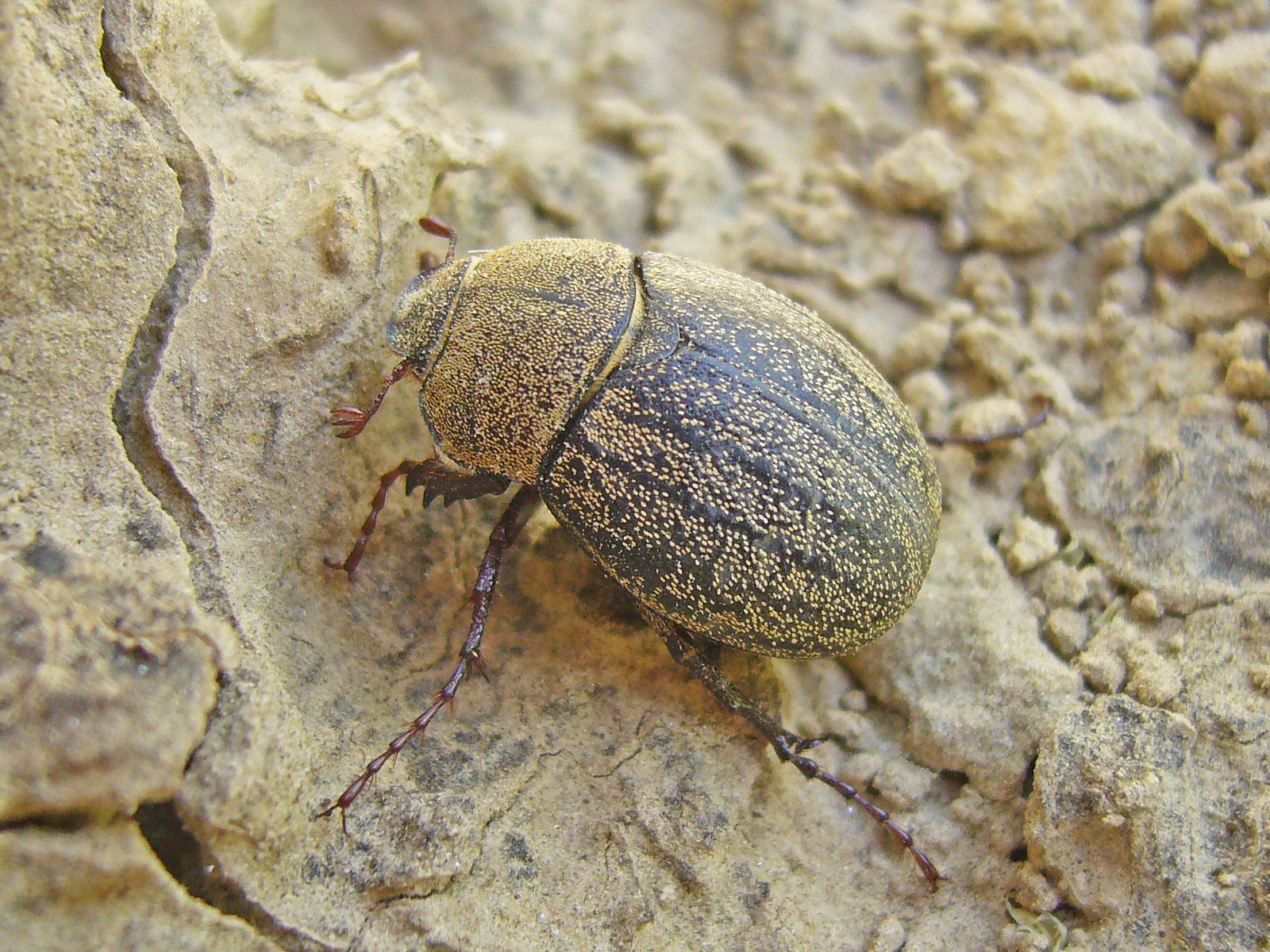
As is typical, the insect fauna of the Loess Hills has been far less studied than its plants, but many of the species that have been documented in its prairies also show affinity to the Great Plains fauna. Both soapweed and skeletonweed have insect associates that rely exclusively on these hosts for reproduction, and as a result they are also highly restricted in Missouri. Evidence of one of these – a tiny cynipid wasp (Anistrophus pisum) that forms small spherical galls on the stems of skeletonweed – can be seen in the photo above. However, my purpose for visiting the Loess Hills this summer was to look for the rare and possibly endangered tiger beetle, Cicindela celeripes (see this post). Cicindela celeripes has not yet been recorded from Missouri but is known to occur in the Loess Hills of southwestern Iowa, and while I have not succeeded in finding it (yet!) I did observe several adults of this unusual May beetle species, Phyllophaga lanceolata. This May beetle occurs throughout the Great Plains in shortgrass prairie communities. Larvae feed in the soil on roots of grasses and other plants, while adults feed above ground on flowers and foliage. The heavy-bodied adults are unusual in the genus due to their conspicuous covering of scales (most species of Phyllophaga are glabrous or with sparsely scattered and indistinct setae) and by being active during the day. They are also relatively poorer fliers and are thus usually observed moving about on foot – as seen with this individual who was found on bare soil below a vertical cut. This snakeweed grasshopper (Hesperotettix viridis, ID by Eric R. Eaton) is another species more typically seen in the western United States, although populations have been found from across the continent. Preferred host plants include a variety of asteraceous shrubs, but as suggested by the common name snakeweeds (Xanthocephalum spp.) are highly preferred and account for its greater abundance in the west. Populations in northern and eastern portions of its range, which would include northern Missouri, are considered subspecies pratensis, while the more southern and western populations are considered the nominotypical subspecies. Interestingly (and unlike many grasshoppers), this species is considered beneficial by ranchers, since the plants on which it prefers to feed are either poisonous to livestock or offer little nutritional value while competing with more desirable forage plants for soil moisture. While exploring the upper slopes, I encountered sporadic plants of two of Missouri’s more interesting species of milkweed – whorled milkweed (Asclepias verticillata) and green milkweed (Asclepias viridiflora), raising my hopes that I might encounter one of the many Great Plains species of milkweed beetles (genus Tetraopes). However, the only species I observed was the common milkweed beetle, Tetraopes tetrophthalmus, which occurs broadly across eastern North America on the equally broadly distributed common milkweed (Asclepias syriaca).

It is a familiar refrain, but Missouri’s dry loess hill prairie communities are critically endangered. Historically, these communities were probably never as well developed as those further north, and only a few small remnants remain today due to significant woody encroachment following decades of fire suppression. Much of this encroachment has occurred in the past 50 years – Heinman (Woody Plant Invasion of the Loess Hill Bluff Prairies. M. A. Thesis, University of Nebraska at Omaha, 1982) used aerial photographs to show a 66 percent encroachment of shrubs and trees into the loess hill mixed-grass prairies between 1940 and 1981. Additional threats include overgrazing, erosion, invasion by exotic plant species and homesite development. Fewer than 50 acres of native dry loess hill prairie remain in Missouri – only half of which are now in conservation ownership. The majority of these can be found at Star School Hill Praire and Brickyard Hill Conservation Areas in Atchison County and at McCormack Conservation Area just to the south in Holt County. Controlled burning and selective cutting are being used at these sites to control woody plant invasions, but even these management techniques present challenges. Spring burns have been shown to promote the growth of big bluestem (Andropogon gerardii), which could allow it to encroach drier areas where mid-grasses such as little bluestem (Schizachyrium scoparium) and sideoats grama (Bouteloua curtipendula) typically dominate (Rushin 2005). Increases in tall grasses could shade out and eliminate some of the rarer low-growing forbs such as downy painted cup (Castilleja sessiliflora), locoweed (Oxytropis lambertii) and low milkvetch (Astragalus lotiflorus). Fall or winter burns may be more beneficial to forbs because the plants are allowed to complete flowering and seed set, but the steep slopes on which these communities occur make erosion a potential concern. Clearly, all factors must be considered when designing management plans for this rare and significant slice of Missouri’s natural heritage.


In addition to the links and references provided above, I highly recommend Fragile Giants: A Natural History of the Loess Hills, by Cornelia F. Mutel (1989). All of the above photographs were taken at Star School Hill Prairie Conservation Area on July 12, 2008. Additional photographs of Loess Hill habitats in extreme southwestern Iowa appeared in my earlier post, The hunt for Cicindela celeripes. The plants shown in photographs 5-7 are purple praire clover (Dalea purpurea), white prairie clover (D. candida), and lead plant (Amorpha canescens), respectively. Lastly, I would like to apologize for the length of this post – a consequence of my inability to temper my utter fascination with the natural world and desire to understand the depths its connectedness.

Sand Prairie Conservation Area

I have a love-hate affair with Missouri’s Southeast Lowlands (formally known as the Mississippi River Alluvial Basin, but simply called the “bootheel” by most folk in reference to the shape of its boundaries). Of the four main physiogeographic regions in the state, it is by far the most altered. Yes, the Ozark Highlands have been degraded by timber mismanagement, overgrazing, and fire suppression, yet many of its landscapes nevertheless remain relatively intact – just a few burn and chainsaw sessions away from resembling their presettlement condition. The northern Central Dissected Till Plains and western Osage Plains are more disturbed, their prairie landscapes having been largely converted to fields of corn, soybean, and wheat. Still, riparian corridors and prairie habitats ranging from narrow roadsides to sizeable relicts combine to provide at least a glimmer of the regions’ former floral and faunal diversity. The alterations these regions have experienced are significiant, yet they pale in comparison to the near-total, fence-row-to-fence-row conversion that has befallen the Southeast Lowlands. Its rich, deep soils of glacial loess, alluvial silt, and sandy loam originally supported vast cypress-tupelo swamps and wet bottomland forests – massively treed and dripping with biotic diversity. Exposed by relentless logging and an extensive system of drainage ditches and diversion canals, those same soils now support monotonous expanses of soybean, wheat, rice, and cotton. Giant plumes of dark smoke dot the unendingly flat landscape in late spring, as farmers burn wheat stubble in preparation for a double-crop of soybean (the need for which could be obviated by adopting more environmentally benign no-till drillers). Only a tiny fraction of the original swamp acres remain intact, preserved more by default due to their defiant undrainability than by human foresight, and wet bottomland forests now exist only as thin slivers hemmed in by levees along the Mississippi River to the east and the St. Francois River to the west. Solace is hard to find in these remaining tracts – hordes of mosquitoes and deer flies, desperate for blood to nourish their brood, descend upon anyone who dares to enter their realm, while impoverished locals leave behind waste of all manner in their daily quest for fish. The cultural history of the region parallels its natural history – nowhere in the state is the gap between wealth and poverty more evident, a testimony to its checkered history of race and labor relations.

Yet, despite its shortcomings, I am continually drawn to this region for my explorations. Driving down the southeastern escarpment of the Ozark Highlands into the Lowlands is like entering another world – a world of grits, fried catfish, and sweet tea, a world where it is odd not to wave to oncoming vehicles on gravel back roads, a world where character is judged by the subtleties of handshake, eye contact, and small talk. Again, its natural history follows suit, with many insects occurring here and nowhere else in Missouri – a distinctly Southern essence in an otherwise decidedly northern state. My recent discussion of Cicindela cursitans in the wet bottomland forests along the Mississippi River is just one example of the unique gems I have encountered in this region. Others include the rare and beautiful hibiscus jewel beetle (Agrilus concinnus), a sedge-mining jewel beetle (genus Taphrocerus) that is new to science (and, due to my sloth, still awaiting formal description), the striking Carolina tiger beetle (Tetracha carolina), and numerous other beetle species not previously recorded from the state. The small and scattered nature of the habitat remnants and often oppressive field conditions make insect study challenging here, but the opportunity for discovery makes this region irresistible.

Prior to this season, I had already visited most of the publicly-owned examples of swamp and forest found in the Southeast Lowlands. One natural community, however, that I had not yet seen happened to be one of Missouri’s rarest and most endangered – the sand prairie (I suppose you’ve surmised this by now from the photos). While conducting our recent survey for Cicindela cursitans, I took the opportunity to explore a recently acquired example called Sand Prairie Conservation Area. Geologically, sand prairies lie on our state’s youngest landscape, arising during the relatively recent Pleistocene glacial melts. Tremendous volumes of water from the melting glaciers scoured through loose sands and gravels deposited earlier during the Cretaceous and Tertiary periods by the present day Ohio River (the Mississippi River, much smaller at that time, actually drained northward into Hudson Bay!). After the last of these glacial melts formally ended the “ice age” (only 10,000 years ago), two long sandy ridges were all that remained of the original sand plain. Water drains quickly through the sandy soil of these ridges, which lie some 10 to 20 feet above the surrounding land, creating dry growing conditions favorable for prairie and savanna habitats where only drought-tolerant plants can survive. Dr. Walter Schroeder has conservatively estimated that 60 square miles of sand prairie were present in the Southeast Lowlands at the time of the original land surveys. Because settlement was already occurring at that time, a substantial amount of sand prairie had already likely been converted to agriculture, urban centers, and travel routes to staging areas for access across the swamps. Considering the conversion that might have already taken place, it is possible that as much as 150 to 175 square miles of sand prairie occupied the sand ridges. Sandy areas with higher organic soil content and supporting tallgrasses would have been the first to be converted, since this organic content would have also made them the most suitable for agriculture. Those with lower organic content created drier conditions more suitable for shortgrasses and were the next to be converted. Today, less than 2,000 acres of sand prairie remain – not even 1% of the original amount, and these relicts likely represent the sandiest (and driest) examples of the original sand prairie.

Walking onto the site, I was immediately greeted by an otherworldly expanse of sand dunes, blows, and swales. Ever the entomologist, and with tiger beetles in the fore from hunting C. cursitans, I immediately thought of two dry sand associated species that I have seen in the sand woodlands of nearby Crowley’s Ridge – Cicindela formosa (big sand tiger beetle) and Cicindela scutellaris (festive tiger beetle). These are both so-called “spring-fall” species – i.e., adults are active primarily during spring and fall, so I thought it might be a little late (my first visit was in late June) to see either one. It wasn’t long, however, before I scared up a C. formosa (pictured – but unfortunately facing the setting sun) on one of the dunes. I also encountered one individual of another dry sand associated species, Cicindela lepida (a white “summer” species aptly named ‘ghost tiger beetle’) but was not able to photograph it (I have to say this – I’m a patient man, but photographing tiger beetles is hard. Actually, stalking them until you can get close enough to photograph them is hard. Stalking them until you can get even closer to photograph them with a ‘point and shoot’ – hoping and praying they settle into a pose with the sun on their back because you can’t use the blindingly dinky little built-in flash – just about breaks every last fiber of patience I have within my soul!). Though the site represents a new county record for both species, this is not unexpected, since we have recorded each at multiple dry sand sites near big rivers throughout the state. The occurrence of C. scutellaris at this site, on the other hand, would be significant, and though I did not find it on these two summer visits, I will certainly return this fall to have another look. Cicindela scutellaris has been recorded from just three widely separated locations in the state. Individuals from the two northern Missouri sites are assignable to the more northerly and laterally maculate subspecies C. scutellaris lecontei, but those from the Crowley’s Ridge population (some 20 miles to the west) show an intergrade of characters between C. s. lecontei and the more southerly all-green and immmaculate subspecies C. scutellaris unicolor. I should mention that I believe the classic definition of subspecies (i.e., allopatric populations in which gene flow has been interrupted by geographic barriers) has been grossly misapplied in Cicindelidae taxonomy, with many “subspecies” actually representing nothing more than distinctive extremes of clinal variation. Nevertheless, I am anxious to see if C. scutellaris does occur at Sand Prairie, and if so does it exhibit even more of the “unicolor” influence than does the Crowley’s Ridge population?

I’ve mentioned previously my weakness as a botanist, a fact I found especially annoying as I explored this new area and found myself unfamiliar with much of the flora that I encountered. I’ve taken photographs and will, over time, attempt to identify them. Still, some plants are unmistakeable, such as this clasping milkweed (Asclepias amplexicaulis, also known as sand milkweed) – unfortunately well past bloom. Asclepias is a favorite plant genus of mine (I’ve made it a personal goal to locate all 16 of Missouri’s native Asclepias), so you can imagine my delight when I encountered numerous robust green milkweed (Asclepias viridiflora) plants in full bloom. As I approached one of these plants, I noticed the unmistakeable form and color of a milkweed beetle (genus Tetraopes). It didn’t have the look of the common milkweed beetle (Tetraopes tetrophthalmus), which is widespread and abundant throughout Missouri on common milkweed (Ascelpias syriaca), and as soon as I looked more closely, I recognized it to be the much less common Tetraopes quinquemaculatus. Additional individuals were found not only on A. viridiflora, but also on A. amplexicaulis. The latter is also a suspected host (the larvae are root borers in living plants) in other parts of the species’ range, but in Missouri I’ve found this species associated only with butterfly weed (Asclepias tuberosus). These observations suggest not only that A. viridiflora may also be utlized as a host, but that three species of milkweed are serving as such in this part of the state – unusual for a genus of beetles in which most species exhibit a preference for a single milkweed species in any given area. More questions to answer!
Amazingly, there were no publicly owned representatives of this community type in Missouri until just recently, when the Missouri Conservation Department acquired Sand Prairie CA through the efforts of the Southeastern Sand Ridge Conservation Opportunity Area, a consortium of private and public agencies dedicated to the conservation and restoration of sand prairies in the Mississippi River Alluvial Basin. Restoration efforts are now underway to promote species that historically occupied native sand prairies on the Sikeston Sand Ridge. Fire is one such management tool, although there seems to be some debate about the role of fire in the history of this natural community. Some have argued that the Southeast Lowland sand prairies are an anthropogenic landscape, created by Native Americans who regularly cleared and burned the land after arriving in the Mississippi River Alluvial Plain. Had it not been for such intervention, the sand ridges communities would have remained sand woodlands and forests, dominated by hickories and oaks. Several lines of evidence – convincingly summarized by Allison Vaughn in “The Origin of Sand Prairies” (June 2008 issue of Perennis, Newsletter of the S.E. Missouri Native Plant Society) – suggest a more natural origin. These include the presence of rare sand prairie endemics that do not occur in the sand woodlands of nearby Crowley’s Ridge and the fact that the remaining sand prairie relicts have not succeeded back to sand woodland despite 150 years of post-settlement fire suppression. Perhaps the truth lies somewhere in between, with the driest prairies remaining open regardless of fire, while those with somewhat higher organic content in their soils supported shifting mosaics of prairie, savanna, and woodland as fire events (whether natural or anthropogenic) flashed across different areas. Regardless of their history, the sand prairies of the Southeast Lowlands are truly unique communities that deserve protection. Restoration efforts are well underway at Sand Prairie CA, as evidenced by the charred grass clump next to eastern prickly pear (Opuntia humifusa) in the above photo. There is still more work to do, however, as illustrated by this attractively scenic, yet unfortunately exotic Persian silktree (Albizia julibrissin) still remaining on the parcel – emblematic of Man’s pervasive alterations in even the most unique of landscapes.

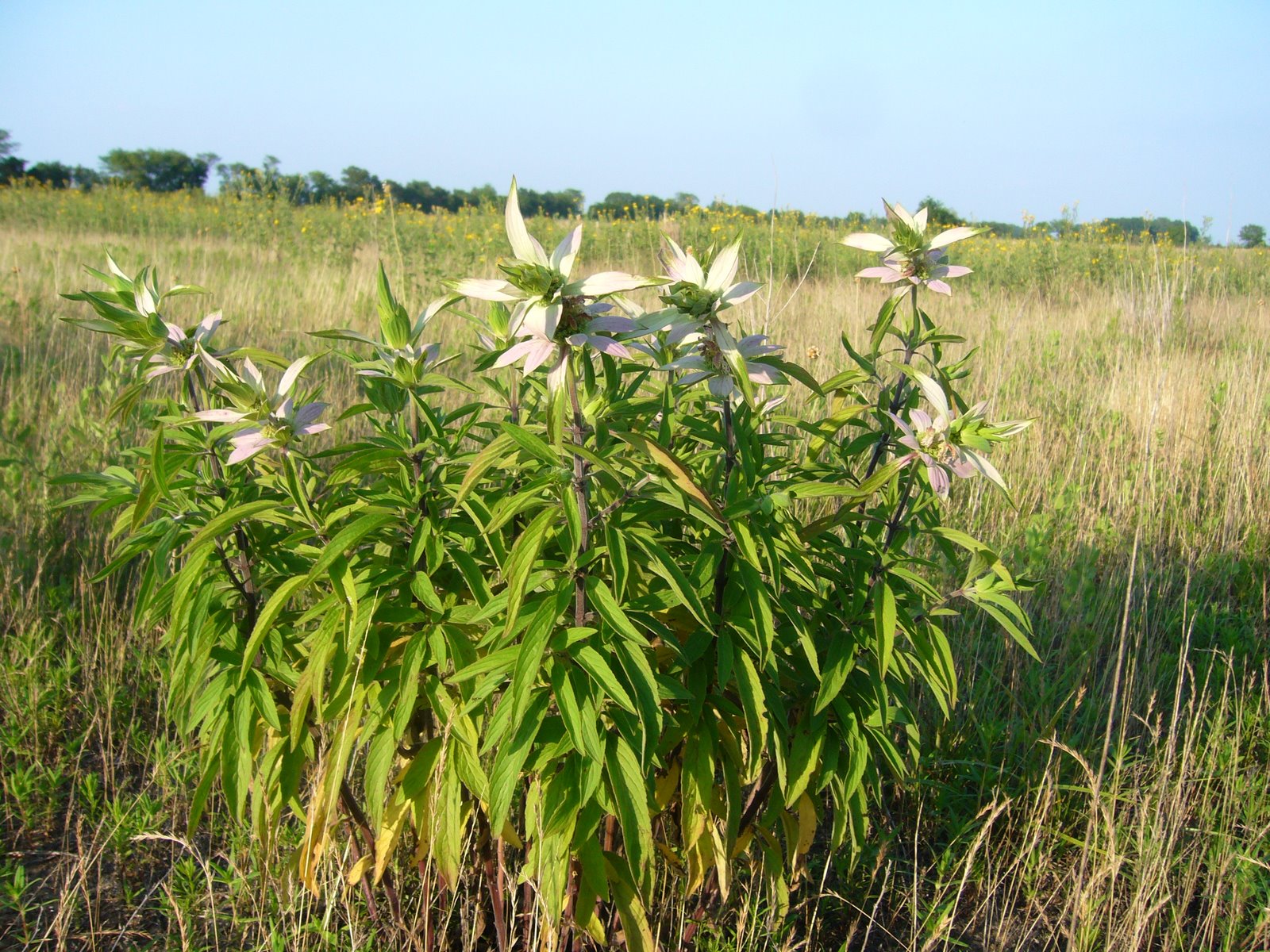
For further reading on the sand prairies of the Southeast Lowlands, I recommend the excellent article, “A Prairie in the Swamp”, by A. J. Hendershott and this blog entry by the ever-eloquent author of Ozark Highlands of Missouri. In the meantime, so as not to disappoint the botanists who may stumble upon this silly post, I leave you with a few photographs of some of the wildflowers I saw during my visits. I consider the plant in the first photograph to be camphorweed (Heterotheca sp., either camporum or subaxillaris), frequntly associated with sandy soils in southern Missouri (especially the Southeast Lowlands). My colleague James informs me the second plant is plains puccoon (Lithospermum caroliniense), another sandy soil associate found primarily in the Lowlands and distinguished from the much more common L. canescens by its robustness and rougher pubescence. Both of these species were common near the perimeter of the barren sand areas and nearby. The third plant appears to be spotted beebalm (Monarda punctata) (my thanks to michael for the ID). It was confined, as far as I could tell, to a small area in a swale (moister?) away from the barren sand. This plant, a clump-forming perennial that prefers prairies and open sandy soils, is apparently not common in Missouri, having been found primarily in a few eastern counties adjacent to the Mississippi River.
Ozark Trail – lower Courtois Section

The Courtois Section is the northern terminus of the Ozark Trail (OT). Despite its proximity to the St. Louis metro area, it feels just as remote and wild as the more southern sections. Rich and I played hooky from work on Friday and made our first visit to this stretch of the Ozark Trail. At 40 miles in length, we’ll need to break it up into at least three parts, so for our first attempt we hiked the lower portion from Hazel Creek (where the Trace Creek section begins) north to the Hwy 8 trailhead. Apparently this portion of the OT is very popular with mountain bikers and equestrians; however, we didn’t encounter a single person all day.
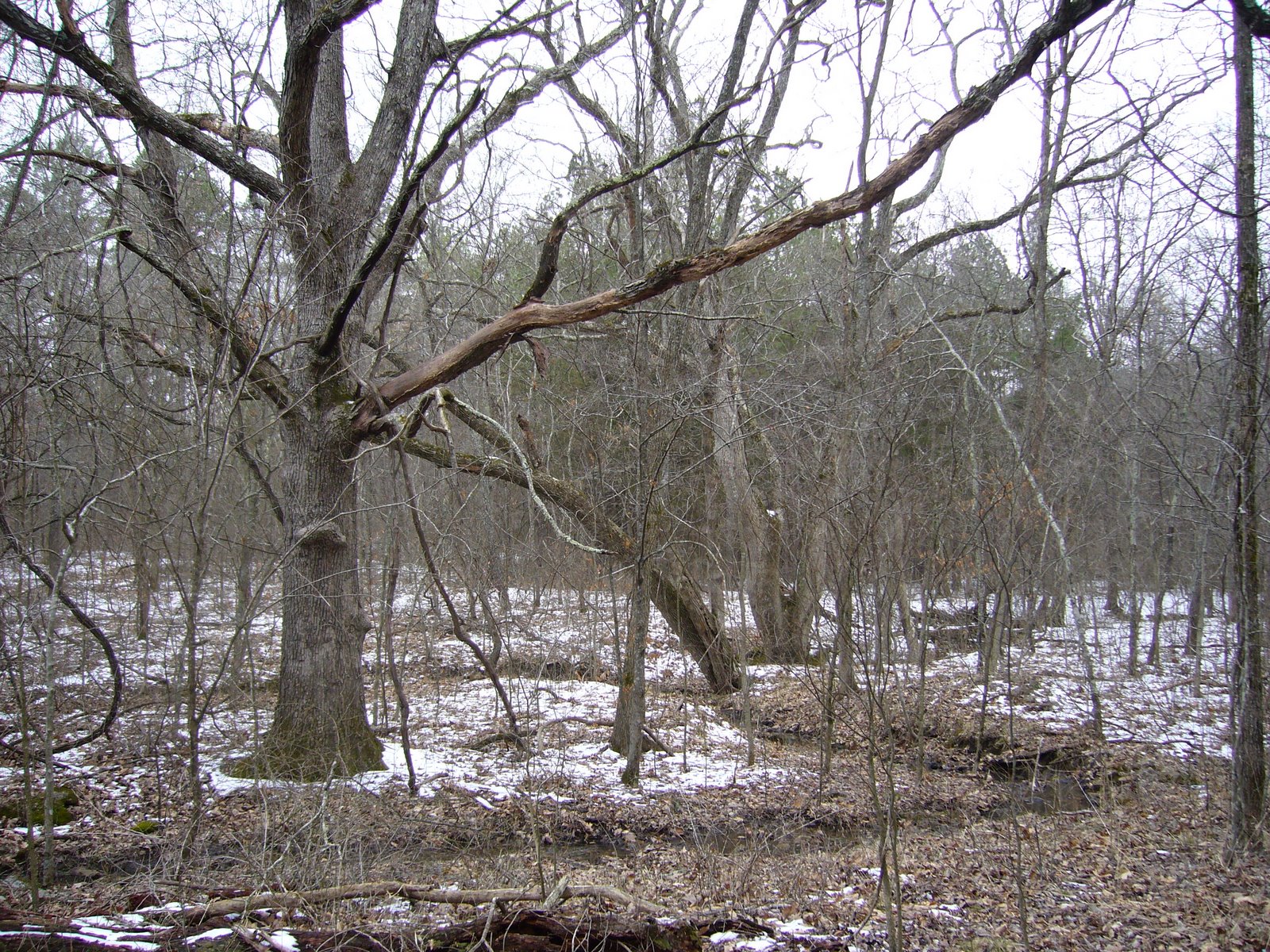
I expected the terrain to be rather mild at this northern end of the OT, but the first few miles were quite up and down. There was still some snow on the ground from a big storm a few days earlier – mild temps and sunny skies since then had caused a lot of melt. As a result, south facing slopes were completely devoid of snow cover, while north facing slopes still had and inch or two of snow, creating “split” scenes such as this:


Right away we noticed a lot of fresh woodpecker damage on oak trees. This is likely the result of infestations by the red oak borer (Enaphalodes rufulus), a cerambycid beetle that preferentially attacks red and black oaks suffering from drought or other environmentally-induced stress. The larvae of these beetles mine beneath the bark on the trunks of these trees before tunneling into the sapwood to pass the winter. Overwintering larvae are tasty morsels for woodpeckers, who hammer into the trunks with their beaks and extract the larvae with their barbed tongues. Interestingly, conventional wisdom has it that the tongue “stabs” the larva, and the barbs aid in pulling the larva out of its gallery. However, recent experiments with a West Indian species suggest this is not the case. Rather, the larva “sticks” to saliva on the tongue, and the barbs help to grab the larva as the tongue is wrapped around it. This picture shows a small black oak (Quercus velutinus) tree with fresh damage, probably from a pileated woodpecker (Dryocopus pileatus) judging by the size, going after one of these larvae.


A few miles into the trail, we came upon some curious “pits” covering one hillside. We speculated what they might be – sinks was an early thought, but I didn’t think that was so because the ground was mounded around the edge like they had been intentionally dug. Rich then remembered reading something about miners digging such pits in past years looking for minerals – we decided that must be what they were, and this was later confirmed in our Ozark Trail guidebook. Certain hillsides were literally covered with these pits, spaced ~10-15 feet apart.

After passing through Snapps Branch (where we noticed a small calcareous wet meadow, or fen – thankfully fenced), the trail leveled out for awhile before descending down to Boiling Springs Hollow where we stopped for lunch. Many of the larger valleys along the OT show some evidence of prior habitation – either by remains of old structures or by the stage of succession exhibited by the bottomland forest. Right at Boiling Springs, I noticed this large, old oak tree along with several large sugar maples (Acer saccharum) surrounded by younger forest – I suspect these “founder trees” were planted at some point when people lived near the spring (or at least spared from “the saw”) and remain as the only evidence of the people who lived here in the past.


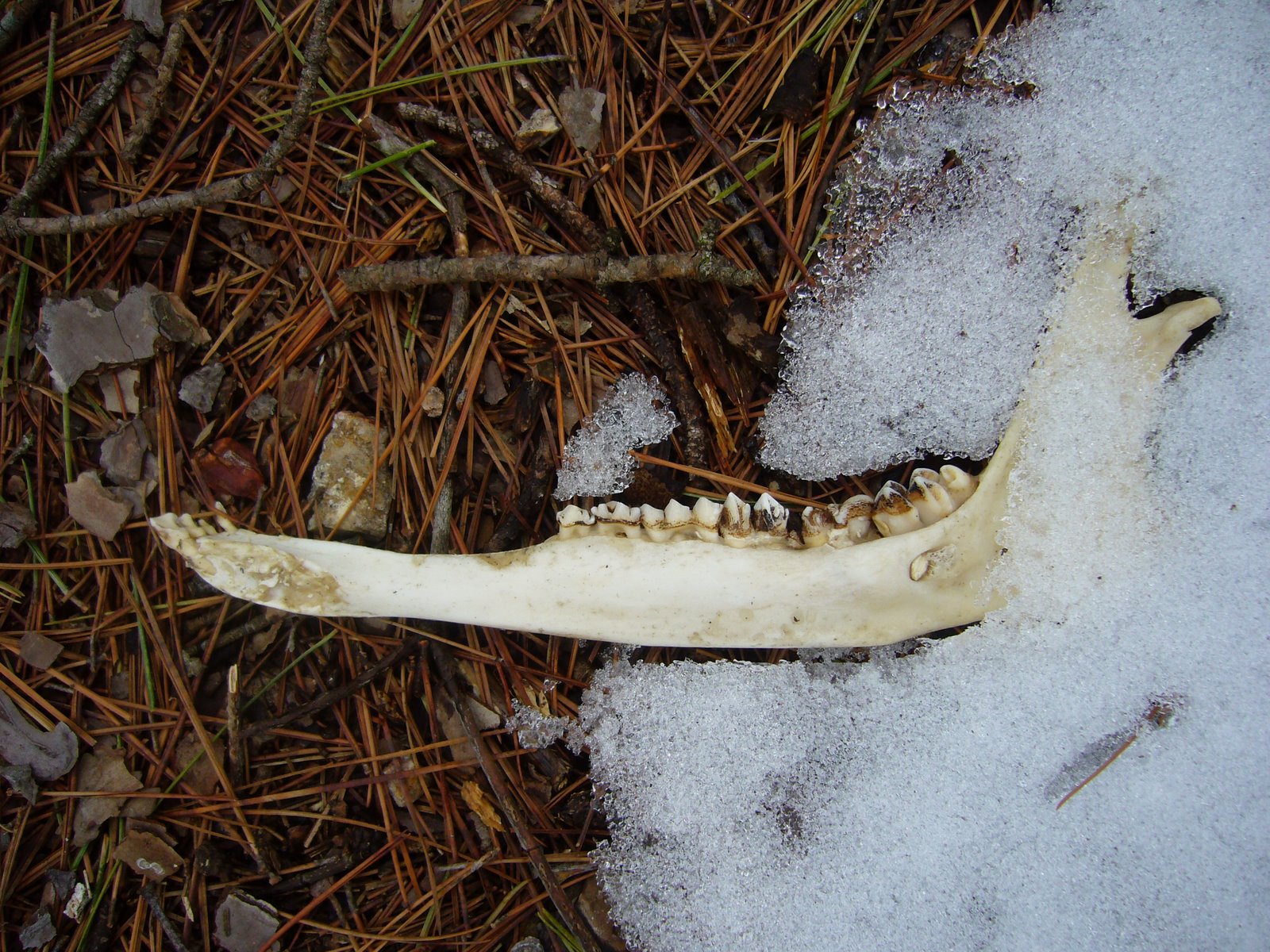
I love bones and pick them up whenever I get the chance. After leaving Boiling Springs I noticed this half mandible of a white tailed deer (Odocoileus virginianus) laying on the trail, still partially embedded in the snow. It was remarkably clean and complete, containing all of its dentition and with no remaining tissue except for a small piece attached to the nerve fossa. It’s completeness begged the question – where was the other half? We looked around and couldn’t find it. We then wondered if it had been dragged there by a scavenger, although we thought that if that was the case it should show signs of gnawing or at least have lost some of its dentition. At any rate, I have a white tailed deer cranium in my collection but not a mandible, so this will be a welcome addition.


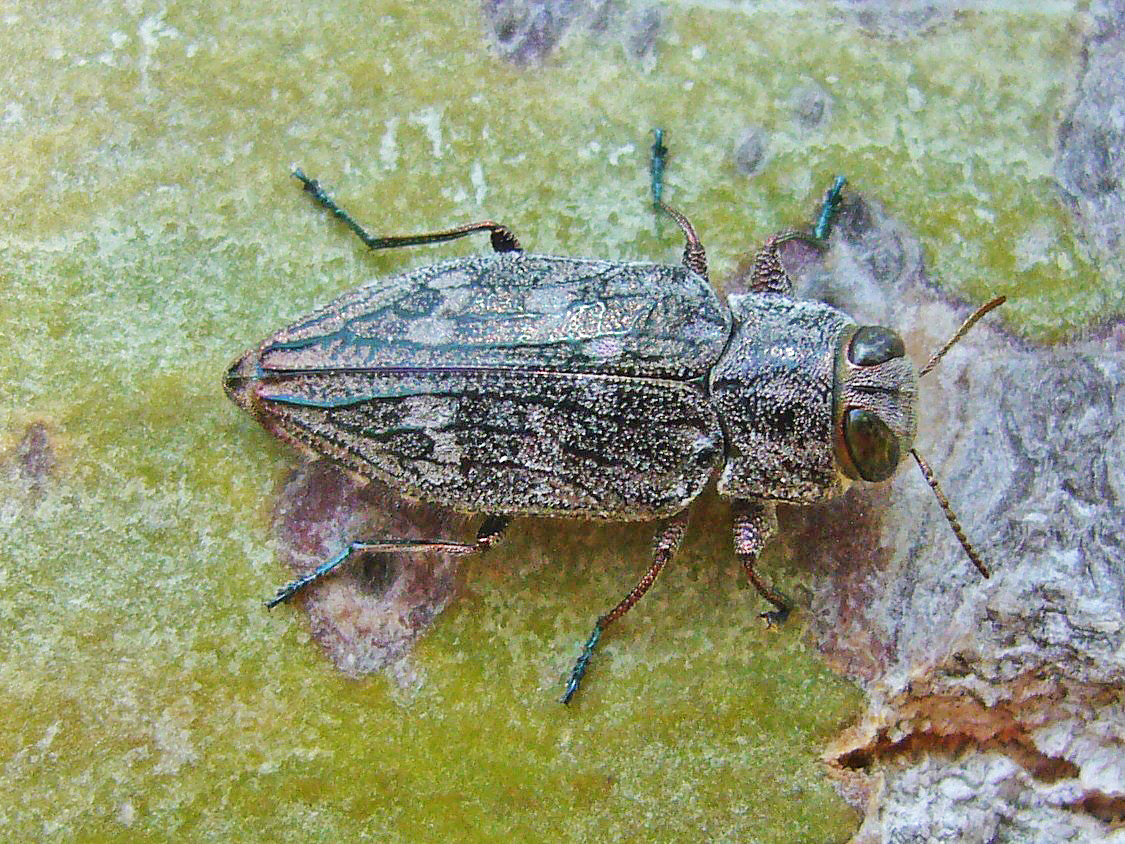
Eventually we entered Machell Hollow, where we followed a beautiful stretch through the upper reaches of the valley. In this area we noticed a large number of dead white oaks (Quercus alba) that were all about the same size (~4-8″ dbh) and in about the same stage of decay, as if they had all died about the same time (maybe 4-5 years ago). There were still plenty of larger living trees, and I began to suspect that a fire had moved through this area and began looking for the evidence. Soon we found several larger trees showing some blackening around the base of the trunk that seemed to confirm this thought. We had a lot of fun “pushing over” some of these trees, with one in particular probably representing our champion pushover to this point. I didn’t think it was gonna go, but Rich chipped in, and against our formidable combined weight the tree gave way and came down with a crash. I noticed evidence of tunneling by wood boring beetles (probably a species of Buprestidae) inside the trunk of this tree where it cracked upon falling and lamented that I could not take a piece with me for rearing. All of the dead white oaks had this one type of shelf fungus growing from their trunks, which were particularly numerous on this already fallen tree:


Climbing up (briefly) out of Machell Hollow, we saw this cut shortleaf pine (Pinus echinata) laying by the side of the trail. Interestingly, the accumulated ice on the cut end of the trunk was not the result of water running off the trunk, but through the trunk, apparently through insect galleries and perhaps even the vascular bundles of the wood itself. The slow melt and freeze resulted in these interesting little ice columns joining the trunk to the moss-covered ground below.


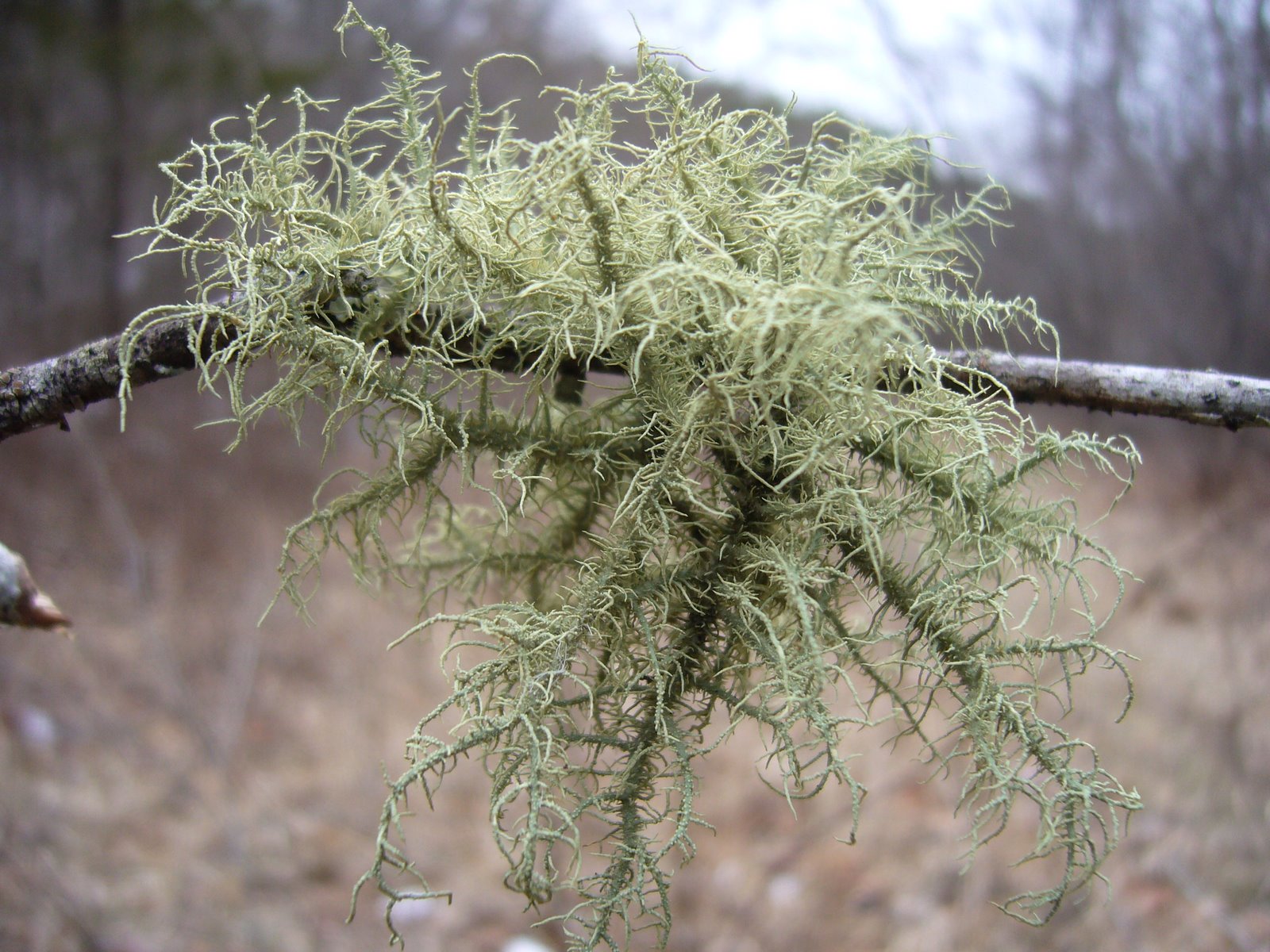
Back down into the lower reaches of Machell Hollow, evidence of prior settlement was obvious, as the bottomland forest in this area was replaced by young successional forest comprised primarily of chokecherry (Prunus virginiana), honey locust (Gleditsia triacanthos), and brambles (Rubus sp.). We saw this lone little fruticose lichen growing on a small honey locust. Apparently, of the three main groups of lichens, fruticose lichens are the most sensitive to environmental disturbance. Perhaps the existence of this one colony suggests that the health of this bottomland forest is returning as succession proceeds along the path to maturity.


Here’s a picture of Rich taking his own picture of the lichen. I don’t know why he didn’t just wait and steal mine once it got posted 😉


Much more abundant on the honey locust trees were these foliose lichens. Lichens in this group are probably the most commonly noticed lichens in the Missouri Ozarks (although the less conspicuous crustose lichens may actually be more diverse). If you click on the photo to see the full-sized version, you can see long, black “hairs” around the margin of each “leaf” – if anyone knows the identity of this or any of the other lichens pictured on this site please let me know.


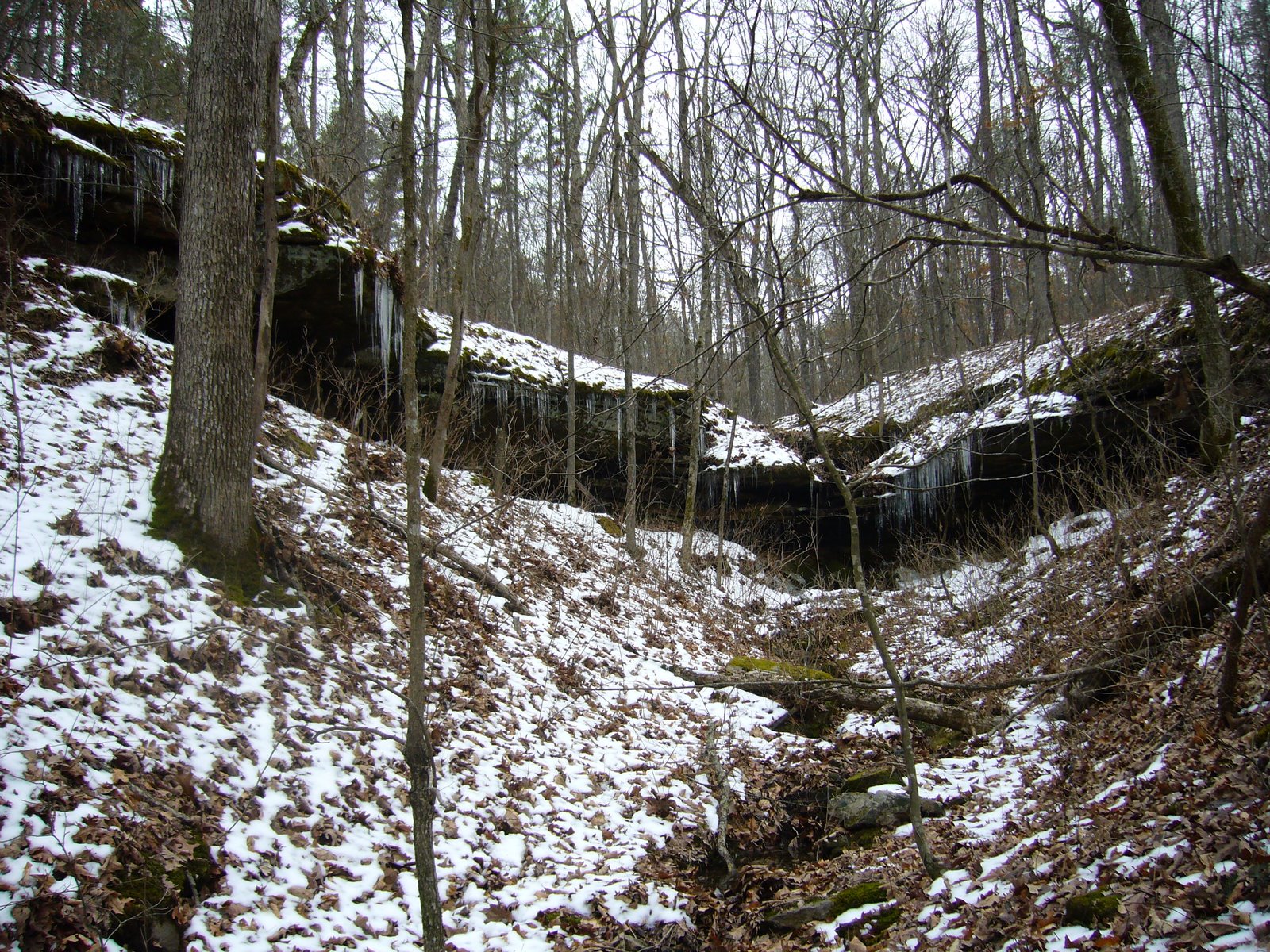
While ascending out of Machell Hollow, we noticed this small canyon about a hundred yards off to the left and decided to go investigate. Along the way we noticed the small creek coming from it was actually a ‘losing creek’ – which means that the water flows into the ground at certain points and is ‘lost.’ This is another feature of the limestone/dolomite-based Karst geology so common here in southern Missouri that results in its abundance of caves and springs. When we got to the canyon we saw it was comprised of a layer of sandstone. This must be a rare western exposure of the LaMotte sandstones that are more common just to the east in Ste. Genevieve County (see earlier posts on Hawn State Park and Pickle Springs Natural Area). This sandstone layer overlying dolomite has created an interesting geological feature, where a losing creek originates from a box canyon. Ice stalactites were dripping from the north facing slope of the canyon walls.


Back down into another hollow leading to Lost Creek we saw more dead white oaks with shelf fungi growing from the trunks. This one was interesting in that the shelf fungi were themselves supporting the growth of algae on their surface – an exquisite example of the interconnectedness of life.


We had seen a flock of wild turkeys (Meleagris gallopavo) moving through the forest earlier in our hike. We were too clumsily noisy to get close enough for more than a cursory look at them as they trotted off on high alert, but evidence of their activity was obvious as we saw their fresh “scratchings” over a wide swath through the forest as they searched for acorns to eat. Tracks were abundant in the snow around the area also, but I couldn’t get a good picture of them. Later, as we neared Lost Creek, I saw more tracks in the mud, so I was able to get a good picture of one. It looked fairly fresh (well defined, with nail holes evident):

Lost Creek represented the end of our hike, but it proved to be a more than insigificant final hurdle, as the water level was quite high due to all the recent snow melt. There was no choice, we would have to get wet. Rich is smarter than I and had thought to bring along some flip flops, so he took off his boots and socks, rolled up his pants, and forded the creek. I let him go first to see how deep the water was – it reached above his knees and got is rolled up pants wet. I decided to get my boots wet – I didn’t want to walk on those rocks barefoot, which would slow me down far more than I wanted in that cold water. I could handle wet boots for the final quarter mile in exchange for the comfort and speed they would provide on the rocks. Rich may be smarter, but I took a better line and didn’t even get my pants wet, so for me it was only a matter of changing into my comfy shoes back at the car, with no need for a change of clothes (which I also wasn’t smart enough to bring, either). We completed the hike in 7 hours – yes, we’re lollygaggers, constantly distracted by little things that most people either don’t see or don’t care about. It was a wonderful hike on another beautiful day, and we ended it with another traditional post-hike visit to the nearest pizza parlor before the short drive back to St. Louis.