
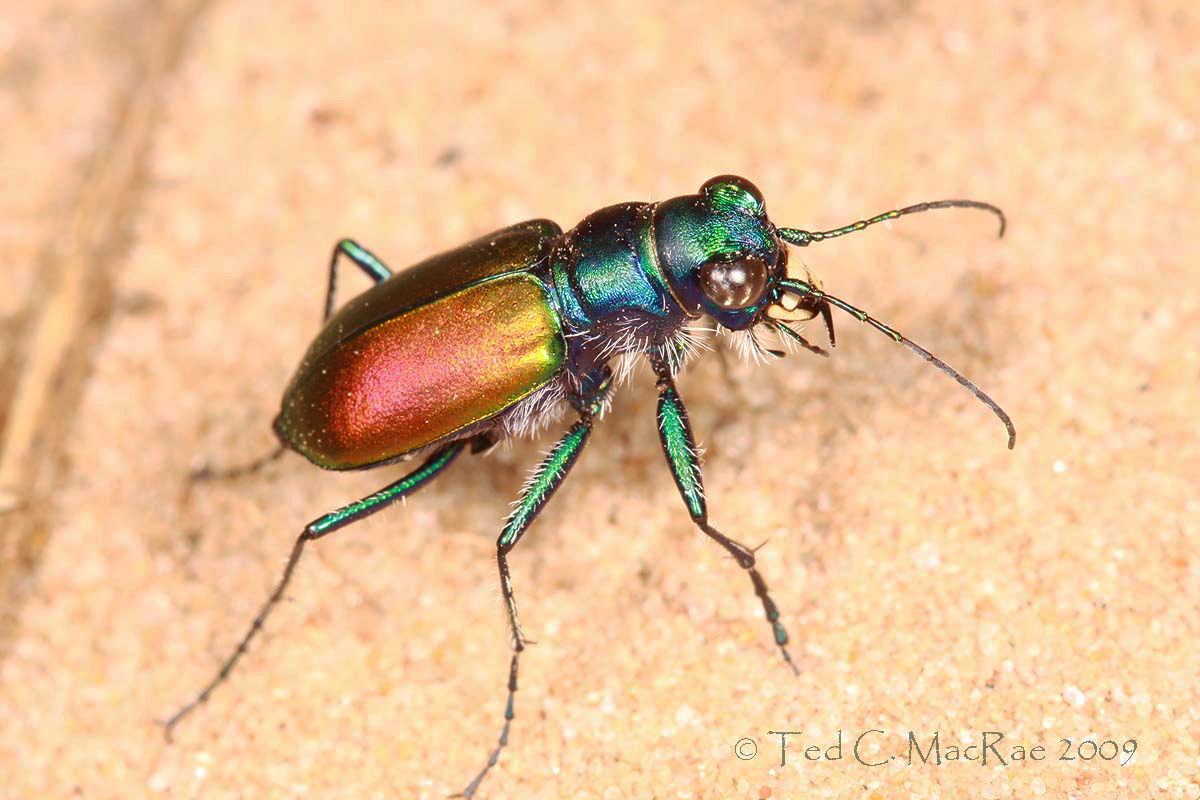
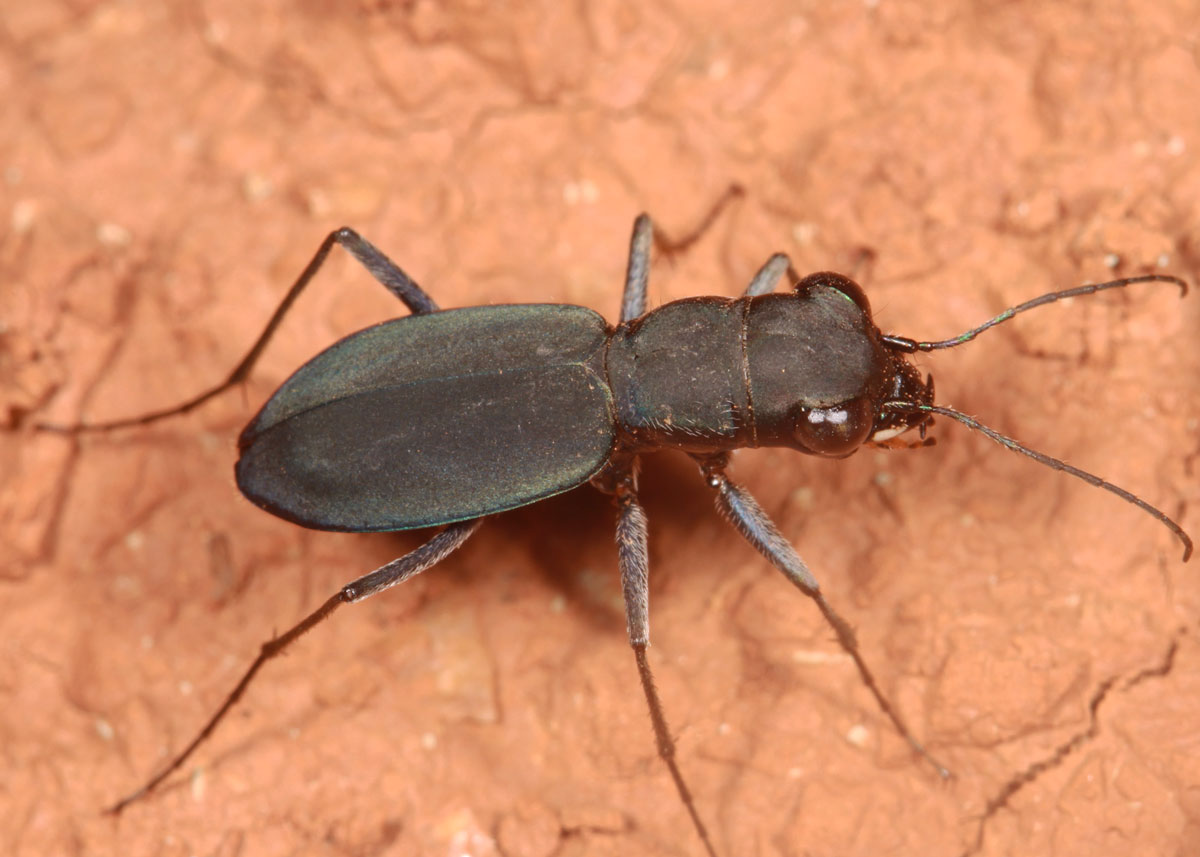
Fig. 1. Adult female Cylindera cursitans
One of the more recent of the 24 species of tiger beetles that we’ve collected in Missouri is Cylindera cursitans (Ant-like Tiger Beetle). Although not yet formally recorded from the state, we’ve known about its occurrence here for some time now based on a single specimen deposited in the Enns Entomology Museum (University of Missouri). With no more locality information to go on than the frustratingly vague “nr. Portageville,” my colleague Chris Brown and I made several attempts over the years to look for this species – eventually deciding that one particular spot where the highway stretched east of Portageville and dead-ended at the Mississippi River was the most likely collection site. This locality, which we would come to call the “end of the hiway” spot (I suspect that every state with at least one tiger beetle aficionado has one or more so-named spots), proved to be a true tiger beetle “hot-spot,” with no less than 8 species of tiger beetles found along its sandy banks in our first few surveys. However, C. cursitans was not among them, and success would only come with a little bit of serendipity when I received an email in 2007 from Kent Fothergill. Kent explained that he had learned of me from my Missouri Tigers article (MacRae and Brown 2001), offered some comments about the tiger beetles that he had been finding since his recent move to southeast Missouri, and included full label data from the tiger beetles in the small collection of the Delta Research Center where his then-fianceé had secured a position as a research entomologist. I wrote Kent back, thanked him for the data, and added this plea for assistance:
There is a single specimen of Cicindela cursitans in the UMC collection, it was collected in “nr. Portageville” on July 7, 1991. We have tried several times without success to locate this species in Missouri – it’s the only species that we have not relocated. If you have any interest in looking for it that would be great. Attached is a pdf of recent paper describing its habits and biology in Nebraska.

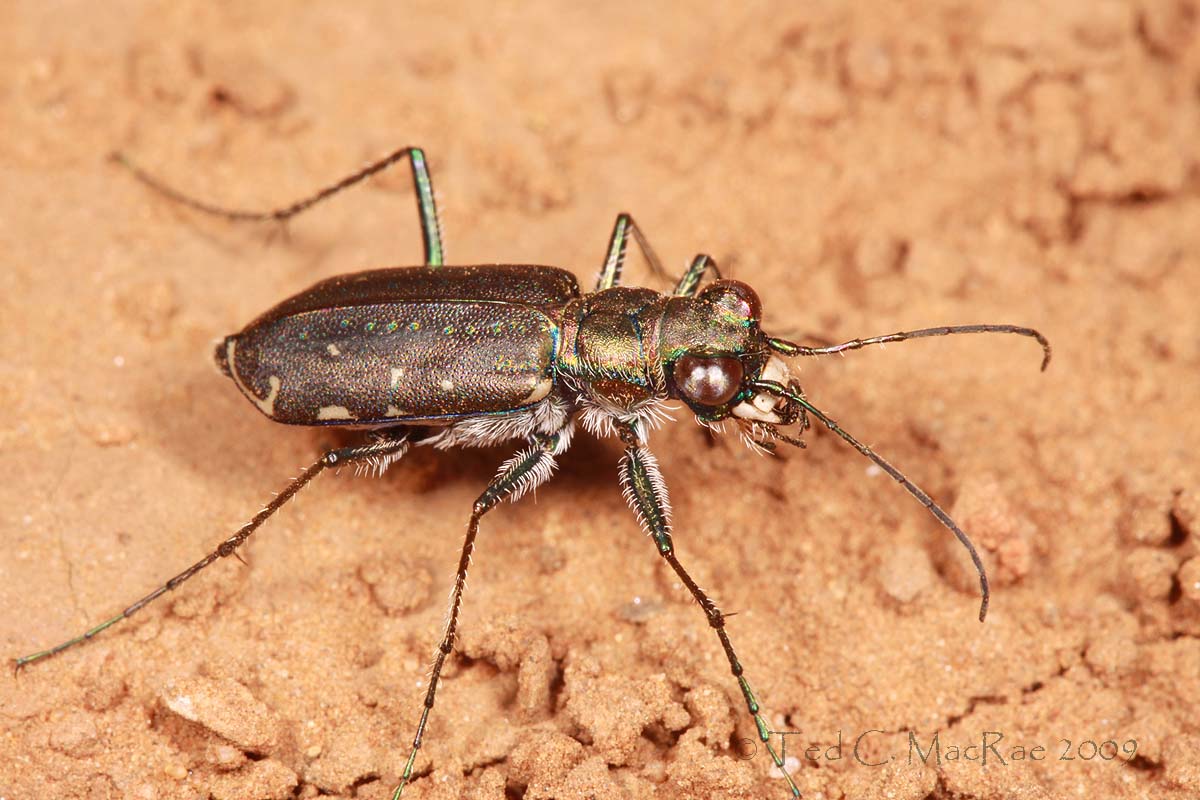
Fig. 2. Adult female Cylindera cursitans ovipositing in moist sand/loam substrate.
Little did I know how catalytic that comment would be – the very next day I received an email from Kent not only stating that he found it, but that he found it at the “end of the hiway” spot where we thought it might be. A digital photo confirmed its identity, and the that weekend I blasted down to meet Kent and see the beetle for myself. I would see just two beetles that day, but both were at a new locality about one mile south of where Kent had originally spotted them. Kent would later find them at yet another locality further north along the Mississippi River, and in 2008 the three of us (Kent, Chris, and myself) conducted an intensive survey of potential habitats in southeastern Missouri that identified additional populations both north and south of the original localities. We concluded that populations of C. cursitans, were restricted in southeast Missouri to the ribbons of wet bottomland forest that occupy the narrow corridor between the Mississippi River and the levees that confine it. However, the populations appeared secure and likely did not require any immediate conservation measures to ensure their long-term survival within the state.

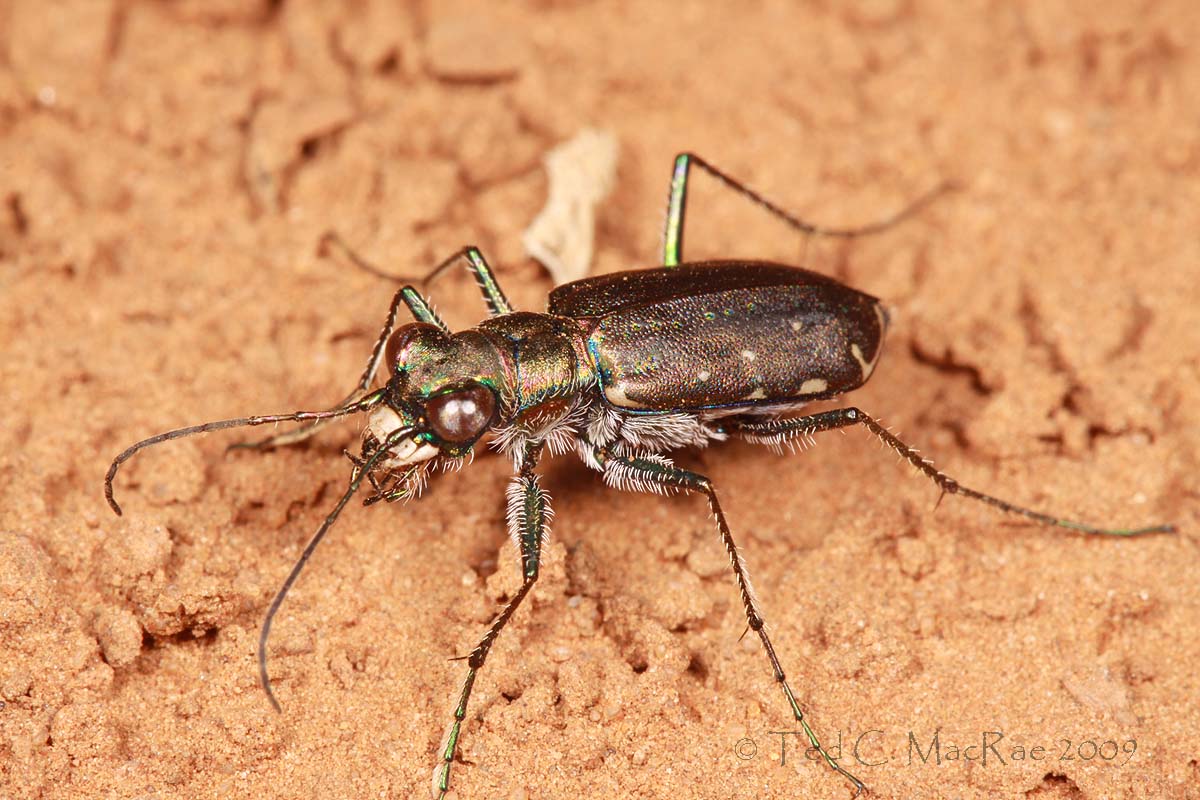
Fig. 3. Adult male Cylindera cursitans.
The bottomland forests that harbor C. cursitans in southeast Missouri (Fig. 3) contrast sharply with the wet meadow habitats reported for populations in Nebraska (Brust et al. 2005a). Within these habitats, the beetles themselves are very easily overlooked because of their small size and rapid running capabilities. In addition, adult activity peaks in June and begin to wane in July. The combination of these factors explains our initial difficulty in finding the beetle; however, with a proper search image and better understanding of its temporal occurrence and habitat preference, we have since found the beetles to be rather easily located. A lingering question from last year’s survey is, how far north along the Mississippi River does C. cursitans occur? Furthermore, might the species also occur in northeast Missouri due to its proximity to the Nebraska populations? Most of Missouri straddles a curious distributional gap that separates the bottomland forest dwelling populations in the southeast from the wet meadow dwelling populations in the upper Great Plains (Hoback and Riggins 2001). This has led some authors to suggest that the observed distribution represents two disjunct forms and potentially two species (Ron Huber, pers. comm.). Additional surveys of potential habitat further north along the Mississippi River and in northwest Missouri along the Missouri River could prove useful in confirming or refuting that suggestion.

Fig. 4. Habitat for Cylindera cursitans, along Mississippi River, vic. Donaldson Point Conservation Area, New Madrid Co., Missouri.
While such surveys were not possible this year, long-time fieldmate Rich Thoma and I were able to visit the Southeastern Lowlands in June to examine a few habitats along the Mississippi River found a little further north of the northernmost extent of our 2008 survey area. We succeeded in finding another population at one of these sites near the northern limit of the Southeastern Lowlands. The individuals shown here (Figs. 1-3) were collected from that location (extreme northeastern Mississippi Co.), confined on local sand/loam substrate, and photographed a few days later. In one of the photos (Fig. 2), a female can be seen in the act of ovipositing into a hole dug into the substrate with her ovipositor. The more observant readers might notice a strong resemblance between this species and another species to which I have devoted several posts, Cylindera celeripes (Swift Tiger Beetle). These two species are, in fact, quite closely related and can be distinguished by characters of the elytra (posterior portion not or only slightly expanded and lateral white maculations complete in cursitans, distinctly expanded and maculations reduced in celeripes) (Pearson et al. 2006), habitat (cursitans in moist lowland sites, celeripes in dry upland sites), and distribution (southeast Nebraska/southwest Iowa is the only area where the distributions of these two species overlap, although C. celeripes has not been seen in Nebraska for nearly 100 years! (Brust et al. 2005b)).
Photo details:
Figs. 1-3: Canon 100mm macro lens with Kenco extension tubes (68mm) on Canon EOS 50D (manual mode), ISO-100, 1/250 sec, f/18, MT-24EX flash 1/2 power through diffuser caps.
Fig. 4: Panasonic DMC-FX3 (landscape mode), ISO-100, 1/25 sec, f/2.8, natural light.
REFERENCES:
Brust, M., W. Hoback and C. B. Knisley. 2005a. Biology, habitat preference, and larval description of Cicindela cursitans LeConte (Coleoptera: Carabidae: Cicindelinae). The Coleopterists Bulletin 59(3):379-390.
Brust, M. L., S. M. Spomer and W. W. Hoback. 2005b. Tiger Beetles of Nebraska. University of Nebraska at Kearney. http://www.unk.edu (Version 5APR2005).
Hoback, W. W. and J. L. Riggins. 2001. Tiger beetles of the United States. Jamestown, ND: Northern Prairie Wildlife Research Center Online. http://www.npwrc.usgs.gov/resource/distr/insects/tigb/index.htm (Version 12DEC2003).
MacRae, T. C., and C. R. Brown. 2001. Missouri Tigers. Missouri Conservationist 62(6):14–19.
Pearson, D. L., C. B. Knisley and C. J. Kazilek. 2006. A Field Guide to the Tiger Beetles of the United States and Canada. Oxford University Press, New York, 227 pp.
Copyright © Ted C. MacRae 2009








 Beetles In The Bush