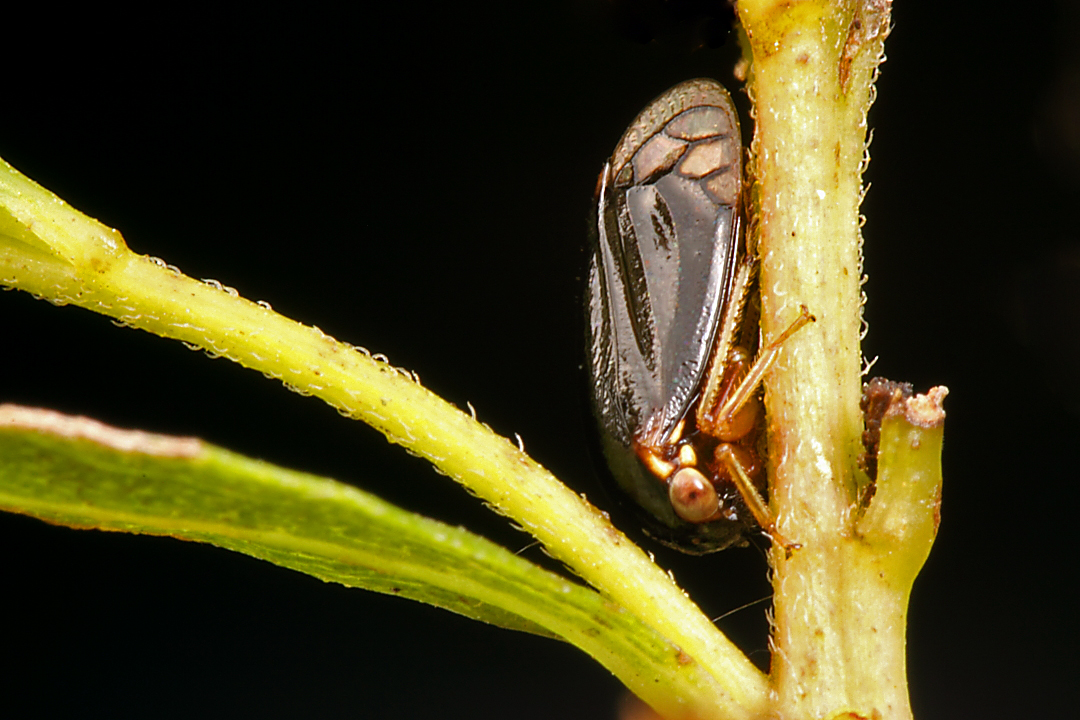
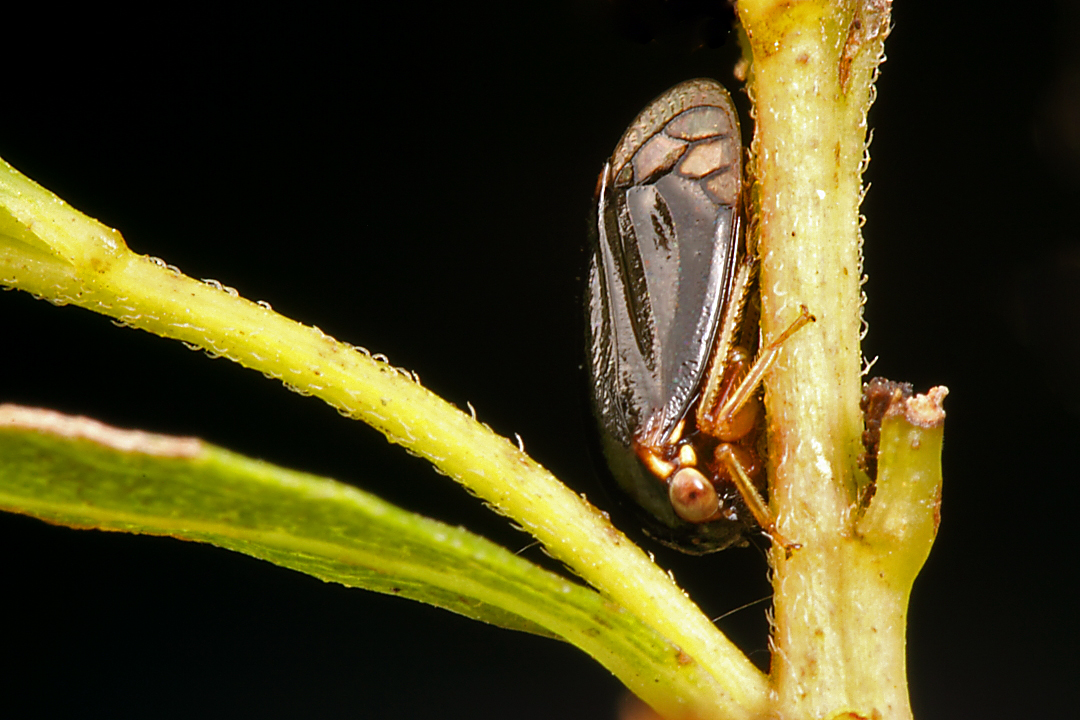
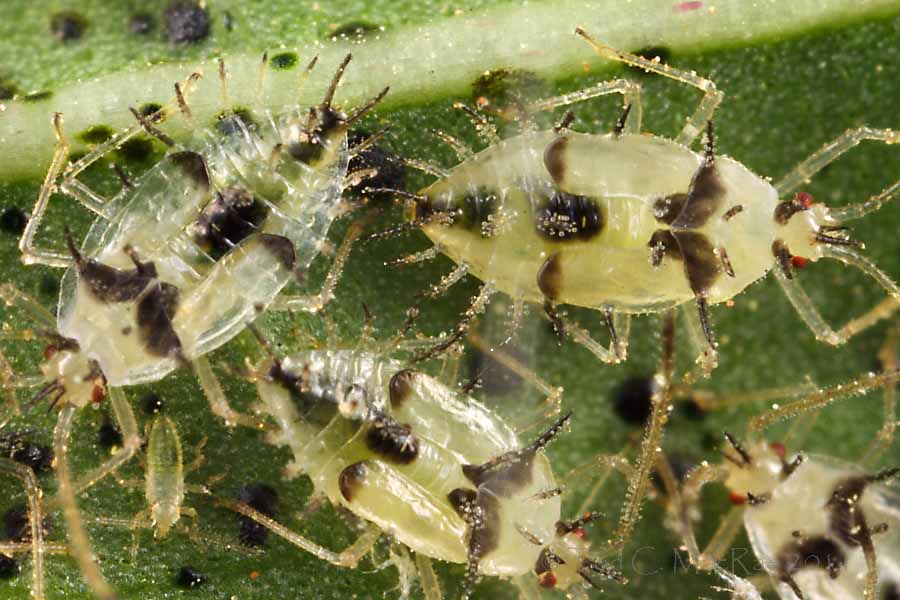
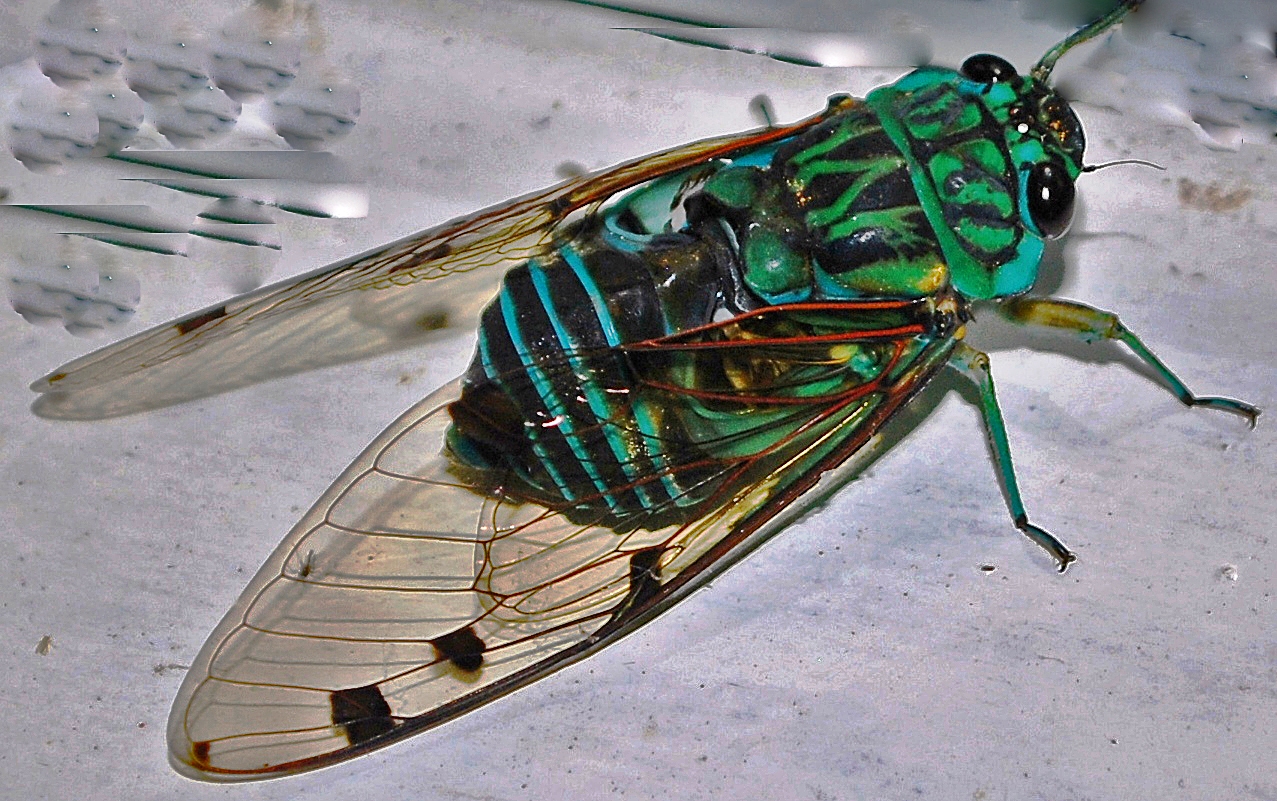
They’re baaaaack… finally!

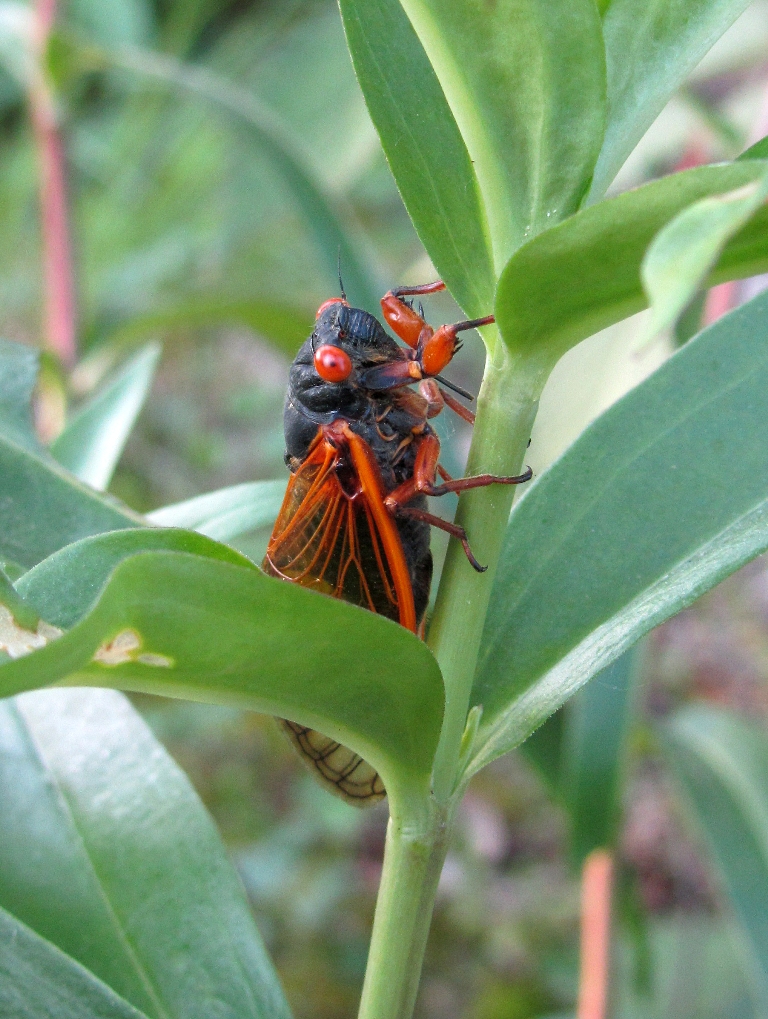
For almost a month I waited—waited for that spaceship-sounding drone from the trees; waited for their bodies to drip from the vegetation and their skins to litter the yard; waited for their delightful shrieks every time I jostle a tree branch. I had seen them mass emerging from the ground in southern Missouri in late April, but just 100 miles north in my hometown it seemed they would never show. Cold, rainy springs must not be to their liking, as it was not until the sun finally broke through and temperatures climbed into the 80s that they finally made their appearance in St. Louis—nearly a month after that mass emergence event further south had me looking and listening daily for one of North America’s most spectacular natural history events, Brood XIX of the periodical cicada!

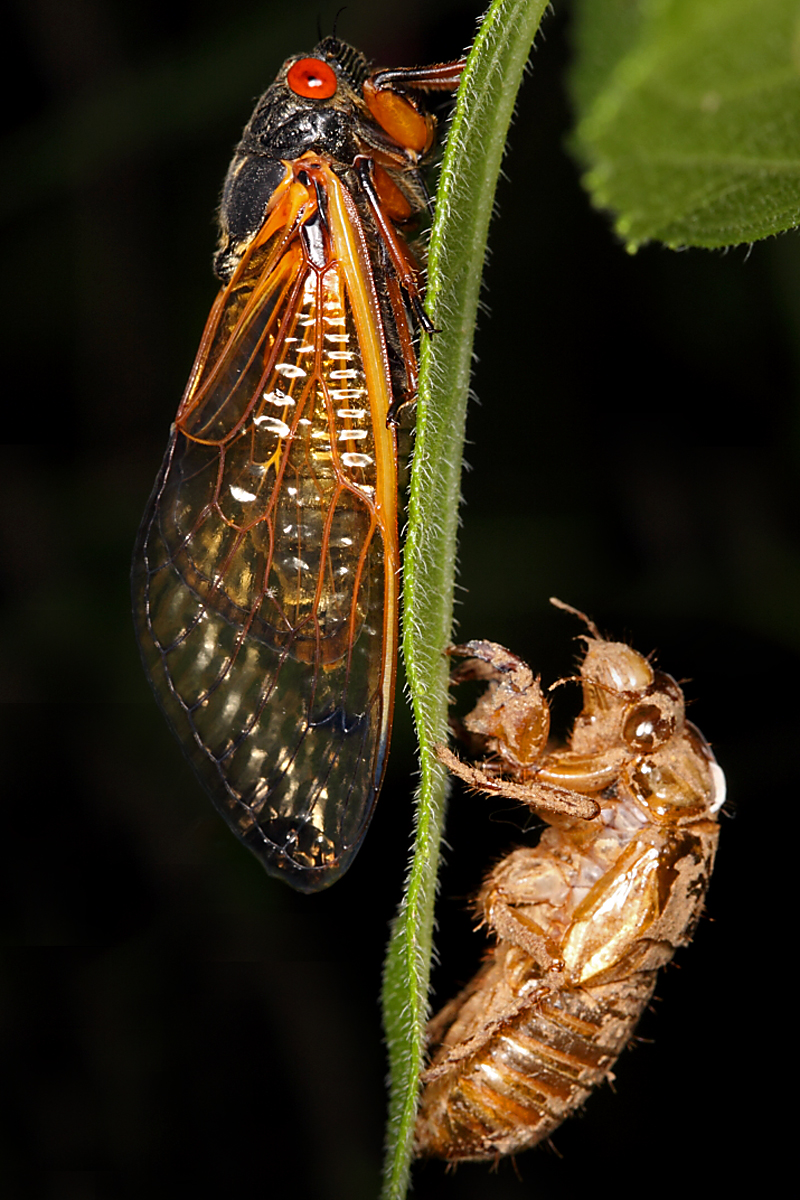
Finally, on May 21 I saw the first adults of the year at Shaw Nature Reserve not too far from my house (not intending to claim this as the date of their first appearance in my area!). They were not yet singing, but the adults were everywhere, many sitting right next to the skins they had just emerged from the previous evening. I had to travel on business through the southeastern U.S. that following week, and it was while visiting the beautiful MSU campus in Starkville, MS that I got my first taste of their late-afternoon synchronized, pulsating song. Upon my return to St. Louis at the end of the week, the eery drone filled the air as soon as I stepped out of the airport. It had been 13 years since I’d heard that sound, but euphoric recall instantly transported me back to 1998 and 1985 and my experiences with these marvels of evolution.

I don’t know that there is anything I can say about the periodical cicada that hasn’t already been said—repeatedly—by the numerous, more erudite sources that are following this event as if it were the approach of Haley’s comet. I don’t even know for sure which species are in my area and how to tell them apart. All I do know is that the constant droning of their singing is both maddening and amazing—a spectacle to behold for what it is, knowing that it will be the year 2024 before I have my next chance to witness it.

As I write this, I’m sitting in my hotel room in Salem, AR, where the cicadas are even more abundant than around my home in the woods—several stops to check building lights for beetles have ended in frustration because the cicadas were so numerous that they virtually swamped the space on the walls under the lights. There do seem to be two species here—a smaller one with a completely dark underside and the raspy, screeching sound that I am familiar with, and a larger one with the abdominal segments light along the posterior margins and a softer trill that almost reminds me of the song of an American toad. Maybe there are other species mixed in that I have not discerned, but I’ll not concern myself with that. Instead, I will continue to marvel at the extraordinary event unfolding before me, watch it as it cycles out, and chuckle at the complaints of the masses bemoaning their temporary inconveniences.

Copyright © Ted C. MacRae 2011
Stink Bugs on Soybean in Argentina

Despite the natural history and taxonomic focus on beetles and other insects I have adopted for this blog, I am by day an agricultural research entomologist.  For the past 15 years soybean entomology has been my focus, and there is no better nexus for soybeans and entomology than South America.  Cultivated hectares have increased dramatically in Argentina and Brazil over the past several decades, now totaling nearly 80 million acres in those two countries alone (roughly the same area as in the US, by far the world’s largest producer of soybean).  Unlike the US, however, where insect pressure is minor outside of a small number of acres in the southeast, significant pressure occurs in nearly 100% of South America’s soybean acres.  Lepidopterans, primarily species in the family Noctuidae such as velvetbean caterpillar (Anticarsia gemmatalis) and soybean looper (Pseudoplusia includens), are the most important pests, followed closely by stink bugs.  This latter group is especially problematic for growers to deal with.  Stink bugs feed on the developing seeds, causing direct yield impacts through reductions in weight and quality, and because they are a guild of insects rather than a single species, differences in product efficacy against the different species can lead to ineffective or inconsistent control.  I’m involved in trying to do something about this, and while I hate to be deliberately coy, suffice it to say that there is an awful lot of insecticide being sprayed on an awful lot of acres and that the world really would be better off if this weren’t the case.

During my recent visit to Argentina this past March, I took advantage of the opportunity while touring soybeanland to photograph a number of these stink bug species.  Proper identification of stink bugs in a crop is the first step towards controlling them, thus I present here my own photographic guide to some of the more important stink bug species found on soybean in Argentina.

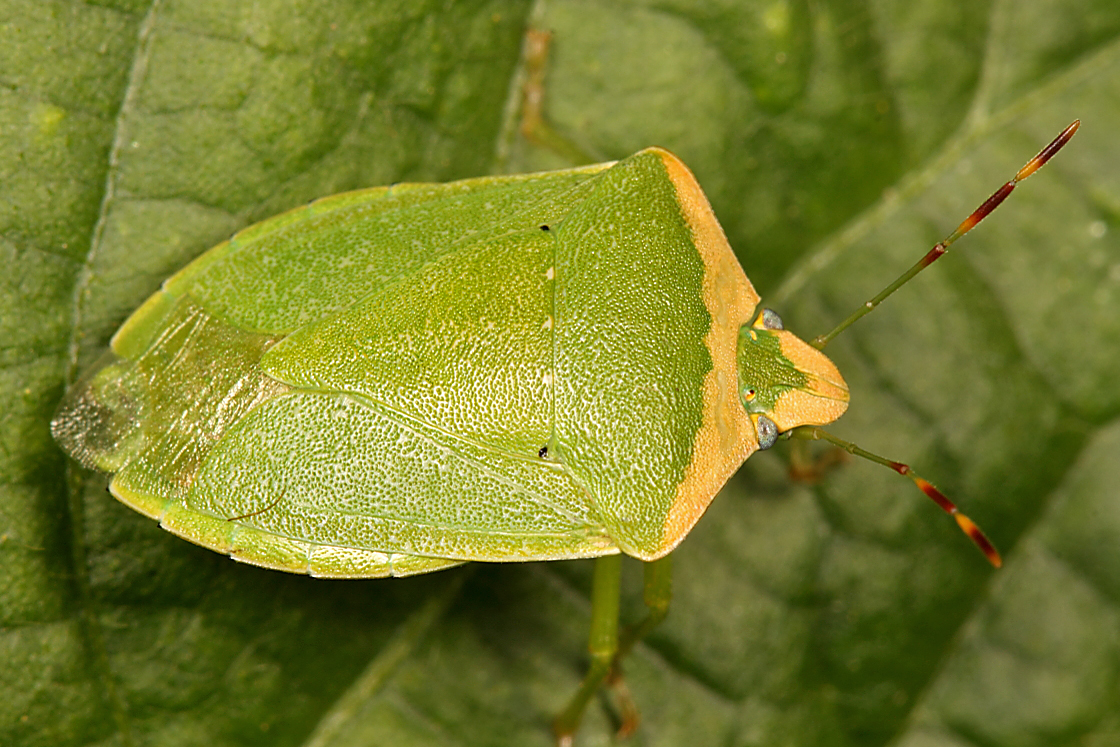
Nezara viridula (chinche verde), adult | Pergamino, Argentina

Nezara viridula, 5th instar nymph | San Pedro, Argentina

Nezara viridula, 1st instar nymphs on egg mass | Oliveros, Argentina

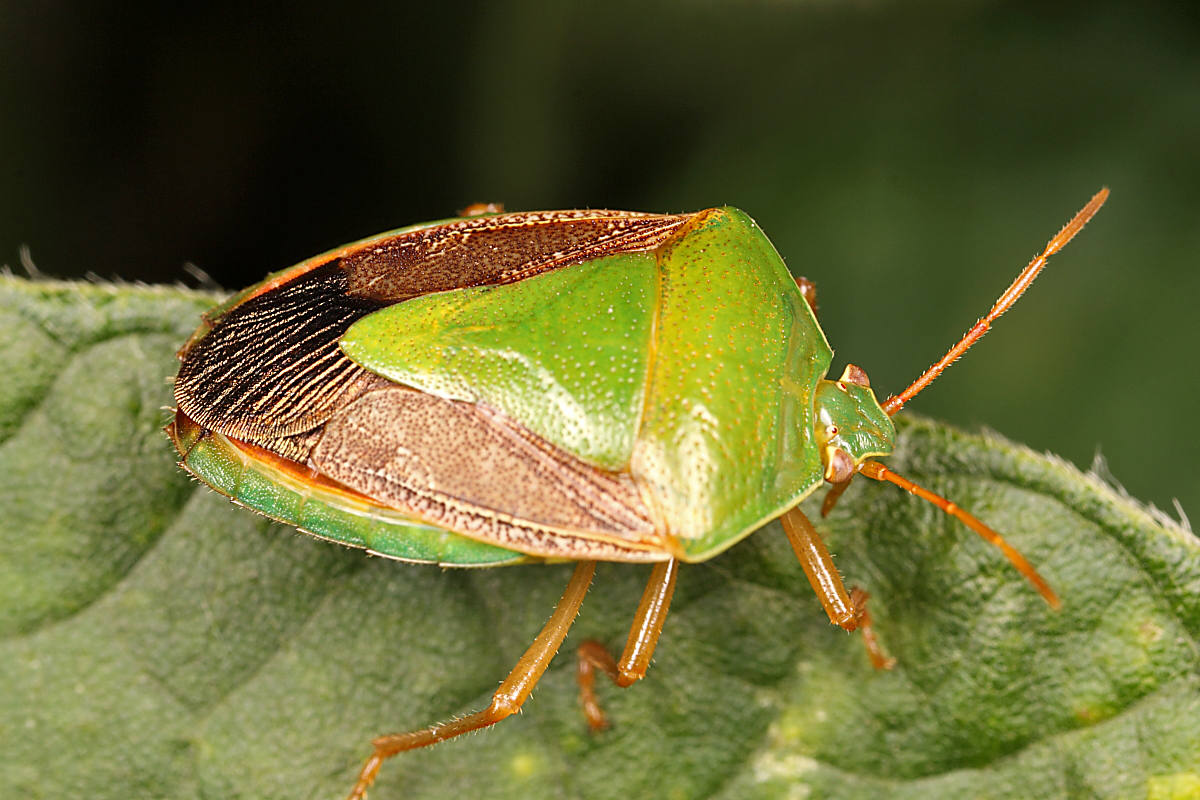
Piezodorus guildinii (chinche de las leguminosas), adult | Pergamino, Argentina

Piezodorus guildinii, 1st instar nymphs on egg mass | Acevedo, Argentina

Edessa meditabunda (alquiche chico), adult | Acevedo, Argentina

Edessa meditabunda, 1st instar nymphs on egg mass | San Pedro, Argentina

Edessa meditabunda, eggs nearing eclosion (note eye spots) | Oliveros, Argentina

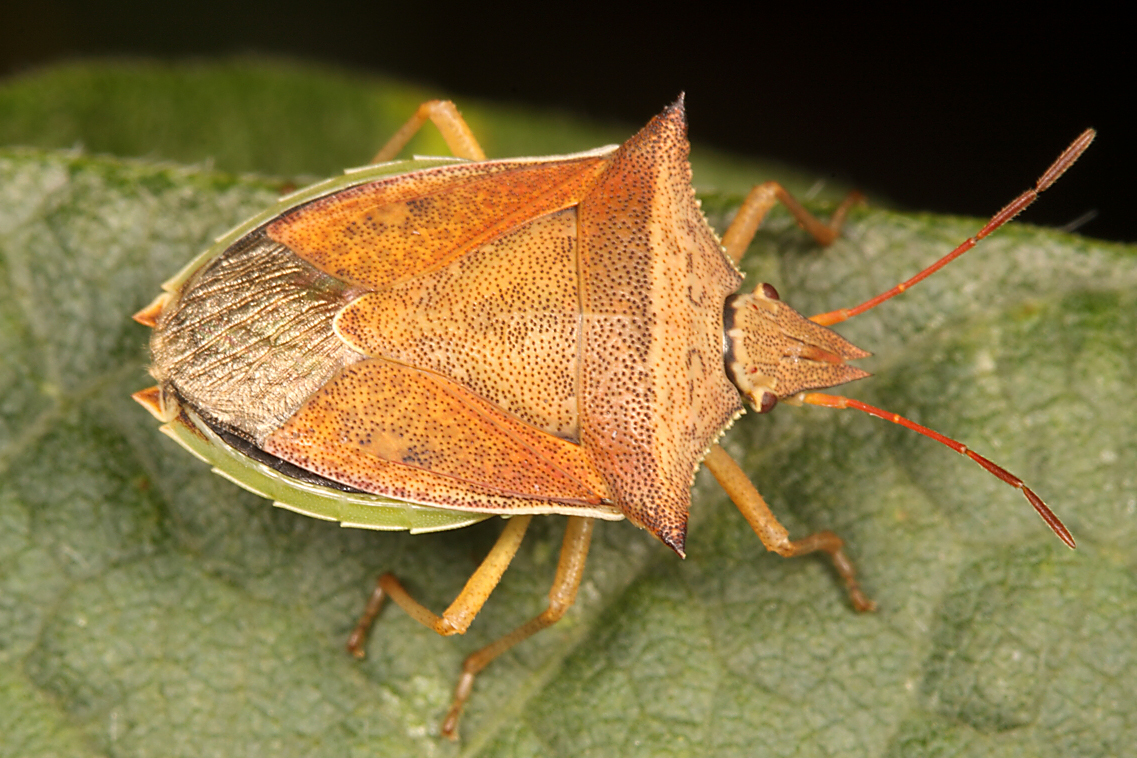
Euschistus heros (chinche marrón), adult | Oliveros, Argentina

Dichelops furcatus (chinche de los cuernos - note two ''horns'' in front), adult | Inés Indart, Argentina

Copyright © Ted C. MacRae 2011

Bichos Argentinos #12 – Lace Bugs

Corythaica cyathicollis on upper leaf surface of Solanum granuloso-leprosum.

Shortly after entering La Reserva Ecológica Costanera Sur (Buenos Aires, Argentina) during my early March visit, I noticed a fairly large patch of solanaceous-looking shrubs.  Even from a distance, I could see patterns of white stippling on the foliage immediately identifiable as signs of lace bugs, true bugs (order Hemiptera) in the family Tingidae.  As the only arborescent solanaceous plant recorded from the reserve, I was quickly able to identify the plant as Solanum granuloso-leprosum (Haene and Aparicio 2007), but I expected an identification of the bug to be much more difficult to come by.  Afterall, 84 species of tingids distributed in 25 genera have been recorded from Argentina (Montemayor and Cascarón 2005), and lace bug photos aren’t very frequently encountered in the variety of web sites that I visit when trying to get a lead on the identity of insects outside my area of expertise.

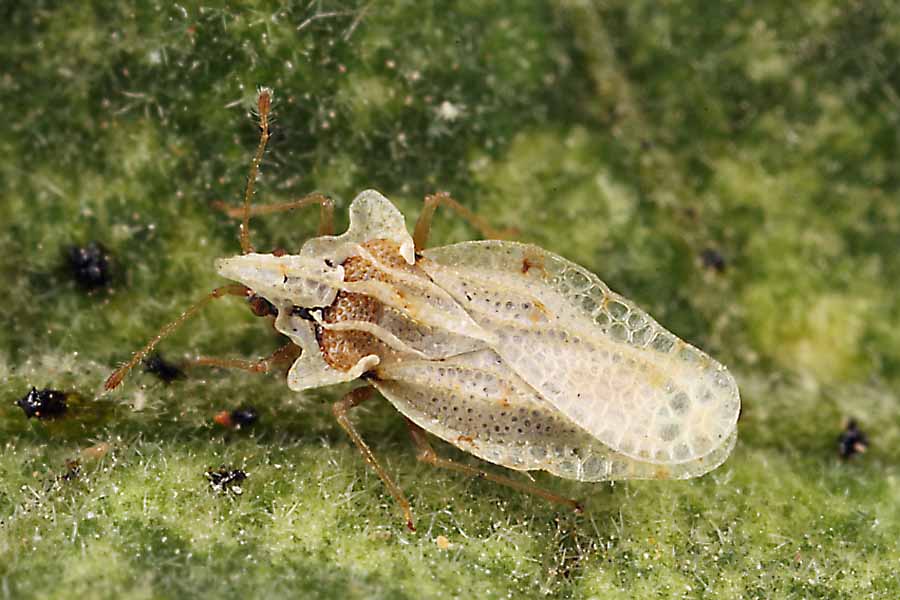
Corythaica cyathicollis adult. The black spots either represent frass or protective egg coverings.

Still, I had a clue—the association of the species with Solanum. Lace bugs are predominantly specialist feeders, with many species showing fidelity to a particular plant genus or group of related genera. The genus Solanum contains a number of economically important species, thus, it was a good bet that this species has at some point been considered an economic pest. With this in mind, I opened my volume of Heteroptera of Economic Importance (Schaefer and Panizzi 2000) to the chapter on lace bugs (Neal and Schaefer 2000) and began looking through the species accounts for South American species recorded on Solanum or other species in the family Solanaceae. I only had to reach the second species account before finding Corythaica cyathicollis and the statement “This Neotropical species is a pest on many solanaceous crops…” The identification was confirmed when I found a rather complete description of the species’ systematics, biology, and economic importance (Kogan 1960), complete with line drawings of the adults and all immature stages. Comparison of my photos with these drawings leaves little doubt that this is, indeed, C. cyathicollis.  (Interestingly, Montemayor and Cascarón (2005) list 28 species of Solanum as recorded hosts for C. cyathicollis in their Argentina checklist; however, S. granuloso-leprosum is not among them…)

Corythaica cyathicollis late-instar nymphs.

The bristles of needle-like setae exhibited by the nymphs may be useful for species identification by entomologists (and even phylogenetic analyses—see Guilbert 2005), but for the nymphs themselves it seems fairly obvious that they serve some adaptive function for protection. Neal and Schaefer (2000) note that nymphs of many species of Tingidae seem to be protected by a wide variety of other adaptive mechanisms as well, including maternal care, the production of alarm pheromones and possibly the secretion of noxious compounds. Indeed, most tingids occur in multiple aggregations with large numbers of nymphs of the same species on a single host plant relatively free of predation and parasitism—it is difficult to imagine that such aggregations could exist without employing a strong arsenal of multiple defense mechanisms.

A presumably teneral adult Corythaica cyathicollis.

Occasional adults were seen within the aggregations that showed decidedly lighter coloration than the majority of adults seen. The aggregations were comprised primarily of adults and late-instar nymphs, so I presume these light-colored adults represented newly molted, teneral individuals that will eventually assume normal coloration once their new adult exoskeleton fully hardens.

Adult Gargaphia lunulata on lower leaf surface of Ricinus communis.

Later in the day, I encountered a different lace bug species on a different shrub—Ricinus communis.  This is the famous castor oil plant, a member of the Euphorbiaceae, native to the Old World and now widely distributed throughout tropical regions.  Despite castor oil’s reputed ability to heal wounds and cure ailments, the beans and other plant parts also contain ricin—a toxin with known insecticidal properties.  Apparently these lace bugs possess some mechanism that makes them immune from its effects.

Gargaphia lunulata 5th instar nymphs (and an apparent 1st instar in lower left corner).

This species was also fairly easy to identify—one of the species listed in Neal and Schaefer (2000) as feeding on Ricinus is Gargaphia lunulata, which they note feeds on several useful South American plants belonging to a number of families, including the Euphorbiaceae.  Photographs and drawings of this species can be found in Ajmat et al. (2003) and agree well with the adults and nymphs I found on this plant.  Unlike C. cyathicollis, which were found on the adaxial (upper) surface of the leaves, I found G. lunulata exclusively on the abaxial (lower) surfaces.  Nevertheless, the characteristic white stippling was easily visible on the leaves and gave immediate clue to their presence.

Photo Details: Canon 50D w/ MP-E 65mm 1-5X macro lens (ISO 100, 1/200 sec, f/13), Canon MT-24EX flash w/ Sto-Fen + GFPuffer diffusers. Typical post-processing (levels, minor cropping, unsharp mask). Photo 1 taken at 1X, photos 2 through 6 taken at or near 5X.

REFERENCES:

Ajmat, M. V., S. G. Bado, M. A. Coviella and M. J. Pannuzio. 2003. Aspectos morfológicos, biológicos y daño de Gargaphia lunulata (Mayr) 1865 (Heteroptera: Tingidae) sobre Passiflora caerulea L. (Passifloraceae). Boletin Sanidad Vegetal Plagas 29:339–346.

Guilbert, É. 2005. Morphology and evolution of larval outgrowths of Tingidae (Insecta, Heteroptera), with description of new larvae. Zoosystema27(1):95–113.

Haene, E. and G. Aparicio.  2007.  100 Trees of Argentina. Editorial Albatros, Buenos Aires, República Argentina, 128 pp.

Kogan, M.  1960.  Corythaica cyathicollis (Costa, 1864), aspectos sistemáticos, biológicos e econômicos (Hemiptera, Tingidae). Memorias Instituto Oswaldo Cruz 58(1):59–88.

Montemayor, S. and M. del Carmen Coscarón. 2005. List of Argentinian Tingidae Laporte (Heteroptera) with their host plants. Zootaxa 1065:29–50.

Neal, J. W., Jr. and C. W. Schaefer. 2000. Chapter 4. Lace Bugs (Tingidae), pp. 85–137. In:C. W. Schaefer and A. R. Panizzi (Eds.). Heteroptera of Economic Importance, CRC Press LLC, Boca Raton, 828 pp.

Copyright © Ted C. MacRae 2011
“They’re baaaaack!”

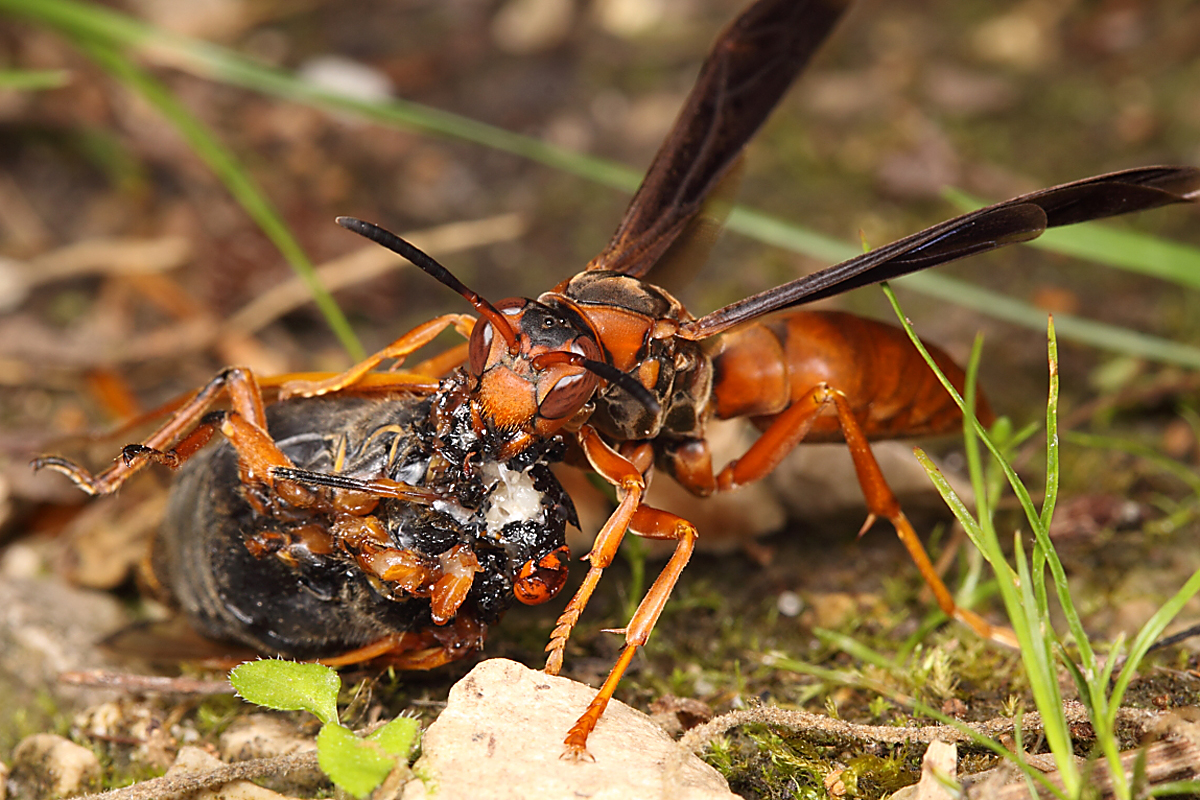
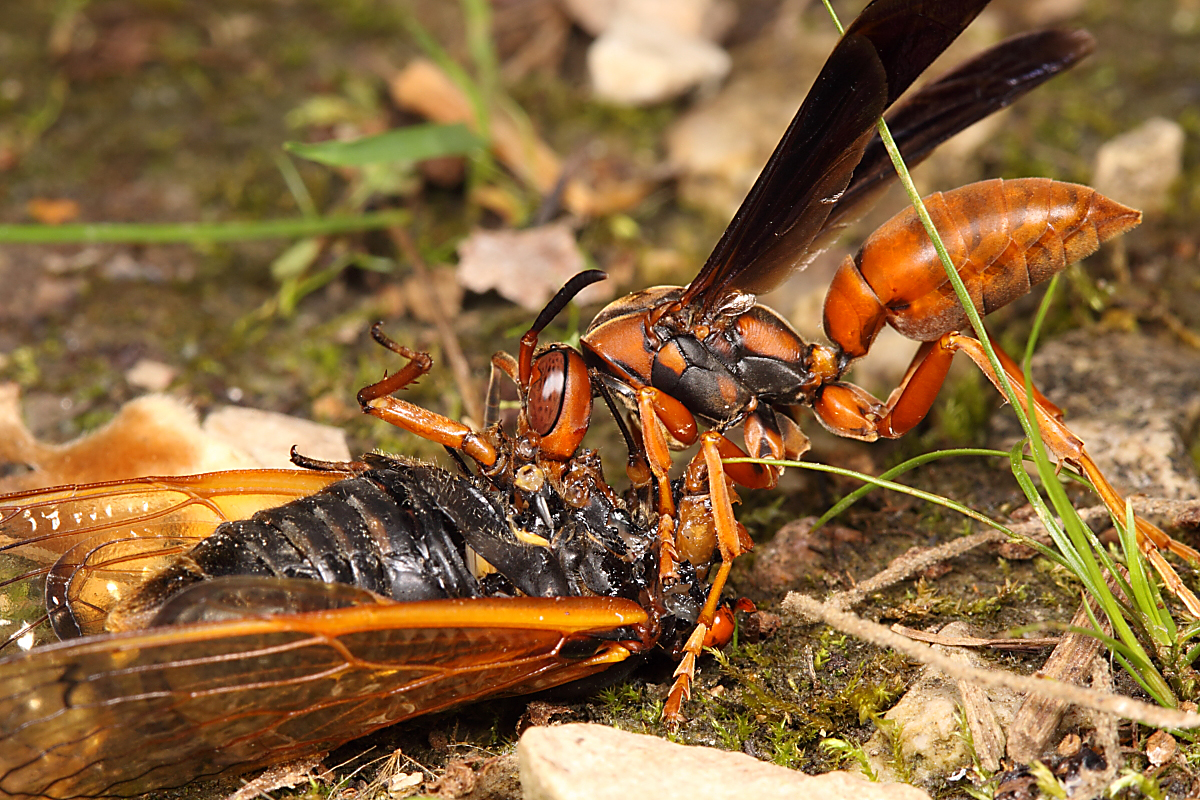
The recent run of seemingly interminable rains and HF4 tornadoes may have delayed the Annual-Birthday-First-Bug-Collecting-Trip-of-the-Year™, but it could not cancel it.  On Thursday this week, for the first time since the same time last week, a strange ball of hot gas appeared in the sky, temperatures tickled the 70°F mark, and the only moisture we encountered was already on the ground.  The weatherman said several days ago it would happen, so I put my faith in his word and made plans with my dad to do what I had planned to do last week – officially open the 2011 bug collecting season.  It was a marvelous day in which many interesting stories unfolded, one of which I’ve heard (literally) a few times already.

One of our stops was Sam A. Baker State Park in southeastern Missouri.  My original reason for coming here involved dead wood retrieval (success) and rattlesnakes (failure, though with a consolation prize – more later).  As we were walking the trail in the bottomland forest along Big Creek, I noticed all these holes in ground.  At first I assumed a group of hikers wielding their fashionable trekking poles had gone before us and left their mark in the muddy, recently flooded soil, but the holes were just too numerous and not all perfectly round.  I had just commented to my dad, “What the heck caused all these holes?”, when I saw the culprit – a fully grown periodical cicada nymph crawling on the ground looking for a tree to climb and begin life as one of the noisiest insects on earth.  I looked around and saw another one, and another… they were everywhere!  Boy, are we gonna be in for it this year!

Missouri and several other Midwestern states will be hosting periodical cicada Brood XIX—the Great Southern Brood!  All four of the 13-year species (Magicidada tredecassini, M. tredecula, M. tredecim, and M. neotredecim) participate in this brood, the largest of the 13-year broods by geographical extent, and occur in Missouri in variously overlapping ranges.  Magicicada tredecim and M. neotredecim are the two most common species in the Ozark Highlands across the southern part of the state, so the nymphs shown here likely represent one or both of those species.

I remember well the previous two appearances of brood XIX in Missouri in 1998 and 1985, when beating for buprestids during May and June was an exercise in futility due to every tree branch literally dripping with these bumbling, screeching insects (too bad I never find buprestids dripping from tree branches like this).  Those that didn’t land flapping clumsily on the sheet ended up desperately clinging to my head or flying into my face.  If swatting at these flying bullets wasn’t maddening enough, the ceaseless, droning, omnipresent cacophony of their singing was almost enough to send me to the local psycho ward begging for admittance.

I think I’ll skip trying to use the beating sheet this year.

Copyright © Ted C. MacRae 2011
Bichos Argentinos #9 – Membracido

Enchenopa? sp. | Buenos Aires, Argentina

This treehopper that I photographed at La Reserva Ecológica Costanera Sur strongly resembles our North American species of Campylenchia due to the brown elytra and lack of any yellow markings on the pronotal crest.  However, the rounded lower margin of the frons (more apparent in the full-sized version of this photo) eliminates this genus as a possibility and suggests instead the closely related Enchenopa

I sent this and another photo to Andy Hamilton (Canadian National Collection of Insects, Arachnids and Nematodes) for his opinion.  Andy claims to be a hack when it comes to Neotropical Membracidae (focusing more on world Cercopidae and Holarctic Cicadellidae), but he is a much better hack than I!  In his reply, he mentions that a lot of work is still needed on tropical species and genera, and in fact none of our North American species of Enchenopa actually resemble the type-species from Brazil (Membracis monoceros).  Most of what we now consider Enchenopa will likely be referable back to the genus Membracis (type genus of the family), but where the species in the above photo will eventually fall remains anyone’s guess.

Copyright © Ted C. MacRae 2011
Bichos Argentinos #5 – Cyrtocoris egeris

Cyrtocoris egeris | 15 km S Reconquista, Pcia. Santa Fe, Argentina

Despite its obvious membership in the order Hemiptera, I knew the insect featured in ID Challenge #7 would be a difficult subject to identify.  This bizarre bug is Cyrtocoris egeris, a member of the small pentatmoid family Cytocoridae (congratulations to HBG Dave, who was the only commenter to correctly identify not only the family, but the genus).  While their relationship to Pentatomidae (stink bugs) and Scutellaridae (shield-backed bugs) is obvious, hemipterist-great Carl Schaefer thinks these insects might actually be most closely related to the Cydnidae (burrowing bugs).  I encountered this individual a couple of weeks ago in a soybean field in Santa Fe Province, Argentina.  Now, I have to be honest here – I did not figure this one out on my own. Instead, I assumed it must be some bizarre member of the Pentatomidae or Scutellaridae, and it was only after my repeated searches in either of those two families failed to turn up anything promising did I throw up my hands and call for hired help. This time it was USDA Research Entomologist Don Thomas, a pentatomid specialist (and former co-alumnus at the University of Missouri) who responded to my query with a genus-level ID. Once I had that bit of information in hand I was able to locate the recent revision of the family (Packhauskas and Schaefer 1998) and identify the species.

Looks stink bugish enough in this head on view...

In addition to the expanded scutellum bearing a broad-based spine or hump, members of this exclusively Neotropical family are characterized by flattened expansions of the anterior part of the head, the covering of flattened scalelike setae, and a mediodistal tubercle on at least the foretibiae. Packauskas and Schaefer (1998) recognize only three genera and 11 species in the family, its members occurring from Argentina north through central Mexico.

...but there's some crazy stuff going on at the back end.

My ID as C. egeris is based on the very well-developed scutellar crest and my interpretation of the humeral projections not extending forward of the anterior angles next to the head. Packauskas and Schaefer (1998) recorded this wide-ranging species from Mexico to Argentina, with the southernmost specimens in extreme northeastern Argentina (Pcia. Missiones), but Schaefer et al. (2005) later recorded it from Reconquista – also on soybean. Cyrtocoris gibber is very similar to C. egeris and is also widespread from Costa Rica to Argentina (and also with the southernmost record in Pcia. Missiones, Argentina), but in that species the humeral expansions project forward nearly as far as the anterior angles of pronotum (strongly surpassing a line drawn through the bases of these angles).  Besides soybean for C. egeris, the only other host records I am aware of for any species in the family are by Costa Lima (1940), who reported C. gibbus on the branches of Mimosa scabrella (Leguminosae), and Schaeffer et al. (2005), who reported C. tigrinus on Sida rhombifolia (Malvaceae) (although nymphs could not be reared to adulthood on this plant).

REFERENCES:

Costa Lima, A. 1940. Insetos do Brasil. 2° Tomo, Capitulo XXII. Hemipteros. Escola Nacional do Agronomia, Rio de Janeiro.

Packauskas, R. J. and C. W. Schaefer. 1998.  Revision of the Cyrtocoridae (Hemiptera: Pentatomoidea).  Annals of the Entomological Society of America 91(4):363–386;

Schaefer, C. W., A. R. Panizzi and M. C. Coscarón. 2005.  New records of plants fed upon by the uncommon heteropterans Cyrtocoris egeris Packauskas & Schaefer and C. trigonus (Germar) (Hemiptera: Cyrtocoridae) in South America.  Neotropical Entomology 34(1):127-129.


Brazil Bugs #16 – Outro Percevejo

Proxys sp. | Barão Geraldo, Campinas, Brazil

Another stink bug (family Pentatomidae) from my recent travels to South America, but this one from southeastern Brazil rather than Argentina.  Although the white spot at the apex of the scutellum is a common theme across the family, the jet black coloration and strongly acute clypeus (“nose”) immediately reminded me of Proxys punctulatus from eastern North America. Although that species does also occur south through Mexico and Central America into northern South America, the lack of distinctively black femoral apices (“knees”) on this individual suggest it is likely a different species.  I’ve not found much information on other species in this genus, as my old standby Flickr repeatedly proffers images of P. punctulatus in its Pentatomidae pages but not other species in the genus.  Grazla and Campos (2010) list P. hastator from “Cayenna” (likely French Guiana) and P. victor from “Brésil,” and an illustration of the latter in the monumental Biologia Centrali-Americana (Distant 1880-1893) agrees reasonably well (but not completely) with this individual.  For now, this will have to stand as Proxys sp.

REFERENCES:

Distant, W. L.  1880-1893.  Biologica Centrali-Americana. Insecta. Rhynchota. Hemiptera-Heteroptera. Volume I.  London: published for the editors by R. H. Porter, 462 pp.

Grazia, J. and L. A. Campos. 2010. Neotropical Pentatomidae (Insecta: Hemiptera: Heteroptera) of the collection of Massimiliano Spinola preserved in the “Museo Regionale de Scienze Naturali”, Turin, Italy. ZOOLOGIA 27(3):413–424.

Copyright © Ted C. MacRae 2011

Bichos Argentinos #4 – Balancing Act

Nezara viridula (southern green stink bug) | Pergamino, Pcia. Buenos Aires, Argentina

I encountered this adult Nezara viridula (southern green stink bug) (Hemiptera: Pentatomidae) in a soybean field in Buenos Aires Province, Argentina.  I liked the way it balanced itself on the leaf on which it was sitting to keep its body level.

Copyright © Ted C. MacRae 2011