The Methocha

As pointed out in my recent post, , there is much to learn still regarding tiger beetle larval parasitoids. In addition to bee flies (order Diptera, family Bombyliidae) of the genus Anthrax, tiphiid wasps (order Hymenoptera, family Tiphiidae) in the genus Methocha also parasitize tiger beetles in their larval burrows. Unlike bee flies, however, which sneakily lay their eggs in and around tiger beetle burrows when their victim isn’t watching, Methocha females aggressively engage the larva and even allow themselves to be grasped within the beetle larva’s sickle-shaped mandibles in order to gain entry to the beetle’s burrow.

Methocha appears to be a rather diverse genus, but it’s taxonomy is still incompletely known. George Waldren from Dallas, Texas is working on a revision of the genus and has found several new species in Texas alone. George is interested in seeing Methocha material from other areas as well and recently sent me the following reminder that adult females are active now:

…if you know of any areas with many tiger beetle larvae, now is the time to find Methocha. They superficially look like Pseudomyrmex ants, but once you see one you’ll catch on to them quickly. I collected more than 70 females today in a large aggregation of Tetracha carolina burrows.

In a subsequent message he adds:

Collect as many as you can, since they seem to be highly seasonal and rare most of the year. I almost always find them around beetle populations in sandy creek beds and receding bodies of water. A pooter works best if they are abundant and there isn’t much for them to hide under. Using your fingers also works—the sting is mild and usually doesn’t pierce the skin (depends on the person and size of the wasp). Vial collecting one by one works just as well.

Methocha females are generally overlooked due to their specialized life history and few specimens are in collections. Males are better represented since they’re easily collected with malaise traps.

If you have any Methocha specimens or manage to collect some, please contact George (contact info can be found at his BugGuide page). BugGuide does have a few photographs of these wasps to give you an idea of what they look like, but this excellent video titled “The Methocha” from Life in the Undergrowth with David Attenborough provides an unparalleled look at their appearance and behavior:


Copyright © Ted C. MacRae 2011

BugShot 2011 – Final Thoughts

As I suspected would be the case,  has proven to be an especially difficult challenge.  As a result, instead of posting the answer tonight I’m going to give folks another day to make their play for points (remember, nobody walks away empty-handed).  In the meantime, I’ve had a chance to ruminate over this past weekend’s BugShot insect photography workshop at Shaw Nature Reserve in Gray Summit, Missouri, and now seems to be an appropriate time to post some final thoughts while they’re still fresh in my mind. Suffice it to say that it was an incredible experience—both technically and socially.  I learned far more than I thought possible (and hope I can remember even a portion of it) and made some great friends in the process.  It’s really not possible for me to summarize here all of the techniques, insights, equipment choices, etc. that were covered, nor do I want to—such a list would be boring to read and not very meaningful without the context to go with it.  What I would like to do is shout out a few people who, beyond the collective, helped make the weekend what it was for me.

Instructors.  The three instructors, all accomplished insect photographers of the highest caliber, typified three very different yet complimentary approaches to the art.  Alex Wild (University of Illinois), ant photographer extraordinaire and author of the insect blog I’ve most tried to emulate, gave me tremendous insight on lighting and practical approaches on how to use it effectively.  My discussions with John Abbott (University of Texas) about equipment will be very helpful for the type of photography that I like to do (I’m not sure I’m ready for the tripod yet, but maybe the other ideas we discussed will be the “slippery slope”).  Finally, I thoroughly enjoyed my time with Thomas Shahan (Norman, Oklahoma), whose great artistic insight helped me see a whole new world of possibilities for tiger beetle portraiture.  I must admit to feeling a little star-struck when I first began talking to him, but his infectious enthusiasm and exuberance quickly put me at ease.

Friends.  I can’t begin to list everybody whose company I enjoyed, but standouts include Jo Holly (Alex’s better half!), as well as fellow bloggers Crystal, Lee, Dave, and DragonflyWoman.  Even though I only met them this weekend, it was if I had known them for years.  My time “fishing” tiger beetle larvae with Crystal and Lee was not only a highlight of the trip (watching them “jump” as the larva came flying up and out of the burrow was a real treat), but also represented a discovery in the truest sense of the word (as will become clear in a future post).  No discussion of friends would be complete without mentioning James Trager, not only for opening up Shaw Nature Reserve to this weekend’s event, but also for the access he’s given me over the past several years and our frequent, humorous email discussions about all things entomological (or botanical, ecological, etc.).

Gratitudes.  I want to thank Alex for inviting me to take part in this event as something more than just an attendee.  I hope my contribution, however small, was beneficial.  My thanks also to Patsy Hodge, who was so helpful and gracious to me in the days leading up to and during the event.  I also appreciate the kind comments that many of the attendees made to me about my blog and my photographs—your encouragement means a lot to me.

Regrets.  In an event like this, packed as it was with seminars and group discussions, it is sad but unavoidable that one cannot spend at least a little time with each and every person in attendance.  To those that I did have a chance to talk to, the pleasure was all mine.  To those that I missed, I will catch you next time!

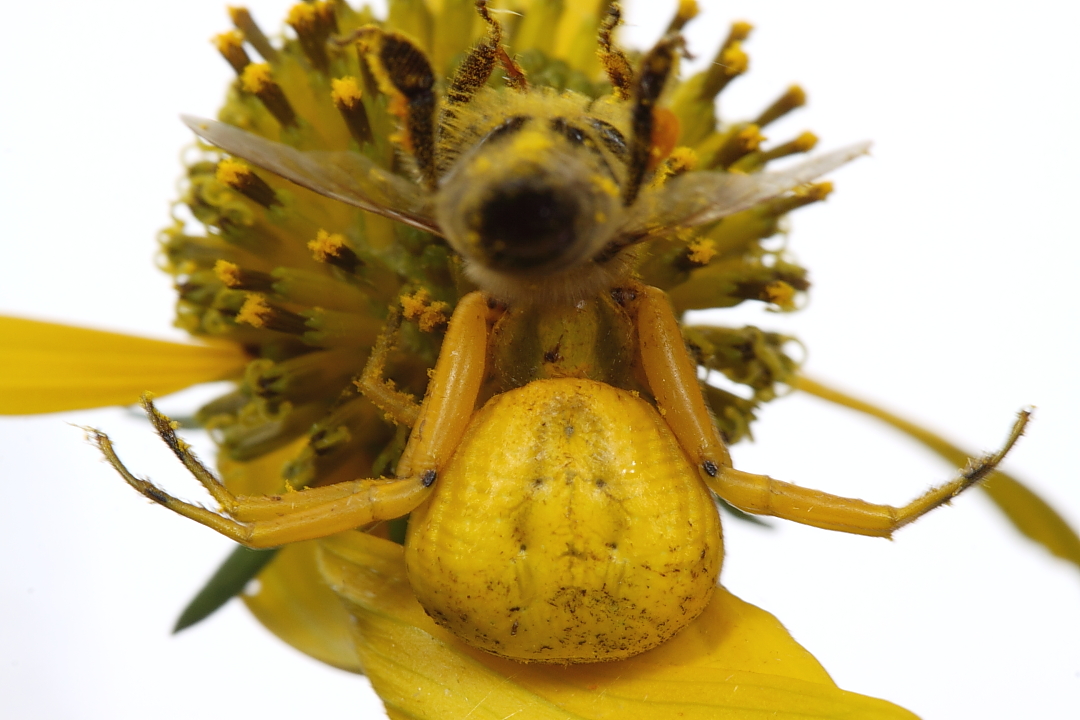
I think I’ll close with this minimally processed photograph of what I take to be Misumenoides formosipes (whitebanded crab spider) and its honey bee (Apis mellifera) prey.  Although I photographed this spider using flash and looking straight up into an overcast sky, I managed to properly illuminate the subject and avoid blown yellows and an all-black background by using some of the very techniques and principles that I had just learned earlier that day.  I hope to learn more at BugShot 2012!

Misumenoides formosipes (whitebanded crab spider) | Shaw Nature Reserve, Franklin Co., Missouri

Predator or Prey?

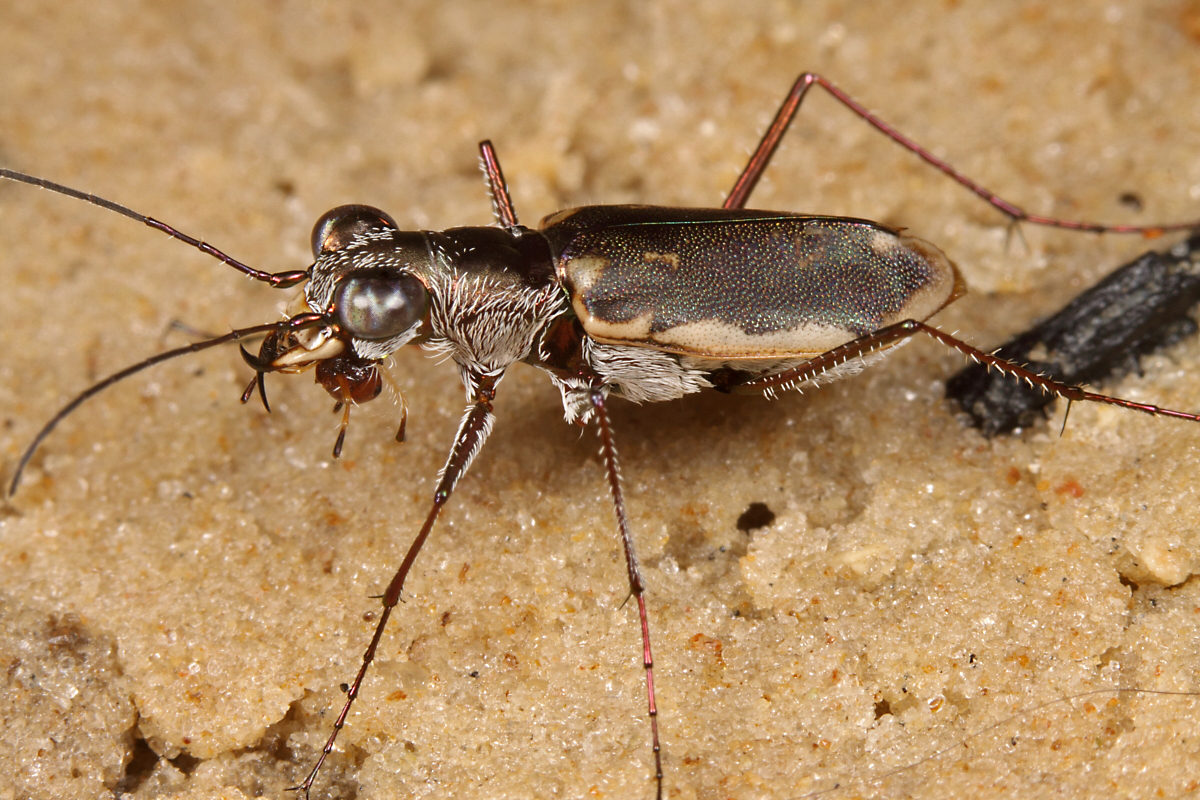
Ellipsoptera hamata lacerata | Dixie Co., Florida

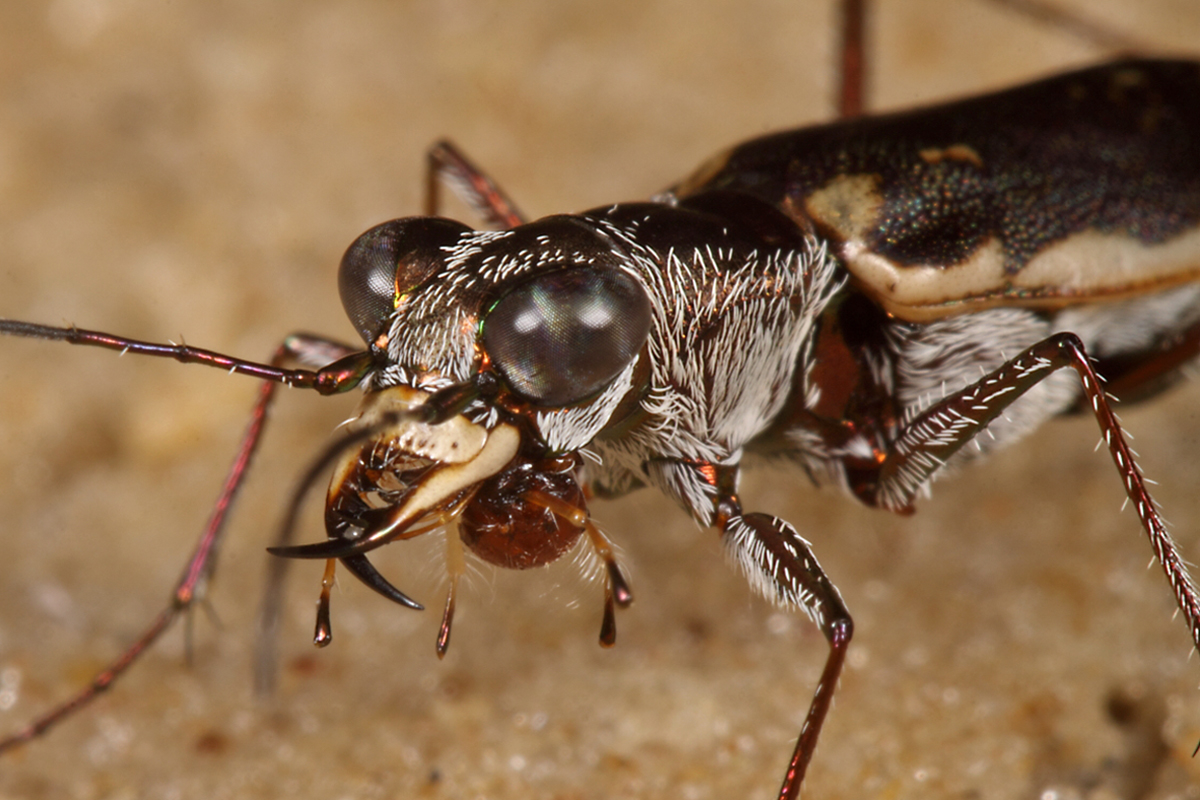
Everyone knows that tiger beetles are predators, but look closely at the underside of the head of this female Ellipsoptera hamata lacerata (Gulf Beach Tiger Beetle), photographed in a coastal marsh in Dixie Co., Florida earlier this month.  See the ant head attached by its mandibles to the base of the tiger beetle’s left maxillary palpus?  Detached ant heads latched onto the palp or antenna of a tiger beetle are a fairly common sight—Pearson and Vogler (2001) show the head of an ant attached to the antenna of Eunota togata (Cloaked Tiger Beetle), and Pearson et al. (2006) show one attached to the antennae of Cicindela formosa (Big Sand Tiger Beetle).  I’ve also photographed Cylindera celeripes (Swift Tiger Beetle) with an ant head attached to its antenna.  Pearson and Vogler (2001) and Pearson et al. (2006) both suggest that the ant heads are the result of predation attempts by groups of ants attempting to overpower and kill the tiger beetle, making the ants the predators and the tiger beetles the prey.

Note ant head attached by its mandibles to the base of the tiger beetle's left maxillary palpus.

Although some ants are well known for their predatory horde behavior, I’m not sure I buy this as an explanation for the common occurrence of ant heads attached to tiger beetles.  Tiger beetles themselves often prey on ants, and while I have seen numerous tiger beetles with ant heads attached to them, I have never seen one actually being overpowered by ants (scavenging an already dead tiger beetle, yes—but not overpowering and killing one).  Moreover, the ant heads are nearly always attached to the base of an antenna or palpus—right next to the tiger beetle’s mouth, and almost never on more distal parts of the antennae or other parts of the body.  If the ants were attempting to prey on the tiger beetle, wouldn’t they also (if not even more commonly) be found attached to the tiger beetle’s legs or soft intersegmental membranes?  And how would the ants have come to be decapitated while in the act of attempting to overpower the beetle?  I suggest it is more likely that the ants were prey, latching onto the nearest part of their killer’s body in a last ditch attempt to avoid their inevitable fate.  The antennal and palpal base are about the only tiger beetle body parts that would be within reach of an ant in a tiger beetle’s toothy grasp.  While the rest of the ant was consumed, the head remained because it was firmly attached to the beetle.

I realize that an identification based only on the detached head of an ant may be difficult, but if one is possible it would be appreciated.  The ant head shown in Pearson and Vogler (2001) was identified as Polyergus sp.

REFERENCES:

Pearson, D. L., C. B. Knisley and C. J. Kazilek. 2006. A Field Guide to the Tiger Beetles of the United States and Canada. Oxford University Press, New York, 227 pp.

Pearson, D. L. and A. P. Vogler.  2001. Tiger Beetles: The Evolution, Ecology, and Diversity of the Cicindelids.  Cornell University Press, Ithaca, New York, 333 pp.

Copyright © Ted C. MacRae 2011

Predator Satiation

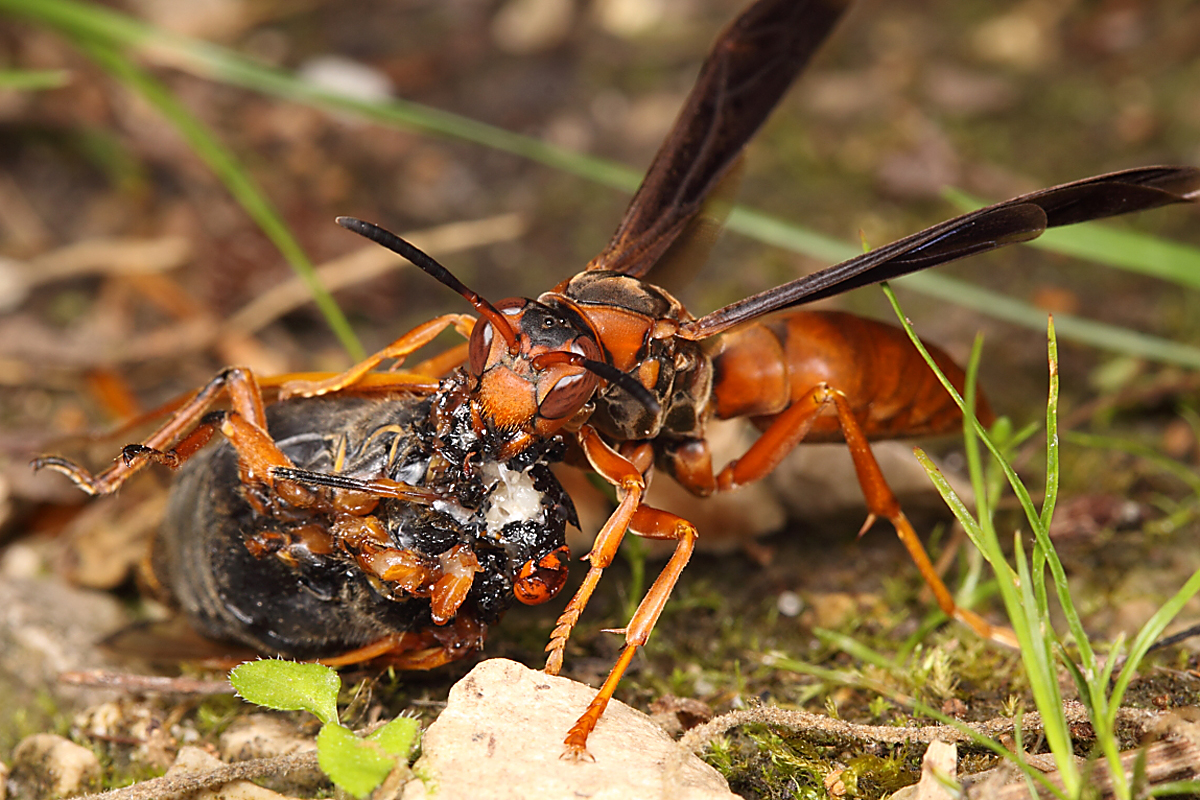
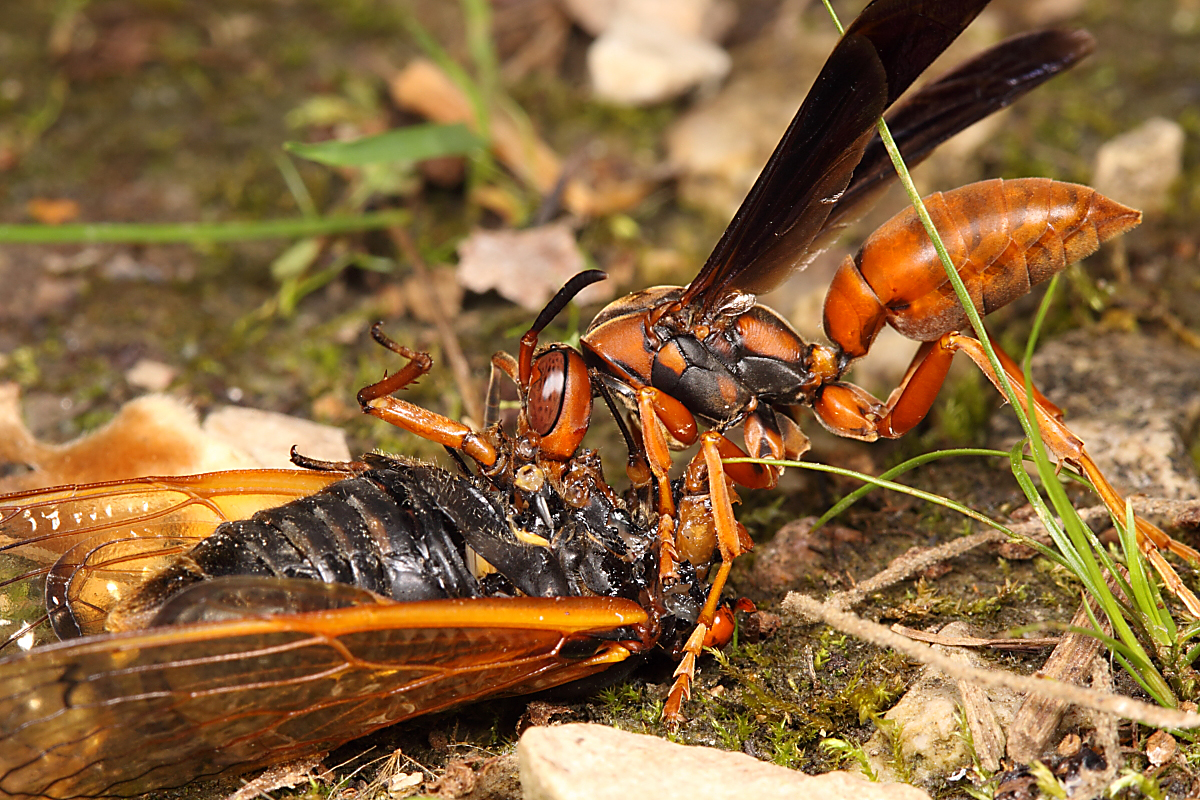
Polistes carolina/perplexus with Magicicada prey | Shaw Nature Reserve, Missouri

I’ve probably used the term predator satiation more often during the past couple of weeks than I have during the entire rest of my life.  Students of ecology know this as an antipredator adaptation in which prey occur at such high population densities that they overwhelm predator populations.¹  This ‘safety in numbers’ strategy reduces the probability that any given individual will be consumed, thereby ensuring that enough individuals survive to reproduce.  With St. Louis currently experiencing the appearance of Brood XIX of periodical cicadas, I’ve gotten lots of questions recently from many coworkers and friends wanting to know more about these cicadas.   Often the first question is “What is their purpose?”  My standard reply begins with a statement that they, like all living organisms, are the products of natural selection, which then presents an opportunity to explain how natural selection might result in such massive, temporally synchronized, multiple-species populations.  A few eyes have glazed over, but I think most have found my answer interesting, often even leading to further questions about where they lay their eggs, what is their life cycle, why are they so loud, how do they “do it” and select mates, etc.  Of course, as an entomologist with a strong natural history orientation, I’m always anxious to introduce people to ecological concepts, and right now the periodical cicada is providing a conspicuous, real-life example of such.

¹ Also called “predator saturation,” although this term might be misconstrued to mean that it is the predators that are over-abundant.

First the eyes...

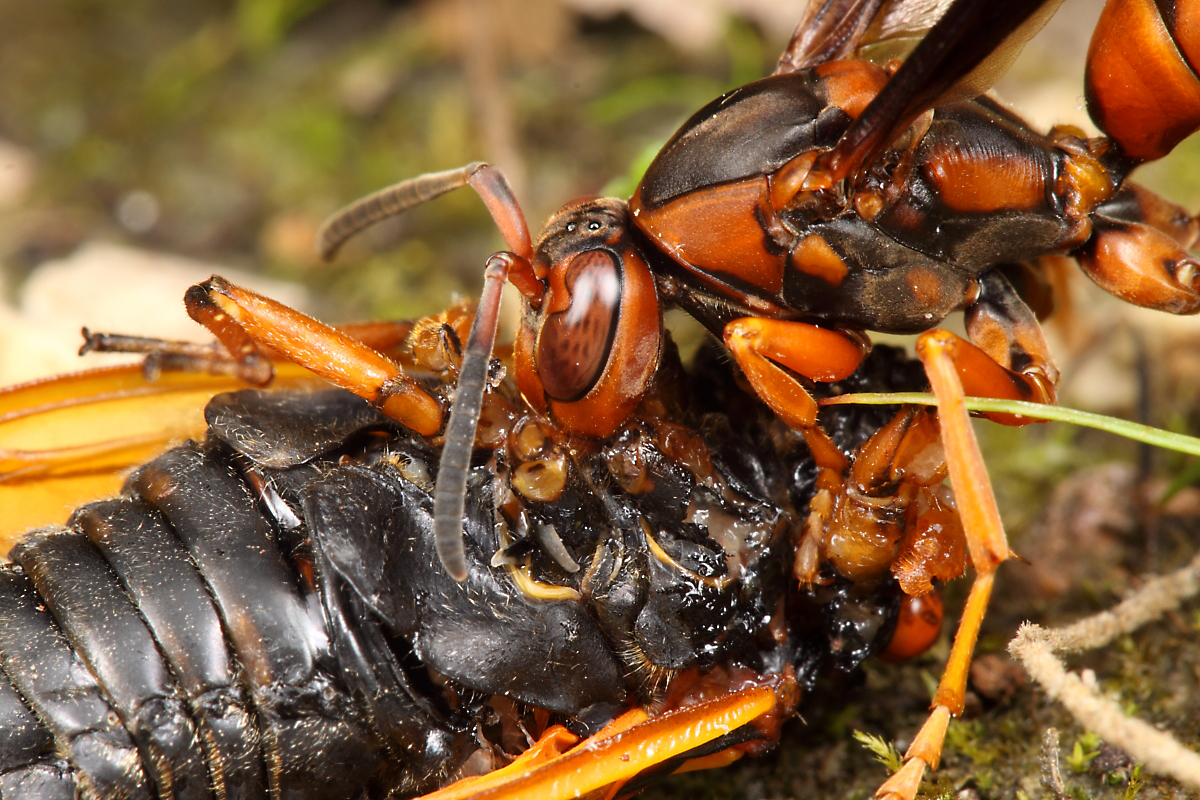
A few weeks ago, right at the beginning of their emergence in the St. Louis area, my friend Rich Thoma and I observed predator satiation in action.  While hiking one of the trails at Shaw Nature Reserve, we heard the unmistakable shriek and cellophane-sounding wing flapping of a just-captured male cicada.  Tussling on the ground ahead of us was the cicada in the grasp of a Polistes carolina/perplexus wasp, which was repeatedly stinging the hapless cicada on the underside of the abdomen.  The shrieking and wing-flapping grew less frequent as the stinging continued, until at last the cicada lay quiet.  As we approached, the wasp spooked and flew off, but we knew it would be back—we parked ourselves in place while I setup the camera, and before long the wasp returned.  It took several minutes of searching from the air and on the ground before the wasp finally relocated her prey, but once she did she began voraciously devouring it.  As the wasp was searching, we hypothesized that our presence had altered the visual cues she had memorized when flying off, resulting in some confusion when she returned, and thus the long period of time required to relocate her prey.

...then the legs!

We watched for awhile—first the eyes were consumed, then the legs.  As it consumed its prey, Rich remarked that he bet he could pick up the wasp and not get stung—likely the entirety of its venom load had been pumped into the cicada.  Both of us declined to test his hypothesis.  We also wondered if the wasp would butcher the cicada after consuming part of it and bring the remaining pieces back to the nest.  We had seen a European hornet do this once with a band-winged grasshopper, consuming the head, then cutting off the legs from the thorax and flying away with it before returning to collect the abdomen as well.  No butchering took place this time, however, the wasp seemed content to continue eating as much of the cicada as possible—a satiated predator if there ever was one!

Leg after leg is consumed.

One eye and all six legs down, time to start on the abdomen.

Copyright © Ted C. MacRae 2011

Sawfly larva – Periclista sp.


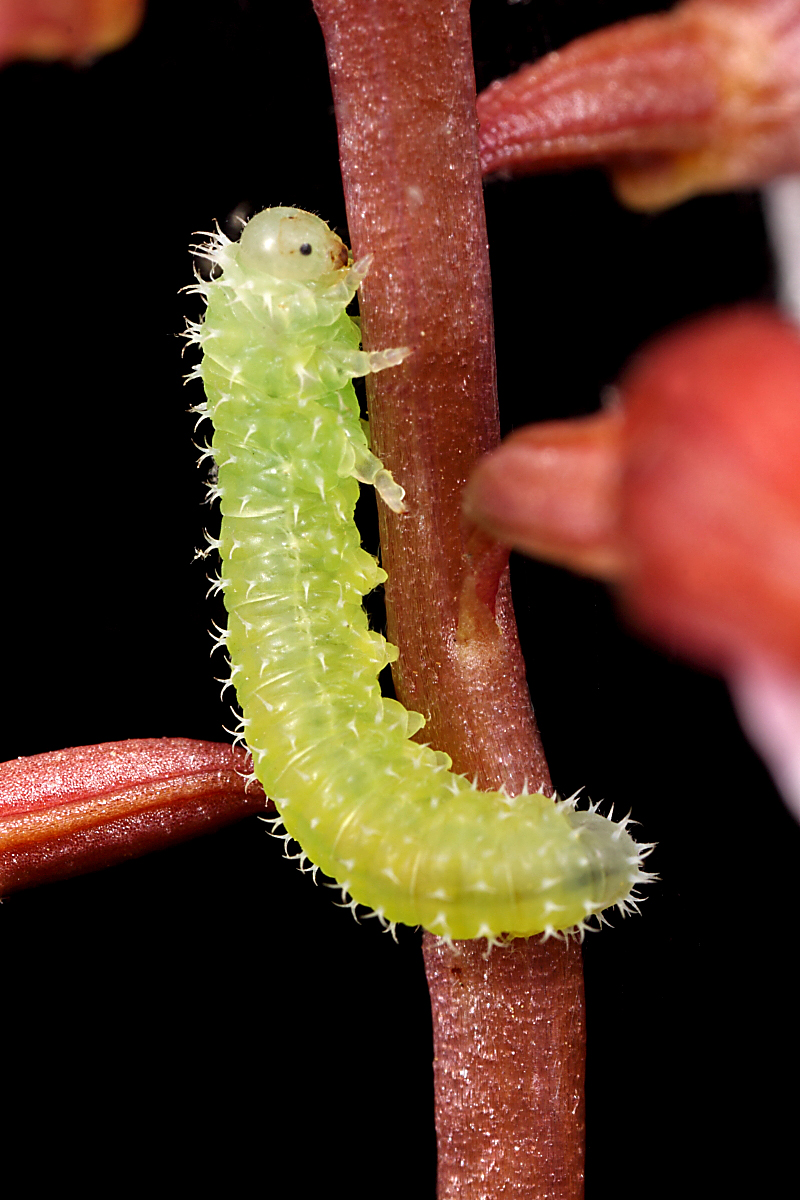
As I was photographing spring coralroot orchids in my front yard, I noticed a small green object clinging to the underside of one of the flowers.  Zooming in with the camera lens revealed the object to be a caterpillar, but this was no ordinary caterpillar (i.e., a member of the order Lepidoptera), but rather a sawfly larva.  Sawflies are not lepidopterans, but members of the order Hymenoptera, making them more related to bees and wasps while their larvae look much more like those of a moth or butterfly.  Although there are few absolutes in the world of insects, distinguishing sawfly larvae from lepidopteran caterpillars is as easy as counting the prolegs (false legs behind the three pairs of true legs)—lepidopterans have at most 5 pairs of prolegs (often less), while sawfly larvae always have 6 or more pairs of prolegs.

While its identity as some type of sawfly was immediately apparent, I wasn’t sure beyond that.  One thing I was fairly certain about was that the orchid itself was likely not its host plant.  I could see no evidence of feeding on any part of the plant on which it was resting (and orchids by the large seem relatively free of defoliating insect pests), nor could I find any other sawfly larvae on the plant or its neighbors (where there is one sawfly larva, there are usually more).  Rather, I suspected that it had fallen from one of the many native oaks and hickories that shade the front yard (and which provide the habitat that allows orchids to grow in my front yard to begin with).  Nevertheless, I Googled “orchid sawfly,” only to come up with page after page of links referring to the sawfly orchid (Ophrys tenthredinifera), native to the Mediterranean Region.  That wasn’t much help, so I began the process of slogging through the sawfly images posted at BugGuide in hopes that something close had already been posted.  Eventually I stumbled upon photos of larvae in the family Tenthredinidae, subfamily Blennocampinae that exhibited similar branched dorsal spines (including the pestiferous Monophadnoides rubi, or raspberry sawfly).  I gradually settled on a generic ID of Periclista sp. based on the resemblance of the larva in my photos to those in photos such as this one, and the fact that this genus of ~20 North American species feeds as larvae on oak and hickory seems to support to the identification.

This past week’s Super Crop Challenge was taken from the dorsal side of the caterpillar in the first photo and rotated—it apparently proved a little too tough for most people to handle.  Predictably, most participants guessed one of the different spined caterpillars of the order Lepidoptera, but Dave used the extended quiz time wisely and eventually came up with a correct ID and the challenge win.  He even suggests the species P. marginicollis, based on its widespread eastern distribution and the bifurcate processes—it’s a good guess, but the larval description in Smith (1969) is a little beyond my comprehension, so I’m leaving the ID at Periclista sp.  Dave’s win moves him into the top spot in the current overall standings, while Tim moves up to tie Alex for 2nd place with 9 pts each.

REFERENCE:

Smith, D. R.  1969.  Nearctic sawflies I.  Blennocampinae: Adults and larvae (Hymenoptera: Tenthredinidae).  U.S. Department of Agriculture, Agricultural Research Service, Technical Bulletin No. 1397, 179 pp. + 19 plates.

Copyright © Ted C. MacRae 2011

Bichos Argentinos #10 – Friday Formicine

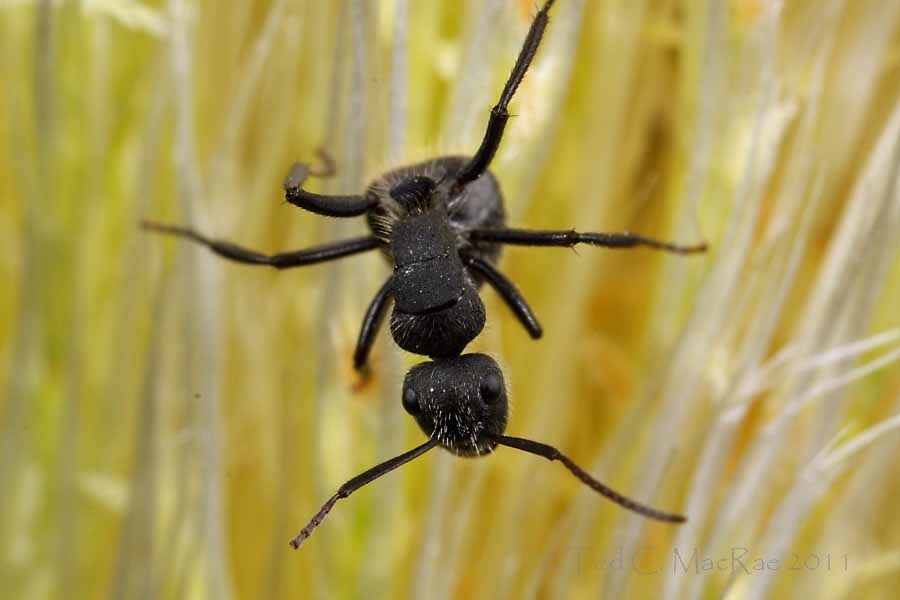
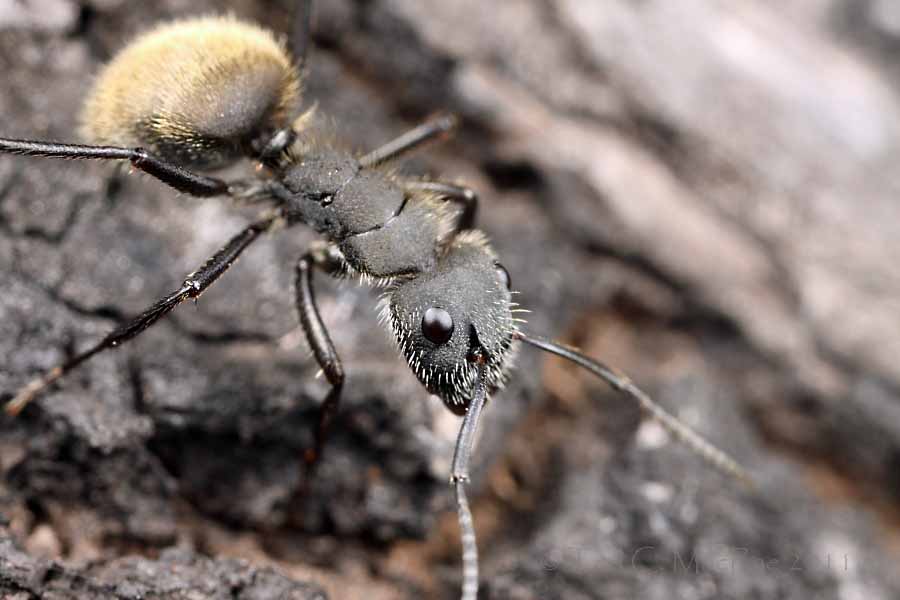
One of the insects I saw abundantly during my visit last month to La Reserva Ecológica Costanera Sur (Buenos Aires, Argentina) was this species of black ant that looks well enough like one of our typical North American species. They were quite common, seen on virtually every plant that I examined closely. I made a few feeble attempts at photographs in the early part of the day, but desire faded quickly in the face of their frenetic behavior and occurrence in exclusively tough-to-photograph situations.  I mean, they’re just ants!¹ Around midday I noticed that many of the flower heads of the pampas grass clumps in the area had at least one ant perched in this interesting head-down, abdomen-curled forward position – I tried to capture the situation, but even this best of the bunch turned out, well… boring!

¹ Just kidding Alex and James!

Finally, late in the day, I saw one crawling on the trunk of a recently fire-killed tree that I was inspecting in (futile) hopes of encountering adult jewel beetles or longhorned beetles that would have been attracted to this newly available resource.  This was the easy-to-photograph situation I was waiting for, and the dark color of the charred bark brought out nicely the hairs on the body despite both ant and bark being nearly the same color.

I’m a beetle guy, and normally I would be happy to just call this Formica nigra and move on.  Whatever possessed me to even begin the process of trying to identify this particular ant is beyond me (maybe I’ve actually learned something after a couple of years of reading Myrmecos!).  It had the look of our North American Camponotus, so I entered “Camponotus Argentina” into Google Images and found this photo of Camponotus mus, taken by our friend Alex in nearby Santa Fe, Argentina, near the top of the very first page.  Now, I realize that closely (and even distantly) related species can look quite similar (especially to the untrained eye), but everything about this ant looks right – the bulbous-abdomen, the shape of the thorax, the matt black color, and the velvety yellowish pilosity of the abdomen. A little searching on the name reveals this species to be quite abundant in Argentina, where it goes by the common names “hormiga de madera” (wood ant) and, not surprisingly, “hormiga carpintera” (carpenter ant). Alex? James? Did I get it right?

Copyright © Ted C. MacRae 2011

Bichos Argentinos #2 – Pseudomyrmex sp.

Pseudomyrmex sp. (twig ant) | Reserva Ecológica Costanera Sur, Buenos Aires, Argentina

One of the insects I tracked at La Reserva Ecológica Costanera Sur in Buenos Aires, Argentina last weekend was this twig ant in the genus Pseudomyrmex.  I had noticed these slender, wasp-like ants previously on trips to the U.S. desert southwest, but it wasn’t until I read a couple of recent posts about them at Myrmecos and 6legs2many that I knew specifically what they were. 

Alex characterizes these ants as “delightfully gentle, quirky little insects.”  What he didn’t mention is how frenetic and unceasing they are as they forage amongst the shrubbery.  I must have taken a couple dozen shots of several individuals over the course of the day, deleting every single one on the spot because I couldn’t get a clear, close, focused, nicely composed, unobstructed image.  Their habit of crawling rapidly along slender twigs is problematic enough, with little opportunity to brace the camera against anything steady and spend time composing the shot.  Add to that the frequently thorny nature of the trees they were roaming and their annoying habit of darting around to the backside of whatever twig they were on whilst trying to follow them in the viewfinder, and I almost decided I’d met my match and could do without the shot.  In the latter part of the day I encountered this individual, and as I already had my 65mm lens mounted I decided to give it another try.  I can’t say that I actually figured out the secret to getting the shot, but rather that I just lucked out and happened to have hit the shutter release at just the right moment – and with reasonable focus – as I tracked the ant along the branch on which it was crawling.  It was the only shot of one of these ants that stayed on the card that day.

The genus is huge, with 209 species occurring primarily throughout the Neotropics.  As a result, it would be foolish for me to even attempt a species ID.  Still, I can’t help noticing its great resemblance to this photo of Pseudomyrmex phyllophilus, taken by Alex in – you guessed it, Buenos Aires, Argentina.  I’ll wait for the correction, but in the off-chance that I’m right I think I deserve points on somebody’s scorecard!

Copyright © Ted C. MacRae 2011

Brazil Bugs #15 – Formiga-membracídeos mutualismo

Of the several insect groups that I most wanted to see and photograph during my trip to Brazil a few weeks ago, treehoppers were near the top of the list.  To say that treehoppers are diverse in the Neotropics is certainly an understatement – South America boasts an extraordinary number of bizarre and beautiful forms that still, to this day, leave evolutionary biologists scratching their heads.  The development of this amazing diversity is a relatively recent phenomenon (thinking geological scale here), as there are no known membracid fossils prior to Oligo-Miocene Dominican and Mexican amber – well after the early Cretaceous breakup of Gondwanaland split the globe into the “Old” and “New” Worlds.  With its origins apparently in South America, numerous groups continued to spring forth – each with more ridiculous pronotal modifications than the last and giving rise to the dazzling diversity of forms we see today.  Even North America got in the evolutionary act, benefiting from northern dispersal from South America’s richly developing fauna via temporary land bridges or island stepping stones that have existed at various times during the current era and giving rise to the almost exclusively Nearctic tribe Smiliini (whose species are largely associated with the continent’s eastern hardwood forests).  Only the subfamily Centrotinae, with its relatively unadorned pronotum, managed to successfully disperse to the Old World, where it remains the sole representative taxon in that hemisphere.  With a few notable exceptions, treehoppers have virtually no economic importance whatsoever, yet they enjoy relatively active study by taxonomists, evolutionists, and ecologists alike – due almost completely to the bizarreness of their forms and unique mutualistic/subsocial behaviors.

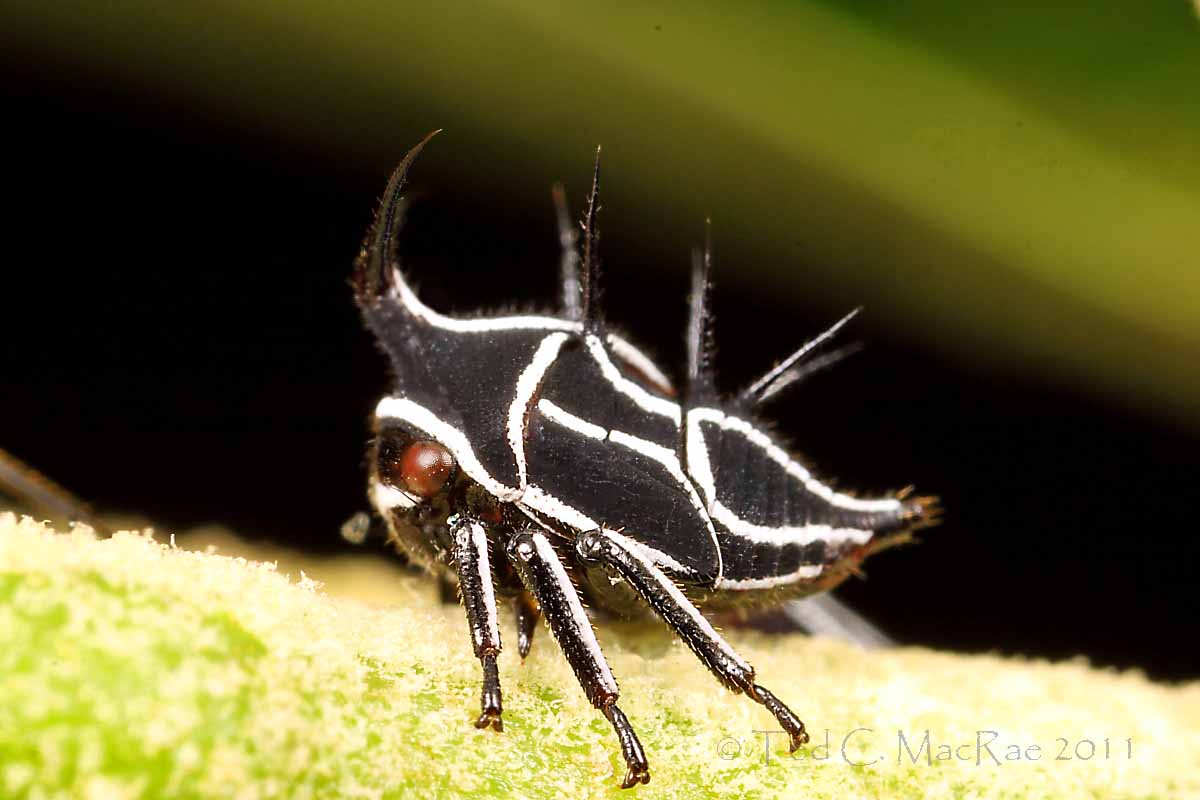
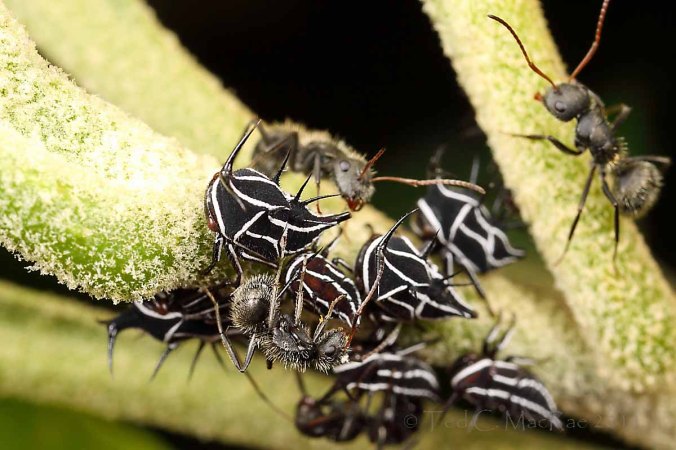
I did manage to find a few species of treehoppers during the trip (a very primitive species being featured in Answer to ID Challenge #4 – Aetalion reticulatum), and of those that I did find the nymphs in this ant-tended aggregation on a small tree in the rural outskirts of Campinas (São Paulo State) were perhaps the most striking in coloration and form.  Most were jet black, although a few exhibited fair amounts of reddish coloration, and all exhibited sharply defined white bands of wax and long erect processes on the pronotum, mesonotum, and abdomen.  I’ve seen a fair number of treehopper nymphs, but I did not recognize these as something I had seen before, and given the incomplete state of immature taxomony I feared an identification might not be possible.  Still (and I know this is probably beginning to sound like a broken record), I gave it the old college try.
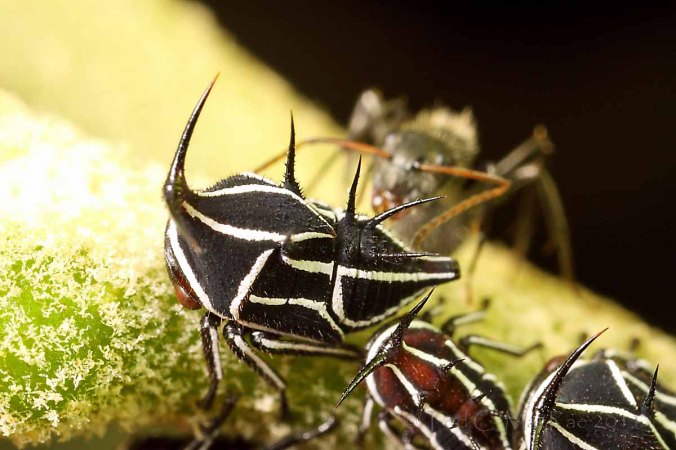
I usually like to start simple and get more creative if the results aren’t satisfactory, so I went to my old friend Flickr and simply typed “Membracidae” as my search term.  Predictably, pages and pages of results appeared, and I began scanning through them to see if any contained nymphs at all resembling what I had.  After just a few pages, I encountered this photo with very similar-looking nymphs, and although no identification beyond family was indicated for the photo, I recognized the lone adult sitting with the nymphs as a member of the tribe Aconophorini – a diverse group distinguished from other treehoppers by their long, forward-projecting pronotal horn.  Luck was with me, because I happen to have a copy of the relatively recent revision of this tribe by Dietrich and Deitz (1991).  Scanning through the work, I learned that the tribe is comprised of 51 species assigned to three genera: Guayaquila (22 spp.), Calloconophora (16 spp.), and Aconophora (13 spp.).  The latter two genera can immediately be dismissed, as ant-interactions have not been recorded for any of the species in those two genera – clearly the individuals that I photographed were being tended by ants.  Further, the long, laterally directed apical processes of the pronotal horn, two pairs of abdominal spines, and other features also agree with the characters given for nymphs of the genus Guayaquila.  In looking at the species included in the genus, a drawing of a nymph that looked strikingly similar to mine was found in the species treatment for G. gracilicornis.  While that species is recorded only from Central America and northern South America, it was noted that nymphs of this species closely resemble those of the much more widely distributed G. xiphias, differing by their generally paler coloration.  My individuals are anything but pale, and reading through the description of the late-instar nymph of the latter species found every character in agreement.  A quick search of the species in Google Images was all that was needed to confirm the ID (at least to my satisfaction). 

In a study of aggregations of G. xiphias on the shrub Didymopanax vinosum (Araliaceae) in southeastern Brazil, Del-Claro and Oliveira (1999) found an astounding 21 species of associated ant species – a far greater diversity than that reported for any other ant-treehopper system.  The most frequently encountered ant species were Ectatomma edentatum, Camponotus rufipes, C. crassus, and C. renggeri, and after perusing the images of these four species at AntWeb I’m inclined to believe that the ants in these photos represent Camponotus crassus (although I am less confident of this ID than the treehoppers – corrections welcome!).  The authors noted turnover of ant species throughout the day in a significant portion of the treehopper aggregations that they observed, which they suggest probably reflects distinct humidity and temperature tolerances among the different ant species and that might serve to reduce interspecific competition among ants at treehopper aggregations.  Since treehopper predation and parasitism in the absence of ant mutualists can be severe, the development of multispecies associations by G. xiphias results in nearly “round-the-clock” protection that can greatly enhance their survival.

Update 3/3/11, 9:45 a.m.:  My thanks to Chris Dietrich at the Illinois Natural History Survey, who provided me in an email exchange some clarifying comments on the origins and subsequent dispersal of the family.  The first paragraph has been slightly modified to reflect those comments.

REFERENCES:

Del-Claro, K. and P. S. Oliveira. 1999. Ant-Homoptera interactions in a Neotropicai savanna: The honeydew-producing treehopper, Guayaquila xiphias (Membracidae), and its associated ant fauna on Didymopanax vinosum (Araliaceae). Biotropica 31(1):135–144.

Dietrich, C. H. and L. L. Deitz.  1991.  Revision of the Neotropical treehopper tribe Aconophorini (Homoptera: Membracidae).  North Carolina Agricultural Research Service Technical Bulletin 293, 134 pp.

Copyright © Ted C. MacRae 2011