Return to Calico Rock

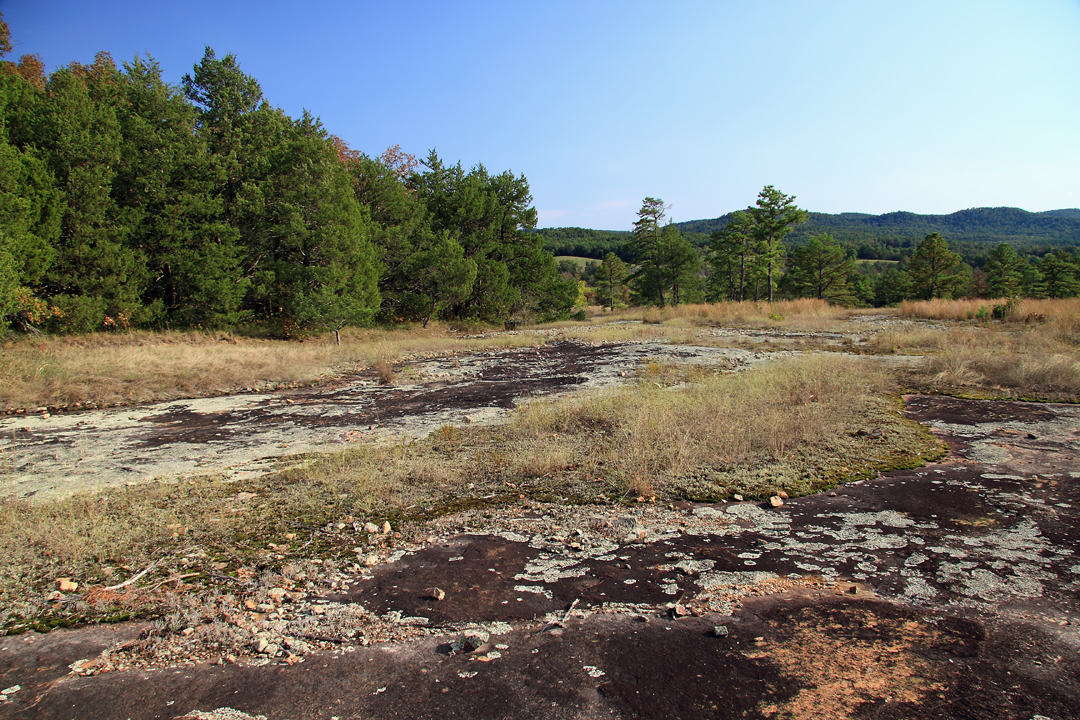
Sandstone glade | nr. Calico Rock, Arkansas.

Although western sand dune endemics were the top goals on my  during last fall’s Annual Tiger Beetle Trip, I started the trip by leaving St. Louis in the most unlikeliest of directions—south! No, I wasn’t trying to get to Denver without having to drive the tedious stretch of I-70 through Kansas. Rather, I wanted to take advantage of the chance to witness active adults of the Missouri/Arkansas disjunct population of Cicindelidia obsoleta vulturina (prairie tiger beetle)—perhaps my favorite of all tiger beetle species—on the sandstone glades near Calico Rock in north-central Arkansas. Widely disjunct from the main population’s eastern limit of distribution in central Texas, I’ve seen them at many locations in the White River Hills of southwestern Missouri and adjacent Arkansas over the past ten years, but never in the area around Calico Rock where they are best known from the state. I already had precise localities where I knew I could see them, as I had found 3rd-instar larvae earlier in the year (some of which had already emerged as adults), so I wanted see them and document the range of variability exhibited by adults at this southeasternmost known extent of the disjunct population’s distribution.

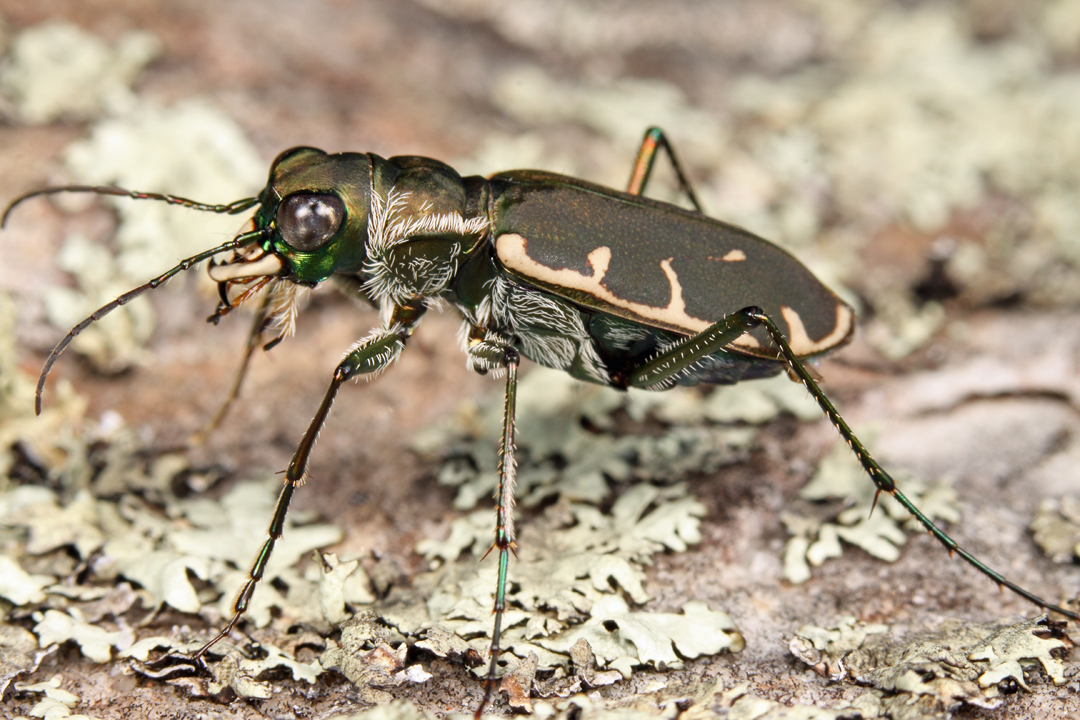
Cicindelidia obsoleta vulturina | nr. Calico Rock, Arkansas.

Although the adults were not quite as numerous as I have found them at certain sites in Missouri, I had no trouble finding them once I got to the area where I had collected the larvae this past June. While showing Steve Spomer our Missouri population last year, he commented that our Missouri adults seemed much less flighty than adults he had seen at Calico Rock. I must say that I agree with him, as I found the adults much more difficult to photograph than those in Missouri. To be honest, I had to stalk nearly ten individuals before the male in the photo above finally allowed me to get close to him. When adults are numerous this is not a problem, but in this case every failed attempt required several more minutes of searching for the next subject. Eventually, however, I got my mojo and started having success with the photographs.

Unlike true spring-fall species, mating occurs in fall instead of spring.

In the main population, and like other members of the genus Cicindelidia, adults are active during the summer months and exhibit the classic “summer” species life history. The Missouri/Arkansas disjunct population, however, shows a phenologic shift in adult activity to the cooler fall months—perhaps in response to the generally droughty conditions that prevail during the summer in this part of the country followed by rains during late summer and into fall. (This is one reason why I think this population may be deserving of separate subspecific status.) In this regard they appear to be “spring-fall” species, but their life history does not match true members of that group, which emerge during fall as sexually immature adults, hibernate during winter, and re-emerge during spring for mating and oviposition. Thus, one never sees adults of classic spring-fall species like Cicindela limbalis mating during the fall. In contrast, adults of this disjunct population emerge, mate, and lay eggs all during the fall before the onset of winter, then they’re done. The eggs hatch during fall and require another season or two to reach 3rd-instar and pupate during the summer for fall emergence.

Coloration likely functions in crypsis, as shown by this individual nestled in amongst moss and lichens.

When viewed as prepared specimens in a cabinet, C. obsoleta and its subspecies are among the most conspicuous of species due to their large size (in Missouri and Arkansas only Tetracha virginica is larger), olive green coloration, and bold white maculations. More than likely, however, the combination of color and markings serve a crypsis function in their native habitat. This is clearly evident with the individual in the above photograph, who had retreated to a moss- and lichen-covered rock crevice in his efforts to evade my lens. Squint your eyes a little bit, and he almost disappears! It must be similar for visually based predators such as birds and lizards.
On more open ground and from a lower angle, the beetle is much more visible.

This same individual, however, becomes quite visible when chased onto more open rock surfaces (and viewed more laterally than from above). It is common to see individuals out in the open such as this, but more often than not when alarmed they fly or run to less exposed areas, relying on their cryptic coloration to avoid detection. In fact, when I follow beetles that have evaded me to the spot where I am sure they must have landed, I often fail to see them even though I am looking almost exactly in the area where they are sitting until they start to crawl and their movement catches my attention.
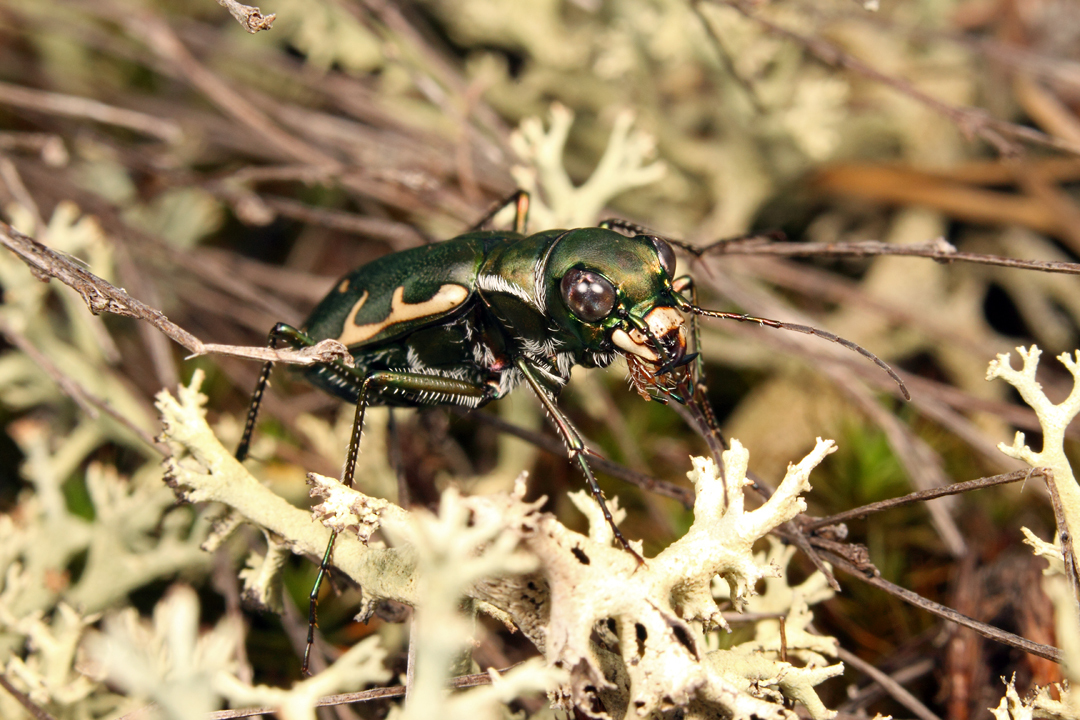
A rather greenish individual tries to hide amongst lichens and shortleaf pine duff.

I have observed a great deal of variability in coloration and maculation at locations in Missouri, with individuals ranging from bright green to dull olive-green to dark green and even brown, and the markings ranging from complete to interrupted. I saw a similar amount of variability in the Calico Rock population, with the exception of brownish (which I have only seen at the northernmost localities in Missouri) and fully maculated individuals. Most of the Calico Rock individuals were dull olive-green, but the female in the above photo (trying to evade my attentions by hiding amongst lichens and pine duff) was as bright a green as I’ve seen in any individual.

A very weakly maculate individual.

As mentioned above, I didn’t seen any individuals that I would consider fully maculated, and several that I saw were more weakly maculated than any I’ve seen in Missouri. The female in the photograph above was the most weakly-marked individual that I saw, with the lateral and median bands greatly interruped—the latter nearly reduced to small discal spots.
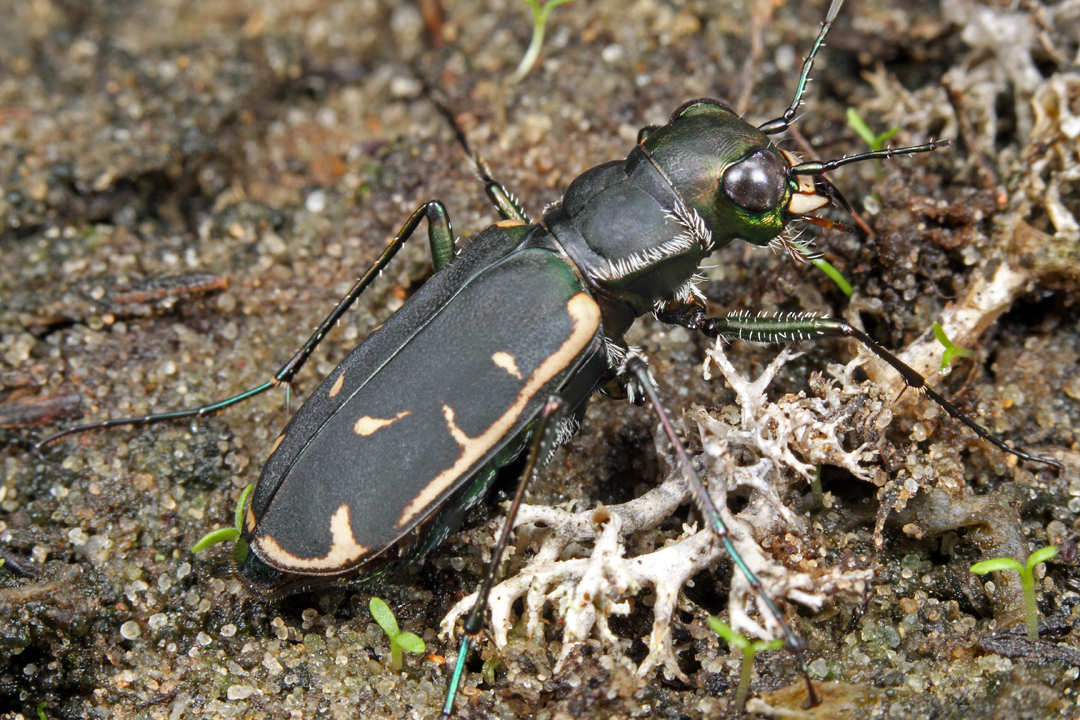
A dark, almost blackish female.

While I did not see brownish individuals as I have seen at the northernmost localities in Missouri, I did see the occasional blackish individual—the one in the above photograph also exhibiting about the greatest degree of macular development that I observed among the adults seen. My impression now is that there are clinal patterns to the coloration and macular development in this disjunct population, with markings tending to be more developed in northern localities. With the specimens collected from this and the many other locations throughout the disjunct population’s range that I have now sampled, a more critical assessment of variability in this population may now be possible.

Beetle's-eye view of sandstone glade habitat.

It has become standard practice for me to photograph tiger beetle habitats whenever I can. However, I’ve become interested recently in trying to understand how tiger beetles perceive their own habitats. While this isn’t possible to know precisely, ground level photographs can provide at least a clue into seeing the world from a beetle’s eye. I almost find this perspective of the glade habitat more interesting than the human perspective shown in the first photograph.

The last sight that their prey sees.

There can be little doubt about what the beetles themselves look like from the perspective of their prey. The photograph above may not properly represent the image generated by an insect’s collective ommatidia, but it certainly must be just as frightening!

Copyright © Ted C. MacRae 2012

A Modest Model for Mimicry

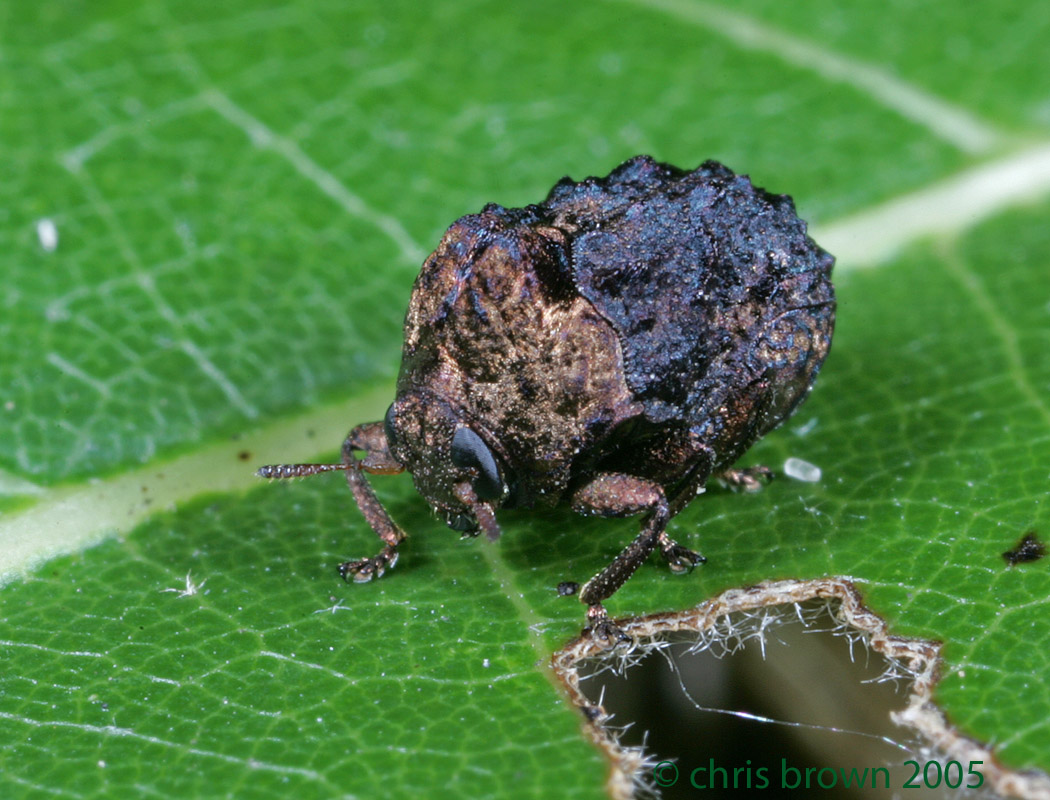
Spring is still a long way off but it’s times like these that I draw on past experiences so I can continue to be thrilled by insect natural history even during the coldest of months.  In this case I am thinking back seven years ago to my first encounter with a warty leaf beetle.  These beetles are certainly unremarkable for their size or coloration but the “set-up” shot below attempts to illustrate what is amazing about warty leaf beetles.  Can you pick out the single individual warty leaf beetle (Exema sp.) among caterpillar frass (aka caterpillar poop)? 

Figure 1. Set-up shot with Exema sp. and caterpillar frass

If you had trouble finding the beetle in the above image then check out the next image and you’ll see the beetle has “sprouted” a head, legs, and antennae.

Figure 2. Set-up shot with Exema sp. and caterpillar frass

I don’t know what caught my eye the first time I encountered a warty leaf beetle on the foliage of a small shingle oak while exploring a woodland edge in Perry Co., MO.  It probably helped that it was one of the larger species of the genus Neochlamisus but it still only measured about 3-4 mm.  One thing I do remember about the encounter, though, is that there was something about it that made me do a double take.  My first thought was exactly what the beetle might have hoped, that it was caterpillar frass.  But this frass had legs (Figs. 3 and 4)!  I was at first incredulous but soon became enthralled as I beheld something that I had never noted while flipping through field guides.  I had once again stumbled across something that I would never have imagined—a beetle that mimics caterpillar poop!

Figure 3. Neochlamisus sp. on shingle oak

Figure 4. Neochlamisus from the perspective of a short distance away

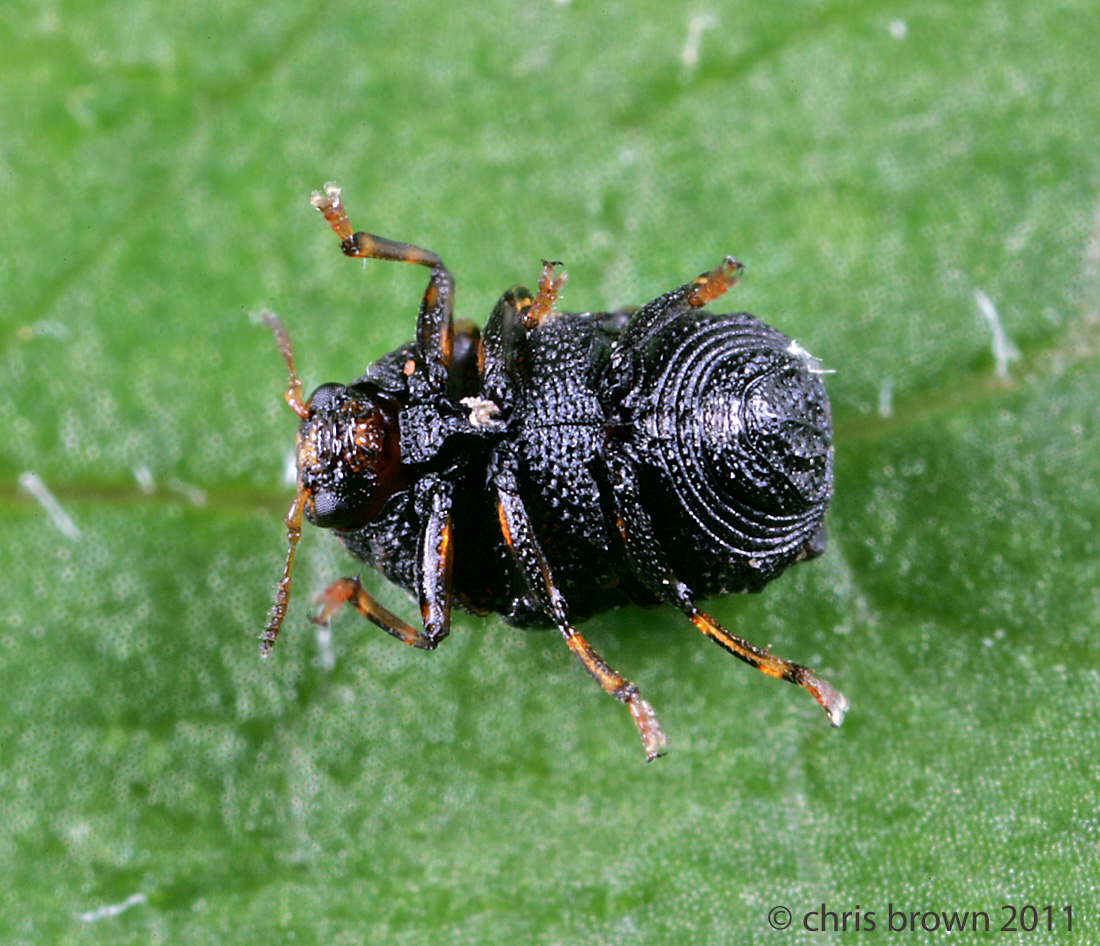
The beetles in the tribe Chlamasini were apparently not at the table the day decisions were made on what model they would mimic.  These guys at best mimic small bits of debris but are dead ringers for the frass of lepidopteran larvae (i.e., caterpillars).  Then as if to add insult to injury, we dubbed the tribe the warty leaf beetles!  The Chlamasini may humbly mimic excreta but what they lack in a flashy model they make up for with absolutely superb mimicry.  The Chlamasini are remarkably similar to the frass of lepidopteran larvae in size, shape, texture, and color but the aspect that really completes the mimicry is that, upon disturbance, the head is retracted and the legs and antennae are neatly folded into precisely matched grooves leaving no indication that this was once a beetle (Figs. 5 and 6).  Even the finer details of coloration were not overlooked as some warty leaf beetle species are variably colored, including an almost metallic sheen in some places that closely resembles the coloration of some caterpillar frass.  In fact the mimicry of warty leaf beetles is so convincing that I recently dropped a piece of suspect frass in a vial in hopes that it might sprout legs and represent a new species of warty leaf beetle for me.

Figure 5. Exema sp. with appendages extended

Figure 6. Exema sp. with appendages retracted

If the disturbance is sufficient to cause the beetle to completely retract these appendages, they will likely roll off the leaf and fall out of harms way.  Though these beetles can be relatively common, occurring even in my suburban St. Louis yard, the small size [Exema is only 2-3 mm (Figs. 7 and 8) while Neochlamisus is slightly larger at 3-4 mm] and resemblance to something unremarkable ensures that these beetles often times go unnoticed.  When I have happened to notice these beetles I found Neochlamisus associated with shingle oak, Quercus imbricaria, and Exema associated with Asteraceae, including gray-headed coneflower, Ratibida pinnata, and sweet coneflower, Rudbeckia subtomentosa.

Figure 7. Exema sp. on sweet coneflower, Rudbeckia subtomentosa

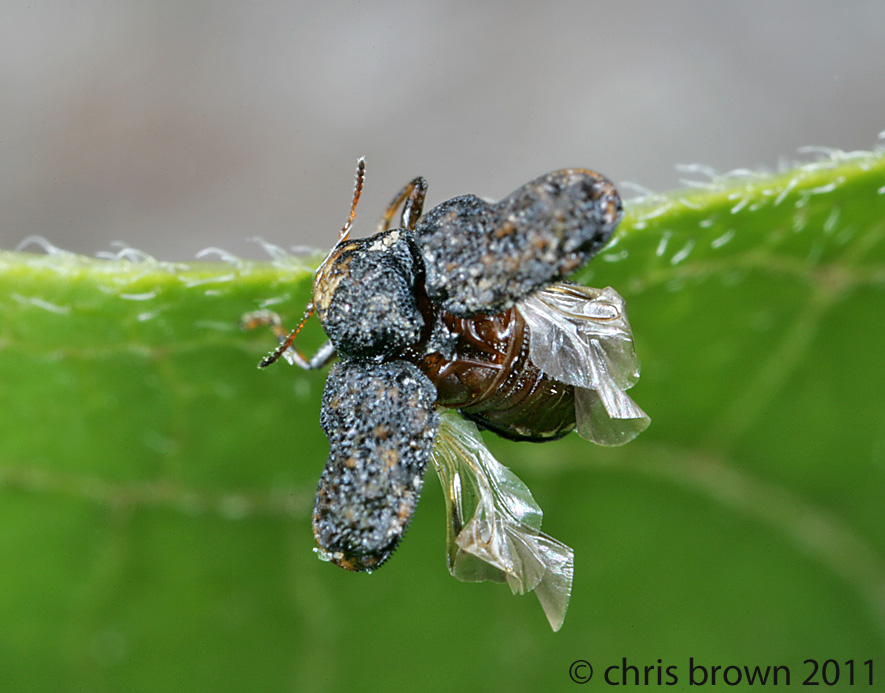
Figure 8. Exema sp. ready for flight

The Chlamasini are in the subfamily Cryptocephalinae within the leaf beetle family (Chrysomelidae).  The Chlamisini can be found worldwide but are most diverse in the Neotropics.   We have 6 genera in North America, two of which are shown here.  Interestingly, the excreta theme doesn’t stop at frass-mimicry.  Like other members of Crytocephalinae, warty leaf beetle larvae are “case-bearing”; that is they are housed in a case which in this instance is made out of… you guessed it, their own feces (Fig. 9).  You would think that most moms would frown on such a practices but mothers in the Cryptocephalinae actually instigate the practice when they equip each egg laid with a cap of feces that serves as starting material for the case and likely also serves to dissuade would be predators.

Figure 9. Chlamasini larva, likely that of Exema sp. on sweet coneflower, Rudbeckia subtomentosa

My experiences with Neoclamisus seven years ago captures perfectly why I am so drawn to explore for insects— there is always something new to find and every once in a while something comes out of the wood work that is beyond what I could have imagined.

REFERENCE:

Lourdes Chamorro-Lacayo, M. & A. Konstantinov. 2009. Synopsis of warty leaf beetle genera of the world (Coleoptera, Chrysomelidae, Cryptocephalinae, Chlamisini). ZooKeys 8:63–88.

Copyright © Chris Brown 2012

Colorado’s Great Sand Dunes Tiger Beetle

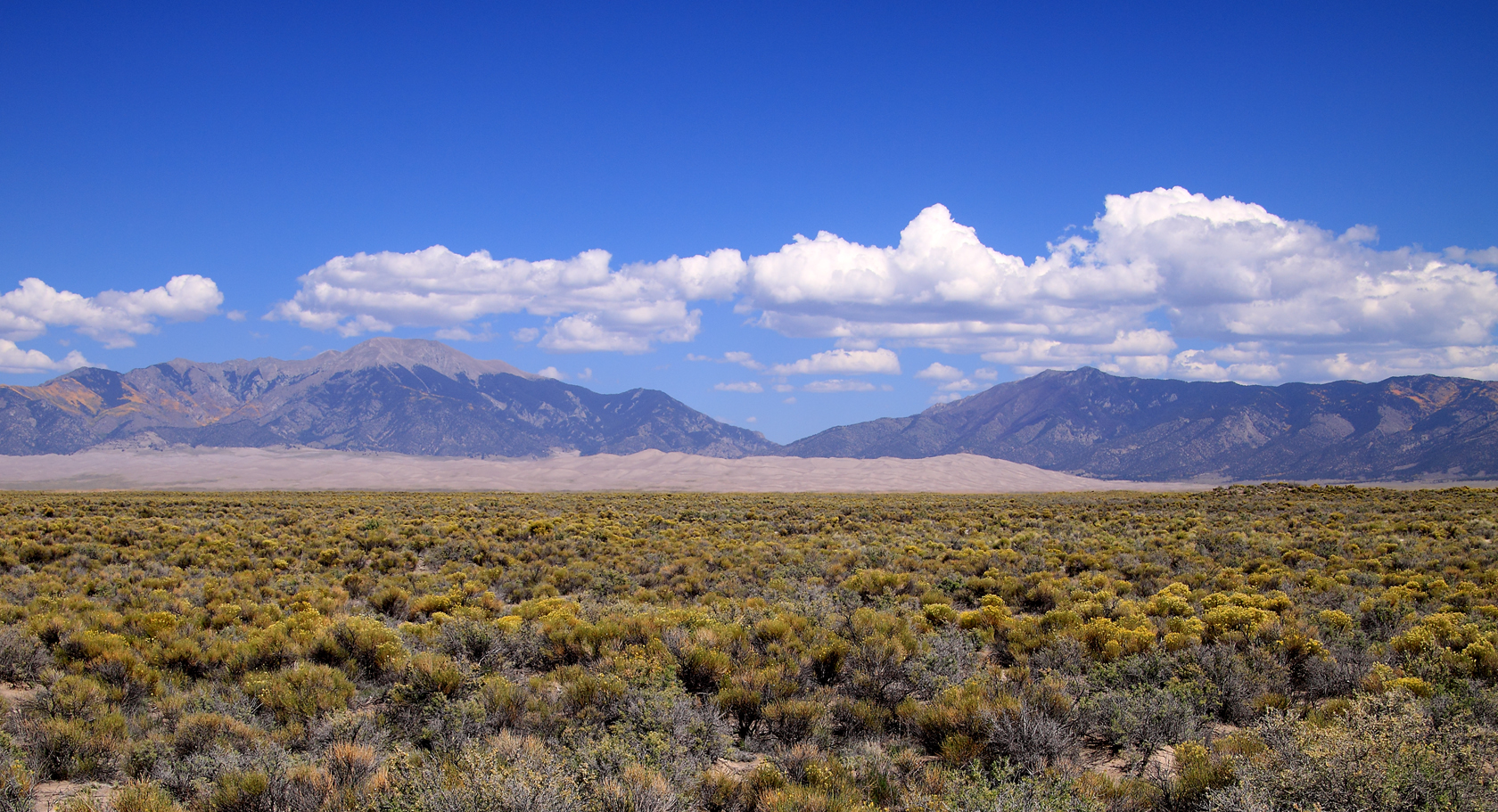
Great Sand Dunes National Park | Saguache and Alamosa Counties, Colorado (click for 1680 x 887 version)

Last year’s Annual Fall Tiger Beetle Trip entered its last day as an unqualified success. Travel partner Jeff Huether and I were doing the “Great Western Sand Dune Tour” on a quest to find and photograph some of North America’s most geographically restricted tiger beetles. The first four days featured successful visits to northwestern Colorado’s Maybell Sand Dunes for Cicindela scutellaris yampae and Cicindela formosa gibsoni, southeastern Idaho’s St. Anthony Sand Dunes for Cicindela arenicola, and southwestern Utah’s Coral Pink Sand Dunes for the prize of the trip—Cicindela albissima. The only endemic that we had failed to find was Cicindela waynei at southwestern Idaho’s Bruneau Sand Dunes (hopefully this was a result of poor fall emergence conditions rather than an indication of further decline of this perilously endangered species).

Small sand dune west of GSDNP in the Nature Conservancy's Medano-Zapata Ranch.

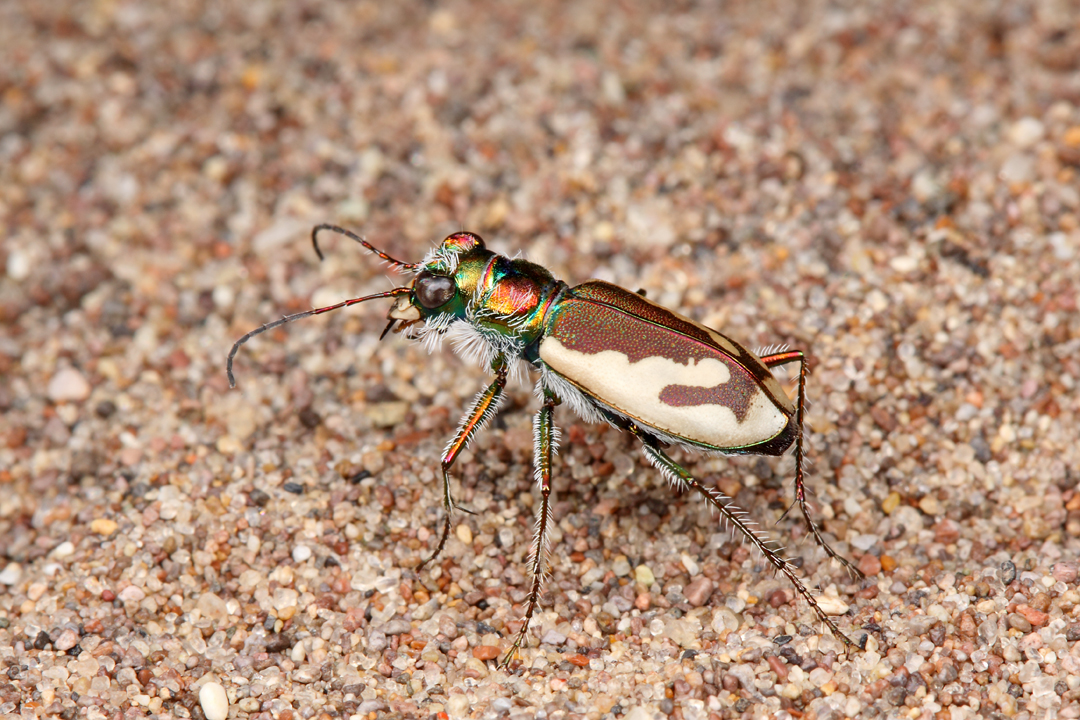
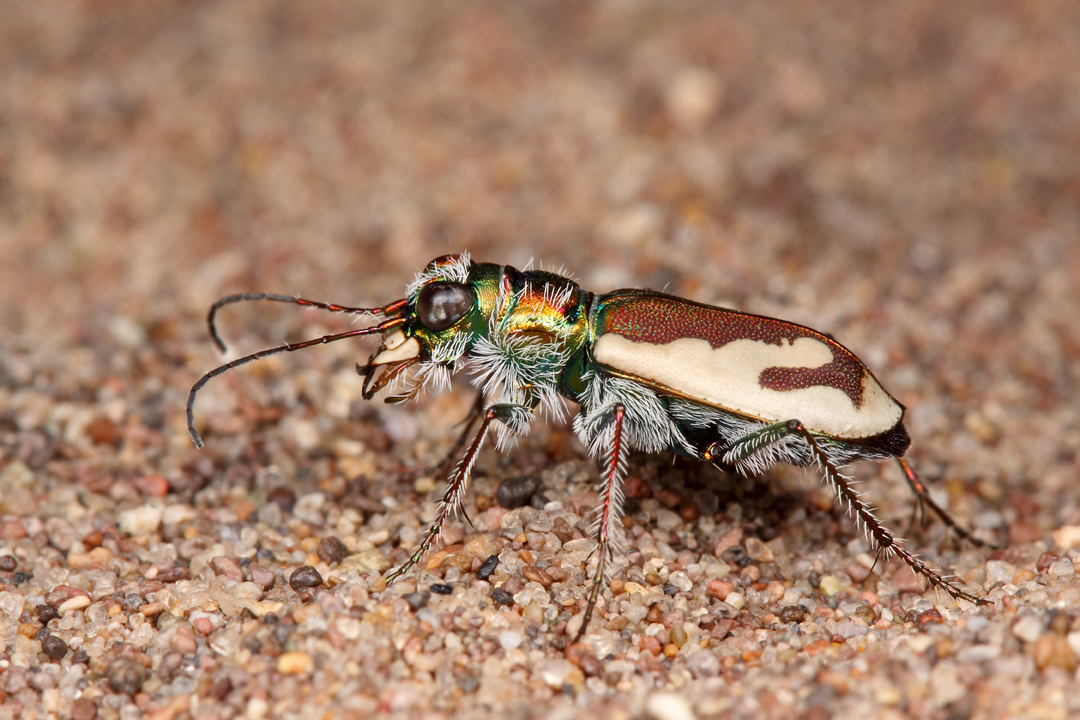
Day 5 featured a visit to southwestern Colorado’s Great Sand Dunes to look for the endemic Cicindela theatina. As on every day previous of the trip, the morning drive saw cool but rising temperatures under bright, sunny skies, so we were optimistic about our chances. Between Great Sand Dunes National Park (type locality of the beetle) and The Nature Conservancy’s Medano-Zapata Ranch west of the park, the entire 290 km² range of C. theatina is on protected land. Not knowing whether the beetle would be out and, if so, how extensively it would occur, our plan was to approach the Park from the west through Zapata Ranch and stop at any sand dunes we sighted along the way until we found the beetle.  It didn’t take long—as soon as we entered the Ranch we began to see small sand dunes in the distance, and within minutes after making the 1-km hike towards one particularly promising looking dune we saw the beetles. Even though this was the fifth western sand dune endemic I had seen in as many days, the first moment I laid eyes upon it was no less exciting—flashing red and green on coppery, white marked elytra, it seemed all hair and teeth!

Great Sand Dunes tiger beetle (Cicindela theatina) | Medano-Zapata Ranch

Despite this being my first sighting of the species, there was no doubt about it’s identity. The only other tiger beetle that occurs with and could possibly be mistaken for C. theatina is the blowout tiger beetle, C. lengi; however, the broad marginal band that runs completely around the elytra and the green/brown dorsal coloration of C. theatina are enough to distinguish it from that species. Temperatures were still a bit on the cool side, but the beetles were already remarkably active and skittish. Like the other sand dune species we had already seen, they were enormously difficult to approach—numerous failed attempts were necessary before I encountered the slightly more cooperative female shown in these photos (although she still required several minutes of stalking to get her sufficiently accustomed to my presence to allow these shots).

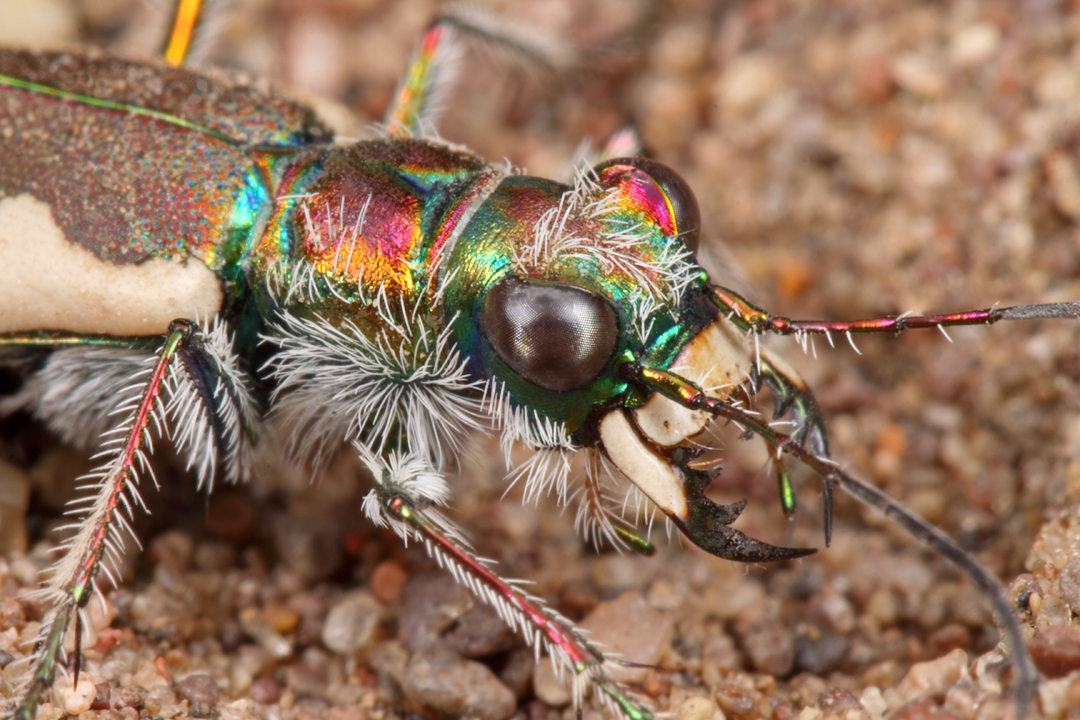
Like most sand dune tiger beetles, adults are densely hairy on the lateral and ventral surfaces.

Adults ''hug'' the sand for warmth during the cooler morning hours.

The dense covering of white hairs on the lateral and ventral surfaces of the adults belies their adaptation to the abrading sands of their wind-swept habitat. Scouring sands, however, are not the only hardships that the adults must contend with. Temperatures on the dunes can range from as low as 40° F on a chilly morning to nearly 140° F during the heat of the day. Accordingly, much of the adult beetle’s activities revolve around thermoregulation to maintain optimal body temperatures for activity (Pineda and Kondratieff 2003). These include not only stilting, shade-seeking, and mid-day burrowing to avoid excessive warming (see my post  for examples of these behaviors), but basking to gain warmth when temperatures are still a bit too cool for effective foraging (photo above).

Fabulous metallic red and green highlights on the head and pronotum contrast with the reddish brown elytra and their white lateral markings.

Despite the fact that the entire range of this species is encompassed by protected land, WildEarth Guardians filed a petition for federal listing as an endangered species in 2007 (Tweit 2010). Whether protection will be granted remains to be seen—Coral Pink’s C. albissima has a global range only 1.3% the size of C. theatina‘s range (only slightly more than half of which is on protected land), yet that species has been awaiting listing for nearly three decades now! (Too bad C. theatina doesn’t have real fur, feathers, or those endearing mammalian eyes that would surely allow it to jump to the front of the line.)

For the first time in BitB Challenge history, we have a 4-way tie for the win. Dorian Patkus, Mr. Phidippus, Mike Baker, and David Winter all share the honors for . Mr. Phidippus is the big winner, however, as he strengthens his grip on the overall lead with a lead of 13 or more points over his nearest rivals (Roy, Tim Eisele, Mike Baker, and Dennis Haines). The competition is far from over though—a single misstep is all it would take to see the emergence of a new leader before this session is over.

REFERENCES:

Pineda P. M. and B. C. Kondratieff. 2003. Natural history of the Colorado Great Sand Dunes tiger beetle, Cicindela theatina Rotger. Transactions of the American Entomological Society 129(3/4):333–360.

Tweit, S. J. 2010. Beetle Mania. National Parks 84(4):24–25.

Copyright © Ted C. MacRae 2012

Memories of summer – Neoclytus scutellaris

Neoclytus scutellaris | 9 July 2011, Wayne Co., Missouri

During the short, cold days of winter it’s nice to take a break from the curatorial activities that dominate the season and look back on some of the insects seen during the previous summer. This is Neoclytus scutellaris, a longhorned beetle associated almost exlusively with dead/dying oaks in the eastern U.S. The species is sometimes confused with the very similar N. mucronatus but is distinguished by the transverse yellow band on the pronotum and its host (the latter being associated with hickory and hackberry).

Copyright © Ted C. MacRae 2011

Something for Adrian

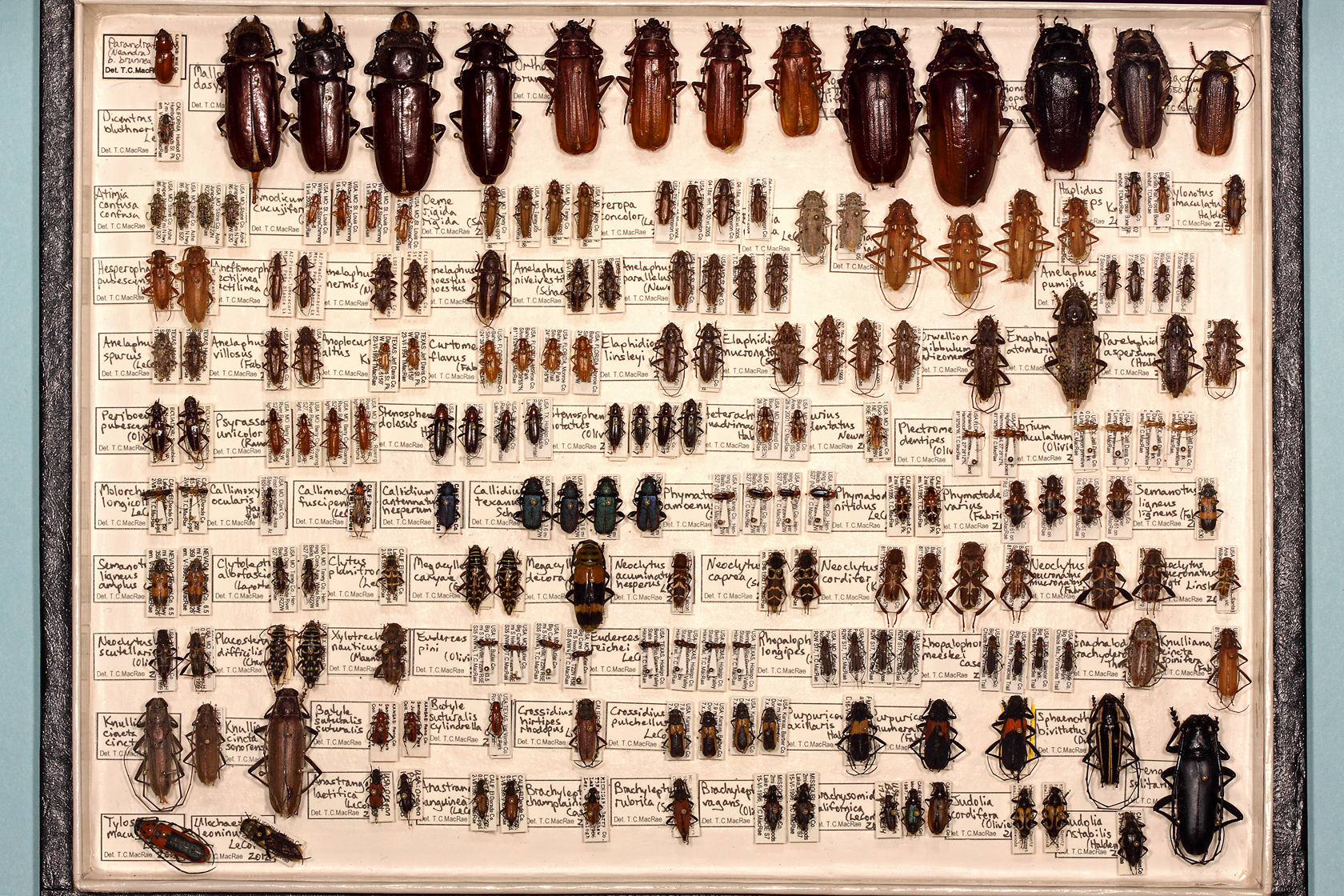
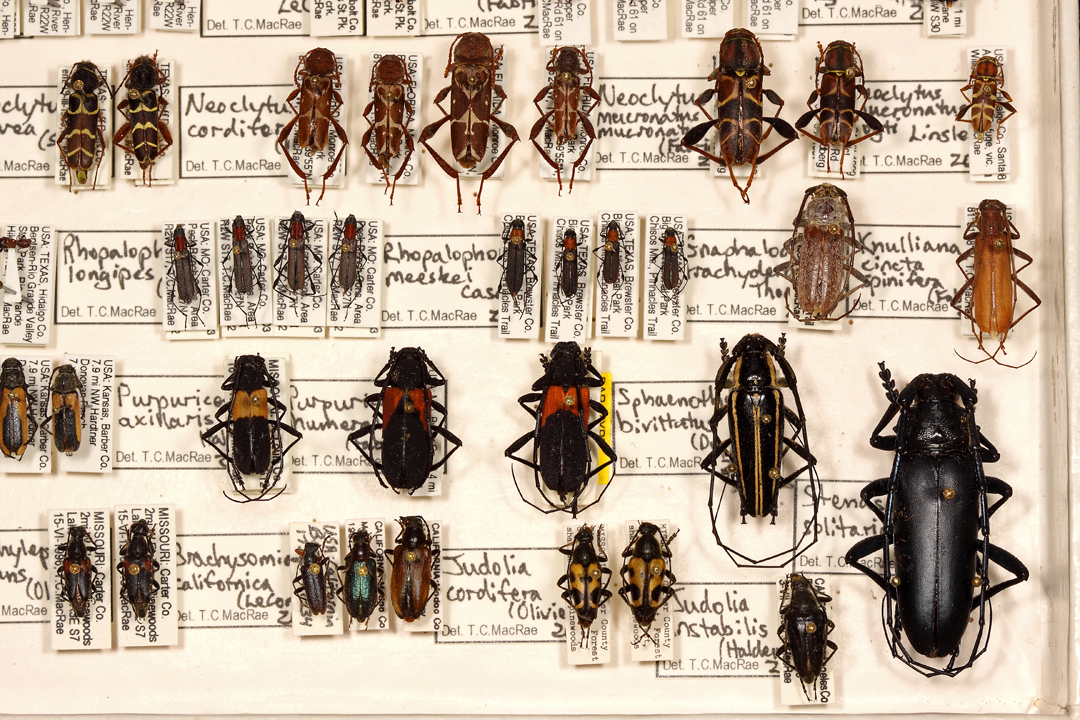
Miscellaneous North American Cerambycidae - click for larger version (1680 x 1120).

In a comment on my  post, Adrian Thysse asked to see hi-res images of specimen drawers from my own collection. Like any good North American entomologist, Adrian was a little bothered by the card-mounting technique used by the sender of the specimen box featured in that post and wanted to see what a nice collection of properly pinned specimens might look like. It’s actually not the first time he’s made this request—back when I first moved this blog to WordPress (more than three years ago) he did so when I put up my Collection page featuring a photo of my “Oh wow!” insect drawer. I’ve thought about doing this ever since he first made this request, but the problem, or at least my problem, with photographing specimen drawers from my main collection is a combination of large drawer size (reducing the size of the specimens in an image of the drawer) and long series of a relatively small number of species in the same genus or closely related genera (making the drawer contents look rather uniform in appearance). I suppose some might still be interested in seeing drawers from a “working collection” such as mine, but I just never had enough motivation to start pulling out drawers and taking photos.

Adrian is in luck, however, as I just happened to be putting together a shipment of miscellaneous North American Cerambycidae for a collector in Europe (to whom I’ve owed insects for longer than I like to admit). The box I’m using for the shipment is smaller than a normal collection drawer and is packed with close to 100 species of this diverse beetle family. There might be a specimen here and there that was collected by someone else, but the vast majority were collected, mounted, labeled, and identified by me. I show this as an example of my curatorial technique, and as a bonus the above image is linked to a fairly large version (1680 x 1120) for those who might be interested in getting a really close look at the specimens and their labels. Here also are closer looks at the specimens in the bottom left and bottom right corners, respectively:

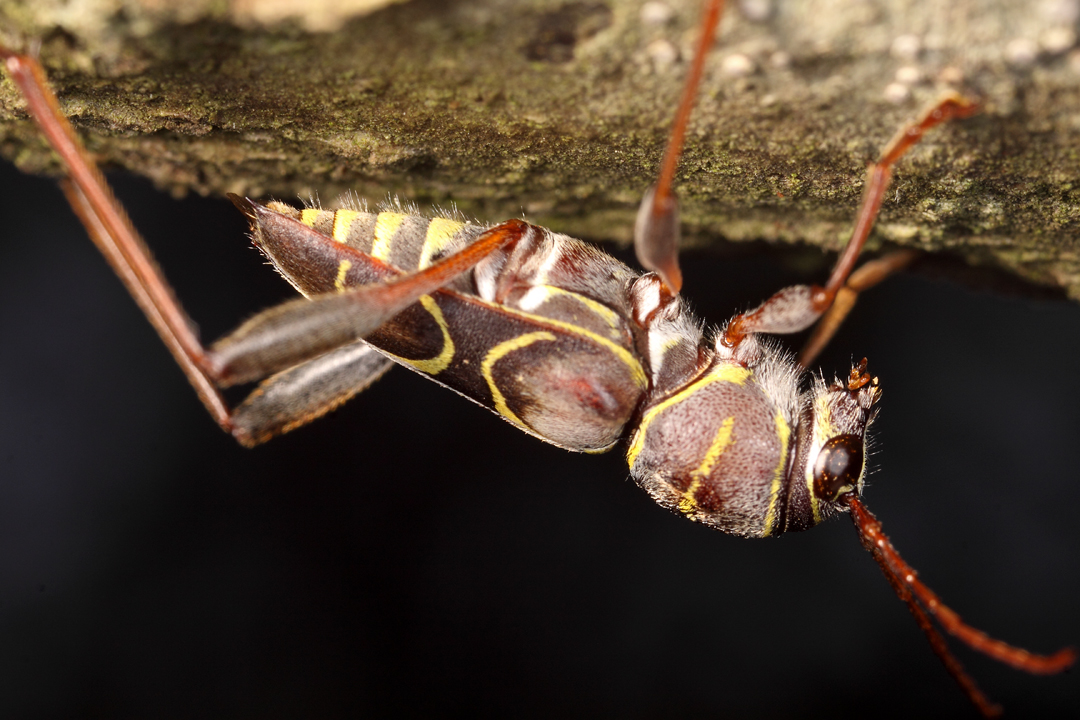
Hmm, is that a wasp at the bottom?

What species is that without the ''normal'' ID label?

Copyright © Ted C. MacRae 2012

ID Challenge #15

Who am I, and where do I live?

It’s been almost a month since the last challenge, and since Alex got back to his roots I think I’ll do likewise. This is a straight up identification—the order and family are obvious (or should be), so I’m going to limit ID points to genus and species. However, to make up for this loss of higher taxa points I’ll be awarding points for correctly guessing/deducing/intuiting where this little beastie lives or providing any unique comments on its natural history. As always, standard challenge rules apply, including moderated comments to give everyone a chance to submit their answers.  Bonus points will be awarded to for answering first in the case of multiple correct answers, and discretionary bonus points are also up for grabs. Good luck!

Copyright © Ted C. MacRae 2012
Buprestidae exchange

With my queue of specimen identifications now clear, I can turn my attention to another major backlog that I haven’t been able to give proper attention recently—exchanges. For those of you not into insect collecting, exchanging is something that most collectors eventually end up doing, especially if the goal is to build a taxonomic reference collection within one’s chosen group that has broad representation of species and higher taxa from multiple geographical regions. Truthfully, I don’t do nearly as much exchanging as some collectors I know. It’s not that I don’t want to, but simply a matter of time—receiving and incorporating shipments while preparing and sending out returns is not as quick and easy as it might seem, not to mention the time involved in mining and corresponding with prospective exchange partners. I wish I could do more, but since I can’t I deal with it by limiting myself almost exclusively to exchanging Buprestidae (although I’ve been known to do a tiger beetle exchange or two). I focus on Buprestidae because that is my primary group of taxonomic interest.

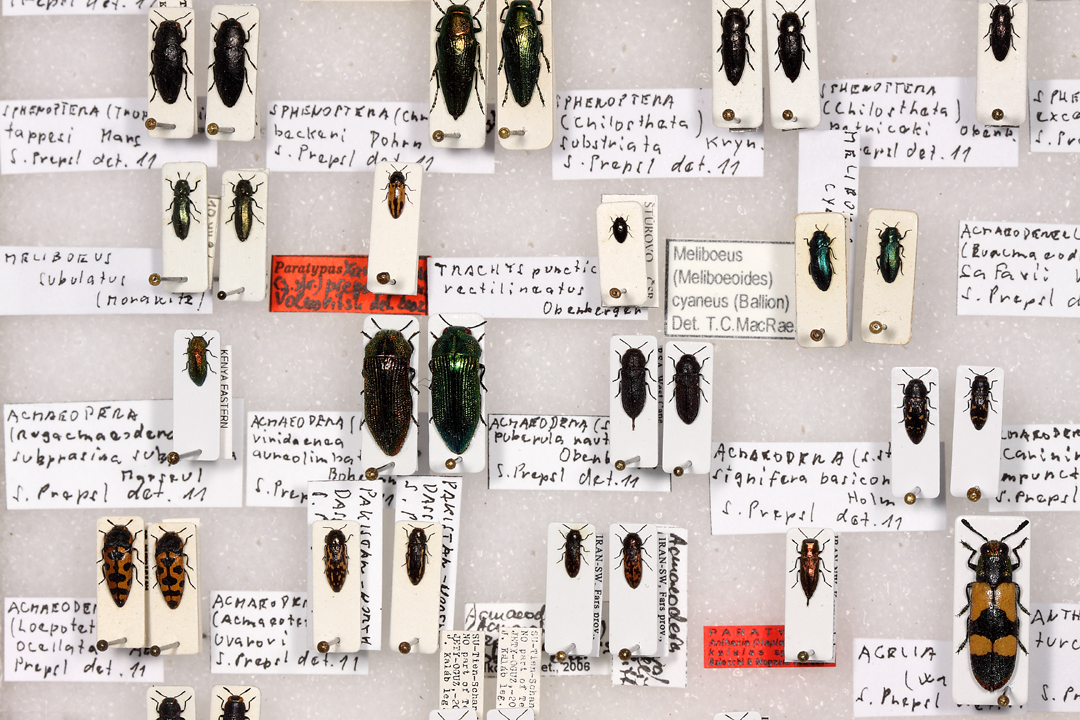
Buprestidae received in exchange from Stanislav Prepsl, Czech Republic

These photos show some of the Buprestidae I received this past year, this particular box coming from Stanislav Prepsl in the Czech Republic. This is the first time that I’ve exchanged with Stan, and I must say I am impressed with the quality and taxonomic diversity of his buprestid holdings. In this exchange, I received 73 species, most of which are represented by a male/female pair and four represented by paratype specimens. These are all Old World species, and while a few are from the well-known fauna of Europe most were collected in countries seldom visited by (or even off limits to) American collectors such as the former USSR, Iran, Pakistan, Kurdistan, Turkey, etc. There are a nice few species also from Namibia, Kenya and Ethiopia. In return, I sent to Stan more than 100 species of Buprestidae from mostly the southwestern U.S. and Mexico where I have done a large part of my collecting. Stan was less demanding about receiving both one male and one female for each species, thus the larger number of species I was able to send him for approximately equal numbers of specimens.

Close-up view of lower left corner of box

Some collectors avoid Buprestidae because of their taxonomic difficulty and the overwhelming numbers of small, difficult-to-identify species. I think this is exactly why I like the group, and though many of the species are small they are certainly no less beautiful than their larger, flashier, more ostentatious brethren. I include this close-up view (you might recognize the specimen in the lower right corner as the previously featured Agelia lordi) to show the meticulous preparation of the specimens included in the shipment—an example of a well-curated collection by someone who knows what they are doing. Incidentally, the cards on which the specimens are mounted are standard fare among European collectors, and although as an American I prefer direct pinning of larger specimens and mounting smaller specimens on points versus cards, I’ve come to appreciate the exacting care with which some Europeans practice this card-mounting technique.

It’ll take me a few hours of dedicated attention to move all of these specimens into the main collection—not only must their proper placement be determined, but there is usually a lot of reshuffling of specimens within and amongst unit trays whenever such a large number of specimens is incorporated into it. With 15,000 described species and counting, this sending of Buprestidae represents only a modest increase (0.5%) in my representation of species; however, it adds representation from geographical areas that previously had virtually no representation in my collection at all. I hope Stan is as pleased with the material that I sent to him as I am with this material, and I look forward to the opportunity to exchange again with him in the near future.

Copyright © Ted C. MacRae 2012

Extreme sexual dimorphism in Buprestidae: Xenorhipis hidalgoensis

Yesterday I received in the mail a package of specimens for identification from Dan Heffern in Houston, Texas. I first began corresponding with Dan about 25 years ago—not long after I myself became interested in Coleoptera, and as an avid collector of longhorned beetles (family Cerambycidae) Dan knows a thing or two about jewel beetles (family Buprestidae) as well. Over the years, Dan has come up with a number of great buprestid species from Texas, especially through rearing, many of which he has graciously sent to me examples for my cabinet.

Xenorhipis hidalgoensis (male, length 5.3 mm) | Hidalgo Co., Texas

The present package was no exception, as it contained a male/female pair of one of North America’s least frequently encountered buprestids, Xenorhipis hidalgoensis. Dan had reared them from dead branches of Condalia obovata collected in south Texas as part of a multi-year beetle survey in the Lower Rio Grande Valley. He had mentioned to me that he would be including them in the sending, but that did nothing to diminish my excitement upon seeing the specimens when I opened the box. The species was first described from Hidalgo Co., Texas (Knull 1952), and other than a single record from the neighboring Mexican state of Tamaulipas (Nelson et al. 1981) subsequent mentions of the species have been limited to catalogue listings and inclusion in keys to species. Thus, these specimens represent not only a nice addition to my collection, but also the first reported larval host for the species.

Xenorhipis hidalgoensis belongs to the tribe Xenorhipini, the males of which exhibit a distinctive specialization of their antennae in that the distal segments are highly modified into a very extended flabellate or lamellate condition. Females, in contrast, retain the serrate antennal condition that is more typical throughout the family.  Differences in antennal morphology aren’t the only sexual differences exhibited by members of the tribe, as males and females often exhibit differences in coloration as well. This is especially true in the genus Xenorhipis, and I’m not aware of a more striking example of this than X. hidalgoensis (compare these photos to those of male/female pairs of X. bajacalifornica, X. brendeli and X. osborni in A new species of Xenorhipus from Baja California).

Xenorhipis hidalgoensis (female, length 6.4 mm) | Hidalgo Co., Texas

The highly modified male antennae are interesting from both an evolutionary and functional standpoint. Similarly modified male antennae are found in a few other groups of Buprestidae, including the genus Knowltonia in western North America (four species), the monotypic genera Mendizabalia and Australorhipis in South America and Australia, respectively, and two species in the enormous Australian genus Castiarina (Bellamy and Nylander 2007). The Xenorhipini, however, with 20 species distributed throughout the Western Hemisphere, is by far the most diverse group exhibiting the condition. Despite the similarity of their antennae, the taxonomic distance between these groups and differences in the detailed structure of the numerous olfactory sensillae that cover the modified segments (Volkovitsh 2001) suggest that the modifications have arisen and evolved independently in these several disparate taxa.

All Buprestidae exhibit sensory structures on their antennae, presumably with olfactory and/or thermosensory functions; however, Wellso (1966) provided strong evidence that females of X. brendeli release pheromones that are highly attractive to males and detected by their elaborate antennae. Caging studies with virgin and mated females revealed that males were highly attracted to virgin but not mated females, and that mated males were not attracted to either virgin or mated females and died shortly thereafter.  Further, more than 80% of males were attracted within a 1-hour period just past midday. It is assumed that chemoreceptors for detecting female pheromones are located on the male antennae, as males with their antennae removed were not attracted to caged virgin females but were able to mate when caged with them. This suggests that the male antennae evolved in response to selection for greater surface area, which allows placement of more sensillae to detect female pheromone. Wellso observed also that adults are very short-lived, with no individuals living longer than 48 hours (perhaps due to reliance on pheromone attraction rather than longevity for mate location). This, along with their very short daily activity period, may explain  why adults of species in this tribe are so seldom encountered in the field.

Male with highly flabellate antennae

Female with unmodified serrate antennae


REFERENCES:

Bellamy, C. L. and U. Nylander. 2007. New genus-group synonymy in Stigmoderini (Coleoptera: Buprestidae). The Coleopterists Bulletin 61(3):423–427.

Knull, J. N. 1952. A new species of Xenorhipis from Texas (Coleoptera: Buprestidae). Entomological News 63(7):177–178.

Nelson, G. H., D. S. Verity, and R. L. Westcott. 1981. Additional notes on the biology and distribution of Buprestidae (Coleoptera) of North America. The Coleopterists Bulletin 35(2):129–152.

Volkovitsh, M. G. 2001. The comparative morphology of antennal structures in Buprestidae (Coleoptera): evolutionary trends, taxonomic and phylogenetic implications. Part 1. Acta Musei Moraviae, Scientiae biologicae (Brno) 86:43-169.

Wellso, S. G. 1966. Sexual attraction and biology of Xenorhipis brendeli (Coleoptera: LeConte). Journal of the Kansas Entomological Society 39(2):242–245.

Copyright © Ted C. MacRae 2012