Great Plains Ladies’-tresses

First things first—everyone who participated in the quiz in the previous post correctly identified the orchid flower in the photo as belonging to the genus Spiranthes, and a few were on the right track with their species suggestion of S. cernua.  However, Scott Namestnik from Indiana and Doug Taron from Illinois, were the only ones who recognized it to be a close relative of that species, the recently-described S. magnicamporum.  Nice job!  The plants in these photographs were found during early October in the dry dolomite glades of White River Balds Natural Area in southwestern Missouri (part of Ruth and Paul Henning Conservation Area).  The creamy white inflorescences stood in stark contrast to the russet big bluestem (Andropogon gerardii) and rusty gold Indian grass (Sorghastrum nutans) stems that dominated the rocky landscape.

Spiranthes¹ is one of the more complex genera of North American orchids, seven of which are known to occur in Missouri (Summers 1985).  Spiranthes magnicamporum² is closely related to S. cernua and was only recently (1975) described as a distinct species.  Conclusive separation of the two species requires microscopic examination of the seeds (those of S. magnicamporum are monoembryonic, whereas a large percentage of the seeds of S. cernua are polyembryonic) (Luer 1975).  In the field, however, S. magnicamporum can generally be distinguished from S. cernua by its spreading rather than appressed lateral sepals and absence of basal leaves at the time of flowering³.  It is likely that many previous records of S. cernua in Missouri actually refer to this species, as both occur throughout much of southern Missouri and sporadically in northern Missouri (refer to the USDA Plants Database Missouri county level distributions for S. cernua and S. magnicamporum).  However, they are ecologically isolated in that S. cernua prefers wet lowlands with acidic soils, while S. magnicamporum is typically found in drier uplands with calcareous soils.  Both species are late-season bloomers, but S. magnicamporum blooms even later (mid-September into November) than S. cernua (mid-August to mid-October) and has more fragrant flowers.

¹ From the Greek speira—σπειρα,—”coil,” and anthos—ανθος,—”flower,” referring to the coiled or spiraled spike of flowers common in the genus.

² From the Latin magnus, “large,” and campus, “plain,” meaning “of the Great Plains” in reference to the primary geographic area where this species is found.

³ My identification of these plants as Spiranthes magnicamporum was confirmed by Dr. George Yatskievych, author of Steyermark’s Flora of Missouri.

Orchids as a whole exhibit highly specialized pollination biology, and species of Spiranthes are no exception, with the spiral arrangement of their flowers evidently an adaptation to pollination by long-tongued bees (e.g. bumblebees, Bombus spp., and megachilid bees) (van der Cingel 2001).  Flowers are protandrous, i.e., they are functionally male when they first open and become functionally female as they age, and open sequentially from the base, resulting in female flowers on the lower inflorescence and male flowers on the upper inflorescence.  Thus, bee pollinators tend to act as pollen donors when visiting lower flowers and pollen recipients when visiting upper flowers.  Pollinia from male flowers are attached to the bee’s proboscis as it tries to access nectar secreted into the base of the floral tube.  When visiting a plant, bees start at the bottom of the inflorescence and spiral up to the top before flying to the next plant.  The reasons for this behavior, called acropetal movement, are not fully understood but could be related to the tendency for nectar rewards to be greater in the lower flowers.  Whatever the explanation, the result is to promote outcrossing between neigboring plants.

While specific insect pollinators have been documented for a number of Spiranthes spp., apparently the only account of pollination in S. magnicamporum is documented by Jeffrey R. Hapeman, author of the website Orchids of Wisconsin:

I have seen a bumblebee (Bombus nevadensis ssp. americorum) pollinating Spiranthes magnicamporum in a prairie in southeastern Wisconsin. After visiting a number of inflorescences, the bee began to vigorously scratch at the pollinia on its proboscis, trying to remove them. The bee became so involved in trying to remove the pollinia that it fell to the ground, where it was easily captured. The specimen was determined by Steve Krauth, and is deposited in the Insect Research Collection at the University of Wisconsin-Madison. Apart from this observation, there are no published accounts of pollination of S. magnicamporum.
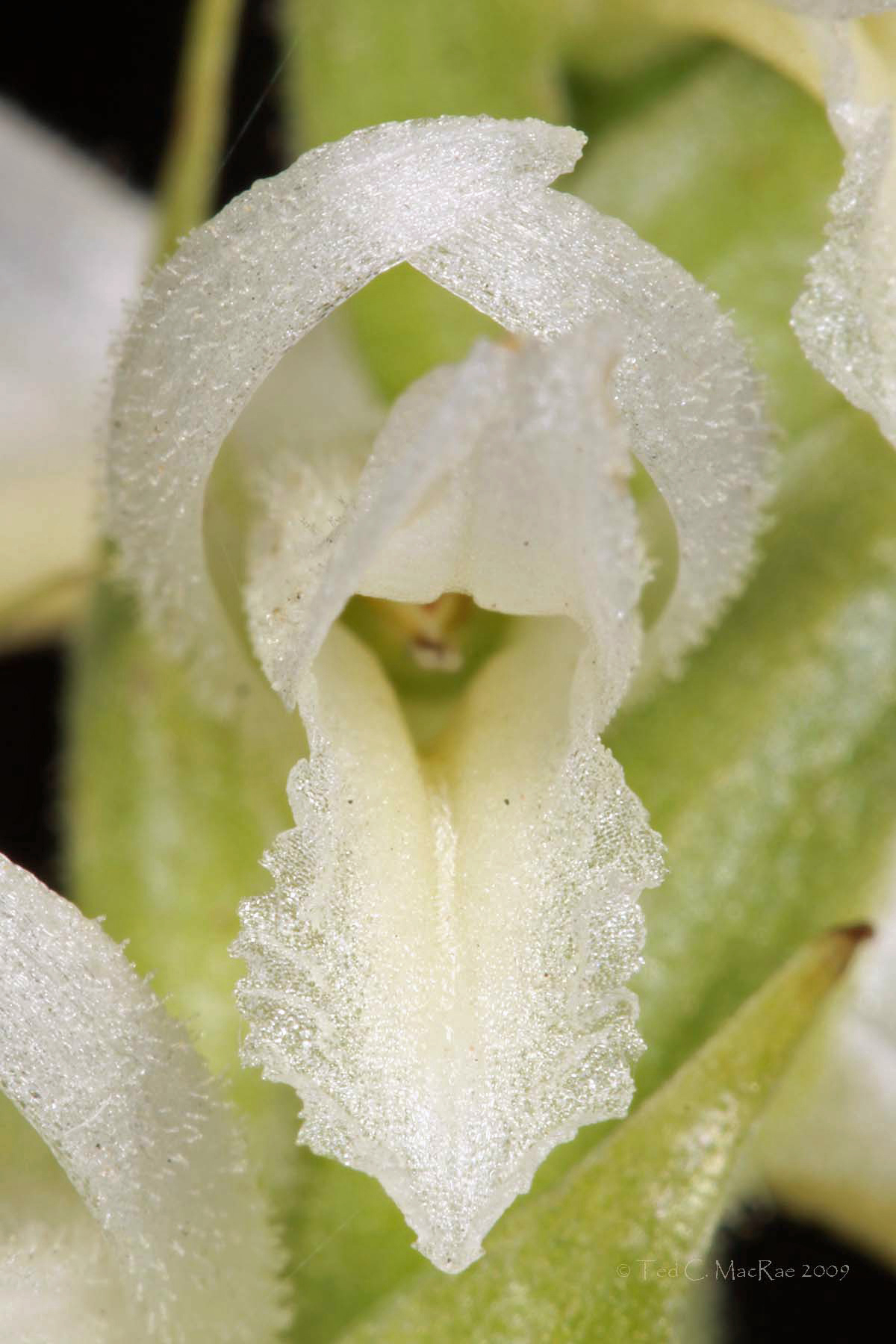
Photo details:
All photos: Canon 100mm macro lens on Canon EOS 50D (manual mode), ISO 100, MT-24EX flash w/ Sto-Fen diffusers.
Photo 1: 1/160 sec, f/14, flash 1/2 power.
Photo 2: 1/250 sec, f/16, flash 1/4 power.
Photo 3: 1/250 sec, f/20, flash 1/4 power.
Photo 4: w/ 36 mm extension tube, 1/250 sec, f/16, flash 1/8 power.

REFERENCES:

Luer, C. A.  1975.  The Native Orchids of the United States and Canada Excluding Florida.  The New York Botanical Garden, 361 pp. + 96 color plates.

Summers, B.  1981.  Missouri Orchids.  Missouri Department of Conservation, Natural History Series No. 1, 92 pp.

van der Cingel, N. A.  2001.  An atlas of orchid pollination: America, Africa, Asia and Australia. A. A. Balkema, Rotterdam, Netherlands, 296 pp.

Copyright © Ted C. MacRae 2009

Add to FacebookAdd to DiggAdd to Del.icio.usAdd to StumbleuponAdd to RedditAdd to BlinklistAdd to TwitterAdd to TechnoratiAdd to Yahoo BuzzAdd to Newsvine

Email to a friend

Friday Flower: Yes, it’s an orchid…

Photo details: Canon 100mm macro lens on Canon EOS 50D (manual mode), 36 mm extension, ISO 100, 1/250 sec, f/16, MT-24EX flash @ 1/8 power w/ Sto-Fen diffusers.

…but what kind? Identifying the genus should be relatively easy, but I suspect a species identification will be more of a challenge.  I’ll provide a little information and even a couple of literature sources that might be useful for achieving a specific determination.

  • Date of photograph: October 5, 2009.
  • Location: White River Balds Natural Area, Taney County, Missouri.
  • Habitat: Dolomitic limestone glade.

Answer and more photos will be posted shortly, so give it your best shot. Think big!

REFERENCES:

Luer, C. A.  1975.  The Native Orchids of the United States and Canada Excluding Florida.  The New York Botanical Garden, 361 pp. + 96 color plates.

Summers, B.  1981.  Missouri Orchids.  Missouri Department of Conservation, Natural History Series No. 1, 92 pp.

Copyright © Ted C. MacRae 2009

Add to FacebookAdd to NewsvineAdd to DiggAdd to Del.icio.usAdd to StumbleuponAdd to RedditAdd to BlinklistAdd to TwitterAdd to TechnoratiAdd to Furl

Answers to “Winter botany quiz #2”

Finally, I present to you the answers to “Winter botany quiz #2 “. The delay in providing these answers was two-fold. Firstly, I knew this would be a hard test, so I wanted to give people plenty of time to figure out the answers. Secondly, the answers were delayed an extra day due because of some debate that arose among the experts I consulted about – more on that below. I thank all those who participated, and while there was no clear-cut “winner”, several honorable mentions are deserved:

  • Doug Taron, who was the first to properly deduce the South African nature of these plants.
  • James C. Trager, a myrmecologist (yet still my friend!) who correctly identified the genus of .
  • Everyone, for guessing that was “an orchid” – although Tom @ Ohio Nature was the only one to use the formal scientific name for the family, and Doug Taron was the only one to attempt a generic identification (and came close – Oncidium and Ansellia are both assigned to the tribe Cymbidieae in the subfamily Epidendroideae).

Ornithogalum seineri (family Hyacinthaceae)
Ornithogalum is a large genus occurring mostly in the drier habitats of southern Africa and around the Mediterranean.  The genus and its relatives were formerly included in the Liliaceae (as many of the participants guessed), but the group is now given familial status as the Hyacinthaceae.  This genus contains numerous species of horticultural note.  One is (as James noted) O. umbellatum, or  “star of Bethlehem”, which in North America has escaped cultivation as a garden ornamental and gained status as an invasive weed.  Another is O. longibracteatum (syn. caudatum), a popular houseplant with the common name “pregnant onion”.  This species, native to the Cape and Natal Provinces of South Africa, is easily recognized by its bulb that “gives birth” to tiny replicas of itself just beneath a thin, transparent ‘onion’ skin (as shown in the photo at right from Trans-Pacific Nursery).  At flowering, a long spike grows from the center of the green strap leaves, eventually giving rise to a spearhead of tiny white flowers situated at the end.

While I couldn’t find much information about O. seineri, I did find this spectacular photo of numerous blooming plants in bushveld habitat amongst grazing zebra (photo by ingrid1968 in this post at SANParks.org Forum).  My view of this species was not quite so spectacular, as I saw only the lone plant in the photographs posted earlier.

Ansellia africana (family Orchidaceae)
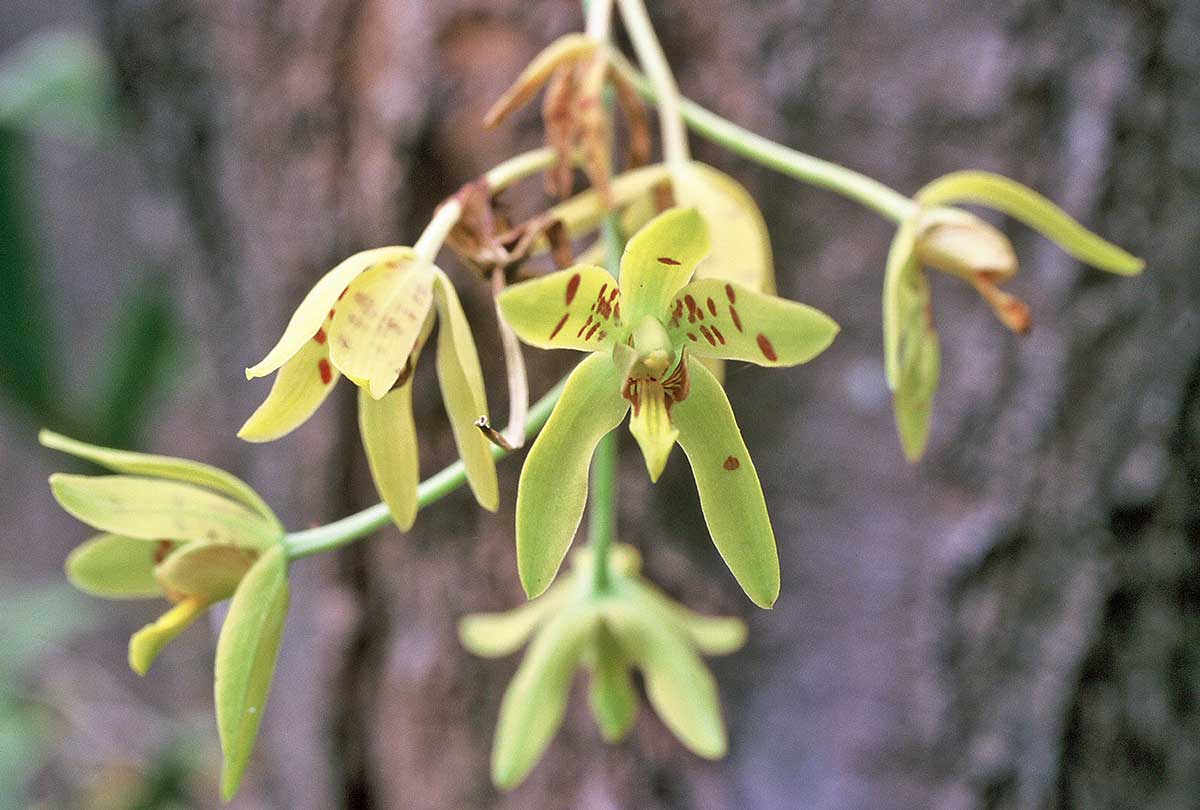
Ansellia is an African genus of orchid commonly called Leopard Orchid or African Ansellia.  There is some degree of morphological, geographical and ecological variation in Ansellia populations, with the result that several species, subspecies and varieties have been described.  Flower color varies from pure yellow to variably splotched with brown to almost completely black with finely indicated yellow divisions.  Recent taxonomic work has concluded that there are no discontinuities within the spectra of variations exhibited and the populations are thus attributable to the single, polytopic species, A. africana (Khayota 1999).

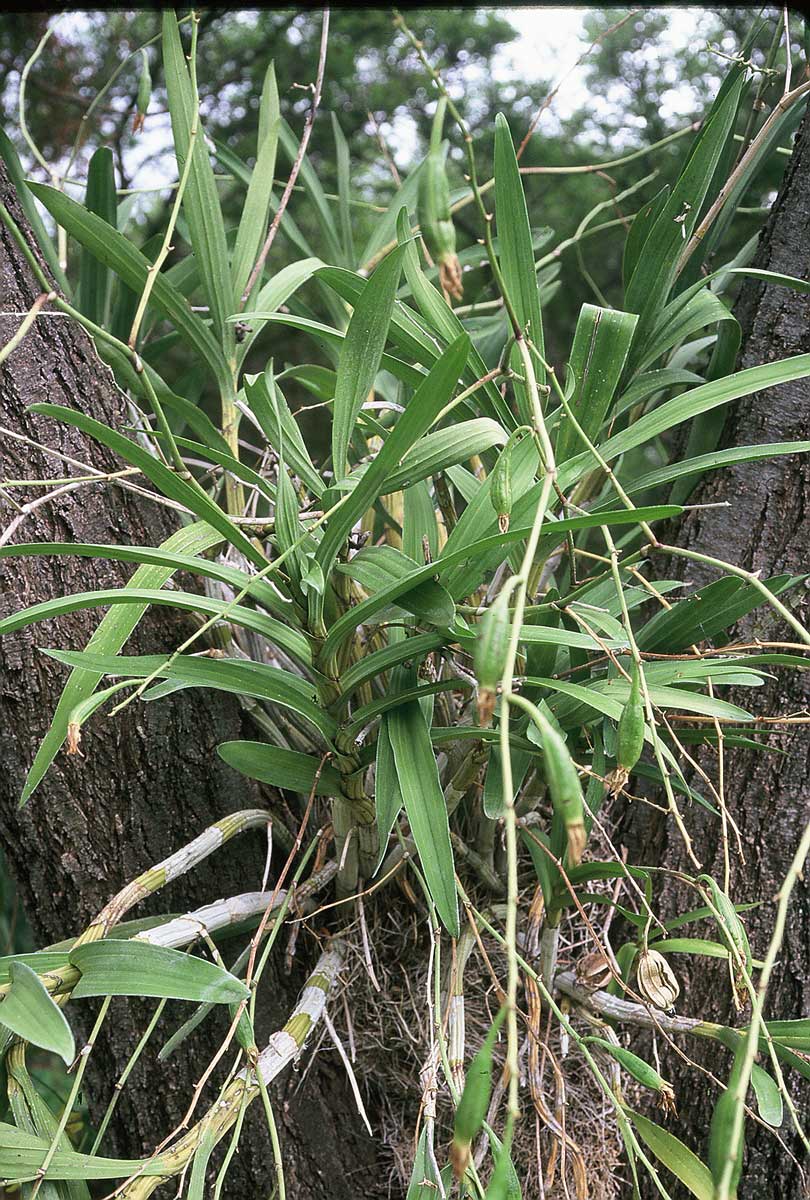
Ansellia africana is a large, perennial, epiphytic species that usually grows attached to the branches of tall trees but is sometimes found growing on rocks.  This genus is immediately recognizable by its large, cane-like pseudobulbs that arise from a basal rhizome and is notable for the white, needle-like, upward pointing aerial roots that form a sort of “trash basket” around the clump.  The term is surprisingly appropriate, since the root basket seems to function in catching dropping leaves, flowers and detritus which provide nutrients for the plant as they decay.  This species can grow to enormous size and often forms spectacular clumps, some of which have an estimated weight of more than one ton.

Of the three plants featured in the quiz, this was the one I expected someone would guess, since the species is popularly cultivated by orchid enthusiasts.  Unfortunately, the pressures of wild collection for commercial purposes has caused declines in its population.  The problem is exacerbated by the unsustainable methods use to harvest, transport, and cultivate wild-born plants.  Host trees are usually cut down and sections with the orchid removed, resulting in wholesale destruction of both orchids and hosts. After harvesting, plants are cut up and transported slowly in open handcarts, to be sold along roadsides where they may sit exposed to full sun for days or weeks.  Cutting the clumps damages the roots, and exposure results in dessication, making it difficult for harvested plants to recover once in cultivation.  Plants that do survive harvest and transplant suffer high mortality rates in cultivation due to improper attention to light and moisture regimes.

. Adenia sp., poss. glauca (family Passifloraceae)
To be completely honest, not only did I not expect anyone to guess this one, I didn’t think I was even going to be able to provide an answer. I sent the photos to my friend and colleague, George Yatskievych, director of the Flora of Missouri Project (and author of the recently published Steyermark’s Flora of Missouri, 1999 and 2006), who forwarded the photographs to several more colleagues, and at the same time I posted the photos on SANParks.org Forum (a fantastic resource, which I just recently discovered myself, for those interested in South Africa National Parks and their natural history). It took some time for these sources to weigh in with their opinion, which in the end were in agreement that it represented a species of African passion flower in the genus Adenia of the family Passifloraceae (not to be confused with Adenium, a genus of flowering plants in the family Apocynaceae – also occurring in Africa). As for which species, the choices had been narrowed down to either A. glauca or A. fruticosa. According to Imberbe, a photo of the leaves would have been diagnostic, and the flowers are also different (A. glauca has yellow flowers while those of A. fruticosa are green). Fred Dortort, in an article on the University of California at Berkely Botanical Garden website titled, “Passion and Poison“, notes that A. fruticosa has a tall, spindle-shaped caudex topped with a few thin, sparsely-leafed, arching branches, while in A. glauca the caudex is roughly globose and can become quite large. This description seems to favor A. glauca, which Imberbe also noted was known to occur in the area where I took the photographs.

Species identification aside, the genus Adenia is notable for its bizarre adaptations for water storage. Most of the 100 or so species in this Afrotropical and Indomalaysian genus have underground tubers. Those of species adapted to drier environments have grown proportionately larger, with some turning into above ground caudices that can take several different forms and that, in some species, may reach up to eight feet in diameter and height. Even more notable than these succulent adaptations are the poisonous properties that many plants in the genus possess. Not all species have been analyzed (and I found little or conflicting information about A. glauca and A. fruticosa), but one species in the genus – A. digitata – has gained notoriety as perhaps the most poisonous plant in the world. Two different toxins are found within its tuber, one a cyanogenic glycoside, the other a particularly potent toxin called modeccin. The latter is a 57kD protein that resembles ricin and acts a powerful inhibitor of protein synthesis by binding to ribosomes (Gasperi-Campani et al. 1978). Imberbe, in her comments about the photos I posted on SANParks.org Forum, noted the following about plants in this group:

…take heed of the Afrikaans name “Bobbejaangif” (Baboon poison)… It has been used as a fish poison, as well as in suicide and murder. It causes nausea, fits and liver and kidney damage.

REFERENCES:

Gasperi-Campani, A., L. Barbieri, E. Lorenzoni, L. Montanaro, S. Sperti, E. Bonetti, & F. Stirpe. 1978. Modeccin, the toxin of Adenia digitata. Biochemistry Journal 174:491-496.

Khayota, B. N. 1999. Notes on systematics, ecology and conservation of Ansellia (Orchidaceae), pp. 423-425. In: J. Timberlake & S. Kativu (eds.), African Plants: Biodiversity, Taxonomy and Uses, Royal Botanic Gardens, Kew.

Copyright © Ted C. MacRae 2009

Add to FacebookAdd to NewsvineAdd to DiggAdd to Del.icio.usAdd to StumbleuponAdd to RedditAdd to BlinklistAdd to Ma.gnoliaAdd to TechnoratiAdd to Furl

Winter botany quiz #2

In the first winter botany quiz, I learned that I have some rather astute botanists amongst my readership. They were not only able to quickly identify to species every plant I had pictured but also identify their commonality, sometimes from quite afar. As a result, this one is harder.  I use the term “winter botany quiz” in the broadest possible sense – just because it’s winter here doesn’t mean it’s cold everywhere! All of the photos were taken in the same general (for now unspecified) locality during late November and early December (this paragraph simply reeks of clues!).

To give everyone a fair chance, I’ve turned on comment moderation so people can submit their answers without seeing what has already been submitted.  I’ll remove moderation after a couple days or so.  First one with all the right answers wins the admiration and jealousy of their peers!

424046-r1-e018_018_21

#1A

424046-r1-e019_019_21

#1B - closeup of flowers in #1A

424046-r1-e020_020_2

#2A

424046-r1-e021_021_2

#2B - closeup of flowers of #2A

424046-r1-e022_022_2

#3A - the vine, not the trees

424046-r1-e023_023_2

#3B - closeup of vine base

Copyright © Ted C. MacRae 2009

Add to FacebookAdd to NewsvineAdd to DiggAdd to Del.icio.usAdd to StumbleuponAdd to RedditAdd to BlinklistAdd to Ma.gnoliaAdd to TechnoratiAdd to Furl

Ozark Trail – upper Trace Creek Section

Last Saturday Rich and I finished the Trace Creek Section of the Ozark Trail by hiking the upper 12.5 miles of the section – from Hazel Creek to the Hwy DD crossing. Today was a special day for us – we would be completing our 200th mile of the Ozark Trail! Unfortunately, I came down with a cold the day before, making it somewhat difficult to fully enjoy that milestone. Nevertheless, it was a milestone that we’re quite proud of. Since we started hiking the Ozark Trail some 7 years ago, we’ve completed the Taum Sauk, Middle Fork, Blair Creek, Current River, Between The Rivers, Eleven Point, and – now – Trace Creek Sections. Of these, the Taum Sauk Section is unquestionably the finest, crossing the rugged granite outcroppings of the St. Francois Mountains, and the Eleven Point Section with its towering bluff top views is a close second. We still have much to see, however. Completed sections still awaiting us are the Karkaghne, Marble Creek, Wappapello, and Victory Sections, and the Coutois and North Fork Sections are nearing completion. By the time we complete these sections, I expect additional parts of the planned route will be constructed and ready for our enjoyment.

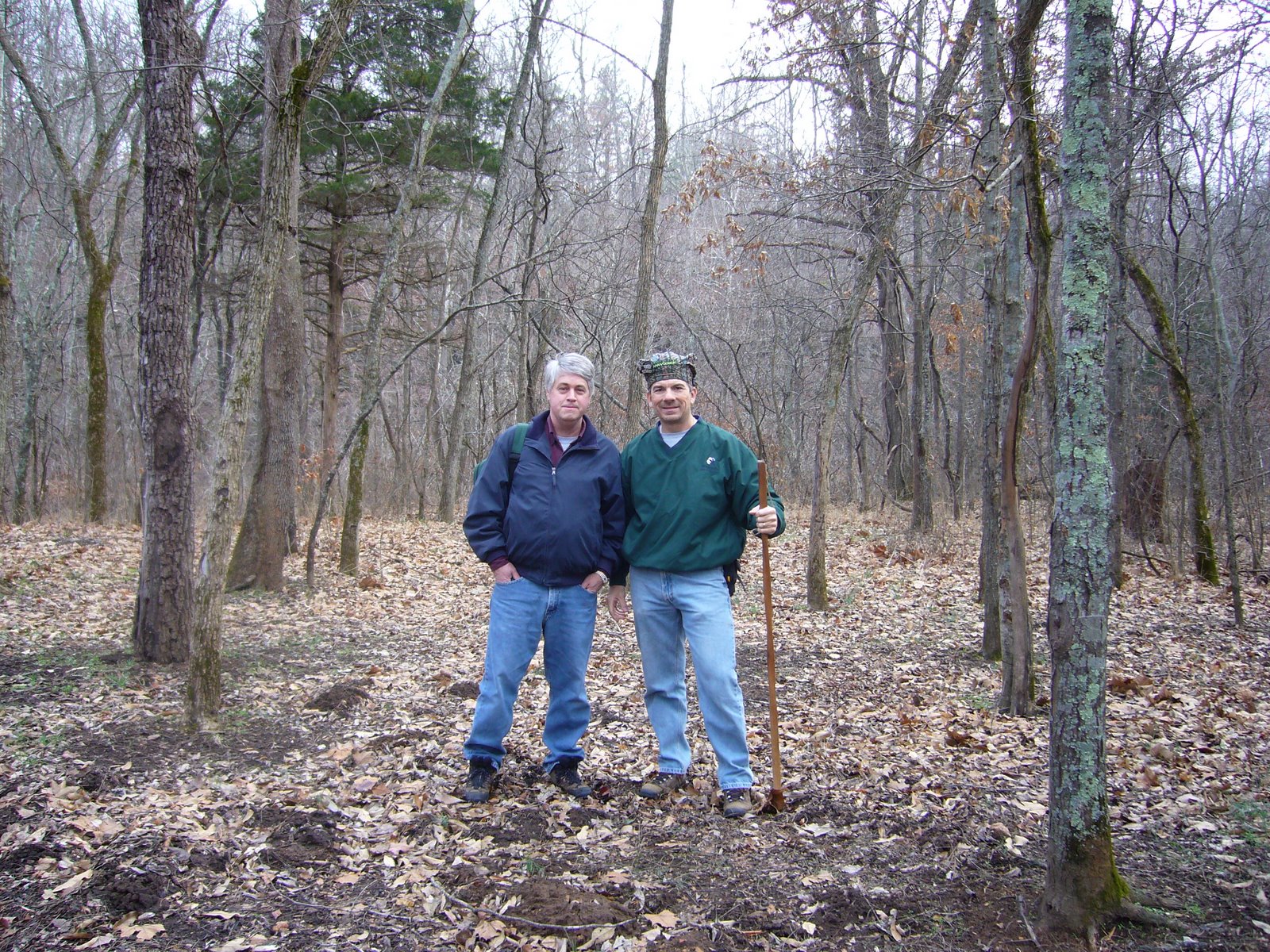
But back to Saturday’s hike. We started at Hazel Creek with mild temps and cloudy skies but no precip in the forecast. We talked briefly to a mountain biker with a 29er who took this photo of us:


These cabin remains lie in the campground at the trailhead – those are sandstone blocks which I suppose must have been transported from the Lamotte formations some 30 miles to the east near Ste. Genevieve.


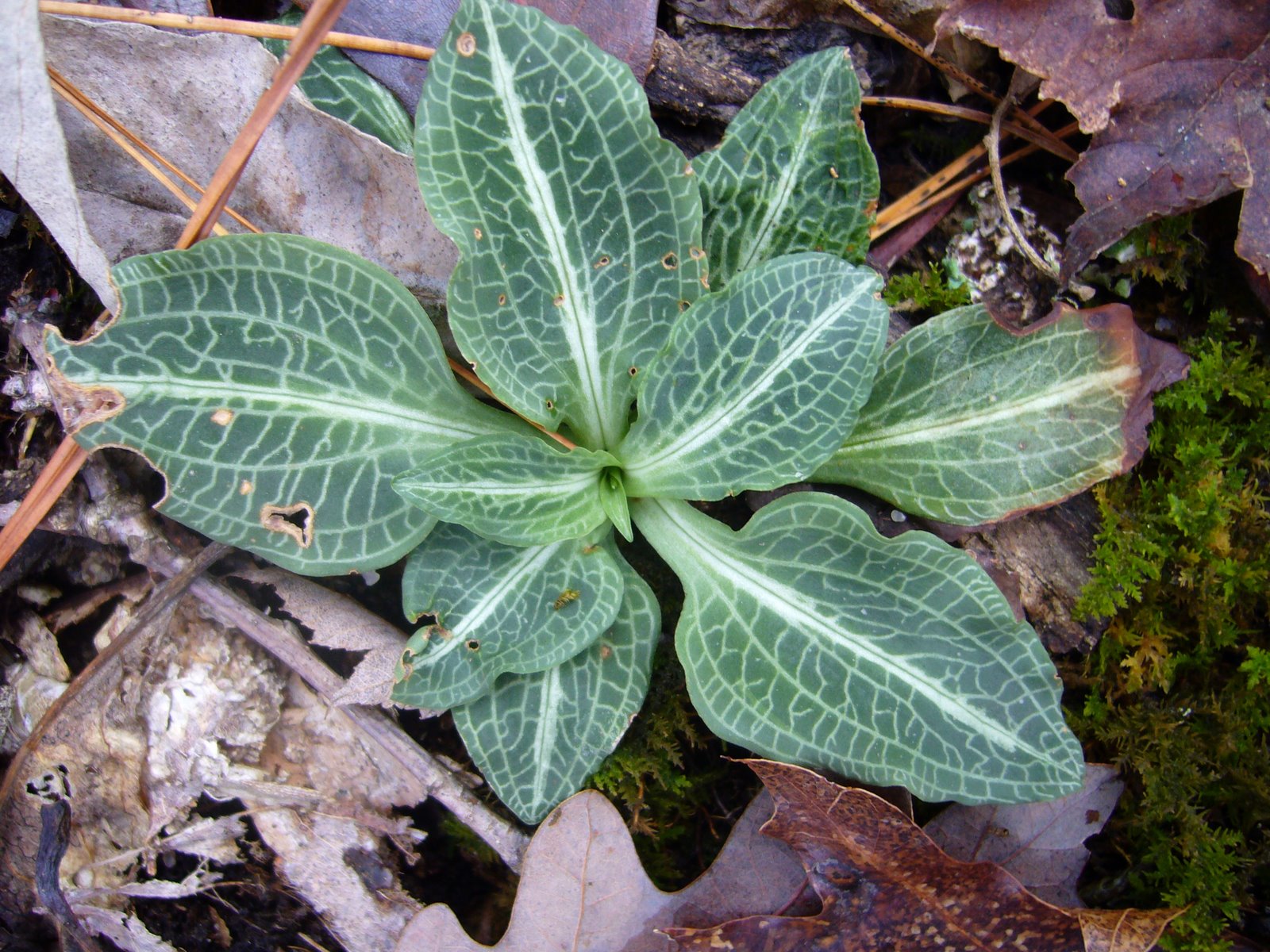
There was much to see in the vicinity of Hazel Creek. As an orchid enthusiast, I was pleased to find these Adam and Eve orchids (Aplectrum hymenale), also known as puttyroot, growing in healthy numbers on the hillside above the valley. The single leaf of this unusual plant is dusky grey-green in color, deeply creased and looking like crepe paper. They appear in late summer and persist until the plant flowers the following spring.


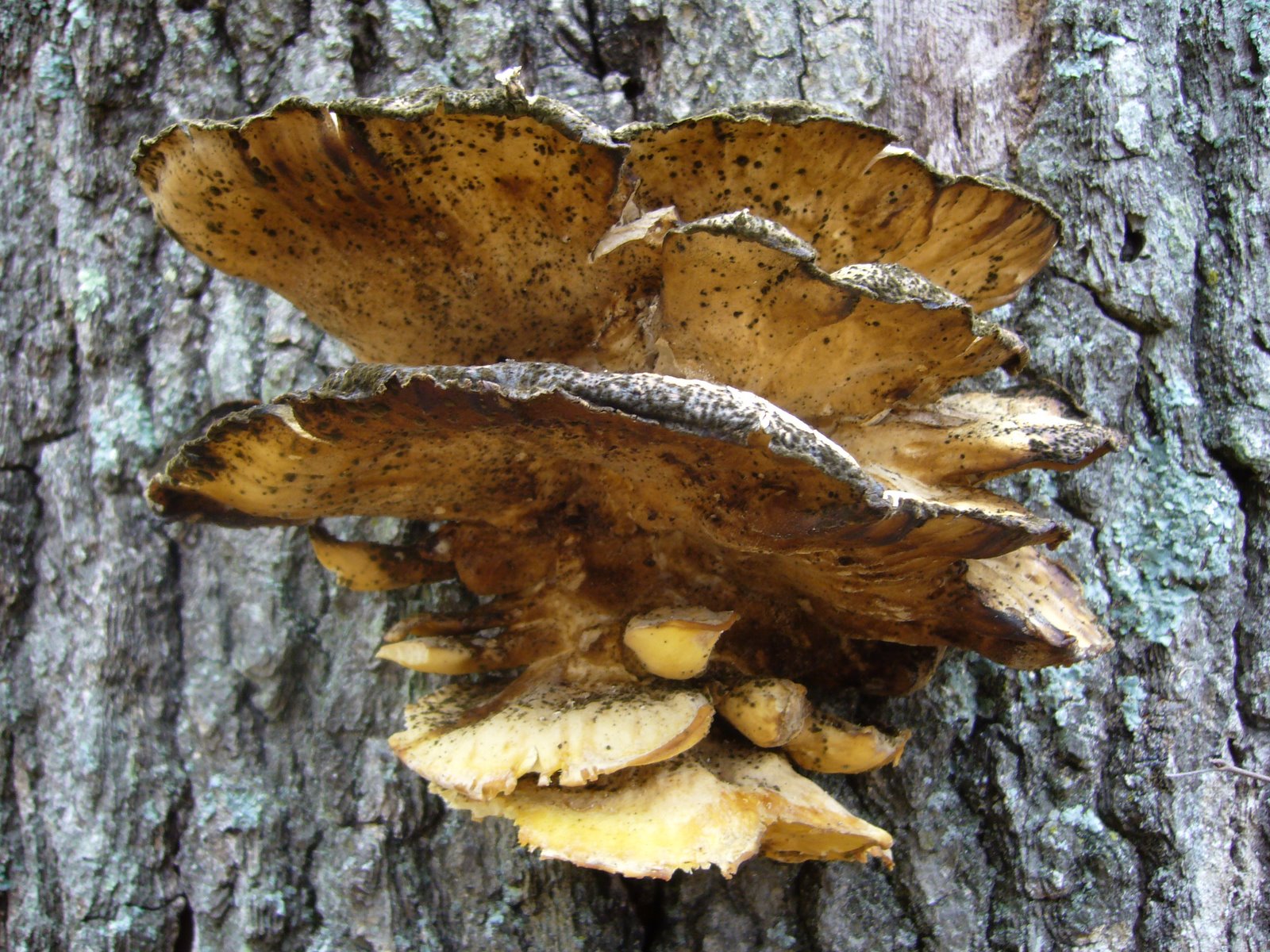
Another of the shelf fungi was found growing on the trunk of a large, dead deciduous tree.


My preoccupation with lichens continues. This colony of British Soldiers (Cladonia cristatella) was found growing in trailside rocks. This lichen is named for its resemblance to the uniforms worn by English soldiers during the Revolutionary War, although the spore-producing reproductive structures are not the brilliant red color as seen during the summer. Lichens are not plants, or even a single organism, but instead a symbiotic association between an alga (in this case, Trebouxia erici) and a fungus (in this case, Cladonia cristatella). Lichen scientific names are derived from the fungus part of the relationship.


Puffball mushrooms have been a favorite of mine since I found my first colony during childhood and delighted in watching the ‘smoke’ fly as I slapped them with my hands. These days I’m satisfied to just look at them (and maybe poke one or two).


The term “puffball” actually refers to a polyphyletic assemblage of fungi distributed within several orders in the division Basidiomycota. I’m no expert (or even a novice), but I wonder if these apparently mature individuals might represent the pear-shaped Morganella pyriforme, a saprobic species that is considered a choice edible while still young. Please leave a comment if you know its identity.


The trail was not particularly rugged but traversed across a number of ridges between the Hazel Creek and Trace Creek valleys. The bedrock was mainly chert, and along the trail we saw this quartz formation with its intricately formed interior exposed.


Approaching Trace Creek, this fireplace and chimney were all that remained of what was probably once a cozy little homestead. Obviously this house had not been constructed of sandstone blocks like the one at Hazel Creek. On each side of where the house once must have been stood two grand, old sugar maple trees (Acer saccharum) – we speculated they had been planted by the former residents and wondered what life was like in this isolated little part of the Ozarks back in the day.


We reached the trails namesake, Trace Creek, about halfway through our hike, and by this time we were the Ozark Trail’s newest 200-mile veterans. It was a pretty little valley, and we stopped here for a bit to eat and rest. Adam and Eve orchids were plentiful here, and in looking for them I became surprised to notice how large a variety of green, herbaceous plants one can find in these deciduous forests during the winter, especially in the lower elevations (moister?).


On these hikes, it has become customary to ‘push over’ trees – dead trees, that is. The larger the better, but of course the larger they are the ‘deader’ they must be for us to be able to push them. I did not push over a single tree on my previous hike of the lower Trace Creek Section, so I made up for it this time and found three trees to push over. Here, Rich finds out what all the fun is about:

The final miles of the hike became more difficult, as my sore throat and congestion combined with the miles started taking their toll on me. We finished our hike at the Hwy DD crossing after 7 hrs of hiking, portaged back to the other car, and met up in Sullivan for our traditional post-Ozark Trail hike pizza dinner.

Pickle Springs Natural Area

Pickle Springs Natural Area lies in Ste. Genevieve County, about an hour south of St. Louis. Like Hawn State Park, the geology of this area and its effect on the flora have resulted in a unique collection of geologic features and plants found in few other places. The Lamotte sandstone outcrops that dot the landscape were formed nearly half a billion years ago when sand deposited in an extensive maze of braided river channels was cemented and buried under younger layers of limestone and dolomite formed from deposits on the floors of ancient seas that covered the interior of the continent. Later, the periods of uplift that created the St. Francois Mountains and resulting erosion of overlying strata once again exposed the sandstones at the surface. Millions of years of water, ice, rain, wind, and plants have further shaped the exposed sandstones, creating fanstastic shapes and formations and cool, deep canyons. The weathered sandstone created acid soils which support many unique plants. During the ice ages, northern plants and animals moved into the area ahead of the advancing glaciers. Mammoths roamed the landscape grazing on the northern vegetation supported by the area’s acid soils. Eventually the ice retreated, and so did the mammoths. But many of the plants remained – able to hang on in the cool, moist canyons long after the mammoths that once roamed these canyons disappeared. Because of this unique concentration of rare plants and geologic features, the area has been designated a Missouri Natural Area and a National Natural Landmark.

Yesterday I hiked the aptly-named ‘Trail Through Time’ with my family. This 2-mile trail is one of the most “feature-packed” trails in the state, with something to look at around almost every bend. Almost immediately the trail leads to the Slot, the result of a vertical fracture in the Lamotte sandstone that was loosened by leaching and then widened by erosion. The unique partridge berry (Mitchella repens) was seen on the moist, vertical walls of the rock, growing among strange holes, pockets, and ridges that formed as a result of the sand grains being variably cemented.


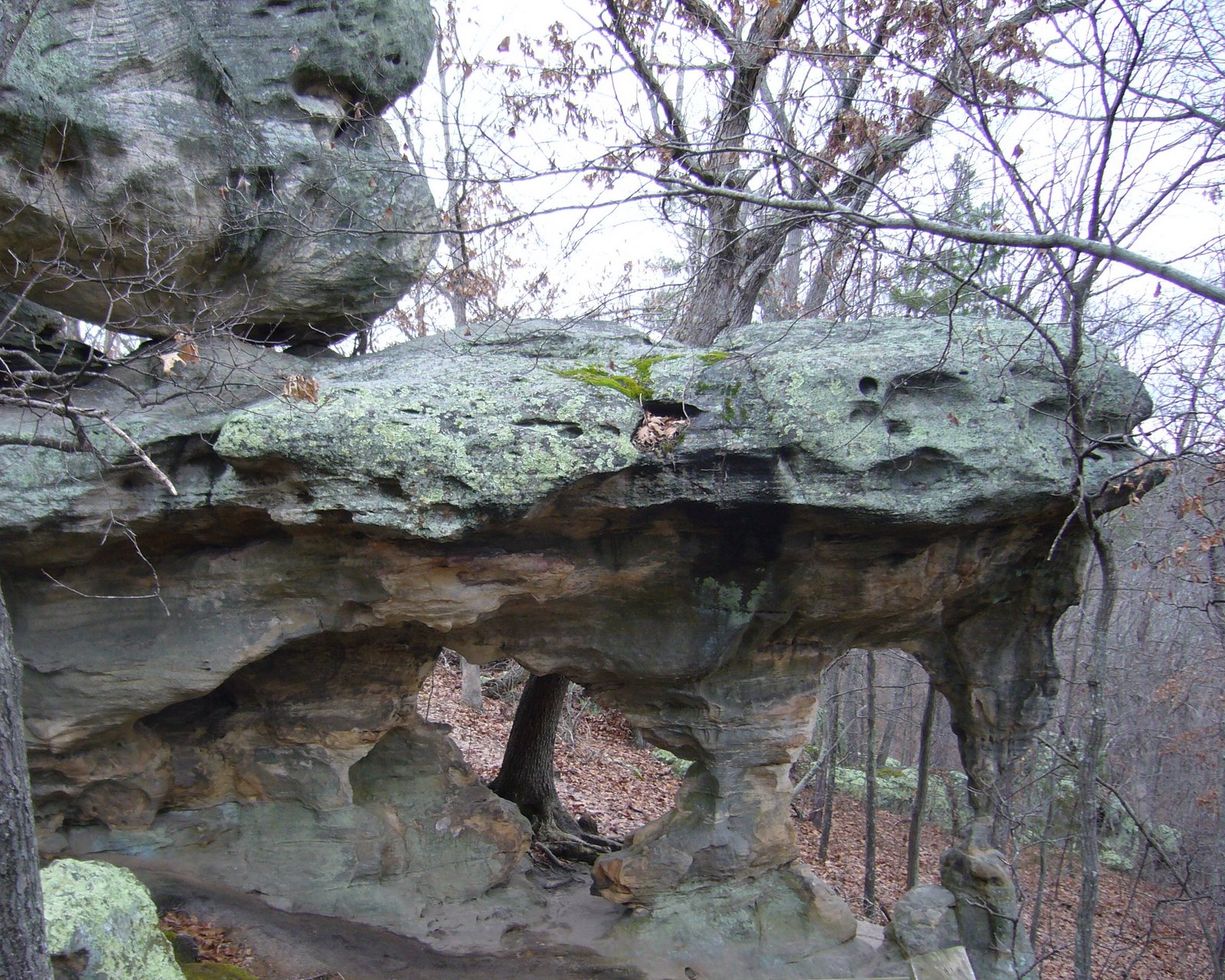
A short distance from The Slot lie Cauliflower Rocks – large moundlike formations (also called hoodoos or rock pillars) formed from jointed or fractured sandstone that undergoes deep solutional weathering followed by erosion and weather-mediated shaping. Hoodoos occur primarily in this type of rock due to its granular, variably cemented and cross-bedded matrix.
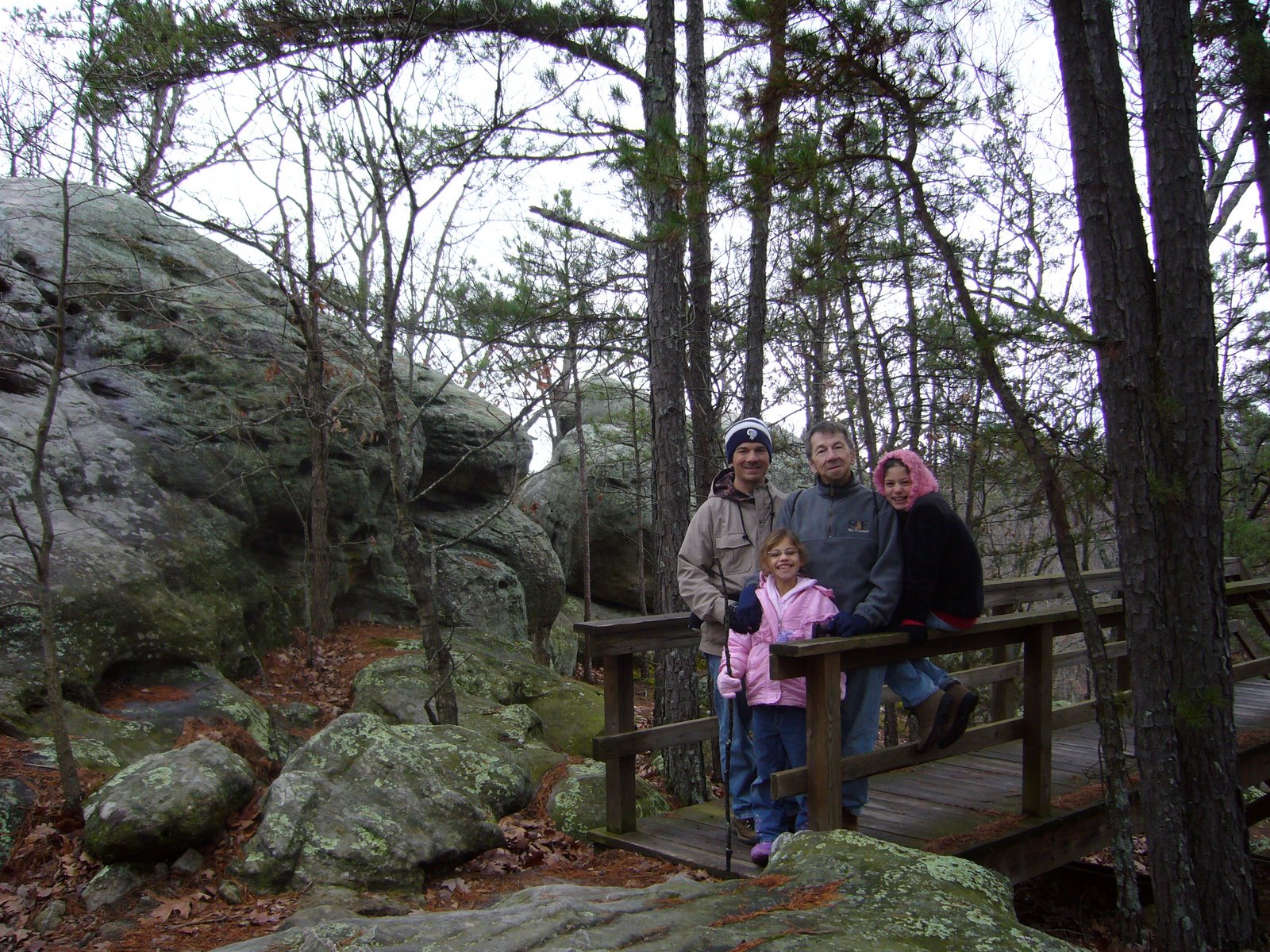

On the south side of Cauliflower Rocks lies a special type of buttress arch called Double Arch. It occurs at almost a right angle to the adjacent rock outrcrops, suggesting formation along a set of fractures running perpendicular to the main fracture trend of the area, but the precise details of its formation remain a mystery.


After leaving Cauliflower Rocks the trail descends steeply into a deep valley, at the bottom of which lies Pickle Creek just below its origin in a box canyon south of the Natural Area. Lush vegetation in this cool, moist valley contrasts with the stark rocks seen earlier.


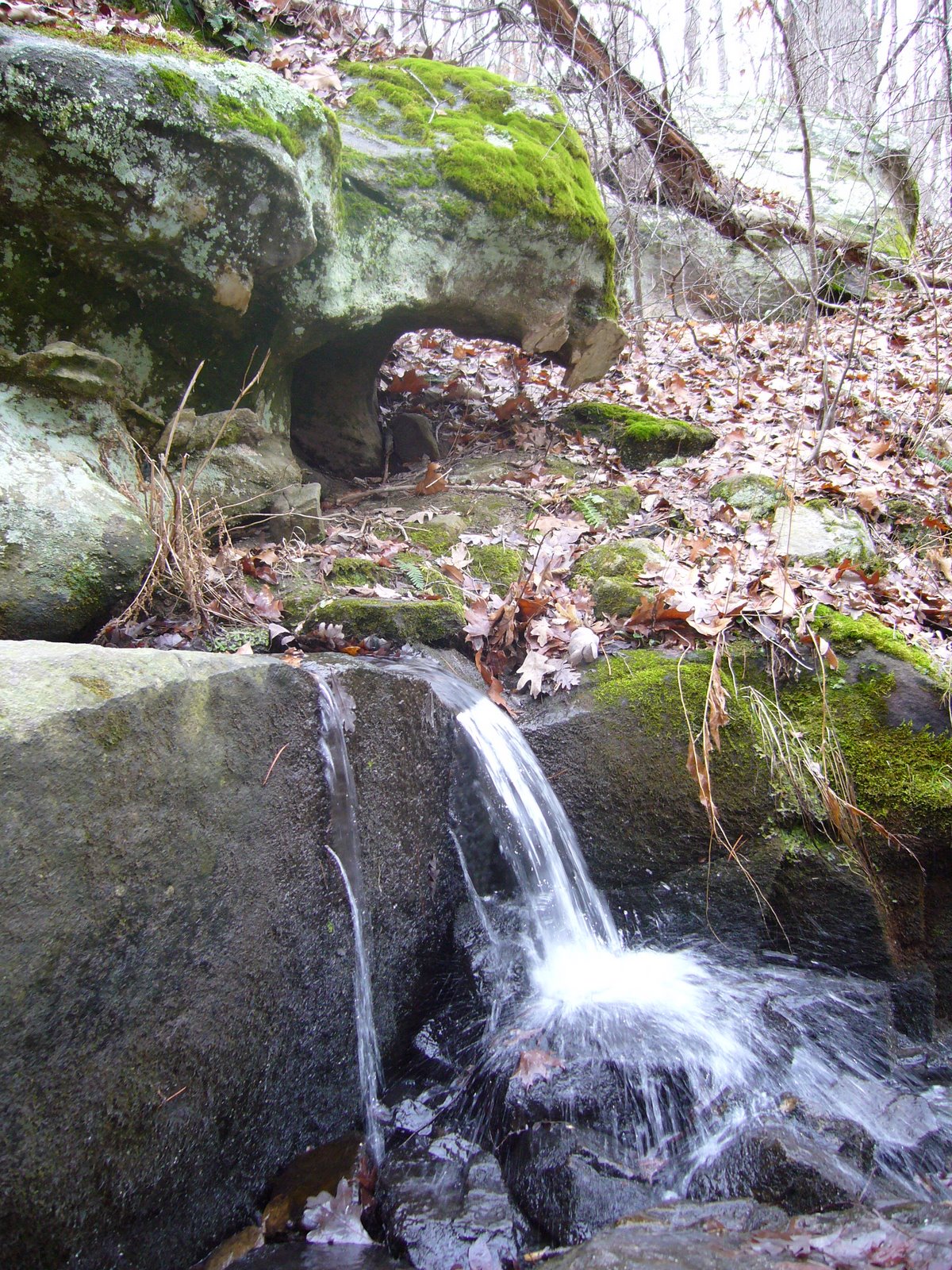
The creek is fed by a series of seeps, allowing the valley to remain moist even during the dry summer months, and along with the acid soils support a unique plant community. Lush colonies of ferns (I believe this is Polypodium virginianum L.) covered the rocks adjacent to the creek…


…while this rattlesnake plantain orchid (Goodyera pubescens) was seen in a colony growing at the base of a black oak tree (Quercus velutina) just above the creek.


Mosses and lichens were also abundant in the valley. This little hair cap moss (Polytrichum sp.) with its distinctive fruiting structures was growing in a colony at the base of another black oak tree. The members of this genus prefer acidic environments.


Further ahead, along Bone Creek, several colonies of wooly aphids (family Aphididae) were seen on the branches of a small hop hornbeam tree (Ostrya virginiana).


The highlight of the hike had to be in Spirit Canyon at Owl’s Den Bluff. The horizontal layers of sandstone, each deposited on the steep downstream slopes of sandbars, are clearly visible in the towering bluff face. At the bottom lie bluff shelters – formed where lower sandstone layers collapse due to weathering or leaching, and where native Americans almost surely camped out. The sun never reaches parts of these shelters, providing ideal conditions for a variety of mosses and liverworts – many of which are known only from this area. Fallen boulders and collapsed portions of the bluff face provided photo opps for the daring…


…and good exploring for the nimble.


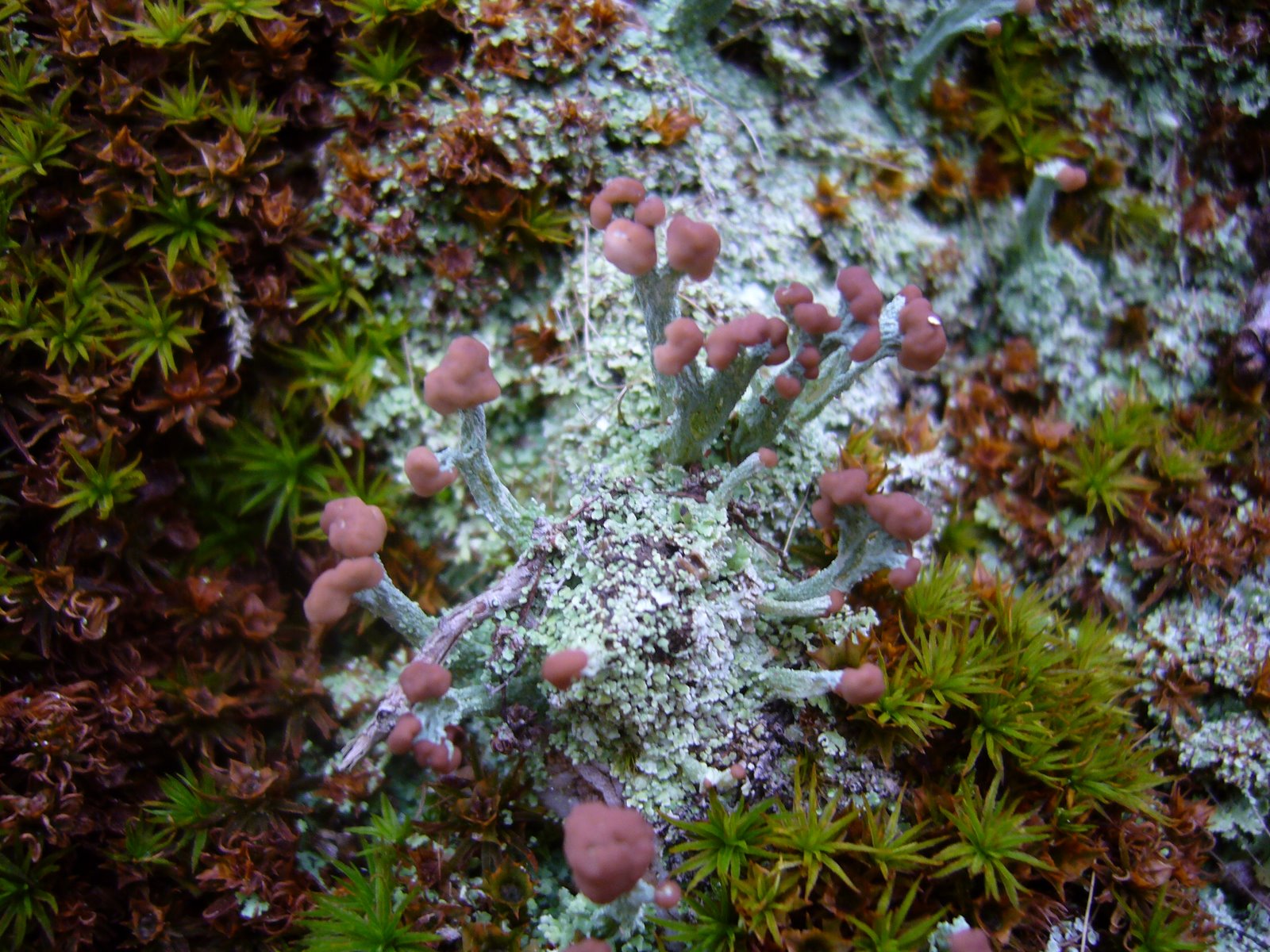
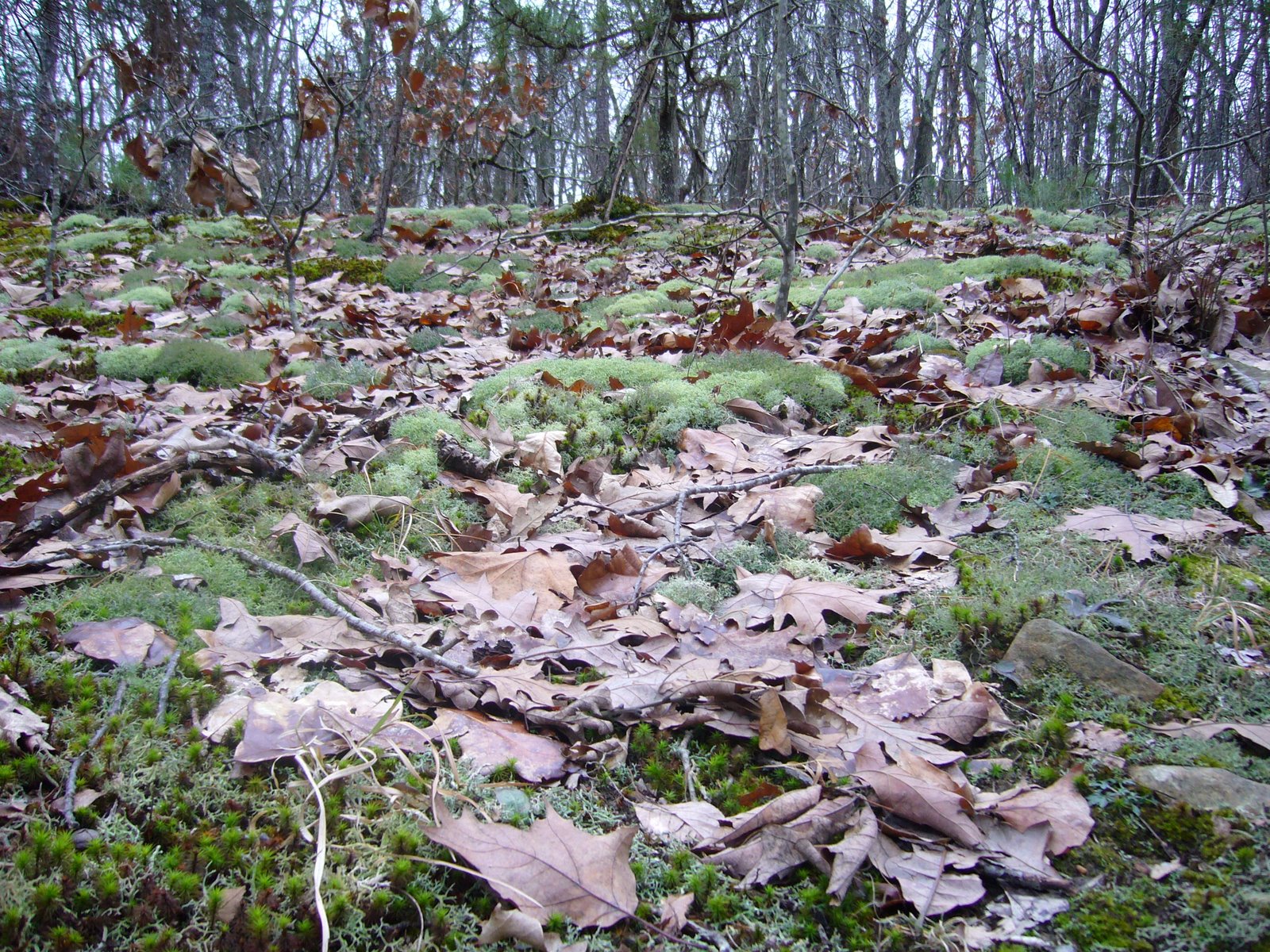
By now, the trail has passed the halfway point and is looping back to the west, where it ascends to Dome Rock Overlook. Along the way, a fascinating variety of lichens, including reindeer lichen, covers the forest floor where they are supported by the acid soils.


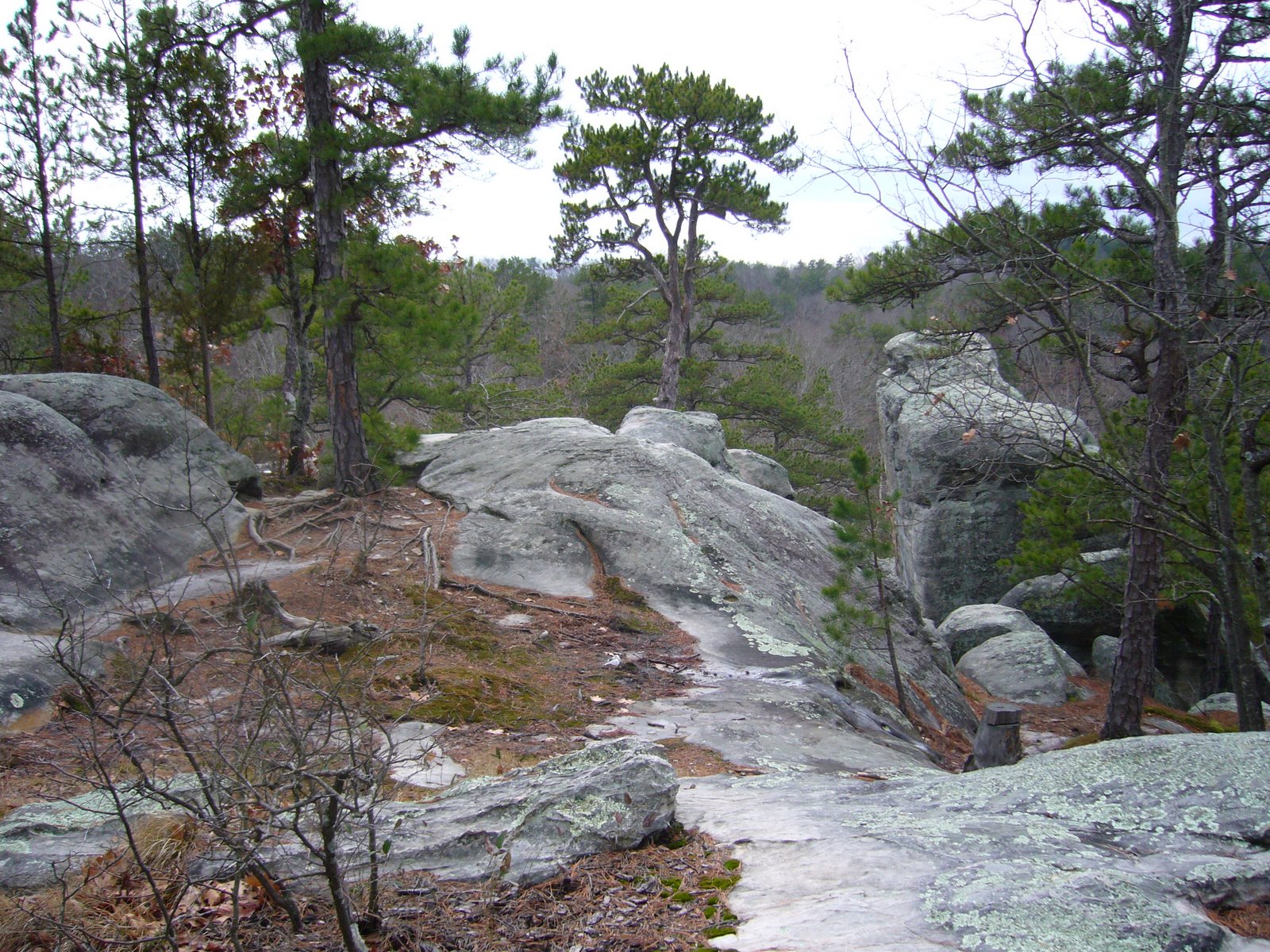
Dome Rock Overlook is a the largest hoodoo complex in the Natural Area. The thin soils and exposed conditions create a harsh, dry, windswept environment that only the hardiest of plants can withstand. Only a few small blackjack oaks (Quercus marilandica), shortleaf pines (Pinus echinata), and farkleberry (Vaccinium arboreum) survive here. Despite their small size, some of the trees growing here are at least 150 years old.


The trail descends from Dome Rock Overlook and passes underneath, providing spectacular views of the sheer rock face below the overlook. The trail completes its descent back into Pickle Creek Valley, where Pickle Spring can be seen. This small, permanent spring – an unusual feature in sandstone where seeps are more common – was an important source of water for early settlers.


Further along the trail lies one of the areas most unusual features – Rockpile Canyon – formed some 50 years ago (a fraction of a second in geologic time) when part of a sandstone bluff collapsed in a rumble, leaving behind a sheer bluff face and a jumbled pile of large boulders. A short spur in the trail leads to the head of a small box canyon, where some of the 20+ ice age relict plant species can be seen growing in the acid soils and cool, moist canyon walls.

Near the end of the loop lies Piney Glade, an area where the exposed sandstone bedrock once again creates a dry, harsh environment. Poverty grass and little bluestem grow in small, shallow pockets of soil scattered amongst stunted shortleaf pines and blackjack oaks – creating a small prairie surrounded by a sea of forest. All three forms of lichens can be found on the rocks and soils of the glade – the aptly named crustose lichens cling tightly to rock surfaces amongst foliose (leafy) and fruticose (branched) lichens.