Speaking of cover photos…


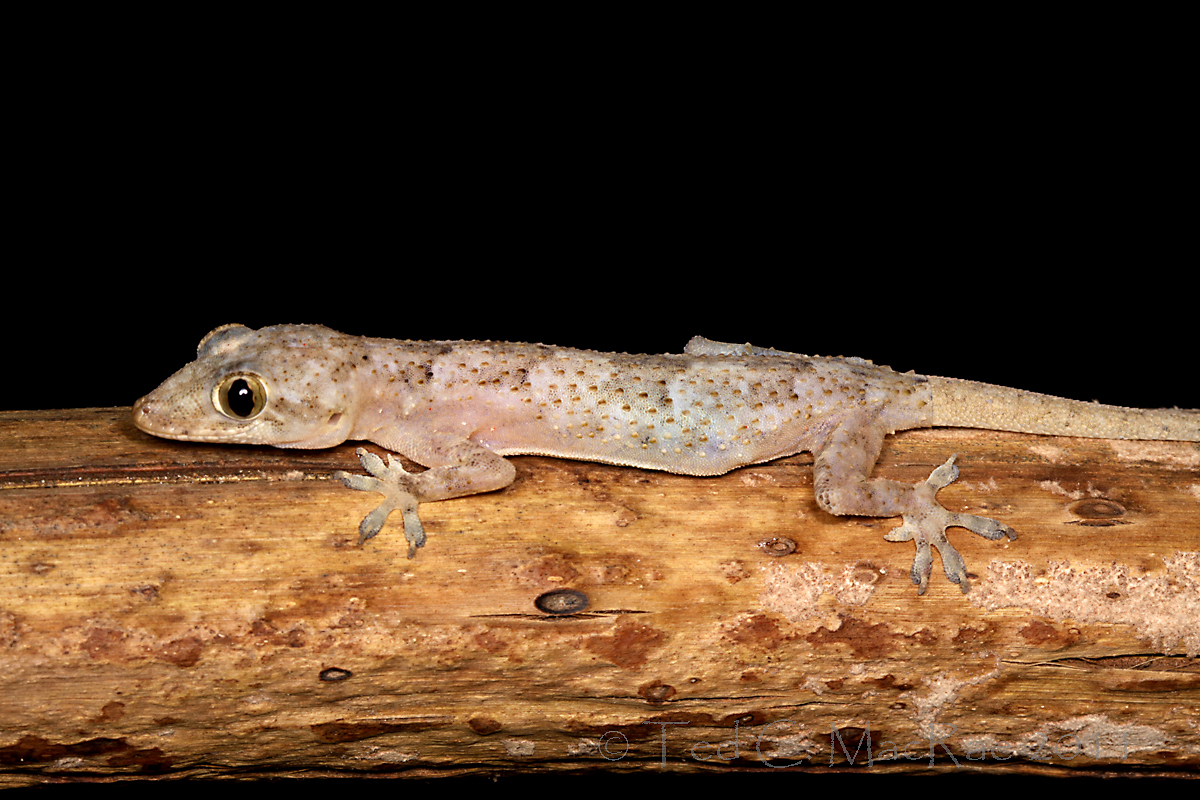
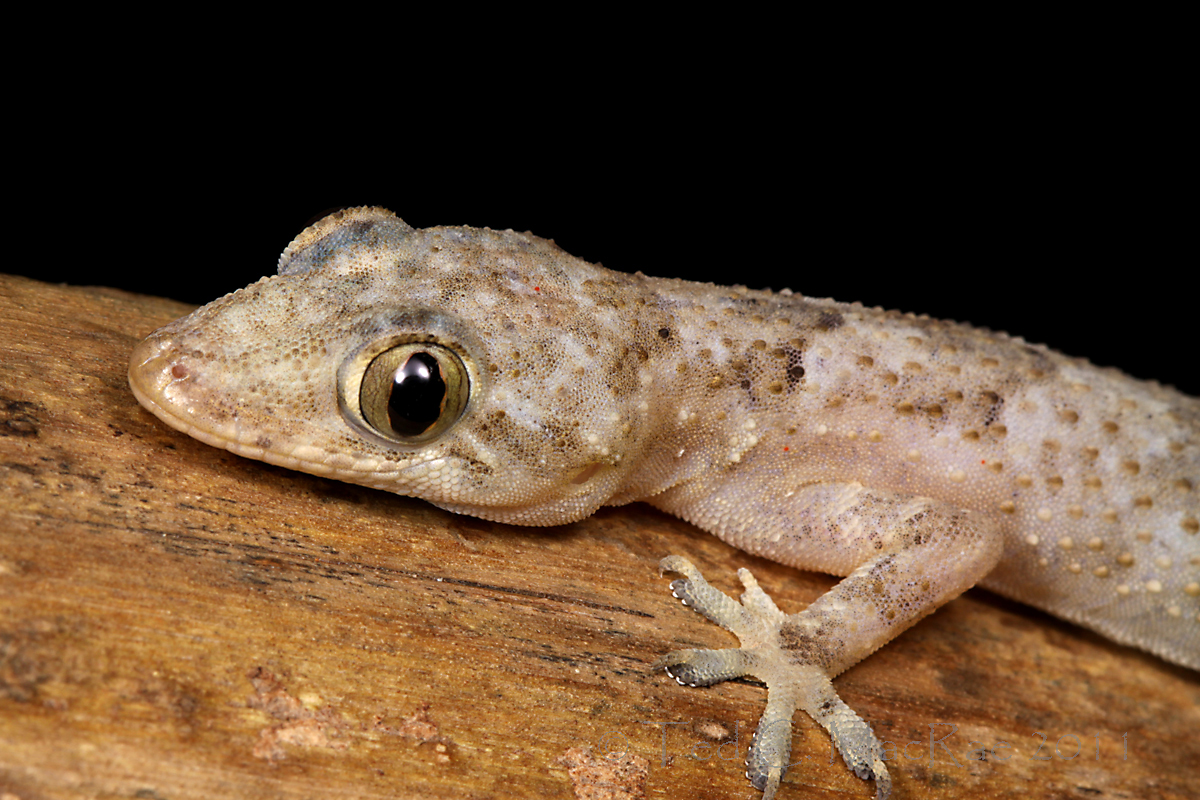
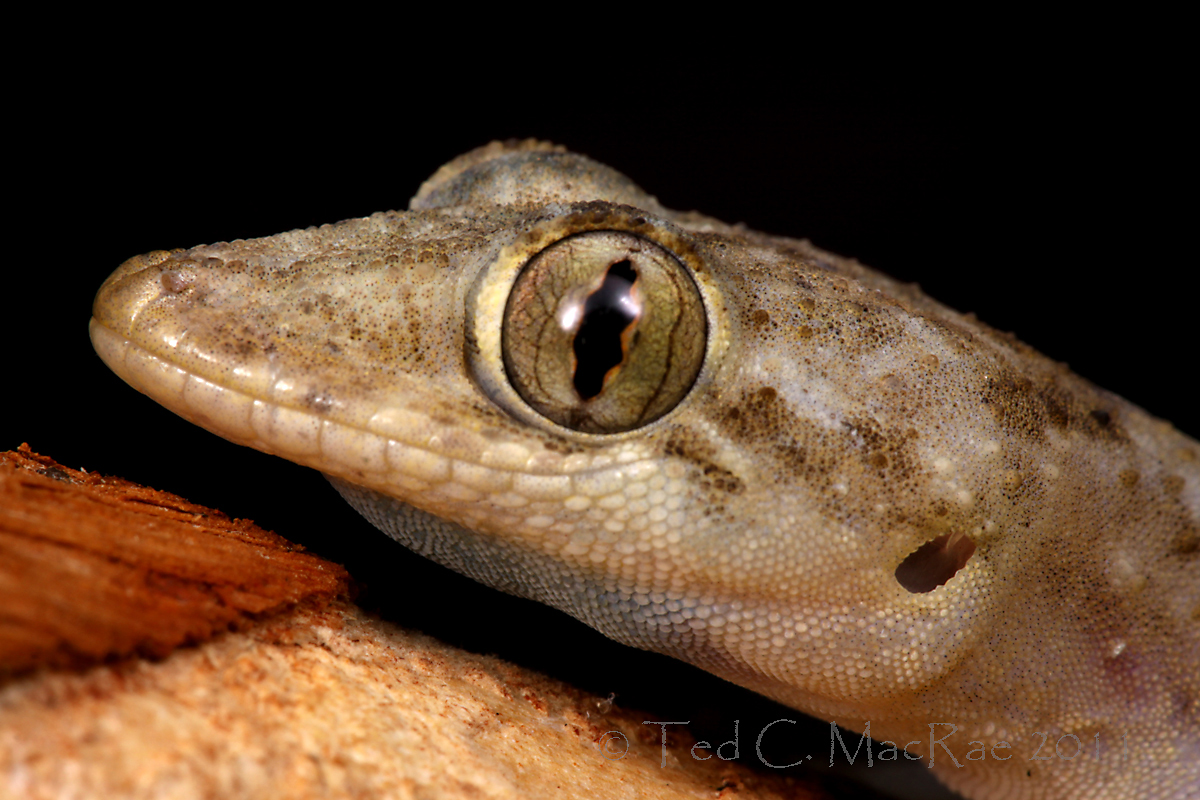
…here is my first—a tropical house gecko (Hemidactylus mabouia) that I photographed in Campinas, Brazil this past January. The photo (originally from my post Brazil Bugs #5 – Lagartixa) was selected for the cover of the October 2011 issue of Ecology and Evolution, having been used by Kristen H. Short and Kenneth Petren (with my permission) for their article, Multimodal dispersal during the range expansion of the tropical house gecko Hemidactylus mabouia.

Although it’s exciting to have that first cover photo under my belt, I find it mildly ironic that it’s not a beetle, insect, or even invertebrate!

Copyright © Ted C. MacRae 2011

Burrowing Owl in Argentina

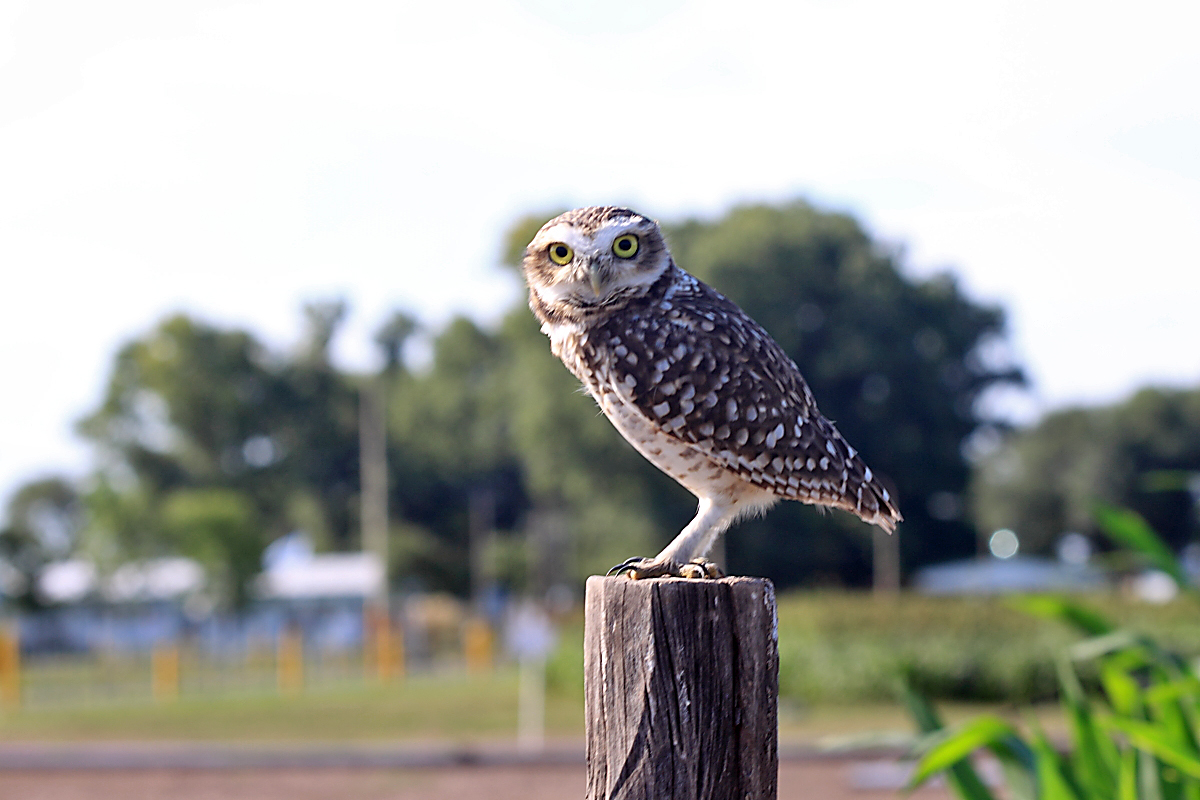
I’m not normally one to try to photograph birds—I have neither the expertise nor the long lenses that are generally required for good bird photographs.  However, during my March trip to Argentina I scared up this burrowing owl (Athene cunicularia), who flew a short distance, landed on a nearby fence post, and then just sat there staring at me—almost as if it was daring me to try.  Never one to turn down a challenge (real or perceived), I took the bait.  My longest lens is a 100mm macro, so I set the camera to automatic mode, pointed it at the bird, and started walking.  After each slow, deliberate step I clicked the shutter, racking up about a dozen shots by the time I took the photos below.  They are minimally cropped only for composition and, thus, attest to how amazingly close the owl allowed me to get before it finally found the situation just too unsettling and flew much farther away.  My colleagues commented afterwards that they wished they’d taken a video of me stalking the owl (which they found almost as amusing as the bird’s incredulous stare).  Perhaps all the tiger beetle stalking I’ve done helped.

Copyright © Ted C. MacRae 2011

Eye to eye with a copperhead

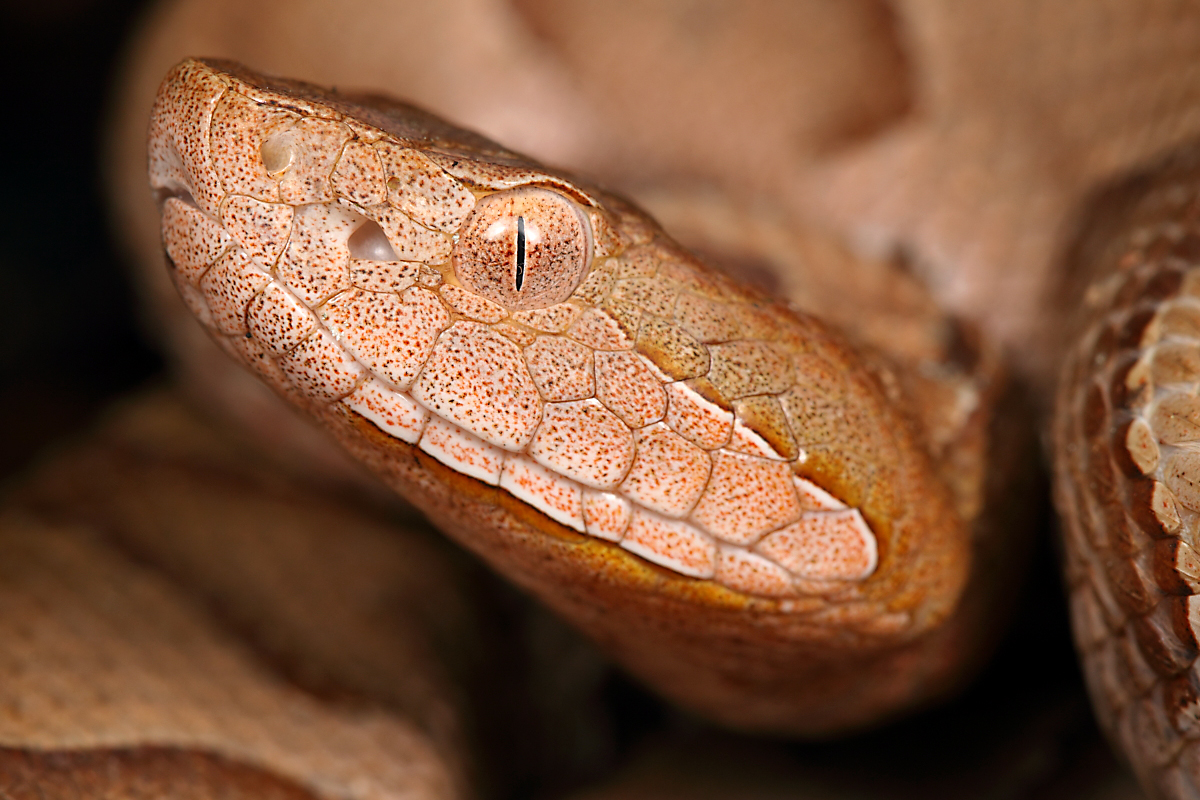
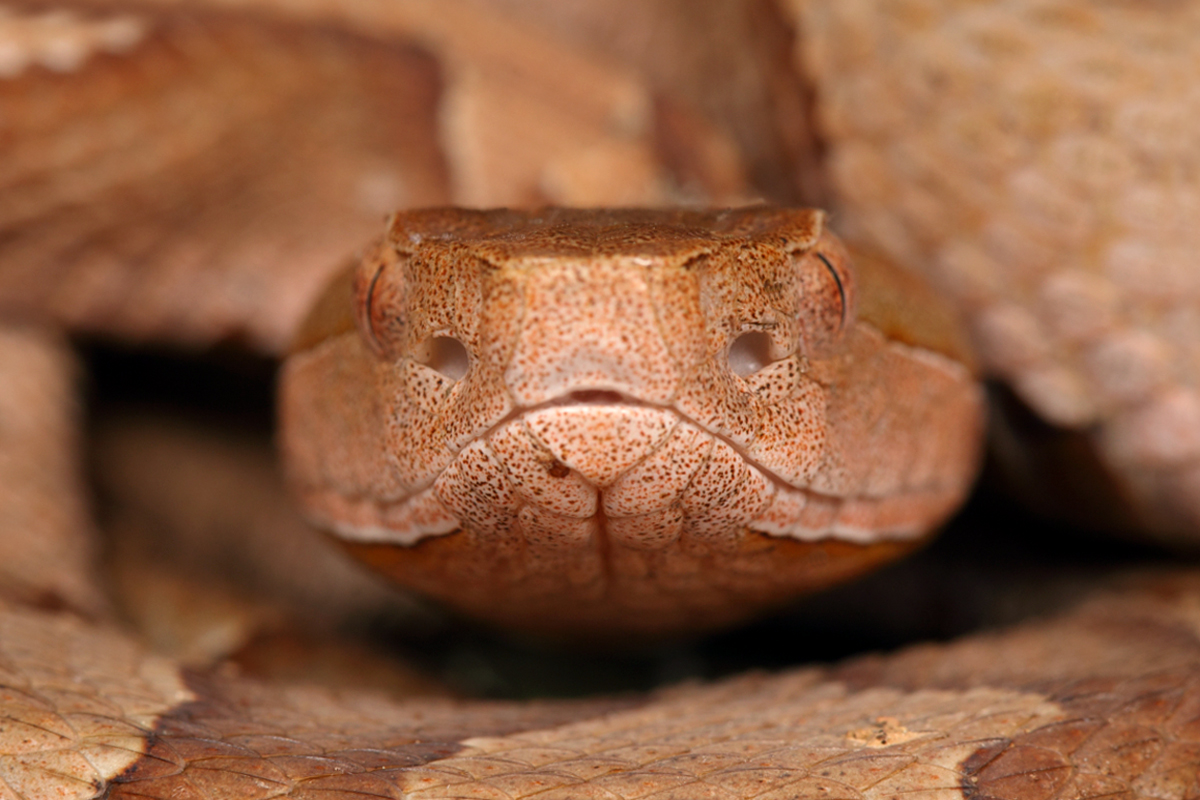
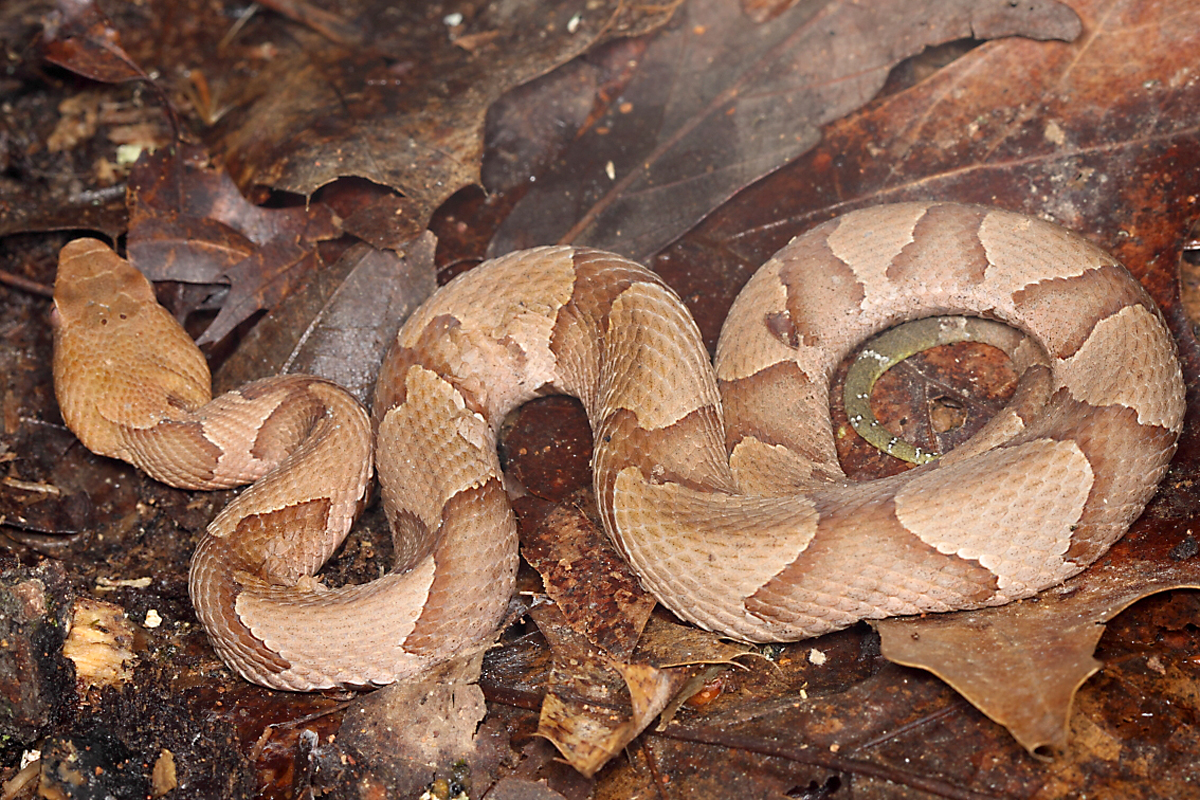
I don’t know what it is about Osage copperheads (Agkistrodon contortrix phaeogaster) that makes every encounter with one so special. They are perhaps the most common of Missouri’s five venomous snake species, and I’ve seen them more often than I can count. Still, every time I see one I simply must stop and marvel. This particular individual was seen a few weeks ago at Sam A. Baker State Park in Missouri’s southeastern Ozark Highlands. You might say it was “sloppy seconds”—I had actually gone to the park to look for timber rattlesnakes (Crotalus horridus), a juvenile of which I had seen during last year’s Annual-Birthday-First-Bug-Collecting-Trip-of-the-Season™ trip. I did not see any rattlesnakes this time, as access to the rockpilish cliffs along Big Creek where I saw the juvenile last year was blocked by high water, but I was quite pleased to find this copperhead underneath a log while we were there.

Copperheads are marvelous photographic subjects. Beautiful, rarely seen by those who don’t know how to look for them, and with an air of “danger” about them. Yet they are among the most docile of all snakes, venomous or otherwise. They don’t use aggression or warning sounds when threatened like cottonmouths (Agkistrodon piscivorus) or rattlesnakes, nor do they dash for cover like most non-venomous species. Instead, they rely on their cryptic, dead-leaf coloration to make them invisible. It works—even I, my eyes tuned to see just about anything after a half-century of clambering through the brush, didn’t immediately notice this individual when I first rolled over the log under which it had taken cover (although I did immediately notice the little red-backed salamander, Plethodon cinereus, at the other end of the area covered by the log). I suspect I’ve walked right by many more copperheads than I have seen, completely unaware of their presence.

Their docile nature also invites extreme close-ups that I wouldn’t dare attempt with a rattlesnake or cottonmouth—at least not without a much longer lens than my 100mm. These photos make it seem that I was right on top of the snake, although at a maximum magnification of around 1:2 there was still a reasonable amount of working distance (I did, however, keep my hands well back of the front of the lens—just for good measure). Still, in all my copperhead experiences, I have never seen a copperhead actually try to strike unless I touched it (not what you think!).

Eventually it’d had enough of our gawking and began to look for new cover.  As it uncoiled, I could see it’s still greenish but not too yellowish tail, indicating that it was still a youngster, though perhaps a little older than the first copperhead I tried to photograph.  We watched it as it crawled into the loose, dry leaves… and disappeared.


Copyright © Ted C. MacRae 2011

Wrong lens

During the past couple of years, as I’ve transitioned from strictly a net-wielding entomologist to one that also carries a camera, I’ve had to start making choices about whether to keep the camera in the backpack or hold it at the ready, and if the latter which lens to keep on it. They are situational decisions, influenced largely by what I’m focused on (heh!) at the time—keeping the camera in the bag facilitates collecting, but it also tends to reduce the number of subjects I deem worthy of the setup effort required to photograph them. Conversely, carrying the camera out of the bag greatly impedes collecting but results in much more photographs having been taken. Even when I do decide to carry the camera at the ready, which lens should I have on it—the 100mm for tiger beetle-sized and larger, or the 65mm for tiger beetle-sized and lower? (Annoyingly, most tiger beetles are right at that life-sized threshold, and neither lens alone allows me to float above and below 1:1 for the full range of photos I like for them. As a result, I sometimes end up with extension tubes stacked under the 100mm lens to give me some extra range above its normal 1:1 limit.) I wish there was some way to have the camera with either lens at the ready (and not impeding net swings would be even better), but that just isn’t possible. As a result, I sometimes find myself with the wrong lens on the camera when I see something I want to photograph. If it’s important, I’ll go through the trouble to switch out lenses—hopefully quickly enough to avoid losing the photographic opportunity; other times I might just decide I don’t really need the photo that badly.  Then there are times when I feel a little adventurous and will just go ahead and take the photo anyway without switching lenses.

The following is an example of the latter—an eastern fence lizard (Sceloporus undulatus) photographed with the 65mm lens (minimum magnification 1:1). Not only is this the first time that I have succeeded in approaching one of these lizards closely enough to take a good photograph, but the short working distance of the 65mm required that I get extraordinarily close. He was on the side of a fallen log, and I approached from the other side crouching low, then slowly (slowly!!!) peered over the edge of the log until I had his head in focus. I got off just this one shot, as the flash caused the lizard to bolt for good. The angle could have been better, but I got the eye focused spot-on so it’s a keeper.

Sceloporus undulatus (eastern fence lizard) | Shaw Nature Reserve, Franklin Co., Missouri

I wonder if anybody else has ever photographed a 6-inch long lizard with a 65mm lens…

Copyright © Ted C. MacRae 2011

La Reserva Ecologica Costanera Sur

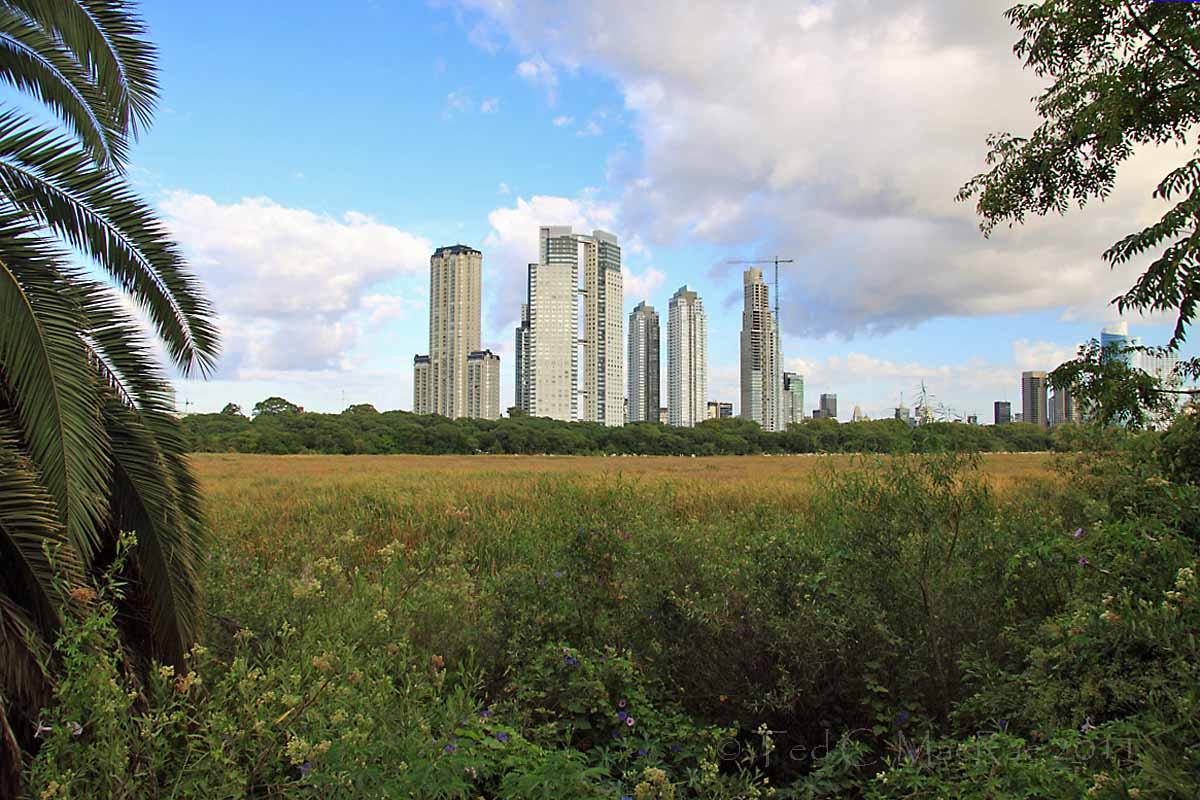
Reserva Ecológica Costanera Sur, Buenos Aires, Argentina.

I spent this past weekend in Buenos Aires, Argentina before embarking on a one-week whirlwind tour to visit field sites in several other parts of the country.  It was supposed to be a short rest stop, but I can do nothing of the sort when there are exotic lands to explore.  Despite its rank as the fourth largest city in South America and the location of my hotel in the heart of downtown, only a short walk was needed to arrive at Reserva Ecológica Costanera Sur, a 350-hectare park located on the banks of the Rio de la Plata.  Originating as a debris field from construction during the 1970s, sedimentation and subsequent revegetation have created a naturalistic setting reminiscent of the original wet Pampas grasslands that occurred in the area.

A system of levees with trails courses through the wet grasslands.

Coursing through the area is a system of levees topped with gravel walking/biking trails that have become flanked with woody vegetation.  Native species such as ceibo (Erythrina crista-galli) and palo borracho (Chorisia speciosa) are common, although exotics such as Canary palms (above photo) have also become established.  In total, more than 11 km of trails are available, and having as much time as I desired on Sunday to explore the area, I walked every one of them once (and some twice) for a total hike of close to 15 km (not counting my morning walk to the area and then back to my hotel during late afternoon).  I wouldn’t say the area was teeming with insects, and those that I did encounter are not too dissimilar from those I am more familiar with in North America.  However, this is the southern Neotropics, so just about everything I encountered was something I had not seen before.  I went photography-crazy, snapping more than 250 shots on the day (and keeping about 100).
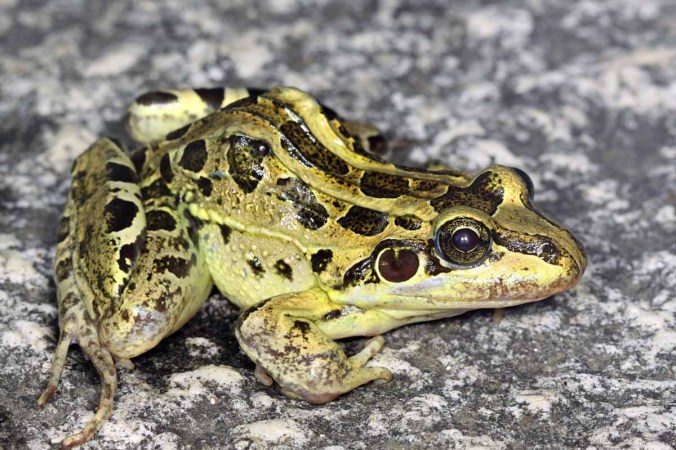
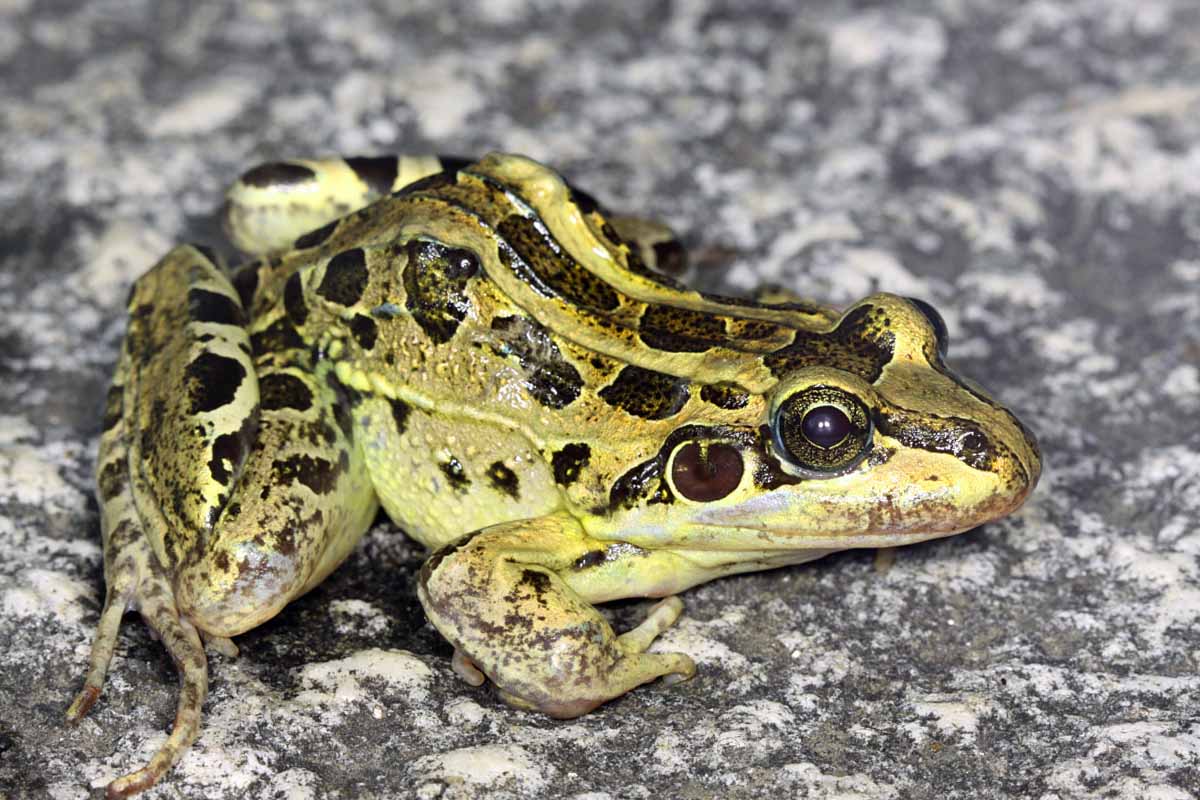
Leptodactylus ocellatus (rana criolla).

This frog was the first thing I encountered, even before walking through the Reserve gates.  Using the galleries at this fan site I believe it to represent Leptodactylus ocellatus (rana criolla, or “Creole frog”).  He was a sad sight when I first saw him – dry and dusty on the sidewalk outside of the Reserve.  I passed him by at first thinking he must be dead, then came back when my conscious started complaining, only to find him still alive.  I bathed him in water from my bottle, which perked him up rather quickly (not to mention making him much more photogenic!).  After a few photos, he revived sufficiently to jump off the stone wall bordering the Reserve into the grassy marsh.  I had done my good deed for the day.
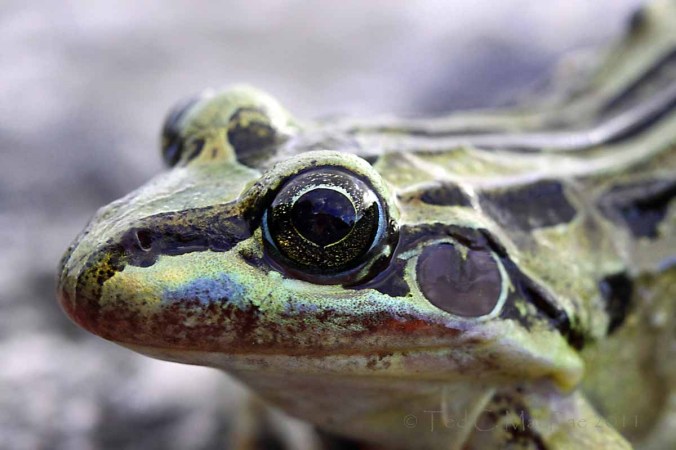
Leptodactylus ocellatus (rana criolla) - my attempt at a natural light closeup.
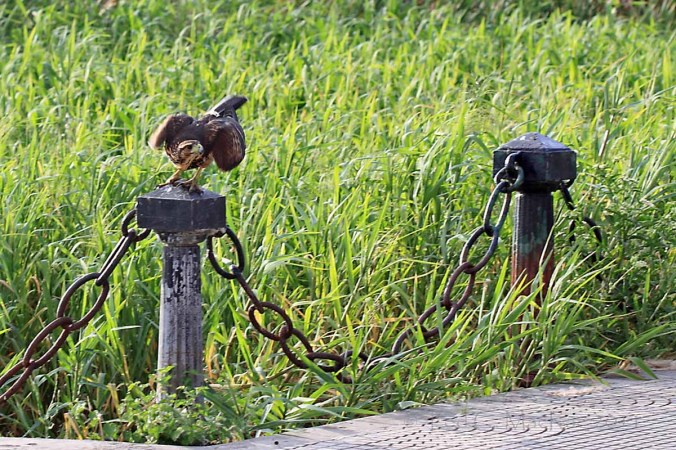
Parabuteo unicinctus unicinctus (Gavilán Mixto) (I think!).

Also just before entering the Reserve gates, I scared up this hawk who flew a short distance ahead and landed on a post facing me.  Now, I have never once in my life attempted to photograph a bird, and with my longest lens being only my 100mm macro I’m ill-equipped for such even if I wanted to.  However, the hawk did not fly too quickly as I cautiously re-approached, and when I was within range I decided to give it a try.  I carefully crouched to ready my equipment and then cautiously rose to take a shot, and right then the hawk decided to take off.  Not a great shot, of course, but not bad either – especially for a first bird shot ever, and good enough to give me some amount of confidence in my ID as Parabuteo unicinctus (Gavilán Mixto, or “Mixed Hawk” – known in the U.S. as Harris’ Hawk).

Riodina lysippoides (Danzarina Chica)

Insect activity was rather light for the first couple hours after I arrived, but as the day began to heat up so did the number and diversity of the insects that I encountered.  While I waited for activity to pick up, I saw this pretty little butterfly that seemed surely a type of metalmark (family Riodinidae) and that I later identified as Riodina lysippoides (Danzarina Chica, or “Smaller Dancer”).  Shortly after taking this photo, I encountered another photographer who was obviously after insects.  I approached him and introduced myself to see what he was looking for, and it was butterflies.  I showed him my photo, but he did not know the name of the butterfly, only commenting that it was “bastante común” (common enough).  I’m confident in my ID, but this North American beetle collector won’t be too embarrassed if one of you lepidopterists needs to provide a correction.  I did see one other photographer that day as well, presumably after birds based on the yard-long lens he was carrying, but I did not talk to him.  Otherwise, I got plenty of strange looks from the hordes of walkers, runners, bikers, and picnickers that had come out to enjoy this Carnival weekend Sunday!

Copyright © Ted C. MacRae 2011


Brazil Bugs #5 – Lagartixa

On my third night here in Campinas last week, I went out to check the building lights around the hotel grounds.  Surely a fantastical assortment of gaudy, tropical insects would be awaiting me on this hot, humid, summer night in southern Brazil.  Alas, virtually no insects were to be found anywhere – on the walls, in the window sills, under the street lights, or crawling on the sidewalks.  A disappointment, although I’m loathe to complain too much considering the number of insects I’ve encountered during the daylight hours.  I did find a gecko on the hotel wall, however, and although it is not a “bug” the lack of insects at the lights made a photography subject by default.

I’m not at all an expert on reptiles, and certainly those in South America, but I can’t help wondering if this is Hemidactylus mabouia – the tropical house gecko, or lagartixa-doméstica-tropical – an African species introduced to the New World and now widespread from the southern U.S. through much of South America and the Caribbean.

Copyright © Ted C. MacRae 2011
BitB Top 10 of 2010

Welcome to the 3rd Annual BitB Top 10, where I pick my 10 (more or less) favorite photographs of the year.  My goal for 2010 was to continue the progress that I began the previous year in my quest to become a bona fide insect macrophotographer.  I’m not in the big leagues yet, but I have gotten more comfortable with using my equipment for in situ field photographs and am gaining a better understanding of lighting and the use of flash.  I also began experimenting with different lighting techniques (e.g. white box) and diffusers and am putting more effort into post-processing techniques to enhance the final appearance of my photographs.  I invite you to judge for yourself how successful I’ve been toward those goals by comparing the following selections with those from 2009 and 2008 – constructive feedback is always welcome:


Best Tiger Beetle

Cicindela denverensis - green claybank tiger beetle

From ID Challenge #1 (posted December 23).  With numerous species photographed during the year and several of these dramatic “face on” shots, this was a hard choice.  I chose this one because of the metallic colors, good focus throughout the face, and evenly blurred “halo” of hair in a relatively uncluttered background.


Best Jewel Beetle

Buprestis rufipes - red-legged buprestis

From Special Delivery (posted July 13).  I didn’t have that many jewel beetles photos to choose from, but this one would have risen to the top no matter how many others I had.  The use of a white box shows off the brilliant (and difficult-to-photograph) metallic colors well, and I like the animated look of the slightly cocked head.


Best Longhorned Beetle

Desmocerus palliatus - elderberry borer

From Desmocerus palliatus – elderberry borer (posted November 18).  I like the mix of colors in this photograph, and even though it’s a straight dorsal view from the top, the partial dark background adds depth to the photo to prevent it from looking “flat.”


Best “Other” Beetle

Enoclerus ichneumoneus - orange-banded checkered beetle

From Orange-banded checkered beetle (posted April 22).  The even gray background compliments the colors of the beetle and highlights its fuzziness.  It was achieved entirely by accident – the trunk of the large, downed hickory tree on which I found this beetle happened to be a couple of feet behind the twig on which it was resting.


Best Non-Beetle Insect

Euhagenia nebraskae - a clearwing moth

From Euhagena nebraskae… again (posted October 21).  I photographed this species once before, but those photos failed to capture the boldness of color and detail of the scales that can be seen in this photo.


Best “Posed” Insect

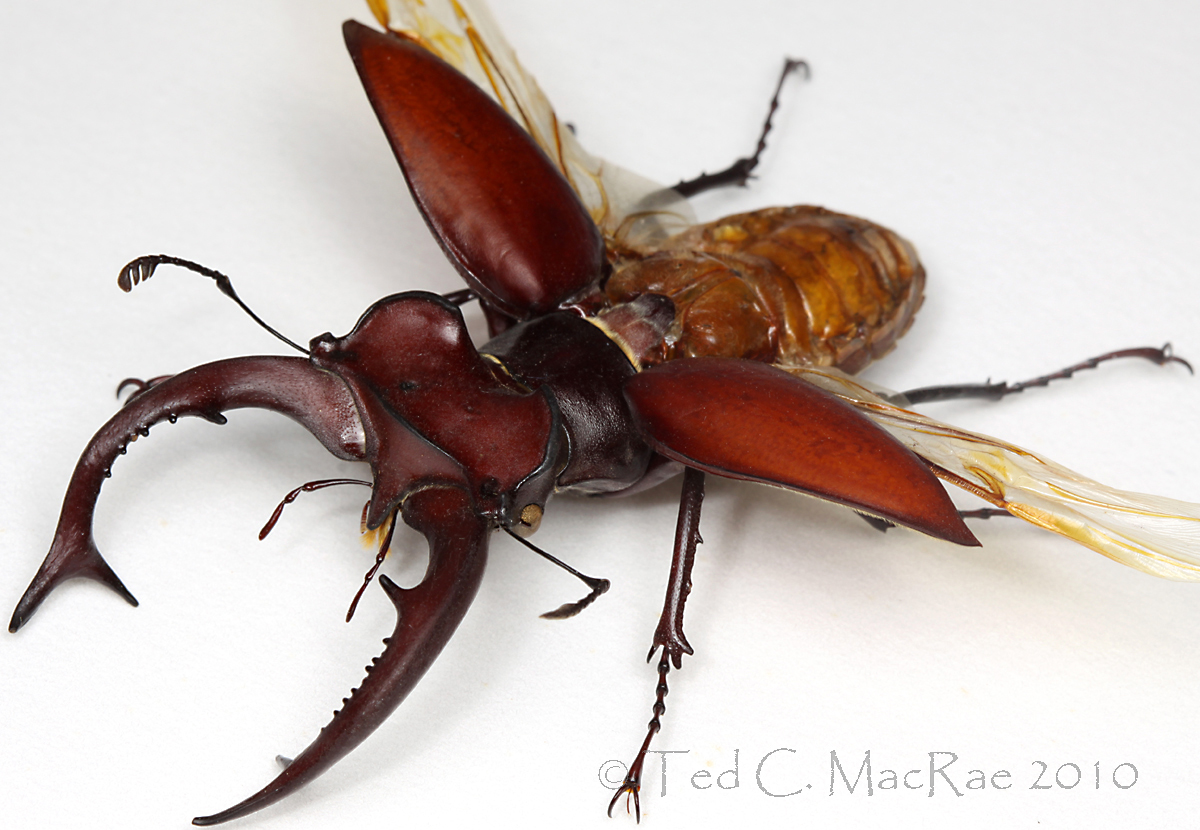
Lucanus elaphus - giant stag beetle

From North America’s largest stag beetle (posted December 30).  I’ve just started experimenting with photographing posed, preserved specimens, and in fact this male giant stag beetle represents only my second attempt.  It’s hard to imagine, however, a more perfect subject than this impressively stunning species.


Best Non-Insect Arthropod

Scolopendra heros - giant desert centipede

From North America’s largest centipede (posted September 7).  Centipedes are notoriously difficult to photograph due to their elongate, narrow form and highly active manner.  The use of a glass bowl and white box allowed me to capture this nicely composed image of North America’s most spectacular centipede species.


Best Wildflower

Hamamelis vernalis - Ozark witch hazel

From Friday Flower – Ozark Witch Hazel (posted March 26).  The bizarre form and striking contrast of colors with the dark background make this my favorite wildflower photograph for the year.


Best Non-Arthropod

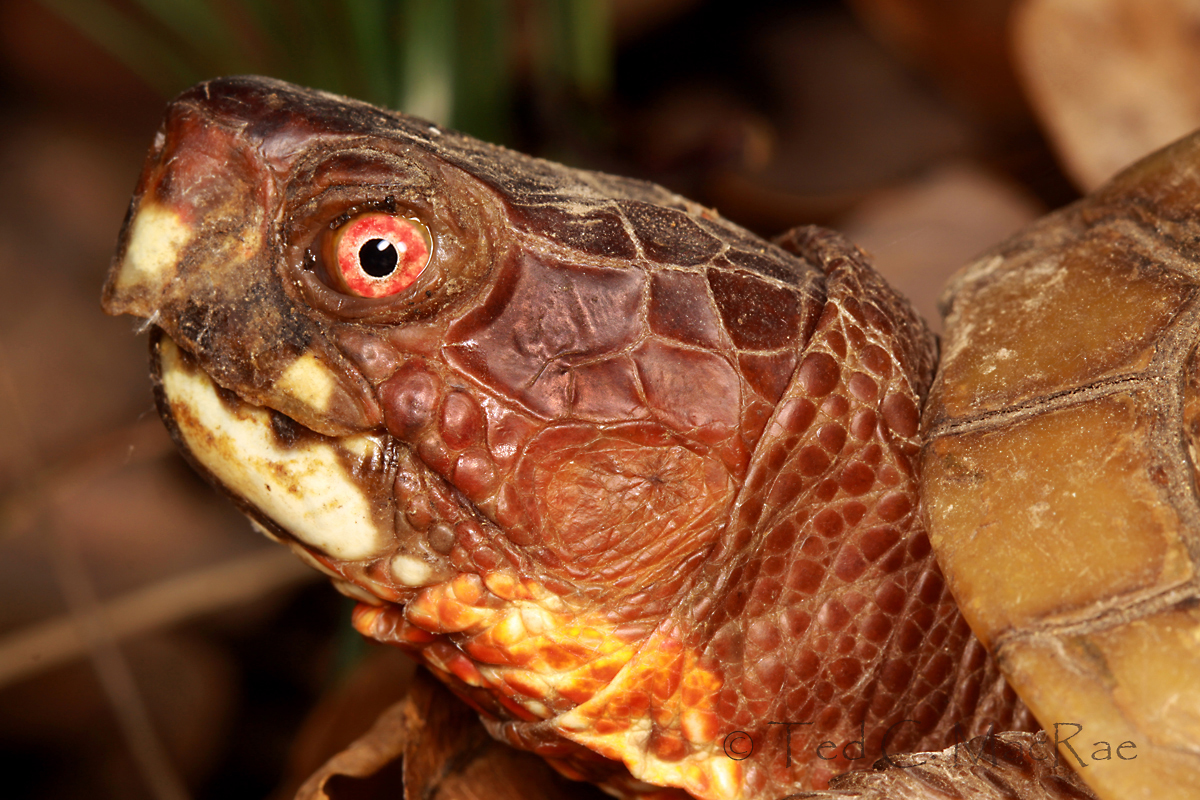
Terrapene carolina triunguis - three-toed box turtle

From Eye of the Turtle (posted December 10).  I had a hard time deciding on this category, but the striking red eye in an otherwise elegantly simple photograph won me over.  It was also one of two BitB posts featured this past year on Freshly Pressed.


Best “Super Macro”

Phidippus apacheanus - a jumping spider

From Jeepers Creepers, where’d ya get those multilayered retinae? (posted October 5).  I’m not anywhere close to Thomas Shahan (yet!), but this super close-up of the diminutive and delightfully colored Phidippus apacheanus is my best jumping spider attempt to date.  A new diffuser system and increasing comfort with using the MP-E lens in the field at higher magnification levels should allow even better photos this coming season.


Copyright © Ted C. MacRae 2011

Eye of the Turtle

Adult male three-toed box turtle (Terrapene carolina triunguis).

Is there anything more lovable than the humble turtle?  As old as the dinosaurs, they stumbled onto a body plan that works and promptly dropped out of the evolutionary arms race.  Slow, plodding, and seemingly oblivious, they steadfastly cling to their quite, unhurried lives.  As the rest of the earth’s diversity of life races on, turtles go about their business much as they have done for more than 200 million years now.  They are survivors.

My friend Rich and I encountered this three-toed box turtle (Terrapene carolina triunguis) during our hike of the lower North Fork Section of the Ozark Trail in extreme southern Missouri.  Three-toed box turtles are one of four U.S. subspecies of the eastern box turtle, occupying the area west of the Mississippi River from Missouri and Kansas south to Texas and distinguished by their largely unpatterned shell and – yes, three toes on the hind legs rather than four.  I walked right by this guy the first time without noticing him, and only when I turned around to go back and look at something else did I see him sitting there – neck fully extended.  Box turtles exhibit considerable variability in color and patterns on the head and neck, and this particular individual is one of the more conspicuously colored that I’ve seen.

And the eye – as red an eye as I’ve ever seen!  Almost surely a male, as females may have some red in the eye but rarely to such a spectacular degree.  Also likely full-grown based on his rather large size, though probably not too advanced in age yet since the growth rings were still easily visible (in older turtles the growth rings gradually wear smooth).  I estimated it at about 12 years based on ring counts – still a far cry from the 30-50 years that are not uncommonly documented.  He kept a watchful eye on me as I studied him, and I wondered about what his future held.  As an adult, he has settled into a small home range from which he rarely ventures – likely visible to me in its entirety from where I stood.  For the next several decades, he will amble across this single hillside on an endless quest for earthworms, strawberries, and mushrooms.  Save for a possible run-in or two with a destined-to-be-frustrated coyote, fox, or racoon, it will be a largely uneventful life.  He is a survivor.

Copyright © Ted C. MacRae 2010