2013 Oklahoma Collecting Trip iReport

I’m back home after my week-long collecting trip to western Oklahoma, and at the risk of sounding hyperbolous I can only describe it as one of the most successful collecting trips I’ve ever had. Seriously! These kinds of trips don’t happen all that often for a variety of reasons—timing is off, rains didn’t happen, weather was uncooperative, etc. etc. Once in a while, though, everything comes together, and this was one of those times. The trip was also a return to my roots so to speak—I’ve been rather distracted in recent years with tiger beetles, but jewel beetles (family Buprestidae) and, to a lesser extent longhorned beetles (family Cerambycidae), are really the primary focus of my taxonomic studies. It had been several years since I’d had a good “jewel beetle trip,” so that was the focus of this trip. In planning the trip, I recalled seeing jewel beetle workings in several woody plant species in the same area during last September’s trip, and the occurrence of May rains seemed to bode well for my early June timing.

Gloss Mountains State Park, Major Co., Oklahoma

Gloss Mountains State Park, Major Co., Oklahoma

My instincts proved to be justified—in seven days in the field I collected an estimated 1000–1500 specimens representing at least two dozen species of Buprestidae and a dozen or more Cerambycidae. More important than the numbers, I collected a number of species in good series that I have either not or only rarely collected before, and in fact the second beetle that I collected turned out to be a new state record! Of course, I also brought along my full-sized camera and associated gear and photographed many of the species that I collected. I will feature these photos in future posts, but for this post I thought it might be fun to give a high level view of the trip illustrated only with photos taken with my iPhone (which I also carry religiously in the field with me). The iPhone is great for quick snaps of scenery and miscellaneous plants and animals for which I don’t feel like breaking out the big camera, or as a prelude to the big camera for something I’d like to share right away on Facebook. Moreover, there are some types of photos (landscapes and wide-angles) that iPhones actually do quite well (as long as there is sufficient light!).

Gloss Mountains State Park, Major Co., Oklahoma

Atop the main mesa at Gloss Mountains State Park, Major Co., Oklahoma

My first destination was Gloss Mountains State Park (Major Co.), a stunning system of gypsum-capped, red-clay mesas. I’ve already found a number of rare tiger beetles here such as Cylindera celeripes (Swift Tiger Beetle), Amblycheila cylindriformis (Great Plains Giant Tiger Beetle) and Dromochorus pruinina (Frosted Dromo Tiger Beetle), and in the past two falls I’ve found two interesting jewel beetle records: Chrysobothris octocola as a new state record, and Acmaeodera macra as a northern range extension. On this trip, I started out beating the mesquite  (Prosopis glandulosa) and immediately got the longhorned beetle Plionoma suturalis—a new state record! They were super abundant on the mesquite, and I collected several dozen specimens along with numerous C. octocola as well. I then moved over to the red-cedar (Juniperus virginiana), which was showing a high incidence of branch dieback, and collected nice series of several buprestids, including what I believe to be Chrysobothis ignicollis and C. texanus. Up on top of the mesa there are small stands of hackberry (Celtis laevigata) and soapberry (Sapindus saponaria), both of which are very good hosts for Buprestidae. Not much was on the soapberry, but I beat large series of several Buprestidae from the hackberry, including what I believe to be Chrysobothris caddo and—the real prize—Paratyndaris prosopis! My old friend C. celeripes was also out in abundance, so I collected a series to add to my previous vouchers from this site. Back down below, I marveled at a juvenile western diamondback rattlesnake (Crotalus atrox) in the area where I found some more A. cylindriformis larval burrows. Daylight ran out before I could dig them up, and after 11 hours in the field I was exhausted, so I returned the next morning and got one 1st- and two 3rd-instar larvae and went back up on top of the mesa and beat several more P. prosopis from the hackberry.
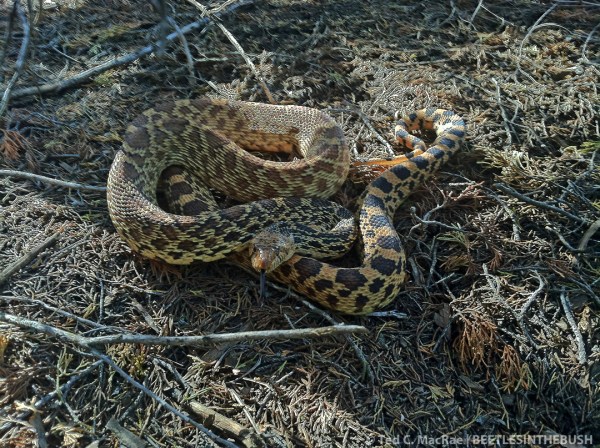
Bullsnake (Pituophis catenifer sayi) | Alabaster Cavern State Park, Woodward Co., Oklahoma

Bullsnake (Pituophis catenifer sayi) | Alabaster Cavern State Park, Woodward Co., Oklahoma

My second stop was at Alabaster Cavern State Park (Woodward Co.), where C. celeripes was again abundant on the gypsum-clay exposures surrounding an impressive gorge thought to be a collapsed cave complex. I focused on beating hackberry because of the success with buprestids on this plant at Gloss Mountains SP, and although they were not quite as abundant here as at Gloss Mountains I still managed to end up with good series of C. caddo and several species of Agrilus. Because I had spent the morning at Gloss Mountains, I had only a partial day to explore Alabaster Caverns and, still getting used to the weight of the camera bag on my back, decided to leave the big camera in the car. This was a mistake, as I encountered my first ever bullsnake (Pituophis catenifer sayi) and had to settle for iPhone photos of this species—the photo above being the best of the bunch. An approaching storm put an end to my second day after another 10 hours in the field, and I drove an hour to Woodward.

Moneilema sp. on Opuntia phaecantha | Alabaster Cavern State Park, Woodward Co., Oklahoma

Moneilema sp. on Opuntia macrorhiza | Alabaster Cavern State Park, Woodward Co., Oklahoma

My third day started out at nearby Boiling Springs State Park, a riparian oasis on sandy alluvium alongside the nearby Cimarron River. The woodlands are dominated by hackberry and American elm, and although a few buprestids were beaten from hackberry and honey locust (Gleditisia triacanthos), the numbers and diversity were not enough to hold my interest in the spot. After lunch, I decided to return to Alabaster Caverns SP and explore some other areas I had not had a chance to explore during the previous partial day. It’s a good thing that I did, as I ended up finding a nice population of longhorned cactus beetles in the genus Moneilema associated with prickly pear cactus (Opuntia macrorhiza). I collected a nice series of adults and also learned a few lessons in how to photograph these beetles on their viciously protective host plants. The photo above gives a taste of what will come in the photos that I took with the big camera. After eight hours in the field and darkness falling, I drove two hours to Forgan in Beaver Co.

Beaver Dunes State Park, Beaver Co., Oklahoma

Beaver Dunes State Park, Beaver Co., Oklahoma

Day 4 in the field started out cold and ominous, having stormed heavily during the previous night and with thick clouds still hanging in the sky. I feared the day might be a wash but decided to venture to Beaver Dunes State Park anyway and take my chances (beating can still be productive even in cold weather as long as the foliage is not wet). It’s a good thing that I did, as the buprestids were as numerous as I’ve ever seen them. The park’s central feature is a system of barren sand dunes that are frequented by ORV enthusiasts and surrounded by hackberry woodlands. The park also has a reservoir and campground, around which are growing a number of cottonwoods (Populus deltoides).

Hackberry Bend Campground, Beaver Dunes State Park, Beaver Co., Oklahoma

Hackberry Bend Campground, Beaver Dunes State Park, Beaver Co., Oklahoma

These hackberrys and cottonwoods proved to be extraordinarily productive. On the former I collected large series of several species of Chrysobothris and Agrilus, and while I collected fewer Buprestidae on the latter, these included Agrilus quadriguttatus and Poecilonota cyanipes! The latter species I had never collected until last year (from Cerceris fumipennis wasps), and beating the lower branches of the declining cottonwoods produced a series of about a dozen specimens. I also got one specimen on black willow (Salix nigra), along with a few Chrysobothris sp. and what I take to be Agrilus politus. Also in a low branch of one of the cottonwoods was a bird’s nest with a single egg that, according to Facebook comments, either represents the American Robin or a Gray Catbird. (I returned the next day and saw two eggs in the same nest.)
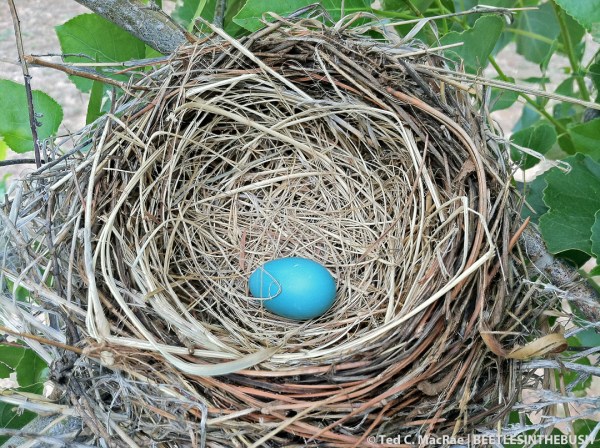
American Robin or Gray Catbird nest w/ egg | Beaver Dunes State Park, Beaver Co., Oklahoma

American Robin or Gray Catbird nest w/ egg | Beaver Dunes State Park, Beaver Co., Oklahoma

As the day drew to a close, I found two interesting longhorned beetle species at the edge of the dunes: one large, powdery gray Tetraopes sp. on milkweed (Asclepias sp.), and huge numbers of Batyle ignicollis evidently perched on the yellow spiked inflorescence of an as yet undetermined plant. I have seen this species on many occasions, but always in low numbers, yet here were literally hundreds of individuals on the plants, all having assumed a characteristic pose on the inflorescence suggesting that they had bedded down for the night. I only spent eight hours in the field on this day because of the late start, and as darkness approached I began the two-hour drive to Boise City.

Black Mesa landscape

Sculpted sandstone landscape in the vicinity of Black Mesa State Park, Cimarron Co., Oklahoma

The final two days in the field were supposed to be spent exploring the area around Black Mesa in the extreme northwest corner of Oklahoma, and another hour of driving was needed to get to the area from Boise City. I first went to Black Mesa State Park, and while the landscape was stunning (see above) the area was extremely dry. I feared the collecting would not be at all productive in this area but wanted to give the area a good effort before making a call. As I approached the entrance to the park, I saw a jeep parked by the side of the road with a license plate that read “Schinia,” which I recognized as a genus of noctuid moths that are very popular with collectors. I pulled over and talked to the driver, who was indeed a lepidopterist from Denver and had just arrived himself. We talked and exchanged contact information, and learning of my interest in beetles he directed me to a small stand of Gambel oak (Quercus gambelii) and one-seed juniper (Juniperus monosperma) on a sculpted sandstone escarpment not far from the park. I found the spot, and although I beat three Chrysobothris sp. from the first juniper tree that I whacked, another hour of beating produced only one more beetle from the juniper and nothing from the oak. I returned to the spot where we had met and encountered him again on his way out! We stopped and chatted again and found a few specimens of what I take to be Typocerus confluens on the yellow asters, but by then I was having my doubts about staying in the area. I told him I was going to check out a ravine in the park and then decide.

Petrified forest | Black Mesa State Park, Cimarron Co., Oklahoma

Petrified forest | Black Mesa State Park, Cimarron Co., Oklahoma

The petrified forest ended up being the only interesting thing I found in the ravine—the area was so dry that I think even the real trees were almost petrified! At any rate, it was clear that I was not going to have much success in this area. I looked at my watch, knowing that it would take three hours to drive back to Beaver Dunes, and estimated that if I left now I could get in about three hours of collecting at Beaver Dunes where I’d had so much success the previous day. Thus, I did what I rarely do on a collecting trip—drive during the afternoon!
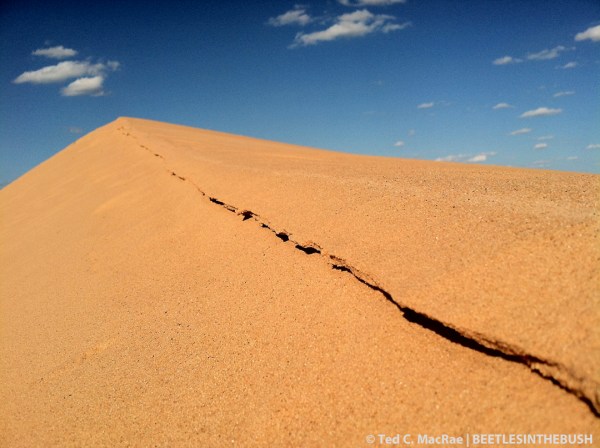
Beaver Dune

The main dune at Beaver Dunes State Park, Beaver Co., Oklahoma.

A chunky grasshopper nymph inhabiting the dune

A chunky grasshopper nymph inhabiting the main dune.

I arrived back at Beaver Dunes with several hours of daylight still remaining, so I decided to take a look around the main dunes before heading towards the woody plants. I’ve actually visited Beaver Dunes previously, on the tail end of a fall tiger beetle trip in 2011. At that time I had seen only the rather common and widespread species Cicindela formosa (Big Sand Tiger Beetle) and C. scutellaris (Festive Tiger Beetle), but I thought there could still be a chance to see the much less common C. lengi (Blowout Tiger Beetle). Early June, however, is a little late to see the spring tigers, and in fact I saw only a single C. formosa. Nevertheless, I find dune habitats irresistible—alien habitats occupied by strange plants and animals, and I spent a bit of time exploring the main dune before heading back towards where I had collected so many Buprestidae the previous day.

Low water levels in the reservoir at Beaver Dunes are a result of three years of drought.

Low water levels in the reservoir at Beaver Dunes are a result of three years of drought.

Western Oklahoma, like many parts of the central U.S., has suffered rather severe drought conditions for the past several years. This was evident not only in the large amount of branch dieback seen in the woody vegetation of the area (and probably a contributor to my success at collecting Buprestidae) but also the very low water level in the park reservoir. In the photo above the small cottonwood saplings in the foreground and large cottonwood trees in the left background indicate the normal water level. Cottonwoods, of course, like to keep their feet wet, and the trees around this reservoir—left high and dry by the drought—have responded with major branch dieback and lots of subsequent adventitious sprouting at the bases of the main branches. It was from this adventitious growth that I had beaten most of the Poecilonota cyanipes that I collected the previous day, so I repeated the cottonwood circuit in the hopes of collecting more. Not only did I collect more, but I collected twice as many as the previous day, so I ended up with a very nice series of more than two dozen individuals of the species from the two days collecting. I also did a little more beating of the hackberry trees which had produced well the previous day and collected several more Chrysobothris caddoC. purpureovittata, and Agrilus spp. such as A. leconteiA. paracelti, and perhaps others. When I arrived I was unsure whether I would stay here the following day, but eventually I decided I had sampled the area about as well as I could and that I would go back to the Gloss Mountains for my last day in Oklahoma. Thus, as the day began to wane I began hiking back to the car and spent the next two hours driving back to Woodward to spend the night.

Steep slope below the main mesa | Gloss Mountains State Park, Major Co., Oklahoma

Steep slope below the main mesa | Gloss Mountains State Park, Major Co., Oklahoma

Echinocereus sp. | Gloss Mountains State Park, Major Co., Oklahoma

Echinocereus sp. | Gloss Mountains State Park, Major Co., Oklahoma

Arriving at the Gloss Mountains the next morning was like coming home! I’ve spent so much time at this place and found so many great insects, yet every time I come here I find something new. Today, however, my goals were more modest—I wanted to improve on my series of Paratyndaris prosopis and Chrysobothris texanus, so I focused most of my time beating the hackberry and juniper on top of the mesa and continued beating the juniper down below as well. Success! I collected four more Paratyndaris off of the hackberry, but the C. texanus were far more abundant on this day than they were earlier in the week—I probably got another two dozen individuals of this species. Of course, I also got distracted taking photographs of a number of things, so the day went far more quickly than I realized. I wanted to leave around 6 pm and get in about three hours of driving so that I would have time to make it into Missouri the next morning and have a nice chunk of time to collect before finishing the drive and arriving home on Saturday night. It was actually closer to 7:30 pm before I hit the road, the reason for the delay being the subject of a future post (I will say that BioQuip’s extendable net handle comes in handy for much more than collecting tiger beetles!).
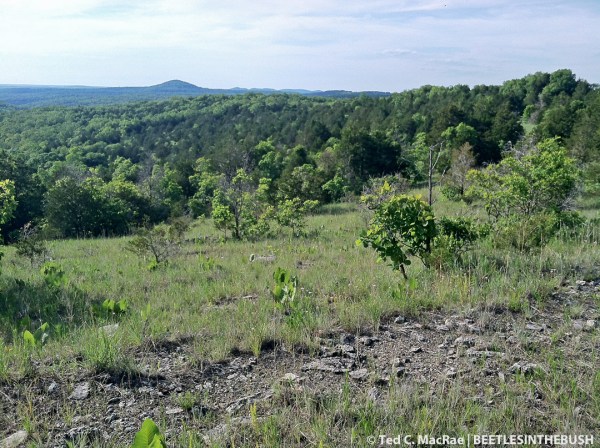
Dolomite glades | Hercules Glades Wilderness, Taney Co., Missouri

Dolomite glades | Hercules Glades Wilderness, Taney Co., Missouri

Long Creek | Hercules Glades Wilderness, Taney Co., Missouri

Long Creek | Hercules Glades Wilderness, Taney Co., Missouri

For my last day of collecting, I decided to stop by at one of my favorite spots in the White River Hills of extreme southwestern Missouri—Hercules Glades Wilderness in the Mark Twain National Forest. I’ve been to this place a number of times over the years, but in recent years my visits have usually been late in the season to look for the always thrilling to see Cicindelidia obsoleta vulturina (Prairie Tiger Beetle). It had actually been about 25 years since I’d visited these glades during the spring, and because of the success I’d had collecting in Oklahoma I was really optimistic that I would find the same here. Sadly (and inexplicably), insect activity was very low, and it didn’t take long for this to become apparent as branch after branch that I beat along the trail through the dry-mesic forest down to Long Creek yielded nothing. By the time I got to the creek I still had not collected a single beetle. A consolation prize was found along the creek, as beating the ninebark (Physocarpos opulifolius) produced a few specimens of the pretty little Dicerca pugionata, and a couple more consolation prizes were found further up the trail approaching the main glade when I saw a Cylindera unipunctata (One-spotted Tiger Beetle) run across the trail and then beat a single Agrilus fuscipennis from a small persimmon (Diospyros virginiana) tree at the edge of the glades. It had been about 25 years since I last collected the latter species, so I was very happy to see it, but no more were seen despite beating every persimmon tree that I saw during the rest of the day. At the end of the day, I had hiked seven miles and collected only six beetles—a rather inauspicious ending to what was otherwise a wonderfully successful trip.
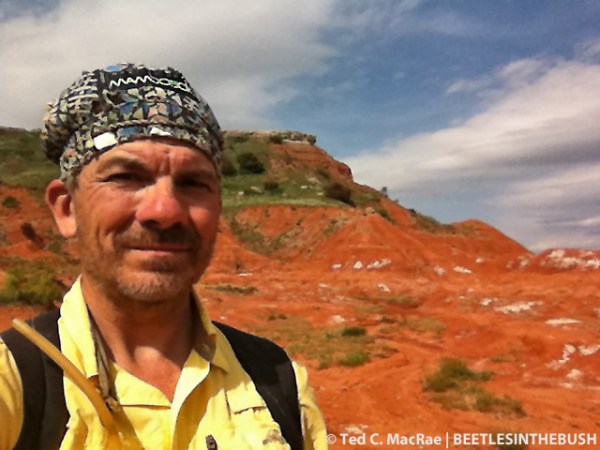
A rare ''selfie''

The author takes a rare ”selfie” at Gloss Mountains State Park.

Arriving back at the car at the end of the day on the last day of an extended collecting trip is always a little depressing—despite the vagaries of travel, cheap hotel beds, meals on the go, and general exhaustion, I’m never happier than I am when I am in the field. Still, the success that I’d had during this trip did much to ease my depression, and arriving home late that night and seeing my girls again (who waited up for me!) finished off any remaining depression.

© Ted C. MacRae 2013

Western Diamondback Rattlesnake

Western Diamondback Rattlesnake (Crotalus atrox) | Gloss Mountains, Major Co., Oklahoma

Western Diamondback Rattlesnake (Crotalus atrox) | Gloss Mountains, Major Co., Oklahoma

I’m always delighted to see snakes, even venomous species, and whenever my collecting takes me west I know my chances of seeing snakes are good. My first stop during the current collecting trip was the Gloss Mountains of northwestern Oklahoma, and although I have visited this place several times since “discovering” it in June 2009, I have seen only a single snake during all of my previous visits—a charming little Western Pygmy Rattlesnake (Sistrurus miliarius streckeri). I’m a little surprised by this, as the habitat looks perfect for the one snake that truly don’t look forward to encountering—the Prairie Rattlesnake (Crotalus viridis). As I roam the surrounding mixed grass prairies (by both day and night) I am ever on the watch for these terrifyingly aggressive snakes, having learned my lesson with this species a few years ago in South Dakota’s Black Hills. I spent two days in the area during this trip, and I still have not seen one, but I did see a young (just over 2 feet in length) Western Diamondback Rattlesnake (Crotalus atrox)—my first for this species. Although he was lying in an eroded ravine in the red clay talus slopes and partially hidden by an overhanging clump of grass, the diamond pattern immediately drew my eye as something out of the ordinary, and I was able to move the grasses aside (with my net handle!) and get this shot before he even flinched. After the first flash he started getting agitated, and I was only able to get two more (not as good) shots before he’d had enough and began retreating into the thicker grass above the ravine—rattle buzzing vigorously as he left. Comparatively speaking, he was one of the most docile rattlesnakes I’ve encountered, but since this is the only Western Diamondback I’ve seen I don’t know if that is a hallmark of the species or more due to his young age.

Copyright © Ted C. MacRae 2013

His name is Ralph!

E

Eastern hognose snake (Heterodon platirhinos) | Wayne Co., Missouri

Until the past few years, I could probably count on my two hands the number of snakes I’d seen in the field. This despite nearly weekly outings throughout each season going back to young adulthood. I’m sure this has something to do with my search image (beetles), my primary method of looking for them (whacking tree branches with my net handle over a beating sheet), and what I wasn’t also doing at the time (looking for snakes or anything else that wasn’t a beetle). One is unlikely to see these mostly shy, secretive animals when thrashing and whacking through the bush, and even if no ruckus is made to make them scamper they can still hide in plain sight due to their wonderfully cryptic coloration. It wasn’t until I started carrying a camera and began looking for other natural history subjects rather than just focusing on collecting as many beetles as possible that I began to see snakes. And since then I’ve seen a lot of them, including a terrifyingly aggressive timber rattler, a juvenile Osage copperhead, an uncooperative dusty hognosed snake, a death-feigning western hognosed snake, a cute little western pygmy rattlesnake, a rough green snake, a juvenile timber rattler, an adult Osage copperhead, and a yellow-bellied racer. The last three were all seen at what has become for me my favorite “snake spot”—a gorgeous preserve in the southeastern Missouri Ozarks. I’m not sure what makes this place so ideal—perhaps the massive outcroppings of jumbled rhyolite alongside the clear, spring-fed, gravel-bottomed river provide ample habitat and food for a variety of species. Regardless, I have visited the preserve each April  (for my annual season-opening birthday bug collecting trip) for the past three years and never failed to see at least one snake.¹

¹ To be clear, I am not a snake collector. That said, I do not have a problem with keeping snakes in captivity, at least in principle, but I am disturbed by the frequency with which snakes and other reptiles are irresponsibly collected at levels that are unsustainable and even “poached” from protected areas. For me personally, it is enjoyment enough to see, be able to identify, and observe these gorgeous animals in their native habitats, leaving with nothing more than a digital record and my vivid memories of that brief encounter.

Eastern Hognose Snake (Heterodon platirhinos) | Wayne Co., Missouri

When threatened, hognose snakes flatten their head and neck, puff up their body, and hiss loudly.

On my most recent visit, I was hoping to once again see one of the timber rattlers that inhabit these rocky hillsides. I tip-toed up and down the rocky slopes as quietly as I could, but no such luck. On the way back, however, I spotted this colorful eastern hognose snake (Heterodon platirhinos) lying just off the path. Despite its brilliant coloration and vivid markings, it was remarkably well camouflaged and I almost walked right past it. Of course, hognose snakes are well-known for their various threat and defensive displays. I’ve experienced some of these in my previous sightings with other species (death-feigning, mouth bleeding, and foul-smelling emissions), but to my delight I got to experience their most classic behaviors—flattening of the head and neck, puffing of the body, and loud hissing. The snake repeatedly performed these behaviors as I photographed it, and because I persisted the snake apparently concluded that these tactics weren’t working. What happened next was something I was completely unprepared for.

”Sir, what’s your name?”

As the snake began trying to crawl away, it opened its mouth widely…

”Uh, his name is…”

…and out came it’s last meal (obviously a frog, but with the head and front legs already digested, too difficult to identify any further)!

”RRRAAAALLPH!”

p.s. If you didn’t get the joke, watch this clip from the classic Cheech and Chong movie, Up in Smoke.

Copyright © Ted C. MacRae 2013
Fathers Day at the Missouri Botanical Garden

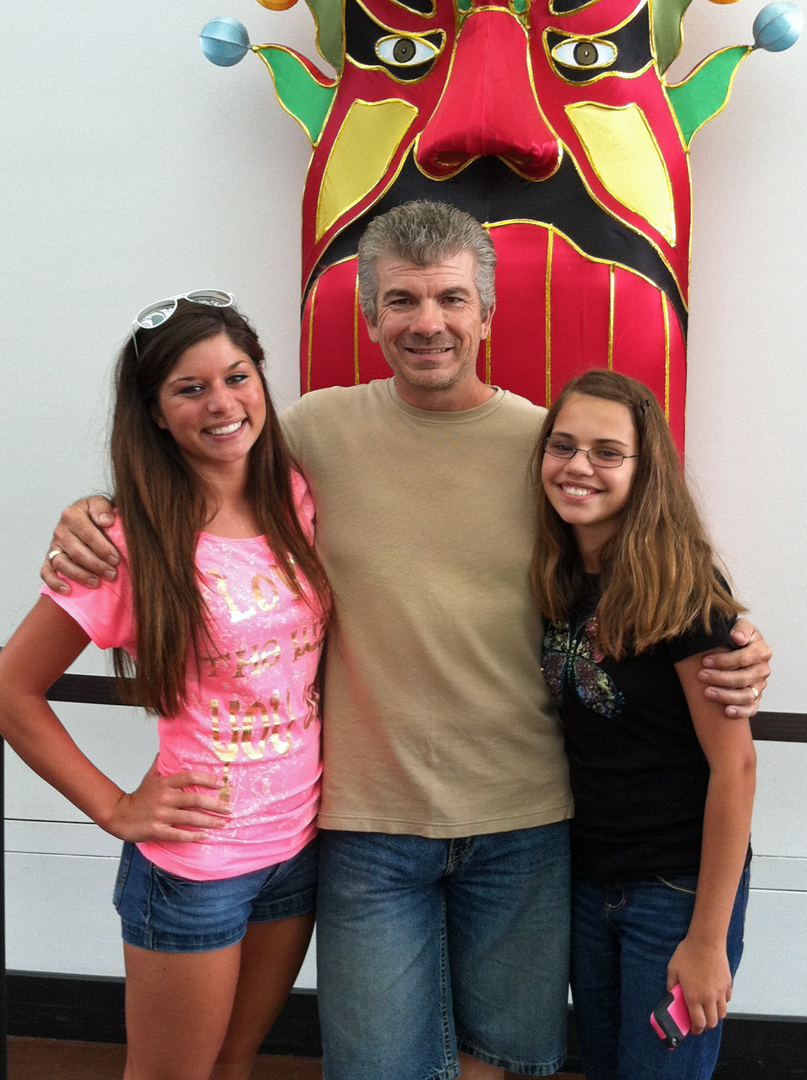
Yesterday my girls (wife Lynne and daughters Mollie and Madison) took me and my father to the Missouri Botanical Garden for Fathers Day. Although I’m an entomologist, I also have a strong botanical bent, and although my wife and father are not scientists like me, they nevertheless find a day at the Missouri Botanical Garden as enjoyable as I do. The girls, on the other hand, will never admit that they like it the way the rest of us do, but I think deep inside they enjoy it very much and, in later years, will look upon these visits as some of their fondest Mothers and Fathers Day memories.

Me and daughters Mollie and Madison.

My father and I have been back together for 20 years now. With my wife and daughters, he has become one of the most important persons in my life. I wrote an essay about my father four years ago that explains how he made me whole—it still rings true today.

Me and Pop.

I have been to the Missouri Botanical Garden many, many times over the years, but one sight have have still never seen is a corpse flower (Amorphophallus titanum). I learned earlier this week that one of their plants is about ready to bloom, so I eagerly looked for this plant as we wound our way through the Climatron. As we came near the end and I still hadn’t seen it, I wondered if somehow I had missed it along the path. Suddenly I caught a glimpse of the giant 3′ tall flower bud near the end of the footpath, and I knew instantly that I had found what I was looking for.

Corpse flower (Amorphophallus titanum) getting ready to bloom.

I will be keeping track of the progress of this flower over the next couple of weeks on the Missouri Botanical Garden Facebook page in hopes that I can see it again when the flower opens fully—a rare botanical treat that few people ever get the chance to experience!

Corpse flower explained.

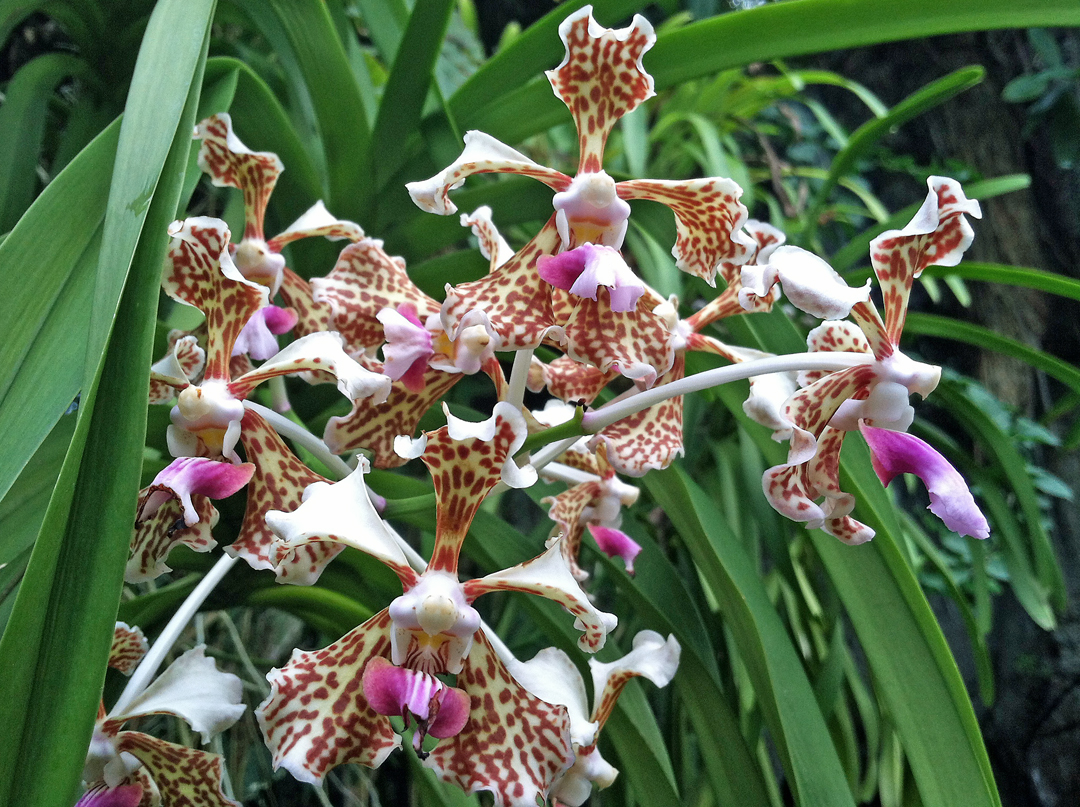
In my younger years when I had a bit more free time on my hands I was a hobbyist orchid grower. I didn’t have a greenhouse but nevertheless managed to keep a steady supply of plants in bloom by growing them outdoors under shade cloth with heavy watering and fertilizing during the summer and moving them indoors under fluorescent lights and in bright windows during the winter. I don’t have nearly the time for such pursuits these days, but I still enjoy looking at their exquisite and infinitely diverse blooms whenever I have the chance, and the Climatron never fails to disappoint.

One of many epiphytic orchids blooming in the Climatron.

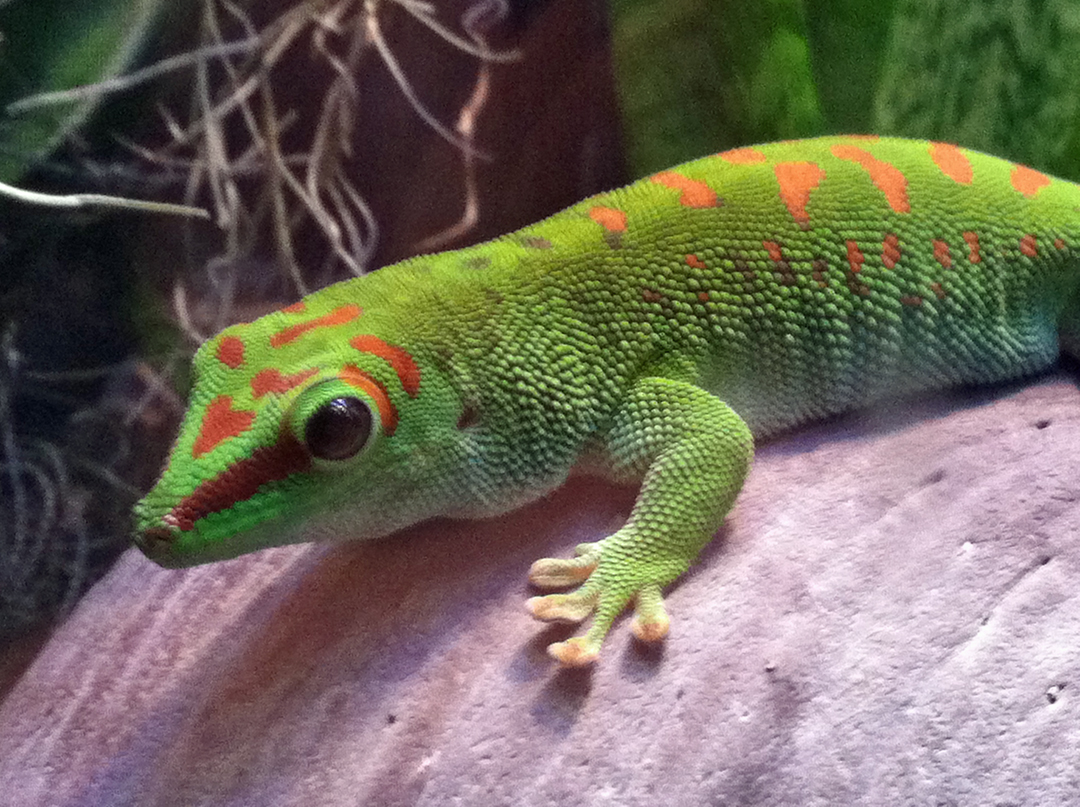
While walking through the Climatron, I noticed a very exotic looking lizard on the trunk of one of the trees. I watched it licking exudate from the trunk and thought such behavior seemed rather odd. I later learned that this was the Standing’s day gecko (Phelsuma standingi), and that it might have an important role in pollinating the double coconut palm (Loidiocea maldivica). Both are endemic to the Seychelles Islands north of Madagascar, with the latter bearing the largest seed of any plant in the world (up to 45 lbs. in weight). The photo below was taken of another individual through the glass of its terrarium and, thus, lacks some clarity, but it shows the vivid colors and markings that distinguish these diurnal geckos from the other more typically nocturnal members of the gecko infraorder.

Standing’s day gecko (Phelsuma standingi).

While not gracing this post in a photo, many thanks to my loving wife, Lynne, who is the best mother my daughters could ask for and who helped make yesterday the special day for me and my father that it was!

Copyright © Ted C. MacRae 2012

Animals Alarmed!

''La Costanera'' | Corrientes, Argentina

Today was my first full day of vacation in Corrientes, Argentina. It was great! I slept late, drank coffee on the balcony, frittered a while on the computer, and then headed for the “Costanera”—a beautiful stretch of green space along the banks of the massive Rio Paraná. I first visited Corrientes in 2000, spending a week collecting insects in Corrientes and neighboring Chaco Provinces on the front end of a business trip, and I’m thrilled to be back in this, one of my favorite cities in Argentina.

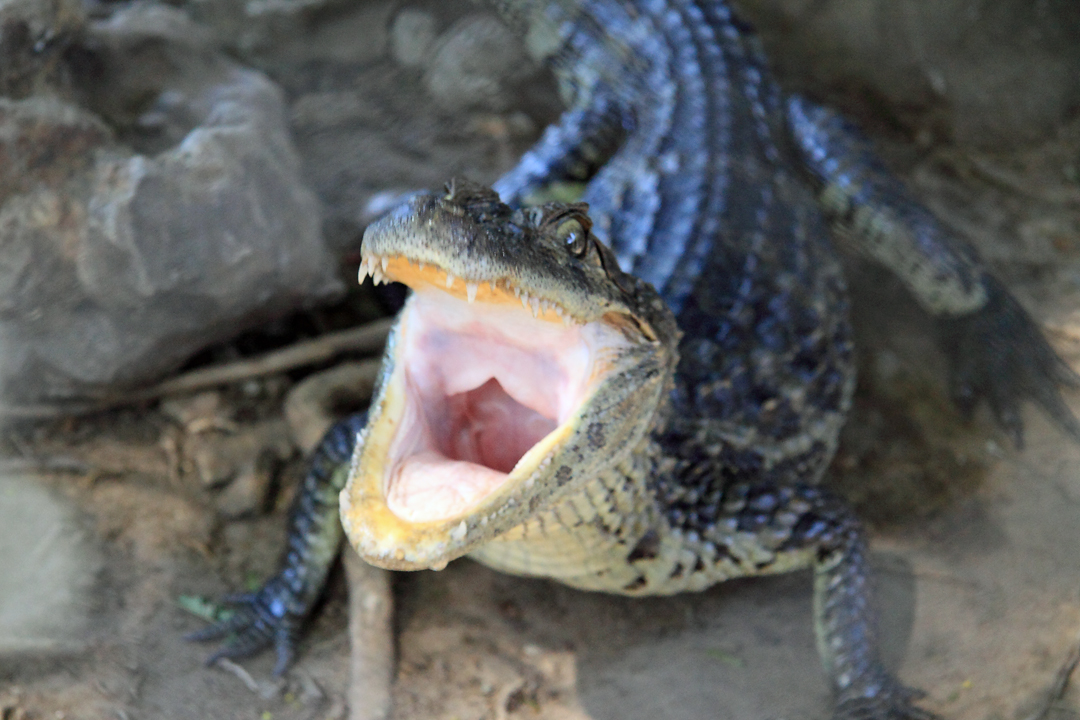
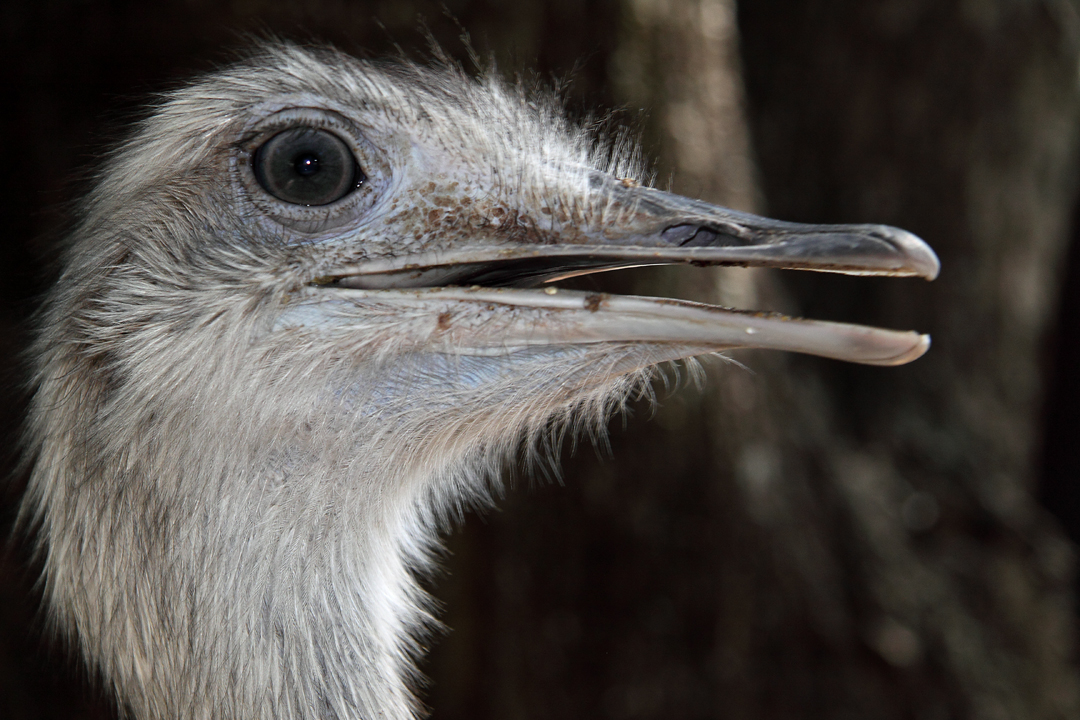
Of course, change is inevitable, and not everything has changed for the better since I was last here. The southern coast has been developed (photo above), so gone is a wet, muddy area above the beach where I fondly remember two local boys “helping” me collect tiger beetles (one actually caught one!). Still, the area had a few surprises in store for me, one of which was the presence of a small zoological park that I had somehow missed on my previous visit. I have mixed feelings about zoos—their mission in promoting conservation and providing refuge for rescued animals is beyond reproach, but somehow I always feel a little sad (and guilty) when I visit one. I can’t escape the feeling that I’m looking at prisoners. US zoos have done much to minimize this quandary by providing spacious, naturalized habitats and minimizing the use of or visibility of bars and cages. Still, watching the polar bear relentlessly pacing back and forth on its well-practiced path reminds you of just how bored the animals get even in these modern confines. A cage is a cage. Nevertheless, animals are always interesting to look at, and seeing animals in a Southern Hemisphere zoo is a unique opportunity that most Americans never experience. Predictably, the zoo harkened back to the older zoos of the US, with animals confined in small spaces enclosed prominently with bars and chain link fencing. There is actually an upside to this, as it allows one to get extraordinarily close to the animals. Ever try to photograph a lion in a US zoo? Maybe with an 800mm telephoto lens you can get a shot that looks like more than a little brown blob in a sea of brown, and even then the elevated position looking down into the “den” makes for very unspectacular views (getting down on the same level as your subject, or even lower, results in much more interesting views). I never even think about taking photos of animals at US zoos for this reason. Today’s experience, however, was much more intimate despite the chain links and even provided for some comical reactions by the animals as I lifted to glass to within a few feet of their faces. I present here a few of the more interesting ones:

Yacaré Caimen (Caiman yacare)

Normally when you see this, you’ve already screwed up!

Burrowing owl, or ''Lechuza'' (Athene cunicularia)

The closer I got, the lower he got—spreading his wings and “snapping” his beak.

Greater Rhea (Rhea americana)

That moment of indecision between “fight” or “flight” (I’m talking about me, not the bird!).

Copyright © Ted C. MacRae 2012

Speaking of cover photos…


…here is my first—a tropical house gecko (Hemidactylus mabouia) that I photographed in Campinas, Brazil this past January. The photo (originally from my post Brazil Bugs #5 – Lagartixa) was selected for the cover of the October 2011 issue of Ecology and Evolution, having been used by Kristen H. Short and Kenneth Petren (with my permission) for their article, Multimodal dispersal during the range expansion of the tropical house gecko Hemidactylus mabouia.

Although it’s exciting to have that first cover photo under my belt, I find it mildly ironic that it’s not a beetle, insect, or even invertebrate!

Copyright © Ted C. MacRae 2011

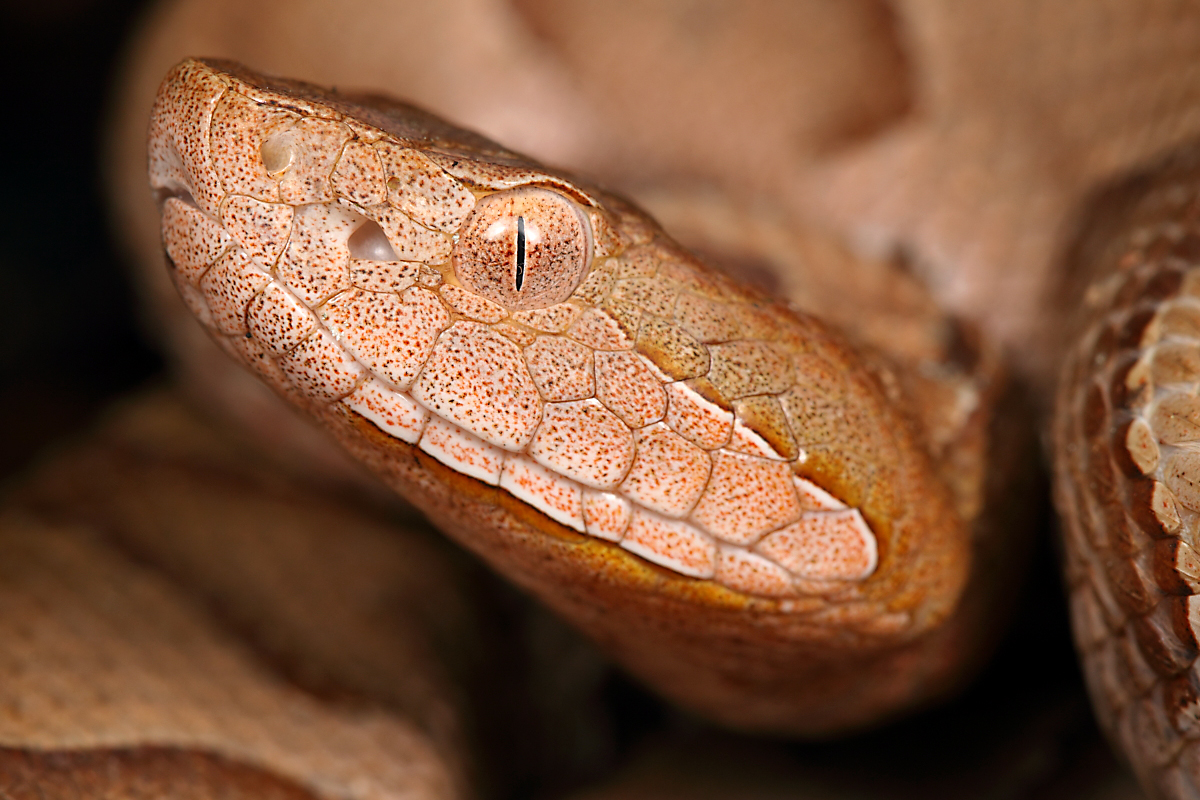
Eye to eye with a copperhead

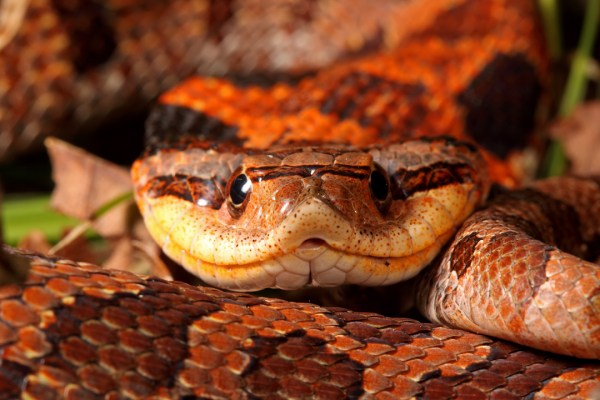
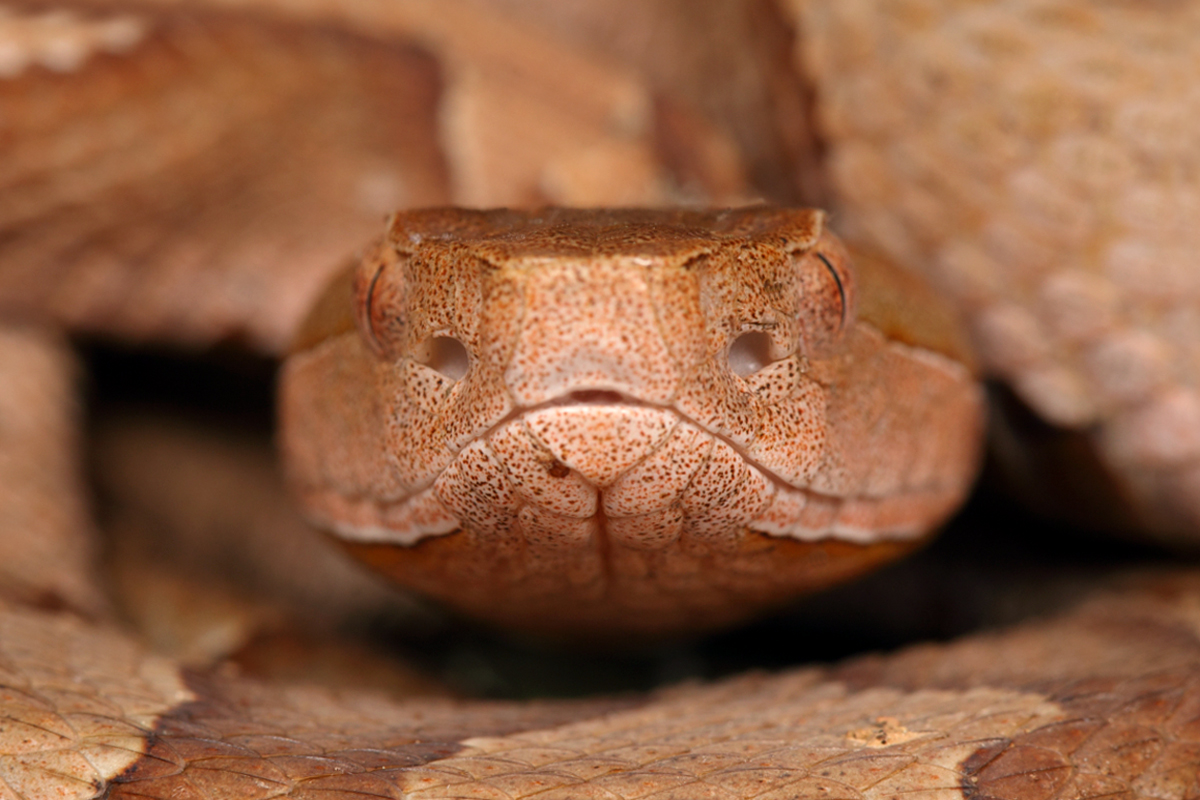
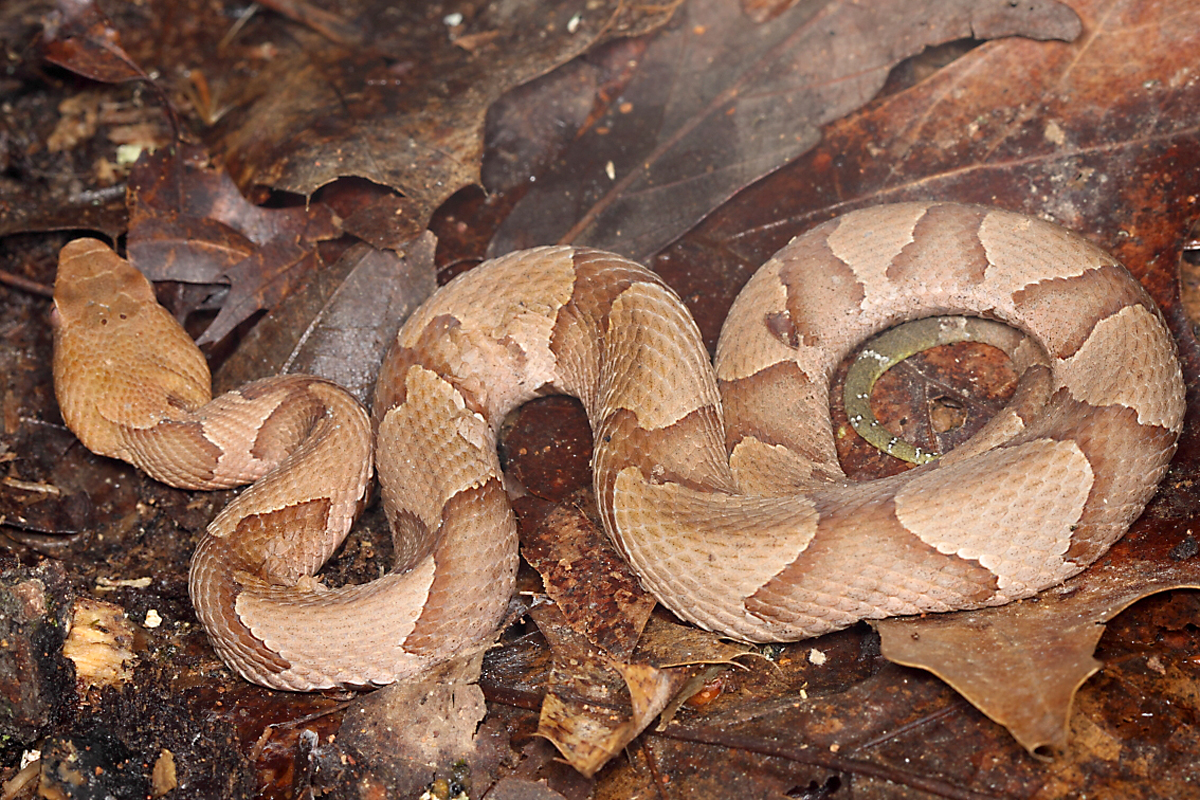
I don’t know what it is about Osage copperheads (Agkistrodon contortrix phaeogaster) that makes every encounter with one so special. They are perhaps the most common of Missouri’s five venomous snake species, and I’ve seen them more often than I can count. Still, every time I see one I simply must stop and marvel. This particular individual was seen a few weeks ago at Sam A. Baker State Park in Missouri’s southeastern Ozark Highlands. You might say it was “sloppy seconds”—I had actually gone to the park to look for timber rattlesnakes (Crotalus horridus), a juvenile of which I had seen during last year’s Annual-Birthday-First-Bug-Collecting-Trip-of-the-Season™ trip. I did not see any rattlesnakes this time, as access to the rockpilish cliffs along Big Creek where I saw the juvenile last year was blocked by high water, but I was quite pleased to find this copperhead underneath a log while we were there.

Copperheads are marvelous photographic subjects. Beautiful, rarely seen by those who don’t know how to look for them, and with an air of “danger” about them. Yet they are among the most docile of all snakes, venomous or otherwise. They don’t use aggression or warning sounds when threatened like cottonmouths (Agkistrodon piscivorus) or rattlesnakes, nor do they dash for cover like most non-venomous species. Instead, they rely on their cryptic, dead-leaf coloration to make them invisible. It works—even I, my eyes tuned to see just about anything after a half-century of clambering through the brush, didn’t immediately notice this individual when I first rolled over the log under which it had taken cover (although I did immediately notice the little red-backed salamander, Plethodon cinereus, at the other end of the area covered by the log). I suspect I’ve walked right by many more copperheads than I have seen, completely unaware of their presence.

Their docile nature also invites extreme close-ups that I wouldn’t dare attempt with a rattlesnake or cottonmouth—at least not without a much longer lens than my 100mm. These photos make it seem that I was right on top of the snake, although at a maximum magnification of around 1:2 there was still a reasonable amount of working distance (I did, however, keep my hands well back of the front of the lens—just for good measure). Still, in all my copperhead experiences, I have never seen a copperhead actually try to strike unless I touched it (not what you think!).

Eventually it’d had enough of our gawking and began to look for new cover.  As it uncoiled, I could see it’s still greenish but not too yellowish tail, indicating that it was still a youngster, though perhaps a little older than the first copperhead I tried to photograph.  We watched it as it crawled into the loose, dry leaves… and disappeared.


Copyright © Ted C. MacRae 2011

Wrong lens

During the past couple of years, as I’ve transitioned from strictly a net-wielding entomologist to one that also carries a camera, I’ve had to start making choices about whether to keep the camera in the backpack or hold it at the ready, and if the latter which lens to keep on it. They are situational decisions, influenced largely by what I’m focused on (heh!) at the time—keeping the camera in the bag facilitates collecting, but it also tends to reduce the number of subjects I deem worthy of the setup effort required to photograph them. Conversely, carrying the camera out of the bag greatly impedes collecting but results in much more photographs having been taken. Even when I do decide to carry the camera at the ready, which lens should I have on it—the 100mm for tiger beetle-sized and larger, or the 65mm for tiger beetle-sized and lower? (Annoyingly, most tiger beetles are right at that life-sized threshold, and neither lens alone allows me to float above and below 1:1 for the full range of photos I like for them. As a result, I sometimes end up with extension tubes stacked under the 100mm lens to give me some extra range above its normal 1:1 limit.) I wish there was some way to have the camera with either lens at the ready (and not impeding net swings would be even better), but that just isn’t possible. As a result, I sometimes find myself with the wrong lens on the camera when I see something I want to photograph. If it’s important, I’ll go through the trouble to switch out lenses—hopefully quickly enough to avoid losing the photographic opportunity; other times I might just decide I don’t really need the photo that badly.  Then there are times when I feel a little adventurous and will just go ahead and take the photo anyway without switching lenses.

The following is an example of the latter—an eastern fence lizard (Sceloporus undulatus) photographed with the 65mm lens (minimum magnification 1:1). Not only is this the first time that I have succeeded in approaching one of these lizards closely enough to take a good photograph, but the short working distance of the 65mm required that I get extraordinarily close. He was on the side of a fallen log, and I approached from the other side crouching low, then slowly (slowly!!!) peered over the edge of the log until I had his head in focus. I got off just this one shot, as the flash caused the lizard to bolt for good. The angle could have been better, but I got the eye focused spot-on so it’s a keeper.

Sceloporus undulatus (eastern fence lizard) | Shaw Nature Reserve, Franklin Co., Missouri

I wonder if anybody else has ever photographed a 6-inch long lizard with a 65mm lens…

Copyright © Ted C. MacRae 2011