A hunting we will go!

Maps have been prepared. Relevant emails from my esteemed colleagues to the northwest have been read and re-read. Summary sheets on the distribution, biology, and biogeography of the many different species I hope to encounter are in hand. Google Earth images of each locality I plan to visit – annotated with potential species occurrences and pinpointing precise locations of their likely habitats – have been assembled into a Powerpoint presentation, and detailed driving directions from Point “A” to Point “B”… all the way to Point “X” (home!) have been determined. All of this has been printed out and organized into a 3-ring binder. Why the extraordinary attention to detail? Because…

It’s time for the annual fall tiger beetle trip!

View Larger Map

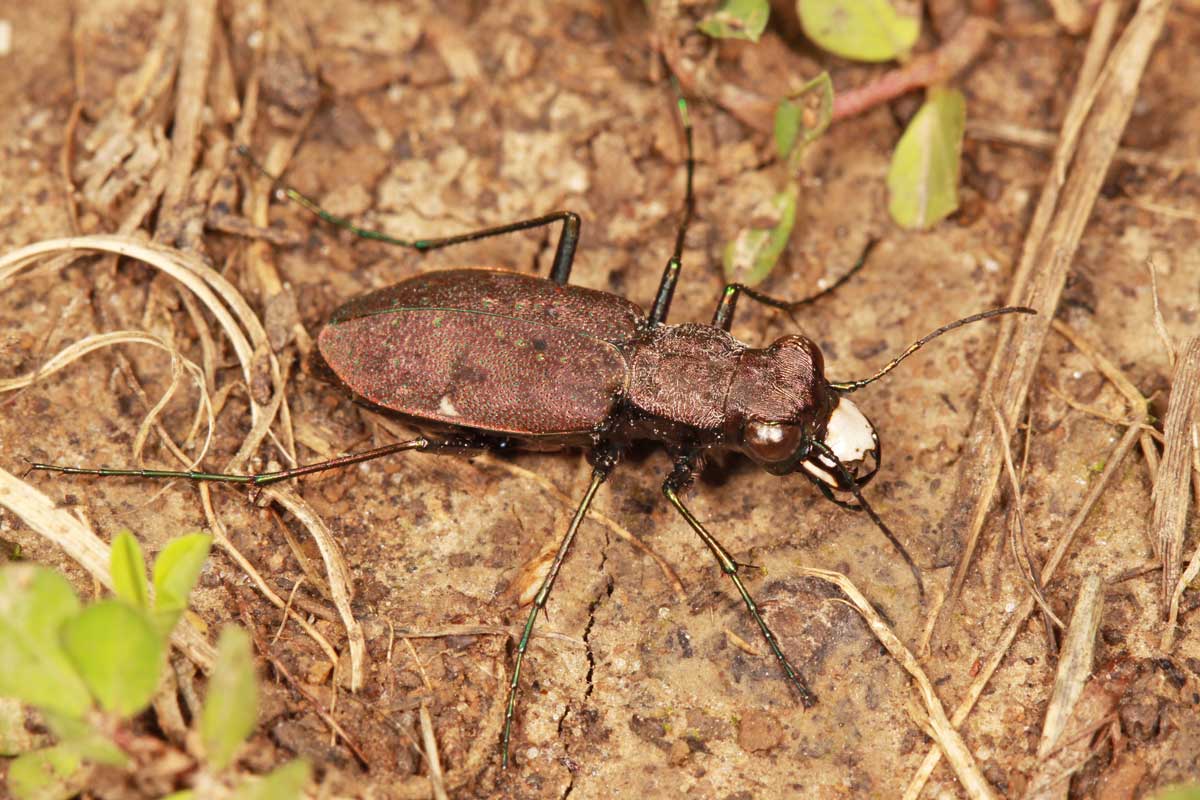
The annual fall tiger beetle trip started several years ago when I, along with my friend and colleague Chris, began studying Missouri’s tiger beetle fauna. At first it was a diversion – buprestids and cerambycids are pretty well played out by fall, but tiger beetles across much of the U.S. exhibit a unique spring/fall fauna that is quite distinct from the summer fauna. Chris and I would go to different parts of Missouri, documenting the species encountered to fill in distributional data gaps. It was on these trips that I discovered how much I truly love early fall collecting – the cool air, the crisp smells, the long sharp shadows, and a landscape of foliage ever so lightly tinged with shades of red and yellow while grasses morph into fields of gold. In recent years, I’ve begun adventuring beyond Missouri’s borders on these fall trips, allured by the diversity of species found in the Great Plains – species alien to Missouri in an equally alien landscape. First, it was Barber County, Kansas, with its red gypsum hills inhabited by the aptly named Cicindela pulchra (beautiful tiger beetle) – deep wine-red and iridescent purple flashing across the barren red clay. Then last year I got my first taste of the Sand Hills of Nebraska at their farthest eastern extent. I watched in amazement as Cicindela limbata (sandy tiger beetle) – vivid white and metallic green – danced across the surface of sand blows, undaunted by scouring 30 mph winds. It was on that trip that I decided a long weekend wasn’t cutting it – I needed to take a whole week and get myself into the heart of the Great Plains. The annual fall tiger beetle weekend has just become the annual fall tiger beetle week.

As the map above indicates, I’ve got a rather ambitious itinerary of locations that I’d like to visit – 22 in all. I leave tomorrow, and if I have planned properly (and have a little luck) I might be able to visit all of them in the 9 days I have set aside for the trip. My “trip bible” will be my constant companion, along with my already worn copy of the newly issued Tiger Beetles of South Dakota & Nebraska (Spomer et al. 2008), as I explore deep into the Sand Hills and experience for the first time ever the Black Hills of South Dakota. I’ll even sneak over into Colorado and Wyoming for a spot or two. Unfortunately, my faithful colleague isn’t able to join me. I tried to seduce him with visions of Cicindela limbata and C. lengi (blowout tiger beetle) in the numerous sand blows, C. fulgida (crimson saltflat tiger beetle) around countless alkaline lakes, C. longilabris (Boreal long-lipped tiger beetle) in the high pine forests, and C. nebraskana (prairie long-lipped tiger beetle) and (if we’re really really lucky) C. decemnotata (Badlands tiger beetle) just sneaking into the shortgrass prairies of the extreme northwestern corner of Nebraska. I reminded him of my (wanting) photographic skills and the images we would have to settle for if his talent and equipment didn’t accompany me. I almost had him, but in the end he muttered some lame excuse about his 15-month old baby and wife needing him (just kidding, Chris!).

The map above should be fully interactive, so give it a click and follow me along on this adventure. If you happen to be at any of the spots marked by a balloon and see a khaki-clad fellow – insect net in one hand, camera in the other – how’s about joining me for a bit of tiger beetle hunting.

Posted in Cicindelidae, Coleoptera | Tagged , , , , , , , , , , , | 11 Comments

“All the better to see you with, my dear!”

Click me!

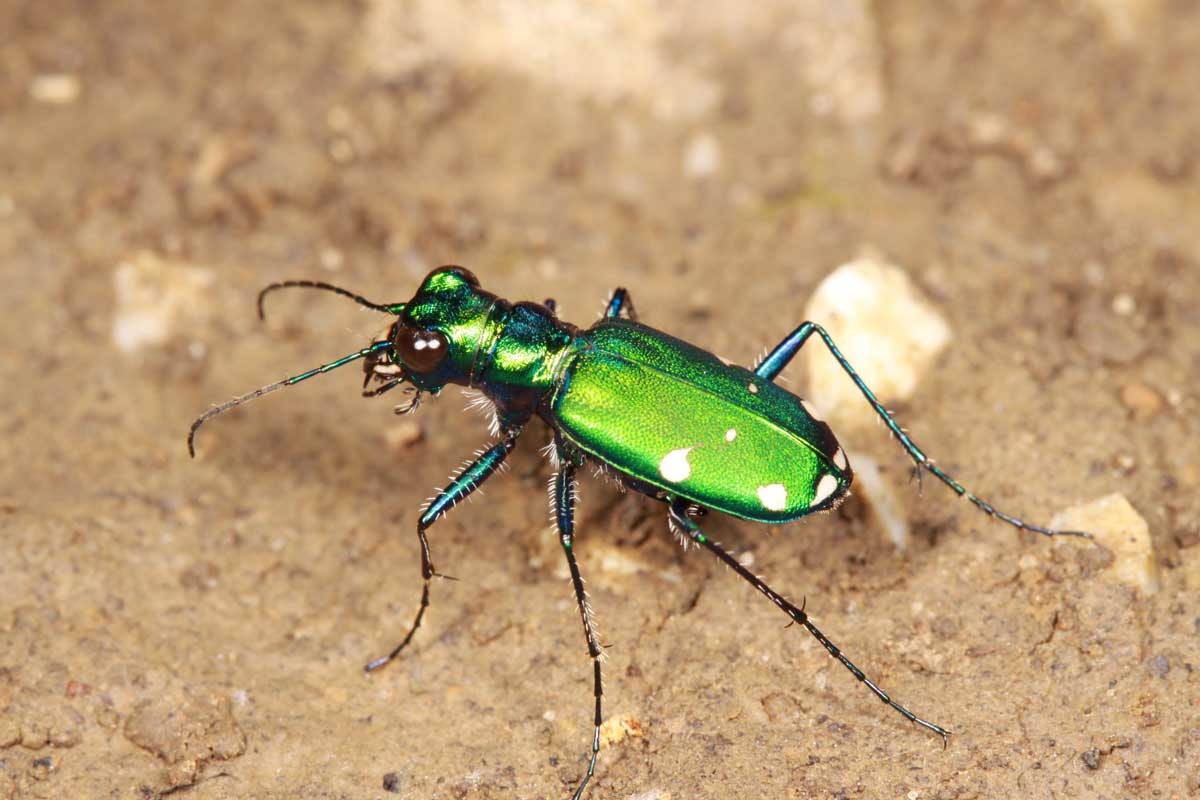
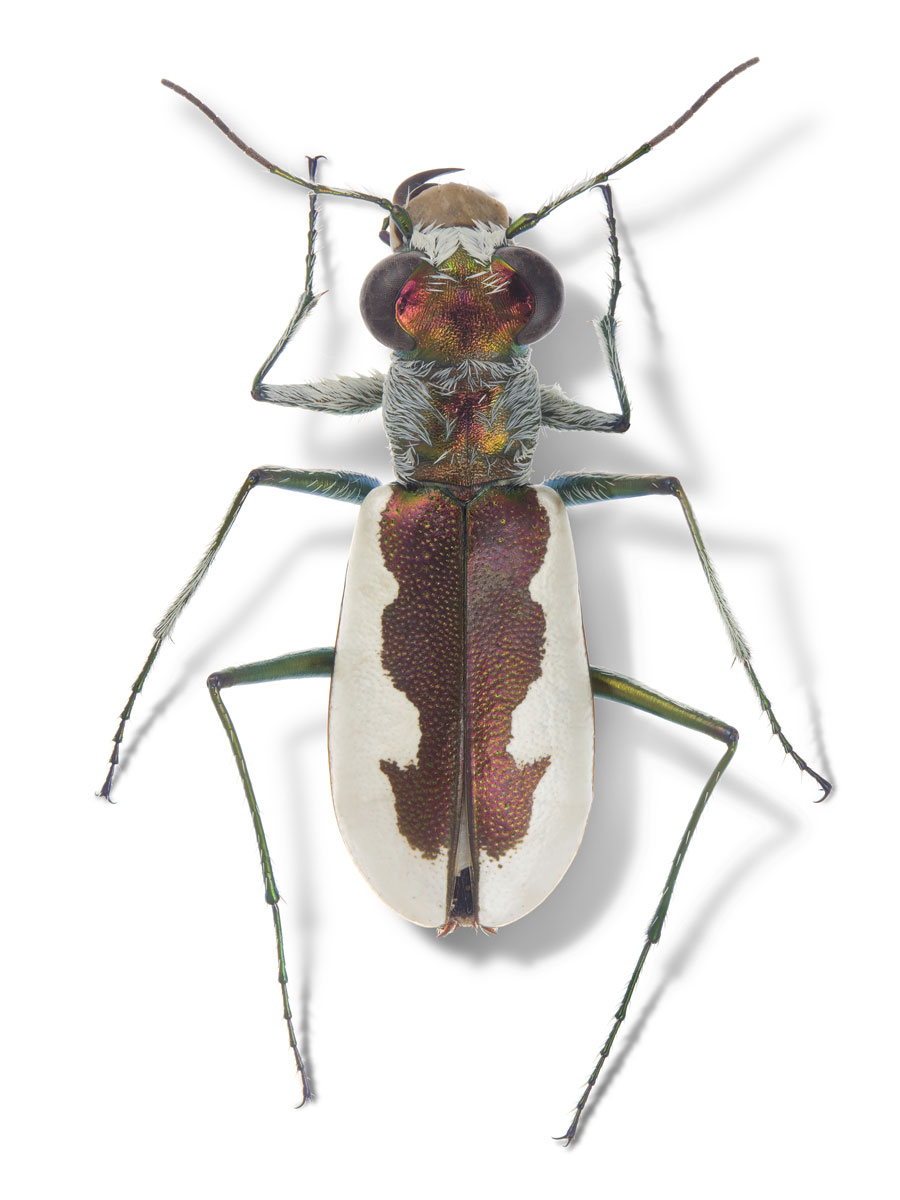
Cicindela formosa (the big sand tiger beetle) is a not uncommon species that occurs across much of North America east of the Rocky Mountains in deep, dry, open sand habitats. It is absent in Appalachia and much of the Interior Highlands, understandable given the rarity of deep sand habitats on these elevated landforms; however, its absence across much of the southeastern coastal plain as well as south and west Texas, despite the widespread presence of apparently suitable habitat, is not easily explained. In Missouri, dry sand habitats are rather limited, occurring primarily along the Missouri and Mississippi Rivers, a few of the larger Ozark rivers, and along Crowley’s Ridge and the Blodgett Terrace in the Mississippi River Alluvial Plain. The individual in these photos was seen last weekend at Sand Prairie Conservation Area (on the Blodgett Terrace), where I also recorded it earlier this year. Despite its relative commoness, I always get a little excited whenever I find this species – it’s a big, chunky thing with bold markings and sufficient habitat specificity to keep it from being too pedestrian (unlike Cicindela repanda and C. punctulata, which usually evoke only a groan – okay, maybe western forms of the latter, with their gorgeous suffusion of green and blue excite me a little bit). Cicindela formosa populations to the west are even more brilliantly colored and localized – it’s a handsome species, indeed! Adults are powerful fliers that terminate their long escape flights with a comical tumble or two across the sand before ending up on their feet. Normally a difficult species to get close to, cool temps and overcast skies on this morning resulted in a cooperative subject and excellent lighting for this series of photos.

Missouri populations are assignable to the eastern subspecies generosa – mostly, that is. There is a population known from the Ozarks, along the beautifully pristine Current River, that exhibits tendencies towards the bright coppery-red dorsal and metallic purple ventral coloration of the nominate subspecies found further west. I’ve also located another population in the northeastern Ozarks on “sand” flats – not true sand, but expansive dumpings of pulverized limestone tailings from former lead mining operations – that shows a similar intergrading with nominotypical characters. The occurrence of these populations near typical generosa populations and disjunct from nominotypical populations several hundred kilometers to the west, coupled with the existence of a broad intergrade zone between the two forms along both sides of the Missouri River through Nebraska, Iowa, and the Dakotas, raises interesting questions about the validity of a subspecific distinction for generosa. Additional subspecies have been described from eastern Texas and adjacent areas of Arkansas and Louisiana (pigmentosignata), southeastern New Mexico (rutilovirens), and southwestern Saskatchewan (gibsoni). Each of these populations is at the edge of the nominate subspecies’ range of distribution and exhibits consistent differentiation in multiple characters – primarily color and maculation – from nominotypical populations. As a result, the case for according subspecific status to these populations is more convincing despite the occurrence of intergrades along narrow zones of contact with nominotypical populations. A truly allopatric population center occurs in northwestern Colorado and southeastern Utah – separated from nominotypical populations to the east by a distance of 230 km. The Colorado population strongly resembles and has thus been assigned to subspecies gibsoni. However, it is hard to imagine a mechanism by which the Colorado and Saskatchewan populations – with over 1,000 km separating them – derived from a common ancestry. A more likely scenario is independent adaptation to similar conditions in their respective habitats. Differences in coloration of the larval head capsule between these two populations lend support to this idea, which if true should qualify the two populations for consideration as distinct subspecies despite the similarity in their appearance. Interestingly, the Utah population resembles nominotypical forms further east, although intergrades with the adjacent Colorado population do occur along a narrow zone of contact.

The subspecies concept has been hotly debated for many decades now. E. O. Wilson and W. L. Brown (1953), in their seminal paper, The subspecies concept and its taxonomic application, questioned the validity of many subspecies on the basis that they failed to exhibit concordance across multiple characters and argued that subspecies that interbreed were not “real taxa” because the flow of genes and characters between them prevented divergence. This restrictive concept essentially limited subspecies to populations that showed significant divergence from their relatives but relied upon external mechanisms (i.e., allopatry) rather than internal (i.e., genetic) for reproductive isolation. Many of North America’s described tiger beetle subspecies would not meet these criteria, since there often exist zones of contact where intergrades (a result of gene flow within hybrid zones) do occur. Ernst Mayr took a more pragmatic approach in Animal Species and Evolution (1963), defining subspecies as “an aggregate of local populations of a species inhabiting a geographic subdivision of the range of the species, and differing taxonomically from other populations of the species” – in other words, subspecies are taxonomic units and not evolutionary units. Viewing subspecies as strictly taxonomic units is more convenient, since the presence of hybrid zones does not invalidate a subspecies as long as it retains its taxonomic distinctiveness. I acknowledge that taxonomic subspecies units are useful – named subspecies provide a convenient shorthand for discussing geographical variation within species and stimulate interest in their study and characterization. Also, as emphasized by cicindelid experts D. L. Pearson et al. (2006), the application of formalized subspecies names for distinctive, local populations makes conservation policy decisions more palatable to policians and legislators, thus enhancing the potential for protection. However, I also agree with O’Neill (1982) that the subspecies concept must be connected to an evolutionary unit to be truly meaningful, and the recent application of molecular techniques is now providing a genetic basis for assessing subspecies validity. Interestingly, some such studies have shown near complete blockage of gene flow across hybrid zones, even when hybridization is frequent, providing genetic evidence of “real taxa” that nevertheless interbreed at their boundaries (Mallet 2007). It would be interesting to apply molecular techniques to populations of generosa, nominotypical formosa, and the Missouri intergrades to understand their degree of genetic divergence, the presence of which could convince me that their status as distinct subspecies should be maintained.

Posted in Cicindelidae, Coleoptera | Tagged , , , , , , , , | 11 Comments

The Loess Hills in Missouri

The term Mountains in Miniature is the most expressive one to describe these bluffs. They have all the irregularity in shape, and in valleys that mountains have, they have no rocks and rarely timber. – Thaddeus Culbertson, missionary, 1852


One of the things I enjoy most about the natural history of Missouri is its diversity. Lying in the middle of the North American continent, it is here where the eastern deciduous forest yields to the western grasslands. Coinciding with this transition between two great biomes is a complex intersection of landforms – the northern plains, recently scoured by glaciers; the southeastern lowlands, where the great Mississippi River embayment reaches its northern extent; the Ozark Highlands, whose craggy old rocks comprise the only major landform elevation between the Appalachian and Rocky Mountains; and the eastern realm of the vast Great Plains. This nexus of east and west, of north and south, of lowlands and highlands, has given rise to a rich diversity of natural communities – 85 in all according to Paul Nelson (2005, Terrestrial Natural Communities of Missouri). Despite the overwhelming changes wrought upon Missouri’s landscape during the past 200 years, passable examples of most of these communities still exist in many parts of the state and provide a glimpse of Missouri’s rich natural heritage.

Last month I talked about the critically imperiled sand prairie community in extreme southeast Missouri. This month, we travel 500 miles to the distant northwestern corner of the state to visit another critically imperiled community – the dry loess prairie. These communities are confined to thin slivers of bluff top along the Missouri River in Atchison and Holt Counties. The bluffs on which they lie are themselves part of a unique landform called the Loess Hills. Like the sand prairies of the southeastern lowlands, this angular landscape owes its birth to the glacial advances of the Pleistocene epoch (2.5 million to 10,000 years ago), when streams of meltwater – swollen and heavily laden with finely ground sediments (i.e., glacial “flour”) – filled river valleys throughout the Midwest during Pleistocene summers. Brutal cold during winter reduced these flows to a trickle, allowing the prevailing westerly winds to pick up the sediments, left high and dry, and drop them on leeward upland surfaces across Iowa and northern Missouri. The thickest deposits occurred along the abrupt eastern border of the Missouri River valley – at least 60 feet deep, and in places up to 200 feet. Loess (pronounced “luss”) is a homogeneous, fine-grained, quartz silt – undisturbed it is highly cohesive and able to stand in near vertical bluffs. It is also extremely prone to erosion, and as a result for 10,000 years now the forces of water have reshaped the Loess Hills into the landform we see today. Loess itself is not rare – thick deposits can be found in many parts of the world and over thousands of square miles across the Midwest. It is here, however, along the western edge of Iowa and northern Missouri – and nowhere else in North America – where loess deposits are deep enough and extensive enough to obliterate any influence by the underlying bedrock and dictate the form of the landscape.

It is this form that makes the Loess Hills so unique. The depth of the soil, its cohesiveness, its natural tendency to slump on steep slopes and sheer in vertical planes, and the action of water over the past several millenia have created a landscape of narrow undulating ridges flanked by steep slopes and numerous side spurs, intricate drainages with sharply cut gullies, and long, narrow terraces called “catsteps” cutting across the steep upper hillsides. It’s a sharp, angular, corrugated landscape, stretching 200 miles north and south in a narrow band of varying width from north of Souix City, Iowa, to its southern terminus in northwestern Missouri. Its western boundary is sharply delimited by the Missouri River valley, where lateral erosion (now halted by channelization of the river) and vertical sheering have created precipitous bluff faces. The eastern boundary is harder to delimit and is dependent upon the thickness of the loess. Deposits that fall below 60 feet in depth are unable to mask and reshape the rolling terrain of the eroded glacial till lying beneath. In general, this happens at distances of only 3 to 10 miles from the western edge of the landform.

Its southern terminus in Missouri, however, is the most arbitrary boundary. Discontinuous patches of deep loess terrain do occur as far south as Kansas City, but the dry hilltop prairies, common in the north, are gradually replaced by woodland in the south and disappear completely just north of St. Joseph. It is this interdigitation of two great biomes – the great deciduous forest to the east, and the expansive grasslands stretching far to the west – that give the Loess Hills such a fascinating natural history. This is due as much to the physical character of the Loess Hills themselves as to their ecotonal position at the center of the continent. Rapid drainage of rainwater off the steep slopes combines with direct sun and prevailing southwesterly summer winds to create very dry conditions on hilltops and south and west facing slopes, especially on the steeper slopes along the landform’s western edge. Such xeric conditions favor the growth of more drought-tolerant species derived from the western grasslands. North and east facing slopes and valley floors, protected from direct sun and drying winds, are able to retain more moisture, favoring the growth of woody plant species more common in the eastern forests. Seasonal moisture also shows a north-south gradient, with southern latitudes receiving higher annual rainfall totals that also favors the growth of woody plants, while the lower rainfall totals further north result in larger, more expansive grassland habitats. The steep slopes and rapid drainage create much more xeric conditions than those found further south in the flat to rolling terrain of the unglaciated Osage Plain, resulting in a more drought-tolerant mixed-grass prairie rather than the tallgrass prairie of western and southwestern Missouri. The distribution patterns of prairie versus woodland are dynamic and ever-changing, influenced by both natural and anthropogenic processes. Climatic conditions over much of the Loess Hills are capable of supporting either community type, both of which repeatedly expand and shrink as the balance tips in favor of one versus the other. In the past, the major influence was shifting periods of greater or lesser rainfall. During drier periods, grasslands expanded and woodlands shrank, finding refuge in only the moistest streamside habitats. Wetter periods allowed woody plants to migrate out of the valleys and up the slopes, especially those facing north and east. One particular very dry “hypsithermal” began about 9,000 years ago and lasted for several thousand years. Tallgrass prairies expanded as far east as present day Ohio, and todays tallgrass praires in the eastern Great Plains were invaded by even more drought-tolerant species from the shortgrass prairies further west. Eventually the hypsithermal abated, moisture levels increased, and the grasslands retreated in the face of the advanding forest. Not all of the drought-tolerant species were driven back, however, and scattered populations of these “hypsithermal relicts” still remain on locally dry sites far to the east of their normal range of distribution. Conspicuous examples of such in Missouri’s Loess Hills are soapweed yucca (Yucca glauca var. glauca) and the leafless-appearing skeletonweed (Lygodesmia juncea) (plant above, flower right). Both of these plants are normally found further west in the mixed grass prairies of the western Great Plains but are considered endangered in Missouri due to the great rarity of the dry loess prairies on which their survival depends. (Incidentally, note the crab spider legs extending from behind the petals of the skeletonweed flower). In total, more than a dozen plant species occurring in Missouri’s dry loess prairies are listed as species of conservation concern, along with one reptile (Great Plains skink) and one mammal (Plains pocket mouse).

As is typical, the insect fauna of the Loess Hills has been far less studied than its plants, but many of the species that have been documented in its prairies also show affinity to the Great Plains fauna. Both soapweed and skeletonweed have insect associates that rely exclusively on these hosts for reproduction, and as a result they are also highly restricted in Missouri. Evidence of one of these – a tiny cynipid wasp (Anistrophus pisum) that forms small spherical galls on the stems of skeletonweed – can be seen in the photo above. However, my purpose for visiting the Loess Hills this summer was to look for the rare and possibly endangered tiger beetle, Cicindela celeripes (see this post). Cicindela celeripes has not yet been recorded from Missouri but is known to occur in the Loess Hills of southwestern Iowa, and while I have not succeeded in finding it (yet!) I did observe several adults of this unusual May beetle species, Phyllophaga lanceolata. This May beetle occurs throughout the Great Plains in shortgrass prairie communities. Larvae feed in the soil on roots of grasses and other plants, while adults feed above ground on flowers and foliage. The heavy-bodied adults are unusual in the genus due to their conspicuous covering of scales (most species of Phyllophaga are glabrous or with sparsely scattered and indistinct setae) and by being active during the day. They are also relatively poorer fliers and are thus usually observed moving about on foot – as seen with this individual who was found on bare soil below a vertical cut. This snakeweed grasshopper (Hesperotettix viridis, ID by Eric R. Eaton) is another species more typically seen in the western United States, although populations have been found from across the continent. Preferred host plants include a variety of asteraceous shrubs, but as suggested by the common name snakeweeds (Xanthocephalum spp.) are highly preferred and account for its greater abundance in the west. Populations in northern and eastern portions of its range, which would include northern Missouri, are considered subspecies pratensis, while the more southern and western populations are considered the nominotypical subspecies. Interestingly (and unlike many grasshoppers), this species is considered beneficial by ranchers, since the plants on which it prefers to feed are either poisonous to livestock or offer little nutritional value while competing with more desirable forage plants for soil moisture. While exploring the upper slopes, I encountered sporadic plants of two of Missouri’s more interesting species of milkweed – whorled milkweed (Asclepias verticillata) and green milkweed (Asclepias viridiflora), raising my hopes that I might encounter one of the many Great Plains species of milkweed beetles (genus Tetraopes). However, the only species I observed was the common milkweed beetle, Tetraopes tetrophthalmus, which occurs broadly across eastern North America on the equally broadly distributed common milkweed (Asclepias syriaca).

It is a familiar refrain, but Missouri’s dry loess hill prairie communities are critically endangered. Historically, these communities were probably never as well developed as those further north, and only a few small remnants remain today due to significant woody encroachment following decades of fire suppression. Much of this encroachment has occurred in the past 50 years – Heinman (Woody Plant Invasion of the Loess Hill Bluff Prairies. M. A. Thesis, University of Nebraska at Omaha, 1982) used aerial photographs to show a 66 percent encroachment of shrubs and trees into the loess hill mixed-grass prairies between 1940 and 1981. Additional threats include overgrazing, erosion, invasion by exotic plant species and homesite development. Fewer than 50 acres of native dry loess hill prairie remain in Missouri – only half of which are now in conservation ownership. The majority of these can be found at Star School Hill Praire and Brickyard Hill Conservation Areas in Atchison County and at McCormack Conservation Area just to the south in Holt County. Controlled burning and selective cutting are being used at these sites to control woody plant invasions, but even these management techniques present challenges. Spring burns have been shown to promote the growth of big bluestem (Andropogon gerardii), which could allow it to encroach drier areas where mid-grasses such as little bluestem (Schizachyrium scoparium) and sideoats grama (Bouteloua curtipendula) typically dominate (Rushin 2005). Increases in tall grasses could shade out and eliminate some of the rarer low-growing forbs such as downy painted cup (Castilleja sessiliflora), locoweed (Oxytropis lambertii) and low milkvetch (Astragalus lotiflorus). Fall or winter burns may be more beneficial to forbs because the plants are allowed to complete flowering and seed set, but the steep slopes on which these communities occur make erosion a potential concern. Clearly, all factors must be considered when designing management plans for this rare and significant slice of Missouri’s natural heritage.


In addition to the links and references provided above, I highly recommend Fragile Giants: A Natural History of the Loess Hills, by Cornelia F. Mutel (1989). All of the above photographs were taken at Star School Hill Prairie Conservation Area on July 12, 2008. Additional photographs of Loess Hill habitats in extreme southwestern Iowa appeared in my earlier post, The hunt for Cicindela celeripes. The plants shown in photographs 5-7 are purple praire clover (Dalea purpurea), white prairie clover (D. candida), and lead plant (Amorpha canescens), respectively. Lastly, I would like to apologize for the length of this post – a consequence of my inability to temper my utter fascination with the natural world and desire to understand the depths its connectedness.

Posted in Acrididae, Agavaceae, Asclepiadaceae, Asteraceae, Cerambycidae, Coleoptera, Fabaceae, Orthoptera, Poaceae, Scarabaeidae, Scrophulariaceae | Tagged , , , , , , , , , , , , , , , , , , | 11 Comments

Trichinorhipis knulli

Just a little diddy on one of the more interesting species I’ve encountered over the years while I finish up a longer piece on the Loess Hills of Missouri. The specimen shown here is a male Trichinorhipis knulli. This quirky little species belongs to the equally quirky little tribe Xenorhipidini (family Buprestidae). Members of this tribe are among the few groups of Buprestidae in which evolution of the male antenna has diverged dramatically from the typical condition (i.e., serrate). In the Xenorhipidini, this condition may be considered very extended flabellate or even lamellate. As I mentioned, only males exhibit this antennal modification – females possess typical serrate antennae. The functional significance of this almost certainly involves detection of female sex pheromones. The surfaces of the flabellae in these species are covered with numerous presumably olfactory sensillae that are lacking on female antennae, and males of a related species (Xenorhipis brendeli) have been observed attracted in large numbers to caged live females. This antennal condition appears to have arisen independently in three other groups of Buprestidae as well, but Xenorhipidini is the only non-monotypic tribe in which males of all member species possess the condition.

Trichinorhipis knulli is restricted to southern California and has been encountered most often in the vicinity of Mountain Springs in Imperial County (just north of the Mexican border), where it breeds in dead branches of jojoba, Simmondsia chinensis. Very few individuals have actually been observed in the field – most existing specimens have been reared from caged, infested branches (as is the case with this specimen, which emerged August 1994 from a dead branch I collected in October 1992 – patience prevails!). At only 3.6 mm in length, it is one of the smallest members of the family, but I think you’ll agree that it is just as impressive under the microscope as any of the larger members of the family. The genus is monotypic (although I hear rumor of an undescribed species from west Texas) and has been placed in its own subtribe (Trichinorphidina) within the Xenorhipidini due to unique characters that distinguish it from the other included genera (Hesperorhipis and Xenorhipis). These include its entire (not abbreviated) elytra and broadly rounded pronotum lacking lateral margins. In Hesperorhipis and Xenorhipis the elytra are abbreviated, and the pronotum is quadrate with distinct lateral margins. The organization of the antennal sensillae also differs between Trichinorhipis and these other genera.

The tribe Xenorhipidini is currently being revised by my colleague and friend, Dr. Charles Bellamy, California Department of Food and Agriculture, Sacramento.

Posted in Buprestidae, Coleoptera | Tagged , , , , , , , | 4 Comments

The hunt for Cicindela celeripes

One of the more enigmatic tiger beetle species in North America is Cicindela celeripes LeConte (swift tiger beetle). This small (6-8 mm), flightless species has been recorded from a restricted area of the eastern and southern Great Plains – from eastern Nebraska and westernmost Iowa south through Kansas to western Oklahoma and the Texas panhandle (Hoback and Riggins 2001, Pearson et al. 2006). Unfortunately, populations of this species appear to have suffered severe declines. It apparently is holding strong in the Flint Hills region of Kansas, but many of the records from outside of that area date back more than a century. Reportedly once common on the bluff prairies along the Missouri River, it has not been seen in Nebraska since 1915 and may have been extirpated from that state (Brust et al. 2005). The reasons for this decline undoubtedly involve loss of preferred habitat – upland prairies and grasslands with clay or loess soils and sparse or patchy vegetation. Areas supporting these native habitats have been drastically reduced since European settlement of the region, and suppression of fire – so vital to prairie ecosystems – has led to extensive woody encroachment on the few prairie relicts that do remain. Unlike many other tiger beetle species that have been able to adapt to these anthropogenic changes, this species apparently cannot survive in such altered habitats.

Chris Brown and I have been interested in this species ever since we began surveying the tiger beetles of Missouri. It has not yet been recorded from the state, but we have long suspected that it might occur in extreme northwest Missouri. It is here where the Loess Hill prairies along the Missouri River reach their southern terminus. (Incidentally, the Loess Hills are themselves a globally significant geological landform, possessing natural features rarely found elsewhere on earth. They will be the subject of a future post). We have searched several of what we consider to be the most promising potential sites for this species in Missouri, though without success. Nevertheless, we remain optimistic that the species might eventually be found in Missouri and has simply been overlooked due to the limited temporal occurrence, small size, rapid running capabilities, and tendency of adults to dart rapidly to the bases of grass clumps where they hide (Pearson et al. 2006). Furthermore, even though the species has not been seen recently in adjacent areas of Nebraska where it has been recorded in the past, it has been seen recently in a few Loess Hill prairie remnants just to the north in Iowa.

A few weeks ago, I was fortunate to receive specific locality information for one of the recently located Iowa populations. Armed with site descriptions, Google maps, photographs, and whatever book learnin’ I had gained about this species, my colleague and I made the long drive to southwestern Iowa in hopes of locating the population for ourselves, seeing adults in their native habitat, and using the learnings we would gain about their habitat preferences and field behavior to augment our efforts to eventually locate the species in northwestern Missouri. At mid-July, we were nearing the end of the adult activity period, but adults had been observed at the site the weekend prior, so we felt reasonably confident that adults might still be found. Additionally, fresh off of our recent success at locating the related Cicindela cursitans in Missouri (another small, flightless, fast-running species), we were hopeful that we now possessed the proper “search image” to recognize C. celeripes in the field should we have the good fortune to encounter it.

Walking into the area, I was impressed at the extensiveness of the prairie habitat – much larger than any of Missouri’s Loess Hill prairies. The presence of large, charred red-cedar cadavers on the lower slopes revealed active management for prairie restoration. We later learned from the area manager that the restoration area had been acquired from a neighboring landowner who had used the land for grazing and sold it when it became unproductive. I can only imagine the second thoughts that landowner must have had when subsequent burn regimes and woody growth removal prompted a return to the beautifully lush sea of prairie vegetation that now covered the hills. As we approached the area where we decided the beetles must have been seen, we started searching slowly and deliberately – looking carefully for any movement between the clumps of grass. It didn’t appear to be prime habitat for C. celeripes – the vegetation was just so thick, with only small openings among the plants. We continued to scour the area closely but saw nothing, and my optimism began to wane. Wrong spot? – I don’t think so. Bad search image? – hard to imagine, considering its similarity to C. cursitans. Too late? – could be.

After it became obvious we were searching the same gaps in the vegetation repeatedly, I started walking towards a small cut further down the hillside that I had noticed earlier (just visible in the previous photo). I had thought, “That’s tiger beetle land down there!” My optimism increased when I reached the cut, seeing the remains of an old, overgrown 2-track leading through the cut and on down the hillside. Vegetation was much sparser within and below the cut – it looked perfect. Chris had become distracted taking photographs of something, so I began searching. I’d been in the cut a few minutes when I thought I saw something flash across a bare patch out of the corner of my eye – was that it? It had to be. I carefully inspected around the base of every clump of vegetation at my feet but found nothing. It must have been wishful thinking – just another spider. I continued on down the cut, and within a few more minutes I saw the flash again – this time there was no doubt as to what it was, and I had a lock on it. I started slapping the ground frantically as the little guy darted erratically under, around, and over my hands. In the few seconds while this was happening, I was simultaneously exuberant at having succeeded in finding it, utterly astounded by its speed and evasiveness, and desperately afraid that it was getting away – swift tiger beetle, indeed! Persistence paid off, however, and eventually I had it firmly in my grasp.

We would see a total of seven individuals that day. Most of them were within or immediately below the cut, while another individual was seen much further down the 2-track. Mindful of the population declines this species has experienced, we decided to capture just three individuals (even though by this point in the season mating and oviposition would have been largely complete) in hopes that at least one would survive the trip back to the lab for photographs. Our primary goal – to see the species in its native habitat – had been accomplished. We now turned our attention to attempting in situ field photographs. This would prove to be too difficult a task – each beetle we located immediately ran for cover, and flushing it out only caused it to dart to another clump of vegetation. This scenario repeated with each beetle until eventually it simply vanished. We would have to settle for photographs of our captured specimens in a confined arena – a few of which are shown here. The beetles were photographed on a chunk of native loess taken from the site, and no chilling or other “calming” techniques were used. Spomer et al. (2008, Field Guide to the Tiger Beetles of Nebraska and South Dakota) state that C. celeripes is a delicate species that does not do well in captivity. It has never been reared, and the larva is unknown. Nevertheless, I placed the chunk of native loess in a plastic tupperware container and transplanted into one corner a small clump of bluegrass from my yard. The soil around the grass clump is kept moist, and every few days I have placed various small insects in the container. Of the three individuals that we brought back, two died within two days. The third individual (these photographs), however, has now survived for four weeks! Moreover, it is a female, and during the past two weeks six larval burrows have appeared in the soil (and another egg was seen on the soil surface just yesterday). Indeed, an egg can be seen in the upper right of the first photo. It remains to be seen whether I will be successful at rearing them to adulthood; however, I’m hopeful this can be accomplished using methods described for C. cursitans (Brust et al. 2005).

Do I still think C. celeripes occurs in Missouri? I don’t know – on one hand, the mixed grass Loess Hill prairie habitats in which the beetle lives in Iowa do extend south into Missouri, and the beetle could be inhabiting them but be easily overlooked for the reasons I’ve already mentioned. However, Missouri’s Loess Hill prairie relicts are small, both in number and in size, and highly disjunct. Such features increase the likelihood of localized extinctions and hamper recolonization through dispersal, especially in flightless species that must traverse unsuitable habitat. With its adult activity period winding down, renewed efforts to locate this species in Missouri will have to wait until next season. Hopefully, the knowledge we gained this season will help this become a reality. For now, the hunt continues…

(closing photo by C. Brown)
Posted in Cicindelidae, Coleoptera | Tagged , , , , , , , , , , , , | 12 Comments

Sand Prairie Conservation Area

I have a love-hate affair with Missouri’s Southeast Lowlands (formally known as the Mississippi River Alluvial Basin, but simply called the “bootheel” by most folk in reference to the shape of its boundaries). Of the four main physiogeographic regions in the state, it is by far the most altered. Yes, the Ozark Highlands have been degraded by timber mismanagement, overgrazing, and fire suppression, yet many of its landscapes nevertheless remain relatively intact – just a few burn and chainsaw sessions away from resembling their presettlement condition. The northern Central Dissected Till Plains and western Osage Plains are more disturbed, their prairie landscapes having been largely converted to fields of corn, soybean, and wheat. Still, riparian corridors and prairie habitats ranging from narrow roadsides to sizeable relicts combine to provide at least a glimmer of the regions’ former floral and faunal diversity. The alterations these regions have experienced are significiant, yet they pale in comparison to the near-total, fence-row-to-fence-row conversion that has befallen the Southeast Lowlands. Its rich, deep soils of glacial loess, alluvial silt, and sandy loam originally supported vast cypress-tupelo swamps and wet bottomland forests – massively treed and dripping with biotic diversity. Exposed by relentless logging and an extensive system of drainage ditches and diversion canals, those same soils now support monotonous expanses of soybean, wheat, rice, and cotton. Giant plumes of dark smoke dot the unendingly flat landscape in late spring, as farmers burn wheat stubble in preparation for a double-crop of soybean (the need for which could be obviated by adopting more environmentally benign no-till drillers). Only a tiny fraction of the original swamp acres remain intact, preserved more by default due to their defiant undrainability than by human foresight, and wet bottomland forests now exist only as thin slivers hemmed in by levees along the Mississippi River to the east and the St. Francois River to the west. Solace is hard to find in these remaining tracts – hordes of mosquitoes and deer flies, desperate for blood to nourish their brood, descend upon anyone who dares to enter their realm, while impoverished locals leave behind waste of all manner in their daily quest for fish. The cultural history of the region parallels its natural history – nowhere in the state is the gap between wealth and poverty more evident, a testimony to its checkered history of race and labor relations.

Yet, despite its shortcomings, I am continually drawn to this region for my explorations. Driving down the southeastern escarpment of the Ozark Highlands into the Lowlands is like entering another world – a world of grits, fried catfish, and sweet tea, a world where it is odd not to wave to oncoming vehicles on gravel back roads, a world where character is judged by the subtleties of handshake, eye contact, and small talk. Again, its natural history follows suit, with many insects occurring here and nowhere else in Missouri – a distinctly Southern essence in an otherwise decidedly northern state. My recent discussion of Cicindela cursitans in the wet bottomland forests along the Mississippi River is just one example of the unique gems I have encountered in this region. Others include the rare and beautiful hibiscus jewel beetle (Agrilus concinnus), a sedge-mining jewel beetle (genus Taphrocerus) that is new to science (and, due to my sloth, still awaiting formal description), the striking Carolina tiger beetle (Tetracha carolina), and numerous other beetle species not previously recorded from the state. The small and scattered nature of the habitat remnants and often oppressive field conditions make insect study challenging here, but the opportunity for discovery makes this region irresistible.

Prior to this season, I had already visited most of the publicly-owned examples of swamp and forest found in the Southeast Lowlands. One natural community, however, that I had not yet seen happened to be one of Missouri’s rarest and most endangered – the sand prairie (I suppose you’ve surmised this by now from the photos). While conducting our recent survey for Cicindela cursitans, I took the opportunity to explore a recently acquired example called Sand Prairie Conservation Area. Geologically, sand prairies lie on our state’s youngest landscape, arising during the relatively recent Pleistocene glacial melts. Tremendous volumes of water from the melting glaciers scoured through loose sands and gravels deposited earlier during the Cretaceous and Tertiary periods by the present day Ohio River (the Mississippi River, much smaller at that time, actually drained northward into Hudson Bay!). After the last of these glacial melts formally ended the “ice age” (only 10,000 years ago), two long sandy ridges were all that remained of the original sand plain. Water drains quickly through the sandy soil of these ridges, which lie some 10 to 20 feet above the surrounding land, creating dry growing conditions favorable for prairie and savanna habitats where only drought-tolerant plants can survive. Dr. Walter Schroeder has conservatively estimated that 60 square miles of sand prairie were present in the Southeast Lowlands at the time of the original land surveys. Because settlement was already occurring at that time, a substantial amount of sand prairie had already likely been converted to agriculture, urban centers, and travel routes to staging areas for access across the swamps. Considering the conversion that might have already taken place, it is possible that as much as 150 to 175 square miles of sand prairie occupied the sand ridges. Sandy areas with higher organic soil content and supporting tallgrasses would have been the first to be converted, since this organic content would have also made them the most suitable for agriculture. Those with lower organic content created drier conditions more suitable for shortgrasses and were the next to be converted. Today, less than 2,000 acres of sand prairie remain – not even 1% of the original amount, and these relicts likely represent the sandiest (and driest) examples of the original sand prairie.

Walking onto the site, I was immediately greeted by an otherworldly expanse of sand dunes, blows, and swales. Ever the entomologist, and with tiger beetles in the fore from hunting C. cursitans, I immediately thought of two dry sand associated species that I have seen in the sand woodlands of nearby Crowley’s Ridge – Cicindela formosa (big sand tiger beetle) and Cicindela scutellaris (festive tiger beetle). These are both so-called “spring-fall” species – i.e., adults are active primarily during spring and fall, so I thought it might be a little late (my first visit was in late June) to see either one. It wasn’t long, however, before I scared up a C. formosa (pictured – but unfortunately facing the setting sun) on one of the dunes. I also encountered one individual of another dry sand associated species, Cicindela lepida (a white “summer” species aptly named ‘ghost tiger beetle’) but was not able to photograph it (I have to say this – I’m a patient man, but photographing tiger beetles is hard. Actually, stalking them until you can get close enough to photograph them is hard. Stalking them until you can get even closer to photograph them with a ‘point and shoot’ – hoping and praying they settle into a pose with the sun on their back because you can’t use the blindingly dinky little built-in flash – just about breaks every last fiber of patience I have within my soul!). Though the site represents a new county record for both species, this is not unexpected, since we have recorded each at multiple dry sand sites near big rivers throughout the state. The occurrence of C. scutellaris at this site, on the other hand, would be significant, and though I did not find it on these two summer visits, I will certainly return this fall to have another look. Cicindela scutellaris has been recorded from just three widely separated locations in the state. Individuals from the two northern Missouri sites are assignable to the more northerly and laterally maculate subspecies C. scutellaris lecontei, but those from the Crowley’s Ridge population (some 20 miles to the west) show an intergrade of characters between C. s. lecontei and the more southerly all-green and immmaculate subspecies C. scutellaris unicolor. I should mention that I believe the classic definition of subspecies (i.e., allopatric populations in which gene flow has been interrupted by geographic barriers) has been grossly misapplied in Cicindelidae taxonomy, with many “subspecies” actually representing nothing more than distinctive extremes of clinal variation. Nevertheless, I am anxious to see if C. scutellaris does occur at Sand Prairie, and if so does it exhibit even more of the “unicolor” influence than does the Crowley’s Ridge population?

I’ve mentioned previously my weakness as a botanist, a fact I found especially annoying as I explored this new area and found myself unfamiliar with much of the flora that I encountered. I’ve taken photographs and will, over time, attempt to identify them. Still, some plants are unmistakeable, such as this clasping milkweed (Asclepias amplexicaulis, also known as sand milkweed) – unfortunately well past bloom. Asclepias is a favorite plant genus of mine (I’ve made it a personal goal to locate all 16 of Missouri’s native Asclepias), so you can imagine my delight when I encountered numerous robust green milkweed (Asclepias viridiflora) plants in full bloom. As I approached one of these plants, I noticed the unmistakeable form and color of a milkweed beetle (genus Tetraopes). It didn’t have the look of the common milkweed beetle (Tetraopes tetrophthalmus), which is widespread and abundant throughout Missouri on common milkweed (Ascelpias syriaca), and as soon as I looked more closely, I recognized it to be the much less common Tetraopes quinquemaculatus. Additional individuals were found not only on A. viridiflora, but also on A. amplexicaulis. The latter is also a suspected host (the larvae are root borers in living plants) in other parts of the species’ range, but in Missouri I’ve found this species associated only with butterfly weed (Asclepias tuberosus). These observations suggest not only that A. viridiflora may also be utlized as a host, but that three species of milkweed are serving as such in this part of the state – unusual for a genus of beetles in which most species exhibit a preference for a single milkweed species in any given area. More questions to answer!

Amazingly, there were no publicly owned representatives of this community type in Missouri until just recently, when the Missouri Conservation Department acquired Sand Prairie CA through the efforts of the Southeastern Sand Ridge Conservation Opportunity Area, a consortium of private and public agencies dedicated to the conservation and restoration of sand prairies in the Mississippi River Alluvial Basin. Restoration efforts are now underway to promote species that historically occupied native sand prairies on the Sikeston Sand Ridge. Fire is one such management tool, although there seems to be some debate about the role of fire in the history of this natural community. Some have argued that the Southeast Lowland sand prairies are an anthropogenic landscape, created by Native Americans who regularly cleared and burned the land after arriving in the Mississippi River Alluvial Plain. Had it not been for such intervention, the sand ridges communities would have remained sand woodlands and forests, dominated by hickories and oaks. Several lines of evidence – convincingly summarized by Allison Vaughn in “The Origin of Sand Prairies” (June 2008 issue of Perennis, Newsletter of the S.E. Missouri Native Plant Society) – suggest a more natural origin. These include the presence of rare sand prairie endemics that do not occur in the sand woodlands of nearby Crowley’s Ridge and the fact that the remaining sand prairie relicts have not succeeded back to sand woodland despite 150 years of post-settlement fire suppression. Perhaps the truth lies somewhere in between, with the driest prairies remaining open regardless of fire, while those with somewhat higher organic content in their soils supported shifting mosaics of prairie, savanna, and woodland as fire events (whether natural or anthropogenic) flashed across different areas. Regardless of their history, the sand prairies of the Southeast Lowlands are truly unique communities that deserve protection. Restoration efforts are well underway at Sand Prairie CA, as evidenced by the charred grass clump next to eastern prickly pear (Opuntia humifusa) in the above photo. There is still more work to do, however, as illustrated by this attractively scenic, yet unfortunately exotic Persian silktree (Albizia julibrissin) still remaining on the parcel – emblematic of Man’s pervasive alterations in even the most unique of landscapes.

For further reading on the sand prairies of the Southeast Lowlands, I recommend the excellent article, “A Prairie in the Swamp”, by A. J. Hendershott and this blog entry by the ever-eloquent author of Ozark Highlands of Missouri. In the meantime, so as not to disappoint the botanists who may stumble upon this silly post, I leave you with a few photographs of some of the wildflowers I saw during my visits. I consider the plant in the first photograph to be camphorweed (Heterotheca sp., either camporum or subaxillaris), frequntly associated with sandy soils in southern Missouri (especially the Southeast Lowlands). My colleague James informs me the second plant is plains puccoon (Lithospermum caroliniense), another sandy soil associate found primarily in the Lowlands and distinguished from the much more common L. canescens by its robustness and rougher pubescence. Both of these species were common near the perimeter of the barren sand areas and nearby. The third plant appears to be spotted beebalm (Monarda punctata) (my thanks to michael for the ID). It was confined, as far as I could tell, to a small area in a swale (moister?) away from the barren sand. This plant, a clump-forming perennial that prefers prairies and open sandy soils, is apparently not common in Missouri, having been found primarily in a few eastern counties adjacent to the Mississippi River.

Posted in Asclepiadaceae, Asteraceae, Boraginaceae, Cactaceae, Cerambycidae, Cicindelidae, Coleoptera, Fabaceae, Lamiaceae | Tagged , , , , , , , , , , , , , , , , , | 11 Comments

Dicerca pugionata

In my recent post, Glades of Jefferson County, I discussed the occurrence on these glades of the strikingly beautiful Dicerca pugionata, a jewel beetle that breeds in the scraggly ninebark plants growing along the glades’ moist toeslopes. Adults of this species are normally encountered only during March/April and then again during September/October, so I wasn’t able to photograph them during this recent visit. I did, however, have on hand some slides that I took back in April 1987 – one of which has been scanned and added here as well as to the original post immediately above the photograph of the beetle’s host plant. The full-sized version of the scan is slightly lacking in clarity, nevertheless I think you’ll agree that its brilliant coppery color, distinctive dorsal sculpturing, and reddish elytral apices make this quite a lovely beetle!

Posted in Buprestidae, Coleoptera | Tagged , , , , , , , | 2 Comments

Cicindela cursitans in Missouri

For several weeks now my colleagues and I have been immersed in surveys for selected tiger beetle species in Missouri. We placed 50 pitfall traps in western Missouri and 75 in the southeastern lowlands in mid-June and have been checking them weekly for several weeks now. It’s been a frenetic schedule for all of us – working regular jobs all week and covering two different parts of the state during weekends. Add to that spouses, children, and the desire to watch television coverage of two little sporting events called Wimbledon and the Tour de France, and you have the makings of a severe case of sleep deprivation.

Even with such a focused, dedicated effort success is not assured. Our previous work over the past several years has generated copious data on the more common, widespread species of tiger beetles occurring in the state. The distributions and habitats of these species are well documented now – the low hanging fruit has been picked. We’re now focusing on those few, rare species that I talked about in a previous post – the critically imperiled Cicindela circumpicta johnsonii, found in the equally critically imperiled saline spring habitats of central Missouri; Cicindela pruinina in western Missouri, normally associated with grasslands habitats further west; and the enigmatic Cicindela cursitans, until last year known in Missouri from just a single specimen collected somewhere “nr. Portageville” in the Mississippi lowlands of extreme southeast Missouri.

While our survey efforts are still ongoing for the season, I’m happy to report that robust populations of Cicindela cursitans have been located at several spots along the Mississippi River. Many dozens of individuals were observed at two locations in Mississippi County, and another new population was located further south in New Madrid County. Combined with the sites discovered last year, this gives five confirmed sites for the species within the state. All of these sites share similar features – bottomland forest immediately adjacent to the Mississippi River, with an open understory dominated by poison ivy (Toxicodendron radicans) and trumpet creeper (Campsis radicans) (a ‘radical’ understory to say the least) on a ridge and swale topography of sandy loam soil. The beetles favor the relatively drier, more openly vegetated ridges but avoid areas of excessive sand. None were seen in the wetter sand beach areas leading down to the water’s edge, nor were any observed on the relatively sand-free soils found further away from the river. Unusual for tiger beetles, adults were never found in open sunny areas, being entirely restricted to forest habitats where they darted through the open understory from one poison ivy plant to another. This is in distinct contrast to the wet meadow habitats reported by Brust et al. (2005) for populations of this species in Nebraska. Their small size and rapid running capabilities made them quite difficult to capture or even to notice at first – appearing more like ants or small spiders.

Of equal interest are the sites where the species was not observed, which include sites along the St. Francois River (western side of the Mississippi lowlands) and along the Arkansas border in between the two river systems. All of these sites offered similar bottomland forest, open understory, and ridge and swale soil topography, but they differ from the sites along the Mississippi River where the species was observed in that the soils are a heavy clay and contain no sand. It’s difficult to say conclusively that the species does not occur in these habitats, but the abundance with which we have observed it in the Mississippi River habitats is strongly suggestive.

The Mississippi Lowlands of Missouri, once a vast assemblage of bald cypress (Taxodium distichum) and tupelo gum (Nyssa aquatica) swamps and mixed deciduous bottomland forest, have been almost completely drained, cleared, and converted to agriculture. Only small remnants of natural forest and swamp remain amongst the fields of soybean, wheat, corn, rice and cotton. Despite this, the ribbons of forest that occupy the narrow corridor between the Mississippi River and the levees that confine it seem to offer much potential habitat for Cicindela cursitans. Combined with their confirmed occurrence and abundance at several sites within this habitat, it appears that this species is secure within the state and will not require any special conservation measures to assure its continued presence. In celebration, I share with you some photographs of the adults, taken in their natural habitat at one of the Mississippi County sites, along with a few additional photos of some other tiger beetle species I observed on the wet sand beaches closer to the river’s edge. These latter three species are common in Missouri along the Mississippi and Missouri Rivers: Cicindela repanda (bronzed tiger beetle), Cicindela cuprascens (coppery tiger beetle), and Cicindela hirticollis shelfordi (hairy-necked tiger beetle). After taking pictures of these latter three species along the river bank amidst puzzled looks from a few of the locals, I had an amusing conversation with one of the more ‘colorful’ of them, who had come to the baffling conclusion that I could only have been taking pictures of rocks. I cleared up the confusion and showed him a few of the beetles, and we both returned to doing what we both love – drinking beer and looking for beetles (respectively, that is!).

Posted in Cicindelidae, Coleoptera | Tagged , , , , , , | 7 Comments