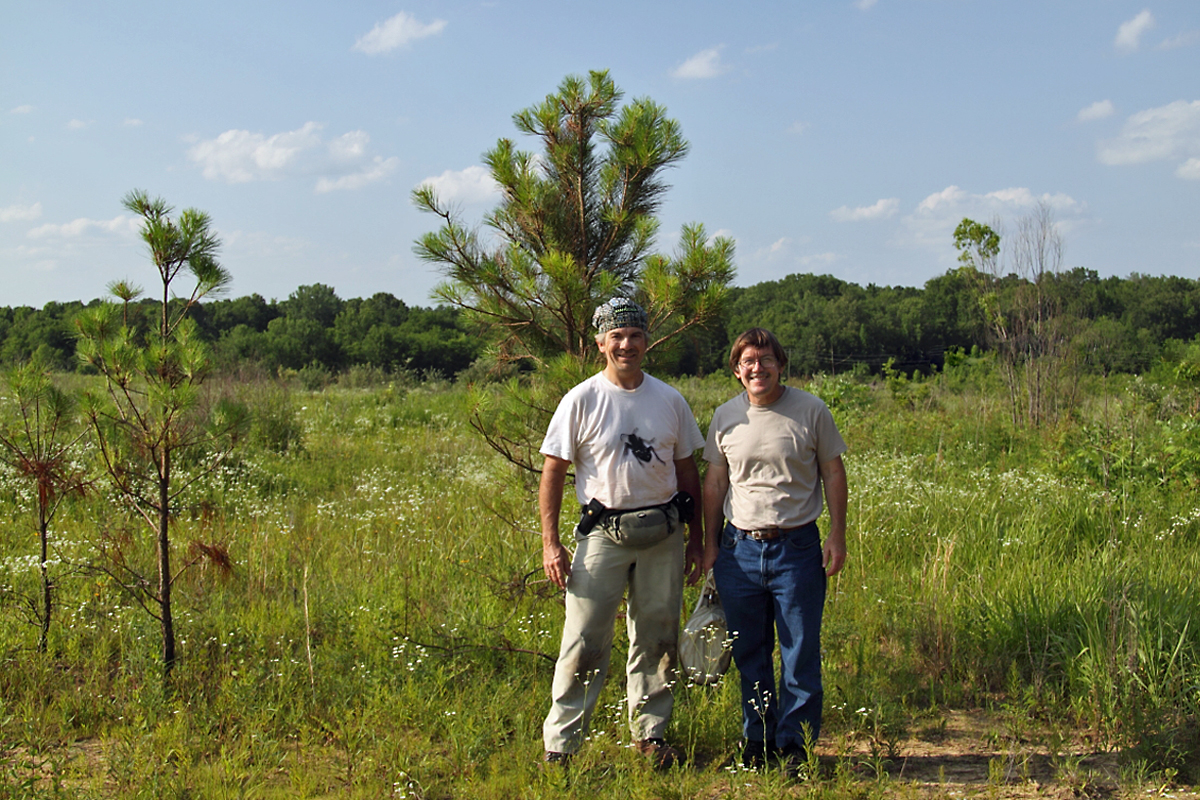
Last month I traveled to Starkville, Mississippi to meet with an academic cooperator at Mississippi State University. While arranging the trip, I contacted Terry Schiefer (no, not the fashion jewelry designer, but curator at the Mississippi Entomological Museum) to let him know I would be visiting. Considering that late May should be pretty good insect collecting in that area, I wanted to see if he might be interested in doing a little beetle collecting after I finished up with my meetings. Terry also specializes in Coleoptera and shares with me an interest in the taxonomy and faunistics of Cerambycidae and Cicindelinae. I first met Terry some 13 years ago during my previous visit to MSU; I remember ogling at an impressive series of Aegomorphus morrisii, a spectacular species of longhorn beetle that was known at that time by precious few specimens and that he had recently found in Mississippi. We hadn’t seen each other since but managed to keep in contact with occasional correspondence during the course of our longhorn studies.
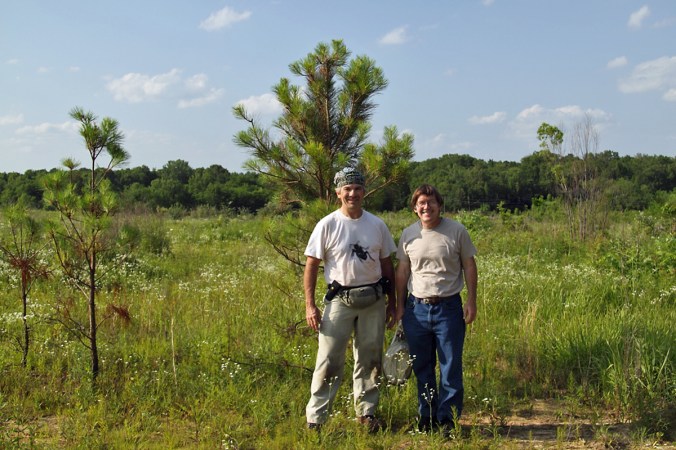
Me & Terry Schiefer | Noxubee National Wildlife Refuge, May 2011.
Terry was more than happy to go beetle collecting with me, and among the possibilities that he mentioned when I arrived at the museum was nearby Noxubee National Wildlife Refuge. I had done a little collecting there on my last visit, but I was especially intrigued when he mentioned the local population of an uncommon milkweed beetle species, Tetraopes texanus, that he had reported in one of the refuge’s prairie remnants (Schiefer 1998). I have only seen this species once, up here in in east-central Missouri and which I reported as the species’ northernmost known population (MacRae 1994). My more recent attempts to find this species have not been successful, so I was excited at the chance to see this longhorned species once again.
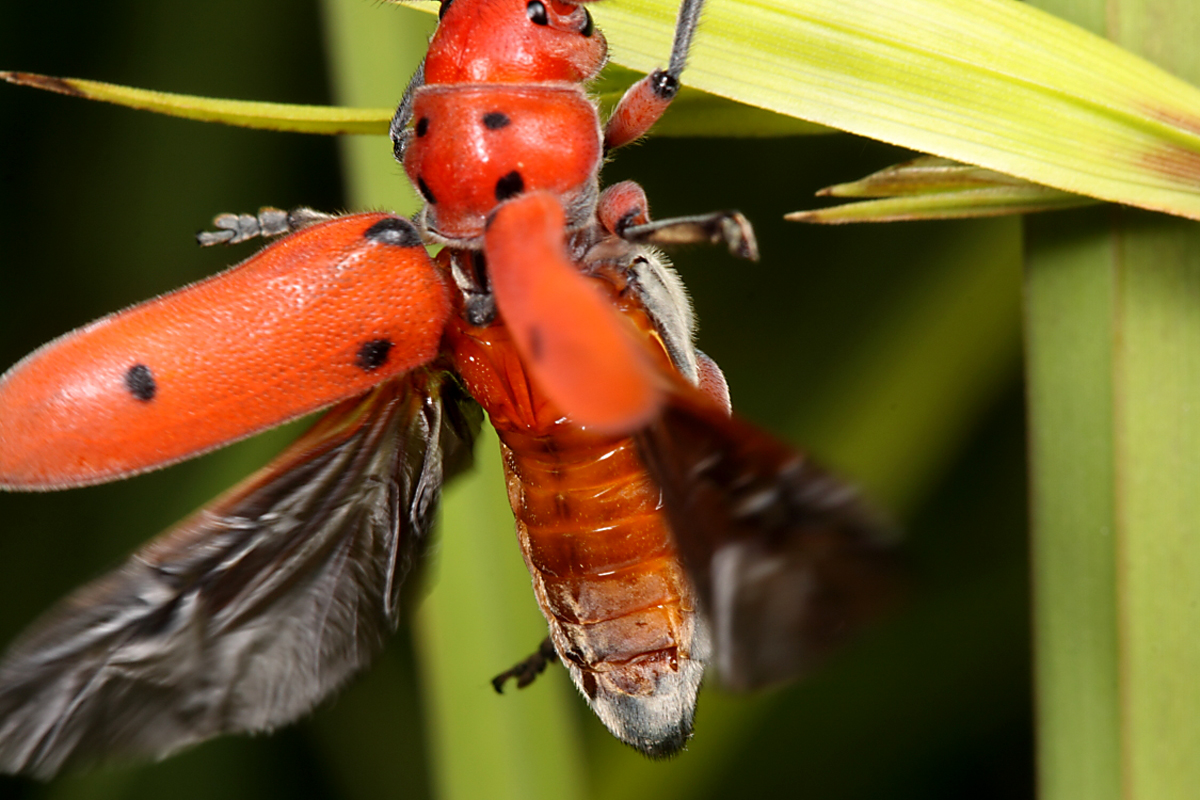
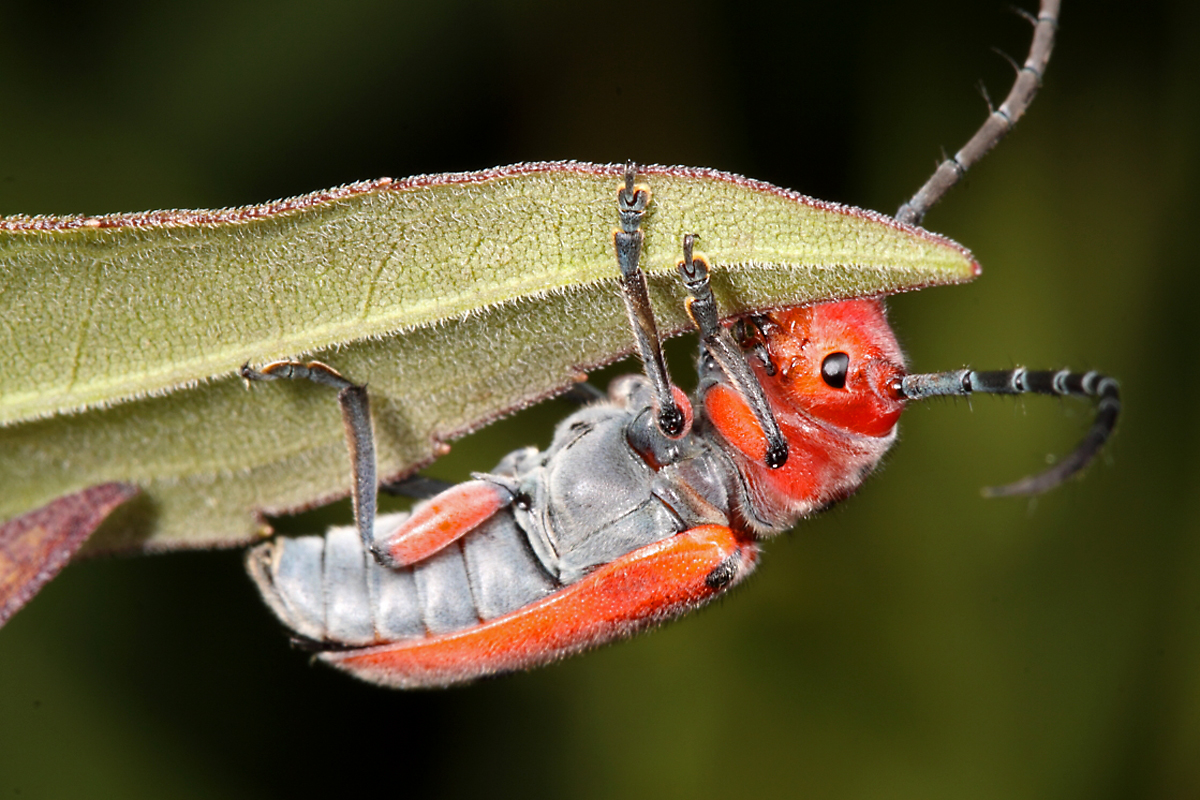
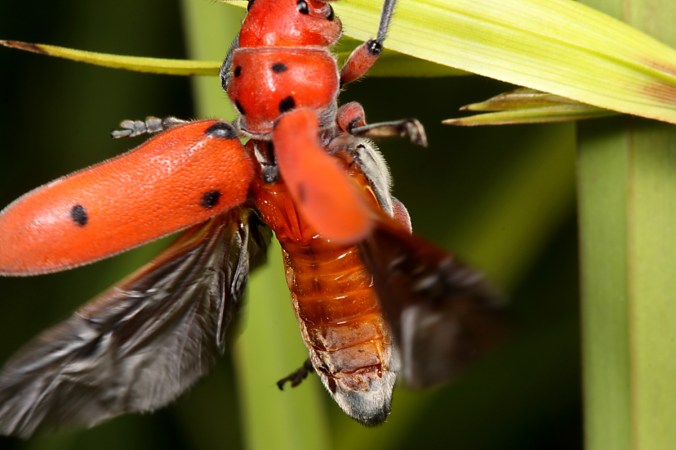
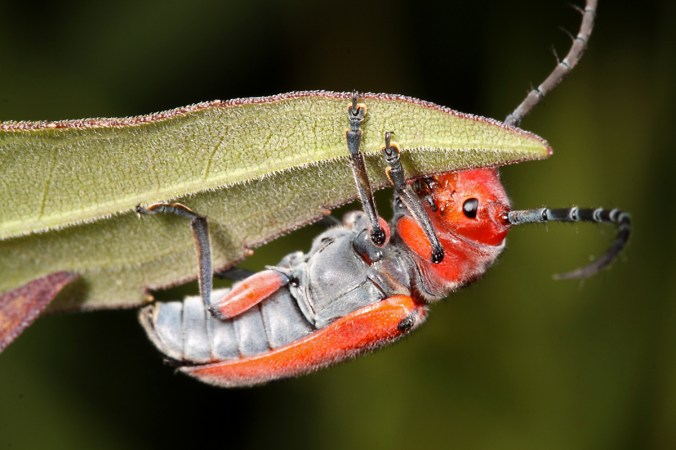
We arrived at the prairie with plenty of daylight to spare and began walking through the area where Asclepias viridis (its presumed host in Mississippi; in Missouri I found it on Asclepias viridiflora) was growing. Typically milkweed beetles are quite approachable, having nothing to fear from predators by virtue of the cardiac glycosides that they sequester in their bodies from their milkweed foodplants and advertise so conspicuously with their bright red and black coloration. Thus, we were looking for beetles sitting brazenly on the plants, but none were seen. Eventually, Terry saw one in flight, and then I saw one in flight as well. For some time, this was the only way we were seeing the beetles, and only by slowing down and scanning the prairie vegetation more carefully and deliberately did we begin to see the adults sitting on vegetation. Interestingly, very few of them were seen actually sitting on milkweed plants. Rather, they were on all manner of other plants, and they were very quick to take flight on our approach. This was playing havoc with my desire to get field photographs of the beetles, especially field photographs on the host. I decided that any photograph—host plant or not—was better than none, so I began attempting some shots. My first one didn’t work out so well:
Finally I was able to get one of the beetle sitting on a plant, but the dorsal characters can’t be seen, nor is there anything about the photo that allows the species to be distinguished as T. texanus (the abruptly attenuate last antennomere distinguishes it from similar-appearing species):
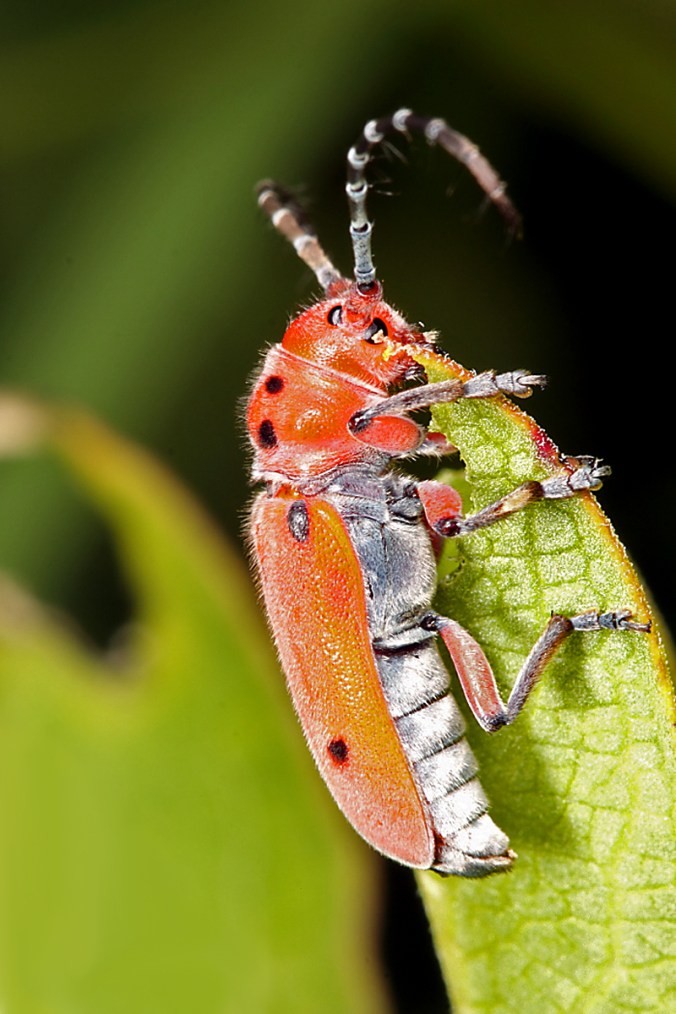
Progress—more of the dorsal surface can be seen in the photo below, and the beetle is actually sitting on a milkweed plant. However, the antennal tips are still frustratingly out of focus. Note the completely divided upper and lower lobes of the eye—Tetraopes beetles give new meaning to the term “four-eyes”:
I chased beetle after beetle in flight, endlessly zigzagging across the prairie in what had to be a spectacle to any unknown observer. Eventually, we found a beetle sitting on its host plant, and it remained calm during my deliberate approach. I circled around for a good view of the dorsal surface and snapped off an apparent winner—everything in focus, good composition… but arghh, the antennal tips were clipped!

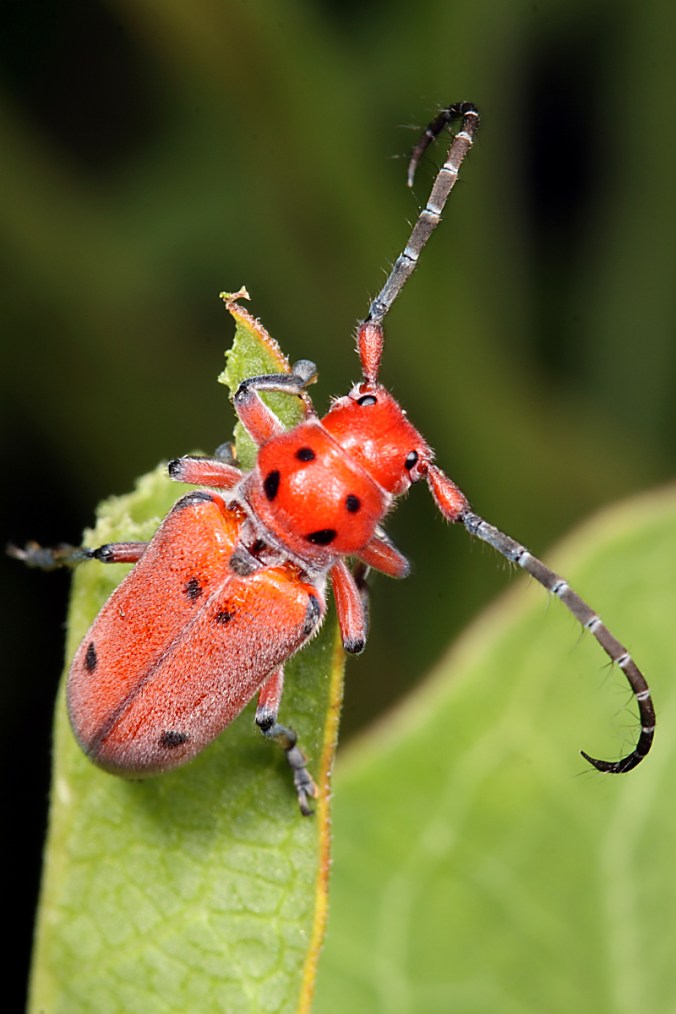
I kept at it and was about to back off a bit on the magnification and switch to landscape mode so I could get the full antennae in the frame when the beetle turned in a most fortuitous manner—nicely positioning its distinctive antennal tip right in front of a bright green leaf for contrast. My friends, I present Tetraopes texanus on its presumed host plant, Asclepias viridis!
Terry and I were both puzzled by the flighty, nervous behavior that the beetles were exhibiting. Neither of us had seen such behavior with milkweed beetles before, and I’m not sure I can offer any explanation for such. I’d be interested in hearing any ideas you might have.
My thanks to Terry for showing me a few of his favorite spots (allowing me to collect a few choice species of longhorns), and to my co-worker/colleague Jeff Haines for indulging my desire mix a little beetle collecting into the business trip. I hope they enjoyed it as much as I did.
REFERENCES:
MacRae, T.C. 1994. Annotated checklist of the longhorned beetles (Coleoptera: Cerambycidae and Disteniidae) occurring in Missouri. Insecta Mundi 7(4) (1993):223–252.
Schiefer, T.L. 1998. Disjunct distribution of Cerambycidae (Coleoptera) in the black belt prairie and Jackson prairie in Mississippi and Alabama. The Coleopterists Bulletin 52(3):278–284.
Copyright © Ted C. MacRae 2011