BitB Best of 2009

In my first post of 2009, I looked back at the photographs I had posted during 2008 and picked some of my personal favorites. I hesitated then to call myself a photographer (and still do), but I at least now have suitable equipment to aid in my progress toward that eventual goal. I have learned much over the past six months in my first attempt at serious insect macrophotography (prioritizing in situ field photographs of unmanipulated subjects as a matter of personal choice).  Through this, I’ve come to realize the following skills to be the most important for success:  

  1. Composition
  2. Understanding lighting
  3. Knowing how to use a flash
  4. Knowledge of the subject

I’ll give myself a “A” in the last of these, but in the other areas I still have much to learn. With this caveat, and for the last post of 2009, I offer the following twelve photographs as my final choices for the 2nd Annual “Best of BitB”:  

Best beetle

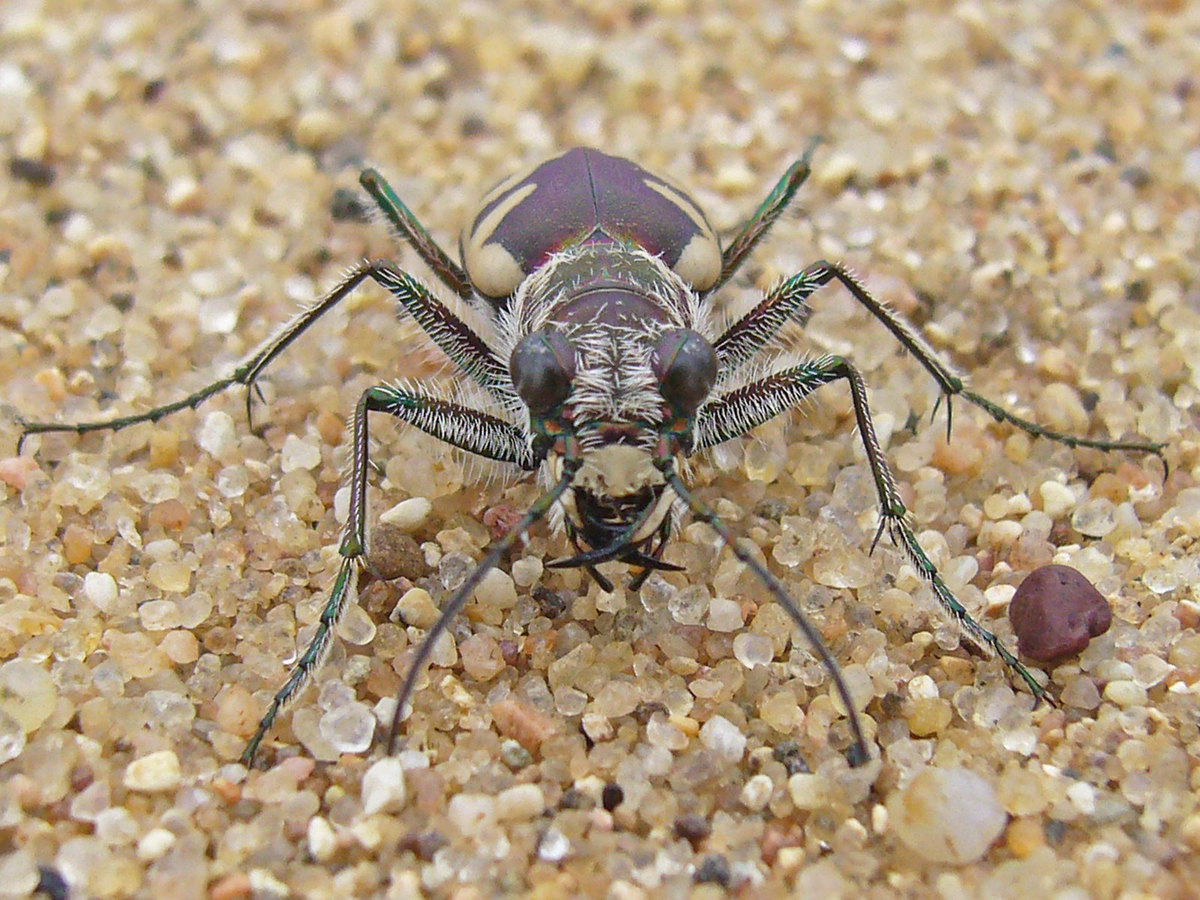
Cylindera celeripes (swift tiger beetle), Woodward Co., Oklahoma

From Revisiting the Swift Tiger Beetle – Part 1 (June 30).  A decent enough photograph, especially considering that I’d had my camera for about a month when I took it.  However, the discovery of robust populations of this formerly rare and enigmatic species throughout northwestern Oklahoma (and later also in northwestern Missouri) was the most significant find of the 2009 field season, and this photograph is the best capture of that moment.

Best fly
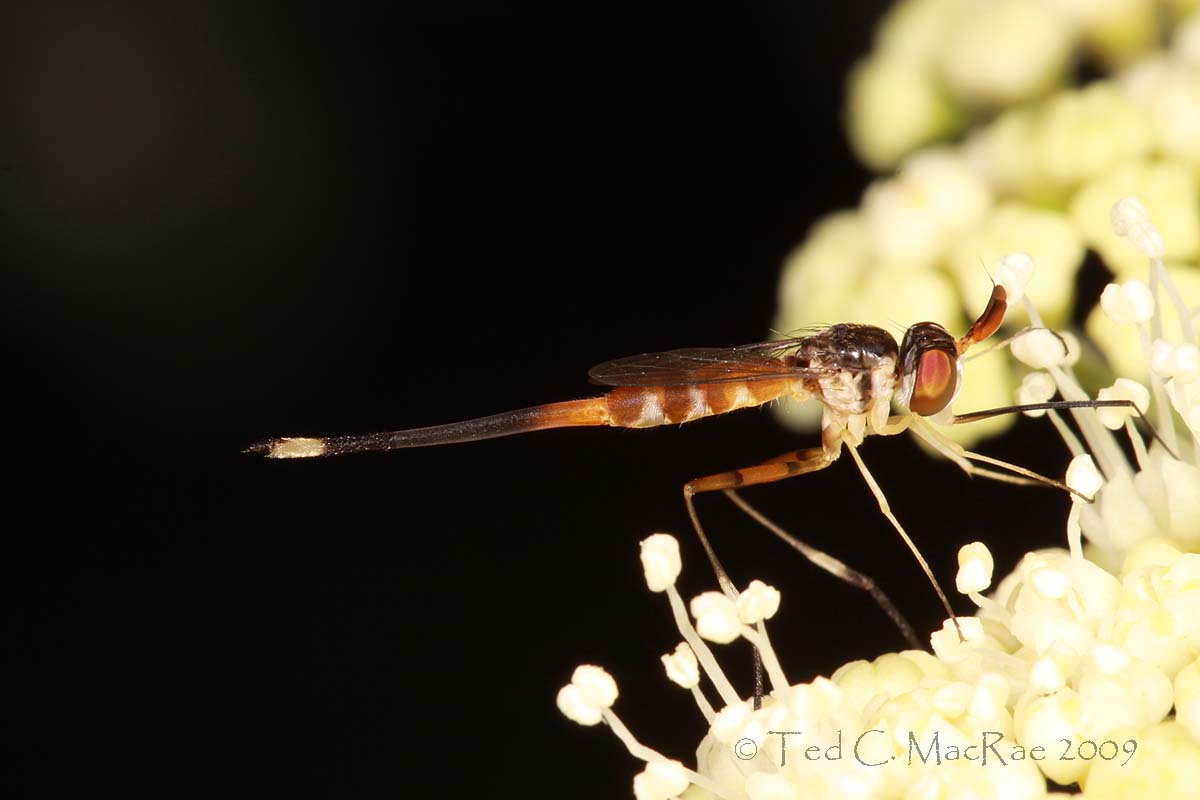
Stylogaster neglecta, a species of thickheaded fly

From Overlooked, needle-bellied, thick-headed fly (Aug 14).  One of my first good “black background” shots.  The white tip of the abdomen compliments the white flower stamens against the background.

Best “true” bug

Beameria venosa, a prairie obligate cicada

From North America’s smallest cicada (Aug 4).  So many different shades of green with white frosting on the bug’s body.  I tried taking this shot in portrait and it just didn’t work—I liked this landscape shot much better.

Best predator
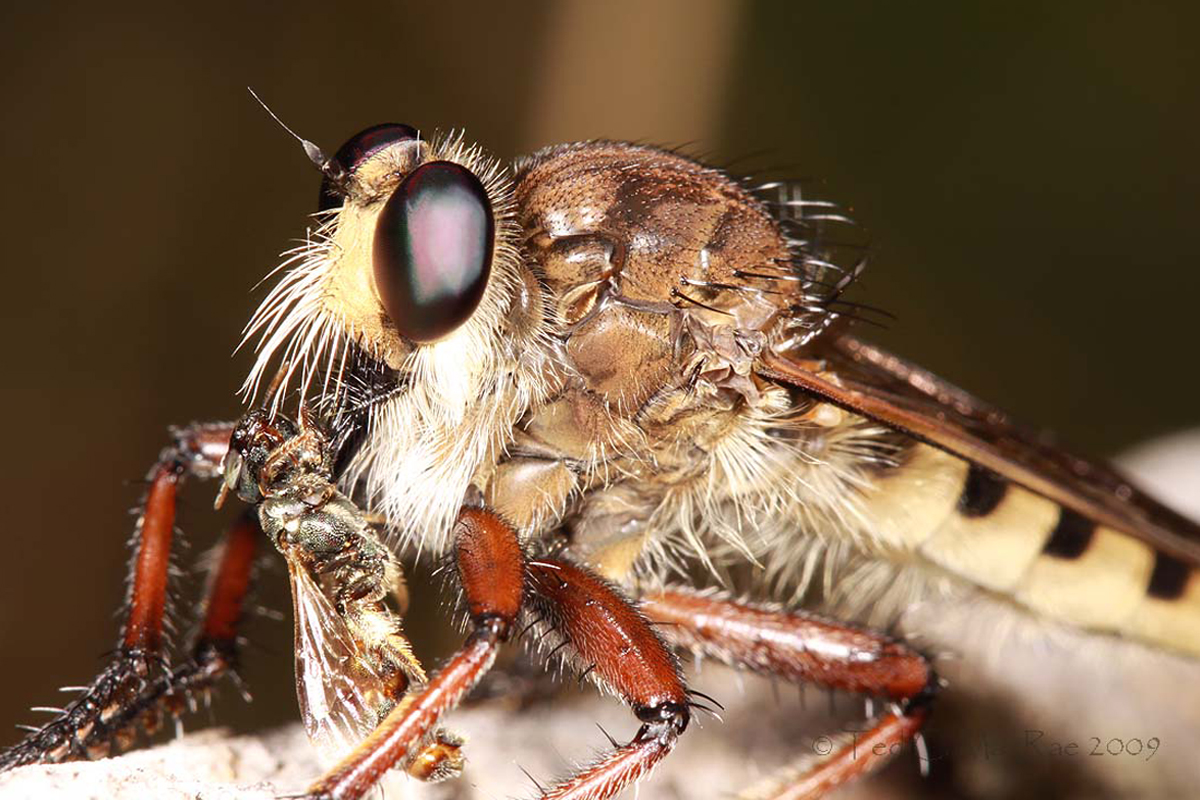
Promachus hinei (Hines giant robber fly) & Ceratina sp. (small carpenter bee) prey

From Prey bee mine (Sept 14).  Robber flies are immensely photogenic, especially those in the genus Promachus due to their prominent “beards.”

Best camoflauge

Dicerca obscura on bark of dead persimmon

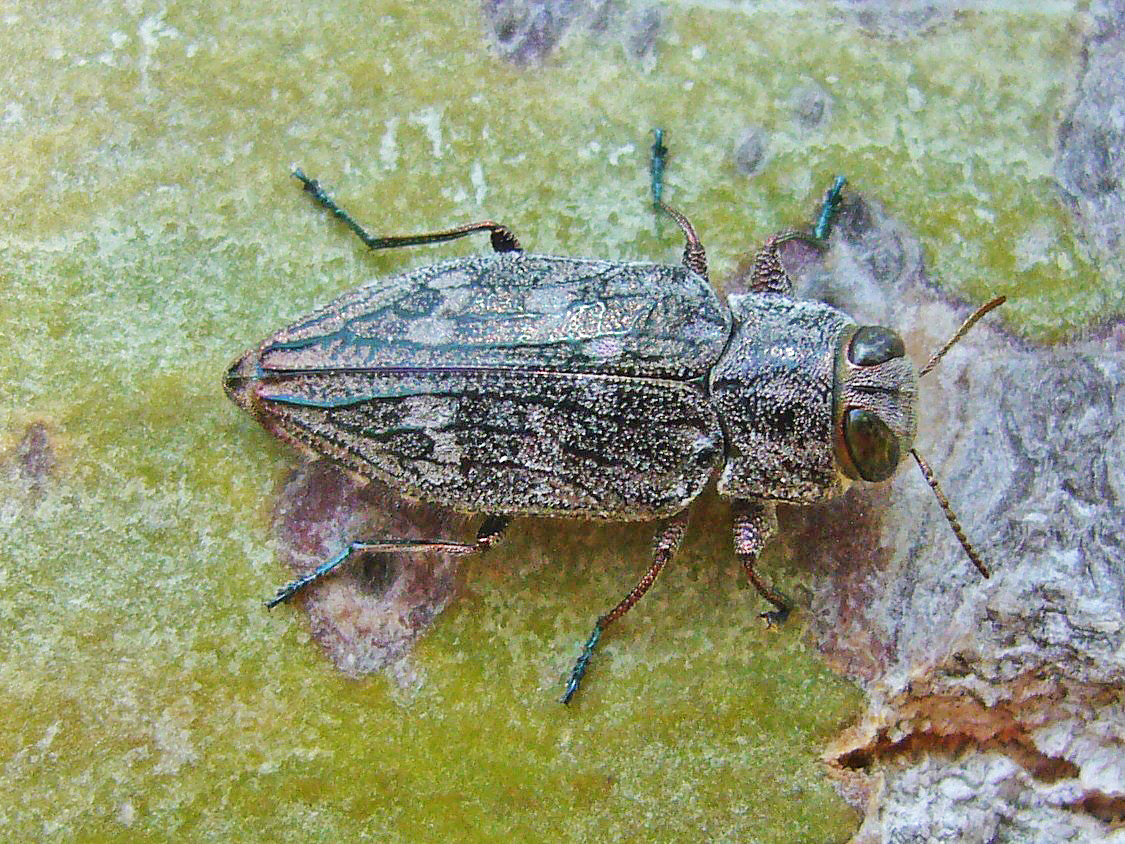
From The “obscure” Dicerca (June 19).  Sparkling and gaudy as specimens in a cabinet, the coloration of many jewel beetles actually helps them blend almost perfectly with the bark of their preferred tree hosts.

Best immature insect

Tetracha floridana (Florida metallic tiger beetle) 3rd-instar larva

From Anatomy of a Tiger Beetle Larva (Oct 22).  “Otherwordly” is invariably the first word that comes to mind when someone sees a tiger beetle larva for the first time.  I was lucky enough to get this one in profile with a nice view of its abdominal hump and its curious hooks.

Best arachnid
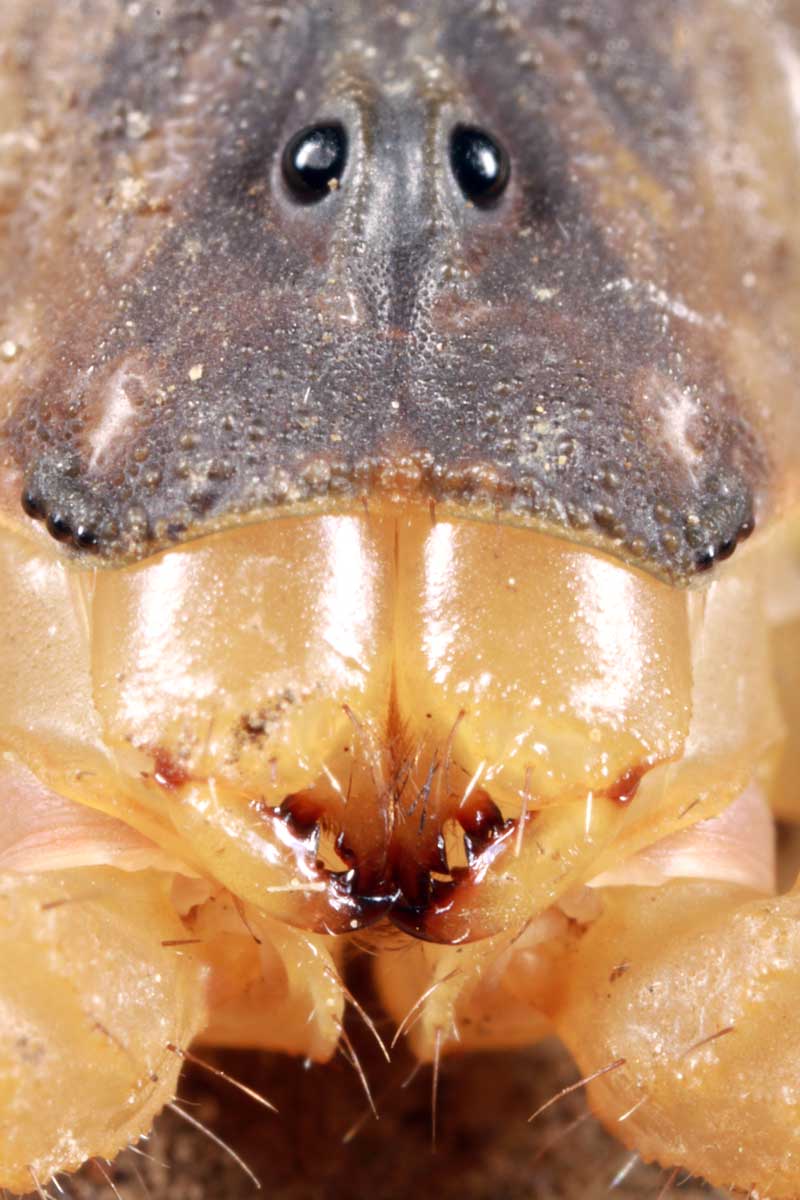
Centruroides vittatus (striped bark scorpion)

From A face only a mother could love (Oct 6).  Despite some minor depth-of-field problems with this photograph, I’m fascinated by its “smile.”

Best reptile

Eastern collared lizard (Crotaphytus collaris collaris) adult male

From North America’s most beautiful lizard (July 10).  A simply spectacular lizard—all I had to do was frame it well and get the flash right.

Best wildflower

Spiranthes magnicamporum (Great Plains ladies

From Great Plains Ladies’-tresses (Dec 7).  Few flowers are as photogenic as orchids, even native terrestrials with minute flowers such as this one.  I like the frosty texture of the lip and the starkness of the white flower on the black background.

Best natural history moment
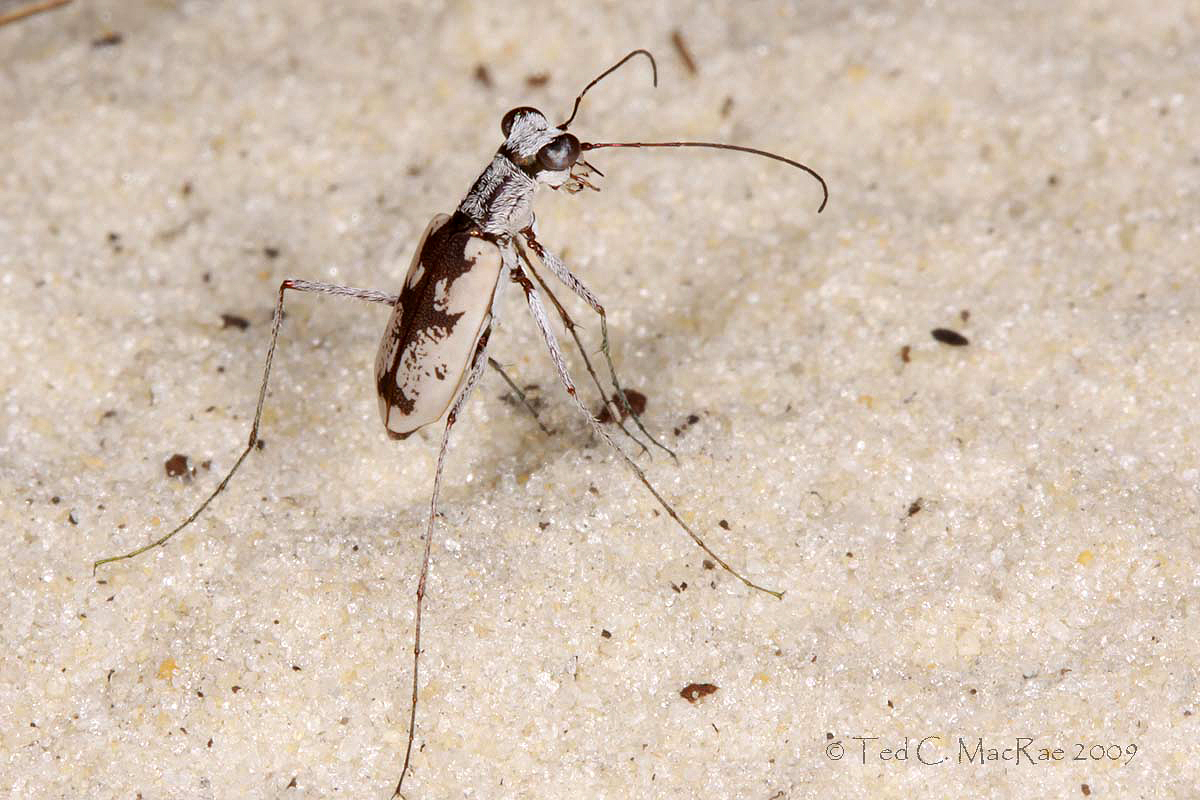
Thermoregulatory behavior by Ellipsoptera hirtilabris (moustached tiger beetle)

From Tiger Beetles Agree—It’s Hot in Florida! (Dec 18). I chose this photo for the classic “stilting” and “sun-facing” thermoregulatory behaviors exhibited by this tiger beetle on a blistering hot day in Florida.

Best closeup

Megaphasma denticrus (giant walkingstick)

From North America’s longest insect (Aug 21).  I haven’t tried a whole lot of super close-up photographs yet.  I liked the combination of blue and brown colors on the black background.

Best Landscape

Sand Harbor Overlook, Lake Tahoe, Nevada

From Sand Harbor Overlook, Nevada (March 23).   My choice for “best landscape” again comes from Lake Tahoe.  This is not a great photo technically—I was still using a point-and-shoot and had to deal with foreground sun.  However, none of the other photos I took during my March visit to the area captivate me like this one.  I like the mix of colors with the silhouetted appearance of the trees on the point.

Copyright © Ted C. MacRae 2009

Add to FacebookAdd to DiggAdd to Del.icio.usAdd to StumbleuponAdd to RedditAdd to BlinklistAdd to TwitterAdd to TechnoratiAdd to Yahoo BuzzAdd to Newsvine

Email to a friend

Creepy Crawly Spiders

Today’s post is another in a series of occasional guest essays by 10-year old Madison MacRae.  Madison is certainly the budding naturalist in our family, having accompanied me on recent collecting trips to the sand prairies of southeast Missouri and the White River Hills of southwest Missouri, as well as numerous hikes.  Her previous guest contributions to this blog include “Entumalejust” and “My favorite bettle”

For today’s post, Madison illustrates and discusses several different types of spiders, including the “Tranchala” (several of which she has owned as pets), Wolf spider (seen one day sprawled on the kitchen floor of our house-in-the-woods), “Snow spider” (likely recalling this experience), “Spring spider” (?), “Herry spider” (aren’t they all?), and Crab spider (she came up with this one on her own, honest!).

"Creepy Crawly Spiders" - by Madison MacRae

Copyright © Ted C. MacRae 2009

Add to FacebookAdd to DiggAdd to Del.icio.usAdd to StumbleuponAdd to RedditAdd to BlinklistAdd to TwitterAdd to TechnoratiAdd to Yahoo BuzzAdd to Newsvine

Email to a friend

A face only a mother could love

Centruroides vittatus - striped bark scorpion

Centruroides vittatus - striped bark scorpion

I found this guy yesterday secreted under a rock in a limestone glade at White River Balds Natural Area in extreme southwest Missouri.  Centruroides vittatus¹ is the most common scorpion in the U.S., occurring naturally in southern Missouri, western Arkansas and western Louisiana, west through Texas, Oklahoma and much of Kansas to southeastern Colorado and eastern New Mexico, and south into northern Mexico (Shelley and Sissom 1985). The Missouri and Mississippi Rivers, respectively, seem to form natural northern and eastern distributional boundaries, with occurrences just to the north and east attributed to rafting or natural alterations of the river’s courses and those occurring far outside the natural range regarded as the result of human introductions. This includes not only states in the eastern U.S., but several countries in South America (Sissom and Lourenco 1987)!

¹ The generic name Centruroides is from the Greek words centr-, meaning “pointed,” ur, meaning “tail,” and –oides meaning “like” or “the form of” (the original genus name, Centrurus, was preoccupied by another animal, thus, Centruroides, or “like Centrurus“). Centruroides is often misspelled as “Centuroides” in non-primary literature.

If you squit your eyes, it looks like he’s “smiling”! Also, note the eight eyes (two dorsal and three each side laterally)! Also, I know I didn’t nail the focus on the dorsal ocelli – depth-of-field limitations prevented getting both the ocelli and the jaws. I should’ve gone f/16 but thought I’d nailed it. That’ll teach me not to bracket anyway!

Photo details: Canon 65mm 1-5X macro lens on Canon EOS 50D, manual mode, ISO-100, 1/250 sec, f/14, MT-24EX flash 1/4 power through diffuser caps. Photo slightly cropped and darkened.

REFERENCES:

Shelley, R. M. and W. D. Sissom. 1985. Distributions of the scorpions Centruroides vittatus (Say) and Centruroides hentzi (Banks) in the United States and Mexico (Scorpiones, Buthidae). The Journal of Arachnology 23:100–110.

Sissom, W. D. and W. R . Lourenço. 1987. The genus Centruroides in South America (Scorpiones, Buthidae). The Journal of Arachnology 15:11–28.


Copyright © Ted C. MacRae 2009

Add to FacebookAdd to NewsvineAdd to DiggAdd to Del.icio.usAdd to StumbleuponAdd to RedditAdd to BlinklistAdd to TwitterAdd to TechnoratiAdd to Furl

Assassin ate

IMG_1146_1200x800

I came upon this interesting scene last month while hiking through Allen David Broussard Catfish Creek Preserve State Park, which preserves some of the highest quality remnants of sand scrub habitat on the Lake Wales Ridge of central Florida. The spider seems to be Peucetia viridans (green lynx spider), widespread across the southern U.S. and distinguished by its bright transparent green color with red spots and black spines (Emerton 1961). These largest of North American lynx spiders hunt diurnally on low shrubs with an agility excelled only by the jumping spiders (Salticidae) and aggressively attack their insect prey. In this case, the prey is one of the so-called “bee assassins” of the genus Apiomerus (Hemiptera: Reduviidae). The common and generic names of these insects both derive from their habit of preying upon bees, not only on flowers but also by ambushing them at nest entrances, although other insects are preyed upon as well. Ironically, this particular assassin himself got ate.

An interesting situation was uncovered while I tried to determine which species of Apiomerus was represented by the prey. By virtue of its pale ventrals with the front and hind margins black, it keys to A. spissipes in a literature-based key to Florida Reduviidae (Bierle et al. 2002) – one of two species considered widely distributed across the eastern U.S. In reality, however, it appears that this individual represents another species named almost 30 years ago but which remains officially undescribed. As explained in this BugGuide post by Daniel Swanson, the genus was revised by Berkeley grad student Sigurd Leopold Szerlip in partial fulfillment of the requirements for a Ph.D., who proposed a number of taxonomic acts including the description of 19 new species. Among these were eastern U.S. populations to which the name A. spissipes had been applied, with those in Florida being described as the new species “A. floridensis“. However, dissertations do not meet the criteria of publication according to Article 8 of the International Code of Zoological Nomenclature (ICZN 1999), and none of the dissertation was formally published. Thus, “A. floridensis” remains an invalid, unpublished name.  This is a most unfortunate situation, as Swanson considers the dissertation to be well done.  It is not only names, but important information about life histories and detailed genitalic studies that remain unavailable to the scientific community as well.  What are the nomenclatural impacts of this work remaining unpublished?  Is this as much a failure by the advising professor as by Szerlip himself?  What ethical considerations would need to be addressed in order for it to be published in absentia, or is this even possible?

Photo details: Canon 100mm macro lens on Canon EOS 50D (manual mode), ISO-100, 1/250 sec, f/13, MT-24EX flash 1/2 power through diffuser caps.

REFERENCES:

Bierle, S., E. Dunn, S. Frederick, S. Garrett, J. Harbison, D. Hoel, B. Ley and S. Weihman. 2002. A literature-based key to Reduviidae (Heteroptera) of Florida (assassin bugs, and thread-legged bugs). Unpublished manuscript, University of Florida, Department of Entomology and Nematolgy, Insect Classification ENY 4161/6166, 18 pp.

Emerton, J. H. 1961. The Common Spiders of the United States. Dover Publications, Inc., N.Y., xx + 227 pp.

International Commission on Zoological Nomenclature [ICZN]. 1999. International Code of Zoological Nomenclature, 4th Edition. The International Trust for Zoological Nomenclature, c/o Natural History Museum, London. xxix + 306 pp.

Szerlip, S. L. 1980. Biosystematic revision of the genus Apiomerus (Hemiptera: Reduviidae) in North and Central America. Unpublished Ph.D. thesis, University of California, Berkley, CA.

Copyright © Ted C. MacRae 2009

Add to FacebookAdd to NewsvineAdd to DiggAdd to Del.icio.usAdd to StumbleuponAdd to RedditAdd to BlinklistAdd to TwitterAdd to TechnoratiAdd to Furl

Top Ten of 2008

For the first post of 2009, I begin with a look back at some of my favorite photos from 2008 (idea stolen from Alex Wild and others).  I initially hesitated to do a “best photos” post since I’m not really a photographer – just an entomologist with a camera.  Nevertheless, and with that caveat in mind, I offer ten photos that represent some of my favorites from this past year. To force some diversity in my picks, I’ve created “winning” categories (otherwise you might just see ten tiger beetles!). Click on the photos to see larger versions, and feel free to vote for your favorite. If so, what did you like about it? Was there a photo I didn’t pick that you liked better?  Enjoy!

Best tiger beetle

Cicindela formosa generosa

From “All the better to see you with, my dear!” (September 2008).  Picking a top tiger beetle photo was tough with so many to choose from.  Ultimately, I decided I really like these face-on shots, and of the several I’ve posted this one of Cicindela formosa generosa has the overall best composition, balance and symmetry.  I considered this one of Cicindela formosa formosa – with its half-cocked jaws, it probably has better personality.  However, the one above got the final nod because it is a true field shot of an unconfined, unmanipulated individual.

Best jewel beetle

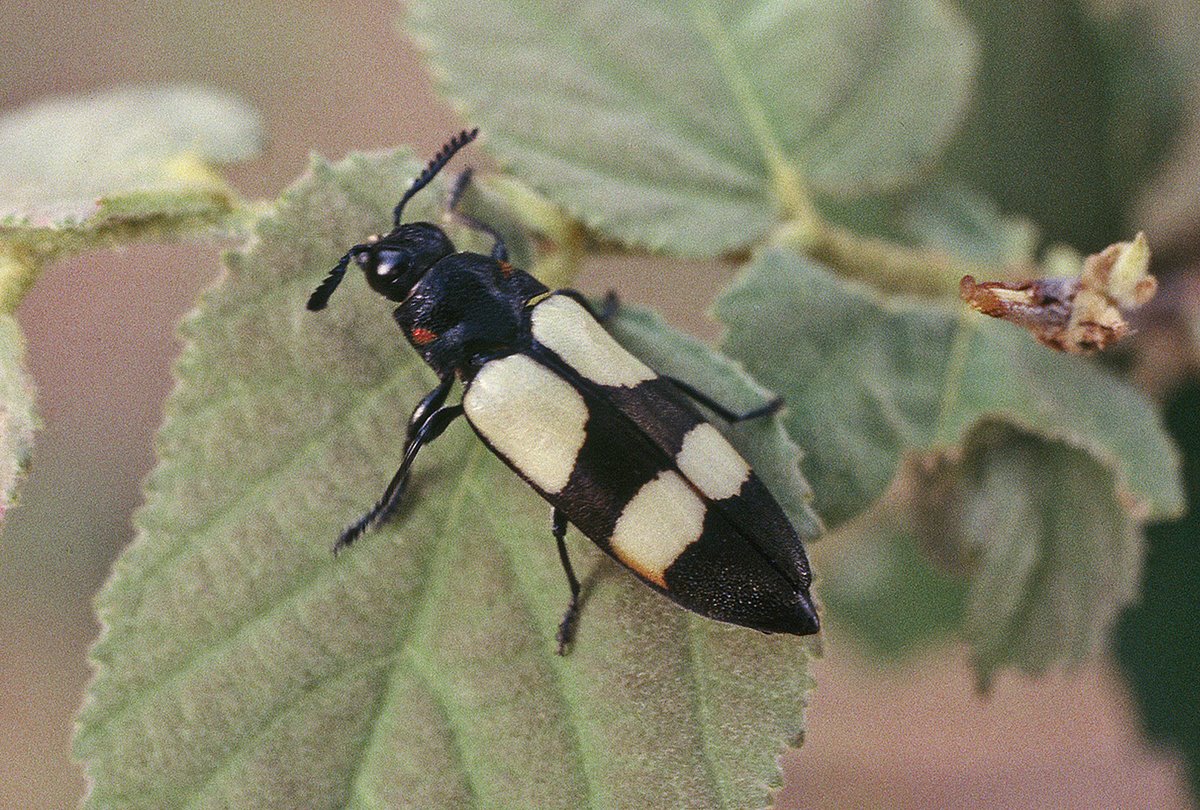
Aegelia petelii

From Buppies in the bush(veld) (December 2008).  Although taken back in 1999, I just recently scanned and posted this photo of Agelia petelii from South Africa.  I like the bold, contrasting colors of the beetle combined with the soft colors of the host foliage.  Runners up included these photos of Evides pubiventris with its sumptuous iridescent green blending beautifully with the green background (but suffering slightly from shallow depth of field) and Chrysobothris femorata with its intricate surface sculpturing.

Best longhorned beetle

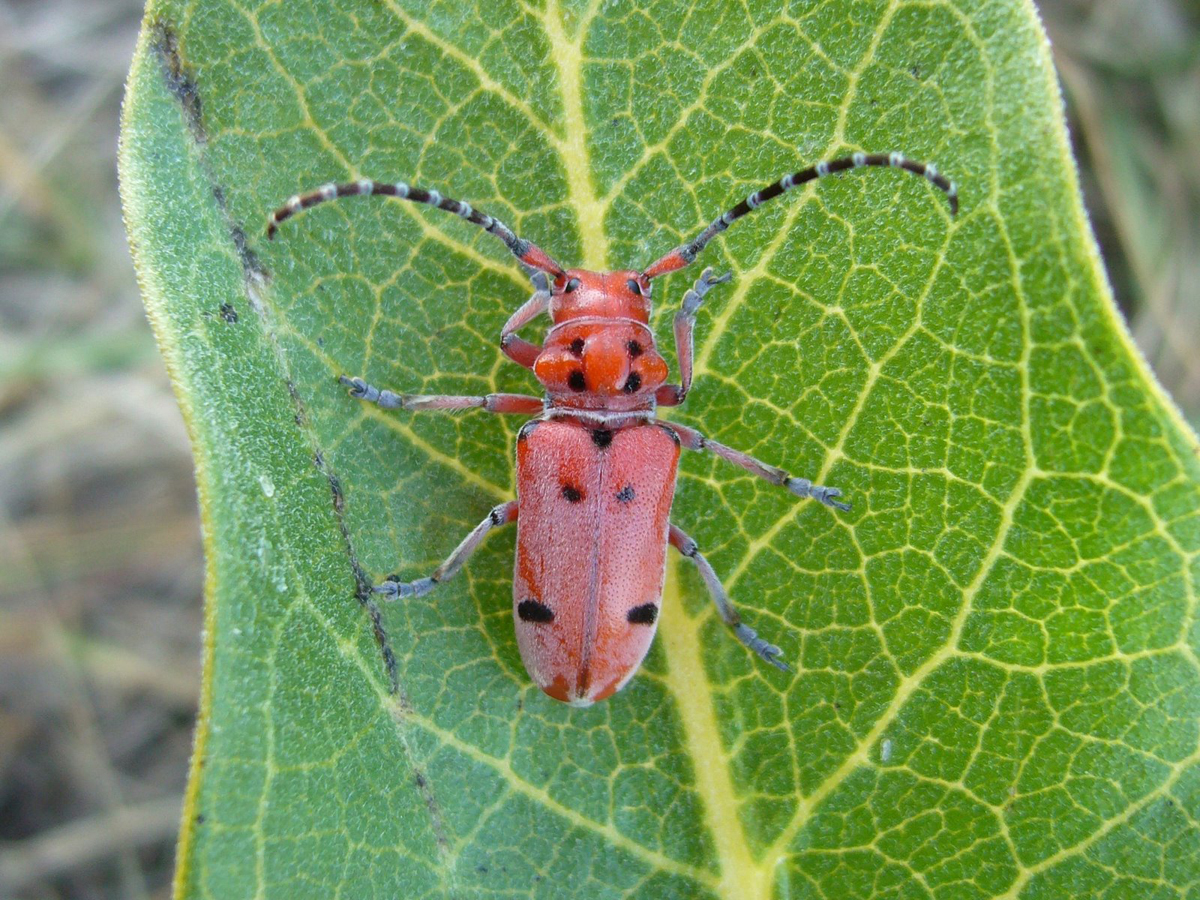
Tetraopes femoratus

From Rattled in the Black Hills (September 2008).  This was an easy choice – none of the other longhorned beetle photos that I posted during 2008 matched this photo of Tetraopes femoratus for clarity, composition, and the striking contrast between the red color of the beetle and the green color of the host plant.  I especially like the detailing of the body pubescence.

Best non-beetle insect

Proctacanthus milbertii

From Magnificently Monstrous Muscomorphs (November 2008).  I do like other insect besides beetles, and robber flies are hard to beat for their charisma.  This photo of Proctacanthus milbertii (which, as Chris Taylor pointed out, literally translates to “Milbert’s spiny butt”), has great composition and nice, complimentary colors.  I like contrast between the fine detail of the fly and the soft background.

Best non-insect arthropod

Argiope aurantia

From Happy Halloween! (October 2008). I didn’t have many non-insect arthropod photos to choose from, but this photo of a female Argiope aurantia (yellow garden spider) would be deserving of recognition no matter how many I had to choose from. I like the bold, contrasting colors and symmetry of the spider in front of the dappled background of this photo.

Best non-arthropod animal

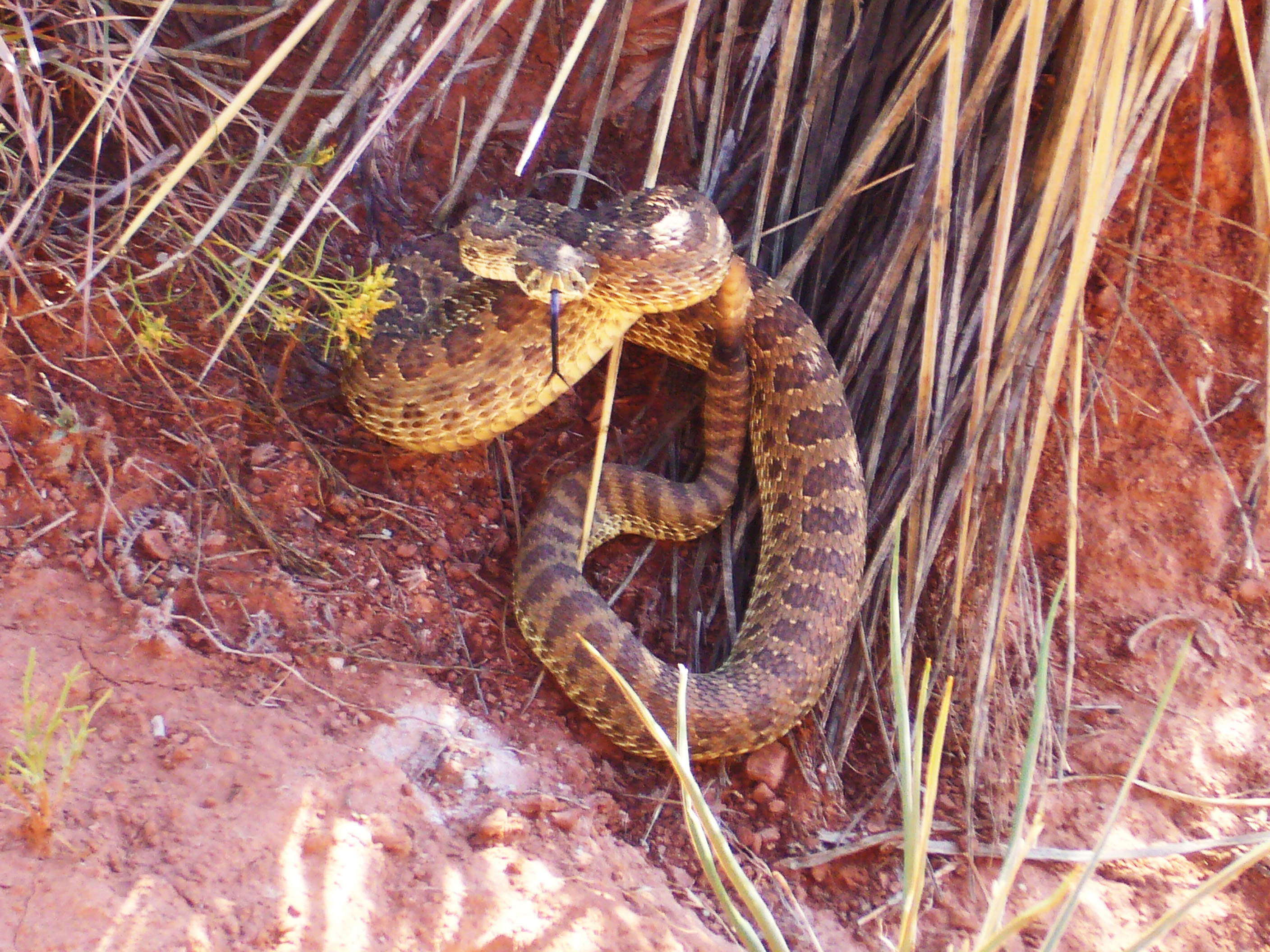
Prairie rattlesnake (Crotolus viridis)

Another one from Rattled in the Black Hills (September 2008).  This is admittedly not the best photo from a purely technical perspective – it’s a little out of focus, and the color is a bit off.  However, no photo could better convey the moment – confronted with a live, angry prairie rattlesnake (Crotalus viridis) (among the more aggressive species in the genus).  The forked tongue and rattle – blurred in motion – were icing on the cake.

Best wildflower

Victoria Glades

From Glades of Jefferson County (July 2008).  I had several wildflower closeups to choose from, but I kept coming back to this field shot of pale purple coneflower (Echincea simulata) and Missouri evening primrose (Oenethera macrocarpa).  The eastern redcedars (Juniperus virginiana) in the background are at once indicative of their preferred habitat (limestone/dolomite glades) and also testament to their threatening encroachment.

Best tree

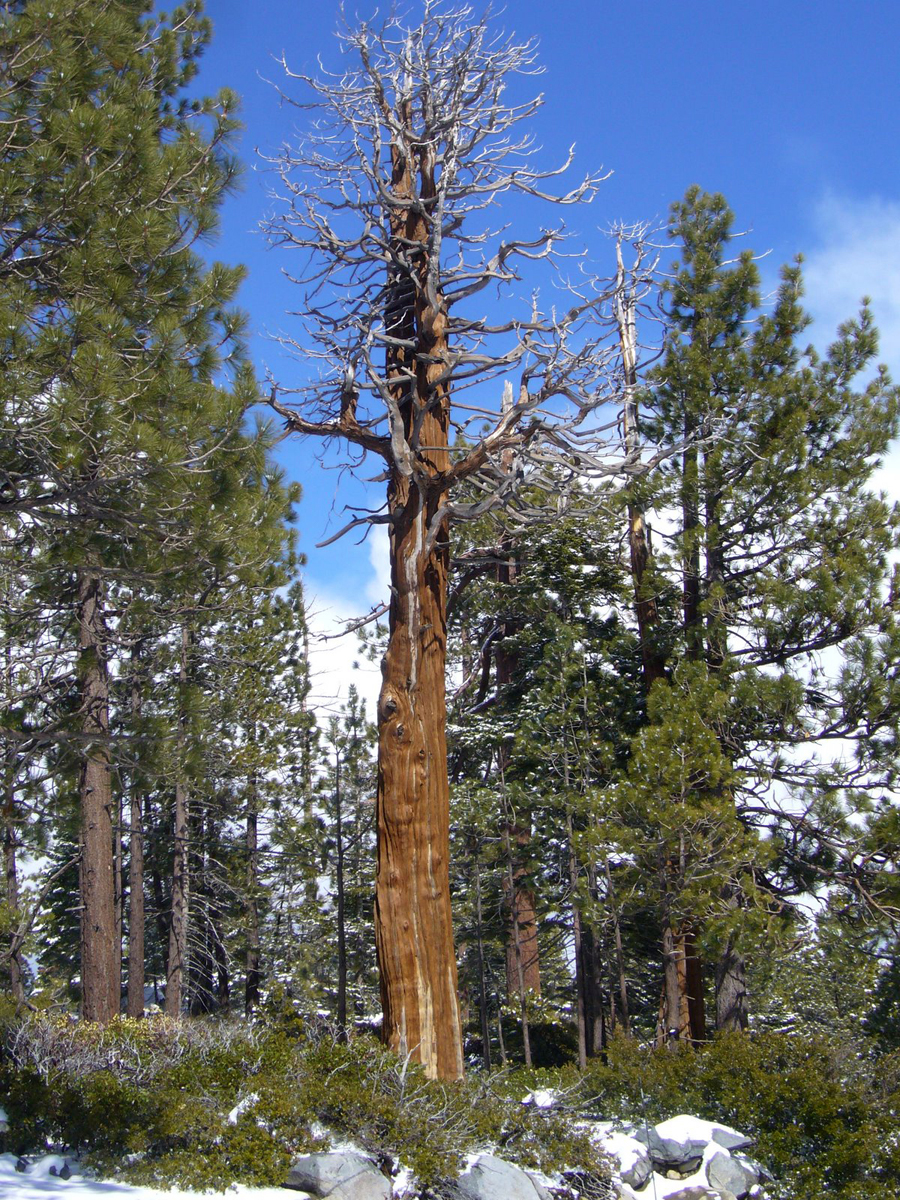
Calocedrus decurrens

From the very simply and aptly named Lake Tahoe, California (March 2008).  Incense cedar (Calocedrus decurrens), with its reddish, deeply furrowed bark and great height, is one of the most majestic of western conifers.  I was captivated by this tree – beautiful even in death and contrasting nicely with the surrounding green foliage.

Best rockscape

Pipestone National Monument, Old Stone Face

From Pipestone National Monument (April 2008).  “Old Stone Face” is one of Pipestone’s most recognizable geologic features, and the short angle of the sun on this early spring day provided nice detail to the cracks and fissures of the rock – almost appropriately adding a weathered “age” to this old man.

Best landscape

Emerald Isle, Lake Tahoe

Another one from Lake Tahoe, California (March 2008).  Few places on earth are more photogenic than Lake Tahoe, and this perspective overlooking Emerald Bay is among the finest views I’ve seen.  Brilliant blue skies and majestic snow covered mountains reflected perfectly from the still surface, with Fannette Island providing a perfect focal point for the photo.

Best miscellaneous

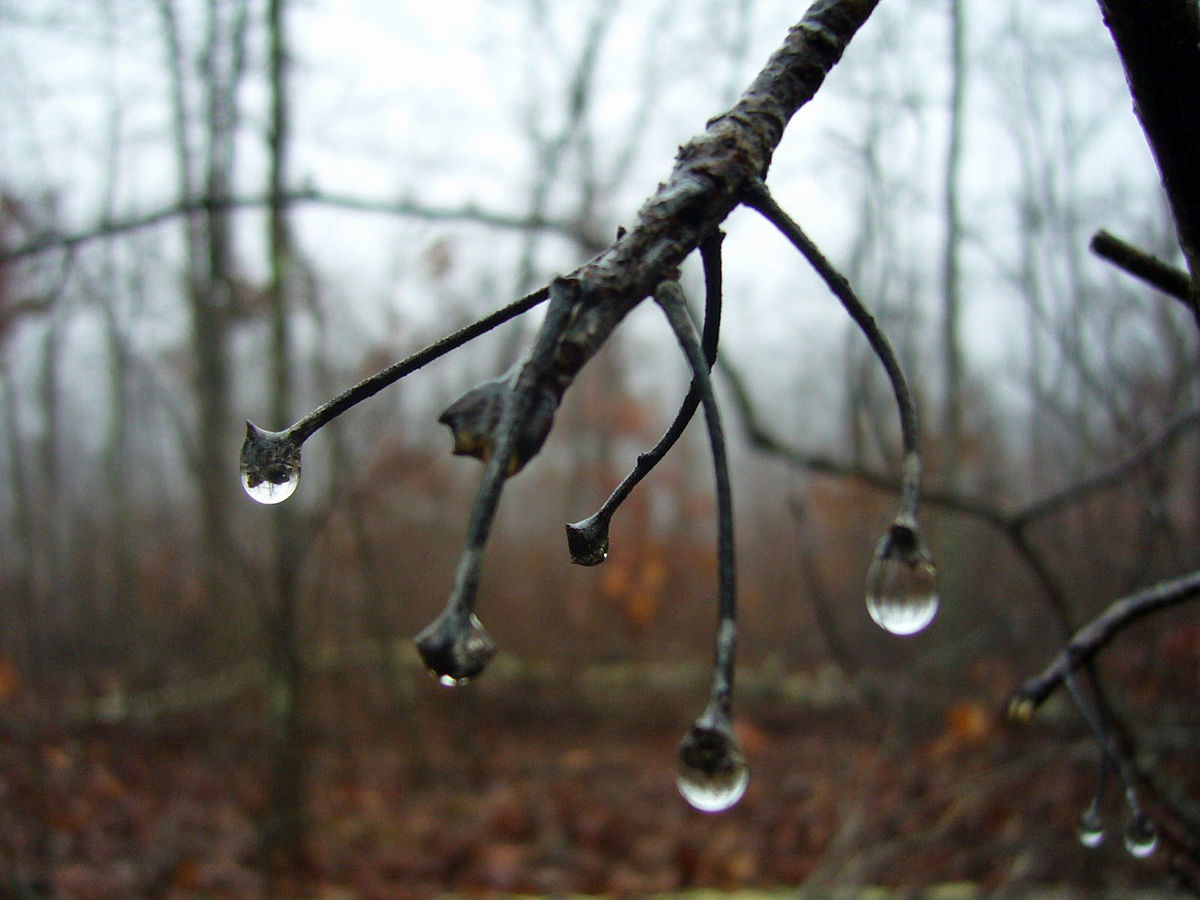
Water drops, Ozark Trail, Trace Creek SectionFrom Ozark Trail, lower Trace Creek Section (December 2007).  While technically not a 2008 photo, it’s close enough.  This was one of the first macro photographs I took with my camera, and it remains one of my favorites.  A chance occurence of an unlikely subject, created by cold temperatures and heavy moisture-laden air. I like the contrast between the water drops – sharp, round, and clear – with the vertical shapes of the leaf petioles and background trees.  Viewing the image full-sized reveals the reflection of the photographer in the leftmost water drop.

Subsequent edit: Okay, so after I put this post together, I realized I actually featured eleven photos – too much difficulty choosing, I guess. Let’s call it a baker’s ten.

Happy Halloween!

are-gee-OH-pee our-ON-tea-uhArgiope aurantia

Those who think scientific names are too complicated have the following dizzying array of common names to choose from for this species: black and yellow garden spider; black and yellow argiope; yellow garden spider, yellow garden argiope; yellow garden orbweaver; golden garden spider; golden argiope; golden orbweaver; writing spider; scribbler; corn spider. Or instead, just say Argiope aurantia (are-gee-OH-pee our-ON-tea-uh) – it is unambiguous and will make you sound intelligent.

Large females are commonly encountered in late summer and early fall. This fine lady was photographed 7 September 2008 at Victoria Glades Natural Area in Jefferson County, Missouri. Quite coincidentally, North America’s tarantulas (genus Aphonopelma, represented in Missouri by A. hentzi) reach their natural northeastern limit of distribution in this very glade complex, located ~30 miles south of St. Louis.

There are five North American species of Argiope, of which two occur broadly across the eastern U.S. Argiope aurantia can be distinguished from Argiope trifasciata (banded garden spider/argiope/orbweaver) by the zig-zag pattern of the stabilimentum of the former and the transversely striped abdomen and spotted legs of the latter.

Despite its name, the function of the stabilimentum (reinforced area in the middle of the web) remains controversial. The idea that it somehow adds stability to the web is not given much credence today. A visual function seems much more plausible, especially when considering that only diurnal spiders make such structures. Possibilities include camoflauge for predator avoidance, the seemingly opposite idea of increased visibility to prevent accidental destruction of the web by birds or large animals, and even prey attraction through enhanced reflection of ultraviolet light. Stabilimenta in different spider lineages probably evolved independently and may have different or even multiple functions.

Rockwoods Reservation, Lime Kiln Loop Trail

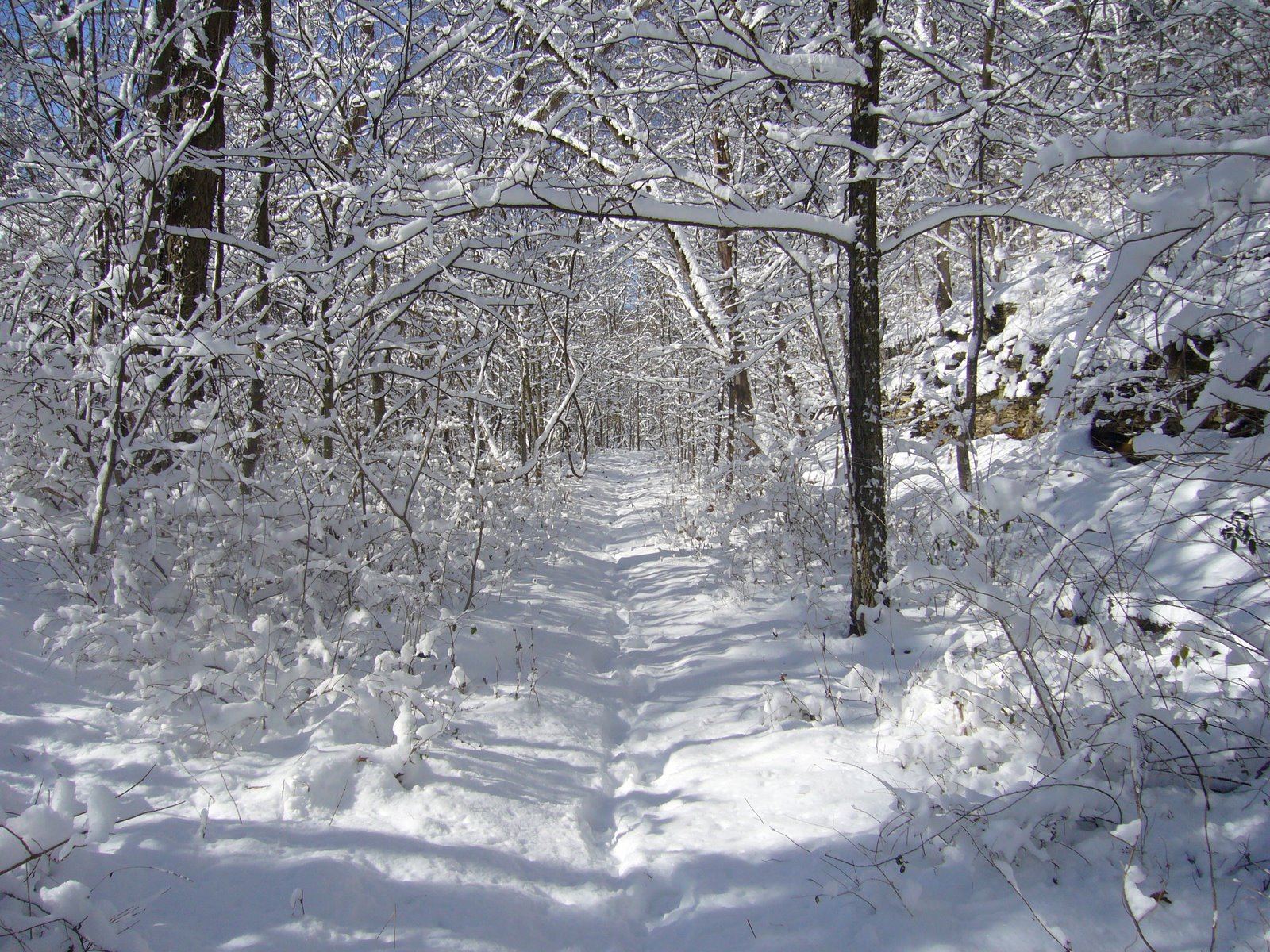
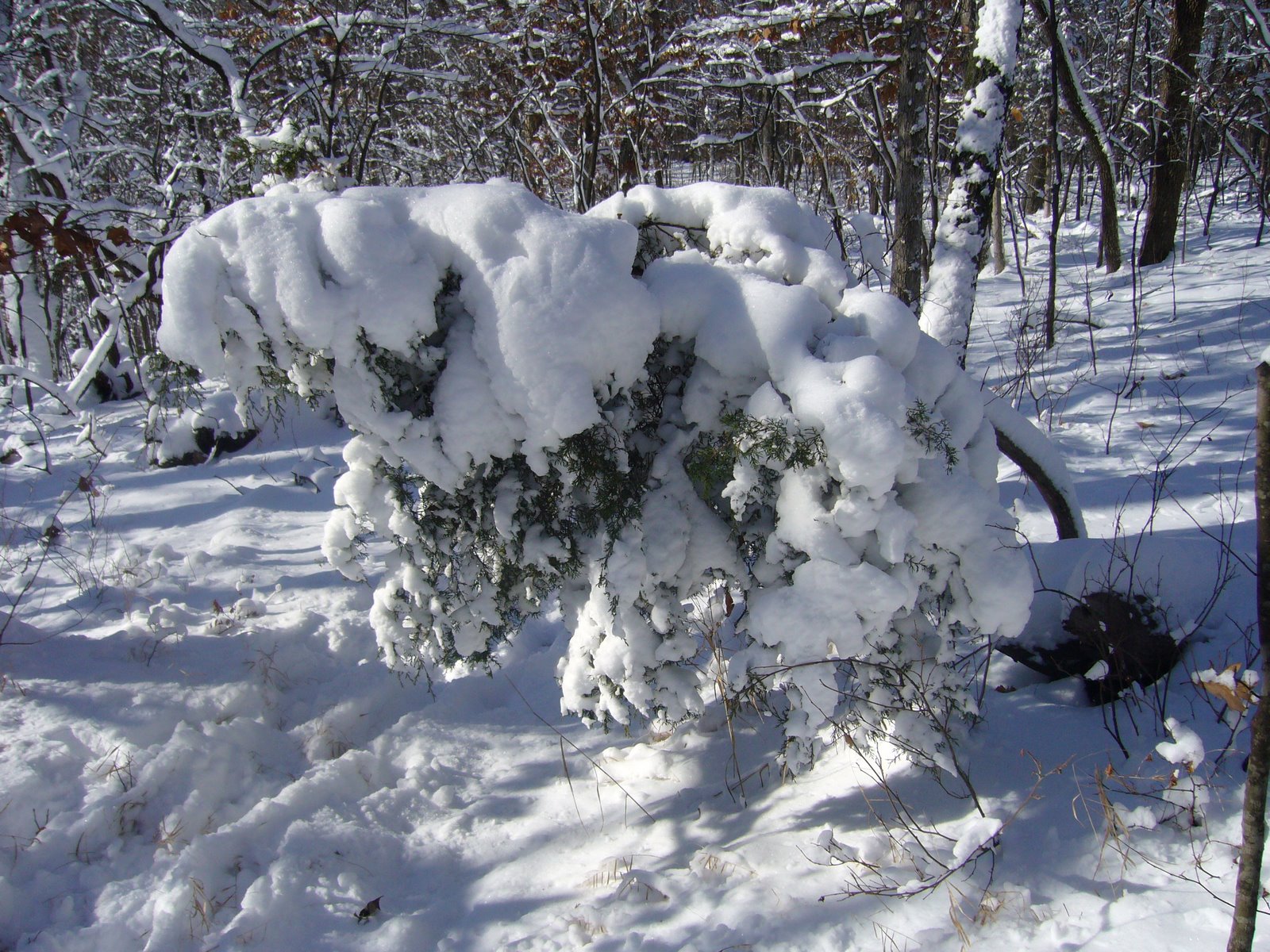
Rockwoods Reservation, in western St. Louis Co. is one of the oldest Conservation Areas in Missouri (est. 1938). It contains nearly 2,000 acres of high quality upland forest and a small prairie restoration plot. Despite its proximity to St. Louis and the numerous hiking trails it offers, I haven’t explored this area very much. We had a winter storm move through the area yesterday, dumping about 7 inches of snow over the area. Deep snows are not common in St. Louis, which typically has more open winters, so today offered the perfect opportunity to start exploring this area in a rare wintery setting. My daughters came with me to explore the 3.25-mile Lime Kiln Loop Trail.


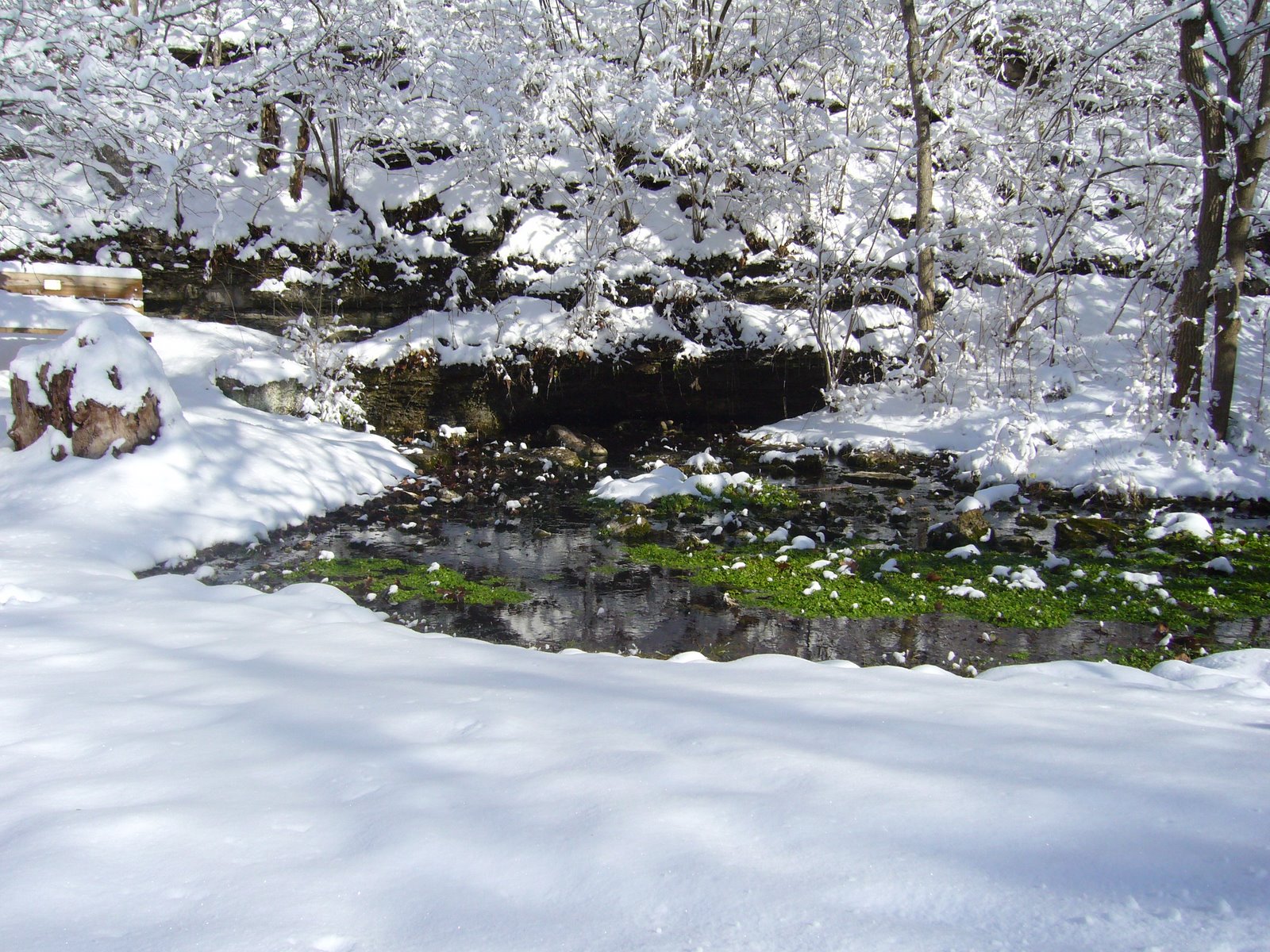
The first half mile of the trail follows alongside a spring-fed creek. As we enjoyed the serenity of the snowy landscape, a belted kingfisher flew into a nearby tree, where it paused briefly before zipping off in a chatter. The spring itself offered a beautiful contrast between the green aquatic plants that populate the spring’s exit and the surrounding white blanket.


After the spring, the trail started traversing up the hillside into a mesic upland forest dominated by oaks and hickories. The high canopy of this mature forest resulted in a sparse understory, affording spectacular views back down through the draws from which we came.


The girls were full of energy at this point, so they kept running ahead on the trail and then waiting for me to plod my way back up to them. Eventually they learned their lesson though – everytime they ran up ahead they would get hot and want to take their coats off, then they would get cold and have to put them back on.


There were some drier forest types closer to the bluffs where eastern red cedar (Juniperus virginiana) became more abundant. I coaxed them to pass underneath this one, then whacked it with my hiking stick as they did so. Shocked indignation soon gave way to tenacious efforts on their part to ‘get me back’. Failing that, they redirected their efforts to ‘getting’ each other.


The games eventually gave way to quiet enjoyment of the astounding beauty of the forest. Existing tracks in the snow told us we were not the first to enjoy the trail today, but we didn’t see a single soul all day – it was easy to pretend that we were the only people in this wood. These snow-covered, hollow tree stumps reminded us of tubular sponges.


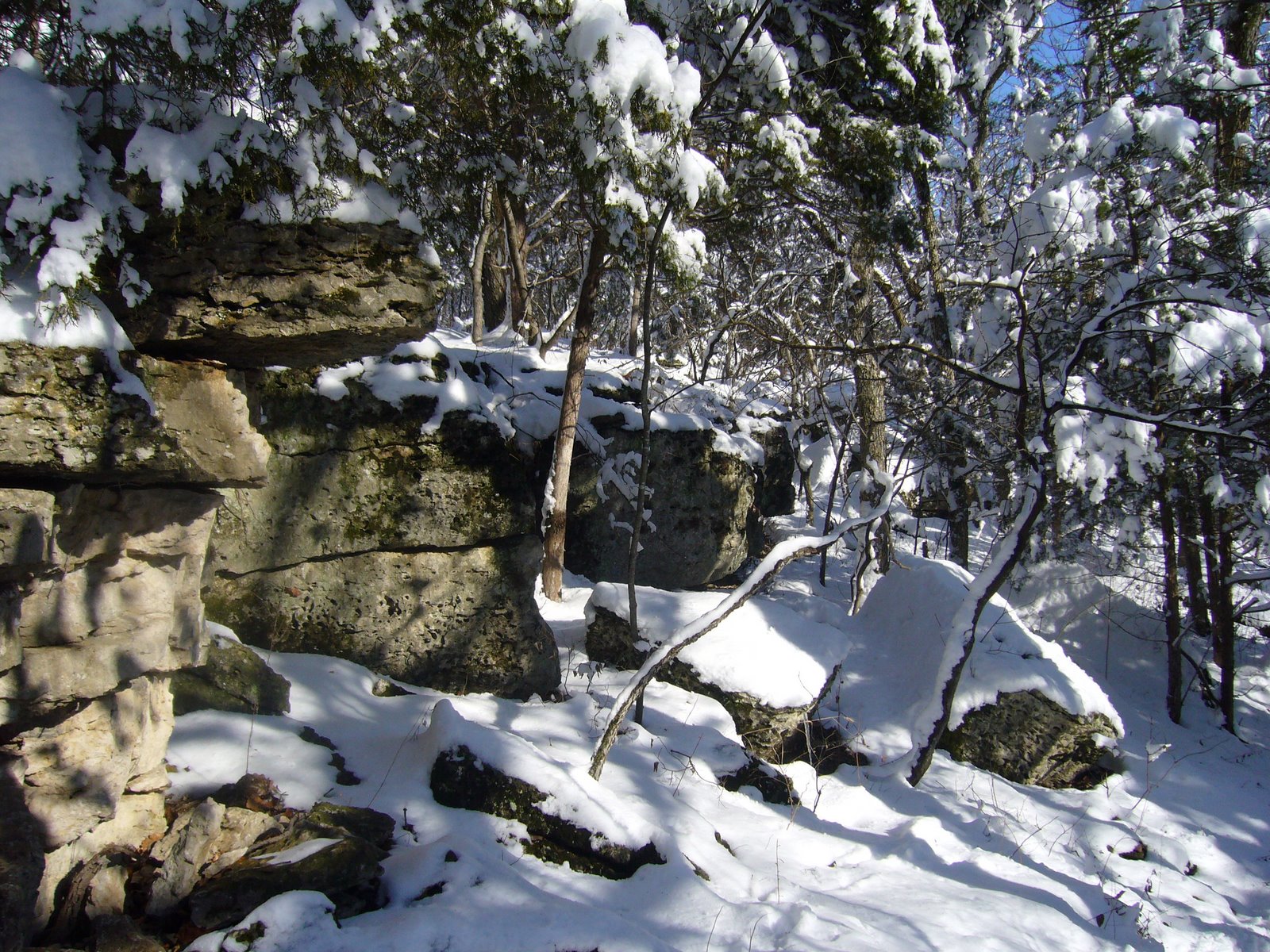
As the trail descended back down into the valley it passed through these dolomite outcrops supporting a dry upland forest dominated by eastern red cedar and blackjack oak (Quercus marilandica).


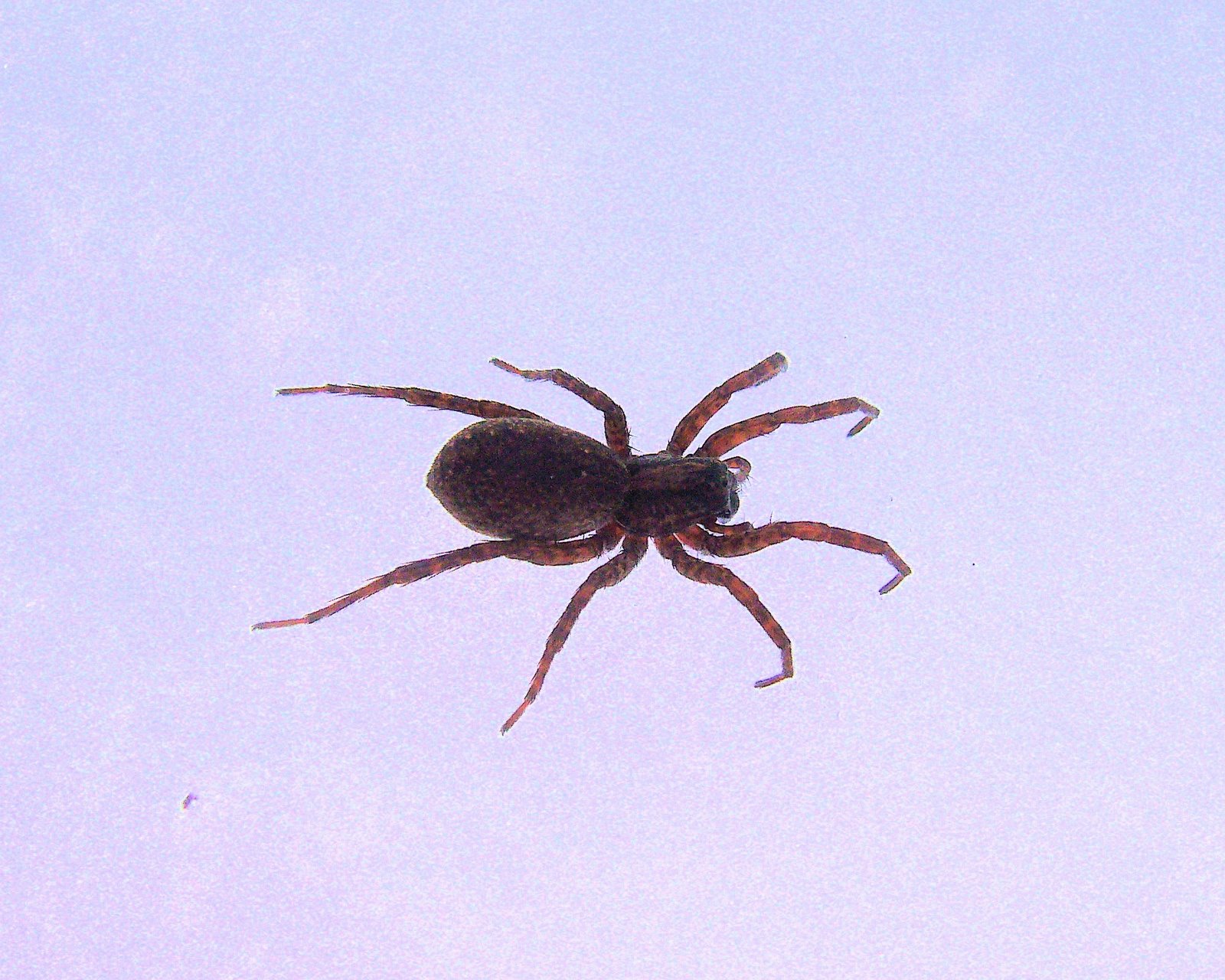
Near the end of the trail, we ran across this little spider – actively crawling on the surface of the snow with temps in the mid-20s. I half-jokingly suggested that maybe this was some kind of ‘snow spider’. My 8-yr old daughter thought that seemed likely, then suggested that when we got home we could get online and go to http://www.spider.com/ and type ‘snow spider’ to see what it said. I told her I thought that was a great idea! Alas, that website (and http://www.spiders.com/) lead to a couple of IT company websites, so that was no help. Fortunately, I was able to find something that looked similar – a wolf spider in the genus Gladicosa – on BugGuide. I told Madison her suggestion worked 😉


The lime kiln for which this trail is named was built in the mid-1800’s by a wealthy businessman, who used it to produce lime for mortar construction of homes in nearby St. Louis. The kiln, 12-ft wide at the base and 40-ft high, was built next to the hillside to allow limestone (quarried nearby) to be dumped in at the top. Locally cut firewood was loaded into the arches at the bottom on each side, which heated the kiln to 800°F, converting the stone to lime which was removed from the opening at the bottom in front. Vertical expansion joints on each side in the center allowed for expansion of the stone during heating.


This was the second hike in the past few weeks that I’ve taken with the girls, and like last time they had an absolute ball! Of course, naturalist that I am, it pleases me that they enjoy the outdoors so much, and I’m quite impressed that they hiked such a distance with no complaint. The area offers several additional hiking trails ranging from 1.5 to 2.2 miles in length. At only a 15-minute drive from our house, I look forward to exploring the rest of Rockwoods trails with them.