The “Dagger Butt Weevil”

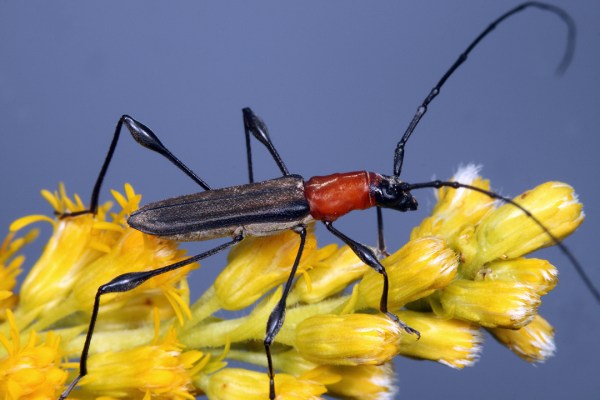
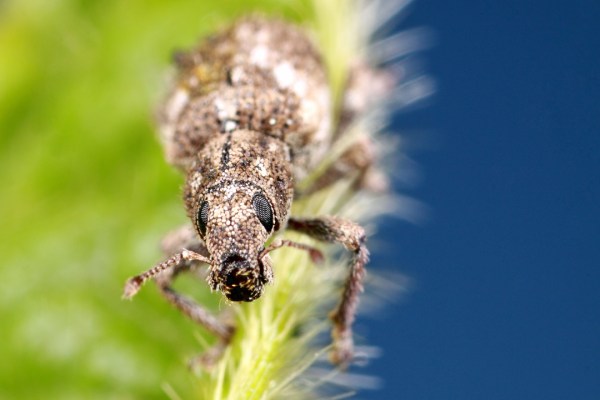
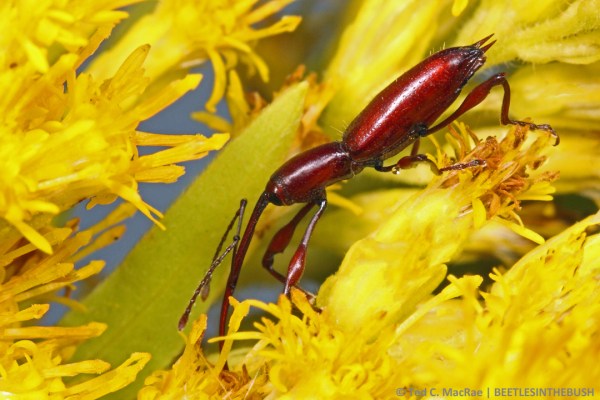
In April 2012 I spent some time in northern Argentina collecting insects, and while collecting was not that great (late in the season after a protracted drought) I saw enough of interest to make it a worthwhile effort. Among the insects that I saw were two species of weevil (family Curculionidae)—one being Eurhinus c.f. adonis () and the other this one, also kindly identified by Charles O’Brien as Erodiscus obidensis (Monte 1944). Both of them were found on flowers of Solidago chilensis growing along the roadside near La Escondida in Chaco Province; however, the two weevils are almost complete opposites in terms of coloration and body form—E. adonis brilliant metallic green and robust chunky, and E. obidensis chestnut-colored and elongate slender.

Erodiscus obidensis (Monte) | Chaco Province, Argentina | Apr 2012

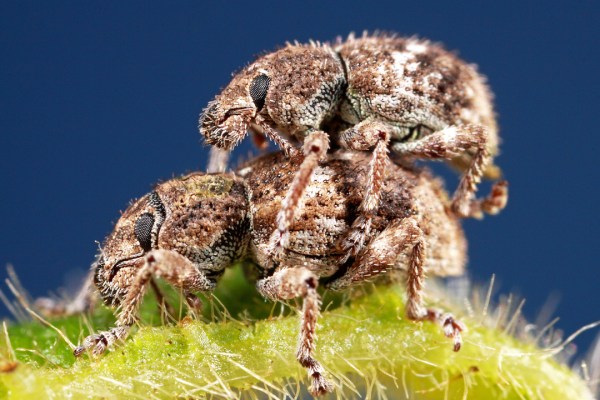
Erodiscus obidensis (Monte) | Chaco Province, Argentina | Apr 2012

An obvious feature of E. obidensis are its two stout spines located at the apices of the elytra. I presume that these serve a defensive purpose to protect them against potential avian or reptilian predators. However, if elytral spines are all that is needed for such then why are these structures not found widely across the order Coleoptera—certainly the potential is there, as many beetles exhibit very small spines at the elytral apices. With enough selection pressure one can easily imagine that larger spines would be selected for. Either the spines also/instead serve some other purpose, or development of spines is more energetically expensive than I am imagining.

What purpose those daggers?

What purpose those daggers?

Compared to most of the insects that I have featured on this blog, I wasn’t able to find much information on this species. It was originally described as Atenistes attenuatus var. obidensis from Óbidos in the Brazilian state of Pará (Monte 1944) and is listed as such in the Blackwelder (1947) catalogue. However, my weevil literature is sparse compared to the other beetle groups with which I am more familiar, and I found nothing else in searches on the web as well. It apparently is already known from Argentina, as it is listed at the website Curculionidae de Argentina (but without any photos). As far as I could tell, these are the first photos of the species to be posted to the web, at least with the associated name. Since so little seems to be known about this weevil, I take it upon myself to give it a common name, and I can’t think of a more amusing and fun-to-say name than the “dagger butt weevil” in reference to its distinctive apical spines.

REFERENCES:

Blackwelder, R. E. 1947. Checklist of the coleopterous insects of Mexico, Central America, the West Indies, and South America. Part 5. Bulletin of the U. S. National Museum 185:765–925 [pdf].

Monte, O. 1944. Sobre coleópteros Otidocephalinae. Revista Entomologia, Rio de Janeiro 15(3):318–320 [abstract].

Copyright © Ted C. MacRae 2013

Quick Guide to Armyworms on Soybean

Throughout the soybean growing areas of the southern U.S. and South America, lepidopteran caterpillars are the most important pest complex affecting the crop. Millions of pounds of insecticides are sprayed on the crop each year in an effort to minimize their impact—a practice that is not always successful and entails significant exposure risks to the environment and farm workers alike. A variety of lepidopteran species occur in soybeans, and proper identification is essential to ensure adequate control and avoiding unnecessary applications. While the most important and commonly encountered species are velvetbean caterpillar (Anticarsia gemmatalis) and soybean looper (Chrysodeixis includens), others include soybean podworms (Helicoverpa zea in the U.S.; H. gelotopoeon and—now—H. armigera in Brazil and Argentina), sunflower looper (Rachiplusia nu), bean shoot moth (Crocidosema aporema), and armyworms of the genus Spodoptera. The last group contains several species that can affect soybean, and while they have traditionally been considered minor pests of the crop a number of species have increased in importance during the past few years.

I have been conducting soybean field trials in both the U.S. and South America for many years now and have had an opportunity to photograph most of the species known to occur on soybean in these regions. Identification of armyworm larvae can be rather difficult due to their similarity of appearance, lack of distinctive morphological differences (e.g. number of prolegs), and intraspecific variability in coloration. Conclusive identification is not always possible, especially with younger larvae; however, the different species do exhibit subtle characters that can usually allow for fairly reliable identification of large larvae. Considering the dearth of direct comparative resources—either in print or online—I offer this quick guide to the six armyworm species that I’ve encountered in soybean.
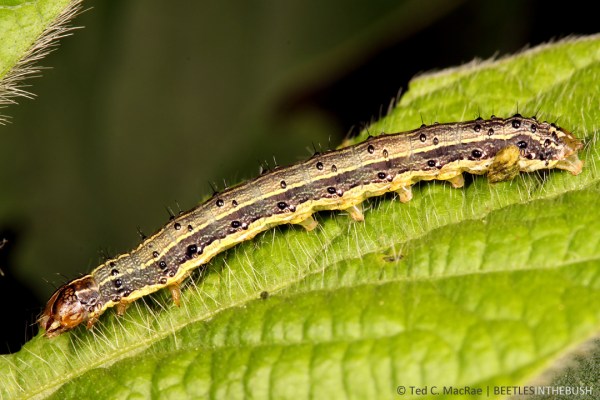

Spodoptera frugiperda (fall armyworm) | Jerseyville, Illinois

Spodoptera frugiperda (fall armyworm) | Jerseyville, Illinois

Spodoptera frugiperda (fall armyworm). This is not the most important armyworm pest of soybean, in contrast to its great importance in other crops such as corn and cotton. It is, however, the most widely distributed of the species, occurring in both the southern U.S. and throughout soybean growing areas of Brazil and Argentina. When problems do occur on soybean they are usually a result of larvae moving from grassy weeds to small soybean plants in late-planted or double-crop fields. Larvae can damage all stages of soybean, from seedlings (cutting them off at ground level) to later stages by feeding primarily on foliage and even pods. Larvae are somewhat variable in coloration but are distinctive among armyworms by virtue of the pinaculae (sclerotized tubercles) visible over the dorsum, each bearing a single stout seta. Four pinaculae are present on each of the abdominal segments, with those on the eighth abdominal segment forming a square, and larvae also exhibit a pronounced inverted, white, Y-shaped mark on the head.


Spodoptera exigua (beet armyworm) | Stoneville, Mississippi

Spodoptera exigua (beet armyworm) | Stoneville, Mississippi

Spodoptera exigua (beet armyworm). This species is better known as a pest of vegetables but will occasionally damage soybean in the southern U.S. In soybean larvae prefer to feed on foliage of seedling plants but will, if present during reproductive stages, also feed on blossoms and small pods. Late-instar larvae can be rather variable in appearance, but most tend to be green above and pinkish or yellowish below with a white stripe along the side. Larvae can be confused with Spodoptera eridania (southern armyworm) because of a dark spot that might be present on the side, but in southern armyworm the spot is on the first abdominal segment while in beet armyworm (when present) it is on the mesothorax.


Spodoptera ornithogalli (yellowstriped armyworm) | Jerseyville, Illinois

Spodoptera ornithogalli (yellow-striped armyworm) | Jerseyville, Illinois

Spodoptera ornithogalli (yellow-striped armyworm). This species is widely distributed throughout North and South America, but its status as an occasional pest of soybean is limited practically to the southeastern U.S. It is often encountered in soybean in low numbers but can reach pest status in double-crop fields with small plants that have been planted after wheat (similar to fall armyworm). Compared to other species in the genus the larvae are rather uniform in appearance, exhibiting paired, black, triangular spots along the back of each abdominal segment with thin to prominent yellow stripes running lengthwise adjacent to and not interrupted by the spots. Larvae oftentimes have an almost black velvety appearance with distinctly contrasting bright yellow stripes.
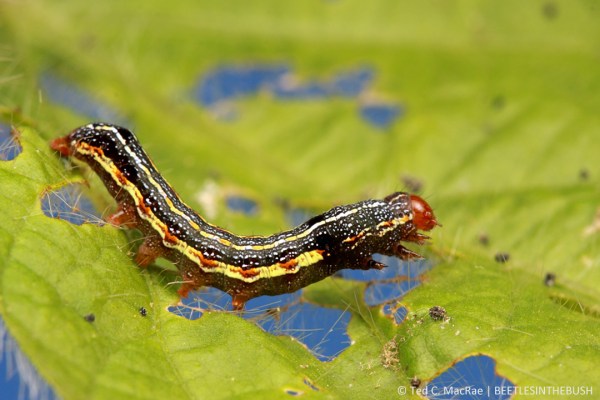

Spodoptera eridania (southern armyworm) | Jerseyville, Illinois
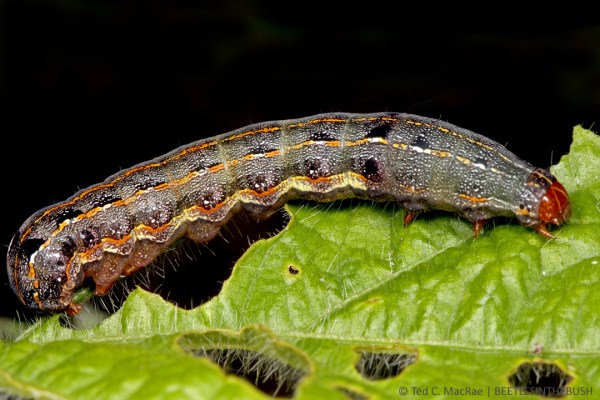
Spodoptera eridania (southern armyworm) | Jerseyville, Illinois

Spodoptera eridania (southern armyworm) | Union City, Tennessee

Spodoptera eridania (southern armyworm) | Union City, Tennessee

Spodoptera eridania (southern armyworm). This species is, like fall armyworm, widely distributed from the southern U.S. through Brazil and Argentina. In the U.S. it occurs only sporadically on soybean, usually causing “hot spots” of damage by groups of many larvae hatching from a single egg mass and skeletonizing the nearby foliage before dispersing as they grow larger. In Brazil and Argentina this species has emerged during recent years as one of the most important armyworm pests of soybean, especially in regions where cotton is also grown. Larvae can be somewhat variable in appearance and, in South America, can be easily confused with those of the black armyworm (S. cosmioides), both of which often exhibit prominent black markings on first and eighth abdominal segments and a subspiracular light-colored line along the length of the thorax and abdomen. Southern armyworm, however, rarely exhibits an additional black marking on top of the mesothoracic segment. Additionally, when the subspiracular line is present it is interrupted by the black marking on the first abdominal segment and is less distinct in front of the spot than behind, and if the line is not present then the black spots on top of the first abdominal segment are larger than those on top of the eighth abdominal segment.


Spodoptera cosmioides (black armyworm) | Acevedo (Buenos Aires Prov.), Argentina
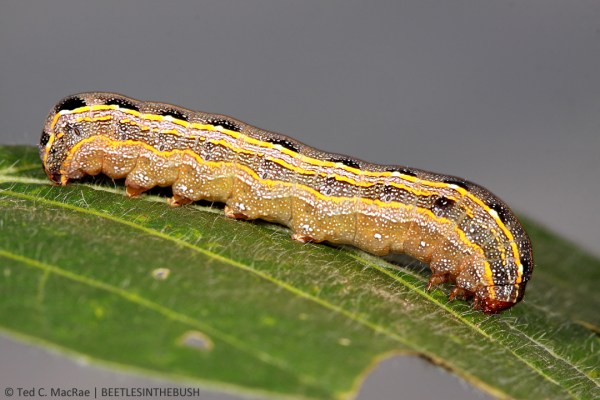
Spodoptera cosmioides (black armyworm) | Acevedo (Buenos Aires Prov.), Argentina

Spodoptera cosmioides (black armyworm) | Chaco Prov., Argentina

Spodoptera cosmioides (black armyworm) | Saenz Peña (Chaco Prov.), Argentina
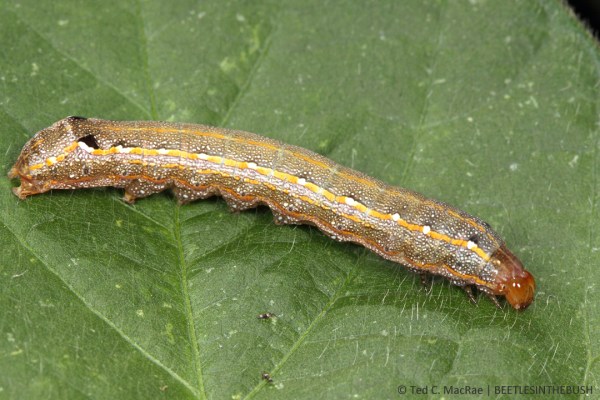
Spodoptera cosmioides (black armyworm) | Acevedo (Buenos Aires Prov.), Argentina

Spodoptera cosmioides (black armyworm) | Acevedo (Buenos Aires Prov.), Argentina

Spodoptera cosmioides (black armyworm). No accepted English common name exists for this strictly South American species that was previously considered a synonym of the North and Central American species Spodoptera latifascia. In Brazil it has been referred to by such names as “lagarta preta” (black caterpillar) and “lagarta da vagem” (pod caterpillar). The latter name has also been applied to other soybean pests, including southern armyworm, so to me “black armyworm” seems the most appropriate English name to adopt. Like southern armyworm, this species is a sometimes pest of cotton and in recent years has become increasingly important in soybean throughout Brazil and northern Argentina. Larvae often resemble and can be easily confused with those of southern armyworm; however, there is almost always a dark spot on top of the mesothoracic segment that is lacking in southern armyworm. Additionally, the light-colored subspiracular line, when present, is not interrupted by the black spot on the first abdominal segment and is equally distinct in front of and behind the spot. When the line is not present the black spots on top of the first abdominal segment are smaller than than those on top of the eighth abdominal segment.


Spodoptera albula

Spodoptera albula (gray-streaked armyworm) | Saenz Peña (Chaco Prov.), Argentina

Spodoptera albula (unbarred or gray-streaked armyworm). While known to occur in extreme southern U.S., this species has been cited as a pest of soybean only in Brazil, although its importance has not matched that of southern or black armyworm. Like most armyworms it is polyphagous, but this species seems to prefer amaranth (Amaranthus spp.). Larvae of this species can be distinguished from other South American armyworms that feed on soybean by the trapezoidal black marking on the mesothorax (usually semicircular to slightly trapezoidal in black armyworm), the black marking on the first abdominal segment not larger than that on the sixth abdominal segment, both of which are smaller than those on the seventh and eight abdominal segments, the white-only rather than white and orange dorsolateral stripe, and the triangular black markings on the abdominal segments each with a small white spot in the middle or at the apex of the marking.

Copyright © Ted C. MacRae 2013
Giving me the weevil eye!

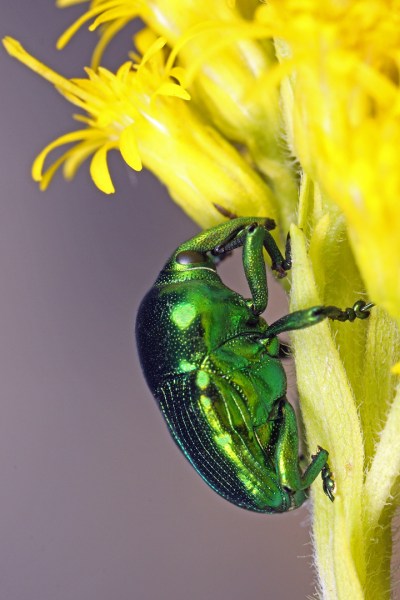
The order Coleoptera (beetles) is, of course, the largest single group of animals on earth, and by most accounts the Curculionidae (weevils) and their close relatives are the largest family-level group within the order. At 60,000 species and counting, weevils account for approximately one out of every 20 described life forms, and as a result their diversity of forms, colors and life histories are as staggering as their numbers. Among the small slice of the group that I have seen, Megabaris quadriguttatus is without question the most colorful, but species in the related genus Eurhinus (both genera belong to the curculionid subfamily Bardinae, which I point out here for reasons discussed below) must rank as among the shiniest of all weevils. Twenty-three species, all colored brilliant metallic green, blue, purple or red, are known from this exclusively Neotropical genus (Vaurie 1982), one of which has also recently established in southern Florida (Ulmer et al. 2007). The individual featured in this post was seen April 2012 in northern Argentina near La Escondida (Chaco Province) and compares well with Eurhinus adonis (ID courtesy Charles O’Brien, Green Valley, AZ). Vaurie (1982) records that species from southern Brazil, Bolivia, Paraguay and Argentina (although only from Missiones Province in the latter) and says that nothing is known of its biology.

Giving me the weevil eye!

Eurhinus cf. adonis on Solidago chilensis | Chaco Province, Argentina

This is certainly among the most challenging insects that I’ve ever photographed. Overblown specular highlights are a constant challenge in flash macrophotography of bright, shiny, metallic beetles, and yellow flowers are prone to blown highlights as well. Add on top of that my desire for a blue sky rather than the typical black background and the usual difficulties of hand-held, field photography of an actively moving subject, and you’ve got a quadruple challenge. Adequate diffusion of the flash is critical, and although the diffusers I was using at the time weren’t perfect, they were enough in combination with intentional underexposure of the photograph to further minimize the chance of blown highlights (underexposed photographs can be relatively easily “fixed” during post-processing, as all of the information is still there, while overexposed photographs can rarely be fixed because the information is gone). Bumping up the ISO (in this case 400) also helps—higher sensitivity to light by the sensor not only allows light from the sky to register and create a blue background, but also further reduces flash duration and the risk of blown highlights. No amount of camera settings, however, can address the final challenge—getting the subject well composed and in focus within the frame. For that, the three “P”s (patience, practice, and persistence) are the only advice I can offer.

Eurhinus cf. adonis on Solidago chilensis flowers | Chaco Province, Argentina.

What’s in a name? That which we call a Eurhinus by any other name would be as shiny!

This genus of weevils was involved in one of the more interesting nomenclatural problems that I’ve encountered. The genus was originally given the name Eurhin by Illiger in 1807, but Schönherr in 1824 changed it to Eurhinus—believing (incorrectly) that Eurhin was not a properly formed name. Unfortunately, the name Eurhinus had already been used by Kirby in 1819 for a different genus of weevils in the subfamily Apioninae. The rules of zoological nomenclature, of course, prohibit the same name being used for two different genera, and several attempts were made during the following years to provide a replacement name for Schönherr’s Eurhinus. None gained acceptance, however, and eventually Schönherr in 1833—still considering justified his correction of Eurhin to Eurhinus—proposed the name Eurhynchus for Kirby’s Eurhinus. Remarkably, the name Eurhynchus also had been used previously (for a genus of birds). Nevertheless, the change gained acceptance, and both of Schönherr’s names remained in use for the next century and a half—Eurhinus in the subfamily Baridinae and Eurhynchus in the subfamily Apioninae, with both credited to Schönherr. Strict application of the rules of nomenclature would require that the name Eurhinus be transferred back to the apionine genus and credited to Kirby and the name Eurhin resurrected for the baridine genus and credited to Illiger. However, as pointed out by Zimmerman & Thompson (1983) this would not only destroy more than a century’s worth of nomenclatural stability but also complicate the formation of family-group names such as tribes—since the two original names each have the same root (Eurhin-), tribal names based on them would be identical (Eurhinini). To resolve these issues, a formal application was submitted to the International Commission of Zoological Nomenclature (ICZN) to preserve  Schönherr’s long accepted usage of Eurhinus and Eurhynchus. To do this, the ICZN would not only have to declare Schönherr’s correction of Eurhin to Eurhinus justified, but also suppress the original use of the name Eurhynchus (as a genus of birds) in order to allow Schönherr’s subsequent use for the apionine genus to stand. Fortunately, suppressing the first use of Eurhynchus had no impact on stability, since an older name was already in use for the genus of birds and the younger name had not been used since its original description. The authors of the application also noted the support of several contemporary weevil specialists (including Charles O’Brien) and that Patricia Vaurie, in her revision of the genus one year earlier (Vaurie 1982), had used the original name Eurhin with reluctance on the then-correct advice of her contemporaries. It was a classic case of priority versus stability, and while the ICZN typically is rather conservative in favoring priority, they were clearly swayed in this case by the interests of stability and impact on formation of family-group names.

REFERENCES:

Ulmer, B. J., R. E. Duncan, J. Prena & J. E. Peña. 2007. A weevil, Eurhinus magnificus Gyllenhal (Insecta: Coleoptera: Curculionidae). University of Florida, IFAS Publication #EENY-417/IN751, 6 pp.

Vaurie, P. 1982. Revision of Neotropical Eurhin (Coleoptera, Curculionidae, Baridinae). American Museum Novitates 2753:1–44.

Zimmerman, E.C. & R. T. Thompson. 1983. On family group names based upon Eurhin, Eurhinus and Eurhynchus (Coleoptera). Bulletin of Zoological Nomenclature 40:45–52.

Copyright © Ted C. MacRae 2013

Group mimicry in Cerambycidae… and more

During last year’s extended visit to Argentina, I had the chance to spend the early part of April in the northern province of Chaco. Though much of this hot, arid plain has been converted to agriculture, remnants of thorn forest remain along fence rows and in small patches of Chaco Forest. Despite the decidedly tropical latitude of the region, however, the profuse bloom of Chilean goldenrod, Solidago chilensis, along these fence rows during the Argentine autumn is reminiscent of crisp fall days here in the eastern U.S., and like the goldenrod here the ubiquitous stands of yellow blossoms stretching across the Chaco Plain are equally attractive to a multitude of insects. Among those insects are the Cerambycidae, or longhorned beetles, and while the eastern U.S. cerambycid fauna of goldenrod boasts only a few (albeit spectacular) species in the genus Megacyllene, the Argentine cerambycid fauna that I found on these flowers included at least three species in various genera belonging to two different tribes.

Rhopalophora collaris (Germar 1824) | Chaco Province, Argentina

Rhopalophora collaris (Germar 1824) | Chaco Province, Argentina

Two of the species I saw are shown here, and their similarity of appearance is no coincidence, as both belong to the tribe Rhopalophorini (coming from the Greek words rhopalon = club and phero = to bear, in reference to the distinctly clavate, or club-shaped, legs exhibited by nearly all members of the tribe). In fact, a great many species in this tribe exhibit the same general facies—slender in form and black in coloration with the head and/or pronotum red to some degree. Since all of these species are diurnal (active during the day) and frequently found on flowers, one can assume that the members of this tribe represent an example of what Linsley (1959) called ‘group mimicry.’ In this simple form of Batesian mimicry (harmless mimic with protected model), a group of related species within a genus or even a tribe have a general but nonspecific resemblance to those of some other group of insects—in this case presumably small, flower-visiting wasps. Although the tribe is largely Neotropical, the nominate genus Rhopalophora does extend northward with one eastern U.S. representative, R. longipes. Among the numerous species occurring in South America, the individuals I saw in Argentina can be placed as R. collaris due to the relative lengths of their antennal segments and uniquely shaped pronotum (Napp 2009).

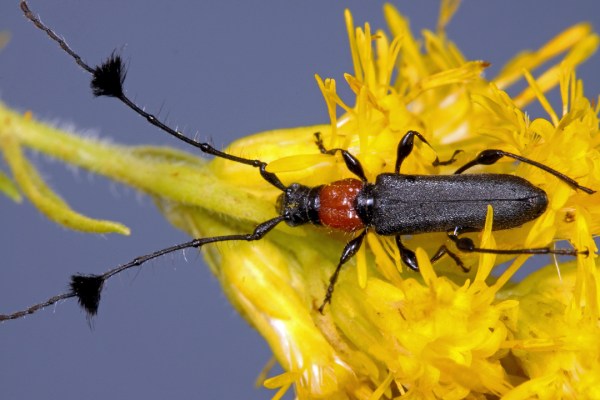
Cosmisoma brullei (Mulsant 1863) | Chaco Province, Argentina

Cosmisoma brullei (Mulsant 1863) | Chaco Province, Argentina

The second species could easily be mistaken for another species of Rhopalophora were it not for the distinct tufts of hair surrounding the middle of the antennae. These tufts immediately identify the beetle as a member of the large, strictly Neotropical genus Cosmisoma (derived from the Greek words kosmos = ornament and soma = body, a direct reference to the tufts adorning the antennae of all members of this genus). Three species of the largely Brazilian genus are known from Argentina, with the black and red coloration of this individual easily identifying it as C. brullei (Bezark 2o13). In the years since this genus was described, additional related genera have been described that bear remarkably similar tufts of hair not on the antennae, but on the elongated hind legs. The great, 19th century naturalist Henry Walter Bates “tried in vain to discover the use of these curious brush-like decorations” (Bates 1863), and nearly a century later Linsley (1959) conceded that their function still remained unknown. Antennal tufts are actually quite common in Cerambycidae, especially in Australia, and while experimental evidence continues (to my knowledge) to be completely lacking, Belt (2004) records observing “Coremia hirtipes” (a synonym of C. plumipes) flourishing its leg tufts in the air (presumably in a manner similar to waving of antennae) and, thus, giving the impression of two black flies hovering above the branch on which the beetle was sitting. This seems also to suggest a function in defense, with the tufts perhaps serving as a distraction to potential predators in much the same way that many butterflies have bright spots near the tail to draw the predator’s attention away from the head.

REFERENCES:

Bates, H. W. 1863. The Naturalist on the River Amazons. Murray, London, 2 vols.

Belt, T. 2004. The Naturalist in Nicaragua. Project Guttenberg eBook.

Bezark, L. G. 2009. A Photographic Catalogue of the Cerambycidae of the World. Available at http://plant.cdfa.ca.gov/byciddb/

Linsley, E. G. 1959. Ecology of Cerambycidae. Annual Review of Entomology 4:99–138.

Napp, D. S. 2009. Revisão das espécies sul-americanas de Rhopalophora (Coleoptera: Cerambycidae). Zoologia (Curitiba) 26(2):343–356.

Copyright © Ted C. MacRae 2013

Bollworms rising!

One of the most pernicious pests that U.S. farmers have battled is the larval stage of Helicoverpa zea (Lepidoptera: Noctuidae). This insect is destructive enough to have earned not just one official common name, but four (corn earworm, cotton bollworm, soybean podworm, and tomato fruitworm)—one for each of the crops in which it has attained major pest status. It isn’t only North American farmers, however, that must deal with this pest, but South American farmers as well. For many decades, corn and cotton have been its most important hosts in North America, but in recent years its importance has increased steadily in soybean as well, particularly across the mid-south. In South America, however, it seems satisfied—curiously—to confine its attacks to corn. Lest you think that South American farmers are getting off easy, there are other species of Helicoverpa in South America that are causing problems of their own. Perhaps the most troubling one is H. armigera, the Old World bollworm¹—a sister species to H. zea (Goldsmith & Marec 2010) native to Africa, Asia, and Australia and just as polyphagous as H. zea that was recently found infesting corn, cotton, soybean, and other crops in several areas of Brazil.

¹ Interestingly, in the Old World this species is called the “American bollworm,” despite the fact that it did not come from the Americas at all. I guess neither hemisphere wants to take the blame for this species.

Helicoverpa gelotopeon (South American bollworm) | Buenos Aires Province, Argentina

Helicoverpa gelotopeon (South American bollworm) | Buenos Aires Province, Argentina

While we wait to see what impact H. armigera ends up having in South America, another species of the genus is quietly rising from the ranks of secondary to primary pest further south on the continent. For many years, Helicoverpa gelotopeon (or South American bollworm) has been a sometimes pest of cotton and other crops in Argentina, Chile and Uruguay (Evangelina et al. 2012), but in a situation that mirrors the rise of H. zea on soybean in North America, the incidence of H. gelotopeon has grown during the past few years in the more southern soybean growing areas of South America as well. Like its North American counterpart, this insect causes not only indirect damage by feeding on the foliage of the plant during vegetative stages of growth (reducing photosynthetic capacity of the plant), but also direct damage by feeding on the developing pods during reproductive stages of growth. Predictably (and regrettably), farmers have responded by increasing applications of organophosphate insecticides, but the efficacy of these products—despite their relatively high toxicity—has often been inadequate to prevent yield losses. As a result, other management techniques and technologies will be required to keep this insect from having a major impact on soybean production in the temperate regions of Argentina.

Young larvae feed on foliage (note the very small caterpillar in the lower center area of the leaf).

Young larvae feed on foliage (note the very small caterpillar in lower left area of the leaf).

A mid-instar larvae feeding on soybean foliage.

A mid-instar larvae feeds on soybean foliage and exhibits the black pinacula characteristic of the subfamily.

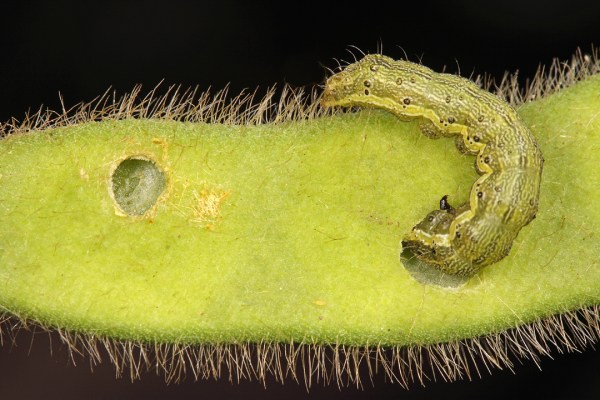
Larger larvae feed on developing pods, breaching the wall of the pod to consume the seeds within.

Larger larvae feed on developing pods, breaching the wall of the pod to consume the seeds within.

Adults are slightly smaller than H. zea and a little darker with somewhat bolder markings.

The photographs in this post may well be the best—and perhaps even the only ones—available of this species. A Google image search turned up nothing, and have I been unable to find any literature with photographs of either the adults or the larvae and their damage. If you are aware of any please leave a comment with the citation.

REFERENCES:

Goldsmith, M. R. & Marec, F. 2010. Molecular Biology and Genetics of the Lepidoptera. CRC Press, Boca Raton, Florida, 368 pp.

Evangelina, P., F. Crepo & J. C. Gamundi. 2012. Evaluación del daño simulado de “oruga bolillera” Helicoverpa gelotopoeon (Dyar) en estados vegetativos del cultivo de soja. Unpublished report, Instituto Nacional de Tecnología Agropecuaria (INTA), 6 pp.

Copyright © Ted C. MacRae 2013
The true Ombú

Recall ID Challenge #21, which featured a photograph of the massively buttressed trunk of a rubber tree (Ficus elastica) planted more than 200 years ago in Buenos Aires, Argentina and give the name Gran Gomero (meaning “big rubber”). There are many photographs of this tree on the internet, owing to its celebrity status, which allowed more than a few participants to properly guess its identity. Unfortunately, one participant still guessed the wrong answer despite having found an image of the exact same tree due to the tree being incorrectly identified as an Ombú tree (Phytolacca dioica). Unlike the rubber tree, which is native to south and southeast Asia, the Ombú is indigenous to South America and is, in fact, the only “tree” that occurs naturally in the South American Pampas. I place the word tree in parentheses, because this plant—also unlike the rubber tree—is not even really a tree, but rather multi-stemmed shrub (albeit a very large one) in the family Phytolaccaceae (relative of the common pokeweed). Like its North American cousin, the milky sap is laced with toxic compounds that protect it from vertebrate and invertebrate herbivores, and its massive, fire resistant trunks consist of soft water storage tissues arising from enlarged bases. These features are obvious adaptations to life on the Pampas, where rainfall is scarce (10–30 in per year) and fires are frequent.

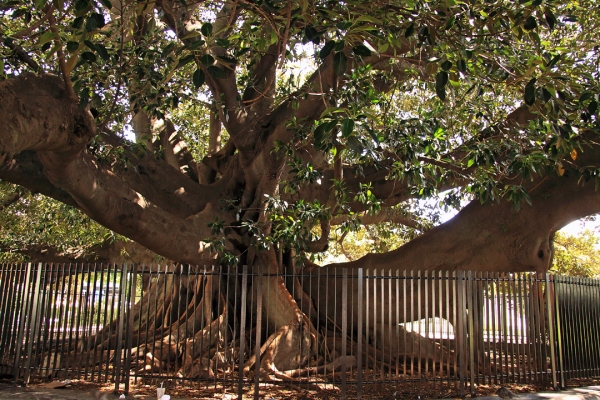
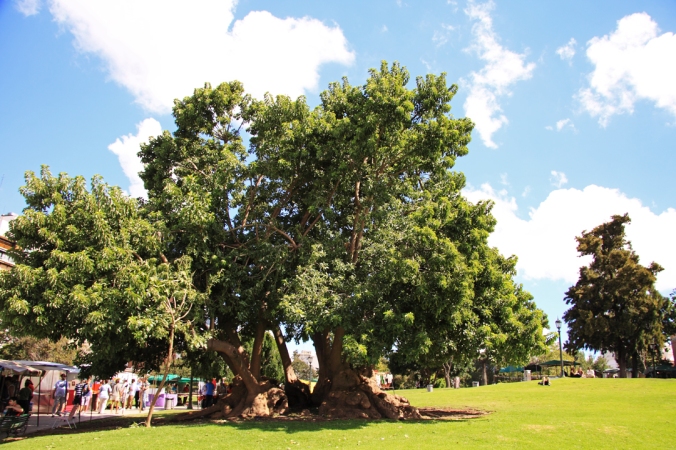
Ombú (Phytolacca dioica) | Buenos Aires, Argentina

Ombú (Phytolacca dioica) | Buenos Aires, Argentina

While not nearly as spectacular as El Gran Gomero, there is an Ombú growing nearby in the same very plaza adjacent to the Recoleta Cemetery (above photo) that typifies the multi-stemmed, swollen-base appearance that very large specimens assume. It is easy to see how, at least based on superficial appearance, one could mistake El Gran Gomero for an Ombú; however, it also goes to show that one should always be cautious about too quickly accepting what they find on the internet (watch somebody now point out an error in this post!).

Here is another (better) photo of the exact same tree.

Copyright © Ted C. MacRae 2013

The 213-year old “Gran Gomero”

Here are two more views of the tree featured in ID Challenge #21. This is El “Gran Gomero,” a planted rubber tree (Ficus elastica) located in the upscale Recoleta district of Buenos Aires, Argentina. Whenever locals give a name to an individual tree, you know it has to be something special, and this tree certainly does not disappoint. Huge, buttress roots and massive branches supporting a majestic, 50-meter wide crown make it an impressive sight indeed. Its branches are so large that wooden supports have been placed beneath them to help support their great weight and prevent them from breaking.

El "Gran Gomero" rubber tree (Ficus elasticus) | Buenos Aires, Argentina

El “Gran Gomero” rubber tree (Ficus elasticus) | Buenos Aires, Argentina

There seems to be some question about how old this tree actually is. A Wikipedia entry on the Recoleta district mentions that the tree was planted in 1791 by Martín José Altolaguirre, a landowner in the area at the time, making it a cool 222 years old! Wikimapia claims that the tree was planted in 1826 by Martín de Altolaguirre in the adjacent Recoleta Cemetary (itself worth a blog post) and transplanted to its current location eight years later. Still other sources, such as Buenos Aires Delivery and numerous individual blog posts state that the tree was planted in 1870 by the monks of the Recoleta. Finally, there is a sign at the base of the tree that says the tree was planted in 1800, again by the monks of the Recoleta, and that the fence was donated to the city by the nearby cafe La Biela. Unfortnately, I did not photograph the sign, but I did find a photo of it on Flickr. Perhaps the 9-year difference in planting date between the sign and Wikipedia has to do with the transplanting from its original location in the cemetary as mentioned by Wikimapia. Regardless of its true age, El Gran Gomero must certainly be among the oldest of any residing in a city as large as Buenos Aires.


Huge buttress roots support a massive, 50-meter wide crown.

Huge buttress roots support a massive, 50-meter wide crown.

Just when I was beginning to think nobody read this blog anymore, a record 30 people participated in this ID Challenge. Even more impressive is that more than a few got it right! Timing is everything, however, and 3-time BitB Challenge Champion Ben Coulter takes the win due to his speedy response and early-bird bonuses that netted him a total of 23 points. Also making the podium were Chelydra and Brady Richards with 18 each. The overall leader is now Ben Coulter with 33 points. Bill Rockenbeck and Chelydra both follow with 21 points, but in the event of a tie-breaker Bill would get the nod by virtue of having participated in more challenges. Look for another installment of BitB Challenge Session #7 in the near future.

Copyright © Ted C. MacRae 2013
The “little soybean weevil”

Lepidopteran caterpillars are without question the most important pests affecting soybean in South America, while stink bugs run a close second in terms of economic impact and as the targets of insecticide applications. There are, however, a number of weevil species (order Coleoptera, family Curculionidae) whose incidence has increased during the past decade or so as the area planted to soybean continues its decade’s long expansion on the continent. The most important of these is Sternechus subsignatus, a  relatively large (and rather attractive black-and-yellow) species that was first detected in southern Brazil in the 1970s. It has since spread to northern Brazil and in recent years has also begun affecting soybean in Salta and Tucumán Provinces of northern Argentina (sometimes considered a distinct species, S. pinguis). Known locally as “picudo grande” (big weevil), adults clip the petiole of leaves and girdle the stems, leading to stand loss. One adult is capable of killing multiple plants, so that even light infestations can result in severe damage.

IMG_2439_enh_1080x720

Promecops carinicollis | Tucumán Province, Argentina

I’ve not yet seen “big weevils” for myself, but there are at least two other species that are showing up in soybean fields, particularly in Salta and Tucumán Provinces. During my recent visit to Argentina I happened upon a soybean field in northern Tucumán infested with one of them, Promecops carinicollis, a few photos of which I show here. This species is much smaller than S. subsignatus and is, thus, called “picudo chico” (little weevil)—certainly an appropriate name for the 3- to 4-mm long adults. While the integument is black, the body is densely covered with flat scales that form irregular white blotches on the elytra and otherwise give the beetle a mottled-brown appearance.

IMG_2436_enh_1080x720

Damage consists of adult feeding around the leaflet margins, giving them a scalloped appearance.

Like S. subsignatus, it is the adults that cause damage to the plants, although instead of the stems and petioles their feeding seems to be confined to the margins of the leaflets. This gives the leaflets a “scalloped edge” appearance that is quite distinctive and unlike the leaf damage caused by other leaf-feeding insects of soybean. The feeding causes a general reduction of the leaf surface area of the plant, which reduces the plant’s capacity to photosynthesize. However, as soybean has a rather high capacity to compensate for foliage loss by growing new foliage, especially during the earlier vegetative stages of growth, it would take rather high pressure by these weevils to cause enough damage to result in yield loss. It may be one of those soybean pests for which insecticide applications are made much more often than is warranted. The most important impact of this insect probably occurs just after seedling emergence, during which time feeding on the cotyledons and first leaves can weaken seedlings enough to cause stand loss.

Promecops carinicollis | Tucumán Province, Argentina

Beginning the process of making more Promecops carinicollis.

Copyright © Ted C. MacRae 2013