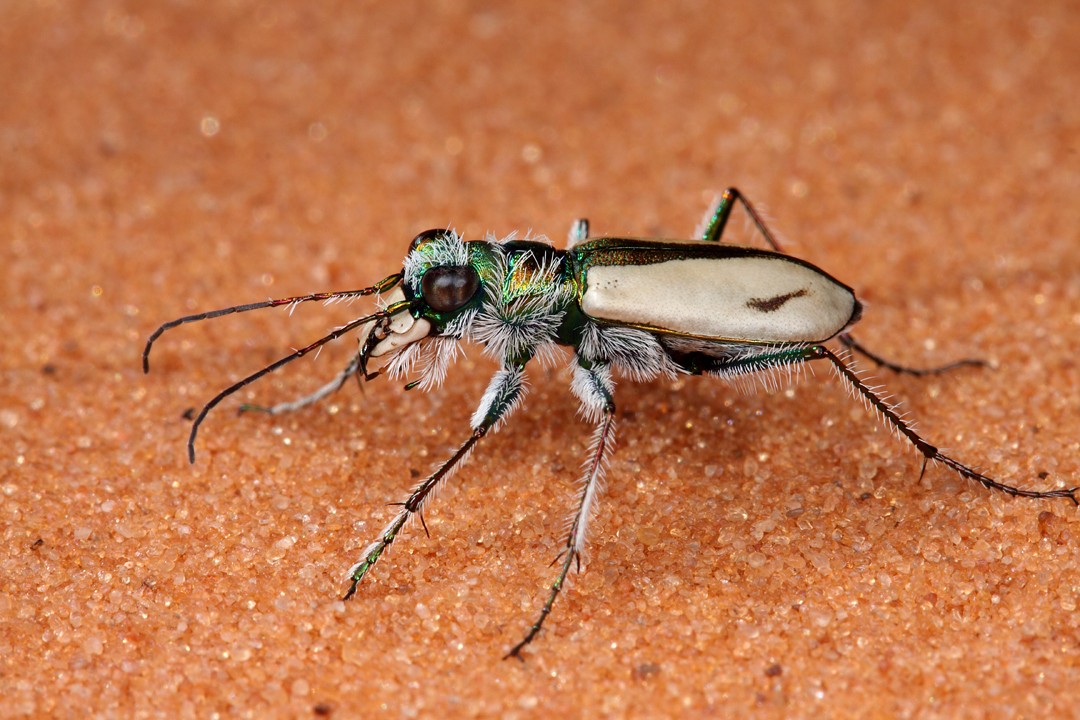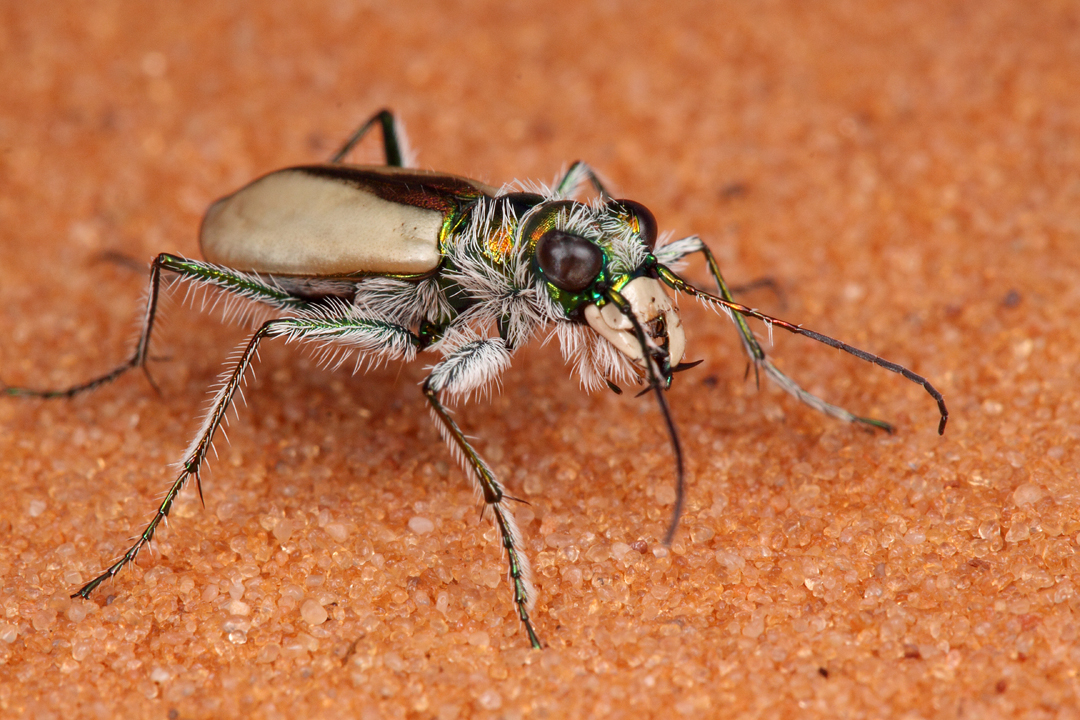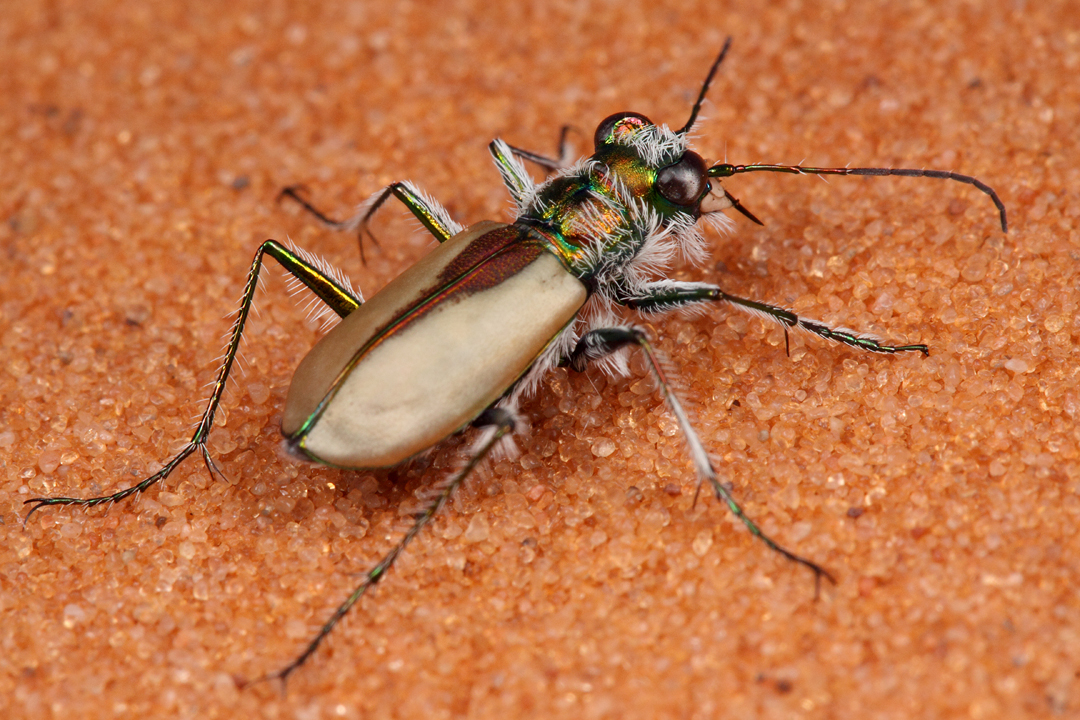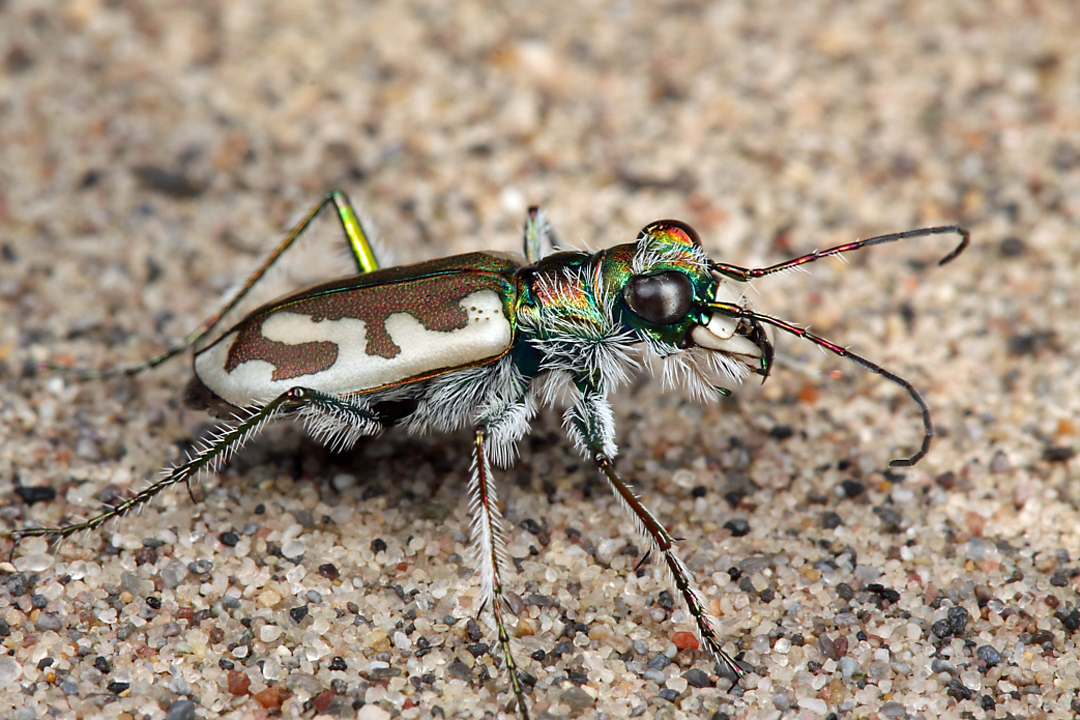
Cicindela albissima—The Coral Pink Sand Dunes Tiger Beetle

Coral Pink Sand Dunes State Park, Utah

The week had started off good, with three species of western sand dune endemic tiger beetles (Cicindela formosa gibsoni, C. scutellaris yampae, and C. arenicola) and a variety of sometimes spectacular Crossidius longhorned beeltes having been encountered.  Mid-week, however, had brought a lull in our success—the long drive to southwestern Idaho was not rewarded with finding C. waynei, endemic only to Bruneau Sand Dunes State Park, and an even longer drive was required to backtrack and then drop down to the southwestern corner of Utah in hopes of finding the equally rare and restricted C. albissima.  Had it not been for our continued success with different species and subspecies of Crossidius longhorns the drive might have felt like a lesson in futility.  Still, on a collecting trip a new day and new locality brings new hope, and anticipation grew as we passed through lodgepole pine forests on stunning black lava fields and wind-carved red sandstones on the final approach to Coral Pink Sand Dunes State Park.
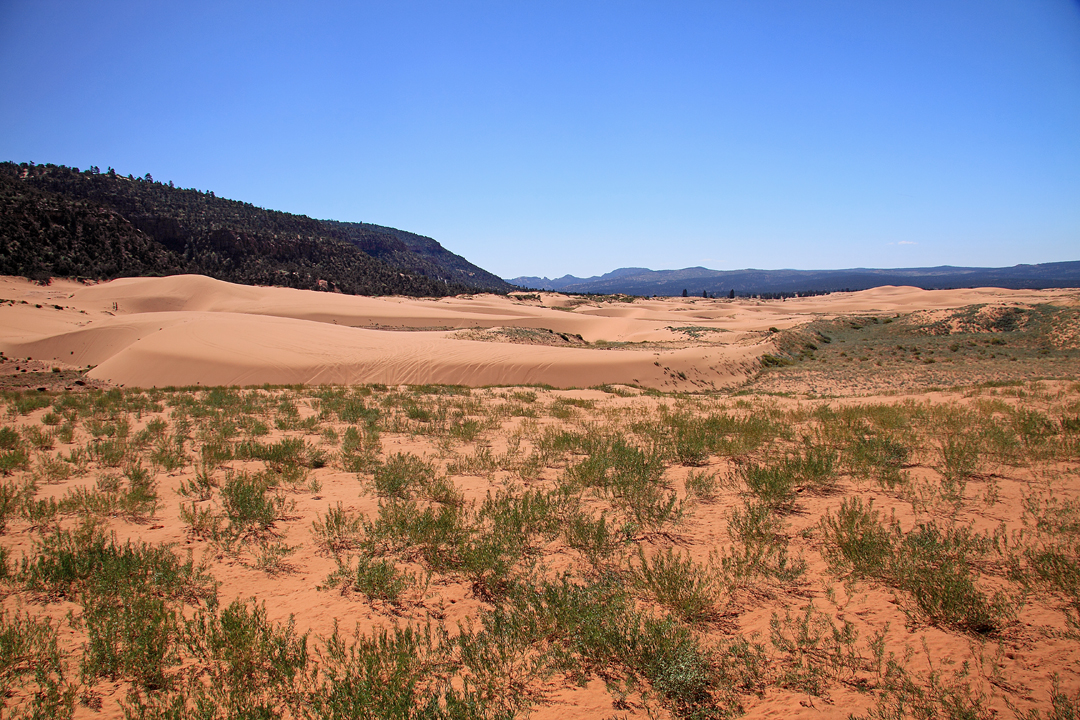
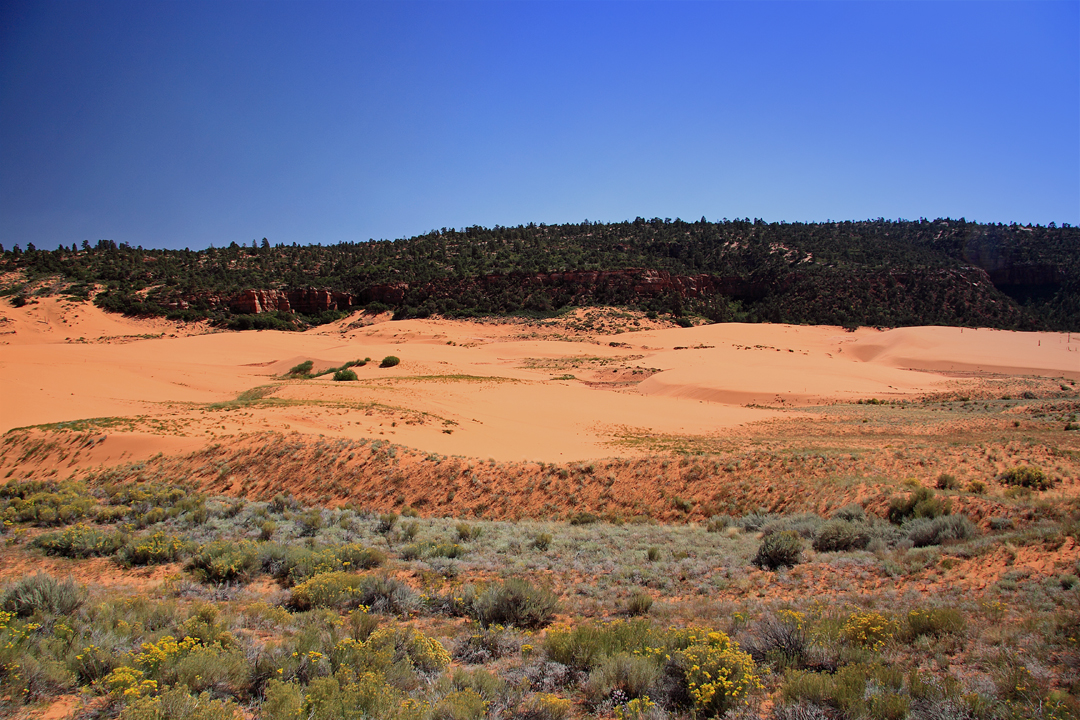
Colored pink by iron oxide minerals, the dunes are estimated at 10,000 to 15,000 years old.

Words cannot describe the stunningly spectacular landscape that unfolded before us as we entered the park.  The scenery alone makes Coral Pink Sand Dunes worthy, in my humble opinion, of National Park status, but it is C. albissima—occurring only on the park’s vivid pink dunes and nowhere else in the world—that makes this place truly special.  Precisely where in the park the beetle lives is a matter of public record, as Chris Wirth (author of the intermittent but highly focused blog Cicindela) and Randolph-Macon College Professor Emeritus Barry Knisley have produced a wonderfully detailed and well illustrated brochure about the beetle and its life history, population trends, and limiting factors.  What remained to be determined was whether the beetles would be active during the brief window of time available to look for it.  Cicindela albissima is a so-called “spring-fall” species in reference to the bimodal adult activity period, but activity in the fall is much less predictable than in the spring depending on moisture availability.  The day was perfect—temperatures in the 70s by mid-morning, only a light breeze, and a sharp, blue, cloudless sky.  All we could do was look.
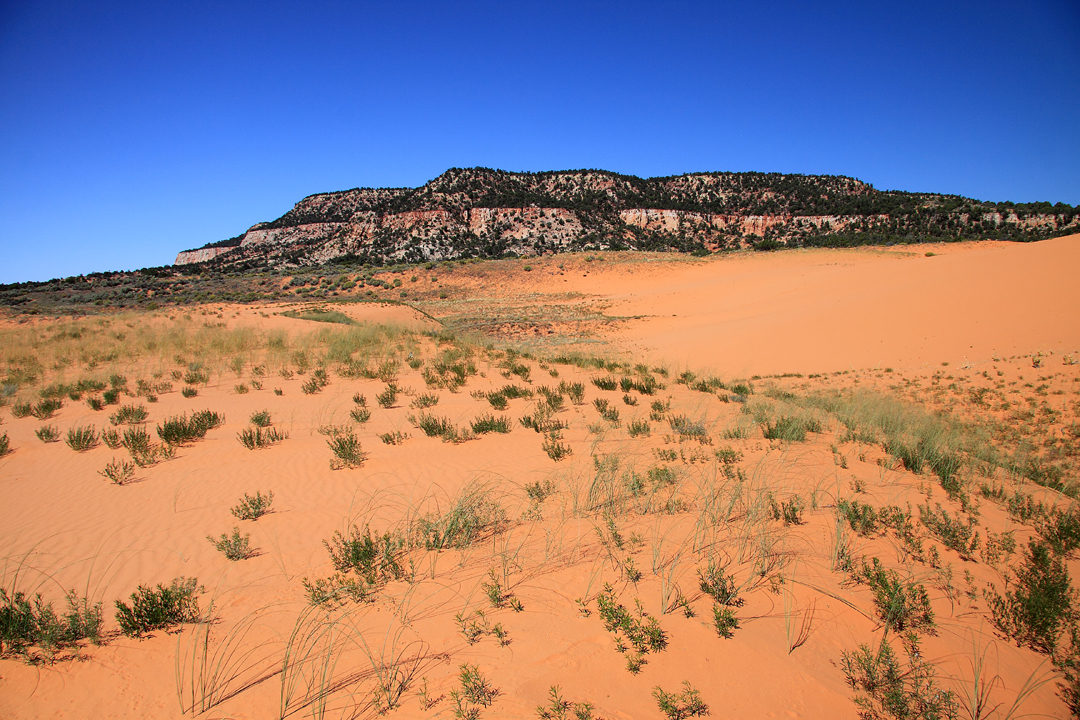
Adult beetles were found on the northern edge of this dune. A majority were seen amongst sparse vegetation rather than barren areas.

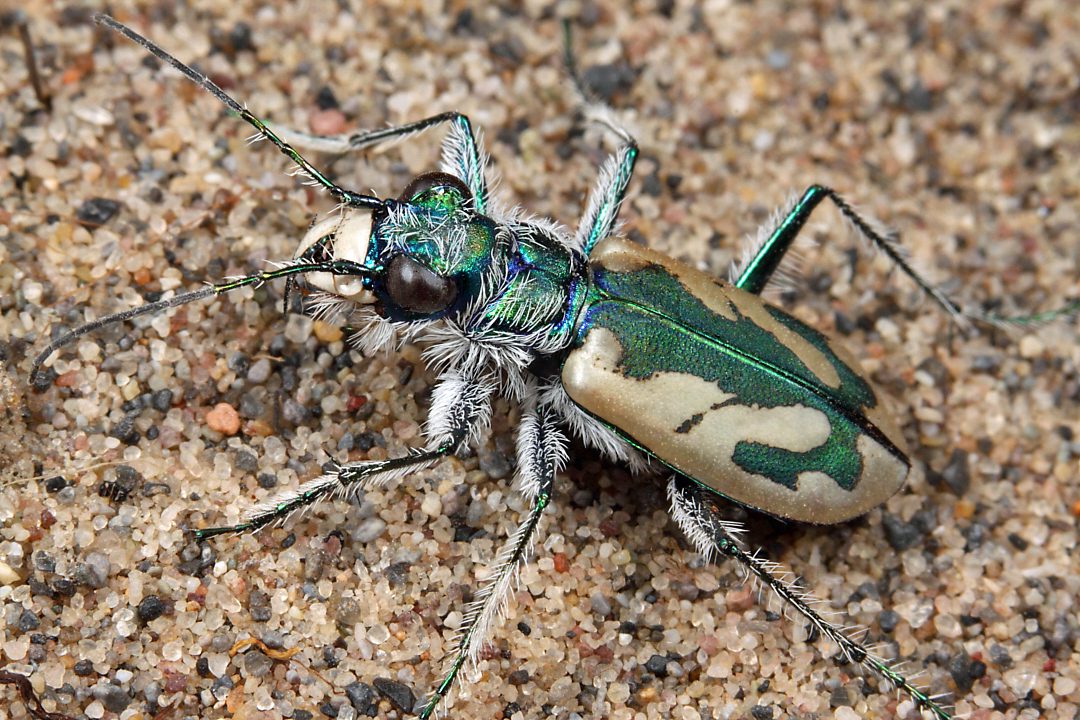
It didn’t take long really to find them, as the adults were already out in encouragingly strong numbers. Of the several dozen adults we saw, all but one were seen atop the northern edge of one particular sparsely vegetated dune.  I suspect the larval burrows were at the bottom of the steep northern dune escarpment in the more stable wind-scoured sandstone clays that lay between individual dunes.  Vivid white and floating across the sand on long delicate legs, the elegance of their beauty was a stark contrast to the harshness of the surrounding landscape.  With a miniscule range of only 400 hectares, C. albissima is one of North America’s rarest tiger beetles, and I felt truly priviledged to join the small ranks of those who have seen this beetle alive in its native habitat and could appreciate the significance of the event.  Of course, the sense of accomplishment would not be complete unless I also succeeded in photographing the species in the field, and although the adults were quite wary and active, I was happy with several of the photos that I ended up with.  Similar to what I observed with C. arenicola, adults amongst the vegetation seemed slightly less skittish than those out in the open, so it was in the vegetated areas that I concentrated my efforts.  My only regret was not adding extension tubes to allow some real closeup portraiture, but the beetles seemed far too wary to have put up with the decrease in working distance that would have entailed.  At any rate, here are some of my favorites:


What the future holds for C. albissima remains unclear.  Designation of the beetle’s home range as a preserve (albeit tiny) would seem to offer long term protection, but a  large portion of this area is open to off-road vehicular traffic (although not a single one was seen during the time that we were there).  An even greater threat exists in the potential for extended drought affecting the entire population, and as greenhouse gases continue to accumulate in the atmosphere the chance of impacts from unusual weather events only grows. I feel lucky to be among the few that have witnessed this beautiful species in nature, but I sincerely hope I am not among the last.

ORV tracks can be seen just outside the conservation area boundary

Copyright © Ted C. MacRae 2011

Isn’t she splendid?!

Cicindela splendida | Bald Hill Glade Natural Area, Ripley Co., Missouri

This gorgeous female Cicindela splendida emerged recently from one of my rearing containers.  She was one of several 3rd instar larvae that I collected this past June from their burrows in a dolomite glade in southeastern Missouri.  I had suspected they might represent this species because of the bright, metallic sheen on their heads and decided to rear them out to find out for sure.  Rearing tiger beetles is fun and easy—all you have to do is fill a container with native soil, make a “starter” burrow¹ and drop them in. In this case, I also partially sunk a native rock into the soil in the center of the container, something I have started doing recently as it gives the emerged adult an elevated and more visually appealing surface on which to perch than the soil should I desire to take photographs.

¹ Larvae will dig new burrows on their own, but starter burrows allow you to place the burrow where you want it.  They are essential if more than one larva is introduced to the container, as wandering larvae will fight when they encounter each other. I like to start the burrow in a corner of the container (a pencil works great for this) and push down to the bottom of the container so I can see into the burrow from outside to monitor the larva as it develops.  After introducing the larva to its burrow, I push the soil around the entrance to seal it lightly to keep the larva from immediately crawling back out.  The larva will eventually reopen the burrow but generally accepts it, digging it out further to its liking and shaping the entrance to precisely fit the size and shape of its head.

Reared from 3rd instar larva, burrow in sparsely vegetated clay exposure of dolomite glade.

With tiger beetle rearing, feeding time is fun time! Our lab rears insects for testing in abundance, and there are always leftovers. Really just about any insect that can be pulled into the burrow will be acceptable as prey, but lepidopteran caterpillars are my favorite. I use mostly early instar tobacco hornworm larvae, choosing the size as appropriate for the size of the tiger beetle larva—the big ones (e.g. 3rd instar Tetracha) can handle caterpillars 35-40 mm in length and 6-8 mm in diameter, while neonates must be used for the smallest ones (e.g. 1st instar Cylindera celeripes and C. cursitans). I find it endlessly entertaining to sneak up on the larva sitting at the entrance of its burrow, slowly position a caterpillar above the burrow entrance with forceps, and dangle it to entice the tiger beetle larva to lurch out, grab the caterpillar, and drag it down into its burrow—all in a split second! If the larva drops down from the burrow entrance during my approach I just drop the caterpillar into the burrow (though this isn’t nearly as much fun).

Copyright © Ted C. MacRae 2011

St. Anthony Dune Tiger Beetle

Sand dune habitat for Cicindela arenicola | vic. Idaho Falls, Idaho

After kicking off the 2011 fall tiger beetle trip by finding Cicindela formosa gibsoni and C. scutellaris yampae in the Yampa Valley sand dunes in northwestern Colorado, I was even more optimistic about my chances of seeing the main goals of the trip—the four C. maritima species group endemics that inhabit sand dunes in Idaho (St. Anthony Dune Tiger Beetle—C. arenicola, and Bruneau Dune Tiger Beetle—C. waynei), Utah (Coral Pink Sand Dune Tiger Beetle—C. albissima), and Colorado (Colorado Dune Tiger Beetle—C. theatina).  Each of these closely related species is restricted to a single sand dune system in their respective states, resulting in small populations that are especially vulnerable to drought and threats to their required habitats (primarily invasive plants and offroad recreational vehicles).  Cicindela arenicola, described from the St. Anthony Dune system of southeastern Idaho (Rumpp 1967) was our first target, and while the drive through the Snake River Valley—aspen and maple in blazing full color—was stunningly beautiful, all I could think about during the 6-hour drive was the rising temperatures outside and the tendency of these sand dune tiger beetles to dig in if it gets too hot.  I had information about several localities along the St. Anthony Dune system, and by the time we arrived at the first of these it was already early afternoon.

Cicindela arenicola adult burrows

Walking onto the dunes at a locality near Idaho Falls, it didn’t take long to find the unmistakable signature of adult activity—burrows.  Many insects (especially bees) and even non-insects (spiders, solifugids, etc.) that live on sand dunes create burrows that can look similar to those created by adult tiger beetles.  However, after years of experience I can almost tell at a glance whether a burrow has been created by a tiger beetle versus some other arthropod by the size and shape of the opening and appearance of the diggings.  When there is doubt, a little bit of excavating with a knife gives further clues in the shape of the tunnel—flatter than most other diggers and angling almost horizontally back into the sand before taking a dive a few inches back.  Wind quickly obliterates evidence of the burrow entrance and pile of diggings, so when these are present and fresh-looking the beetles have either just dug in or just dug out.  I excavated a number of burrows that turned out to be empty, suggesting the beetles were out and about if only I could find them.  And find them I did, mostly along the sloping, south-facing dune face above the flatter sand plain below.  They were as beautiful as I imagined they would be—bold, white markings, screaming green and copper highlights on the head and pronotum, and a dense covering of white hairs on the sides and undersurface.  They were also extremely active and wary, so much so that I didn’t even attempt to photograph them for the time being despite the decent number of individuals that we saw at the site.

Cicindela arenicola adult excavating burrow (click for better view of beetle just inside burrow entrance)

Cicindela arenicola in completed adult burrow | September 2011 | Idaho Falls, Idaho

There were other nearby sites that I had planned to check also, but with good numbers seen already and several other interesting insects (e.g., Crossidius spp.) found in abundance on the blooms of snakeweed plants growing on the backside of the dunes, there was really no reason to go anywhere else.  Besides, I still had not even attempted a field photograph of C. arenicola (although I had made sure to capture some live adults for studio shots that night as a backup).  As the sun began sinking in the western sky and temperatures began to cool off, I noticed the adults were becoming scarce and that fresh burrows were appearing on the dune surface.  In contrast to earlier in the day, adult beetles were found in nearly every burrow that I excavated—the beetles were digging in, and if I wanted field photographs it was now or never.  I managed a few distant shots of the first several adults I tried to stalk, but none of these were close to keepers.  I eventually noticed that beetles in the sparsely vegetated areas of the dune seemed to be slightly more approachable than those out on the open dune surface (perhaps they felt a little more secure in the presence of some cover), and although the vegetation often obscured clear views of the beetles, it was at least a more manageable problem than not even being able to approach them.  Finally, after considerable effort, I managed the photograph shown below.  I’d like to take credit for the near perfect composition and focus, but it was an actually a completely accidental shot.  I had been stalking the beetle for some time and had finally gotten closer to it than I had managed for any other beetle.  Rather than a presenting me with a lateral profile, the beetle was directly facing me as I closed in for the shot. Just as I pressed the shutter the beetle turned profile and then darted off.  Other than nipping the middle tarsus I don’t think I could’ve framed this uncropped photo better if I had tried.

Cicindela arenicola | September 2011 | vic. Idaho Falls, Idaho

Cicindela arenicola is closely related to C. waynei (known only from sand dunes in and around Bruneau Dunes State Park in southwestern Idaho), and it is only recently that the two have been considered separate species.  Cicindela waynei differs in its generally green rather than bronze coloration, more expanded white markings, and the presence of a curious upward projecting tooth on the male mandible (Pearson et al. 2006).  There are some populations in south-central Idaho assigned to C. arenicola that show an intergradation of characters between the two species, primarily in the presence of individuals with green coloration and expanded markings, so I found it interesting to encounter just such an individual at this southeastern Idaho site as well.  The individual, a male (and photographed in a terrarium that evening), looks very much like C. waynei except that it lacks the distinctive mandibular tooth characteristic of that species.

Male from same locality with green elytra and expanded markings

Cicindela arenicola is largely restricted to the Snake River Plain of southern Idaho, with a small population also occurring in the Centennial Sandhills of southwestern Montana (Winton et al. 2010). The sand dunes on which these beetles depend have suffered numerous assaults in recent years at the hands of man, with exotic invasives (Bouffard et al. 2009), trampling by cattle (Bauer 1991), and offroad vehicular traffic having the greatest impact on tiger beetle populations.  The species has been considered for listing on the Endangered Species List due to the imperiled nature of its limited habitat, but to this point such status has not yet been accorded.  It has, however, been listed as globally imperiled by the Idaho Department of Fish and Game and the Bureau of Land Management.  Most people are completely unaware that this beetle exists, and probably fewer still would even care.  For me personally, however, the chance to see this rare and beautiful beetle in its native habitat and spend time watching its behavior was a thrill I won’t soon forget.

Tiger beetle's-eye view of its preferred sand dune habitat.

I haven’t forgotten about the challenges that led to this post.  However, the hour is late and I need my rest.  Points will be awarded over the next day or so, and the winner of BitB Challenge Session #4 will be crowned!  In the meantime, I’ve released the submitted comments so you can see how your answers fared against the competition—no do-overs!

REFERENCES:

Bauer, K. L. 1991. Observations on the developmental biology of Cicindela arenicola Rumpp (Coleoptera: Cicindelidae). Great Basin Naturalist 51:226–235.

Bouffard, S. H., K. V. Tindall and K. Fothergill. 2009. Herbicide treatment to restore St. Anthony tiger beetle habitat: a pilot study. Cicindela 41(1):13–24.

Pearson, D. L., C. B. Knisley and C. J. Kazilek. 2006. A Field Guide to the Tiger Beetles of the United States & Canada: Identification, Natural History, and Distribution of the Cicindelidae. Oxford University Press, New York, NY. 227 pp.

Rumpp, N. L. 1967. A new species of Cicindela from Idaho (Coleoptera: Cicindelidae). Proceedings of the California Academy of Science 35:129–140.

Winton, R. C., M. G. Kippenhan and M. A. Ivie.  2010.  New state record for Cicindela arenicola Rumpp (Coleoptera: Carabidae: Cicindelinae) in southwestern Montana.  The Coleopterists Bulletin 64(1):43–44.

Copyright © Ted C. MacRae 2011
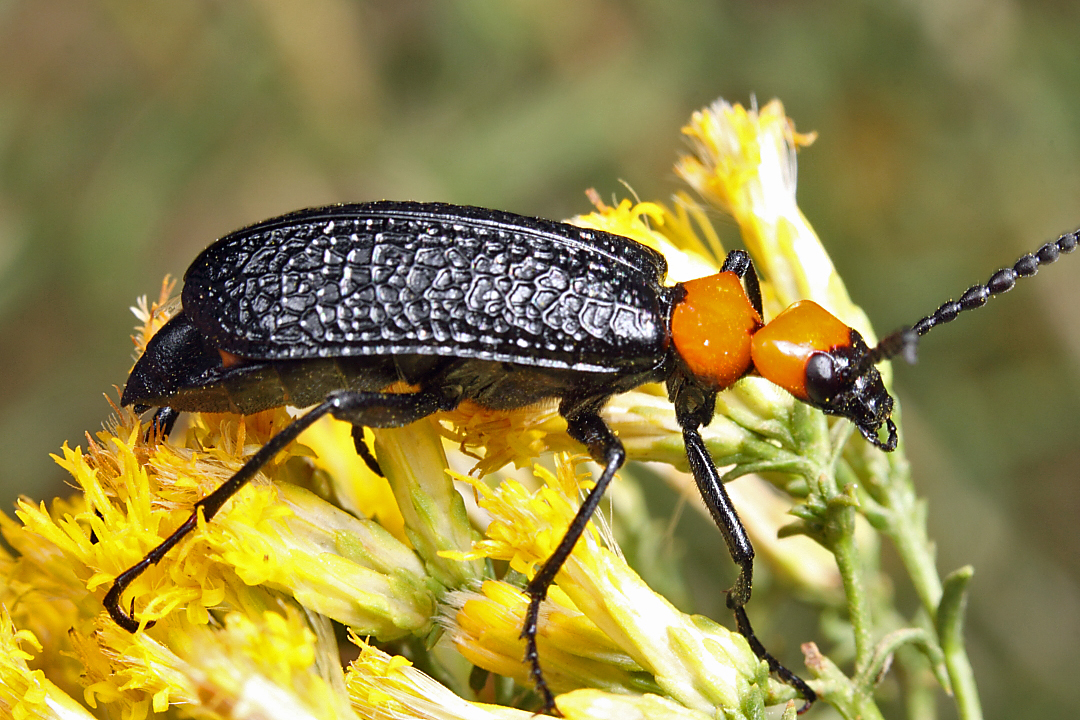
Lytta vulnerata cooperi

Lytta vulnerata cooperi | Idaho Falls, Idaho

I had other quarry on my mind when I visited Idaho a couple of weeks ago, but I couldn’t help but pay attention to this blister beetle (family Meloidae) feeding on rabbit brush flowers for the following two reasons: 1) its spectacular and boldly contrasting black and orange coloration, and 2) my collecting partner, Jeff Huether, is an expert on North American Meloidae. My identification of this individual as Lytta vulnerata is based strictly on one line of evidence: Jeff said that’s what it is!  My further identification as the subspecies L. vulnerata cooperi is more tenuous, being based on the distinctly sculptured elytra, immaculate pronotum, and more northerly location (nominotypical individuals, at least from what I can tell looking at photos assigned to the two subspecies, have the elytra indistinctly sculptured, generally exhibit a median line or vitta on the pronotum, and occur further south).

Note distinct elytral sculpturing and immaculate pronotum

Copyright © Ted C. MacRae 2011

The Methocha

As pointed out in my recent post, , there is much to learn still regarding tiger beetle larval parasitoids. In addition to bee flies (order Diptera, family Bombyliidae) of the genus Anthrax, tiphiid wasps (order Hymenoptera, family Tiphiidae) in the genus Methocha also parasitize tiger beetles in their larval burrows. Unlike bee flies, however, which sneakily lay their eggs in and around tiger beetle burrows when their victim isn’t watching, Methocha females aggressively engage the larva and even allow themselves to be grasped within the beetle larva’s sickle-shaped mandibles in order to gain entry to the beetle’s burrow.

Methocha appears to be a rather diverse genus, but it’s taxonomy is still incompletely known. George Waldren from Dallas, Texas is working on a revision of the genus and has found several new species in Texas alone. George is interested in seeing Methocha material from other areas as well and recently sent me the following reminder that adult females are active now:

…if you know of any areas with many tiger beetle larvae, now is the time to find Methocha. They superficially look like Pseudomyrmex ants, but once you see one you’ll catch on to them quickly. I collected more than 70 females today in a large aggregation of Tetracha carolina burrows.

In a subsequent message he adds:

Collect as many as you can, since they seem to be highly seasonal and rare most of the year. I almost always find them around beetle populations in sandy creek beds and receding bodies of water. A pooter works best if they are abundant and there isn’t much for them to hide under. Using your fingers also works—the sting is mild and usually doesn’t pierce the skin (depends on the person and size of the wasp). Vial collecting one by one works just as well.

Methocha females are generally overlooked due to their specialized life history and few specimens are in collections. Males are better represented since they’re easily collected with malaise traps.

If you have any Methocha specimens or manage to collect some, please contact George (contact info can be found at his BugGuide page). BugGuide does have a few photographs of these wasps to give you an idea of what they look like, but this excellent video titled “The Methocha” from Life in the Undergrowth with David Attenborough provides an unparalleled look at their appearance and behavior:


Copyright © Ted C. MacRae 2011

Different Jaws for Different Jobs

Arrhenodes minutus (oak timberworm) | Wayne Co., Missouri

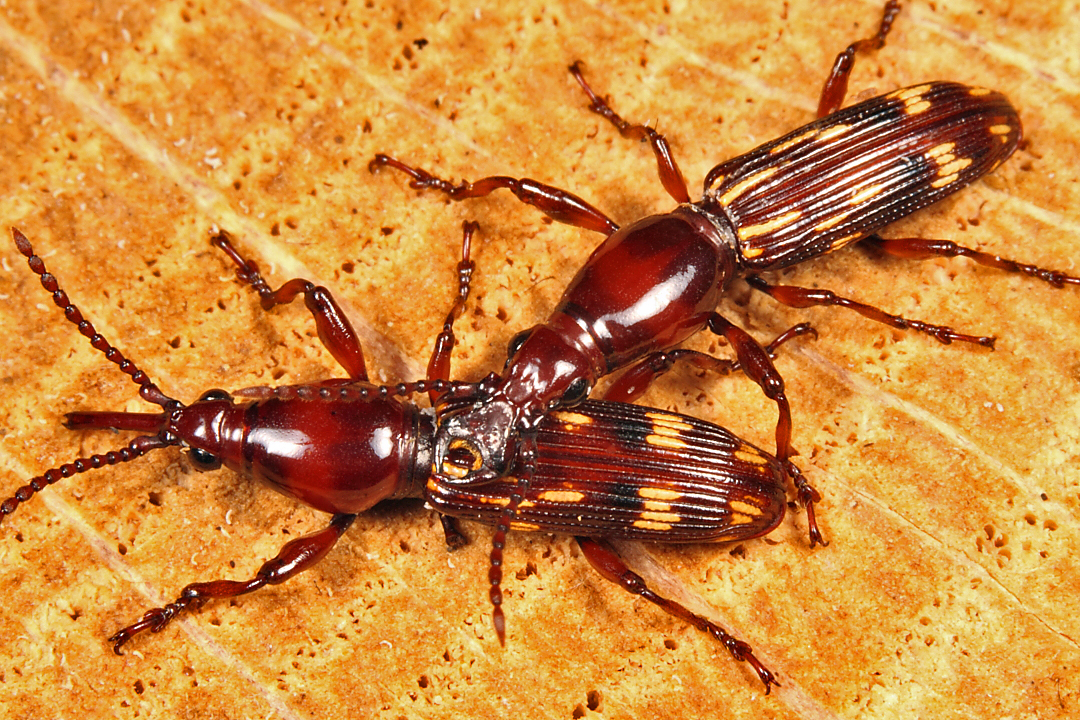
If you’re interested in wood boring beetles and live in the eastern  U.S. like I do, you’re sure to encounter sooner or later the region’s sole¹ “primitive weevil” (family Brentidae), the oak timberworm (Arrhenodes minutus).  This beetle develops as a larva in the wood of living trees exposed by wounding, creating numerous small “worm holes” that can occasionally degrade the value of wood grown for timber.  Females are presumably attracted to volatiles given off by wounded wood for oviposition, thus they are also commonly attracted to the trunks and stumps of trees harvested for lumber or cut for some other reason.  Cut trees are also highly attractive to wood boring beetles in the families Buprestidae and Cerambycidae—my primary taxa of interest, so I’ve seen more than a few oak timberworms over the years, including this male and female that I found on the cut stump of a large black oak (Quercus velutina) in Sam A. Baker State Park, Wayne Co., Missouri.

¹ Actually, there are three other species in eastern North America as well, but all are Neotropical species that occur no further north than the southern tip of Florida (Thomas 1996).

Female - beak thin and elongate

Male - beak short w/ robust mandibles

An interesting feature of oak timberworms and related species of primitive weevils is the rather extreme sexual dimorphism exhibited in the shape and function of the mandibles.  Mandibular sexual dimorphism is actually quite common across many groups of beetles, but in most cases the males simply have proportionately larger mandibles than females due to their use in sexual combat (think stag beetles, for example).  Oak timberworm males also have enlarged mandibles for combat with other males (males are territorial and guard females during oviposition).  The females, however, rather than simply having smaller yet similarly shaped versions of the male mandibles, instead have tiny little mandibles at the end of a greatly narrowed and elongated rostrum (beak).  This is because, unlike most other beetles in which the female mandibles lack a specific purpose, female oak timberworms use their mandibles to “drill” holes into the wood in which they will insert their eggs.  Different forms for different functions!

Mate-guarding behavior

I have read reports of males assisting females in removing her beak if stuck in the wood while drilling an egg hole by “stationing himself at a right angle with her body and pressing his heavy prosternum against the tip of her abdomen, her stout fore legs thus serving as a fulcrum and her long body as a lever” (Riley 1874, as quoted in Thomas 1996), making this a rare instance of tool use by insects.  I have not observed this behavior myself, but it is common to find the males in various mate guarding positions over the female as pictured above.

REFERENCE:

Riley, C. V. 1874. The northern brenthian—Eupsalis minutus (Drury). (Ord. Coleoptera; Fam. Brenthidae). Sixth Annual Report on the Noxious, Beneficial, and Other Insects, of the State of Missouri. Began and Carter, Jefferson City, Missouri, 169 pp.

Thomas, M. C. 1996. The primitive weevils of Florida (Coleoptera: Brentidae: Brentinae). Florida Department of Agriculture & Consumer Services, Division of Plant Industry, Entomology Circular No. 375, 3 pp.

Copyright © Ted C. MacRae 2011

Crossidius coralinus fulgidus

Crossidius coralinus fulgidus | Uintah Co., Utah

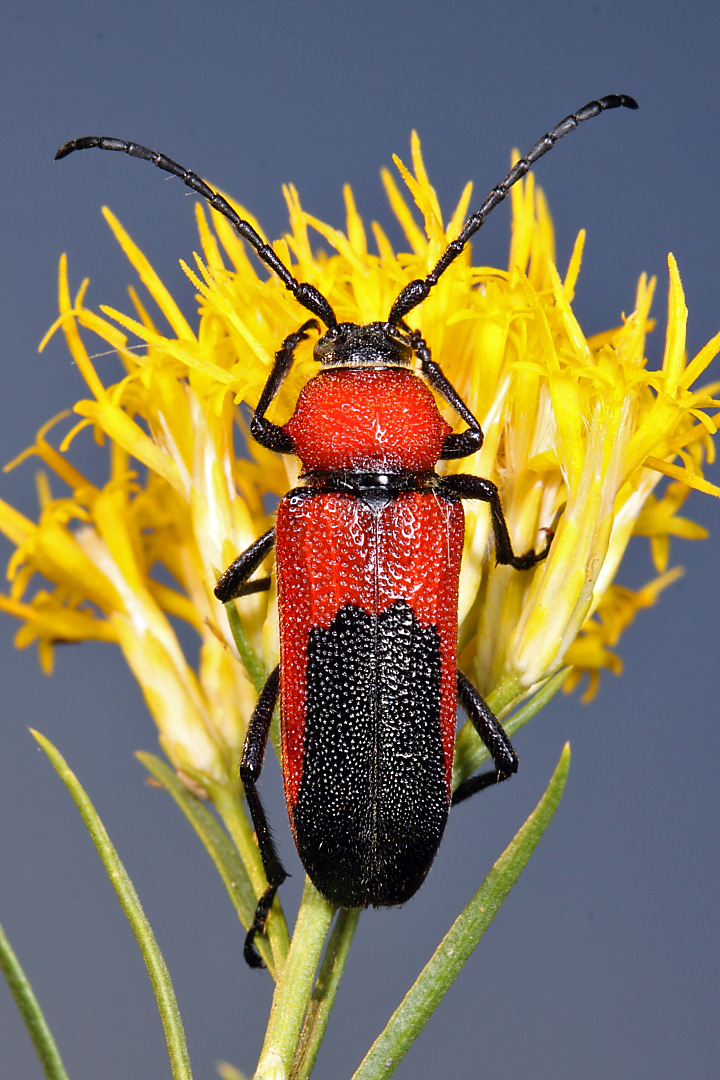
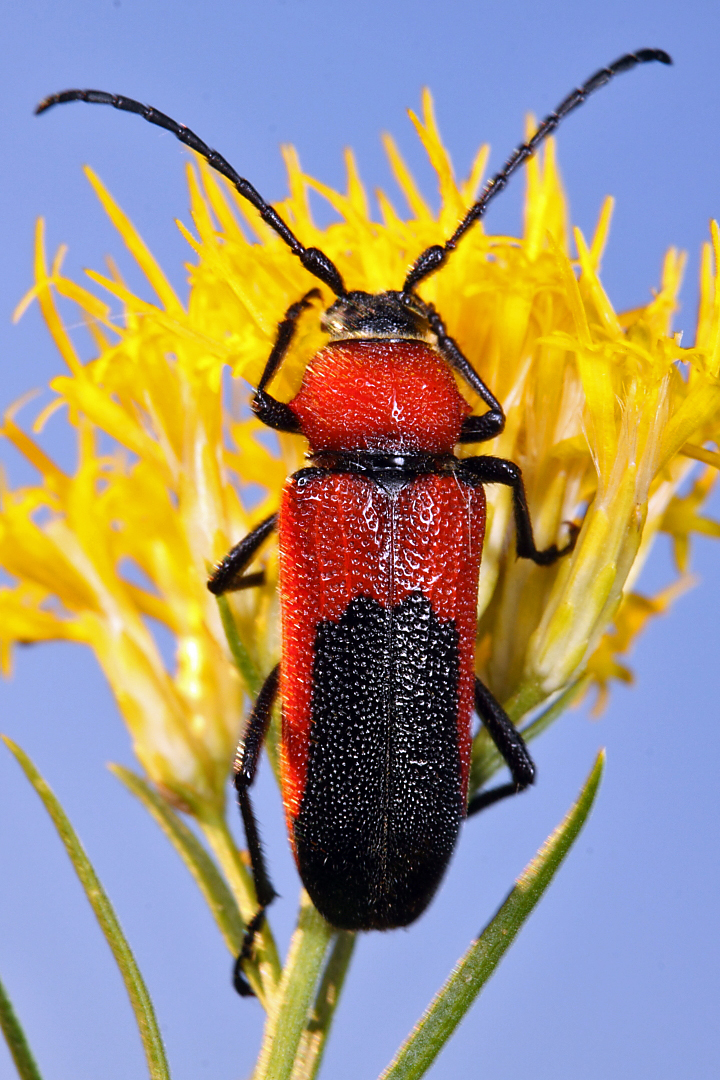
Tiger beetles may have been the primary focus of last week’s 9-day, 10-state, 4,700-mile collecting trip; however, they were not the only beetles I was hoping to see. Longhorned beetles (family Cerambycidae) of the genus Crossidius are unusual in the family because of their fall rather than spring/summer adult activity period, and they just happen to occur in dizzying variety throughout the Great Basin and surrounding mountainous areas. Larvae of all species are presumed to feed on the roots of perennial, shrubby, fall-blooming composites, primarily in the genera Chrysothamnus, Ericameria, Gutierezzia, and Haplopappus (Linsley and Chemsak 1961), with the adult activity period undoubtedly timed to allow congregation and mating on the late-season blooms of their host plants.  Only 13 species are currently recognized, but these are further divided into 37 subspecies and innumerable locally distinct populations.  Not having spent much time in the mountain west during the fall, this group has till now been poorly represented in my collection.

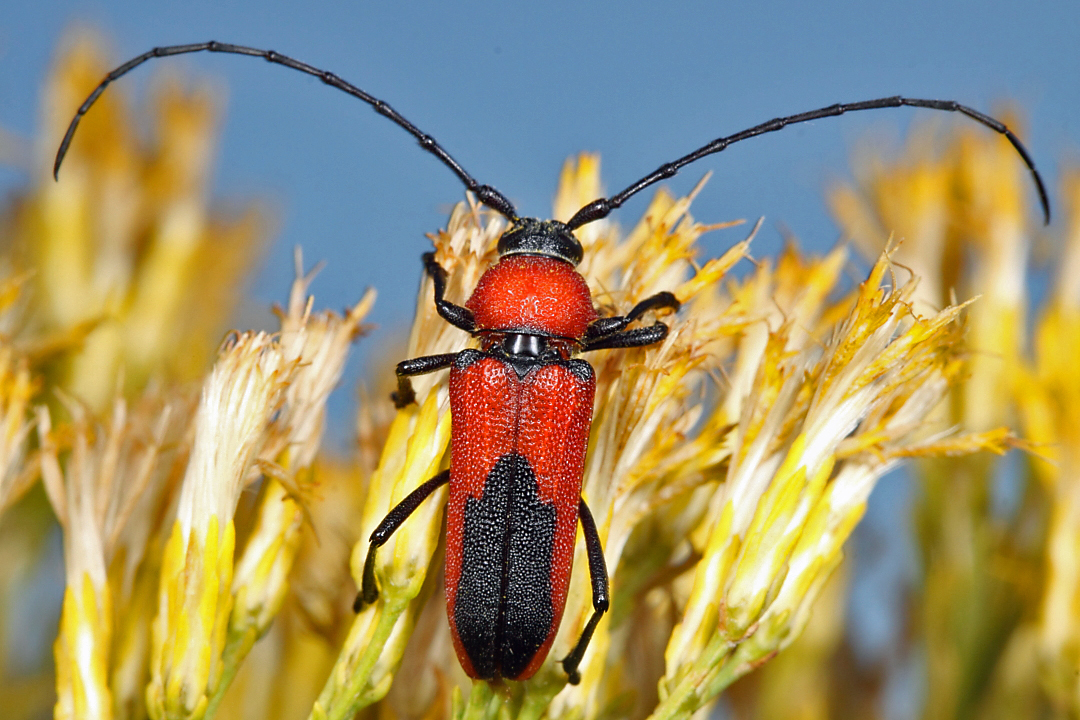
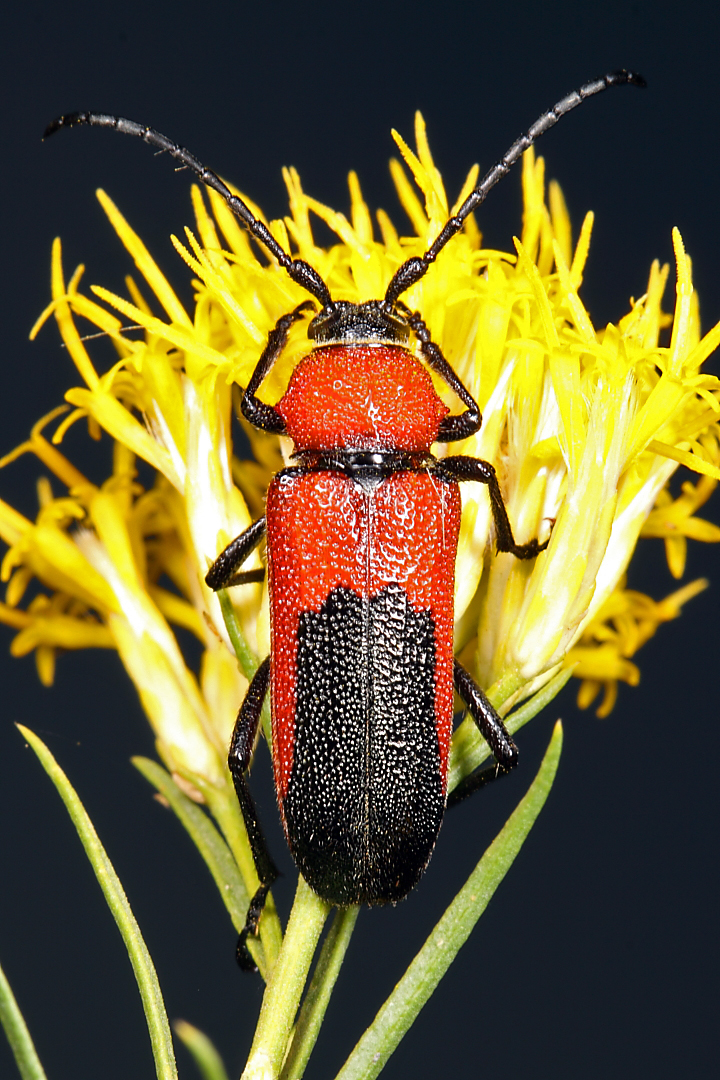
The species shown here, Crossidius coralinus fulgidus, was among the first of many that we encountered during our trip.¹  This population was seen near Vernal in northeastern Utah.  It was late in the day and the adults had settled for the night onto the flowers of their host plant, Ericamera nauseosa.  Flower-visiting longhorned beetles are notoriously frustrating subjects to photograph, as their constant movement and long legs and antennae make focus and composition difficult.  These beetles had essentially ceased activity, allowing me to carefully compose and focus the shot, and the low sun in the western sky provided a bright blue eastern sky to use as a colorfully contrasting background.  The photo above (the very long antennae identify it as a male) was taken hand-held with my Canon 100mm macro lens at ISO 400 and 1/60 sec to allow exposure of the sky and flash at an aperture of f/16 to illuminate the subject and achieve good depth of field.  My only criticism of this photo is the small amount of blur seen in the distal antennal segments.

¹ “We” refers to myself and Jeff Huether from Geneva, NY. Jeff is primarily interested in Meloidae but like me also has an interest in Cerambycidae. I was fortunate to have Jeff with me on this trip, as he has collected extensively throughout the Great Basin region and encountered nearly all of North America’s named species and subspecies of Crossidius. It is only because of his prior experience with this group that I was able to find this and several others that we saw during the trip.

ISO 100, 1/200 sec

ISO 400, 1/200 sec

ISO 400, 1/60 sec

Because the beetles were so calm, I spent some time with this female individual trying different settings to see their effect on background color, subject illumination, and detail.  All were taken hand-held using the same lens at f/16, with the left photo also using my “typical” settings of ISO 100 and 1/200 sec.  The background is very dark (in post-processing I might choose to make it black)—good for some subjects but not this one, and although the focus is good the lighting is rather harsh (I had to decrease highlights in post-processing much more than I normally like).  The center photo was taken with ISO increased to 400 and results in a much more pleasing, if still not very natural-looking sky background.  Focus remains good and the shorter flash duration needed reduces the amount of highlighting that needs post-processing adjustment.  Overall I like this photo the best except that the sky is not true in color.  The right photo is also at ISO 400 but uses a slower shutter speed (1/60 sec).  The sky in this photo is the most natural-looking, and as might be expected problems with flash highlights are minimal—it almost looks like a natural light photograph.  However, some amount of motion blur can be detected, especially in the antennae.  Perhaps intermediate shutter speeds (e.g. 1/120 sec) or slightly higher ISO might effectively deal with this while still allowing the truest colors.  What do you think?

REFERENCE:

Linsley, E. G. and J. A. Chemsak.  1961.  A distributional and taxonomic study of the genus Crossidius (Coleoptera, Cerambycidae).  Miscellaneous Publications of the Entomological Society of America 3(2):26–64, 3 color plates.

Copyright © Ted C. MacRae 2011

Cicindela scutellaris yampae – Yampa Festive Tiger Beetle

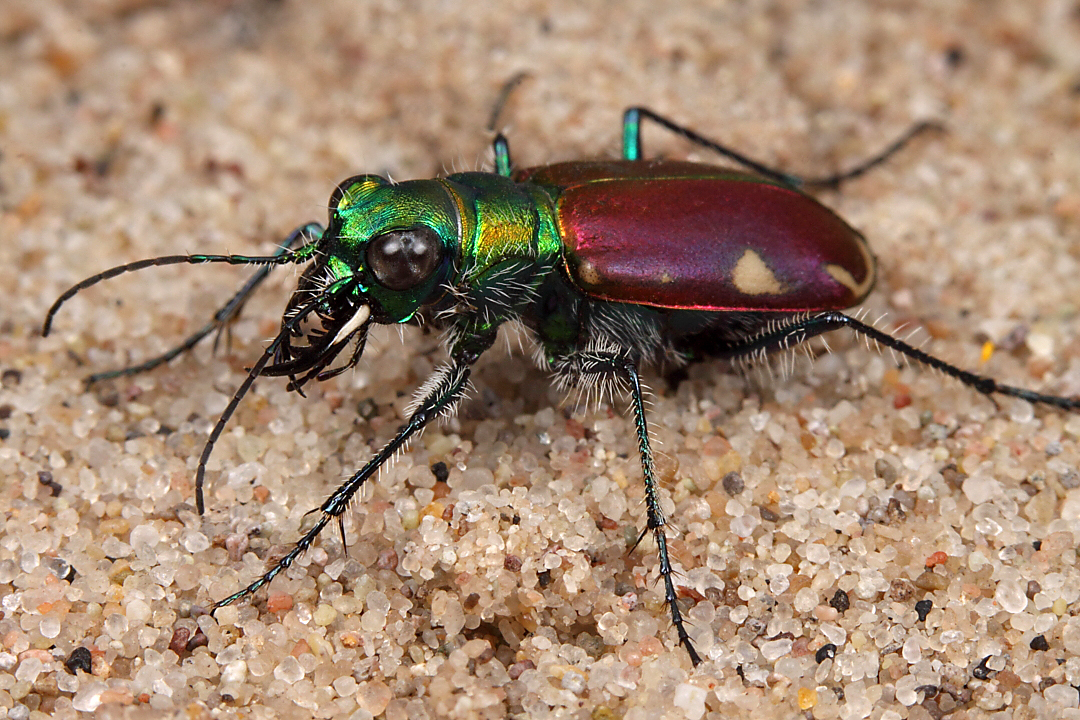
In A Field Guide to the Tiger Beetles of the United States and Canada (Pearson et al. 2006), Cicindela scutellaris yampae (Yampa Festive Tiger Beetle) is one of 223 species and subspecies listed in the book’s index to species and subspecies. Although the book’s alphabetical listing places it second to last in the list, it surely must be considered near the top of any list based on beauty. It is also among the most geographically restricted tiger beetles in North America, restricted to the Maybell Sand Dunes in northwestern Colorado where it occurs with the equally beautiful, rare, and restricted Cicindela formosa gibsoni (Gibson’s Big Sand Tiger Beetle). Like that subspecies, C. s. yampae was one of six endemic sand dune tiger beetles targeted in this year’s Annual Fall Tiger Beetle Trip™, and as these photos show I was lucky enough to find it.

Cicindela scutellaris yampae | nr. Maybell, Colorado

As a species, C. scutellaris is one of North America’s most widely distributed and polytopic species, with the nominate and lecontei forms inhabiting a wide swath of the Great Plains and Midwest.  Around the eastern, southern, and western perimeters of its geographical distribution occur numerous named subspecies exhibiting a tremendous diversity of variations on the species’ “normal” coloration and maculation.  Cicindela s. yampae is most similar to the nominate subspecies due to its green head and prothorax with purple-red elytra, but it differs in possessing a broad white maculation on the side of each elytron (top photo).  There are individuals, however, in which the maculation is reduced to isolated spots (bottom photo), resembling somewhat the pattern of maculations seen in C. s. lecontei further to the east.

C. scutellaris yampae w/ reduced maculations

Pearson et al. (2006) note that records over the years suggest the remaining populations of this beetle are small. We did not see many individuals on our visit to the type locality east of Maybell early this past week (perhaps no more than seven total), and we saw none at a formerly larger sand dune about 10 miles west of Maybell.  In past years this latter site has supported good numbers of the beetle, but it has apparently succumbed to vegetational encroachment of the formerly more open sand dune. As far as I am aware there are no conservation measures in place on any level to protect these remaining populations and ensure that adequate suitable habitat remains to enhance the beetle’s long-term prospects.

REFERENCE:

Pearson, D. L., C. B. Knisley and C. J. Kazilek. 2006. A Field Guide to the Tiger Beetles of the United States and Canada. Oxford University Press, New York, 227 pp.

Copyright © Ted C. MacRae 2011