BitB Best of 2009

In my first post of 2009, I looked back at the photographs I had posted during 2008 and picked some of my personal favorites. I hesitated then to call myself a photographer (and still do), but I at least now have suitable equipment to aid in my progress toward that eventual goal. I have learned much over the past six months in my first attempt at serious insect macrophotography (prioritizing in situ field photographs of unmanipulated subjects as a matter of personal choice).  Through this, I’ve come to realize the following skills to be the most important for success:  

  1. Composition
  2. Understanding lighting
  3. Knowing how to use a flash
  4. Knowledge of the subject

I’ll give myself a “A” in the last of these, but in the other areas I still have much to learn. With this caveat, and for the last post of 2009, I offer the following twelve photographs as my final choices for the 2nd Annual “Best of BitB”:  

Best beetle

Cylindera celeripes (swift tiger beetle), Woodward Co., Oklahoma

From Revisiting the Swift Tiger Beetle – Part 1 (June 30).  A decent enough photograph, especially considering that I’d had my camera for about a month when I took it.  However, the discovery of robust populations of this formerly rare and enigmatic species throughout northwestern Oklahoma (and later also in northwestern Missouri) was the most significant find of the 2009 field season, and this photograph is the best capture of that moment.

Best fly

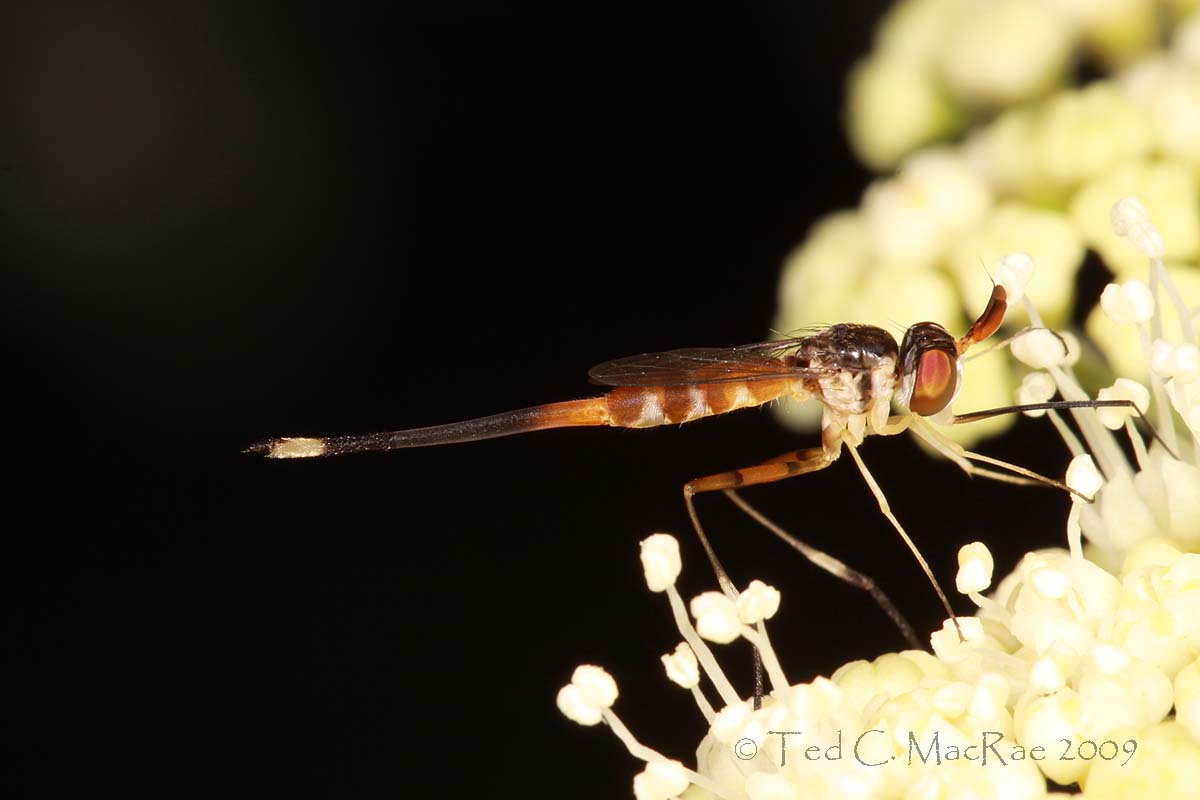
Stylogaster neglecta, a species of thickheaded fly

From Overlooked, needle-bellied, thick-headed fly (Aug 14).  One of my first good “black background” shots.  The white tip of the abdomen compliments the white flower stamens against the background.

Best “true” bug

Beameria venosa, a prairie obligate cicada

From North America’s smallest cicada (Aug 4).  So many different shades of green with white frosting on the bug’s body.  I tried taking this shot in portrait and it just didn’t work—I liked this landscape shot much better.

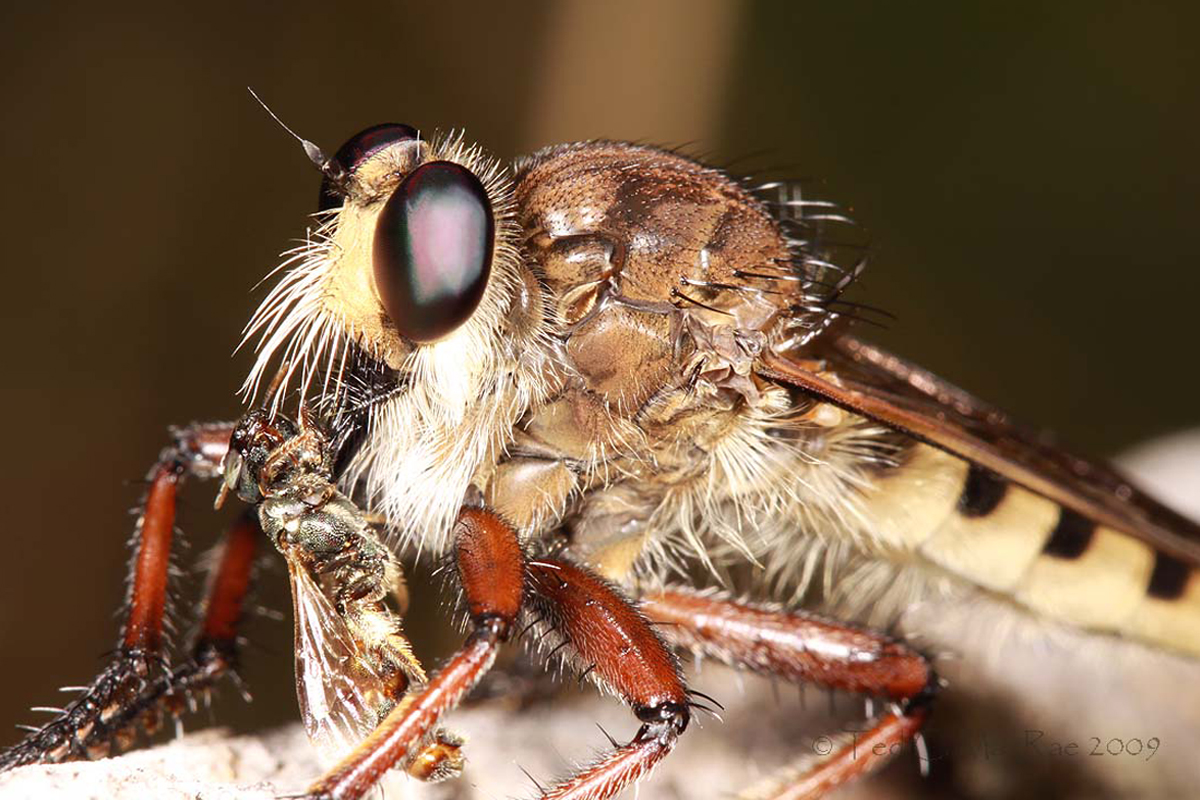
Best predator

Promachus hinei (Hines giant robber fly) & Ceratina sp. (small carpenter bee) prey

From Prey bee mine (Sept 14).  Robber flies are immensely photogenic, especially those in the genus Promachus due to their prominent “beards.”

Best camoflauge

Dicerca obscura on bark of dead persimmon

From The “obscure” Dicerca (June 19).  Sparkling and gaudy as specimens in a cabinet, the coloration of many jewel beetles actually helps them blend almost perfectly with the bark of their preferred tree hosts.

Best immature insect

Tetracha floridana (Florida metallic tiger beetle) 3rd-instar larva

From Anatomy of a Tiger Beetle Larva (Oct 22).  “Otherwordly” is invariably the first word that comes to mind when someone sees a tiger beetle larva for the first time.  I was lucky enough to get this one in profile with a nice view of its abdominal hump and its curious hooks.

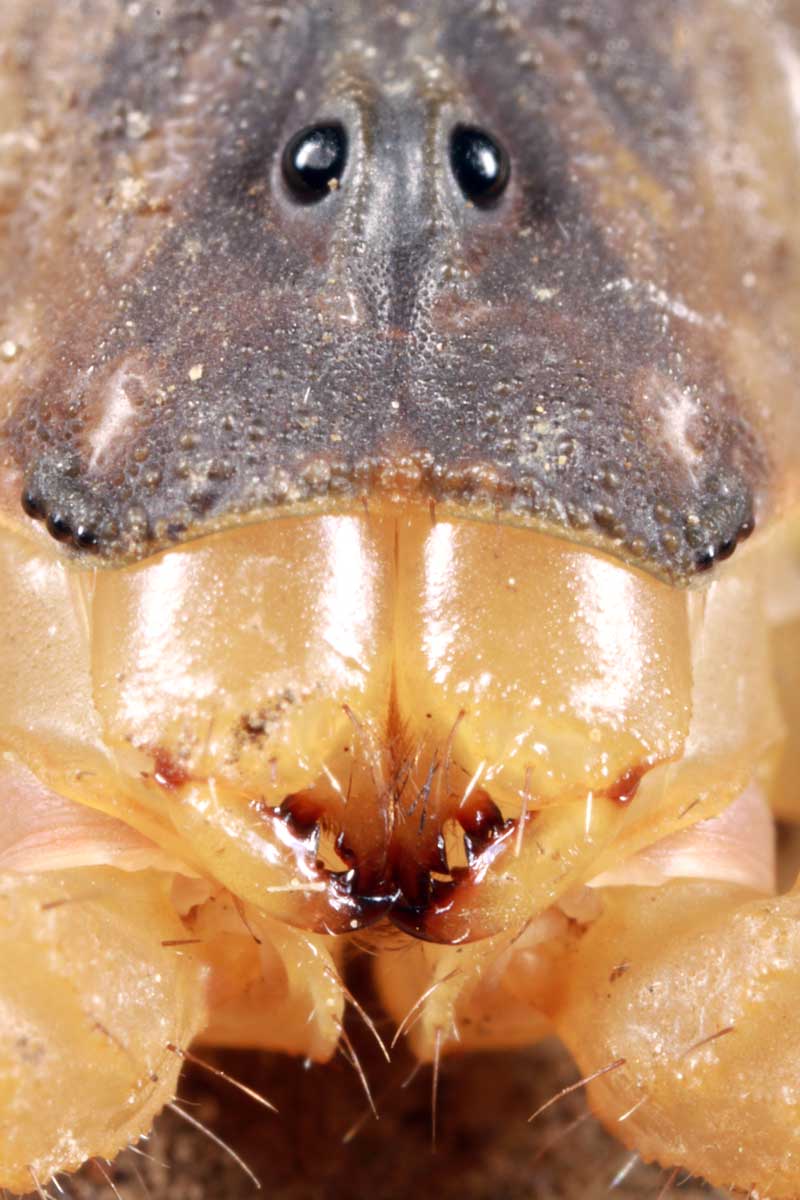
Best arachnid

Centruroides vittatus (striped bark scorpion)

From A face only a mother could love (Oct 6).  Despite some minor depth-of-field problems with this photograph, I’m fascinated by its “smile.”

Best reptile

Eastern collared lizard (Crotaphytus collaris collaris) adult male

From North America’s most beautiful lizard (July 10).  A simply spectacular lizard—all I had to do was frame it well and get the flash right.

Best wildflower

Spiranthes magnicamporum (Great Plains ladies

From Great Plains Ladies’-tresses (Dec 7).  Few flowers are as photogenic as orchids, even native terrestrials with minute flowers such as this one.  I like the frosty texture of the lip and the starkness of the white flower on the black background.

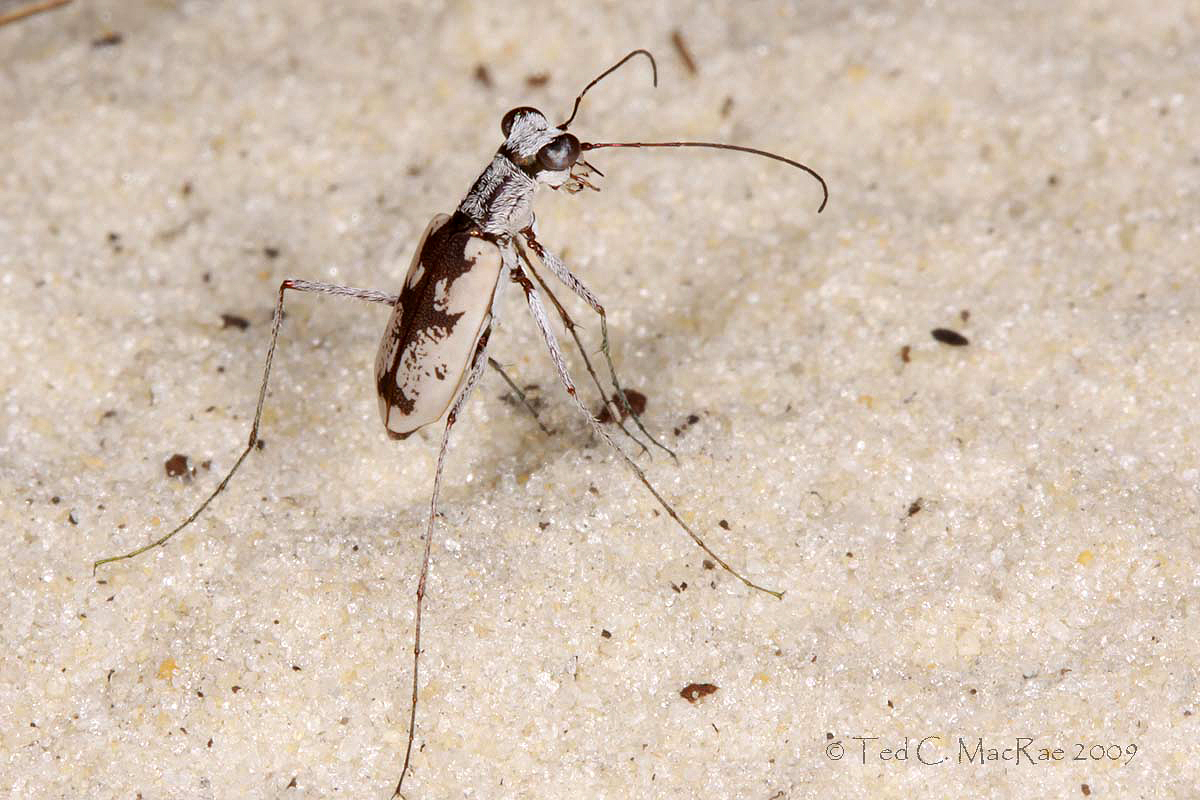
Best natural history moment

Thermoregulatory behavior by Ellipsoptera hirtilabris (moustached tiger beetle)

From Tiger Beetles Agree—It’s Hot in Florida! (Dec 18). I chose this photo for the classic “stilting” and “sun-facing” thermoregulatory behaviors exhibited by this tiger beetle on a blistering hot day in Florida.

Best closeup

Megaphasma denticrus (giant walkingstick)

From North America’s longest insect (Aug 21).  I haven’t tried a whole lot of super close-up photographs yet.  I liked the combination of blue and brown colors on the black background.

Best Landscape

Sand Harbor Overlook, Lake Tahoe, Nevada

From Sand Harbor Overlook, Nevada (March 23).   My choice for “best landscape” again comes from Lake Tahoe.  This is not a great photo technically—I was still using a point-and-shoot and had to deal with foreground sun.  However, none of the other photos I took during my March visit to the area captivate me like this one.  I like the mix of colors with the silhouetted appearance of the trees on the point.

Copyright © Ted C. MacRae 2009

Add to FacebookAdd to DiggAdd to Del.icio.usAdd to StumbleuponAdd to RedditAdd to BlinklistAdd to TwitterAdd to TechnoratiAdd to Yahoo BuzzAdd to Newsvine

Email to a friend

Tiger Beetles at Florida’s “Road to Nowhere”

(continued from the previous post, Tiger Beetles Agree—It’s Hot in Florida!)

During the time that I explored the pine sandhill habitat at Withlacoochee State Forest in Citrus County, I kept close watch for any individuals amongst the dozens and dozens of Cicindela abdominalis (Eastern Pinebarrens Tiger Beetle) that I encountered that might exhibit the deeply pitted rather than smooth elytral surface that would identify it as the closely related Florida-endemic, Cicindela scabrosa (Scabrous Tiger Beetle).  However, no such individuals would be seen (my first tiger beetle failure of the trip), and having already spent more than two hours at the site I decided it was time to move on the the “Road to Nowhere.”

"Road to Nowhere," 11.1 mi S Jena on Hwy 361, Dixie Co., Florida

The Road to Nowhere is a tidal marsh (also known as “coastal salt marsh”) near Steinhatchee in Dixie County (11.1 mi S Jena on Hwy 361).  Although I was not aware of it prior to my August visit, this locality has achieved legendary status among tiger beetle enthusiasts because of the great number of species that can be seen there—as many as 6–10 species in the right season.  Being a coastal wetland with moist, saline substrates, these would include such species as Cicindela trifasciata ascendens (Ascendent Tiger Beetle), Habroscelimorpha severa (Saltmarsh Tiger Beetle), the rarely collected H. striga (Elusive Tiger Beetle), and Eunota togata togata (White-cloaked Tiger Beetle), in addition to Ellipsoptera marginata (Margined Tiger Beetle) and E. hamata lacerata (Gulf Beach Tiger Beetle) which I had already found a few days earlier.  As I found the highway leading to the spot and begain to drive its upper reaches, I looked longingly at the barren sand exposures along the sides of the road thinking that C. scabrosa, already known from the area (Choate 2003) must be there.  However, it was well into the afternoon hours by then, and having already failed to find the species at Withlacoochee State Forest, I decided I should press on and see what the Road to Nowhere had to offer.

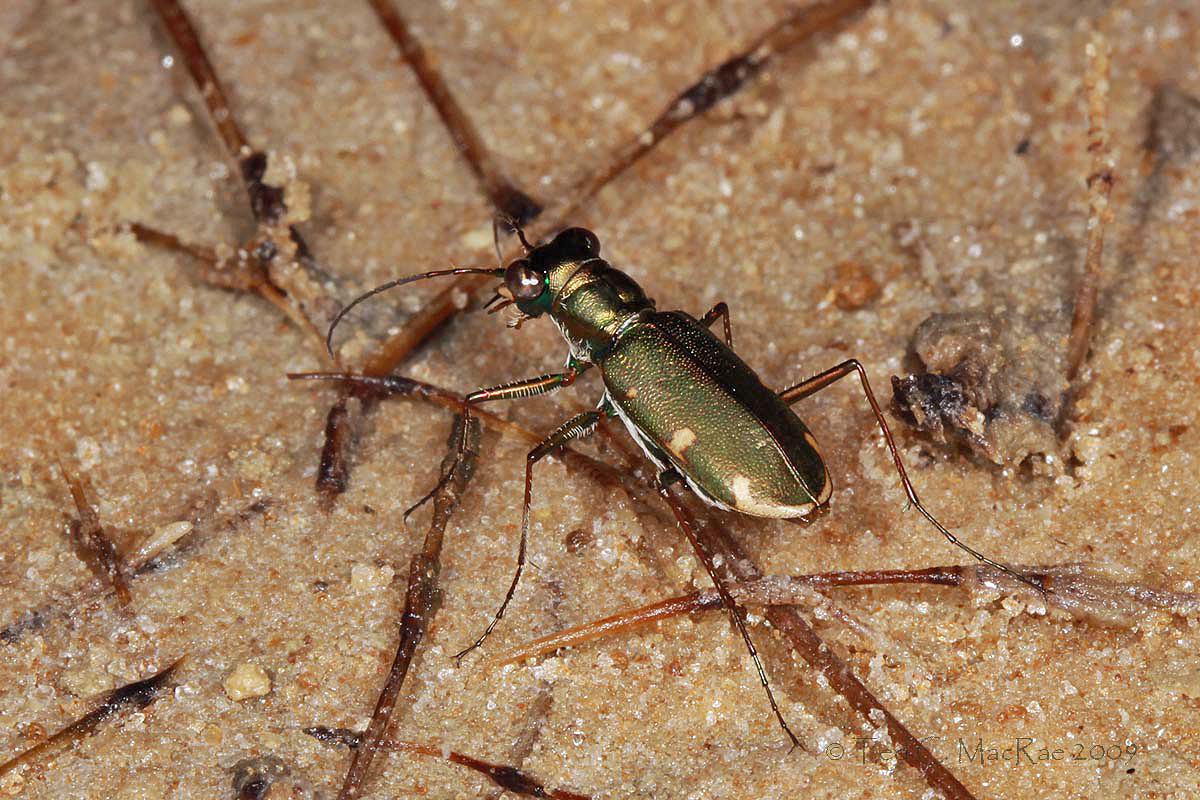
Cicindela (Cicindelidia) trifasciata ascendens—Ascendent Tiger Beetle

Almost immediately I began seeing tiger beetles.  The first species I saw was C. trifasciata ascendens—rather common on areas of the flats close to the water’s edge.  I recognized them instantly, as I had not only seen this species some years ago in south Texas, but also in southern Missouri as a lone vagrant (Brown and MacRae 2005).  The dark brown dorsal coloration and thin, sinuous, S-shaped middle maculation are diagnostic for the species (Pearson et al. 2006).  While it was by now late afternoon, the heat of the day had not yet begun to subside, and the beetles were extremely active and flighty.  The difficulty in approaching them closely enough for photographs was exacerbated by the wet, muddy substrate and incessant drone of tenacious mosquitoes intent on breaching my invisible shield of DEET.  Eventually, however, and only due to one decidedly more cooperative individual (above), I succeeded in getting a few shots with which I was happy. 

Habroscelimorpha severa—Saltmarsh Tiger Beetle

Far less common than C. trifasciata ascendens, but equally skittish, was the impressive H. severa.  I have also seen this species before in south Texas, though not in great numbers, and its shiny green surface with maculations reduced to small spots at the middle and rear of the elytra are unmistakealbe.  It was the hardest to approach of the species I saw, and the above (only slightly cropped) photograph is as close as I was able to get (it is also the only photograph from the field session that was good enough and close enough to keep).  This species tends to be most active in the morning and again in the evening, so most of my late-day efforts focused on this species—in fact, it was almost too dark to see by the time I finally quit my attempts at photographing the species.  I brought back one live individual and took some “studio” photographs after I returned home, but I’m still not any happier with them than this lone field shot.

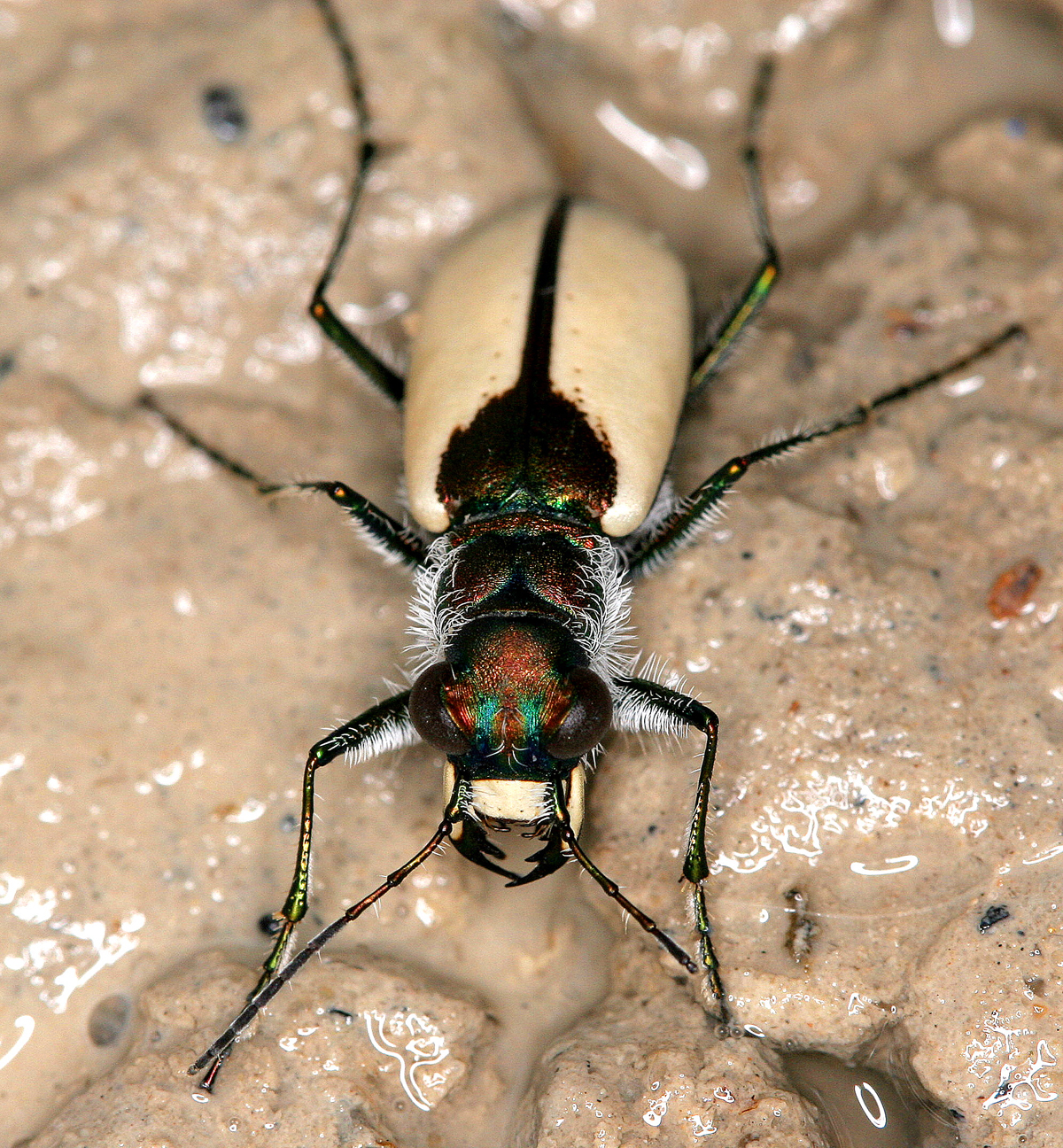
Ellipsoptera hamata lacerata—Gulf Beach Tiger Beetle (reduced maculations)

When I first saw the species represented by the individual in the above photograph, I had not a clue as to its identity—the dark elytra with only a marginal band was unlike anything I would have expected to see.  Quickly thumbing through my “bible” (Pearson et al. 2006), I kept stopping at the plate containing Cicindela marginipennis (Cobblestone Tiger Beetle).  I knew this was impossible, as that species is restricted to several disjunct cobblestone habitats further north.  I collected the specimen for a voucher, keeping it alive for studio photographs, but it wasn’t long before I saw another similar-looking individual.  I decided I must be overlooking something, so after getting photographs and collecting the specimen for another voucher I went back through Pearson.  This time I focused only on the species that could possibly occur here, and realized that it was simply E. hamata lacerata with its normally diffuse middle elytral maculations highly reduced (traces of the middle band can be seen in the photograph).

Ellipsoptera marginata—Margined Tiger Beetle

Ellipsoptera marginata was the most abundant species at this location, and on this day I succeeded in getting a nice photograph of a female with her distinctively downbent elytral apices (see closeup photograph in this post).  This species is very similar to E. hamata, with which it co-occurs along the Gulf Coast of peninsular Florida, but can be immediately recognized by the bent elytral apices (female) or distinct tooth on the underside of the right mandible (male).  Both of these species are distinguished from all other species in the genus by the diffuse middle maculation of the elytra. 

At least two additional species occur at this site, one of which (E. togata) I saw but a single individual of and was unable to photograph, and the other (H. striga) which I did not see.  In fact, the Road to Nowhere is apparently “the” spot for finding the latter species, which occurs predominantly at night and is seen primarily by its attraction to ultraviolet lights.  While I would have liked to stay after dark and setup lights to see this species, I had neither the time nor the equipment to do this.  It may, after all, have been too late in the season anyway—since my visit I’ve heard stories from other tiger beetle aficionados who say the whole area can be filled with collectors from all over the country with their blacklights and bucket traps and someone yelling “striga!” every hour or so.  No such scene developed during my visit, so I suspect my visit was on the late side of the season and that the 5 species I did see represents a pretty good day regardless.  The long drive back to St. Petersburg marked the end of my tiger beetle exploits in Florida, at least for this year.

For another tiger beetling experience at Road to Nowhere, read this post by Doug Taron, who visited the site even later in the season (October).  Although he didn’t see as many tiger beetles, he does provide some interesting details regarding the shady origins of this place.

Photo Details: Canon EOS 50D, ISO 100, 1/250 sec.
Habitat: Canon 17-85mm zoom lens (landscape, 66mm), f/9, natural light.
Insects (except E. marginata): Canon 100mm macro lens (manual), f/22–25, MT-24EX flash w/ Sto-Fen diffusers.
E. marginata: Canon MP-E 65mm 1–5X macro lens (manual), f/16, MT-24EX flash w/ Sto-Fen diffusers.

REFERENCES:

Brown, C. R. and T. C. MacRae. 2005.  Occurrence of Cicindela (Cicindelidia) trifasciata ascendens (Coleoptera: Cicindelidae) in Missouri. Cicindela 37(1–2):17–19.

Choate, P. M., Jr. 2003. A Field Guide and Identification Manual for Florida and Eastern U.S. Tiger Beetles.  University Press of Florida, Gainesville, 224 pp.

Pearson, D. L., C. B. Knisley and C. J. Kazilek. 2006. A Field Guide to the Tiger Beetles of the United States and Canada. Oxford University Press, New York, 227 pp.

Copyright © Ted C. MacRae 2009

Add to FacebookAdd to DiggAdd to Del.icio.usAdd to StumbleuponAdd to RedditAdd to BlinklistAdd to TwitterAdd to TechnoratiAdd to Yahoo BuzzAdd to Newsvine

Email to a friend

Tiger Beetles Agree—It’s Hot in Florida!

Florida is known for its rich assemblage of tiger beetles—27 species in all, including four endemics (Choate 2003).  However, late summer is generally considered not the best time of year for seeing this diversity, since adult populations of most species begin to wane as the intensity of the summer heat reaches its peak.  I knew the timing of my family vacation in early August might be a bit off; however, considering I had never looked for tiger beetles in Florida before, I remained optimistic that I still might encounter some interesting species.  My optimism was quickly rewarded—in one afternoon of exploring the small coastal preserve just outside the back door of my sister-in-law’s condo, I found Ellipsoptera marginata (Margined Tiger Beetle), its sibling species E. hamata lacerata (Gulf Beach Tiger Beetle), and several 3rd-instar larvae in their burrows that proved to be the Florida endemic Tetracha floridana (Florida Metallic Tiger Beetle).  Good fortune would continue when I made a one-day trip to the interior highlands in a successful bid to find Florida’s rarest endemic, Cicindela highlandensis (Highlands Tiger Beetle), finding also as a bonus the splendidly camouflaged and also endemic Ellipsoptera hirtilabris (Moustached Tiger Beetle).  Five species, including three endemics, in just over a day of searching!  I had one more day to sneak off and do what I love most, and I wanted to make the most of it. 

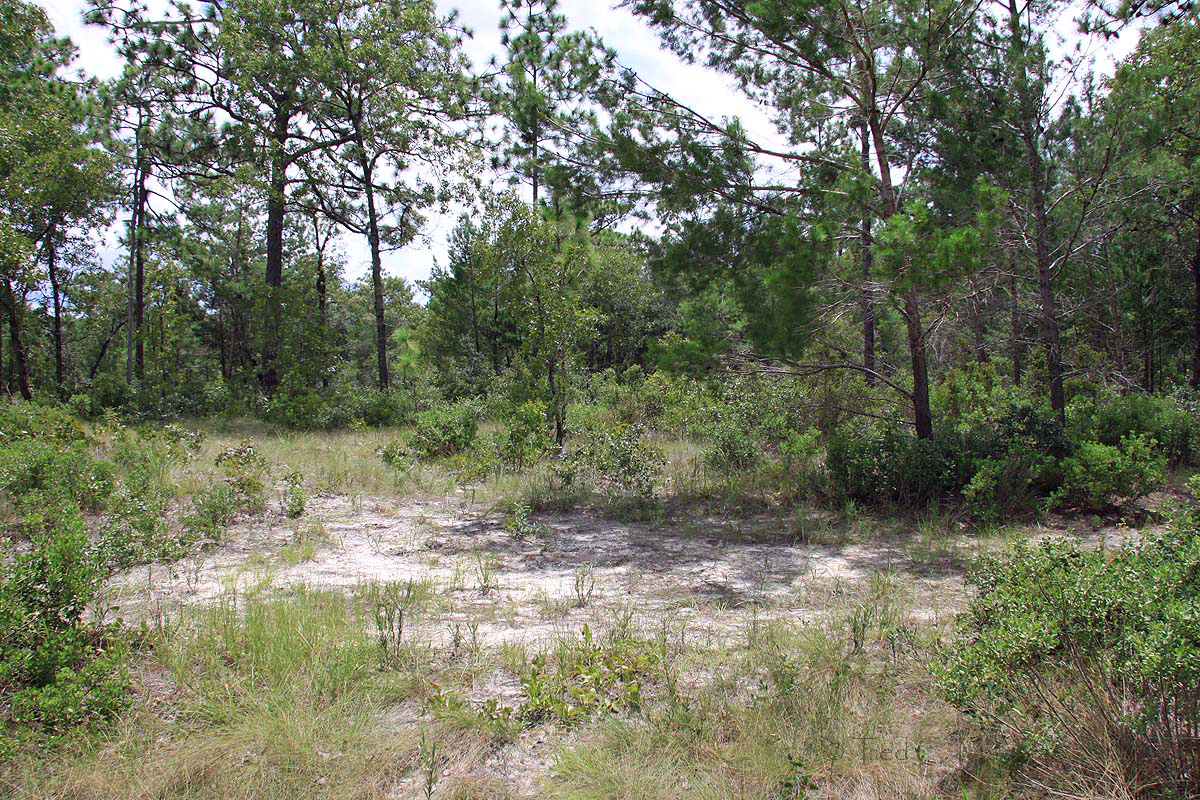
Pine sandhill habitat, Withlachoochee State Forest—Citrus Tract

Among the suggestions given to me by my colleagues, the most promising-sounding was the “end of the road,” a Gulf Coast salt marsh near Steinhatchee in Dixie County where I was told as many as 6-10 species of tiger beetles could be seen at once.  I didn’t know it at the time, but this particular location has achieved legendary status among tiger beetle enthusiasts (Doug Taron recently wrote about his experience, calling it the Road to Nowhere).  A 200+ mile drive from my base near St. Petersburg, it would take the better part of 5 hours to drive there, and not wanting to put all of my eggs in one basket, I looked for potential stops along the way.  About midway along the drive was Withlacoochee State Forest, where one of my colleagues had told me I might still find the fairly widespread Cicindela abdominalis (Eastern Pinebarrens Tiger Beetle) and its close relative, C. scabrosa (Scabrous Tiger Beetle)—the fourth Florida endemic.  My plan was to leave early in the morning and spend a few hours at Withlacoochee before driving the rest of the way to finish out the day at Steinhatchee. 

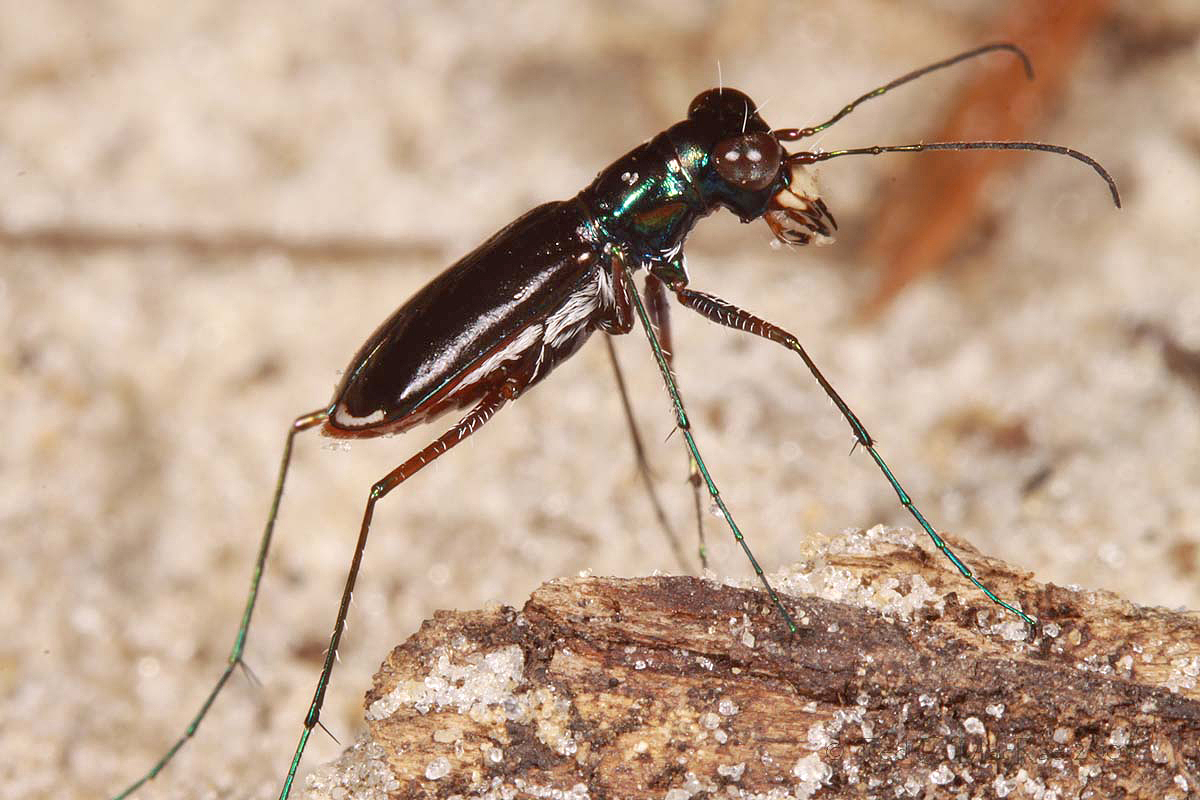
"Stilting" by Cicindela abdominalis (Eastern Pinebarrens Tiger Beetle)

It took some time to find my bearings upon arriving, but after some discussion with the decidedly forestry-oriented staff at the headquarters, it seemed that the Citrus Tract was where I wanted to be.  I was looking for the sand barren and pine sandhill habitats that these species require, and the staff’s description of the northern edge of the tract as having lots of sand and “not very good for growing trees” suggested this might be the place.  Pine sandhill (also called “high pine”) is a pyrophytic (fire-dependent) plant community characterized by sandy, well-drained soils, a widely-spaced longleaf pine (Pinus palustris) and turkey oak (Quercus laevis) canopy, and an herbaceous layer dominated by wiregrass (Aristida stricta).  I quickly found such habitat in the area suggested, and it wasn’t long before I found the first of the two species—C. abdominalis—rather commonly along a sandy 2-track leading through the area.  For those of you who see a distinct resemblance of this species to the rare C. highlandensis that I highlighted from my trip to the central highlands, this is no coincidence.  Cicindela abdominalis is very closely related to that species, the latter distinquished by an absence of flattened, white setae on the sides of the prothorax and the abdomen and by the highly reduced or absent elytral maculations (Choate 1984).  Dense white setae and distinct apical elytral maculations are clearly visible in the individuals shown in these photographs. 

Stilting is often accompanied by "sun-facing" for additional thermoregulation

It was a blistering hot day (just as every other day on the trip had been so far), and it wasn’t only me who felt that way.  Tiger beetles, of course, are ectothermic and rely upon their environment for their body temperature.  Despite this, they are able to regulate body temperatures to some degree by using a range of behavioral adaptations intended to mitigate the effects of high surface temperatures and intense sunlight.  The photos above show one of these behaviors, known as stilting.  In this behavior, the adult stands tall on its long legs to elevate its body above the thin layer of hotter air right next to the soil surface and as far off the sand as possible (Pearson et al. 2006).  As the heat of the day intensifies and the zone of hot air at the soil surface broadens, stilting alone may be insufficient to prevent overheating. When this happens, the beetles combine stilting with sun-facing, a behavior in which the front part of the body is elevated with the head oriented towards the sun. This position exposes only the front of the head to the sun’s direct rays, thus minimizing the body surface area exposed to incident radiation.

Stilting and sun-facing by Ellipsoptera hirtilabris (Moustached Tiger Beetle)

I was also fortunate to have another chance at photographing the beautiful and marvelously-camouflaged Ellipsoptera hirtilabris (Moustached Tiger Beetle), which, in similar fashion to C. highlandensis, I found co-occurring with C. abdominalis in rather low numbers. As before, they were extremely wary and difficult to approach, especially in the extreme heat of the day, and all of my best efforts to get a good shot of the species in its “classic” pose were frustrated. The photo above was about as close as I could get to any of these beetles when they were out in the open before they would flee; however, it nicely demonstrates the use of stilting combined with sun-facing during the hottest part of the day.

"Shade seeking" is another behavioral response to intense heat.

Another behavioral response to extreme heat is shade-seeking—adults may either remain active, shuttling in and out of shaded areas, or avoid exposed areas altogether and become inactive.  One thermoregulatory behavior for extreme heat that I did not observe was daytime-burrowing, in which adults construct temporary shallow burrows during the hottest hours of the day. Although I did not observe this behavior by either species at Withlacoochee, I have seen it commonly among several species in sandy habitats here in Missouri and in the Sandhills of Nebraska (e.g., Cicindela formosa, Cicindela limbata, Cicindela repanda, Cicindela scutellaris, Cicindela tranquebarica, Ellipsoptera lepida).

There was one disappointment on the day—I did not see C. scabrosa.  However, I still had the “end of the road” to explore, so I remained happy with the now six species I had encountered and optimistic about finding additional species later in the day… 

Photo Details: Canon EOS 50D, ISO 100.
Habitat: Canon 17-85mm zoom lens (landscape, 17mm), 1/100 sec, f/10, natural light.
Insects: Canon 100mm macro lens (manual), 1/250 sec, f/16–18 (C. abdominalis) or f/20–22 (E. hirtilabris), MT-24EX flash w/ Sto-Fen diffusers.

REFERENCES: 

Choate, P. M., Jr.  1984.  A new species of Cicindela Linnaeus (Coleoptera: Cicindelidae) from Florida, and elevation of C. abdominalis scabrosa Shaupp to species level.  Entomological News 95:73–82.

Choate, P. M., Jr. 2003. A Field Guide and Identification Manual for Florida and Eastern U.S. Tiger Beetles.  University Press of Florida, Gainesville, 224 pp.

Pearson, D. L., C. B. Knisley and C. J. Kazilek. 2006. A Field Guide to the Tiger Beetles of the United States and Canada. Oxford University Press, New York, 227 pp.

Copyright © Ted C. MacRae 2009

Add to FacebookAdd to DiggAdd to Del.icio.usAdd to StumbleuponAdd to RedditAdd to BlinklistAdd to TwitterAdd to TechnoratiAdd to Yahoo BuzzAdd to Newsvine

Email to a friend

Do You Have “An Inordinate Fondness”?

Last week I mentioned that I had been thinking about starting a blog carnival devoted exclusively to beetles.  Actually, I’ve been thinking about it for some time now, but following up on the idea apparently needed a catalyst.  That catalyst came last week when Amber Coakley and Jason Hogle announced the debut of House of Herps—another specialty nature blog carnival, focusing on reptiles and amphibians.  I supported the idea of a herp carnival when Amber first mentioned it, and she responded to that support by actually going out and doing it!  Amber penned a guest post on Nature Blog Network called House of Herps: The Origin Story that described in fascinating detail the process that she and Jason went through in creating a new blog carnival.

Well, the story that Amber told and the details she provided were enough to convince me that I could do it, and the many comments I got on my post last week mentioning what I was thinking about convinced me that I should do it.  The screenshot above is a first peek at the home site of nature blogging’s newest carnival, An Inordinate Fondness (AIF)—the monthly blog carnival devoted to beetles.  The name honors J.B.S. Haldane’s perhaps apocryphal riposte when queried about what his studies of nature’s diversity had taught him about the Creator (a quote made even more famous by the breathtakingly beautiful An Inordinate Fondness for Beetles, written and illustrated by my friends and colleagues, Drs. Charles L. Bellamy and Arthur V. Evans).  Some of you may recall that the alternate name, “Beetle Bacchanalia,” also received strong support (even edging out AIF in raw vote count).  However, while both names imply unbridled passion, I eventually decided that AIF better described the nature of that passion and added historical context.

Even though the AIF website is up and running, the first issue is not scheduled to appear until mid-February.  The reasons for this are primarily personal—I’m already slated to host House of Herps #2 on Jan 18 and Circus of the Spineless #47 on Feb 1 (does this make me a carnival hosting slut?).  There are also still a few things I’d like to have in order before AIF debuts—primarily a badge.  Seabrooke Leckie has offered some help in this regard, and I’ve got a few ideas of my own, but please don’t hesitate to let me know if you’ve got ideas as well.  In addition, I’m hoping this will be the start of getting the word out so that by the time Feb 15 (first issue submission due date) rolls around there will be enough submissions on hand to make the inaugural edition a memorable one.  Lastly, I’m hoping to recruit volunteers for hosting future editions—AIF will be a migrating carnival, dependent upon a community of science and natural history bloggers to keep it going.

My deepest thanks to Amber, Jason, Seabrooke, and Mike Bergin for their very helfpul and supportive comments.

Copyright © Ted C. MacRae

Add to FacebookAdd to DiggAdd to Del.icio.usAdd to StumbleuponAdd to RedditAdd to BlinklistAdd to TwitterAdd to TechnoratiAdd to Yahoo BuzzAdd to Newsvine

Email to a friend

A bid for OpenLab

I’m going to do something I’ve not yet done before—ask for your support.  OpenLab is an annual compilation of the year’s best science-blog writing, as determined by a panel of judges, and the closing date for submissions for 2009 is December 1st—this coming Tuesday.  I’ve vacilated about whether to throw my hat into this ring—the world of science blogs is a crowded place with many erudite writers, and although science is my profession, the science that I write about is purely avocational.  Whether my particular brand of science writing can compete with that of the true academicians that seem to dominate the competition remains to be seen.  Nevertheless, I am willing to put my ego on the line and give it a shot.  If you have seen anything in the past year (since December 1, 2008) here at Beetles in the Bush that you consider exemplary, please consider submitting it.  Feel free to search the sidebar archives (“Taxa,” “Tags” or “Life History”), browse the site Contents, or select from the following list of my own personal favorites (arranged chronologically):

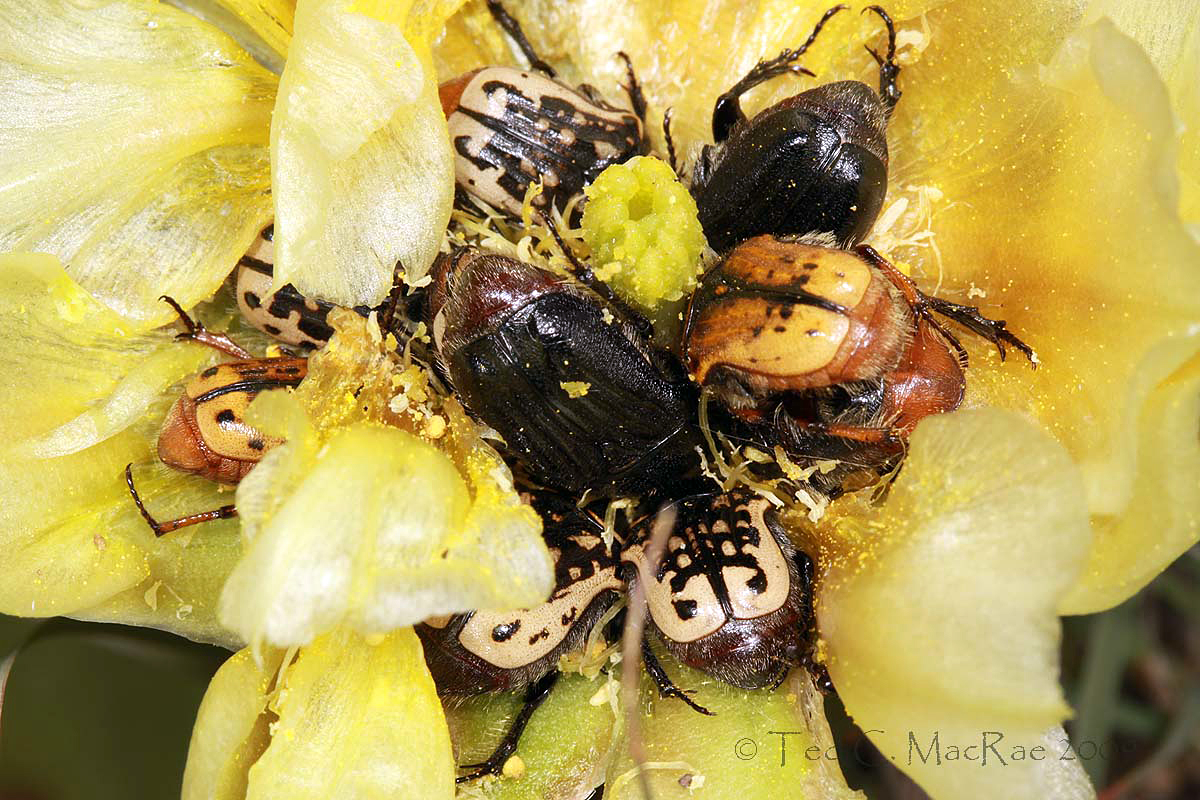
So I don’t get accused of asking but not giving, I leave you with this photograph of a group of Kern’s flower scarabs (Euphoria kernii, family Scarabaeidae) congregated in the flower of large-root prickly pear cactus (Opuntia macrorhiza, family Cactaceae).  Photographed this past June at Four Canyon Preserve in northwestern Oklahoma, this common, extremely variable species (ranging from all black to black and white to black and yellow to nearly all yellow) can be found throughout the southern Great Plains, where it congregates tightly in flowers of Opuntia , pricklypoppy (Argemone spp., family Papaveraceae), thistle (Cirsium spp., family Asteraceae), and yucca (Yucca spp., family Liliaceae).

Photo details: Canon 100mm f/2.4 macro lens on Canon 50D (manual mode), ISO-100, 1/250 sec, f/16, diffused MT-24EX flash.

Copyright © Ted C. MacRae 2009

Add to FacebookAdd to NewsvineAdd to DiggAdd to Del.icio.usAdd to StumbleuponAdd to RedditAdd to BlinklistAdd to TwitterAdd to TechnoratiAdd to Furl

A “Really” Big-headed Tiger Beetle

Megacephala megacephala 3rd-instar larva. Photo © Artur M. Serrano.

In my recent summary of the latest issue of the journal Cicindela, I included a scan of the cover of that issue and its stunning image of the 3rd-instar larva of Megacephala megacephala¹ from Africa.  This otherwordly-looking, four-eyed beast was photographed with jaws agape at the entrance to its burrow in Guinea Bissau by Dr. Artur M. Serrano (University of Lisbon, Portugal).  I was grateful for his permission to post a scan of this spectacular image; however, he did even better and sent me high-resolution images of not only the larva (above) but the adult (below) as well.  This species is one of 13 assigned to the genus—presently restricted to Africa (though not always, see discussion below), where they are usually found in savanna-type habitats and are active during the crepuscular and nocturnal periods (Werner 2000).

¹ An example of a tautonym, i.e. a scientific binomen in which the genus and species names are identical. Familiar tautonymic binomina include the gorilla (Gorilla gorilla), green iguana (Iguana iguana), and European toad (Bufo bufo). Tautonyms are expressly prohibited in plant nomenclature (see Article 23.4 of the International Code of Botanical Nomenclature) but are permitted and, in fact, quite common in zoological nomenclature; Wikipedia lists 51 mammals, 82 birds, 15 reptiles & amphibians, 54 fish, and 33 invertebrates (though not Megacephala megacephla!).

Megacephala megacephala adult. Photo © Artur M. Serrano.

For those of you who see a strong resemblance by this species to another tiger beetle I featured recently, Tetracha floridana (Florida Metallic Tiger Beetle), this is not merely a coincidence.  Megacephala and Tetracha are quite closely related, and in fact the two genera, along with a handful of other closely related genera, are at the center of one of the longest-standing disputes in tiger beetle taxonomy (Huber 1994).  The genus Megacephala was established by Latreille (1802) for the species pictured here (originally described as Cicindela megacephala Olivier).  As additional taxa were found in Africa, Australia and the Western Hemisphere and assigned to Megacephala, several workers attempted to divide the genus into multiple genera (with New World taxa being assigned to Tetracha and a few other mostly South American genera); however, there was little agreement on how these genera should be defined and on what characters they should be based.  The debate was effectively swept under the rug in the early 20th Century when Walter Horn, one of the most influential cicindelophiles of all time, accepted a monotypic Aniara based on the strange South American species A. sepulcralis but reunited the world’s remaining taxa within the single genus Megacephala in his world catalogue (Horn 1910).  Horn’s use of Megacephala as a catch-all genus was followed by subsequent workers for almost a full century until Huber (1994) once again proposed restricting Megacephala to certain of the African species and resurrecting the genus Tetracha for the bulk of the New World fauna.  He also urged additional analyses to resolve the status of the remaining generic names and their composition, which subsequently saw increasing use as subgenera of Megacephala² and later as genera.

² Thus, as type-species for the genus, the species featured here became known as Megacephala (Megacephala) megacephala (Werner 2000)—a triple tautonym that translates to the “Big-headed, Big-Headed, Big-Headed” tiger beetle!  Perhaps it’s best that I’m not an African tiger beetle specialist; I probably would have been unable to resist the temptation to resurrect M. senegalensis and assign it as a subspecies of M. megacephala, just so I could refer to the nominate form as Megacephala (Megacephala) megacephala megacephala!

The reversal of Horn’s concepts now appears to be complete, with all seven former subgenera of Megacephala formally being accorded full generic status (Naviaux 2007). This classification is strongly supported by molecular analysis of nuclear 18S and mitochondrial 16S and cytochrome oxidase gene sequences (Zerm et al. 2007), with the resulting dendrogram indicating three monophyletic clades corresponding to the African/Palearctic (Megacephala and Grammognatha, respectively),  Western Hemisphere (Aniara, Metriocheila, Phaeoxantha and Tetracha) and Australian (Australicapitona and Pseudotetracha) genera³.  The African/Palearctic clade was found to occupy a basal position in the tree, while the Western Hemisphere and Australian clades were more derived.  These data support the hypothesis that the early evolution of the megacephalines took place during the break-up of the ancient Gondwana megacontinent, which began about 167 million years ago (middle Jurassic period) and sequentially disconnected Africa from South America and Australia.

³ One striking deviation from the current classification, however, was the support for nesting the single Aniara species within Tetracha, a placement that renders Tetracha paraphyletic and, thus, requires either its division into multiple genera or the sinking of Aniara as a distinct genus. The support for this placement was quite strong and mirrored the results of a broader molecular phylogenetic study of tiger beetles based on full-length 18s RNA data (Galian et al. 2002). The authors concede that this puzzling placement is not corroborated by numerous morphological, ecological and ethological characters that distinguish Aniara from all known Tetracha species.

REFERENCES

Galián J., J. E. Hogan and A. P. Vogler. 2002. The origin of multiple sex chromosomes in tiger beetles. Molecular Biology and Evolution 19:1792–1796.

Horn, W.  1910.  Coleoptera Adephaga, Fam. Carabidae, Subfam. Cicindelinae.  In P. Wytsman (editor).  Genera Insectorum.  Fascicle 82a.  Desmet-Vereneuil, Brussels, Belgium, pp. 105–208.

Huber, R. L.  1994.  A new species of Tetracha from the west coast of Venezuela, with comments on genus-level nomenclature (Coleoptera: Cicindelidae).  Cicindela 26(3/4):49–75.

Latreille, P. A. 1802. Histoire Naturelle, Générale et Particulière des Crustacés et des Insectes. Paris: F. Dufart 3 xii 13 + 467 pp.

Naviaux R. 2007. Tetracha (Coleoptera, Cicindelidae, Megacephalina): Revision du genre et descriptions de nouveaus taxons. Mémoires de la Société entomologique de France 7:1–197.

Werner, K.  2000.  The Tiger Beetles of Africa (Coleoptera: Cicindelidae).  Volume 1.  Taita Publishers, Hradec Kralove, Czech Republic, 191 pp., 745 figures.

Zerm, M., J. Wiesner, J. Ledezma, D. Brzoska, U. Drechsel, A. C. Cicchino, J. P. Rodríguez, L. Martinsen, J. Adis and L. Bachmann.  2007.  Molecular phylogeny of Megacephalina Horn 1910 tiger beetles (Coleoptera: Cicindelidae).  Studies on Neotropical Fauna and Environment 42(3):211–219.

Copyright © Ted C. MacRae 2009

Add to FacebookAdd to NewsvineAdd to DiggAdd to Del.icio.usAdd to StumbleuponAdd to RedditAdd to BlinklistAdd to TwitterAdd to TechnoratiAdd to Furl

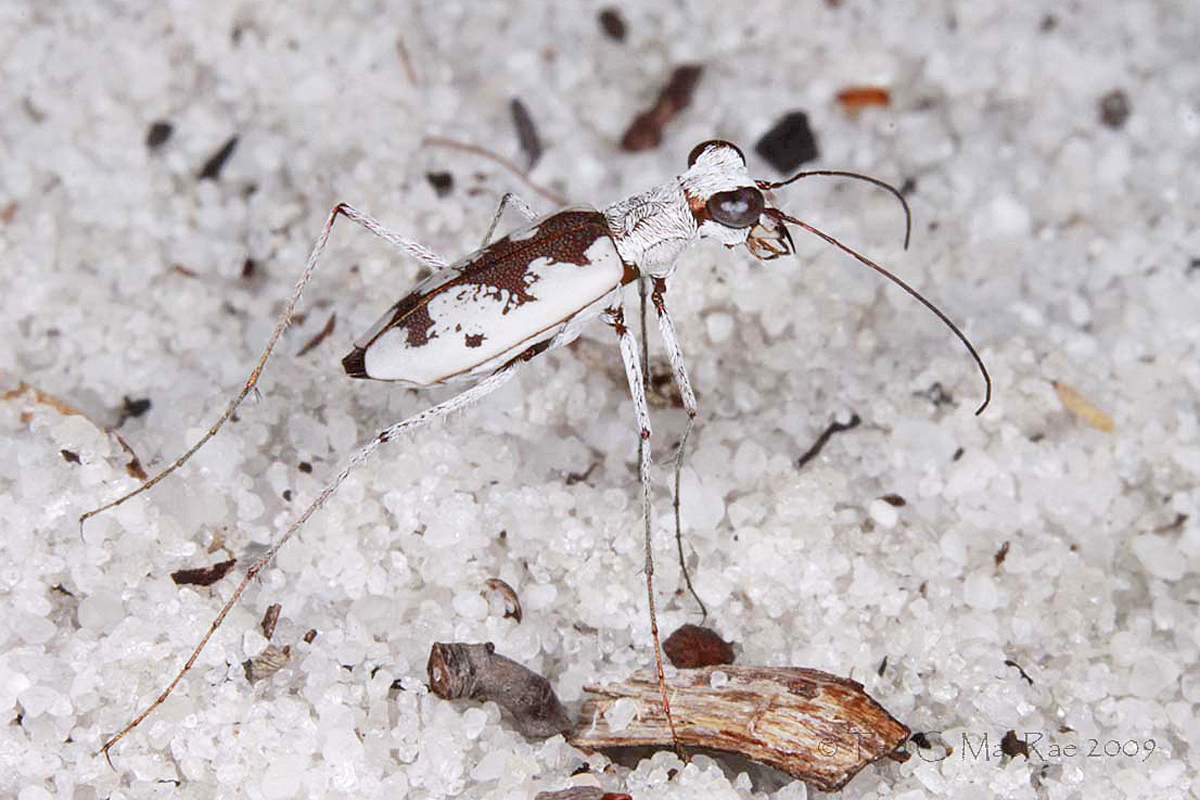
Moustached Tiger Beetle

Lake Wales Ridge

Dry sand scrubland on Lakes Wales Ridge in central Florida—home to Cicindela highlandensis and Ellipsoptera hirtilabris

In my previous post, I featured the rare Cicindela highlandensis (Highlands Tiger Beetle), restricted entirely to sand scrubland and pine woodland habitats along the Lake Wales Ridge in central Florida (Choate 2003).  However, that would not be the only Florida endemic tiger beetle that I would encounter during my early August visit.  Another of the several tiger beetle species that I’d hoped to see would also be found that day, although in much lower numbers.  Ellipsoptera hirtilabris (Moustached Tiger Beetle) is so named¹ because of the dense covering of prostrate hairs on its labrum that distinguish it from the closely related E. gratiosa (Whitish Tiger Beetle). Both of these species exhibit striking white maculations that cover almost the entire elytral surface and dense white pubescence covering the head, thorax, underside and legs.  They are the only species of the genus occurring in Florida, but their ranges do not overlap (Pearson et al. 2006)—E. gratiosa occurs in the coastal pine barrens of Virginia, the Carolinas, southern Georgia and the Florida panhandle, while E. hirtilabris is restricted to peninsular Florida in pine woodlands, sand hills and other habitats with open white sand.  Although the latter is considered a Florida endemic, it has been found just outside of Florida in extreme southeastern Georgia on St. Simon’s Island (Choate 2003)In addition to the pubescence of the labrum and their allopatric distributions, the two species may further be distinguished by the slightly less expanded markings and more diffuse edges where they contact the central bronze area in E. hirtilabris and the slightly larger size of E. gratiosa.    Like C. highlandensis and C. abdominalis, it seems likely that E. hirtilabris and E. gratiosa evolved from a common ancestor, diverging in isolation from each other during the pre-Pleistocene separation of peninsular Florida from the North American mainland.   

¹ The species epithet is derived from the Latin words hirtum meaning “hairy” and labrum meaning “lip”.

Ellipsoptera_hirtilabris_IMG_1091_1200x800_enh

Ellipsoptera hirtilabris in the alert position

I found E. hirtilabris to be exceedingly difficult to see and photograph.  Unlike C. highlandensis, which resemble bits of debris laying on the surface of the white sands where it lives, the largely white E. hirtilabris blend into the white sand itself and are almost impossible to see until they move.  The small bronze-colored patches along the elytral suture augment their cryptic capabilities by resembling small bits of debris, which is especially evident in the photo below.  Both Pearson et al. (2006) and Erwin and Pearson (2008) state that adults of this species freeze in position when approached, which may be the reason why I saw so few individuals.  Once I did see them, they were extremely wary and difficult to photograph no matter how cautiously I approached.  The photos shown here represent the only two individuals that I succeeded in photographing, and in neither case did I succeed in getting a frontal perspective to show the pubescent labrum (stifling heat and oppressive humidity during the photo session did not help matters, either).

Ellipsoptera_hirtilabris_IMG_1131_1200x800_enh

The white coloration with small brown markings helps adults blend in perfectly in their white sand habitats

Photo details:
Photo 1: Canon 100mm macro lens on Canon 50D (landscape mode) ISO-100, 1/250 sec, f/16, natural light.
Photos 2 & 3: Manual mode, f/25, MT-24EX flash w/ Sto-Fen diffusers @ 1/8 ratio.

REFERENCES:

Choate, P. M., Jr. 2003. A Field Guide and Identification Manual for Florida and Eastern U.S. Tiger Beetles.  University Press of Florida, Gainesville, 224 pp.

Erwin, T. L. and D. L. Pearson. 2008. A Treatise on the Western Hemisphere Caraboidea (Coleoptera). Their classification, distributions, and ways of life. Volume II (Carabidae-Nebriiformes 2-Cicindelitae). Pensoft Series Faunistica 84. Pensoft Publishers, Sofia, 400 pp.

Pearson, D. L., C. B. Knisley and C. J. Kazilek. 2006. A Field Guide to the Tiger Beetles of the United States and Canada. Oxford University Press, New York, 227 pp.

Copyright © Ted C. MacRae 2009
Add to FacebookAdd to NewsvineAdd to DiggAdd to Del.icio.usAdd to StumbleuponAdd to RedditAdd to BlinklistAdd to TwitterAdd to TechnoratiAdd to Furl

Highlands Tiger Beetle

When my wife and I made plans to spend a week at her sister’s condominium in Florida this past summer, I began making a list of the tiger beetle species that I wanted to see.  I would be happy to see anything, since I had never before tiger beetled in Florida, but early August was looking to be on the late side for many things.  In addition, since this was a family vacation, I would only have a couple days at most to sneak off on my own and immerse myself in bug hunting.  All this meant that I would have to be very judicious about where I went and what I looked for.  I sought advice from a few other cicindelophiles on species and localities, and by the time we made the 16-hour drive from St. Louis to Seminole (near St. Petersburg) I had settled on two destinations—the Lake Wales Ridge of central Florida to look for Cicindela highlandensis (Highlands Tiger Beetle), and the so-called “Road to Nowhere” near Steinhatchee where as many as 10 species of tiger beetles can be seen when the season is right.  Things started out well when, before even looking for any of these species, I stumbled upon Ellipsoptera marginata (Margined Tiger Beetle), its sibling species E. hamata lacerata (Gulf Beach Tiger Beetle), and some 3rd-instar larvae in their burrows that proved to be the Florida endemic Tetracha floridana (Florida Metallic Tiger Beetle) in the small coastal preserve just outside the back door of my sister-in-law’s condo.

Lake Wales Ridge_IMG_1128_1200x800_enh

Dry sand scrubland on Lakes Wales Ridge in central Florida

The big target of the trip, however, was not so straightforward.  Cicindela highlandensis is one of Florida’s rarest endemic tiger beetles, being restricted entirely to remnant sand scrubland and pine woodland habitats along the Lake Wales Ridge of Polk and Highlands Counties in central Florida (Choate 2003).  The Lake Wales Ridge represents former shorelines deposited when the rest of peninsular Florida was covered by seas.  The quick draining sands have created desert-like open habitats dominated by oaks, pines, and other drought-tolerant species.  Cicindela highlandensis is one of many plants and animals endemic to the Lake Wales Ridge, which has the highest concentration of endangered plants in the continental U.S.  Unfortunately, the natural communities found on the Lake Wales Ridge have suffered severe reductions from their historical occurrence.  An estimated 85% of the scrub and sandhills has been converted to citrus groves and urban developments, and the few remaining tracts face not only continued development pressure, but also the threat of degradation from reductions in the frequency and extent of the wildfires that are essential for their maintenance (Turner et al. 2006).  NatureServe (2009) estimates that C. highlandensis populations have declined by as much as 90%, and only a few of the sites where it is known to occur are large enough to sustain viable populations.  While the species has a global status of G1 (critically imperiled) due to its limited range, restricted habitat, and very small population size, and is a candidate for listing as an endangered species by the U.S. Fish & Wildlife Service (Pearson et al. 2006), it remains—bafflingly—unlisted even as threatened by the State of Florida.  As a result, there is no formal conservation management plan for this species to ensure its survival.  Fortunately, the largest populations of C. highlandensis occur on an assemblage of public and private lands that are under partial to full conservation ownership, and preservation/management activities are taking place at most of these.

Cicindela_highlandensis_IMG_1126_1200x800_enh

Cicindela highlandensis, Highlands Tiger Beetle, in alert position

I had debated whether to look for Cicindela highlandensis at all—not because I wasn’t anxious to see it, but because I lacked confidence that I would be able find it.  A late season search for a rare species had all the hallmarks of a potential wild goose chase.  Nevertheless, I like a good challenge, and I had succeeded in obtaining information about specific locations for the species (a matter of public record; however, I prefer to maintain some discretion in this venue).  Although I began my search with tempered optimism, it didn’t take long for me to acheive my goal.  Similar to my experience with Cylindera celeripes in Oklahoma, I had barely walked ten yards into a gorgeous sand scrub habitat at the first site I had planned to search before I saw an individual.  The dark metallic blue coloration of the species would seem to make it easily seen in its white sand environs; however, in reality it is almost impossible to see until it moves.  Some have suggested that its coloration functions to make the beetle resemble the many small pieces of debris that litter the sand surface—perhaps the bits of charred wood that are common in open, fire-mediated environments.  Its dependence upon natural disturbance factors such as fire was made apparent to me by the distinct preference I noted for adults to congregate along trails kept open by human disturbance, and to a lesser degree in the larger, naturally open scrub areas.  The adults made very short escape flights and were easy to follow but difficult to approach closely enough for photographs due to extreme wariness—their long legs giving some indication of their highly cursorial capabilities.

Cicindela highlandensis

Cicindela highlandensis - note absence of setae on thorax and abdomen

Cicindela highlandensis is closely related to two other species of tiger beetles in Florida—C. abdominalis (Eastern Pinebarrens Tiger Beetle), widely distributed throughout the Atlantic and Gulf Coastal Plain, and C. scabrosa (Scabrous Tiger Beetle), confined to the Florida Peninsula and adjacent southeastern Georgia.  Both of these species are absent from the Lake Wales Ridge and, thus, do not co-occur with C. highlandensis. It is likely that C. highlandensis evolved from isolated populations of the widespread C. abdominalis that diverged during pre-Pleistocene separation of the Lake Wales Ridge from the mainland (Choate 1984).  Despite its resemblance to both C. abdominalis and C. scabrosa, C. highlandensis can be distinguished from both of those species by the complete absence of flattened, white setae on the sides of the prothorax and the abdomen and by the highly reduced or absent elytral maculations (note the very small apical markings on the individuals in these photographs).  All three of these species belong to the subgenus Cicindelidia (American Tiger Beetles) and possess red adominal coloration that is prominent during flight.

Photo details:
Photo 1: Canon 17-85mm zoom lens on Canon 50D (landscape mode), ISO-100, 1/160 sec, f/13, natural light.
Photos 2–3: Canon 100mm macro lens on Canon 50D (manual mode), ISO-100, 1/250 sec, f/14 (photo 2) or f/20 (photo 3), MT-24EX flash w/ Sto-Fen diffusers.

REFERENCES:

Choate, P. M., Jr.  1984.  A new species of Cicindela Linnaeus (Coleoptera: Cicindelidae) from Florida, and elevation of C. abdominalis scabrosa Shaupp to species level.  Entomological News 95:73–82.

Choate, P. M., Jr. 2003. A Field Guide and Identification Manual for Florida and Eastern U.S. Tiger Beetles.  University Press of Florida, Gainesville, 224 pp.

NatureServe.  2009.  NatureServe Explorer: An online encyclopedia of life [web application].  Version 7.1.  NatureServe, Arlington, Virginia.  Available at: http://www.natureserve.org/explorer (accessed: November 12, 2009).

Pearson, D. L., C. B. Knisley and C. J. Kazilek. 2006. A Field Guide to the Tiger Beetles of the United States and Canada. Oxford University Press, New York, 227 pp.

Turner, W. R., D. S. Wilcove and H. M. Swain.  2006.  State of the scrub: conservation progress, management responsibilities, and land acquisition priorities for imperiled species of Florida’s Lake Wales Ridge.  Archbold Biological Station, Lake Placid, Florida, iii + 44 pp.

Copyright © Ted C. MacRae 2009

Add to FacebookAdd to NewsvineAdd to DiggAdd to Del.icio.usAdd to StumbleuponAdd to RedditAdd to BlinklistAdd to TwitterAdd to TechnoratiAdd to Furl