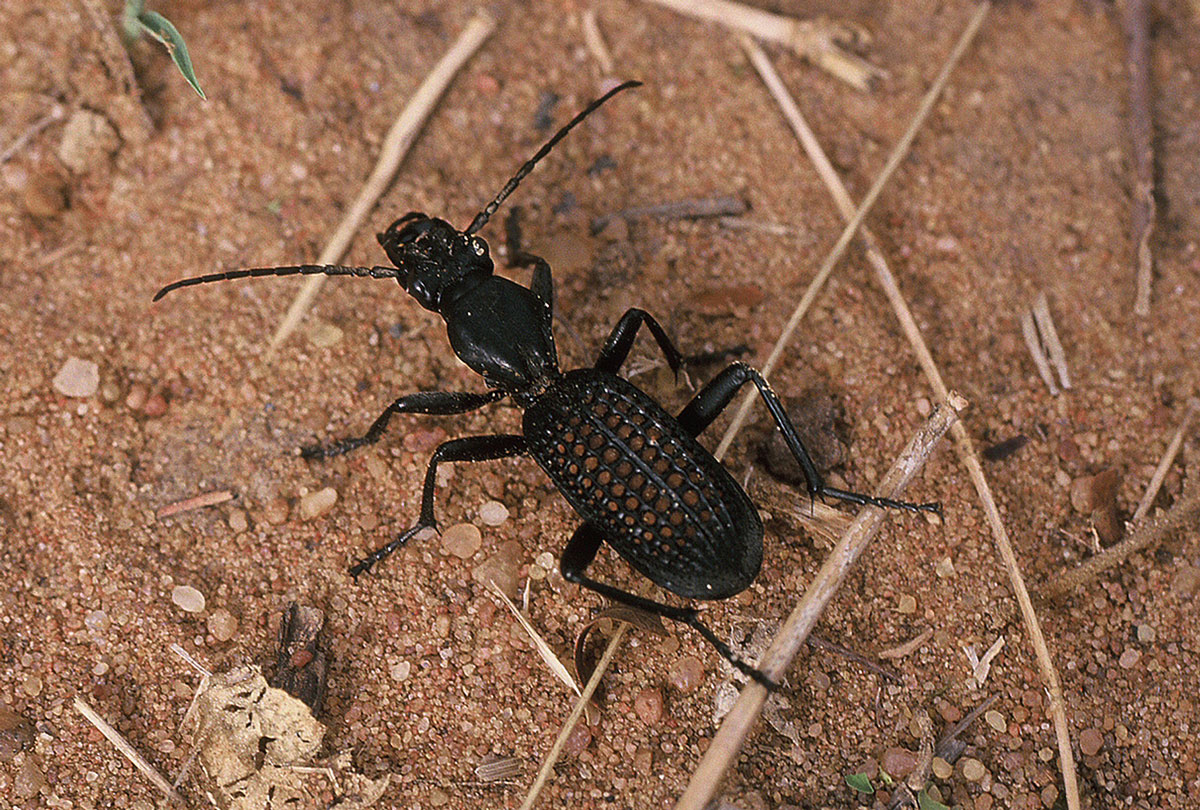
“Armoured tank beetle”

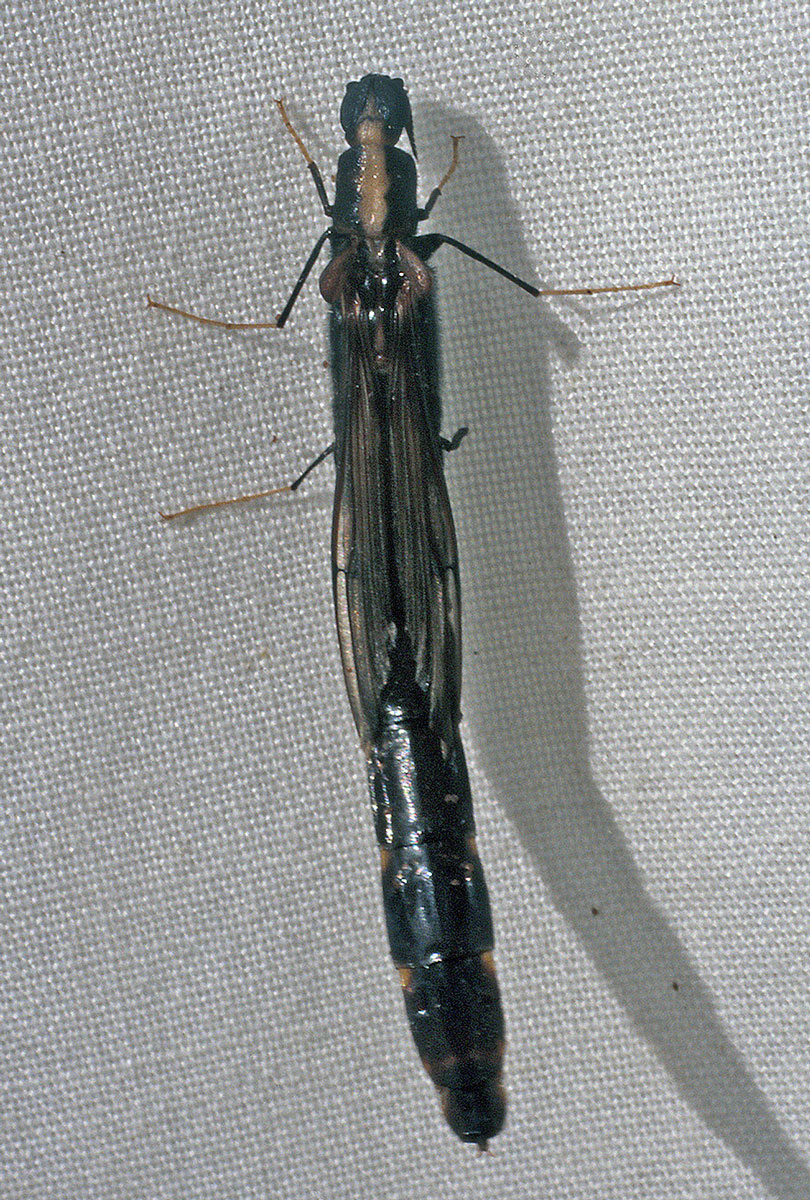
anomalipus-elaphus1

Photo details: Panasonic DMC-FX3 (macro setting w/ auto exposure, aperature, and focus), illumination by two 23w compact fluorescent light bulbs. Post processing details: Adobe PhotoShop Elements 6.0 to crop, adjust brightness and contrast, remove pinhead, erase background, and sharpen.

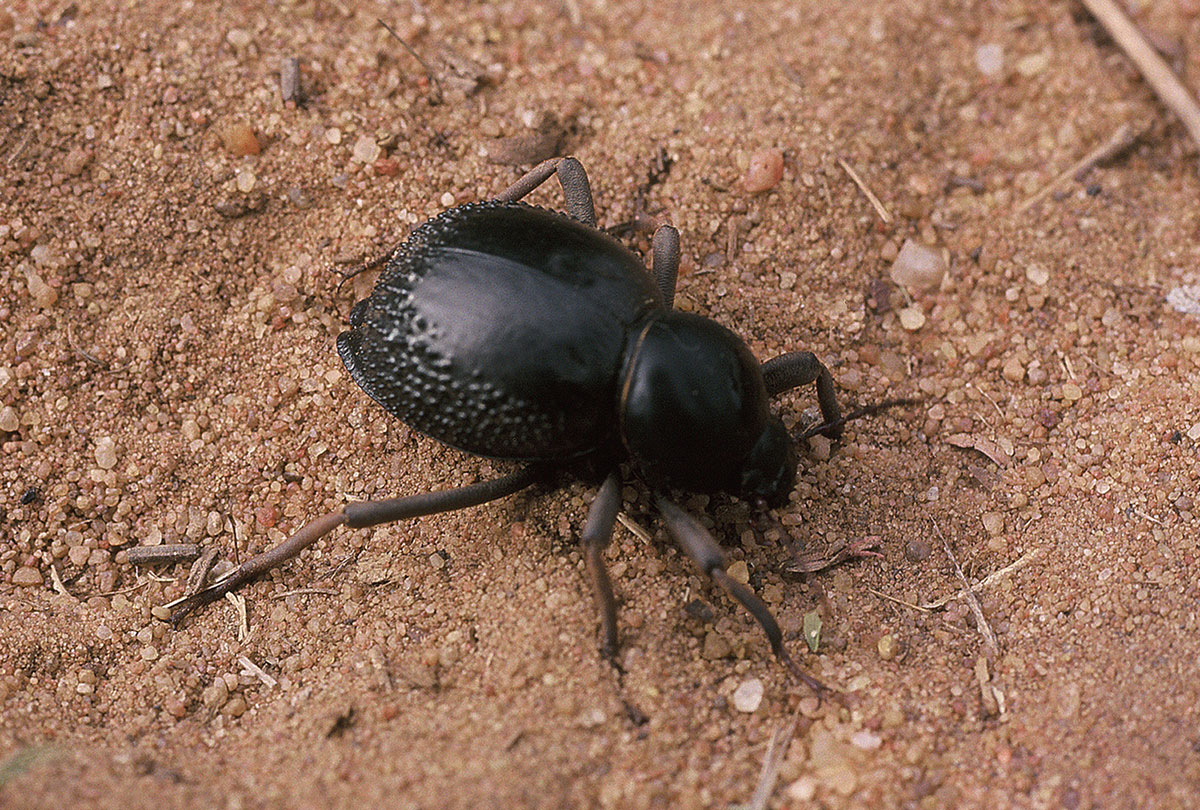
In my last post, I briefly mentioned a beast of a beetle that we had given the nickname “armoured tank beetle.” Using (Picker et al. 2002), I determined this beetle to represent the species, Anomalipus elephas (family Tenebrionidae) – whose actual common name of “large armoured darkling beetle” was amazingly close to our made-up common name (not to mention the appropriateness of its specific epithet) – and linked to an online photograph of the species. As it turns out, the genus Anomalipus is quite large, with 51 species distributed throughout eastern and southern Africa – 34 of which have been recorded from South Africa proper (Iwan 2002). I’ve learned better than to ascribe species names to specimens in diverse groups of which I am not an expert based on a photograph of a common species, so for now this specimen will have to be called Anomalipus sp. Endrödy-Younga and Tschinkel (1993) report that all species in this genus are heavily built with strong legs, with most species being restricted within their geographical range to dense bush-covered patches of woody savanna.

After I wrote that post, I got to looking at the larger of my two specimens and thought, “Gee, I bet I could get a nice shot of that thing.” After all, it measures an impressive 32 mm in length (that’s 1¼ inches, folks!). Here is the result, and I have to admit I’m quite pleased given my equipment limitations (I only wish I’d thought to brush him off a little bit). This really has to be the most beautiful “big, black, ugly beetle” I’ve ever seen. I recall when I was pinning these two specimens that the exoskeleton was so hard I literally had to use my scissors to hammer the pin to get it going into the specimens. I like “armoured tank beetle” better.

In unrelated news, there are a couple of Carnivals everyone should be aware of – I’m doing my part to get the word out:

Circle of the Spineless – Ed Baker over at Invertebrate Diaries is set to host the next issue on March 2, 2009. There’s your deadline!

Linneaus Legacy – The January issue, hosted at Greg Laden’s Blog, was a good one.  Seeds Aside is hosting the February edition and is hoping to post it later this week if he gets enough submissions!  Go to this post for details on where to submit your post (or those from other blogs you enjoy).  EDIT: Too late – edition #16 is now posted.

REFERENCES:

Endrödy-Younga, S. and W. Tschinkel. 1993. Estimation of population size and dispersal in Anomalipus mastodon Fåhraeus, 1870 (Coleoptera: Tenebrionidae: Platynotini). Annals of the Transvaal Museum 36(4):21-30.

Iwan, D. 2002. Catalogue of the World Platynotini (Coleoptera: Tenebrionidae). Genus 13(2):219-323.

Picker, M., C. Griffiths and A. Weaving. 2002. Field Guide to Insects of South Africa. Struik Publishers, Cape Town, 444 pp.

Copyright © Ted C. MacRae 2009

Add to FacebookAdd to NewsvineAdd to DiggAdd to Del.icio.usAdd to StumbleuponAdd to RedditAdd to BlinklistAdd to Ma.gnoliaAdd to TechnoratiAdd to Furl

Tempting tok-tokkies

In the 19th and early 20th centuries, some of the America’s greatest entomologists were coleopterists.  Army surgeons John L. LeConte and his protégé George W. Horn, California’s Henry C. Fall, Col. Thomas L. Casey (much maligned for his mihi itch¹ affliction, although in recent years regaining due respect for his insight on generic relationships), and “the Professor” Josef N. Knull, just to name a few.  What did these fine men have in common?  They studied beetles – not just tiger beetles or jewel beetles, but the entire order!  The world was much smaller then, and new information was generated at a much more leisurely pace.  Today such an approach is impossible.  With 300,000 described species in the order (conservatively) and growing, today’s students of Coleoptera must narrow their focus in one way or another – either by concentrating on one family or ecological guild, or by restricting their studies to a small geographic region.  I’ve tried, more or less successfully, to follow suite – jewel beetles are my primary focus, and I restrict my work with the ecologically similar longhorned beetles only to North American species.  Well, and I’m also working on tiger beetles, but only in Missouri… although I have begun taking fall tiger beetle trips to neighboring states.  Hmm, on second thought, I guess I haven’t been that successful at focusing (sigh! – and a likely explanation for my perpetual backlog of specimens unprocessed and papers unwritten).

¹In taxonomy, a term usually cast towards those who have a combination of disregard for quality over quantity when describing new taxa and a demonstrably high ego (Evenhuis 2008).

Whatever focus I do manage, it all goes out the window when I have the chance to collect in another country – especially someplace as exotic as Africa.  This is not a huge problem, as I can at least stay pretty much focused on just beetles.  Moths and butterflies are pretty, but it just takes too much effort to keep each specimen in good shape.  Bees and wasps also capture my interest, but I never know for sure whether I’ll get stung, and the extra precautions required to avoid such possibility are enough to make me pass on them.  Orthopterans don’t generally excite me unless they’re big and gaudy – in which case just one or two for the collection is fine.   And flies? Well, they’re flies! About the only non-coleopterans that regularly distract me are treehoppers – running into a mess of them, with their bizarre, fantastical shapes will always stop me in my tracks.  Fortunately, they’re not so abundant that they are constantly grabbing my attention.

Beetles, though – that’s a different story.  While I can resist the temptation to collect many of the groups outside of my sphere of interest, there are others that are consistently too tempting for me to pass up.  One of these is the Tenebrionidae, or darkling beetles.  With some 20,000 described species worldwide, it is among the most speciose of beetle families (larger than my beloved Buprestidae), and this diversity combines with difficult taxonomy to make them truly challenging for even the most serious students of the family.  For hacks like me, they’re impossible.  Moreover, they’re not even especialy pretty – usually just black.  Why do I collect them? Mostly because of their (in many cases) large size, comically awkward shuffling gait, and often exaggerated surface sculpturing.  Especialy diverse in more xeric habitats, I’ve collected quite a few in my frequent trips through the southwestern U.S. and even managed to get many of them identified by tenebrionid icon Charles A. Triplehorn.  Southern Africa is a true center of diversity for this group, with some 3,500 species recorded from the area – nearly 20% of the global diversity!  A number of particularly large species that go by the common name “tok-tokkies” make their homes in the dry Namib desert and surrounding bushveld.  Along with dungers and chafers and tyrant ground beetles, tok-tokkies would prove to be one more distraction in my nevertheless successful quest for African jewel beetles.

Psammodes hirtipes

Psammodes hirtipes

“Tok-tokkie” refers not to a particular genus or tribe of tenebrionids, but rather a number of flightless species that have developed a unique “tapping” method of communication between males and females.  The name “tok-tokkie” is onomatopoeic, referring to the sound these beetles make when they tap their abdomen on the ground.  In the same way that fireflies have species-specific patterns of flashes, different species of tok-tokkies tap with differing frequencies.  The beetle makes the noise by raising its abdomen and then bringing it down on the surface of the ground several times in quick succession.  Males initiate the tapping and await a response from a receptive female.  Signals are exchanged back and forth until, eventually, the two locate each other and mate.  Females lay eggs in shallow excavations in the dry, sandy soil, and the larvae that hatch feed within the soil on the roots of small plants. The dry Namib Desert has some of the most astounding species of tok-tokkies. Some – called “fog tok-tokkies” – have developed specially modified grooves to trap moisture from fog banks rolling onto the Atlantic coast. Others drink by doing a “head-stand” to allow condensed dew to trickle down to their mouths. Heat avoidance is another challenge in the Namib. Some species extrude dots of white wax from small pores on their elytra in response to increasing sunlight intensity, eventually appearing white-spotted or striped. The wax reflects the sun’s rays and helps keep the beetle cool. Other species beats the heat by running – in fact, the fastest running beetle in the world is one of the Namib tok-tokkies (and not, as I would have suspected, a tiger beetle). Unlike its mostly clumsy brethren around the rest of the world, this beetle blasts across the scorching sand at lighting speeds. A related species boasts the longest relative leg length of any beetle in the world.

Psammodes virago

Psammodes virago

I knew none of this in 1999 when I was in South Africa’s Northern (now Limpopo) Province, and while the tok-tokkies we encountered in the bushveld habitat below the Waterberg Range were not quite as marvelous as those of the nearby Namib Desert, they were still irresistible to this indefatigable beetle collector. Not knowing their names, we came up with our own names for them based on their appearance. Psammodes hirtipes was “wrinkle butt” due to the numerous prominent tubercles at the sides and rear of its otherwise smooth elytra. Psammodes virago, was “helmet beetle” because of its smoothly domed “army helmet” shape. Our designation of “armoured tank beetle” for Anomalipus elephas (photo credit) was amazingly close to its actual common name of “large armoured darkling beetle” (Picker et al. (2002), as was “white legs” for Dichtha incantatoris (photo credit), which Picker et al. (2002) call the “white-legged tok-tokkie”. In all, I collected some dozen species of tenebrionids during my stay at Geelhoutbos farm. Most of the smaller ones are still unidentified, but hopefully someday they will prove useful to some tenebrionid specialist.

The online magazine Travel Africa offers an informative article about the Namib tok-tokkies and this humerous video from National Geographic:

Vodpod videos no longer available.

more about “Namib beetles – Travel Africa Magazine“, posted with vodpod

REFERENCES:

Evenhuis, N. L. 2008. The “Mihi itch”—a brief history. Zootaxa, 1890:59-68.

Picker, M., C. Griffiths and A. Weaving. 2002. Field Guide to Insects of South Africa. Struik Publishers, Cape Town, 444 pp.

Copyright © Ted C. MacRae 2009

Add to FacebookAdd to NewsvineAdd to DiggAdd to Del.icio.usAdd to StumbleuponAdd to RedditAdd to BlinklistAdd to Ma.gnoliaAdd to TechnoratiAdd to Furl

Tragidion confusion

Back in October, I discussed a recent review of the cerambycid genus Tragidion, authored by Ian Swift and Ann Ray and published in the online journal Zootaxa.  These gorgeous beetles mimic the so-called “tarantula hawks” (a group of large, predatory wasps in the family Pompilidae) and have been difficult to identify due to poorly-defined species limits, wide range of geographic variation, unusually high sexual dimorphism, and apparent potential for hybridization in areas of geographic overlap. Swift and Ray (2008) recognized seven North American and four Mexican species, including two newly described species and another raised from synonymy. It was an excellent work that provided much needed clarity based on examination of types and included detailed descriptions and dorsal habitus photographs of all species and separate keys to males and females to facilitate their identification. Unfortunately, my summary caused some confusion regarding species that occur in the deserts of southern Arizona, southern New Mexico and western Texas. In this post, I’ll clarify that confusion and provide details for distinguishing these species.

Formerly, it was thought that two species of Tragidion inhabited this region, with populations exhibiting smooth elytra and breeding in dead stalks of Agave and Yucca (Agavaceae) representing T. armatum and those exhibiting ribbed elytra and breeding in dead branches of a variety of woody plants representing T. annulatum. This concept dates back to the landmark monograph of the Cerambycidae of North America by Linsley (1962). Swift and Ray (2008) noted that Linsley’s concept of T. annulatum was based on an erroneously labeled type specimen, and that true T. annulatum referred to populations in California and Baja California (for which other names – now suppressed – were being used). This left the AZ/NM/TX populations attributed to T. annulatum without a name. The previously suppressed name T. densiventre was found to refer to populations inhabiting lowland habitats and breeding in Prosopis and Acacia (Fabaceae), but those occurring in montane habitats and breeding in Quercus (Fagaceae) represented an as yet undescribed species, for which the name T. deceptum was given. I included Swift and Ray’s figure of T. deceptum in my post – but mistakenly included the male of T. densiventre alongside the female of T. deceptum!

This error may never had been noticed, had it not been for the discriminating eyes of BugGuide contributor, Margarethe Brummermann. Margarethe is currently collecting photographs for a field guide to Arizona beetles and had photographed a male and female of a “ribbed” species in Montosa Canyon. Using the illustration of T. deceptum” in my post, Margarethe concluded her specimens represented T. deceptum and asked me to confirm her ID. When I told her the specimens represented T. densiventre, her confusion was understandable (given that her male appeared identical to the T. deceptum” male in my post). Further query on her part prompted me to do a little digging, and I discovered my error. The figure in my post has since been corrected – both that figure and a figure from Swift and Ray (2008) showing the male and female of T. densiventre are included below, along with additional information to allow their identification.

tragidion_densiventre

Tragidion densiventre Casey, 1912

Tragidion densiventre was formerly synonymized under T. auripenne (a rare species known from the four corners region of northern Arizona, southern Utah, southwestern Colorado, and northwestern New Mexico). Males of T. densiventre can be distinguished by their longer antennae, tawny-tan elytra and distinctly red-brown head, legs, and scape, while females have shorter antennae and the elytra red-orange. Both males and females of this species are distinguished from T. deceptum by their five elytral costae that curve inward toward the suture and extend to near the elytral apices, as well as their relatively narrower basal black band. Females of this species may be further distinguished from T. deceptum by their all black (or nearly so) antennae. Tragidion densiventre is found predominantly in xeric lowland desert habitats in Arizona, New Mexico, and west Texas (as well as northern Mexico). Larvae have been recorded developing in dead Prosopis glandulosa and Acacia greggii, and adults have been observed aggregating on sap oozing from stems of Baccharis sarothroides (Asteraceae) and flowers of larval host plants. Although the biology of this species has not been described in detail, it is likely that the observations of Cope (1984) for T. auripenne refer to this species. This is the classic T.annulatum” commonly observed in the desert southwest.

Tragidion deceptum

Tragidion deceptum Swift & Ray, 2008

Tragidion deceptum superficially resembles T. densiventre due to its ribbed elytra; however, it is actually more closely related to the Mexican species T. carinatum. Like T. densiventre, the males exhibit longer antennae and tawny-tan elytra, while females have shorter antennae and orange-red elytra. However, the head, legs and scape of males are black, as in females of the species, rather than red-brown as in males of T. densiventre. Females exhibit distinctly annulated antennae, in contrast to the all black antennae of T. densiventre. Both males and females are distinguished from T. densiventre by the elytral costae – only four rather than five, not incurved towards the suture and extending only to the apical one-third of the elytra. In addition, the basal black band is very broad – exceeding the scutellum by 2 × its length. This species is similarly distributed across the desert southwest as T. densiventre but occurs in more montane habitats, where it breeds in recently dead branches of several species of Quercus. Like T. densiventre, adults are often found feeding and aggregating on Baccharis sarothroides, and in a few lower canyons bordering desert habitats in the Huachuca Mountains of southeastern Arizona this species and T. densiventre have been collected feeding alongside each other on the same Baccharis plants. Tragidion deceptum is one of several species in the genus (along with T. coquus in eastern North America) that have been collected using fermenting molasses traps (more on this in a future post).

REFERENCES:

Cope, J. 1986. Notes on the ecology of western Cerambycidae. The Coleopterists Bulletin, 38:27–36.

Linsley, E. G. 1962. The Cerambycidae of North America. Part III. Taxonomy and classification of the subfamily Cerambycinae, tribes Opsimini through Megaderini. University of California Publicatons in Entomology, 20:1-188, 56 figs.

Swift, I. and A. M. Ray. 2008. A review of the genus Tragidion Audinet-Serville, 1834 (Coleoptera: Cerambycidae: Cerambycinae: Trachyderini). Zootaxa, 1892:1-25.

Copyright © Ted C. MacRae 2009

Add to FacebookAdd to NewsvineAdd to DiggAdd to Del.icio.usAdd to StumbleuponAdd to RedditAdd to BlinklistAdd to Ma.gnoliaAdd to TechnoratiAdd to Furl

Done with dung, meat please!

ResearchBlogging.orgNo feces for this species.” “Carnivorous dung beetle shuns dung and decapitates millipede.” “Little dung beetle is big chopper.” “Dung beetle mistakes millipede for dung.” These were some of the clever headlines that I had to compete with in coming up with my own opener for a remarkable beetle that titillated the science blogosphere last week. At the risk of being redundant, I’d like to revisit that beetle and offer a few (hopefully novel) thoughts of my own. I can say that I have a unique and special treat for those willing to read further.

First the background. Deltochilum valgum is a so-called “dung beetle” in the family Scarabaeidae that lives in the lowland rain forests of Peru. As suggested by its common name, it belongs to a group of beetles that are well known for their dung feeding habits. Over 5,000 species of dung beetles are known throughout the world, all of which carve out balls of dung and bury them as provisions for larval development – or so it was thought.  As reported by Trond Larsen of Princeton University and colleagues in Biology Letters, D. valgum has apparently abandoned its ancestral dung ball-rolling behavior in favor of a predatory lifestyle. Its prey – millipedes! Moreover, the species exhibits several distinct morphological traits that appear to have evolved as a direct result of their predatory behavior. Adult beetles were repeatedly observed killing and eating millipedes, and their disdain for dung was rather conclusively demonstrated by an exhaustive, year-long trapping program in which pit-traps were baited with a variety of bait types known to attract dung beetles (e.g., various kinds of dung, carrion, fungus and fruit) – and millipedes.  In all, over 100,000 dung beetles representing 132 species were trapped (what a nice collection!), 35 of which were found to scavenge on dead millipedes, but only five of these dared tackle live millipedes.  Of these, only D. valgum ignored all other foods – it only came to traps baited with live millipedes.

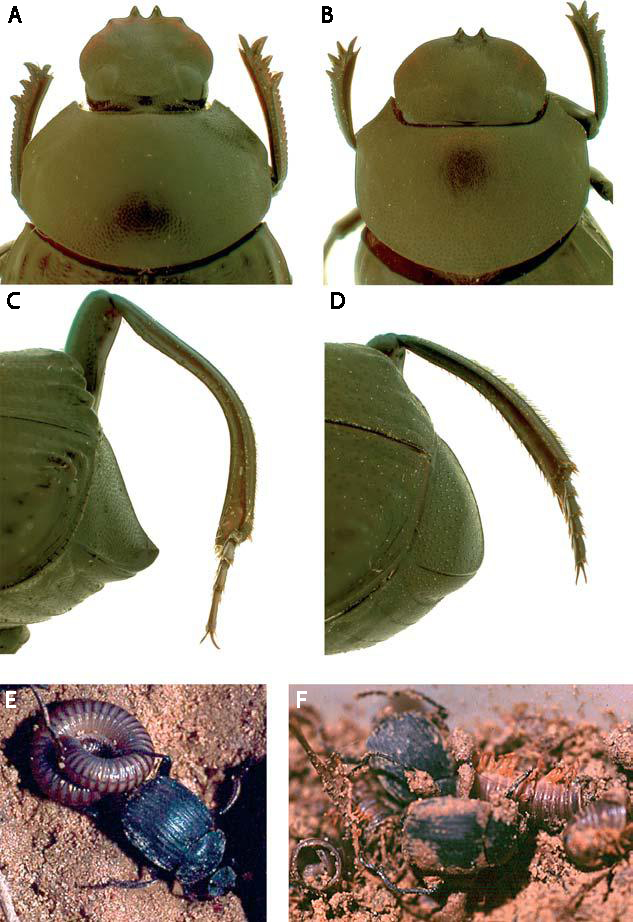
Larsen et al. determined that adults of D. valgum are opportunistic hunters and were much more likely to attack injured millipedes than healthy ones, even those weighing 14 times as much as the beetle.  Ball rolling behavior was never observed by D. valgum.  Most dung beetles have wide, shovel-shaped heads used to scoop and mold dung balls, but D. valgum has a much narrower head with sharp “teeth” on its clypeus (Fig. 1A vs. 1B).  The teeth apparently aid in killing the millipede by piercing the ventral surface behind the head and prying upwards (decapitating it), and the narrow, elongate head facilitates insertion into the millipede body for feeding.  Further, the hind tibia are elongate and curved, which are used to “grip” millipedes by holding them up against the dorsally reflexed pygidium (Fig. 1C vs. 1D).  This allows the beetle to drag its coiled up victim with one hind leg while walking forward on the other five (Fig. 1E).  Once killed, the beetles proceeded to break their prey into pieces and consume their meaty innards, leaving the disarticulated millipede exoskeletons licked clean (Fig. 1F).  One of these “attack” episodes was filmed (using infrared lighting so as not to affect their nocturnal behavior) and can be seen in this BBC News video.

Deltochilum valgum

Figure 1. (a) Dorsal view of D. valgum head. Sharp clypeal teeth and angled clypeus act as a lever to disarticulate millipede. Narrow, elongate head permits feeding inside millipede; (b) dorsal view of Deltochilum peruanum head, lacking characters described in (a), head used to mould dung balls; (c) lateral view of D. valgum pygidium and hind tibia. Dorsally reflexed pygidial lip is used to support millipede during transport. Elongate, strongly curved hind tibia is used to grip millipede. (d ) Lateral view of D. peruanum pygidium and hind tibia, lacking characters described in (c), hind tibia used for rolling dung balls. (e, f ). Predation strategy by D. valgum. (e) Dragging live, coiled millipede with one hind leg, walking forwards; ( f ) feeding on killed millipede with head inside
segments; disarticulated empty millipede pieces nearby.
Credit: Larsen et al. (2009).

Much has been made about this remarkable shift from coprophagy to predation, which Larsen et al. speculate was driven by competition for limited resources with the many other dung beetle species that occur in the Peruvian rainforests. In fact, adult dung beetles are known to feed on a variety of resources besides dung, as exemplified by the range of baits used in their survey. Thus, my first thought after reading the coverage was actually a question: “Has this species abandoned dung provisioning completely as a reproductive strategy?” Everything I had read focused exclusively (quite understandably) on the bizarre feeding habits of the adults, but there was no mention of what the species’ larval provisioning strategies were. Wanting more information about this, I contacted Trond Larsen, who graciously sent me a PDF of the paper. Unfortunately (though not a criticism of the paper), no further insight about this was found in the paper either. Indeed, in all of the observations recorded by Larsen et al., millipedes killed by D. valgum were consumed entirely by the adults, and no mention was made of how or whether millipedes were utilized for larval provisioning. I wondered if D. valgum had truly abandoned dung provisioning for larval development (a remarkable adaptive switch), or if in fact the species might still utilize the strategy for reproduction (perhaps having specialized on a dung type not included in their survey), while also exploiting millipede predation as adults for a nutritional advantage. I asked Trond about this, to which he replied with this juicy tidbit (I told you I had a special treat!):

Yes, I would very much like to know what the reproductive/nesting behavior of D. valgum is. My best guess is that they also use millipedes as a larval food source, but as you say, we haven’t observed that behavior yet. I have observed other generalist dung beetle species rolling balls out of dead millipedes, presumably to bury for the larvae, so I certainly think it would be an adequate food source. Many dung beetle species use carrion for their larvae.

I am quite confident that D. valgum does not use any kind of dung. I have sampled these dung beetle communities very thoroughly, with many dung types and other bait types, and also with passive flight intercept traps that catch all beetles. Every dung beetle species that feeds on dung is at least sometimes attracted to human dung (this is not the case in African savannahs though, but is in neotropical forests – that is a whole different story). There are still a small handful of species we catch in flight intercept traps that we don’t know what they eat, although some of these mysteries have recently been solved – many of them live in leaf-cutter ant nests for example.

While predation of millipedes by a dung beetle is itself a fascinating observation, demonstrating the abandonment of dung provisioning in favor of captured prey for larval development would be a truly remarkable example of an ecological transition to exploit a dramatically atypical niche. I hope Trond (or anybody for that matter) actually succeeds in observing millipede/prey utilization for larval provisioning by this species.

Many thanks to Trond Larsen for his delightful correspondence.

SOURCE:
Larsen, T. H., A. Lopera, A. Forsyth and F. Génier. 2009. From coprophagy to predation: a dung beetle that kills millipedes. Biology Letters DOI: 10.1098/rsbl.2008.0654.

Copyright © Ted C. MacRae 2009

Add to FacebookAdd to NewsvineAdd to DiggAdd to Del.icio.usAdd to StumbleuponAdd to RedditAdd to BlinklistAdd to Ma.gnoliaAdd to TechnoratiAdd to Furl

Christmas in January

One of the ironies about collecting insects is that the winter months can be just as busy as the summer months, sometimes more so. Despite the lack of insect activity during these short, cold days, I actually find myself at times a little overwhelmed with the amount of “work” I’ve set myself up to do.  There are specimens to mount, label, curate, and incorporate into the main collection.  Data from the just concluded field season need to be assembled and summarized so that reports and manuscripts can be written.  Applications for collecting permits need to be submitted, which can only be done once plans for the upcoming season have been formulated.  The fact that entomology is also my profession only exacerbates the situation.  Not that I’m complaining!  I love the fact (and sometimes still have a hard time believing) that I actually get paid to play with bugs, which affords me the opportunity to study them as I wish in my free time.

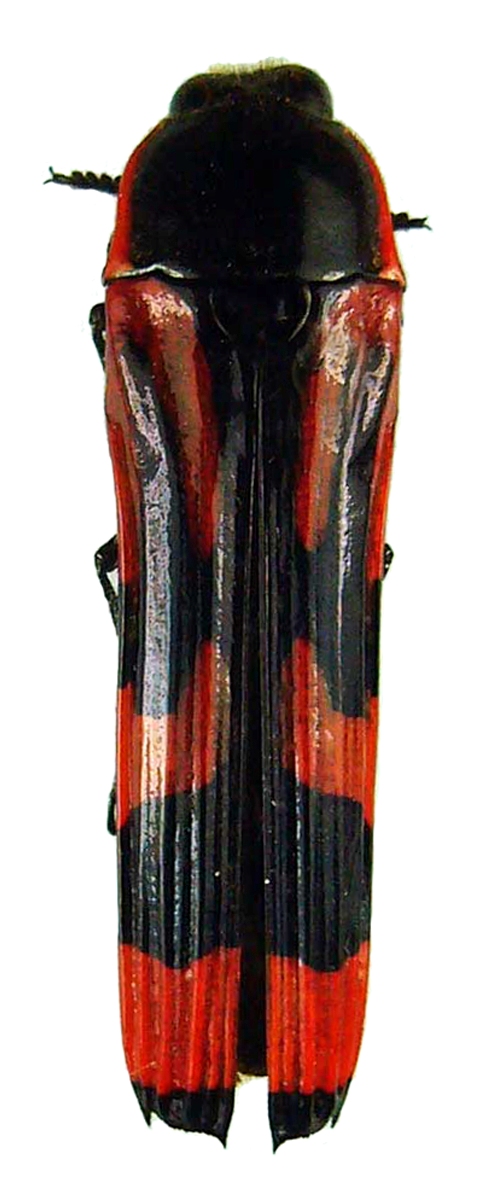
hiperantha-interrogationis-cruentata_dorsal_21Hiperantha interrogationis cruentata (ventral)In addition to these winter tasks for my own collection, I’ve also for a number of years now taken on the task of identifying material for other collectors.  While this may seem very nice of me, I can’t honestly claim that my motives are completely altruistic.  Doing this has given me the chance to develop relationships with a great many entomologists, specializing in taxa both within and outside my sphere of interest.  Often, material sent to me contains specimens that represent new distributional or host plant records, providing fodder for my own research.  Less frequently but more exciting, such material will contain species that I haven’t yet encountered on my own.  In most cases, the sender will be gracious enough to let me keep an example or two for my collection.  Such is the case with this gorgeous buprestid beetle, Hiperantha interrogationis, which was included in a recent shipment to me as a “gift” from long time friend and expert cerambycid specialist Dan Heffern.  This Neotropical representative of the tribe Stigmoderini (which also contains the Australasian genera Calodema and Metaxymorpha, featured in this recent post) not only represents a new species for my collection, but a new genus as well (reminding me of the old adage, “some of the best collecting is in other people’s collections” – or something like that).  Measuring right at 25mm in length, this spectacularly beautiful specimen is a welcome addition to my collection!

Hiperantha interrogationis is the only member of this otherwise South American genus to occur as far north as Central America and Mexico (Bellamy 2008).  This particular specimen was collected in Jalisco, and as such represents the subspecies cruentata, occupying the northernmost portion (Colima, Durango, Jalisco, and Nayarit) of the distributional range of the species (Bellamy & Westcott 2000).  Hiperantha interrogationis cruentata is distinguished from nominotypical populations by having all of the dorsal color pattern in red (nominate H. interrogationis exhibit some yellow markings) and the median longitudinal vittae of the elytra widely interrupted, thereby resulting in the formation of a distinctly transverse postmedian band. The apical transverse band of the elytra is also usually much wider in this subspecies than in the nominate form.

In a familiar refrain, not much is known about H. interrogationis other than distributional records.  Adults have most often been encountered on flowers of tropical trees, but larval hosts are completely unknown.  Manley (1985) published observations on the feeding behavior of adults on flowers of “Niguito”, Muntingia calabura (Elaeocarpaceae) near Guayaquil, Ecuador.  The adults were observed to be rather strong, high fliers that hovered over flowers in the tops of the trees before alighting, often on the terminal flower of a high branch.  Adults were observed consuming the petals of the flowers but were never observed feeding on the foliage.  After consuming all the petals of a flower, a process that required around 20-30 minutes, the adults moved off to adjacent foliage to groom themselves or rest.  No adults were observed on flowers of any other plant species in this area, but Bellamy & Westcott (2000) later recorded both subspecies on flowers of Acacia angustissima (Fabaceae) and the nominate subspecies on flowers of Chilopsis linearis (Bignoniaceae).

My sincere thanks to Dan Heffern for giving me his single specimen of this gorgeous species.

REFERENCES:

Bellamy, C. L.  2008. World catalogue and bibliography of the jewel beetles (Coleoptera: Buprestoidea),  Volume 2: Chrysochroinae: Sphenopterini through Buprestinae: Stigmoderini.  Pensoft Series Faunistica 77: 632-1260.

Bellamy, C. L. and R. L. Westcott.  2000. The genus Hiperantha: subgenera, type species, unavailable names and the Mexican fauna (Coleoptera: Buprestidae).  Folia Heyrovskyana 8(1):25-34.

Manley, G. V.  1985. Notes on the biology of Hyperantha interrogationis Klug (Coleoptera: Buprestidae).  The Coleopterists Bulletin 39(1):16-17.

Copyright © Ted C. MacRae 2009

Add to FacebookAdd to NewsvineAdd to DiggAdd to Del.icio.usAdd to StumbleuponAdd to RedditAdd to BlinklistAdd to Ma.gnoliaAdd to TechnoratiAdd to Furl

Tyrant ground beetles

I return to my Afrikaans theme with a distinctive group of ground beetles (family Carabidae) called tyrant ground beetles or spotted ground beetles (tribe Anthiini). I think I prefer the former. This tribe is largely restricted to Africa and is especially diverse and abundant in the arid, sandy Karoo and Kalahari regions of southern Africa (Scholtz & Holm 1985). These beetles are large, powerful predators that rely on speed and agility for capturing prey, and since they are also flightless these characteristics come in handy for avoiding becoming prey themselves. Failing that, they employ chemical defense in the form of secretions from a pygidial gland located in the area of the ninth abdominal segment. The chemical cocktail within these secretions contains concentrated organic acids or quinone that can be squirted at potential predators in a strong jet. This is an effective deterrent to small mammalian and avian predators, and I suppose a careless beetle collector might also regret handling these beetles without due respect. These defensive spray capabilities give rise to another common name for the group, “oogpister” – an Afrikaner word that literally translates to (ahem) “eye pisser.”

Anthia (s. str.) thoracicaDuring my time in Africa, Chuck Bellamy and I were primarily focused on collecting buprestids. However, we still couldn’t resist hanging an ultraviolet light in front of a sheet and searching the ground with flashlights at night to see what diversity of other African insects we might encounter. Truth be told, one of the non-buprestid groups that I’d really hoped to encounter was a near relative of these beetles – the so-called “monster tiger beetles” of the genus Manticora (family Cicindelidae1). We never did see any monsters, but we did encounter several species of anthiine ground beetles around our encampment at Geelhoutbos farm near the Waterberg Range in Limpopo Provice. Anthia (s. str.) thoracica, the giant African ground beetle (above), was the most impressive of these. Click on the photo to see a larger version – only then will it begin to convey how truly appropriate such a common name is for this species. It is certainly the largest ground beetle that I have ever seen – a full 50 mm in length! That’s 2 inches, folks! This species is easily recognized by the depressed lateral expansions of the pronotum covered with dense white/yellow pubescence, and the slightly smaller male that I caught exhibits more elongated mandibles (though not so incredibly as in Manticora) and marvelous lobes extending backward from the pronotum.

1 Increasingly placed within the Carabidae as subfamily Cicindelinae on the basis of molecular phylogenetic analysis, along with Paussinae and Rhysodinae (e.g., Beutel et al. 2008).

Anthia (Termophilum) omoplataIn addition to true Anthia, we saw two species of the subgenus Anthia (Termophilum)2. The species shown right is A. (T.) omoplata3, with the common name “two-spotted ground beetle” (Picker et al. 2002). It was almost as large as its giant brother above, measuring 47 mm in length. Of this species, I only saw this one individual, but I did also find two individuals of a related species, T. fornasinii. Unfortunately I was unable to photograph the latter species, which is equally large but with the elytral white markings limited to a thin marginal band and the surface of the elytra bearing strong longitudinal intervals – a handsome beast, indeed! Picker et al. (2002) mention T. homoplatum being a diurnal hunter, but we found all of our anthiines active nocturnally.

2 Treated variously in the literature as either a full genus or as a subgenus of Anthia. I follow Carabidae of the World, in which it is given subgeneric status. The name is often cited as “Thermophilum” in the literature, but this is an incorrect subsequent spelling according to Alexandre Anischenko (in litt.), coordinator/editor of Carabidae of the World.

3 Usually cited as “homoplatum” or “homoplata” in the literature, but this is an incorrect subsequent spelling (Anischenko in litt.).

cypholoba-alveolataA second genus in the tribe is Cypholoba, represented here by C. alveolata. As far as I can tell it lacks a common name, which is not surprising since it is somewhat smaller than the Anthia species mentioned above. Still, my two specimens measure 38 and 35 mm in length – not puny by any standard. There can be no doubt as to the origin of the specific epithet of this species’ scientific name, with its marvelously alveolate elytra. I don’t think I’ve seen such an extraordinary example of this type of surface sculpturing on a beetle of this size, making the species every bit as spectacular as the larger anthiines.

A truly fascinating aspect of Africa’s tyrant ground beetles is their role as models in Batesian mimicry systems. That these beetles should serve as models is not at all surprising due to their chemical defensive capabilities and obviously aposematic coloration. What is surprising is the mimic – juveniles of the lizard species, Eremias lugubris, in what is believed to be the first reported case of a terrestrial vertebrate mimicking an invertebrate (Huey & Pianka 1977). The juveniles not only copy (roughly) the black and white coloration of anthiine beetles but also mimic their rapid, skitty movements – foraging actively with “jerky” motions and arched backs. Their tails remain somber colored, however, allowing them to blend into the sand. These adaptations combine to give the harmless little lizard the size, color, profile, and gait of the beetles. As the lizards reach adulthood (and their greater size makes them less prone to predation), they take on a more typical cryptic coloration and move in a slower, more deliberately lizard-like manner. This mimicry association effectively reduces predation of the juveniles by potential predators, who quickly learn to avoid the noxious, and more frequently encountered, anthiine models.

REFERENCES:

Beutela, R. G., I. Riberab and O. R. P. Bininda-Emonds. 2008. A genus-level supertree of Adephaga (Coleoptera). Organisms, Diversity & Evolution, 7:255–269.

Huey, R. B. and B. R. Pianka. 1977. Natural selection for juvenile lizards mimicking noxious beetles. Science, 195 (4274):201-203.

Picker, M., C. Griffiths and A. Weaving. 2002. Field Guide to Insects of South Africa. Struik Publishers, Cape Town, 444 pp.

Scholtz, C. H. and E. Holm (eds.). 1985. Insects of Southern Africa. Butterworths, Durbin, 502 pp.

Review of Calodema and Metaxymorpha

ResearchBlogging.orgNylander 2008Insects are not only the most diverse group of animals in the world, they are also among the most beautiful.  Beetles, of course (with apologies to any lepidopterists that may be reading this), are responsible for a hefty slice of this majestic diversity, with the most spectacular of these belonging primarily to a few select families.  Longhorned beetles, who combine vibrant colors with grossly elongated antennae and legs.  Scarabs, upping the anty by sporting a monstrously wonderful array of horns or just sheer size to go along with their bright colors.  Tiger beetles, whose elaborate designs and vivid colors are further augmented with toothy-jawed, behavioral charisma.  Yet, it is the Buprestidae upon which the moniker “jewel beetles” has been bestowed, despite their lack of obvious morphological gimmicks – a testament to their bright, sparkling, even gaudy colors and exquisite surface sculpture.

Calodema spp.Some of the most beautiful buprestids in the world are found in the rainforests of southeast Asia, Indonesia, New Guinea and northern Australia.  Genera such as Catoxantha, Chysochroa, Megaloxantha, and Chrysodema come to mind – big, beautiful beetles with screaming iridescence of green, red, yellow and blue.  Living jewels!  These and related genera comprise the great tribe Chrysochroini – the “classic” jewel beetles.  Not as well known but perhaps even more spectacular than the chrysochroines are two genera with strictly Australasian affinities – Calodema (left) and Metaxymorpha (below).  These two genera are the subject of a review authored by Swedish entomologist Ulf Nylander and published in the journal Folia Heyrovskyana by Kabourek.  This gorgeously printed, copiously illustrated, and handsomly bound volume is as much a work of art as it is a technical review.

Metaxymorpha spp.Calodema and Metaxymorpha are among several genera comprising the tribe Stigmoderini in the subfamily Buprestinae.  Six genera, including Calodema and Metaxymorpha, are strictly Australasian, while another five genera are of southern Neotropical occurrence.  This now-disjunct tribal distribution suggests an origin on Gondwana prior to its break up beginning about 167 million years ago during the mid-Jurassic.  Calodema and Metaxymorpha are restricted to New Guinea and its associated islands and the northern and northeastern coastal areas of Australia.  The two genera share certain features that distinguish them from other stigmoderines, notably elongated mouthparts adapted to feeding on nectar and a streamlined, aerodynamically-shaped body with the prosternum (ventral sclerite behind the head) curiously prolonged into a large conical process.  Nylander discusses the possible function of this process in serving as a ballast to help stabilize the flight of these large beetles as they fly through branches and other obstructions in the upper forest canopy searching for flowers on which to feed.  This thought is based on the observation that adult beetles dropped from any angle are able to quickly right themselves and fly away before hitting the ground, while stigmoderines in other Calodema ribbeigenera – lacking the prosternal process – more often drop to the ground and feign death (presumably an adaptation for predator avoidance in the more open environments where they occur).  Calodema and Metaxymorpha are clearly related to each other but are distinguished by the smaller scutellum and nonoverlapping elytra of Calodema versus larger scutellum and distinctly overlapping elytra (in the apical area, usually left over right) of Metaxymorpha.

Fifteen species of Calodema and 18 species of Metaxymorpha are recognized, with comparative tables, figures, and keys provided to differentiate the species and species groups within each genus.  Four species are described as new, including Calodema hanloni, C. longitarsis and Metaxymorpha alexanderiensis from Papua New Guinea, and M. hanloni from Australia.  Species treatments include synonymies, information on type specimens and type localities, label data for specimens examined, detailed descriptions, and comments on distribution and flight periods when known.  Metaxymorpha nigrofasciataHigh quality, full color photographs are provided for every species.  In many cases, multiple specimens are illustrated to show the degree of intraspecific variation encountered in the specimens studied, as shown in the examples included here for Calodema ribbei (above) and Metaxymorpha nigrofasciata (right).  These fabulous plates would almost be enough to justify ‘coffee table book’ status, were it not for the decidedly technical nature of the text itself.  Lest you think this makes for a strictly dry read, there are additional comments for several species regarding historical localities and collection circumstances.  One of the more fascinating is this passage for Calodema vicksoni from Papua New Guinea:

The holotype was captured by a native lady who found this specimen feeding on flowers near her house in the jungle in a very remote location in the Owen Stanley Range.  She caught the beetle and gave it to her husband.  Sadly enough, shortly afterwards she was bitten by a Papuan Blacksnake and died.

The morbid origins of this species become even more gruesome, as Nylander further explains that the species was named to honor the memory of the late Vickson Kotaseao – an associate at the Wei Institute in Papua New Guinea who was the first person to discover the larva of Calodema, and who was later brutally murdered in an ambush while on duty.  The book concludes with a summary of the meager biological information recorded for species of Calodema and Metaxymorpha, including observations of larvae presumed to be Calodema ribbei and their host tree.  As a special bonus, the book comes with a DVD that includes videosequences of adults of several species (Calodema regalis, C. blairi, C. ribbei, C. hudsoni, Metaxymorpha nigrosuturalis, and M. meeki) feeding on their flower hosts in the Australian and Guinean rain forests.  While the color photographs in the book are truly stunning, seeing these beetles on video emphasizes their true spectacularity as living, behavioral creatures and not just dead, pinned specimens.

This book is a beautiful assemblage of all that is currently known about some of the world’s most gorgeous beetles.  Sadly, it also emphasizes just how incomplete that knowlegde really is.  Of the 33 species now recognized in these two genera, 20 of them (60%) have been described in just the past 15 years, and virtually nothing is known of the biology of the vast majority of them.  Seven species are known from just a single specimen, and several more are known by only a very small handful.  In an age where advanced molecular genetic techniques offer great promise for unlocking stores of knowledge about evolutionary relationships among earth’s biota, Calodema and Metaxymorpha offer a sobering reminder that there is still much to do in the less glamorous world of alpha taxonomy.  As noted by Nylander, the center of diversity for these spectacular buprestids appears to be in the Papua New Guinea central highlands – primary rain forests that are increasingly threatened by both legal and illegal logging.  To destroy such a biodiversity “hotspot” would be a sad legacy to leave – but to destroy it without even knowing what was there to begin with would be simply shameful.

I thank Ulf Nylander for granting me permission to scan and post these gorgeous plates, representing but a few of the many beautiful illustrations that can be found in his book.

REFERENCE:

Nylander, U. (2008). Review of the genera Calodema and Metaxymorpha (Coleoptera: Buprestidae: Stigmoderini) Folia Heyrovskyana, Supplementum 13, 1-84.

Top Ten of 2008

For the first post of 2009, I begin with a look back at some of my favorite photos from 2008 (idea stolen from Alex Wild and others).  I initially hesitated to do a “best photos” post since I’m not really a photographer – just an entomologist with a camera.  Nevertheless, and with that caveat in mind, I offer ten photos that represent some of my favorites from this past year. To force some diversity in my picks, I’ve created “winning” categories (otherwise you might just see ten tiger beetles!). Click on the photos to see larger versions, and feel free to vote for your favorite. If so, what did you like about it? Was there a photo I didn’t pick that you liked better?  Enjoy!

Best tiger beetle

Cicindela formosa generosa

From “All the better to see you with, my dear!” (September 2008).  Picking a top tiger beetle photo was tough with so many to choose from.  Ultimately, I decided I really like these face-on shots, and of the several I’ve posted this one of Cicindela formosa generosa has the overall best composition, balance and symmetry.  I considered this one of Cicindela formosa formosa – with its half-cocked jaws, it probably has better personality.  However, the one above got the final nod because it is a true field shot of an unconfined, unmanipulated individual.

Best jewel beetle

Aegelia petelii

From Buppies in the bush(veld) (December 2008).  Although taken back in 1999, I just recently scanned and posted this photo of Agelia petelii from South Africa.  I like the bold, contrasting colors of the beetle combined with the soft colors of the host foliage.  Runners up included these photos of Evides pubiventris with its sumptuous iridescent green blending beautifully with the green background (but suffering slightly from shallow depth of field) and Chrysobothris femorata with its intricate surface sculpturing.

Best longhorned beetle

Tetraopes femoratus

From Rattled in the Black Hills (September 2008).  This was an easy choice – none of the other longhorned beetle photos that I posted during 2008 matched this photo of Tetraopes femoratus for clarity, composition, and the striking contrast between the red color of the beetle and the green color of the host plant.  I especially like the detailing of the body pubescence.

Best non-beetle insect

Proctacanthus milbertii

From Magnificently Monstrous Muscomorphs (November 2008).  I do like other insect besides beetles, and robber flies are hard to beat for their charisma.  This photo of Proctacanthus milbertii (which, as Chris Taylor pointed out, literally translates to “Milbert’s spiny butt”), has great composition and nice, complimentary colors.  I like contrast between the fine detail of the fly and the soft background.

Best non-insect arthropod

Argiope aurantia

From Happy Halloween! (October 2008). I didn’t have many non-insect arthropod photos to choose from, but this photo of a female Argiope aurantia (yellow garden spider) would be deserving of recognition no matter how many I had to choose from. I like the bold, contrasting colors and symmetry of the spider in front of the dappled background of this photo.

Best non-arthropod animal

Prairie rattlesnake (Crotolus viridis)

Another one from Rattled in the Black Hills (September 2008).  This is admittedly not the best photo from a purely technical perspective – it’s a little out of focus, and the color is a bit off.  However, no photo could better convey the moment – confronted with a live, angry prairie rattlesnake (Crotalus viridis) (among the more aggressive species in the genus).  The forked tongue and rattle – blurred in motion – were icing on the cake.

Best wildflower

Victoria Glades

From Glades of Jefferson County (July 2008).  I had several wildflower closeups to choose from, but I kept coming back to this field shot of pale purple coneflower (Echincea simulata) and Missouri evening primrose (Oenethera macrocarpa).  The eastern redcedars (Juniperus virginiana) in the background are at once indicative of their preferred habitat (limestone/dolomite glades) and also testament to their threatening encroachment.

Best tree

Calocedrus decurrens

From the very simply and aptly named Lake Tahoe, California (March 2008).  Incense cedar (Calocedrus decurrens), with its reddish, deeply furrowed bark and great height, is one of the most majestic of western conifers.  I was captivated by this tree – beautiful even in death and contrasting nicely with the surrounding green foliage.

Best rockscape

Pipestone National Monument, Old Stone Face

From Pipestone National Monument (April 2008).  “Old Stone Face” is one of Pipestone’s most recognizable geologic features, and the short angle of the sun on this early spring day provided nice detail to the cracks and fissures of the rock – almost appropriately adding a weathered “age” to this old man.

Best landscape

Emerald Isle, Lake Tahoe

Another one from Lake Tahoe, California (March 2008).  Few places on earth are more photogenic than Lake Tahoe, and this perspective overlooking Emerald Bay is among the finest views I’ve seen.  Brilliant blue skies and majestic snow covered mountains reflected perfectly from the still surface, with Fannette Island providing a perfect focal point for the photo.

Best miscellaneous

Water drops, Ozark Trail, Trace Creek SectionFrom Ozark Trail, lower Trace Creek Section (December 2007).  While technically not a 2008 photo, it’s close enough.  This was one of the first macro photographs I took with my camera, and it remains one of my favorites.  A chance occurence of an unlikely subject, created by cold temperatures and heavy moisture-laden air. I like the contrast between the water drops – sharp, round, and clear – with the vertical shapes of the leaf petioles and background trees.  Viewing the image full-sized reveals the reflection of the photographer in the leftmost water drop.

Subsequent edit: Okay, so after I put this post together, I realized I actually featured eleven photos – too much difficulty choosing, I guess. Let’s call it a baker’s ten.