Eye of the Turtle

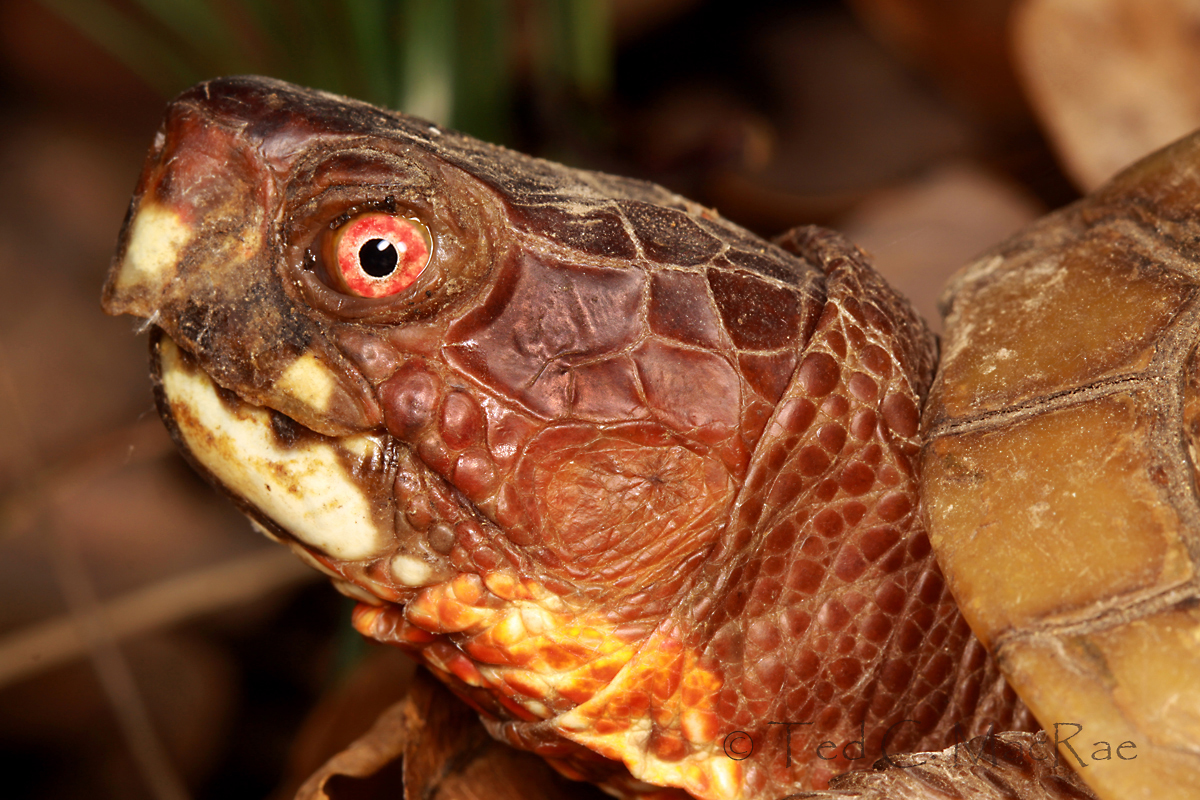
Adult male three-toed box turtle (Terrapene carolina triunguis).

Is there anything more lovable than the humble turtle?  As old as the dinosaurs, they stumbled onto a body plan that works and promptly dropped out of the evolutionary arms race.  Slow, plodding, and seemingly oblivious, they steadfastly cling to their quite, unhurried lives.  As the rest of the earth’s diversity of life races on, turtles go about their business much as they have done for more than 200 million years now.  They are survivors.

My friend Rich and I encountered this three-toed box turtle (Terrapene carolina triunguis) during our hike of the lower North Fork Section of the Ozark Trail in extreme southern Missouri.  Three-toed box turtles are one of four U.S. subspecies of the eastern box turtle, occupying the area west of the Mississippi River from Missouri and Kansas south to Texas and distinguished by their largely unpatterned shell and – yes, three toes on the hind legs rather than four.  I walked right by this guy the first time without noticing him, and only when I turned around to go back and look at something else did I see him sitting there – neck fully extended.  Box turtles exhibit considerable variability in color and patterns on the head and neck, and this particular individual is one of the more conspicuously colored that I’ve seen.

And the eye – as red an eye as I’ve ever seen!  Almost surely a male, as females may have some red in the eye but rarely to such a spectacular degree.  Also likely full-grown based on his rather large size, though probably not too advanced in age yet since the growth rings were still easily visible (in older turtles the growth rings gradually wear smooth).  I estimated it at about 12 years based on ring counts – still a far cry from the 30-50 years that are not uncommonly documented.  He kept a watchful eye on me as I studied him, and I wondered about what his future held.  As an adult, he has settled into a small home range from which he rarely ventures – likely visible to me in its entirety from where I stood.  For the next several decades, he will amble across this single hillside on an endless quest for earthworms, strawberries, and mushrooms.  Save for a possible run-in or two with a destined-to-be-frustrated coyote, fox, or racoon, it will be a largely uneventful life.  He is a survivor.

Copyright © Ted C. MacRae 2010

3rd Blogoversary, 7 New Blogs, & AIF #10

Today happens to be BitB’s 3rd blogoversary.  I won’t bore you with an attempt at witty, insightful introspection on what it means to have reached this modest milestone.  BitB is still what it started out as – tales from my life-long, entomocentric, natural history learning experience.  I’ve enjoyed these past three years immensely, learned far more than I would have initially imagined, and deeply appreciate the support and encouragement I’ve received from an admireably erudite readership.

Rather than talk on about myself, however, I’d like to talk about others.  I’m always on the lookout for new blogs – those that seem interesting make the blogroll, and if I find their content compelling enough they make my RSS feed list.  A few rise to the top due to their superior photography, insightful writing, or close alignment with my own interests – these I like to feature from time to time by name in an occasional post such as this one.  Following is the latest crop of new sites (or at least new to me) that have piqued my interest:

Crooked Beak Workshop is written by coleopterist Delbert la Rue, Research Associate at the Entomology Research Museum, University of California, Riverside.  I can forgive his primary interest in Pleocomidae (rain beetles) and other scarabaeoid taxa due to his strong side interests in Cicindelidae (tiger beetles), Buprestidae (jewel beetles), and ecology of sand dune ecosystems.  Posts occur irregularly, but when they do appear they are good old-fashioned hardcore coleopteran taxonomy and desert southwest ecology – what could be better?

Field Notes is a herpetology website by Bryan D. Hughes.  “Spectacular” does not even begin to describe his photographs, focused heavily on the marvelous diversity of venomous snakes and other reptiles in the desert southwest (and the occasional desert arachnid as well).  Bryan hopes his pictures and information will help homeowners who choose to live in areas harboring native wildlife become interested in it rather than kill it due to fear and myth – I hope he succeeds!

Gardening with Binoculars is a fairly new site by my good friend and fellow WGNSS member Anne McCormack.  Anne is a true “naturalist’s naturalist,” with solid knowledge that spans the breadth of Missouri’s flora and fauna – both vertebrate and invertebrate.  In GWB, Anne uses this knowledge and her considerable writing talents to weave informative and entertaining tales of her experiences with wildlife in a small native plant garden.  I can almost hear the campfire crackling in the background!

Natural History Museum Beetle blog is a new blog by Beulah Garner, one of the curators of Coleoptera in the Entomology department at The Natural History Museum in London (I am sooo jealous!).  With only two posts under her belt so far, it might be premature to give the site such quick praise; however, I couldn’t resist – the 2nd post had photos of tiger beetles!  Regardless, working amongst more than 9 million insects (did I mention I’m jealous?) should provide plenty of fodder for future posts.

The Atavism is written by David Winter, a PhD student in evolutionary genetics in New Zealand.  Wide ranging in his interests, it is his  series that has captured my interest (and while “spineless” across much of the blogosphere means squishy marine animals, David’s spinelessness is more to my liking – i.e., arthropod-heavy).  Moreover, in true academic fashion, David usually finds an unusual angle from which to discuss his subjects.

The Prairie Ecologist. Chris Helzer is an ecologist for The Nature Conservancy in Nebraska whose writings demonstrate deep, intimate understanding of the prairie landscape and its myriad biotic interactions, as well as the passion that many of us here in the heartland feel when looking out on its vast expanses.  As if that wasn’t enough, Chris is also one of the rare bloggers who combines his well-crafted writing with truly spectacular photography – he’s the total package!

The Sam Wells Bug Page is written by – you guessed it – Sam Wells.  This is a straight up entomology site, featuring a diversity of insects from that wonderful state called California.  You won’t find these insects anywhere else on the web, and though it is (to my liking) heavy on the beetles, a variety of other insect groups are featured as well.  What’s more, each post almost always contains fabulous photos of that remarkable California landscape.  Each post is a little mini-collecting trip – I get a little homesick for the Sierra Nevada every time I read!


One final note – Heath Blackmon at Coleopterists Corner has posted the tenth edition of An Inordinate Fondness.  This was Heath’s first blog carnival hosting gig (could there have been any more appropriate?), but you wouldn’t know it by looking – 14 coleocontributions artfully presented, each with a teaser photo and just enough text to invite further clicking.  Head on over to AIF #10 and enjoy elytral ecstasy at its finest (and don’t forget to tip the waiter!).

Copyright © Ted C. MacRae 2010
First tiger of the trip…

Tiger salamander, that is! Chris and I spent Thursday evening and all of Friday driving across Missouri, up along the Loess Hills into Iowa, across the Missouri River into Nebraska, and all the way through mile after surreal mile of the vast Sand Hills before dropping down the Pine Bluff escarpment into Chadron, Nebraska. We expected the fun would start the next morning, when we would meet up with Matt Brust and travel to ‘secret’ spots in the Badlands for our first tiger beetle target, the gloriously beautiful Cicindela pulchra. As we unloaded our bags from the truck and headed towards the motel entrance, we spotted this gorgeous tiger salamander (Ambystoma tigrinum) ambling across the parking lot. Wow – I had never seen a tiger salamander before now, but still there was no question in my mind what we had just found. Immediately we knew we wanted to get photographs, and the motel parking lot seemed the most inhospitable of places for this poor fellow, so I hurriedly made a makeshift terrarium using one of the containers I had brought along for keeping adult tiger beetles and placed him in it. He was dry, so as soon as we got in the room I wetted him down and added a petri dish of water to the habitat.

Actually, I knew I wanted more than photographs, as I had the impression that these largest of all North American salamanders are also among the easiest to keep as pets. I knew that my daughters would enjoy such an experience (not to mention myself!). First, however, I wanted to make sure that 1) tiger salamanders were not listed as a species of conservation concern in Nebraska, 2) my taking or possessing this individual was legal, and 3) I knew exactly what I would be getting into if I were to keep it. Google to the rescue! I found the Nebraska Game & Parks website, which states:

A fishing permit is required to take, or attempt to take, fish, bullfrogs, snapping turtles, tiger salamanders or mussels by any method.

A link at the site directed me to a page where I could purchase a 1-Day Nonresident Fishing Permits ($9.50 – proceeds go to support Nebraska Game and Fisheries programs) – enter my credit card number, download the PDF, and now I’m legal.

A little more Googling revealed this excellent series of videos with information on caring for tiger salamanders as pets , and I was sold. I’ll wait until I get home next week and let the kids decide what to name it, and I’m hopeful it will live a long, sluggish life getting fat on fall armyworms, corn earworms, and tomato hornworms.

Photo Details: Canon 50D w/ 100mm macro lens (ISO 100, 1/250 sec, f/11), Canon MT-24EX flash (F.E.C. -2/3) w/ Sto-Fen + GFPuffer diffusers. Typical post-processing (levels, minor cropping, unsharp mask).

Copyright © Ted C. MacRae 2010

New blogs of note

Every now and then, I like to feature some of the more interesting blogs that I’ve encountered recently. This update features six blogs – five dealing with entomology and one dealing with herpetology.


Aphonopelma: Tarantulas of the United States

© Kory Roberts

Aphonopelma: Tarantulas of the United States is a relatively new blog by Michael D. Warriner. With only a single U.S. genus (Aphonoplema), this may seem a rather narrow scope for a blog.  However, as Michael points out, research on ecology, conservation, and taxonomy of U.S. tarantulas has been surprisingly limited.  Their taxonomy, in particular, has been quite problematic, making accurate species identifications almost impossible.  Michael has begun summarizing known distributional information for states from which tarantulas are known (Missouri south to Louisiana and west to California) and providing detailed discussions for selected species with an eye towards enabling better conservation efforts for this neglected group of spiders.

Nature Closeups

© Troy Bartlett

Nature Closeups is the new blog by insect photographer extarordinaire and BugGuide (“a community for fellow naturalists devoted specifically to arthropods”) founder Troy Bartlett.  Featuring stunning photographs of mostly insects from his home near Atlanta, Georgia and his frequent trips to Brazil, Troy often adds interesting details about the natural history behind the photo.  As Troy explains, photography is “more a means than an end. Looking over the photographs afterwards and researching the things I’ve found is even more rewarding.”  Those with a lot of confidence in their insect identification skills may wish to try their hand at Troy’s occasional identification challenges (prepare to be humbled!).

Up Close With Nature

© Kurt (a.k.a. orionmystery)

Up Close with Nature by Kurt (a.k.a. orionmystery) is one of my favorite insect macrophotography blogs.  Kurt lives in Kuala Lumpur, Malaysia, giving him access to an insect fauna that is extraordinary in both its diversity and beauty.  Kurt uses the stunning insects of this rich fauna to share with readers his excellent tips and techniques for insect macrophotography.  His latest post features one of the best explanations I have seen on the use of Flash Exposure Compensation in Macro Photography, and previous posts have given me some great ideas on diffusers and the use of backgrounds to optimize flash lighting.  If you’re interested in the science of insect macrophotography, you will enjoy this blog.

Living With Insects

© Jonathan Neal

Living With Insects is the new blog by Jonathan Neal, Associate Professor of Entomology at Purdue University and author of the textbook, Living With Insects (2010).  Jonathan is interested in exploring the intersections of people and insects, and though he just began blogging a month ago he has already covered such topics as the evolution of insect flight, the consequences of virus infection in domestic cricket colonies, insects and burial practices, raising monarchs, insect cuticle, and the importance of insect museums.  It’s a daily dose of erudition!

6legs2many

© Alison Bockoven

6legs2many is written by Alison Bockoven, an entomology graduate student at Texas A&M University.  While her research focuses on genetic variation in the foraging behavior of the red imported fire ant, Alison is also having fun discovering the broader field of entomology.  Her enthusiasm is palpable as she features some of the insects that she has encountered and the techniques used for their collection and curation.  Her latest post covers the Embioptera, or webspinners – a group that I, after nearly three decades as a practicing entomologist, still have not encountered.  By the way, the title of the blog is derived from this humorous quip by Joseph W. Krutch:

Two-legged creatures we are supposed to love as we love ourselves.  The four-legged, also, can come to seem pretty important.  But six legs are too many from the human standpoint.

Field Notes

© Bryan D. Hughes

Although I am a devout entomologist, I do enjoy a good herp blog, and Field Notes by Bryan D. Hughes is one of the best herp blogs that I’ve seen.  Focusing on Arizona’s venomous snakes, Bryan provides stunning photographs of these striking animals (heh heh… get it?) and other assorted reptiles and amphibians from that unique fauna.  As Bryan explains, “I like spending my Saturday nights in hot cars on dirt roads in the middle of nowhere, being attacked from all sides by mosquitoes while searching for deadly snakes.”  His dedication to these oft-misunderstood animals is clear by his role as a volunteer for snake relocation calls and his hope that his website will help local homeowners to become interested in native wildlife rather than killing it.

Copyright © Ted C. MacRae 2010

June beetles, moths, and herps

New issues of my three favorite carnivals have been issued in the past day or two. See what’s been going on in the blog world of beetles, moths, and herps during the past month.

Seabrooke Leckie has just posted An Inordinate Fondness #5 at the Marvelous in Nature. I was delighted when Seabrooke offered to host this issue – an experienced nature blog carnival host, her standing as a member of the Nature Blog Network team and author of one of its most popular blogs promised to bring an air of credibility to this newest of nature blog carnivals.  With the creative flair that we’ve come to expect from her, Seabrooke shares with us ten different species in eight different families and presenting a multitude of shapes and colors – from iridescent green tamarisk weevils and false blister beetles, to black and red milkweed leaf beetles and ladybird beetles, to strikingly patterned longhorned beetles, to brown yet anything but boring rain beetles (and once you’ve seen what’s out there, learn about everything you need to go out and collect them).

Chris Grinter at The Skeptical Moth joins the blog carnival host ranks with The Moth and Me #12.  Chris is an entomologist at the California Academy of Sciences in San Francisco specializing in  microlepidoptera.  I’m a big fan of Chris’ blog, which I featured in New Bug Blogs of note earlier this year, and his first effort as a blog carnival host – covering 14 submissions in all (including some extraordinary wasp mimics) – is as solid as they come.  I hope you’ll not only check out this edition of TMaM, but also the rest of TSM – its combination of high quality photography and lepidopterous erudition make it the real deal.

Lastly, House of Herps #7 – Dr. Seuss Edition is up at the home site, House of Herps.  This one is a real treat, as HoH co-founder Jason Hogle has once again shown why, in just a few short months, he has become one of the top blog carnival hosts around.  For this issue, Jason takes us back to our childhoods with his own version of Dr. Seuss (and with herp links artfully embedded).  For myself, when I think back on my childhood, I remember catching snakes and turtles and lizards and frogs and holding them (temporarily) in assorted home-made terraria (often just a big pickle jar with dirt and rocks and a dish of water.  I didn’t care what they were called (I always gave them names of my own choosing), I just enjoyed watching them and seeing how they behaved and figuring out what they ate.  Head on over to HoH and rekindle that childhood fascination with all things creepy and crawly.

Copyright © Ted C. MacRae 2010

Add to FacebookAdd to DiggAdd to Del.icio.usAdd to StumbleuponAdd to RedditAdd to BlinklistAdd to TwitterAdd to TechnoratiAdd to Yahoo BuzzAdd to Newsvine

Email to a friend

May Beetles and Herps

Issue #4 of An Inordinate Fondness is up at xenogere, and once again Jason Hogle has unleashed his natural talent as a blog carnival host in fine form.  Join Jason on a meandering road trip across the continent and back, as he visits the latest crop of beetle bloggers and engages them in coleopterous conversation.  I hope you’ll join the fun and visit the links, and as always don’t forget to tip the waiter!

Another carnival that I follow with interest is House of Herps, and Bernard Brown at Philly Herping has just posted HoH #6. There is a nice assortment of posts featuring frogs, salamanders, snakes and lizards (including one on a very rare Florida endemic, submitted by some guy – I forget his name), and I think the gopher snake photos are the gem of this issue. May is a happening month for herps, so be sure to check out this month’s presentation (and as always don’t forget to tip the waiter)!

Copyright © Ted C. MacRae 2010

Add to FacebookAdd to DiggAdd to Del.icio.usAdd to StumbleuponAdd to RedditAdd to BlinklistAdd to TwitterAdd to TechnoratiAdd to Yahoo BuzzAdd to Newsvine

Email to a friend

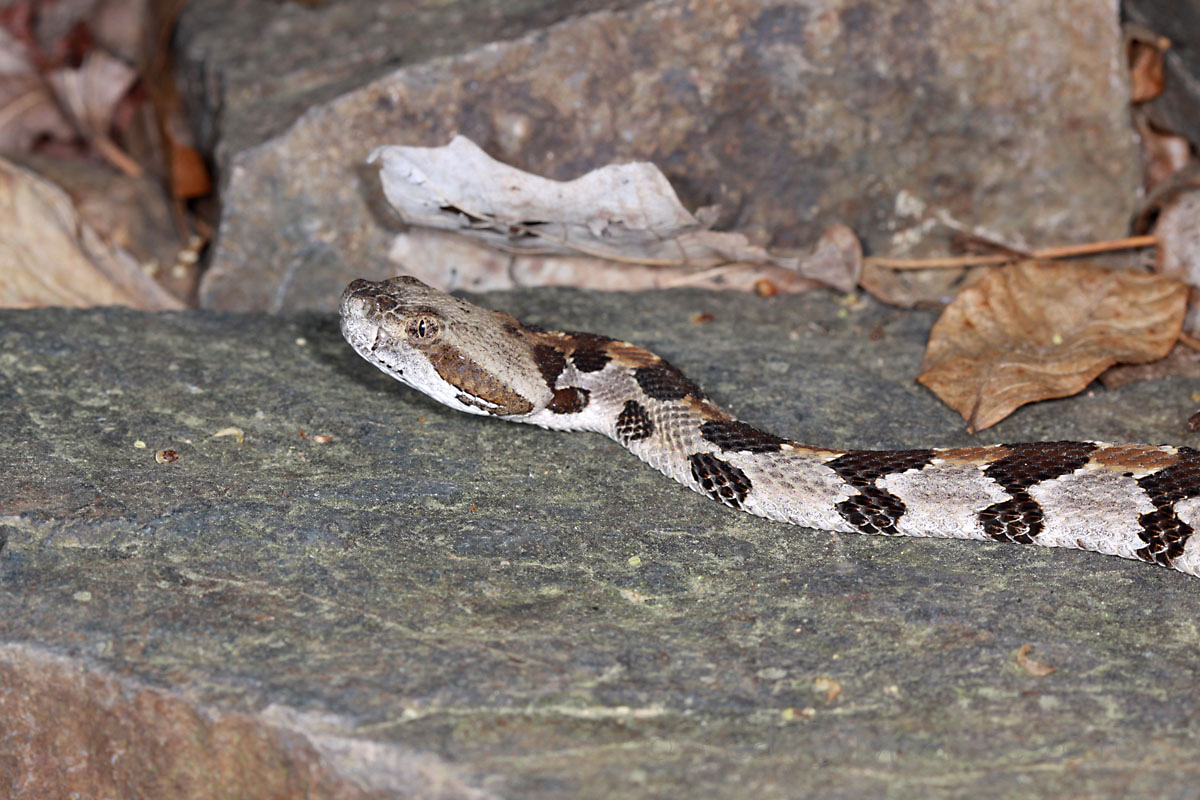
A Horridus Birthday

For many years now, I’ve celebrated my birthday each year with the “season-opener-birthday-bug-collecting-trip.”  This happens regardless of what day of the week it falls (although two years ago I did get roped into a business trip – I made up for it by stumbling into a quick but thoroughly enjoyable tour of Pipestone National Monument before my flight back home).  Last year I made sure I got the day off and had a nice, festive (tiger beetle) birthday.  For this past April 23rd, a Friday, I celebrated my 29th birthday (for the 2-dozenth time!) by grabbing long-time field companion Rich and shooting down to Sam A. Baker State Park in the Ozark Highlands of southeastern Missouri.  My goal for the trip was to find the very uncommon Cladrastis kentukea (American yellowwood), a small tree that is known to occur in Missouri only in the White River Hills of the extreme southwest and in a few localities in and near Sam Baker State Park.  Actually, it wasn’t the tree so much that I was after, but a small jewel beetle – Agrilus cladrastis – that utilizes this plant exclusively for its larval host. To date, the only Missouri specimens of this species have been collected by the late, great Gayle Nelson on yellowwood in the White River Hills, and I wanted to see if I might be able to find it in southeastern Missouri as well.  April is still too early to encounter active adults, but my plan was to: 1) find examples of the tree, 2) collect dead wood from them, and 3) cut living branches to leave in situ for infestation this season and retrieval the next.  Long story short, I succeeded on all three counts (though I won’t know for a few weeks whether the wood I brought back actually harbors any as yet unemerged adults – finger crossed!).

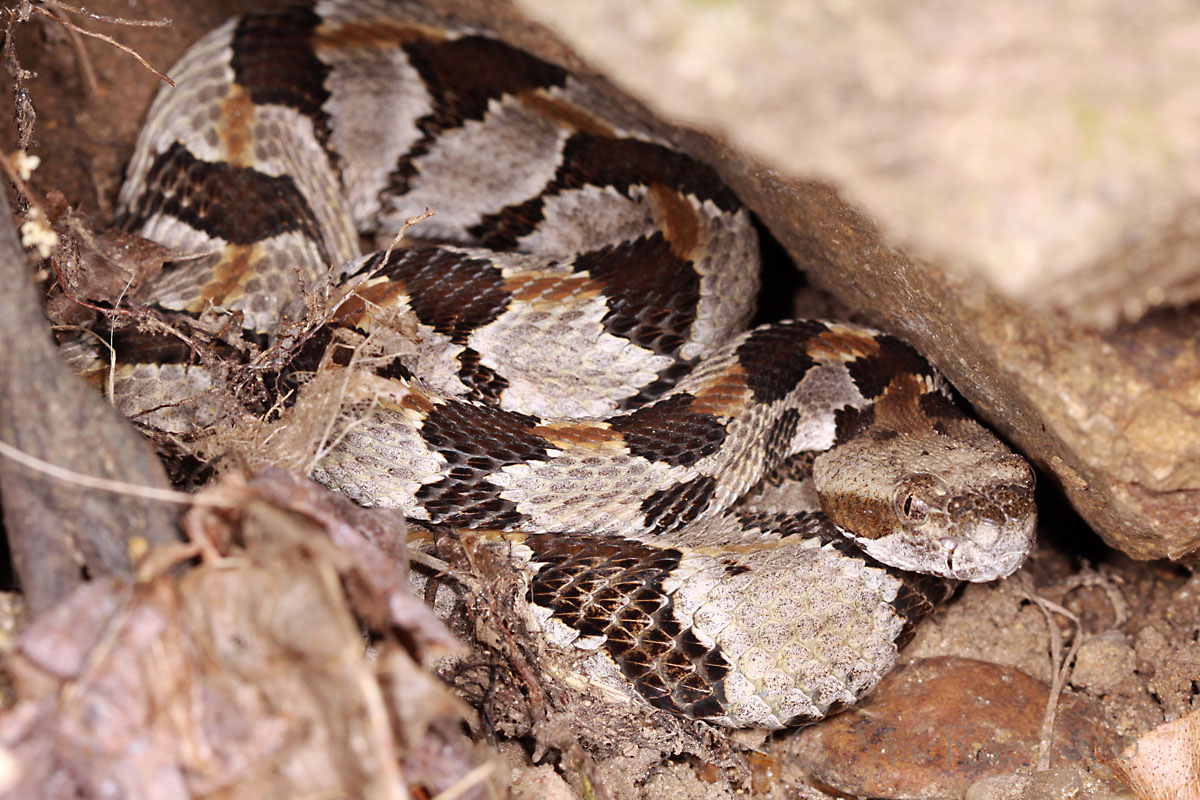
The area where we expected to find the tree was steep, rocky slopes overlooking Big Creek on the north side of the park.  Rich and I were hiking a trail below the slopes, and I had gotten a little bit ahead of him when I saw a 30″ long snake stretched straight out across the trail.  Recognizing it immediately as one of our venomous species, but not quite sure which one, I blurted out, “Wow, what a gorgeous snake!”  Rich, a better herpetologist than I, shouted from a distance back, “What kind?”  In the few seconds during which this exchange was taking place, it all registered – the dark stripe behind the eye, the bold markings (too dark for a copperhead, too big for a western pygmy rattlesnake, too widely spaced for a massasauga), the black tail (not yellow-green like a juvenile copperhead), and a tiny little one-chambered rattle!  I yelled back, “A young timber rattler!”  Rich got there promptly, and we decided that it must be a yearling based on the time of year, its length, and the size of the rattle.

I have seen a few timber rattlesnakes (Crotalus horridus) in Missouri over the years, but never like this.  My previous sightings have all been fleeting glimpses after hearing them shooting into the underbrush to escape my close approach – me oblivious to their presence until it was too late.  This young snake, by contrast, didn’t flinch as I approached (carefully), set down the backpack, and assembled the camera to begin taking photographs.  As I began taking a few photos of the head area (from a respectful distance – the vision of that terrifyingly aggressive prairie rattlesnake from two years ago still lingers), it became agitated and started moving for cover.  Rich wasn’t too anxious to head it off at the pass, but I wasn’t satisfied with the shots that I’d gotten so far, so I grabbed my net to block it from disappearing into the litter.  That caused it to pause just long enough for me to get back into position and frame a shot… that I couldn’t get off before it started moving again!  We did this a few times until it finally just crawled right into the net – now what?!  I carried the net over to some large rocks on the side of the trail and used them to flip the net and dump out the snake, which immediately headed for cover underneath the rocks.  I figured the photo shoot was over then, but the space under the rocks was not deep, and after a bit of probing for escape routes the snake eventually settled into a money pose and I was able to snap away with glee – what do you think?

Missouri has five venomous snake species, all of which are pit vipers with three being rattlesnakes.  I’ve featured two of these in previous posts – the Osage copperhead and the western pygmy rattlesnake.  Both of these species occur throughout the Ozark Highlands, although the latter is more common in the southwestern part of the state.  The third rattlesnake species in Missouri, eastern massasauga, is rare in wet habitats scattered across northern Missouri, while the cottonmouth (or water moccasin) is limited to stream, river, and swamp habitats in the southern Ozarks and southeastern lowlands.  Many internet references list the western massasauga also as occurring in Missouri, but this subspecies is not included in the most recent Snakes of Missouri (Biggler and Johnson 2004).  Within Missouri, timber rattlesnakes have a statewide distribution, but they have been extirpated by humans from many areas and now occur as small populations in scattered locations across the state.  The same is true in other parts of their range as well, particularly along the western and northern limits.  It is thus a rare and exciting treat to see one of these magnificent animals, although the reasons for its rarity are both sobering and maddening.

REFERENCE:

Briggler, J. and T. R. Johnson.  2004. Snakes of Missouri. Missouri Department of Conservation, Jefferson City, 16 pp.

Copyright © Ted C. MacRae 2010

Add to FacebookAdd to DiggAdd to Del.icio.usAdd to StumbleuponAdd to RedditAdd to BlinklistAdd to TwitterAdd to TechnoratiAdd to Yahoo BuzzAdd to Newsvine

Email to a friend

Rough Green Snake

My string of good herp luck looks like it might continue in 2010.  You may recall the super-aggressive prairie rattlesnake and uncooperative dusty hognosed snake that I featured in 2008 (or not – my readership was rather minuscule back then), followed by the juvenile Osage copperhead, gorgeous male eastern collard lizard, bizarre Texas horned lizards, death-feigning western hognosed snake, super rare Florida scrub lizard, and – finally – cute little western pygmy rattlesnake in 2009. All but the copperhead and collared lizard were first-time sightings for me, and now in 2010 I have yet another first-time sighting to present – the rough green snake (Opheodrys aestivus aestivus).

Rough green snake (Opheodrys aestivus aestivus)

My friend Rich and I spotted this long and slender snake during our early April hike of the lower Wappapello Section of the Ozark Trail (soon after photographing the jumping spider). We would never have seen it, so effective was its green camouflage, had it not been disturbed by our close approach along the trail and tried to flee.  The moist bottomland habitat where we found it was thick with greenbrier (Smilax sp.), making tracking the snake a thorny affair, but I managed to head it off and start taking a few photos of it.  It was surprisingly calm during the early part of the photo session, but I just wasn’t getting the lighting and exposure that I wanted.  Eventually, it started fleeing again, and my efforts to rip through the greenbriers to stay close became too much for my arms to bear.  When it started climbing a tree, I said “enough is enough” and captured him, brought him back out to the comfort and openness of the trail, and had Rich hold him while I worked on getting some better photographs.  The one above is my favorite of the bunch.

Rough green snakes are found in Missouri primarily south of the Missouri River in the Ozark Highlands, where they feed on insects such as grasshoppers, crickets, and especially smooth caterpillars.  A second green snake occurs in Missouri as well, the smooth green snake (Opheodrys vernalis), which differs from the rough green snake by having smooth scales and a more northern distribution within the state. Sadly, the smooth green snake has not been seen in the state for a number of years now, probably because of loss of habitat resulting from the near complete agricultural conversion of that part of the state.

Photo Details: Canon 100 mm macro lens on Canon 50D, ISO 400, 1/60 sec, f/4.5, Canon MT-24EX flash w/ Sto-Fen diffusers. Minimal post-processing.

Copyright © Ted C. MacRae 2010