Sea Grape Flatid – Petrusa epilepsis

The argid sawfly Sericoceros krugii wasn’t the only insect I saw associated with seagrape (Coccoloba uvifera) during my May trip to Puerto Rico. While exploring the magnificent coastal sand dune system near Isabela (northwestern Puerto Rico), I encountered a tree with literally dozens of frosty, white “homopterans” on the reddish lower surface of its newly expanded leaves (the photo below shows them at only about half the density that I saw initially, as many became disturbed and left when I tried to photograph them). Clearly they were planthoppers in the superfamily Fulgoroidea, with their general shape wings held tent-like suggesting either the family Acanaloniidae or its close relatives in the family Flatidae.

Petrusa epilepsis adults on seagrape (Coccoloba uvifera) | vic. Isabela, Puerto Rico

A better look at the adults in the photos revealed the presence of numerous parallel cross-veins along the costal margin of the forewings, placing them squarely within the family Flatidae (species of Acanaloniidae have reticulate forewing venation without the parallel cross-veins). Wolcott (1948) lists a dozen or so species of flatids from Puerto Rico, roughly half of which belong to the subfamily Flatinae (wings held tent-like) and the other half belonging to the Flatoidinae (more flattened insects with wings held almost horizontal). The likeliest candidate seemed to be Ormenis marginata, which Wolcott describes as occurring in the “millions, vast clouds of them flying up from seagrape plants that one may disturb around Isabela…” I can’t say I saw “millions” of them, but certainly they were abundant on this one plant. My identification was kindly confirmed by Neotropical fulgoroid Lois O’Brien, who also noted that this species now goes under the name Petrusa epilepsis Kirkaldy.
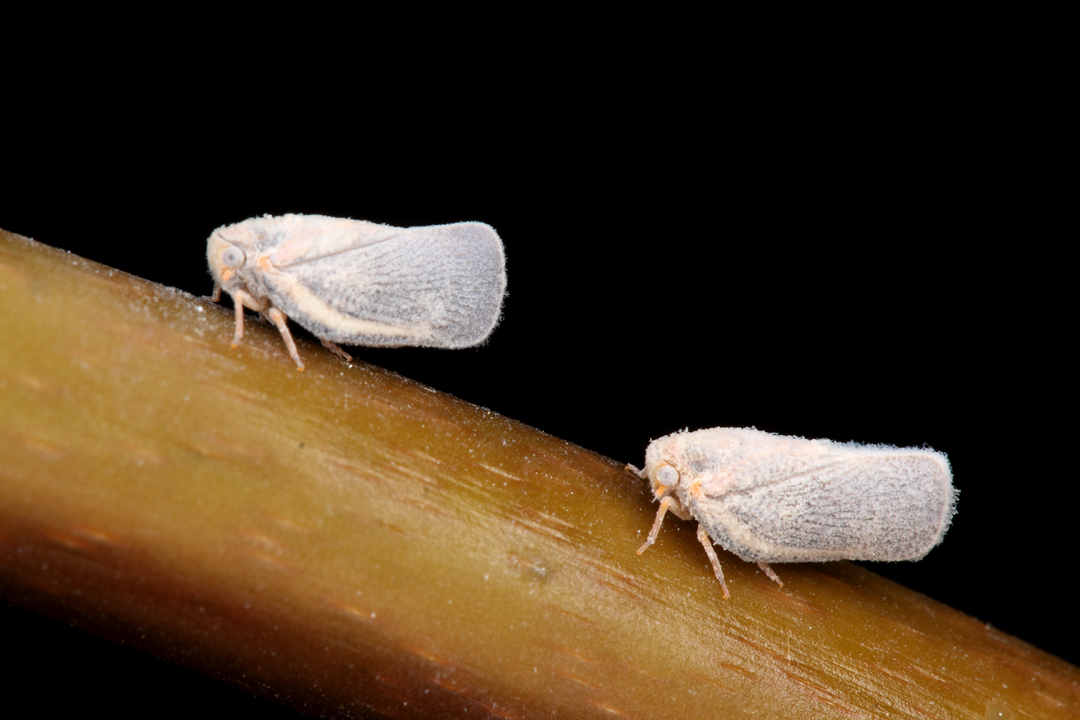

This seems to be a species that could cause considerable problems should it ever find it’s way to the mainland U.S. Many flatids are famously infidel when it comes to host plants—Metcalfa pruinosa (citrus flatid planthopper) being perhaps the best known example. Petrusa epilepsis not only feeds on seagrape but has also become a pest of coffee (Coffea arabica), coco-plum (Chrysobalanus icaco), jasmin (Jasminum spp. ) and black mangrove (Avicennia germinans), with damage resulting not only from direct feeding but also the development of sooty mold that colonize the honeydew excreted by the bugs that covers the foliage of the plants they infest (Nieves-Rivera et al. 2002).

A particularly amusing passage by Wolcott was his observation that adults “with care may be chased around a stem by gentle pursuit with a lead pencil.” I can add that a finger works equally well, as I used precisely this technique to get the adults in these last two photos positioned precisely where I wanted them for the photographs. Let’s hope they are as easily kept within their current West Indies distribution and are not eventually unleashed as yet another exotic pest for agricultural producers in tropical and subtropical mainland America to deal with.

REFERENCES:

Nieves-Rivera, Á. M., T. A. Tattar & E. H. Williams, Jr. 2002. Sooty mould-planthopper association on leaves of the black mangrove, Avicennia germinans (L.) Stearn in southwestern Puerto Rico.  Journal 26:141–155.

Wolcott, G. N. 1948. Insects of Puerto Rico. The Journal of Agriculture of the University of Puerto Rico 32(1):1–223.

Copyright © Ted C. MacRae 2012
West Indian seagrape sawfly

I spent a few days in Puerto Rico last month. A quick in-and-out for work, there was little chance to do any real exploring. Nevertheless, I booked my return on the last possible flight out so that I would have at least part of a day to look around before needing to go to the airport. I’ve only been to Puerto Rico twice before—once in 1982 on a one-day visit during my honeymoon cruise (with a far-too-rushed guided tour to El Yunque), and again in 1999, also a quickie for work. Given my limited previous opportunities to explore San Juan, you might think I would choose La Forteleza and San Juan National Historic Site in Old San Juan for my day’s destination. After all, they were designated a World Heritage Site by UNESCO (United Nations Educational, Scientific, and Cultural Organization) in 1983. Tempting, but when I looked at the map of San Juan a nice, big, chunk of green immediately caught my eye—Bosque Estatal de Piñones (Pine State Forest). Call me single-minded, but not even a World Heritage Site can match the siren call of 1,500 acres of moist, subtropical forest!

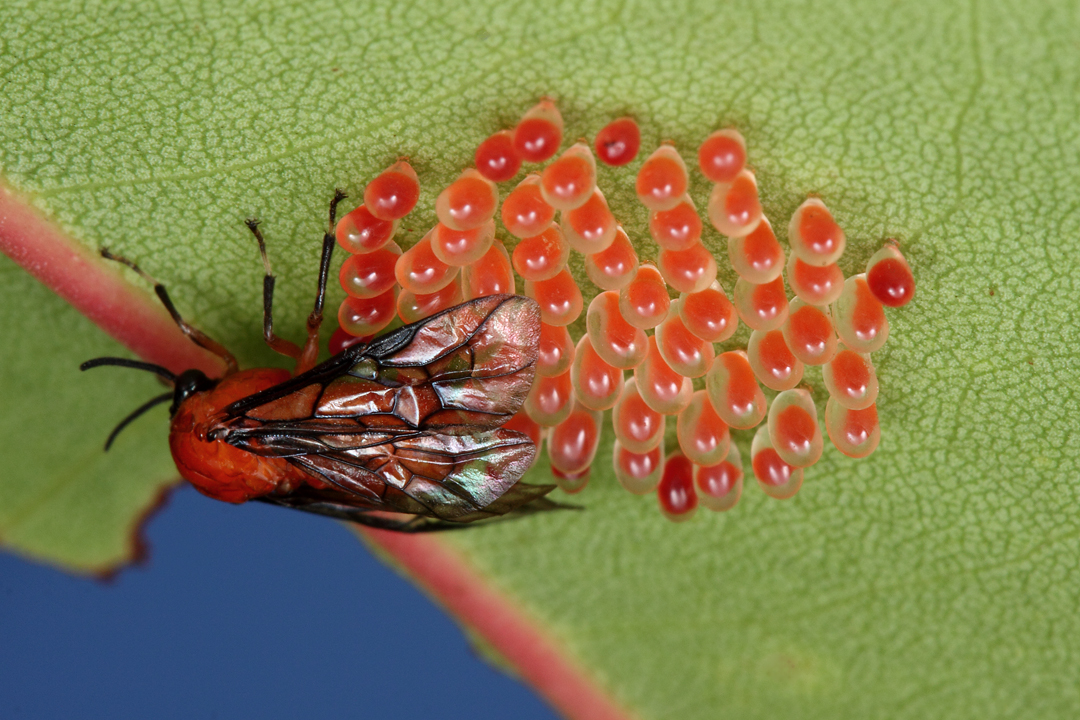
Sericoceros krugii female guarding eggs on leaf underside of sea grape (Coccoloba uvifera) | Bosque Estatal de Piñones, San Juan, Puerto Rico

Mangrove forest covers much of the reserve, accessed by a wide (and annoyingly elevated) boardwalk—an interesting stroll but unsatisfying to me since I couldn’t root around at ground level. One can get only so much enjoyment from distinguishing red, black, and white mangrove before the sameness of the canopy and exclusion from the ground flora/fauna starts to become monotonous. I went back towards the parking lot (photographing a few lizards along the way—more on them in a future post) and had just begun walking the perimeter of a picnic area when I encountered some very large seagrape (Coccoloba uvifera) plants. I’ve seen a lot of seagrape in Florida and have never found any insects on it, so I initially didn’t make much effort to go over and have a closer look at them. However, even from afar I could see that these particular plants had been very heavily damaged by some type of defoliating insect. The first few branches I looked at showed no outward evidence of who the culprit was, but I reasoned it must have been some sort of lepidopteran caterpillar. As I was inspecting the branches, the insect in the above photo caught my eye—at first I thought it was some type of “homopteran” because of the apparent egg-guarding behavior it was showing, but a closer look revealed that it was actually a sawfly! An egg guarding sawfly; who would have thought?!

Female ovipositing her clutch of eggs, which are solid red when first laid.

Predictably, subsequent identification was quite easy as there is only a single species of sawfly in Puerto Rico—Sericoceros krugii in the family Argidae. About 20 species make up this Neotropical genus, occurring from southern Mexico south to Argentina; however, S. krugii is the only species occurring in the West Indies and in addition to Puerto Rico is found in the U.S. Virgin Islands and Dominican Republic (Smith 1992). The species in this genus seem to specialize on Coccoloba spp. (family Polygonaceae) as host plants; however, one species is reported from Triplaris caracasana—also in the Polygonaceae (Smith & Benitez Diaz 2001), and another from Lonchocarpus minimiflorus in the family Fabaceae (Smith & Janzen 2003).

Larvae consume all but the largest veins of the foliage.

Wolcott (1948) describes how this species often defoliates long stretches of seagrape on the beaches of Puerto Rico, leaving “windrows of excrement on the sand underneath the naked branches and leaf midribs…” He also describes its apparent lack of natural enemies (although it has since been recorded as a host for a tachinid fly—Bennett 1999) and the fact that birds do not seem to eat them as possible reasons for its abundance and frequent outbreaks. To me, the screaming red/black coloration of the adult and apparent unpalatability to birds suggest the presence of chemical defenses, and although I couldn’t find any information on this specific to Sericoceros spp., many social species of sawflies are typically well-defended chemically and, thus, aposematic. Despite this apparent defensive capability, the remarkable maternal guarding behavior exhibited by the adult females suggests the eggs still need additional protection from predators and parasitoids. Sericoceros spp. are not the only sawflies to exhibit this behavior, which apparently has evolved across numerous sawfly lineages (see Social Sawflies, by James T. Costa).

This mature larva will soon spin a coccoon on the bark for pupation.

There were only a few, apparently mature larvae still around on the trees that I could find. Wolcott (1948) describes most outbreaks as occurring during the fall and winter months, after which the insects might completely disappear for many months or even a year. I must have caught the tail end of one such outbreak, although the number of females that I saw guarding eggs suggests another wave of defoliation would soon be occurring.

Congratulations to itsybitsybeetle, who showed up late to the party but still managed to pull out the win for Super Crop Challenge #13. Brady Richards came in a close 2nd, while Sam Heads and Mr. Phidippus share the final podium spot. The overall standings remain the same, with Sam leading Brady by a single, slim point and Mr. Phidippus only six points further back. There will be two more challenges in BitB Challenge Session #6, so it’s still possible for somebody to make a late run, especially if one or more of the leaders falters down the stretch. Remember—the top three points earners at the end of the session will get a choice of some loot, so don’t hesitate when the next challenge rolls around.

REFERENCES:

Bennett, F. D. 1999. Vibrissina sp. (Diptera: Tachinidae) a parasite of the seagrape sawfly Sericoceros krugii (Hymenoptera: Argidae) in Puerto Rico: a new record. Journal of Agriculture of the University of Puerto Rico 83(1–2):75–78.

Smith, D. R. 1992. A synopsis of the sawflies (Hymenoptera: Symphyta) of America south of the United States: Argidae. Memoirs of the American Entomological Society 39:1–201.

Smith, D. R. & Benitez-Diaz. 1991. A new species of Sericoceros Konow (Hymenoptera : Argidae) damaging villetana trees, Triplaris caracasana Cham. (Polygonaceae) in Paraguay. Proceedings of the Entomological Society of Washington 103(1):217–221.

Smith, D. R. & D. H. Janzen. 2003. Food plants and life histories of sawflies of the family Argidae (Hymenoptera) in Costa Rica, with descriptions of two new species. Journal of Hymenoptera Research 12:193–208.

Wolcott, G. N. 1948. Insects of Puerto Rico. Journal of Agriculture of the University of Puerto Rico 32(4):749–975.

Copyright © Ted C. MacRae 2012
More on Chalcosyrphus

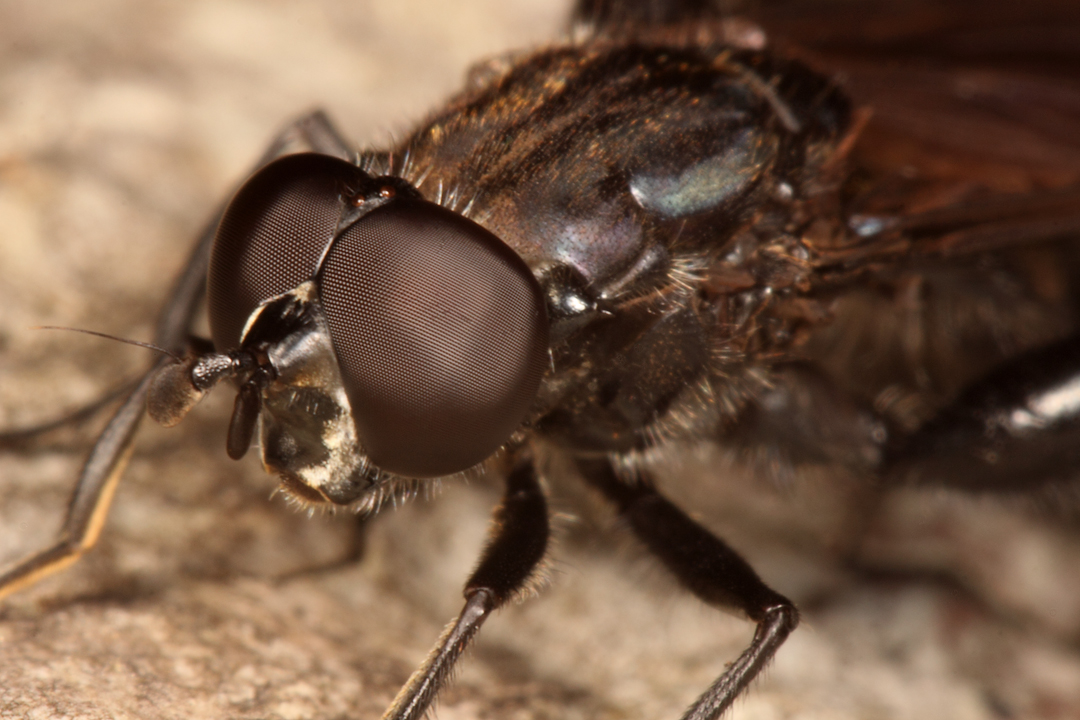
Here are two more photos of the fly I tentatively identified as Chalcosyrphus sp. The first photo shows the all-black coloration with no trace of either steel blue highlights (seen in C. chalybea) or red abdominal markings (seen in C. piger). It also gives a better view of the enlarged and ventrally spinose metafemora. The second photo shows the holoptic (contiguous) eyes that make me think this is a male individual (if, indeed, this is true for syrphids as with tabanids).

I’m hoping that posting these will provide any passing dipterists with the information needed for a firmer ID (and possibly an explanation of the purpose of those intriguingly modified hind legs).

Lateral view showing black abdomen with no trace of red (except what appears to be a parasitic mite).

Do the holoptic eyes identify this as a male?

Copyright © Ted C. MacRae 2012
T.G.I.Flyday – Chalcosyrphus?

When I was an entomology student, I learned that flies in the family Syrphidae are called “hover flies,” due to their habit of hovering in front of flowers, and that the larvae are predators of aphids. As is the case for nearly every other group of insects, I now know that there are exceptions–often many—to the typical rule, and the fly shown in the above photograph is a perfect example of such. Being a beetle-man (and a wood-boring beetle-man, at that), I don’t generally notice flies unless there is something unusual about them. This fly was seen last summer at Sam A. Baker State Park in southeastern Missouri on the trunk of a very large, recently wind-thrown mockernut hickory (Carya alba) tree. I had never seen a fly quite like this before, but everything about it suggested an intimate association with dead wood, including its relatively large, hulking, black form and the way it repeated returned to and landed on the trunk of the dead tree each time I disturbed it. It instantly made me think of robber flies in the subfamily Laphriinae, which includes Andrenosoma fulvicaudum and many species of Laphria that, as larvae, tunnel through dead and decaying wood where they prey upon the larvae of wood-boring beetles. While it was quite obvious that the fly in the photo was not a robber fly, imagine my surprise when I eventually determined it to be a member of the family Syrphidae. For now I’ve provisionally settled on the genus Chalcosyrphus, although it lacks the steely blue cast exhibited by the only all-black species of the genus—C. chalybeus—shown on BugGuide. Another species, C. piger, looks very similar but seems always to have some red on the abdomen, which this individual definitely lacks. Perhaps the related genus Xylota is also a possibility, although the “gestalt” does not seem to quite match that of any shown on BugGuide. Most interesting for me are the distinctly enlarged and toothed metafemora, which along with the correspondingly curved tibiae suggest some predatory function, but the literature that I have seen makes no mention of such, but rather that the adults feed on pollen. My hunch about its association with dead wood does seem to be true, although it now seems the larvae are saprophages rather than predators within the wood, as I first imagined.

Copyright © Ted C. MacRae 2012

Beetle botanists

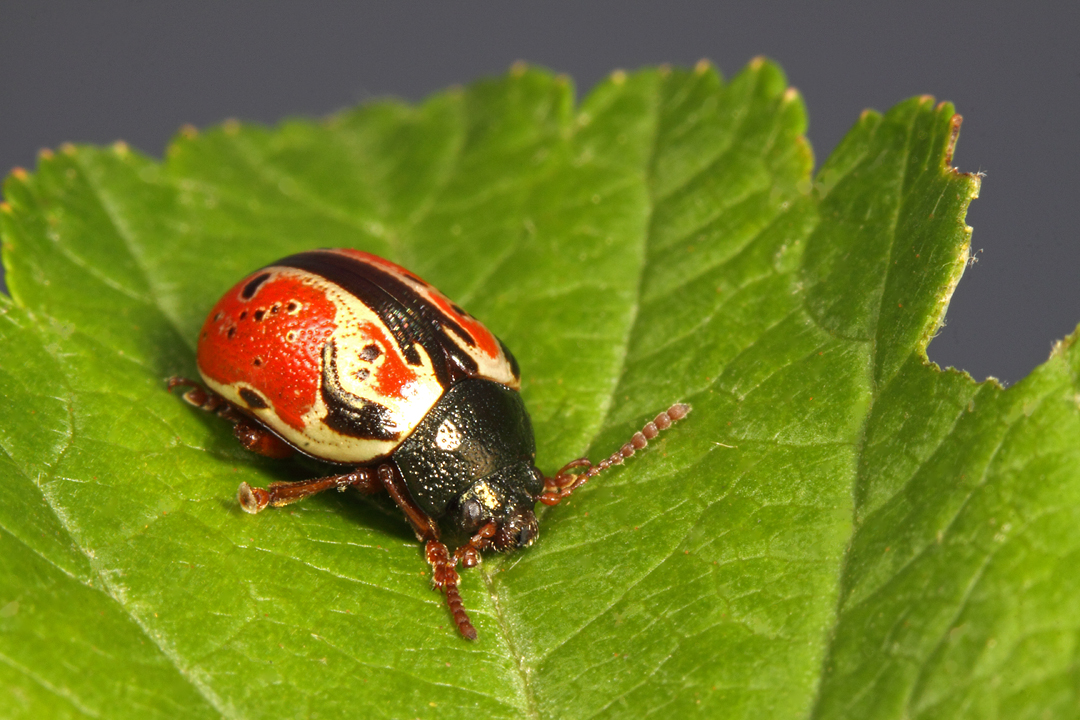
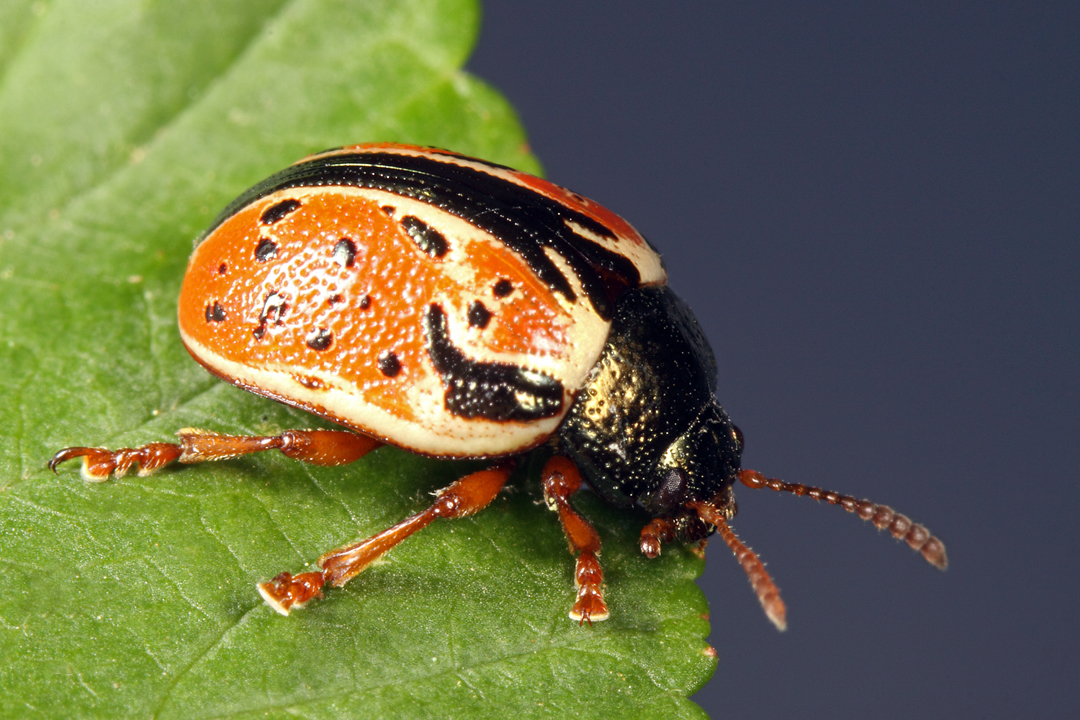
Calligrapha spiraeae on Physocarpus opulifolius | Jefferson Co., Missouri

While Dicerca pugionata (family Buprestidae) is, for me, the most exciting beetle species that I’ve found in Missouri associated with ninebark (Physocarpus opulifolius). it is not the only one. The beetles in these photographs represent Calligrapha spiraeae, the ninebark leaf beetle (family Chrysomelidae). Unlike D. pugionata, however, I almost never fail to find C. spiraeae on ninebark, no matter when or where I look, and whereas D. pugionata has been recorded in the literature associated with a few other host plants like alder (Alnus spp.) and witch-hazel (Hamamelis virginiana), C. spiraeae is not known to utilize any other plant besides ninebark as its host.

Beetles in the genus Calligrapha are among the most host-specific of all phytophagous beetles, with most of the 38 species in this largely northeastern North American genus relying upon a single plant genus as hosts (Gómez-Zurita 2005). The genus as a whole is fairly recognizable by its dome-like shape and black and white or red coloration, with the black markings on the elytra varying from coalesced to completely broken into small spots. The species, however, are another matter, with several groups of species that are quite difficult to distinguish morphologically. Fortunately most of them can be easily distinguished by their host plant (although such information is rarely recorded on labels attached to museum specimens). Calligrapha spiraeae, for example, with its reddish coloration and small black spots, looks very much like two other species in the genus—C. rhoda and C. rowena. Those latter species, however, are restricted to hazel (Corylus spp.) and dogwood (Cornus spp.); as long as the host is known, the species can be readily identified in the field.

At this point you may be wondering why the species name refers to the plant genus Spiraea rather than Physocarpus. In fact, ninebark was already known as the host plant when Say (1826) described the species, but the name spiraeae was given because at the time ninebark was included in the genus Spiraea (Wheeler & Hoebeke 1979).

REFERENCE:

Gómez-Zurita, J. 2005. New distribution records and biogeography of Calligrapha species (leaf beetles), in North America (Coleoptera: Chrysomelidae, Chrysomelinae). Canadian Field-Naturalist 119(1): 88–100.

Say, T. 1826. Descriptions of new species of coleopterous insects of North America. Journal of the Academy of Natural Sciences of Philadelphia 5:293–304.

Wheeler, A. G., & E. R. Hoebeke. 1979. Biology and seasonal history of Calligrapha spiraeae (Say) (Coleoptera: Chrysomelidae), with descriptions of the immature stages. The Coleopterists Bulletin 33:257–267. 

Copyright © Ted C. MacRae 2012

Just published: Cicindela 44(1) March 2012

Issue 44(1) of the journal Cicindela is now hitting mailboxes. This one-paper issue features an article by Chandima D. Dangalle and Nirmalie Pallewatta (University of Colombo, Sri Lanka) and Alfred P. Vogler (The Natural History Museum, London) reporting the results of a survey of tiger beetles of Sri Lanka and analysis of their habitat specificity. The authors sampled 94 locations on the island representing six habitat types: coastal and beach habitat, river and stream banks, reservoir systems, urban man-made sites, agri-ecosystems and marshy areas, finding ten species in the genera Cylindera, Calomera, Hypaetha, Lophyra and Myriochile at 37 locations representing all habitat types except the last two. The study further revealed that the species of tiger beetles were restricted to different habitat types, with most displaying a high degree of habitat specificity. Statistical analysis revealed significant differences between two or more species in four factors: solar radiation (i.e., sun or shade), soil salinity, soil moisture and wind speed. This suggests that these are the key factors involved in habitat selectivity in Sri Lankan tiger beetle species. Other factors such as temperature, relative humidity, soil type and soil color did not differ significantly between habitats for the different species, suggesting that these criteria are essential for tiger beetle survival in any habitat type.

You may also notice that my photo of Cicindela arenicola, taken last fall in Idaho Falls, graces the cover of this latest issue. Contact Managing Editor Ron Huber to begin your subscription—membership is a very nominal $10 per year in the U.S., a little more elsewhere to cover additional postage.

REFERENCE:

Dangalle, C. D., N. Pallewatta & A. P. Vogler. 2012.  Habitat specificity of tiger beetle species (Coleoptera, Cicindelidae) of Sri Lanka. Cicindela 44(1):1–32.

Dicerca pugionata – safe and sound!

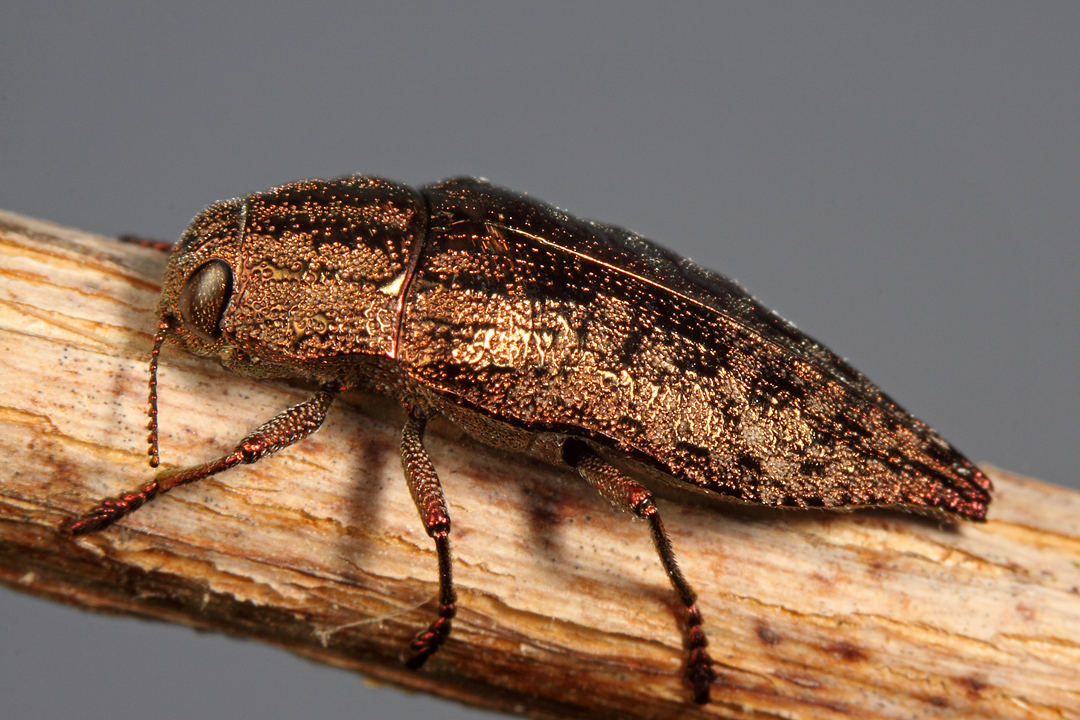
Dicerca pugionata on Physocarpus opulifolius (ninebark) | Jefferson Co., Missouri

One of my favorite beetle species in Missouri is Dicerca pugionata—a strikingly beautiful jewel beetle (family Buprestidae) found sporadically across the eastern U.S. Unlike most species in the genus, which breed in dead wood of various species of trees, D. pugionata larvae mine living stems of certain woody shrubs—namely alder (Alnus spp.), witch-hazel (Hamamelis virginiana) and ninebark (Physocarpus opulifolius) (Nelson 1975). When I first began studying Missouri Buprestidae (way back in 1982), the species had just been reported from the state based on a single specimen (Nelson et al. 1982). I happened to stumble upon these beetles at what became my favorite collecting spot during the 1980s—Victoria Glades Natural Area, just south of St. Louis in Jefferson Co. For several years while I was visiting Victoria Glades, I found these beetles regularly during spring and fall on stems and branches of living ninebark plants growing within the ravines and along the toeslopes at the lower edges of the glades.

After finding the beetles at Victoria Glades (and nearby Valley View Glades Natural Area), I made it a habit to examine ninebark wherever I found it growing in Missouri. Ninebark is actually rather common in the state along the rocky streams and rivers that dissect the Ozark Highlands. Interestingly, I almost never encountered this beetle on ninebark elsewhere in the state. I’m sure it occurs in other areas, but probably at too low a level to be easily detected. I surmised that the populations at Victoria and Valley View Glades were unusually high due to the non-optimal conditions for its host plant. The ravines and toeslopes where the plants grow are drier than typical for ninebark, and unlike the lush, robust plants found in moister streamside habitats, the plants at these glades are small, scraggly and often exhibit a certain amount of dieback. It seemed likely to me that the plants growing in the glades were less capable of fending off attacks by these insects, thus resulting in relatively higher numbers of beetles at these glades.

After the publication of my “Buprestidae of Missouri” (MacRae 1991), it would be many years before I actually returned to Victoria Glades. When I did return, I was pleased to see that management practices (e.g. prescribed burning, cedar removal, etc.) intended to halt the encroachment of woody vegetation and preserve the glade’s pre-settlement character had been implemented in the area. I was a little bothered, however, by the seeming paucity of insects compared to the years prior to management. I visited the glades again several times afterwards, and not only did insect populations in general seem to be depressed, but I never succeeded in finding D. pugionata adults on the ninebark plants. I began to worry that the prescribed burns, while clearly beneficial to the glade flora, might have had a negative impact on the glade’s insect populations.

I’m happy to report that, at last, I have found the beetles again. I returned to the glades in early May this year and, for the first time since 1987 I found the adults of this species—five in all (a typical number for the many dozens of plants checked) and right in the same areas where I had so consistently found them 25–30 years earlier. This does much to allay my concerns about the ability of these beetles to persist in the face of prescribed burning (though I remain convinced that this management technique should be used more judiciously in our state’s natural areas than it has in recent years), and I’m happy to have these new photographs of the species, which are a decided improvement over the old scanned slides taken nearly 30 years ago!

REFERENCES:

MacRae, T. C. 1991. The Buprestidae (Coleoptera) of Missouri. Insecta Mundi 5(2):101–126.

Nelson, G. H. 1975. A revision of the genus Dicerca in North America (Coleoptera: Buprestidae). Entomologische Arbeiten aus dem Museum G. Frey 26:87–180.

Nelson, G. H., D. S. Verity & R. L. Westcott. 1982. Additional notes on the biology and distribution of Buprestidae (Coleoptera) of North America. The Coleopterists Bulletin 35(2) [1981]:129–151.

Copyright © Ted C. MacRae 2012

Holy conglobulation, Batman!

It’s a pill bug… no, it’s a roach. It’s a pill roach!

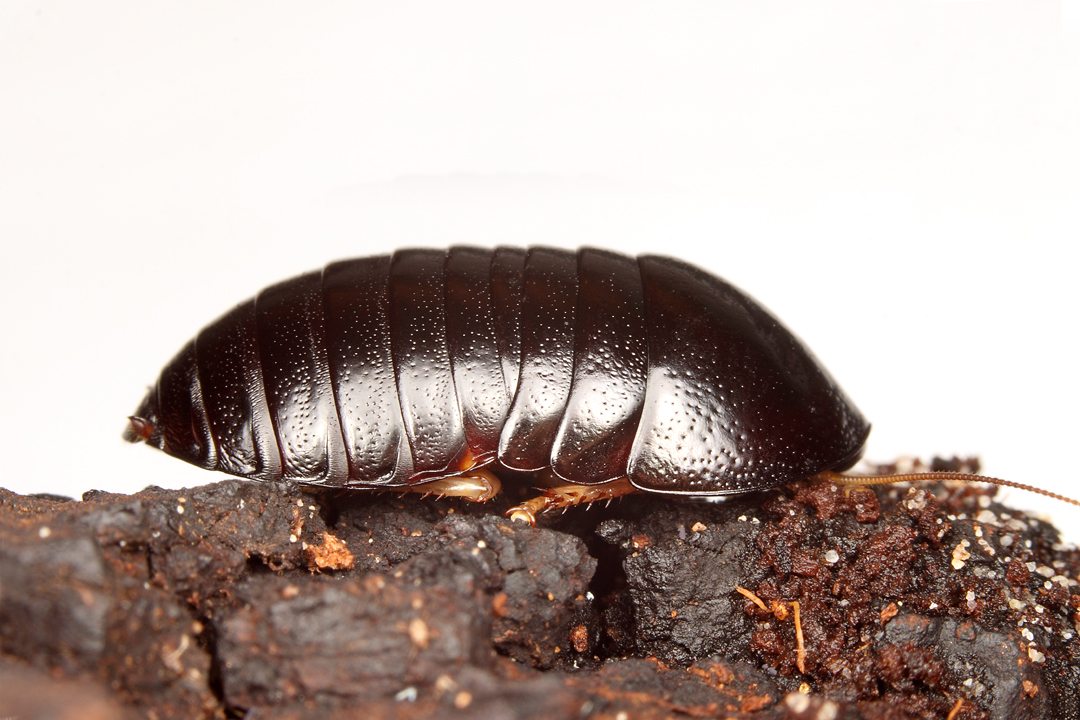
Earlier this month I made a quick trip out to California to see my good friend Chuck Bellamy receive his Honorary Membership in The Coleopterist Society. While I was there, I got a chance to spend some time with Chuck’s labmate Martin Hauser. Although Martin is a specialist of flies, he shares my fascination with unusual arthropods of all types and made available for me to photograph this adult female Perisphaerus sp. (order Blattodea, family Blaberidae), or “pill roach”. Seventeen species from southeast Asia and Australia have been described in this genus (Beccaloni 2007), but which (if any) this individual represents remains unknown.

In contrast to ”normal”-looking males, adult females exhibit a ”wingless, half-ellipsoid” morphology.

The most obvious characteristic of species in this genus is the ability of females to roll up into a ball; i.e., conglobulate.¹ Clearly this is a defensive morphotype, but curiously only females possess this ability—males are winged and exhibit the more flattened morphology typical of many cockroaches. Martin and I were unable to get this particular individual to completely enroll (we must not have been scary enough), but when it does the posterior abdomen fits tightly against the pronotal margin, covering all sensory organs and leaving no soft tissues exposed, gaps to enter or external projections to grab (Bell et al. 2007).

¹ I must thank Brady Richards, who, in his answer to ID Challenge #18, used this word to coin the phrase that would eventually become the title of this post.

Adult females apparently exhibit not only maternal protection but also nutrition.

But why should only females and not males exhibit this defensive morphotype? One would think that both males and females are equally threatened by predators. Apparently this is related to their unusual form of uniparental (maternal) care (Choe & Crespi 1997).  Early-instar nymphs in this genus remain closely associated with their mother and cling to her underside until they reach the third instar. These early-instar nymphs are not only blind, but they also exhibit a narrowed head with specially modified mouthparts that fit precisely into two pairs of orifices located on the female underside between the middle and hind pairs of legs. Whether the nymphs are feeding on glandular secretions or female hemolymph remains unknown, but regardless only a limited number of nymphs can be handled by a female at one time. This represents an unusual level of energetic investment in offspring among insects—especially among cockroaches, and thus the female has an interest in protecting that investment. Sealing them up inside an impenetrable ball is certainly one way to protect the nymphs.

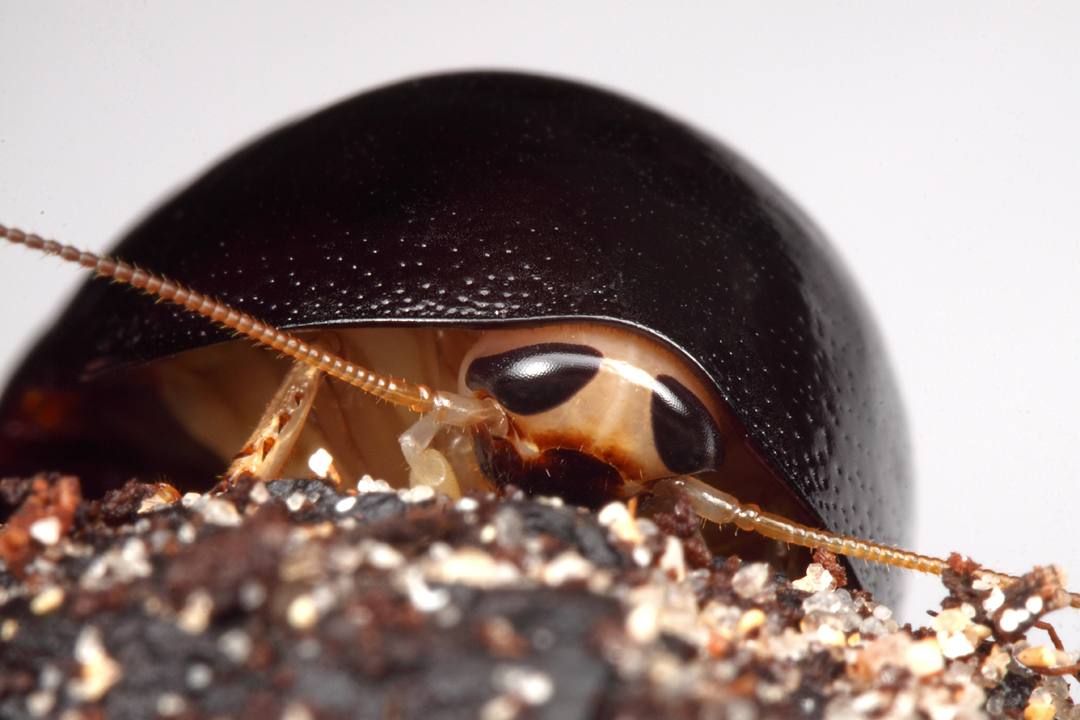
Despite first impressions, six legs and a very ”cockroach-ish” head belie its true identity.

Conglobulation has actually arisen several times amongst arthropods. Obviously pill bugs (a.k.a. roly-poly bugs) are the first group that comes to mind in this regard, but Eisner & Eisner (2002) illustrate nearly identical morphology in two oniscomorph millipedes as well as isopods and Perispharus and also describe strikingly similar behavior by the larva of Leucochrysa pavida  (family Chrysopidae).

Many thanks to those of you who participated in ID Challenge #18. As of now, the comments for that challenge are closed, and I will reveal the comments and award points shortly. My sincere thanks again to Martin Hauser for allowing me to photograph this most interesting insect!

Edit 5/28/12, 12:55 a.m.: For the first time ever, we have a 3-way tie for a BitB Challenge win—Sam Heads, Brady Richards, and Mr. Phidippus all earned 12 points to share the top spot in this challenge. Since these three gentlemen were already the three leaders in BitB Challenge Session #6, there is no change to the leaderboard in the overall standings (44, 42 and 37 points, respectively). However, Dennis Haines (34 points) is hanging close, and Tim Eisele (25 points) still has a shot at the podium. Any number of others following closely behind could also find themselves on the podium if any of the three leaders should falter down the stretch.

REFERENCES:

 Beccaloni, G. W. 2007. Blattodea Species File Online. Version 1.0/4.1. World Wide Web electronic publication. <http://Blattodea.SpeciesFile.org&gt; [accessed 27 May 2012].

Bell, W. J., L. M. Roth & C. A. Nalepa. 2007. Cockroaches: Ecology, Behavior, and Natural History. The Johns Hopkins University Press, Baltimore, Maryland, 230 pp.

Choe, J. C. & B. J. Crespi. 1997. The Evolution of Social Behavior in Insects and Arachnids. Cambridge University Press, Cambridge, U.K., 541 pp.

Eisner, T. & M. Eisner. 2002. Coiling into a sphere: defensive behavior of a trash-carrying chrysopid larva Leucochrysa (Nodita) pavida (Neuroptera: Chrysopidae). Entomological News 113:6–10.

Copyright © Ted C. MacRae 2012