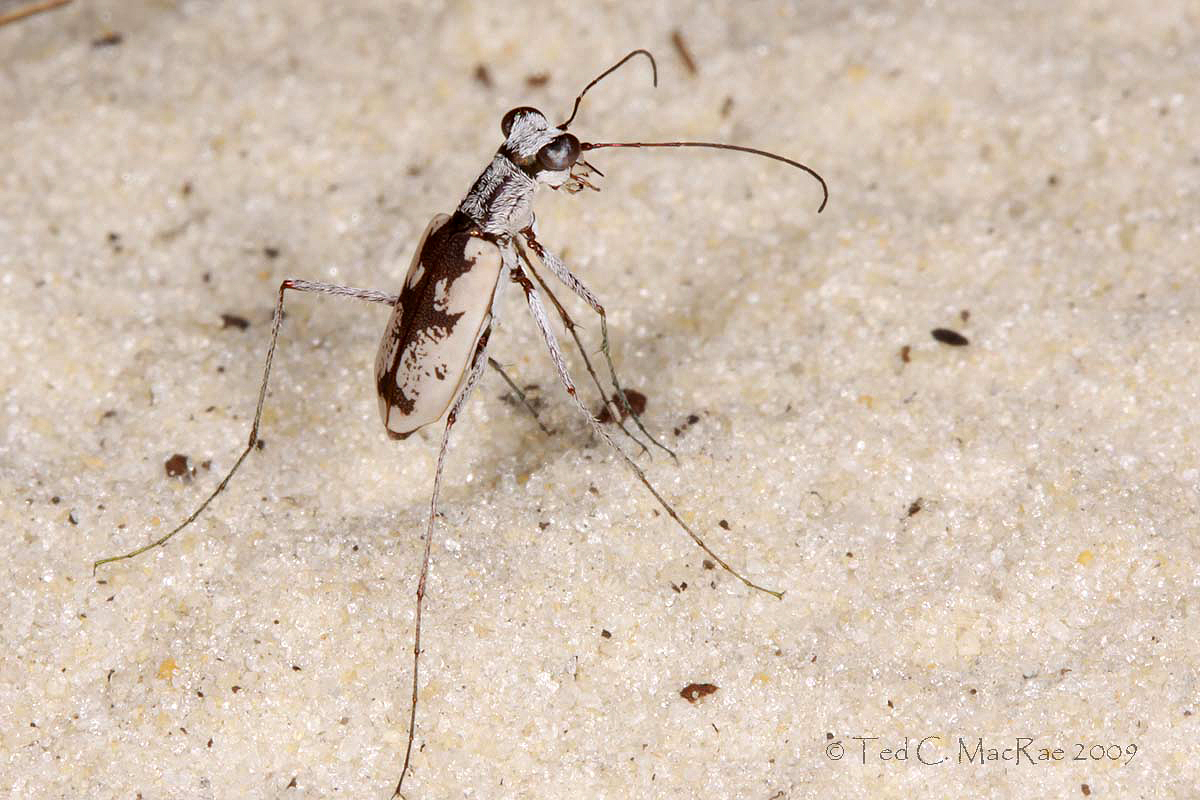
Josef Knull was wrong!

A few weeks ago I received an email from Kyle Schnepp, an entomology student at Purdue University.  Kyle has taken on the rather ambitious project of developing an illustrated key to the Buprestidae of eastern North America, for which he has been spending the past year acquiring material for photographs.

During his examination of specimens in the Field Museum of Natural History, Kyle came across two examples of an extraordinarily rare species of Buprestidae, Agrilus audax Horn.  Although described more than 100 years ago from specimens collected in Texas (Horn 1891), few records have been published in the years since.  Chamberlin (1926) reported the species also from Arizona and Illinois but without further details, causing Fisher (1928), in his revision of the genus (woefully out-of-date now, but still the only comprehensive resource for identifying the North American species), to regard at least the Illinois record as probably erroneous (common for many of Chamberlin’s records).  The first undisputed report of this species from outside of Texas was by Josef Knull (1934), who reported the species emerging from living, wind-thrown branches of slippery elm (Ulmus rubra) collected in western Missouri.  More than half a century would pass before the species would turn up again – first in Oklahoma (Nelson and MacRae 1990) and twice again in Missouri through the efforts of Gayle Nelson and myself (MacRae 1991, MacRae and Nelson 2003). All but one of these specimens were beaten from bur oak (Quercus macrocarpa).
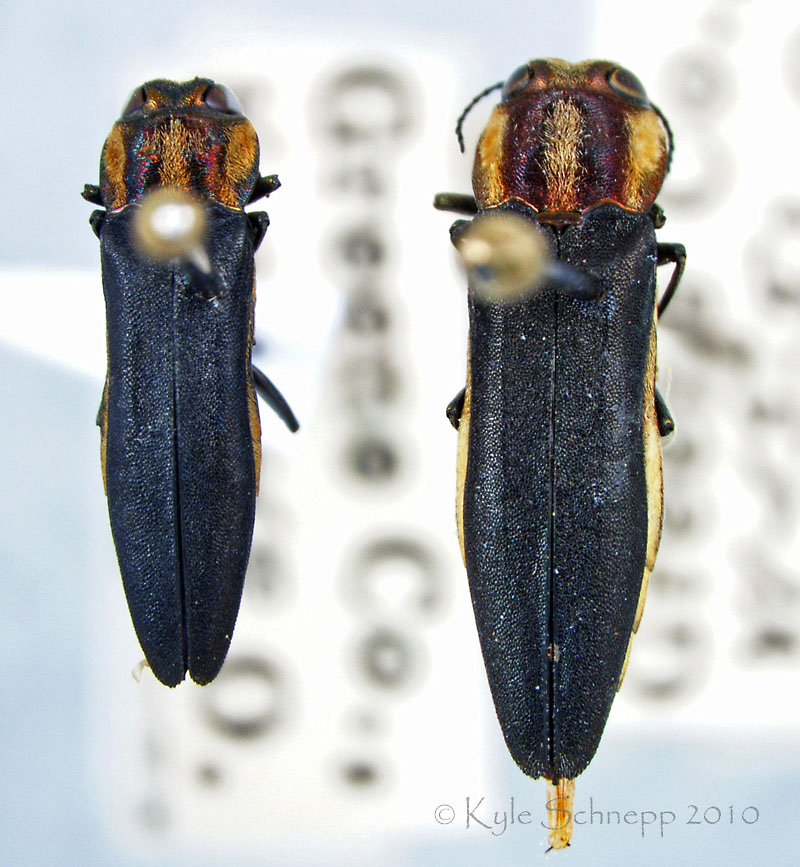
Agrilus audax Horn, 1891 – male (L) and female (R)

While the rarity of this species makes Kyle’s find significant enough, there is an even more significant – and interesting – aspect to his discovery.  Both of the specimens, one male and one female, were collected in Ohio, which is a rather extraordinary geographical range extension. Additionally, the specimens were collected by none other than Josef Knull.  To students of North American Buprestidae, the name Josef Knull is as familiar as Carl Linnaeus, Charles Darwin, or Thomas Say. A Professor of Entomology at The Ohio State University from 1934-1962, Knull published nearly 200 papers on the taxonomy, biology, and distribution of these and other families of beetles (Davidson and Bellamy 2002).  Although he lacked a Ph.D., he was an indefatigable collector and describer of beetles – to his fellow colleagues and students, he was known as “Professor” or “Doctor” as a show of respect.  He spent many of his summers traveling through the southwestern U.S. with his wife Dorothy Knull (herself an entomologist specializing in leafhoppers), and by the time he died in 1975 he had described 233 species and subspecies of beetles (as well as one species of Fulgoridae).  He was, and is, an icon among North American beetle collectors.

Curiously, Knull did not recognize these specimens for what they were, instead identifying them as the similar and much more widespread species, Agrilus vittaticollis.  Curious, because Knull collected these specimens in 1949 and 1953 – after first reporting the species in Missouri.  Agrilus audax belongs to a small group of species that look very similar to each other by way of their large size and striking coloration – black elytra and a red pronotum with a densely pubescent median channel.  Agrilus vittaticollis is the most common of these (though still not as commonly encountered as many other species in the genus), and the much less common A. benjamini also belongs to this group.  Kyle had sent me the above photo in an attempt to confirm their identity, but true confirmation would require examination of characters of the face and ventral surface.  Kyle quickly took additional photographs of these characters and sent them to me – they are shown below and leave no doubt as to the identity of these specimens.
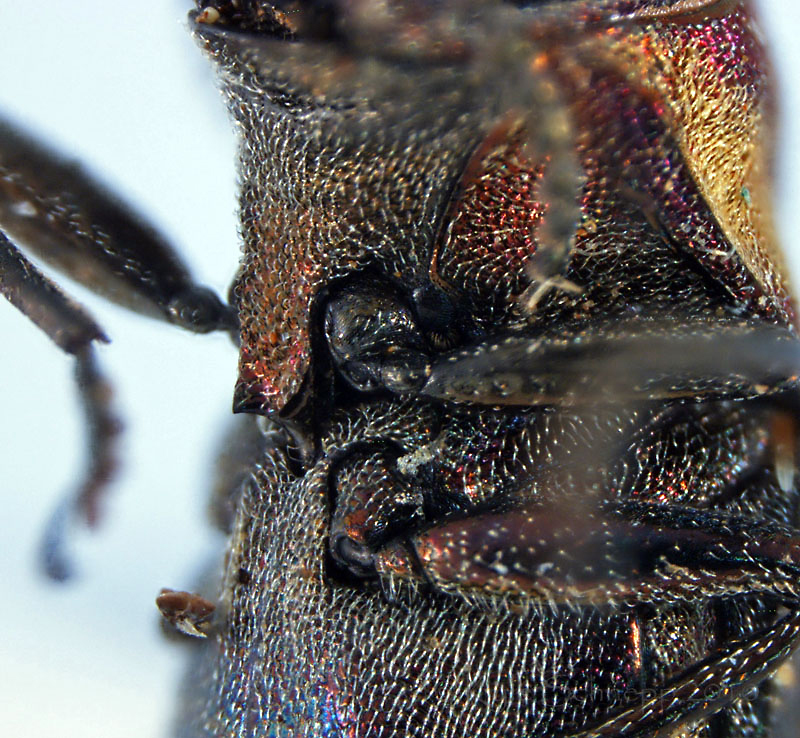
Agrilus vittaticollis prosternum – note sides bent downward to sharp points.
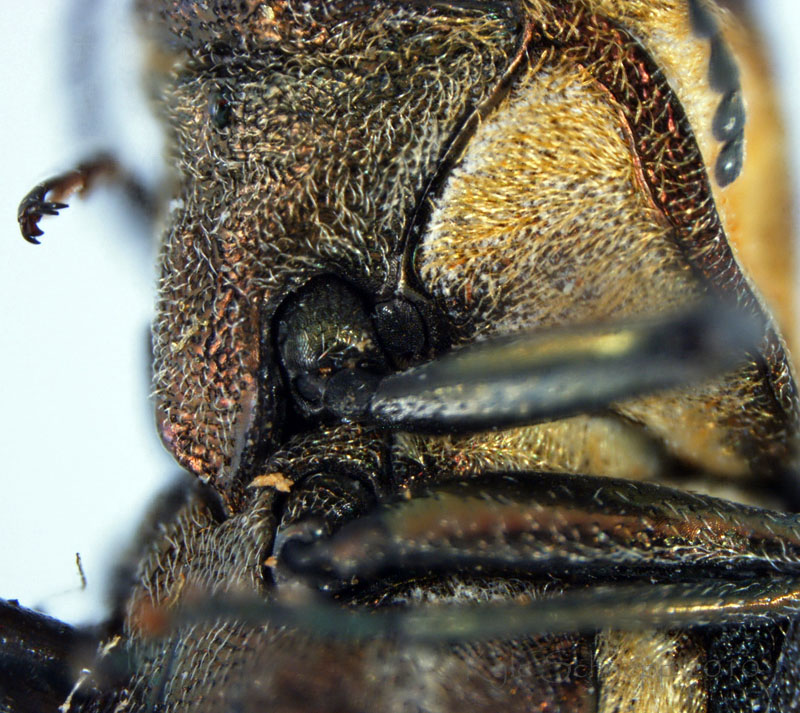
Agrilus audax prosternum – sides normal, not bent downward to sharp points.
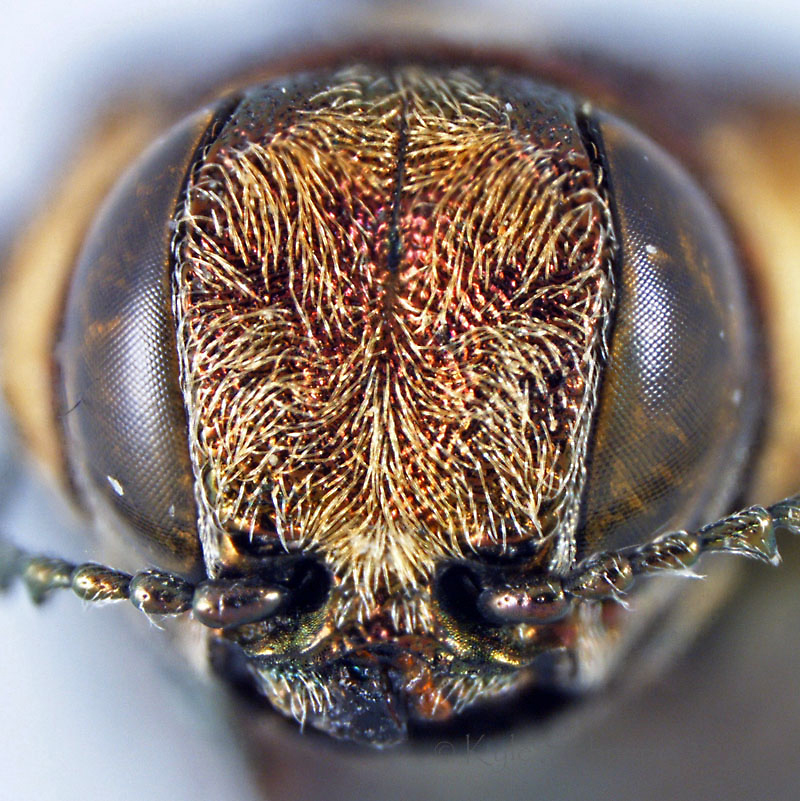

Agrilus audax frons is moderately depressed and uniformly pubescent (deeply depressed & pubescent only on lower half in A. benjamini).

Agrilus audax male sternite – the deep, smooth, elongate depression is diagnostic (A. benjamini males have only an obsolete depression).


Finding a new state record buprestid in Ohio – the land of Knull – based on specimens collected by Knull himself is nothing short of remarkable (almost like proving E. O. Wilson wrong¹). The occurrence of A. audax in Ohio also lends some credibility to Chamberlin’s record of the species in Illinois. Kyle is graciously allowing me to include these new records in a forthcoming publication; my thanks to him for this and also for allowing me to use his fine photographs in this post.  Kyle did also mention that these were the only misidentified specimens he saw in the Knull collection at the Field Museum of Natural History. For those interested in acquiring reprints of Knull’s papers, pdfs of the 50 papers he published in the Ohio Journal of Science may be found at this link.

¹ The title of this post is a play on the title of a recent post by Alex Wild at Myrmecos. No true disrespect is intended to Josef Knull, who’s legacy (with the possible exception of his frustratingly vague label data) is rightfully held in high regard by all who knew him or know of his work.

REFERENCES:

Chamberlin, W. J. 1926. The Buprestidae of North America, exclusive of Mexico, a catalogue including synonymy, bibliography, distribution, type locality and hosts of each species. W. J. Chamberlin, Corvallis.

Davidson, J. M., and C. L. Bellamy.  2002. The entomological contributions of Josef Nissley Knull (1891-1975).  Zootaxa 37:1-24.

Horn, G. H. 1891. The species of Agrilus of Boreal America. Transactions of the American Entomological Society 18:277-366.

Knull, J. N. 1934. Notes on Coleoptera, No. 4. Entomological News 45(10):207-212.

MacRae, T. C. 1991. The Buprestidae (Coleoptera) of Missouri. Insecta Mundi 5(2):101–126.

MacRae, T. C., and G. H. Nelson. 2003. Distributional and biological notes on Buprestidae (Coleoptera) in North and Central America and the West Indies, with validation of one species. The Coleopterists Bulletin 57(1):57–70.

Nelson, G. H., and T. C. MacRae. 1990. Additional notes on the biology and distribution of Buprestidae (Coleoptera) in North America, III. The Coleopterists Bulletin 44(3):349–354.

Copyright © Ted C. MacRae 2010

Add to FacebookAdd to DiggAdd to Del.icio.usAdd to StumbleuponAdd to RedditAdd to BlinklistAdd to TwitterAdd to TechnoratiAdd to Yahoo BuzzAdd to Newsvine

Email to a friend

Winter Botany Quiz #6 – answers and a checklist

I thought yesterday’s Winter Botany Quiz #6 would be a fairly difficult, and given the apparent difficulty of my previous quizes (Pismire Puzzle and Tuesday Teaser) I thought I’d give readers a break this week and narrow down the location to the Lake Tahoe area. Despite publishing in the dead of night, it took only 31 minutes for Peter Yeeles to swoop down and correctly name the family, genus, species, and function for the structure pictured. His only lapsus regarded the terminology used for the name of the structure itself, leaving the door open for James Trager to snag some scrap points. The plant is, of course, Cercocarpus ledifolius (curl-leaf mountain mahogany) in the family Rosaceae, and the structures pictured above and in the previous post are the stigmas of the flowers persisting as wind-assisted dispersal structures for the fruit. “Cercocarpus” is, in fact, derived from the Greek words for “tailed” and “fruit”, whose numerous erect hairs give the plant in a silvery sheen late in the growing season.

Why was I interested in this plant? It was one of the few tree species occurring in the Lake Tahoe Basin that I wasn’t able to find for last year’s 3-part series, Trees of Lake Tahoe (including The Pines, The “Other” Conifers, and The Deciduous Trees).  Widespread in the mountainous west (and barely qualifying as a tree), its occurrence in the Tahoe Basin is more sporadic.  Better stands are found outside the basin proper on the dry eastern flank of the Sierra Nevada (Graf 1999), and indeed these plants were photographed at ~6,500 feet on the eastern slopes of Mt. Rose.

My real interest in Cercocarpus, however, is as a favored host plant for species of jewel beetles (family Buprestidae).  About two dozen species of these beetles have been associated with Cercocarpus spp. in North America, nine of which have been confirmed as breeding within dead branches of these plants and five having been associated with no other plant.  I’ve collected a number of these species myself, particularly in the San Gabriel and Santa Rosa Mountains of southern California and the Chisos Moutains of Big Bend National Park in Texas, including Polycesta cazieri, Chrysobothris piuta, and paratype specimens of Acmaeodera rubrocuprea. I thought it might be of interest to any readers who might collect these insects to present a checklist of Buprestidae associated with Cercocarpus in North America (see appendix below).

REFERENCE:

Graf, M. 1999. Plants of the Tahoe Basin. Flowering Plants, Trees, and Ferns. A Photographic Guide. California Native Plant Society Press, Berkeley, 308 pp.

Checklist of North American Buprestidae associated with Cercocarpus

(Bold indicates species that have been reared from Cercocarpus.  An asterisk indicates species that have been associated exclusively with Cercocarpus).
Acmaeodera (s. str.) angelica Fall
Acmaeodera (s. str.) connexa LeConte
Acmaeodera (s. str.) dolorosa dolorosa Fall
Acmaeodera (s. str.) idahoensis Barr
Acmaeodera (s. str.) mariposa mariposa Horn
Acmaeodera (s. str.) mariposa dohrni Horn
Acmaeodera (s. str.) nelsoni Barr
Acmaeodera (s. str.) nexa Fall
Acmaeodera (s. str.) plagiaticauda Horn
Acmaeodera (s. str.) pubiventris lanata Horn
Acmaeodera (s. str.) rubrocuprea Westcott & Nelson*
Acmaeodera (s. str.) vandykei Fall
Acmaeodera (s. str.) variegata LeConte
Acmaeodera (Squamodera) vanduzeei (Van Dyke)
Anthaxia (Haplanthaxia) caseyi sublaevis Van Dyke
Anthaxia (Melanthaxia) porella Barr*
Anthaxia (Melanthaxia) simiola Casey*
Chrysobothris bisinuata Chamberlin*
Chrysobothris mali Horn
Chrysobothris piuta Wickham
Chrysobothris purpureovittata purpureovittata Horn
Chrysobothris purpureovittata cercocarpi Westcott & Nelson*
Dicerca (s. str.) hornii hornii Crotch
Polycesta (Tularensia) californica LeConte
Polycesta (Tularensia) cazieri Barr

Copyright © Ted C. MacRae 2010

Add to FacebookAdd to DiggAdd to Del.icio.usAdd to StumbleuponAdd to RedditAdd to BlinklistAdd to TwitterAdd to TechnoratiAdd to Yahoo BuzzAdd to Newsvine

Email to a friend

Lampetis drummondi larva?

Back in February, I learned that Mark Volkovitsh (Zoological Institute, Russian Academy of Science, St. Petersburg) would be visiting Chuck Bellamy (California Department of Food and Agriculture) in Sacramento the very week that I was planning to be in Lake Tahoe. Chuck and Mark are two of the worlds leading specialists in Buprestidae, or jewel beetles, and have worked together on a number of projects dealing with the taxonomy and systematics of buprestid beetles. Mark, in particular, has focused on describing the larval forms of buprestids (“white wormy things,” as my wife calls them) and using larval morphology to supplement adult morphology in phylogenetic analyses. I’m not anywhere near being in their league in terms of authority in the family – a comparative dabbler, really – but for some reason they’ve both seen fit to accept me into the fraternity. I’ve been fortunate to spend time in the field with each of them, as well as visit them at their respective institutions.  When I learned of Mark’s coincident visit, I couldn’t resist the chance to make the 2-hour drive from Lake Tahoe to Sacramento and spend the day with Mark and Chuck at the CDFA and discuss things buprestological.  The wife and kids were fine with that, since her brother also lives in Sacramento, and it would be a chance for them to do some sight-seeing before we all got together for dinner.  Upon arriving at CDFA, I also met Andy Cline, a nitidulid specialist at the CDFA (re-met actually, turns out we’d met some years back), and the four of us went out for an animated lunch at a nearby restaurant over some of the most delicious barbeque that I’ve ever tasted.

L-R: Mark Volkovitsh (Russia), Chuck Bellamy (CDFA), me, Andy Cline (CDFA)

After lunch, I was most interested in discussing with Mark some buprestid larvae that I had collected in Big Bend, Texas in 2004. My colleague Chris Brown and I were hiking a low desert trail west of Rio Grande Village when we encountered a large, uprooted Goodding willow (Salix gooddingii) tree laying on the river bank. Wilting leaves were present on some of its branches, suggesting that the half-dead had been washed to its current location by the river during a recent flood. At the base of the trunk where the main roots projected, I noticed what appeared to be frass (the sawdust that wood boring beetle larvae eject after eating it – that’s right, grub poop!) under the edge of the bark at the live/dead wood interface. I used my knife to cut away some of the bark and immediately encountered a huge buprestid larvae. Its enormous size is matched only by a few desert southwest species: Polycesta deserticola, which breeds commonly in oak and is known from willow, but breeds only in dead, dry branches; and Gyascutus planicosta, whose larvae are restricted to the living roots of Atriplex and a few other asteraceous shrubs.  Clearly, it could not be either of these species.  The only other desert southwest buprestids large enough to produce a larva this large (~50 mm) are Lampetis drummondii and L. webbii. However, the larvae of both of these species are unknown, as is basic information regarding what hosts they utilize for larval development. Lampetis webbii is quite rare, but L. drummondii is, in fact, one of the most conspicuous and commonly encountered buprestid species in the desert southwest – that fact that its larva has remained unknown suggests that it utilizes living wood, probably feeding below the soil line.  Thus, I immediately began to suspect that the larva might represent this species – a truly exciting development. 

As I continued digging into the wood, I encountered a second, somewhat smaller larva in a neaby gallery, and further digging revealed another clue about its identity in the form of fragments of a dead adult beetle – all brilliant blue/green in color (identical to the color of L. drummondi), and the largest (the base of an elytron, or wing cover) showing the same pattern of punctation exhibited by L. drummondi adults. I placed the two larvae individually in vials with pieces of the host wood; however, I knew there was little chance that either larva, requiring living tissue upon which to feed, would complete its development once removed from its host gallery.  They did survive for a time after my return to St. Louis, but when the largest larva became lethargic, I decided to go ahead and preserve them.  I sent the photograph below (taken by Chris) of the living larvae to Mark, who confirmed that it did indeed appear to be a species of Lampetis, based on its large size and the narrowly V-shaped furcus on the pronotal shield (typical for members of the tribe to which Lampetis belongs). 

Buprestid larva (prob. Lampetis drummondi) under bark of Salix gooddingii at trunk base - Big Bend National Park, Texas. Photo by Christopher R. Brown.

Considering the complete lack of published information on the larval biology of Lampetis drummondi and the several lines of evidence that these larvae, in fact, represent that species, it would be worthwhile to publish a description of the larva.  However, formal description requires dissection, and I did not know how to do this.  Mark, on the other hand, has dissected literally hundreds of buprestid larvae, including representatives of nearly every genus for which larvae are known.  He is the buprestid larva expert, and what a thrill it was for me to learn how to do this from the Master himself, using the larger of these two probable Lampetis larvae as the subject.  While we were dissecting the larva, we compared its features to those published for the European species Lampetis argentata (Danilevsky 1980) – the only member of the genus for which the larva is known – and confirmed their similarity and the larva’s likely close relationship to that species.  Coincidentally, the larva of L. argentata develops in living roots of saxaul (Haloxylon) – a genus of large shrubs/small trees (family Amaranthaceae) that grows in the deserts of Central Asia.  It thus appears that Lampetis species may, as a general rule, utilize living wood below the soil line for larval development, explaining why the larva of only one (now two) of the nearly 300 species in the genus worldwide has been found.

REFERENCES:

Danilevsky, M. L. 1980. Opisanie zlatki Lapmetis [sic] argentata (Coleoptera, Buprestidae) – vreditelya saksaula [Description of the larva of Lapmetis [sic] argentata (Coleoptera, Buprestidae) – the pest of HaloxylonZoologicheskii Zhurnal 59:791–793.

Copyright © Ted C. MacRae 2010

Add to FacebookAdd to DiggAdd to Del.icio.usAdd to StumbleuponAdd to RedditAdd to BlinklistAdd to TwitterAdd to TechnoratiAdd to Yahoo BuzzAdd to Newsvine

Email to a friend

North America’s largest jewel beetle

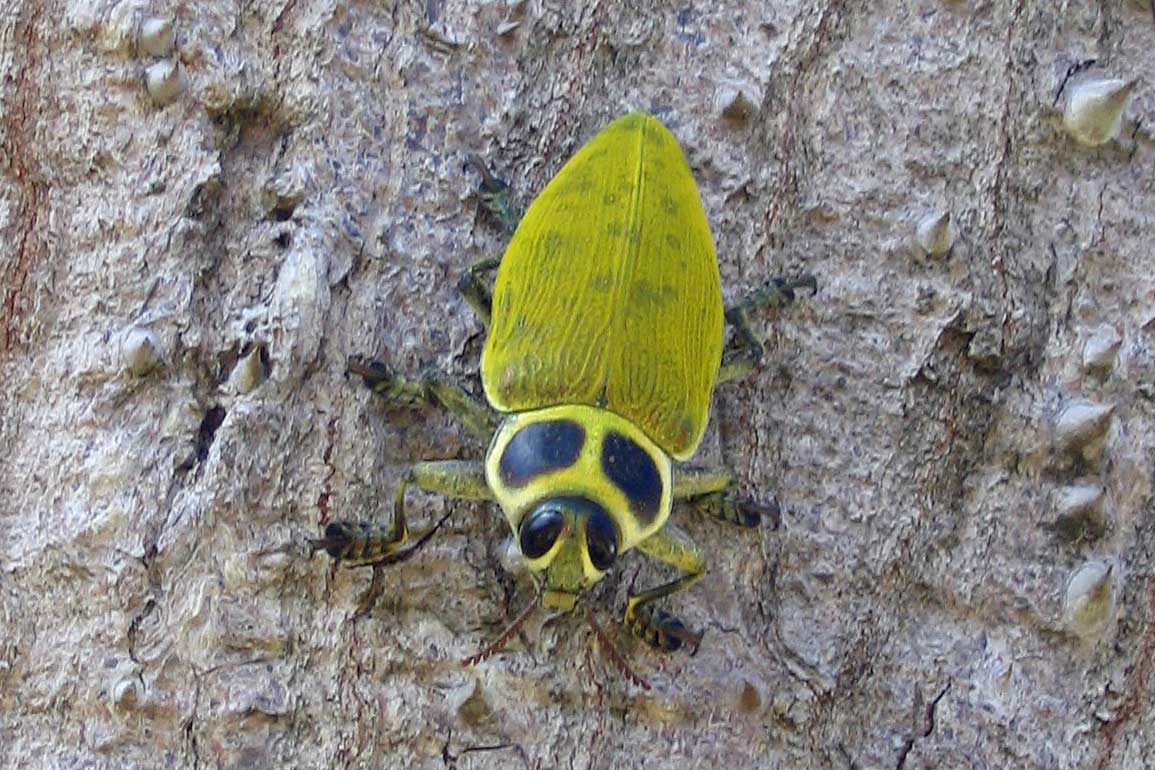
Euchroma gigantea in Jamaica. Photo © Steve Meyer


In recent weeks I’ve featured a few jewel beetles that I have encountered amongst specimens sent to me for identification (see “Aaack!-maeodera” and “Acmaeodera carlota in northern Arizona“).  While the new distributions and even unknown species that they represent are fascinating from a scientific perspective, their diminutive size (~6 mm in length) probably makes them less than spectacular to the non-specialist.  The family Buprestidae does, however, contain some very large species, including a few that qualify as bona fide giants.  One such species, Euchroma gigantea (Giant Metallic Ceiba Borer Beetle), occurs from Mexico through Central America, the West Indies, and most of South America.  At a maximum of 65mm in length, it is not only North America’s largest jewel beetle, but also the largest jewel beetle in the entire Western Hemisphere.

My colleague Steve Meyer encountered and photographed this individual in Negril, Jamaica.  Although its scientific name translates to “colorful giant”, the beetle in the photo is especially so due to the delicate, waxy bloom covering its elytra. This bloom is secreted by the adult after transforming from the pupa and prior to emerging from its larval host, giving it a bright yellow-green appearance.  After the beetle emerges and becomes active, the bloom is quickly rubbed off and the beetle takes on the shiny, iridescent purple-green color by which it is more familiar.  The presence of bloom on this individual suggests that it had just emerged from the trunk of the kapok tree (Ceiba pentandra) on which it was sitting.  Kapok and other large trees in the family Bombacaceae serve as hosts for larval development for this species (Hespenheide 1983).

Indigenous peoples in Central and South America have long utilized the dazzlingly colored elytra of these beetles to create beautiful natural jewelry and adorn their clothes and textiles.  The species is also eaten in both the larval and adult stages – Tzeltal-Mayans in southern Mexico (Chiapas) roast the adults when available, and the Tukanoans (northwestern Amazon) also eat the larvae (Dufour 1987). I have eaten a few insects in my day, but none as thick and massively juicy as the grub of this species must be. Holometabolous larvae typically contain a rather high percentage of fat (up to 66% dry weight) to meet the demands of pupal development and adult reproduction, and I suspect this makes the larvae quite tasty (especially when roasted). If there is any insect in the world that I really, really, really want to eat – it is the larva of this one!

REFERENCES:

Dufour, D. L.  1987.  Insects as food:  A case study from the northwest Amazon.  American Anthropologist 89(2):383–397.

Hespenheide, H. A.  1983.  Euchroma gigantea (Eucroma, giant metallic ceiba borer), p. 719.  In: D. H. Janzen [ed.], Costa Rican Natural History, University of Chicago Press, Chicago.

Copyright © Ted C. MacRae 2010

Acmaeodera carlota in northern Arizona

Acmaeodera carlota Fall – Coconino Co., Arizona

This is another of the interesting species that I encountered during my examination of material submitted for identification this past winter.  Acmaeodera carlota is one of 149 species/subspecies in North America belonging to this very difficult genus (recall my recent post, Aaack!-maeodera), and as with so many of its congeners it wasn’t described until after the last revision of the genus more than a century ago (Fall 1899).  Obviously, the genus badly needs another revision – or at least a revised key – so that the known species can be identified with some degree of confidence without having to send specimens to a specialist. There have been a handful of buprestid workers in recent decades who may have been able to accomplish this daunting task, but to date none have been willing to embrace this considerable challenge.

As far as is known, A. carlota occurs only in Arizona.  Fall (1932) described this species from a few specimens collected from cactus blossoms near Globe, Arizona (~90 miles east of Phoenix).  Since then, the only specific information recorded about this species was by Westcott et al. (1979), who reported adults cut from wood of Quercus dumosa near Sunflower (~60 miles northwest of the type locality) and collected from flowers in west-central Arizona near Wikieup.  Fall’s original description leaves much to be desired (as is the case for nearly all original descriptions prior to the last 50 years or so), and to this point no images have been published in the literature or appeared on the web.  This particular specimen was found in a batch of material sent to me by cerambycid-enthusiast Jeff Huether (the same batch containing the previously discussed Acmaeodera robigo), and the only reason I was able to identify it was by comparing it to a specimen given to me by the late Gayle Nelson, who collected the species near Wikieup after its occurrence was reported there by Westcott and colleagues.  The interesting thing about this specimen is that it was collected near Page, Arizona – nearly 200 miles north of any of the previous known localities and just south of the Utah border.  In suspect this species occurs even more broadly and is not, as the limited records suggest, restricted to Arizona.

Acmaeodera carlota belongs to a group of species that I loosely refer to as the A. tubulus-species group.  It is not clear that all of the species are actually closely related, but they do all resemble each other in their small size (<8 mm), general appearance (i.e., black with confused yellow maculations on the elytra), and inclusion in the so-called ‘Truncatae’ group (a subdivision of the genus established by 19th Century coleopterist George Horn to include those species having the prosternal margin nearly straight and not retracted from the sides). Within the Truncatae, the species in the tubulus-species group are distinguished by lacking a subapical crest on the last ventral segment and general appearance.  Only three species were known at the time of Fall’s revision (conoidea, neglecta, and tubulus); however, an additional eight species have been described since (carlota, ligulata, neoneglecta, opuntiae, parkeri, sabinae, starrae, and thoracata).  I have collected many of these species in my travels across the southwestern U.S. and lack only starrae and thoracta in my collection (the latter is known only from the type).  In the case of A. carlota, note the rather flattened dorsal surface that is densely clothed with long, stiff, dark, suberect hairs; the coarsely, contiguously punctate pronotum; and the subrugose, slightly irregular elytral intervals, which serve to distinguish this species from others in the group.

The group’s namesake, Acmaeodera tubulus, is widespread and common across the eastern U.S., making it relatively easy to identify. However, the remaining species of the tubulus-species group are limited to the south-central and southwestern U.S., and the lack of available identification keys and suitable descriptions makes them nearly impossible to identify except by comparison with determined specimens. As a result, I have built a key to the species in the Acmaeodera tubulus-species group that I use to assist in my own identifications.  The key is based on distinguishing characters given in the original descriptions (if any) and augmented by my examination of the material at my disposal.  I invite users to test the key with their own material and let me how well it works.

My sincere appreciation to Jeff Huether for allowing me to retain this specimen in my collection as a voucher for the range extension that it represents.

REFERENCES:

Fall, H. C.  1899.  Synonpsis of the species of Acmaeodera of America, north of Mexico.  Journal of the New York Entomological Society 7(1):1–37 [scroll to “Journal of the New York Entomological Society”, “v. 7 1899”, “Seq 12”].

Fall, H. C.  1932.  Four new Buprestidae from Arizona.  The Pan-Pacific Entomologist, 8(2) (1931):81-84.

Westcott, R. L., W. F. Barr, G. H. Nelson, and D. S. Verity.  1979.  Distributional and biological notes notes on North and Central American species of Acmaeodera (Coleoptera: Buprestidae).  The Coleopterists Bulletin, 33(2):169-181.

Copyright © Ted C. MacRae 2010

Add to FacebookAdd to DiggAdd to Del.icio.usAdd to StumbleuponAdd to RedditAdd to BlinklistAdd to TwitterAdd to TechnoratiAdd to Yahoo BuzzAdd to Newsvine

Email to a friend


Aaack!-maeodera

Warning: post contains hardcore, taxonomic, sciencey geekiness!

Just as there is seasonality in the lives of insects, there is seasonality in the work of those who study them.  For the collector/taxonomist, everything revolves around the collecting season — time spent on anything else is time not available for collecting. As a result, I spend a good deal of my time during the summer in the field and on its associated planning and organizing activities, leaving the winter months for processing and identifying collected specimens, incorporating them into the permanent collection, generating reports to fulfill permit requirements, and ultimately preparing manuscripts for publication — the raison d’être.  Winter is also the time when I identify specimens sent to me by other collectors.  I do this not only because I’m such a nice guy (at least I hope I am), but also because such material often contains species I haven’t seen before or that represent new distributions and host plant associations that I can use to augment the results of my own studies.  Such work has occupied much of my time during the past several weeks, and I now find myself close to finishing the last of the nearly dozen batches of beetles sent to me since the end of last winter.

Of the three groups of beetles that I actively study — jewel beetles, longhorned beetles, and tiger beetles — it is the jewel beetles that are taxonomically the most challenging.  Tiger beetles can often be indentified in the field (especially with the publication of Pearson et al. (2006), or “the Bible” among cicindelophiles), and North American longhorned beetles have been reasonably well worked by a strong contingent of both professional and amateur taxonomists over the past several decades.  Jewel beetles on the other hand, despite their dazzling colors and popularity with collectors, continue to befuddle even the most dedicated collectors due to their extreme variability and poorly-defined species limits.  Of the 822 species and subspecies known from North America, fully three-fifths of them belong to one of just three hyperdiverse genera — Acmaeodera, Agrilus, and Chrysobothris.  No recent taxonomic treatments are available for any of these genera, thus, identifying species belonging to them requires access to primary literature, a well-represented and authoritatively-identified reference collection, and extraordinary patience!  This is particularly true of the genus Acmaeodera, the North American members of which were last treated collectively more than a century ago (Fall 1899) (at which time less than half of the current 149 species/subspecies were known to science).  The recent explosion of web-based images has helped matters (a particularly useful site for those interested in North American Acmaeodera is Acmaeoderini Orbis, with its galleries of Harvard type specimens and BugGuide photos); however, images are still lacking for many species, and others are not easily distinguished from the images that do exist.

Acmaeodera robigo Knull (Val Verde Co., Texas)

It is precisely this taxonomic challenge, however, that makes the group so interesting to me.  Opportunities for discovery abound, as basic information is incomplete or totally lacking for many species regarding their geographical ranges and life histories.  One of the species I encountered in a batch of material sent to me by cerambycid-specialist Jeff Huether contained three specimens that I eventually determined to represent Acmaeodera robigo.  Josef Knull (1954) first described this species from specimens collected at Lake Corpus Christi in south Texas, and nothing more was recorded about the species until Nelson et al. (1996) reported a single specimen cut from its pupal cell in the base of Dalea formosa (Fabaceae) at White River Lake in far northern Texas — a range extension of almost 500 miles!  Obviously, I didn’t have this species in my collection, and it was only after a series of eliminations that led me to the original description (and confirmation of my ID by Nearctic Acmaeodera-guru Rick Westcott based on the photos shown here) did I know for sure what it was.  These specimens were collected at Seminole Canyon State Historic Park, thus, extending into west Texas the species’ known range, and they exhibit variability in the elytral markings and punctation that was not noted in the original description.  While only an incremental increase in our knowledge of this species, collectively such increases lead to greater understanding of the genus as a whole, and Jeff’s generosity in allowing me to retain examples of the species increases my U.S. representation of the genus to 130 species/subspecies (87%).

Acmaeodera n. sp. (Santa Cruz Co., Arizona)

The opportunity for discovery is not limited to range extensions and new host records, but includes new species as well.  A few years ago I received a small lot of specimens collected in Arizona by my hymenopterist-friend Mike Arduser (hymenopterists, especially those interested in apoid bees, are excellent “sources” of Acmaeodera, which they encounter frequently on blossoms while collecting bees).  Among the material he gave to me was the single specimen shown here that immediately brought to my mind Acmaeodera rubrovittata, recently described from Mexico (Nelson 1994) and for which I had collected part of the type series.  Comparison of the specimen with my paratypes, however, showed that it was not that species, and after much combing through the literature I decided that the specimen best fit Acmaeodera robigo (despite being collected in Arizona rather than Texas and not matching the original description exactly).  This was before I had true A. robigo with which to compare, so I sent the specimen to Rick Westcott for his opinion.  His reply was “good news, bad news” — the specimen did not represent A. robigo, but it didn’t represent any known species either!  While the prospect of adding a new species to the U.S. fauna is exciting, basing a description on this single specimen would be ill-advised.  Only through study of series of individuals can conclusions be made regarding the extent of the species’ intraspecific variability and its relation to known species.  Until such specimens are forthcoming, the specimen will have to sit in my cabinet bearing the label “Acmaeodera n. sp.”  For all of you collector-types who live in or plan to visit southeastern Arizona, consider this a general call for potential paratypes!  The specimen was collected in early August on flowers of Aloysia sp. near the Atascosa Lookout Trailhead on Ruby Road in Santa Cruz Co.

REFERENCES:

Fall, H. C.  1899.  Synonpsis of the species of Acmaeodera of America, north of Mexico.  Journal of the New York Entomological Society 7(1):1–37.
[scroll to “Journal of the New York Entomological Society”, “v. 7 1899”, “Seq 12”]

Knull, J. N. 1954. Five new North American species of Buprestidae (Coleoptera). Ohio Journal of Science 54:27–30.

Nelson, G. H. 1994. Six new species of Acmaeodera Eschscholtz from Mexico (Coleoptera: Buprestidae). The Coleopterists Bulletin 48:272–282.

Nelson, G. H., R. L. Westcott and T. C. MacRae. 1996. Miscellaneous notes on Buprestidae and Schizopodidae occurring in the United States and Canada, including descriptions of previously unknown sexes of six Agrilus Curtis (Coleoptera). The Coleopterists Bulletin 50(2):183–191.

Pearson, D. L., C. B. Knisley and C. J. Kazilek. 2006. A Field Guide to the Tiger Beetles of the United States and Canada. Oxford University Press, New York, 227 pp.

Copyright © Ted C. MacRae 2010

Add to FacebookAdd to DiggAdd to Del.icio.usAdd to StumbleuponAdd to RedditAdd to BlinklistAdd to TwitterAdd to TechnoratiAdd to Yahoo BuzzAdd to Newsvine

Email to a friend

BitB Best of 2009

In my first post of 2009, I looked back at the photographs I had posted during 2008 and picked some of my personal favorites. I hesitated then to call myself a photographer (and still do), but I at least now have suitable equipment to aid in my progress toward that eventual goal. I have learned much over the past six months in my first attempt at serious insect macrophotography (prioritizing in situ field photographs of unmanipulated subjects as a matter of personal choice).  Through this, I’ve come to realize the following skills to be the most important for success:  

  1. Composition
  2. Understanding lighting
  3. Knowing how to use a flash
  4. Knowledge of the subject

I’ll give myself a “A” in the last of these, but in the other areas I still have much to learn. With this caveat, and for the last post of 2009, I offer the following twelve photographs as my final choices for the 2nd Annual “Best of BitB”:  

Best beetle

Cylindera celeripes (swift tiger beetle), Woodward Co., Oklahoma

From Revisiting the Swift Tiger Beetle – Part 1 (June 30).  A decent enough photograph, especially considering that I’d had my camera for about a month when I took it.  However, the discovery of robust populations of this formerly rare and enigmatic species throughout northwestern Oklahoma (and later also in northwestern Missouri) was the most significant find of the 2009 field season, and this photograph is the best capture of that moment.

Best fly

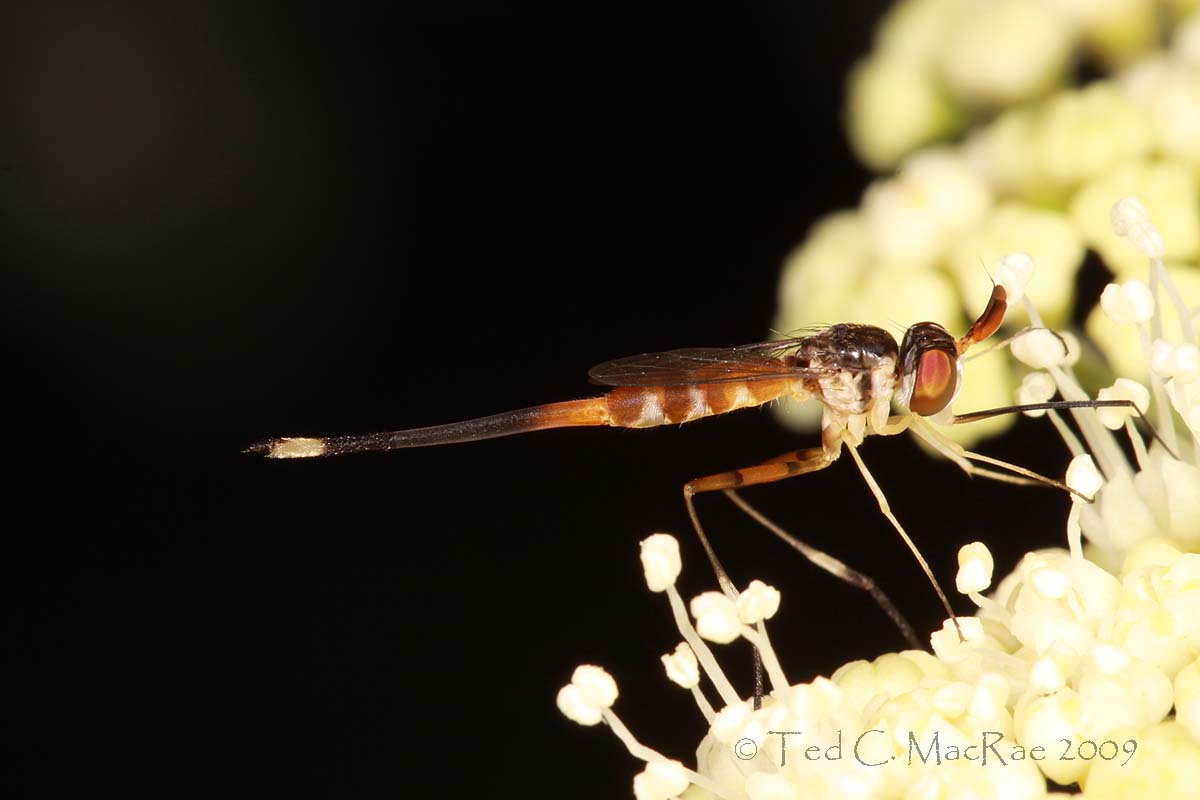
Stylogaster neglecta, a species of thickheaded fly

From Overlooked, needle-bellied, thick-headed fly (Aug 14).  One of my first good “black background” shots.  The white tip of the abdomen compliments the white flower stamens against the background.

Best “true” bug

Beameria venosa, a prairie obligate cicada

From North America’s smallest cicada (Aug 4).  So many different shades of green with white frosting on the bug’s body.  I tried taking this shot in portrait and it just didn’t work—I liked this landscape shot much better.

Best predator

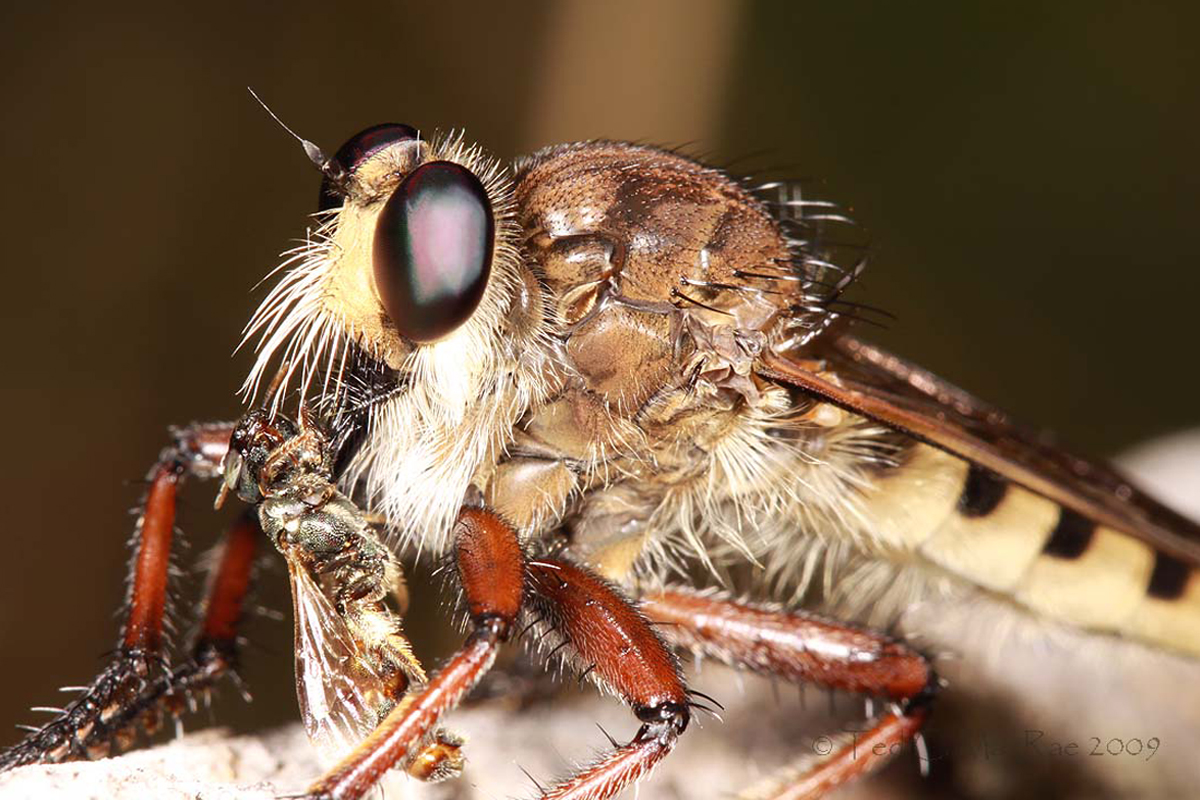
Promachus hinei (Hines giant robber fly) & Ceratina sp. (small carpenter bee) prey

From Prey bee mine (Sept 14).  Robber flies are immensely photogenic, especially those in the genus Promachus due to their prominent “beards.”

Best camoflauge

Dicerca obscura on bark of dead persimmon

From The “obscure” Dicerca (June 19).  Sparkling and gaudy as specimens in a cabinet, the coloration of many jewel beetles actually helps them blend almost perfectly with the bark of their preferred tree hosts.

Best immature insect

Tetracha floridana (Florida metallic tiger beetle) 3rd-instar larva

From Anatomy of a Tiger Beetle Larva (Oct 22).  “Otherwordly” is invariably the first word that comes to mind when someone sees a tiger beetle larva for the first time.  I was lucky enough to get this one in profile with a nice view of its abdominal hump and its curious hooks.

Best arachnid

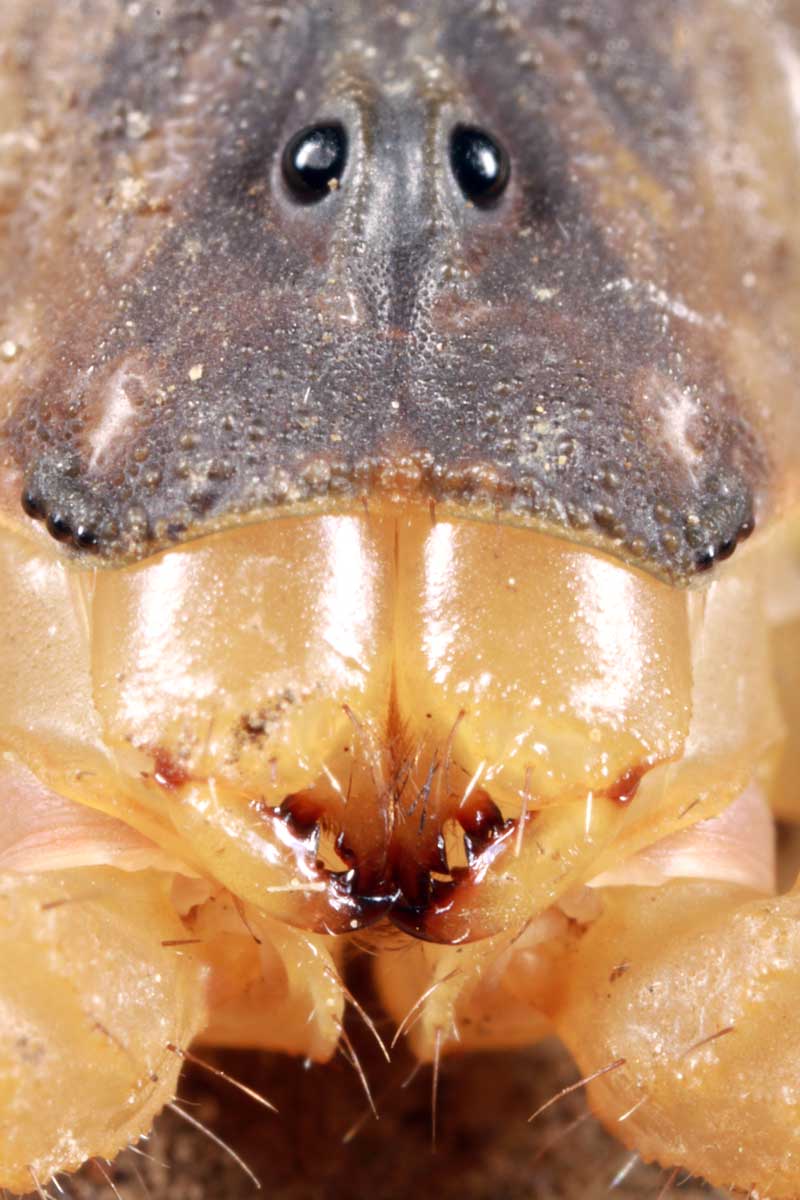
Centruroides vittatus (striped bark scorpion)

From A face only a mother could love (Oct 6).  Despite some minor depth-of-field problems with this photograph, I’m fascinated by its “smile.”

Best reptile

Eastern collared lizard (Crotaphytus collaris collaris) adult male

From North America’s most beautiful lizard (July 10).  A simply spectacular lizard—all I had to do was frame it well and get the flash right.

Best wildflower

Spiranthes magnicamporum (Great Plains ladies

From Great Plains Ladies’-tresses (Dec 7).  Few flowers are as photogenic as orchids, even native terrestrials with minute flowers such as this one.  I like the frosty texture of the lip and the starkness of the white flower on the black background.

Best natural history moment

Thermoregulatory behavior by Ellipsoptera hirtilabris (moustached tiger beetle)

From Tiger Beetles Agree—It’s Hot in Florida! (Dec 18). I chose this photo for the classic “stilting” and “sun-facing” thermoregulatory behaviors exhibited by this tiger beetle on a blistering hot day in Florida.

Best closeup

Megaphasma denticrus (giant walkingstick)

From North America’s longest insect (Aug 21).  I haven’t tried a whole lot of super close-up photographs yet.  I liked the combination of blue and brown colors on the black background.

Best Landscape

Sand Harbor Overlook, Lake Tahoe, Nevada

From Sand Harbor Overlook, Nevada (March 23).   My choice for “best landscape” again comes from Lake Tahoe.  This is not a great photo technically—I was still using a point-and-shoot and had to deal with foreground sun.  However, none of the other photos I took during my March visit to the area captivate me like this one.  I like the mix of colors with the silhouetted appearance of the trees on the point.

Copyright © Ted C. MacRae 2009

Add to FacebookAdd to DiggAdd to Del.icio.usAdd to StumbleuponAdd to RedditAdd to BlinklistAdd to TwitterAdd to TechnoratiAdd to Yahoo BuzzAdd to Newsvine

Email to a friend

Oklahoma is for lovers

A few rather risqué photos from my June trip to northwestern Oklahoma.

Eleodes suturalis (family Tenebrionidae) - June 6, 2009 at Four Canyon Preserve, Ellis Co., Oklahoma

Eleodes suturalis (family Tenebrionidae) - June 6, 2009 at Four Canyon Preserve, Ellis Co., Oklahoma

Chrysobothris ignicollis (family Buprestidae) - June 6, 2009 at Four Canyon Preserve, Ellis Co., Oklahoma

Chrysobothris ignicollis (family Buprestidae) - June 6, 2009 at Four Canyon Preserve, Ellis Co., Oklahoma

Ellipsoptera nevadica knausii ("family" Cicindelidae) - June 12, 2009 at Salt Plain National Wildlife Refuge, Alfalfa Co., Oklahoma

Ellipsoptera nevadica knausii ("family" Cicindelidae) - June 12, 2009 at Salt Plain National Wildlife Refuge, Alfalfa Co., Oklahoma

Photo details:
Eleodes suturalis: Canon 100mm macro lens on Canon EOS 50D, ISO 100, 1/250 sec, f/13, MT-24EX flash 1/4 power through diffuser caps.
Chrysobothris ignicollis: Canon 65mm 1-5x macro lens on Canon EOS 50D, ISO 100, 1/250 sec, f/13, MT-24EX flash 1/8 power through diffuser caps.
Ellipsoptera nevadica knausii: Canon 100mm macro lens on Canon EOS 50D, ISO 100, 1/250 sec, f/14, MT-24EX flash 1/4 power through diffuser caps.

Copyright © Ted C. MacRae 2009

Add to FacebookAdd to NewsvineAdd to DiggAdd to Del.icio.usAdd to StumbleuponAdd to RedditAdd to BlinklistAdd to Ma.gnoliaAdd to TechnoratiAdd to Furl