Why did it take 30 years to collect these beetles?

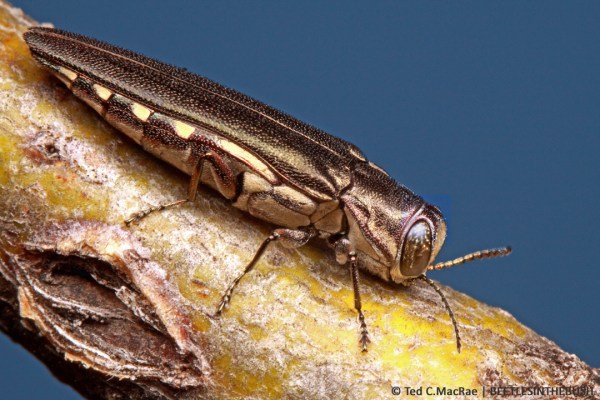
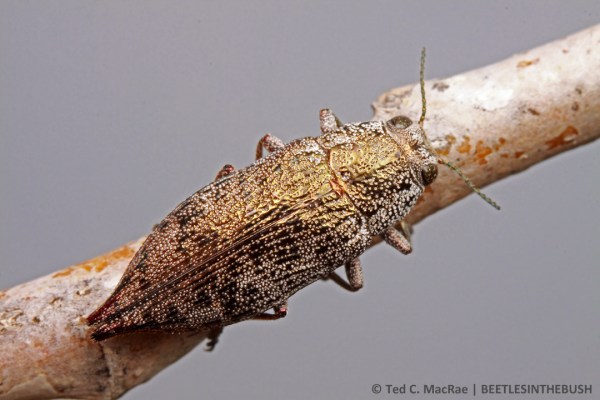
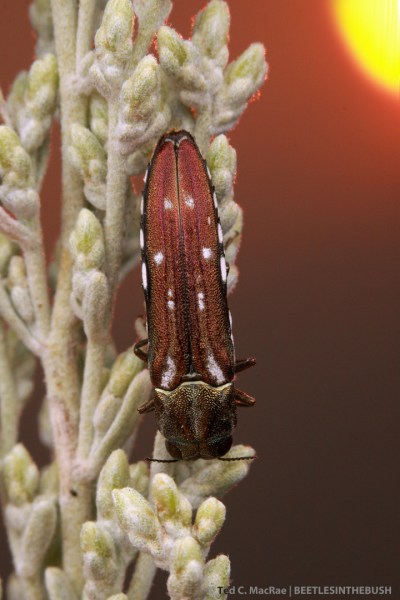
Poecilonota cyanipes

Poecilonota cyanipes (eastern poplar jewel beetle) | Beaver Dunes State Park, Oklahoma

This is the best known of the American species of Poecilonota, and the one most commonly collected east of the Rocky Mountain.—Evans (1957)

I’ve been interested in insects since I was a kid, but I didn’t really become a dedicated coleopterist until after I’d finished graduate school and started working as a field entomologist with the Missouri Department of Agriculture. It was a perfect job for a young entomologist with a bent for collecting—being outside all day inspecting nursery stock and driving the back roads checking insect traps. It wasn’t long before I found myself focusing on wood-boring beetles, due initially to their horticultural importance but eventually to their astounding diversity and intrinsic beauty. So began my formal survey of the families Buprestidae and Cerambycidae in Missouri, and I spent the next eight years collecting them in all corners of the state and examining every insect collection, public and private, that I could find that might contain Missouri representatives of these families. In the end, I documented a cool 350 species and subspecies in the two families combined, more than a fifth of which represented new state records (MacRae 1991, 1994).
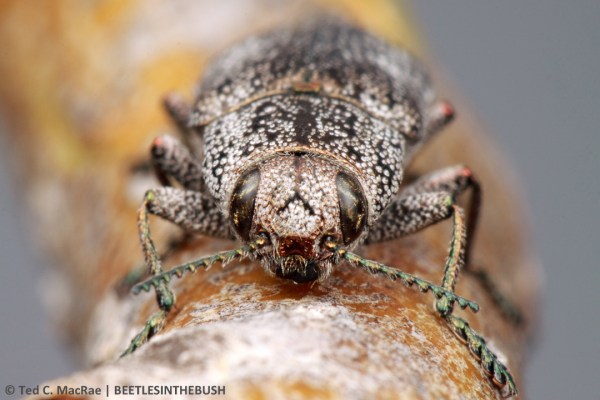
Poecilonota cyanipes

The specific epithet ‘cyanipes‘ refers to the blue feet

One species, however, that I had expected to find almost completely eluded me. This, despite the quote above by Evans (1957) in his revision of the genus Poecilonota in North America. Although it had been recorded from much of North America east of the Rocky Mountains in association with poplars (Populus spp.) and willows (Salix spp), I never actually encountered P. cyanipes in the field and found just two specimens labeled simply “Mo” in the insect collection at the University of Missouri in Columbia. This puzzled me, as I had beaten countless branches of cottonwood (Populus deltoides) and willow in search of this species and found many of the other known poplar/willow associates. I had even already collected two specimens of its much rarer congener, P. thureura, off of a redbud tree at the entrance to the Entomology Building on campus while still in graduate school!
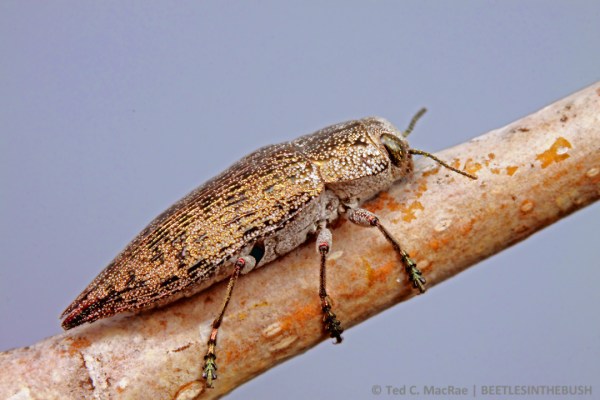
Poecilonota cyanipes

This species can be recognized by its coppery color and elongate, distinctly reddish elytral apices,

As is often the case, good comes to those who wait, and I’ve finally gotten my chance during the past two seasons to encounter this species in numbers—last year as prey taken from nest sites of the buprestid-specialist crabronid wasp, Cerceris fumipennis, and this past June on cottonwood trees in northwestern Oklahoma at Beaver Dunes State Park. The individual in these photos was the first one I found—beaten from the lower branch of a small, living cottonwood exhibiting significant branch dieback, and over the course of the next two days I managed to beat close to three dozen specimens from the small, stunted cottonwoods that dotted the park. I suspect that the combination of good timing—buprestids of many types were common on a number of woody plant species in the area—and susceptible hosts with abundant branch dieback due to protracted drought conditions over the past few years was the reason I was able to find so many of the beetles. A perfect storm for wood-boring beetles, so to speak!

Poecilonota cyanipes

The non-angulate pronotal sides distinguish this species from another eastern species, P. ferrea.

As suggested above, larvae of this species are associated exclusively with dead or dying branches of Populus and Salix (both in the family Salicaceae), often in association with galls made previously by other species of wood-boring beetles, e.g., Saperda concolor in poplar (Knull 1920) and Agrilus criddlei in willow (Wellso et al. 1976). In fact, with one exception (P. viridicyanea on Chilopsis linearis) all members of the genus seem to be associated exclusively with plants in these two genera. However, in addition to these plants, Nelson et al. (2008), in their catalogue of the Buprestidae of the U.S. and Canada, also included black locust (Robinia pseudoacacia) in the family Fabaceae as a larval host for P. cyanea. I am convinced that this record represents at best a mere incidental adult association, and there are other examples of such in the catalogue (the final preparation of which was completed after the untimely death of the senior author). This is unfortunate, since erroneous records in such ‘standard’ references tend to be propagated in subsequent literature, which already seems to have happened in the case of black locust as a larval host for P. cyanipes (Paiero et al. 2012).

REFERENCES:

Knull, J. N. 1920. Notes on Buprestidae with description of a new species (Coleop.). Entomological News 31(1):4–12 [BioStor].

MacRae, T. C. 1991. The Buprestidae (Coleoptera) of Missouri. Insecta Mundi5(2):101–126 [pdf].

MacRae, T. C. 1994. Annotated checklist of the longhorned beetles (Coleoptera: Cerambycidae and Disteniidae) known to occur in Missouri. Insecta Mundi 7(4) (1993):223–252 [pdf].

Nelson, G. H., G. C. Walters, Jr., R. D. Haines, & C. L. Bellamy.  2008.  A Catalogue and Bibliography of the Buprestoidea of American North of Mexico.  Coleopterists Society Special Publication No. 4, The Coleopterists Society, North Potomac, Maryland, 274 pp. [description].

Paiero, S. M., M. D. Jackson, A. Jewiss-Gaines, T. Kimoto, B. D. Gill & S. A. Marshall. 2012. Field Guide to the Jewel Beetles (Coleoptera: Buprestidae) of Northeastern North America. 1st Edition. Canadian Food Inspection Agency, 411 pp. [pdf].

Wellso, S. G., G. V. Manley & J. A. Jackman. 1976. Keys and notes on the Buprestidae (Coleoptera) of Michigan. The Great Lakes Entomologist 9(1):1–22.

Copyright © Ted C. MacRae 2013
ESA Insect Macrophotography Workshop

Today is the last day of the Entomological Society of America (ESA) Annual Meeting in Austin, Texas, and it has been an action packed week for me. Annual meetings such as this serve several purposes. In addition to seeing talks on a variety of subjects—in my case covering subjects ranging from insect resistance management to scientific outreach to beetle systematics—they also offer the chance to establish new connections with other entomologists that share common interests and reinforce existing ones. Of course, a major part of my interest in entomology revolves around insect macrophotography, and in recent years ESA has begun to cater to the entomological photographer contingent within the society. Last year’s meetings featured a macrophotography symposium titled, “Entomologists Beyond Borders” (for which I was one of the invited speakers), and this year featured an Insect Macrophotography Workshop led by Austin-based entomologist/photographer Ian Wright. Having done this for a few years now I figured a lot of the workshop might be review for me, but I still have much to learn and am willing to accept new ideas from any source. Besides, the workshop involved a field trip to a local habitat to try out our insect photography skills, and for a field junkie like me time in the field at an otherwise all-indoor event spanning close to a week is always welcome. The location of the meetings in Austin this year made this possible, as even in mid-November there still remain insects out and about that can be photographed if the weather cooperates (and it did).

This will be a somewhat different post than what I usually post here. Rather than featuring photos of a certain species and using them as a backdrop for a more detailed look at their taxonomy or natural history, I’m just going to post all the photos that I ended up keeping from the field trip portion of the workshop with just a comment or two about each. We went to the city’s nearby waste-water treatment facility, the grounds of which are wild and woolly enough to provide habitat for insects, and spent about an hour and a half seeing what we could find. For myself, it was a chance to photograph some insects I’ve not normally tried to photograph (i.e., dragonflies, ambush bugs) and get more practice on my blue sky technique. I did appreciate the chance to spend some time talking to Ian during while we traveled to the site and back, and I also ended up helping other participants with their camera equipment questions and technique suggestions. With that, here are the photos I took—I’ll be curious to see what readers think of this post format versus my more typical style.

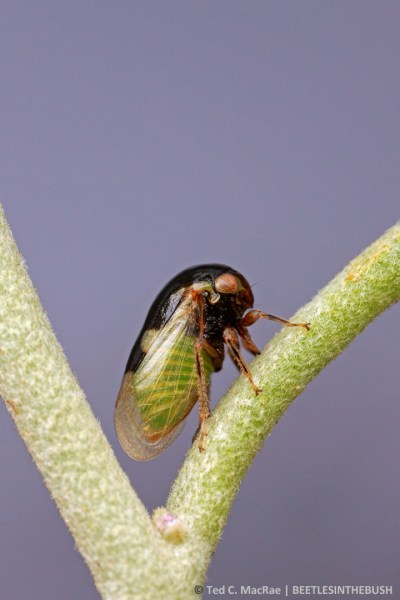
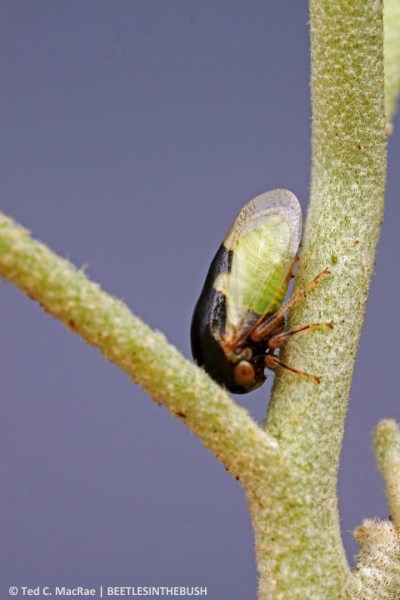
Micrutalis calva

Micrutalis calva (Hemiptera: Membracidae) on silverleaf nightshade (Solanum elaeagnifolium).

Micrutalis calva

This species of treehopper is restricted to herbaceous plant hosts.

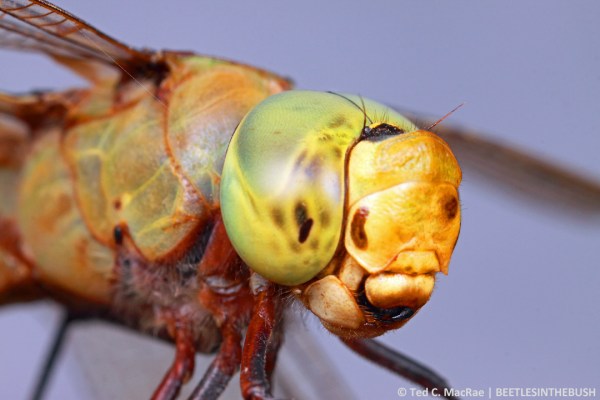
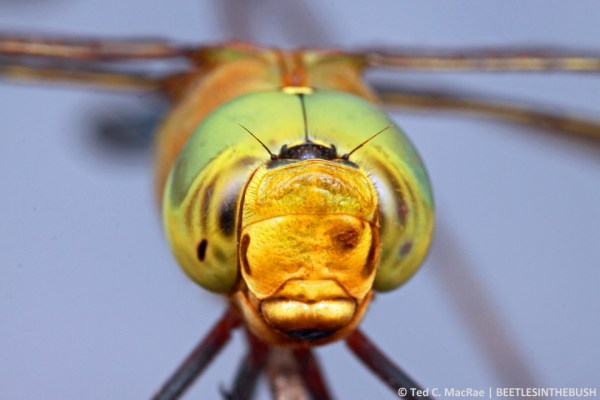
Anax junius

Anax junius (Odonata: Aeshnidae), one of the darner species of dragonfly.

Anax junius

This adult was perched on a dead twig tip and seemed to be “asleep.”

Anax junius

I clipped the perch and held it up for these “in-your-face” shots – it then awoke with a start and flew off.

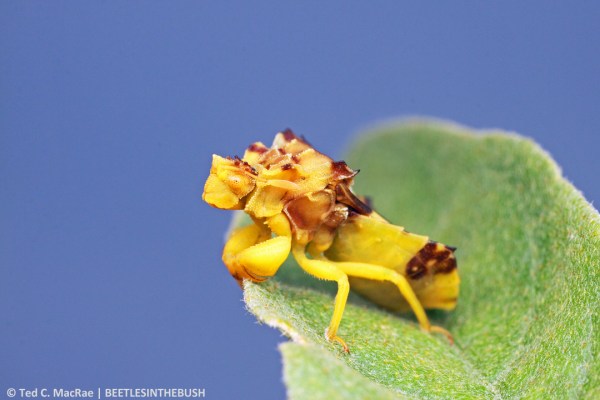
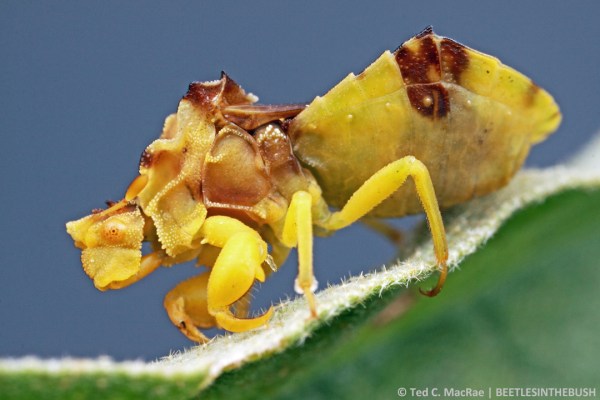
Phymata sp.

Phymata sp. (Hemiptera: Reduviidae), one of the so-called “jagged ambush bugs.”

Phymata sp.

Formerly a separate family, ambush bugs are now combined with assassin bugs (family Reduviidae).

Acmaeodera flavomarginata

Acmaeodera flavomarginata (Coleoptera: Buprestidae).

Acmaeodera flavomarginata

This is one of a few species of jewel beetle in the southcentral US that are active during the fall.

Mecaphesa sp.

Mecaphesa sp. (Araneae: Thomisidae), one of the crab spiders

Mecaphesa sp.

Cryptic coloration allows the spider to lurk unseen by potential insect prey visiting the flower.

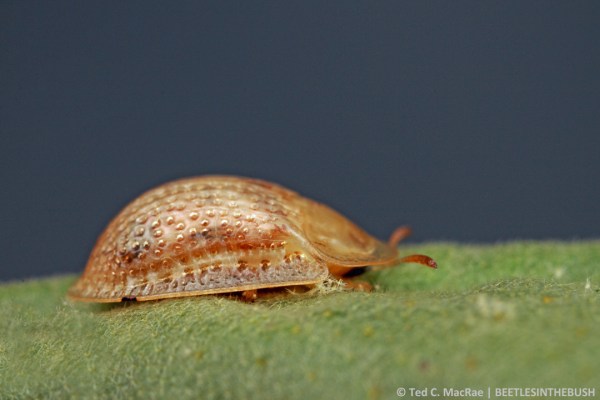
Gratiana pallidula

Gratiana pallidula (Coleoptera: Chrysomelidae) on silverleaf nightshade (Solanum eleagnifolium).

Gratiana pallidula

A type of tortoise beetle, adults “clamp” down against the leaf as a defense against predators.

Copyright © Ted C. MacRae 2013
One-shot Wednesday: The “other” hibiscus jewel beetle

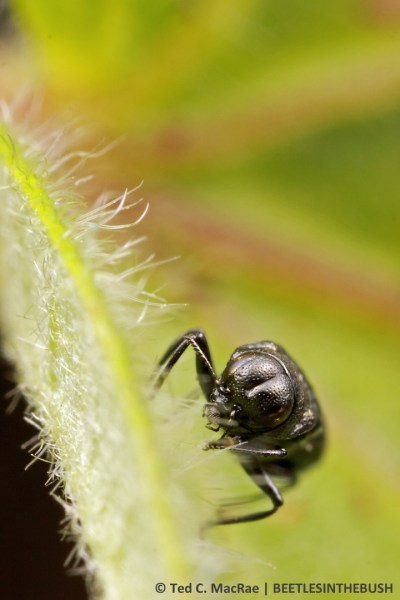
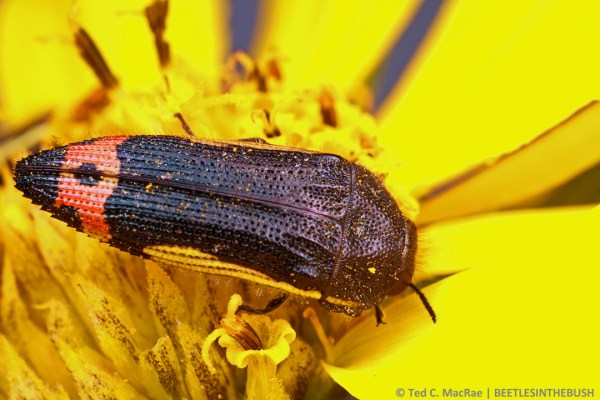
Paragrilus tenuis | Stoddard Co., Missouri

Paragrilus tenuis (LeConte) | Stoddard Co., Missouri

This past summer I visited Otter Slough Conservation Area in southeast Missouri in an effort to find and photograph the stunningly beautiful Agrilus concinnus Horn, or “hibiscus jewel beetle” (MacRae 2004). I was not successful in that quest, but I did manage to snap a single photo of another jewel beetle also associated exclusively with hibiscus, Paragrilus tenuis (LeConte). This species belongs to a much smaller genus of mostly Neotropical jewel beetles that resemble the related and much more speciose genus Agrilus but differ significantly by their antennae being received in grooves along the sides of the pronotum and, for the most part, their association as larvae with stems of living, herbaceous plants rather than dead branches and twigs of deciduous trees. Only four species of Paragrilus occur in the U.S. (Hespenheide 2002), and of these only Ptenuis is known to occur in the eastern U.S. where it has been reported breeding in Hibiscus moscheutos (including ssp. lasiocarpos). I have also collected adults on H. laevis (MacRae 2006), but to my knowledge it has not yet been reared from that plant.

These tiny little beetles (~ 5 mm in length) are normally seen resting on the terminal leaves of their host plants, but they are extremely wary and quick to take flight. As a result, photographing them in situ with a short macro lens in the heat of the day is rather challenging, especially when they are not numerous. I only saw perhaps half a dozen individuals during the visit, and the photo shown here represents the only shot that I even managed to fire off. While I would have liked to have gotten a dorsal view of the beetle, this single shot is nevertheless well-focused and a rather interesting composition.

REFERENCES:

Hespenheide, H. A. 2002. A review of North and Central American Paragrilus Saunders, 1871 (Coleoptera: Buprestidae: Agrilinae). Zootaxa 43:1–28 [pdf].

MacRae, T. C. 2004. Beetle bits: Hunting the elusive “hibiscus jewel beetle”. Nature Notes, Journal of the Webster Groves Nature Study Society 76(5):4–5 [pdf].

MacRae, T. C. 2006. Distributional and biological notes on North American Buprestidae (Coleoptera), with comments on variation in Anthaxia (Haplanthaxiaviridicornis (Say) and A. (H.) viridfrons Gory. The Pan-Pacific Entomologist 82(2):166–199 [pdf].

Copyright © Ted C. MacRae 2013
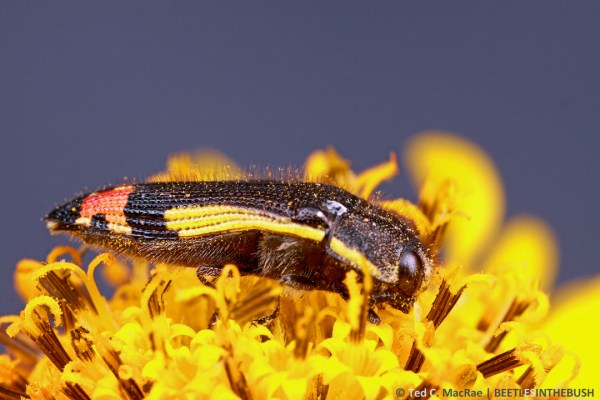
Honey Locust Borer

Agrilus difficilis | Beaver Dunes State Park, Beaver Co., Oklahoma

Agrilus difficilis | Beaver Dunes State Park, Beaver Co., Oklahoma

Conditions for collecting didn’t look very promising when I awoke on Day 4 of my early June trip to northwestern Oklahoma. After collecting at Alabaster Caverns State Park the previous day, I had traveled a few hours further west during the evening with plans to collect at Beaver Dunes State Park the following morning. However, heavy rain during the night and lingering sprinkles during the morning had me thinking it might be a lost day. By noon, however, the rain had completely abated, and though the sky still hung low and gray I decided I had nothing to lose by at least trying. I knew quickly that I’d made the right decision, as within minutes of arriving at the park I began seeing jewel beetles (family Buprestidae) landing on my beating sheet. Hackberry (Celtis sp.) was abundant along the roadways and supporting great numbers of individuals in the genera Chrysobothris and Agrilus.

This species is associated almost exclusively with honey locust (Gleditsia triacanthos).

This species is associated almost exclusively with honey locust (Gleditsia triacanthos).

By the time I reached the back end of the campground, I’d collected rather large series of the hackberry associates when I noticed a dying honey locust (Gleditsia triacanthos) tree in one of the campsites. Honey locust (and fabaceous trees, in general) is favored by several species of jewel beetles—at least a dozen species have been recorded in the literature reared from its branches, and another dozen species have been collected on it as adults. As a result, when jewel beetles are active it’s always a good bet that some will be found on honey locust when present, especially if the trees are stressed or dying. I walked up to the tree—a fairly large one—and scanned the lower branches overhead to see if I could notice any activity. I did not, but I nevertheless placed my beating sheet underneath one of the branches, gave the branch a quick “whack” with the handle of my net, and lowered the beating sheet to have a look. To my surprise, I saw at least 50 adults of the jewel beetle species, Agrilus difficilis, sitting on the beating sheet. Because of the cloudy conditions and cool, moist air, the beetles were not very active and did not immediately zip off the beating sheet as they would have had the day been sunnier and warmer, so I was able to rather easily collect a decent series of the beetles without any trouble. I had never seen the beetles so numerous, however, so I continued to beat a few more branches—each yielding just as many adults as the previous. I was astonished by the fact that the beetles were so abundant on the branch, yet I had not seen them even when I specifically looked for the presence of jewel beetles in the branches prior to beating them. Taking another look at the branches, I was able to visually detect just a few individuals, and those only with great difficulty, until I pulled the branch down and was able to look at it up close.

Relatively large size, coppery-purple color without spots on the elytra, and the presence of lateral white patches distinguish this species.

Large size, coppery color, no spots on elytra, and presence of lateral white patches distinguish this species.

Honey locust became a rather popular landscape ornamental tree in the eastern U.S. after the development of thornless cultivars, and while at first the tree seemed to be relatively free of insect pests, A, difficilis has proven to be one of several insects that have adapted to these landscape plants and occasionally cause economic damage. Trees in urban landscapes are often planted in suboptimal sites and suffer from stress to a much greater degree than their native counterparts, and the beetles take advantage of the lowered defensive capabilities of these stressed trees to gain entry. Larvae mine beneath the bark and damage the cambium layer, interfering with movement of water and nutrients. Trees in later stages of attack usually exhibit branch dieback and D-shaped holes in the trunk and main branches where adults have emerged from the tree. In severe cases infestation by this species can result in death of the tree. As mentioned above, there are twelve other species of jewel beetles that have been reared from the wood of honey locust. All of these have been reared only from dead wood rather than living trees, but adults of these species might, nevertheless, be encountered on living trees. They include three species (A. egeniformisA. fallax, and A. pseudofallax) that might be confused with A. difficilis; however, the latter is easily distinguished from these and other congeners by its relatively large size, coppery color with purple luster, absence of any spots or pubescent lines on the elytra, and distinctive patches of white pubescence along the sides. As with most wood boring beetles, chemical control of the adults or larvae is usually not feasible once an infestation has already begun—the best method to avoid infestations in landscape trees is proper site selection and optimal care to prevent stress that reduces the ability of the tree to fend off attack.

Copyright © Ted C. MacRae 2013

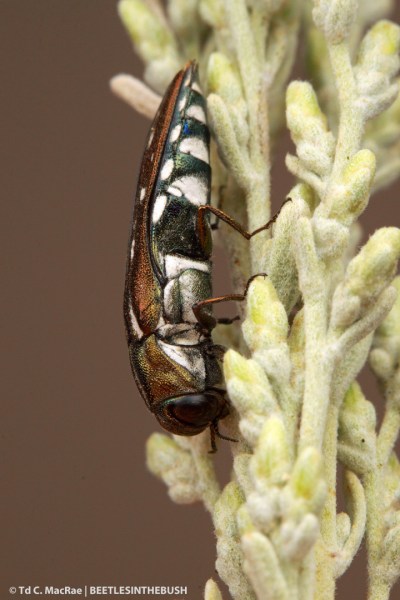
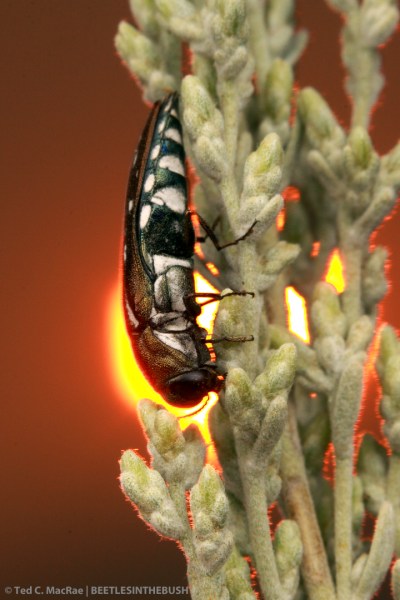
Under Blood Red Skies

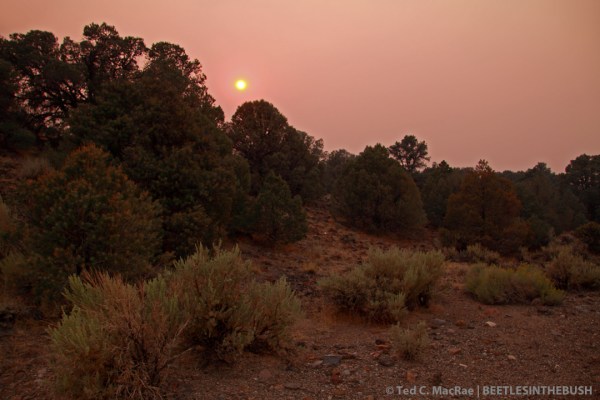
At the start of my recent Great Basin collecting trip, I found myself presented with a rather unique and unanticipated photographic opportunity. As I landed in Reno, Nevada, the then 6-day old Rim Fire was already well on it’s way to becoming the largest wildfire on record in the California Sierra Nevada. As acre after acre of the Sierra’s dramatic coniferous forest succumbed to the blaze, an enormous plum of smoke drifted northward for several hundred miles over eastern California and western Nevada, blanketing the area in a thick haze that turned the sun’s hot glare to a soft glow and limited visibility to under a mile. It was like a thick overcast foggy day, only without the cool, damp humidity. This was of little consequence to our business at hand—collecting beetles (although it did make pointless most attempts to photograph the area’s stunning landscape). At day’s end, however, a dramatic transformation took place in the sky as the sun sank lower and lower, turning to an increasingly red globe as it strained to shine through the ever thicker layer of smoke and haze. Then, for a few brief moments, the sun floated—a dark red globe under blood red skies—before the thick bottom layers of haze finally extinguished its fading light.

I’ve just begun trying to incorporate setting suns into my photography, having made to this point only a few attempts over Midwestern landscapes. I’m not really sure what gave me the idea, but I thought it might be fun to try incorporating the spectacular sun and unusual sky I was seeing as backgrounds in full-flash insect macrophotographs. Perhaps it seemed a logical progression from the natural sky background macrophotographs that I’ve put a lot of effort into perfecting this year. It was certainly a learning experience, but the basic principle is the same as it is for blue sky background—finding the right combination of camera and flash settings to balance flash illumination of the subject with ambient illumination of the background. The most difficult thing was, surprisingly, getting the sun in the desired position within the composition, as it does not appear through the viewfinder as the discrete ball that is seen in the photos. Rather, it appears as a large, amorphous, blinding flash that comes and goes as one pans across it, leading to a lot of guesswork regarding its actual position within the composition.

I gave a sneak preview of one of these photos in Sunset for another great collecting trip, and several of the photos I’ve shared since then have featured the remarkably colored sky in the background. Here are some other attempts that I was happy with:

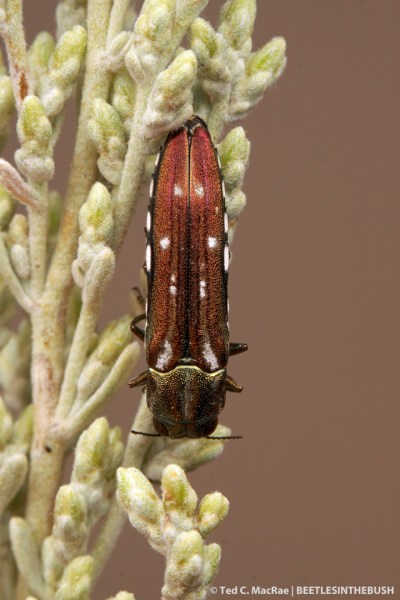
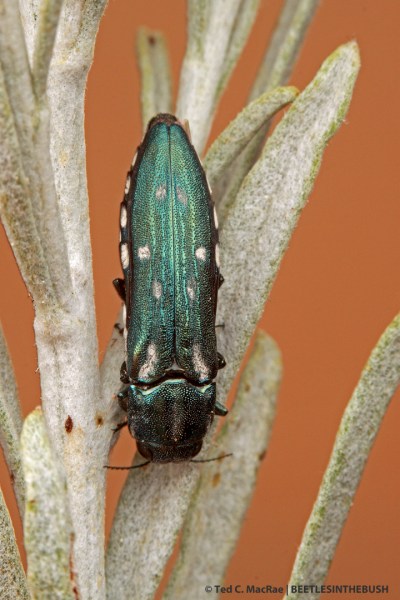
Agrilus walsinghami (female) | Washoe Co., Nevada

Agrilus walsinghami (female) | Washoe Co., Nevada

Agrilus walsinghami (male) | Washoe Co., Nevada

Agrilus walsinghami (male) | Washoe Co., Nevada

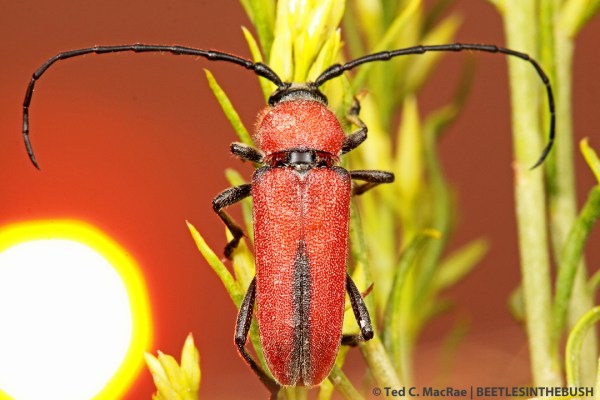
Crossidius coralinus temprans (male) | Pershing Co., Nevada

Crossidius coralinus temprans (male) | Pershing Co., Nevada

Initially hot yellow (previous photo), the sun turns to soft yellow...

Initially hot yellow (previous photo), the sun turns to soft yellow…

...then yellow-red...

…then yellow-red…

...and finally blood-red!

…and finally blood-red!

Crossidius hirtipes macswainei (female) | Lyon Co., Nevada

Crossidius hirtipes macswainei (female) | Lyon Co., Nevada

Sunset over Toiyabe National Forest | Lyon Co., Nevada

Sunset over Toiyabe National Forest | Lyon Co., Nevada

Gray rabbitbrush (Ericameria nauseosa) | Lyon Co., Nevada

Gray rabbitbrush (Ericameria nauseosa) | Lyon Co., Nevada

Copyright © Ted C. MacRae 2013

GBCT Beetle #2: Agrilus walsinghami

Late summer and early fall is not normally a very good time to go looking for woodboring beetles, which for the most part are found in their greatest diversity and abundance during spring and early summer. This is especially true in the drier western U.S., although notable exceptions occur in the so called “Sky Islands” of southeast Arizona (where most species have shifted their adult activity periods to coincide with late summer “monsoons”) and the lower Rio Grande Valley of south Texas (where spring and fall rains have resulted in bimodal patterns of adult activity for many species). Across the rest of the U.S. a rather limited assemblage of late-season species is found, mostly longhorned beetles associated with fall-blooming composites such as Megacyllene (e.g., M. decora) on goldenrod (Solidago) and Crossidius (e.g. C. hirtipes immaculatus) on rabbitbrush (Chrysothamnus and Ericameria) and snakeweed (Gutierrezia). Late-season jewel beetles are even less common, but one of the few species that does prefer the latter part of the season is also among North America’s most striking species—Agrilus walsinghami.

Agrilus walsinghami (male) | Davis Creek Park, Washoe Co., Nevada

Agrilus walsinghami (male) | Davis Creek Park, Washoe Co., Nevada

This sexually dimorphic species occurs broadly across the western U.S., from British Columbia (Davies 1991) south to Baja California (Hespenheide et al. 2011) and east to Colorado (Nelson & MacRae 1990). Adults are encountered almost exclusively on gray rabbitbrush, Ericameria nauseosa (formerly Chrysothamnus nauseosus, Asteraceae), which despite the lack of any rearing records is nevertheless presumed to serve as the larval host (Hespenheide et al. 2011).  I was hoping I would encounter this species on my recent Great Basin Collecting Trip (GBCT), as I’ve only seen it once previously (in southeast Arizona). The timing seemed right, as most published dates of collection range from mid-July to mid-September, and in fact I encountered and was able to photograph both male and female on the very first day of the trip (23 August) at the very first locality we visited (Davis Creek Park, Washoe Co., Nevada). As it turned out, I would see this species at perhaps a dozen localities or more during the course of the trip, although never in great numbers at any one locality nor with the sky conditions that allowed for the unusual background colors in these photographs (more on that in a future post).

Agrilus walsinghami (female) | Davis Creek Park, Washoe Co., Nevada

Agrilus walsinghami (female) | Davis Creek Park, Washoe Co., Nevada

The notable feature of this species is, of course, its sexual dimorphism, and it is remarkable that no author even mentioned such until Fisher (1928) discussed it in his revision of the genus in North America. Males have the head and pronotum bronzy brown with faint coppery reflections and the elytra brassy with slight purplish tints, while females are larger and more robust and are uniformly blue to greenish blue above. Both sexes have the underside strongly bronzy green with prominent white densely pubescent patches along the lateral portions of the thorax and abdomen and more or less coppery legs, making them truly one of the more spectacular species of Agrilus.

Pubescence

Males (above) and females both exhibit dense lateral pubescent patches.

All told I probably collected between two and three dozen specimens across the localities we visited in western Nevada and southeastern California. Too bad I don’t have more of a commercial mind, as I later discovered that somebody actually purchased one of these beetles on ebay for $16.38! All I would have needed was ~100 specimens of this “very uncommon!” (not!) species and I could have paid for the entire trip!

REFERENCES:

Davies, A. 1991. Family Buprestidae (metallic wood-boring beetles), pp. 160–168. In: Y. Bousquet [ed.], Checklist of the Beetles of Canada and Alaska. Agriculture Canada Publication 1861/E, Ottawa.

Fisher, W. S. 1928. A revision of the North American species of buprestid beetles belonging to the genus Agrilus. Bulletin of the United States National Museum 145:1–347.

Hespenheide, H. A., R. L. Westcott & C. L. Bellamy. 2011. Agrilus Curtis (Coleoptera: Buprestidae) of the Baja California peninsula, México. Zootaxa 2805:36–56.

Nelson, G. H. & T. C. MacRae.  1990.  Additional notes on the biology and distribution of Buprestidae (Coleoptera) in North America, part III.  The Coleopterists Bulletin, 44(3):349–354.

Copyright © Ted C. MacRae 2013

Sunset for another great collecting trip

All good things must come to an end, and so it is with my Great Basin collecting trip. From Nevada’s isolated ranges to California’s stunning Owens Valley; from Utah’s starkly beautiful canyons to Colorado’s majestic mountains, the experience not only quenched my thirst for natural history but also provided much needed spiritual renewal. Look for a “Trip iSummary” here at Beetles in the Bush in the coming days, and of course I have lots of photographs of the insects I encountered that I will share in the following weeks.

In the meantime, here’s a preview of one of the species that I encountered—a male Agrilus walsinghami preparing to bed down for the night.

Agrilus walsinghami | Davis Creek Regional Park, Washoe Co., Nevada

Agrilus walsinghami (male) | Davis Creek Park, Washoe Co., Nevada

© Ted C. MacRae 2013
Another new record for northwestern Oklahoma

You would think that finding two new state records on the first day of my June collecting trip to northwestern Oklahoma would be fortune enough—it is rare to get two new state records on an entire trip even! As a result, I spent all morning and the early part of the afternoon working the mesquite (Prosopis glandulosa) and red-cedar (Juniperus virginiana) that dotted the barren flats at Gloss Mountain State Park to ensure good voucher series of Plionoma suturalis and Chrysobothris quadrilineata. Around 2 pm I decided I’d worked the flats as well as I could and turned my attention to the park’s main attraction, a large, gypsum-capped, red clay mesa rising 150 to 200 feet above the flats below.

Paratyndaris prosopis on dead hackberry (Celtis sp.) | Gloss Mountain State Park, Oklahoma

Paratyndaris prosopis on dead hackberry (Celtis sp.) | Gloss Mountain State Park, Major Co., Oklahoma

Red-cedar occurs on top of the mesa as well as the flats¹, but otherwise the mesa top supports a different assemblage of woody vegetation. Gone is the mesquite, a relatively “thirsty” plant that uses extraordinarily long taproots to reach subterranean water tables. In its place are western soapberry (Sapindus saponaria), hackberry (Celtis sp., poss. C. laevigata var. texana), and American elm (Ulmus americana). The soapberry was what I was most interested in, as this plant is a known host for several very uncommonly encountered species of jewel beetles in the genus Agrilus that are more commonly encountered in Texas. Hackberry also is a good host for a variety of jewel beetles, with somewhat different species occurring in Texas versus more eastern areas in the country. Perhaps, I thought, some of these Texas species could be found here as well.

¹ While native to Oklahoma, eastern red-cedar was restricted in pre-settlement times to areas not subject to fire. It is now considered an invasive species in many areas as a result of long-term fire suppression and the effects of intense cattle grazing. In the morning while I was collecting in the flats (and before I had started working the red-cedars to see what beetle was causing the branch dieback), a park ranger stopped by and asked if I knew of any way to “get rid of the cedars.” He didn’t seem very satisfied with my standard answer of mechanical removal and prescribed burning at regular intervals. He then asked about the branch dieback that was so common in the trees, and I told him I thought it was a beetle. With almost desperate optimism he said, “maybe the beetle can finish them off.” I didn’t share his optimism but didn’t say anything either.

Paratyndaris prosopis

I focused most of my early efforts on the soapberry, but nothing was landing on the beating sheet, so I then turned my attention to the hackberry. Most branches were yielding a few Agrilus spp. with each whack, but they seemed to be only commonly occurring species such as A. paracelti and A. lecontei (in this area the population should be assignable to subspecies lecontei). One can almost get “lulled to sleep” in such situations, eventually not expecting to see something different, but after working a number of trees I whacked a particularly “punky” dead branch of a tree and saw the unmistakable outline of a chunky little jewel beetle that I immediately recognized as Paratyndaris prosopisParatyndaris is a largely southwestern and Mexican genus of beetles that are often not well represented in collections. Paratyndaris prosopis is the only species known to venture north and east beyond Texas, but this is based on only three records: one in Red Oak, Oklahoma by the late Karl Stefan (an indefatigable collector of beetles in Latimer Co.), another at Magazine Mountain, Arkansas (a single specimen given to me by my friend Doug LeDoux), and a third from Oktibbeha Co., Mississippi (Nelson & Bellamy 2004). While not a new state record, I knew its occurrence in Major Co., Oklahoma represented a northward extension to its known range (and also opening the possibility that it might even occur as far north as Kansas). They were not common—I worked every hackberry tree I could find on the mesa and got just three specimens on the first day and a few more when I went back the next morning. However, at the end of the trip I returned to Gloss Mountain and managed to get a nicer series of close to a dozen specimens. While hackberry trees can be found in several patches on the mesa, the beetles seemed to be limited to one small area.

Paratyndaris prosopis

The occurrence of this species on hackberry and not mesquite is interesting. The type specimen was cut from a dead branch of mesquite (Skinner 1903)—hence, the species epithet, but all subsequently recorded host associations have been on oak (Quercus spp.) (Nelson 1987, Nelson & Westcott 1976), including a single specimen that I reared from a dead Q. vaseyana branch collected in the Davis Mountains, Texas. No oak occurs in the Gloss Mountains, but mesquite is common in the flats, yet it is clear from the number of specimens collected on hackberry and nothing else that the species, at least in this area, is utilizing that plant as a host. Also of interest is the date of collection—June 2, which is a full week earlier than the previous early record of June 9 (especially interesting when one considers that these are the northernmost specimens known).

REFERENCE:

Nelson, G. H. 1987. Additional notes on the biology and distribution of Buprestidae (Coleoptera) in North America, II. The Coleopterists Bulletin 41(1):57–65.

Nelson, G. H. & C. L. Bellamy. 2004. A revision of the genus Paratyndaris Fisher, 1919 (Coleoptera: Buprestidae: Polycestinae). Zootaxa 683:1–80.

Nelson, G. H. & R. L. Westcott. 1976. Notes on the distribution, synonymy, and biology of Buprestidae (Coleoptera) of North America. The Coleopterists Bulletin 30(3):273–284.

Skinner, H. 1903. Notes on Buprestidae (Coleoptera) with descriptions of new species. Entomological News 14:236–239.

Copyright © Ted C. MacRae 2013