Top Ten of 2008

For the first post of 2009, I begin with a look back at some of my favorite photos from 2008 (idea stolen from Alex Wild and others).  I initially hesitated to do a “best photos” post since I’m not really a photographer – just an entomologist with a camera.  Nevertheless, and with that caveat in mind, I offer ten photos that represent some of my favorites from this past year. To force some diversity in my picks, I’ve created “winning” categories (otherwise you might just see ten tiger beetles!). Click on the photos to see larger versions, and feel free to vote for your favorite. If so, what did you like about it? Was there a photo I didn’t pick that you liked better?  Enjoy!

Best tiger beetle

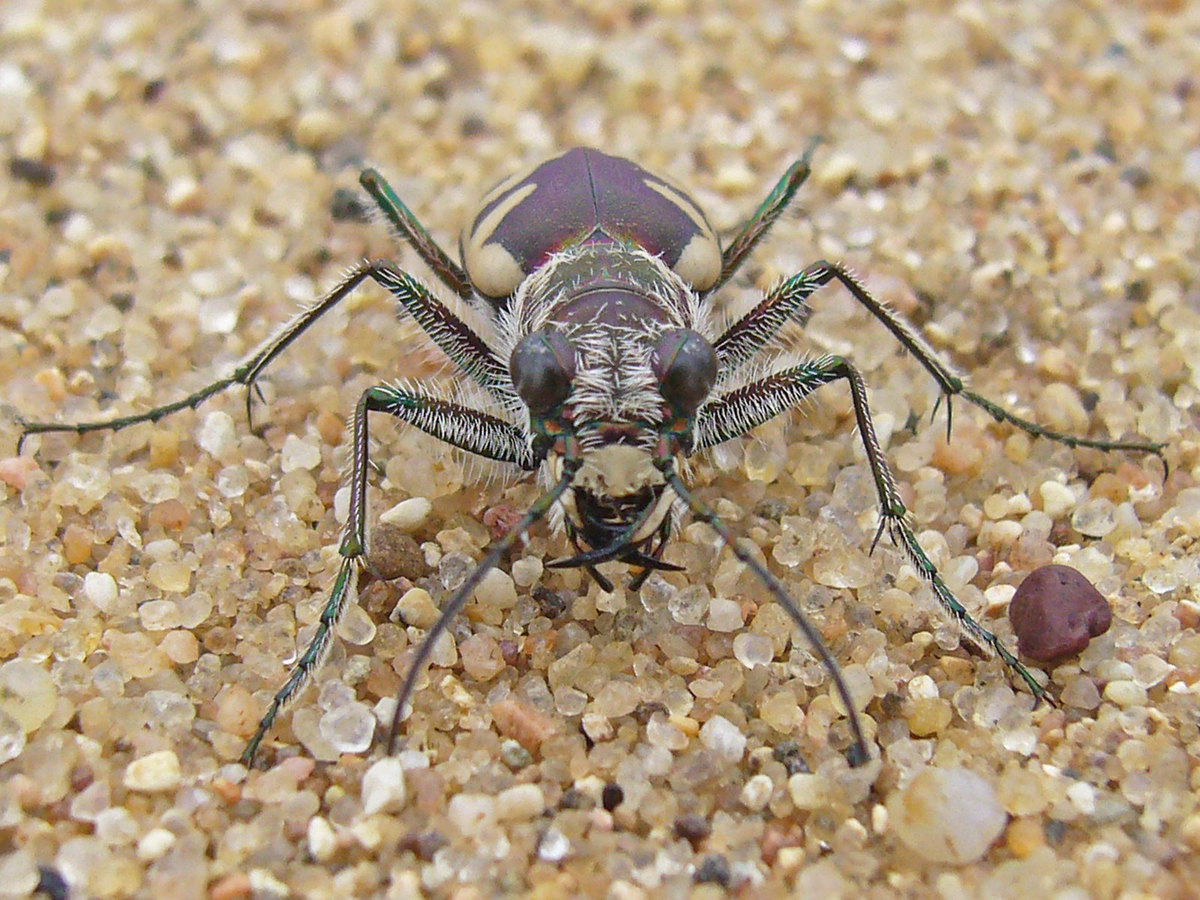
Cicindela formosa generosa

From “All the better to see you with, my dear!” (September 2008).  Picking a top tiger beetle photo was tough with so many to choose from.  Ultimately, I decided I really like these face-on shots, and of the several I’ve posted this one of Cicindela formosa generosa has the overall best composition, balance and symmetry.  I considered this one of Cicindela formosa formosa – with its half-cocked jaws, it probably has better personality.  However, the one above got the final nod because it is a true field shot of an unconfined, unmanipulated individual.

Best jewel beetle

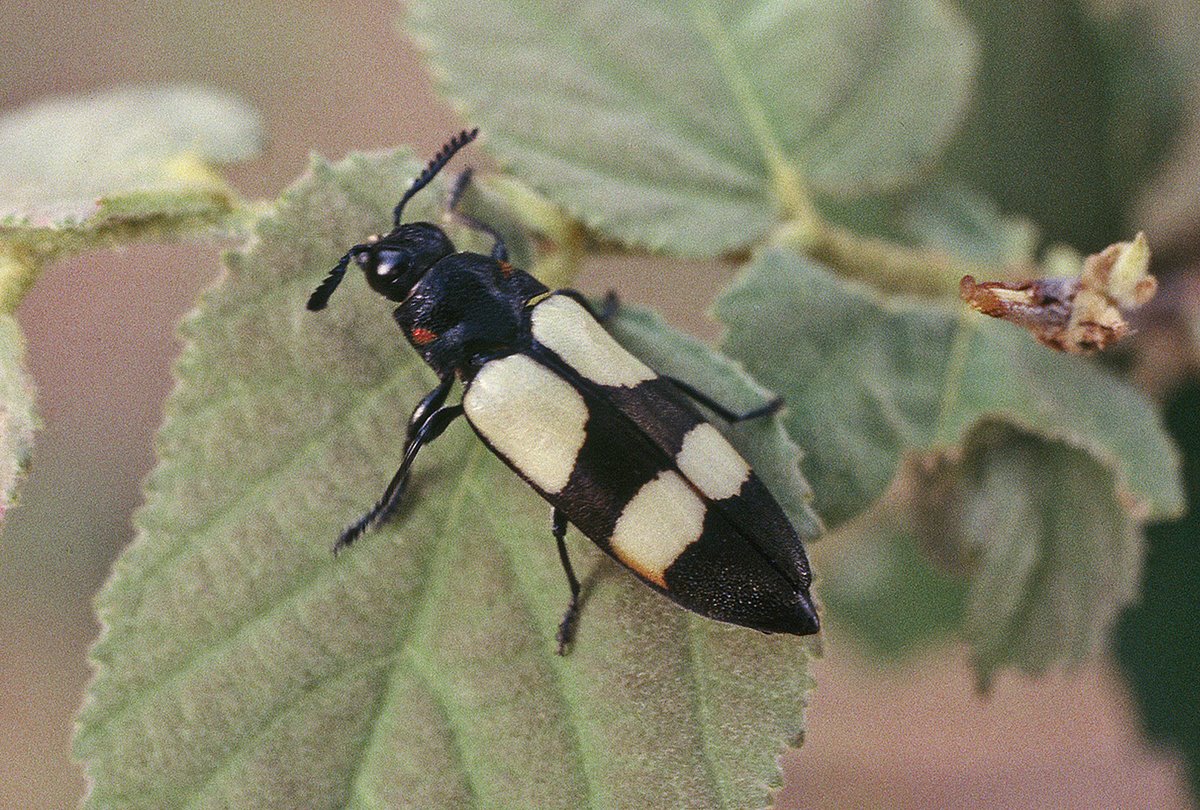
Aegelia petelii

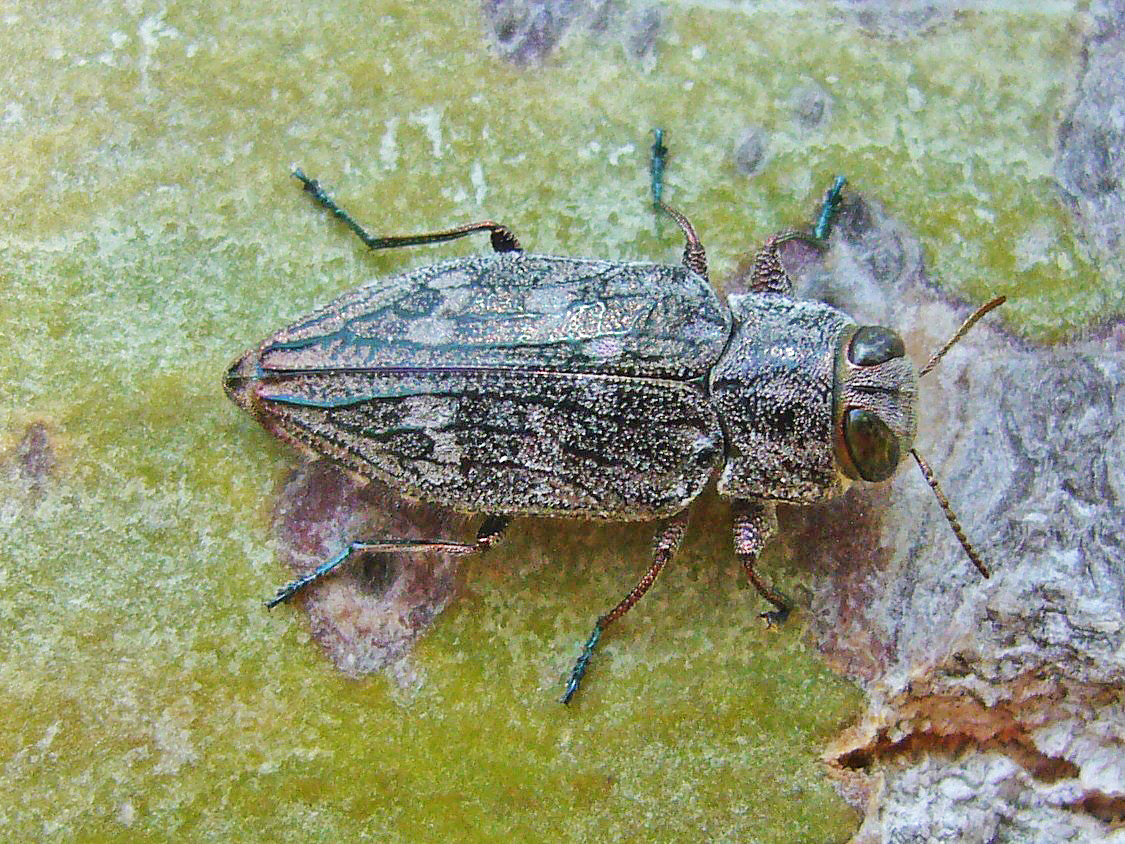
From Buppies in the bush(veld) (December 2008).  Although taken back in 1999, I just recently scanned and posted this photo of Agelia petelii from South Africa.  I like the bold, contrasting colors of the beetle combined with the soft colors of the host foliage.  Runners up included these photos of Evides pubiventris with its sumptuous iridescent green blending beautifully with the green background (but suffering slightly from shallow depth of field) and Chrysobothris femorata with its intricate surface sculpturing.

Best longhorned beetle

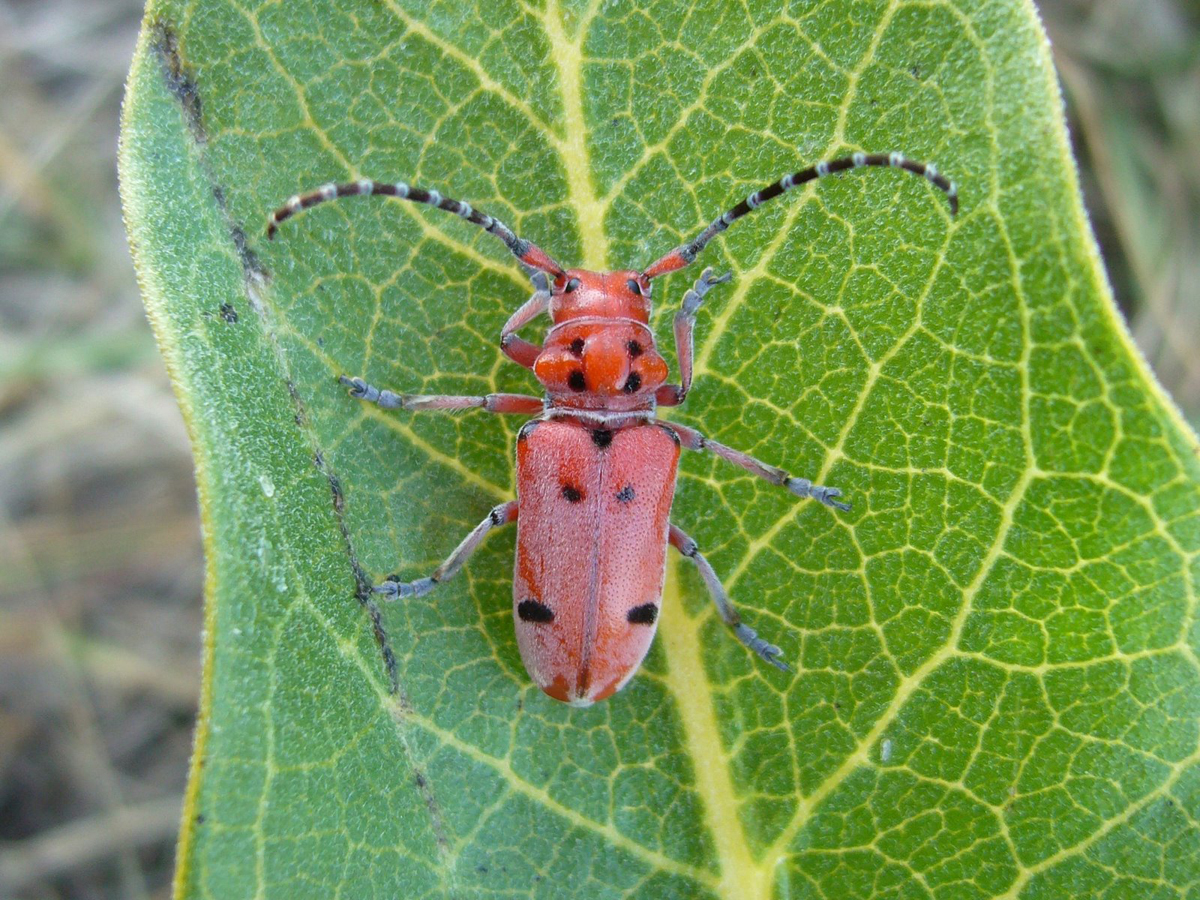
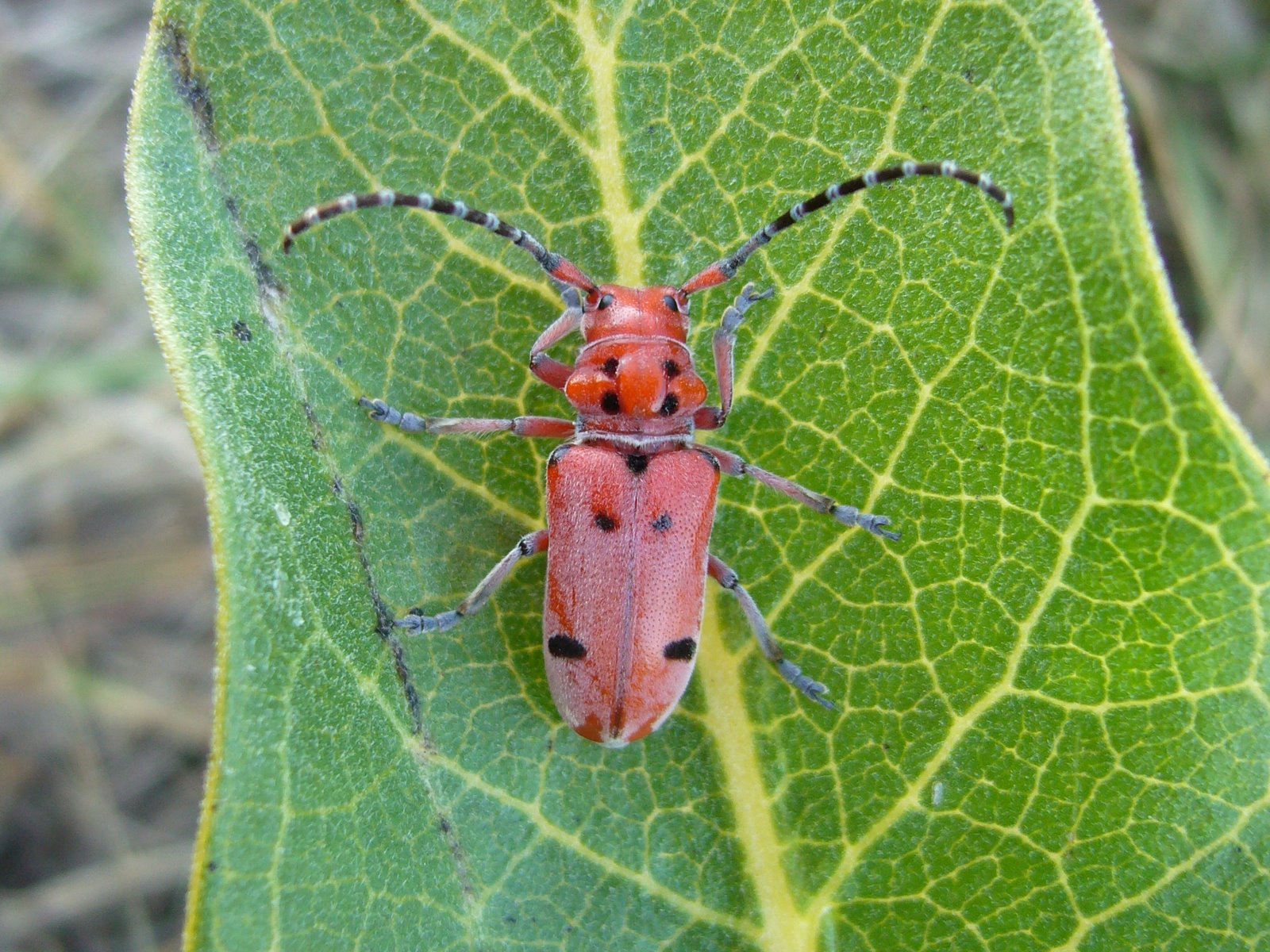
Tetraopes femoratus

From Rattled in the Black Hills (September 2008).  This was an easy choice – none of the other longhorned beetle photos that I posted during 2008 matched this photo of Tetraopes femoratus for clarity, composition, and the striking contrast between the red color of the beetle and the green color of the host plant.  I especially like the detailing of the body pubescence.

Best non-beetle insect

Proctacanthus milbertii

From Magnificently Monstrous Muscomorphs (November 2008).  I do like other insect besides beetles, and robber flies are hard to beat for their charisma.  This photo of Proctacanthus milbertii (which, as Chris Taylor pointed out, literally translates to “Milbert’s spiny butt”), has great composition and nice, complimentary colors.  I like contrast between the fine detail of the fly and the soft background.

Best non-insect arthropod

Argiope aurantia

From Happy Halloween! (October 2008). I didn’t have many non-insect arthropod photos to choose from, but this photo of a female Argiope aurantia (yellow garden spider) would be deserving of recognition no matter how many I had to choose from. I like the bold, contrasting colors and symmetry of the spider in front of the dappled background of this photo.

Best non-arthropod animal

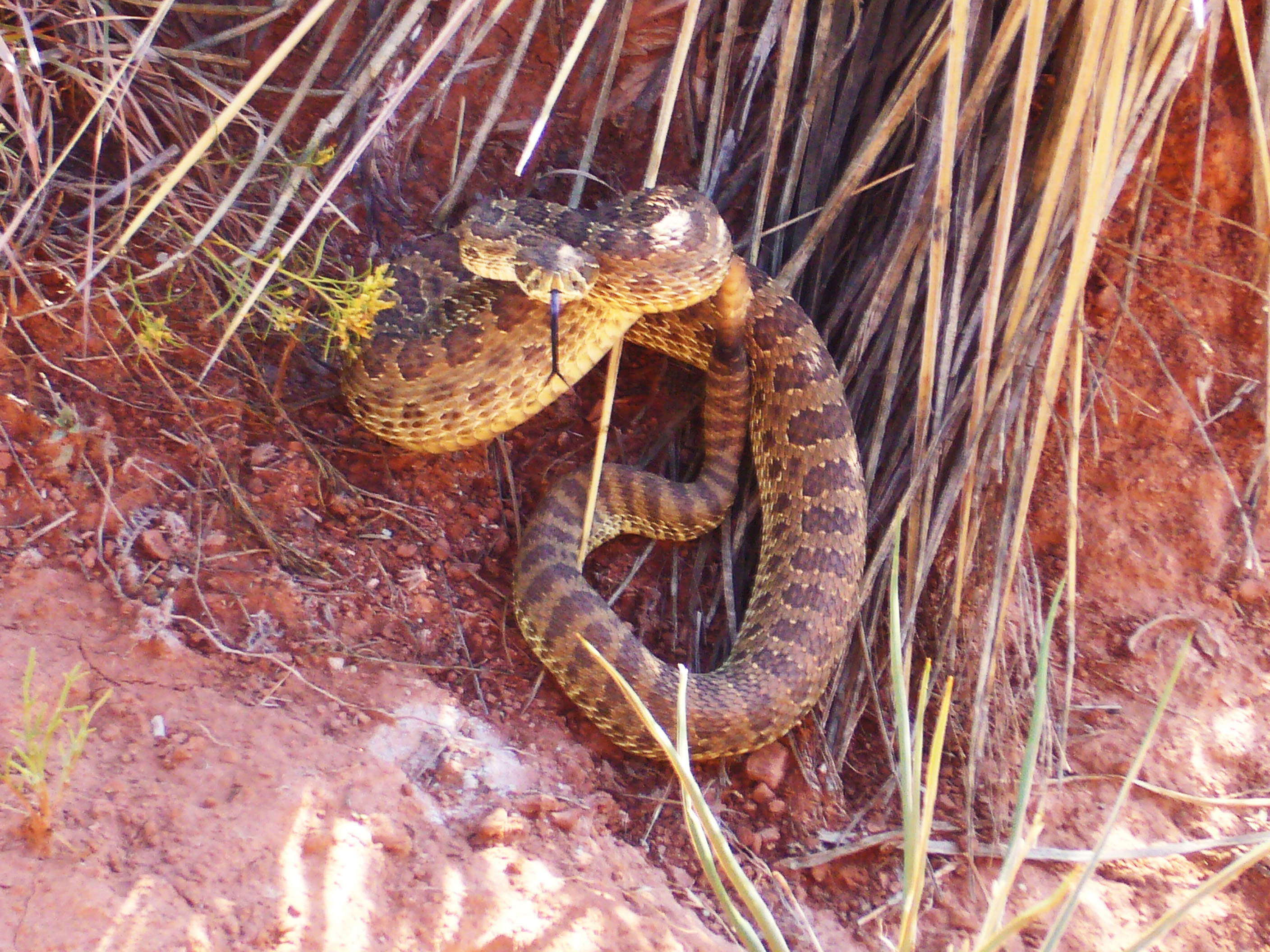
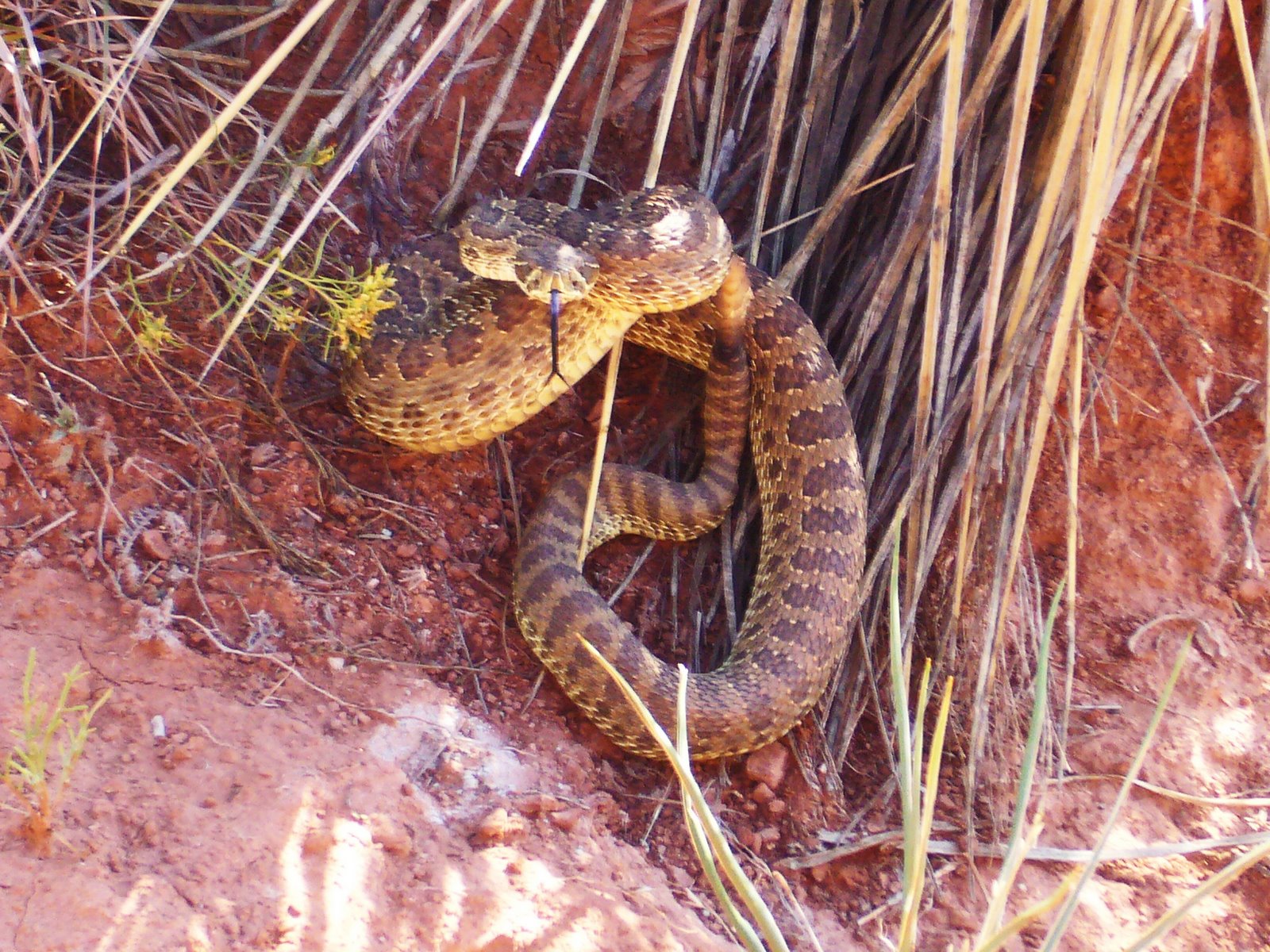
Prairie rattlesnake (Crotolus viridis)

Another one from Rattled in the Black Hills (September 2008).  This is admittedly not the best photo from a purely technical perspective – it’s a little out of focus, and the color is a bit off.  However, no photo could better convey the moment – confronted with a live, angry prairie rattlesnake (Crotalus viridis) (among the more aggressive species in the genus).  The forked tongue and rattle – blurred in motion – were icing on the cake.

Best wildflower

Victoria Glades

From Glades of Jefferson County (July 2008).  I had several wildflower closeups to choose from, but I kept coming back to this field shot of pale purple coneflower (Echincea simulata) and Missouri evening primrose (Oenethera macrocarpa).  The eastern redcedars (Juniperus virginiana) in the background are at once indicative of their preferred habitat (limestone/dolomite glades) and also testament to their threatening encroachment.

Best tree

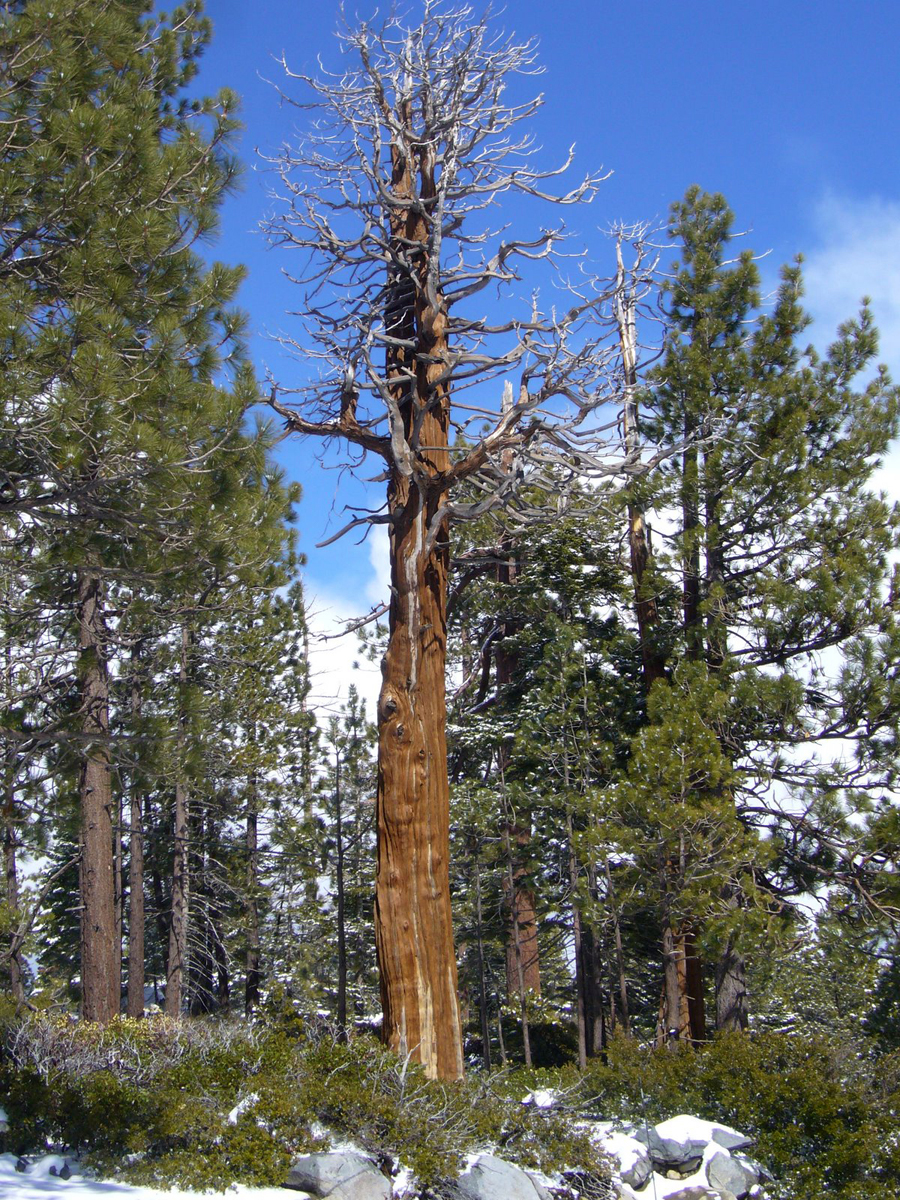
Calocedrus decurrens

From the very simply and aptly named Lake Tahoe, California (March 2008).  Incense cedar (Calocedrus decurrens), with its reddish, deeply furrowed bark and great height, is one of the most majestic of western conifers.  I was captivated by this tree – beautiful even in death and contrasting nicely with the surrounding green foliage.

Best rockscape

Pipestone National Monument, Old Stone Face

From Pipestone National Monument (April 2008).  “Old Stone Face” is one of Pipestone’s most recognizable geologic features, and the short angle of the sun on this early spring day provided nice detail to the cracks and fissures of the rock – almost appropriately adding a weathered “age” to this old man.

Best landscape

Emerald Isle, Lake Tahoe

Another one from Lake Tahoe, California (March 2008).  Few places on earth are more photogenic than Lake Tahoe, and this perspective overlooking Emerald Bay is among the finest views I’ve seen.  Brilliant blue skies and majestic snow covered mountains reflected perfectly from the still surface, with Fannette Island providing a perfect focal point for the photo.

Best miscellaneous

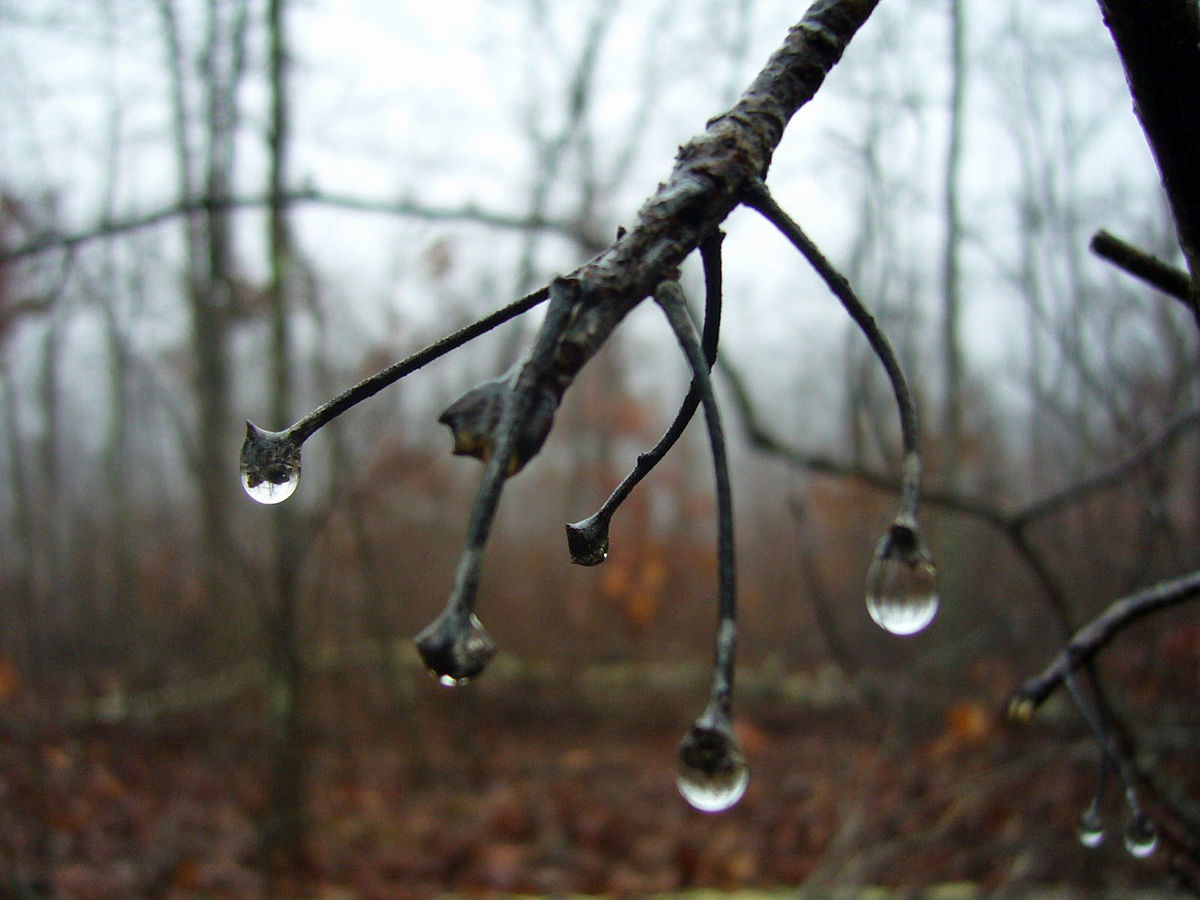
Water drops, Ozark Trail, Trace Creek SectionFrom Ozark Trail, lower Trace Creek Section (December 2007).  While technically not a 2008 photo, it’s close enough.  This was one of the first macro photographs I took with my camera, and it remains one of my favorites.  A chance occurence of an unlikely subject, created by cold temperatures and heavy moisture-laden air. I like the contrast between the water drops – sharp, round, and clear – with the vertical shapes of the leaf petioles and background trees.  Viewing the image full-sized reveals the reflection of the photographer in the leftmost water drop.

Subsequent edit: Okay, so after I put this post together, I realized I actually featured eleven photos – too much difficulty choosing, I guess. Let’s call it a baker’s ten.

The 12 Years of Christmas

p1020457_2

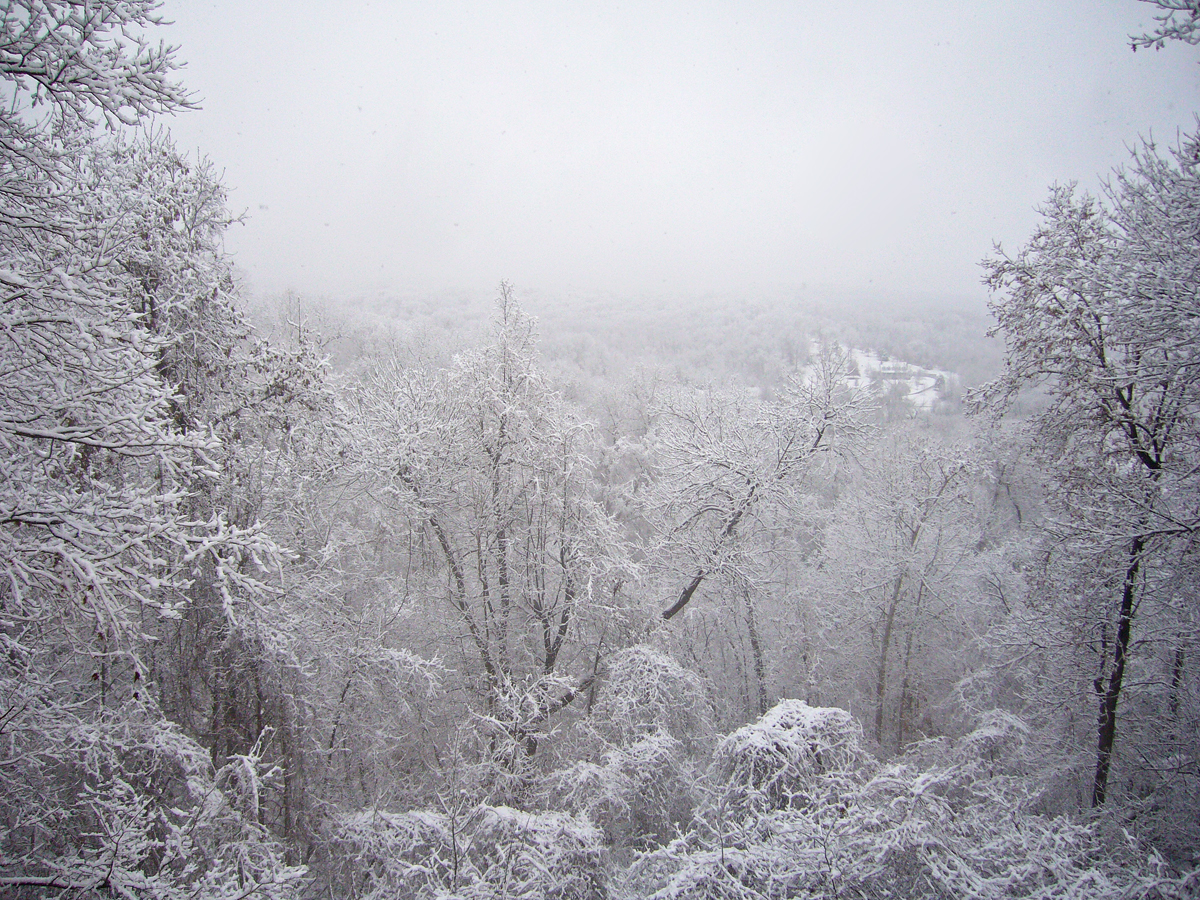
Merry Christmas - from our backyard to yours!

They came from completely different backgrounds.  She had grown up in a middle class family, her father an educated professional, her mother a professional homemaker – “Ward and June”, as their now-grown children jokingly call them.  He grew up on welfare, the family breaking up while he was still in elementary school.  She was a popular student – cheerleader, debate team, gymnastics.  He was the introverted science nerd, invisible to the popular, living quietly with his books.  Religion was an important part of her life, growing up Catholic and remaining devoted to the church.  He grew up Catholic but knew even as a child that religion would not provide the answers he was looking for, eventually finding a private spirituality in the creation itself.

Despite these separate paths they found each other and fell in love, and despite their different lives they both wanted the same thing – a family.  Such a simple desire, however, would prove to be difficult to achieve.  When fertility drugs didn’t work, they turned to adoption.  The first match failed.  So did the second.  They understood completely how the birth mothers could change their minds, but that didn’t ease their pain or calm their fears.  Ultimately, they looked to Russia, a new democracy with old attitudes about orphans.  In the fall of their 6th year of marriage, they learned that little Anastasia was waiting for them.  They traveled to Russia before Christmas and became a family after New Years.  In between, they visited little Anastasia every day – one hour at a time – and experienced the joy of being a parent, a feeling they had feared would ever elude them.  On Christmas Day, they could not see little Anastasia, but in a small, gray apartment on the outskirts of Moscow, they celebrated her coming with their gracious host family.  Ten days later, their family was born, and twelve months later they celebrated their first Christmas together at home.

Christmas meant little to me for much of my life.  Yes, it was a time to relax and enjoy the company of family and friends, and the presents were nice.  But my own approach to spirituality has little in common with traditional reflections of the season.  Tonight, as I watched 12-year old Mollie Anastasia laughing with her cousins, hugging her nanny and papa, and teasing her uncle and his partner, I thought back to those cold, snowy days in Russia when my heart became warm for the first time.  I recalled our second trip to Russia six years later, when she and little Madison Irina each met their sister for the first time.  On this Christmas Day, as I have done for 12 years now, I thought about how lucky we are to have these two beautiful little girls that are unquestionably our own.  Christmas means a lot to me now, and that is a gift that not even five golden rings could beat.

A sand prairie autumn

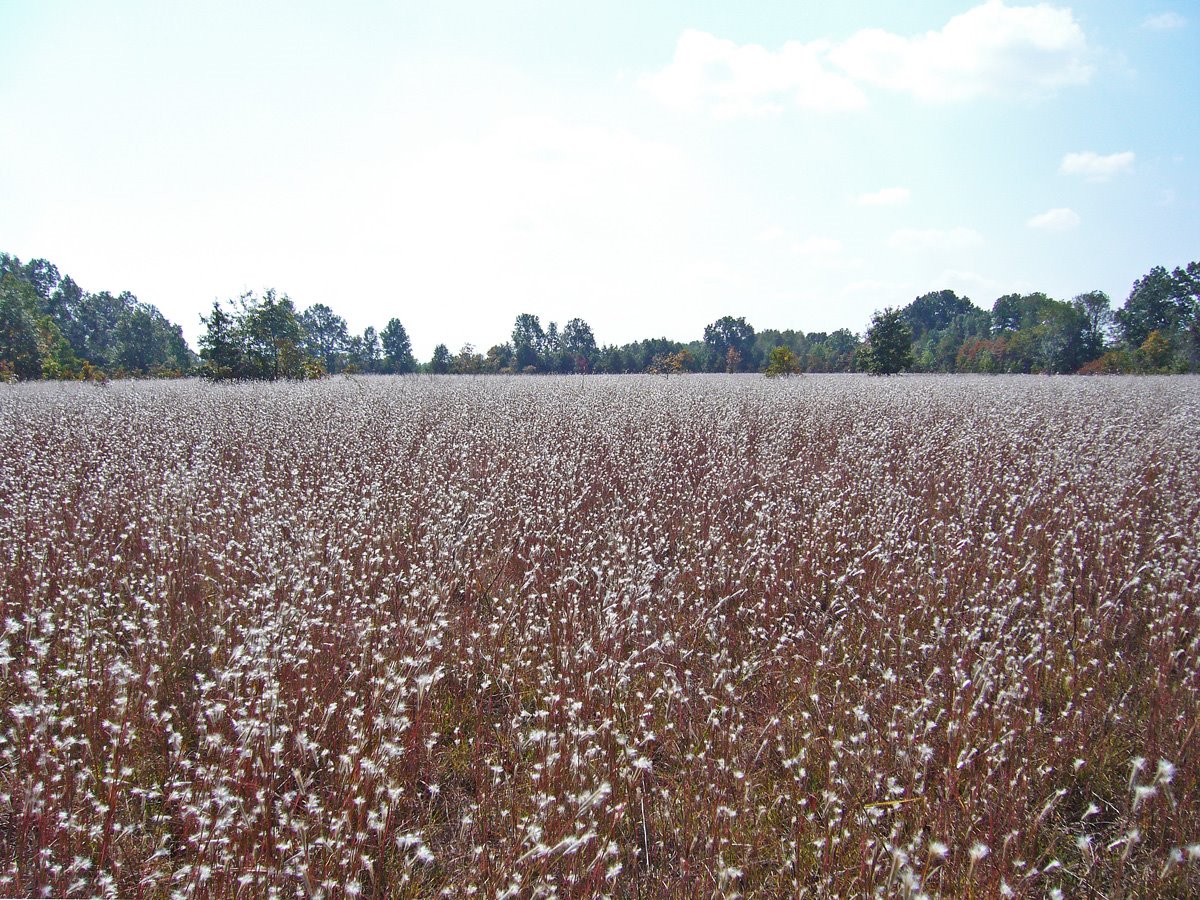
Splitbeard bluestem seed headsAsk any astronomer when autumn begins, and they will likely tell you it begins at the autumnal equinox – when shortening days and lengthening nights become equal as the sun crosses over the celestial equator. According to them, fall began this year on September 22 – at 11:44:18 A.M. EDT, to be precise. I agree that autumn begins at a precise moment, but it is not at the equinox. Rather, it is that unpredictable moment when a sudden crispness in the air is felt, when the sky somehow seems bluer and shadows seem sharper, and hints of yellow – ever so subtle – start to appear in the landscape. Butterfly pea blossomIn Missouri, with its middle latitudes, this usually happens a few weeks before the equinox, as August is waning into September. It is a moment that goes unnoticed by many, especially those whose lives and livelihoods have lost all connection with the natural world. To plants and animals, however, it is a clear signal – a signal to begin making preparations for the long cold months of winter that lie ahead. Plants that have not yet flowered begin to do so in earnest, while those that have shift energy reserves into developing seeds. Animals take advantage of their final opportunities to feed before enduring the scarcities of winter, digging in to sleep through them, or abandoning altogether and migrating to warmer climes. Insects begin hastily provisioning nests for their broods or laying eggs – tiny capsules of life that survive the harsh winter before hatching in spring and beginning the cycle anew.
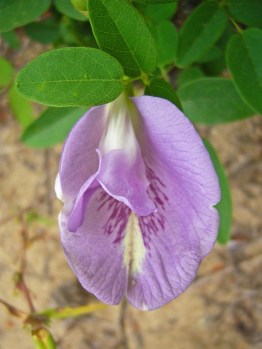
Sand prairie in early September.Sand prairie in early October.  Note abundance of splitbeard bluestem seed heads.Across much of Missouri, in the Ozark Highlands and in riparian ribbons dissecting the northern Plains, autumn brings an increasingly intense display of reds, purples, oranges, and yellows, as the leaves of deciduous hardwoods begin breaking down their chlorophyll to unmask underlying anthocyanins and other pigments. Small southern jointweedIn Missouri’s remnant prairies, seas of verdant green morph to muted shades of amber, tawny, and beige. This subtle transformation is even more spectacular in the critically imperiled sand prairies of the Southeast Lowlands, where stands of splitbeard bluestem (Andropogon ternaries – above) turn a rich russet color while fluffy, white seed heads (1st paragraph, 1st photo) appear along the length of each stem, evoking images of shooting fireworks. Small southern jointweed (Polygonella americana – right) finds a home at the northern extent of its distribution in these prairie remnants and in similar habitats in nearby Crowley’s Ridge, blooming in profusion once the cooler nights arrive. Butterfly pea (Clitoria mariana – 1st paragraph, 2nd photo) blooms add a gorgeous splash of soft purple in contrast to the muted colors of the plants around them.
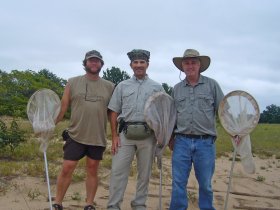
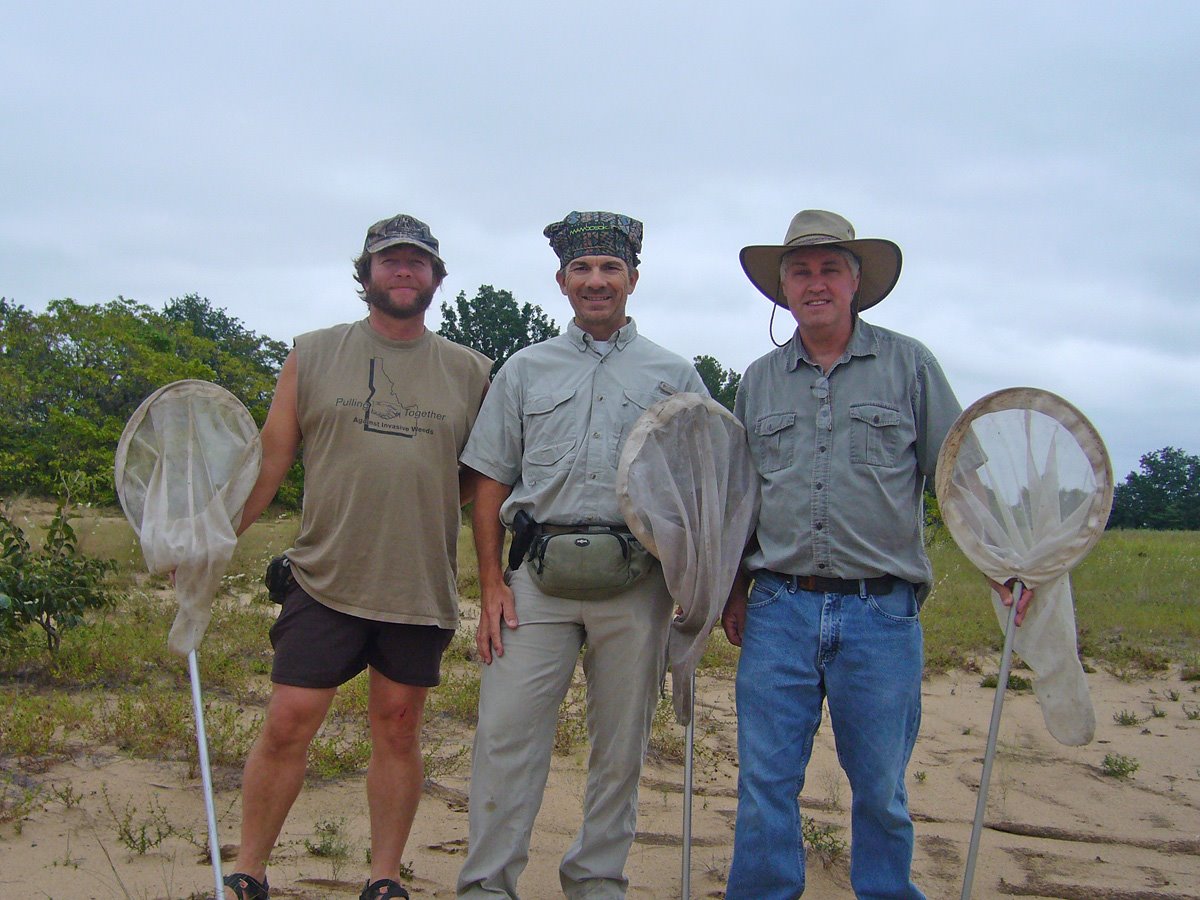
Kent Fothergill, Ted MacRae, and Rich ThomaAfter first becoming acquainted with Missouri’s sand prairies this past summer, I knew a fall trip (or two) would be in order. The extensive deep, dry sand barrens were ideal habitat for sand-loving insects, including certain spring/fall species of tiger beetles that would not be active during the summer months. The cooler nights and crisp air of early fall make insect collecting extraordinarily pleasurable, so it took little effort to convince friends and colleagues Kent and Rich to join me on another excursion to these extraordinary remnant habitats, along with my (then 8 yr-old) daughter Madison (who would likely characterize this as “tallgrass” prairie). Madison MacRae, age 9 (almost)I was, as ever, on the lookout for tiger beetles; however, temperatures were cool, skies were overcast, and the fall season was just beginning, greatly limiting tiger beetle activity during this first fall visit. We did see one Cicindela formosa (big sand tiger beetle), which cooperated fully for a nice series of photographs. We also found single specimens of the annoyingly ubiquitous C. punctulata (punctured tiger beetle) and a curiously out-of-place C. duodecimguttata (12-spotted tiger beetle), which must have flown some distance from the nearest dark, muddy streambank that it surely prefers. Of greatest interest, we found two specimens of C. scutellaris (festive tiger beetle), which in this part of Missouri is represented by a population presenting a curious mix of influences from two different subspecies (more on this in a later post…). Despite the scarcity of tiger beetles, other insects were present in great diversity, some of which I share with you here.

Ululodes macleayanusThis bizarre creature, sitting on the stem of plains snakecotton (Froelichia floridana), is actually a neuropteran insect called an owlfly (family Ascalaphidae). Looking like a cross between a dragonfly and a butterfly due to its overly large eyes and many-veined wings but with long, clubbed antennae, this individual is demonstrating the cryptic resting posture they often assume with the abdomen projecting from the perch and resembling a twig. The divided eyes identify this individual as belonging to the genus Ululodes, and Dr. John D. Oswald (Texas A&M University) has kindly identified the species as U. macleayanus. As is true of many groups of insects, their taxonomy is far from completely understood. Larvae of these basal holometabolans are predaceous, lying on the ground with their large trap-jaws held wide open and often camouflaging themselves with sand and debris while waiting for prey. The slightest contact with the jaws springs them shut, and within a few minutes the prey is paralyzed and can be sucked dry at the larva’s leisure.

Ant lion, possibly in the genus Myrmeleon.Another family of neuropteran insects closely related to owlflies are antlions (family Myrmeleontidae, sometimes misspelled “Myrmeleonidae”). This individual (resting lower down on the very same F. floridana stem) may be in the genus Myrmeleon, but my wanting expertise doesn’t allow a more conclusive identification [edit 4/12/09 – John D. Oswald has identified the species as Myrmeleon immaculatus]. Strictly speaking, the term “antlion” applies to the larval form of the members of this family, all of whom create pits in sandy soils to trap ants and other small insects, thus, it’s occurrence in the sand prairie is not surprising. Larvae lie in wait beneath the sand at the bottom of the pit, flipping sand on the hapless prey to prevent it from escaping until they can impale it with their large, sickle-shaped jaws, inject digestive enzymes that ‘pre-digest’ the prey’s tissues, and suck out the liquifying contents. Finding larvae is not easy – even when pits are located and dug up, the larvae lie motionless and are often covered with a layer of sand that makes them almost impossible to detect. I’ve tried digging up pits several times and have failed as yet to find one. Larvae are also sometimes referred to as “doodlebugs” in reference to the winding, spiralling trails that the larvae leave in the sand while searching for a good trap location – these trails look like someone has doodled in the sand.

Bembix americanaThis digger wasp, Bembix americana (ID confirmed by Matthias Buck), was common on the barren sand exposures, where they dig burrows into the loose sand. Formerly included in the family Sphecidae (containing the better-known “cicada killer”), members of this group are now placed in their own family (Crabronidae). Adult females provision their nest with flies, which they catch and sting to paralyze before dragging it down into the burrow. As is common with the social hymenoptera such as bees and paper wasps, these solitary wasps engage in active parental care by providing greater number of prey as the larva grows. As many as twenty flies might be needed for a single larva. I found the burrows of these wasps at first difficult to distinguish from those created by adults of the tiger beetles I so desired, but eventually learned to distinguish them by their rounder shape and coarser, “pile” rather than “fanned” diggings (see this post for more on this subject).

Stichopogon trifasciatusRobber flies (family Asilidae) are a favorite group of mine (or, at least, as favorite as a non-coleopteran group can be). This small species, Stichopogon trifasciatus (ID confirmed by Herschel Raney), was also common on the barren sandy surface. The specific epithet refers to the three bands of alternating light and dark bands on the abdomen. Many species in this family are broadly distributed but have fairly restrictive ecological requirements, resulting in rather localized occurrences within their distribution. Stichopogon trifasciatus occurs throughout North America and south into the Neotropics wherever barren, sandy or gravely areas near water can be found. Adults are deadly predators, swooping down on spiders, flies and other small insects and “stabbing” them with their stout beak.

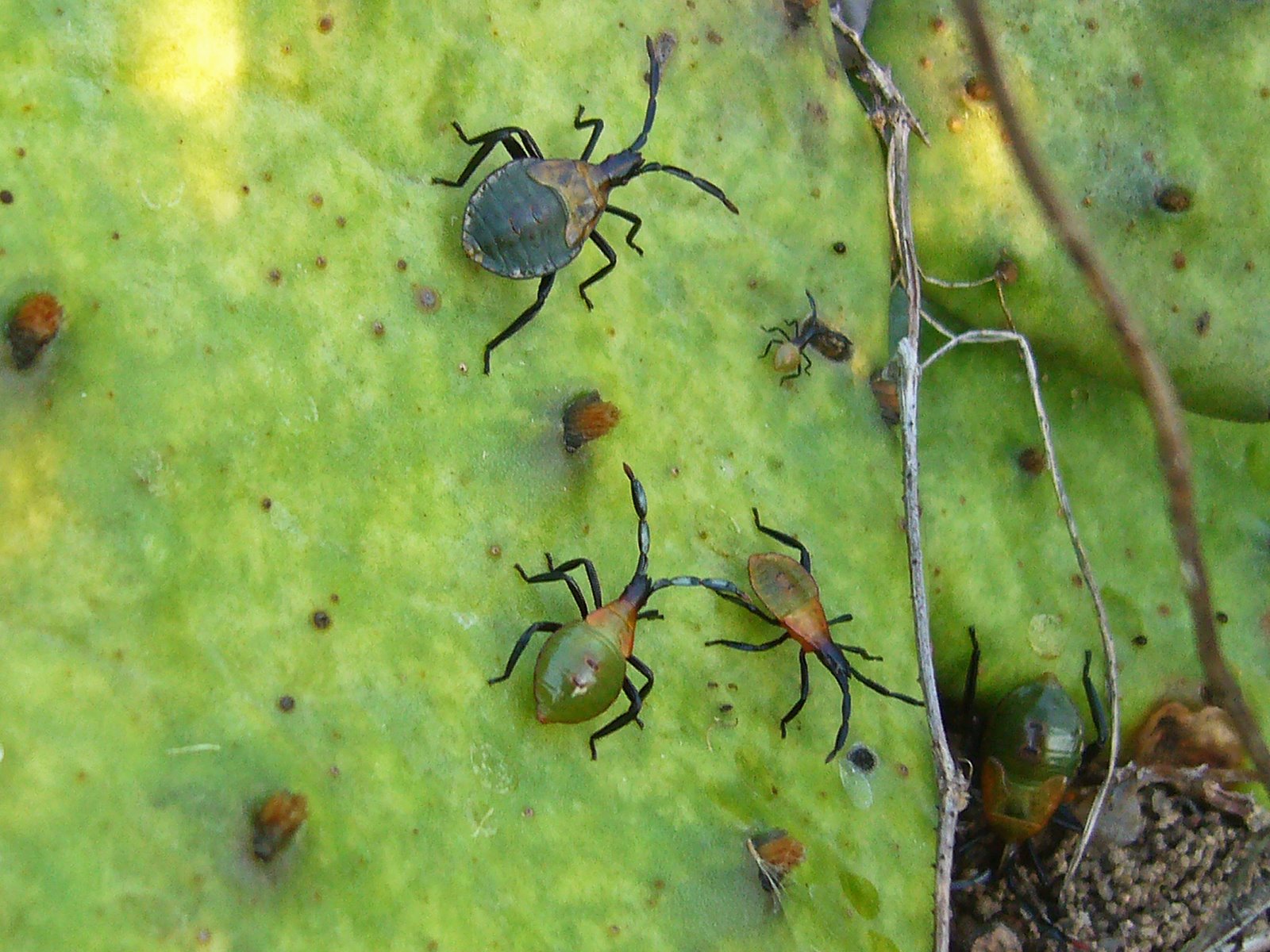
Chelinidea vittigerPrickly pear cactus (Opuntia humifusa) grows abundantly in the sandy soil amongst the clumps of bluestem, and on the pads were these nymphs of Chelinidea vittiger (cactus bug, family Coreidae). This wide-ranging species occurs across the U.S. and southward to northern Mexico wherever prickly pear hosts can be found. This species can either be considered a beneficial or a pest, depending upon perspective. On the one hand, it serves as a minor component in a pest complex that prevents prickly pear from aggressively overtaking rangelands in North America; however, prickly pear is used by ranchers as emergency forage, and fruits and spineless pads are also sometimes harvested for produce. In Missouri, O. humifusa is a non-aggressive component of glades, prairies, and sand and gravel washes, making C. vittiger an interesting member of the states natural diversity.
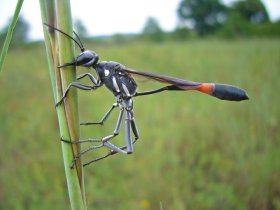
Ammophila sp., possibly A. proceraThis wasp in the genus Ammophila (perhaps A. procera as suggested by Herschel Raney) was found clinging by its jaws to a bluestem stem in the cool morning, where it presumably spent the night. One of the true sphecid (or “thread-waist”) wasps, A. procera is a widespread and common species in eastern North America. One of the largest members of the genus, its distinctive, bold silver dashes on the thorax distinguish it from most other sympatric congeners. Similar to the habits of most other aculeate wasp groups, this species captures and paralyzes sawfly or lepidopteran caterpillars to serve as food for its developing brood. Females dig burrows and lay eggs on the paralyzed hosts with which the nests have been provisioned. Adults are also found commonly on flowers, presumably to feed on nectar and/or pollen.

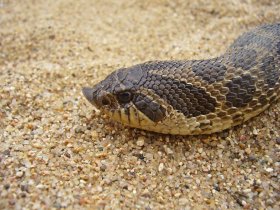
Dusty hog-nosed snakeRich is a bit of herpatologist, so when he brought this hog-nosed snake to our attention we all had a good time pestering it to try to get it to turn upside down and play dead. I had never seen a hog-nosed snake before but knew of its habit of rolling over and opening its mouth with its tongue hanging out when disturbed, even flopping right back over when turned rightside up or staying limp when picked up. We succeeded in getting it to emit its foul musky smell, but much to our disappointment it never did play dead, instead using its shovel-shaped snout to dig into the sand. Dusty hog-nosed snake - head closeupWe had assumed this was the common and widespread eastern hog-nosed snake (Heterodon platirhinos); however, in our attempts to turn it over I noticed its black and orange checker patterned belly. I later learned this to be characteristic of the dusky hog-nosed snake (H. nasicus gloydi), only recently discovered in the sand prairies of southeast Missouri and regarded as critically imperiled in the state due to the near complete destruction of such habitats. Disjunct from the main population further west, its continued survival in Missouri depends upon the survival of these small sand prairie remnants in the Southeast Lowlands.
Tigers in the Nebraska Badlands

In going back through the photos I accumulated during my recent “fall tiger beetle trip” and reading the periodic updates that I provided along the way, I fear that I gave unfairly short shrift to one of the most scenic areas that I visited. Part of this was due to my preoccupation with and excitement at having found Cicindela nebraskana (prairie longlipped tiger beetle), whose distribution just barely sneaks into the extreme northwestern corner of Nebraska. The beetle makes its home in the mixed-shortgrass prairies lying above the Pine Ridge, a north-facing escarpment where exposures of deep sandy clay sediments intercalated with volcanic ash have been carved into dramatic buttes, ridges and canyons. Cloaked in ponderosa pine (Pinus ponderosa), with riparian ribbons of green ash (Fraxinus pennsylvanica) and cottonwood (Populus deltoides) – during my visit showing the earliest hints of their vivid autumnal yellow dress, the Pine Ridge is not only one of Nebraska’s most dramatic landforms but also bears significant historical importance. It is here where the the final chapter of the Sioux and Cheyenne resistance to white settlement of the northern Plains took place, with the 1877 murder/assassination of Crazy Horse at nearby Fort Robinson, after he had surrendered to U.S. troops, all but sealing their fate.

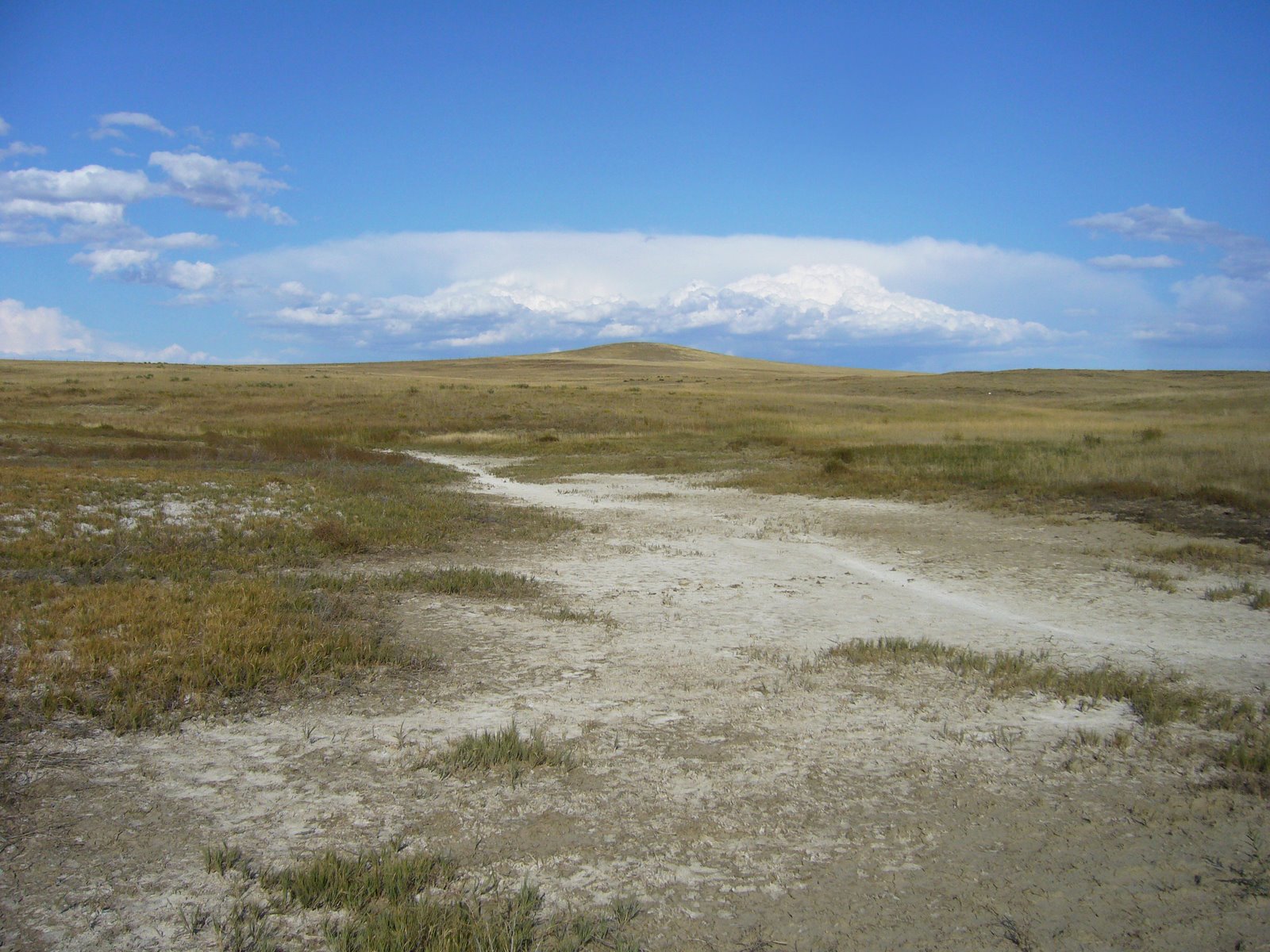
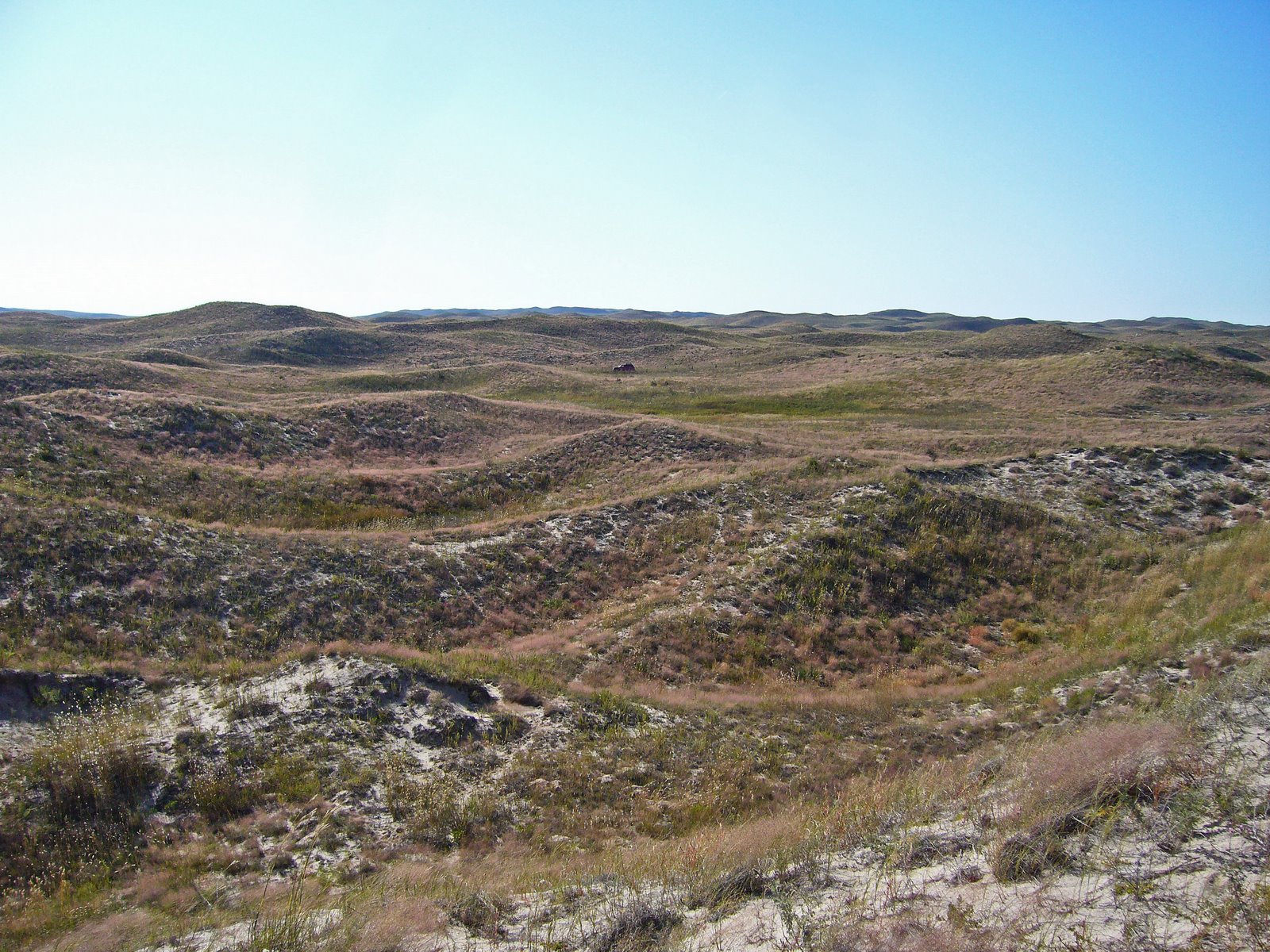
In dramatic contrast to the forested escarpment and gentle prairie that lies atop it, a stark, otherworldly landscape spreads out below the nearly 1,500-foot drop down the escarpment from the High Plains above. I refer, of course, to the Nebraska Badlands, a southern sliver of the same landscape whose heart – Badlands National Park – draws almost a million visitors a year. For the past several hundred thousand years, water and wind have carved the deep Oligocene sediments into an eerie maze of ravines, pinnacles, gullies, and sharp-crested hills. Desolate and arid, it would seem that nothing could live in this hot, naked landscape that early French-Canadian fur trappers called les mauvaises terres à traverser – “the bad lands to cross.” In fact, life abounds in the Badlands – pronghorns, deer, jackrabbits, and of course – tigers!

Our search for Cicindela nebraskana in the high prairie, though already successful, was brought most inconveniently to an end when a line of showers moved over us. It was probably a good thing, as we were forced to move on and give ourselves a chance to see different things. I could have easily ended up frittering away the remainder of the afternoon endlessly scanning the narrow cow paths that crisscrossed the prairie in hopes of finding “just one more” of the little beetles that just a few hours earlier had been only a hope. Matt asked me if I wanted to see C. lengi or C. fulgida first. I looked at the sky – cloudy over the prairie and sunny to the north over the Badlands – and voted for the latter. I had been marveling at the Pine Ridge on every approach during the day, and dropping down the face of the escarpment through Monroe Canyon provided yet another spectacular vantage. As soon as we arrived on the plain below, the road turned to gravel and the landscape morphed into a patchwork of sparse, dry grass amongst barren exposures of multicolored earth. I looked out at the barren exposures – seemingly ideal habitat for tiger beetles – and asked Matt what species were out there. He shook his head and said, “Nothing lives there.”

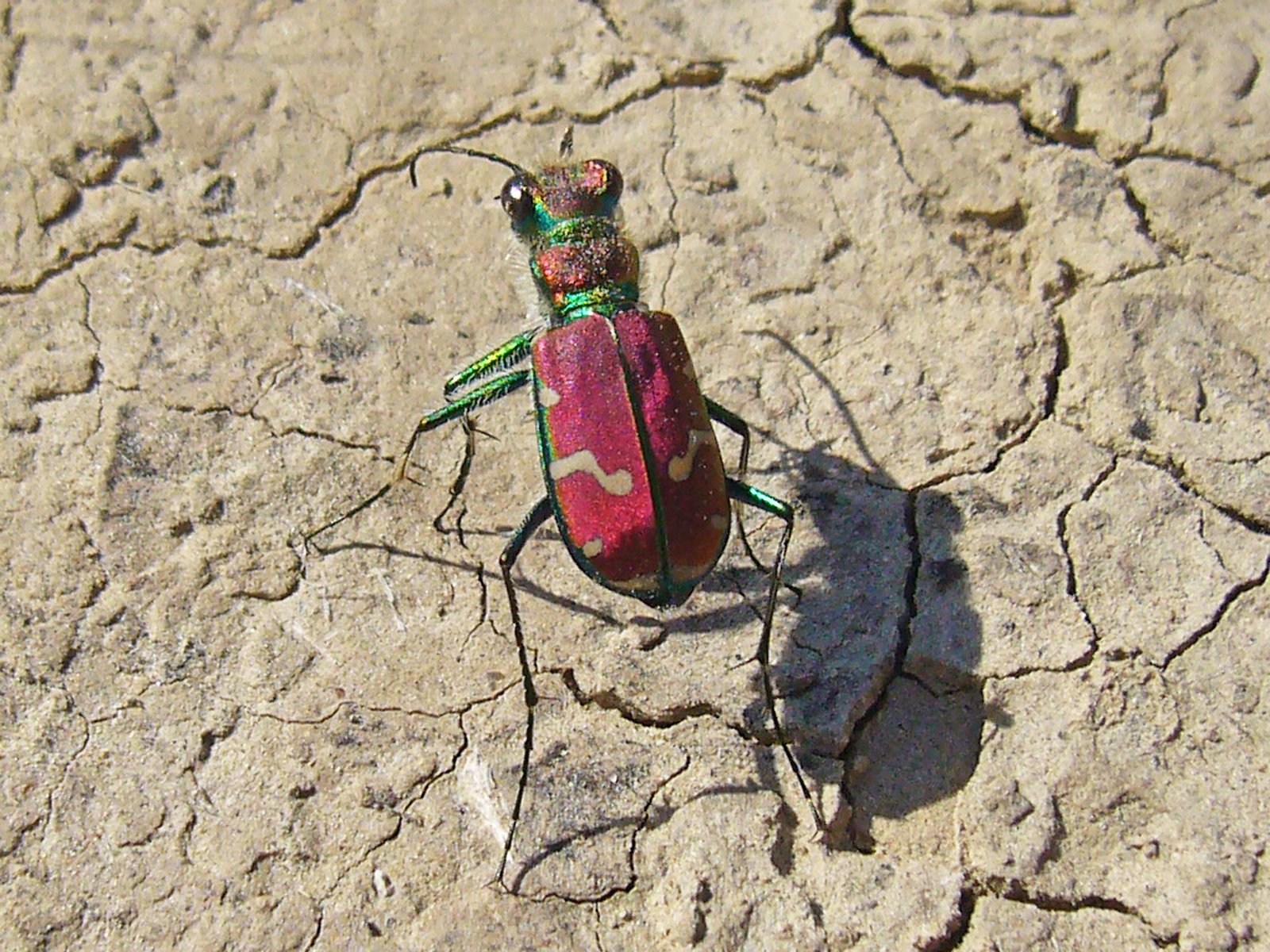
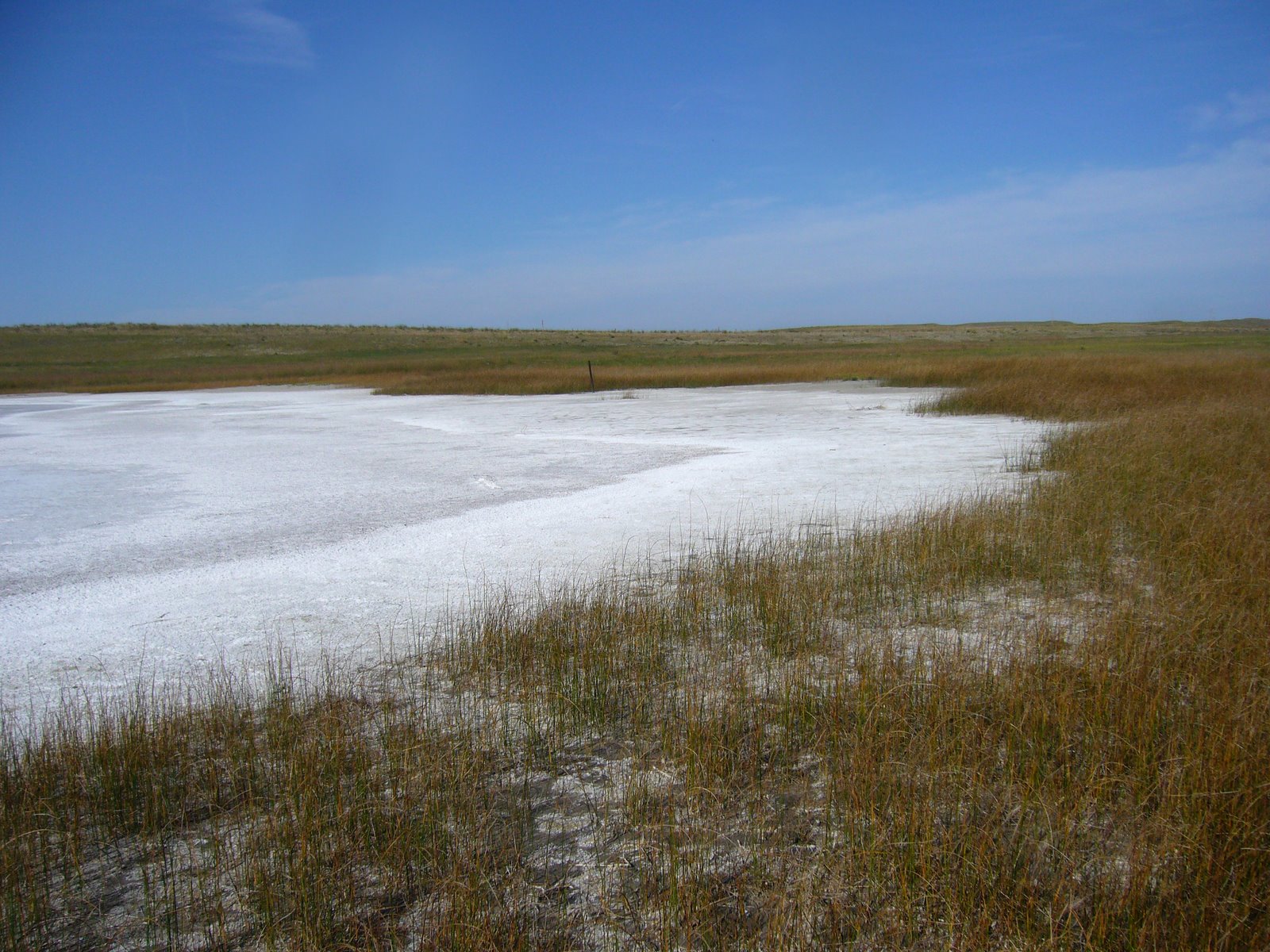
Our destination was a dry, alkaline creek several miles north in the Oglala National Grassland (administered, somewhat ironically, by the U.S. Forest Service). Matt had seen Cicindela fulgida (crimson saltflat tiger beetle) darting over the salt-encrusted ground amongst bunches of saltgrass on a previous visit, and after some back and forth searching we finally located what we hoped was the correct spot. Only small strips of alkaline soil were seen at first, but as we moved further away from the road the alkaline patches became much more expansive. Although dry, the habitat looked perfect for C. fulgida, and it didn’t take long for Matt to flush one from the bunches of saltgrass. Unfortunately, that would be the last individual we would see for the day. Another hour of searching yielded no more, and eventually the showers that chased us from the mixed-shortgrass prairie above would put an end to our fulgida-search, also. I would have to be content with having had seen one as I admired the fantastical displays of rainbows and virga brought over us by the unsettled skies.

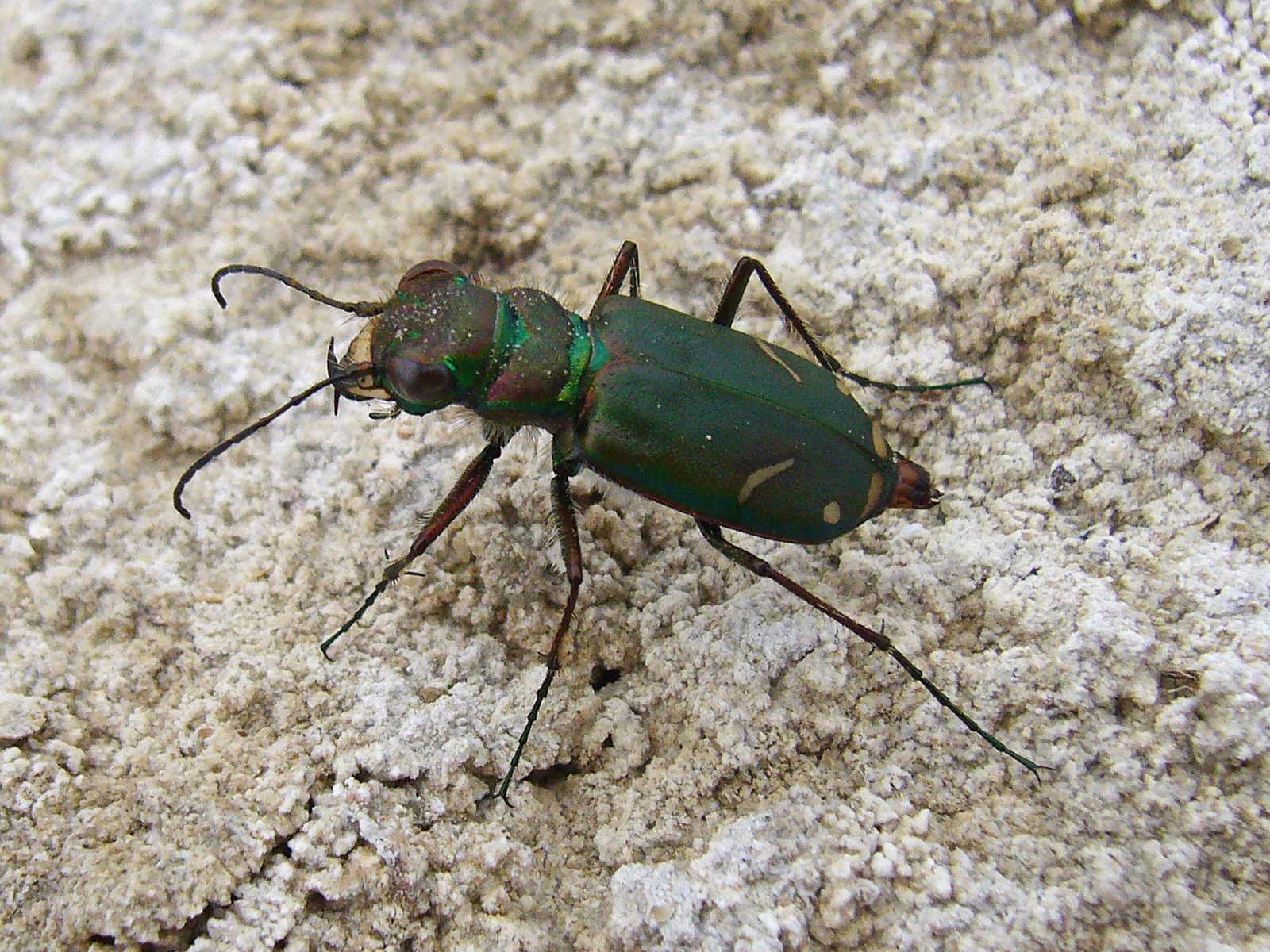
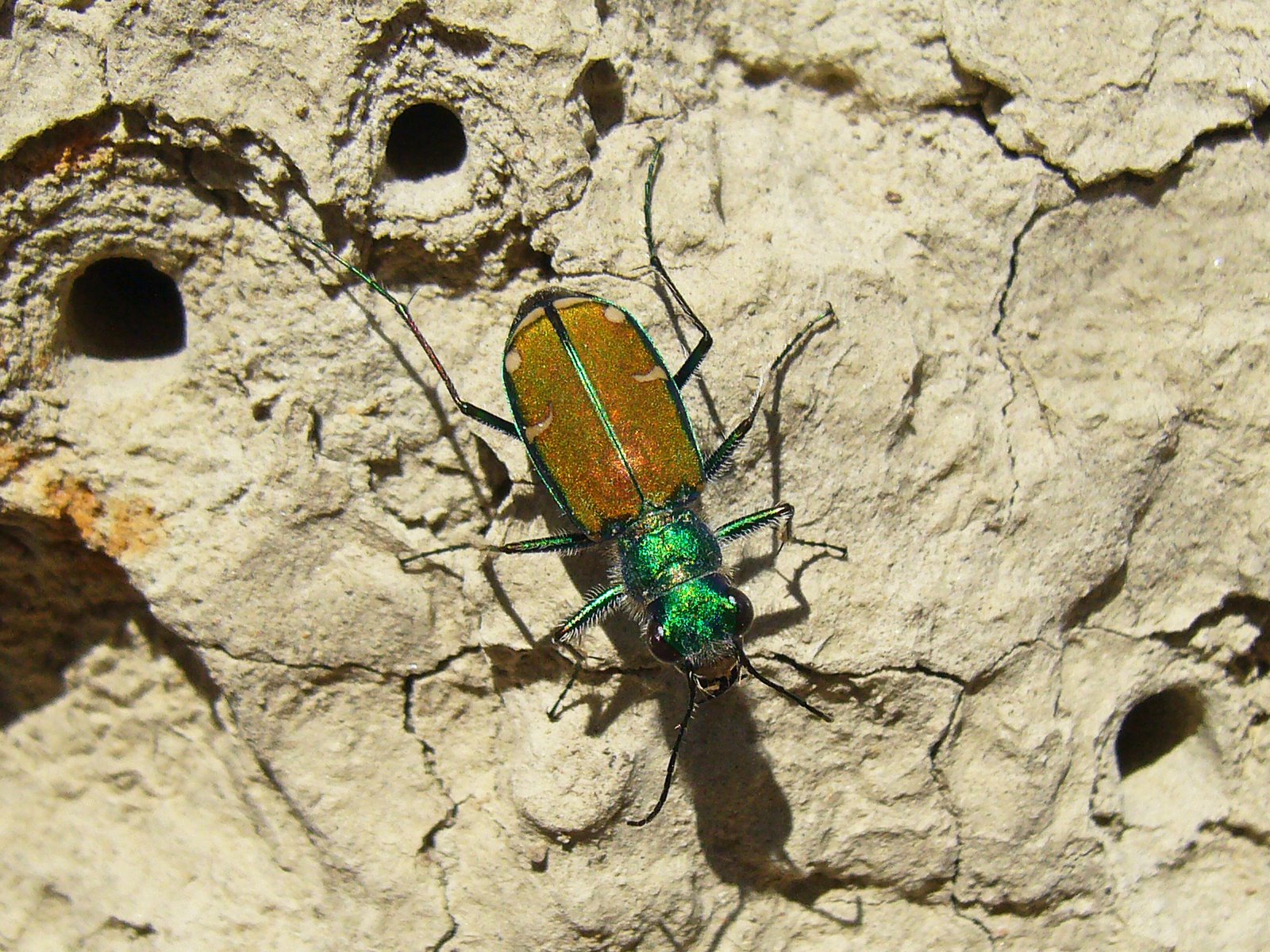
Cicindela fulgida was not, however, the only tiger beetle species we found living in this harsh environment. Cicindela purpurea (cow path tiger beetle) is not nearly so choosy as its common name implies, occurring in virtually any open, clay habitat without regard to its alkalinity. Western Nebraska populations are assignable to subspecies audubonii, which occurs broadly across all but the most southerly Great Plains and Rocky Mountains, although I am loathe to accept the validity of this subspecies due to the existence of a broad zone of intergradation in the eastern half of the prairie states with eastern nominotypical populations. Regardless of its taxonomy, C. purpurea is quite abundant in western Nebraska and appears in two distinct color forms – green and black, the latter of which I was quite excited to see. It took quite some effort to finally obtain the acceptable photos that I show here – especially with the black individuals since they were not so commonly encountered. It was hard to get close, and when I managed to get close they would more often than not run just as I was about to snap the shutter. As evidence of the frustration I experienced trying to get a photo of the black form, I include here an example of an early attempt that, for some reason, I spared from a quick punch of the ‘Delete’ key (click on it to experience the full extent of my frustration). I also lucked into spotting this female that had captured a blister beetle (family Meloidae), apparently unphased by the toxic cantharidins (and active ingredient in ‘Spanish fly’) present in the hemolymph of its prey. Lucky is the fellow who encounters this female once she finishes her meal!

Almost as abundant as C. purpurea was C. tranquebarica (oblique lined tiger beetle). This is another species that is not too fastidious about its habitat – sand, clay, alkaline or not, as long as there is some amount of water nearby this species will be satisfied. Like C. purpurea (and many species of tiger beetles, in fact), western populations in the Great Plains and Rocky Mountains are considered subspecifically distinct from eastern populations, but with that annoyingly broad intergrade zone running down through the eastern half of the prairie states. In the case of this species, western populations are called subspecies kirbyi, differing in a most insignificant manner by their widened elytral maculations. I’ll let the reader infer how I feel about the validity of such subspecific distinction. Larval burrows of this species are often found in very high densities, and considering its abundance at this site I suspect these might be the larval burrows of that species. I spent quite a bit of time trying to fish out larvae from these burrows but ended up with only one. There are, however, other species of tiger beetles that live in these alkaline habitats, including the highly desirable Cicindela terricola (variable tiger beetle) which just sneaks into western Nebraska, so I’m not making a call on its identity yet. It’s now enjoying its new burrow in a container of alkaline soil sitting on my lab bench, and just yesterday it ate a nice, fat fall armyworm larva for lunch.

Lucky 13

The last day in the field on an extended collecting trip is always bittersweet for me. Throughout the trip I keep a frenetic pace trying to see as much as possible – the more localities you visit, the greater your likelihood of success. But it’s exhausting – during the day if I’m not exploring an area I’m driving to another one, and in the evening I’m either cleaning up, restocking on supplies, entering the day’s data into the computer, or jotting down thoughts about what I’ve seen. I really love these trips, but eventually exhaustion catches up and my brain starts feeling overloaded by all that I’ve learned. If collecting hasn’t been good, I just want to be home. If collecting has been good, however, I almost have to tear myself away from the field. Either way, I have that long, monotonous drive staring me in the face. Yesterday, my last day of collecting on this trip, was supposed to be nothing more than a quick look at a few localities in or near the eastern edge of the Nebraska Sand Hills before undertaking that 10-hour drive. I had already succeeded in finding Cicindela limbata (sandy tiger beetle) in the western Sand Hills, but I wanted to locate one of these eastern Sand Hills populations because of the distinct reddish elytral coloration exhibited by individuals at this, their easternmost distributional limit (as opposed to the normal green in more western populations). I had also not yet seen C. denverensis (green claybank tiger beetle), a western relative of C. limbalis (common claybank tiger beetle) and C. splendida (splendid tiger beetle) that differs by its green rather than brick-red elytra. Despite driving long and getting to bed late the previous night, I got up early and headed for the sand dune locality, hoping I would find it quickly so I could then go to the clay location before dropping down through Grand Island to I-80.

The sand dune locality looked perfect for C. limbata – large, stabilized sand dunes with steep blowouts like those I had seen the previous day in the western Sand Hills. I looked around the first sand blow I came to, but the early morning sun still had not warmed the face of the blowout so nothing was out yet. I hiked over to the next blowout – a little larger, more barren, and facing the sun – but still no activity. I spotted another even larger blowout still further back and hiked over to it. Again, despite apparently perfect habitat and conditions I saw nothing. I started looking for potential burrows and digging them out, but every burrow dead ended in the sand. I wondered if it might be too early in the day still, although it just didn’t seem possible as it was now past mid-morning. I’d seen the adults in the western Sand Hills already burrowing back in to avoid the heat of the day starting around noon – they just must be out in the morning, I thought. I went back to the second blowout and searched again, then back to the first. I’d searched for over an hour by this point, and I was ready to accept that I hadn’t found the right site and to cut my losses and move on. But I vacilated and then decided I needed to give those second and third blowouts just one more look (Gayle Nelson and his persistence came to mind). Well, the third time was a charm! I saw two adults on the second blowout, and by the time I got to the third blowout I saw several individuals on the most barren portions of the blowout face. At this point, I was really really glad I hadn’t given up earlier (note to self – on future tiger beetle trips, time arrival at sand dune sites during late morning!). At first I thought a field photo would be impossible – they were just so alert, and their small size and white coloration made them difficult to see before alarming them. But again persistence paid off and after several attempts I ended up with about as fine a photo as I’ll ever be able to take. These delicate little beetles certainly rank as among the most beautiful I’ve seen on this trip.

Having just left the southern edge of the Sand Hills on my way to the second locality, I spotted this vertical clay bank just north of the North Loup River with a 2-track road following below it – that’s tiger beetle land, folks! I hadn’t walked in very far at all when I saw C. splendida on the 2-track – another species for the trip! I took a very routine swing at the beetle with my net, and while doing so stepped on the edge of a small drop and twisted my left ankle. My left leg buckled, leaving my weight on my right leg but in a wrong position, which caused my right knee to pop out (an old college injury). Now both legs buckled and I slumped onto the side of the 2-track – paralyzed in pain! I remember muttering to myself, as I lay there clutching both legs, “Oh, please let me be able to walk!” After what seemed like several minutes, I started trying to get up. I noticed my net laying on the ground and my next thought was, “I wonder if I got the beetle.” (I didn’t). I gradually got myself back up and found that I could walk – but only gingerly. My left ankle was definitely sprained, but my right knee seemed like it was okay. A more rational person probably would’ve said that was enough and called it a day, but C. spendida was here – I couldn’t just leave! I continued walking the 2-track and found good numbers of not only C. splendida, but also C. limbalis (very similar to C. spendida but with red on the pronotum). After collecting a small series of the two species (which took a while – I was swinging the net quite gingerly and missing many beetles because of my ankle), I started concentrating on trying to get some field photos. My success in photographing C. limbata earlier in the day had given me some confidence to make the attempt – again, they were extremely wary and hard to approach, but through repeated attempts and persistence I finally got a few photos of each that I was happy with (I especially like the one of C. limbalis demonstrating the “tip toe” position that members of this genus often assume, presumably for heat regulation). I noted considerable variation in the elytral markings on both species – ranging from the two fully maculated individuals shown here to individuals with the median elytral marking reduced to just a lateral hash mark. I also saw a few individuals of C. splendida with the pronotum a brilliant cobalt-blue (so-called form “cyanocephalata“, although it lacks any formal taxonomic status) but unfortunately was not able to obtain photos of these.
After hobbling back to the car, I made one more irrational decision – I still hadn’t found C. denverensis and decided to go to one more spot to look for it, even though doing so would probably mean arriving home after midnight that night. My ankle was seeming to be holding up okay, at least well enough on level ground, and I really wanted to see this species. Sometimes my singlemindedness knows no bounds. I drove to a spot a little further back to the west where I knew the species occurred – a minimal maintenance (i.e., “dirt”) road with a fascinating vertical clay bank on one side. I hadn’t walked more than 20 yds down the road when I saw C. denverensis on the edge of the road – species number 13 for the trip! The range of this western species overlaps with those of its close relatives C. limbalis and C. splendida in this part of Nebraska, apparently resulting in some hybridization between these species. This has caused some interesting patterns of variation in markings and coloration among the three species. The C. denverensis individual pictured here (again, persistence!) shows more complete elytral markings – like those of C. limbalis and C. splendida pictured above – but I also saw individuals with incomplete maculations as well as differing shades of green. Cicindela splendida was also present at this site (but, interestingly, not C. limbalis), and I was fortunate to get some good photos of this individual showing the fascinating habit of these beetles to fly up and crawl about on the vertical bank when alarmed – note the larval burrows also on this vertical bank. It still amazes me how the larvae of these species are able to secure any prey on these vertical surfaces! The individual pictured here also shows the reduced maculation I’ve talked about for this trio of related, clay-inhabiting species. Additional vertical clay banks could be seen stretching further down the roadside – they were tempting, but at this point I finally, grudingly said “enuf” and began the drive back towards St. Louis. I arrived home in the wee morning hours and breathed a sigh – the annual fall tiger beetle trip was officially over!

Sand Hills Success

Having explored the Pine Ridge of northwestern Nebraska and the Black Hills of South Dakota, it was time to turn my attention to the vast central Nebraska Sand Hills. My original plan was to leave the Pine Ridge area early in the morning and arrive at the western edge of the Sand Hills during late morning. This would provide plenty of time during the rest of the day to explore several western Sand Hills localities before traveling east the following day to look at some eastern Sand Hills sites. It is, however, the nature of these trips that plans change – sometimes on a whim – and such was the case Thursday morning. As I approached the left turn onto Hwy 385 that would take me down to Alliance, I made a impulsive decision to take another shot at finding the elusive Cicindela lengi (blowout tiger beetle). Recall that I battled rain and cool temps in my first attempt, and although I came away with several larvae of what I hope turn out to be this species (assuming I am successful in rearing them to adulthood), they also could represent one of the more common species. I questioned the wisdom of this move during the entire 40 minutes it took to drive to the spot – completely in the opposite direction of where I had planned to go that morning, but something in my gut told me to do it anyway. If I succeeded, the lost time and resulting need to adjust my plans would be worth it. I won’t delay the suspense – it was one of the best decisions I’ve made on this trip. I found two adults, and had I not known to expect this species at the site, I might have easily mistaken them for the much more common C. formosa (big sand tiger beetle). The two species resemble each other greatly in color and markings, but the subtle differences are unmistakeable once you’ve seen them in the field. I didn’t dare risk attempting a field photo – they were just too active, but I do have one of the specimens alive and will take photos of it later in confinement. Success would not end there – shortly after finding the first C. lengi, I saw an individual of the very uncommon C. nebraskana – another new locality for the species! Matt Brust will be very pleased to add yet another data point for the distribution of this species in Nebraska. Finally, as if to add an exclamation point on the success of this diversion, I found another specimen of Megacyllene comanchei (provisional ID – see previous post) – another locality for this new state record. As with the other five specimens seen on this trip, it too was found crawling on the barren ground rather than on goldenrod flowers as is typical of most other species of Megacyllene. Quite a successful detour it turned out to be.

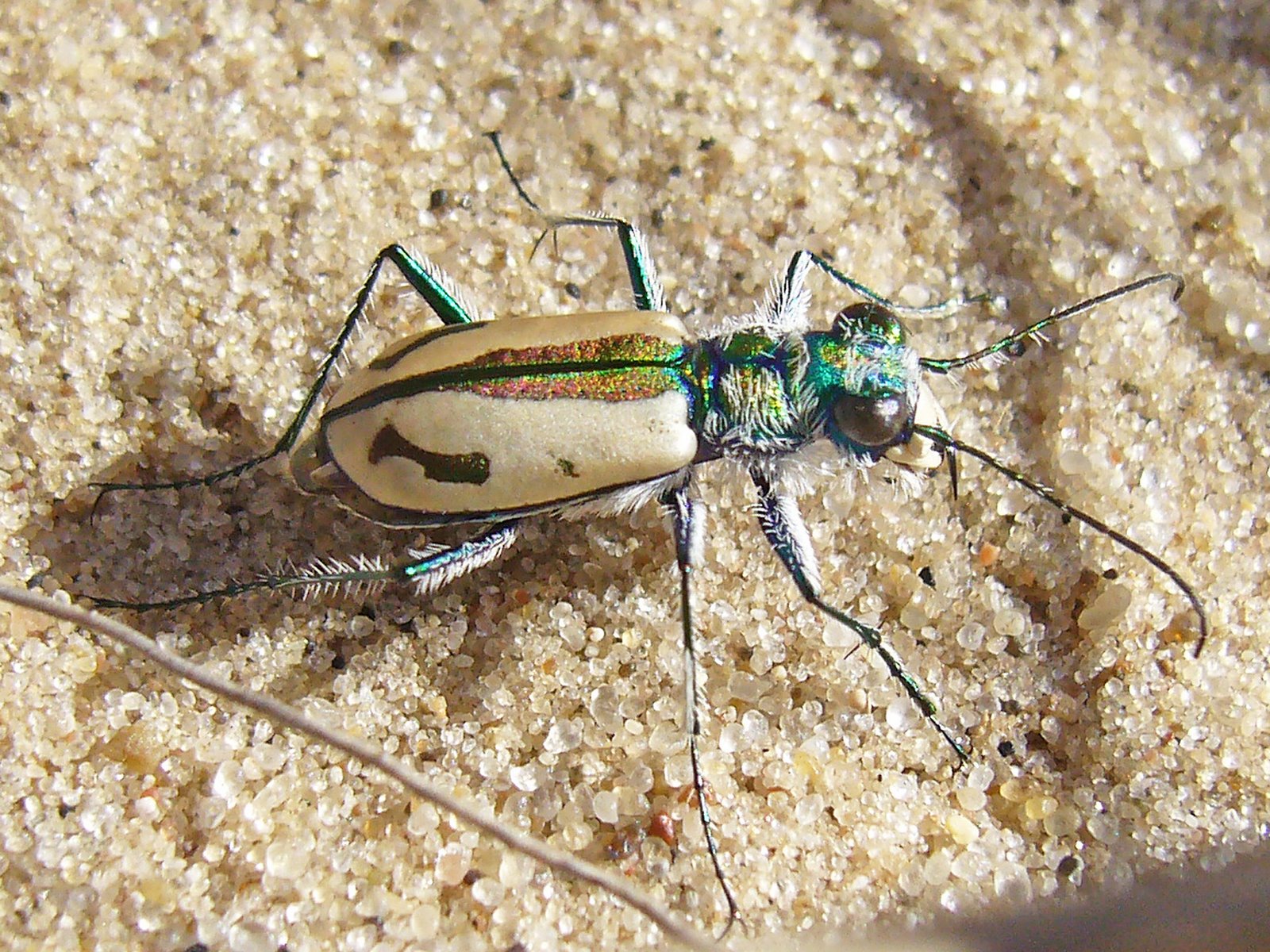
Success has its price, and the time spent on this diversion meant that something would have to give. By the time I got back to Chadron it was already past noon, which meant I would not make it to the Sand Hills until mid-afternoon. My primary target for the Sand Hills was the gorgeous C. limbata (sandy tiger beetle), which lives on barren sand dunes and blowouts. My delayed arrival left only a few hours to explore these habitats – with no sign of C. limbata, but I did find a few more C. fulgida along the margin of a small alkaline lake that Matt had told me about. Rather than move on to the eastern Sand Hills the following day as originally planned, I decided to stay on the western side for another day – my last full day of collecting. It was another good move – with a full day to explore, I found several sites in the morning with C. fulgida, and in the afternoon I finally found the coveted C. limbata. I only saw one adult out and about, but that was enough to convince me to spend some time there. As I’ve noted before, sand-inhabiting tigers start digging by midday, so I started looking for suspected burrows and digging after them. Most of what I dug up at first were the common C. formosa (big sand tiger beetle), but after a bit I was able to discriminate between the burrows of that species and those of C. limbata. After a couple hours of work, I had a grand total of seven vivid white/iridescent green individuals to show for my effort! Again, I didn’t even attempt a field photograph – they were very active once dug up, so one individual is being kept alive for photographs later in confinement. This day would also end with a nice exclamation point – another C. lengi! My lesson in field discrimination of this species versus C. formosa payed off, as I instantly recognized it for what it was.

I’ve now made it to the eastern edge of the Sand Hills, where tomorrow morning I’ll be looking for a red population of C. limbata before finishing off the trip with (hopefully) finding C. denverensis (green claybank tiger beetle) in the clay soils just to the south of where the Sand Hills end. If successful, I will have succeeded in finding a total of twelve tiger beetle species on the trip (38% of the known Nebraska/South Dakota combined fauna). The extra time spent in the Pine Ridge area means I will have to skip the last two localities in northwest Missouri, but the success I had in Nebraska does much to ease the disappointment. With a 10-hour drive confronting me after I finish my collecting tomorrow, I suspect this will be the last of my trip updates. I’ll provide a wrap up and some more photos after I return home, but in the meantime enjoy this video of C. formosa digging in for a midday siesta.

Rattled in the Black Hills

My first day in the Black Hills of South Dakota was spent at McNenny State Fish Hatchery near Spearfish – on the north side of the Black Hills. I went to this place on the advice of my esteemed colleagues in Nebraska, who suggested that I might be able to find several interesting tiger beetle species there: the closely related trio of beauties C. denverensis (green claybank tiger beetle), C. limbalis (common claybank tiger beetle), and C. splendida (splendid tiger beetle) in the red clay eroded banks; C. fulgida (crimson saltflat tiger beetle) and C. tranquebarica kirbyi (oblique-lined tiger beetle) around the lakes; and – again, if I’m lucky – intergrades between the prairie and boreal long-lipped tiger beetles (C. longilabris x nebraskana) along a trail through the shortgrass prairie east of the hatchery. For the first time since Saturday, I awoke to baby blue skies which filled me with an optimism and anticipation that made the 3-hour drive from Chadron, Nebraska to Spearfish, South Dakota seem interminable.

What my esteemed colleagues failed to include on that list of species I might encounter was Crotalus viridis – the prairie rattlesnake! Now folks, I’ve seen a number of rattlesnakes before – mostly in Texas – but I’ve never heard this sound in real life, much less heard it coming from a rattlesnake poised to strike. I encountered this fellow in the eroded red clay slopes above the lake, and even though I wasn’t too terribly close it gave me quite a start (my bravery in taking this photo is vastly exaggerated by the twin miracles of telephoto and cropping!). I walked a little more cautiously afterwards but gradually let my guard down over time. About an hour later, I was startled again by another rattler – I had come within 2 feet of it before it started rattling. I nearly jumped out of my skin, and once I got my heart stuffed back down my throat I noticed several dark juveniles coiled up with her. They slunk away, and I tiptoed back to the car having had my fill of the red clay slopes for the time being.

I did manage some success on the slopes before the rattlers drove me away – not with the claybank and splendid tigers that I had hoped to find, which were largely missing in action save for two individuals of C. limbalis that I spotted amongst the annoyingly similar appearing and ridiculously numerous C. purpurea audubonii (clay path tiger beetle). Success instead came in the form of this cerambycid beetle – Megacyllene comanchei. Recently described from Texas, nothing more was published about this species until I recorded a northern range extension into south-central Kansas (MacRae & Rice 2007). Its occurrence in the Black Hills is not only a new state record for South Dakota but also represents an incredible 700-mile northern range extension – on top of the previous one! Actually, Matt and I each found one individual a few days ago in Sioux County, Nebraska (also a new state record) – I had thought of this species at the time but decided I must be wrong and that I should wait until I got back before making an identification. But the capture of these three additional individuals even further north renewed my suspicions, and consultion of my databases shows good agreement with this species – note the white rather than yellow antemedian elytral band and medial portion of the postmedian elytral band, along with the medial and lateral coelescence of the apical and subapical bands, which distinguish this species from the closely related M. angulifera. The records from this trip show that M. comanchei is much more widely distributed than previously thought. Curiously, all five of the individuals I’ve seen (so far!) were crawling on the ground – an unusual habit for Megacyllene, which are normally found on flowers of goldenrod. The type series was associated with plants in the genus Heterotheca, which I did note growing in the area.

After escaping the snake slopes, I began surveying the lake margins to look for potential tiger beetle habitat. I was especially interested in C. fulgida – Matt and I had seen a single individual along a dry salt creek in Sioux County. The lakeshore around the upper lake was completely surrounded by thick vegetation – no tiger beetles there, but when I arrived at the lower lake I found some small areas of open ground along one side. They didn’t look very extensive, and my initial search of the area showed no activity. Closer inspection, however, showed the presence of larval burrows, and when I grabbed my fishing gear (the nearest grass stem) I promptly managed to extract a couple of larvae. Okay, so there are tiger beetles here, but which one I don’t know – probably C. tranquebarica kirbyi, which we had seen rather commonly at the same dry salt creek in Sioux County. Although the sun would not set for another two hours, it was quite cool already. I wondered if maybe the adults had already started digging in for the night and began looking for evidence of adult burrows. I looked carefully along the edge of the grassline when I saw movement – it was the back end of an adult C. fulgida kicking dirt out as it excavated its burrow. Success! I dug it out, took a few photos (one shown here) and started looking for similar appearing burrows. I not only found several more C. fulgida in their burrows, but also several C. tranquebarica kirbyi. The larvae I collected may or may not represent one of these species – there are other species associated with alkaline habitats that active at other times during the season. I collected a few more larvae, filled a container with soil from the spot – cutting out a section of salt-encrusted surface to place on top, placed all of the collected larvae in it, and watched them immediately start digging new burrows with their shovel-like heads. More babies to take care of!

With tiger beetle success under my belt and the sun setting fast, I decided the day was done and packed up the car. As I was closing the hatch, I happened to look over and saw something of great interest – milkweed! I had, in fact, been looking for milkweed all day long in the hopes – faint, I thought – of encountering the newly described Tetraopes heutheri (Skillman 2007). Mirror Lakes, at the McNenny Fish Hatchery, is the type locality of this species, and although the type series was collected in August I held out hope that the adults might persist until September. These hopes faded quickly, however, as I located milkweed plant after milkweed plant on the shortgrass prairie above the eroded clay slopes – all completely senesced, with nary a sign of any milkweed beetles. The plant I’d just spotted – only a small sprout – was green, and on it were two milkweed beetles! I excitedly took some pictures, then started looking carefully about and found several more on additional small sprouts in the area. Apparently, the sprouts represented regrowth from late-season mowing of the roadside, as several full-sized, completely senescent plants were found in the adjacent unmowed area. My excitement at having “found” T. heutheri (because of their small size and occurrence at the type locality) was short lived – closer examination of the specimens after returning home showed them to be very small individuals of the more common Great Plains species T. femoratus. I did have some doubts when I found the beetles, since the milkweed species on which I found them is not the same species with which T. heutheri was associated (Asclepias verticillata, a small species with narrow, linear leaves).

Day 2 in the Black Hills was spent at nearby Boundary Gulch, just across the border in the northeast corner of Wyoming. This was another attempt to find the C. longilabris x nebraskana intergrades that eluded me at McNenney, and although I failed to find them at this location also, I did find five other species of tiger beetles, including several beautifully marked C. limbalis to go along with the two I found the previous day. After that it was some spurious collecting here and there – including larvae from two spots in the southern Black Hills – as I traveled back to Chadron, Nebraska for the night. On tap for tomorrow – Nebraska’s famed Sand Hills! The beautiful sandy tiger beetle (C. limbata) – vivid white and iridescent green to red – hopefully will be found among the super abundant festive (C. scutellaris) and big sand (C. formosa) tigers, and I’ll get another shot at seeing the C. lengi (blowout tiger beetle) that I missed a few days ago.

The Loess Hills in Missouri

The term Mountains in Miniature is the most expressive one to describe these bluffs. They have all the irregularity in shape, and in valleys that mountains have, they have no rocks and rarely timber. – Thaddeus Culbertson, missionary, 1852


One of the things I enjoy most about the natural history of Missouri is its diversity. Lying in the middle of the North American continent, it is here where the eastern deciduous forest yields to the western grasslands. Coinciding with this transition between two great biomes is a complex intersection of landforms – the northern plains, recently scoured by glaciers; the southeastern lowlands, where the great Mississippi River embayment reaches its northern extent; the Ozark Highlands, whose craggy old rocks comprise the only major landform elevation between the Appalachian and Rocky Mountains; and the eastern realm of the vast Great Plains. This nexus of east and west, of north and south, of lowlands and highlands, has given rise to a rich diversity of natural communities – 85 in all according to Paul Nelson (2005, Terrestrial Natural Communities of Missouri). Despite the overwhelming changes wrought upon Missouri’s landscape during the past 200 years, passable examples of most of these communities still exist in many parts of the state and provide a glimpse of Missouri’s rich natural heritage.

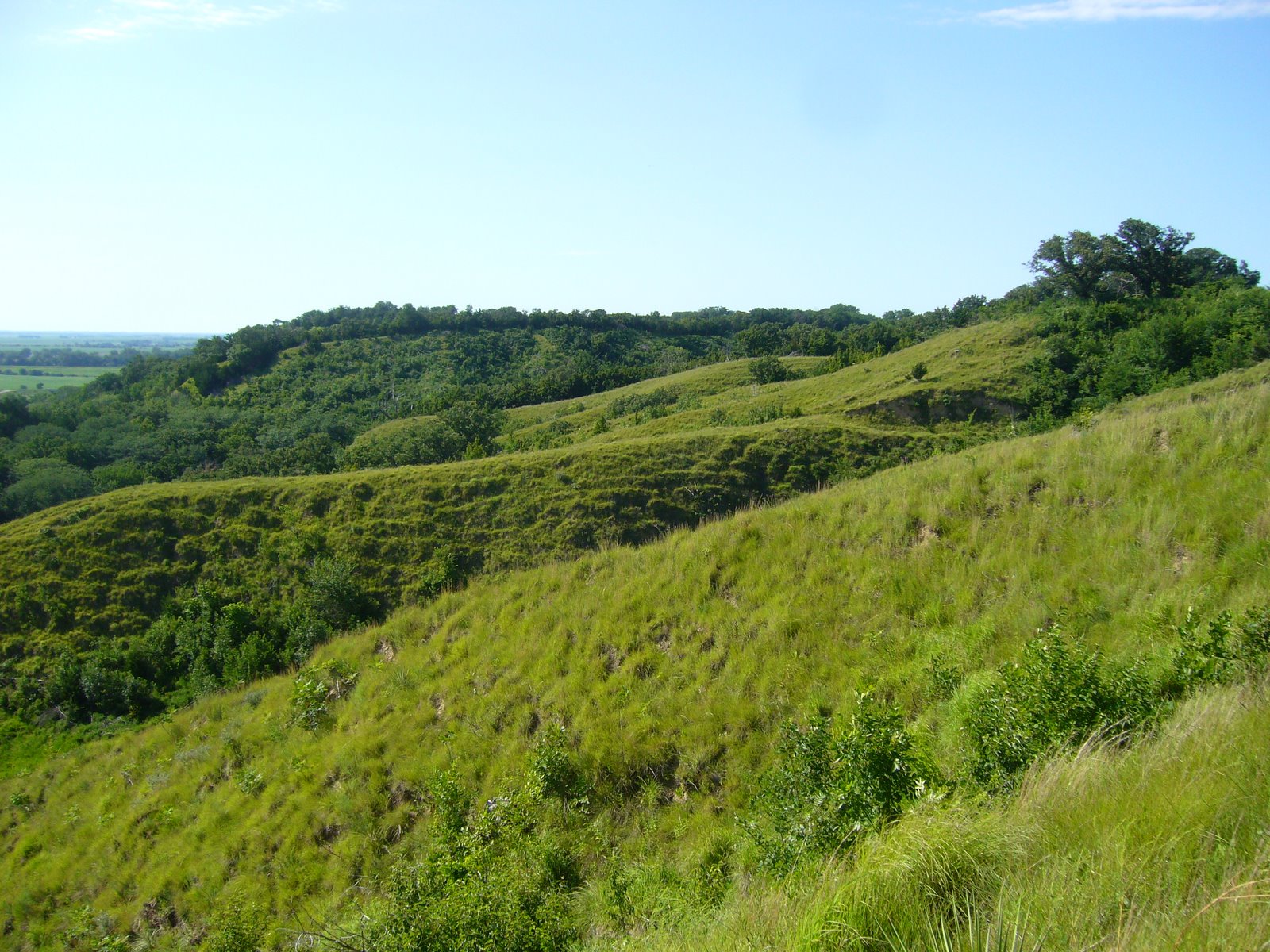
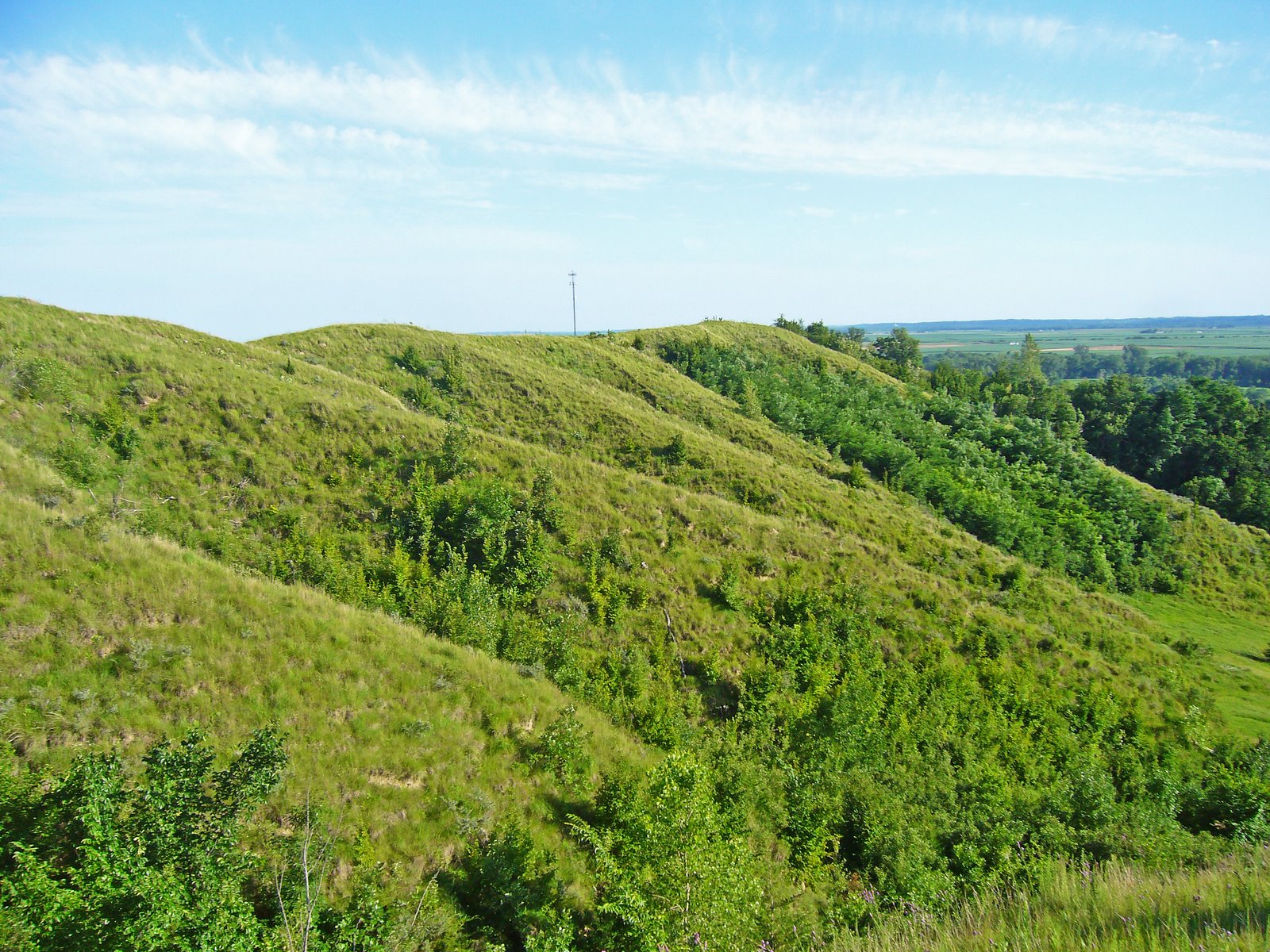
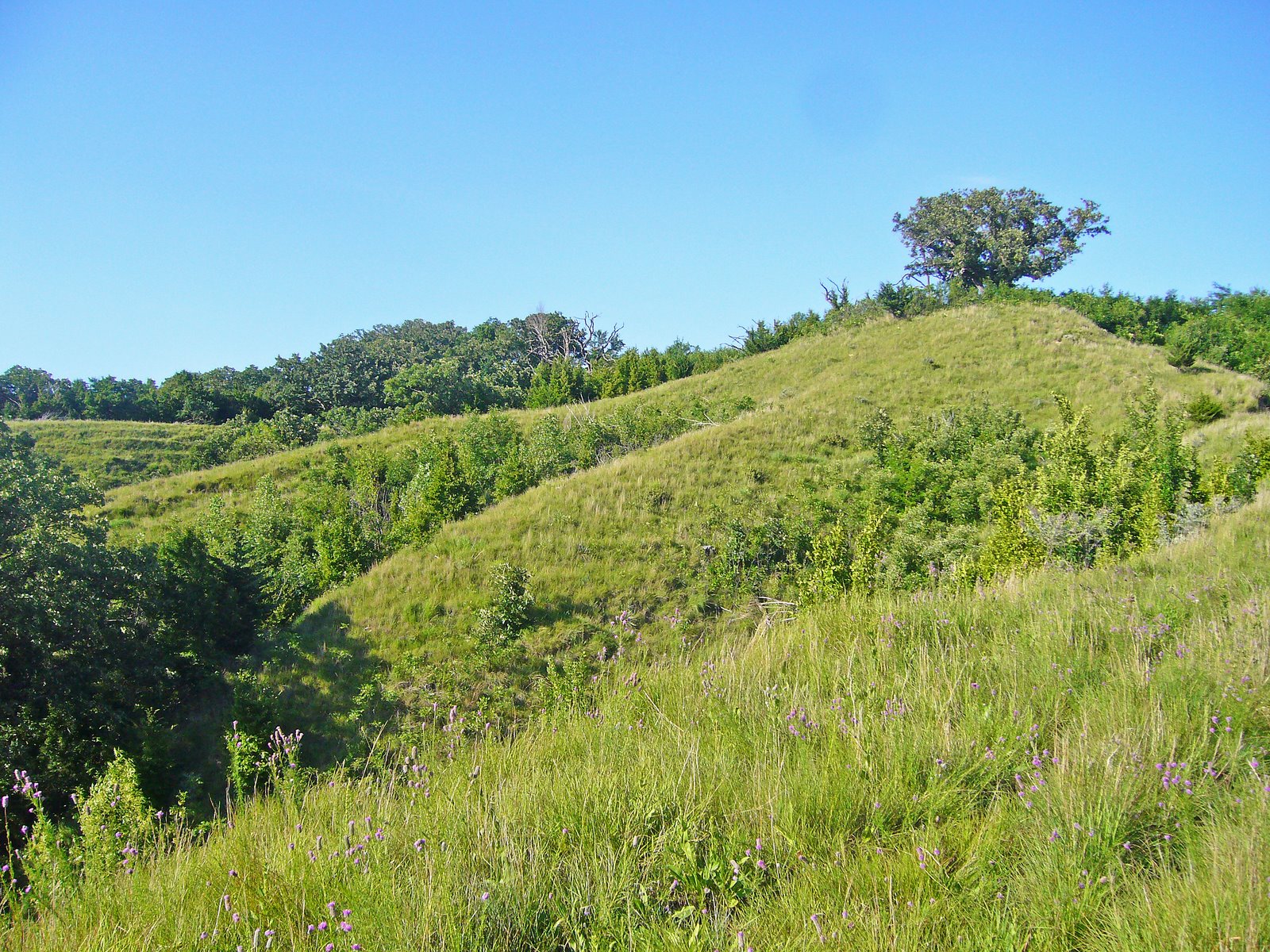
Last month I talked about the critically imperiled sand prairie community in extreme southeast Missouri. This month, we travel 500 miles to the distant northwestern corner of the state to visit another critically imperiled community – the dry loess prairie. These communities are confined to thin slivers of bluff top along the Missouri River in Atchison and Holt Counties. The bluffs on which they lie are themselves part of a unique landform called the Loess Hills. Like the sand prairies of the southeastern lowlands, this angular landscape owes its birth to the glacial advances of the Pleistocene epoch (2.5 million to 10,000 years ago), when streams of meltwater – swollen and heavily laden with finely ground sediments (i.e., glacial “flour”) – filled river valleys throughout the Midwest during Pleistocene summers. Brutal cold during winter reduced these flows to a trickle, allowing the prevailing westerly winds to pick up the sediments, left high and dry, and drop them on leeward upland surfaces across Iowa and northern Missouri. The thickest deposits occurred along the abrupt eastern border of the Missouri River valley – at least 60 feet deep, and in places up to 200 feet. Loess (pronounced “luss”) is a homogeneous, fine-grained, quartz silt – undisturbed it is highly cohesive and able to stand in near vertical bluffs. It is also extremely prone to erosion, and as a result for 10,000 years now the forces of water have reshaped the Loess Hills into the landform we see today. Loess itself is not rare – thick deposits can be found in many parts of the world and over thousands of square miles across the Midwest. It is here, however, along the western edge of Iowa and northern Missouri – and nowhere else in North America – where loess deposits are deep enough and extensive enough to obliterate any influence by the underlying bedrock and dictate the form of the landscape.

It is this form that makes the Loess Hills so unique. The depth of the soil, its cohesiveness, its natural tendency to slump on steep slopes and sheer in vertical planes, and the action of water over the past several millenia have created a landscape of narrow undulating ridges flanked by steep slopes and numerous side spurs, intricate drainages with sharply cut gullies, and long, narrow terraces called “catsteps” cutting across the steep upper hillsides. It’s a sharp, angular, corrugated landscape, stretching 200 miles north and south in a narrow band of varying width from north of Souix City, Iowa, to its southern terminus in northwestern Missouri. Its western boundary is sharply delimited by the Missouri River valley, where lateral erosion (now halted by channelization of the river) and vertical sheering have created precipitous bluff faces. The eastern boundary is harder to delimit and is dependent upon the thickness of the loess. Deposits that fall below 60 feet in depth are unable to mask and reshape the rolling terrain of the eroded glacial till lying beneath. In general, this happens at distances of only 3 to 10 miles from the western edge of the landform.

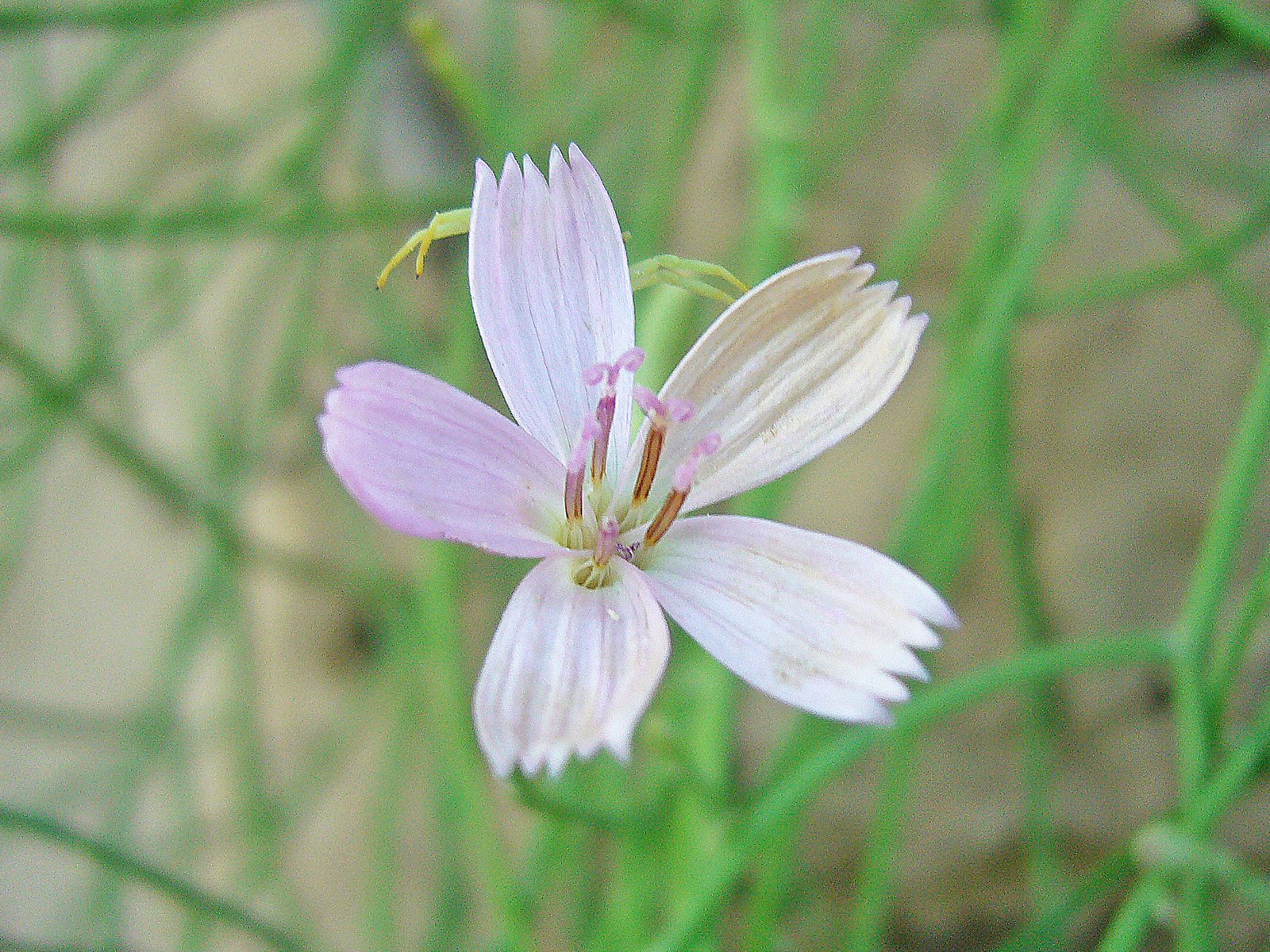
Its southern terminus in Missouri, however, is the most arbitrary boundary. Discontinuous patches of deep loess terrain do occur as far south as Kansas City, but the dry hilltop prairies, common in the north, are gradually replaced by woodland in the south and disappear completely just north of St. Joseph. It is this interdigitation of two great biomes – the great deciduous forest to the east, and the expansive grasslands stretching far to the west – that give the Loess Hills such a fascinating natural history. This is due as much to the physical character of the Loess Hills themselves as to their ecotonal position at the center of the continent. Rapid drainage of rainwater off the steep slopes combines with direct sun and prevailing southwesterly summer winds to create very dry conditions on hilltops and south and west facing slopes, especially on the steeper slopes along the landform’s western edge. Such xeric conditions favor the growth of more drought-tolerant species derived from the western grasslands. North and east facing slopes and valley floors, protected from direct sun and drying winds, are able to retain more moisture, favoring the growth of woody plant species more common in the eastern forests. Seasonal moisture also shows a north-south gradient, with southern latitudes receiving higher annual rainfall totals that also favors the growth of woody plants, while the lower rainfall totals further north result in larger, more expansive grassland habitats. The steep slopes and rapid drainage create much more xeric conditions than those found further south in the flat to rolling terrain of the unglaciated Osage Plain, resulting in a more drought-tolerant mixed-grass prairie rather than the tallgrass prairie of western and southwestern Missouri. The distribution patterns of prairie versus woodland are dynamic and ever-changing, influenced by both natural and anthropogenic processes. Climatic conditions over much of the Loess Hills are capable of supporting either community type, both of which repeatedly expand and shrink as the balance tips in favor of one versus the other. In the past, the major influence was shifting periods of greater or lesser rainfall. During drier periods, grasslands expanded and woodlands shrank, finding refuge in only the moistest streamside habitats. Wetter periods allowed woody plants to migrate out of the valleys and up the slopes, especially those facing north and east. One particular very dry “hypsithermal” began about 9,000 years ago and lasted for several thousand years. Tallgrass prairies expanded as far east as present day Ohio, and todays tallgrass praires in the eastern Great Plains were invaded by even more drought-tolerant species from the shortgrass prairies further west. Eventually the hypsithermal abated, moisture levels increased, and the grasslands retreated in the face of the advanding forest. Not all of the drought-tolerant species were driven back, however, and scattered populations of these “hypsithermal relicts” still remain on locally dry sites far to the east of their normal range of distribution. Conspicuous examples of such in Missouri’s Loess Hills are soapweed yucca (Yucca glauca var. glauca) and the leafless-appearing skeletonweed (Lygodesmia juncea) (plant above, flower right). Both of these plants are normally found further west in the mixed grass prairies of the western Great Plains but are considered endangered in Missouri due to the great rarity of the dry loess prairies on which their survival depends. (Incidentally, note the crab spider legs extending from behind the petals of the skeletonweed flower). In total, more than a dozen plant species occurring in Missouri’s dry loess prairies are listed as species of conservation concern, along with one reptile (Great Plains skink) and one mammal (Plains pocket mouse).

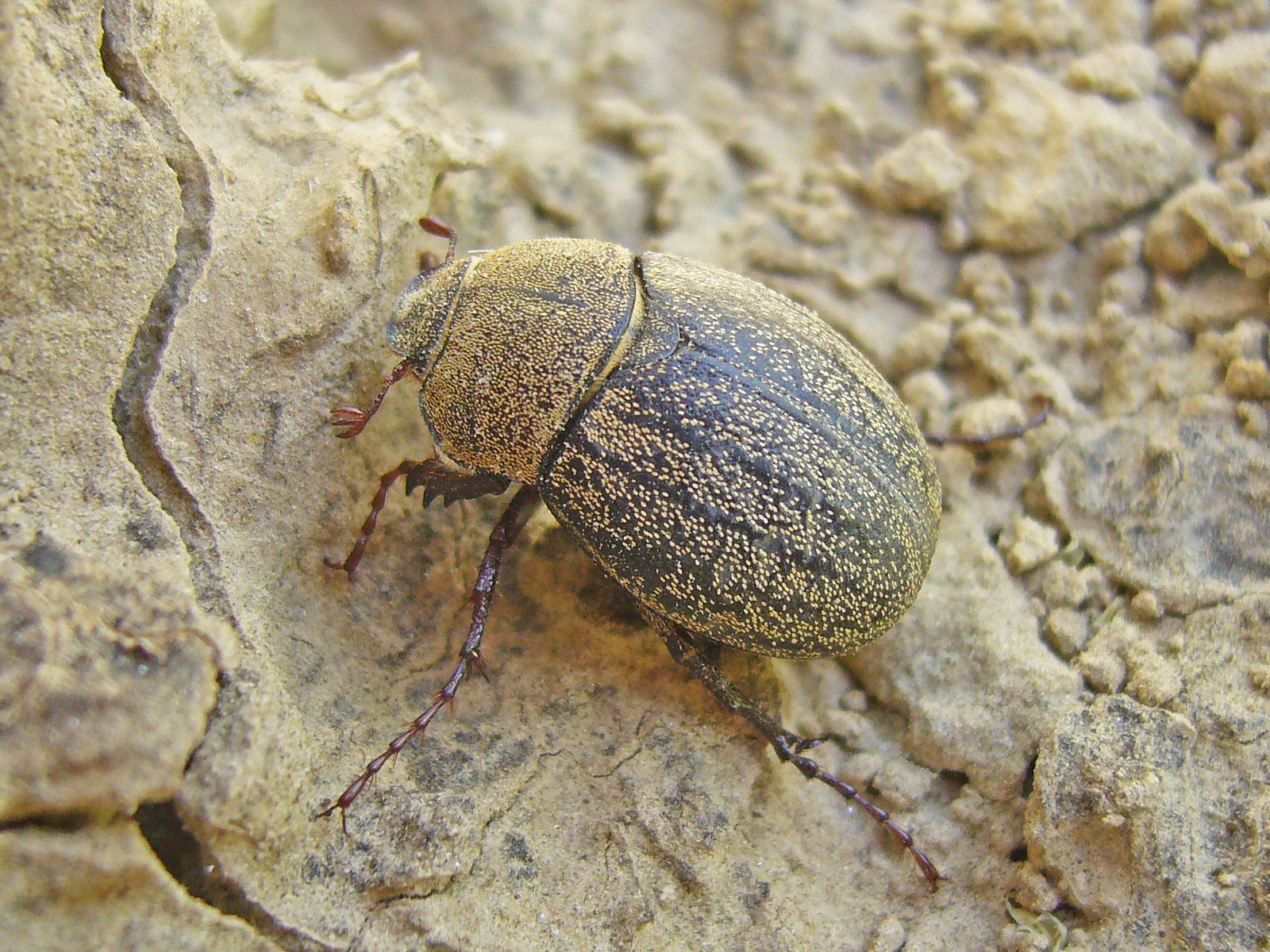
As is typical, the insect fauna of the Loess Hills has been far less studied than its plants, but many of the species that have been documented in its prairies also show affinity to the Great Plains fauna. Both soapweed and skeletonweed have insect associates that rely exclusively on these hosts for reproduction, and as a result they are also highly restricted in Missouri. Evidence of one of these – a tiny cynipid wasp (Anistrophus pisum) that forms small spherical galls on the stems of skeletonweed – can be seen in the photo above. However, my purpose for visiting the Loess Hills this summer was to look for the rare and possibly endangered tiger beetle, Cicindela celeripes (see this post). Cicindela celeripes has not yet been recorded from Missouri but is known to occur in the Loess Hills of southwestern Iowa, and while I have not succeeded in finding it (yet!) I did observe several adults of this unusual May beetle species, Phyllophaga lanceolata. This May beetle occurs throughout the Great Plains in shortgrass prairie communities. Larvae feed in the soil on roots of grasses and other plants, while adults feed above ground on flowers and foliage. The heavy-bodied adults are unusual in the genus due to their conspicuous covering of scales (most species of Phyllophaga are glabrous or with sparsely scattered and indistinct setae) and by being active during the day. They are also relatively poorer fliers and are thus usually observed moving about on foot – as seen with this individual who was found on bare soil below a vertical cut. This snakeweed grasshopper (Hesperotettix viridis, ID by Eric R. Eaton) is another species more typically seen in the western United States, although populations have been found from across the continent. Preferred host plants include a variety of asteraceous shrubs, but as suggested by the common name snakeweeds (Xanthocephalum spp.) are highly preferred and account for its greater abundance in the west. Populations in northern and eastern portions of its range, which would include northern Missouri, are considered subspecies pratensis, while the more southern and western populations are considered the nominotypical subspecies. Interestingly (and unlike many grasshoppers), this species is considered beneficial by ranchers, since the plants on which it prefers to feed are either poisonous to livestock or offer little nutritional value while competing with more desirable forage plants for soil moisture. While exploring the upper slopes, I encountered sporadic plants of two of Missouri’s more interesting species of milkweed – whorled milkweed (Asclepias verticillata) and green milkweed (Asclepias viridiflora), raising my hopes that I might encounter one of the many Great Plains species of milkweed beetles (genus Tetraopes). However, the only species I observed was the common milkweed beetle, Tetraopes tetrophthalmus, which occurs broadly across eastern North America on the equally broadly distributed common milkweed (Asclepias syriaca).

It is a familiar refrain, but Missouri’s dry loess hill prairie communities are critically endangered. Historically, these communities were probably never as well developed as those further north, and only a few small remnants remain today due to significant woody encroachment following decades of fire suppression. Much of this encroachment has occurred in the past 50 years – Heinman (Woody Plant Invasion of the Loess Hill Bluff Prairies. M. A. Thesis, University of Nebraska at Omaha, 1982) used aerial photographs to show a 66 percent encroachment of shrubs and trees into the loess hill mixed-grass prairies between 1940 and 1981. Additional threats include overgrazing, erosion, invasion by exotic plant species and homesite development. Fewer than 50 acres of native dry loess hill prairie remain in Missouri – only half of which are now in conservation ownership. The majority of these can be found at Star School Hill Praire and Brickyard Hill Conservation Areas in Atchison County and at McCormack Conservation Area just to the south in Holt County. Controlled burning and selective cutting are being used at these sites to control woody plant invasions, but even these management techniques present challenges. Spring burns have been shown to promote the growth of big bluestem (Andropogon gerardii), which could allow it to encroach drier areas where mid-grasses such as little bluestem (Schizachyrium scoparium) and sideoats grama (Bouteloua curtipendula) typically dominate (Rushin 2005). Increases in tall grasses could shade out and eliminate some of the rarer low-growing forbs such as downy painted cup (Castilleja sessiliflora), locoweed (Oxytropis lambertii) and low milkvetch (Astragalus lotiflorus). Fall or winter burns may be more beneficial to forbs because the plants are allowed to complete flowering and seed set, but the steep slopes on which these communities occur make erosion a potential concern. Clearly, all factors must be considered when designing management plans for this rare and significant slice of Missouri’s natural heritage.


In addition to the links and references provided above, I highly recommend Fragile Giants: A Natural History of the Loess Hills, by Cornelia F. Mutel (1989). All of the above photographs were taken at Star School Hill Prairie Conservation Area on July 12, 2008. Additional photographs of Loess Hill habitats in extreme southwestern Iowa appeared in my earlier post, The hunt for Cicindela celeripes. The plants shown in photographs 5-7 are purple praire clover (Dalea purpurea), white prairie clover (D. candida), and lead plant (Amorpha canescens), respectively. Lastly, I would like to apologize for the length of this post – a consequence of my inability to temper my utter fascination with the natural world and desire to understand the depths its connectedness.