Tragidion confusion

Back in October, I discussed a recent review of the cerambycid genus Tragidion, authored by Ian Swift and Ann Ray and published in the online journal Zootaxa.  These gorgeous beetles mimic the so-called “tarantula hawks” (a group of large, predatory wasps in the family Pompilidae) and have been difficult to identify due to poorly-defined species limits, wide range of geographic variation, unusually high sexual dimorphism, and apparent potential for hybridization in areas of geographic overlap. Swift and Ray (2008) recognized seven North American and four Mexican species, including two newly described species and another raised from synonymy. It was an excellent work that provided much needed clarity based on examination of types and included detailed descriptions and dorsal habitus photographs of all species and separate keys to males and females to facilitate their identification. Unfortunately, my summary caused some confusion regarding species that occur in the deserts of southern Arizona, southern New Mexico and western Texas. In this post, I’ll clarify that confusion and provide details for distinguishing these species.

Formerly, it was thought that two species of Tragidion inhabited this region, with populations exhibiting smooth elytra and breeding in dead stalks of Agave and Yucca (Agavaceae) representing T. armatum and those exhibiting ribbed elytra and breeding in dead branches of a variety of woody plants representing T. annulatum. This concept dates back to the landmark monograph of the Cerambycidae of North America by Linsley (1962). Swift and Ray (2008) noted that Linsley’s concept of T. annulatum was based on an erroneously labeled type specimen, and that true T. annulatum referred to populations in California and Baja California (for which other names – now suppressed – were being used). This left the AZ/NM/TX populations attributed to T. annulatum without a name. The previously suppressed name T. densiventre was found to refer to populations inhabiting lowland habitats and breeding in Prosopis and Acacia (Fabaceae), but those occurring in montane habitats and breeding in Quercus (Fagaceae) represented an as yet undescribed species, for which the name T. deceptum was given. I included Swift and Ray’s figure of T. deceptum in my post – but mistakenly included the male of T. densiventre alongside the female of T. deceptum!

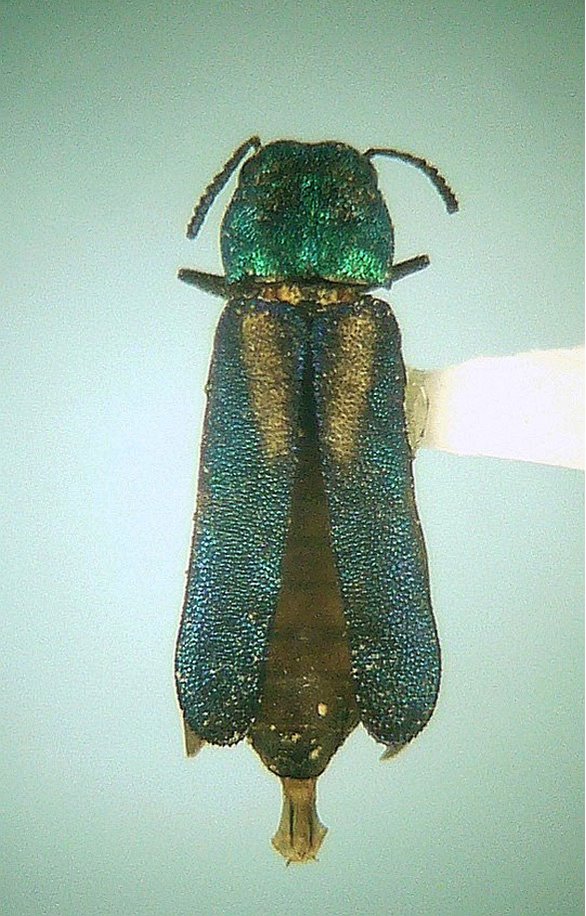
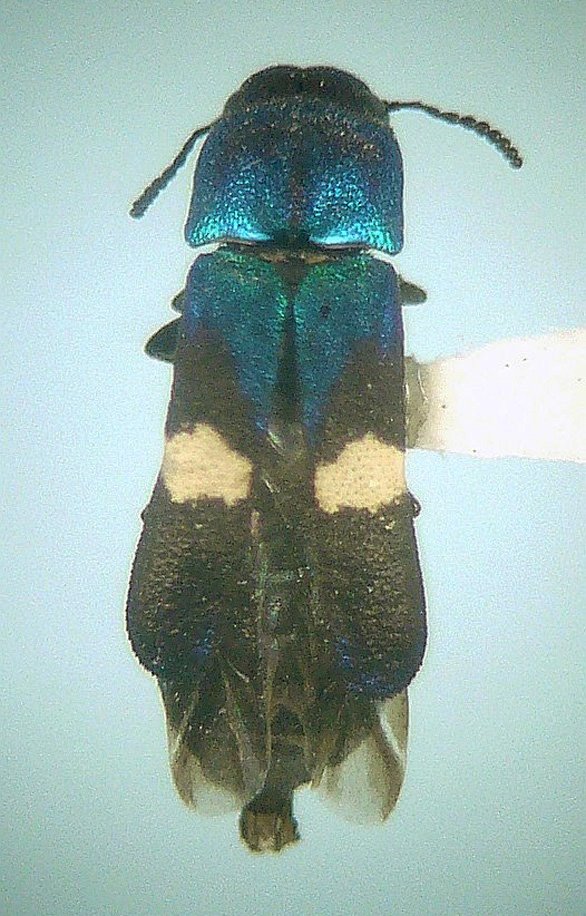
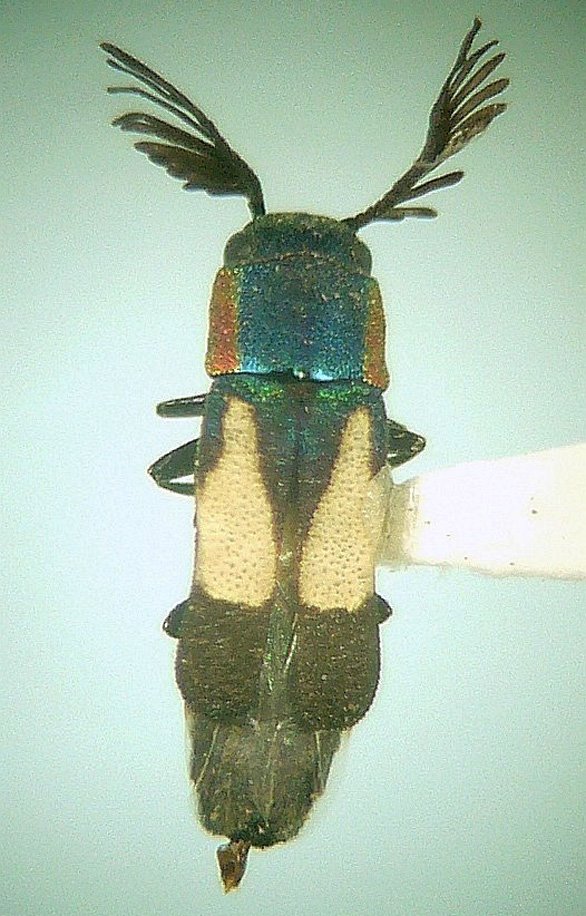
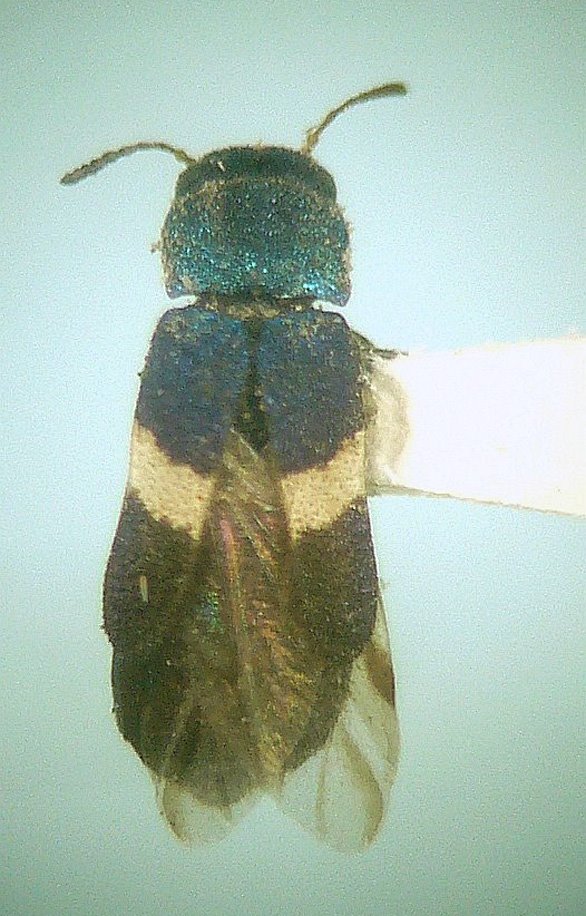
This error may never had been noticed, had it not been for the discriminating eyes of BugGuide contributor, Margarethe Brummermann. Margarethe is currently collecting photographs for a field guide to Arizona beetles and had photographed a male and female of a “ribbed” species in Montosa Canyon. Using the illustration of T. deceptum” in my post, Margarethe concluded her specimens represented T. deceptum and asked me to confirm her ID. When I told her the specimens represented T. densiventre, her confusion was understandable (given that her male appeared identical to the T. deceptum” male in my post). Further query on her part prompted me to do a little digging, and I discovered my error. The figure in my post has since been corrected – both that figure and a figure from Swift and Ray (2008) showing the male and female of T. densiventre are included below, along with additional information to allow their identification.

tragidion_densiventre

Tragidion densiventre Casey, 1912

Tragidion densiventre was formerly synonymized under T. auripenne (a rare species known from the four corners region of northern Arizona, southern Utah, southwestern Colorado, and northwestern New Mexico). Males of T. densiventre can be distinguished by their longer antennae, tawny-tan elytra and distinctly red-brown head, legs, and scape, while females have shorter antennae and the elytra red-orange. Both males and females of this species are distinguished from T. deceptum by their five elytral costae that curve inward toward the suture and extend to near the elytral apices, as well as their relatively narrower basal black band. Females of this species may be further distinguished from T. deceptum by their all black (or nearly so) antennae. Tragidion densiventre is found predominantly in xeric lowland desert habitats in Arizona, New Mexico, and west Texas (as well as northern Mexico). Larvae have been recorded developing in dead Prosopis glandulosa and Acacia greggii, and adults have been observed aggregating on sap oozing from stems of Baccharis sarothroides (Asteraceae) and flowers of larval host plants. Although the biology of this species has not been described in detail, it is likely that the observations of Cope (1984) for T. auripenne refer to this species. This is the classic T.annulatum” commonly observed in the desert southwest.

Tragidion deceptum

Tragidion deceptum Swift & Ray, 2008

Tragidion deceptum superficially resembles T. densiventre due to its ribbed elytra; however, it is actually more closely related to the Mexican species T. carinatum. Like T. densiventre, the males exhibit longer antennae and tawny-tan elytra, while females have shorter antennae and orange-red elytra. However, the head, legs and scape of males are black, as in females of the species, rather than red-brown as in males of T. densiventre. Females exhibit distinctly annulated antennae, in contrast to the all black antennae of T. densiventre. Both males and females are distinguished from T. densiventre by the elytral costae – only four rather than five, not incurved towards the suture and extending only to the apical one-third of the elytra. In addition, the basal black band is very broad – exceeding the scutellum by 2 × its length. This species is similarly distributed across the desert southwest as T. densiventre but occurs in more montane habitats, where it breeds in recently dead branches of several species of Quercus. Like T. densiventre, adults are often found feeding and aggregating on Baccharis sarothroides, and in a few lower canyons bordering desert habitats in the Huachuca Mountains of southeastern Arizona this species and T. densiventre have been collected feeding alongside each other on the same Baccharis plants. Tragidion deceptum is one of several species in the genus (along with T. coquus in eastern North America) that have been collected using fermenting molasses traps (more on this in a future post).

REFERENCES:

Cope, J. 1986. Notes on the ecology of western Cerambycidae. The Coleopterists Bulletin, 38:27–36.

Linsley, E. G. 1962. The Cerambycidae of North America. Part III. Taxonomy and classification of the subfamily Cerambycinae, tribes Opsimini through Megaderini. University of California Publicatons in Entomology, 20:1-188, 56 figs.

Swift, I. and A. M. Ray. 2008. A review of the genus Tragidion Audinet-Serville, 1834 (Coleoptera: Cerambycidae: Cerambycinae: Trachyderini). Zootaxa, 1892:1-25.

Copyright © Ted C. MacRae 2009

Add to FacebookAdd to NewsvineAdd to DiggAdd to Del.icio.usAdd to StumbleuponAdd to RedditAdd to BlinklistAdd to Ma.gnoliaAdd to TechnoratiAdd to Furl

Done with dung, meat please!

ResearchBlogging.orgNo feces for this species.” “Carnivorous dung beetle shuns dung and decapitates millipede.” “Little dung beetle is big chopper.” “Dung beetle mistakes millipede for dung.” These were some of the clever headlines that I had to compete with in coming up with my own opener for a remarkable beetle that titillated the science blogosphere last week. At the risk of being redundant, I’d like to revisit that beetle and offer a few (hopefully novel) thoughts of my own. I can say that I have a unique and special treat for those willing to read further.

First the background. Deltochilum valgum is a so-called “dung beetle” in the family Scarabaeidae that lives in the lowland rain forests of Peru. As suggested by its common name, it belongs to a group of beetles that are well known for their dung feeding habits. Over 5,000 species of dung beetles are known throughout the world, all of which carve out balls of dung and bury them as provisions for larval development – or so it was thought.  As reported by Trond Larsen of Princeton University and colleagues in Biology Letters, D. valgum has apparently abandoned its ancestral dung ball-rolling behavior in favor of a predatory lifestyle. Its prey – millipedes! Moreover, the species exhibits several distinct morphological traits that appear to have evolved as a direct result of their predatory behavior. Adult beetles were repeatedly observed killing and eating millipedes, and their disdain for dung was rather conclusively demonstrated by an exhaustive, year-long trapping program in which pit-traps were baited with a variety of bait types known to attract dung beetles (e.g., various kinds of dung, carrion, fungus and fruit) – and millipedes.  In all, over 100,000 dung beetles representing 132 species were trapped (what a nice collection!), 35 of which were found to scavenge on dead millipedes, but only five of these dared tackle live millipedes.  Of these, only D. valgum ignored all other foods – it only came to traps baited with live millipedes.

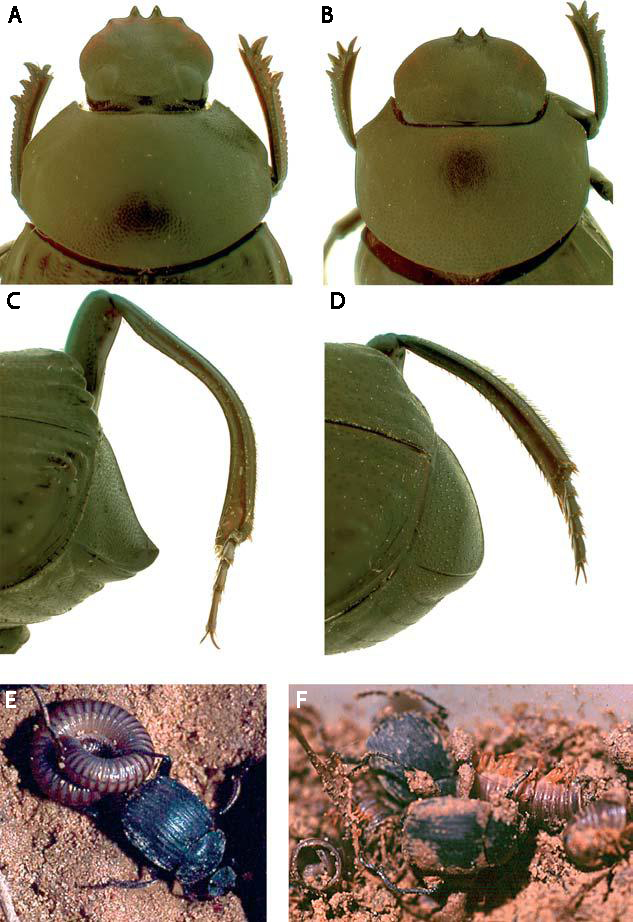
Larsen et al. determined that adults of D. valgum are opportunistic hunters and were much more likely to attack injured millipedes than healthy ones, even those weighing 14 times as much as the beetle.  Ball rolling behavior was never observed by D. valgum.  Most dung beetles have wide, shovel-shaped heads used to scoop and mold dung balls, but D. valgum has a much narrower head with sharp “teeth” on its clypeus (Fig. 1A vs. 1B).  The teeth apparently aid in killing the millipede by piercing the ventral surface behind the head and prying upwards (decapitating it), and the narrow, elongate head facilitates insertion into the millipede body for feeding.  Further, the hind tibia are elongate and curved, which are used to “grip” millipedes by holding them up against the dorsally reflexed pygidium (Fig. 1C vs. 1D).  This allows the beetle to drag its coiled up victim with one hind leg while walking forward on the other five (Fig. 1E).  Once killed, the beetles proceeded to break their prey into pieces and consume their meaty innards, leaving the disarticulated millipede exoskeletons licked clean (Fig. 1F).  One of these “attack” episodes was filmed (using infrared lighting so as not to affect their nocturnal behavior) and can be seen in this BBC News video.

Deltochilum valgum

Figure 1. (a) Dorsal view of D. valgum head. Sharp clypeal teeth and angled clypeus act as a lever to disarticulate millipede. Narrow, elongate head permits feeding inside millipede; (b) dorsal view of Deltochilum peruanum head, lacking characters described in (a), head used to mould dung balls; (c) lateral view of D. valgum pygidium and hind tibia. Dorsally reflexed pygidial lip is used to support millipede during transport. Elongate, strongly curved hind tibia is used to grip millipede. (d ) Lateral view of D. peruanum pygidium and hind tibia, lacking characters described in (c), hind tibia used for rolling dung balls. (e, f ). Predation strategy by D. valgum. (e) Dragging live, coiled millipede with one hind leg, walking forwards; ( f ) feeding on killed millipede with head inside
segments; disarticulated empty millipede pieces nearby.
Credit: Larsen et al. (2009).

Much has been made about this remarkable shift from coprophagy to predation, which Larsen et al. speculate was driven by competition for limited resources with the many other dung beetle species that occur in the Peruvian rainforests. In fact, adult dung beetles are known to feed on a variety of resources besides dung, as exemplified by the range of baits used in their survey. Thus, my first thought after reading the coverage was actually a question: “Has this species abandoned dung provisioning completely as a reproductive strategy?” Everything I had read focused exclusively (quite understandably) on the bizarre feeding habits of the adults, but there was no mention of what the species’ larval provisioning strategies were. Wanting more information about this, I contacted Trond Larsen, who graciously sent me a PDF of the paper. Unfortunately (though not a criticism of the paper), no further insight about this was found in the paper either. Indeed, in all of the observations recorded by Larsen et al., millipedes killed by D. valgum were consumed entirely by the adults, and no mention was made of how or whether millipedes were utilized for larval provisioning. I wondered if D. valgum had truly abandoned dung provisioning for larval development (a remarkable adaptive switch), or if in fact the species might still utilize the strategy for reproduction (perhaps having specialized on a dung type not included in their survey), while also exploiting millipede predation as adults for a nutritional advantage. I asked Trond about this, to which he replied with this juicy tidbit (I told you I had a special treat!):

Yes, I would very much like to know what the reproductive/nesting behavior of D. valgum is. My best guess is that they also use millipedes as a larval food source, but as you say, we haven’t observed that behavior yet. I have observed other generalist dung beetle species rolling balls out of dead millipedes, presumably to bury for the larvae, so I certainly think it would be an adequate food source. Many dung beetle species use carrion for their larvae.

I am quite confident that D. valgum does not use any kind of dung. I have sampled these dung beetle communities very thoroughly, with many dung types and other bait types, and also with passive flight intercept traps that catch all beetles. Every dung beetle species that feeds on dung is at least sometimes attracted to human dung (this is not the case in African savannahs though, but is in neotropical forests – that is a whole different story). There are still a small handful of species we catch in flight intercept traps that we don’t know what they eat, although some of these mysteries have recently been solved – many of them live in leaf-cutter ant nests for example.

While predation of millipedes by a dung beetle is itself a fascinating observation, demonstrating the abandonment of dung provisioning in favor of captured prey for larval development would be a truly remarkable example of an ecological transition to exploit a dramatically atypical niche. I hope Trond (or anybody for that matter) actually succeeds in observing millipede/prey utilization for larval provisioning by this species.

Many thanks to Trond Larsen for his delightful correspondence.

SOURCE:
Larsen, T. H., A. Lopera, A. Forsyth and F. Génier. 2009. From coprophagy to predation: a dung beetle that kills millipedes. Biology Letters DOI: 10.1098/rsbl.2008.0654.

Copyright © Ted C. MacRae 2009

Add to FacebookAdd to NewsvineAdd to DiggAdd to Del.icio.usAdd to StumbleuponAdd to RedditAdd to BlinklistAdd to Ma.gnoliaAdd to TechnoratiAdd to Furl

Review of Calodema and Metaxymorpha

ResearchBlogging.orgNylander 2008Insects are not only the most diverse group of animals in the world, they are also among the most beautiful.  Beetles, of course (with apologies to any lepidopterists that may be reading this), are responsible for a hefty slice of this majestic diversity, with the most spectacular of these belonging primarily to a few select families.  Longhorned beetles, who combine vibrant colors with grossly elongated antennae and legs.  Scarabs, upping the anty by sporting a monstrously wonderful array of horns or just sheer size to go along with their bright colors.  Tiger beetles, whose elaborate designs and vivid colors are further augmented with toothy-jawed, behavioral charisma.  Yet, it is the Buprestidae upon which the moniker “jewel beetles” has been bestowed, despite their lack of obvious morphological gimmicks – a testament to their bright, sparkling, even gaudy colors and exquisite surface sculpture.

Calodema spp.Some of the most beautiful buprestids in the world are found in the rainforests of southeast Asia, Indonesia, New Guinea and northern Australia.  Genera such as Catoxantha, Chysochroa, Megaloxantha, and Chrysodema come to mind – big, beautiful beetles with screaming iridescence of green, red, yellow and blue.  Living jewels!  These and related genera comprise the great tribe Chrysochroini – the “classic” jewel beetles.  Not as well known but perhaps even more spectacular than the chrysochroines are two genera with strictly Australasian affinities – Calodema (left) and Metaxymorpha (below).  These two genera are the subject of a review authored by Swedish entomologist Ulf Nylander and published in the journal Folia Heyrovskyana by Kabourek.  This gorgeously printed, copiously illustrated, and handsomly bound volume is as much a work of art as it is a technical review.

Metaxymorpha spp.Calodema and Metaxymorpha are among several genera comprising the tribe Stigmoderini in the subfamily Buprestinae.  Six genera, including Calodema and Metaxymorpha, are strictly Australasian, while another five genera are of southern Neotropical occurrence.  This now-disjunct tribal distribution suggests an origin on Gondwana prior to its break up beginning about 167 million years ago during the mid-Jurassic.  Calodema and Metaxymorpha are restricted to New Guinea and its associated islands and the northern and northeastern coastal areas of Australia.  The two genera share certain features that distinguish them from other stigmoderines, notably elongated mouthparts adapted to feeding on nectar and a streamlined, aerodynamically-shaped body with the prosternum (ventral sclerite behind the head) curiously prolonged into a large conical process.  Nylander discusses the possible function of this process in serving as a ballast to help stabilize the flight of these large beetles as they fly through branches and other obstructions in the upper forest canopy searching for flowers on which to feed.  This thought is based on the observation that adult beetles dropped from any angle are able to quickly right themselves and fly away before hitting the ground, while stigmoderines in other Calodema ribbeigenera – lacking the prosternal process – more often drop to the ground and feign death (presumably an adaptation for predator avoidance in the more open environments where they occur).  Calodema and Metaxymorpha are clearly related to each other but are distinguished by the smaller scutellum and nonoverlapping elytra of Calodema versus larger scutellum and distinctly overlapping elytra (in the apical area, usually left over right) of Metaxymorpha.

Fifteen species of Calodema and 18 species of Metaxymorpha are recognized, with comparative tables, figures, and keys provided to differentiate the species and species groups within each genus.  Four species are described as new, including Calodema hanloni, C. longitarsis and Metaxymorpha alexanderiensis from Papua New Guinea, and M. hanloni from Australia.  Species treatments include synonymies, information on type specimens and type localities, label data for specimens examined, detailed descriptions, and comments on distribution and flight periods when known.  Metaxymorpha nigrofasciataHigh quality, full color photographs are provided for every species.  In many cases, multiple specimens are illustrated to show the degree of intraspecific variation encountered in the specimens studied, as shown in the examples included here for Calodema ribbei (above) and Metaxymorpha nigrofasciata (right).  These fabulous plates would almost be enough to justify ‘coffee table book’ status, were it not for the decidedly technical nature of the text itself.  Lest you think this makes for a strictly dry read, there are additional comments for several species regarding historical localities and collection circumstances.  One of the more fascinating is this passage for Calodema vicksoni from Papua New Guinea:

The holotype was captured by a native lady who found this specimen feeding on flowers near her house in the jungle in a very remote location in the Owen Stanley Range.  She caught the beetle and gave it to her husband.  Sadly enough, shortly afterwards she was bitten by a Papuan Blacksnake and died.

The morbid origins of this species become even more gruesome, as Nylander further explains that the species was named to honor the memory of the late Vickson Kotaseao – an associate at the Wei Institute in Papua New Guinea who was the first person to discover the larva of Calodema, and who was later brutally murdered in an ambush while on duty.  The book concludes with a summary of the meager biological information recorded for species of Calodema and Metaxymorpha, including observations of larvae presumed to be Calodema ribbei and their host tree.  As a special bonus, the book comes with a DVD that includes videosequences of adults of several species (Calodema regalis, C. blairi, C. ribbei, C. hudsoni, Metaxymorpha nigrosuturalis, and M. meeki) feeding on their flower hosts in the Australian and Guinean rain forests.  While the color photographs in the book are truly stunning, seeing these beetles on video emphasizes their true spectacularity as living, behavioral creatures and not just dead, pinned specimens.

This book is a beautiful assemblage of all that is currently known about some of the world’s most gorgeous beetles.  Sadly, it also emphasizes just how incomplete that knowlegde really is.  Of the 33 species now recognized in these two genera, 20 of them (60%) have been described in just the past 15 years, and virtually nothing is known of the biology of the vast majority of them.  Seven species are known from just a single specimen, and several more are known by only a very small handful.  In an age where advanced molecular genetic techniques offer great promise for unlocking stores of knowledge about evolutionary relationships among earth’s biota, Calodema and Metaxymorpha offer a sobering reminder that there is still much to do in the less glamorous world of alpha taxonomy.  As noted by Nylander, the center of diversity for these spectacular buprestids appears to be in the Papua New Guinea central highlands – primary rain forests that are increasingly threatened by both legal and illegal logging.  To destroy such a biodiversity “hotspot” would be a sad legacy to leave – but to destroy it without even knowing what was there to begin with would be simply shameful.

I thank Ulf Nylander for granting me permission to scan and post these gorgeous plates, representing but a few of the many beautiful illustrations that can be found in his book.

REFERENCE:

Nylander, U. (2008). Review of the genera Calodema and Metaxymorpha (Coleoptera: Buprestidae: Stigmoderini) Folia Heyrovskyana, Supplementum 13, 1-84.

Welcome to the “new” Beetles In The Bush

After much consideration, I have decided to move Beetles In The Bush to its new home here at WordPress.  To those of you coming here from the old site, thank you for following the link.  To those of you who have stumbled upon this site from somewhere else, welcome!

The decision to move was not easy, nor was it taken lightly, but it was something I had been considering for quite awhile.  The debates about WordPress versus Blogger are well chronicled, and you will find many who strongly believe in one or the other.  For me, the choice was not so clear – each offers advantages relative to the other.  What really attracted me to  WordPress, however, was the horizontal menu bar linked to static “Pages” that are separate from chronologically-ordered posts – ideal for expanded profiles, tables of contents, indices, annotated link galleries, etc.  I toyed with different methods for creating these in Blogger and actually found a way to simulate them along with the menu bar.  However, it took a lot of effort learning HTML code, and the results were just not very crisp when compared this standard WordPress feature.  Frankly, I’d rather spend my time writing posts rather than HTML code.  Moreover, I’ve always been impressed with the clean, professional look of the WordPress templates – very attractive.

Nevertheless, the idea of actually moving my blog was still a daunting thought.  Would everything transfer or would I have to start over?  Would I lose my photos?  Would the post formatting get messed up?  The more I researched it, the more feasible it seemed, and when I actually created a site for beta testing I was immediately impressed with the functionality and ease of use.  Setting up the new blog, transferring the posts and comments from the old site, adding the “page” features that I had so long desired, and all the fine-tuning to achieve the “look” that I wanted only took a few hours.  The hardest part was deciding on a template.  Alex may think I simply copied what he did, the truth is I previewed both the initial blog and the finished blog in every template offered by WordPress.  I liked the clean lines, crisp fonts, and simple elegance of this layout.  I also debated about whether to replace the old banner, but ultimately decided a move to a new site deserved a new banner to go along with it.  I suppose switching sites might mess up page stats, Google rankings, and other technical issues that concern serious bloggers.  I’ll need to keep the old site live, since that is where all the photos from the previous posts are housed – that might ‘steal’ hits that would have otherwise come to this site when people do Google searches.  I guess all I can hope is that people landing on the old site will follow the redirect.

So, welcome to the new Beetles In The Bush – I hope you’ll take a moment to explore the new pages.  I’ve included a short biography in About, a Table of Contents with a complete list of posts (and recommendations for some of my favorites), a description of my personal Insect Collection with links to inventories for certain taxa, a complete list of my Publications, and an annotated list of Links that I’ve found useful for identification and nomenclature of insects and plants.  Comments are always welcome, and feel free to Contact me directly if you have specific questions or comments.  Don’t forget to update your links from:

http://beetlesinthebush.blogspot.com

to:

http://beetlesinthebush.wordpress.com

“Bugged on the Ozark Trail”

The Ozark Trail is a renowned resource for recreational activities. Perhaps less well appreciated are the outstanding opportunities for nature study it also offers. Traversing some of the state’s most pristine areas, numerous plants and animals make their homes in the diverse natural habitats found along its length. While reptiles, birds, and mammals may be the most conspicuous animals encountered, they are far from the most diverse or numerous. That honor belongs overwhelmingly to the insects.

The Trail Builder, Late Fall 2008

The above quote is an excerpt from the lead article in the latest issue of The Trail Builder, newsletter of the Ozark Trail Association (click on the banner for a PDF of that issue). Yes, I am the author, and it is purely a matter of coincidence that I ended up authoring the lead article in two different newsletters in the same month (see “Dungers and Chafers – a Trip to South Africa”).

The Mission of the Ozark Trail Association is to develop, maintain, preserve, promote and protect the rugged, natural beauty of the Ozark Trail.–Ozark Trail Association

The Ozark Trail is one of Missouri’s premier hiking resources, stretching from just south of St. Louis southwestward through the Ozark Highlands to the Arkansas border. The vision of a 700-mile through trail connecting to Arkansas’ Ozark Highlands trail is well underway, with almost 550 miles of trail already completed – 350 miles in Missouri. My friend, colleague, and hiking buddy Rich and I began hiking different sections of the Ozark Trail almost 10 years ago, and thus far we have seen 220 of those miles. From the rugged beauty of the Marble Creek and Taum Sauk Sections, traversing the ancient St. Francois Mountains, to spectacular vistas atop towering dolomite bluffs along the Current River and Eleven Point Sections, we’ve experienced the essence of a landscape that Henry Schoolcraft so elegantly described during his 900-mile journey through the Ozarks with companion Levi Pettibone, nearly 200 years previous.

“Bugged on the Ozark Trail” is a short, fun article describing just a few of the insects hikers can expect to see along the Ozark Trail. Missouri is home to perhaps 25,000 species of insects, and many of these are found in the Ozark Highlands by virtue of the diverse natural communities formed within that great landform. Dung beetles, who despite their unappealing diet perform a great service in clearing the trail of waste from horseback riders. My beloved tiger beetles, flashing brilliant green along wooded trails and on rocky glades. Ambush bugs, paradoxically using the beauty of flowers as cover for their deadly intentions. Endangered dragonflies, infuriating deer flies, and endearing butterflies – these are but a few of the insects that can be seen along the Ozark Trail.

Previous issues of The Trail Builder are also available at the Ozark Trail Association website in the archives.

“Dungers and Chafers – a Trip to South Africa”

Those of you who enjoy field trip accounts should check out the December 2008 issue of SCARABS. The lead article – authored by your’s truly – is a scarabcentric travelogue of an insect collecting trip I took to South Africa several years ago. Scarabs?!, you say? Well, even though I focus on bups, ‘bycids, and tigers (some would argue that actually demonstrates lack of focus), I never pass on the opportunity to collect “cool” insects of all types when traveling somewhere as “exotic” as Africa – and scarabs are definitely cool! Still, I did manage to sneak past the editors a few words and pictures about buprestids, one of the more impressive of which I offer here as further enticement. You can also read about heart attacks, flying Tonka trucks, and evil minions.

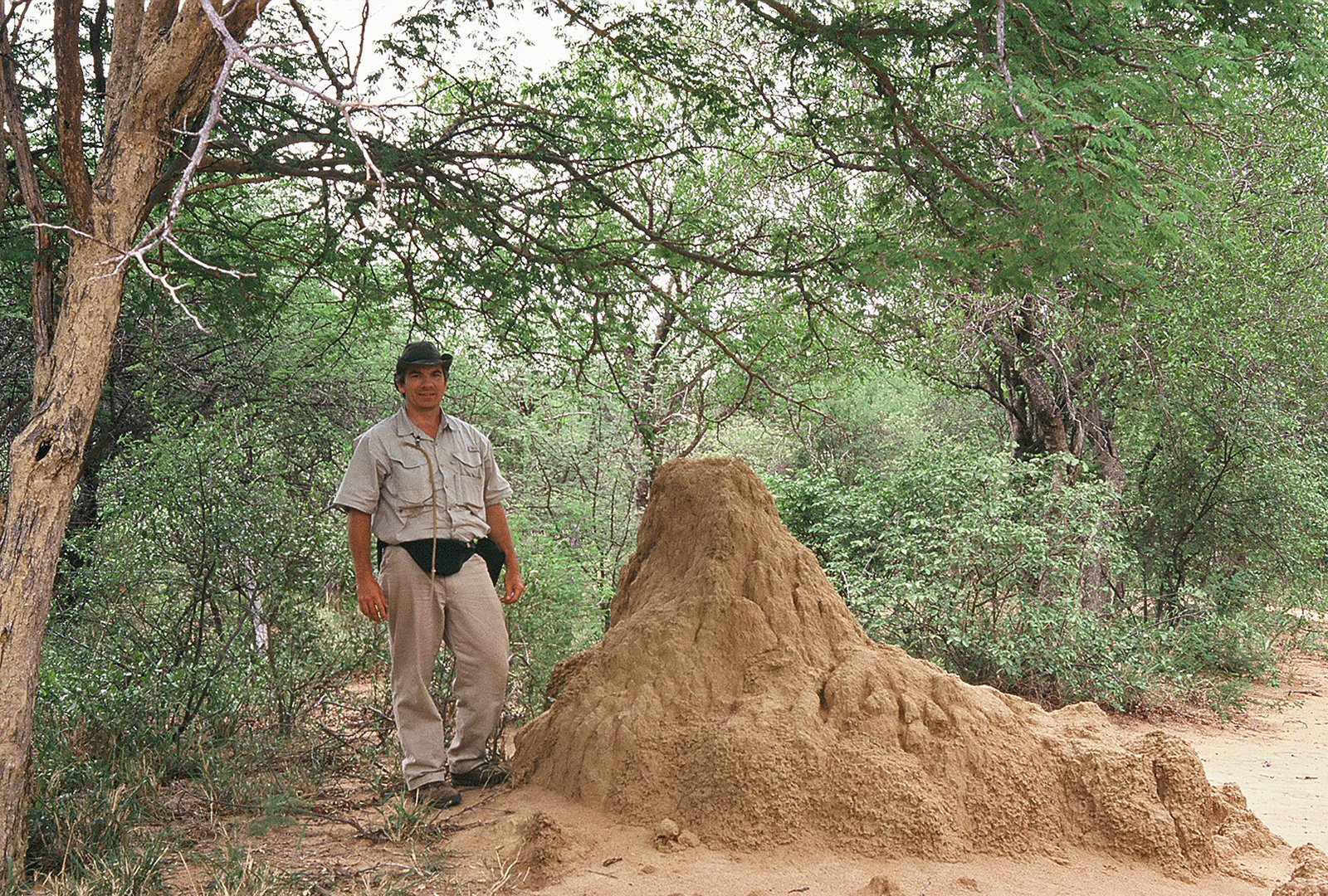
Photos: (above) me standing next to a termite mound near the Waterberg, Northern Province (photo by Chuck Bellamy); (left) Evides pubiventris (family Buprestidae, tribe Evidiini) suns itself on high terminal foliage of Lannea discolor (family Anacardiaceae), Waterberg, Northern Province.

Two new species of Agrilus from Mexico

ResearchBlogging.orgThe enormous, cosmopolitan genus Agrilus (family Buprestidae – commonly called jewel beetles or metallic woodboring beetles) contains nearly 4,000 described species (Bellamy 2008). With many more still awaiting description, it is perhaps the largest genus in the entire animal kingdom (Bellamy 2003). Agrilus species are primarily twig and branch borers, utilizing recently dead wood for larval development – although there are notable exceptions, e.g. Agrilus anxius (bronze birch borer), A. bilineatus (twolined chestnut borer), and A. planipennis (emerald ash borer), which attack the trunks of living trees and, thus, are of significant economic importance in forest and ornamental landscapes. Host specificity among Agrilus species ranges from highly monophagous – associated exclusively with a single plant species – to rather oliphagous – utilizing several, usually related, plant genera. Adults of Agrilus species are most often found on the foliage of their larval hosts and do not generally visit flowers, as is common in some other genera (e.g., Acmaeodera and Anthaxia). Interestingly, despite the diversity and worldwide distribution of the genus, no species of Agrilus are known to be associated with coniferous plants – a fact that has limited their expansion into the vast northern boreal forests.

Texas, Bexar Co., San Antonio, nr. Fort Sam Houston, em. 25.iv-14.v.1997 ex Phoradendron tomentosum coll. ii.1997, D. Heffern & D. W. SundbergAs can be imagined by its enormity, a comprehensive understanding of the genus will remain a distant goal for many years. Progress will come incrementally, as formal descriptions of new species gradually improve our knowledge of the fauna that exists in each of the world’s main biogeographic provinces. In a recent issue of the online journal Zootaxa, Dr. Henry Hespenheide (UCLA) describes two new species of Agrilus from Mexico. These two species are interesting because of their association with ‘mistletoe’ plants in the genus Phoradendron (family Viscaceae1), obligate hemiparasites that attach to branches and stems of various woody trees and shrubs in tropical and warm temperate regions of the New World. Plants in this genus are known to support a variety of host-restricted insect herbivores, principally in the orders Hemiptera, Coleoptera and Lepidoptera. A single buprestid species has been associated with Phoradendron to this point – Agrilus turnbowi, recently described from specimens reared from dead stems of Phoradendron tomentosum attached to mesquite (Prosopis glandulosa) in southern Texas (Nelson 1990) and pictured here from a specimen in my collection that was reared from dead mistletoe collected at the type locality. At the time of its description, this species was not relatable to any of the other known species in the genus.

1 The Angiosperm Phylogeny Group (2003) includes the Viscaceae in a broader circumscription of the family Santalaceae. However, recent molecular studies suggest the Santalaceae are polyphyletic, with strong support for Viscaceae as a distinct, monophyletic clade (Der & Nickrent 2008).

The two new Mexican species – A. andersoni from Guerrero and Puebla (Figs. 1-3), and A. howdenorum from Oaxaca (Figs. 4-6) – are apparently related to A. turnbowi, which they resemble by their purplish-red coloration and complex pattern of golden setae on the elytra. They are also superficially very similar to each other but differ most notably in size and the overall color and pattern of setae on the elytra.

Figures 1–3. Agrilus andersoni Hespenheide: 1. dorsal habitus; 2. lateral habitus (scale bar indicates 2.0 mm); 3. genitalia of male (scale bar indicates 0.5 mm) (from Hespenheide 2008).

Figures 4–6. Agrilus howdenorum Hespenheide: 4. dorsal habitus; 5. lateral habitus (scale bar indicates 2.0 mm); 6. genitalia of male (scale bar indicates 0.5 mm) (from Hespenheide 2008).

Hespenheide speculates that the color and pattern of the golden setae on the elytra may serve to make the beetles less conspicuous by disruptive coloration, noting the similar coloration of the setae to the leaves of Phoradendron as seen in the photograph of Agrilus howdenorum on its host plant (Fig. 7). This form of crypsis may also be enhanced by the purplish-red ground coloration of the adult, which resembles that of the small, darkened blemishes often observed on the foliage of these plants.

Figure 7. Agrilus howdenorum adult on mistletoe host plant near Diaz Ordaz, Oaxaca, México. The golden setae on the elytra are similar in color to the leaves of the mistletoe and may function as a disruptive color pattern. Photograph by C.L. Bellamy (from Hespenheide 2008).

REFERENCES

Angiosperm Phylogeny Group. 2003. An update of the Angiosperm Phylogeny Group classification for the orders and families of flowering plants: APG II. Botanical Journal of the Linnean Society, 141: 399-436.

Bellamy, C. L. 2003. The stunning world of jewel beetles. Wings, Essays on Invertebrate Conservation, 26(2): 13-17.

Bellamy, C. L. 2008. A World Catalogue and Bibliography of the Jewel Beetles (Coleoptera: Buprestoidea), Volume 4: Agrilinae: Agrilina through Trachyini. Pensoft Series Faunistica No. 79, 722 pp.

Der, J. P. & D. L. Nickrent. 2008. A Molecular Phylogeny of Santalaceae (Santalales). Systematic Botany, 33(1):107-116.

Hespenheide, H. A. (2008). New Agrilus Curtis species from mistletoe in México (Coleoptera: Buprestidae) Zootaxa, 1879, 52-56

Nelson, G. H. 1990. A new species of Agrilus reared from mistletoe in Texas (Coleoptera: Buprestidae). The Coleopterists Bulletin, 44(3):374-376.

A new species of Xenorhipus from Baja California

ResearchBlogging.orgA few months ago I discussed Trichinorhipis knulli of the tribe Xenorhipidini (family Buprestidae). Members of this tribe exhibit highly sexually dimorphic antennae, with the distal segments of the male antennae highly modified into a very extended flabellate or lamellate condition. The surfaces of the flabellae/lamellae are covered with numerous, presumably olfactory sensillae that are lacking on female antennae (which retain the unmodified serrate condition), strongly suggesting a function involving detection of female sex pheromones. Although chemosensory structures are present on the antennae of nearly all buprestids, the extreme modification exhibited by the males of species in this tribe is not a common occurrence. Nevertheless, similar modifications have evolved independently in a few other genera within the family, including Knowltonia (four species in western North America), Mendizabalia and Australorhipis (monotypic genera in South America and Australia, respectively), and two species of the enormous Australian genus Castiarina. Indeed, males of Knowltonia and the two Castiarina species possess what might be termed ‘bipectinate’ or ‘biflabellate’ antennae due to dual projections from the terminal antennomeres (see Bellamy & Nylander 2007 for a more complete discussion of male antennal modifications in Buprestidae). The tribe Xenorhipidini is the most diverse group in which these modifications have arisen, comprised of the monotypic Trichinorhipis from California and the closely related Hesperorhipis (four species in Arizona and California) and Xenorhipis (until now, 14 species from North and South America and the West Indies).

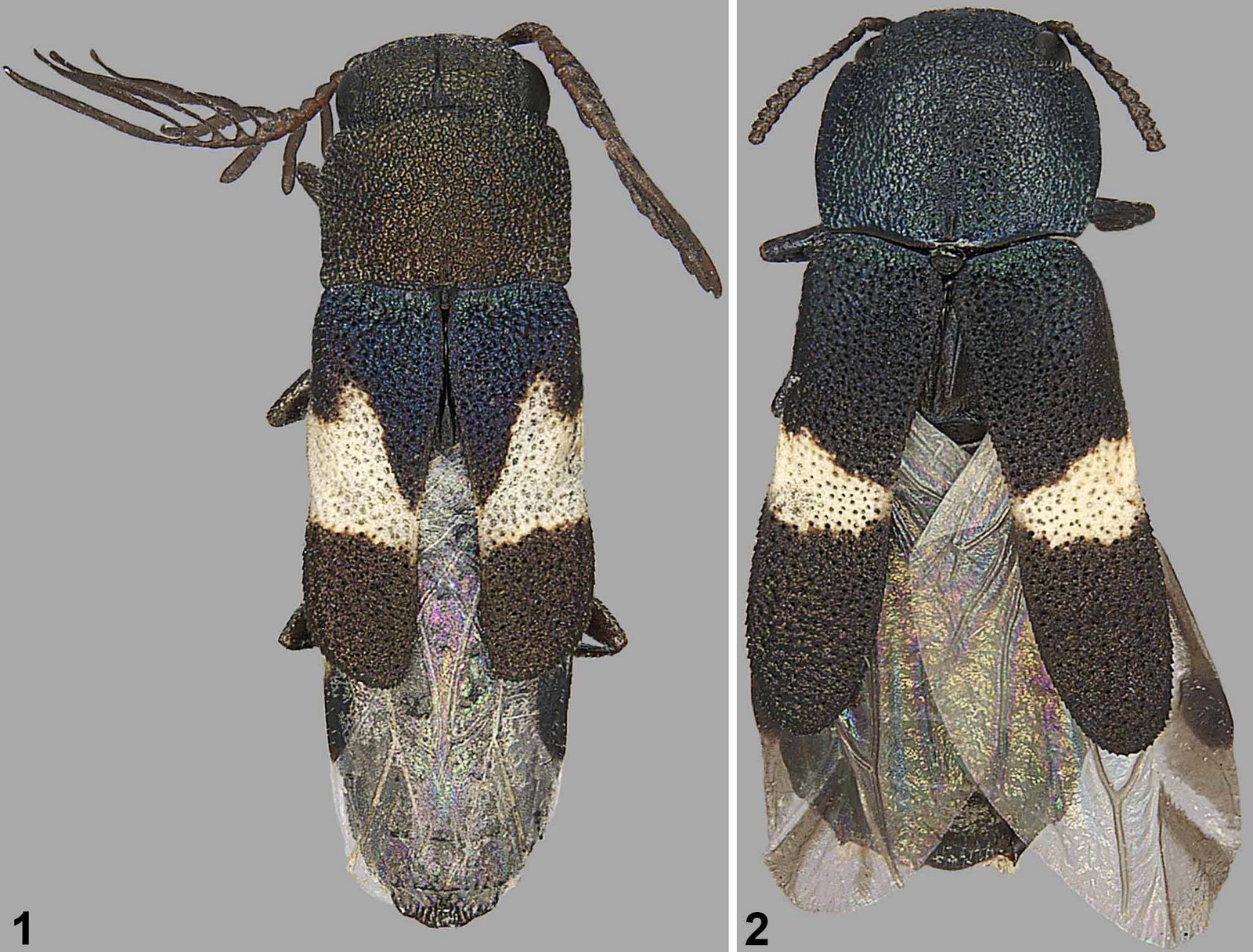
Xenorhipis bajacalifornica Westcott, 2008 – holotype ♂ (1) & allotype ♀ (2).
Photos by Steve Valley (Oregon Department of Agriculture).

In a recent issue of the online journal Zootaxa, Rick Westcott (Oregon Department of Agriculture) describes a new species of Xenorhipis from the Cape Region of Baja California Sur, Mexico. Although assigned to the genus Xenorhipis, the new species – X. bajacalifornica – seems to bridge the gap between the genera Xenorhipis and Hesperorhipis. As currently recognized, Xenorhipis is distinguished from Hesperorhipis by the shape of the posterior coxal plates, which are scarcely narrowed laterally in the former genus, while in the latter genus they are triangular and with the hind margin strongly oblique. In X. bajacalifornica the posterior coxal plates are somewhat triangular but not as acute laterally as in some species of Hesperorhipis. Xenorhipis bajacalifornica also differs from other described Xenorhipis in its strongly abbreviated elytra, which in males barely reach the second ventrite – similar to species of Hesperorhipis. Other described Xenorhipis exhibit less abbreviated elytra, which cover at least the first three ventrites and in some species almost the entire abdomen. Despite these similarities to Hesperorhipis, a consistent distinguishing character between the two genera was found in the male antenna – in Xenorhipis the flabellar processes begin with the second antennomere, while in Hesperorhipis they begin with the third. It was on this basis that the new species was assigned to the genus Xenorhipis. (The genus Trichinorhipis differs from both Xenorhipis and Hesperorhipis by its rounded rather than quadrate pronotum and its unabbreviated elytra that cover the entire abdomen and has, as a result, been placed in its own subtribe.)

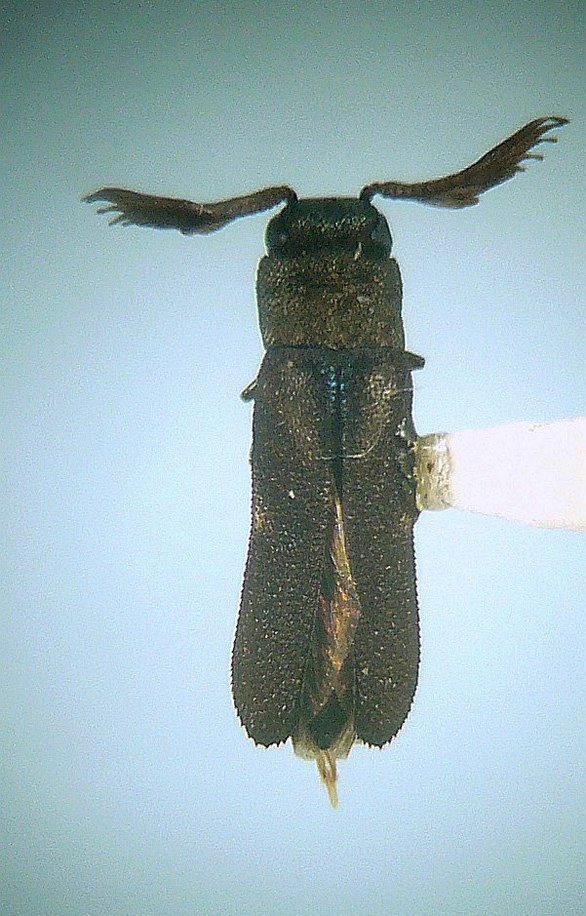
Xenorhipis brendeli ♂Xenorhipis brendeli ♀The photos left show the male (L) and female (R) of Xenorhipis brendeli, the only species in the tribe occurring in eastern North America (west to Minnesota and eastern Texas). Adults of this species are not commonly encountered and have been collected on a variety of deciduous hardwoods but reared almost exclusively from species of hickory (genus Carya). These individuals were reared from dead branches collected in southeastern Missouri – the male from pecan (Carya illinoensis) and the female from shellbark hickory (Carya laciniosa). The male exhibits the scarcely abbreviated elytra that cover almost the entire abdomen (as discussed above). Stan Wellso reported large numbers of males attracted to caged live females in Texas, apparently responding to sex pheromones released by the females.

Xenorhipis osborni ♀Xenorhipis osborni ♂This is another species in the genus – Xenorhipis osborni – known from west Texas. Joseph Knull described the species in 1936 from specimens collected in the Davis Mountains on whitethorn acacia (Acacia constricta), but larval hosts remained unknown until I reared a series of these specimens from dead branches of black acacia (Acacia rigidula) collected above the Pecos River in Val Verde County. I’ve also reared a few specimens from dead branches of catclaw acacia (Acacia greggii) collected in Big Bend National Park, and I wouldn’t be surprised if it breeds in other species of acacia. Again, in this speices the elytra are only slightly abbreviated, though more so than in Xenorhipis brendeli above and also more so in the male (L) than in the female (R). The male of this species is one of the prettiest I’ve encountered in the tribe.

Hesperorhipis albofasciatus ♂Hesperorhipis albofasciatus ♀The genus Hesperorhipis is illustrated here by these photos of H. albofasciatus. These specimens were reared by Rick Westcott from dead branches of walnut (Juglans sp.) – its only known host – collected in Tulare County, California. The elytra in this species are much more abbreviated than in Xenorhipis brendeli and X. osborni but similar to those of X. bajacalifornica – again with the male (L) exhiting greater abbreviation than the female (R). The three remaining species of Hesperorhipis exhibit even more highly abbreviated elytra than H. albofasciatus.

Dr. Charles Bellamy (California Department of Food and Agriculture) is currently revising the tribe. It will be interesting to see how, ulimately, he treats Xenorhipis and Hesperorhipis, given the blended characters exhibited by some species.

REFERENCE

Westcott, R. L. (2008). A new species of Xenorhipis LeConte and of Mastogenius Solier from Mexico, with a discussion of Chrysobothris ichthyomorpha Thomson and its allies and notes on other Mexican and Central American Buprestidae (Coleoptera) Zootaxa, 1929, 47-68