And the results are in…

I recently entered my first photo contest, a local competition sponsored by the Webster Groves Nature Study Society (of which I have been a member for ~30 years), and although the competition was limited to its few hundred members there were some serious cash prizes on offer. Being a noob at photo contests and a still relative newcomer to photography in general, I wasn’t sure what to expect. I thought my photos might be good enough to compete, but I also knew I would be going up against some long-time and very skilled nature photographers. The basic rules were a maximum of two submissions in no more than three of the following categories:

  • Botany
  • Entomology
  • Ornithology
  • Landscapes/habitats

Since I’ve only photographed two birds ever, I decided to submit entries to each of the other three categories. It was an interesting competition—the judges (each category had a panel of three consisting of a WNGSS board member, a natural history expert, and a photography expert) had a chance to see all of the photographs prior to the event (held last night) and select the top ten from each category, but the rest of the judging was done live at the event. Eventually, from each category a 1st place, 2nd place, and 3rd place photo was selected. The 12 winning photographs were then displayed in a continuous loop, and everybody attending the event was allowed to vote for one grand prize winner. The grand prize winner had to receive more than 50% of the vote, so a few runoff rounds were required to decide the final winner.

How did it go for me? I had a pretty good night, with three winning photographs:

Entomology—3rd place

Cicindela repanda (Bronze Tiger Beetle) | St. Louis Co., Missouri

Cicindela repanda (Bronze Tiger Beetle) | St. Louis Co., Missouri

Botany—2nd place

Hamammelis vernalis (Ozark witch hazel) | Iron Co., Missouri

Hamammelis vernalis (Ozark witch hazel) | Iron Co., Missouri

Entomology—1st place

Arctosa littoralis (beach wolf spider) | Lewis Co., Missouri

It was a thrill for me to learn that, out of the six photographs I submitted (and I really didn’t think my two landscape submissions were competitive to begin with), three were among the 12 final prize winners. That also made them eligible for the grand prize, but in this case I didn’t really expect the larger membership (which has a lot of birders) would really take to my closeup insect photographs. To my surprise, the first round of voting produced four finalists—two of which were my insect photos! The first runoff vote eliminated one photo—but not either of mine, and the second runoff eliminated one more photo—but again neither of mine. I had won the grand prize without yet knowing which photo would be the winner! In the end, the tiger beetle took the top prize. Personally, I was happy about that, because even though the photo took only 3rd place in the entomology competition, I thought it was the stronger of the two photos based on composition, the time and effort it took to work the beetle to finally “get the shot” (not that the wolf spider photo didn’t also take a lot of effort to get that close), and the natural history behavior that it captured (stilting and sun-facing for thermoregulation). I know blog commenting is becoming passé, but if you have any particular thoughts about these photos, good or bad, I would love to hear from you.

Overall I would have to say that, winner or not, participating in a photo competition was an extraordinary learning opportunity for me as I try to hone my craft. Listening to the comments of the judges in all of the categories, both on the natural history and the technical aspects of the photographs, gave me a lot of insight into how I might further improve my technique and take photographs that can be appreciated on both technical and artistic grounds. More importantly, the cash was nice, but the motivation to keep trying that I got out of the experience was priceless!

Copyright © Ted C. MacRae 2013

Ceti Eel offspring?

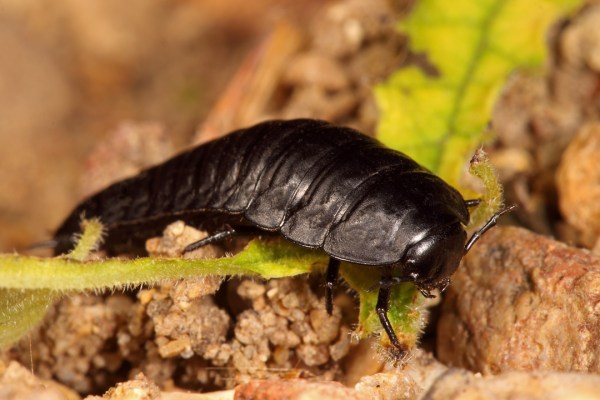
Nicrophila americana

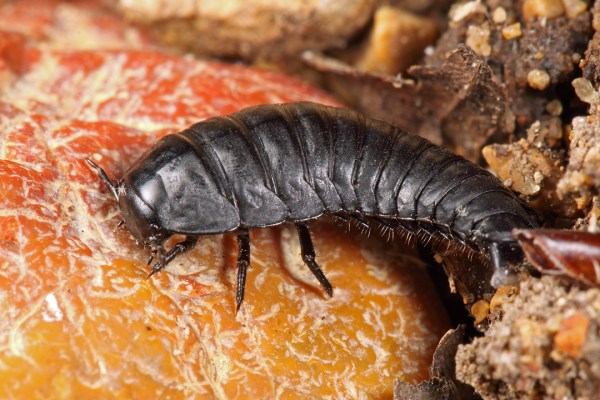
Nicrophila americana (American carrion beetle) larva | Sam A. Baker State Park, Wayne Co., Missouri.

If this creature was a tad bit slimier, you might think it had just been plucked from underneath the armor of an adult Ceti Eel and was looking to slip inside the ear of Chekov or some other human to wrap itself around the unsuspecting victim’s cerebral cortex. In reality, this creature lives not on Ceti Alpha V., but right here on earth, and while it’s natural history may not include making human hosts “extremely susceptible to suggestion“, it does include an appetite for dead flesh and the maggots that try to compete for it. Say hello to the larva of Nicrophila americana (American carrion beetle), a member of the family Silphidae (carrion and burying beetles) (not to be confused with the endangered Nicrophorus americanus, or American burying beetle). Like most beetles, the larvae can be difficult to recognize as such due to its very different form compared to the adult. However, the one-segmented tarsi, distinct head, presence of chewing mouthparts, and presence of spiracles along the sides of the body give the clues to its identity.

Necrophila americana

While not the offspring of a Ceti Eel, its habits are almost as… er, disgusting!

The genus name (literally meaning “attracted to corpses“) is a perfect descriptor of this beetle’s natural history. Adults are attracted to animal carcasses, where they lay their eggs and prey on maggots (fly larvae) as they hatch to give a competitive advantage to their own larvae once they hatch. The larvae also will eat maggots and other larvae within the carcass, along with the carcass itself. This larva had completed its development and was searching the ground for a suitable spot to dig a burrow for pupation and eventual emergence as an adult.

Copyright © Ted C. MacRae

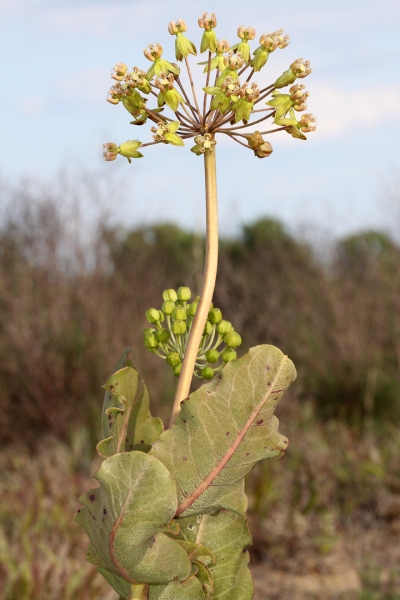
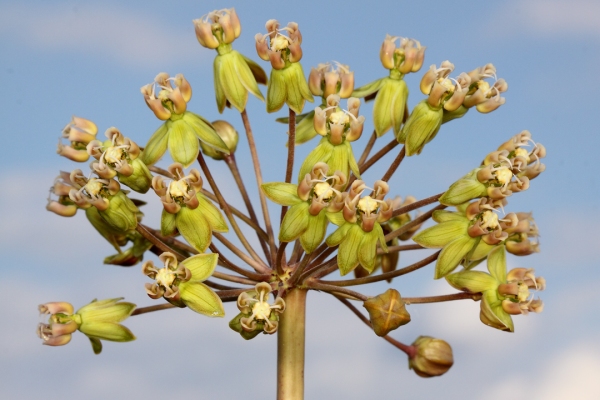
My favorite of Missouri’s milkweeds

Milkweeds of the genus Asclepias are among my favorite plants, although I’m not fully sure why that is the case. Sure, their blooms are conspicuous and colorful, but so are those of many other plants. Perhaps one reason is their status as hosts for milkweed beetles (genus Tetraopes, family Cerambycidae). Four species of these beetles occur in Missouri, including the rare T. texanus. Another reason might be their diversity—in Missouri alone there are 16 different species, ranging from the ubiquitous common milkweed (A. syriaca) to the federally endangered Mead’s milkweed (A. meadii). The latter is one of six milkweed species occurring in Missouri that I have not yet seen, so I suppose I should withhold judgement until I’ve succeeding in finding all 16 species. Nevertheless, I would have to say that clasping milkweed (A. amplexicaulis) has to be my favorite of Missouri’s milkweeds.

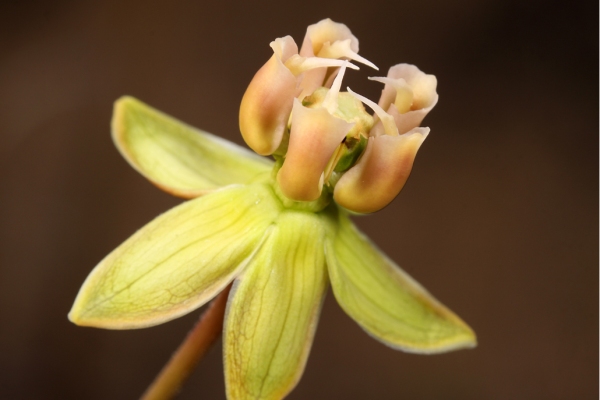
Clasping milkweed (Asclepias amplexicaulis) | Sand Prairie Conservation Area, Scott Co., Missouri

Clasping milkweed (Asclepias amplexicaulis) | Sand Prairie Conservation Area, Scott Co., Missouri

Clasping milkweed (also known as sand milkweed—not to be confused with A. arenaria occurring further west in the Great Plains) is said to occur sporadically throughout Missouri in prairies, glades, rocky open woods, roadsides, and railroads. However, I have seen this species only a few times—all in dry sand habitats in the southeastern Mississippi Alluvial Plain (or, the “bootheel” as we say here in Missouruh). Until a few  years ago the only time I had ever seen this plant was many years in an eroded sandy opening on Crowley’s Ridge (an elevated ridge of alluvium and loess deposited during the last glacial maximum). Those plants were not in flower, but their was no mistaking their identity due to their erect stems and broad, cordate-clasping, tomentulose leaves with wavy margins. I would see this plant again a few years ago during my first visit to Sand Prairie Conservation Area, and although I would see it again on many subsequent visits, at no time did I succeed in seeing the blooms.

This species is characterized by broad, clasping, tomentulose leaves with wavy margins.

Broad, clasping, tomentulose leaves with wavy margins.

Finally, last year, I returned to Sand Prairie during late April (a weather-delayed installment of my Annual-Birthday-First-Bug-Collecting-Trip-of-the-Year). I had actually gone there to photograph Missouri’s unique intergrade population of the Festive Tiger Beetle (Cicindela scutellaris), but the weather was cool and the beetles apparently had decided to remain in their burrows. A bad day of collecting, however, is still better than a good day of just about anything else—perhaps because there are almost always consolation prizes, and my consolation prize on this day was my first sight of clasping milkweed plants in full bloom.

A single inflorescence atops each stem.

A single inflorescence atops each stem.

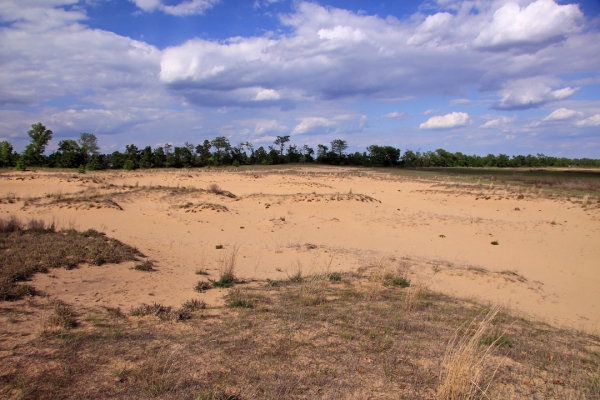
I may not be exactly sure why I like milkweeds so much, but I think I now know why I like clasping milkweed above all others. The softly colored green and pink blossoms are exquisite, to be sure, but more importantly the species is firmly linked in my mind to one of my favorite Missouri habitats. I imagine that clasping milkweed might be an attractive, if somewhat gangly, addition to a native wildflower garden. However, I’m not sure I would enjoy cultivated plants in my garden as much as I do seeing wild plants in one of Missouri’s rarest and most endangered natural communities.

Sand Prairie Conservation Area, Scott Co., Missouri

Sand Prairie Conservation Area, Scott Co., Missouri

Copyright © Ted C. MacRae 2013

Backyard gems

I’ve been fortunate to have the chance to travel far and wide in my searches for insects—from the Gypsum Hills of the Great Plains and Sky Islands of the desert southwest to the subtropical riparian woodlands of the Lower Rio Grande Valley, tropical thorn forests of southern Mexico and veld of southern Africa. No matter how far I travel, however, I’m always happy to return to the Missouri Ozarks. It is here where I cut my entomological teeth so many years ago, and though I’ve now scrabbled around these ancient hills for more than three decades it continues to satisfy my thirst for natural history. Though not nearly as expansive as the Great Plains, there are nevertheless innumerable nooks and crannies nestled in the Ozarks, and I find myself constantly torn between looking for new spots (it would take several lifetimes to find them all) and going back to old favorites. Living in the northeastern “foothills” in the outskirts of St. Louis provides an ideal vantage for exploration; however, sometimes I am truly amazed at the natural history gems that can be found within a stone’s throw from my house. Some examples I’ve featured previously include Shaw Nature Reserve, home to a hotspot of the one-spotted tiger beetle, Castlewood State Park, where I found a gorgeously reddish population of the eastern big sand tiger beetle, and Victoria Glades Natural Area, site of the very first new species (and perhaps also the most beautiful) that I ever collected.

Englemann Woods Natural Area | Franklin Co., Missouri

Today I found another such area—Englemann Woods Natural Area, and at only 5 miles from my doorstep it is the closest natural gem that I have yet encountered. One of the last old-growth forests in the state, its deep loess deposits on dolomite bedrock overlooking the Missouri River valley support rich, mesic forests on the moister north and east facing slopes and dry-mesic forests on the drier west-facing slopes dissected by rich, wet-mesic forests with their hundreds-of-years-old trees. A remarkable forest of white oak, ash, basswood and maple in an area dominated by monotonous second-growth oak/hickory forests.
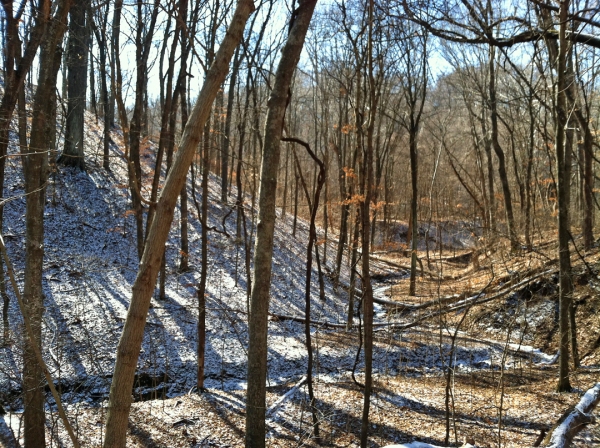
Englemann Woods Natural Area

Steep north-facing slopes border the Missouri River valley.

It is not, however, the 200-year-old trees that will bring me back to this spot, but rather the understory on the north and east-facing slopes. Here occur some of the richest stands of eastern hornbean (Ostrya virginiana) that I have ever seen. This diminutive forest understory inhabitant is not particularly rare in Missouri, but as it prefers rather moist upland situations it is not commonly encountered in the dry-mesic forests that dominate much of the Ozarks. Stands of this tree, a member of the birch family (Betulaceae) are easy to spot in winter due to their habit of holding onto their dried canopy of tawny-brown leaves (see photo below).
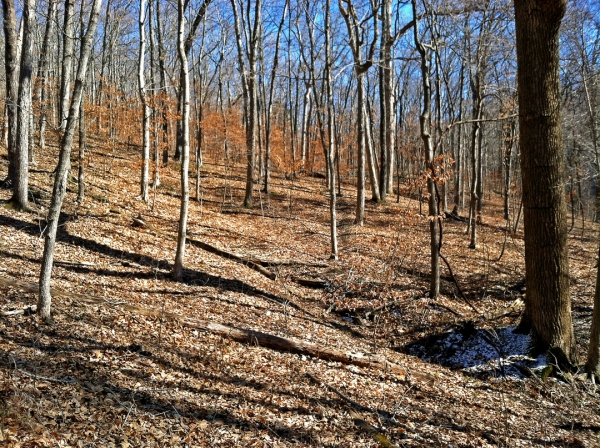
Englemann Woods Natural Area

Rich stands of eastern hornbeam (Ostrya virginiana) dominate the north- and east-slope understory.

Why am I so interested in this plant? It is the primary host of the jewel beetle species Agrilus champlaini. Unlike most other members of the genus, this species breeds in living trees rather than dead wood, their larvae creating characteristic swellings (galls, if you will) on the twigs and stems as they spiral around under the bark feeding on the cambium tissues before entering the wood to pupate and emerge as adults in spring. This species is known in Missouri from just two specimens, both collected by me way back in the 1980s as they emerged from galls that I had collected during the winter at two locations much further away from St. Louis. The presence of this rich stand of hornbeam just 5 miles from my home gives me the opportunity to not only search the area more thoroughly to look for the presence of galls from which I might rear additional specimens, but also to look for adults on their hosts during spring and (possibly, hopefully) succeed in photographing them alive.
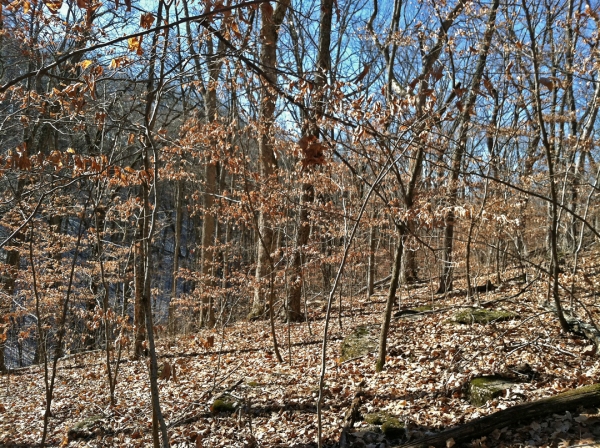
Englemann Woods Natural Area

Inside the “hornbeam forest.”

Another “draw” for me is the restoration work that has begun on some of the west-facing slopes in the areas. Pre-settlement Missouri was a far less wooded place than it is today, as evidenced by the richly descriptive writings penned by Henry Schoolcraft during his horseback journey through the Ozarks in the early 1800’s. At the interface between the great deciduous forests to the east and the expansive grasslands to the west, the forests of Missouri were historically a shifting mosaic of savanna and woodland mediated by fire. Relatively drier west-facing slopes were more prone to the occurrence of these fires, resulting in open woodlands with more diverse herbaceous and shrub layers. At the far extreme these habitats are most properly called “xeric dolomite/limestone prairie” but nearly universally referred to by Missourians as “glades”—islands of prairie in a sea of forest! I have sampled glades extensively in Missouri over the years, and they are perhaps my favorite of all Missouri habitats. However, it is not future glades or savannas that have me excited about Englemann Woods but rather the availability of freshly dead wood for jewel beetles and longhorned beetles resulting from the selective logging that has taken place as a first step towards restoration of such habitats on these west-slopes. The downed trees on these slopes and subsequent mortality of some still standing trees that is likely to result from the sudden exposure of their shade adapted trunks to full sun are likely to serve as a sink for these beetles for several years to come. I will want to use all the tools at my disposal for sampling them while I have this opportunity—beating, attraction to ultraviolet lights, and fermenting bait traps being the primary ones. It looks like I’d better stock up on molasses and cheap beer!
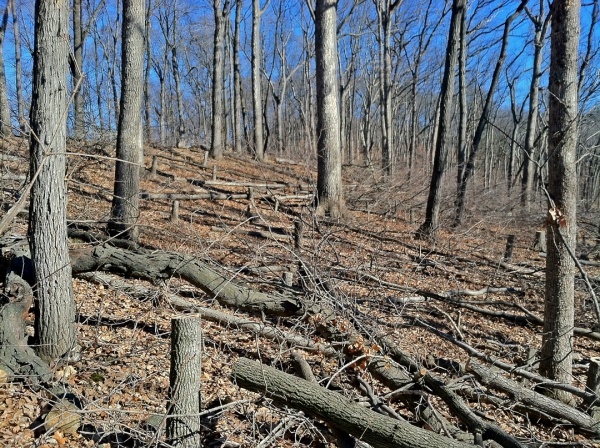
Englemann Woods Natural Area

Restoration efforts on the west-facing slopes begins with selective logging.

Eastern red-cedar (Juniperus virginiana) is native to Missouri, but in our time it has become a major, invasive pest tree. The suppression of fire that came with settlement also freed this tree from a major constraining influence on its establishment in various habitats around the state, primarily dolomite/limestone glades. Nowadays most former glade habitats, unless actively managed to prevent it, have become choked with stands of this tree, resulting in shading out of the sun-loving plants that historically occurred much more commonly in the state. Untold dollars are spent each year by landscape managers on mechanical removal and controlled burns to remove red-cedar and prevent its reestablishment in these habitats. There is one habitat in Missouri, however, in which eastern red-cedar has reigned supreme for centuries or possibly millenia—dolomite/limestone bluff faces.
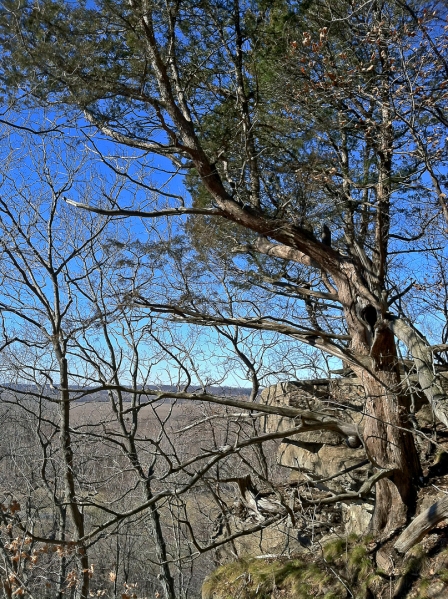
Juniperus virginiana

Craggly, old Eastern red-cedars (Juniperus virginiana) cling tenaciously to the towering dolomite bluffs.

With little more than a crack in the rock to serve as a toehold, red-cedars thrive where no other tree can, growing slowly, their gnarled trunks contorted and branches twisted by exposure to sun and wind and chronic lack of moisture. Some of the oldest trees in Missouri are red-cedars living on bluffs, with the oldest example reported coming from Missouri at an incredible 750–800 years old. There is something awe-inspiring about seeing a living organism that existed in my home state before there were roads and cars and guns. These ancient trees are now an easy drive from my house (though a rather strenuous 300-ft bushwhacking ascent to reach the bluff tops)—they seem ironically vulnerable now after having endured for so long against the forces of nature. For me, they will serve as a spiritual draw—a reason to return to this place again regardless of what success I might have at finding insects in the coming months.
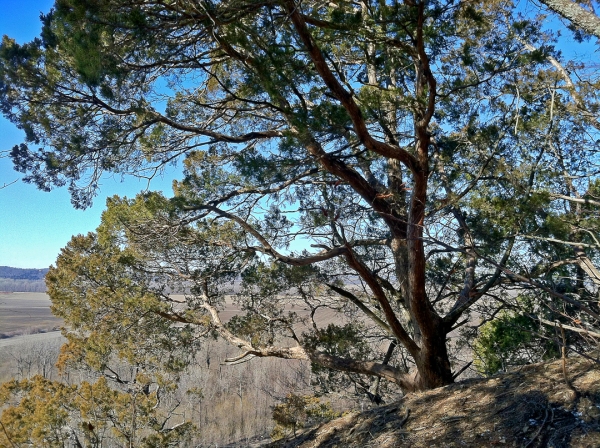
Juniperus virginiana

This tree may pre-date Eurpoean settlement.

Aplectrum hyemale

Adam-and-Eve orchid (Aplectrum hyemale).

Copyright © Ted C. MacRae 2013

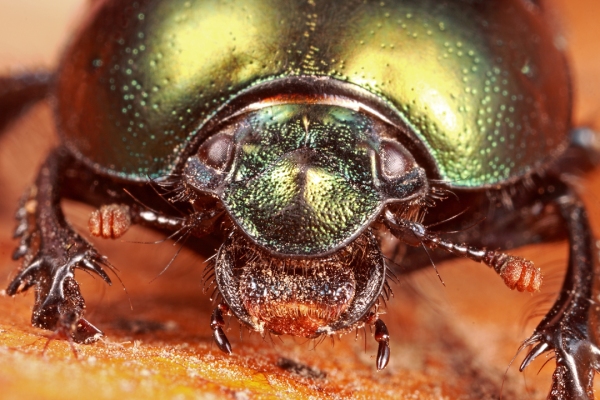
You know what bugs me about dung beetles?…

...Their silly little shit-eating grins!

…Their silly little shit-eating grins!

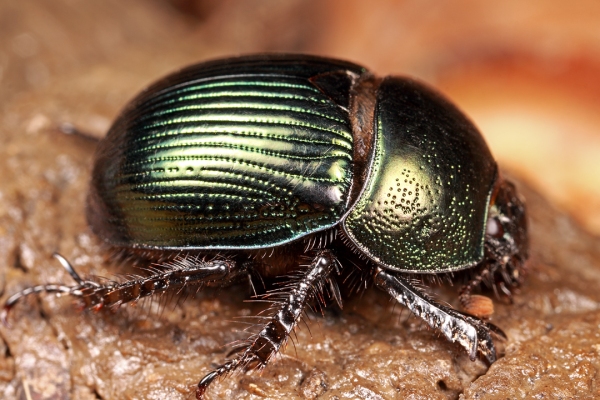
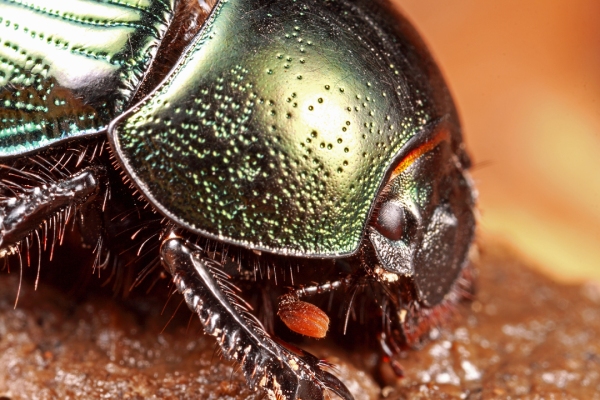
Okay, I know this isn’t a true dung beetle, but this earth-boring scarab (family Geotrupidae) is close enough that I’ll take the opportunity to use one of my favorite dung beetle jokes.¹ This is one of several individuals that I saw on a late October hike along the North Fork Section of the Ozark Trail in extreme south-central Missouri (just a few miles north of the Arkansas border). I regard these beetles to represent the species Geotrupes splendidus based on the punctured elytral striae, sutural striae ending at the scutellum, bright green coloration, and obvious punctures in the lateral areas of the pronotum. Of the half dozen adults that I saw during the day, all were found singly on animal dung or on the ground nearby.  This was the most abundantly I’ve ever seen this species—up to that point I’d accumulated only a handful of specimens, always on mild days in late fall or early winter in association with animal dung on trails through high quality woodlands. The timing and circumstance is also true for Geotrupes blackburnii, the only other species in the genus that I have collected in Missouri—albeit much more commonly and abundantly than G. splendidus and easily distinguished from that species by its slightly smaller size, nearly impunctate pronotum and all black coloration.

¹ By the way, I don’t recall the provenance of that joke, other than I saw it as a one-frame cartoon, featuring two entomologists talking to each other, posted on a Department of Entomology door while I was in graduate school—way back in the early 1980s. If you know please tell me!

IMG_4000_enh_1080x720

Geotrupes splendidus miarophagus | Ozark Co., Missouri—yes, it’s sitting on shit!

An interesting contrast between this species and true dung beetles (scarabs in the subfamily Scarabaeinae and representing such genera as Copris, Phanaeus, Canthon, Onthophagus, etc.) is the fact that while this species can and does utilize dung for both larval development and adult feeding, it is not the preferred food. Rather, adults are more often found feeding on fungus, and leaf litter—tightly packed by the adult at the end of a burrow in the soil, is most often used for larval development (Howden 1055). This does not seem to be a universal feature of the genus, as the common Missouri species, G. blackburnii, does seem to prefer dung for larval development. This is not to say that either species is exclusive in its preference—both seem to be more flexible in food choice than the true dung beetles, but in reality the larval biology of a great many species in this and other genera of the family remain unknown.

IMG_3996_enh_1080x720

The opinion of scarab expert would be most helpful at this point. This species is broadly distributed across eastern North America, with eastern populations generally brighter green and western populations (e.g., here in Missouri) more often yellow-green with golden or reddish hints but ranging to dark purple. In fact, all but one of the Missouri specimens in my collection are dark purple, the other being green similar to the six beetles I saw on this date. Howden (1955) recognized the western forms as a separate subspecies, G. splendidus miarophagus (originally described as the species G. miarophagus by Thomas Say). These two subspecies are listed as valid in the recent checklist of Nearctic Scarabaeoidea (Smith 2003), and the specimens in my collection from Missouri are labeled as such by scarab expert Bill Warner. Despite this, most other sources I’ve checked—including BugGuide—list G. miarophagus as a synonym of G. splendidus. Color alone—especially when it is as variable as in this species—seems weak justification for subspecific distinction. Howden (1955) mentions a curious case of G. s. miarophagus utilizing fresh grass clippings for larval development; however, it is difficult to imagine this as anything more than just a very recent adaptation. If there are other reasons supporting subspecific distinction besides deference to Henry Howden, I’d be interested in knowing what they are.

REFERENCES:

Howden, H. F. 1955. Biology and taxonomy of North American beetles of the subfamily Geotrupinae with revisions of the genera Bolbocerosoma, Eucanthus, Geotrupes and Peltotrupes (Scarabaeidae). Proceedings of the United States National Museum 104:151–319.

Smith, A. B. T. 2003. Checklist of the Scarabaeoidea of the Nearctic Realm. Version 3. Electronically published, Lincoln, Nebraska. 74 pp.

Copyright © Ted C. MacRae 2013

These are a few of my favorite trees

Adrian Thysse recently posted a video of a talk by Wayne Maddison titled “Jumping Spider Melodies,” given November 2012 at the Joint Annual Meeting of the Entomological Society of Canada and the Entomological Society of Alberta. It was a fascinating talk that revealed some interesting correlations between the phylogeny and geographical patterns of distribution of jumping spiders—those bright-eyed, bouncy, almost kitten-like darlings of the spider world. One quote from the talk, however, that stood out for me above all others went something like “Scientists have a rational motivation to seek truth and an emotional motivation to seek beauty.” I think this is true especially for biologists and natural historians—who among us that studies that natural world in adulthood didn’t start out with a love of the outdoors as a child? For me it was the woods that ignited my passion, and still today nothing rejuvenates my spirit like the overwhelming beauty and solitude of the forest.

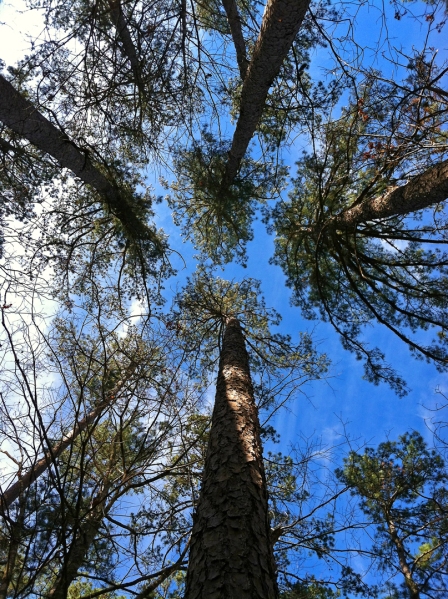
Shortleaf pine (Pinus echinata) | Wayne Co., Missouri

Shortleaf pine (Pinus echinata) | Wayne Co., Missouri

Wintertime especially is when I enjoy my visits to the forest. Far from the cacophony of summer, my mind is free to explore the open canopy, to examine the fabric of the landscape and ponder its history—unhurried, without objective. During the summer, trees are host plants—I see them not for what they are, but for the beetles that might be on them. I identify them, sample them, assess them for where their guests might be. In winter though, without beating sheet in hand, without collecting vials in the pocket, I see trees as works of art—freed from their summer cloaks, living skeletons on a living landscape.

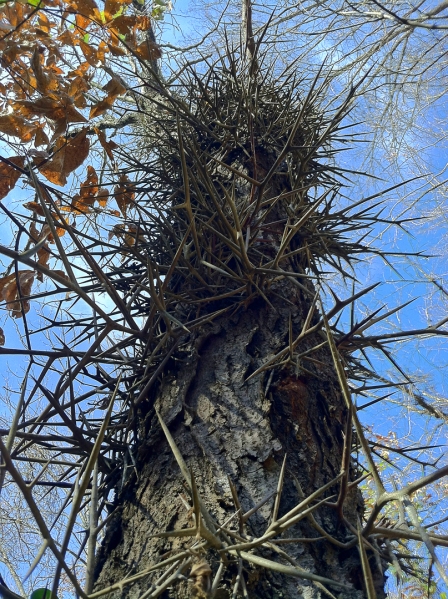
Honey locust (Gleditsia triacanthos) | Wayne Co., Missouri

Honey locust (Gleditsia triacanthos)

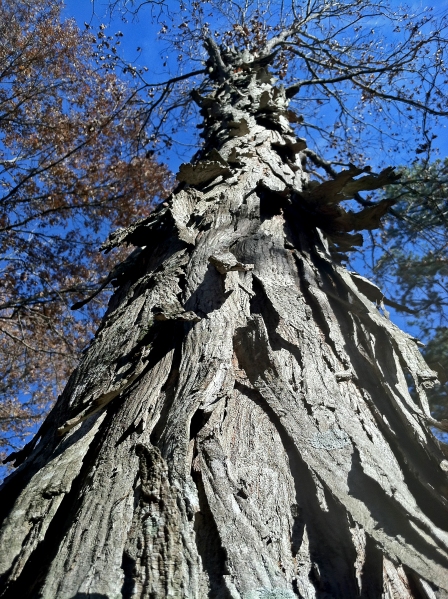
Different trees are my favorite at different times for different reasons. Blazing hot orange sugar maples (Acer saccharum) at peak fall color, stately white oaks (Quercus alba) with their ash-gray branches, broad-crowned post oaks (Quercus stellata) dotting a remnant savanna, or even gnarled, ancient red-cedars (Juniperus virginiana) clinging tenuously to life on the edge of a dolomite bluff. Most often for me, however, the beauty is in the bark. The deeply fissured, reddish plates of shortleaf pine (Pinus echninata), the terrifyingly thorned trunks of honey locust (Gleditsia triacanthos), the shaggy, peeling strips of shagbark hickory (Carya ovata). Even in their winter nakedness, the bark of these trees gives them year-round personality that is lacking in lesser-barked trees.

Shagbark hickory (Carya ovata) | Wayne Co., Missouri

Shagbark hickory (Carya ovata)

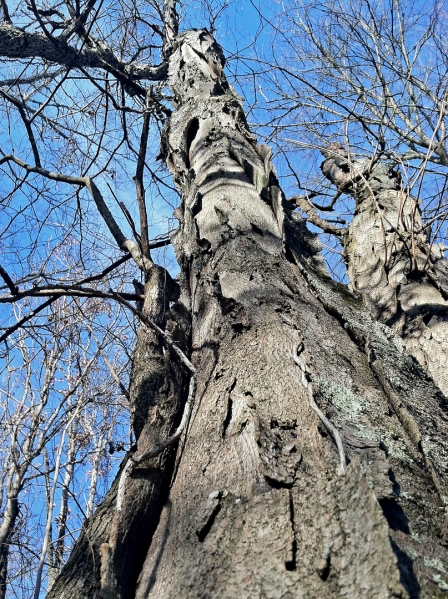
Honey locust (Gleditsia triacanthos) - thornless individual | Wayne Co., Missouri

Honey locust (Gleditsia triacanthos) – thornless individual

The tree in this post were photographed during November 2012 while hiking the Wappapello Section of the Ozark Trail in the Ozark Highlands of southeastern Missouri (Wayne Co.). 

Copyright © Ted C. MacRae 2013
His name is Ralph!

E

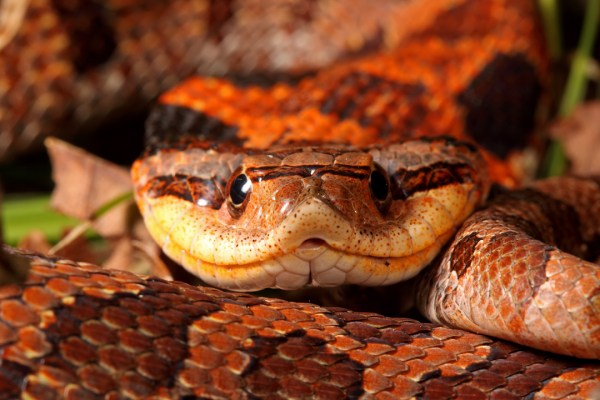
Eastern hognose snake (Heterodon platirhinos) | Wayne Co., Missouri

Until the past few years, I could probably count on my two hands the number of snakes I’d seen in the field. This despite nearly weekly outings throughout each season going back to young adulthood. I’m sure this has something to do with my search image (beetles), my primary method of looking for them (whacking tree branches with my net handle over a beating sheet), and what I wasn’t also doing at the time (looking for snakes or anything else that wasn’t a beetle). One is unlikely to see these mostly shy, secretive animals when thrashing and whacking through the bush, and even if no ruckus is made to make them scamper they can still hide in plain sight due to their wonderfully cryptic coloration. It wasn’t until I started carrying a camera and began looking for other natural history subjects rather than just focusing on collecting as many beetles as possible that I began to see snakes. And since then I’ve seen a lot of them, including a terrifyingly aggressive timber rattler, a juvenile Osage copperhead, an uncooperative dusty hognosed snake, a death-feigning western hognosed snake, a cute little western pygmy rattlesnake, a rough green snake, a juvenile timber rattler, an adult Osage copperhead, and a yellow-bellied racer. The last three were all seen at what has become for me my favorite “snake spot”—a gorgeous preserve in the southeastern Missouri Ozarks. I’m not sure what makes this place so ideal—perhaps the massive outcroppings of jumbled rhyolite alongside the clear, spring-fed, gravel-bottomed river provide ample habitat and food for a variety of species. Regardless, I have visited the preserve each April  (for my annual season-opening birthday bug collecting trip) for the past three years and never failed to see at least one snake.¹

¹ To be clear, I am not a snake collector. That said, I do not have a problem with keeping snakes in captivity, at least in principle, but I am disturbed by the frequency with which snakes and other reptiles are irresponsibly collected at levels that are unsustainable and even “poached” from protected areas. For me personally, it is enjoyment enough to see, be able to identify, and observe these gorgeous animals in their native habitats, leaving with nothing more than a digital record and my vivid memories of that brief encounter.

Eastern Hognose Snake (Heterodon platirhinos) | Wayne Co., Missouri

When threatened, hognose snakes flatten their head and neck, puff up their body, and hiss loudly.

On my most recent visit, I was hoping to once again see one of the timber rattlers that inhabit these rocky hillsides. I tip-toed up and down the rocky slopes as quietly as I could, but no such luck. On the way back, however, I spotted this colorful eastern hognose snake (Heterodon platirhinos) lying just off the path. Despite its brilliant coloration and vivid markings, it was remarkably well camouflaged and I almost walked right past it. Of course, hognose snakes are well-known for their various threat and defensive displays. I’ve experienced some of these in my previous sightings with other species (death-feigning, mouth bleeding, and foul-smelling emissions), but to my delight I got to experience their most classic behaviors—flattening of the head and neck, puffing of the body, and loud hissing. The snake repeatedly performed these behaviors as I photographed it, and because I persisted the snake apparently concluded that these tactics weren’t working. What happened next was something I was completely unprepared for.

”Sir, what’s your name?”

As the snake began trying to crawl away, it opened its mouth widely…

”Uh, his name is…”

…and out came it’s last meal (obviously a frog, but with the head and front legs already digested, too difficult to identify any further)!

”RRRAAAALLPH!”

p.s. If you didn’t get the joke, watch this clip from the classic Cheech and Chong movie, Up in Smoke.

Copyright © Ted C. MacRae 2013
An elegant living fossil…

In the insect world, hyperdiversity is the norm. More than a million species are known, and perhaps several million more await discovery. Beetles alone represent nearly a quarter of the earth’s described biota, with one genus (Agrilus in the family Buprestidae) bursting at the seams with more than 3,000 described species (Bellamy 2008). Biodiversity gone wild! While birders routinely field identify (and list) a majority of the birds they see to species, most insect enthusiasts are happy if they can simply identify their subjects to family—in most cases still leaving several hundred to several thousand possibilities for species identification. Even trained entomologists usually can identify only a tiny fraction of the insects they see and remain just as clueless about the vast majority of insects they encounter that don’t represent one of their limited number of study groups.

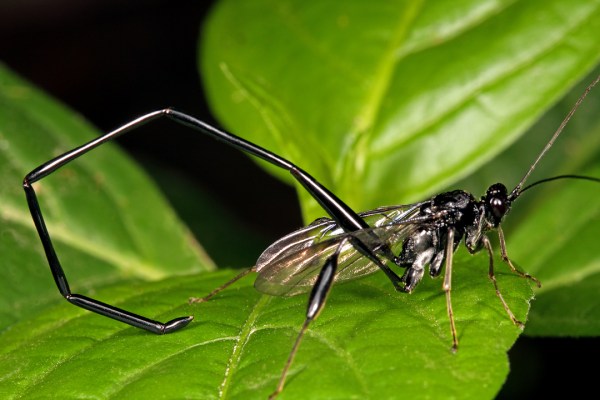
Pelecinus polyturator female | Wayne Co., Missouri

Pelecinus polyturator female | Wayne Co., Missouri

 Of course, that doesn’t mean field identification is impossible for all insects—certain groups such as butterflies, dragonflies, and tiger beetles lend themselves to field identification due to their relatively large size, bright colors, and distinctive markings. Many would also include the aculeate hymenopterans (i.e., “stinging” wasps and bees) among those groups for these same reasons. However, the vast majority of hymenopterans belong to a multitude of families characterized by tiny, parasitic species that seem (to this coleopterist’s eyes) to differ only in bafflingly minute details of wing venation and tibial spurs. (Honestly, I couldn’t tell you the difference between Tanaostigmatidae and Tetracampidae if my life depended on it!) Nevertheless, there are a small handful of parasitic hymenopterans in North America that are instantly recognizable due to their giant size (2 or more inches in length)—namely, Megarhyssa spp. (giant ichneumons) and the species shown in this post, Pelecinus polyturator (American pelecinid). Pelecinus polyturator is the only North American member of the family Pelecinidae, which itself contains only two additional species that are restricted to Mexico and Central/South America. It wasn’t always this way—fossils assignable to the family and representing 43 species in a dozen genera have been found as far back as the early Cretaceous (121–124 mya) across North America, Europe, and Asia (Grimaldi & Engel 2005). Surely this represents just the tip of the iceberg of Mesozoic and early Cenozoic pelecinid diversity, making today’s three species the last representatives of a once great lineage—”living fossils”¹ some might say.

¹ To ward off any scolding I might get from evolutionary purists, I get it; there is no such thing as a living fossil (except the T. rex skeleton in the movie “Night at the Museum”). I know that all species alive today have the same amount of evolutionary history behind them and are, if not from more immediate ancestors, highly derived compared to earlier life forms. I will admit that the term has become a bit overused as pseudoscientific shorthand for branding an organism as ‘primitive’ (another term which tends to raise hackles); however, I don’t see the problem with its use as informal reference to relatively ancient groups, usually more diverse in the past and now represented by only a few species. Innocuous shorthand is all it is.

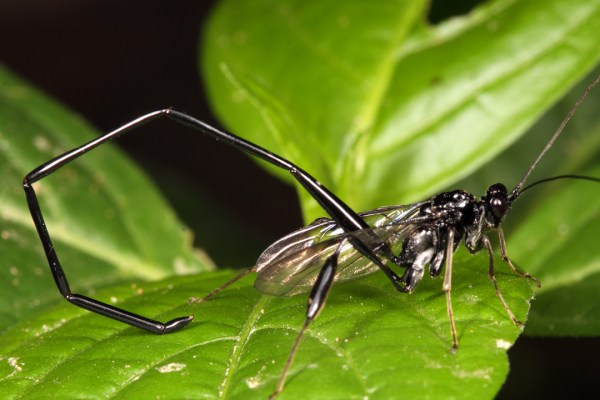
This elegant female, recognizable by her extraordinarily narrowly elongate abdomen (males have a somewhat shorter abdomen that is widened at the end), was seen back in July 2011 as she flew to a blacklight and landed on nearby foliage in a mesic bottomland forest in southeastern Missouri’s Ozark Highlands. I have seen females on occasion over the years but have not yet seen a male, which are increasingly rare in more northern latitudes of the species distribution. I missed the focus a bit on this photo (and also the other half-dozen or so shots that I took)—photographing an active subject at night on elevated foliage without a tripod is difficult to say the least! Nevertheless, after post-processing it’s a decent photograph. If you are wondering why it took me so long to post it, that’s because only recently have I gained the confidence to “clean up” poorly exposed photos where the subject and/or substrate on which they are resting is so distractingly littered with debris as this:

Yuk!!!

Yuk!!!

Compare the original photo here to the final photo above it—how many post-processing tools can you detect the use of? 🙂

REFERENCES:

Bellamy, C. L. 2008. World catalogue and bibliography of the jewel beetles (Coleoptera: Buprestoidea), Volume 4: Agrilinae: Agrilina through Trachyini. Pensoft Series Faunistica 79:1–722.

Grimaldi, D. and M. S. Engel. 2005. Evolution of the Insects.Cambridge University Press, New York, xv + 755 pp.

Copyright © Ted C. MacRae 2013