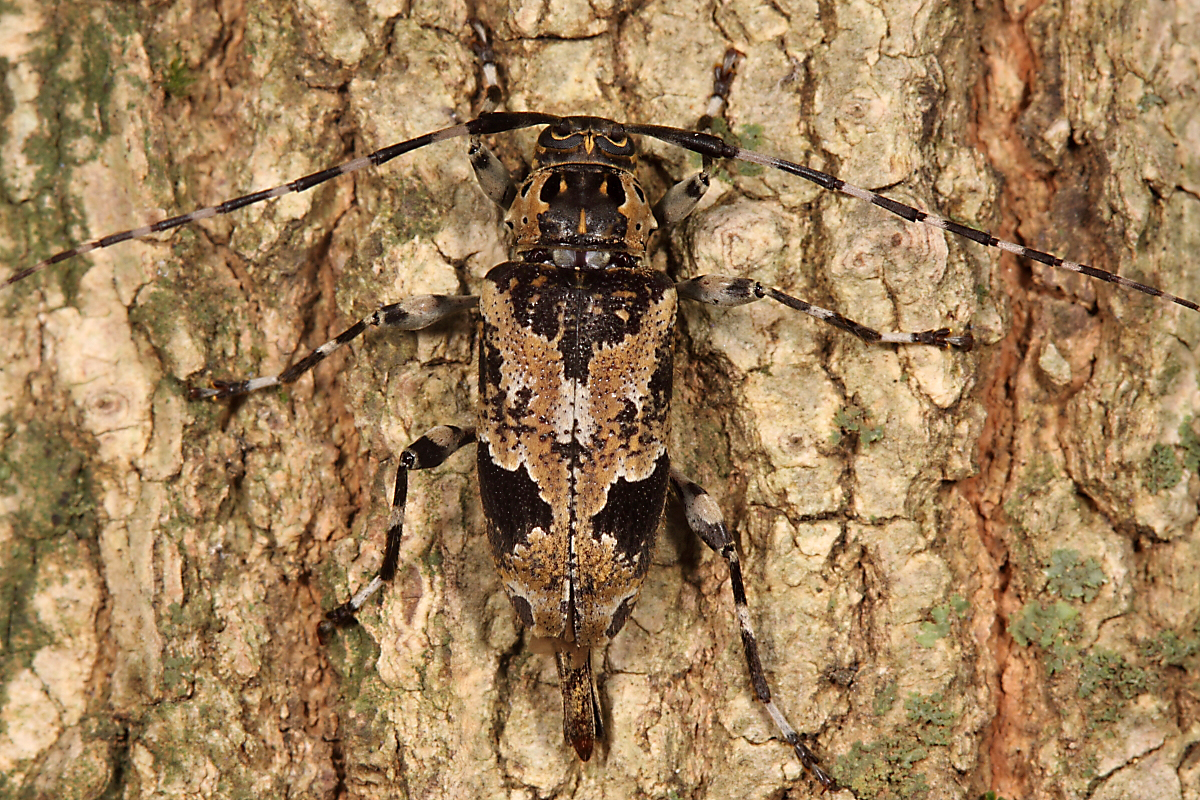
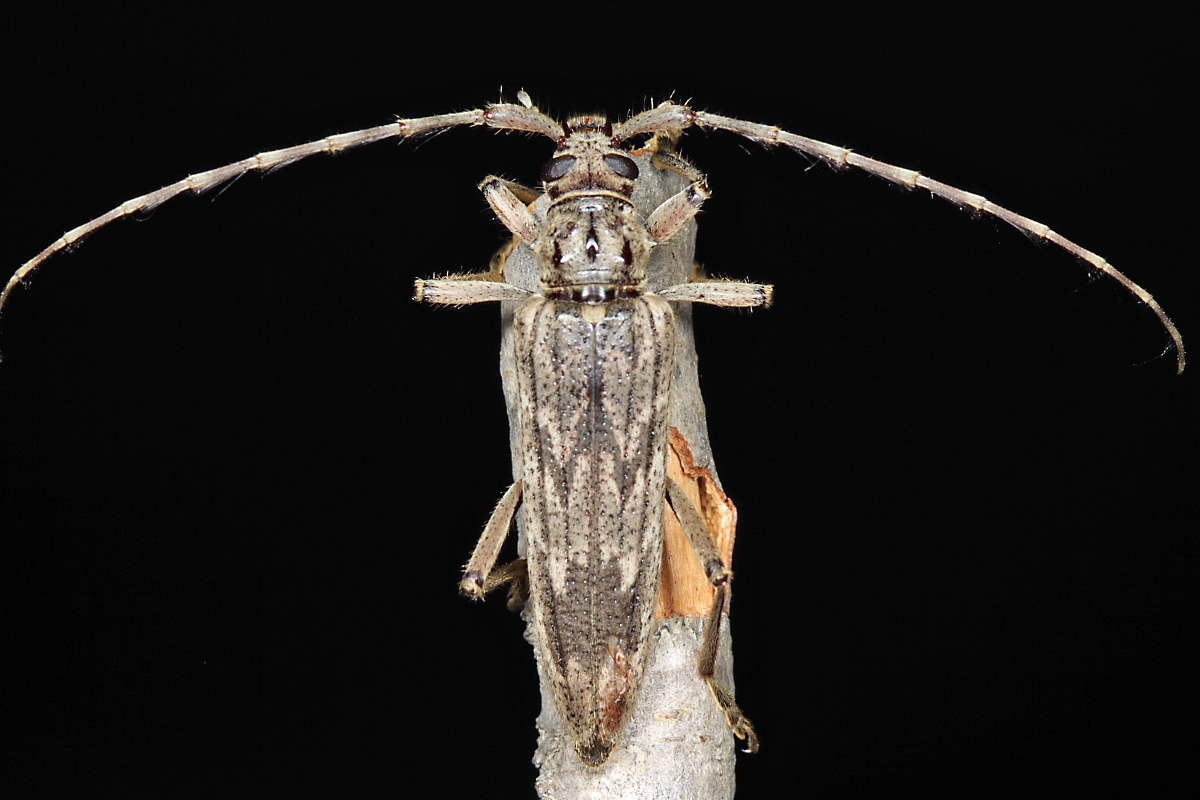
Two things I love about glades during fall…

…prairie dock (Silphium terebinthinaceum) in bloom…

Prairie dock (Silphium terebinthinaceum) in bloom | Caney Mountain Cons. Area, Ozark Co., Missouri

…and prairie tiger beetles (Cicindelidia obsoleta vulturina) on the prowl…
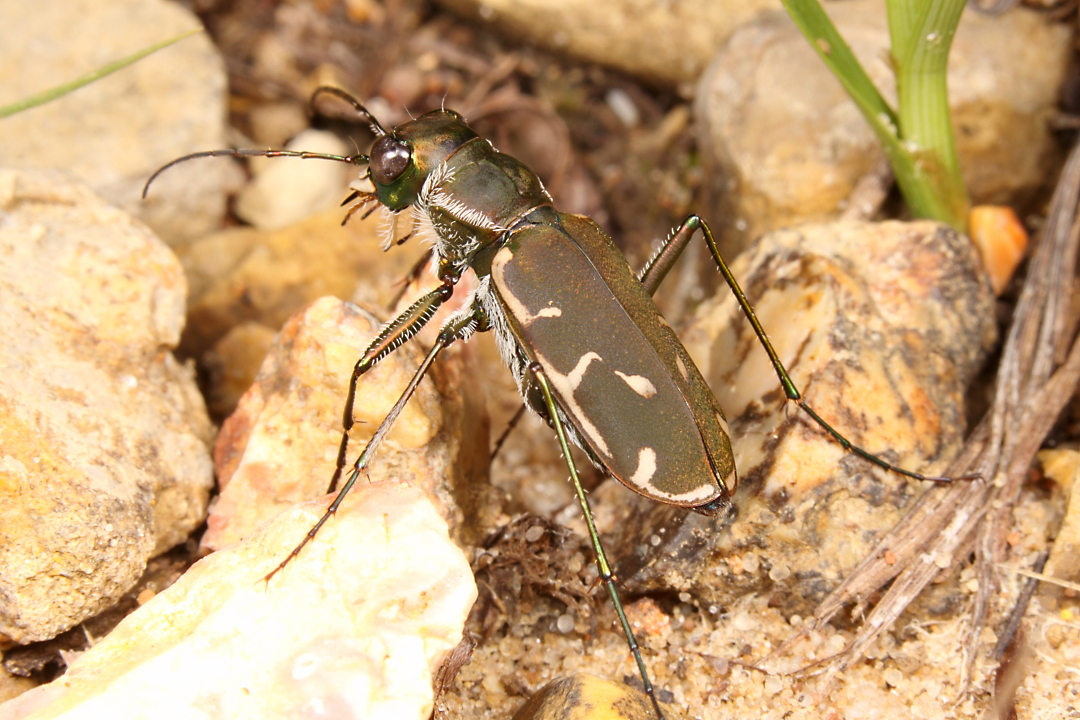
Prairie tiger beetle (Cicindelidia obsoleta vulturina) | Caney Mountain Cons. Area, Ozark Co., Missouri

On the last weekend of August I made another trip to the White River Hills of north-central Arkansas in a last gasp effort to confirm the occurrence in the area of the swift tiger beetle (Cylindera celeripes).  Records of this species include a single individual collected in 1996 at a site near Calico Rock, but two trips to the area this past June had already failed to reveal its presence.  I didn’t really expect that I would find it this time either, and such was the case.  However, what I was expecting/hoping to see was the beginning of the fall emergence of the prairie tiger beetle.  The Missouri/Arkansas disjunct population of this handsome species is perhaps my favorite tiger beetle of all, not only because of its good looks but because of the many spectacular fall collecting trips I’ve taken through the White River Hills to look for it.  In this regard I had success, although only two individuals were seen all day long.  The area around Calico Rock seemed dry, apparently having been missed by the thunderstorms that rolled through the area a week earlier and that would have surely triggered full bore adult emergence. 

Long Bald Glade Natural Area, Caney Mountain Cons. Area, Ozark Co., Missouri

The following day I returned to Caney Mountain Conservation Area on the Missouri side, where last fall I had finally found prairie tiger beetles after years of searching what must be the extreme northeasternmost limit of its distribution.  Fresh evidence of recent rains was seen, and accordingly the beetles were out in fairly decent numbers in the same area where I found them last fall.  I took the opportunity to photograph a few individuals (which I had not done last year) and then turned my attention to looking for other insects.  I had my eye out for the spectacularly beautiful bumelia borer (Plinthocoelium suaveolens) and eventually found one.  I hoped also to see the marvelously monstrous Microstylum morosum (North America’s largest robber fly), which I found at this site in 2009 as a new state record and was rewarded with two individuals (these will serve as vouchers for the state record, since I didn’t collect it in 2009).  Temperatures were rather warm and both of these latter species are traditional “summer” species; however, the presence of prairie tiger beetles, the tawny tinge to the prairie grasses, and the noticeably longer shadows under a deep blue sky told me that fall was, indeed, on the way.
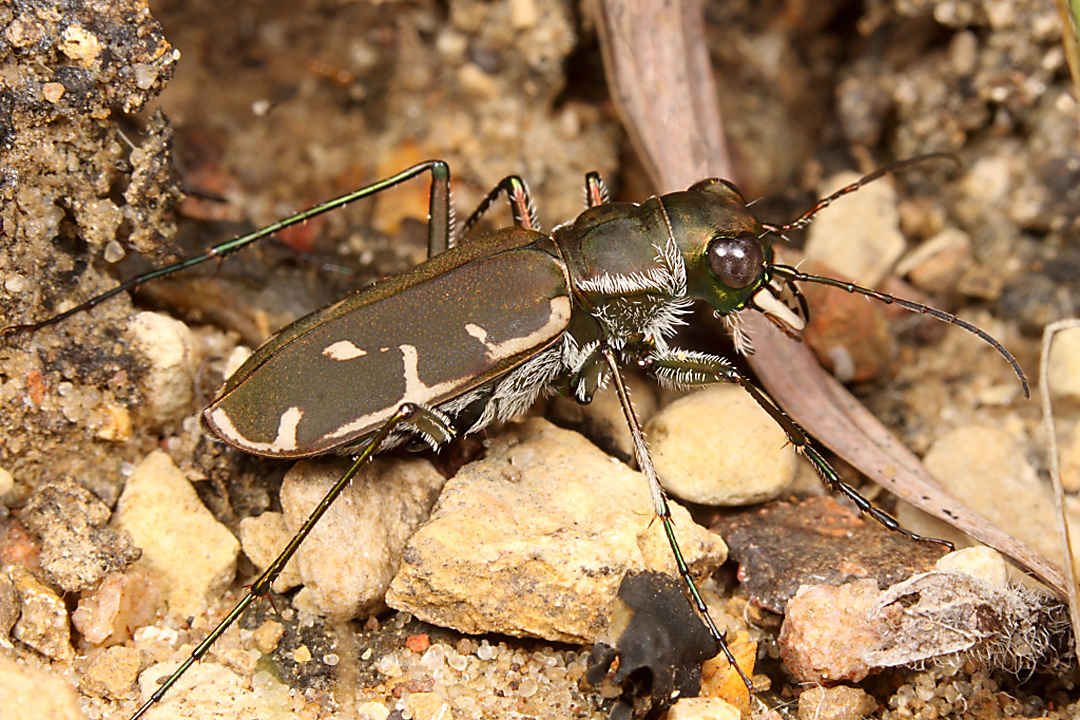
Prairie tiger beetle (Cicindelidia obsoleta vulturina) | Caney Mountain Cons. Area, Ozark Co., Missouri

While prairie tiger beetles are (at least for me) the most iconic harbinger of fall in the White River Hills, another classic fall sight was the thick stands of prairie dock plants with their tall, bolting flower spikes.  In Missouri this plant serves as a larval host for the longhorned beetle Ataxia hubbardi.  In my early years of collecting in Missouri’s glades, I delighted in finding adults of these beetles clinging to the flower stalks during fall—presumably laying eggs from which larvae would hatch and bore down into the tap-root.  Although commonly regarded as a pest in sunflower in the southern Great Plains, individuals associated with prairie dock in Missouri’s glades seem different—smaller, narrower, and darker—than those found on sunflower and other more common hosts.  Additional material will be needed to make a final assessment on whether these individuals represent a distinct taxon; however, I have not been able to find this species on prairie dock in Missouri since I moved back to the state nearly 16 years ago.  The reason for this sudden disappearance remains a mystery, and perhaps it is purely coincidental that the Missouri Department of Conservation began managing all of their glades with prescribed burns during my previous 5-year absence from the state.  In the meantime, I will continue to examine prairie dock stems every fall in the hopes that once again I will find the beetles and be able to come to a decision about their taxonomic status.  Perhaps I should re-focus my efforts in “low quality” (i.e., never-burned) gladey roadsides rather than our state’s “high quality” (i.e., high floral diversity) natural areas.

Copyright © Ted C. MacRae 2011

Bee Fly Parasitism of Tetracha virginica

I expected to gain a better understanding of insect photography principles and techniques at last weekend’s BugShot insect photography workshop at Shaw Nature Reserve in Gray Summit, Missouri.  I even expected that I would walk away from the event with some new friends.  The one thing I did not expect was the discovery of an apparently unreported host/parasitoid relationship amongst my beloved tiger beetles.  Nevertheless, that’s exactly what happened in a patch of barren soil just outside of the Dana Brown Education Center where the event was being held.

Tetracha virginica 3rd instar larva | Shaw Nature Reserve, Franklin Co., Missouri

I had spied the small cluster of tiger beetle burrows the previous day as we left on our first group hike.  The burrows were unmistakably those of Tetracha virginica (Virginia metallic tiger beetle) due to their size (no other tiger beetle in east-central Missouri approaches the size of this species), and in fact some of the larvae were seen sitting at the tops of their burrows.  Tetracha larvae are easily distinguished from other genera of North American tiger beetles (in addition to their size) by their distinctive white-margined pronotum.  I had to catch back up with the group but came back later in the day and took a few photographs of one of the larvae sitting in its burrow.  Some of the other BugShot attendees were there and wanted to take photographs, but the larvae dropped on their less-practiced approach.  No problem, I just “fished” a larva out of its burrow and let them take their photographs.  When they finished, I began taking my own photographs, but I only got off one shot before the larva suddenly made a bee-line for its burrow and dropped in before I could block its escape.  Oh well, I do already have photographs of the larva of this species from other locations.

Tetracha virginica 3rd instar larva | Shaw Nature Reserve, Franklin Co., Missouri

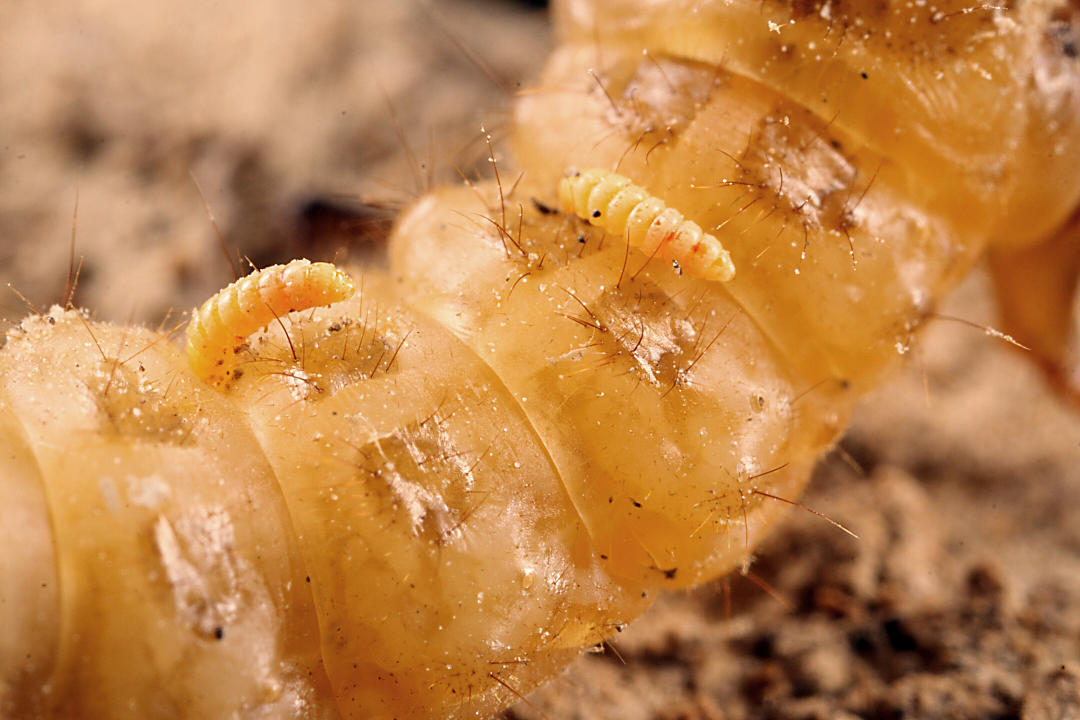
The next day I passed by the burrows again with Crystal and Lee.  I really wanted them to see the larvae, but they were not active.  No problem, I grabbed a long grass stem, chewed on one end, and inserted it to a depth of about 35 cm before it hit bottom.  A little jiggling to get the larva to bite, then a quick jerk back and out came the larva.  I never tire of seeing someone witness this for the first time—the way they jump back half-startled when they see the otherworldly larva flying through the air and landing on the grass.  I grabbed the larva and placed it on the barren clay to let them take photographs.  Crystal went first, and as she looked at the larva through her viewfinder she exclaimed, “there are wormy-things [the technical term, of course] on him.”  Lee and I looked, and sure enough there were two small “wormy-things” attached to the back of the tiger beetle.  I immediately recognized them as bee fly larvae (family Bombyliidae)—specifically Anthrax analis, the only bee fly known to parasitize tiger beetle larvae in the United States.  I was quite excited by this discovery, as I have never seen these before despite fishing untold numbers of tiger beetle larvae from their burrows over the past decade or so.  We all went camera crazy and took our turns photographing larvae and host, after which I popped it into a vial to keep for an attempt at rearing out the bee flies.

Anthrax analis larvae attached to abdomen of Tetracha virginica larva

It now seems that our find represents more than just a personal discovery, as bee flies—to my knowledge—have not yet been reported parasitizing any species of the genus Tetracha.  Of the 70 Anthrax spp. for which hosts have been recorded (Yeates and Greathead 1997), only three are known to parasitize tiger beetles.  Shelford (1913) gave the first account of A. analis (as Spogostylum anale) parasitzing Cicindela scutellaris lecontei, noting that the adult females lay their eggs by flying backward and downward while thrusting the abdomen forward until it touches the sand near the host burrow entrance.  Hamilton (1925) found Cicindelidia obsoleta parasitized by this species, and Bram and Knisley (1982) expanded its known host spectrum to include C. hirticollis, C. tranquebarica, Cicindelidia punctulata, and Ellipsoptera marginata.  Photographs of larvae (presumably of this species) parasitizing undetermined tiger beetle larvae can be seen in Pearson and Vogler (2001) and in this photo by Chris Wirth.  Anthrax gideon has been recorded parasitizing Pseudoxycheila tarsalis in Costa Rica (Palmer 1982) and Oxycheila trisis in Brazil (Arndt and Costa 2001), while a third undetermined Anthrax sp. has been reared from larvae of Pentacomia ventralis, also in Brazil (Arndt and Costa 2001).  Oxycheila and Pseudoxycheila are related to Tetracha at the tribal/subtribal level (depending on which classification you follow), so the finding of A. analis utilizing Tetracha is not unexpected.

Closer view of anteriormost Anthrax analis larva

The beetle larva and its unwelcome tagalongs is now in a container of native soil and has accepted the starter burrow that I made for it. Hopefully at least one of the bee fly larvae will complete its development and emerge as an adult to allow confirmation of its identity.  If this host association does turn out to be unreported, we will follow up with at least a short journal communication.  To that end, any literature citations you are aware of regarding bee fly parasitism of tiger beetles that is not listed below would be most welcome.

Congratulations to Ben Coulter, who wins yet another BitB Challenge with 14 points (this guy is a machine!), and Mr. Phidippus came close with 13 points.  Ben and Phiddy were the only participants that figured out the parasites were bee flies of the genus Anthrax, and Phiddy was the only participant to guess the correct genus for the host.  Ben’s win gives him a now commanding lead with 49 points in the current BitB Challenge Session #4 as we enter the home stretch.  Mr. Phidippus and Roy are still in striking distance with 39 and 28 points, respectively.  Is anybody capable of keeping him from his third title?  We shall see.

REFERENCES:

Arndt, E. and C. Costa.  2001.  Parasitism of Neotropical tiger beetles (Coleoptera: Carabidae: Cicindelinae) by Anthrax (Diptera: Bombyliidae).  Studies on Neotropical Fauna and Environment 36(1):63–66.

Bram, A. L. and C. B. Knisley.  1982.  Studies on the bee fly Anthrax analis (Bombyliidae), parasitic on tiger beetle larvae (Cicindelidae).  Virginia Journal of Science 33:90.

Hamilton, C. C. 1925. Studies on the morphology, taxonomy, and ecology of the larvae of Holarctic tiger beetles (family Cicindelidae).  Proceedings of the U.S. National Museum 65 (Art. 17):1–87.

Palmer, M. K.  1982.  Biology and behavior of two species of Anthrax (Diptera: Bombyliidae), parasitoids of the larvae of tiger beetles (Coleoptera: Cicindelidae).  Annals of the Entomological Society of America 75(1):61–70.

Pearson, D. L. and A. P. Vogler.  2001. Tiger Beetles: The Evolution, Ecology, and Diversity of the Cicindelids.  Cornell University Press, Ithaca, New York, 333 pp.

Shelford, V. E.  1913.  The life history of a bee-fly (Spogostylum anale Say) parasite of the larva of a tiger beetle (Cicindela scutellaris Say var. lecontei Hald.).  Annals of the Entomological Society of America 6(2):213–225.

Yeates, D. K. and D. J. Greathead.  1997. The evolutionary pattern of host use in the Bombyliidae (Diptera): a diverse family of parasitoid flies.  Biological Journal of the  Linnaean Society 60:149—185.

Copyright © Ted C. MacRae 2011

ID Challenge #11

It’s time for another ID Challenge—can you name the organism(s) shown here?  I’ll give two points each for the correct order, family, genus and species.  Additional points will be awarded on a discretionary basis for relevant natural history comments.  Standard challenge rules apply, including moderated comments during the challenge period (you don’t have to be first to score points), early-bird points to those who do arrive at the correct answer before others, etc.  Ben Coulter has a solid lead in BitB Challenge Session #4, but there are enough challenges left in the current session that his lead is not secure—do you have what it takes to put together a run to bump him off the podium top spot?

Shaw Nature Reserve, Franklin Co., Missouri

Copyright © Ted C. MacRae 2011

BugShot 2011 – Lesson 2

Most of my insect photography is done up close using fast shutter speeds (to prevent motion blur) and small apertures (to maximize depth of field).  This necessitates the use of full flash – the amount of light reaching the camera sensor at f/16 and 1/250 sec is not enough to show any image at all, much less one properly exposed.  Full flash photography has its own set of challenges, but for the most part it can be used to produce excellent closeup photographs of insects, even very small ones.  One thing that has always bothered me about full flash photography, however, is the “black background” effect when photographing an insect sitting up on a plant without something else in the immediate background to reflect light.  Not that I don’t like black backgrounds—they can be used to stunning effect with the right subject.  I just don’t want it to be my only option for insects that I photograph up off the ground. Of course, it is rather a simple matter to place something in the background that is close enough to reflect light but far enough away to remain out of focus, but what I really want to be able to do sometimes is have a blue sky.  I always thought this meant natural light, with its low f stops, slow shutter speeds, and the resulting motion blur and loss of depth of field. 

Of the many things I learned today, how to include a blue sky background in a closeup photograph at f/16 was my favorite.  This is accomplished by bumping up the ISO to 400 (to make the camera sensor more receptive to light) and decreasing the shutter speed to 1/60 sec.  Keeping the f stop high maintains the depth of field, but the increased ISO and decreased shutter speed allows sufficient light from a sky background to register on the sensor.  By themselves, however, these setting will still result in an underexposed subject, which is illuminated instead by fill flash.  Despite the slower shutter speed, there is no motion blur because the “effective” shutter speed for the subject is the duration of the flash pulse rather than the camera shutter speed—it’s like combining two exposure speeds in a single photograph, one for the background and another for the subject.

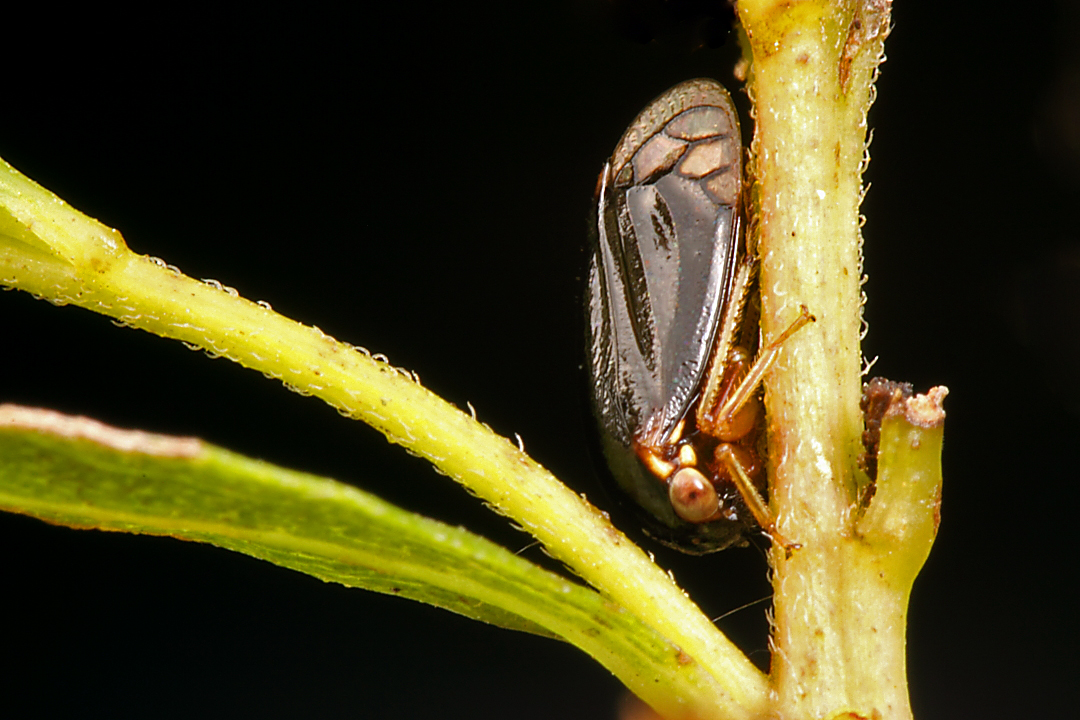
The following three photographs illustrate this principle—again, they are not technically perfect photos, but rather the result of quick experimentation to understand the principles involved.  Photo 1 is from yesterday’s post and illustrates what my typical settings have always been: ISO 160, f/16, and 1/250 sec.  It’s a decent photo of the treehopper, Acutalis tartarea; however, black is perhaps the least appropriate background to choose for this black species. Until now, it would have been my only option unless I tried arranging foliage in its background.  Photos 2 and 3 are of another individual of this species that I found today (fortunately in similar orientation to the individual photographed yesterday).  In both photos I kept the flash unit set to ETTL (adjusting FEC as appropriate for the shots).  In Photo 2 I bumped up the ISO to 400 but kept the shutter speed fast (1/200 sec)—you can see some effect in that the background is not truly black, having received some light from the blue sky.  It’s not enough, however, because the shutter speed was still too fast.  In Photo 3 the ISO remained at 400 but the shutter speed was also decreased to 1/60 sec.  The shutter staying open that long allows enough light from the sky to register on the sensor and, Voila!, we have a blue sky background that creates nice value contrast with the black subject.  The subject these photos is not terribly sharp, but that is just lack of focus—not motion blur from a slow shutter (sorry, I was just practicing settings rather than going for a perfect shot). All three photos were shot with the Canon 100mm macro lens + 68 mm of extension tube (total magnification ~2X).

''Typical'' insect macro settings: ISO 160, 1/250 sec, f/16

ISO increased to 400 (1/200 sec, f/16)

Shutter speed decreased to 1/60 (ISO 400, f/16)


Copyright © Ted C. MacRae 2011

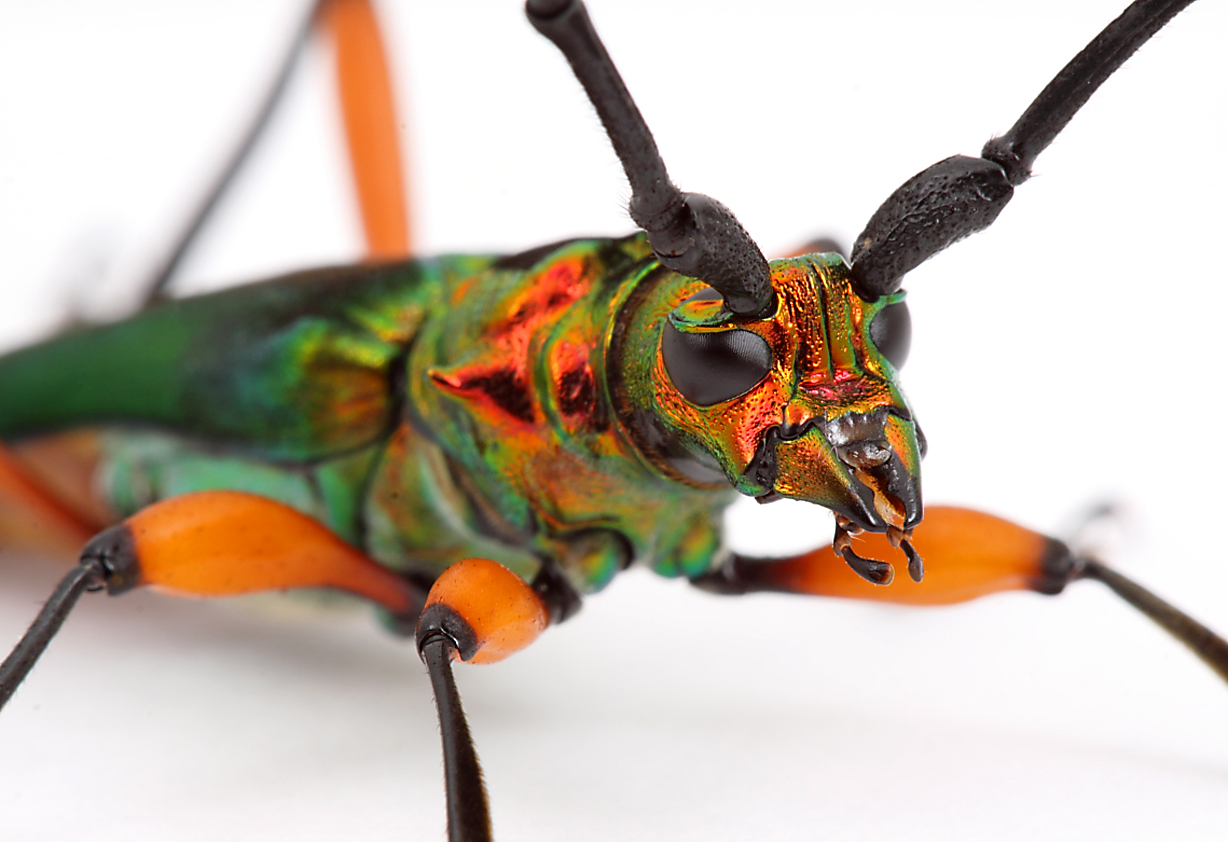
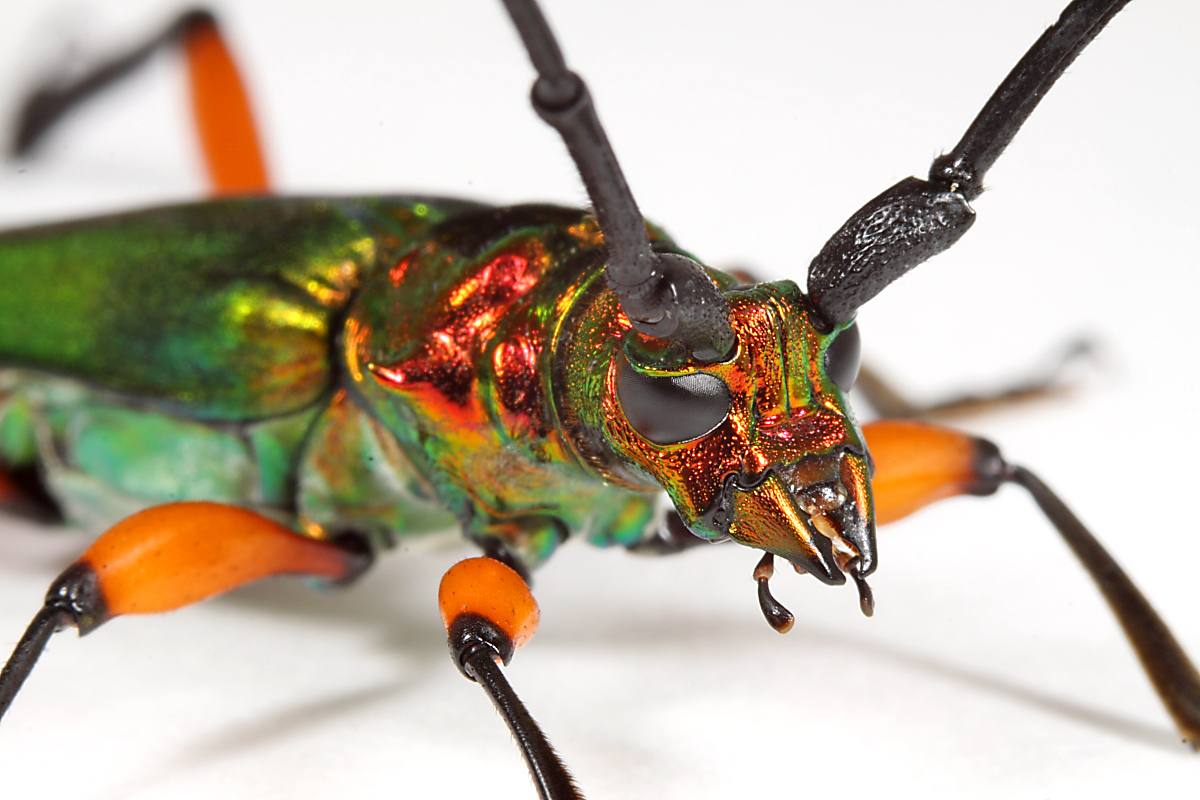
Bumelia borer on white

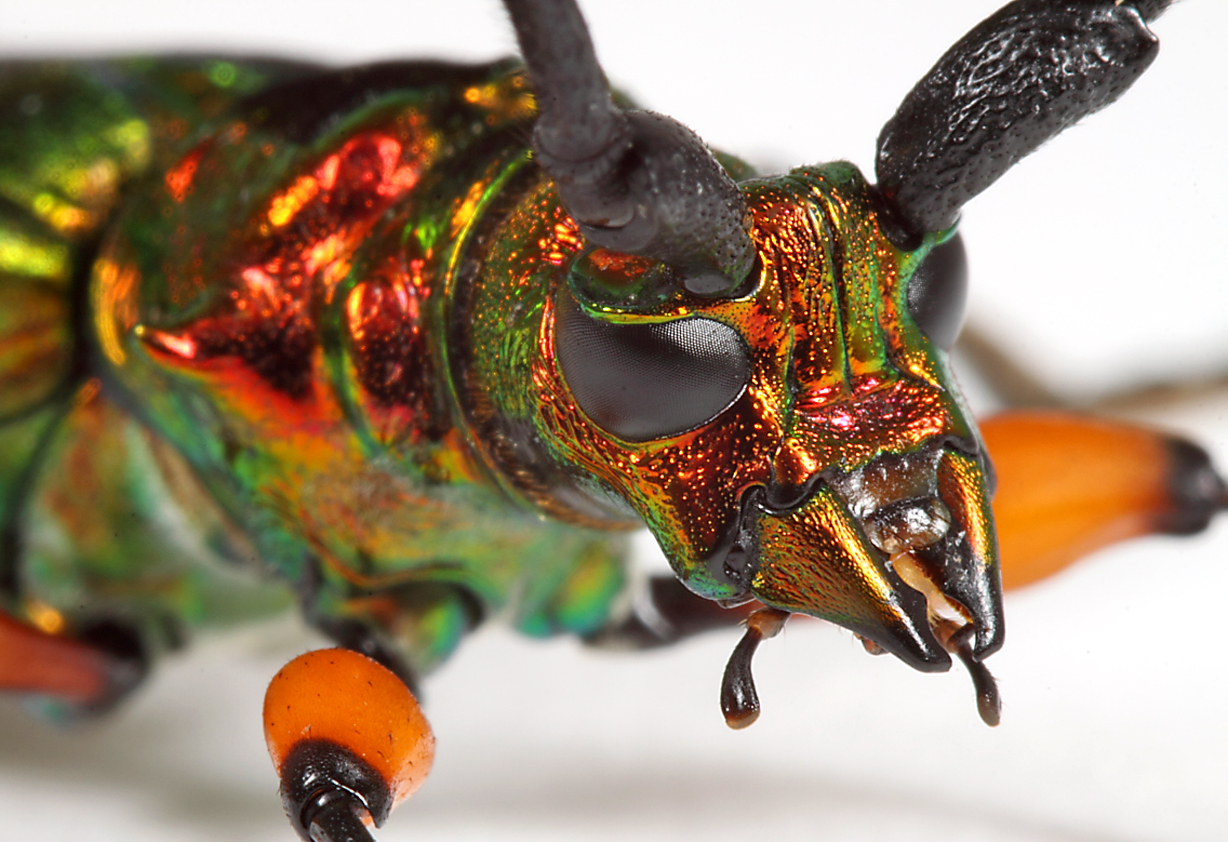
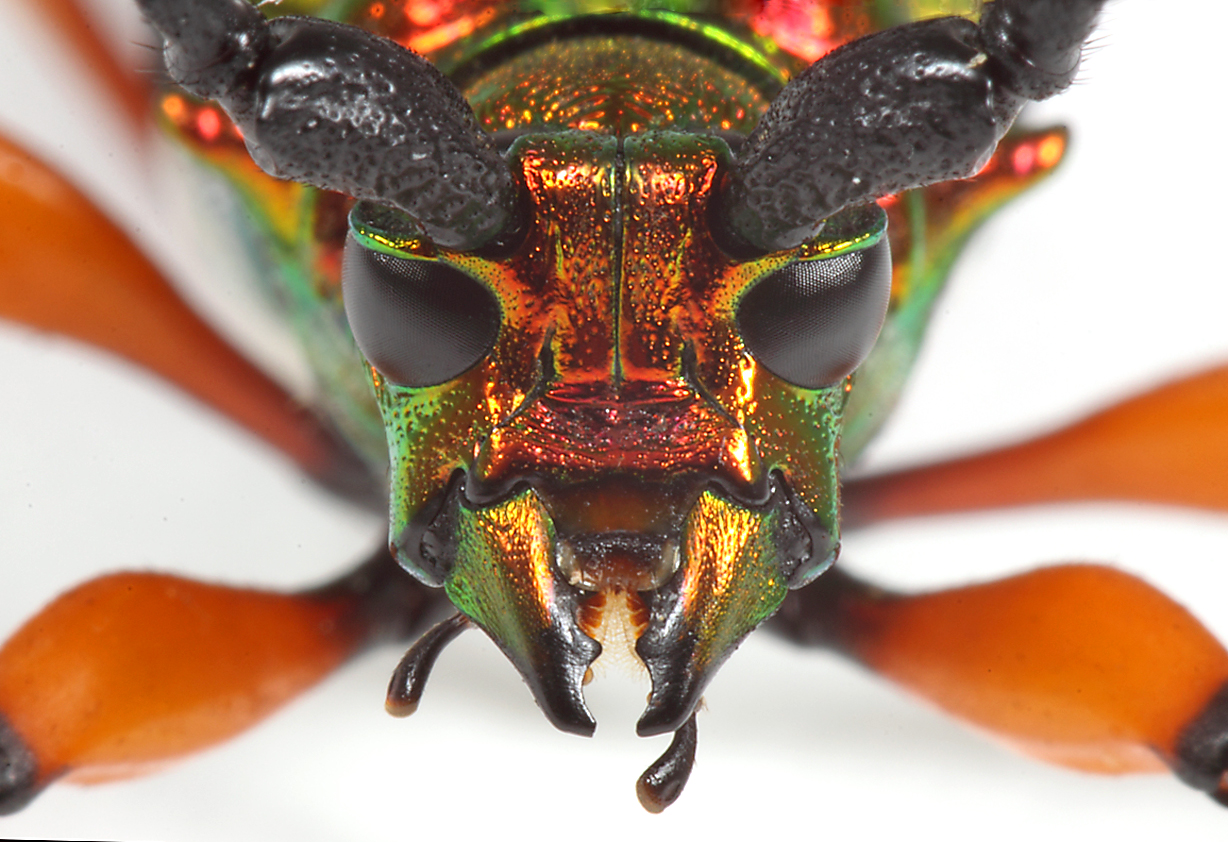
Plinthocoelium suaveolens suaveolens | Ozark Co., Missouri

Last weekend I visited one of my favorite collecting spots in all of Missouri—Long Bald Glade Natural Area (part of Caney Mountain Conservation Area in Ozark Co.).  Nestled at the eastern edge of the White River Hills in southwestern Missouri, its deeply dissected hills are home to numerous plants and animals that are more typical of the southern Great Plains and which have found refuge in the xeric, thin-soiled calcareous prairies (commonly “cedar glades”) that cover the area’s southern- and western-facing slopes.  These include some rather impressive insects, such as a disjunct population of Cicindelidia obsoleta vulturina, which I just found here last year as the new northeasternmost extent of the population, as well as the marvelously monstrous Microstylum morosum, North America’s largest robber fly and so far known in Missouri only from Long Bald Glade where it was discovered in 2009. 

Another quite striking insect found at Long Bald Glades (though not restricted in Missouri to the White River Hills) is the bumelia borer, Plinthocoelium suaveolens.  This beetle occupied much of my time in July 2009 as I committed to photographing the species in the wild, and it was Long Bald Glade where I finally (if not completely satisfactorily) succeeded in that goal.  This time I was visiting the Glade to look for the earliest individuals of C. obsoleta vulturina and, hopefully, document additional glades within Caney Mountain that might support the beetle.  However, in the back of my mind I was also keeping a lookout for P. suaveolens—this species is primarily active during July and August in Missouri, but I do have records of it as late as September.  As I looked for (and found) tiger beetles, I also checked out each bumelia tree that I passed hoping to see a P. suaveolens adult perched on its lower trunk.  It was not until later in the afternoon that I heard a loud “buzz” approaching from behind and turned to see one of these beauties fly right past me—legs and antennae held outstretched—before landing on a nearby tree.  Now, over the years I’ve learned a few lessons, and one is that you don’t try to take in situ photographs of the first individual you encounter of a prized species.  More often than not it gets away before you even fire the first shot, and you’re left with nothing.  My standard procedure now is to procure the first individual immediately and keep it alive.  If attempts to photograph subsequent individuals are not successful (or none are seen), then at least I have a backup for studio shots (not my first choice, but better than nothing!).  Such was the case with this individual.

Although I still lack that “perfect” beetle-on-a-branch shot that I hope to eventually get for this species, it seemed a good subject for some white-box photography.  I’ve vacilated between true white-box w/ indirect flash versus getting a white-box effect by using direct, diffused flash with the subject on a white background.  I decided now was the time for a direct comparison of the two techniques.  All of the following photographs were taken with the Canon 100mm macro lens on a Canon 50D body at 160 ISO, 1/200 sec, and f/16.  For the closeups (photos 3 and 5 of each series), 68mm of extension tubes were added.  The photos on the left are true white-box photos, i.e. the flash heads were directed up and away from the subject placed inside a box lined with white tissue (Kim-Wipes laboratory wipers).  The photos on the right mimic the white-box effect by placing the subject on white filter paper, but the flash heads were pointed directly at the subject through my DIY concave diffuser (click on photos for 1200×800 versions):

Indirect flash in white box

Direct flash w/ DIY diffuser

Indirect flash in white box

Direct flash w/ DIY diffuser

Indirect flash in white box

Direct flash w/ DIY diffuser

Indirect flash in white box

Direct flash w/ DIY diffuser

Indirect flash in white box

Direct flash w/ DIY diffuser

I must admit, looking at the photos on the camera playback screen I had the impression that I would like the direct-diffuser photos better, but after reviewing them on the computer and applying typical post-processing enhancements (e.g., levels, slight shadow reduction, and unsharp mask), the true white-box photos appear to have benefited from more even lighting, resulting in truer color, less shadowing, and minimal specular highlighting.  Not that the direct-diffuser photos are bad—they’re just not as good as the white-box photos.  I guess what this means is that my DIY diffuser, while a significant improvement over my previous diffusers, still could use some improvement (if ability to create white-box-like results is the ultimate test of a diffuser’s effectiveness).  I’d be interested in knowing your opinions based on these comparisons.

Congratulations to Ben Coulter, who wins yet another Super Crop Challenge and strengthens his lead in the overall standings of the current BitB Challenge Session #4 with 13 points.  Mr. Phidippus also correctly identified the species and takes 2nd place in the challenge with 8 points, keeping him in 2nd place in the overall standings as well.  Morgan Jackson takes 3rd place in the challenge with 7 points, but Roy’s retains 3rd place in the overall standings by way of his 6 points in this challenge.  Congratulations to these top points earners, and thanks to all who played.

Copyright © Ted C. MacRae 2011

Speaking of Graphisurus

Graphisurus fasciatus | Sam A. Baker State Park, Missouri.

Graphisurus fasciatus is the commonest of the three species in this North American genus. It is easily distinguished from  by its smaller, narrower form, more mottled coloration, and lack of distinctive triangular-shaped black markings on the elytra. However, it can easily be confused with the third species in the genus G. despectus, which is nearly identical in size and coloration. From this latter species, G. fasciatus may be distinguished by the slightly darker ground color of the elytra (in G. despectus the elytra are more uniformly grayish) with the post-median dark marking of the elytra not very conspicuous (in G. despectus this marking and contrasts distinctly with the grayish elytra). Also, the tips of the elytra are distinctly emarginate (concave) in G. fasciatus but more subtruncate in G. despectus, and the scutellum in the former is pubescent (hairy) but glabrous (lacking hairs) in the latter.

Host plant is also a clue as to the identity of this individual (a male, as distinguished by its very long antennae and lack of distinctly elongate ovipositor extending from the tip of the abdomen), as it was found on the trunk of a very large, recently wind-thrown black oak (Quercus velutina)—its preferred host genus.  Graphisurus despectus, in contrast, appears to be associated almost exclusively with hickory (genus Carya).  Both species, despite their relatively modest size (generally 10–15mm in length, excluding the female ovipositor), seem to prefer dead wood from the trunk and main branches of larger trees for larval development, mining just beneath the bark rather than in the wood itself.

Copyright © Ted C. MacRae 2011
Graphisurus triangulifer in Missouri

Graphisurus triangulifer | Sam A. Baker State Park, Missouri

Of the three species of the genus Graphisurus occurring in Missouri, G. triangulifer is both the most attractive and the least commonly encountered.  Back when I surveyed the Cerambycidae of Missouri (MacRae 1994), I examined only 45 specimens of this species in the major public and private collections of the state, compared to slightly more of the equally uncommon G. despectus and a whopping 271 of the übercommon G. fasciatus.  Nearly all of the specimens I examined of this species were encountered at lights, and it has been in this manner almost exclusively that I have seen the species for myself.

The species is named for the dark triangular markings on the elytra.

The individual in these photos was seen at Sam A. Baker State Park in the southeastern Ozark Highlands of Missouri during early July, and—like most of the others I have seen—it was attracted to my blacklight. I really don’t like photographing insects directly on the white landing sheet that I use for blacklighting, so I moved the beetle to the trunk of a nearby boxelder tree (Acer negundo) for a more natural looking background. There are a few reports of the species utilizing Acer for larval development (Lingafelter 2007), so this could be a very natural setting; however, I have not seen any actual records of the species being reared from that host. More often the species has been recorded breeding in dead sugarberry (Celtis laevigata). While I have conducted many rearings from Celtis, I’ve not yet succeeded in rearing this species—I suspect it probably breeds in larger diameter branches given its relatively large size (12–17 mm in length).  This idea is bolstered by the fact that the one adult that I did not encounter at lights was found on the trunk of a large, dead sugarberry near San Antonio, Texas.  Hoffman et al. (2002) noted that the species exhibits a southern, lowland distribution extending from Long Island to central Georgia, thence west to Texas and northward in the interior as far north as Ohio and Indiana (it has also been recorded from Kansas and, of course, Missouri).  This distribution pattern agrees largely with that of Celtis laevigata in the eastern U.S., suggesting that this plant may indeed be its primary host.  A fairly restricted host range for G. triangulifer would not be unexpected, since each of the other two species in the genus also exhibits a fair degree of host fidelity—G. despectus breeds almost exclusively in hickory (Carya spp.), while G. fasciatus breeds primarily in oak (Quercus spp.).

REFERENCES:

Hoffman, R. L., S. M. Roble, and W. E. Steiner, Jr. 2002. Thirteen additions to the known beetle fauna of Virginia (Coleoptera: Scirtidae, Bothrideridae, Cleridae, Tenebrionidae, Melyridae, Callirhipidae, Cerambycidae, Chrysomelidae). Banisteria 20:53–61.

Lingafelter, S. W. 2007. Illustrated Key to the Longhorned Woodboring Beetles of the Eastern United States. Coleopterists Society Miscellaneous Publications, Special Publication No. 3, 206 pp.

MacRae, T. C. 1994. Annotated checklist of the longhorned beetles (Coleoptera: Cerambycidae and Disteniidae) known to occur in Missouri. Insecta Mundi 7(4) (1993):223–252.

Copyright © Ted C. MacRae 2011
Elytrimitatrix at my window


This evening as I was sitting in my comfy chair, I noticed Stitch (one of the cats) pawing at the window. We live in the woods, so it is common for insects to land on the outsides of the windows after dark, attracted to the lights from within our home. Stitch was especially interested in a rather large beetle crawling frantically on the window, which I recognized quickly as the cerambycid beetle, Orthosoma brunneum. This big brown beetle is a member of the root-boring subfamily Prioninae, and although it is perhaps one of the commonest longhorned beetles in our area during July and August, I’ve not yet photographed it. As I debated whether to do so, I noticed the distinctive silhouette of another cerambycid beetle sitting quietly lower down on the window—smaller than O. brunneum but still decent-sized. I opened the window a crack (to keep all the other insects from rushing in), reached my hand through the crack, grabbed the beetle and in pulled it inside. It was a fine specimen of what is now known as Elytrimitatrix undata. I forgot all about the Orthosoma beetle and decided to photograph Elytrimitatrix instead.

While a member of the longhorned beetle family Cerambycidae, the group to which this species belongs (subfamily Disteniinae) has long been treated as sort of the “red-headed stepchild” of the family due to disagreement about its affinities to other cerambycid groups. It has at times been considered a tribe of the subfamily Lepturinae, a tribe of the subfamily Cerambycinae, a subfamily of its own, and even a separate family. Much of this disagreement focuses on details of its morphology despite the great superficial resemblance of the adults to other cerambycids. For now, it seems most workers are satisfied to regard the group as a distinct subfamily within the Cerambycidae, even though its exact relationships to other subfamilies still remain unclear.

Despite numerous representatives in the Neotropics, E. undata is the only member of the subfamily in the U.S., occurring broadly across the eastern and central states. For many years it was known as “Disteniaundata but was recently split out of that genus by Santos-Silva & Hovore (2007). Larvae have been recorded breeding in the dead wood of a variety of hardwoods as well as pine (the ultimate generalist), and adults are regular visitors at lights during the warm, muggy months of summer. I have also taken the species in numbers in traps baited with fermenting liquid (1 part molasses, 1 part beer, 8 parts water, and a packet of dry yeast) (MacRae 1994).

REFERENCE:

MacRae, T. C. 1994. Annotated checklist of the longhorned beetles (Coleoptera: Cerambycidae and Disteniidae) known to occur in Missouri. Insecta Mundi 7(4) (1993):223–252.

Santos-Silva, A. & F.T. Hovore. 2007. Divisão do gênero Distenia Lepeletier & Audinet-Serville, notas sobre a venação alar em Disteniini, homonímias, sinonímia e redescrições (Coleoptera, Cerambycidae, Disteniinae). Papéis Avulsos de Zoologia 47:1–29.