The 213-year old “Gran Gomero”

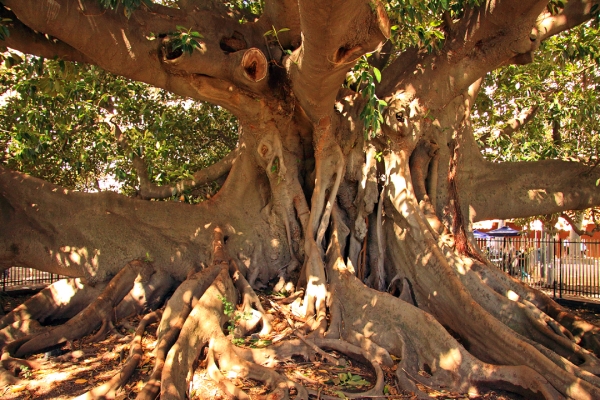
Here are two more views of the tree featured in ID Challenge #21. This is El “Gran Gomero,” a planted rubber tree (Ficus elastica) located in the upscale Recoleta district of Buenos Aires, Argentina. Whenever locals give a name to an individual tree, you know it has to be something special, and this tree certainly does not disappoint. Huge, buttress roots and massive branches supporting a majestic, 50-meter wide crown make it an impressive sight indeed. Its branches are so large that wooden supports have been placed beneath them to help support their great weight and prevent them from breaking.
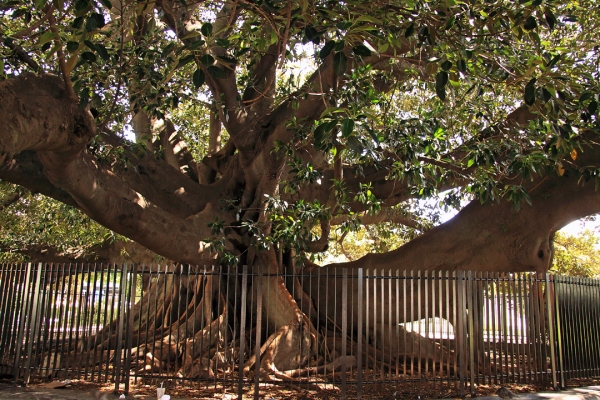
El "Gran Gomero" rubber tree (Ficus elasticus) | Buenos Aires, Argentina

El “Gran Gomero” rubber tree (Ficus elasticus) | Buenos Aires, Argentina

There seems to be some question about how old this tree actually is. A Wikipedia entry on the Recoleta district mentions that the tree was planted in 1791 by Martín José Altolaguirre, a landowner in the area at the time, making it a cool 222 years old! Wikimapia claims that the tree was planted in 1826 by Martín de Altolaguirre in the adjacent Recoleta Cemetary (itself worth a blog post) and transplanted to its current location eight years later. Still other sources, such as Buenos Aires Delivery and numerous individual blog posts state that the tree was planted in 1870 by the monks of the Recoleta. Finally, there is a sign at the base of the tree that says the tree was planted in 1800, again by the monks of the Recoleta, and that the fence was donated to the city by the nearby cafe La Biela. Unfortnately, I did not photograph the sign, but I did find a photo of it on Flickr. Perhaps the 9-year difference in planting date between the sign and Wikipedia has to do with the transplanting from its original location in the cemetary as mentioned by Wikimapia. Regardless of its true age, El Gran Gomero must certainly be among the oldest of any residing in a city as large as Buenos Aires.
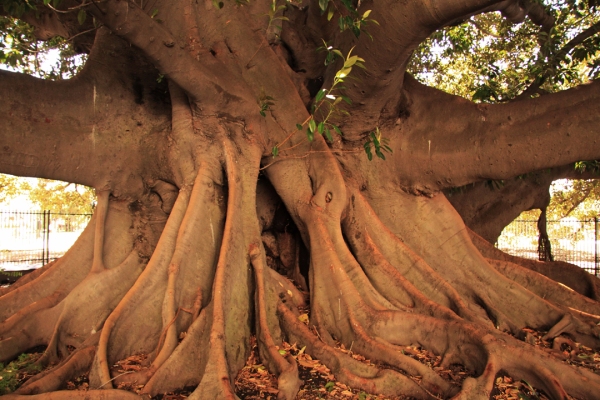
 

Huge buttress roots support a massive, 50-meter wide crown.

Huge buttress roots support a massive, 50-meter wide crown.

Just when I was beginning to think nobody read this blog anymore, a record 30 people participated in this ID Challenge. Even more impressive is that more than a few got it right! Timing is everything, however, and 3-time BitB Challenge Champion Ben Coulter takes the win due to his speedy response and early-bird bonuses that netted him a total of 23 points. Also making the podium were Chelydra and Brady Richards with 18 each. The overall leader is now Ben Coulter with 33 points. Bill Rockenbeck and Chelydra both follow with 21 points, but in the event of a tie-breaker Bill would get the nod by virtue of having participated in more challenges. Look for another installment of BitB Challenge Session #7 in the near future.

Copyright © Ted C. MacRae 2013
ID Challenge #21

Time for another installment of BitB Challenge Session #7. This one is going to be a bit different from previous versions—can you identify the tree in the photo? Not the scientific name, not the common name, but the actual name of this particular tree. Include its location and any cultural significance it may have (both historical and current) and you’ll be well on your way towards winning this challenge. Points structure will be decided after I see what kind of response I get (this is also a test to see if anyone still reads this blog).

Good luck!

IMG_2332_enh_1080x720

Copyright © Ted. C. MacRae 2013

These bugs rock!

IMG_2624_enh_1080x720
These stones were given to me recently by a local insect enthusiast who is an admitted collector of all things natural history. According to him, the stones were among numerous items that he was allowed to “salvage” many decades earlier from the home of a similarly inclined individual from the previous generation. He has stored these and other items in his home ever since but now finds himself in the mood to distribute the items he has spent a lifetime collecting. Beyond this, I know nothing of the provenance of these stones or even if they represent something truly artifactual versus just the classroom efforts of a more contemporary school child. I’ll welcome any opinions that may be had, but even if none are received these stones will nicely decorate some little corner of my “museum”—hopefully for decades to come.

IMG_2606_enh_1080x720

IMG_2608_enh_1080x720

IMG_2610_enh_1080x720

Copyright © Ted C. MacRae

The “little soybean weevil”

Lepidopteran caterpillars are without question the most important pests affecting soybean in South America, while stink bugs run a close second in terms of economic impact and as the targets of insecticide applications. There are, however, a number of weevil species (order Coleoptera, family Curculionidae) whose incidence has increased during the past decade or so as the area planted to soybean continues its decade’s long expansion on the continent. The most important of these is Sternechus subsignatus, a  relatively large (and rather attractive black-and-yellow) species that was first detected in southern Brazil in the 1970s. It has since spread to northern Brazil and in recent years has also begun affecting soybean in Salta and Tucumán Provinces of northern Argentina (sometimes considered a distinct species, S. pinguis). Known locally as “picudo grande” (big weevil), adults clip the petiole of leaves and girdle the stems, leading to stand loss. One adult is capable of killing multiple plants, so that even light infestations can result in severe damage.

IMG_2439_enh_1080x720

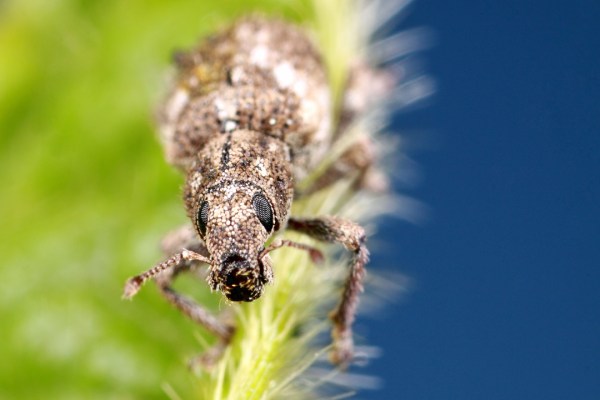
Promecops carinicollis | Tucumán Province, Argentina

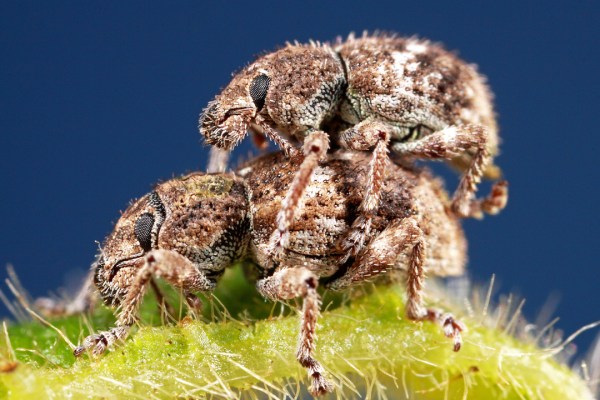
I’ve not yet seen “big weevils” for myself, but there are at least two other species that are showing up in soybean fields, particularly in Salta and Tucumán Provinces. During my recent visit to Argentina I happened upon a soybean field in northern Tucumán infested with one of them, Promecops carinicollis, a few photos of which I show here. This species is much smaller than S. subsignatus and is, thus, called “picudo chico” (little weevil)—certainly an appropriate name for the 3- to 4-mm long adults. While the integument is black, the body is densely covered with flat scales that form irregular white blotches on the elytra and otherwise give the beetle a mottled-brown appearance.

IMG_2436_enh_1080x720

Damage consists of adult feeding around the leaflet margins, giving them a scalloped appearance.

Like S. subsignatus, it is the adults that cause damage to the plants, although instead of the stems and petioles their feeding seems to be confined to the margins of the leaflets. This gives the leaflets a “scalloped edge” appearance that is quite distinctive and unlike the leaf damage caused by other leaf-feeding insects of soybean. The feeding causes a general reduction of the leaf surface area of the plant, which reduces the plant’s capacity to photosynthesize. However, as soybean has a rather high capacity to compensate for foliage loss by growing new foliage, especially during the earlier vegetative stages of growth, it would take rather high pressure by these weevils to cause enough damage to result in yield loss. It may be one of those soybean pests for which insecticide applications are made much more often than is warranted. The most important impact of this insect probably occurs just after seedling emergence, during which time feeding on the cotyledons and first leaves can weaken seedlings enough to cause stand loss.

Promecops carinicollis | Tucumán Province, Argentina

Beginning the process of making more Promecops carinicollis.

Copyright © Ted C. MacRae 2013

Fun at Salinas Grandes

IMG_2507_enh_1080x726
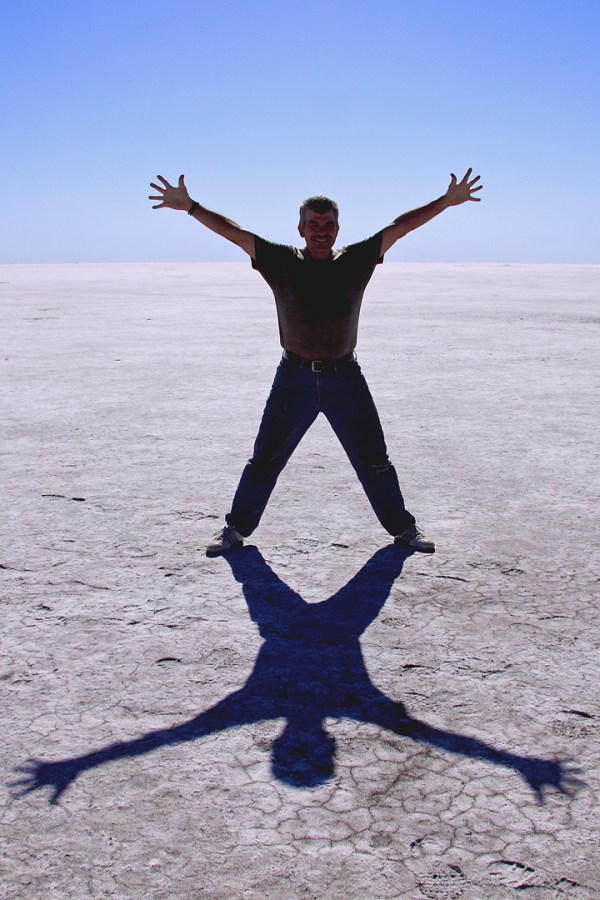
My colleagues and I greatly enjoyed our visit to the Salinas Grandes salt flats in Catamarca Province, but there was a moment of tension between Federico and Agustín. You see, Federico is only 12″ tall, so we have to keep a close eye on him to make sure he doesn’t get himself into any trouble. Apparently he had wandered off too far for Agustín’s comfort, leading to a bit of a scolding. Despite his small size, however, Federico took it all in stride and stayed close for the remainder of our visit.

Copyright © Ted C. MacRae 2013

Greetings from Argentina

Perhaps some have noticed that things have been relatively quiet of late here at Beetles in the Bush. I have been hard at work in South America for the past couple of weeks, first in Brazil and now in Argentina. Posting should return to normal when I return to the U.S. next week; however, in the meantime I thought it might be a good idea to show just how hard I have been working:

Salinas Grandes, Provincia de Catamarca, Argentina

Salinas Grandes, Provincia de Catamarca, Argentina

Copyright © Ted C. MacRae 2013

Brazilian Bike Adventure

Atlantic Forest

Atlantic Forest in Serra do Mar.

Yesterday I joined my Brazilian colleagues on a bicycling tour from the outskirts of São Paulo to the beaches of the Atlantic Coast. To say that the tour was an ‘adventure’ is an understatement—it was epic! For those not familiar with São Paulo, its 20 million inhabitants make it not only the largest city in Brazil, but also one of the five largest cities in the world. Yet, despite the explosive growth it has seen during the past century, it remains isolated from the Atlantic Coast of southeastern Brazil by the Serra do Mar, a 40-kilometer wide swath of rugged, mountainous terrain and part of the Great Escarpment that runs along much of the eastern coast of Brazil. It is here where some of the last tracts of Atlantic Forest, the second largest forest ecotype in South America after the Amazon, remain. Atlantic Forest once stretched along much of Brazil’s Atlantic coast, turning inland in its southern reaches to Paraguay and the northern tip of Argentina. However, much of the forest, especially in populous southeastern Brazil, has fallen victim to the axe. Only the ruggedness of the Serra do Mar has allowed the Atlantic Forest to survive in such close proximity to one of the world’s most populous cities. Understandably, travel between São Paulo and the coast has been difficult. In former years, vehicles had to snake their way through the mountains along a treacherous 2-lane highway with steep grades and hairpin turns. That highway has since been circumvented by an elevated, double, 4-lane highway of alternating spans and tunnels, and the old highway, now closed to vehicles, is instead used by maintenance crews for the new highway and cyclists who yearn to experience the Atlantic Forest up close and personal.

Our van dropped us off in the outskirts of São Paulo, from where we rode along the main highway a short bit before accessing the old highway. Dropping into the Atlantic Forest was like being magically transported into virgin wilderness. The pavement was so encroached by the forest, steep and slippery in places, that it was hard to imagine it ever served as a link between Brazil’s largest city and its largest port. Heavy rains the previous night made the forest moist and gave it an earthy aroma, and moisture-laden air hung heavy with fog and intermittent drizzle. For a time it seemed we would have an uninterrupted, 40-km downhill freeride; however, just a few kilometers into the ride we encountered the first of what would be many landslides blocking the route. I can honestly say that I’ve never portaged a bike through as rough and tumble a pile of trees, rocks, and mud as I did on this day. Still, perhaps encouraged by the fresh bike tracks that lay before us, we soldiered on. After picking our way through a half-dozen such landslides we came upon a work crew who said there were another 30–40 landslides further down along the route. We were at a tunnel that connected with the main highway, so we decided to play it safe and take the main highway the rest of the way down. That, too, was an adventure, made feasible only by the fact that traffic was crawling at a snail’s pace due to the popularity of the Atlantic beaches with the citizenry of São Paulo. It was enjoyable to swish past the cars as they idled their engines, but we had to navigate about seven kilometers worth of shoulderless tunnels. That would have been impossible in normal traffic, but the congestion made finding room to squeeze by large trucks and buses the biggest problem (and I guess breathing exhaust!). Eventually we made it down into Santos, the largest port city in Brazil, and after picking our way through the center of the city, took a ferry to the beach city of Guarujá. Rain, landslides and traffic had thrown everything they had at us, but we persevered the 53-km trek and watched the sun break through while enjoying our just rewards in a beachside restaurant.

Following are a few more of my favorite photos from the day, and you can see all of them in my Facebook album Brazilian Bike Adventure.

Descending into the forest.

Descending into the forest.

Magical vistas such as this were around every turn of the road.

Magical vistas such as this awaited us around every turn of the road.

Manacá da Serra (Tibouchina mutabilis) was abundant in the forest.

Manacá da Serra (Tibouchina mutabilis) flowered in abundance in the forest.

Elevated roadways bypass the beauty of the forest below them.

Why did the ‘hellgramite’ (order Megaloptera, family Corydalidae) cross the road? (Thanks to dragonflywoman for the ID.)

The first of many landslides that blocked our path.

The first of many landslides that blocked our path.

The new elevated highway snakes through the Serra do Mar. This portion was closed due to landslides.

The new elevated highway snakes through the Serra do Mar. This portion was closed due to landslides.

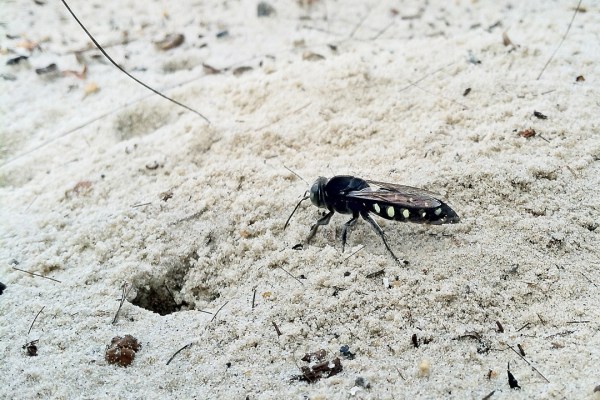
Outside of the cicada killer, this digger wasp (family Crabronidae) on the  beach at Guarujá is the largest that I have ever seen.

A large digger wasp (family Crabronidae) greets us on the beach at Guarujá.

My Brazilian colleagues and I enjoy some well-deserved refreshments after our 53-km trek!

My Brazilian colleagues and I enjoy some well-deserved refreshments after our 53-km trek!

I may have looked like a nerd still in my cycling clothes, but the wave experience was unforgettable.

I may have looked like a nerd still in my cycling clothes, but the wave experience was unforgettable.

Copyright © Ted C. MacRae 2013

T.G.I.Flyday: Argentine robber

I’m back in South America for the next 2+ weeks, and though it will be another week before I actually make it into Argentina, I am celebrating my return to that lovely country with photos of Argentinian insects taken during last year’s extended visit but that I haven’t had a chance to share before now. Earlier this week I featured Camponotus sericeiventris (though I prefer the literal translation, “silky-bellied humpbacked ant“)—easily among the most handsome ants that I’ve ever seen and which I encountered in the remnant quebracho forests at Chaco National Park in northern Argentina. Today’s feature is an equally handsome robber fly (order Diptera, family Asilidae), also seen at the park and which landed on a dead log just long enough to allow one good lateral profile shot of the beast in all its hairy splendidness! (Probably it zipped off to impale an Odontocheila tiger beetle in the back of the neck!)

Triorla sp. | Chaco National Park, Argentina

Triorla sp. | Chaco National Park, Argentina

I sent this photo to a few fly guys looking for a more authoritative opinion about its identity, mentioning its resemblance to some of our North American species of Efferia. Herschel Raney agreed that it belonged to at least that group, while Eric Fisher suggested a species in the genus Triorla (an early segregate of Efferia that is now widely regarded as a valid genus). The most recent checklist of robber flies from Argentina (Artigas & Hengst 1999) lists three species in the Efferia group (all in the genus Nerax); however, both Herschel and Eric confirmed my suspicion that Argentina, and especially the north, is not well studied for Asilidae. Eric further suggested that there could be as many as several times the number listed, mainly undescribed but also described from adjacent countries and occurring in Argentina but not yet recorded from there. Also, I had presumed this individual to represent a female since it lacked the distinctly swollen genital capsule (e.g. see this post, presumably another Efferia-group species), but Herschel thought the terminal structure was odd and did not look female.

REFERENCE:

Artigas, J. N. & M. B. Hengst. 1999. Clave ilustrada para los géneros de asílidos argentinos (Diptera: Asilidae). Revista Chilena de Historia Natural 72:107—150.

Copyright © Ted C. MacRae 2013