Fly got eye!

While walking the grounds of my company’s experiment station in Fontezuela, Argentina, I encountered a massive European elm (Ulmus laevis)—its trunk enveloped by an unidentified woody vine with large, ball-clusters of small, green flowers. Despite their inconspicuous appearance, the flowers were highly attractive to insects, primarily honey bees and smallish, black and yellow vespid wasps. One of the wasps caught my attention—it was not quite as narrow as the others, and it flew a little differently. Closer inspection, of course, revealed that it was not a wasp after all, but rather a fly. I wasn’t sure what it was, but it was extremely flighty and wouldn’t allow me to get close enough even to attempt looking at it through the viewfinder—much less going for a composed shot. Now, if it were a tiger beetle I’d probably spend the next 2 hours “working” it to get that in situ shot. But, hey, it’s just a fly (with apologies to my dipterist friends)! I trapped it in a vial and collected some flowers and foliage from the vine with hopes of giving it a day or so to settle down enough to allow a few photographs in a more controlled environment.

Hoplitimyia sp. poss. mutabilis | Buenos Aires Province, Argentina

That proved more difficult than expected, and a few photographs was all I could get. Even after a day in the vial it was extremely flighty, and every time I released it onto the flowers in the white box I had setup it immediately tried to take flight. I decided it must at least be hungry, so I whipped up some sugar solution and painted a small amount onto one of the leaves, then placed the open end of the vial over the leaf to let the fly find the sugar. That worked—briefly! The fly paused just long enough to allow me to fire off a half-dozen shots or so while it drank and preened before once again attempting to take flight. No amount of coaxing back to the sugar could interest the fly—she’d had enough, and so had I. I thought the fly had a soldier fly-ish look to it (family Stratiomyidae), and this was confirmed by dipterist Martin Hauser who wrote:

It is a female Hoplitimyia, maybe mutabilis…but the species are a mess. There are at least two species in the US, and more in South America. They have aquatic larvae…
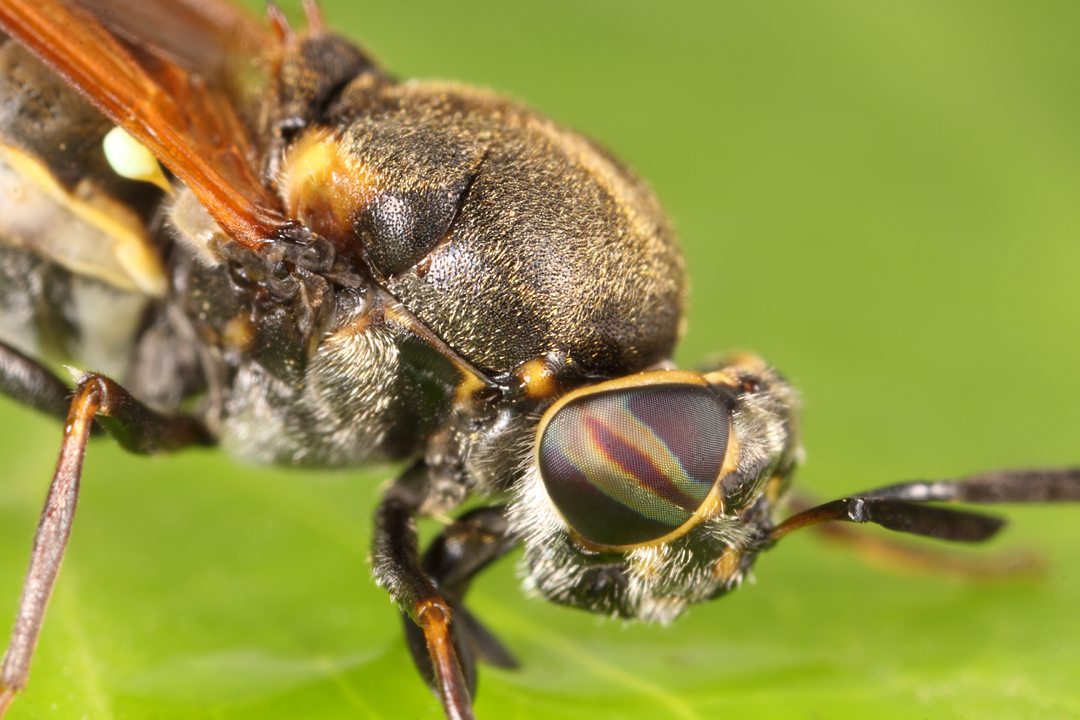
Fly got eye!

Among flies, tabanids and syrphids seem to get all the attention from insect photographers because of their contrastingly colored eyes, but this fly had every bit as much eye as those better known families! Considering how broadly across the order Diptera that one finds these stunningly patterned eyes—72 species out of 23 families according to Lunau & Knüttel (1995), an obvious question is what is their purpose. Considering that the patterns and coloration are often sexually dimorphic, it’s tempting to think it has something to do with mate selection, especially with their large size and resulting prominence. However, Horváth et al. (2008) presented evidence that the ventral eye surface of many tabanids are stimulated by horizontally polarized light. Such capabilities are common in aquatic insects, suggesting some function in locating water for finding hosts, mates and suitable sites for laying eggs. This still doesn’t explain why the patterns are often sexual dimorphic, although one can imagine that males and females experience different selective pressures for specific visual cues that could have an effect on the resulting color pattern. Comments from any dipterists that happen by this blog and have greater insight into this question would be greatly appreciated.

REFERENCE:

Horváth, G., J. Majer, L. Horváth, I. Szivák & G. Kriska. 2008. Ventral polarization vision in tabanids: horseflies and deerflies (Diptera: Tabanidae) are attracted to horizontally polarized light. Naturwissenschaften 95:1093–1100, DOI 10.1007/s00114-008-0425-5.

Lunau, K. & H. Knüttel. 1995. Vision through colored eyes. Naturwissenschaften 82(9):432-434, DOI: 10.1007/BF01133678.

Copyright © Ted C. MacRae 2012

I fear no weevil…

Megabaris quadriguttatus (Klug, 1829) | Corrientes Province, Argentina

…especially when they are as colorful as these! I found this mating pair ~60 km south of Corrientes, Argentina feeding on flowers of what I presume to be the goldenrod species Solidago chilensis (family Asteraceae). Here, as in North America, goldenrod blooms in profusion along the roadsides during late summer and fall wherever moisture is to be found, and also as in North America goldenrod here is an insect magnet. During my week exploring Corrientes and Chaco Provinces, I learned to stop whenever I spotted a stand of the distinctive yellow blossoms. I found several stands and was treated to a variety of beetles, flies, and other insects that I’ll show over the coming days, with these being among the most striking that I found.

Weevils themselves may not be anything to be afraid of; however, their taxonomy is downright terrifying (and this coming from a beetle man!). With more than 40,000 described species worldwide (and who knows how many still awaiting description), the family Curculionidae (“true” weevils) may be the largest in the animal kingdom. I don’t know why, given the distinctive and striking coloration of these individuals, but I punted early and asked my friend Henry Hespenheide (a buprestid man, but knows a thing or two about weevils) if he knew what these were. Henry must have also been scared, because he went straight to the top and forwarded the photos to weevil heavy-hitters Charles O’Brien and Jens Prena, both of whom quickly replied back with an ID of Megadaris quadriguttatus (Klug, 1829). The state of weevil bionomics seems to be as incomplete as their taxonomy, as I was unable to find even the most basic information about the distribution and biology of this species (keep in mind I’m in Argentina right now with no access to libraries). As far as I can tell this is a strictly Neotropical genus.

Of course, had I checked Curculionidae de Argentina I might have noticed the photo of this species right there on the front page. Fear does strange things to one’s confidence.

Copyright © Ted C. MacRae 2012

Bicho palito, or “My longest post ever!”

The last day of my vacation week in Corrientes, Argentina got off to a bad start—heavy rain moved in during the morning, and I feared my last chance at looking for insects was about to be washed away. The weather radar, however, showed a curious, abrupt line between rain/no rain across the river in Chaco Province. At noon I decided it was do or die and played a hunch that one of my favorite spots ~50 km west might have been spared the downpour, and if not at least I tried. Yet another example of how it usually pays to play your hunches—while the skies were gray and the ground and foliage a little damp, there was plenty of insect activity afield (and perhaps even enhanced by the first significant moisture in almost two months).

Tetanorhynchus poss. n. sp. | Chaco Province, Argentina

No sooner than had I walked 20 feet from the car did I see an enormous stick insect in a low, spreading acacia tree. I don’t know why I saw it, as it’s camouflage was quite effective, but after so many years of doing this I think I’ve just developed an eye for seeing things often easily missed. This, of course, is not your normal, run-of-the-mill (at least to North Americans) walkingstick (order Phasmida), but rather a member of the curious and exclusively Neotropical grasshopper family Proscopiidae, referred to in English as “jumping sticks” and in Spanish as “bicho palito” (stick bug). I recognized the family instantly, as I had already seen one of these a number of years ago in Uruguay (though not so large as this one), and of course Alex Wild featured what has become one of his most famous photos of a species from Ecuador in one of his Monday Night Mystery posts.

The super elongate fastigium suggests this may be a new species.

Gleefully I set about taking photos, focusing almost exclusively on the head. One thing that immediately struck me was the super-elongate fastigium (frontal projection)—many proscopiids lack this elongate fastigium, and I had not recalled seeing any example as long as the one on this individual. When I saw the super-closeup I had taken of the eyes and antennal bases from the ventral view, I knew I had my own Super Crop Challenge. Of course, it was not until after I posted the challenge that I realized identifying this insect below the family level was more of a challenge than I had anticipated. How could I award points for genus when I wasn’t even sure of this myself? Eventually I enlisted the help of Alba Bentos-Pereira at São Paulo University—he and his doctoral student are perhaps the only two people in the world that are working on this family. I had suggested, based on its location in Chaco Province and consulting Orthoptera Species File Online, that it must be either Tetanorhynchus calamus or Cephalocoema daguerrei—both in the tribe Tetanorhynchini (Bentos-Pereira 2003). Alba kindly responded that it could be the former, it most definitely is not the latter, and perhaps most likely is that it represents an undescribed species (proscopiid taxonomy is still far from complete). He indicated that the presence of ventral spines on the metatibia would confirm membership in the tribe Tetanorhynchini (they are present), and provided several measurements from the male holotype of T. calamus that I could use to compare with my specimen. Although the absolute measurements might (and probably would) differ, their relative proportions should be the same as the type. Here are the results (measurements in mm):


Male type

Female

Ratio

Body

98

138

1.4

Head

18.5

32

1.7

Fastigium

9.5

19

2.0

Pronotum

20

25

1.3

Femur 1

14

17

1.2

Femur 3

28

38

1.4

Tibia 3

30

39

1.3

As can be seen, most of the measurements are consistently 1.2–1.4X that of the male type. The head, however, is proportionately longer (1.7X), primarily due to the much longer fastigium (2.0X). Is this difference significant, at least enough to consider it a different species? I am currently awaiting Alba’s opinion on that.

Like all proscopiids, the form of the face seems to be''smiling'.'

While only two species of Proscopiidae are described from Chaco Province, there are eleven species known from northeastern Argentina (which includes the provinces of Buenos Aires, Chaco, Córdoba, Corrientes, Entre Rios, Formosa, Missiones and Santa Fe)—these are shown in the following list with hyperlinks to their respective pages at Orthoptera Species File Online, along with notes on type localities for each (or synonyms) and the length of the fastigium relative to the body:  

Okay, in the title I indicated this was “My longest post ever!” Here’s why:


Congratulations to Sam Heads, whose work as a practicing orthopteran taxonomist and contributor to Orthoptera Species File Online set him up for the win with 17 points. Brady Richard takes 2nd place with 14 pts, while Chris Grinter and Dennis Haines share the final podium spot with 12 pts each. Congratulations to these folks, who jump out of the gate early in BitB Challenge Session #6.

REFERENCE:

Bentos-Pereira, A. 2003. The Tribe Tetanorhynchini, nov. (Orthoptera, Caelifera, Proscopiidae). Journal of Orthoptera Research 12(2):159–171.

Copyright © Ted C. MacRae 2012
Pseudomyrmex in Corrientes, Argentina

Early April is early autumn in northeastern Argentina, but seasons just south of the Tropic of Capricorn bear little resemblance to the well-defined spring, summer, fall and winter that we are accustomed to in eastern North America. Early fall here is not a riot of color, pungent smells, and sharp shadows cast from an oblique sun, but rather dull greens and browns, muted and dusty after eight months under a searing overhead sun with only the sparsest of rains for the past two. Such conditions are generally not conducive to insect life, and for the most part insects that live in warm, seasonally wet environments adapt by timing their adult activity (the time for reproduction) to the moist seasons—which in this part of Argentina means September through January. Thus, despite warm temperatures and a subtropical environment, early April is not the best time to be looking for insects here.

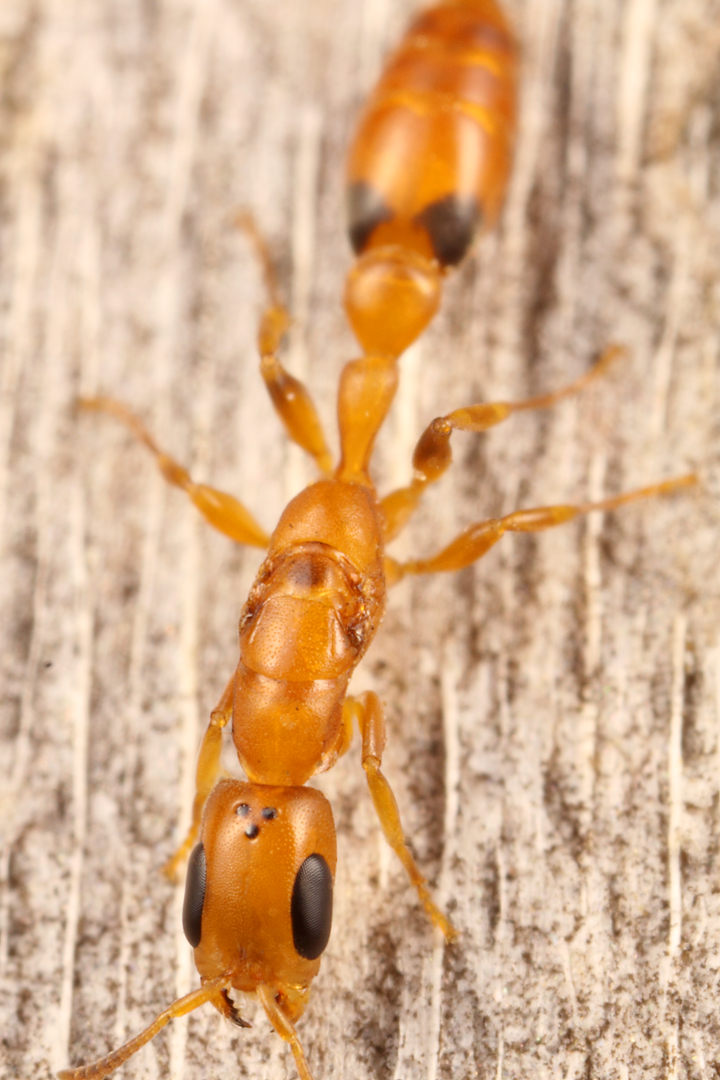
Pseudomyrmex sp. | Corrientes, Argentina

Nevertheless, not all insect groups respond in this fashion, and one in particular is as ubiquitous and diverse now as at any other time of year—ants! I had to trek into sand and mud along the Rio Paraná to find tiger beetles (a few), and it took some dedicated searching to ferret out a few stands of late-season blooming plants and fresh-cut woodpiles to encounter a small diversity of longhorned beetles. I think I may have even seen a single jewel beetle, a chrysobothrine of some type, as it landed on and then flash flew away from the same woodpile with which I had modest longhorned beetle success. The ants, however, have been everywhere—no tree, shrub, or square meter of ground is without them in astounding diversity of size and form.

At this point it appeared to be eating something it plucked from the bark.

I probably shouldn’t admit this, as I hear rumor there are a few myrmecologists that frequent this blog, but I have a hard time getting excited about ants. I know, their unique social structures and evolutionary history are among the most fascinating in the insect world, and watching their behaviors is a lesson in charisma beyond reproach. Still, however, for me there are just so many of them and their taxonomy so completely foreign to me that every time I try digging further I feel immediately overwhelmed. Coleopteran taxonomy may be an order of magnitude more diverse, but since I only pay attention to about 1.5% of the order, it’s as comfortable to me as an old shoe.

Close...

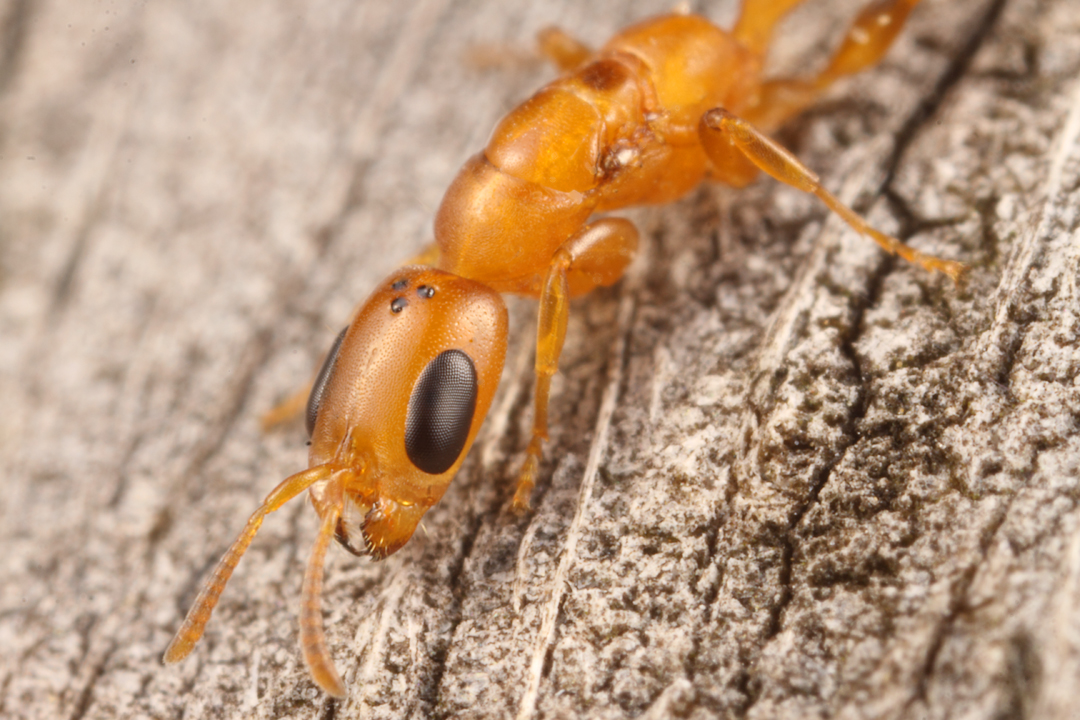
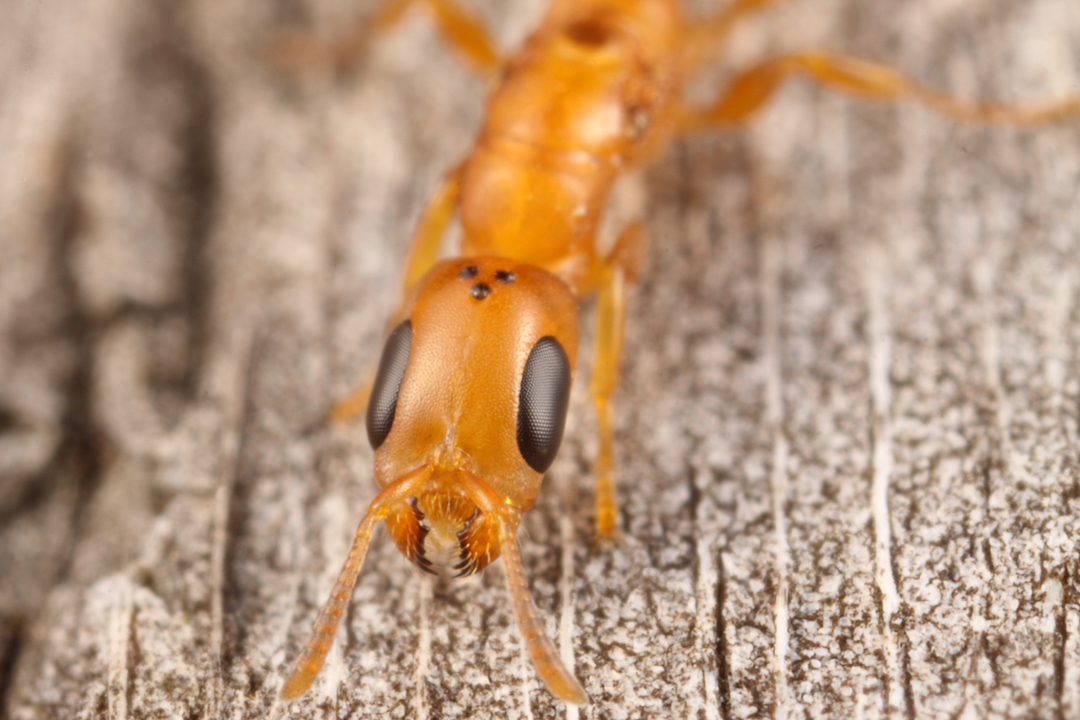
There is one group of ants that I do find endlessly fascinating—the genus Pseudomyrmex. I don’t know why that should be the case—there are plenty of other ant genera that seem to have the tools and structures that usually grab my attention (e.g., grossly oversized mandibles, sharp spines, heavy duty surface sculpturing, etc.). Pseudomyrmex spp. have none of these morphological gimmicks—just a simple, elongate, wasp-like form. Perhaps it’s their association with branches (like wood-boring beetles) rather than the ground—nope, tiger beetles are decidedly ground dwellers and I dig them (Get it? Heh!). No, it must be their super-sized eyes. Most ants have beady little eyes that make it hard to look into their soul. Pseudomyrmex eyes have charisma—you can see them looking at you (and almost read their thoughts).

closer...

Anyway, among the many ants that I’ve noted wandering the banks of the Rio Paraná here in Corrientes are these smallish, orangish Pseudomyrmex spp. This particular individual was the first one I saw, revealed when I happened to pull away a bark chip from trunk of the palm tree on which it was hiding. It wandered all over the palm trunk for the next 15 minutes or so as I chased after it with my 65mm lens. For such tenaciously crawling subjects I’ve found that simply firing off shot after shot as you track it in the view-finder rather than waiting for it to pause and trying to compose each shot is the best way to get some usable images. It’s simply a numbers game—the more shots you fire off, the better chance you have that at least some will be in-focus, nicely composed, and well-lit. These are the ones I was happiest with from the session. (And, OMG, did I really just give advice on how to photograph ants?)

Closest!

It goes without saying that a more specific ID, if possible, would be greatly appreciated (should any prominent myrmecologists happen across these photos). There are scads of species in this genus right across the river in Paraguay, and presumably the diversity in Argentina is similarly high.

Copyright © Ted C. MacRae 2012
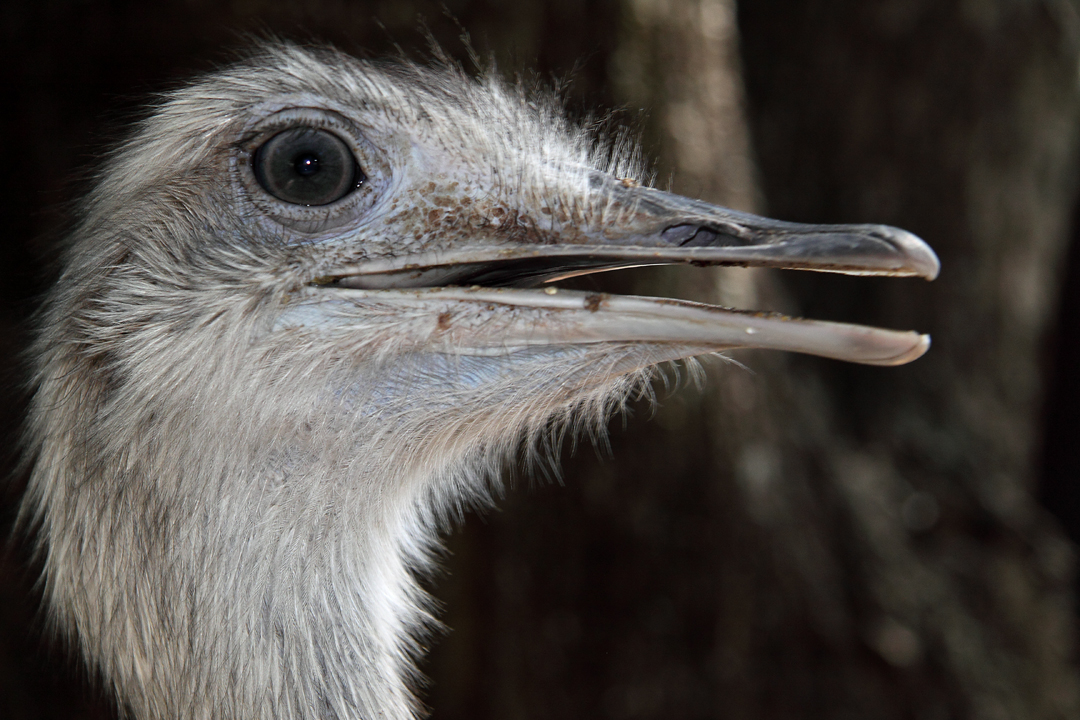
Animals Alarmed!

''La Costanera'' | Corrientes, Argentina

Today was my first full day of vacation in Corrientes, Argentina. It was great! I slept late, drank coffee on the balcony, frittered a while on the computer, and then headed for the “Costanera”—a beautiful stretch of green space along the banks of the massive Rio Paraná. I first visited Corrientes in 2000, spending a week collecting insects in Corrientes and neighboring Chaco Provinces on the front end of a business trip, and I’m thrilled to be back in this, one of my favorite cities in Argentina.

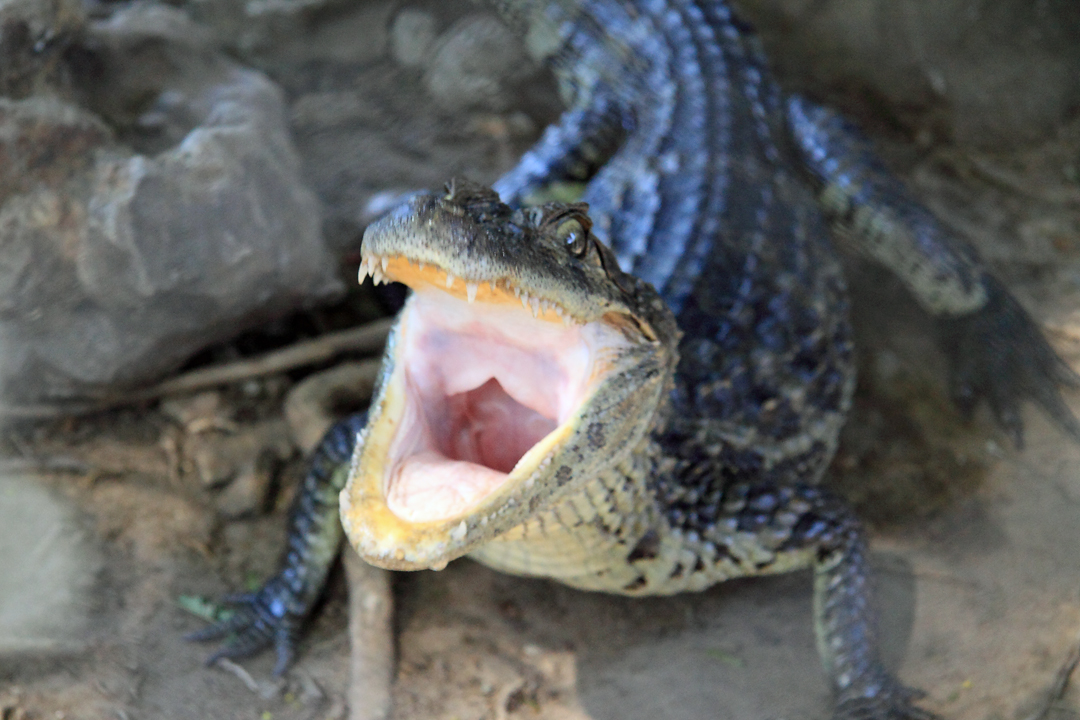
Of course, change is inevitable, and not everything has changed for the better since I was last here. The southern coast has been developed (photo above), so gone is a wet, muddy area above the beach where I fondly remember two local boys “helping” me collect tiger beetles (one actually caught one!). Still, the area had a few surprises in store for me, one of which was the presence of a small zoological park that I had somehow missed on my previous visit. I have mixed feelings about zoos—their mission in promoting conservation and providing refuge for rescued animals is beyond reproach, but somehow I always feel a little sad (and guilty) when I visit one. I can’t escape the feeling that I’m looking at prisoners. US zoos have done much to minimize this quandary by providing spacious, naturalized habitats and minimizing the use of or visibility of bars and cages. Still, watching the polar bear relentlessly pacing back and forth on its well-practiced path reminds you of just how bored the animals get even in these modern confines. A cage is a cage. Nevertheless, animals are always interesting to look at, and seeing animals in a Southern Hemisphere zoo is a unique opportunity that most Americans never experience. Predictably, the zoo harkened back to the older zoos of the US, with animals confined in small spaces enclosed prominently with bars and chain link fencing. There is actually an upside to this, as it allows one to get extraordinarily close to the animals. Ever try to photograph a lion in a US zoo? Maybe with an 800mm telephoto lens you can get a shot that looks like more than a little brown blob in a sea of brown, and even then the elevated position looking down into the “den” makes for very unspectacular views (getting down on the same level as your subject, or even lower, results in much more interesting views). I never even think about taking photos of animals at US zoos for this reason. Today’s experience, however, was much more intimate despite the chain links and even provided for some comical reactions by the animals as I lifted to glass to within a few feet of their faces. I present here a few of the more interesting ones:

Yacaré Caimen (Caiman yacare)

Normally when you see this, you’ve already screwed up!

Burrowing owl, or ''Lechuza'' (Athene cunicularia)

The closer I got, the lower he got—spreading his wings and “snapping” his beak.

Greater Rhea (Rhea americana)

That moment of indecision between “fight” or “flight” (I’m talking about me, not the bird!).

Copyright © Ted C. MacRae 2012
The backwards firefly

Aspisoma sp. | Buenos Aires Province, Argentina

The beetle in these photos was another “gift” from my colleagues in Fontezuela, Argentina—brought to me shortly after I found the first gift on my desk during my first week at the station. This is obviously a firefly, but I also recognized it as the same species as (or very close to) one I had photographed in a soybean field during last year’s March visit. I only got off one shot of the one in the soybean field before it took flight, so here are some better views of the species—enhanced by the cleanliness inside the pearly white confines of a styrofoam cooler.

A little closer...

My attempts to identify the species last year were fruitless (though admittedly cursory). This year I tried a different tact—I went to the website Lampyridae de Argentina (which is really just a list of species based on Blackwelder’s Neotropical beetles checklist) and did a Google image search on each genus in the list (combined with the term “Lampyridae”) until I encountered something that looked pretty close in the genus Aspisoma (tribe Photinini) in the Lampyridae photo gallery at PyBio.org (Paraguay Biodiversidad). The page contains excellent dorsal habitat photographs of a number of species in the genus; however, unfortunately the majority of them are labeled simply as Aspisoma sp. (it should not be surprising that the state of lampyrid taxonomy in South America is still far from complete). The individual shown here is a dead ringer for Aspisoma sp. #8, but spp. #51, 52, and 53 cannot be discounted. I sent the photos to cantharoid beetle expert Santiago Zaragosa Caballero, who confirmed the species appeared to be a member of the genus Aspisoma but admitted to not knowing the South American fauna well enough to offer a species ID. Nevertheless, a genus ID is better than nothing, and my thanks to Santiago for his confirmatory ID.

...and finally, the requisite ''face'' shot.

It’s no secret that I love face shots! The above photo, however, was the best I could do for this species due to its highly explanate (flanged) pronotal hood and the typical firefly habit of hunkering down and using their flange to protect their softer underparts when feeling threatened. I call this the “backwards” firefly because everything about it seems opposite to my concept of fireflies in eastern North America—yellow with black markings instead of black with yellow markings and active during the day instead of at night, which I most easily ascribe to its occurrence opposite to the Northern Hemisphere! (wink)

Copyright © Ted C. MacRae 2012

Seeing the unseen

While trying to nab a cicada from the small trees planted on the grounds at our experiment station here in Fontezuela, Argentina, I happened to notice a bit of movement on one of the branches nearest to me (while the cicada flew off with a screech and a clatter). A closer look revealed what looked like a slight protuberance of the branch to be a nymphal planthopper (family Fulgoridae), and at ~15 mm in length a pretty good-sized one at that. I would have never noticed it had it not moved, so good was its camouflage, but I didn’t have the time to spend trying to photograph it right then and there. Instead, I popped it into a vial (you do always carry a vial with you, don’t you?) and continued my fruitless quest for cicadas.

Undet. fulgorid nymph | northwestern Buenos Aires Province, Argentina

Later that evening I placed it on a palm tree in the hotel courtyard (not really the appropriate host, but it was the only real tree available). I took the standard dorsal view photo, and while not as good a color match as the (still undetermined) tree upon which I found it one still gets a sense for how difficult it might have been to see this nymph flattened against the slightly greenish bark.

A lateral profile view makes the bug much more visible.

One thing I’ve learned from much better photographers than myself is to get down and low relative to the subject—even to the point of looking up at it if possible. This provides views that are far more interesting than the typical looking-down-from-above shots. In the case of this nymph, the above and following low-angle shots really brought it to life and emphasize its unusual form.

Even lower. How did I get the nymph to "prop" itself?

Of course, with the nymph on the side of a fairly large tree, one can only get so low. To get even lower, I placed the nymph on a small stick and used hand-holding and bracing techniques to get even lower. I took quite a few shots experimenting with composition, and the shots I ended up liking the best were frontal-oblique from slightly below bug-level with the stick rather sharply angled down and the bug slightly propped up on its front legs. Easier said than done—this nymph was loathe to stop crawling once I moved it to the stick and tended to be negatively geotactic (crawled upwards). As a result, every time I angled the stick downward it would turn around and start crawling the other way, and in any case when it did stop it tended to flatten itself against the branch. Through trial and error, I learned that if I braced my thumb and forefinger against its head/pronotum to stop its progress and held it in place for awhile it would stay put. I also learned that if I slightly blew on its face when it was flattened against the branch that it would prop itself upwards a bit. Thus, for this shot it was a matter of letting it crawl upwards almost to the end of the stick (to eliminate excess stick that poke into the camera with a frontal-oblique angle), bracing it for a moment, inverting the stick downward and pointing slightly towards the camera, and then blowing on its face a bit—simple, huh? The black transverse band on the lower face adds a lot of character to the shot.

The obligatory face-on shot

The face-on shot is a staple for me, but even with this shot the angle is important—angle the back of the stick down too much and you get the all black background (not in itself bad, just not what I wanted for this shot), angle it too high and too much of the back of the bug shows up as blurred clutter in the background). The foreward projecting “nose” of this nymph prevented me from getting both the tip of the nose and the eyes in focus (without using excessively small aperatures), so I opted for the latter (I’ve never seen a good face shot of an insect in which at least the eyes were not in focus).

Unfortunately, family-level identification is as good as it is going to get for this individual. I sent the photos to fulgorid expert Lois O’Brien, who eliminated several options but couldn’t narrow down further among several remaining possible genera (“Our ignorance of nymphs is abysmal…”). Her recommendation was to go back to the tree and try to find adults, and apparently some species tend to live on the same tree for years and years. I’ll be returning to Fontezuela later in April—hopefully the fall season will not have advanced to far by then.

Copyright © Ted C. MacRae 2012
A tortoise beetle gift

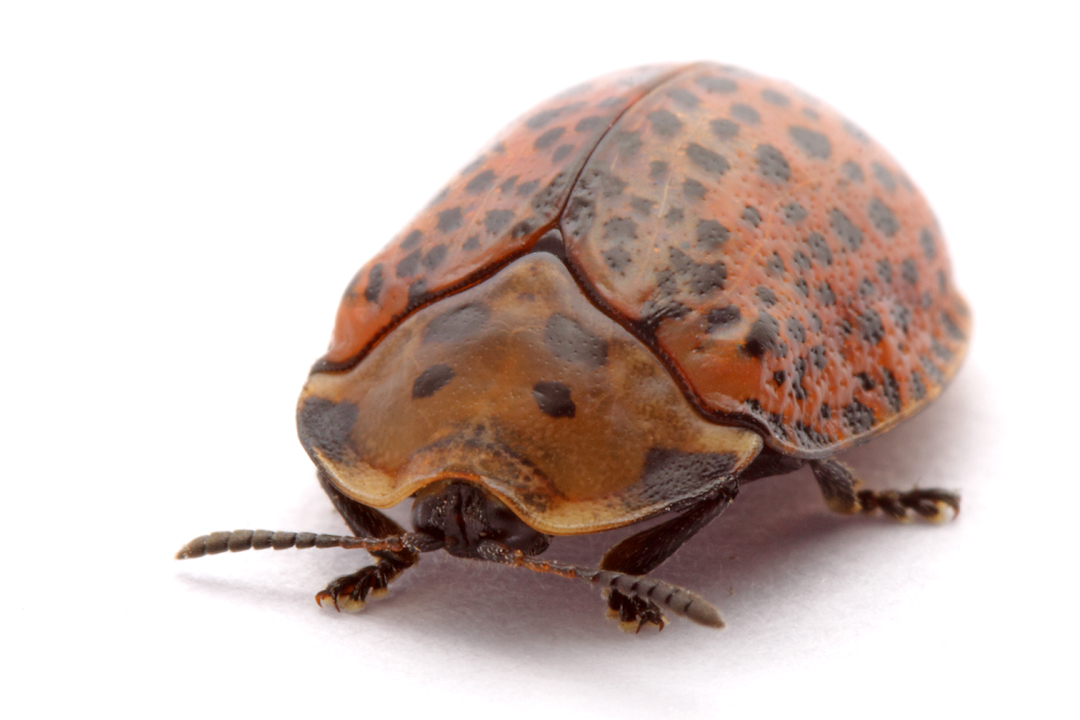
Chelymorpha varians | northwestern Buenos Aires Province, Argentina

A few days after returning from travel through northern Argentina, I found a jar on my desk with this beetle in it. One of my colleagues has seen it in the field while I was away and figured I would be interested in seeing it. Although I’m half-a-world away from home, I immediately thought of our North American species Chelymorpha cassidea when I saw it. Armed with this hunch, I typed “Chelymorpha Argentina” into Google, and the first result that came up was a paper by Hamity & Neder de Román (2008) about the species Chelymorpha varians in Argentina and its potential as a biocontrol agent for the widespread weed Convolvulus arvensis. Included in the paper was a plate showing variability of coloration and maculation in the adults, and my individual was a dead ringer for the species. Still, getting a species ID on the very first hit of the very first search attempt just seemed too easy, so I consulted the wonderfully comprehensive Cassidinae of the world – an interactive manual. This site, too, contained multiple images of Chelymorpha varians showing an extraordinary range of variability in color (from yellow to red) and degree of maculation (from immaculate to heavily maculated). A quick perusal of other species indicated as similar or also occurring in Argentina turned up nothing nearly as similar and convinced me that I had, indeed, arrived at a correct ID.

As the name suggests, markings are highly variable in shape and degree of development.

As indicated in the above cited paper, and like our own C. cassidea, species in the genus Chelymorpha are associated almost exclusively with plants in the genus Convolvulus. I would have preferred to photograph the beetle on foliage of this plant, but not knowing precisely where I might find it I decided to do white box instead. I got some printer paper and was looking for a cardboard box to line the inside with it when I spotted a styrofoam cooler of just the right size.

The scientific name translates literally to ''variable turtle-body''

These are okay white box photos, but I’ve decided if I want to do white box right I need to get a larger flash unit that is a little easier to work with off the camera. Right now I have only the small twin-flash heads from my MT-24EX—their small size makes them difficult to manipulate off the camera, and leaving them attached to their bracket limits the directions in which they can be oriented relative to the subject. As a result, I had to use more heavy-handed post-processing in these photos than I normally like to do in order to get the levels right. Hmm, I have a birthday coming up in about a month…

REFERENCE:

Hamity, V. C. & L. E. Neder de Román. 2008. Aspectos bioecológicos de Chelymorpha varians Blanchard (Coleoptera: Chrysomelidae, Cassidinae) defoliador de convolvuláceas. Idesia 26(2):69–73.

Copyright © Ted C. MacRae 2012