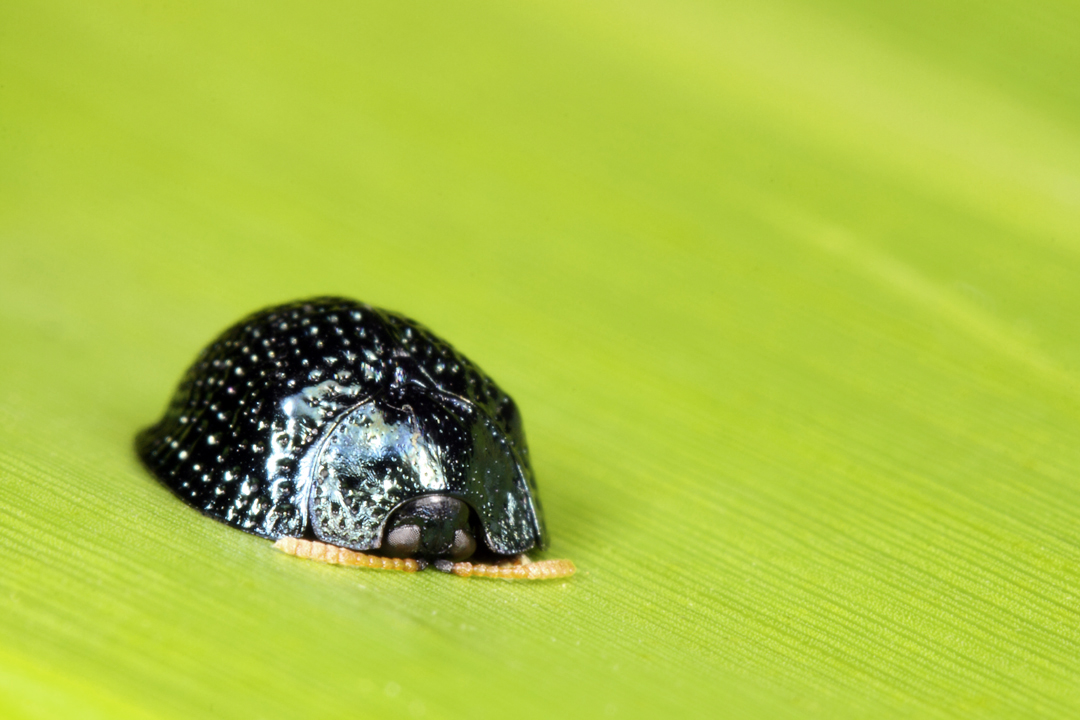
Palmetto Tortoise Beetle, Hemisphaerota cyanea

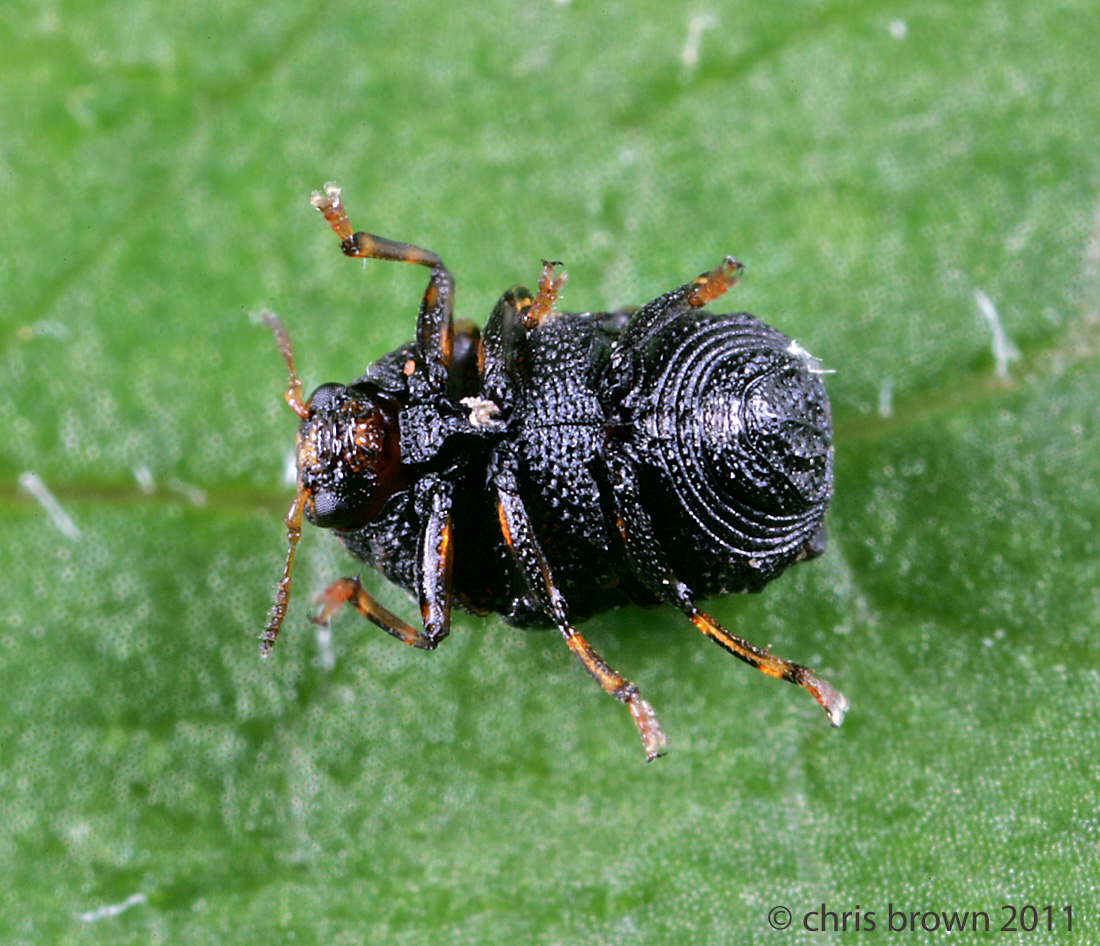
Hemisphaerota cyanea (palmetto tortoise beetle) on saw palmetto (Serenoa repens)| Levy Co., Florida

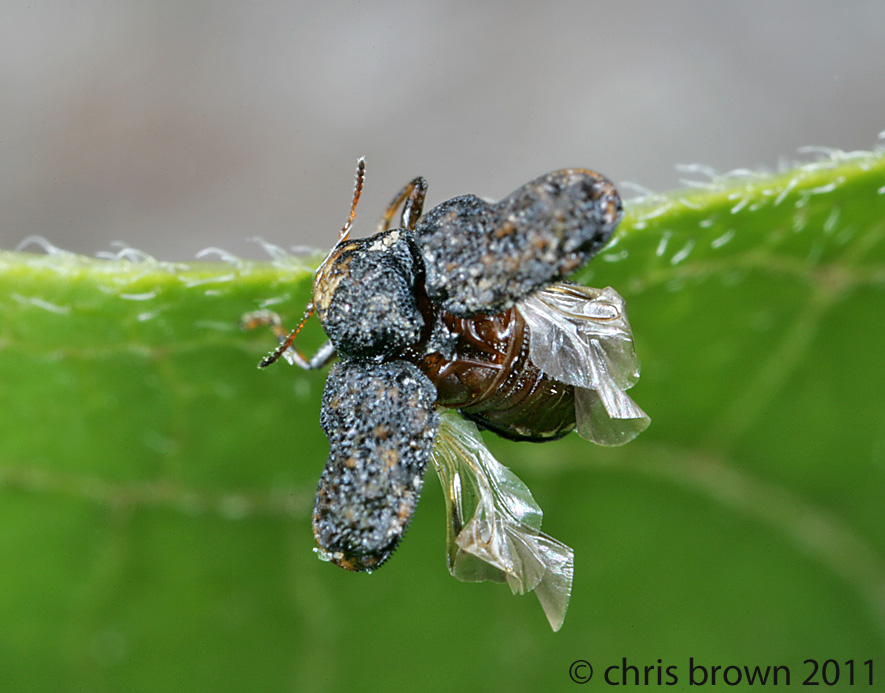
While most leaf beetles (family Chrysomelidae) are found associated with herbaceous plant species, many members of the subfamily Hispinae—which includes leaf mining beetles and tortoise beetles—are found on the foliage of woody plants. In North America the most distinctive of tortoise beetles found on trees is the palmetto tortoise beetle, Hemisphaerota cyanea. These distinctive dark blue, hemispherical-shaped (hence, the genus name) beetles with yellow antennae are found in the deep southeastern U.S. on the fronds of saw palmetto, Serenoa repens, and other native and introduced palms. I found the beetles in these photographs near Cedar Key Scrub State Preserve in Levy Co., Florida while searching white sand 2-tracks through sand scrub habitat for the Florida-endemic Cicindelidia scabrosa (Scabrous Tiger Beetle).

Beetles scarify the leaf epidermis, leaving trough-like feeding marks.

I first saw this species during my first insect collecting trip to Florida back in 1986. I didn’t know much then (other than that I really, really enjoyed traveling to different parts of the county to collect insects!). I was in Everglades National Park (with a permit) when I first noticed them dotting saw palmetto fronds. I think I had actually noticed them for some time but thought they were some type of scale insect before eventually realizing it was actually not only a beetle, but a tortoise beetle (one of the many groups of insects in which I was interested during those early, formative days).

Specially modified tarsi and a hemispherical shape allow the beetle to clamp itself tightly against the leaf to repel attack by ants and other insect predators.

I also remember being struck by how difficult it was to pry the adults off of the leaves on which they were sitting. It turns out that these leaf beetles have specially modified tarsi with thousands of bristles tipped with adhesive pads on the undersides. Normally only a few of the pads contact the leaf surface, but when the beetle is threatened it clamps all of them against the leaf and secretes an oil that strengthens the adhesive capabilities of the pads. Thus secured, the beetle clamps its hemispherical-shaped body down tightly against the leaf and is able to resist the efforts of ants and other predators to pry it from the leaf.

Copyright © Ted C. MacRae 2012

West Indian seagrape sawfly

I spent a few days in Puerto Rico last month. A quick in-and-out for work, there was little chance to do any real exploring. Nevertheless, I booked my return on the last possible flight out so that I would have at least part of a day to look around before needing to go to the airport. I’ve only been to Puerto Rico twice before—once in 1982 on a one-day visit during my honeymoon cruise (with a far-too-rushed guided tour to El Yunque), and again in 1999, also a quickie for work. Given my limited previous opportunities to explore San Juan, you might think I would choose La Forteleza and San Juan National Historic Site in Old San Juan for my day’s destination. After all, they were designated a World Heritage Site by UNESCO (United Nations Educational, Scientific, and Cultural Organization) in 1983. Tempting, but when I looked at the map of San Juan a nice, big, chunk of green immediately caught my eye—Bosque Estatal de Piñones (Pine State Forest). Call me single-minded, but not even a World Heritage Site can match the siren call of 1,500 acres of moist, subtropical forest!

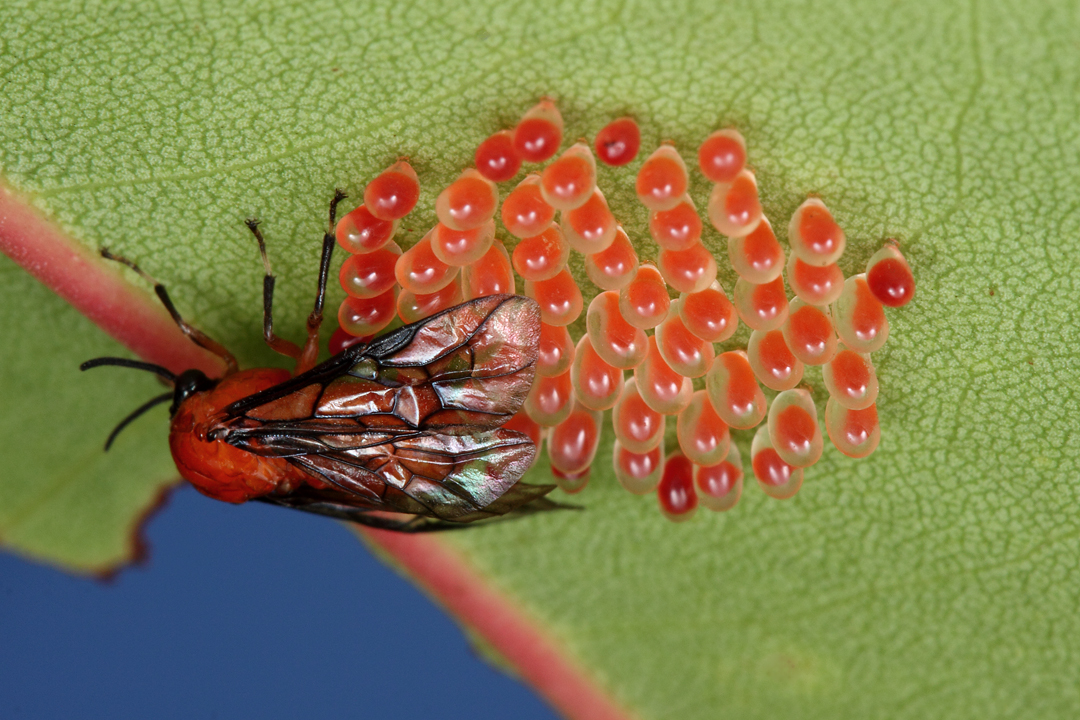
Sericoceros krugii female guarding eggs on leaf underside of sea grape (Coccoloba uvifera) | Bosque Estatal de Piñones, San Juan, Puerto Rico

Mangrove forest covers much of the reserve, accessed by a wide (and annoyingly elevated) boardwalk—an interesting stroll but unsatisfying to me since I couldn’t root around at ground level. One can get only so much enjoyment from distinguishing red, black, and white mangrove before the sameness of the canopy and exclusion from the ground flora/fauna starts to become monotonous. I went back towards the parking lot (photographing a few lizards along the way—more on them in a future post) and had just begun walking the perimeter of a picnic area when I encountered some very large seagrape (Coccoloba uvifera) plants. I’ve seen a lot of seagrape in Florida and have never found any insects on it, so I initially didn’t make much effort to go over and have a closer look at them. However, even from afar I could see that these particular plants had been very heavily damaged by some type of defoliating insect. The first few branches I looked at showed no outward evidence of who the culprit was, but I reasoned it must have been some sort of lepidopteran caterpillar. As I was inspecting the branches, the insect in the above photo caught my eye—at first I thought it was some type of “homopteran” because of the apparent egg-guarding behavior it was showing, but a closer look revealed that it was actually a sawfly! An egg guarding sawfly; who would have thought?!

Female ovipositing her clutch of eggs, which are solid red when first laid.

Predictably, subsequent identification was quite easy as there is only a single species of sawfly in Puerto Rico—Sericoceros krugii in the family Argidae. About 20 species make up this Neotropical genus, occurring from southern Mexico south to Argentina; however, S. krugii is the only species occurring in the West Indies and in addition to Puerto Rico is found in the U.S. Virgin Islands and Dominican Republic (Smith 1992). The species in this genus seem to specialize on Coccoloba spp. (family Polygonaceae) as host plants; however, one species is reported from Triplaris caracasana—also in the Polygonaceae (Smith & Benitez Diaz 2001), and another from Lonchocarpus minimiflorus in the family Fabaceae (Smith & Janzen 2003).

Larvae consume all but the largest veins of the foliage.

Wolcott (1948) describes how this species often defoliates long stretches of seagrape on the beaches of Puerto Rico, leaving “windrows of excrement on the sand underneath the naked branches and leaf midribs…” He also describes its apparent lack of natural enemies (although it has since been recorded as a host for a tachinid fly—Bennett 1999) and the fact that birds do not seem to eat them as possible reasons for its abundance and frequent outbreaks. To me, the screaming red/black coloration of the adult and apparent unpalatability to birds suggest the presence of chemical defenses, and although I couldn’t find any information on this specific to Sericoceros spp., many social species of sawflies are typically well-defended chemically and, thus, aposematic. Despite this apparent defensive capability, the remarkable maternal guarding behavior exhibited by the adult females suggests the eggs still need additional protection from predators and parasitoids. Sericoceros spp. are not the only sawflies to exhibit this behavior, which apparently has evolved across numerous sawfly lineages (see Social Sawflies, by James T. Costa).

This mature larva will soon spin a coccoon on the bark for pupation.

There were only a few, apparently mature larvae still around on the trees that I could find. Wolcott (1948) describes most outbreaks as occurring during the fall and winter months, after which the insects might completely disappear for many months or even a year. I must have caught the tail end of one such outbreak, although the number of females that I saw guarding eggs suggests another wave of defoliation would soon be occurring.

Congratulations to itsybitsybeetle, who showed up late to the party but still managed to pull out the win for Super Crop Challenge #13. Brady Richards came in a close 2nd, while Sam Heads and Mr. Phidippus share the final podium spot. The overall standings remain the same, with Sam leading Brady by a single, slim point and Mr. Phidippus only six points further back. There will be two more challenges in BitB Challenge Session #6, so it’s still possible for somebody to make a late run, especially if one or more of the leaders falters down the stretch. Remember—the top three points earners at the end of the session will get a choice of some loot, so don’t hesitate when the next challenge rolls around.

REFERENCES:

Bennett, F. D. 1999. Vibrissina sp. (Diptera: Tachinidae) a parasite of the seagrape sawfly Sericoceros krugii (Hymenoptera: Argidae) in Puerto Rico: a new record. Journal of Agriculture of the University of Puerto Rico 83(1–2):75–78.

Smith, D. R. 1992. A synopsis of the sawflies (Hymenoptera: Symphyta) of America south of the United States: Argidae. Memoirs of the American Entomological Society 39:1–201.

Smith, D. R. & Benitez-Diaz. 1991. A new species of Sericoceros Konow (Hymenoptera : Argidae) damaging villetana trees, Triplaris caracasana Cham. (Polygonaceae) in Paraguay. Proceedings of the Entomological Society of Washington 103(1):217–221.

Smith, D. R. & D. H. Janzen. 2003. Food plants and life histories of sawflies of the family Argidae (Hymenoptera) in Costa Rica, with descriptions of two new species. Journal of Hymenoptera Research 12:193–208.

Wolcott, G. N. 1948. Insects of Puerto Rico. Journal of Agriculture of the University of Puerto Rico 32(4):749–975.

Copyright © Ted C. MacRae 2012

Holy conglobulation, Batman!

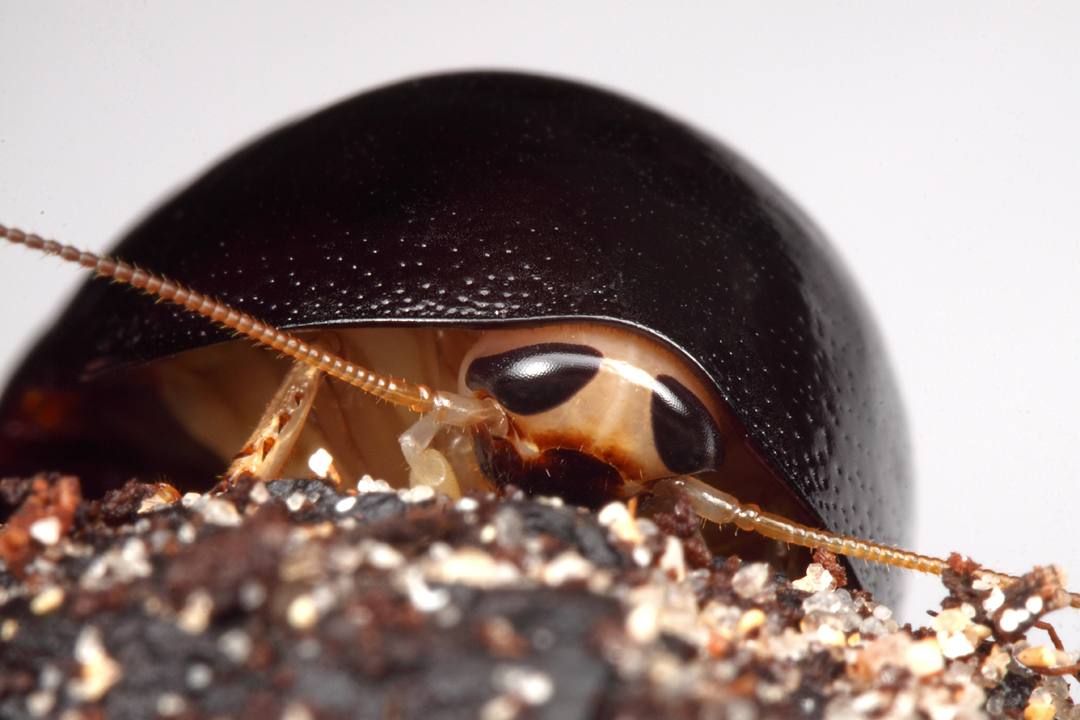
It’s a pill bug… no, it’s a roach. It’s a pill roach!

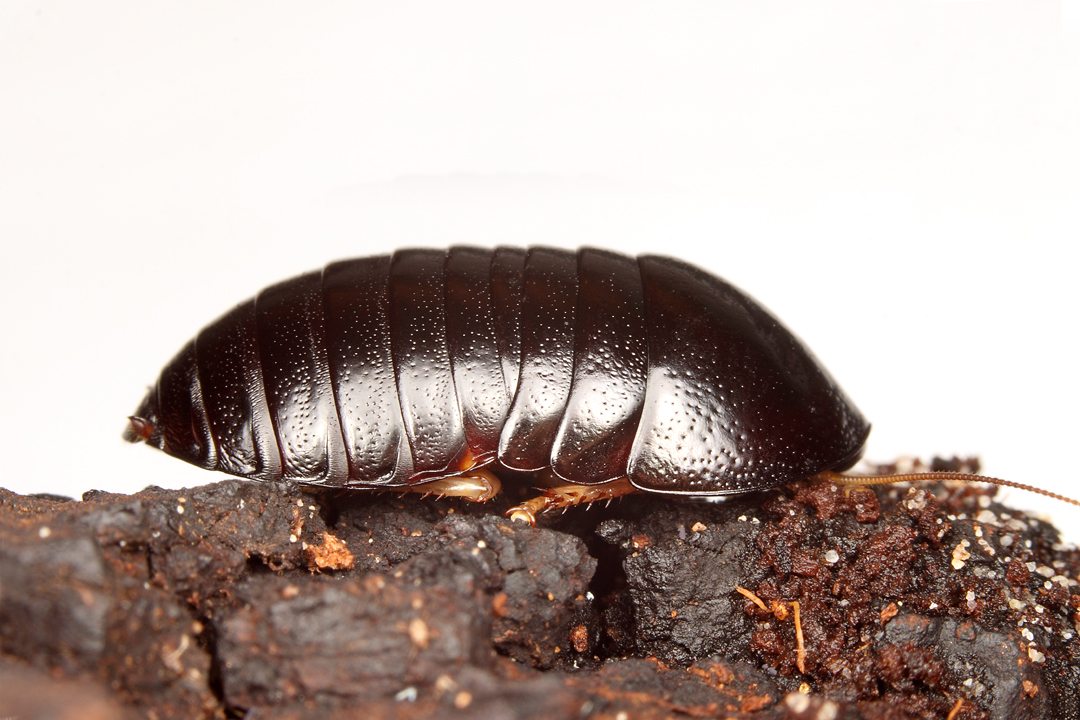
Earlier this month I made a quick trip out to California to see my good friend Chuck Bellamy receive his Honorary Membership in The Coleopterist Society. While I was there, I got a chance to spend some time with Chuck’s labmate Martin Hauser. Although Martin is a specialist of flies, he shares my fascination with unusual arthropods of all types and made available for me to photograph this adult female Perisphaerus sp. (order Blattodea, family Blaberidae), or “pill roach”. Seventeen species from southeast Asia and Australia have been described in this genus (Beccaloni 2007), but which (if any) this individual represents remains unknown.

In contrast to ”normal”-looking males, adult females exhibit a ”wingless, half-ellipsoid” morphology.

The most obvious characteristic of species in this genus is the ability of females to roll up into a ball; i.e., conglobulate.¹ Clearly this is a defensive morphotype, but curiously only females possess this ability—males are winged and exhibit the more flattened morphology typical of many cockroaches. Martin and I were unable to get this particular individual to completely enroll (we must not have been scary enough), but when it does the posterior abdomen fits tightly against the pronotal margin, covering all sensory organs and leaving no soft tissues exposed, gaps to enter or external projections to grab (Bell et al. 2007).

¹ I must thank Brady Richards, who, in his answer to ID Challenge #18, used this word to coin the phrase that would eventually become the title of this post.

Adult females apparently exhibit not only maternal protection but also nutrition.

But why should only females and not males exhibit this defensive morphotype? One would think that both males and females are equally threatened by predators. Apparently this is related to their unusual form of uniparental (maternal) care (Choe & Crespi 1997).  Early-instar nymphs in this genus remain closely associated with their mother and cling to her underside until they reach the third instar. These early-instar nymphs are not only blind, but they also exhibit a narrowed head with specially modified mouthparts that fit precisely into two pairs of orifices located on the female underside between the middle and hind pairs of legs. Whether the nymphs are feeding on glandular secretions or female hemolymph remains unknown, but regardless only a limited number of nymphs can be handled by a female at one time. This represents an unusual level of energetic investment in offspring among insects—especially among cockroaches, and thus the female has an interest in protecting that investment. Sealing them up inside an impenetrable ball is certainly one way to protect the nymphs.

Despite first impressions, six legs and a very ”cockroach-ish” head belie its true identity.

Conglobulation has actually arisen several times amongst arthropods. Obviously pill bugs (a.k.a. roly-poly bugs) are the first group that comes to mind in this regard, but Eisner & Eisner (2002) illustrate nearly identical morphology in two oniscomorph millipedes as well as isopods and Perispharus and also describe strikingly similar behavior by the larva of Leucochrysa pavida  (family Chrysopidae).

Many thanks to those of you who participated in ID Challenge #18. As of now, the comments for that challenge are closed, and I will reveal the comments and award points shortly. My sincere thanks again to Martin Hauser for allowing me to photograph this most interesting insect!

Edit 5/28/12, 12:55 a.m.: For the first time ever, we have a 3-way tie for a BitB Challenge win—Sam Heads, Brady Richards, and Mr. Phidippus all earned 12 points to share the top spot in this challenge. Since these three gentlemen were already the three leaders in BitB Challenge Session #6, there is no change to the leaderboard in the overall standings (44, 42 and 37 points, respectively). However, Dennis Haines (34 points) is hanging close, and Tim Eisele (25 points) still has a shot at the podium. Any number of others following closely behind could also find themselves on the podium if any of the three leaders should falter down the stretch.

REFERENCES:

 Beccaloni, G. W. 2007. Blattodea Species File Online. Version 1.0/4.1. World Wide Web electronic publication. <http://Blattodea.SpeciesFile.org&gt; [accessed 27 May 2012].

Bell, W. J., L. M. Roth & C. A. Nalepa. 2007. Cockroaches: Ecology, Behavior, and Natural History. The Johns Hopkins University Press, Baltimore, Maryland, 230 pp.

Choe, J. C. & B. J. Crespi. 1997. The Evolution of Social Behavior in Insects and Arachnids. Cambridge University Press, Cambridge, U.K., 541 pp.

Eisner, T. & M. Eisner. 2002. Coiling into a sphere: defensive behavior of a trash-carrying chrysopid larva Leucochrysa (Nodita) pavida (Neuroptera: Chrysopidae). Entomological News 113:6–10.

Copyright © Ted C. MacRae 2012
Tucuras, langostas, y saltamontes

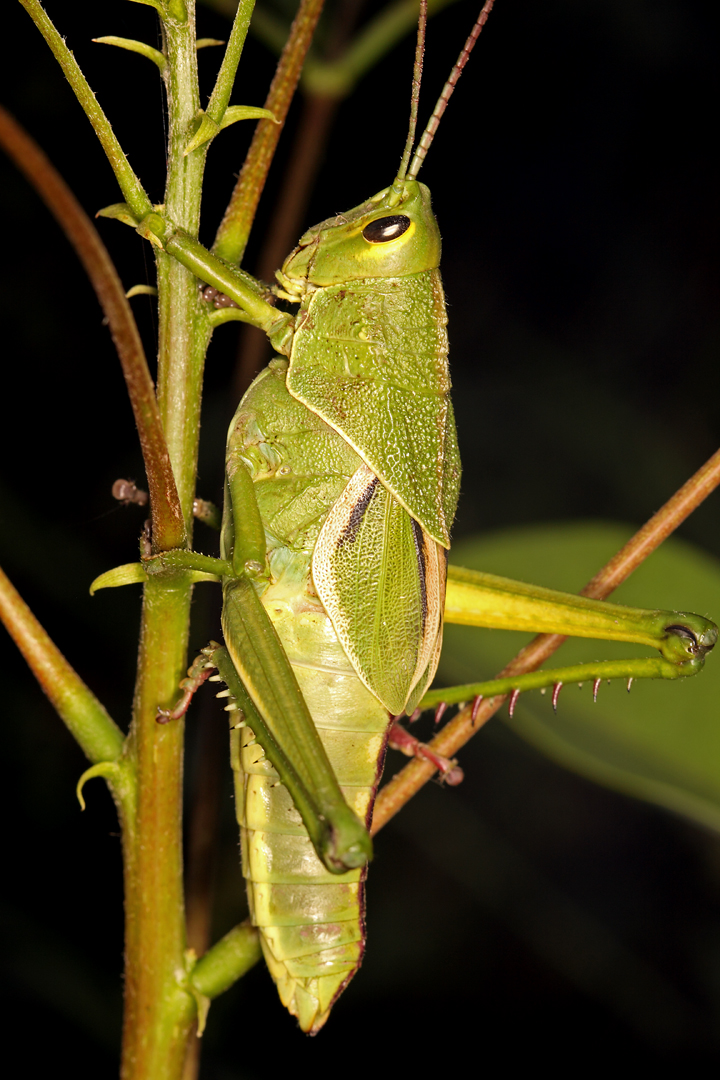
Staleochlora viridicata | Cordoba Province, Argentina (March 2011)

Tucuras, langostas, and saltamontes are names in Argentina for what we in North America call grasshoppers (order Orthoptera, superfamily Acridoidea). Argentina certainly has its share of species, some of which can only be described as “gigantes”! During my first week out in the field at my home base here in western Buenos Aires Province, I encountered the hefty-bodied female in the photo below and was immediately reminded of a similar-looking individual I had photographed in neighboring Córodoba Province during my March 2011 visit. Both had short but well-developed wing pads that at first suggested they might be mature nymphs of an incredibly large species. However, when I noted both were females I decided they likely represented adults of some type of lubber grasshopper (family Romaleidae), many of which—especially the females—are brachypterous (short-winged) and heavy-bodied as adults. A little searching revealed that both belong to the genus Elaeochlora, each looking very much like the species pictured on an Argentine postal stamp and identified as E. viridis (update 9 Mar 2012 – Sam Heads has identified these as Staleochlora viridicata).

Staleochlora viridicata| Buenos Aires Province, Argentina (March 2012)

Getting at least a genus name for these individuals then prompted me to go back to photographs I had taken last year of other types of grasshoppers. One of these, Eutropidacris cristata, is truly one of the largest grasshoppers I have ever seen (update 9 Mar 12 – Sam Heads notes that Eutropidacris is now a synonym of Tropidacris). This individual was seen in a soybean field in the northern Argentina province of Chaco. These insects, known in Argentina as “La tucura quebrachera,” apparently occur in outbreak numbers periodically and, understandably owing to their monstrous size, generate a lot of attention. In Brazil the sepcies is known as “gafanhoto-do-coqueiro” (coconut tree grasshopper),

Tropidacris cristata | Chaco Province, Argentina (March 2011)

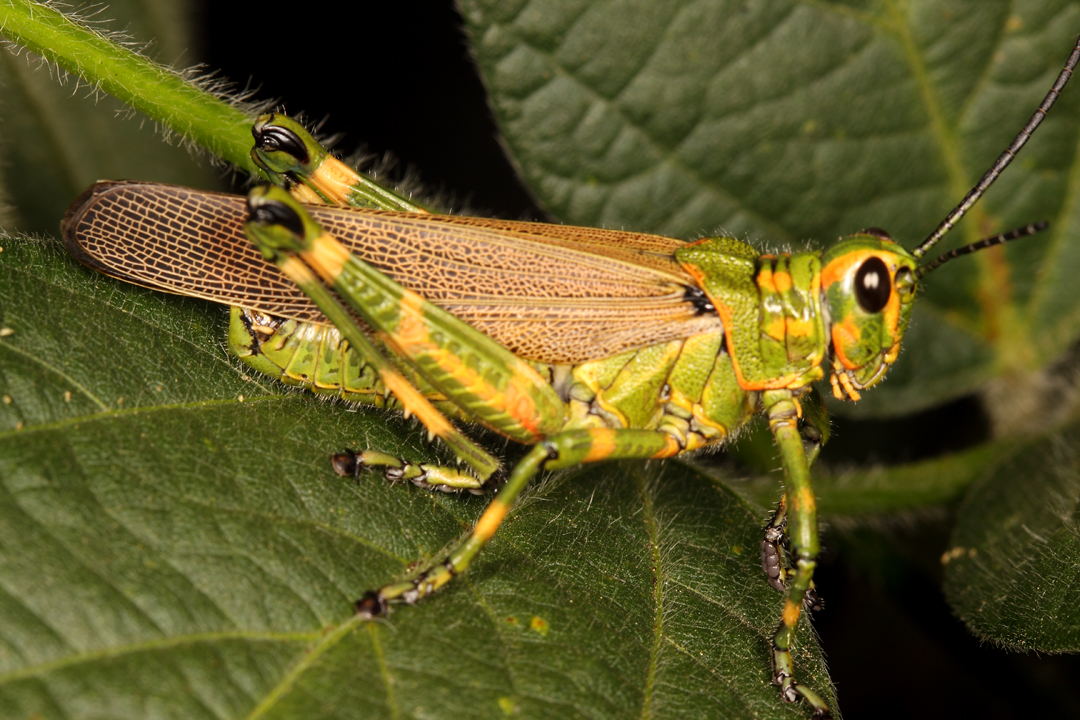
One of the more colorful grasshoppers I have seen in Argentina is Chromacris speciosa. The individual below was photographed last March in eastern Córdoba Province, also on soybean. It’s tempting to presume that the green and yellow coloration has a cryptic function, but apparently the nymphs of this species are brightly colored red and black and have the habit of aggregating on foliage. This is classic aposematism (warning coloration) to indicate chemical protection from predation, so perhaps there is a similar function to the adult coloration as well.

Chromacris speciosa | Cordoba Province, Argentina (March 2011)

Copyright © Ted C. MacRae 2012
A Modest Model for Mimicry

Spring is still a long way off but it’s times like these that I draw on past experiences so I can continue to be thrilled by insect natural history even during the coldest of months.  In this case I am thinking back seven years ago to my first encounter with a warty leaf beetle.  These beetles are certainly unremarkable for their size or coloration but the “set-up” shot below attempts to illustrate what is amazing about warty leaf beetles.  Can you pick out the single individual warty leaf beetle (Exema sp.) among caterpillar frass (aka caterpillar poop)? 

Figure 1. Set-up shot with Exema sp. and caterpillar frass

If you had trouble finding the beetle in the above image then check out the next image and you’ll see the beetle has “sprouted” a head, legs, and antennae.

Figure 2. Set-up shot with Exema sp. and caterpillar frass

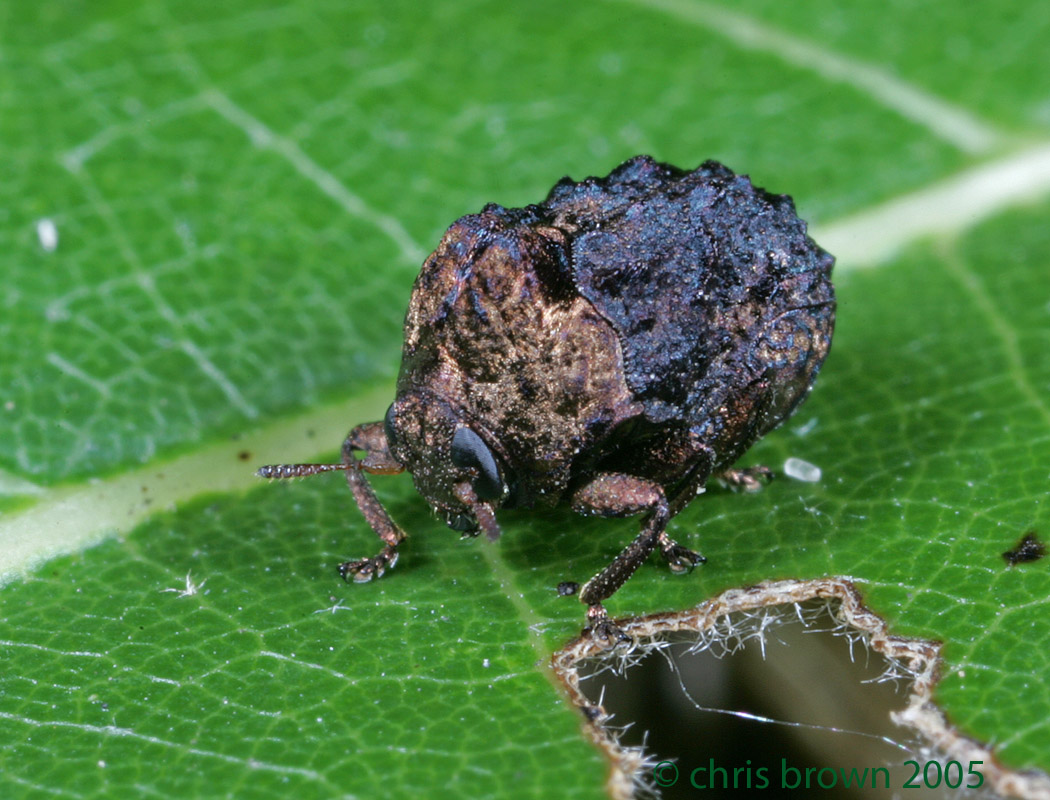
I don’t know what caught my eye the first time I encountered a warty leaf beetle on the foliage of a small shingle oak while exploring a woodland edge in Perry Co., MO.  It probably helped that it was one of the larger species of the genus Neochlamisus but it still only measured about 3-4 mm.  One thing I do remember about the encounter, though, is that there was something about it that made me do a double take.  My first thought was exactly what the beetle might have hoped, that it was caterpillar frass.  But this frass had legs (Figs. 3 and 4)!  I was at first incredulous but soon became enthralled as I beheld something that I had never noted while flipping through field guides.  I had once again stumbled across something that I would never have imagined—a beetle that mimics caterpillar poop!

Figure 3. Neochlamisus sp. on shingle oak

Figure 4. Neochlamisus from the perspective of a short distance away

The beetles in the tribe Chlamasini were apparently not at the table the day decisions were made on what model they would mimic.  These guys at best mimic small bits of debris but are dead ringers for the frass of lepidopteran larvae (i.e., caterpillars).  Then as if to add insult to injury, we dubbed the tribe the warty leaf beetles!  The Chlamasini may humbly mimic excreta but what they lack in a flashy model they make up for with absolutely superb mimicry.  The Chlamasini are remarkably similar to the frass of lepidopteran larvae in size, shape, texture, and color but the aspect that really completes the mimicry is that, upon disturbance, the head is retracted and the legs and antennae are neatly folded into precisely matched grooves leaving no indication that this was once a beetle (Figs. 5 and 6).  Even the finer details of coloration were not overlooked as some warty leaf beetle species are variably colored, including an almost metallic sheen in some places that closely resembles the coloration of some caterpillar frass.  In fact the mimicry of warty leaf beetles is so convincing that I recently dropped a piece of suspect frass in a vial in hopes that it might sprout legs and represent a new species of warty leaf beetle for me.

Figure 5. Exema sp. with appendages extended

Figure 6. Exema sp. with appendages retracted

If the disturbance is sufficient to cause the beetle to completely retract these appendages, they will likely roll off the leaf and fall out of harms way.  Though these beetles can be relatively common, occurring even in my suburban St. Louis yard, the small size [Exema is only 2-3 mm (Figs. 7 and 8) while Neochlamisus is slightly larger at 3-4 mm] and resemblance to something unremarkable ensures that these beetles often times go unnoticed.  When I have happened to notice these beetles I found Neochlamisus associated with shingle oak, Quercus imbricaria, and Exema associated with Asteraceae, including gray-headed coneflower, Ratibida pinnata, and sweet coneflower, Rudbeckia subtomentosa.

Figure 7. Exema sp. on sweet coneflower, Rudbeckia subtomentosa

Figure 8. Exema sp. ready for flight

The Chlamasini are in the subfamily Cryptocephalinae within the leaf beetle family (Chrysomelidae).  The Chlamisini can be found worldwide but are most diverse in the Neotropics.   We have 6 genera in North America, two of which are shown here.  Interestingly, the excreta theme doesn’t stop at frass-mimicry.  Like other members of Crytocephalinae, warty leaf beetle larvae are “case-bearing”; that is they are housed in a case which in this instance is made out of… you guessed it, their own feces (Fig. 9).  You would think that most moms would frown on such a practices but mothers in the Cryptocephalinae actually instigate the practice when they equip each egg laid with a cap of feces that serves as starting material for the case and likely also serves to dissuade would be predators.

Figure 9. Chlamasini larva, likely that of Exema sp. on sweet coneflower, Rudbeckia subtomentosa

My experiences with Neoclamisus seven years ago captures perfectly why I am so drawn to explore for insects— there is always something new to find and every once in a while something comes out of the wood work that is beyond what I could have imagined.

REFERENCE:

Lourdes Chamorro-Lacayo, M. & A. Konstantinov. 2009. Synopsis of warty leaf beetle genera of the world (Coleoptera, Chrysomelidae, Cryptocephalinae, Chlamisini). ZooKeys 8:63–88.

Copyright © Chris Brown 2012

Cycloalexy in tortoise beetle larvae

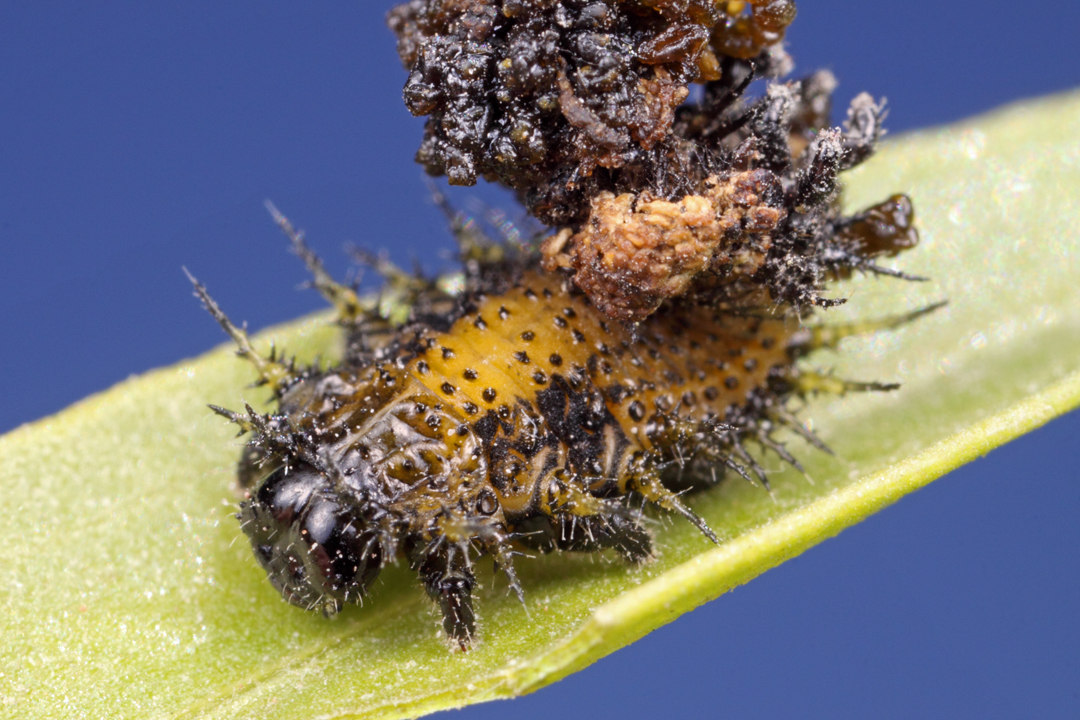
One of the first insects I encountered during my visit this past November to  in Buenos Aires, Argentina were these tiny beetle larvae grouped together on a single leaf of an unidentified shrub.  The presence of fringed lateral appendages and exuvial-fecal debris masses held by caudal appendages immediately identifies them as larvae in the leaf beetle subfamily Cassidinae, known commonly in North America as “tortoise beetles” due to the appearance of the adults.  With nearly 3,000 species distributed throughout the world, tortoise beetles are easily recognizable as a group; however, species identifications can be much more difficult, especially in the Neotropics where the group reaches its greatest diversity (Borowiec and Świętojańska 2002–2011). Identification of larvae can be even more challenging, as the larvae of many species remain unknown, and I was unable to find adults in association with the larvae to aid my identification.

Anacassis sp. (poss. exarata) early-instar larvae on Baccharis salicifolia | Buenos Aires, Argentina

Nevertheless, host plant can be an important clue to leaf beetle identity, as most species in the family limit their feeding to a single plant genus or group of related plant genera. The shrub on which the beetles were feeding looked familiar to me, and while perusing a list of plants that have been recorded from the Reserve (Burgueño 2005) I had an “Aha!” moment when I spotted the asteraceous genus Baccharis. I decided the plant must represent Baccharis salicifolia because of its narrowly lanceolate, willow-like leaves with fine apical serrations (Cuatrecasas 1968) (see first photo). The only tortoise beetles known to feed on Baccharis are species in the genus Anacassis (McFadyen 1987), several species of which are known from Argentina, and one (Anacassis exarata) looking very much like the larvae in these photos.

Note the circular, heads-directed-inward orientation of all larvae around the periphery

The manner in which these early-instar (perhaps even newly hatched) larvae were feeding as a group while working their way down the length of the leaf towards its base is not something I had observed before. Larvae of most tortoise beetles are solitary feeders (Borowiec and Świętojańska 2002–2011), and I was further intrigued by the deliberate circular formation that the larvae had assumed.  The larvae around the periphery were all facing inward, tightly packed against each other and with their exuvial-fecal debris masses directed outward. Additional larvae were seen inside the circular formation. As I manipulated the leaf for photographs, the larvae would occasionally raise their debris masses up and outward, presumably a defensive reaction to disturbance and a perceived threat. It was clear to me that the larvae had deliberately “circled their wagons” for defensive purposes.

Close body contact allows exuvial-fecal debris masses to form a protective barrier against predators

In fact, this type of defensive strategy has been reported in a number of South American cassidines, as summarized by Jolivet et al. (1990), who coined the term “cycloalexy” (from the Greek κύκλος = circle, and αλεξω = defend) to describe such strategies. Cycloalexy can either be “heads in, tails out” or vice versa and is usually associated with other repellent activities such as coordinated threat movements, regurgitation, or biting. The strategy is intended to provide protection from predators such as ants and true bugs and parasitioid wasps, although some parasitoids seem to have thwarted the strategy by depositing their eggs where they can be ingested (thus avoiding direct confrontation with the prey). Cycloalexy has been described primarily among chrysomelid beetles and tenthredinoid hymenopterans (sawflies); however, examples from a few other insect orders (e.g., Diptera, Neuroptera, Lepidoptera) are known as well (Jolivet 2008).  All known cycloalexic insects are subsocial in the larval stage and often also exhibit maternal protection of eggs or newly hatched larvae.

This and several other older larvae had become solitary, presumably protected in part by greater size

In addition to this single group of early instar larvae, I noted also a few larger individuals—all of whom were feeding on the plant in a more solitary fashion. Presumably as the larvae grow larger they are more able to defend themselves, or perhaps larger larvae simply demand more “elbow room” because of the larger amounts of leaf tissue they require for feeding. If cycloalexy is beneficial for small cassidine larvae but less so for larger larvae, perhaps this behavior is actually more common than is currently realized.

REFERENCES:

Borowiec, L., and J. Świętojańska. 2002–2011. Cassidinae of the world – an interactive manual (Coleoptera: Chrysomelidae). http://www.biol.uni.wroc.pl/cassidae/katalog%20internetowy/index.htm [accessed 3 Dec 2011].

Burgueño, G. 2005. Manejo de la vetación en reservas naturales urbanas de la region metopolitana de Buenos Aires. Aves Argentinas, Asociación Ornitológica del Plata, Proyecto Reservas Naturales Urbanas, 16 pp.

Cuatrecasas, J. 1968. Notas adicionales, taxonómicas y corológicas, sobre Baccharis. Revista de la Academia Colombiana de Ciencias Exactas, Físicas y Naturales 13(50):201–226.

Jolivet, P. 2008. Cycloalexy. In: J. L. Capinera [Ed.], Encyclopedia of Entomology, Springer Science+Business Media B.V.

Jolivet, P., Vasconcellos-Neto, J., and Weinstein, P. 1991. Cycloalexy: A new concept in the larval defense of insects. Insecta Mundi 4(1–4) (1990):133–141.

McFadyen, P. J. 1987. Host-specificity of five Anacassis species [Col.: Chrysomelidae] introduced into Australia for the biological control of Baccharis halimifolia [Compositae]. Entomophaga 32(4):377–379.

Copyright © Ted C. MacRae 2011

Tiger Beetle Nocturnal Perching

Ellipsoptera hamata lacerata | "Road to Nowhere" Dixie Co., Florida

During last week’s 48-hour blitz through Florida, I spent one evening blacklighting at the famed “Road to Nowhere” tiger beetle hot spot and encountered this male individual of Ellipsoptera hamata lacerata¹ clinging to the grass near my light.  A quick search of the surrounding area revealed a number of similarly perched individuals, including a mating pair and all representing the same species.

¹ Males (identified by the brushy pads under the foretarsi) of this species are distinguished from the closely related E. marginata, which co-occurs with E. hamata lacerata along the Gulf coast of Florida, by the lack of a distinct tooth on the underside of the right mandible.

Like many species in this and related tiger beetle genera, E. hamata is diurnal but also highly attracted to lights at night. This is thought to be related to nocturnal dispersion behaviors (Pearson and Vogler 2001) intended to avoid higher daytime predation risks. Nocturnal perching on foliage is also common among diurnally-active species in riparian habitats and seems also to be an adaptation for reducing predation. Pearson and Anderson (1985) noted that perched beetles removed from the grass and placed on the ground were often quickly preyed upon by larger nocturnally-active tiger beetles. At “Road to Nowhere” this might include the slightly larger Habroscelimorpha severa which occurred in enormous numbers alongside this species on the mud flats, or the much larger Tetracha virginica which occurred in fair numbers on the adjacent road.

REFERENCES:

Pearson, D. L. and J. J. Anderson.  1985. Perching heights and nocturnal communal roosts of some tiger beetles (Coleoptera: Cicindelidae) in southeastern Peru.  Biotropica 17(2):126–129.

Pearson, D. L. and A. P. Vogler. 2001. Tiger Beetles: The Evolution, Ecology, and Diversity of the Cicindelids.  Cornell University Press, Ithaca, N.Y., xiii + 333 pp.

Copyright © Ted C. MacRae 2011

More on ‘Conspicuous Crypsis’

Acanthocinus nodosus on trunk of Pinus echinata | vic. Calico Rock, Arkansas

In my previous post (), I used the term ‘conspicuous crypsis’ to describe the sumptuously beautiful lichen grasshopper, Trimerotropis saxatilis, as an example of an insect that, despite strikingly conspicuous colors/patterns, blends in perfectly with its native surroundings. I don’t think this is a formally recognized ecological concept (and a quick search of the web and my limited ecology literature didn’t turn up anything about it) with any real biological/ecological relevance, but rather just a little irony that personally I find interesting.

The same individual in the above photograph in its original resting spot.

The photographs in this post were also taken during one of my June trips to the sandstone glade complex around Calico Rock, Arkansas and show another insect that I would describe as conspicuously cryptic. This is Acanthocinus nodosus, in my opinion one of eastern North America’s most attractive longhorned beetles (family Cerambycidae). This species occurs across the eastern U.S. (just sneaking up into southern Missouri), where the larvae mine the phloem beneath the bark of dead and dying pines (Linsley and Chemsak 1995). BugGuide describes it as “subtle, yet beautiful” with an antennal span in males reaching a spectacular 120 mm (that’s 5 inches, folks!). Perhaps others have encountered this beetle more commonly further south, but I have previously seen only single individuals on just three occasions—twice in the Ozark Highlands of southern Missouri (one at lights and another searching the trunk of a standing, decadent pine tree at night) and another at lights in Alabama. As a result, I was quite excited to find this individual clinging during the day to the trunk of a large shortleaf pine (Pinus echinata). The tree appeared healthy, but I found adults of several other wood boring beetles crawling on its trunk as well, suggesting that maybe the tree was stressed or in the initial stages of decline.

Subtle, yet beautiful!

I must confess that the first photograph above was staged—I had moved the beetle from its original resting spot and placed it on a part of the trunk where the bark color contrasted more strongly with the beetle to increase its visibility.  The second and third photos above and left show the beetle in its original resting spot and illustrate just how cryptic the beetle is when resting on older, more weathered pine bark.  Admittedly, the somber coloration of this species is not as extraordinary as the lichen-green of the lichen grasshopper, but I nevertheless find the slate gray with velvet black markings quite beautiful.  When mounted on pins and lined up neatly in a cabinet, individuals of this species are as attractive as any dead insect can be.  It was not until I saw this individual in Arkansas—and tried to photograph it during the day—that the cryptic function of its coloration and patterning became truly apparent to me.  Most species in the tribe Acanthocini (to which this species belongs) also exhibit somber coloration with variable black markings or mottling, although only a handful can be considered as ‘conspicuously cryptic’ as this one.

REFERENCE:

Linsley, E. G. and J. A. Chemsak.  1995. The Cerambycidae of North America. Part VII, No. 2: Taxonomy and classification of the subfamily Lamiinae, tribes Acanthocinini through Hemilophini. University of California Publications in Entomology 114:1–292.

Copyright © Ted C. MacRae 2011