Super Crop Challenge #1

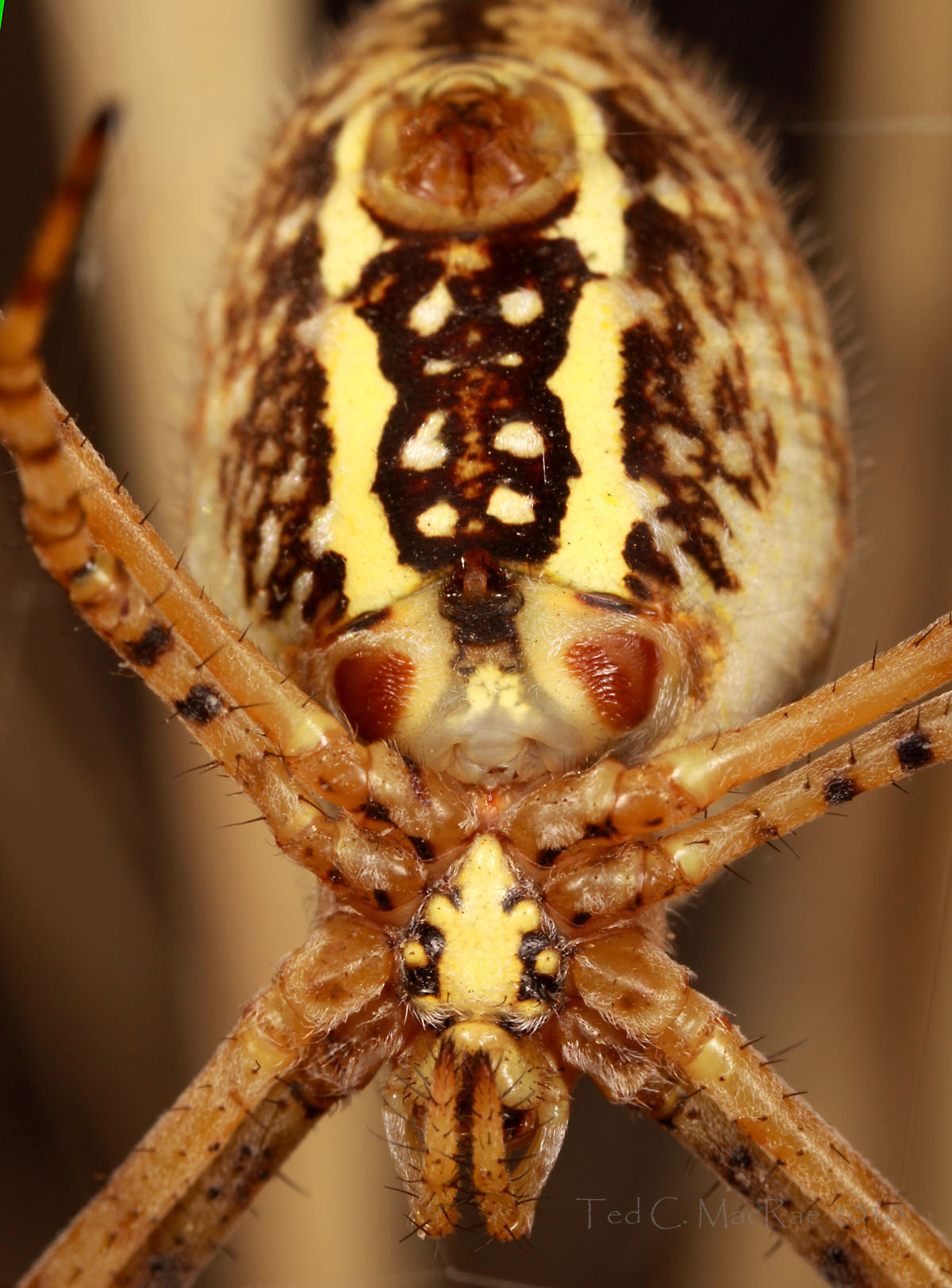
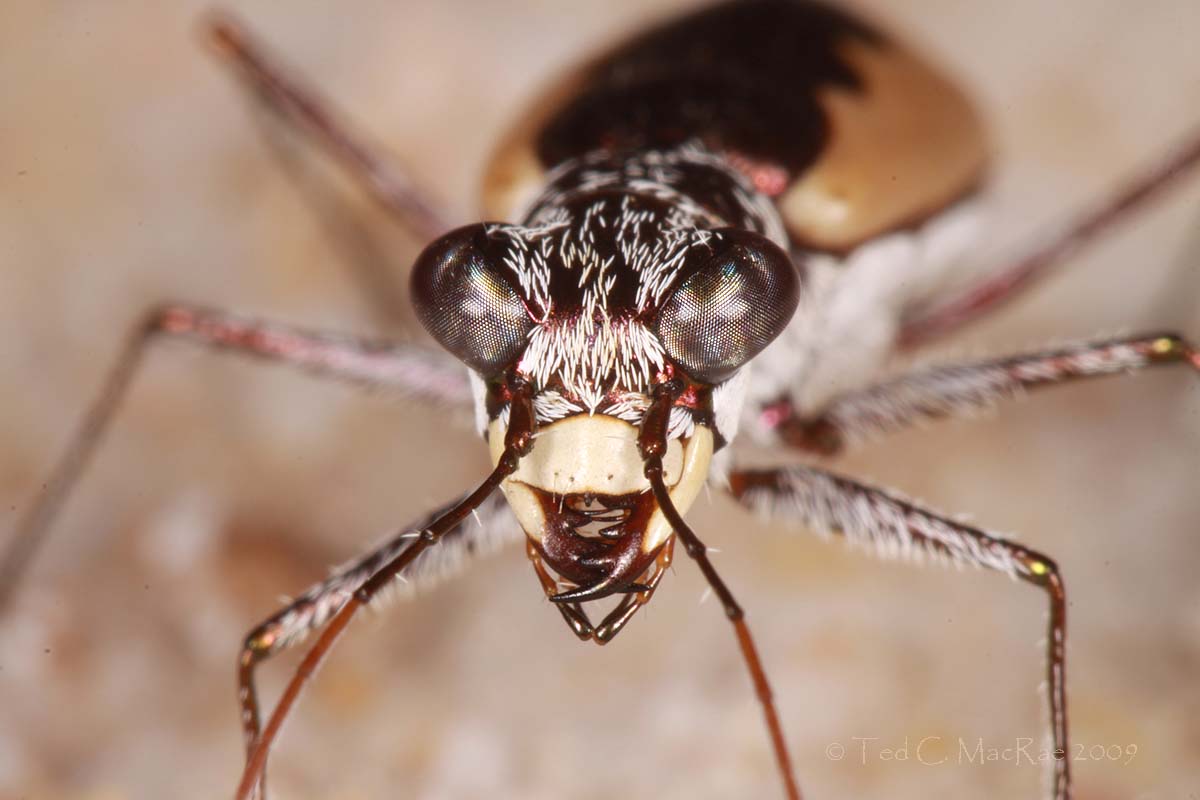
ID quizzes and challenges seem to have become an increasingly popular subject for natural history blogs. I’ve done a few of my own, but my straight up ID challenges are starting to seem a little unimaginative compared to the DNA sequence, crypsis, mimicry, taxonomy fail, and other challenges being offered up by bug blogdom’s more creative types. To step it up a notch, I offer the first Super Crop Challenge. Small structures that we take for granted within a larger context often take on alien qualities when viewed in isolation. Can you identify this structure and the organism that possesses it?


Copyright © Ted C. MacRae 2010

Halloween ID challenge

Class and order are gimmes – can you name the family, genus, and species? Common name? Something significant about its biology or behavior?

Photographed 25.ix.2010 in shortgrass prairie habitat atop the Pine Ridge in Sioux Co., Nebraska.

Photo Details: Canon 50D w/ MP-E 65mm 1-5X macro lens (ISO 100, 1/250 sec, f/11), Canon MT-24EX flash w/ Sto-Fen + GFPuffer diffusers. Typical post-processing (levels, minor cropping, unsharp mask).

Copyright © Ted C. MacRae 2010

Winter Botany Quiz #6

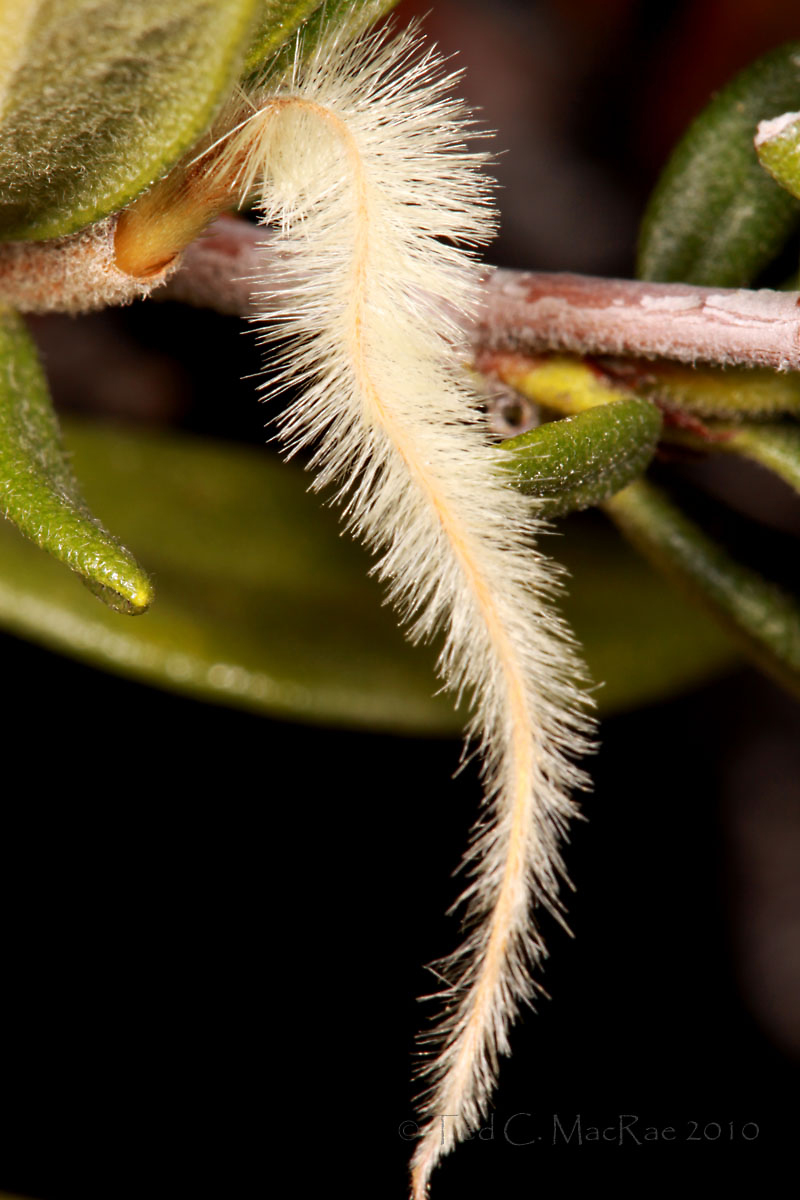
This photo was taken during my March trip to Lake Tahoe.  Can you identify the plant (family, genus, species), the structure shown, and its function?  Answer and more photos tomorrow.

© Ted C. MacRae 2010

Add to FacebookAdd to DiggAdd to Del.icio.usAdd to StumbleuponAdd to RedditAdd to BlinklistAdd to TwitterAdd to TechnoratiAdd to Yahoo BuzzAdd to Newsvine

Email to a friend

Tuesday Teaser


A recent post by Art Evans at What’s Bugging You reminded me about this photograph that I took some 10 years ago.  This will likely be a difficult challenge, but I’m willing to entertain guesses about its identity and where I found it.  For location, let’s just say I’ve featured quite a few insects from this place in past months – it might take a little digging to figure it out, so first correct answer is worth 4 points.  Knowing this will be key to figuring out its identity.  In that regard, order will be a gimme, so the first person who stumbles upon this will likely earn the measely 2 points available for correctly answering that question.  Family will be more difficult – 4 points if you score first on this one (hint – beware of recent taxonomic changes).  Genus will be a real, though not impossible challenge (in fact, necessary resources to determine this are available online) – a whopping 6 points await the first person to correctly identify that taxon.  Sadly, a definite species name won’t be possible (another clue?), but there is a short list of species that have been described from the general area, so bonus points are available for anyone willing to take on that challenge.  I have no additional pictures of this beast, so look for the answer as a comment to this post in a couple days or so.

Copyright © Ted C. MacRae 2010

Add to FacebookAdd to DiggAdd to Del.icio.usAdd to StumbleuponAdd to RedditAdd to BlinklistAdd to TwitterAdd to TechnoratiAdd to Yahoo BuzzAdd to Newsvine

Email to a friend

Pismire Puzzle

I returned home from a much-needed vacation late last night, and even though it was a family trip I have much to share from the past 10 days. However, I must remain coy about where I was for the time being so that I may present this little quiz:
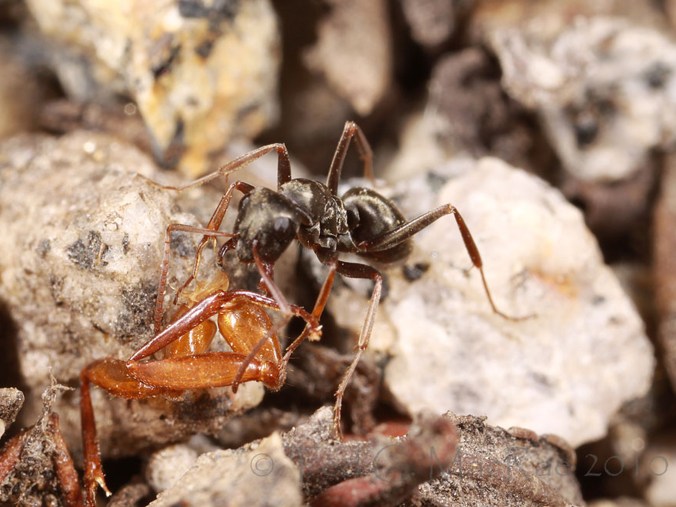
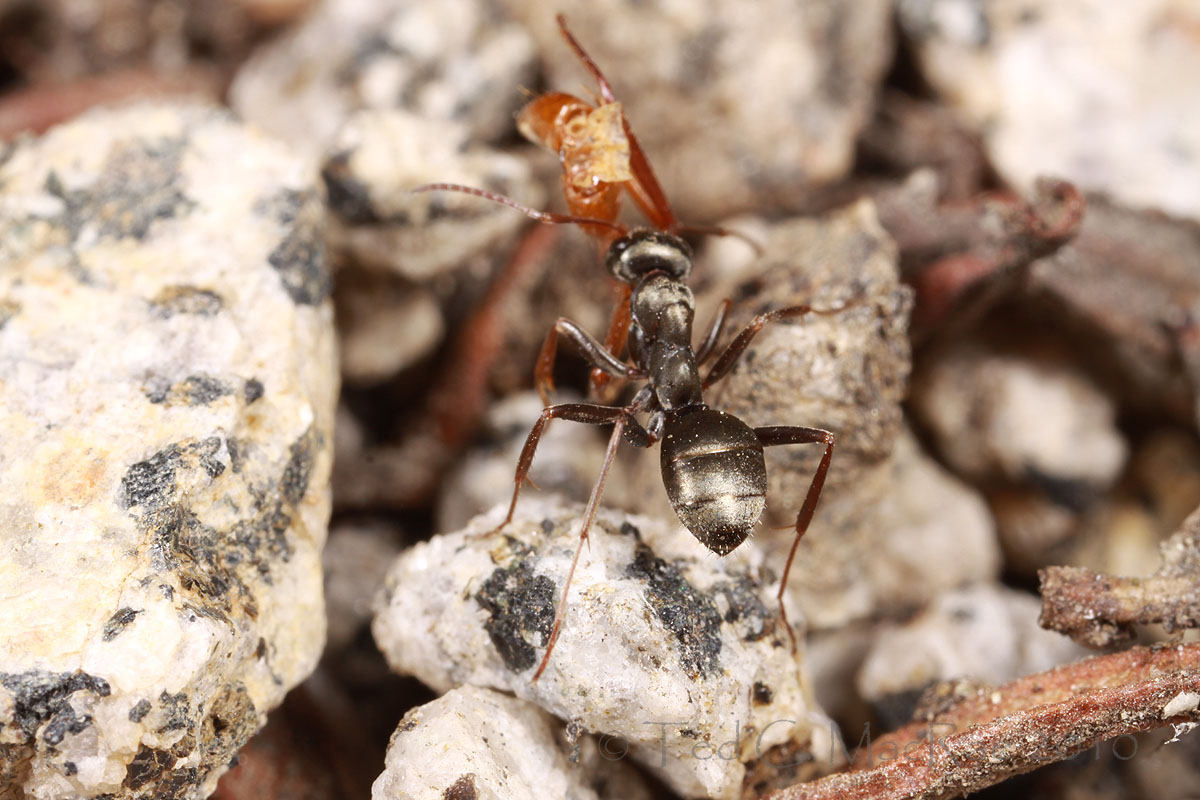
Who am I?

I had planned to post this yesterday, but the best title I could come up with – “Monday Myrmecine Mystery” – was just too similar to a Monday tradition on another blog that we’ve all grown to love.  (Also, I just couldn’t get to it.)  No longer constrained by an M-themed title, I came up with this alternative¹ that I hope will make the 12-year old boy in each of us giggle aloud.

¹ Pismire (from pissemire) is an archaic name of Scandinavian origin for ant. Derived from pisse urine (referring to the smell of formic acid) + mire ant.
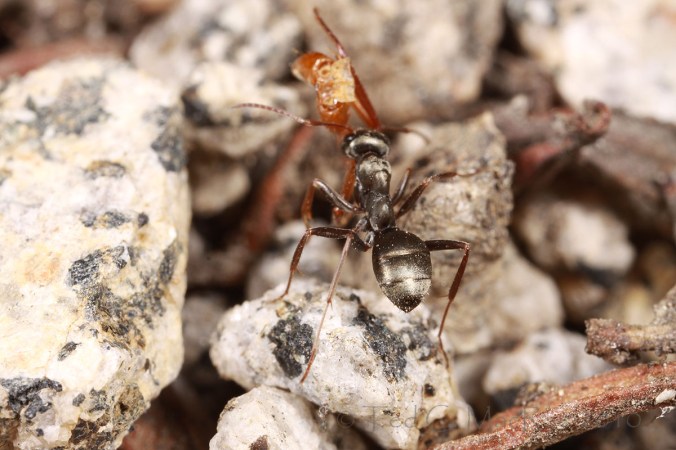
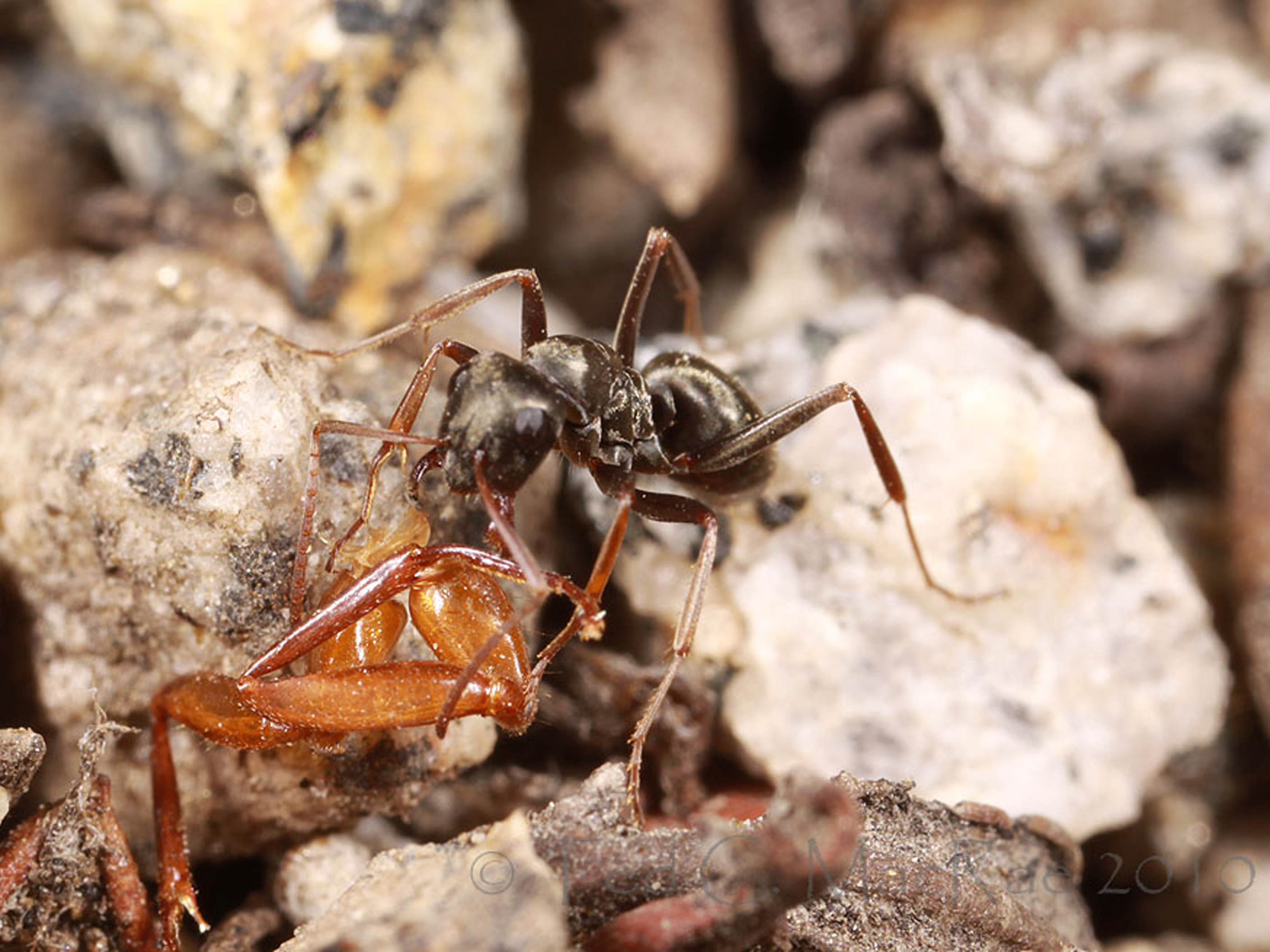
What am I doing?

I expect members of the Formicine Guild will jump all over this, so I should probably make this quiz about more than just the name of the ant (which I don’t know, so does that make this an illegal quiz?).  Maybe I should offer double points to non-myrmecologists for a proper ID (but then, I would need the consensus of the myrmecologists – perhaps a conflict of interest?).

Why do I do this?

I could also offer points for correctly guessing what the ant is carrying – which again I wasn’t able to figure out, so I guess points will have to be awarded for the most plausible explanation.  What I do know is the ant carried this carcass while meandering aimlessly over the same patch of ground – occasionally stopping very briefly to dig its jaws into it before resuming its wanderings.  I followed the ant for about 10 minutes, and it never left an area of about 1 square foot – no nest nearby that I could see, no direction to its travels, no apparent purpose to its labors.
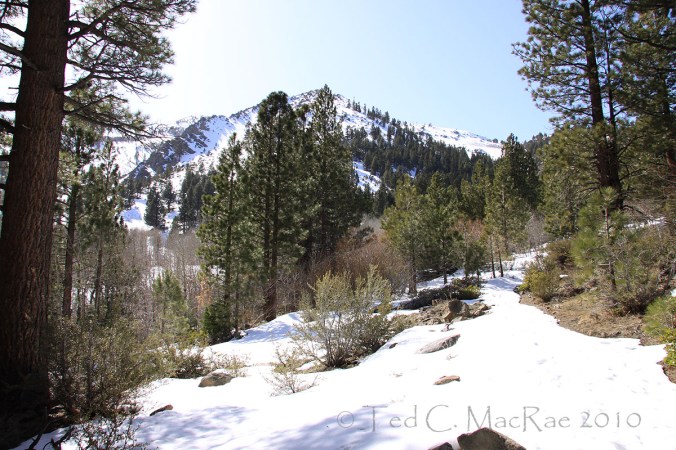
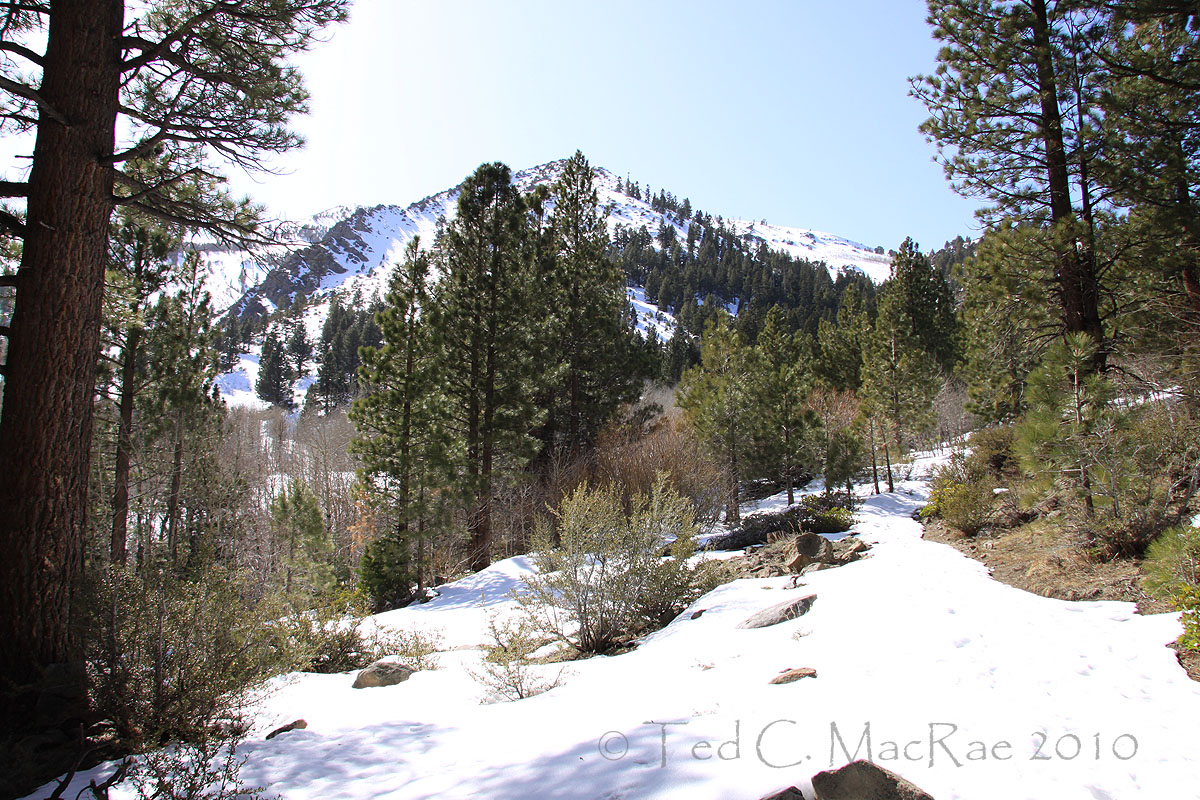
This is where I live.

I most definitely know where I was, so firm points are on offer for correctly guessing the answer to that question – either on the basis of the ant ID or the above photograph of its habitat.  Yes, that is snow on the ground – lots of it!

Copyright © Ted C. MacRae 2010

Add to FacebookAdd to DiggAdd to Del.icio.usAdd to StumbleuponAdd to RedditAdd to BlinklistAdd to TwitterAdd to TechnoratiAdd to Yahoo BuzzAdd to Newsvine

Email to a friend

Triple Quiz

Photo Details: Canon EOS 50D w/ Canon 100mm macro lens, ISO 100, 1/250 sec, f/20, MT-24EX flash w/ Sto-Fen diffusers.

  1. Entomology Quiz: Name the beetle.
  2. Botany Quiz: Name the plant.
  3. History Quiz: Name the location (yes, attentive readers will be able to deduce this).

While you ponder these questions, please make note of two upcoming blog carnivals:

  • Circus of the Spineless – I’ve waited almost a year to host issue #47 of this venerable blog carnival – look for its appearance early next week.  Send me your submissions by January 31 if you want to be included in this issue – ossified homeotherms need not apply.
  • An Inordinate Fondness – The inaugural issue of this monthly blog carnival devoted to beetles is set to debut in mid-February at the home site.  Post submissions are already starting to come in, so don’t miss this chance to be a founding participant.  Submissions are due by February 15 – either by email or using this handy BlogCarnival submission form.

I’ve discovered a few more interesting blogs since my last blogroll update – the following are definitely worth a visit:

  • Biodiversity in Focus Blog – A new blog by graduate student Morgan Jackson.  Amazing photographs of stilt-legged flies (Diptera: Micropezidae).
  • BunyipCo – David Rentz writes about entomology from Queensland, Australia, with a focus on orthopteroid insects and the rain forest.
  • I Love Insects – Entomology student and insect enthusiast Erika Lenz really loves insects.
  • nbell.dk/BLOG – A relatively new blog by a dragonfly/butterfly enthusiast in Denmark.
  • Forest Fragments – Just a stone’s throw from my backyard, the staff at Washington University’s Tyson Research Center has begun a blog about their 2,000-acre experiment.
  • Exploring the Remnants – A brand new blog from Aaron Brees, who explores Iowa’s natural history.  Drop by and give him a jump start.

For those really interested in exploring entomology-related blogs, Anna Miller has provided nice descriptions of her Top 25 Entomology Blogs.  Yes, I made the list, as did most of the other usual suspects, but you might find one or two that you didn’t know about.

Copyright © Ted C. MacRae 2010

Add to FacebookAdd to DiggAdd to Del.icio.usAdd to StumbleuponAdd to RedditAdd to BlinklistAdd to TwitterAdd to TechnoratiAdd to Yahoo BuzzAdd to Newsvine

Email to a friend